Every successful interview starts with knowing what to expect. In this blog, we’ll take you through the top Production Scheduling and Management interview questions, breaking them down with expert tips to help you deliver impactful answers. Step into your next interview fully prepared and ready to succeed.
Questions Asked in Production Scheduling and Management Interview
Q 1. Explain your experience with different scheduling methodologies (e.g., MRP, Kanban, Lean).
My experience spans various scheduling methodologies, each suited to different production environments. Material Requirements Planning (MRP) is a classic push system ideal for environments with predictable demand and a longer lead time for raw materials. I’ve used MRP to manage large-scale manufacturing projects, meticulously tracking bills of materials (BOMs) to ensure timely procurement and production. For instance, in a previous role manufacturing specialized electronics, MRP ensured we had the correct components available when needed, minimizing stockouts and maximizing efficiency.
In contrast, Kanban is a pull system, perfect for just-in-time manufacturing and environments prioritizing flexibility. I’ve implemented Kanban systems in agile manufacturing settings, using visual cues like Kanban boards to manage workflow and reduce inventory. This was particularly effective in a project involving customized furniture, where changes in customer orders were frequent. The visual nature of the system allowed for easy re-prioritization and quick adaptation to shifting demands.
Finally, Lean manufacturing principles, encompassing many techniques beyond just scheduling, are central to my approach. I’ve integrated Lean principles – value stream mapping, 5S, and Kaizen – into various scheduling implementations to reduce waste, improve flow, and enhance overall efficiency. In one project, applying Lean principles alongside Kanban helped reduce lead times by 30% and improve overall product quality.
Q 2. How do you handle unexpected production delays?
Unexpected delays are inevitable in production. My approach involves a structured response: First, I identify the root cause of the delay – is it a machine malfunction, material shortage, or workforce issue? Once identified, I assess the impact on the overall schedule and downstream processes. Then, I leverage available resources to mitigate the problem. This might involve reassigning tasks, expediting material delivery, or bringing in additional workforce.
Communication is crucial. I immediately inform all relevant stakeholders – both internal teams and external clients – about the delay, providing transparent updates on the situation and the corrective actions being taken. Often, I implement contingency plans that were pre-defined to tackle foreseeable risks. If the delay is substantial, I work with stakeholders to adjust the schedule collaboratively, potentially prioritizing critical tasks and re-negotiating deadlines. Finally, I conduct a post-incident review to understand what went wrong and implement changes to prevent similar delays in the future. A detailed analysis can also uncover opportunities for process improvement.
Q 3. Describe your experience with capacity planning and resource allocation.
Capacity planning and resource allocation are critical for efficient production scheduling. My approach begins with a thorough assessment of available resources – machines, equipment, labor, and materials. I use various techniques like load leveling to distribute workload evenly across resources, avoiding bottlenecks. Then, I forecast demand, considering factors like seasonality and market trends. This enables accurate capacity planning and resource allocation.
Software tools are essential here. I’ve used enterprise resource planning (ERP) systems to simulate different scheduling scenarios and optimize resource utilization. For example, in a food processing plant, I optimized the allocation of production lines based on product demand forecasts to minimize production downtime. The ERP system facilitated this by integrating production data and forecasting models, providing a holistic view of resource utilization.
Q 4. How do you prioritize tasks and manage competing deadlines?
Prioritizing tasks and managing competing deadlines requires a structured approach. I utilize techniques like the MoSCoW method (Must have, Should have, Could have, Won’t have) to categorize tasks based on their importance and urgency. This helps prioritize critical tasks that must be completed first. I also leverage project management software to track task progress, dependencies, and deadlines.
When dealing with competing deadlines, I involve stakeholders in open discussions to clarify priorities and potentially negotiate adjusted deadlines. Transparency and collaboration are essential. Sometimes, re-evaluating scope or adjusting resources becomes necessary. I’ve found that creating a visual representation of tasks and deadlines (Gantt charts, Kanban boards) can greatly assist communication and decision-making when faced with multiple competing priorities.
Q 5. What software or tools have you used for production scheduling?
Throughout my career, I’ve used a range of software and tools for production scheduling, including:
- Enterprise Resource Planning (ERP) systems such as SAP and Oracle, providing integrated solutions for planning, execution, and monitoring.
- Manufacturing Execution Systems (MES) for real-time monitoring and control of production processes.
- Advanced Planning and Scheduling (APS) software to optimize complex schedules and manage constraints.
- Project management tools like MS Project and Jira for task tracking and collaboration.
- Spreadsheet software like Excel for simpler scheduling needs, alongside custom macros for repetitive calculations and report generation.
Q 6. Explain your process for creating and maintaining a production schedule.
Creating and maintaining a production schedule is an iterative process. It begins with a thorough understanding of the production requirements, including the demand forecast, bill of materials, and available resources. I then use appropriate scheduling methodologies (MRP, Kanban, Lean) to create the initial schedule, considering factors like machine capacity, labor availability, and material lead times.
The schedule is then regularly reviewed and updated to reflect actual progress, unforeseen events, and changes in demand. This involves monitoring key performance indicators (KPIs) such as on-time delivery, production efficiency, and inventory levels. I leverage software tools for data analysis and visualization, helping identify potential bottlenecks or issues early on. Regular meetings with the production team are essential for ensuring everyone understands the schedule and potential challenges.
Q 7. How do you communicate schedule changes to relevant stakeholders?
Communicating schedule changes effectively is crucial. I use a multi-faceted approach:
- Formal notifications: Email announcements, updated project plans, and formal meeting minutes provide a documented record of any schedule changes.
- Visual updates: Keeping visual tools (Kanban boards, Gantt charts) up-to-date enables stakeholders to easily track progress and understand changes.
- Regular meetings: These provide an opportunity for open communication and addressing any questions or concerns about the revised schedule.
- One-on-one communication: For critical changes or those affecting specific teams, individual conversations ensure personalized clarity and address any specific concerns.
Q 8. Describe a time you had to optimize a production schedule under pressure.
Optimizing production schedules under pressure is a core skill in my field. It often involves juggling competing priorities – meeting deadlines, minimizing costs, and maintaining quality. One instance involved a major rush order for a customized product line. The initial schedule, created using a simple Gantt chart, was clearly insufficient to meet the incredibly tight deadline. The pressure was immense, as the client was a key partner.
My approach involved a three-pronged strategy: First, I immediately convened a meeting with the production team, engineering, and procurement to assess the bottlenecks. We identified the constraint was in the assembly stage, due to a limited number of specialized tools. Second, we employed a lean manufacturing technique, re-sequencing tasks and optimizing workflow to minimize idle time and maximize resource utilization. This included identifying less critical tasks that could be temporarily delayed without impacting the main deadline. Third, we implemented a Kanban system for real-time tracking of the order’s progress, ensuring any emerging issues could be addressed immediately. This improved communication and allowed for dynamic adjustments to the schedule. We successfully delivered the order on time, exceeding client expectations and strengthening our relationship.
Q 9. How do you measure the effectiveness of your production scheduling efforts?
Measuring the effectiveness of production scheduling is crucial for continuous improvement. I typically use a combination of key performance indicators (KPIs) to gauge success. These KPIs go beyond simple on-time delivery.
- On-Time Delivery Rate (OTDR): This measures the percentage of orders delivered as scheduled. A high OTDR indicates excellent scheduling.
- Inventory Turnover Rate: This measures how efficiently inventory is managed. A high turnover rate usually indicates effective inventory control and reduced storage costs, directly tied to good scheduling.
- Production Lead Time: This KPI measures the time it takes to complete a product from start to finish. Reducing lead time demonstrates schedule efficiency.
- Throughput: This metric reflects the amount of product completed within a specific time. High throughput points to optimized resource usage within the production schedule.
- Cost per Unit: A decrease in cost per unit suggests efficient resource allocation and scheduling that minimizes waste.
Analyzing these KPIs allows for identifying areas for improvement and refining scheduling strategies for better outcomes. For example, a low OTDR might indicate a need for improved forecasting or resource allocation.
Q 10. How do you identify and resolve production bottlenecks?
Identifying and resolving production bottlenecks requires a systematic approach. I typically start by using a Value Stream Mapping (VSM) technique to visually represent the entire production process, pinpointing areas with high inventory or long wait times. This is where the bottlenecks usually reside.
Once identified, I employ several strategies depending on the nature of the bottleneck:
- Increased Capacity: For resource-constrained bottlenecks (e.g., a machine running at full capacity), solutions might involve adding more equipment, upgrading existing machinery, or optimizing machine settings.
- Process Improvement: If the bottleneck is due to inefficient processes, Lean methodologies such as Kaizen or Six Sigma can be implemented to streamline workflows and eliminate waste. This might include reducing setup times, improving material handling, or simplifying complex procedures.
- Improved Material Flow: Bottlenecks can stem from delays in material delivery. Solutions might involve working with suppliers to improve delivery schedules or implementing a just-in-time (JIT) inventory system.
- Rescheduling: In some cases, rearranging tasks within the schedule to better balance workload across resources can resolve the bottleneck. This often involves using advanced scheduling software.
Q 11. Explain your understanding of inventory management and its impact on scheduling.
Inventory management is intrinsically linked to production scheduling. Effective inventory management ensures that the right materials are available at the right time to support production without tying up excessive capital in storage.
Poor inventory management creates several scheduling problems:
- Stockouts: Lack of materials leads to production delays and missed deadlines.
- Overstocking: Excess inventory increases storage costs and risks obsolescence, tying up capital that could be used elsewhere. It can also complicate scheduling, as managing excess inventory consumes time and resources.
- Quality Issues: Improper storage can affect material quality, disrupting production.
Conversely, well-managed inventory ensures smooth production flow by providing a buffer against supply chain disruptions and enabling efficient scheduling, minimizing delays and maximizing throughput. Techniques like JIT, MRP (Material Requirements Planning), and Kanban are crucial for integrating inventory management with scheduling to ensure optimized resource utilization.
Q 12. How do you incorporate demand forecasting into your scheduling process?
Demand forecasting is fundamental for effective production scheduling. Accurate forecasts allow for proactive planning, ensuring that the right amount of products are produced to meet anticipated customer demand. Incorporating demand forecasting involves several steps:
- Data Collection: Gathering historical sales data, market trends, and any other relevant information influencing demand.
- Forecasting Model Selection: Choosing an appropriate forecasting model based on data characteristics and forecasting horizon (short-term, medium-term, long-term). Simple moving averages might suffice for short-term forecasting, whereas more complex models like exponential smoothing or ARIMA might be necessary for long-term projections.
- Forecast Generation: Using the chosen model to generate demand forecasts.
- Schedule Integration: Integrating the forecasts into the production schedule to plan production capacity, resource allocation, and inventory levels.
- Monitoring and Adjustment: Regularly monitoring actual sales against forecasts to identify deviations and adjust the schedule accordingly. This is a continuous cycle.
Q 13. Describe your experience with using different forecasting models.
My experience encompasses a range of forecasting models. The choice depends heavily on the data and forecasting horizon. I’ve successfully applied simple methods like moving averages for short-term forecasting of stable demand products, and exponential smoothing methods for products with some trend. These methods are relatively easy to understand and implement.
For products with more complex demand patterns and longer forecasting horizons, I have used more sophisticated techniques, including ARIMA (Autoregressive Integrated Moving Average) models. These are more statistically robust but require more data and expertise. In specific cases, I have also explored qualitative forecasting methods, such as expert panels, for situations where historical data is limited or where significant market shifts are anticipated.
Regardless of the model, I emphasize validating the forecast’s accuracy and regularly reviewing the model’s performance to make necessary adjustments. Regular accuracy checks ensure the model continues to provide reliable forecasts.
Q 14. How do you handle changes in material availability or supplier lead times?
Changes in material availability or supplier lead times are common challenges in production scheduling. My approach involves:
- Real-time Monitoring: I use systems that provide real-time updates on material availability and supplier lead times. This allows me to proactively identify potential disruptions.
- Communication: Maintaining open communication with suppliers is vital. Regular updates on potential delays or disruptions allow for early mitigation.
- Alternative Sourcing: Having alternative suppliers or material sources ensures business continuity if a primary supplier experiences difficulties.
- Schedule Adjustment: Using scheduling software allows for dynamic adjustments to the production schedule to accommodate changes in material availability. This might involve rescheduling tasks, prioritizing certain orders, or adjusting production quantities.
- Buffer Stock: Maintaining a strategic buffer stock of critical materials can mitigate the impact of minor delays or fluctuations in supply.
The key is to have a flexible and responsive scheduling system that can adapt to unexpected changes. This ensures minimal impact on production while maintaining on-time delivery and minimizing disruptions.
Q 15. What metrics do you track to monitor production schedule performance?
Monitoring production schedule performance requires a robust set of Key Performance Indicators (KPIs). These metrics offer a clear picture of efficiency, productivity, and adherence to deadlines. I typically track a combination of leading and lagging indicators.
On-Time Delivery Rate (OTDR): This measures the percentage of orders shipped on or before their due date. A low OTDR signals potential problems with scheduling or execution.
Production Cycle Time: This KPI tracks the time it takes to complete a production run, from start to finish. Reducing cycle time directly impacts throughput and efficiency.
Inventory Turnover Rate: This shows how efficiently inventory is managed. High turnover indicates efficient scheduling and avoids excessive storage costs, while low turnover suggests overstocking or production delays.
Capacity Utilization Rate: This reveals how effectively production resources are being used. High utilization indicates optimal scheduling, while low utilization points to underutilized resources or scheduling inefficiencies.
Production Yield: The ratio of good units produced to total units started. A low yield suggests quality control issues or problems in the production process itself, which can also impact the schedule.
Work-in-Progress (WIP) Inventory: Tracking WIP helps identify bottlenecks and potential delays. High WIP indicates potential scheduling problems or inefficiencies in the production flow.
By regularly monitoring these KPIs, I can quickly identify areas for improvement and make data-driven decisions to optimize the production schedule.
Career Expert Tips:
- Ace those interviews! Prepare effectively by reviewing the Top 50 Most Common Interview Questions on ResumeGemini.
- Navigate your job search with confidence! Explore a wide range of Career Tips on ResumeGemini. Learn about common challenges and recommendations to overcome them.
- Craft the perfect resume! Master the Art of Resume Writing with ResumeGemini’s guide. Showcase your unique qualifications and achievements effectively.
- Don’t miss out on holiday savings! Build your dream resume with ResumeGemini’s ATS optimized templates.
Q 16. How do you use data analysis to improve your production scheduling process?
Data analysis is crucial for continuous improvement in production scheduling. I leverage various analytical techniques to identify patterns, predict future demands, and optimize resource allocation. For example:
Trend Analysis: Examining historical production data to identify trends in demand, lead times, and resource utilization. This helps predict future needs and proactively adjust schedules.
Statistical Process Control (SPC): Using control charts to monitor process variability and identify potential sources of delays or defects. Early detection prevents significant schedule disruptions.
Root Cause Analysis (RCA): When schedule deviations occur, RCA techniques like the 5 Whys help pinpoint the underlying causes, enabling preventative measures.
Simulation Modeling: Simulating different scheduling scenarios (e.g., different resource allocations, different order priorities) to evaluate their impact on overall performance before implementing them. This minimizes risks and optimizes resource use.
Predictive Analytics: Using machine learning algorithms to forecast future demand based on historical data and external factors (e.g., seasonality, economic indicators). This allows for more accurate and proactive scheduling.
For instance, by analyzing historical data on machine downtime, I can predict future maintenance needs and schedule preventive maintenance during periods of lower production demand, minimizing disruptions.
Q 17. How do you collaborate with different departments (e.g., procurement, sales) to ensure effective scheduling?
Effective production scheduling necessitates seamless collaboration across departments. I achieve this through:
Regular Meetings: Holding cross-functional meetings (including procurement, sales, and operations) to discuss upcoming orders, potential bottlenecks, and resource constraints. This ensures everyone is aligned on priorities and potential challenges.
Shared Information Systems: Utilizing shared platforms (ERP systems, collaborative software) to provide real-time visibility into production schedules, inventory levels, and order status. This facilitates transparent communication and efficient decision-making.
Clearly Defined Roles and Responsibilities: Establishing clear roles and responsibilities for each department regarding the production scheduling process avoids confusion and ensures accountability.
Collaborative Planning: Actively involving sales and procurement in the scheduling process. Sales provides demand forecasts, while procurement ensures timely material availability, contributing to accurate and realistic schedules.
Conflict Resolution Mechanisms: Developing procedures for resolving conflicts between departments, prioritizing orders based on factors like urgency and profitability, and ensuring fair resource allocation.
For example, if sales unexpectedly receives a large rush order, we collaborate to determine if it can be accommodated within the existing schedule or if adjustments are needed (e.g., overtime, prioritizing materials).
Q 18. Describe your experience with project management methodologies in a production setting.
My experience includes applying various project management methodologies to production settings, adapting them to the unique characteristics of manufacturing environments. I’ve utilized:
Lean Manufacturing Principles: Focusing on eliminating waste (time, materials, effort) throughout the production process. This involves streamlining workflows, reducing lead times, and improving overall efficiency.
Six Sigma: Implementing Six Sigma methodologies to reduce process variability and improve quality. This leads to more predictable schedules and reduces the need for costly rework or schedule adjustments.
Agile methodologies (adapted): While traditionally used in software development, Agile principles like iterative planning and frequent feedback loops can be effectively applied to production scheduling. This allows for greater flexibility in responding to changing demands or unforeseen circumstances.
Kanban: Visualizing workflow and limiting work-in-progress (WIP) using Kanban boards. This helps identify and address bottlenecks, enhancing throughput and predictability.
In practice, this could involve using Kanban boards to manage work orders through various stages of production, regularly reviewing progress, and adjusting the schedule based on real-time feedback from the shop floor.
Q 19. How do you manage risk and uncertainty in production scheduling?
Managing risk and uncertainty in production scheduling is paramount. I employ a multi-faceted approach:
Risk Identification and Assessment: Proactively identifying potential risks (e.g., equipment failure, supplier delays, material shortages) and assessing their likelihood and impact on the schedule. This involves brainstorming sessions with production staff and analyzing historical data.
Contingency Planning: Developing backup plans to mitigate identified risks. This could involve having alternative suppliers, buffer stock of critical materials, or flexible workforce arrangements to handle unexpected events.
Buffering: Incorporating buffer time into the schedule to account for unforeseen delays. This allows for some flexibility without jeopardizing deadlines.
Scenario Planning: Developing multiple scheduling scenarios to account for different levels of uncertainty (e.g., best-case, worst-case, most-likely). This prepares for various possibilities and allows for proactive decision-making.
Regular Monitoring and Adjustment: Continuously monitoring the schedule and making adjustments as needed to address unexpected events or changing circumstances. This requires flexibility and proactive communication.
For example, if a key supplier experiences delays, we might utilize our contingency plan by sourcing materials from an alternative supplier or adjusting the production schedule to accommodate the delay.
Q 20. Explain your understanding of critical path analysis and its application to production scheduling.
Critical Path Analysis (CPA) is a project management technique used to identify the longest sequence of tasks in a project, which determines the shortest possible project duration. In production scheduling, it helps pinpoint the most critical activities that must be completed on time to avoid delays.
Application in Production Scheduling:
Identifying Critical Tasks: CPA helps identify those tasks that, if delayed, will directly delay the entire production process. This allows for focused attention and resource allocation on these critical activities.
Resource Allocation: Prioritizing resources (equipment, personnel, materials) for critical tasks to ensure timely completion.
Schedule Optimization: CPA helps identify opportunities for shortening the overall production time by focusing on reducing the duration of critical path activities.
Risk Management: Highlighting critical tasks that are more prone to delays (due to dependencies, resource constraints, or inherent complexities). This enables proactive risk mitigation strategies.
For example, in assembling a product, the critical path might include steps that require specialized equipment or highly skilled labor. CPA would highlight these steps, enabling us to allocate the necessary resources and prioritize their completion to avoid delaying the entire production process.
Q 21. How do you ensure compliance with safety regulations and quality standards in your scheduling?
Ensuring compliance with safety regulations and quality standards is integral to effective production scheduling. This is achieved through:
Integrating Safety and Quality Checks into the Schedule: Scheduling regular safety inspections, quality control checks, and maintenance activities as part of the overall production plan. This prevents interruptions caused by safety or quality issues.
Training and Compliance Programs: Ensuring all personnel are adequately trained on safety procedures and quality standards. This reduces the likelihood of accidents or quality defects that could impact the schedule.
Documentation and Audits: Maintaining thorough documentation of all safety and quality procedures, and conducting regular audits to ensure compliance with relevant regulations. This demonstrates commitment and minimizes risks.
Using Safety and Quality Metrics: Tracking key metrics related to safety and quality (e.g., accident rates, defect rates) to identify areas for improvement and continuously enhance the production process.
Prioritizing Safety and Quality: Never compromising safety or quality for the sake of meeting deadlines. Addressing safety concerns and quality issues promptly, even if it means adjusting the schedule, is crucial.
For instance, if a safety audit identifies a potential hazard, we would immediately address it, even if it requires a temporary halt to production. This approach prioritizes the safety of personnel and the long-term efficiency of the production process.
Q 22. Describe your experience with implementing and managing a production control system.
Implementing and managing a production control system involves a multifaceted approach, encompassing everything from selecting the right software to training personnel and ensuring ongoing optimization. My experience centers around streamlining production processes using a combination of ERP (Enterprise Resource Planning) systems and specialized scheduling software.
In my previous role at Acme Manufacturing, we transitioned from a largely manual system to a fully integrated ERP system. This involved several key steps:
- Needs Assessment: We carefully analyzed our existing processes, identifying bottlenecks and inefficiencies. This involved mapping out material flows, identifying machine utilization rates, and reviewing order fulfillment times.
- Software Selection: We evaluated several ERP systems based on scalability, integration capabilities, and user-friendliness. The chosen system had to seamlessly integrate with our existing inventory management and quality control systems.
- Implementation: This phase involved configuring the software to meet our specific requirements, data migration from the old system, and extensive user training. We utilized a phased rollout to minimize disruption and allow for continuous feedback.
- Ongoing Management: After implementation, we established a robust maintenance and optimization program. This includes regular system updates, performance monitoring, and continuous improvement initiatives to ensure the system remains effective.
The result was a significant reduction in lead times, improved inventory control, and a considerable increase in overall production efficiency. For example, we saw a 20% reduction in lead times for our flagship product line within six months of implementing the new system.
Q 23. How do you handle conflicts between different production priorities?
Prioritization conflicts are inevitable in production. Handling them effectively requires a structured approach. I typically employ a system based on a combination of factors such as urgency, due dates, profitability, and customer importance.
My approach involves:
- Prioritization Matrix: I use a matrix that visually ranks projects based on urgency and importance. This helps to quickly identify and address critical conflicts.
- Negotiation and Communication: Open communication with all stakeholders – sales, engineering, and production – is crucial. This allows for a collaborative approach to resolving conflicts and finding mutually agreeable solutions. Sometimes, rescheduling or adjusting deadlines is necessary.
- Resource Allocation: Careful allocation of resources (machines, personnel, materials) is essential. This may involve shifting resources to higher priority projects or optimizing resource utilization to accommodate multiple projects simultaneously.
- Data-Driven Decision Making: Leveraging production data, such as machine downtime, material availability, and labor hours, informs objective decision-making. Analyzing this data helps to anticipate and proactively address potential conflicts.
For instance, in a situation where a high-profit, rush order conflicts with a large, but less profitable, ongoing order, we would evaluate the impact of delaying the large order, and negotiate with the customer if necessary. If the rush order is truly critical, we might prioritize it, potentially affecting the delivery date of the larger order, while maintaining transparency and communication with the affected parties.
Q 24. How do you balance production efficiency with cost optimization?
Balancing production efficiency and cost optimization is a delicate act. It’s not about choosing one over the other, but finding the optimal point where both are maximized.
My strategy involves:
- Lean Manufacturing Principles: Implementing Lean principles, such as eliminating waste, improving workflow, and reducing cycle times, is vital for efficiency and cost reduction. This might involve streamlining processes, reducing inventory levels, and improving quality control to minimize rework.
- Capacity Planning: Accurate capacity planning ensures that resources are utilized efficiently without overspending on unnecessary capacity. It allows for a realistic assessment of production capabilities and potential bottlenecks.
- Technology Optimization: Investing in automation and advanced manufacturing technologies can improve efficiency and reduce labor costs. However, careful consideration of ROI (Return on Investment) is crucial before making significant capital expenditures.
- Supply Chain Management: Optimizing the supply chain through strategic sourcing, inventory management, and supplier relationships helps to reduce material costs and lead times. Negotiating favorable pricing with suppliers and improving logistics efficiency are key aspects.
For example, in one project, we identified that using a specific, less expensive raw material, coupled with a minor process adjustment, resulted in only a small decrease in product quality but significantly reduced production costs without impacting efficiency.
Q 25. Explain your experience with utilizing simulation software for production planning.
Simulation software is an indispensable tool for production planning. It allows for testing different scenarios and optimizing production parameters without incurring the cost and risk of real-world experimentation.
My experience includes using AnyLogic and Arena simulation software. I’ve used these tools to:
- Model Production Lines: I’ve created detailed simulations of our production lines, including machines, workers, material flows, and buffers. This allowed us to identify bottlenecks and optimize workflow.
- Assess Capacity: Simulations help determine the optimal capacity needed for various scenarios, like increased demand or product variations, which helps in future investment decisions.
- Analyze Different Scheduling Strategies: We’ve compared the performance of different scheduling algorithms (FIFO, priority scheduling, etc.) through simulation to identify the most efficient approach for our specific production environment.
- Evaluate the Impact of Changes: Before implementing any significant change to the production process, such as adding new machinery or altering workflow, we use simulation to predict the outcome and minimize potential risks.
In one instance, using simulation software allowed us to identify a previously unseen bottleneck in our assembly line. By adjusting the sequence of operations, we were able to increase throughput by 15% without any capital investment.
Q 26. How do you train and mentor other team members on production scheduling best practices?
Training and mentoring are vital for building a high-performing production scheduling team. My approach involves a combination of formal training, on-the-job coaching, and continuous learning opportunities.
My training programs include:
- Formal Training Sessions: I conduct structured training sessions covering key concepts like scheduling algorithms, production planning techniques, and the use of relevant software.
- On-the-Job Coaching: I provide hands-on coaching, guiding team members through real-world scenarios and offering feedback on their work. This includes shadowing, walkthroughs, and active participation in problem-solving exercises.
- Mentorship Programs: I develop mentorship relationships with junior team members, providing guidance, support, and career development opportunities.
- Continuous Learning: I encourage continuous learning through workshops, conferences, and online courses to stay updated on industry best practices and new technologies.
I also foster a collaborative learning environment where team members can share knowledge and best practices among themselves. This approach ensures that everyone is constantly learning and improving their skills.
Q 27. Describe your experience with continuous improvement initiatives in production scheduling.
Continuous improvement is paramount in production scheduling. I’ve been involved in several initiatives focusing on efficiency gains, cost reductions, and improved quality.
My approach to continuous improvement involves:
- Data Analysis: Regularly analyzing production data to identify areas for improvement. This includes key performance indicators (KPIs) such as lead times, cycle times, inventory levels, and defect rates.
- Kaizen Events: Participating in Kaizen events (focused improvement workshops) to identify and implement small, incremental changes to processes.
- Lean Six Sigma Methodology: Applying Lean Six Sigma methodologies to systematically reduce waste and improve efficiency. This involves using tools such as DMAIC (Define, Measure, Analyze, Improve, Control) to drive process improvement.
- Technology Adoption: Exploring and implementing new technologies and software to enhance efficiency and automation. This might involve adopting advanced planning and scheduling (APS) systems or utilizing data analytics tools for predictive modeling.
For example, through a Kaizen event, we were able to streamline a specific process in our production line, reducing the cycle time by 10% and eliminating unnecessary steps, ultimately leading to significant cost savings.
Key Topics to Learn for Production Scheduling and Management Interview
- Demand Forecasting and Planning: Understanding various forecasting methods (e.g., moving average, exponential smoothing) and their application in predicting future demand to optimize production schedules.
- Master Production Scheduling (MPS): Developing and managing the MPS, considering factors like capacity constraints, material availability, and customer demand to create a feasible production plan.
- Capacity Planning and Resource Allocation: Analyzing production capacity, identifying bottlenecks, and efficiently allocating resources (equipment, labor, materials) to meet production targets.
- Material Requirements Planning (MRP): Understanding how MRP systems work to determine the quantity and timing of materials needed for production, ensuring timely procurement and minimizing inventory costs.
- Production Scheduling Techniques: Familiarity with various scheduling techniques like FIFO, LIFO, priority scheduling, and their application in different production environments.
- Inventory Management: Balancing inventory levels to meet customer demand while minimizing storage costs and preventing stockouts. Understanding inventory control techniques and their impact on scheduling.
- Lean Manufacturing Principles: Applying lean methodologies like Kaizen and 5S to optimize production processes, reduce waste, and improve efficiency in scheduling and management.
- Supply Chain Management Integration: Understanding the interplay between production scheduling and the broader supply chain, considering supplier lead times and logistics.
- Performance Measurement and KPIs: Knowledge of key performance indicators (KPIs) used to monitor and improve production scheduling efficiency (e.g., on-time delivery, production efficiency, inventory turnover).
- Problem-Solving and Decision-Making: Demonstrating the ability to analyze scheduling problems, identify root causes, and develop effective solutions under pressure.
Next Steps
Mastering Production Scheduling and Management is crucial for career advancement in manufacturing and operations. It demonstrates a valuable skillset highly sought after by employers. To maximize your job prospects, create a strong, ATS-friendly resume that highlights your relevant skills and experience. ResumeGemini is a trusted resource to help you build a professional and impactful resume. We provide examples of resumes tailored to Production Scheduling and Management to help guide you. Take the next step towards your dream career – build a resume that gets noticed!

Operations Manager Resume Sample
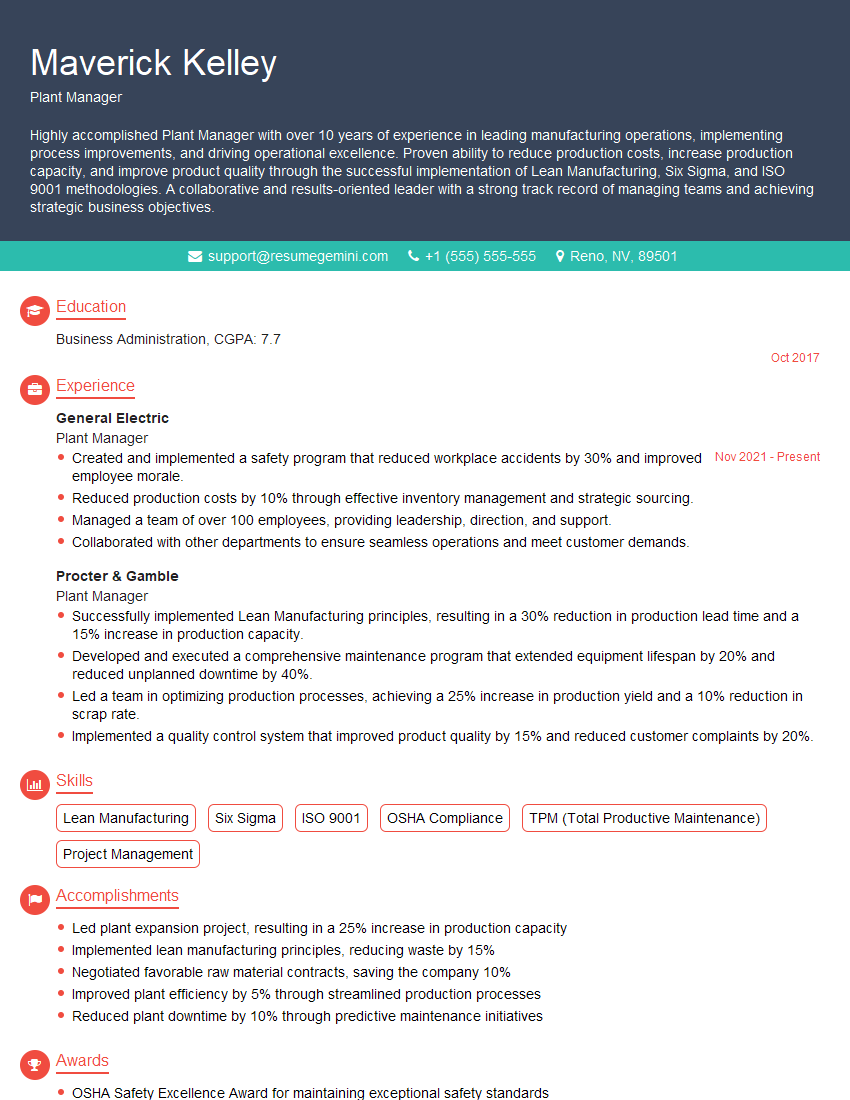
Plant Manager Resume Sample
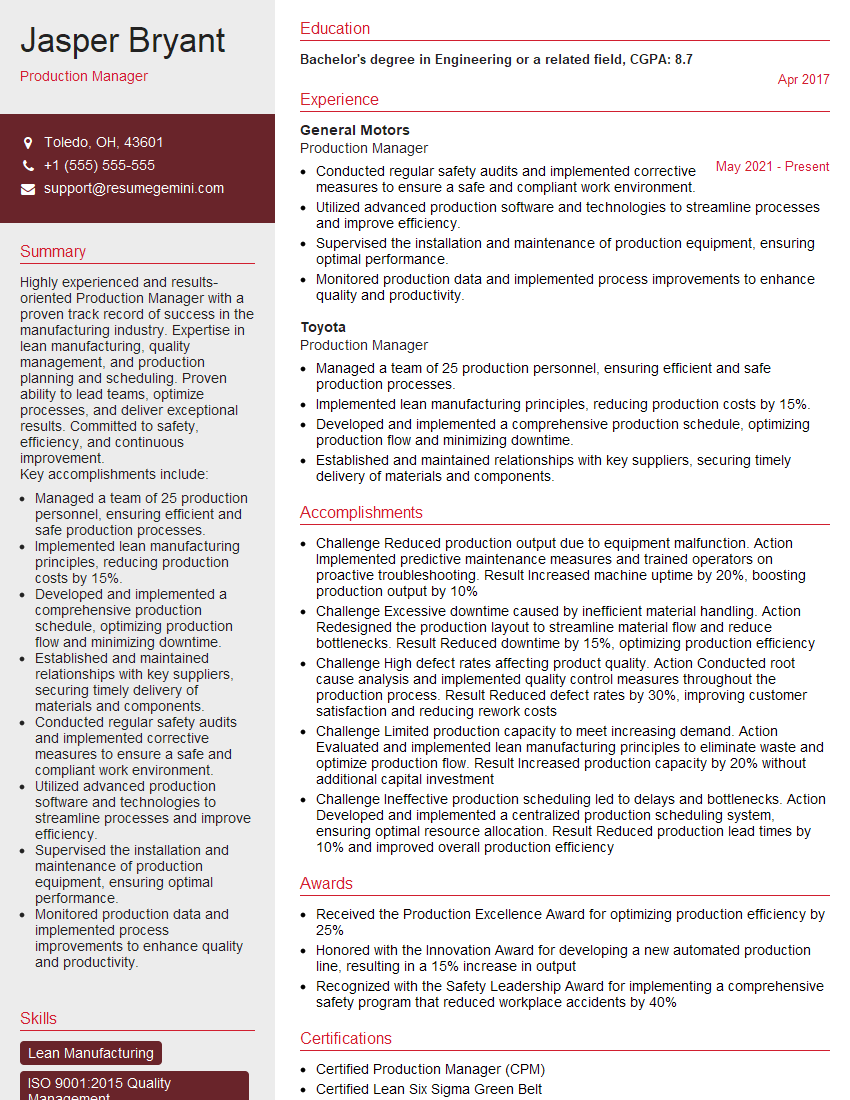
Production Manager Resume Sample
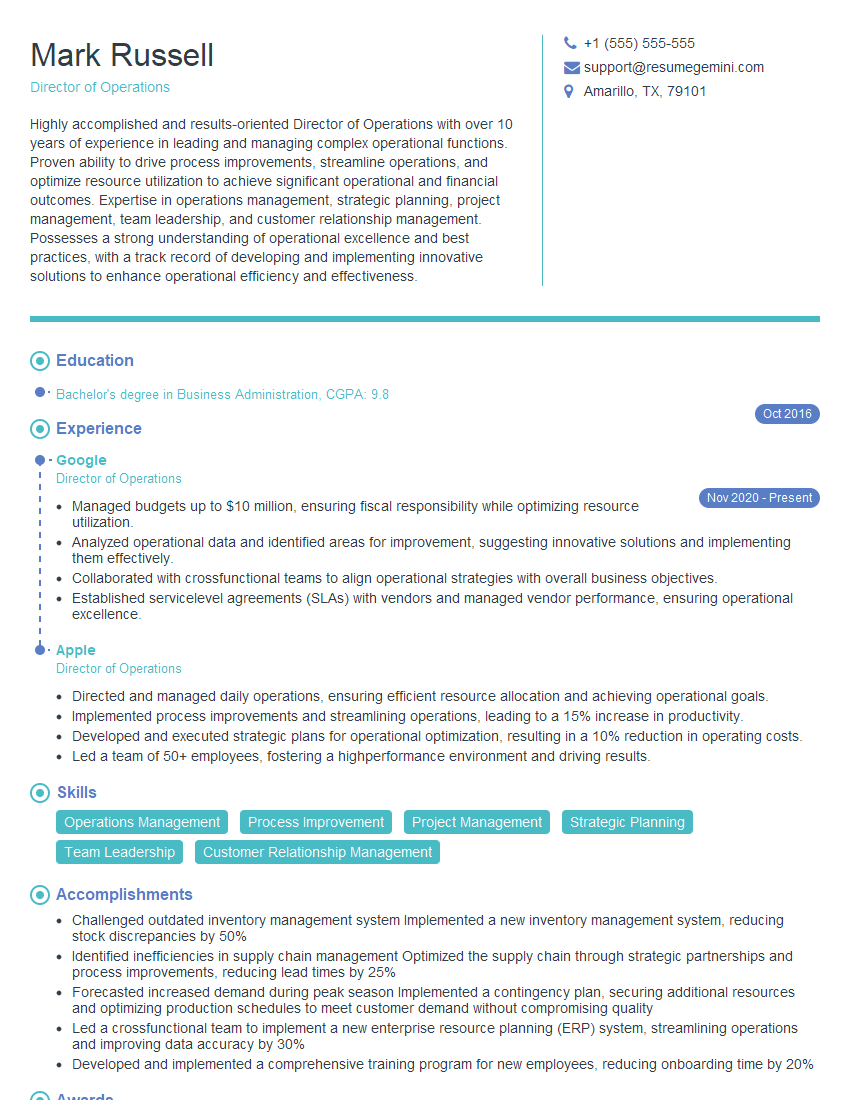
Director of Operations Resume Sample
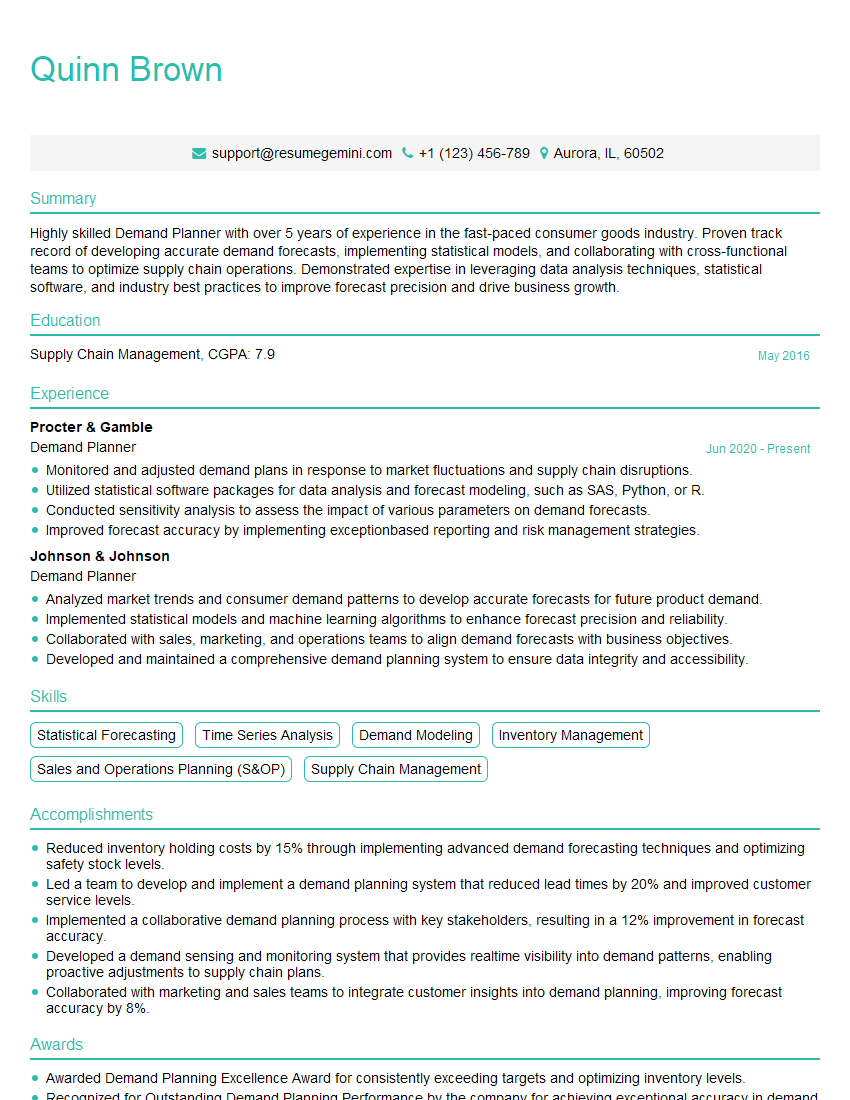
Demand Planner Resume Sample

Manufacturing Planner Resume Sample
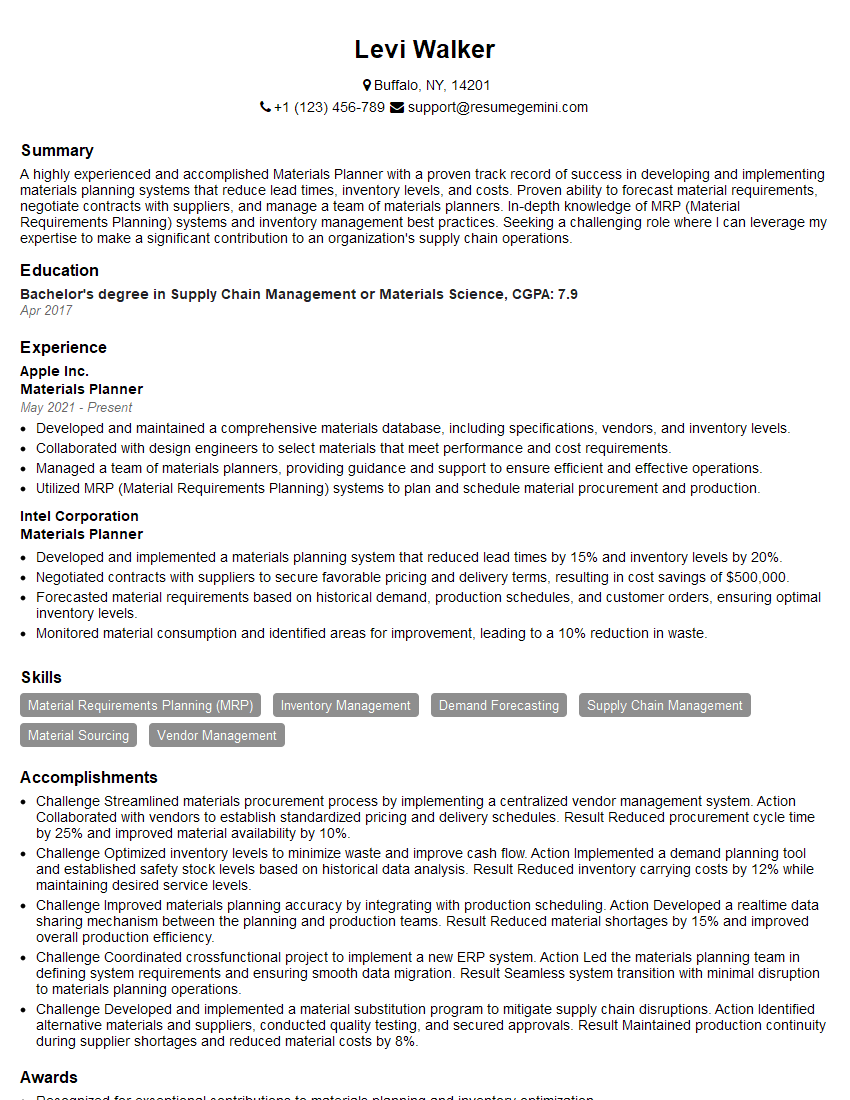
Materials Planner Resume Sample
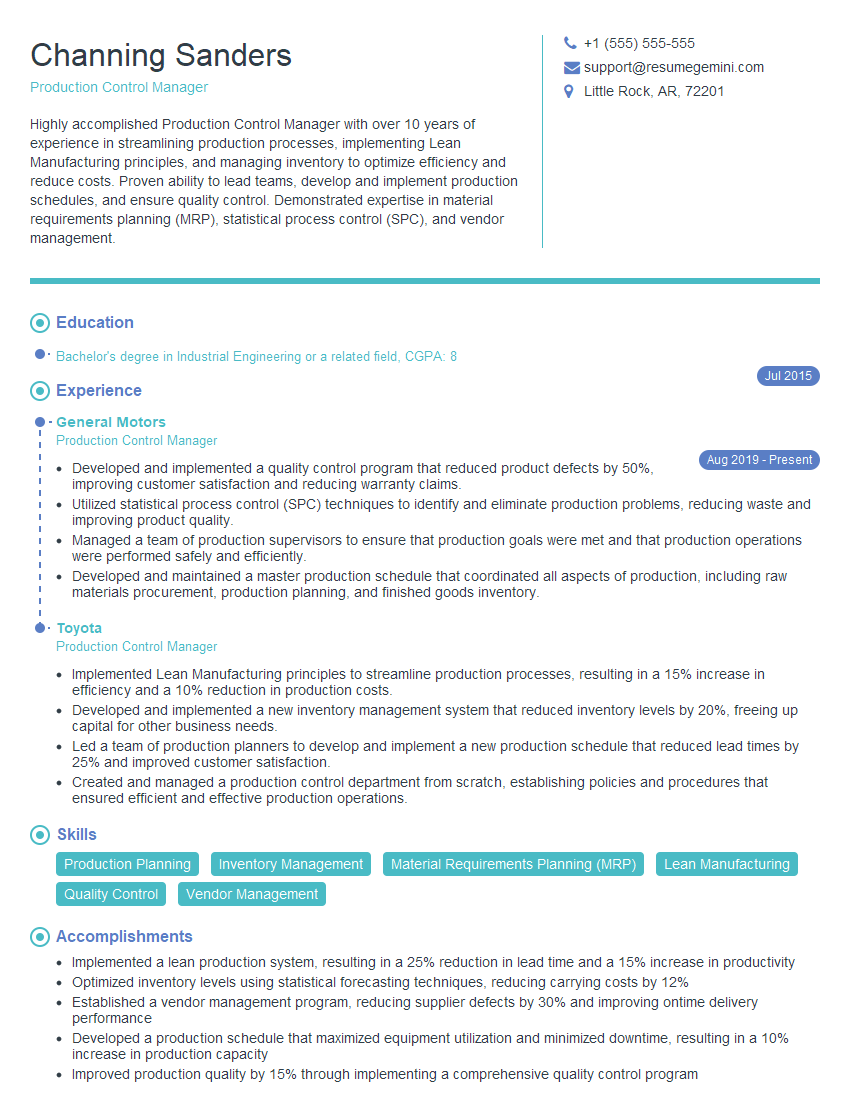
Production Control Manager Resume Sample
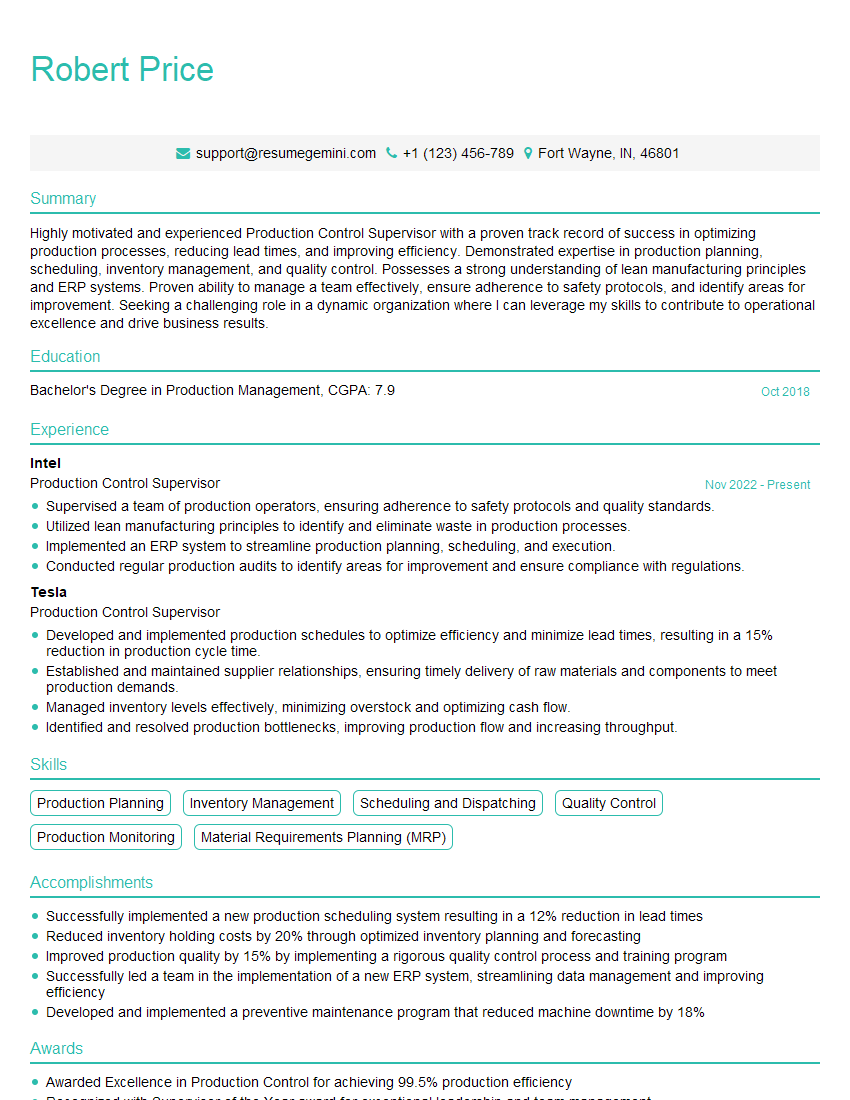
Production Control Supervisor Resume Sample
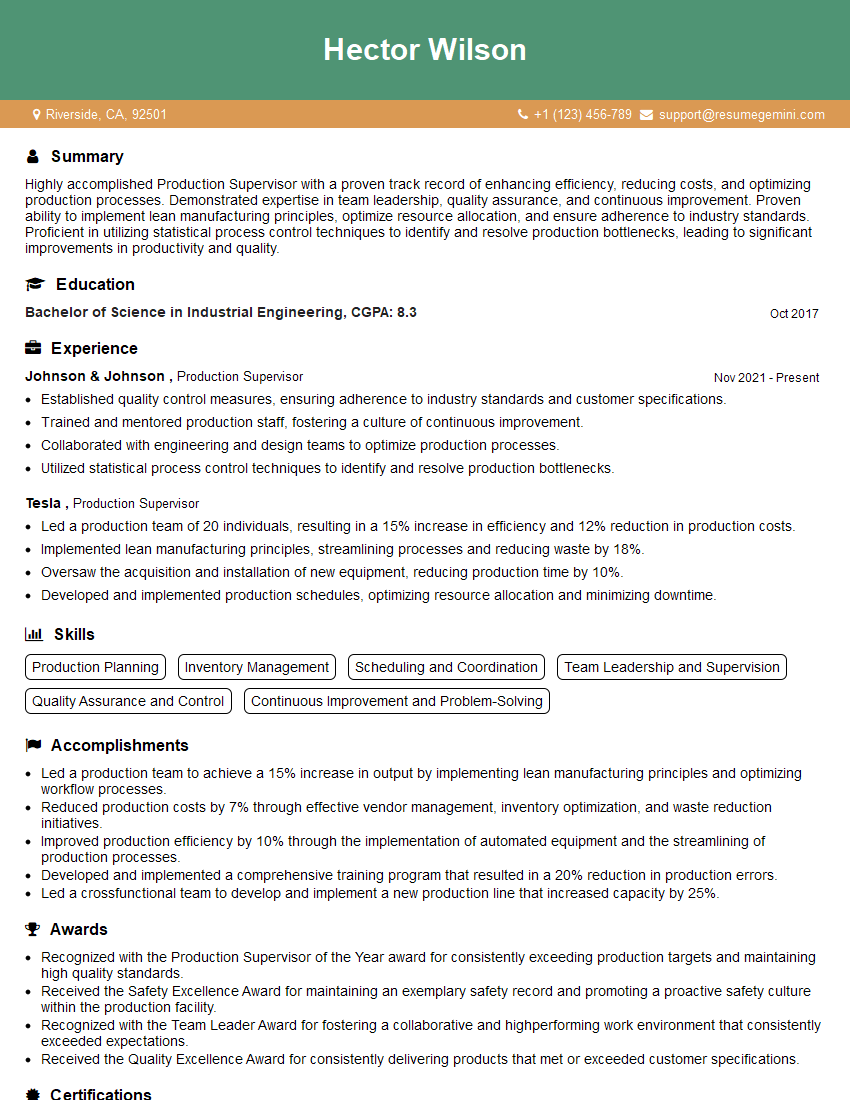
Production Supervisor Resume Sample
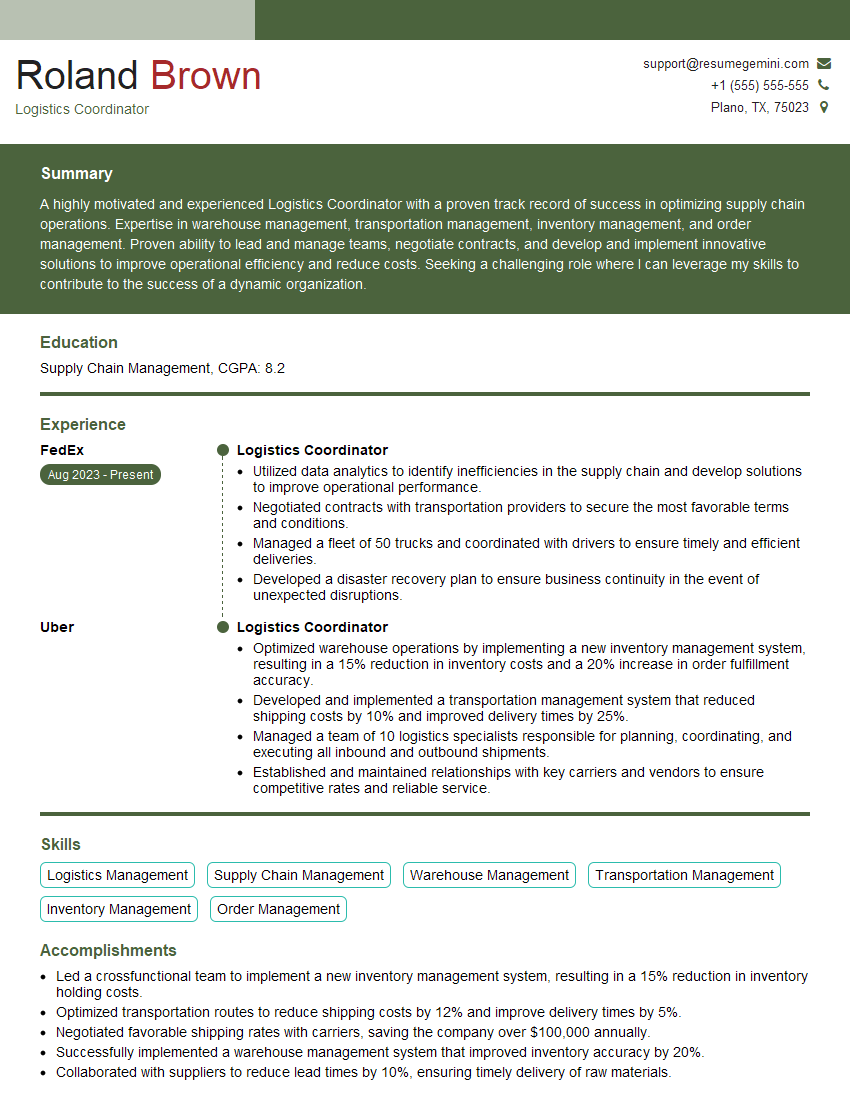
Logistics Coordinator Resume Sample
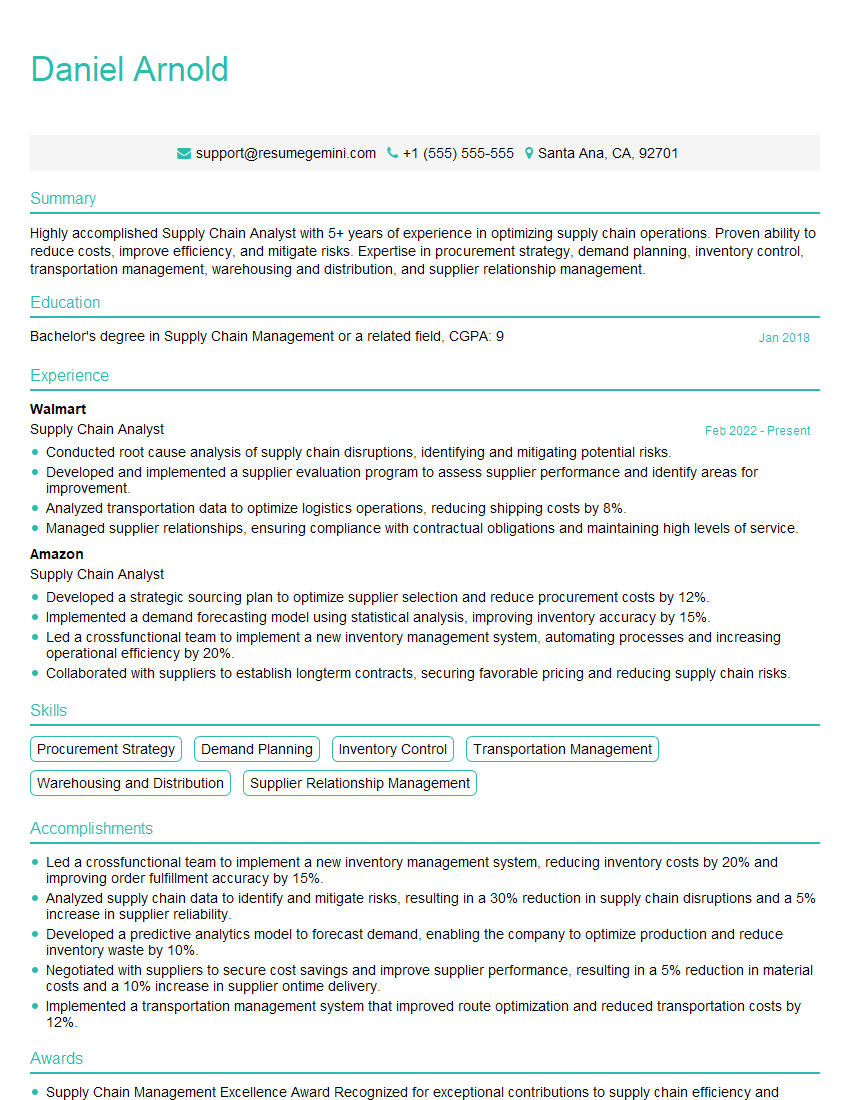
Supply Chain Analyst Resume Sample
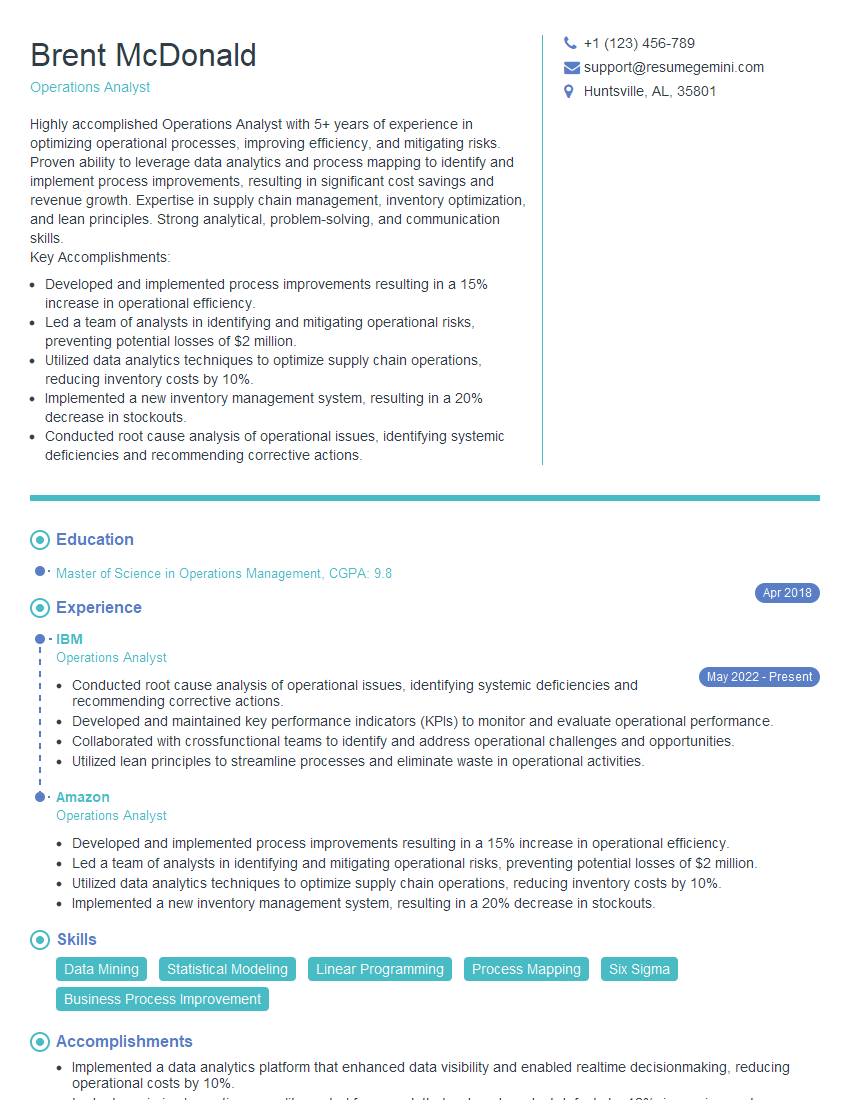
Operations Analyst Resume Sample
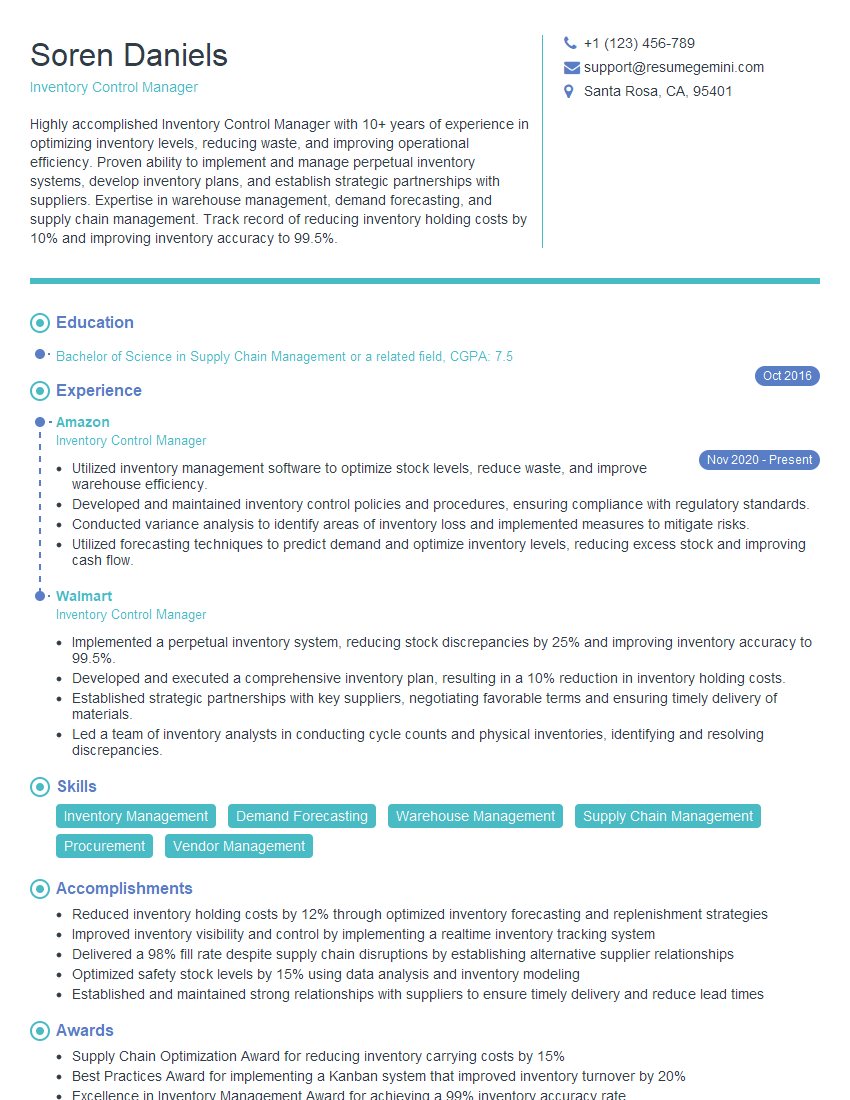
Inventory Control Manager Resume Sample
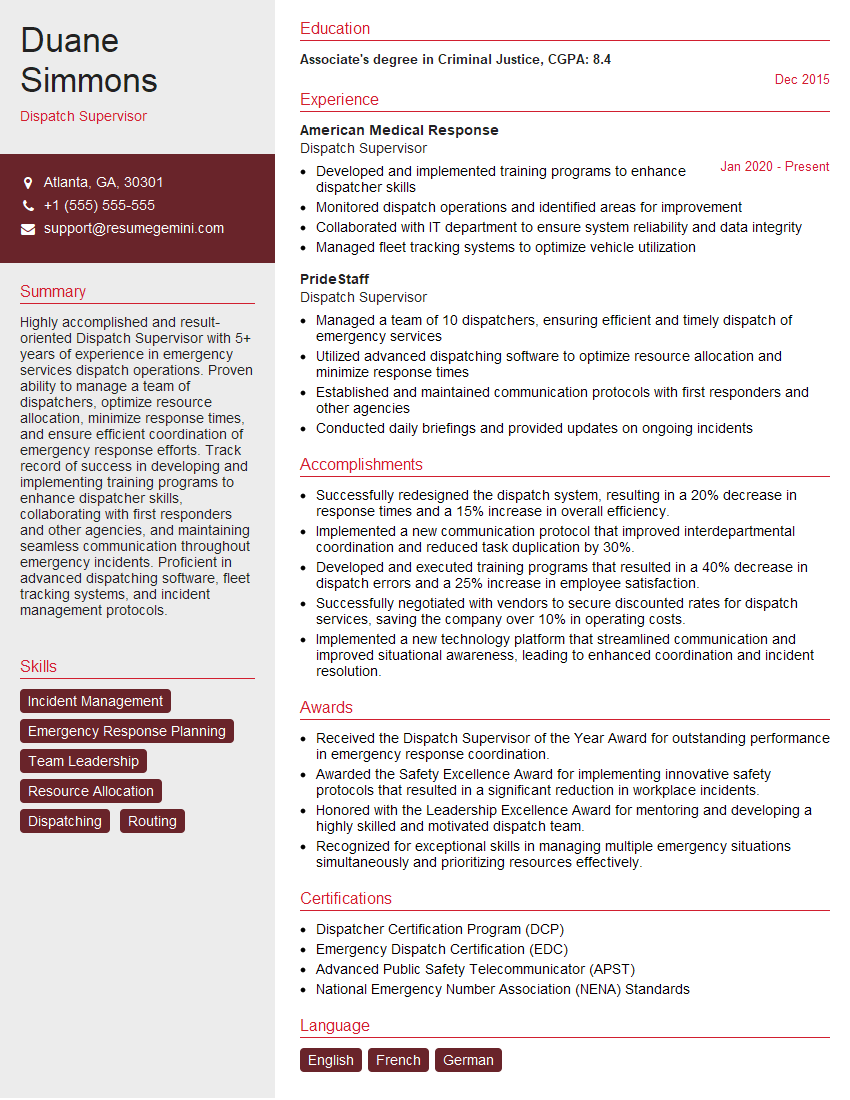
Dispatch Supervisor Resume Sample
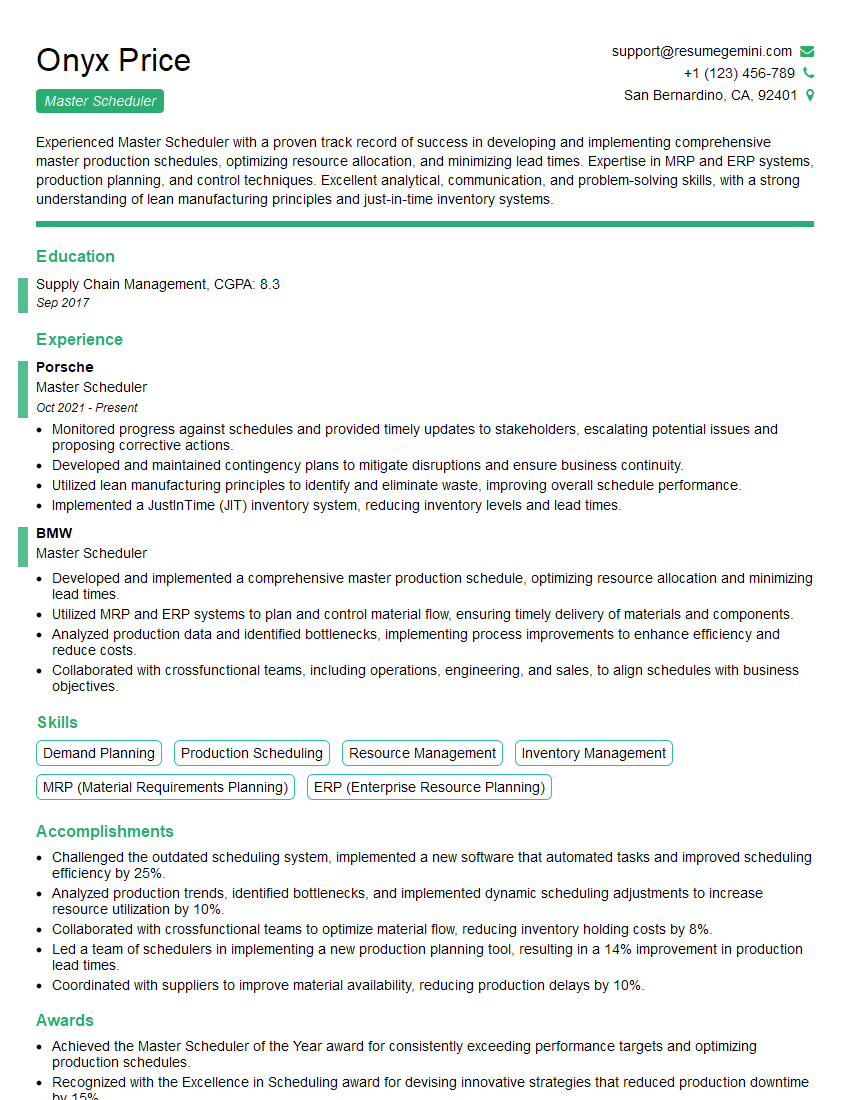
Master Scheduler Resume Sample
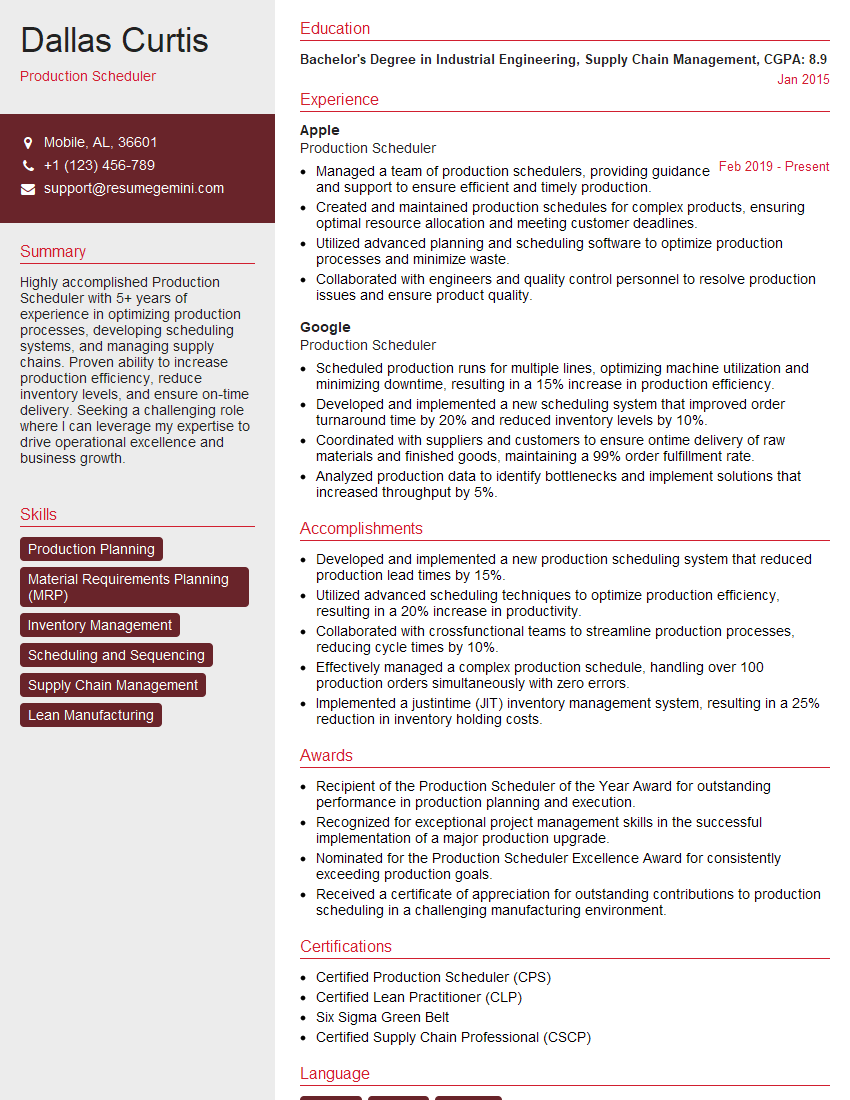
Production Scheduler Resume Sample
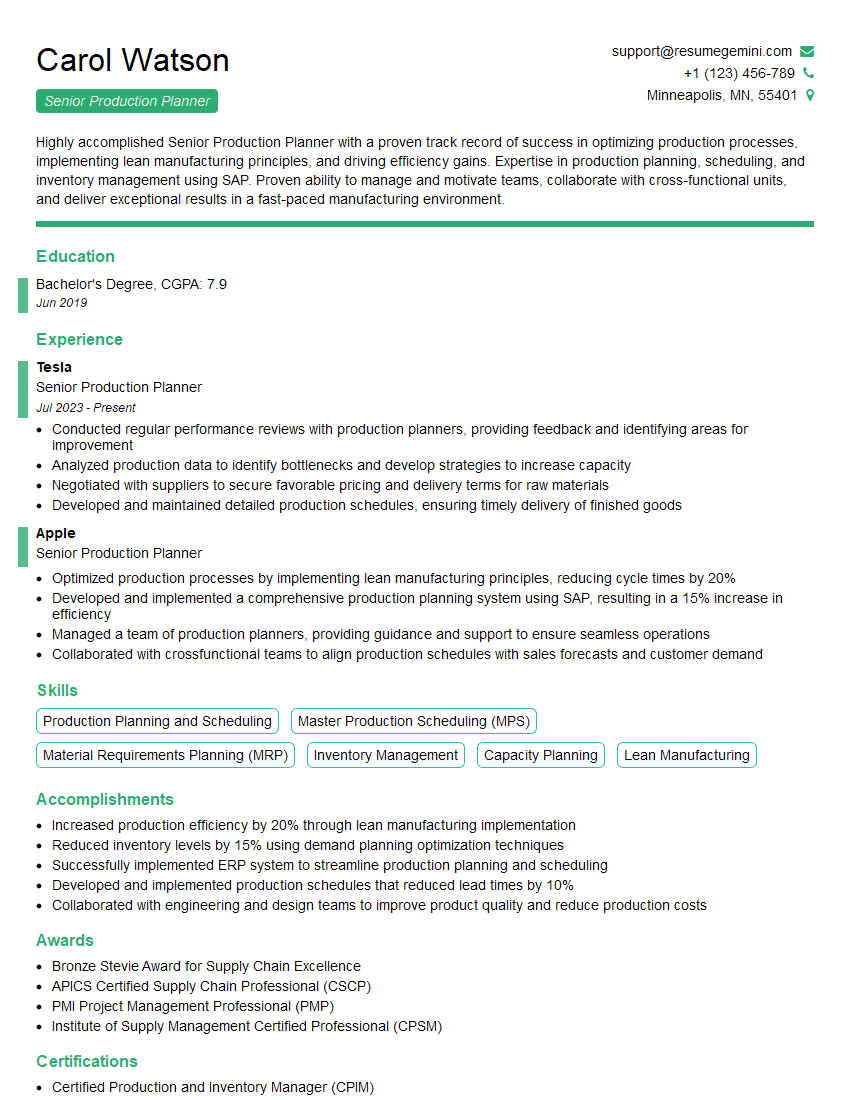
Senior Production Planner Resume Sample
- Operations Manager
- Plant Manager
- Production Manager
- Director of Operations
- Demand Planner
- Manufacturing Planner
- Materials Planner
- Production Control Manager
- Production Control Supervisor
- Production Supervisor
- Logistics Coordinator
- Supply Chain Analyst
- Operations Analyst
- Inventory Control Manager
- Dispatch Supervisor
- Master Scheduler
- Production Scheduler
- Senior Production Planner
Explore more articles
Users Rating of Our Blogs
Share Your Experience
We value your feedback! Please rate our content and share your thoughts (optional).
What Readers Say About Our Blog
Very informative content, great job.
good