Interviews are more than just a Q&A session—they’re a chance to prove your worth. This blog dives into essential Proficiency in Army Weapons Systems interview questions and expert tips to help you align your answers with what hiring managers are looking for. Start preparing to shine!
Questions Asked in Proficiency in Army Weapons Systems Interview
Q 1. Describe the function and operation of the M4 Carbine.
The M4 Carbine is a 5.56mm, magazine-fed, gas-operated, air-cooled carbine. Its function is to provide soldiers with a lightweight, maneuverable weapon for close-quarters combat and mid-range engagements. Operation relies on the principle of direct impingement, where propellant gases are directly channeled into the bolt carrier group to cycle the action. When the trigger is pulled, the firing pin strikes the primer, igniting the propellant. This creates pressure that pushes the bullet down the barrel, simultaneously propelling the spent casing rearward, where it’s extracted and ejected. The bolt carrier group then cycles backward, recocking the hammer and preparing for the next round. The gas system regulates the gas pressure to prevent malfunctions and maintain reliability. The carbine is equipped with various accessories for enhancing accuracy and functionality, including sights, grips, and rails for attaching additional equipment like lasers and tactical lights.
Imagine it like a sophisticated, miniaturized version of the M16 rifle, tailored for close-combat scenarios where its lighter weight and compact design are significant advantages.
Q 2. Explain the different types of ammunition used in the M249 SAW.
The M249 Squad Automatic Weapon (SAW) primarily uses 5.56x45mm NATO ammunition. This is typically the standard M855 ball ammunition, known for its versatility and ability to penetrate certain materials. However, the M249 can also fire other types of 5.56mm ammunition, depending on mission requirements. These include tracer rounds (M856), which leave a visible trail to assist in target acquisition and fire adjustment. Alternatively, less lethal options might be used, depending on the situation and mission objective. These are rarely deployed on an M249 due to its role as a suppressive weapon. It’s crucial to use only the appropriate ammunition specified for the weapon to maintain safety and proper functionality. Using the wrong ammunition can lead to severe malfunctions and potentially dangerous consequences.
Q 3. What are the safety procedures for handling and storing explosives?
Safety procedures for handling and storing explosives are paramount to prevent accidents and injuries. These procedures involve meticulous adherence to strict protocols. Firstly, always treat all explosives as if they are live. Secondly, never handle explosives without proper training and authorization. Thirdly, storage must be in designated, secure locations, far from ignition sources. These locations require environmental controls and safeguards against unauthorized access. Storage facilities should be climate-controlled to maintain stability. Fourthly, personal protective equipment (PPE), such as gloves, eye protection, and hearing protection, should always be worn during handling. Finally, detailed records should be kept of all explosive materials, including their quantity, location, and handling history. Failure to comply with these safety procedures can lead to catastrophic consequences, including explosions, fires, and serious injury or death.
Think of it like handling high-voltage electricity – extreme caution and the correct procedures are crucial to prevent accidents. Improper handling can have devastating results.
Q 4. How do you perform a function check on a standard-issue pistol?
A function check on a standard-issue pistol, like the M9 Beretta or M17, involves a series of steps to ensure the weapon is functioning correctly and safely. First, ensure the weapon is unloaded and cleared. This involves visually inspecting the chamber and magazine to confirm the absence of any ammunition. Next, check the trigger mechanism for smooth operation and absence of binding. Then, cycle the action multiple times—inserting a dummy round or snap cap to simulate live ammunition and confirming smooth operation of the slide or revolver cylinder. Finally, check the sights for proper alignment and function. This functional check is essential before going to the range for any live fire. It’s a routine that prevents dangerous malfunctions on the firing line and ensures safe operation.
Remember, always treat every firearm as if it were loaded, even during this procedure, until you have visually confirmed it is clear.
Q 5. Describe the process of cleaning and maintaining an M16 rifle.
Cleaning and maintaining an M16 rifle is crucial for its proper functioning and longevity. Begin by ensuring the weapon is unloaded and cleared. Then, disassemble the weapon following proper procedures, separating the upper and lower receivers, bolt carrier group, and other components. Use the appropriate cleaning kit, which typically includes a cleaning rod, bore brush, patches, and cleaning solvent. Clean the barrel thoroughly, removing all fouling and carbon residue. Clean all other components, ensuring that all moving parts are lubricated appropriately, but without excessive grease. Reassemble the weapon and function-check it before storing it. Regular cleaning after every use and a more thorough cleaning at least monthly is essential. Proper lubrication is key to prevent rust, corrosion and smooth reliable functioning.
Think of it like maintaining a high-performance engine – regular maintenance and cleaning prevent long-term damage and ensure smooth operation.
Q 6. What are the common malfunctions of the M240B machine gun and how are they remedied?
The M240B machine gun, while robust, can experience various malfunctions. Common issues include feeding problems (caused by bent or damaged ammunition, or improper lubrication), failure to feed (often due to a dirty or damaged feed mechanism), failure to fire (due to a faulty firing pin or a malfunctioning trigger group), and jams (resulting from a variety of factors). Remedies vary depending on the malfunction. Feeding problems might require adjusting the feed tray, while failures to feed may necessitate cleaning or replacing parts. Failure to fire usually requires a more in-depth inspection and potential replacement of parts. Jams require immediate attention, and often involve clearing the barrel and ensuring proper ammunition feeding. Troubleshooting involves careful observation of the problem and a systematic approach to identifying and fixing the cause. Regular cleaning, proper lubrication, and high-quality ammunition greatly reduce the likelihood of malfunctions.
A methodical approach to diagnosing the issue is key – don’t rush the process; careful observation and systematic troubleshooting are the best approach.
Q 7. Explain the principles of ballistics.
Ballistics is the science of projectile motion. It encompasses the study of factors affecting the trajectory and behavior of a projectile in flight. This includes external factors like gravity, air resistance (drag), and wind, as well as internal factors such as muzzle velocity, projectile weight, shape, and spin (rifling). Gravity acts to pull the projectile downward, while air resistance slows it down and affects its trajectory. Wind deflects the projectile from its path. Muzzle velocity affects the range and accuracy of the projectile; higher velocity typically translates to greater range and flatter trajectory. Projectile characteristics (weight, shape, spin) influence the projectile’s stability in flight and its accuracy. Understanding ballistics is crucial for accurate marksmanship, weapon design, and artillery calculations. Factors like altitude and temperature also play a significant role in how a projectile will fly and perform.
Imagine throwing a ball – gravity pulls it down, air resistance slows it down, and wind might push it off course. Ballistics is about understanding and predicting these effects for projectiles fired from firearms.
Q 8. What are the different types of artillery shells and their uses?
Artillery shells are categorized based on their function and the effects they produce. Understanding these types is crucial for mission success and minimizing collateral damage.
High-Explosive (HE): These shells are designed for maximum blast and fragmentation effects. They are versatile and effective against personnel, lightly armored vehicles, and fortifications. Think of them as the ‘general-purpose’ shell.
High-Explosive Anti-Tank (HEAT): HEAT shells utilize a shaped charge to penetrate armor. The shaped charge focuses the explosive force into a jet of molten metal, capable of piercing even thick tank armor. This is our go-to for destroying heavily armored targets.
Illumination (ILLUM): These shells release a bright flare, providing illumination for night operations. Essential for navigating in darkness or targeting enemy positions at night.
Smoke: Smoke shells produce a dense cloud of smoke, used for obscuring friendly movements or creating screens to block enemy observation. Think of it as a tactical camouflage.
White Phosphorus (WP): WP shells create an incendiary effect, burning intensely and producing a dense white smoke. Primarily used for illumination or as a temporary anti-personnel weapon, burning skin on contact.
Cluster Munitions: These shells contain numerous smaller bomblets, dispensing them over a wide area. While highly effective against personnel and lightly armored vehicles, their use is subject to strict international laws and regulations due to the potential for civilian casualties.
The selection of the appropriate shell type depends entirely on the specific mission objective and the target.
Q 9. Describe the function of a fire control system in a tank.
A tank’s fire control system is its ‘brain,’ integrating various sensors and computers to accurately engage targets. Think of it as the targeting system of a highly sophisticated rifle.
The system gathers data from several sources: the laser rangefinder determines the distance to the target; the ballistic computer calculates the trajectory based on factors like wind, temperature, and the shell’s characteristics; the gun stabilization system compensates for the tank’s movement; and the sights allow the gunner to aim.
All this information is processed to determine the optimal firing solution and adjust the gun’s aiming accordingly, increasing the probability of a first-round hit, even while moving. Modern systems often incorporate advanced features like thermal imaging and predictive targeting.
Q 10. What are the procedures for responding to a weapons malfunction in a combat situation?
Weapons malfunctions in combat are serious and require immediate attention. Safety and situational awareness are paramount.
Safety First: Clear the weapon. This involves removing the magazine, ensuring the chamber is empty, and if possible, engaging a safety mechanism.
Assess the Situation: Determine the nature of the malfunction. Is it a simple stoppage, a more significant mechanical failure, or ammunition-related?
Attempt Remedial Action: Depending on training and the nature of the malfunction, attempt basic troubleshooting. This might include clearing a stoppage or adjusting a malfunctioning part. Never attempt repairs beyond your training.
Report the Malfunction: Immediately notify your supervisor or designated personnel. Detailed reporting is crucial for ensuring weapon readiness and for conducting maintenance or repairs.
Evacuate or Take Cover: If the malfunction is beyond immediate resolution or if the situation becomes dangerous, take cover and evacuate the area to minimize risk.
Follow established procedures: Army regulations provide detailed step-by-step guidance for troubleshooting specific weapons systems, which must always be followed.
Remember: Weapon safety procedures should always be prioritized above attempting complex repairs in a dangerous combat setting. Your life and the safety of your comrades depend on it.
Q 11. How do you identify and address potential hazards associated with weapons systems?
Identifying and addressing hazards associated with weapons systems requires a systematic approach. It’s not just about handling; it’s about anticipating problems.
Pre-Operational Inspections: Always conduct thorough pre-operational checks of weapons and ammunition. This includes checking for defects, ensuring proper functioning, and verifying ammunition compatibility.
Environmental Factors: Consider environmental conditions – extreme temperatures, humidity, or dust can affect weapon performance and safety. Take proper precautions to mitigate risks.
Ammunition Handling: Adhere strictly to ammunition handling procedures. Incorrect storage, handling, or transportation can lead to misfires, explosions, or accidental injuries.
Risk Assessments: Conduct regular risk assessments to identify potential hazards, and develop mitigation strategies. Consider factors like weapon type, ammunition type, training level, and environment.
Safety Training: Ensure all personnel receive comprehensive safety training on the specific weapons systems they operate. Regular refresher courses are crucial to maintain a high level of competency.
A proactive approach to safety is paramount. Thinking ahead and anticipating potential problems significantly reduces the likelihood of accidents.
Q 12. Describe your experience with weapons maintenance and repair.
Throughout my career, I’ve gained extensive experience in weapons maintenance and repair, covering various weapon systems. My experience includes preventative maintenance, troubleshooting malfunctions, and conducting repairs according to established procedures. I’ve been trained on a variety of systems including the M4 Carbine, the M249 SAW, and the M1 Abrams tank. I am proficient in using specialized tools and equipment for diagnosing and resolving issues, and my experience extends to maintaining ammunition, storage, and transport protocols. For example, I once successfully diagnosed and repaired a faulty firing pin in an M4 Carbine during a field exercise, preventing a potential mission failure.
Q 13. Explain your understanding of weapons safety regulations.
Weapons safety regulations are paramount, and they are meticulously followed in my professional practice. These regulations cover every aspect of weapon handling, from storage and transportation to use and maintenance. They are designed to prevent accidents, injuries, and unauthorized use. Key aspects of these regulations include strict control of access to weapons and ammunition; thorough training on safe handling procedures; regular inspections and maintenance; and the proper documentation of all transactions involving weapons and ammunition. These regulations are not merely guidelines; they are strict protocols ensuring personnel and public safety. Failure to adhere to these regulations can have serious legal and disciplinary consequences.
Q 14. How do you ensure the security and accountability of weapons and ammunition?
Ensuring the security and accountability of weapons and ammunition requires a multi-layered approach, encompassing strict adherence to regulations and diligent record-keeping. This starts with secure storage facilities with access limited to authorized personnel, coupled with robust inventory management systems. Each weapon and every round of ammunition must be tracked meticulously, from the moment it enters our custody until it is returned. This usually involves serial numbers and detailed logs that document their location, movement, and any maintenance procedures. Regular audits are critical to verify accuracy and identify any discrepancies. In addition, responsible personnel are designated to oversee the entire process ensuring rigorous adherence to safety protocols throughout the weapon’s lifecycle.
Q 15. What is your experience with different types of sighting systems?
My experience with sighting systems spans a wide range, from basic iron sights to advanced electro-optical systems. Iron sights, the simplest, rely on mechanical alignment of the front and rear sights with the target. I’ve extensively used these on various rifles, appreciating their reliability and simplicity, though their accuracy is limited at longer ranges. I’ve also worked extensively with optical sights, including telescopic sights with varying magnification levels, offering significant improvements in accuracy and target acquisition at longer ranges. These are particularly important for precision shots. Furthermore, I’m proficient with laser aiming modules (LAMs), providing pinpoint accuracy, especially in low-light conditions. Finally, I have experience with thermal sights, which are invaluable in adverse weather or nighttime operations, allowing for the detection of heat signatures.
- Iron Sights: Reliable, simple, but limited range.
- Telescopic Sights: Enhanced accuracy and target acquisition at longer distances.
- Laser Aiming Modules (LAMs): Pinpoint accuracy, especially effective in low light.
- Thermal Sights: Superior target acquisition in adverse conditions.
Career Expert Tips:
- Ace those interviews! Prepare effectively by reviewing the Top 50 Most Common Interview Questions on ResumeGemini.
- Navigate your job search with confidence! Explore a wide range of Career Tips on ResumeGemini. Learn about common challenges and recommendations to overcome them.
- Craft the perfect resume! Master the Art of Resume Writing with ResumeGemini’s guide. Showcase your unique qualifications and achievements effectively.
- Don’t miss out on holiday savings! Build your dream resume with ResumeGemini’s ATS optimized templates.
Q 16. Describe your experience with conducting weapons training.
My weapons training experience encompasses both classroom instruction and hands-on field exercises. I’ve developed and delivered training programs covering various weapon systems, including small arms, crew-served weapons, and anti-tank weapons. My approach emphasizes safety protocols, proper weapon handling techniques, marksmanship fundamentals, and tactical application. I’ve incorporated both live-fire and simulation exercises to provide trainees with realistic scenarios and immediate feedback. A memorable experience involved instructing a platoon on the M240B machine gun, where I focused on practical drills to improve their speed and accuracy under stress. The improved proficiency achieved by the platoon was extremely satisfying.
I’ve also designed and implemented advanced training modules focused on malfunction clearing, emergency procedures, and night-fire techniques. Assessment methods include practical exercises, written tests, and performance evaluations, ensuring trainees achieve the required proficiency levels.
Q 17. What are the different types of grenades and their applications?
Grenades are versatile handheld explosive devices with various applications. They are broadly categorized into fragmentation grenades, which explode into numerous lethal fragments, and non-fragmentation grenades, which utilize other mechanisms like smoke, gas, or flash-bang effects.
- Fragmentation Grenades (e.g., M67): Designed to kill or incapacitate personnel within a specific radius. Their effectiveness depends on factors like the terrain and cover.
- Smoke Grenades (e.g., M18): Used for concealment, screening maneuvers, or marking targets. They create a dense cloud of smoke to obscure vision.
- Stun Grenades (Flashbangs): Create a blinding flash and deafening bang to temporarily disorient and incapacitate enemies.
- Incendiary Grenades: Designed to start fires. Their use is often restricted due to the potential for collateral damage.
The selection of the appropriate grenade depends heavily on the mission objectives, the type of target, and the operational environment. For instance, fragmentation grenades are typically used against enemy personnel in open areas, whereas smoke grenades are vital for tactical maneuvers like breaching buildings or creating cover during assaults.
Q 18. Explain the principles of marksmanship.
Marksmanship is the art and science of accurately hitting a target with a firearm. It relies on several key principles:
- Proper Stance and Grip: A stable and controlled shooting position is paramount. This involves a comfortable stance that minimizes movement and provides a firm grip on the weapon, preventing unwanted sway.
- Sight Alignment and Picture: Correctly aligning the front and rear sights with the target is crucial for accuracy. This requires focusing on the front sight while maintaining awareness of the target.
- Breath Control: Holding one’s breath during the shot helps eliminate movement. Controlled breathing and releasing the breath at the appropriate moment helps ensure a steady shot.
- Trigger Control: A smooth, controlled trigger pull is vital to avoid jerking the weapon and causing inaccuracy. The goal is to break the shot without disturbing the sight picture.
- Follow-Through: Maintaining the sight picture after firing the shot helps to ensure the shooter is properly aligned with the target.
Mastering these principles, combined with practice and training, leads to improved accuracy and consistency.
Q 19. Describe your experience with troubleshooting and repairing weapons systems.
My experience with troubleshooting and repairing weapons systems involves systematic diagnostics, utilizing technical manuals, and specialized tools. I’ve worked on a variety of small arms, identifying and resolving malfunctions ranging from simple stoppages to more complex mechanical issues. For example, I once diagnosed and repaired an M4 carbine experiencing frequent jams due to a faulty extractor. My approach involved carefully examining the weapon, identifying the faulty component, and then replacing or repairing it, following established procedures and safety protocols.
This involves familiarity with weapon schematics, understanding the functioning of individual components, and employing appropriate cleaning and maintenance techniques. Preventive maintenance, such as regular cleaning and lubrication, is crucial in preventing malfunctions and extending the lifespan of the weapon system. I’m proficient in using specialized tools, such as bore brushes, cleaning rods, and punches, to carry out these tasks efficiently and safely.
Q 20. What is your experience with the use of advanced weaponry such as UAVs or guided missiles?
My experience with advanced weaponry is limited to training and familiarization, rather than operational deployment. I have received training on the operation and tactical employment of Unmanned Aerial Vehicles (UAVs), specifically regarding their use in reconnaissance, surveillance, and target acquisition. This included understanding their capabilities, limitations, and operational procedures. I’ve also received classroom instruction on the principles of guided missile systems, covering their guidance mechanisms (e.g., GPS, laser, inertial), warheads, and target engagement processes. While I haven’t personally operated these systems in a combat setting, my theoretical understanding and simulation training provide a strong foundation for future opportunities in this area.
Q 21. What is your experience in diagnosing and resolving technical issues related to weapons systems?
Diagnosing and resolving technical issues in weapons systems requires a methodical approach. I typically start by conducting a visual inspection to identify any obvious problems. Then, I consult technical manuals and diagrams to understand the weapon’s operational parameters. If the issue persists, I employ a systematic troubleshooting process, often following a decision tree-like approach to isolate the faulty component. This might involve testing individual parts, checking electrical connections, or using specialized diagnostic tools. For instance, when a weapon fails to fire, I would systematically check the ammunition, the firing pin, the trigger mechanism, and the gas system to pinpoint the root cause.
Accurate record-keeping is crucial during this process. Documenting each step, including the tests performed, the observations made, and the corrective actions taken, is vital for maintaining a clear understanding of the issue, facilitates future troubleshooting, and ensures accountability.
Q 22. How do you ensure compliance with all relevant safety regulations regarding weapons handling?
Ensuring weapon safety is paramount. It’s not just about following rules; it’s about fostering a safety culture. My approach involves a multi-layered strategy. Firstly, I meticulously adhere to all unit-specific and Army-wide safety regulations, which are regularly updated and communicated. This includes pre- and post-exercise briefings, weapon handling demonstrations, and rigorous adherence to the four rules of firearms safety (treat every weapon as if it were loaded, never let the muzzle cover anything you are not willing to destroy, keep your finger off the trigger until your sights are on the target, and be sure of your target and what is beyond it). Secondly, I actively participate in safety training and refresher courses, staying updated on the latest best practices. Thirdly, I consistently model safe weapon handling for others, correcting unsafe behaviors and fostering a peer-to-peer safety culture within my team. Finally, I proactively identify and report any potential safety hazards related to weapons storage, maintenance, or handling.
For example, during a recent live-fire exercise, I noticed a soldier improperly clearing their weapon. I immediately intervened, correcting their technique and explaining the potential dangers. This proactive approach prevented a possible accident and reinforced safe handling practices for the entire team. This emphasizes that weapon safety isn’t just about individual compliance; it’s a collective responsibility.
Q 23. Describe your proficiency in various weapon systems (e.g., rifles, machine guns, mortars).
My proficiency extends across a range of Army weapons systems. I’m highly skilled in the operation and maintenance of various rifles, including the M4 Carbine and M16A4, possessing expert-level proficiency in their disassembly, cleaning, and reassembly. I am equally comfortable with machine guns, such as the M240B and M249, understanding their operational characteristics and maintenance requirements. My experience also includes working with mortar systems like the 60mm and 81mm, including ammunition handling, emplacement, and firing procedures. Beyond basic operation, I’m proficient in performing field repairs and troubleshooting common malfunctions in these systems.
For instance, during a deployment, we encountered a malfunctioning M240B. Through systematic troubleshooting, I quickly identified a problem with the feed mechanism and performed the necessary repairs on the spot, ensuring the weapon’s readiness for critical operations. This experience demonstrates my ability to swiftly diagnose and resolve issues under pressure.
Q 24. How do you maintain accurate records of weapons maintenance and repairs?
Maintaining accurate weapon records is critical for accountability, logistical planning, and ensuring the readiness of our equipment. We use a combination of digital and physical records. Each weapon is assigned a unique serial number, and all maintenance and repair activities are meticulously documented using digital databases such as the Army’s Property Book Unit Supply Enhanced (PBUSE) system. This system allows for precise tracking of every weapon, its condition, its maintenance history, and its location. Additionally, we maintain physical logs which are kept secure and updated after every weapons inspection. This dual system allows for cross-referencing and ensures data integrity.
For instance, after a weapon is serviced, the technician enters the date, type of service, parts replaced (if any), and their serial numbers into the PBUSE system, and also makes the same entry in the physical log book kept at the armoury. This creates a detailed, auditable trail of each weapon’s history, crucial for ensuring accountability and facilitating efficient logistics.
Q 25. Explain the importance of regular weapons inspections and preventative maintenance.
Regular weapons inspections and preventative maintenance are foundational to ensuring operational readiness and preventing accidents. Think of it like maintaining a vehicle—regular servicing ensures it’s running optimally and minimizes the risk of breakdowns. Inspections reveal potential issues before they escalate into major malfunctions, and preventative maintenance like cleaning and lubrication extends the lifespan of the weapon system, keeping it in peak condition. This translates to improved accuracy, reliability, and safety during operations.
A neglected weapon is a dangerous weapon. Regular inspections identify corrosion, wear and tear, and other potential issues that could compromise its functionality or safety. Preventative maintenance minimizes these risks, ensuring our soldiers are equipped with reliable weapons during critical missions.
Q 26. Describe your experience with different types of weapon cleaning and lubrication techniques.
I am proficient in various weapon cleaning and lubrication techniques, tailored to the specific weapon system and environmental conditions. This involves a thorough understanding of the weapon’s internal mechanisms to avoid damage during cleaning. I use appropriate cleaning solvents, oils, and greases, ensuring that I follow manufacturer recommendations and Army regulations. The process generally involves disassembling the weapon (to a level dictated by the weapon’s manual and my authorization level), cleaning each component with the appropriate solvent, inspecting for wear and tear, lubricating moving parts with appropriate oils and greases, and then reassembling the weapon.
For example, cleaning an M4 Carbine requires different techniques and solvents than cleaning an M240B machine gun. The appropriate solvents, lubricants and the disassembly and reassembly procedures are explicitly laid out in their respective manuals, and I follow them precisely.
Q 27. What are your troubleshooting skills in identifying and resolving malfunctions of weapons systems?
My troubleshooting skills are developed through extensive experience and a systematic approach. When a weapon malfunctions, I follow a structured process: First, I assess the situation and ensure safety. Second, I systematically check the weapon for obvious issues like obstructions, damaged parts, or improper assembly. Third, if the problem isn’t immediately apparent, I refer to the weapon’s technical manual and use diagnostic tools to pinpoint the cause. I also leverage my knowledge of the weapon’s operating mechanisms and my experience to identify potential points of failure.
For example, if an M4 Carbine fails to fire, I’d check the ammunition, the bolt carrier group, the firing pin, and the gas system, systematically eliminating possibilities until the root cause is identified. This systematic approach ensures quick and efficient resolution, minimizing downtime.
Q 28. How proficient are you with utilizing various weapon system diagnostic tools?
I’m proficient in utilizing various weapon system diagnostic tools, including bore scopes (for inspecting the barrel), cleaning kits, and specialized gauges used to ensure proper functioning of specific components. My proficiency extends to interpreting the data provided by these tools and using it to diagnose and resolve weapon system malfunctions effectively. Understanding the limitations and applications of each tool is crucial. I always ensure that I use the right tool for the job to avoid causing further damage or misinterpreting results.
For instance, a bore scope allows for a detailed examination of the barrel’s interior, detecting potential issues like rifling damage or obstructions that might not be visible during a standard visual inspection. The ability to correctly use this technology and interpret what I see allows me to accurately and confidently diagnose barrel problems. This is a critical skill for ensuring weapon system reliability and safety.
Key Topics to Learn for Proficiency in Army Weapons Systems Interview
- Weapon System Fundamentals: Understanding the basic principles of operation for various army weapon systems, including their components, functionalities, and limitations.
- Maintenance and Repair Procedures: Demonstrate knowledge of preventative maintenance, troubleshooting techniques, and repair processes for common weapon malfunctions. Be prepared to discuss practical scenarios.
- Safety Regulations and Procedures: Thorough understanding and application of all safety protocols associated with handling, storing, and maintaining army weapons systems. This includes safe operating procedures and emergency response.
- Ammunition Handling and Storage: Detailed knowledge of ammunition types, storage requirements, and safe handling procedures. Be prepared to discuss the implications of improper handling.
- Technical Specifications and Data Interpretation: Ability to interpret technical manuals, schematics, and other documentation related to army weapons systems. Practice analyzing data to identify potential problems.
- Problem-Solving and Troubleshooting: Showcase your ability to diagnose and resolve malfunctions efficiently and effectively, using a systematic approach. Consider using examples from your experience.
- Teamwork and Communication: Highlight your ability to work effectively within a team environment, communicate technical information clearly, and follow chain of command procedures.
- Current Weapon Systems and Technologies: Stay up-to-date on the latest advancements and technologies in army weapons systems. Demonstrate your continuous learning and adaptability.
Next Steps
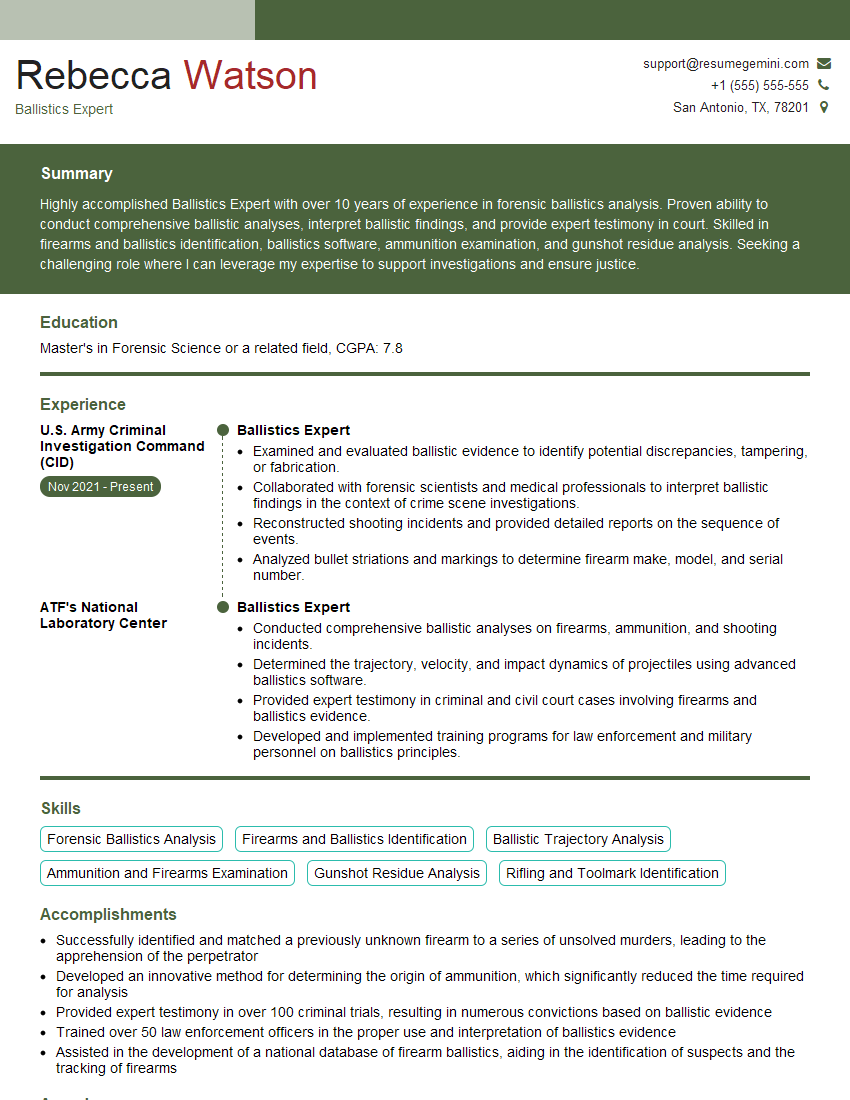
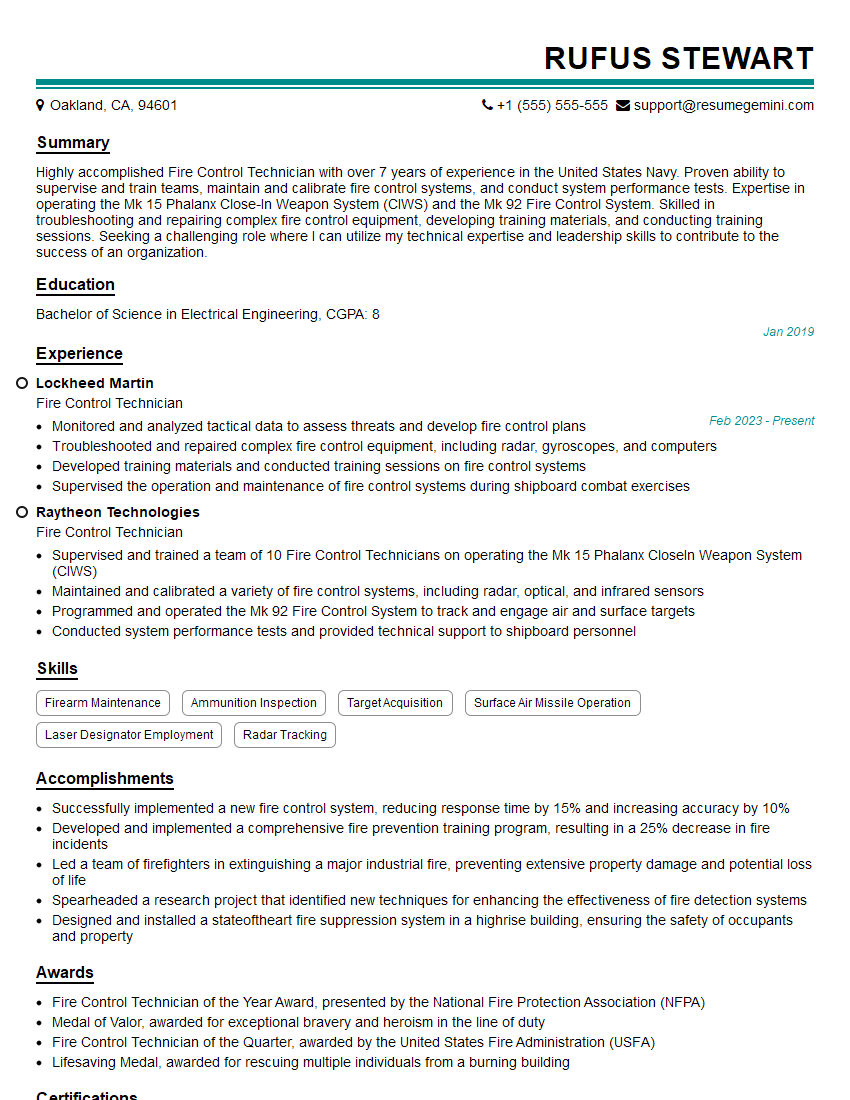
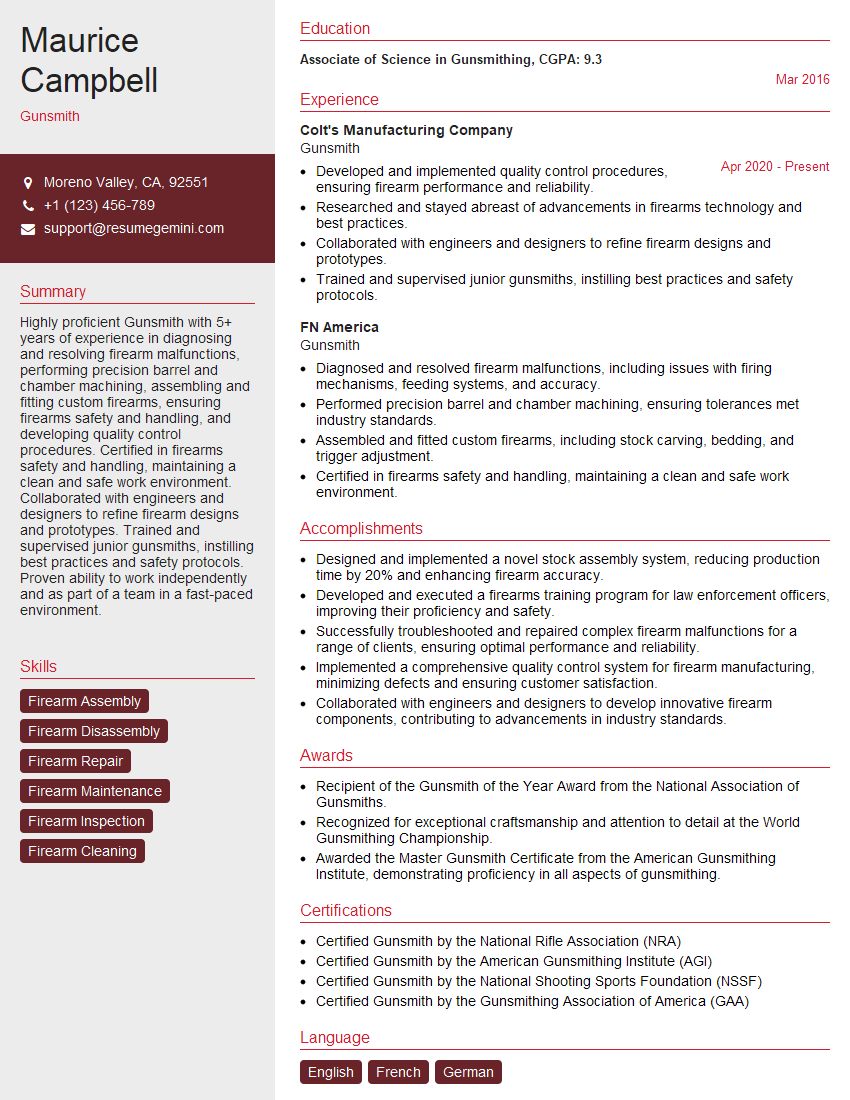
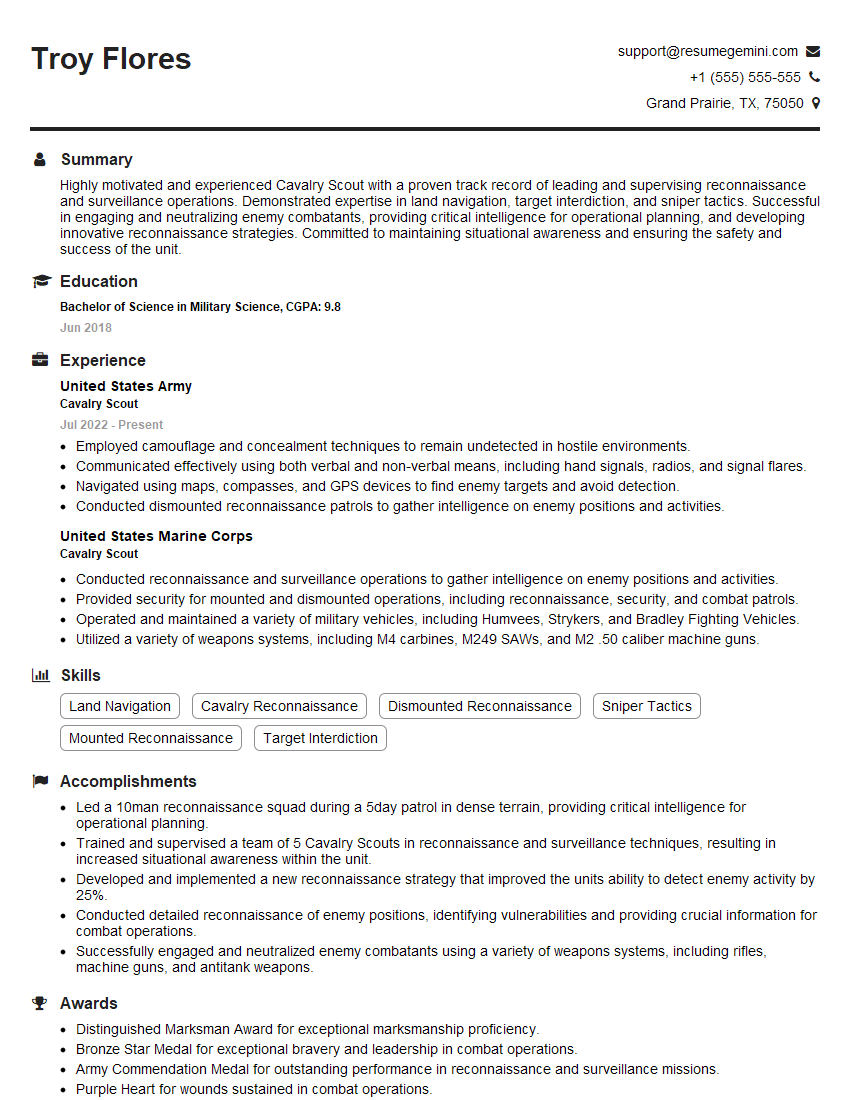
Mastering Proficiency in Army Weapons Systems is crucial for career advancement within the military and related fields. It showcases your technical expertise, problem-solving skills, and commitment to safety. To maximize your job prospects, create a compelling and ATS-friendly resume that highlights your key skills and experience. ResumeGemini is a trusted resource to help you build a professional and impactful resume tailored to your specific experience. Examples of resumes tailored to Proficiency in Army Weapons Systems are available to guide you through the process. Investing time in crafting a strong resume significantly increases your chances of landing your dream role.


Explore more articles
Users Rating of Our Blogs
Share Your Experience
We value your feedback! Please rate our content and share your thoughts (optional).
What Readers Say About Our Blog
Very informative content, great job.
good