Cracking a skill-specific interview, like one for Proficient in Arranging for Film, Television, and Video Games, requires understanding the nuances of the role. In this blog, we present the questions you’re most likely to encounter, along with insights into how to answer them effectively. Let’s ensure you’re ready to make a strong impression.
Questions Asked in Proficient in Arranging for Film, Television, and Video Games Interview
Q 1. Describe your experience with music licensing and clearance for film projects.
Music licensing and clearance for film projects is a crucial, and often complex, process. It involves securing the legal rights to use pre-existing music in your production. This isn’t simply about finding a song you like; it’s about navigating copyright laws and negotiating agreements with copyright holders (often the songwriter, publisher, and record label). The process usually begins with identifying potential tracks. Then, we contact music licensing agencies or the copyright holders directly to request a license. We’ll need to provide detailed information about the project, including its intended audience and distribution channels, to determine the appropriate licensing fees. These fees vary greatly depending on the song’s popularity, the length of its usage in the film, and the scope of the film’s distribution (e.g., theatrical release vs. streaming). For example, a small independent film might negotiate a lower fee than a major Hollywood production. We always ensure that the license agreement clearly outlines the permitted uses, geographical territories, and duration of the license. Failure to obtain proper clearance can result in significant legal issues and financial penalties.
One memorable case involved securing rights for a quirky indie song. The artist was initially hesitant, but after seeing the film’s trailer and understanding our vision, they were happy to work with us and agreed to a licensing fee that was mutually agreeable. This highlights the importance of showcasing your project’s value proposition during the licensing negotiations.
Q 2. Explain the process of creating a sound design for a specific scene or game level.
Creating sound design for a scene or game level is an iterative process that aims to enhance the emotional impact and realism. It starts with a deep understanding of the scene’s context – its mood, setting, and intended effect on the audience. For a tense scene, for instance, we might incorporate low-frequency rumbles and unsettling soundscapes. For a comedic scene, perhaps quirky sound effects and exaggerated foley would be appropriate. We then source or create the sounds themselves. This may involve recording original foley, using existing sound libraries, or manipulating existing sounds through synthesis and sound manipulation software. The process involves careful layering, manipulation and mixing of various sounds. For example, in a scene depicting a spaceship battle, we might layer engine sounds, laser blasts, and explosions, carefully adjusting the volume, panning and equalization for each sound to achieve a realistic and immersive soundscape.
In a recent game project, a level depicting a jungle environment required a detailed soundscape. We built this by layering various elements, such as ambient sounds of insects and birds, the rustling of leaves, distant animal calls and the sound of flowing water, meticulously balancing these elements to achieve an immersive and realistic jungle setting.
Q 3. How do you handle syncing dialogue in post-production?
Syncing dialogue in post-production is critical for maintaining the film’s narrative flow and believability. This involves aligning the recorded dialogue with the lip movements of the actors on screen. We use specialized audio editing software with waveform visualization tools to precisely position each word. The process often involves subtle timing adjustments to ensure natural-sounding dialogue. In addition to timing, we often have to adjust the volume of the audio to improve clarity and intelligibility, especially when there are loud background noises. This meticulous alignment often requires numerous adjustments and involves trial and error to get it absolutely right. We also often have to work on cleaning the audio track – removing clicks, pops and any other noises that could detract from the clarity of the audio.
For example, during the sync process, a minor delay in a word’s pronunciation can often become extremely apparent on screen, if that particular word comes at the point when there is also a corresponding facial movement by the actor. It’s essential to ensure a perfect lip sync.
Q 4. What software are you proficient in for audio editing and mixing?
My proficiency spans several industry-standard software packages. I’m highly experienced with Pro Tools, a widely used Digital Audio Workstation (DAW) for recording, editing, and mixing audio. I’m also comfortable using Adobe Audition, particularly for its powerful restoration and sound design capabilities. Additionally, I’m proficient in Logic Pro X, another popular DAW, particularly useful for scoring and composing.
These tools are essential to any sound post-production workflow. The choice of software often depends on the specific needs of a project and the preferences of the sound team. For example, Pro Tools is commonly preferred for high-end film and television projects, while Logic Pro X might be used more often for music-heavy projects. My expertise extends to various plugins that enhance the creative and technical aspects of audio post production.
Q 5. What is your approach to Foley recording and editing?
Foley recording and editing is the process of recreating everyday sounds to enhance the audio in a film or game. It involves recording sounds like footsteps, clothing rustling, the crunch of leaves underfoot, or the sound of objects being manipulated, often synchronised to the action on screen. This often requires considerable creativity and skill in mimicking realistic sounds. The Foley artists will use a variety of props and techniques to achieve the desired sounds. The process typically begins with watching the scene carefully, noting all the sounds that need to be added or enhanced. Then, the Foley artists perform and record these sounds in a controlled environment. Finally, they edit the recordings, fine-tuning and synchronizing the sounds with the visuals. We use various tools for recording, from specialist microphones, surfaces and props to edit and manipulate those recordings in software such as Pro Tools or Adobe Audition.
For instance, recording the sound of a character walking on gravel involves selecting appropriate materials such as pebbles, and carefully recording the sound of walking across the chosen material to match the pace and weight of each step as seen on-screen. It’s a detail-oriented job, but essential for creating a more immersive and realistic viewing experience.
Q 6. How do you work with composers to integrate music into a project?
Collaborating with composers is a crucial part of the process. It involves understanding their musical style and vision for the project, as well as conveying our needs regarding pacing, mood, and specific emotional cues needed for certain scenes. We frequently exchange ideas and creative feedback. We might provide the composer with picture edits (scenes from the film without sound), storyboards, or even a detailed script breakdown, to help them understand the project’s narrative and tone. We usually discuss the emotional arc of the film, focusing on how music can underscore key emotional moments. The composer might create temp tracks (temporary music placeholders) to get an initial feel for the pacing and overall tone before writing and composing the final soundtrack. Throughout the process, communication and iterative feedback loops are vital in ensuring the music seamlessly integrates with the visuals and the overall sound design of the project.
In a recent project, we worked closely with the composer, providing them with specific cues highlighting pivotal moments, and working together to refine the score’s intensity and emotional impact. This collaborative process enhanced the final product considerably.
Q 7. Describe your experience with ADR recording and editing.
ADR (Automated Dialogue Replacement) recording and editing is the process of re-recording dialogue in a controlled studio environment, usually due to issues with the original audio. This might be because of background noise, poor audio quality, or an actor’s performance needing improvement. The process involves matching the new dialogue to the original lip movements on-screen, requiring precise timing and careful performance by the actor. We use specialized software to synchronize the new recordings with the picture, and typically use a mix of studio microphones and headsets to deliver the best recordings possible. We then edit and mix the ADR recordings to ensure they sound natural and consistent with the rest of the audio in the film. Post-production work also involves cleaning up any artifacts or noise in the recording to ensure that it remains consistent with the rest of the audio.
One example involved re-recording a scene where a character’s dialogue was overwhelmed by background noise. Through careful ADR work, we isolated the voice and enhanced its clarity, achieving seamless integration with the surrounding soundscape of the scene without impacting the overall aesthetic of the final product.
Q 8. How do you manage large audio files and maintain organization?
Managing large audio files efficiently is crucial for smooth post-production. Think of it like organizing a massive library – you wouldn’t just throw all the books into a pile! My approach combines a robust file naming convention with a well-structured folder system. For example, I use a system like Project_Name/Scene_Number/Sound_Effect_Type/Audio_File_Name.wav. This ensures immediate identification and retrieval. Beyond that, I utilize Digital Audio Workstations (DAWs) like Pro Tools or Logic Pro X, which offer powerful database features allowing me to browse and manage audio assets efficiently. These DAWs also incorporate features like asset tagging and keyword search, greatly accelerating the workflow. Finally, I regularly backup my files to multiple external hard drives using RAID configurations for redundancy and data protection. This prevents potential loss and ensures seamless project continuity.
Q 9. What are some common challenges in post-production audio, and how have you overcome them?
Post-production audio presents many challenges. One common issue is noise reduction – unwanted background sounds that can detract from the audio quality. For instance, a scene filmed outdoors might have distracting wind noise or traffic sounds. To overcome this, I employ specialized noise reduction plugins, carefully analyzing the audio to determine the appropriate parameters. Another challenge is audio synchronization; aligning the audio tracks with picture flawlessly. Slight discrepancies in timing can be very noticeable. Here, I use tools provided within the DAW for precise time alignment, frequently utilizing waveform analysis and visual cues. Finally, matching the sound quality of various sources (dialogue, sound effects, music) across the entire project can be tricky. I address this by applying a consistent level of processing, such as compression and equalization, to ensure a cohesive sonic landscape. In addition to technical solutions, careful pre-production planning and consistent communication with the director or sound designer are equally critical for preventing many of these problems.
Q 10. Explain your understanding of different audio file formats and codecs.
Understanding audio file formats and codecs is fundamental. Think of file formats as containers and codecs as the instructions for unpacking and playing the audio data. WAV is an uncompressed format, offering high quality but large file sizes, ideal for mastering and archival purposes. MP3 is a compressed format, much smaller but with some loss of quality, suitable for distribution and online use. AIFF is another uncompressed format, popular in professional audio settings, offering slightly better compatibility than WAV across platforms. AAC provides high-quality compression, commonly used for online streaming. The choice depends on the project’s needs – high fidelity for a film soundtrack versus smaller file sizes for a video game. The codec within each format (e.g., PCM, AAC, MP3) specifies the encoding method. Selecting the appropriate codec is crucial for balancing audio quality and file size.
Q 11. How do you prioritize tasks and meet tight deadlines in a fast-paced post-production environment?
Prioritizing tasks and meeting tight deadlines requires a structured approach. I use project management tools like Trello or Asana to create task lists, assigning priorities based on urgency and dependencies. For example, sound effects for key scenes may take precedence over background ambience. I break down larger tasks into smaller, manageable subtasks to track progress more effectively and identify potential bottlenecks. Daily planning is also essential, allowing me to adapt to unexpected issues or changes in the schedule. Open communication with the team is crucial, enabling me to proactively address potential roadblocks and ensure everyone is on the same page. A crucial factor is realistic time estimation – overestimating time allows for unexpected delays and ultimately meeting deadlines.
Q 12. Describe your experience working with different sound design styles and genres.
My experience encompasses a broad range of sound design styles and genres. I’ve worked on projects ranging from realistic historical dramas requiring meticulous sound recreation to stylized fantasy games demanding unique and imaginative soundscapes. For instance, a historical drama would necessitate using authentic sounds and instruments of the period while ensuring a realistic ambience. A science fiction project might require creating completely synthesized sounds and using sound manipulation techniques to produce an otherworldly feel. For a horror game, I’d focus on creating tension and suspense through eerie sounds, creating a strong emotional connection for the player. Adapting my approach to different styles and genres allows me to enhance the narrative and emotional impact of each project.
Q 13. How do you ensure consistency in sound quality across various scenes or game levels?
Maintaining consistent sound quality across a project is paramount. This involves creating a detailed sound design specification document outlining target sounds, volumes, and effects for different scenes or game levels. Throughout the process, I frequently reference this document and use a consistent set of mixing and mastering techniques, such as applying similar compression and equalization settings across various tracks. I regularly listen to the project in different environments and using various playback systems to identify inconsistencies. Tools for metering loudness, such as LUFS meters, are indispensable for ensuring a consistent dynamic range across the entire production. Finally, regular communication and feedback from directors or sound designers are invaluable for preventing major discrepancies in sound quality.
Q 14. Explain your process for troubleshooting audio problems.
Troubleshooting audio problems is a critical part of the process. My approach follows a systematic process. First, I isolate the problem – which track is affected, what type of issue is it (noise, distortion, synchronization)? Then, I examine the source – is it a recording issue, a mixing problem, or a faulty plugin? I proceed by systematically checking connections, testing different equipment, and trying various fixes, such as examining signal flow, adjusting gain staging, and examining the audio’s frequency spectrum. If the problem persists, I might consult online resources, technical documentation, or seek help from colleagues or experienced sound engineers. Detailed record-keeping and documenting each step of my troubleshooting process are essential for quick resolution and preventing similar problems in the future.
Q 15. How do you collaborate effectively with other members of a post-production team?
Effective collaboration in post-production is crucial. It’s less about individual brilliance and more about a well-oiled machine. I thrive in collaborative environments, building strong relationships based on clear communication and mutual respect. My approach involves:
- Regular Check-ins: Daily or weekly meetings with the editor, composer, sound designer, and director are essential. We review progress, address concerns, and ensure everyone is on the same page.
- Version Control: Using a version control system like SourceTree or similar is paramount, so everyone can access and track changes to audio files. This prevents accidental overwrites and misunderstandings.
- Open Communication: I believe in fostering an environment where everyone feels comfortable expressing their ideas and concerns. Constructive criticism is key to iterative improvement.
- Clear Roles and Responsibilities: Establishing clear roles from the outset prevents confusion and overlap. For example, we might delineate who handles dialogue editing, sound effects, and music integration.
- Shared Project Files: We utilize a centralized cloud storage (such as Dropbox or Google Drive) to ensure accessibility for all team members. This streamlines workflows and eliminates potential issues related to file sharing and version management.
For example, on a recent project, a disagreement arose about the best approach to sound design for a specific action sequence. By openly discussing our respective ideas, and listening to each other’s rationale, we developed a solution that incorporated elements from both viewpoints. This collaborative spirit is integral to the success of any project.
Career Expert Tips:
- Ace those interviews! Prepare effectively by reviewing the Top 50 Most Common Interview Questions on ResumeGemini.
- Navigate your job search with confidence! Explore a wide range of Career Tips on ResumeGemini. Learn about common challenges and recommendations to overcome them.
- Craft the perfect resume! Master the Art of Resume Writing with ResumeGemini’s guide. Showcase your unique qualifications and achievements effectively.
- Don’t miss out on holiday savings! Build your dream resume with ResumeGemini’s ATS optimized templates.
Q 16. Describe your experience with immersive audio technologies (e.g., Dolby Atmos).
My experience with immersive audio technologies, particularly Dolby Atmos, is extensive. I’ve worked on several projects that utilized Atmos, and its ability to create a truly enveloping soundscape is transformative. Atmos allows us to place sounds in 3D space, moving them around the listener for a much more realistic and engaging experience.
For instance, on a recent video game project, we used Atmos to create a terrifying sense of immersion in a haunted house level. Sounds like creaking floors, whispering voices, and distant screams could be precisely positioned, even moving dynamically as the player moved through the environment. This level of control wasn’t possible with traditional 5.1 or 7.1 surround sound.
Technically, working with Atmos involves understanding object-based audio. Instead of assigning sounds to fixed channels, we treat each sound as an independent object with its own spatial coordinates. This gives us much greater flexibility in sound placement and movement. It requires specialized software and hardware, but the results are well worth the investment.
Q 17. What are your preferred methods for handling audio restoration and noise reduction?
Audio restoration and noise reduction are critical for achieving high-quality audio. My preferred methods depend on the nature and severity of the problem. I utilize a combination of software and techniques.
- Spectral Editing: I often use spectral editing tools within DAWs (Digital Audio Workstations) like Pro Tools or Logic Pro X to surgically remove unwanted noises like clicks, pops, or hums. This allows for precise removal without affecting surrounding audio.
- Noise Reduction Plugins: Plugins such as iZotope RX are indispensable for more widespread noise reduction. They employ advanced algorithms to identify and reduce background noise while preserving the integrity of the desired audio. The key is to find the right balance; over-processing can make the audio sound unnatural.
- De-clickers and De-poppers: These specialized tools effectively target individual clicks and pops, which are common in older recordings.
- Manual Editing: In some cases, meticulous manual editing remains the most effective approach. This might involve carefully cutting and pasting sections of audio to remove unwanted artifacts.
For example, when restoring an old film recording with significant background hiss, I might start with a noise reduction plugin to attenuate the overall hiss. Then I would use spectral editing to address any remaining anomalies or clicks that the plugin missed.
Q 18. How do you use sound to enhance the emotional impact of a scene or game level?
Sound is a powerful tool for enhancing the emotional impact of a scene or game level. It’s not just about adding ambiance; it’s about creating a cohesive soundscape that underscores the narrative and evokes specific emotions in the audience.
For example, a tense scene might utilize low-frequency sounds, dissonant chords, and unsettling sound effects to create a sense of unease and suspense. Conversely, a heartwarming scene might feature soft melodies, natural soundscapes, and gentle sound effects to promote feelings of peace and tranquility.
I carefully consider the scene’s emotional arc and use sound to emphasize key moments. The timing and placement of sounds are just as critical as the sounds themselves. Building layers of sound, using dynamic range effectively and strategically applying sound effects all contribute to the storytelling.
In a game, for instance, I might use a rising crescendo of ominous music and distorted sound effects to foreshadow an upcoming enemy encounter, heightening tension and anticipation for the player. Sound design is essential for creating believable characters too – the unique sounds associated with each character can be used to evoke their personality.
Q 19. Explain your understanding of audio mixing techniques (e.g., EQ, compression, reverb).
Audio mixing involves manipulating individual audio tracks to create a balanced and polished final mix. This process relies heavily on equalization (EQ), compression, and reverb, among other techniques.
- EQ (Equalization): EQ allows us to adjust the frequencies of a sound, boosting or cutting certain ranges to shape its tonal characteristics. For instance, boosting the high frequencies can make a vocal sound brighter, while cutting the low frequencies can remove muddiness.
- Compression: Compression reduces the dynamic range of a sound, making quieter parts louder and louder parts quieter. This makes the overall sound more consistent in level and creates a more professional and polished feel. Over-compression can, however, result in a less natural sound.
- Reverb: Reverb simulates the acoustic environment of a space. Adding reverb to a sound makes it sound like it’s in a specific room or hall, enhancing the realism and atmosphere.
- Other Techniques: Other important techniques include delay, panning (positioning sounds in the stereo field), and automation (changing parameters over time).
Imagine mixing a dialogue scene. I might use EQ to clarify the vocal frequencies, compression to ensure consistent loudness, and reverb to place the dialogue in a specific room. The goal is to make the dialogue clear, understandable, and emotionally engaging within the context of the overall mix.
Q 20. How do you manage audio budgets and resources effectively?
Managing audio budgets effectively requires meticulous planning and proactive resource allocation. I begin by carefully reviewing the project scope and identifying all audio-related costs, including:
- Personnel: Salaries or fees for sound designers, mixers, and other audio professionals.
- Software and Hardware: Costs associated with DAWs, plugins, microphones, and other equipment.
- Music Licensing: Fees for using pre-existing music or commissioning original scores.
- Sound Effects Libraries: Purchases of royalty-free sound effects or creation of custom sound effects.
I then create a detailed budget outlining these costs. This allows me to identify potential cost overruns and develop strategies for cost optimization. For example, I might suggest using royalty-free sound effects instead of commissioning custom ones when appropriate. Close monitoring of expenses throughout the project ensures that we remain within budget.
Furthermore, I often explore alternative options to help reduce costs while maintaining high standards. Negotiating with music libraries or using cost-effective solutions for certain aspects of the project can make a substantial difference to the overall budget.
Q 21. Describe your experience with creating and implementing sound design specifications.
Creating and implementing sound design specifications is critical for maintaining consistency and quality across a project. These specifications detail the technical and artistic requirements for the audio aspects of the production. They guide the entire audio team and serve as a reference throughout the process.
A typical sound design specification would include:
- Overall Style Guide: Defining the overall sonic palette and aesthetic for the project.
- Specific Sound Design Requirements: Detailing the desired sounds for various elements, such as character voices, environmental sounds, and user interface sounds.
- Technical Specifications: Outlining required sample rates, bit depths, and file formats.
- Workflow Guidelines: Defining the processes and procedures for audio file management and collaboration.
- Budgetary Constraints: Clearly defining the budget limits for various aspects of the audio production.
For example, in a game, the specifications might outline specific sound parameters for different weapon types, ensuring consistency in sound feedback. By establishing these specifications early on, we minimize misunderstandings, enhance collaboration, and ensure a high level of quality and consistency in the final product.
Q 22. How do you ensure the final audio mix is compatible with different playback platforms?
Ensuring cross-platform compatibility for audio mixes requires a multi-faceted approach. It’s not just about the final mix itself, but also the delivery format and mastering process. Think of it like baking a cake – the recipe (mix) is important, but so is the oven (platform) and how it’s presented (delivery).
Target Specifications: I begin by identifying the target platforms (e.g., YouTube, Netflix, gaming consoles, mobile devices). Each platform has specific requirements regarding bit depth, sample rate, codecs (like AAC or MP3), and even loudness standards (like LUFS). I create a specification document outlining these requirements for every platform.
Mixing for Loudness: I aim for a consistent perceived loudness across platforms. This is crucial because different devices and platforms have varying playback capabilities. We use LUFS metering (Loudness Units relative to Full Scale) to ensure the audio doesn’t sound too quiet on one platform and jarringly loud on another. This involves careful dynamic range management in the mix.
Codec Considerations: Different codecs compress audio differently, impacting sound quality. For example, MP3 compression can cause artifacts at lower bitrates. When mixing, I’ll consider which codecs will be used on each platform and tailor the mix to minimize the impact of compression. For higher quality, lossless formats like WAV or AIFF are preferred for delivery whenever possible.
Mastering for Delivery: The mastering engineer plays a crucial role in preparing the audio for different platforms. This involves creating platform-specific masters that take into account the platform-specific requirements and address any issues that may arise due to the specific codecs used. For example, a specific master may be created for high-resolution streaming platforms versus a different, compressed master for mobile devices.
For instance, on a recent project for a VR game, we had to consider the audio’s spatialization across different VR headsets, ensuring that positional audio cues remained accurate and immersive regardless of the headset being used. We thoroughly tested on multiple headsets throughout the process.
Q 23. What is your experience with using sound libraries and sample packs?
Sound libraries and sample packs are invaluable tools in my workflow. They provide a vast collection of high-quality sounds, saving both time and money on recording sessions. However, using them effectively requires careful consideration.
Source Selection: I meticulously research libraries and packs based on their quality, licensing, and suitability for the project. I often utilize several libraries concurrently to achieve a richer palette of sounds.
Creative Editing and Layering: Relying solely on pre-made sounds can lead to generic results. I always process and manipulate samples extensively. This might involve EQ, compression, reverb, and other effects to tailor the sounds and ensure they integrate seamlessly into the overall mix. Layering different samples can create unique and nuanced soundscapes.
Avoiding Legal Issues: It is critical to carefully check the licensing agreements of any sound libraries or sample packs before using them in a project. Using unlicensed material is risky. I maintain a detailed library of sources and licenses for each audio element to ensure transparency and avoid any potential legal issues.
For instance, on a recent documentary, I used a sound library for ambient soundscapes of a forest. However, I processed those sounds individually – adding subtle shifts in reverb to provide realism, and layered them with subtly manipulated field recordings I personally captured to enhance their authenticity.
Q 24. Describe your experience with creating and implementing sound design specifications.
Creating and implementing sound design specifications involves a collaborative process that begins even before recording. It’s about defining the sonic identity of the project and ensuring everyone understands the vision.
Collaborative Design: I work closely with the director, sound supervisor, and other creative personnel to establish a style guide. This includes defining the overall sonic palette, tone, and mood, creating references, and specifying desired audio effects for various events in the project.
Detailed Documentation: This style guide translates into a comprehensive document that includes detailed descriptions of each sound effect, its intended use, and any specific parameters (such as frequency range, reverb type, or dynamic range). This document serves as a blueprint for the sound design process and ensures consistency throughout the project. I use spreadsheets and visual aids such as mood boards to facilitate communication.
Technical Specifications: Technical specifications detail audio formats, sample rates, bit depths, and other technical parameters for recording and delivery, consistent with the requirements of various playback platforms. This guarantees the seamless transfer of files between team members and platforms.
Iterative Refinement: The specification document isn’t set in stone. Through feedback during early stages and iterative refinement, I ensure the specifications continue to meet creative goals and technical needs. The feedback loop here is crucial.
For example, in a recent animated feature, we created a detailed sound design specification that described the sonic qualities of each character, including their vocalizations, footsteps, and any unique sound effects. This ensured consistency and helped us establish the personality and emotional weight of each character through sound.
Q 25. How do you ensure the final audio mix is compatible with different playback platforms?
This question is a duplicate of question 1. (See answer above).
Q 26. What is your experience working with virtual reality (VR) or augmented reality (AR) audio?
My experience with VR/AR audio is growing rapidly. It’s a fascinating field that necessitates a deeper understanding of spatial audio and binaural recording techniques.
Spatial Audio: Unlike traditional stereo or surround sound, VR/AR audio requires creating immersive, three-dimensional soundscapes. This involves using techniques like binaural recording, Ambisonics, or game engines’ spatial audio plugins to place sounds accurately in a virtual environment. The goal is to make the audio feel realistic and match the user’s visual experience.
Binaural Recording: This technique mimics how our ears perceive sound, creating a highly realistic sense of spatial audio. The process involves recording using a dummy head with microphones placed in the ear canals.
Head Tracking and Real-Time Processing: In interactive VR/AR experiences, the position and orientation of the user’s head will affect how they hear sounds. This requires real-time processing and often custom solutions to accurately render the audio dynamically. Game engines are often our tool here, leveraging their capabilities to handle this computational task efficiently.
3D Sound Design: Creating sound design for VR/AR requires a different approach than traditional projects. The use of ambient sounds, subtle details, and layered sounds greatly enhance the level of immersion in the virtual world.
I recently worked on a VR museum tour, where the positioning of sounds relative to the virtual exhibits was critical in conveying the context and enhancing the user’s engagement with the experience. We extensively tested the spatial audio implementation on multiple VR headsets to maintain its integrity across platforms.
Q 27. How do you handle feedback and revisions during the post-production process?
Handling feedback and revisions during post-production is crucial. It requires a combination of proactive communication, meticulous record-keeping, and a willingness to adapt.
Clear Communication: Regular meetings and open communication channels are essential. I ensure that feedback is clearly documented and easily understood by all team members. I use annotated screenshots and visual aids to highlight specific areas of concern.
Version Control: I use a robust version control system (e.g., Pro Tools’ session management) to track all changes made during the post-production process. This allows for easy reversion to previous versions if needed and enables transparency in the revision process.
Organized Workflow: Maintaining an organized workflow is essential for efficiently implementing revisions. Using clear naming conventions, folder structures, and project management tools keeps the project organized and speeds up the turnaround time for feedback implementation.
Proactive Problem Solving: Instead of just reacting to feedback, I try to proactively address potential issues before they arise. By engaging in open communication with the client and other stakeholders, I aim to reduce the number of revisions and optimize the post-production process.
In a recent project, the director requested changes to a sound design element after the initial mix. We easily located the session files thanks to our robust version control; this allowed us to make the adjustments swiftly and efficiently while maintaining a high level of quality. The collaboration here with the director was key in resolving the issues efficiently and effectively.
Q 28. What are your long-term career goals in the field of audio post-production?
My long-term career goals focus on expanding my expertise in immersive audio and pushing the creative boundaries of sound design.
Specialization in Immersive Audio: I want to become a recognized expert in the rapidly evolving field of spatial audio and its applications in VR, AR, and interactive media. I aim to work on cutting-edge projects that utilize the latest technologies and techniques to create truly immersive sonic experiences.
Mentorship and Training: I am passionate about sharing my knowledge and experience with others. I aim to become a mentor and instructor, helping to develop the next generation of audio professionals.
Independent Projects: I am keen to pursue personal creative projects, potentially creating interactive sound installations or composing music for immersive media, which will extend my creativity and expand my portfolio.
Ultimately, I strive to contribute to the advancement of audio technologies and creative storytelling, using my skills to deliver emotionally resonant and technically stunning soundscapes that enhance user engagement.
Key Topics to Learn for Proficient in Arranging for Film, Television, and Video Games Interview
- Scheduling and Logistics: Mastering complex scheduling for multi-faceted projects, including cast, crew, locations, and equipment. Understanding scheduling software and optimizing workflows for efficiency.
- Budget Management: Practical application of budgeting principles within the context of film, television, or video game production. Understanding cost tracking and reporting.
- Resource Allocation: Efficient allocation of resources (human, material, and financial) to maximize productivity and minimize conflicts.
- Contract Negotiation & Management: Understanding contract terms and conditions related to talent, vendors, and locations. Experience with contract lifecycle management.
- Risk Management & Contingency Planning: Identifying potential problems and developing strategies to mitigate risks and ensure project success, particularly in fast-paced environments.
- Communication & Collaboration: Effective communication with diverse teams, including producers, directors, and other departments. Proactive conflict resolution skills.
- Legal and Regulatory Compliance: Familiarity with relevant industry regulations and legal requirements related to permits, insurance, and labor laws.
- Software Proficiency: Demonstrating expertise in industry-standard scheduling and project management software (mention specific software if applicable).
- Problem-Solving & Decision-Making: Presenting examples of successfully navigating challenges and making informed decisions under pressure.
Next Steps
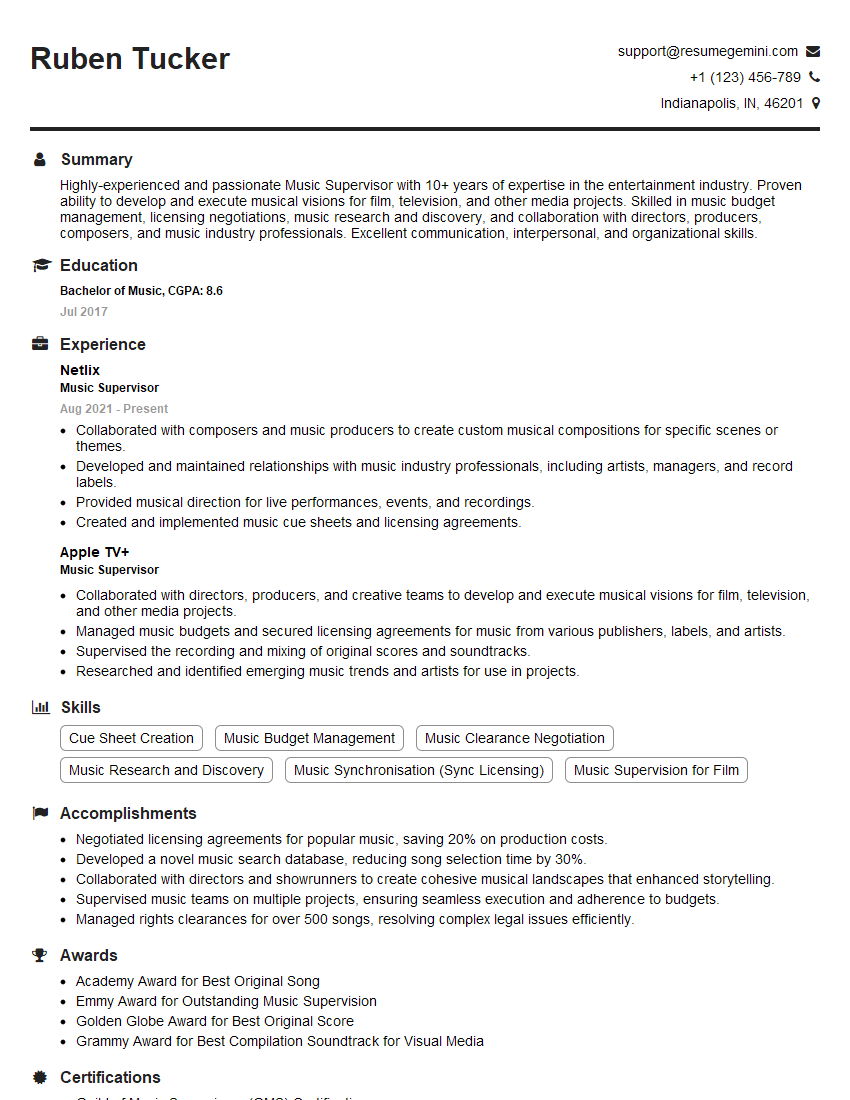
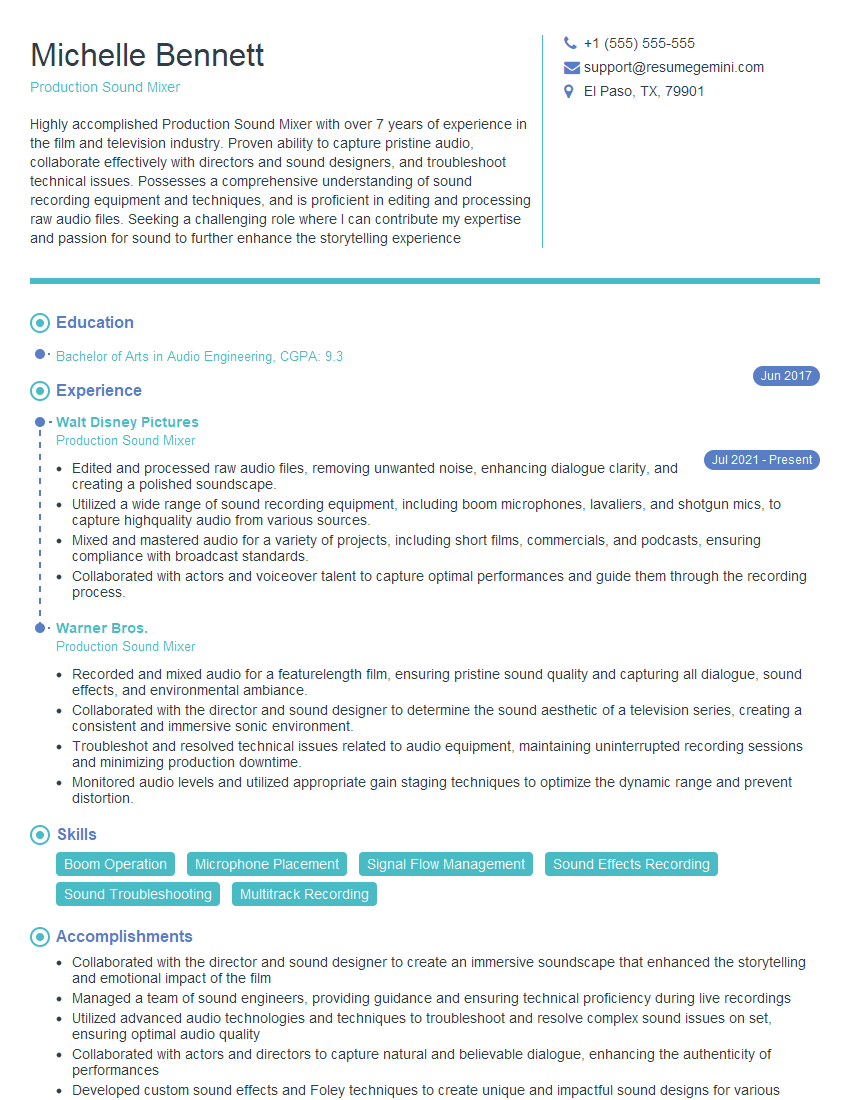
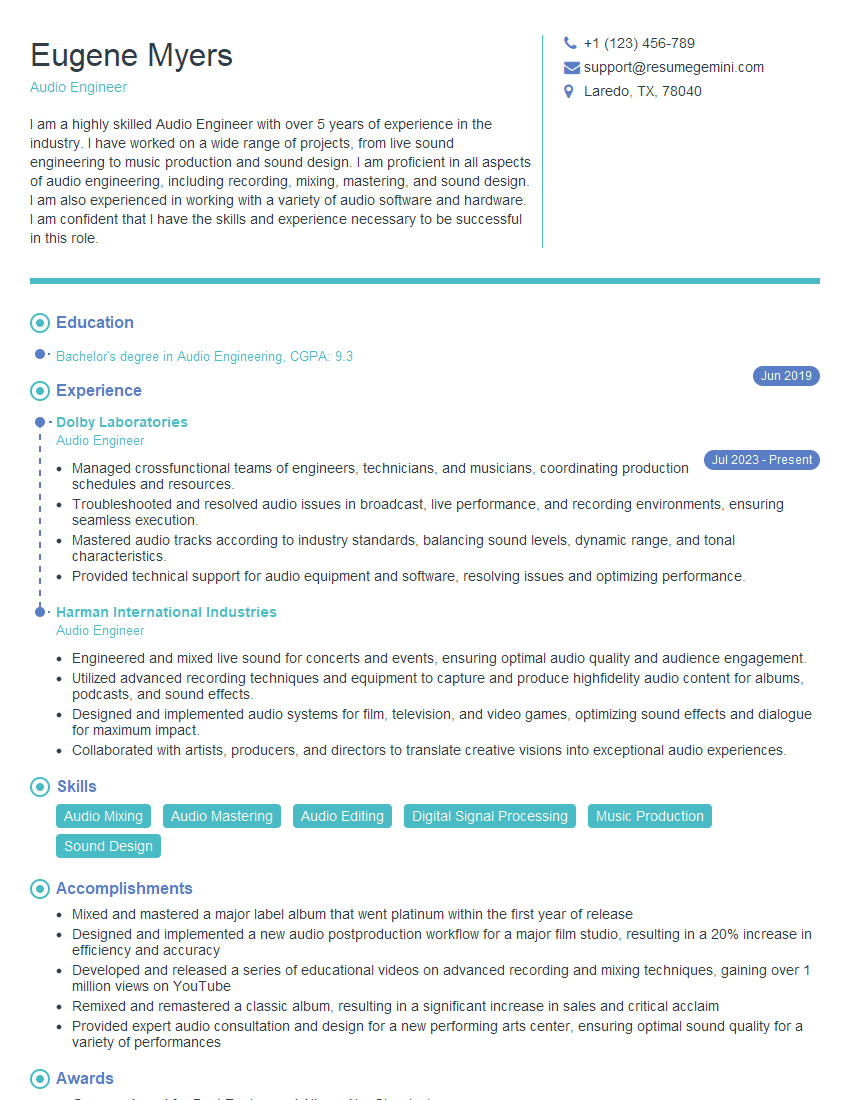
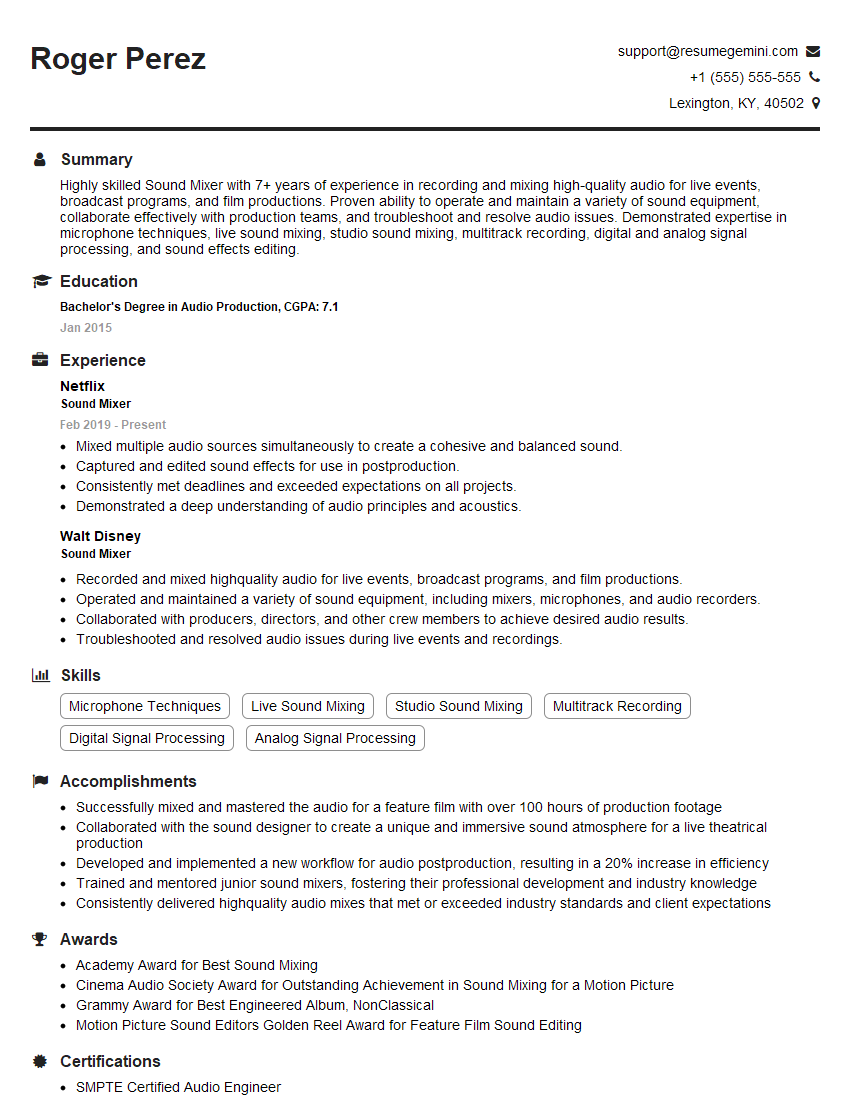
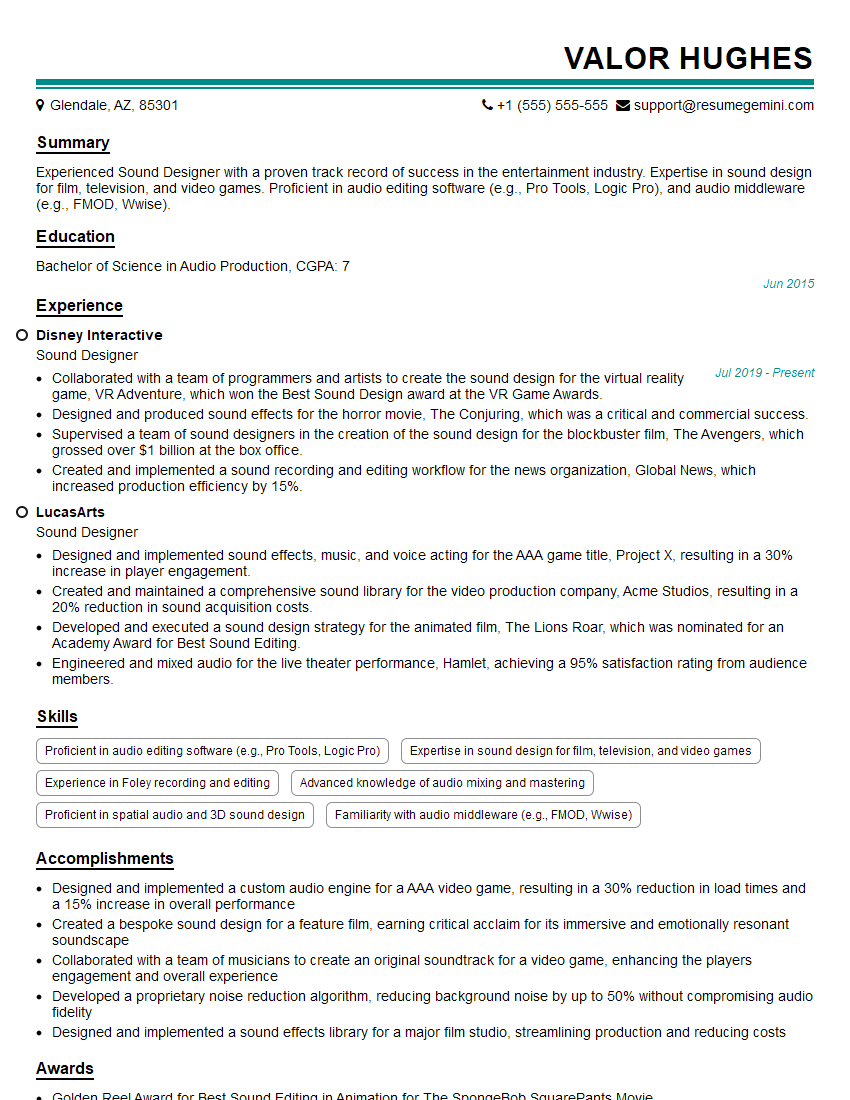
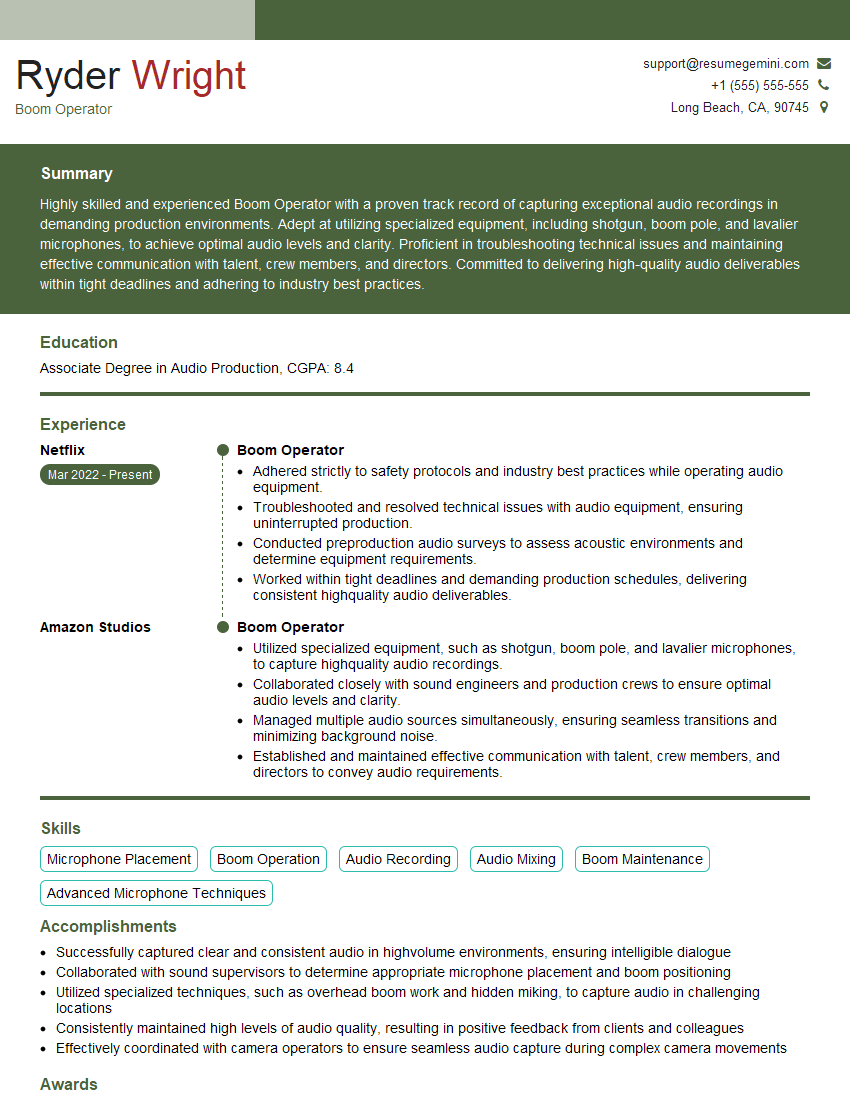
Proficiency in arranging for film, television, and video games is crucial for career advancement in this dynamic industry. Mastering these skills demonstrates organizational prowess, problem-solving abilities, and a commitment to project success – all highly valued by employers. To significantly improve your job prospects, focus on creating an ATS-friendly resume that highlights your accomplishments and skills effectively. ResumeGemini is a trusted resource to help you build a professional and impactful resume. We provide examples of resumes tailored to roles requiring Proficient in Arranging for Film, Television, and Video Games, empowering you to showcase your expertise and secure your dream job.
Explore more articles
Users Rating of Our Blogs
Share Your Experience
We value your feedback! Please rate our content and share your thoughts (optional).
What Readers Say About Our Blog
Very informative content, great job.
good