Preparation is the key to success in any interview. In this post, we’ll explore crucial Proficient in Fish Processing and Storage Techniques interview questions and equip you with strategies to craft impactful answers. Whether you’re a beginner or a pro, these tips will elevate your preparation.
Questions Asked in Proficient in Fish Processing and Storage Techniques Interview
Q 1. Explain the different methods of fish preservation.
Fish preservation aims to extend shelf life and maintain quality by inhibiting microbial growth and enzymatic activity. Several methods exist, each with its strengths and weaknesses:
- Chilling: Rapid chilling to temperatures below 0°C (32°F) slows down spoilage. This is often the first step in most preservation methods. Think of storing fresh fish on ice immediately after catching.
- Freezing: Freezing at -18°C (0°F) or lower effectively stops microbial and enzymatic activity, preserving the fish for extended periods. Proper freezing techniques, like blast freezing, are crucial to maintain texture and quality.
- Salting: High concentrations of salt draw water out of the fish, creating a hypertonic environment that inhibits microbial growth. This is a traditional method, resulting in salted or cured fish like cod.
- Smoking: Smoking combines heat and smoke, which both dries the fish and imparts antimicrobial compounds, extending its shelf life. The type of wood used influences both flavor and preservation effectiveness.
- Drying: Removing moisture prevents microbial growth. This can be done through sun drying, air drying, or mechanical drying. Think of stockfish or dried shrimp.
- Canning: Heat processing in sealed containers kills spoilage microorganisms, creating a shelf-stable product. This involves rigorous sterilization to guarantee safety.
- Modified Atmosphere Packaging (MAP): Packaging the fish in a modified atmosphere (reduced oxygen, increased carbon dioxide) slows down spoilage by reducing the growth of aerobic bacteria. This is commonly used for fresh fish to extend its shelf life in retail settings.
The choice of method depends on factors like the type of fish, intended shelf life, cost, and available resources.
Q 2. Describe the proper handling procedures for freshly caught fish.
Proper handling of freshly caught fish is paramount for maintaining quality and safety. The goal is to minimize stress, prevent bacterial growth, and preserve freshness:
- Immediate chilling: Place fish on ice as quickly as possible after catching. The ideal ice-to-fish ratio is 1:1 or higher. A chilled fish is a safe fish.
- Bleeding: Bleeding fish quickly after capture reduces the accumulation of blood-borne bacteria. While not always done, it significantly improves quality.
- Gutting (evisceration): Removing the internal organs promptly slows down the rapid spoilage caused by digestive enzymes. This should ideally occur on the fishing vessel.
- Washing: Gently washing the fish with clean, cold water removes external contaminants but must be done carefully to prevent damage.
- Storage: Store chilled fish at temperatures below 0°C (32°F) until further processing or distribution. Maintaining the cold chain is critical.
- Avoid cross-contamination: Use separate tools and surfaces for handling raw and processed fish to prevent the spread of bacteria.
Imagine handling fish like you would handle any delicate foodstuff requiring the highest level of care.
Q 3. What are the key factors affecting the quality and shelf life of processed fish?
Several factors influence the quality and shelf life of processed fish:
- Initial quality of raw material: The fresher the fish, the better the final product. Factors like catching method, handling, and storage before processing directly affect the quality.
- Processing conditions: Temperature, time, and hygiene during processing all impact the quality and safety. A lapse in temperature control can dramatically shorten the shelf life.
- Storage conditions: Maintaining proper storage temperatures (chilling or freezing) after processing is crucial for extending shelf life. Fluctuations in temperature must be avoided.
- Packaging: The type of packaging materials used impacts the shelf life. Materials must protect from oxygen, moisture, and physical damage.
- Microbial contamination: Contamination by spoilage or pathogenic microorganisms dramatically reduces shelf life and can lead to foodborne illness. This is directly linked to processing hygiene.
- Enzymatic activity: Enzymes naturally present in fish continue to act even after death, affecting texture and flavor. Proper processing methods, especially chilling and freezing, minimize this.
Think of it like a chain—if one link is weak, the entire chain (shelf life and quality) is compromised.
Q 4. How do you ensure the safety and hygiene standards during fish processing?
Ensuring safety and hygiene is paramount in fish processing. This involves adhering to strict protocols and guidelines:
- Personal hygiene: Workers must maintain high standards of personal hygiene, including hand washing, wearing protective clothing, and avoiding cross-contamination.
- Sanitation of equipment and facilities: Regular cleaning and sanitizing of all equipment and surfaces used in processing is essential to prevent bacterial growth. This should include specific procedures for different areas, such as filleting versus packaging.
- Temperature control: Maintaining proper temperatures during all stages of processing – from receiving to storage – is critical. This includes monitoring temperatures with thermometers and maintaining accurate records.
- Water quality: Water used in washing and processing must be potable and of high quality to avoid introducing contaminants. This may involve filtration or treatment systems.
- Pest control: Implementing effective pest control measures to prevent infestation of the processing facility. This involves regular inspections and proactive measures.
- Waste management: Proper disposal of waste products to avoid environmental contamination and attraction of pests. Segregating various waste types (e.g., organic vs. packaging) is necessary.
A clean and safe processing environment minimizes risks and ensures high-quality products.
Q 5. What are the common spoilage microorganisms in fish and how to control them?
Common spoilage microorganisms in fish include:
- Psychrotrophic bacteria: These bacteria thrive at low temperatures, often causing spoilage even under refrigeration. Pseudomonas and Shewanella species are common examples.
- Mesophilic bacteria: These bacteria grow at moderate temperatures and are often responsible for spoilage when temperatures are not properly controlled. Enterobacteriaceae are a significant concern.
- Yeasts and molds: These microorganisms are less common in fresh fish but can grow on surfaces and contribute to spoilage. They are particularly a problem in less-than-ideal storage conditions.
Controlling these microorganisms involves:
- Rapid chilling: Slowing the growth of psychrotrophic bacteria is a primary defense.
- Proper hygiene practices: Minimizing initial contamination through sanitation and hygiene reduces the microbial load.
- Modified Atmosphere Packaging (MAP): Reducing oxygen levels inhibits aerobic bacteria.
- Freezing: Freezing effectively stops microbial growth.
- Heat processing (e.g., canning): High temperatures kill microorganisms effectively.
The key is to minimize microbial contamination and limit growth through proper handling, processing, and storage.
Q 6. Explain the principles of HACCP as applied to fish processing.
Hazard Analysis and Critical Control Points (HACCP) is a systematic preventative approach to food safety. In fish processing, it involves identifying potential hazards and establishing control measures at critical points in the process:
- Hazard Analysis: Identifying biological, chemical, and physical hazards that can occur at each step in the processing chain. This includes potential for microbial contamination, chemical residues, or physical contaminants.
- Critical Control Points (CCPs) identification: Determining steps in the process where control is essential to prevent or eliminate hazards. Examples include chilling temperatures, cooking temperatures, and sanitation procedures.
- Critical Limits: Establishing measurable limits for each CCP. For example, a CCP might be the temperature of a chilling system, with a critical limit of 0°C or below.
- Monitoring: Regularly monitoring the CCPs to ensure they are within the critical limits. This often requires temperature loggers, visual inspection, or other methods.
- Corrective Actions: Defining actions to be taken if a CCP goes out of control. This could involve adjusting equipment, discarding contaminated batches, or initiating retraining of personnel.
- Verification: Regularly verifying that the HACCP plan is working effectively through audits, testing, and record keeping.
- Record Keeping: Maintaining detailed records of all aspects of the HACCP plan, including monitoring data, corrective actions, and verification results. Thorough record keeping is essential for traceability and accountability.
HACCP ensures a proactive approach to food safety, shifting from reactive control to prevention.
Q 7. Describe different fish filleting techniques.
Fish filleting techniques vary depending on the type of fish and desired product. However, some common principles apply:
- Head removal: Removing the head, usually with a sharp knife, is the first step. A clean cut helps avoid damaging the fillet.
- Gutting: The internal organs are usually removed before filleting, as previously described.
- Skinning (optional): Depending on the application, the skin may be removed before or after filleting. Sharp knives and careful technique are essential.
- Filleting: The fillet is separated from the bone structure using a sharp, flexible filleting knife. The skill lies in making a clean cut along the backbone, avoiding damage to the flesh.
- Pin-boning (optional): Removing smaller bones, like pin bones, from the fillet. This is often done with tweezers or a small, thin knife.
- Trimming: Removing unwanted parts, like fins or dark meat, to present an appealing product.
Different fish require adjustments in these techniques. For example, filleting a flatfish like flounder is different from filleting a round fish like cod. Practitioners develop skill and finesse through experience.
Q 8. What are the various types of fish processing equipment and their applications?
Fish processing involves a variety of specialized equipment, each playing a crucial role in maintaining quality and efficiency. These can be broadly categorized into pre-processing, processing, and post-processing equipment.
- Pre-processing: This stage focuses on preparing the fish for further handling. Examples include:
- Cleaning and gutting tables: Stainless steel tables designed for efficient fish cleaning and evisceration.
- Ice flakers and chillers: Crucial for immediate chilling to slow bacterial growth and preserve freshness.
- Scaling machines: Automated systems for removing fish scales quickly and efficiently.
- Processing: This stage involves transforming raw fish into various products. Examples include:
- Filleting machines: Automated systems that precisely remove fillets from the fish carcass, minimizing waste.
- Portioning machines: Cut fillets or other fish products into uniform sizes for packaging.
- Smoking ovens: Used for creating smoked fish products, requiring precise temperature and smoke control.
- Canning equipment: Machines for filling, sealing, and processing canned fish products, ensuring proper sterilization.
- Post-processing: This involves preparing the processed fish for storage and distribution. Examples include:
- Freezing tunnels: Rapid freezing systems that help maintain texture and quality.
- Packaging machines: Automated systems for packaging fish products in various formats, ensuring product protection.
- Metal detectors and X-ray machines: Used for quality control, detecting contaminants in the final product.
For instance, a small-scale fish processing facility might use manual gutting tables and a simple ice flaker, while a large commercial operation would utilize automated filleting and packaging lines along with blast freezers for efficient processing and preservation.
Q 9. How do you identify and manage fish quality defects?
Identifying and managing fish quality defects is paramount to ensuring product safety and consumer satisfaction. This process begins at the point of harvest and continues throughout processing and storage.
Identification: Defects can be visual, textural, or olfactory. Visual defects include discoloration (dark spots, bruising), damage (cuts, broken bones), or parasites. Textural defects can include softening or slime buildup, indicating spoilage. Olfactory defects are easily noticed as off-odors, often pungent or ammonia-like. Regular sensory evaluation by trained personnel is essential.
Management: Defective fish should be immediately separated from good quality fish to prevent contamination. Depending on the severity of the defect and the processing stage, different actions are taken. Minor defects might be trimmed away, while severely affected fish must be discarded. Implementing rigorous quality control checks at each stage, from receiving raw material to finished product, significantly minimizes the impact of defects. Maintaining proper hygiene and sanitation throughout the process is also critical in preventing defects from occurring in the first place. For example, ensuring proper temperature control during storage and transport prevents microbial growth and the associated quality deterioration.
Proper record keeping, including detailed logs of inspection results, helps in tracing the source of defects and implementing corrective measures to prevent future occurrences.
Q 10. What are the different methods of fish freezing and their impact on quality?
Fish freezing is a vital preservation technique that extends shelf life and maintains quality. Several methods exist, each with its advantages and limitations:
- Blast Freezing: This rapid freezing method, using very low temperatures (-35°C to -40°C), forms small ice crystals within the fish tissue, minimizing cellular damage and preserving texture and quality better than slow freezing. It’s ideal for high-value products.
- Plate Freezing: Fish is placed between refrigerated plates, allowing for even freezing. It’s suitable for smaller fish and fillets but slower than blast freezing.
- Immersion Freezing: The fish is submerged in a cryogenic liquid, such as liquid nitrogen (-196°C), for very rapid freezing. This is the fastest method but requires specialized equipment and safety precautions.
- Air Freezing: A slower method where the fish is frozen in a cold air environment. This method is less expensive but results in larger ice crystals, potentially impacting the quality.
The impact on quality is directly related to the freezing rate. Rapid freezing methods like blast or immersion freezing help maintain better texture, flavor, and nutritional value by preventing the formation of large ice crystals that damage cell structure. Slow freezing leads to larger ice crystals, causing drip loss (moisture loss during thawing) and affecting the texture negatively. The choice of method depends on the type of fish, production scale, and desired quality level.
Q 11. Explain the importance of temperature control in fish storage.
Temperature control is absolutely critical in fish storage, as fish are highly perishable due to their high water activity and susceptibility to microbial growth. Even slight temperature fluctuations can significantly impact the quality and safety of the product.
Maintaining consistently low temperatures slows down enzymatic and microbial activity, which are the primary causes of spoilage. Enzymes within the fish continue to break down tissues even after death, causing undesirable changes in texture, flavor, and appearance. Bacteria multiply rapidly at higher temperatures, leading to rapid spoilage and potentially harmful toxins. Consistent low temperatures minimize these processes, extending the shelf life and maintaining product safety.
Effective temperature monitoring and control systems, including refrigeration units, temperature loggers, and regular temperature checks, are crucial to ensure product quality and prevent spoilage. Think of it like this: imagine leaving milk out at room temperature – it spoils quickly. Similarly, improper temperature control spoils fish quickly, resulting in economic losses and safety risks.
Q 12. Describe the principles of chilled storage for fish.
Chilled storage, usually between 0°C and 4°C, is a common method for short-term storage of fish. The principle revolves around slowing down enzymatic and bacterial activity to extend shelf life. This temperature range significantly inhibits the growth of most spoilage bacteria, while enzymatic activity, although not stopped, is substantially reduced compared to higher temperatures.
Effective chilled storage requires:
- Rapid chilling: Immediately after harvest, fish needs to be chilled quickly to slow down spoilage processes. This often involves using ice or chilled water.
- Proper storage conditions: Fish should be stored in well-ventilated containers or on ice to maintain uniform temperature and prevent moisture buildup. Avoid stacking fish too densely.
- Regular temperature monitoring: Consistent monitoring ensures that the temperature stays within the ideal range (0°C to 4°C).
- Hygiene: Maintaining cleanliness within the storage area and containers minimizes contamination and spoilage.
Improper chilled storage can lead to rapid spoilage, resulting in off-flavors, unpleasant odors, and potential health hazards. For example, storing fish at higher temperatures (above 4°C) dramatically accelerates bacterial growth, shortening shelf life and increasing the risk of foodborne illnesses.
Q 13. What are the regulations regarding fish labeling and traceability?
Regulations regarding fish labeling and traceability vary across countries and regions, but the common goal is to ensure transparency, safety, and consumer protection. Key aspects often include:
- Species identification: Accurate identification of the fish species is crucial. Incorrect labeling can lead to misrepresentation and consumer deception.
- Origin information: Information regarding the fishing area or farming location is often required to trace the origin of the fish.
- Storage and handling information: Details regarding the handling, processing, and storage methods may be required to provide clarity to the consumer.
- Weight and quantity: Accurate indication of the net weight or quantity is necessary to prevent consumer fraud.
- Expiry date or ‘best before’ date: This provides consumers with guidance on the ideal consumption period to ensure product quality and safety.
- Nutritional information: Depending on the region, providing details about nutritional content is a common requirement.
- Allergen information: Clear identification of potential allergens is crucial for consumers with allergies.
Traceability systems involve maintaining detailed records throughout the supply chain, allowing for identification of the origin and handling history of a particular batch of fish. This is crucial for efficient recall procedures in case of any safety or quality issues. Non-compliance with regulations can result in penalties and legal repercussions.
Q 14. How do you handle fish waste and by-products responsibly?
Responsible handling of fish waste and by-products is essential for environmental sustainability and resource utilization. Several approaches minimize environmental impact and maximize resource recovery:
- Rendering: Fish waste, including heads, bones, and viscera, can be rendered into fish meal and fish oil, which are valuable ingredients in animal feed and other industries.
- Composting: Some fish waste can be composted, providing a rich source of nutrients for agriculture.
- Anaerobic digestion: This process breaks down organic waste in the absence of oxygen, producing biogas (renewable energy source) and digestate (fertilizer).
- Hydrolysis: Breaking down proteins in fish waste to produce valuable components, including peptides and amino acids.
- Wastewater treatment: Effective treatment of wastewater from fish processing facilities is vital to remove organic pollutants and prevent water contamination.
Regulations related to waste disposal vary depending on the location. Some areas have specific guidelines for handling fish waste to minimize environmental impacts. Adopting sustainable practices not only reduces environmental damage but also creates opportunities for resource recovery and cost savings through the sale of by-products. For example, a responsible fish processing facility might partner with a rendering plant to convert waste into valuable products, reducing landfill waste and generating revenue.
Q 15. What are the common challenges in fish processing and their solutions?
Fish processing presents several challenges, primarily revolving around maintaining quality and safety throughout the process. One major hurdle is rapid spoilage due to the high water content and abundance of perishable enzymes in fish. This necessitates swift processing and appropriate storage. Another challenge is microbial contamination; bacteria can quickly proliferate, leading to foodborne illnesses. Maintaining stringent hygiene standards throughout the plant is crucial. Finally, variations in fish quality from season to season and fishing location can impact processing efficiency and product consistency.
Solutions involve a multi-pronged approach: Implementing rapid chilling methods like ice-slurry chilling or blast freezing immediately after catch significantly slows down spoilage. Strict adherence to Hazard Analysis and Critical Control Points (HACCP) principles guides the identification and control of potential hazards, minimizing contamination risks. Pre-processing quality checks help to select only high-quality fish, minimizing waste and ensuring product consistency. Regular equipment sanitation and employee training are also critical components.
- Example: A plant using an ice-slurry chilling system can reduce the bacterial load significantly compared to plants relying only on traditional methods of ice packing.
- Example: Implementing a HACCP plan ensures consistent monitoring of critical steps like temperature control, preventing bacterial growth and ensuring safe products.
Career Expert Tips:
- Ace those interviews! Prepare effectively by reviewing the Top 50 Most Common Interview Questions on ResumeGemini.
- Navigate your job search with confidence! Explore a wide range of Career Tips on ResumeGemini. Learn about common challenges and recommendations to overcome them.
- Craft the perfect resume! Master the Art of Resume Writing with ResumeGemini’s guide. Showcase your unique qualifications and achievements effectively.
- Don’t miss out on holiday savings! Build your dream resume with ResumeGemini’s ATS optimized templates.
Q 16. Explain the concept of value-added fish products.
Value-added fish products go beyond simply processing raw fish into fillets or steaks. They involve transforming the basic product into higher-value items through further processing, enhancing their taste, convenience, or shelf life. Think of it as adding extra value to the original raw material. This could involve canning, smoking, freezing, breading, creating fish patties, or producing fish oils and extracts.
Examples of value-added products include:
- Smoked Salmon: Adds flavor and extends shelf life compared to fresh salmon.
- Fish Sticks/Fish Patties: Convenient, ready-to-eat options targeting busy consumers.
- Canned Tuna: Provides a shelf-stable, long-lasting protein source.
- Fish Oil Capsules: Extract valuable omega-3 fatty acids for health benefits.
Creating value-added products increases profit margins for processors and provides consumers with diverse and convenient options. This requires specialized equipment and expertise, but the rewards are a broader market reach and increased sales.
Q 17. Describe your experience with different fish species and their processing requirements.
My experience encompasses a wide range of species, each with unique handling and processing needs. I’ve worked with oily fish like salmon and tuna, which require careful handling to prevent oxidation and rancidity. Their high fat content needs specific processing techniques and fast chilling to maintain quality. Conversely, lean fish like cod and haddock have lower fat content but need attention to prevent drying and maintain texture during processing.
For instance, processing salmon involves careful filleting to minimize damage to the delicate flesh, followed by rapid chilling and potentially smoking or canning. Processing cod, on the other hand, might focus on minimizing water loss during freezing to maintain texture, possibly resulting in products like frozen fillets or breaded fish sticks. Shellfish like shrimp and scallops require different steps, focusing on cleaning, deveining, and possibly cooking before packaging. Each processing line needs adjustments based on the specific species being handled to optimize quality and yield.
Example: While freezing salmon, rapid freezing methods are crucial to avoid the formation of large ice crystals which can damage the flesh and compromise the texture upon thawing.
Q 18. What are the different types of packaging used for fish products?
Fish product packaging must protect the product from microbial contamination, prevent moisture loss, maintain freshness, and extend shelf life. The choice of packaging depends on the type of fish, processing method, and intended shelf life.
Common packaging types include:
- Modified Atmosphere Packaging (MAP): Uses a gas mixture (e.g., nitrogen, carbon dioxide) to slow down spoilage and extend shelf life. This is common for fresh fish fillets.
- Vacuum Packaging: Removes air to inhibit bacterial growth. Often used for longer shelf life.
- Retort Pouches: Flexible pouches suitable for sterilization and extended shelf life (canned products).
- Rigid Containers (cans): Provide excellent protection and long shelf life for canned products.
- Trays and Films: Used for fresh fish in refrigerated displays. Films help to maintain moisture and slow down spoilage.
The type of packaging is a critical factor in determining the overall quality and safety of the final product and its marketability.
Q 19. How do you ensure the proper sanitation of fish processing equipment?
Sanitation is paramount in fish processing to prevent contamination and ensure food safety. A comprehensive sanitation program involves several key steps.
1. Cleaning: Removing visible debris and residues from equipment using water and detergents. This step is crucial to create a clean surface for the next step.
2. Sanitizing: Applying a sanitizer (e.g., chlorine solution, quaternary ammonium compounds) to eliminate microorganisms. The sanitizer’s contact time is crucial for effectiveness.
3. Equipment Design: Equipment should be designed for easy cleaning and sanitation. Smooth surfaces prevent the buildup of food residues and microorganisms.
4. Personnel Hygiene: Employees must follow strict hygiene protocols, including handwashing, wearing protective clothing, and avoiding cross-contamination.
5. Monitoring: Regular monitoring of sanitation practices through ATP (Adenosine Triphosphate) bioluminescence testing ensures the effectiveness of cleaning and sanitizing procedures.
Example: A properly designed fish processing line uses easily cleanable stainless steel surfaces and employs a color-coded cleaning system for equipment to minimize cross-contamination risks.
Q 20. Describe your experience with quality control testing in fish processing.
Quality control testing is essential to ensure product safety and consistency. My experience involves conducting various tests at different stages of the processing line. These tests include:
- Sensory Evaluation: Assessing the appearance, odor, texture, and taste of the final product.
- Microbiological Analysis: Determining the presence and levels of pathogenic bacteria (e.g., Salmonella, Listeria).
- Chemical Analysis: Checking for histamine levels (indicator of spoilage), pH, and other relevant parameters.
- Physical Analysis: Measuring parameters like moisture content, texture, and weight.
These tests help to identify any deviations from quality standards and make necessary adjustments to the processing line or identify spoiled batches to prevent distribution of substandard products. Regular calibration and maintenance of the testing equipment are also crucial for accurate results.
Example: If histamine levels in a tuna sample exceed the acceptable limit, the entire batch is rejected to prevent potential health hazards.
Q 21. How do you maintain a safe and productive work environment in a fish processing plant?
Maintaining a safe and productive work environment in a fish processing plant requires a multi-faceted approach. It begins with a strong emphasis on worker safety, including providing appropriate personal protective equipment (PPE) such as gloves, aprons, and protective eyewear. Proper training on safe handling of equipment and chemicals is paramount. Regular maintenance of equipment is also crucial to minimize the risk of accidents.
Productivity is enhanced through efficient process flow, proper equipment maintenance, and employee motivation. This involves optimizing the layout of the processing line to minimize movement and maximizing the efficiency of each work station. Employee training on efficient techniques and good manufacturing practices also improves productivity. Finally, a positive work environment, fair compensation, and opportunities for professional development contribute to a motivated and productive workforce.
Example: Implementing a color-coded system for knives helps to prevent cross-contamination and injuries. Regular safety meetings and training programs to address potential hazards contribute to a safe and productive work environment.
Q 22. Explain your experience with inventory management in a fish processing facility.
Inventory management in a fish processing facility is crucial for minimizing waste, maximizing profitability, and ensuring product freshness. It involves a multi-faceted approach encompassing forecasting, receiving, storage, and distribution.
My experience includes implementing and overseeing First-In, First-Out (FIFO) systems to ensure that the oldest fish are processed first, preventing spoilage. This involved training staff on proper inventory tracking procedures, using barcode scanners for accurate stock updates, and integrating inventory management software to generate real-time reports on stock levels. For example, during peak salmon season, accurate forecasting allowed us to optimize storage space and prevent overcrowding, which is key to preserving quality. We also used a system of color-coded labels to easily identify the age of the fish and facilitate FIFO. Regular stock audits ensured accuracy and flagged potential issues, like discrepancies between physical inventory and recorded data, allowing for prompt corrective action. This meticulous approach significantly reduced waste and improved our overall efficiency.
Q 23. What is your experience with different types of fish smoking techniques?
Fish smoking is a time-honored preservation method that enhances flavor and extends shelf life. I’m experienced in various techniques, including hot smoking, cold smoking, and liquid smoking.
Hot smoking involves exposing the fish to high temperatures (around 150-200°F) for a shorter period, resulting in a cooked product with a smoky flavor. I’ve overseen operations where we used different wood types, like alder, hickory, or applewood, to achieve specific flavor profiles. Cold smoking employs lower temperatures (around 68-86°F) over longer periods, resulting in a longer shelf life and a subtly smoky flavor, and maintaining a raw fish texture. I’ve optimized cold smoking processes by carefully controlling temperature and humidity levels to prevent bacterial growth. Liquid smoking utilizes concentrated smoke flavoring added to the fish, offering a faster and more controlled process. This technique requires careful monitoring to avoid overpowering the fish’s natural taste. My experience encompasses optimizing each technique for specific fish types and market demands, ensuring consistently high quality and safety.
Q 24. Describe your understanding of Good Manufacturing Practices (GMP) in fish processing.
Good Manufacturing Practices (GMP) are crucial for maintaining hygiene and preventing contamination in fish processing. They encompass a wide range of protocols designed to ensure food safety and quality.
My understanding of GMP includes implementing and maintaining stringent sanitation procedures, ensuring proper hand washing practices, using appropriate personal protective equipment (PPE) such as gloves and hairnets, and regularly cleaning and sanitizing all equipment and surfaces. I have experience managing HACCP (Hazard Analysis and Critical Control Points) plans to identify and control biological, chemical, and physical hazards at every stage of processing, from receiving raw materials to packaging the finished product. This includes monitoring critical control points such as temperature, time, and sanitation, and documenting these procedures meticulously. For instance, we implemented a color-coded system for sanitation, assigning specific colors to different cleaning solutions and areas, minimizing cross-contamination risks. Regular internal audits and external inspections ensure our GMP compliance.
Q 25. Explain your experience with implementing and maintaining a food safety program.
Implementing and maintaining a robust food safety program is paramount in fish processing. It goes beyond GMP and involves proactive measures to prevent foodborne illnesses.
My experience includes developing and implementing food safety plans encompassing employee training on hygiene, sanitation, and allergen awareness, regular equipment maintenance and calibration, and implementing and monitoring temperature control procedures throughout the processing chain. I’ve led teams in conducting regular safety audits and incorporating corrective actions based on findings. For example, we introduced a system of temperature logging throughout the process, from raw material storage to final product storage, coupled with automatic alerts if temperatures deviate from established parameters. This system, combined with staff training and regular audits, reduced food safety incidents significantly, improving product safety and consumer confidence.
Q 26. What is your experience with fish product traceability systems?
Fish product traceability systems are essential for tracking products from the source (catch) to the consumer, allowing for swift identification and removal of contaminated products during a recall and verifying the authenticity of the product.
My experience includes implementing and managing systems that use lot numbers and barcodes to track individual batches of fish throughout the processing chain. This involves integrating software and hardware to record information such as the date of catch, location, fishing vessel, and processing details. This information is critical for determining the origin and processing history of any batch of fish. This system is essential not only for food safety but also for maintaining product quality and satisfying market requirements for transparency and quality assurance. We regularly audit the traceability system to ensure its accuracy and efficiency, constantly reviewing and updating protocols to keep pace with evolving technology and industry best practices.
Q 27. How would you address a sudden surge in fish production?
A sudden surge in fish production requires a well-coordinated response to maintain quality and efficiency.
My approach involves several key steps: First, assess the capacity of our current processing facilities and personnel. If capacity is insufficient, I’d explore options like temporarily renting additional processing equipment or hiring additional skilled labor. Second, I’d prioritize processing the most perishable fish first, using FIFO to avoid spoilage. Third, I’d review our existing inventory management system to ensure adequate storage space for the increased volume. If needed, I would explore temporary cold storage solutions. Fourth, I would optimize production line efficiency by improving workflow and streamlining processes. Finally, I’d maintain clear communication with all personnel and suppliers to ensure everyone is aware of the increased workload and their respective roles in the response. This coordinated and proactive approach would mitigate potential disruptions and ensure that the increased production doesn’t compromise quality or safety.
Q 28. Describe your approach to solving equipment malfunctions during fish processing.
Equipment malfunctions during fish processing can cause significant disruptions and product losses. My approach prioritizes swift and effective resolution.
My first step involves assessing the severity of the malfunction and identifying the affected equipment. If the problem is minor and can be fixed quickly by the maintenance team, I’d prioritize that immediate repair. For more significant issues requiring specialized expertise, I would contact the equipment manufacturer for assistance or engage a qualified repair technician. During the repair process, I’d implement contingency plans, such as rerouting the production flow to minimize downtime or utilizing backup equipment if available. Thorough documentation of all malfunctions, repairs, and downtime is critical for preventative maintenance planning, reducing the likelihood of future occurrences. Regular equipment maintenance and proactive monitoring play a crucial role in minimizing malfunctions and their impact on operations.
Key Topics to Learn for Proficient in Fish Processing and Storage Techniques Interview
- Fish Handling and Hygiene: Understanding proper sanitation procedures, preventing cross-contamination, and maintaining hygiene throughout the entire processing chain.
- Filleting and Butchering Techniques: Mastering various filleting methods for different fish species, minimizing waste, and ensuring consistent product quality. Practical application: Demonstrating proficiency in using various filleting tools and equipment.
- Preservation Methods: Deep dive into chilling, freezing, smoking, salting, and other preservation techniques. Understanding the impact of each method on fish quality and shelf life.
- Quality Control and Assurance: Implementing quality checks at each stage of processing, identifying spoilage indicators, and ensuring compliance with food safety regulations.
- Storage and Logistics: Optimizing cold chain management, understanding temperature requirements for different preservation methods, and minimizing storage losses.
- Value-Added Processing: Exploring techniques like fish smoking, canning, or creating value-added products to enhance profitability and market appeal. Practical application: Describing experiences in developing new fish products or improving existing processes.
- Troubleshooting and Problem-Solving: Addressing common issues encountered during processing and storage, such as spoilage, discoloration, or off-flavors. Being able to explain your approach to identifying and solving problems.
- Safety Regulations and Compliance: Thorough understanding of relevant food safety regulations and industry best practices. Demonstrating a commitment to safe and responsible fish processing.
- Sustainable Practices: Familiarity with sustainable fishing practices and environmentally friendly processing techniques.
Next Steps
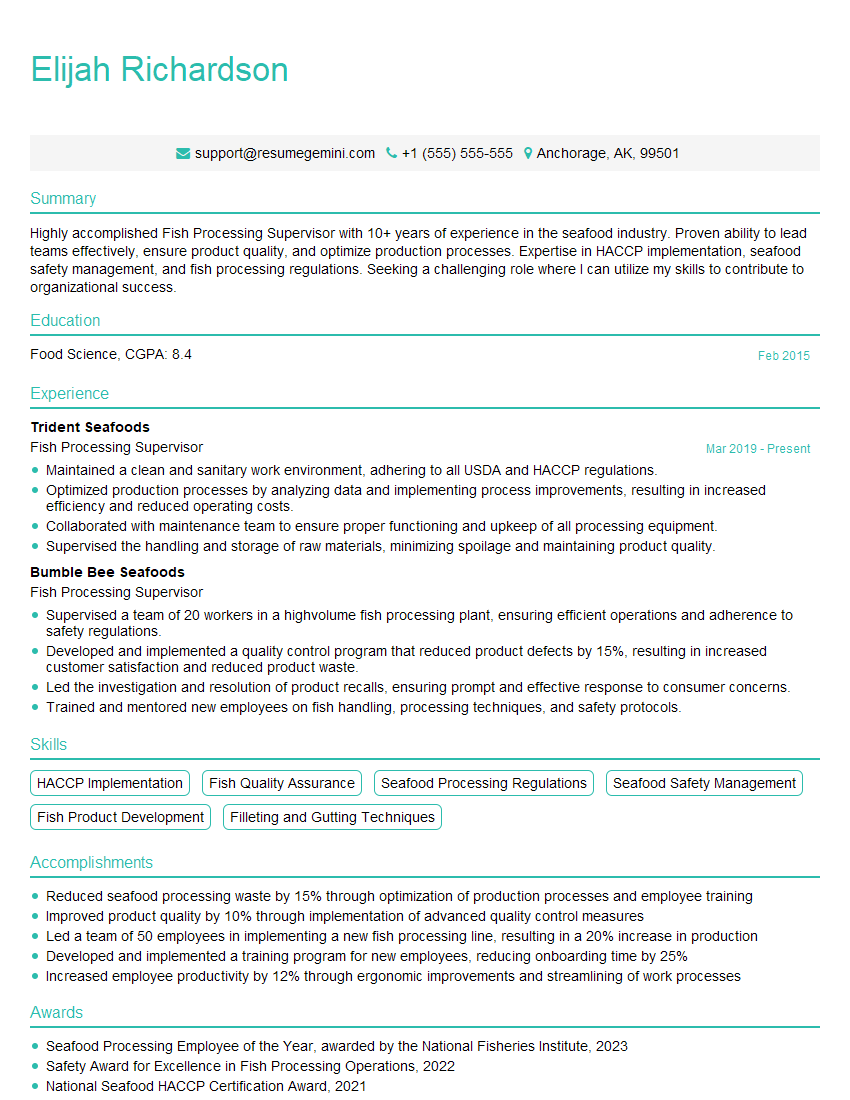
Mastering Proficient in Fish Processing and Storage Techniques is crucial for career advancement in this dynamic industry. A strong understanding of these techniques will make you a highly sought-after candidate. To maximize your job prospects, it’s essential to create an ATS-friendly resume that highlights your skills and experience effectively. ResumeGemini is a trusted resource that can help you build a professional and impactful resume. Examples of resumes tailored specifically to showcasing proficiency in Fish Processing and Storage Techniques are available to help you get started. Take the next step towards your dream career today!
Explore more articles
Users Rating of Our Blogs
Share Your Experience
We value your feedback! Please rate our content and share your thoughts (optional).
What Readers Say About Our Blog
Very informative content, great job.
good