Interviews are more than just a Q&A session—they’re a chance to prove your worth. This blog dives into essential Swim Training Plan Creation interview questions and expert tips to help you align your answers with what hiring managers are looking for. Start preparing to shine!
Questions Asked in Swim Training Plan Creation Interview
Q 1. Explain the principles of periodization in swim training.
Periodization in swim training is like planning a big race – you don’t just sprint from the start. It’s a systematic approach to training that divides the year (or a training cycle) into specific phases, each with its own goals and training intensities. This allows for optimal physical and mental preparation, preventing burnout and maximizing performance gains.
- Macrocycle: The longest phase, often an entire year, encompassing several smaller cycles. Think of it as the overall race plan.
- Mesocycle: Several weeks to months long; each mesocycle focuses on a specific aspect of training like building endurance or speed. This would be akin to focusing on long-distance running for a few weeks then shifting to sprint training.
- Microcycle: The shortest phase, usually a week, detailing daily workouts. This is like mapping out your daily training schedule, detailing sets, repetitions, and rest periods.
A typical periodization plan might start with a base phase (high volume, low intensity), then move into a strength phase (moderate volume, high intensity), a speed phase (low volume, very high intensity), and finally a tapering phase (gradually decreasing volume and intensity before a competition). The intensity and volume are carefully manipulated to optimize the athlete’s adaptation and prevent overtraining.
Q 2. Describe different training methods for improving speed, endurance, and strength in swimming.
Improving speed, endurance, and strength in swimming requires a diverse training approach.
- Speed: This involves short, high-intensity intervals. Examples include 25m sprints with maximal effort followed by adequate rest. Drills focusing on stroke technique, such as fingertip drag and six-kick drills, also improve speed. These drills improve efficiency and power in the water.
- Endurance: This necessitates long swims at a moderate pace. Continuous swimming for 30-60 minutes or more at a conversational pace builds aerobic capacity. Set-based training with longer intervals, such as 10 x 100m at a consistent pace, also contributes to endurance development.
- Strength: Strength training, both in and out of the water, is vital. Dryland exercises such as pull-ups, squats, and core work improve overall strength. In-water strength training can include kicking drills with resistance bands and high intensity interval sets at faster paces.
A well-rounded training plan will incorporate all three aspects. A swimmer may start with a focus on endurance building, then progressively introduce speed and strength training as fitness improves.
Q 3. How do you assess a swimmer’s current fitness level and identify areas for improvement?
Assessing a swimmer’s fitness level requires a multi-faceted approach.
- Swim Tests: Time trials over different distances (e.g., 50m, 100m, 200m, 400m) assess speed and endurance. These times provide a baseline against which to track progress.
- Stroke Analysis: Observing the swimmer’s technique helps identify areas for improvement – poor body positioning, inefficient arm pulls, or weak kicks. Video analysis can be particularly helpful.
- Fitness Assessments: Dryland fitness tests such as push-ups, pull-ups, and core strength exercises provide a measure of overall fitness that complements swimming-specific tests. Lactate threshold testing can also reveal a swimmer’s aerobic capacity and identify optimal training intensities.
- SWOLF Score: This combines stroke count and time to evaluate the efficiency of a swimmer’s stroke. A lower score indicates greater efficiency.
By combining these assessments, a coach can create a targeted training plan addressing the specific strengths and weaknesses of the swimmer.
Q 4. How would you design a training plan for a beginner swimmer aiming to complete a triathlon?
A beginner swimmer training for a triathlon needs a plan focusing on building a solid aerobic base while improving swim technique. This plan should gradually increase intensity and distance over time.
- Phase 1 (Weeks 1-4): Focus on technique and comfort in the water. Short swims (20-30 minutes) with an emphasis on proper breathing, body position, and stroke mechanics. Include drills and water acclimation.
- Phase 2 (Weeks 5-8): Increase swim duration gradually. Introduce interval training with short bursts of faster swimming interspersed with periods of rest. Continue to refine technique. Consider 3-4 swims per week, each building duration from 30-45 minutes.
- Phase 3 (Weeks 9-12): Longer swims (45-60 minutes) with a mix of continuous and interval training. Include open water swims to simulate race conditions, gradually increasing distance. Incorporate strength and conditioning workouts to improve overall fitness. This phase could include 4-5 swims per week.
- Phase 4 (Weeks 13-16): Tapering phase. Reduce training volume and intensity to allow the body to recover before the triathlon. Maintain technique practice and focus on race pace.
It is critical that this plan also includes cycling and running training to prepare for the other components of the triathlon. The beginner swimmer must be mindful of rest and recovery to prevent injury and burnout. The plan should be adjusted based on individual progress and needs.
Q 5. How do you incorporate rest and recovery into a swim training plan?
Rest and recovery are crucial for preventing overtraining and maximizing performance gains. Think of it like recharging a battery – you can’t run it flat without a proper recharge.
- Active Recovery: Light activities such as easy swimming, cycling, or walking promote blood flow and reduce muscle soreness. This is like giving the battery a gentle top-up.
- Passive Recovery: Complete rest, including adequate sleep (8-10 hours per night), helps the body repair and rebuild. This is like plugging the battery in for a full charge.
- Rest Days: Scheduled rest days allow the muscles and the nervous system to recover. The number of rest days needed varies depending on training intensity and individual needs. Some athletes might benefit from a rest day each week, while others might require more.
- Sleep Hygiene: This includes getting enough sleep, creating a relaxing bedtime routine, maintaining a regular sleep schedule, and sleeping in a dark, quiet, and cool environment.
Incorporating rest and recovery isn’t about doing less; it’s about doing more effectively. Proper recovery optimizes adaptations and helps prevent injury and burnout.
Q 6. What are the common signs of overtraining in swimmers, and how do you address them?
Overtraining manifests differently in swimmers, but common signs include:
- Persistent fatigue: Feeling tired even after adequate rest.
- Decreased performance: Slower times, difficulty completing workouts.
- Loss of motivation: Lack of enjoyment or enthusiasm for training.
- Increased susceptibility to illness: Frequent colds, infections.
- Muscle soreness or pain that doesn’t subside: Pain that persists even after rest.
- Irritability or mood swings: Increased stress and anxiety.
- Sleep disturbances: Difficulty falling or staying asleep.
Addressing overtraining involves immediately reducing training volume and intensity. Focus on active recovery, get plenty of sleep, and consider nutritional support. A consultation with a sports medicine professional or coach is recommended to rule out other potential causes and ensure a safe return to training. It might also involve adjusting the training plan to prevent a recurrence.
Q 7. Explain the importance of proper warm-up and cool-down routines in swim training.
Warm-up and cool-down routines are essential for preparing the body for strenuous activity and facilitating recovery.
- Warm-up: Elevates heart rate, increases blood flow to muscles, and improves joint mobility. A warm-up could include light cardio (e.g., jogging, cycling), dynamic stretching (arm circles, leg swings), and easy swimming. This prepares the body physically and mentally for the intensity of the workout.
- Cool-down: Gradually lowers heart rate, promotes muscle relaxation, and reduces muscle soreness. A cool-down might include easy swimming, static stretching (holding stretches for 20-30 seconds), and light cardio.
Think of it like starting and ending a car journey – you wouldn’t just floor the gas pedal from standstill or slam on the brakes abruptly. A proper warm-up and cool-down prepares and restores the body, reducing injury risk and improving performance.
Q 8. Describe different types of swim drills and their purpose.
Swim drills are short, repetitive exercises designed to improve specific aspects of swimming technique. They’re like targeted weight training for your swimming muscles. They focus on correcting flaws, improving efficiency, and building strength and endurance.
- Drills focusing on body position: Kick drills (e.g., kick on side, with or without board) emphasize core engagement and proper body rotation, improving streamline and reducing drag. Imagine a torpedo – streamlined for speed. These drills help you achieve that.
- Drills focusing on arm technique: Fingertip drag drills force you to pay attention to hand entry and pull-through, improving propulsion. Another example is the catch-up drill, ensuring each arm is recovering efficiently. Think of it like perfecting your golf swing – small adjustments have big impacts.
- Drills focusing on breathing: One-arm drills while breathing bilaterally challenge coordination and rhythm. Breathing drills ensure effective inhalation and exhalation without disrupting body position. This is crucial for endurance and efficient energy usage.
- Drills focusing on stroke rate and power: 6-kick drills (6 kicks per arm pull) improve timing and power, while fast-pace drills improve speed and stamina. This is like interval training in running – short bursts of intense effort with recovery periods.
The purpose of drills varies based on the individual swimmer’s needs and goals, but overall they enhance technique, increase strength, improve endurance, and build confidence.
Q 9. How do you adapt training plans to accommodate injuries or illnesses?
Adapting training plans for injuries or illnesses requires a careful, individualized approach. It’s not a simple case of just reducing volume; it’s about smart adjustments that aid recovery while minimizing setbacks.
First, I consult with the athlete and, if necessary, their medical professional to understand the nature and severity of the injury or illness. This informs the modifications needed.
- Rest and Recovery: Complete rest may be necessary for acute injuries. For minor illnesses, reducing training intensity and volume is crucial.
- Modification of Exercises: If a swimmer has a shoulder injury, we may focus on drills that minimize shoulder strain, such as leg drills or upper body exercises that don’t involve the affected area. We might replace freestyle with backstroke for a while.
- Cross-Training: Low-impact activities like cycling or elliptical training can maintain cardiovascular fitness without stressing the injured area.
- Gradual Return to Training: Reintroduction to swimming happens slowly and progressively, gradually increasing intensity and duration. We use a ‘listen to your body’ approach, and avoid pushing too hard, too soon.
The goal is a safe and effective return to swimming, preventing re-injury and ensuring continued progress towards their goals, though at a potentially adjusted timeline.
Q 10. How do you track and measure a swimmer’s progress?
Tracking and measuring a swimmer’s progress involves a multi-faceted approach that goes beyond just time trials. We need to monitor multiple aspects of their performance and development.
- Time Trials: Regularly scheduled time trials (e.g., 50m, 100m, 200m) provide clear benchmarks for speed and endurance improvements.
- Drill Performance: Assessing the quality of their drills reveals improvements in technique and form. Are they holding good body position, executing the stroke efficiently? Qualitative observation is essential.
- Stroke Rate and Distance Per Stroke (DPS): Monitoring these metrics reveals efficiency in their swimming. An improved DPS signifies better technique.
- Heart Rate Monitoring: Heart rate data during workouts shows their training intensity and recovery patterns, guiding adjustments to training loads.
- Subjective Feedback: Regular check-ins with the swimmer are vital. How do *they* feel? Are they experiencing any pain or fatigue? This information is invaluable.
By combining these methods, we gain a comprehensive picture of their progress, allowing us to adjust their training plan as needed and ensure we stay on track towards their goals.
Q 11. What technology or tools do you use to monitor and analyze swimmer performance?
Technology plays a crucial role in monitoring and analyzing swimmer performance. It enhances our ability to provide personalized and effective training.
- Smartwatches and Wearable Sensors: These provide real-time data on heart rate, distance, strokes per minute, and pace. This data allows immediate feedback and adjustments during training.
- Video Analysis: Recording swim sessions allows for detailed analysis of stroke technique, identifying areas for improvement. Slow-motion playback helps pinpoint subtle flaws.
- GPS Tracking Devices: For open water swimming, these devices track swim distance, pace, and route, providing valuable data for open water training programs.
- Swimming-Specific Apps: Many apps offer features like workout tracking, performance analysis, and even personalized training plans.
The data collected by these tools provides objective measurements that complement subjective observations, allowing for a more precise and effective training approach.
Q 12. How do you create and maintain a positive and motivating training environment?
Creating a positive and motivating training environment is paramount. It’s about fostering a culture of support, encouragement, and improvement.
- Set Clear Goals and Expectations: Work collaboratively with the swimmer to establish realistic and attainable goals. Celebrate achievements along the way, no matter how small.
- Provide Positive Reinforcement: Focus on strengths and areas of improvement, offering constructive feedback instead of criticism. Remember, effort and progress are just as important as results.
- Build Camaraderie: Encourage team spirit and support among swimmers. Teamwork and shared goals strengthen motivation.
- Variety in Training: Avoid monotony by incorporating different drills, sets, and workout types. Keep training engaging and exciting.
- Flexibility and Understanding: Life happens! Be understanding of personal challenges and adjust training as needed. This builds trust and commitment.
Ultimately, a positive training environment is built on mutual respect, trust, and a shared commitment to achieving goals.
Q 13. How do you communicate effectively with swimmers and parents (if applicable)?
Effective communication is the bedrock of a successful coach-swimmer (and parent) relationship. It’s about clarity, empathy, and open dialogue.
- Regular Feedback: Provide constructive feedback on performance, identifying both strengths and areas for improvement. Use clear and simple language avoiding jargon.
- Active Listening: Actively listen to swimmers and parents’ concerns and questions. Show you care about their perspectives.
- Clear and Consistent Communication: Maintain consistent communication on training schedules, goals, and progress. Use multiple channels (email, app notifications, etc.) if needed.
- Positive Language: Frame feedback positively focusing on solutions and progress rather than dwelling on mistakes.
- Open Door Policy: Create an environment where swimmers and parents feel comfortable approaching you with questions or concerns anytime.
Open communication strengthens the coach-swimmer relationship, ensuring everyone is on the same page and working towards shared goals.
Q 14. Describe your experience with different swimming strokes and their technical aspects.
My experience encompasses all four major competitive strokes: freestyle, backstroke, breaststroke, and butterfly. Each stroke has its own unique technical aspects that demand different skills and strengths.
- Freestyle (crawl): Emphasizes body rotation, high elbow catch, and a powerful pull-through. Efficiency is key, aiming for a long, continuous glide phase.
- Backstroke: Requires a strong core to maintain body alignment and a high-elbow pull, similar to freestyle, but with a unique body rotation and recovery technique.
- Breaststroke: A highly technical stroke involving a powerful pull and kick performed in a coordinated sequence. The timing and body position are critical for efficient propulsion.
- Butterfly: The most demanding stroke, requiring exceptional upper body strength and a powerful dolphin kick. Body undulation is paramount to achieve maximal propulsion.
Understanding the nuances of each stroke, including proper body positioning, arm movements, and breathing techniques, is essential for optimizing performance and preventing injuries. My training incorporates detailed analysis of each aspect to help swimmers refine their technique.
Q 15. How do you incorporate dryland training into a swim training plan?
Dryland training is crucial for complementing in-water swim training. It enhances strength, power, flexibility, and injury prevention, all vital for optimal swimming performance. I typically incorporate dryland exercises focusing on core strength (planks, Russian twists), leg strength (squats, lunges), and upper body strength (pull-ups, rows). The exercises are carefully chosen based on the swimmer’s individual needs and event specialization. For example, a sprinter might focus more on explosive power exercises, while a distance swimmer might emphasize endurance-building activities.
The frequency and intensity of dryland training are carefully integrated with the swimming schedule to avoid overtraining and ensure adequate recovery. A typical weekly plan might include 2-3 dryland sessions, each lasting 45-60 minutes, strategically placed on non-consecutive days to allow for muscle recovery. We also incorporate injury prevention exercises like dynamic stretching and mobility work before each dryland session.
For instance, I worked with a young swimmer struggling with shoulder instability. We incorporated specific rotator cuff strengthening exercises into their dryland routine, resulting in a significant improvement in their technique and reduction in shoulder pain. The key is careful planning, individualized programming and monitoring the swimmer’s response to the training load.
Career Expert Tips:
- Ace those interviews! Prepare effectively by reviewing the Top 50 Most Common Interview Questions on ResumeGemini.
- Navigate your job search with confidence! Explore a wide range of Career Tips on ResumeGemini. Learn about common challenges and recommendations to overcome them.
- Craft the perfect resume! Master the Art of Resume Writing with ResumeGemini’s guide. Showcase your unique qualifications and achievements effectively.
- Don’t miss out on holiday savings! Build your dream resume with ResumeGemini’s ATS optimized templates.
Q 16. What are the key physiological adaptations to swim training?
Swim training elicits several key physiological adaptations. These include improvements in cardiovascular fitness (increased stroke volume, cardiac output, and VO2 max), muscular endurance (increased capacity to sustain effort), and muscular strength (enhanced power output). The body also adapts by improving lactate threshold, allowing swimmers to sustain higher intensities for longer periods before experiencing fatigue.
- Cardiovascular Adaptations: The heart becomes more efficient at pumping blood, delivering more oxygen to working muscles.
- Muscular Adaptations: Swimmers develop larger and stronger muscles, particularly in the shoulders, back, and legs. They also see improvements in muscle fiber type composition, with an increase in slow-twitch fibers (essential for endurance).
- Metabolic Adaptations: The body becomes more efficient at using oxygen and metabolizing fuels, such as carbohydrates and fats. This leads to an improved ability to work at higher intensities for longer durations.
- Neuromuscular Adaptations: Swimmers improve their neuromuscular coordination and efficiency, resulting in smoother, more powerful movements in the water.
These adaptations don’t happen overnight; they are the result of a well-structured, progressive training plan that gradually increases the volume and intensity of training over time. Regular monitoring of the swimmer’s progress, incorporating rest and recovery, and adjusting the plan as needed are critical for maximizing adaptation and preventing overtraining.
Q 17. Explain the importance of nutrition and hydration in swim training.
Nutrition and hydration are fundamental to successful swim training. Proper nutrition fuels the body’s energy systems, repairs muscles, and supports the immune system, while adequate hydration prevents dehydration, a major performance limiter. I emphasize a balanced diet rich in carbohydrates for energy, protein for muscle repair and growth, and healthy fats for hormone production and overall health. Swimmers need to consume sufficient calories to meet the high energy demands of their training.
Carbohydrate loading strategies may be implemented before major competitions to maximize glycogen stores in the muscles. Hydration is equally crucial. Swimmers should drink plenty of water throughout the day, especially before, during, and after training sessions. Electrolyte balance is also important, particularly during longer training sessions or in hot climates. I often work with a registered dietician to create individualized nutritional plans for my athletes, ensuring they’re meeting their specific needs based on training intensity and goals.
For example, I once worked with a swimmer struggling with consistent performance. After reviewing their dietary intake, we discovered they were severely underfueling their training. A dietary adjustment focusing on increased carbohydrate intake and better meal timing dramatically improved their performance and energy levels. The personalized approach is key.
Q 18. How do you address mental aspects of swimming training, such as motivation and confidence?
The mental game is just as critical as the physical aspects of swim training. I utilize several strategies to address motivation, confidence, and mental resilience in my athletes. These include goal setting, positive self-talk, visualization techniques, and stress management strategies.
- Goal Setting: We collaboratively set short-term and long-term goals, making them SMART (Specific, Measurable, Achievable, Relevant, Time-bound). This provides direction and motivation.
- Positive Self-Talk: Swimmers are encouraged to replace negative thoughts with positive affirmations, focusing on their strengths and capabilities.
- Visualization: Mental imagery of successful races can improve performance by enhancing confidence and reducing anxiety.
- Stress Management: Techniques like mindfulness and deep breathing exercises help manage stress and improve mental focus.
Building a supportive team environment where swimmers feel comfortable sharing their challenges and celebrating their successes is also crucial. Regular check-ins and open communication help me understand their mental state and adjust the training plan accordingly. I also collaborate with sports psychologists when needed for more complex mental health concerns.
Q 19. Describe your experience with creating training plans for different age groups or skill levels.
I have extensive experience creating training plans for various age groups and skill levels, from young beginners to elite-level competitors. My approach is always individualized, recognizing that each swimmer has unique needs, strengths, and weaknesses. For younger swimmers (8-12 years old), the focus is on building a strong foundation in technique, fostering a love for the sport, and developing fundamental fitness. The training volume is lower, with an emphasis on fun and engagement.
With adolescent swimmers (13-18 years old), the intensity and volume increase gradually, incorporating more advanced training techniques and incorporating strength and conditioning. The focus is on improving technique, speed, and endurance while addressing the physical and emotional changes of adolescence. For adult swimmers, the training plan might focus on achieving specific fitness goals, improving overall health, or maintaining competitive performance.
My approach is always adaptive. I regularly assess each swimmer’s progress, making adjustments based on their individual responses and feedback. For instance, I might adjust the training volume or intensity based on a swimmer’s fatigue levels or injury risk. The ultimate goal is to create a training environment conducive to both physical and mental well-being, leading to improved performance and a lifelong love of swimming.
Q 20. How do you handle conflicts or disagreements within a swim team?
Conflicts within a swim team are inevitable. My approach emphasizes open communication, clear expectations, and fair conflict resolution. I encourage team members to communicate their concerns respectfully and directly, focusing on the issue at hand rather than making personal attacks. I facilitate discussions, actively listening to all sides of the conflict and helping to find common ground. I strive to create a team culture of mutual respect and understanding, where team members feel comfortable expressing themselves without fear of reprisal.
If necessary, I will implement mediation techniques to help the team members resolve the conflict peacefully. In more severe cases, disciplinary action may be necessary, but this is always a last resort. The emphasis is always on addressing the root cause of the conflict and promoting teamwork and camaraderie.
One example involved a conflict between two swimmers competing for the same position on a relay team. By facilitating a conversation, we identified the misunderstanding at the heart of the conflict. By establishing clear selection criteria, we addressed the underlying competition issue, allowing the swimmers to focus on their individual goals while contributing to the team’s overall success. The process strengthened their bond and improved the team dynamic.
Q 21. Describe your experience with designing training plans for specific swimming events (e.g., sprints, distance).
Designing training plans for different swimming events requires a tailored approach based on the physiological demands of the event. Sprint training (50m-200m) emphasizes high-intensity intervals with shorter rest periods to develop speed and power. The focus is on improving anaerobic capacity and explosive strength. Distance training (400m-1500m), in contrast, requires building aerobic endurance, optimizing oxygen consumption, and developing efficient swimming technique at a sustainable pace. The training involves longer sets at lower intensities with longer rest periods.
Middle-distance events (200m-400m) require a balance of both aerobic and anaerobic training. I incorporate both high-intensity intervals and sustained swimming at moderate intensities to develop both speed and endurance. The training plan will also incorporate aspects like starts, turns, and finishes, specific to the requirements of each event.
For example, while designing a training plan for a 100m freestyle swimmer, I would emphasize high-intensity work, such as 10 x 50m with minimal rest, to develop acceleration and top-end speed. The training would also include drills focused on improving body position and stroke technique, essential for speed. In contrast, a 1500m freestyle swimmer’s plan would incorporate many hours of continuous swimming at a consistent pace, interspersed with moderate-intensity intervals to build aerobic endurance.
It’s essential to consider individual swimmer characteristics – strengths, weaknesses, injury history – when tailoring these plans. Regular monitoring and adjustments are crucial to optimize training for each event’s specific demands.
Q 22. How do you adjust training plans based on weather conditions or pool availability?
Adapting swim training plans to account for weather and pool availability is crucial for maintaining consistent progress and swimmer safety. It requires flexibility and creative problem-solving.
Weather: Extreme heat, cold, or storms can significantly impact training. For instance, intense heat can lead to dehydration and heatstroke, necessitating modifications like shorter workouts, more frequent breaks, and increased hydration. Cold weather might require adjusting the duration of outdoor swims or switching to an indoor pool. Severe weather necessitates cancellation or rescheduling. I’d typically consult weather forecasts before finalizing a weekly plan and build in contingency options. For example, a planned 2km open-water swim might be substituted with a 1.5km swim or a similar intensity pool workout in case of unexpectedly choppy water.
Pool Availability: Unexpected closures (due to maintenance, events, or other reasons) require immediate adjustments. I always maintain a ‘Plan B’ – alternative workouts that can be performed at home or at a different facility. This might involve dryland training focusing on strength, flexibility, and core work, substituting pool drills with exercises using resistance bands, or finding an alternate pool with similar facilities.
For example, if a planned 400m interval set is impossible due to pool closure, I’d replace it with a 30-minute run incorporating HIIT intervals to maintain cardiovascular fitness levels. The key is to ensure that the substituted training maintains the intended training stimulus, adapting the intensity and volume as necessary.
Q 23. How do you ensure swimmer safety during training sessions?
Swimmer safety is paramount. My approach is multi-faceted and proactive.
- Pre-workout assessment: I always check for any injuries or health concerns before each session. This involves direct communication with the swimmer and, if necessary, consulting with medical professionals.
- Proper warm-up and cool-down: These are essential to prevent injuries. The warm-up should gradually increase heart rate and prepare muscles for exertion; the cool-down should facilitate proper blood flow and reduce muscle soreness.
- Appropriate training intensity and volume: I design training plans considering the individual swimmer’s fitness level, experience, and goals, avoiding excessive workload that might lead to overuse injuries or burnout. Progressive overload, increasing intensity and volume gradually, is key.
- Buddy system for open-water swims: For open-water training, I strongly encourage the buddy system and require swimmers to wear appropriate safety gear like brightly colored swim caps and potentially a safety buoy. The buddy system provides immediate assistance if any incident occurs.
- Emergency procedures: I ensure all swimmers are aware of emergency procedures, including contacting lifeguards or emergency services if needed. I also conduct regular safety briefings to refresh procedures.
- Pool rules and etiquette: I always emphasize following pool rules and proper lane etiquette to prevent accidents. I also check the equipment for any damage or defects before workouts
A safe training environment is fostered through consistent communication, careful planning, and a proactive approach to risk management.
Q 24. What are some common mistakes you see swimmers make, and how do you help them correct them?
Common mistakes I see swimmers make fall into several categories:
- Poor body position: High hips, dropping shoulders or head. This reduces efficiency and increases drag. I address this through drills focusing on core engagement, proper body rotation, and head position in the water.
- Inefficient breathing technique: Holding breath for too long, breathing too frequently, or lifting the head excessively during breathing. We work on rhythmic breathing, efficient head rotation, and minimizing head lift to improve breathing pattern.
- Improper stroke technique: Lack of proper body rotation, arm recovery, or insufficient pull-through. I use video analysis and specific drills to pinpoint and correct these issues. For example, using a pull buoy to emphasize leg position and body rotation, or working on single-arm drills to identify asymmetries.
- Overtraining: Ignoring rest and recovery periods. This results in reduced performance and increases injury risk. I explain the importance of proper rest and recovery and incorporate rest days into training plans based on athlete feedback, injury prevention and overall performance.
- Insufficient strength and conditioning: Neglecting dryland training weakens the muscles needed for efficient swimming. I’ll incorporate appropriate dryland training that strengthens the muscles needed for efficient swimming, such as core strengthening exercises and strength training
Correction involves personalized feedback, targeted drills, and consistent monitoring of progress. I use video analysis, and regular communication with the swimmer to track progress and make adjustments.
Q 25. How do you stay current with the latest advancements in swimming training and technology?
Staying updated is critical in this field. I employ several strategies:
- Professional development courses and conferences: I regularly attend conferences and workshops on swimming coaching and science. This allows for learning from leading experts and sharing best practices with colleagues.
- Peer networks and professional organizations: Active participation in professional organizations like the ASCA (American Swimming Coaches Association) and attending regional or national coaching conferences gives access to insights from other coaches, latest studies and shared knowledge.
- Scientific literature and journals: I read peer-reviewed journals and research papers in sports science and swimming physiology. This provides evidence-based information to guide my training decisions.
- Online resources and educational platforms: I follow reputable websites and online platforms that share information on training methodologies, new technologies, and research findings in swimming. The availability of online resources allows me to easily access up-to-date information.
- Technology and software: Using training management software and apps to track performance data, analyze video recordings and use advanced training tools. These provide in-depth metrics to monitor the swimmer’s performance, progress, and adjust training plans accordingly.
By staying informed, I can adapt my methods and improve my coaching effectiveness.
Q 26. What is your philosophy on coaching and athlete development?
My coaching philosophy centers on holistic athlete development. It’s about nurturing not just physical skills, but also the mental and emotional aspects of swimming.
- Individualized approach: Each swimmer has unique strengths, weaknesses, and goals. My plans are tailored to suit those individual needs and aspirations.
- Positive reinforcement and motivation: I create a supportive and encouraging environment to build confidence and motivation. Celebrating small wins and focusing on progress rather than perfection builds confidence.
- Goal setting and progress tracking: Clear and measurable goals are set collaboratively with the swimmer, and progress is regularly monitored using objective data and metrics.
- Communication and collaboration: Open and honest communication between coach and athlete is vital for building trust and effective problem-solving. Regular feedback and open discussions are essential for success.
- Life-long learning and growth: Swimming is just one facet of a well-rounded life. I encourage swimmers to pursue other interests and develop their overall well-being.
My ultimate goal is to help swimmers reach their full potential, both in and out of the water, fostering a love for the sport and a dedication to personal excellence.
Q 27. Describe a time you had to adapt a training plan due to unexpected circumstances.
I once had a swimmer scheduled for a major competition, but she fell ill a week before the event. Her training plan, which had focused on peak performance, had to be completely revised.
Instead of high-intensity training, we focused on light aerobic activity and rest to allow her body to recover. I monitored her symptoms closely and adjusted the plan daily based on her progress and feedback. We prioritized complete recovery over trying to force training and risk further injury. Even though she didn’t perform at her peak, her participation and ability to recover and compete spoke volumes about her mental resilience and the collaborative approach we adopted. The experience reinforced the importance of flexibility and adaptability in coaching.
Q 28. How do you measure the success of a swim training plan?
Measuring the success of a swim training plan involves multiple metrics. It’s not just about race times.
- Performance improvements: Tracking race times, personal bests (PBs), and improvements in specific aspects of the stroke technique provide quantitative measures of success.
- Consistency and adherence to the training plan: Did the swimmer consistently attend training sessions? Did they follow the prescribed workouts effectively? This shows commitment and discipline.
- Physiological indicators: Monitoring improvements in factors like lactate threshold, VO2 max, and swimming economy provide a deeper understanding of the swimmer’s progress.
- Injury prevention: A successful plan minimizes injury risks and maximizes the swimmer’s time in training. This is crucial for overall long-term progress.
- Subjective measures: The swimmer’s perception of their physical and mental well-being is also important. Are they enjoying the training process? Do they feel physically and mentally strong? This provides valuable qualitative feedback.
A comprehensive assessment combining quantitative and qualitative data gives the clearest picture of the training plan’s effectiveness. It’s a holistic evaluation, not just about numbers on a stopwatch.
Key Topics to Learn for Swim Training Plan Creation Interview
- Understanding Training Principles: Explore the physiological principles behind swimming, including aerobic and anaerobic training, strength and conditioning, and recovery. Consider the application of these principles to different swimming strokes and training goals.
- Needs Analysis & Goal Setting: Learn how to effectively assess a swimmer’s current abilities, limitations, and goals. Practice translating these into measurable and achievable training objectives. This includes understanding different swimmer types (e.g., sprint, distance, open water).
- Periodization & Program Design: Master the art of designing effective training plans using periodization techniques. Understand the concepts of macrocycles, mesocycles, and microcycles and how to integrate different training phases (e.g., base building, strength development, peak performance) to optimize training progress.
- Workout Construction & Exercise Selection: Learn to construct effective swim workouts incorporating various training methods (e.g., interval training, tempo training, continuous training) and appropriate drills. Understand how to choose exercises that effectively target specific aspects of swimming performance.
- Monitoring Progress & Adaptation: Discuss methods for tracking a swimmer’s progress, analyzing training data, and making adjustments to the training plan as needed. This includes understanding the importance of rest, recovery, and addressing overtraining.
- Safety & Risk Management: Understand the importance of swimmer safety, appropriate risk mitigation strategies within training plans, and the potential for injury and how to prevent it.
- Communication & Coaching Techniques: Explore effective communication strategies for conveying training plans and providing feedback to swimmers. This includes motivational techniques and addressing individual needs and learning styles.
Next Steps
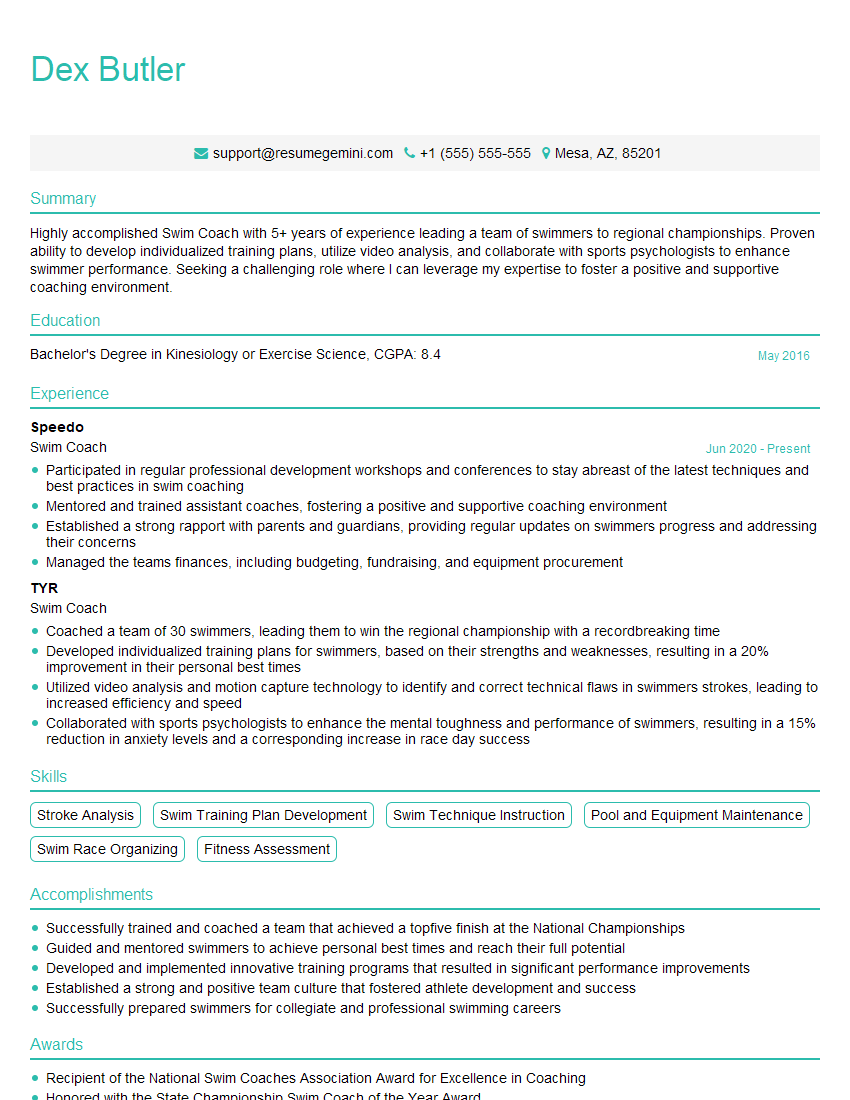
Mastering Swim Training Plan Creation is crucial for career advancement in the fitness and aquatics industry, opening doors to rewarding roles with increased responsibility and earning potential. To maximize your job prospects, create an ATS-friendly resume that highlights your skills and experience. ResumeGemini is a trusted resource that can help you build a professional and impactful resume. We provide examples of resumes tailored to Swim Training Plan Creation to guide you through the process. Invest time in crafting a compelling resume – it’s your first impression on potential employers.
Explore more articles
Users Rating of Our Blogs
Share Your Experience
We value your feedback! Please rate our content and share your thoughts (optional).
What Readers Say About Our Blog
Very informative content, great job.
good