Preparation is the key to success in any interview. In this post, we’ll explore crucial Proficient in operating and maintaining conveyor systems interview questions and equip you with strategies to craft impactful answers. Whether you’re a beginner or a pro, these tips will elevate your preparation.
Questions Asked in Proficient in operating and maintaining conveyor systems Interview
Q 1. Describe your experience with different types of conveyor systems (belt, roller, chain, etc.).
My experience encompasses a wide range of conveyor systems, from basic roller conveyors to complex automated belt systems incorporating sophisticated controls. I’ve worked extensively with:
- Belt Conveyors: These are the workhorses of many industries, used for transporting a vast array of materials, from lightweight packages to heavy bulk goods. I’ve worked with both incline and decline belt conveyors, those with various belt materials (rubber, PVC, etc.) to suit specific product needs, and systems equipped with tracking mechanisms and cleaning systems. For example, I maintained a high-speed belt conveyor in a food processing plant, requiring meticulous cleaning and regular lubrication to prevent product contamination and equipment damage.
- Roller Conveyors: These are simpler systems ideal for lighter loads and manual handling. I’ve worked with gravity roller conveyors where the product moves by gravity and powered roller conveyors which use motors to move goods at a controlled pace, often found in distribution centers. In one instance, I optimized the incline of a gravity roller conveyor to improve the efficiency of product flow without compromising safety.
- Chain Conveyors: These are used for heavier, bulkier materials and often incorporate specialized attachments for holding or manipulating the conveyed items. I’ve worked on systems moving everything from large automotive parts to pallets in warehouses. A challenging project involved troubleshooting a chain conveyor system used for heavy castings, requiring attention to both chain tension and lubrication to prevent premature wear.
- Screw Conveyors (Augers): These move bulk materials using a rotating helical screw inside a trough. I’ve worked with these systems in agricultural and manufacturing settings, focusing on maintaining proper screw rotation and preventing material build-up.
My experience covers the full lifecycle of these systems, from installation and commissioning to ongoing maintenance and repair.
Q 2. Explain the process of troubleshooting a malfunctioning conveyor belt.
Troubleshooting a malfunctioning conveyor belt involves a systematic approach. The first step is always safety – ensuring the system is powered down and locked out before any work begins. After ensuring safety, I would:
- Identify the symptom: Is the belt stopped completely? Is it slipping? Is it making unusual noises? Is there a specific section experiencing the problem?
- Visual Inspection: Carefully examine the belt, rollers, pulleys, motor, and drive mechanism for any obvious problems such as broken rollers, damaged belts, misalignment, or loose components. This often helps pinpoint the issue quickly. I once found a significant buildup of material obstructing a pulley causing belt slippage, quickly resolved after cleaning.
- Check the drive system: Examine the motor, belts, and gears for signs of wear or damage. Check for proper tension. A faulty motor or insufficient tension are common causes of belt slippage.
- Inspect the tracking system: If the belt is wandering off track, inspect the tracking rollers and guide rails for damage or misalignment. I’ve repaired tracking issues by simply adjusting the tracking rollers or replacing worn components.
- Check sensors and controls (if applicable): Modern systems often incorporate sensors and PLCs (Programmable Logic Controllers). Checking their functionality may reveal electronic faults that are the root cause.
- Consult manuals and diagrams: System documentation will contain valuable information about the system’s components, troubleshooting steps, and safety protocols.
If the problem cannot be identified and resolved through these steps, more specialized diagnostic tools or the expertise of other technicians may be needed.
Q 3. How do you identify and address common conveyor belt issues like slippage, tracking problems, or misalignment?
Addressing common conveyor belt issues requires a keen eye for detail and a practical approach. Here’s how I would handle some common issues:
- Slippage: This is usually caused by insufficient belt tension, worn pulleys, or a faulty motor. The solution involves adjusting belt tension, replacing worn pulleys, or repairing/replacing the motor. I would carefully adjust tension following the manufacturer’s recommendations to avoid over-tensioning, which can damage the belt.
- Tracking problems: If the belt wanders off center, it’s often due to misaligned rollers, damaged tracking rollers, or debris buildup on the rollers. Adjustment of rollers or replacement of damaged parts resolves most cases. Sometimes, adjusting the tracking rollers slightly can correct minor drifts.
- Misalignment: Misalignment of pulleys or rollers can cause premature wear on the belt and rollers, eventually leading to belt failure. Proper alignment tools are essential to diagnose and correct misalignment. I’ve seen severe belt damage as a result of misalignment that could have been prevented with proper routine maintenance.
In each case, preventative maintenance practices, such as regular cleaning and lubrication, minimize the likelihood of these issues.
Q 4. What safety procedures do you follow when working with conveyor systems?
Safety is paramount when working with conveyor systems. My safety procedures always include:
- Lockout/Tagout (LOTO): Before performing any maintenance or repair, I always follow the LOTO procedure to ensure the power is completely disconnected and the system is safely secured to prevent accidental start-up. This is the absolute first step in any maintenance activity. I meticulously document the LOTO process.
- Personal Protective Equipment (PPE): This includes safety glasses, gloves, and steel-toe boots, as appropriate for the task. I use hearing protection when working with noisy equipment.
- Awareness of moving parts: I am always acutely aware of all moving parts of the conveyor system, maintaining a safe distance at all times, especially during operation or startup.
- Proper lifting techniques: When handling heavy components, proper lifting techniques are essential to prevent injuries.
- Following all safety protocols: I strictly adhere to company safety regulations and manufacturer’s guidelines.
- Reporting hazards: I promptly report any unsafe conditions or equipment malfunctions to my supervisor.
Safety is a shared responsibility, and I actively participate in safety meetings and training sessions to stay updated on best practices.
Q 5. Describe your experience with preventative maintenance on conveyor systems.
Preventative maintenance is crucial for extending the lifespan of conveyor systems and preventing costly breakdowns. My experience includes:
- Regular lubrication: Lubricating moving parts, such as bearings, chains, and rollers, according to the manufacturer’s recommendations, prevents wear and tear and ensures smooth operation. I meticulously document lubrication schedules and keep track of when each component was last lubricated.
- Belt cleaning and inspection: Regularly cleaning the belt removes debris, preventing tracking issues and extending belt life. I visually inspect the belt for cuts, tears, or excessive wear.
- Roller and pulley inspection: Checking rollers and pulleys for damage, wear, or misalignment helps detect problems early and prevents catastrophic failures. I check for any signs of damage such as cracking or deformation.
- Motor and drive system checks: Inspecting the motor, belts, and gears for signs of wear or damage and checking motor amperage draw for early detection of motor problems. I look for unusual noises or excessive vibration.
- Sensor and control checks: For automated systems, testing the sensors and control systems ensures correct operation and prevents potential problems. I regularly perform functional tests and use diagnostic tools where needed.
By implementing a comprehensive preventative maintenance schedule, I’ve significantly reduced downtime and increased efficiency on the conveyor systems I’ve managed.
Q 6. How do you perform a routine inspection of a conveyor system?
A routine inspection of a conveyor system involves a thorough visual examination of all components. I typically follow these steps:
- Visual inspection of the belt: Check for damage, wear, misalignment, debris buildup, and proper tension.
- Inspection of rollers and pulleys: Check for wear, damage, misalignment, and proper lubrication.
- Examination of the drive system: Inspect the motor, belts, gears, and couplings for wear, damage, and proper alignment.
- Check for material buildup: Remove any accumulated material that could interfere with operation or cause damage.
- Inspection of the tracking system: Ensure the belt is tracking correctly, and the tracking rollers and guides are in good condition.
- Check for loose bolts and fasteners: Secure any loose components to prevent damage or safety hazards.
- Inspect safety devices: Ensure emergency stops, guards, and other safety devices are functioning correctly.
- Check lubrication: Verify the lubrication levels of bearings, chains, and other moving parts.
- Document findings: Record the date, time, and findings of the inspection. This documentation will help track maintenance trends and anticipate potential issues.
Frequency of inspection depends on the system’s complexity and usage but usually happens daily or weekly.
Q 7. What are the common causes of conveyor system breakdowns?
Conveyor system breakdowns can stem from various causes, often interconnected. Common culprits include:
- Wear and tear: Normal wear and tear on belts, rollers, pulleys, chains, and other components over time. Regular preventative maintenance mitigates this.
- Mechanical failures: Failures in bearings, motors, gears, and other mechanical components due to fatigue, improper lubrication, or overloading. Regular inspections and preventative maintenance are key.
- Improper maintenance: Neglecting routine lubrication, cleaning, and inspections can lead to premature failures. A well-defined maintenance program is vital.
- Overloading: Exceeding the conveyor system’s design capacity in terms of weight or volume of material can damage components and cause breakdowns. Proper load management is crucial.
- Material issues: Conveying materials that are too abrasive, sticky, or contain foreign objects can lead to premature wear or blockages. Material handling processes need to be appropriate to the conveyor system.
- Environmental factors: Exposure to extreme temperatures, humidity, or corrosive substances can damage conveyor components. Proper environmental protection and material selection are important.
- Electrical failures: Faults in motors, sensors, PLCs, or other electrical components can cause system malfunctions. Regular electrical checks and preventive measures help address this.
Understanding these common causes allows for proactive maintenance strategies, reducing the likelihood of breakdowns and maximizing uptime.
Q 8. How familiar are you with different types of conveyor components (rollers, belts, motors, sensors)?
My familiarity with conveyor components is extensive. I’ve worked with a wide variety of rollers, from standard steel gravity rollers to powered rollers with various drive mechanisms like motor-driven or chain-driven systems. I understand the differences in their applications, for instance, gravity rollers are ideal for light loads and gentle inclines while powered rollers are necessary for heavier loads and steeper inclines.
Belt conveyors are another area of expertise; I’m proficient with different belt materials (PVC, rubber, polyurethane) and their suitability for various materials handling scenarios – from food processing, where hygienic and easily cleanable belts are crucial, to heavy-duty industrial settings requiring high-strength, abrasion-resistant belts. I’m well-versed in the selection of appropriate belt widths and thicknesses to meet specific throughput requirements.
Regarding motors, I have hands-on experience with AC and DC motors, understanding their control systems and the importance of choosing the right motor power for the application. I can troubleshoot issues related to motor overload, speed control, and efficiency. Sensor technologies are critical for modern conveyor systems. My experience includes working with proximity sensors for object detection, photoelectric sensors for precise positioning, and limit switches for safety interlocks. I’m adept at integrating these sensors into the overall system control architecture.
Q 9. Explain your experience with conveyor system lubrication and maintenance.
Conveyor system lubrication is vital for preventing wear and tear and ensuring smooth operation. My experience includes establishing and following rigorous lubrication schedules, based on manufacturer recommendations and operational conditions. I’m meticulous about selecting the appropriate lubricants – the wrong grease can damage components or attract dust, leading to premature failure. For instance, food-grade lubricants are essential in environments with strict hygiene regulations.
Maintenance goes beyond just lubrication. It includes regular inspections for signs of wear, such as belt tears, roller damage, or chain stretching. I proactively address these issues to prevent major breakdowns. A key aspect of my approach is preventative maintenance – regularly inspecting components and performing minor repairs before they escalate into significant problems. This includes cleaning and adjusting components to ensure optimal performance. I’ve developed and implemented preventative maintenance plans that significantly reduced downtime and repair costs in previous roles.
Q 10. How do you handle emergency situations involving conveyor system malfunctions?
My approach to emergency situations is systematic and prioritizes safety. The first step is always to shut down the conveyor system immediately to prevent further damage or injury. I then conduct a thorough assessment of the situation, identifying the root cause of the malfunction. This could involve anything from a simple belt slippage to a more complex electrical fault. Following a safe shutdown procedure is paramount. Once the situation is assessed, I prioritize repairing or mitigating the problem depending on its severity.
For instance, a minor belt misalignment can be quickly corrected, whereas a major mechanical failure might require calling in specialized repair personnel and coordinating with operations to minimize disruption. Proper documentation of the emergency, including the cause, actions taken, and the time taken to resolve the issue is crucial to improve future responses and prevent similar incidents.
Q 11. Describe your experience with conveyor system PLC programming or troubleshooting.
I possess practical experience with PLC programming and troubleshooting within the context of conveyor systems. I’m proficient in ladder logic programming, using PLCs to control various aspects of the conveyor – motor speed, direction, emergency stops, and sensor integration. For example, I’ve programmed PLCs to monitor belt tension, automatically adjusting motor speed to maintain optimal performance. I use diagnostic tools to identify and resolve issues in existing PLC programs and understand how to interpret fault codes to pinpoint the source of a problem.
Troubleshooting involves systematically checking sensors, motor drives, and the PLC itself. I use a combination of diagnostic software, multimeter readings, and knowledge of the system’s electrical schematics to isolate and rectify faults. I often employ a step-by-step debugging approach, systematically eliminating potential causes to narrow down the problem.
Example ladder logic: IF (Proximity Sensor ON) THEN (Conveyor Motor START) ELSE (Conveyor Motor STOP)
Q 12. How do you ensure the safety of personnel working around conveyor systems?
Safety is my top priority when working with conveyor systems. I adhere strictly to all safety regulations and guidelines, and I ensure that all personnel working around conveyors are properly trained and equipped with the necessary safety gear, including high-visibility vests, safety glasses, and hearing protection, particularly where loud machinery is in operation. Regular safety briefings and refresher training are critical to reinforce safe working practices.
Key safety measures include implementing lockout/tagout procedures before performing any maintenance or repairs on the conveyor. I also ensure that all guarding and safety interlocks are in place and functioning correctly to prevent accidental contact with moving parts. Proper signage is also crucial, clearly indicating safety zones and potential hazards.
Furthermore, I regularly inspect the conveyor system for any potential hazards and promptly address any safety concerns. This proactive approach minimizes risks and protects workers from potential injuries.
Q 13. What are your strategies for optimizing conveyor system performance?
Optimizing conveyor system performance requires a multi-faceted approach. My strategies begin with analyzing the current system to identify bottlenecks and inefficiencies. This might involve reviewing throughput data, identifying areas with high downtime, and assessing energy consumption.
Once the issues are identified, I implement solutions such as fine-tuning the motor control systems to improve speed and efficiency, optimizing belt tension for minimal slippage and wear, and replacing worn or damaged components proactively. Regular lubrication and preventative maintenance are essential aspects of this optimization process. Moreover, implementing a computerized maintenance management system (CMMS) enables data-driven decision-making, leading to more effective planning and resource allocation.
In some cases, system upgrades might be necessary, such as incorporating more advanced sensors for better monitoring and control, or even replacing outdated components with more energy-efficient alternatives. The ultimate goal is to achieve maximum throughput while minimizing downtime, energy consumption, and maintenance costs.
Q 14. How do you handle conveyor system repairs involving replacing worn components?
Replacing worn components requires careful planning and execution. The first step is to accurately identify the faulty component and source a suitable replacement, ensuring that it meets the system’s specifications. This often involves checking manufacturer documentation and comparing component dimensions and specifications to prevent incompatibility issues. Then, I follow a systematic approach to the replacement, adhering to the manufacturer’s instructions and ensuring that all safety procedures are observed. This includes properly securing the power supply to the conveyor before initiating any repair or replacement tasks.
For instance, replacing a worn roller might involve removing the old roller, cleaning the surrounding area, and installing the new roller, ensuring correct alignment. Replacing a damaged belt requires careful alignment and tension adjustment to prevent slippage. Accurate measurements and adjustments are critical for maintaining consistent performance and preventing further damage. After the replacement, thorough testing is crucial to verify functionality and safety before resuming operation. Thorough documentation of the repair, including the parts used and the time taken, is essential for maintaining accurate records.
Q 15. Describe your experience working with different types of conveyor belt materials.
My experience encompasses a wide range of conveyor belt materials, each chosen for its specific application and material handling requirements. For instance, I’ve worked extensively with rubber belts, known for their durability and flexibility, ideal for general material transport. These are often reinforced with fabrics like nylon or polyester for increased strength and tear resistance. In food processing environments, I’ve used FDA-approved food-grade rubber and PVC belts to ensure hygiene and prevent contamination. For applications involving high temperatures, I’ve utilized heat-resistant belts made from materials like silicone rubber or specialized polymers. Finally, in heavy-duty applications with abrasive materials, I’ve implemented steel belts or modular plastic belts offering superior strength and resistance to wear. The selection of the right material is crucial; the wrong choice can lead to premature belt failure and costly downtime.
- Rubber: Versatile, durable, common choice for various applications.
- PVC: Often used in food and beverage industry for its cleanability.
- Steel: High strength, used for heavy loads and abrasive materials.
- Modular Plastic: Easy to clean and maintain, often used in sanitary environments.
Career Expert Tips:
- Ace those interviews! Prepare effectively by reviewing the Top 50 Most Common Interview Questions on ResumeGemini.
- Navigate your job search with confidence! Explore a wide range of Career Tips on ResumeGemini. Learn about common challenges and recommendations to overcome them.
- Craft the perfect resume! Master the Art of Resume Writing with ResumeGemini’s guide. Showcase your unique qualifications and achievements effectively.
- Don’t miss out on holiday savings! Build your dream resume with ResumeGemini’s ATS optimized templates.
Q 16. Explain your understanding of conveyor system capacity and throughput.
Conveyor system capacity refers to the maximum amount of material the system can handle simultaneously, often expressed in weight or volume per unit of time (e.g., tons per hour). Throughput, on the other hand, represents the actual amount of material processed over a given period. Capacity is a theoretical limit dictated by the system’s design, while throughput is the actual performance and can be influenced by factors like material flow, downtime, and system efficiency. For example, a conveyor system might have a capacity of 100 tons per hour, but its actual throughput might be only 80 tons per hour due to occasional blockages or maintenance. Understanding this distinction is critical for optimizing operations and ensuring that the system meets production goals. We constantly monitor both to identify bottlenecks and implement improvements.
In one project, we analyzed a system with low throughput despite high capacity. By analyzing the material flow, we identified a bottleneck at a transfer point causing frequent jams. Implementing a redesigned transfer chute significantly increased throughput, bringing it closer to the system’s capacity.
Q 17. How do you maintain accurate records of conveyor system maintenance activities?
Maintaining accurate maintenance records is crucial for preventative maintenance and regulatory compliance. We utilize a computerized maintenance management system (CMMS) to track all activities. This software allows us to schedule preventative maintenance tasks, record completed repairs, document parts used, and monitor equipment performance. Each maintenance activity, whether preventative or corrective, includes details such as the date, time, technician, work performed, parts replaced, and any relevant observations. This detailed record-keeping allows for trend analysis, facilitating proactive maintenance and helping to predict potential failures before they occur. The CMMS also generates reports which are essential for management review and regulatory compliance.
For instance, we track belt tension checks, lubrication intervals, and motor inspections, flagging potential issues based on trends in the data. This proactive approach minimizes downtime and extends equipment lifespan.
Q 18. Describe your experience with conveyor system cleaning and sanitation procedures.
Conveyor system cleaning and sanitation procedures vary considerably depending on the industry and the materials handled. In food processing, for example, strict hygiene protocols are mandatory. This involves regular cleaning with approved detergents and sanitizers, adhering to HACCP (Hazard Analysis and Critical Control Points) guidelines. We use high-pressure water jets and specialized cleaning agents to remove debris and sanitize the belts and surrounding areas. In other industries, cleaning might involve less stringent procedures, but still requires regular removal of dust, debris, and spilled material to prevent blockages and maintain safety. Proper cleaning and sanitation also help prolong the lifespan of the equipment.
In a recent project in a bakery, we implemented a scheduled cleaning routine using FDA-approved cleaning agents, along with a thorough inspection process to ensure that no food particles remained on the belt or surrounding areas. This helped prevent cross-contamination and maintained a high standard of hygiene.
Q 19. What are the common causes of conveyor belt damage?
Conveyor belt damage is a common issue that can stem from various sources. Improper tensioning is a major culprit, leading to stretching, slippage, and premature wear. Material buildup, particularly sticky or abrasive substances, can cause severe abrasion and damage. Misalignment of the rollers or pulleys can also contribute to uneven wear and belt tearing. Excessive speed or overloading can overstress the belt, leading to breakage. Finally, environmental factors, such as exposure to extreme temperatures or chemicals, can degrade the belt material over time. Regular inspections and preventative maintenance are key to minimizing this damage.
- Improper Tension: Leading cause of stretching and wear.
- Material Buildup: Abrasion and damage from sticky or abrasive materials.
- Misalignment: Uneven wear and tearing.
- Overloading: Belt stress and breakage.
- Environmental Factors: Degradation from extreme temperatures or chemicals.
Q 20. How do you determine the root cause of a conveyor system malfunction?
Troubleshooting a conveyor system malfunction requires a systematic approach. I begin by gathering information about the nature of the problem – is it a complete shutdown, reduced throughput, or unusual noise? I then visually inspect the system, checking for obvious issues such as belt damage, misalignment, or material blockages. If the problem isn’t immediately apparent, I proceed to more detailed diagnostics, checking motor operation, electrical connections, and sensor readings. Often, the root cause is a combination of factors. A thorough investigation, including reviewing maintenance logs, may be necessary to identify the underlying issue. Using a structured approach like a decision tree or fault-finding chart can accelerate this process.
In one instance, a conveyor stopped unexpectedly. Initial inspection revealed nothing. By systematically checking the electrical connections, I discovered a loose wire causing a short circuit in the motor control circuit. This was the root cause of the system failure.
Q 21. What types of diagnostic tools are you familiar with for conveyor system troubleshooting?
My experience includes using a variety of diagnostic tools for conveyor system troubleshooting. These range from simple tools like multimeters for checking voltage and current to more sophisticated equipment. Infrared (IR) thermometers are useful for detecting overheating in motors or bearings. Vibration analysis tools help identify imbalances or bearing wear. Specialized software can monitor sensor data in real-time, identifying anomalies that could signal impending failure. Motor current analyzers provide detailed information about motor performance, helping pinpoint issues like winding faults or bearing problems. Understanding how to interpret data from these tools is crucial for effective troubleshooting and proactive maintenance.
- Multimeters: For checking voltage, current, and continuity.
- Infrared Thermometers: For detecting overheating components.
- Vibration Analyzers: For identifying imbalances and bearing wear.
- Motor Current Analyzers: For assessing motor health and performance.
- Specialized Software: For real-time monitoring and data analysis.
Q 22. How do you ensure the proper tensioning of a conveyor belt?
Proper conveyor belt tension is crucial for efficient operation and longevity. Too tight, and you risk premature wear and tear on the belt and components; too loose, and the belt slips, causing material spills and potential damage. Tension is typically adjusted using a tensioning device, often a screw mechanism or hydraulic cylinder, located at the tail pulley.
The process involves:
- Measuring the initial tension: This usually involves using a tension gauge that measures the force required to deflect the belt a specific amount. Different belt types and manufacturers will have their own recommended tension ranges.
- Adjusting the tensioner: Once the initial tension is measured, the tensioning device is adjusted to bring the tension within the manufacturer’s specified range. This often involves turning a screw or adjusting a hydraulic valve.
- Re-measuring the tension: After adjustment, the tension should be re-measured to verify it’s within the acceptable range. Any adjustments are made until the ideal tension is achieved.
Example: In a recent project involving a heavy-duty conveyor transporting aggregates, I used a calibrated tension gauge to measure the belt tension. It was significantly below the recommended range, leading to belt slippage. After adjusting the hydraulic tensioner and re-checking, we eliminated the slippage and improved material flow significantly.
Q 23. Explain your experience with conveyor system alignment and adjustment.
Conveyor system alignment is paramount for smooth operation and to prevent premature wear and tear. Misalignment leads to increased friction, belt damage, and potential component failure. Alignment involves ensuring the conveyor’s components – pulleys, rollers, and the belt itself – are perfectly aligned both horizontally and vertically.
My experience includes using various tools and techniques, including:
- Laser alignment tools: These provide precise measurements to ensure that pulleys are aligned correctly. This is crucial for preventing belt tracking issues.
- Straight edges and levels: For verifying the horizontality and verticality of the conveyor frame and rollers.
- Plumb bobs: Used for checking the vertical alignment of pulleys and other components.
- Manual adjustments: Often involving shimming or adjusting the mounting structures of the rollers and pulleys to achieve proper alignment.
Example: I once worked on a conveyor system where misalignment caused the belt to ride to one side, resulting in significant wear. Using a laser alignment tool, I meticulously adjusted the rollers and pulleys until the belt tracked perfectly in the center, resolving the wear problem and improving efficiency.
Q 24. What safety precautions do you take when working at heights on conveyor systems?
Safety is paramount when working at heights. When working on elevated conveyor systems, I always follow a strict safety protocol, including:
- Harness and fall protection: Using a full-body harness with a lifeline anchored to a secure point above. This is non-negotiable.
- Proper access equipment: Using appropriate scaffolding, ladders, or aerial lifts, ensuring they are rated for the weight capacity and working conditions.
- Lockout/Tagout procedures: Ensuring the conveyor system is completely de-energized and locked out before commencing any work, preventing accidental start-up.
- Spotters: Having a qualified spotter on the ground when working at heights, especially during precarious maneuvers.
- Appropriate personal protective equipment (PPE): Wearing safety helmets, safety glasses, gloves, and sturdy work boots.
Example: While replacing a damaged idler on an elevated conveyor, I used a harness attached to a secure anchor point and followed strict lockout/tagout procedures. My spotter ensured the work area was clear, preventing any accidents.
Q 25. Describe your experience working with different types of conveyor system controls.
I have experience working with a variety of conveyor system controls, ranging from simple on/off switches to sophisticated PLC (Programmable Logic Controller) based systems. This includes:
- Basic on/off controls: These are suitable for simpler conveyor applications.
- Variable Frequency Drives (VFDs): Used to control the speed of conveyor motors, allowing for precise speed adjustments based on application demands.
- PLC-based control systems: These provide advanced control capabilities, including monitoring, diagnostics, and automated control sequences. I’m proficient in programming and troubleshooting PLC systems, often using ladder logic.
- Human-machine interfaces (HMIs): These provide operators with a user-friendly interface for monitoring and controlling the conveyor system.
Example: I integrated a new VFD into an older conveyor system, optimizing the belt speed for improved material handling and reducing energy consumption. I also programmed the PLC to monitor the system’s performance and send alerts if any issues arose.
Q 26. How familiar are you with lockout/tagout procedures for conveyor systems?
Lockout/Tagout (LOTO) procedures are essential for the safety of technicians working on conveyor systems. These procedures ensure that equipment is safely de-energized and prevented from accidental start-up, eliminating the risk of injury. My understanding of LOTO involves:
- Identifying energy sources: Pinpointing all potential energy sources (electrical, hydraulic, pneumatic) connected to the conveyor system.
- Isolation of energy sources: Disconnecting or isolating each energy source using appropriate lockout devices.
- Applying lockout devices: Securing lockout devices (locks, tags) to prevent the re-energization of equipment.
- Verification of lockout: Ensuring the equipment is completely de-energized and safe to work on.
- Tagout procedures: Clearly labeling the equipment with tags indicating who performed the lockout and why.
- Removal of lockout devices: Following a specific procedure, only the person who applied the lockout can remove the devices after verifying the work area is safe.
Example: Before performing any maintenance on a conveyor system, I always follow the company’s strict LOTO procedures. This involves isolating the power supply, locking out the motor control circuit, and applying warning tags before starting any maintenance work.
Q 27. Describe a time you successfully resolved a complex conveyor system problem.
A complex problem I encountered involved a conveyor system experiencing frequent belt tracking issues. The belt would repeatedly wander off to one side, causing material spillage and belt damage. Initial troubleshooting focused on simple adjustments, but these proved ineffective.
My systematic approach involved:
- Thorough inspection: I visually inspected every component of the conveyor system, looking for any signs of misalignment, damage, or wear.
- Data collection: I collected data on belt speed, material flow, and the pattern of belt wander.
- Identification of the root cause: After careful analysis, I identified that worn idler rollers were causing the belt to track incorrectly. One idler was significantly more worn than others, causing the belt to deviate off its path.
- Implementation of the solution: I replaced the faulty idler rollers, ensuring proper alignment and ensuring the rollers were of appropriate quality.
- Verification: After the repairs, I meticulously monitored the system to ensure the problem was solved.
This systematic approach led to the successful resolution of the belt tracking issue, improving efficiency and reducing the risk of damage and spillage.
Q 28. How do you stay up-to-date with the latest advancements in conveyor system technology?
Staying current with the latest advancements in conveyor system technology is vital. My approach to continuous learning involves:
- Industry publications and journals: I regularly read trade magazines and journals focusing on material handling and automation.
- Conferences and workshops: Attending industry conferences and workshops allows me to learn from experts and network with colleagues.
- Manufacturer websites and training materials: Accessing manufacturers’ websites and training materials provides insights into the latest products and technologies.
- Online courses and webinars: Taking online courses and participating in webinars offered by educational institutions and industry professionals.
- Networking with peers: Engaging in discussions with colleagues and experts in the field to share knowledge and learn about new advancements.
Example: Recently, I completed an online course on advanced PLC programming for conveyor systems, which improved my skills in troubleshooting and optimizing system performance using modern techniques. This allowed me to improve efficiency on several projects.
Key Topics to Learn for Proficient in operating and maintaining conveyor systems Interview
- Conveyor System Types and Components: Understanding different conveyor types (belt, roller, chain, etc.), their components (motors, drives, sensors, controls), and their applications in various industries.
- Safety Procedures and Regulations: Familiarity with lockout/tagout procedures, OSHA regulations, and safe operating practices related to conveyor systems to ensure a hazard-free work environment.
- Troubleshooting and Maintenance: Developing skills in identifying and resolving common conveyor system malfunctions, performing preventative maintenance, and understanding scheduled maintenance procedures.
- Electrical Systems and Controls: Knowledge of basic electrical principles, motor control circuits, programmable logic controllers (PLCs), and sensor technologies used in conveyor systems.
- Mechanical Systems and Components: Understanding of bearings, belts, pulleys, chains, sprockets, and other mechanical components, including their wear and tear, and methods for replacement and repair.
- Performance Monitoring and Optimization: Using data to analyze conveyor system efficiency, identifying areas for improvement, and implementing solutions to maximize throughput and minimize downtime.
- Preventive Maintenance Schedules and Documentation: Creating and adhering to preventative maintenance schedules, accurately documenting maintenance activities, and using this data to predict potential issues.
- Problem-Solving and Diagnostic Techniques: Developing systematic approaches to diagnose malfunctions, using diagnostic tools effectively, and implementing solutions to restore optimal performance.
Next Steps
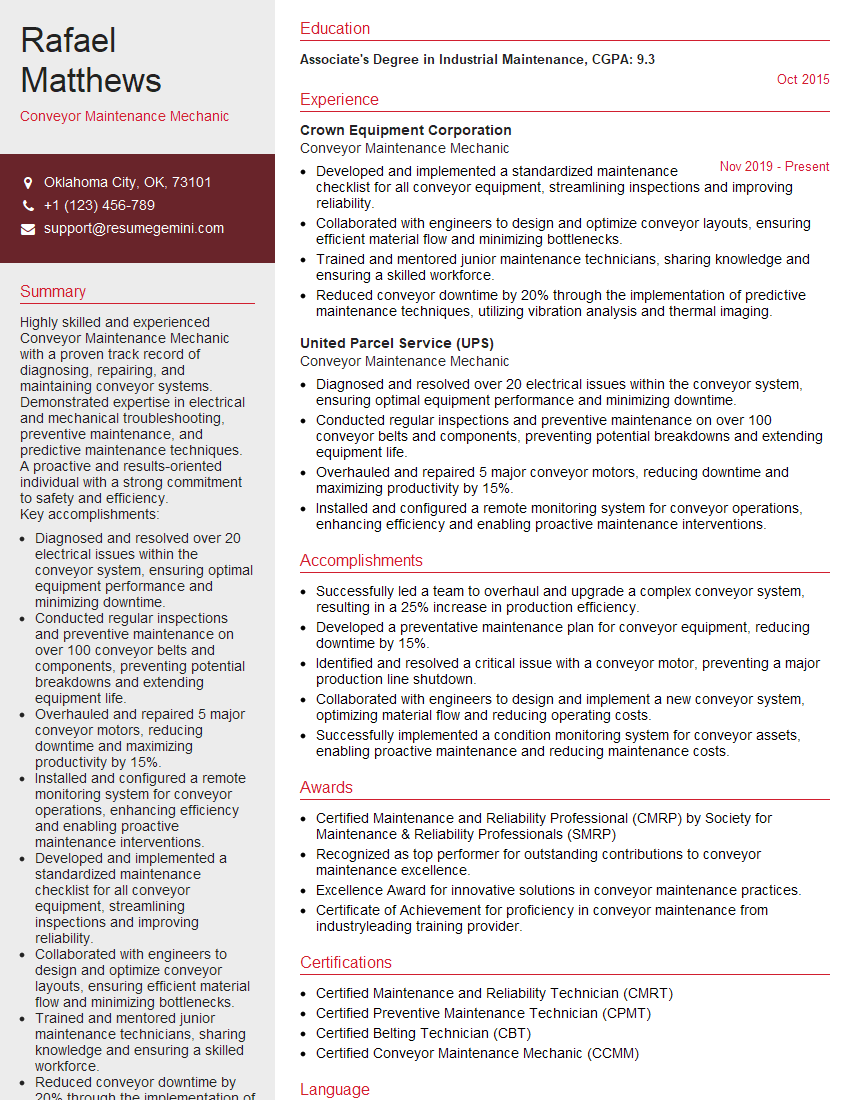
Mastering the operation and maintenance of conveyor systems opens doors to rewarding careers in diverse industries, offering opportunities for growth and specialization. A strong resume is crucial for showcasing your skills and experience to potential employers. Creating an ATS-friendly resume significantly increases your chances of getting noticed. ResumeGemini can help you build a professional and impactful resume tailored to highlight your expertise in this field. Examples of resumes specifically designed for candidates proficient in operating and maintaining conveyor systems are available to guide you.

Explore more articles
Users Rating of Our Blogs
Share Your Experience
We value your feedback! Please rate our content and share your thoughts (optional).
What Readers Say About Our Blog
Very informative content, great job.
good