Cracking a skill-specific interview, like one for Proficient in Parachute Packing, requires understanding the nuances of the role. In this blog, we present the questions you’re most likely to encounter, along with insights into how to answer them effectively. Let’s ensure you’re ready to make a strong impression.
Questions Asked in Proficient in Parachute Packing Interview
Q 1. Describe the different types of parachute canopies and their applications.
Parachute canopies come in various designs, each tailored for specific applications. The choice depends on factors like the intended use (skydiving, cargo delivery, military operations), the weight being carried, and the desired descent rate.
- Round Canopies: These are the oldest and simplest type, characterized by their circular shape. They’re relatively simple to pack and deploy, making them suitable for training purposes. However, their descent rate is slower than other types.
- Square Ram-Air Canopies: These are rectangular or square, incorporating air inlets and vents to improve stability and maneuverability during descent. They offer higher speed and precision control, popular for skydiving and paragliding.
- Parafoil Canopies: These resemble wings with a large surface area, providing excellent glide performance. They’re commonly used for cargo delivery systems and precision landings.
- Ribbon Canopies: Designed for drag, these decelerate rapidly. Often found in emergency rescue situations or as drogue chutes, slowing down heavy objects.
- Pilot Chutes: Small, specialized parachutes used to deploy larger main canopies. They are essential for reliable main canopy inflation.
For example, a skydiver might use a ram-air canopy for its maneuverability, while a cargo drop might utilize a parafoil for its glide capability. Choosing the wrong canopy type for a given application could be catastrophic.
Q 2. Explain the steps involved in a typical parachute packing procedure.
Parachute packing is a meticulous process, demanding precision and attention to detail. A poorly packed parachute could lead to a malfunction, putting the user’s life at risk. The steps are generally as follows (note that specific steps may vary slightly depending on canopy type and manufacturer):
- Preparation: Lay out the canopy carefully, ensuring it’s free from any debris or damage. Inspect thoroughly for any tears, snags, or weak points.
- Bridle and Suspension Lines: Lay the suspension lines and bridle neatly, organizing them according to the manufacturer’s instructions. This is crucial for proper canopy inflation.
- Folding the Canopy: The canopy is systematically folded, following a specific pattern to avoid tangles or wrinkles. Many packers use a method of ‘laying-in’ or ‘concertina’ folding.
- Packing the Canopy: Once folded, the canopy is placed into the parachute container, ensuring that the lines are correctly routed and the canopy is fully contained within the bag.
- Closing and Securing: The container is firmly closed and secured using appropriate straps and fastenings. Any loose ends are carefully tucked in to prevent snagging.
- Final Inspection: A final check is performed, ensuring that everything is in its correct place and no abnormalities are present. This involves checking for line twists, proper canopy packing, and secure closure.
Imagine building a Lego castle; every piece must be placed correctly, or the entire structure could collapse. The same precision is required when packing a parachute.
Q 3. What are the critical safety checks performed during parachute packing?
Safety checks are paramount in parachute packing. Skipping even one step could have fatal consequences. The checks cover several areas:
- Visual Inspection: Thorough inspection of the canopy for any tears, holes, abrasion, or damaged stitching. Look closely at the suspension lines for fraying, cuts, or weakening.
- Line Check: Verification that all suspension lines are correctly routed and free from tangles or knots. Each line should be checked individually for proper attachment.
- Bridle and Main Canopy Attachment: Confirming that the bridle is properly attached to the canopy and that the main attachment points are secure and show no signs of wear.
- Reserve Parachute (if applicable): If a reserve parachute is being packed, it follows the same rigorous checks as the main canopy. An independent check is vital.
- Container Integrity: Checking that the parachute container is in good condition, free from rips or damage, with all buckles, straps, and other fasteners working correctly.
Remember, the safety check isn’t just about finding errors; it’s about establishing confidence in the integrity of the equipment.
Q 4. How do you identify and address common parachute packing errors?
Identifying and rectifying packing errors requires a keen eye and understanding of the packing process. Common errors include:
- Twisted or Knotted Lines: These can impede proper canopy inflation, leading to a malfunction. The solution is to carefully untwist and unknot the lines, ensuring they are laid out correctly.
- Improper Canopy Folding: Wrinkles or improper folds in the canopy can affect its aerodynamics. Repacking the canopy correctly, following the manufacturer’s instructions is the only solution.
- Loose Lines or Improper Routing: Loose lines or incorrectly routed lines can create tangles and lead to partial inflation. Repacking is necessary, paying close attention to line routing.
- Damaged or Worn Components: Any damaged components must be replaced by certified personnel and the canopy repacked. Do not attempt repair without proper training.
I always employ a methodical approach; I systematically retrace my steps, reviewing each phase of the packing process to locate the error. Prevention is always the best approach – diligent work and following standardized procedures can minimize errors.
Q 5. What are the regulations and standards governing parachute packing in your region?
The regulations and standards governing parachute packing vary by region and are typically set by national aviation authorities or specific governing bodies for skydiving and related activities. These regulations usually specify:
- Packing Certification Requirements: A mandatory certification process for packers, often requiring formal training and regular proficiency checks.
- Packing Procedures: Detailed instructions on approved packing techniques, ensuring consistency and safety.
- Equipment Maintenance and Inspection: Regular inspection and maintenance schedules for parachutes and containers.
- Record Keeping: Documentation of packing procedures, inspections, and maintenance history.
- Liability and Insurance: Requirements related to liability insurance and demonstrating the packer’s compliance with safety standards.
For example, in the US, the FAA (Federal Aviation Administration) plays a role in regulating parachutes used in certain contexts. Compliance with these regulations is not merely a legal requirement, but a critical element in ensuring public safety.
Q 6. Explain the importance of proper parachute maintenance and storage.
Proper maintenance and storage are critical for extending the lifespan of a parachute and ensuring its continued safe operation. Neglect in either area can lead to premature degradation of the canopy and lines.
- Regular Inspection: Parachutes should be inspected regularly for any signs of wear and tear, paying attention to the canopy, lines, and container.
- Cleaning: Canopies should be cleaned regularly to remove dirt and debris that can weaken the fabric.
- Storage Conditions: Parachutes should be stored in a clean, dry, and well-ventilated area, away from direct sunlight, extreme temperatures, and sources of moisture.
- Professional Servicing: Periodic professional servicing is vital to identify and address potential problems before they become critical.
Think of a car; regular maintenance extends its life and keeps it running smoothly. The same principle applies to parachutes – preventative measures significantly reduce the risk of failure.
Q 7. How do you handle damaged or malfunctioning parachute components?
Handling damaged or malfunctioning parachute components requires immediate and decisive action. Never attempt to repair a parachute yourself without the proper training and certification.
- Immediate Inspection: Carefully inspect the damaged component to assess the extent of the damage.
- Removal from Service: The parachute should be immediately removed from service and properly tagged as unusable.
- Professional Repair or Replacement: The damaged component should be sent to a certified parachute repair facility for repair or replacement. Only certified technicians should handle repairs.
- Documentation: Maintain detailed records of the damage, repair, or replacement, including dates and personnel involved.
My priority is safety. A damaged parachute is a significant safety hazard and should be treated with the utmost seriousness. Any doubt should always lead to discarding the component.
Q 8. Describe your experience with different parachute packing techniques.
My experience encompasses a wide range of parachute packing techniques, including those for round parachutes, square parachutes (ram-air), and various reserve parachute systems. I’m proficient in both the traditional methods and the more modern, streamlined techniques that prioritize efficiency and safety. For example, with round parachutes, I’m adept at the ‘modified horseshoe’ method, ensuring consistent and reliable packing. With ram-air parachutes, I’ve mastered the specific procedures required for each manufacturer’s design, which often involve intricate bridle and slider configurations. This includes the meticulous attention to detail needed to avoid twists or entanglement.
My training included rigorous certification processes and ongoing continuing education. I regularly practice different packing techniques to refine my skills and stay updated with the latest best practices and safety standards. I’ve also had the opportunity to work with a wide variety of parachute types and sizes, from small student parachutes to larger, heavier-load parachutes used for cargo drops.
Q 9. What are the potential consequences of improper parachute packing?
Improper parachute packing carries life-threatening consequences. Even minor errors can lead to a malfunction during deployment, resulting in a variety of dangerous scenarios. For instance, a twisted bridle can cause the parachute to open partially or not at all, leading to a hard landing or uncontrolled descent. A poorly packed main parachute can result in the reserve parachute being unusable or difficult to deploy. A missing or improperly secured reserve parachute handle could delay or prevent its deployment during an emergency. The consequences can range from serious injury to fatality.
This underscores the critical importance of adhering to strict procedures and maintaining meticulous attention to detail throughout the entire packing process. Every step is crucial in ensuring a safe and reliable parachute system. A single mistake can have devastating consequences.
Q 10. How do you ensure the accuracy and consistency of your parachute packing?
Accuracy and consistency in parachute packing are paramount. I ensure this through a multi-faceted approach. Firstly, I meticulously follow the manufacturer’s instructions for each specific parachute model. Secondly, I employ a checklist system, verifying each step of the process before moving on. This checklist helps to maintain a consistent sequence and prevent overlooking any crucial details. I also employ visual checks at every stage, ensuring everything is neatly folded and properly secured. Finally, I regularly undergo proficiency checks and refresher training to maintain my skill and expertise.
Imagine building a house – you wouldn’t skip steps or ignore building codes. Parachute packing is similar; meticulous attention to each step ensures the final product is structurally sound and functions as designed. Every fold, every stitch, every knot is critical.
Q 11. How do you manage your workload and prioritize tasks during peak periods?
During peak periods, efficient workload management is key. I utilize a prioritized task list based on urgency and deadlines. Parachutes requiring immediate repacking for upcoming jumps always take precedence. I also communicate effectively with the team to coordinate tasks and ensure that everything runs smoothly and efficiently. Furthermore, I’m adept at breaking down complex tasks into smaller, more manageable units to avoid feeling overwhelmed. This approach allows for focused attention and a reduction in errors. Maintaining a calm and organized approach is critical under pressure.
Think of it like air traffic control – many planes need attention at once, so prioritization is crucial. Similar principles apply to managing a high-volume parachute packing operation.
Q 12. Describe your experience with parachute reserve systems and their deployment.
Reserve parachute systems are a crucial safety backup. My experience includes packing and inspecting various reserve systems, understanding their deployment mechanisms, and familiarizing myself with different deployment methods (e.g., pilot chute assisted, freefall deployment). I’m well-versed in the regulations and standards governing their packing and maintenance. This ensures the reserve parachute is readily accessible and deployable in an emergency situation. Regular inspection and proper storage are critical components of keeping these systems functioning correctly.
I always ensure that the reserve is readily accessible and correctly connected to the harness. It’s the last line of defense, so its readiness is non-negotiable.
Q 13. Explain the different types of parachute malfunctions and their solutions.
Parachute malfunctions can occur for many reasons, and knowing how to handle them is essential. Some common malfunctions include line twists, shroud line entanglement, canopy collapses, and partial openings. The solutions vary depending on the type and severity of the malfunction. For example, line twists might require a controlled descent and a landing maneuver. A canopy collapse might necessitate corrective steering techniques. A partial opening requires immediate reserve deployment. Proper training and experience are critical in handling these situations safely and effectively. Remember, understanding the parachute’s design and function is fundamental to addressing malfunctions.
Each malfunction requires immediate assessment and appropriate response, informed by thorough training and experience. It’s not just about technical skills but also about maintaining composure under pressure. Regular training in emergency procedures is essential to develop this capability.
Q 14. How do you perform a pre-jump inspection of a packed parachute?
A pre-jump inspection is a critical safety check. It involves a thorough visual examination of the packed parachute, including verifying the integrity of the seams, the correct placement and securing of the bridle and risers, and the correct functioning of the deployment system. I check for any signs of damage, wear, or unusual conditions. I also inspect the reserve parachute for proper packing and accessibility. The inspection focuses on identifying any potential issues before jumping. It’s a systematic process, often guided by a checklist ensuring nothing is overlooked.
Think of it as a pre-flight checklist for an airplane. You wouldn’t fly without it, and you shouldn’t jump without a thorough pre-jump inspection.
Q 15. What are your strategies for maintaining a safe and organized work environment?
Maintaining a safe and organized packing environment is paramount. Think of it like a surgeon’s operating room – precision and cleanliness are critical. My strategy involves several key steps. First, I dedicate a specific, well-lit workspace solely for parachute packing, free from distractions. This area is meticulously organized: parachutes are stored in designated containers, tools are readily accessible in a specific order, and the floor is kept clear of any debris. Second, I adhere to a rigorous cleaning routine. Before each packing session, I wipe down all surfaces with an anti-static cleaning solution to prevent dust or foreign objects from interfering with the intricate components. Finally, I maintain a checklist for every step of the packing process, ensuring I never miss a critical detail. This systematic approach ensures both safety and efficiency, reducing the risk of errors and maximizing productivity.
- Dedicated Workspace: A clean, well-lit area exclusively for packing.
- Organized Storage: Parachutes and tools are neatly stored and readily accessible.
- Rigorous Cleaning: Regular cleaning with anti-static solutions.
- Detailed Checklist: A step-by-step checklist to prevent missed steps.
Career Expert Tips:
- Ace those interviews! Prepare effectively by reviewing the Top 50 Most Common Interview Questions on ResumeGemini.
- Navigate your job search with confidence! Explore a wide range of Career Tips on ResumeGemini. Learn about common challenges and recommendations to overcome them.
- Craft the perfect resume! Master the Art of Resume Writing with ResumeGemini’s guide. Showcase your unique qualifications and achievements effectively.
- Don’t miss out on holiday savings! Build your dream resume with ResumeGemini’s ATS optimized templates.
Q 16. How do you communicate effectively with pilots and other jump crew members?
Effective communication is crucial in our high-stakes environment. I utilize a clear and concise communication style, using plain language and avoiding jargon. With pilots, I confirm the type of parachute required, ensuring we’re both on the same page regarding the specific model and its deployment characteristics. Before a jump, I visually inspect the parachute with the pilot, pointing out any potential issues and answering any questions they may have. With other jump crew members, I rely on teamwork and open communication, proactively highlighting any concerns or potential problems. For example, if I notice a discrepancy in a parachute’s packing, I immediately communicate it to the relevant personnel to prevent further complications. This proactive approach to communication helps foster a safe and efficient jump environment.
Q 17. Explain your knowledge of parachute materials and their properties.
My understanding of parachute materials extends beyond simple recognition; I comprehend their properties and limitations. Nylon, for instance, is commonly used for its strength, lightweight nature, and resistance to tearing. However, it’s susceptible to degradation from ultraviolet (UV) light and extreme temperatures. Understanding this allows me to assess the condition of a parachute, identifying any signs of wear and tear or UV damage. Dacron, another common material, offers excellent strength and resistance to abrasion, making it ideal for certain parts of the parachute. Knowing the specific properties of each material allows me to make informed decisions regarding parachute serviceability and safety. This includes knowing which materials are suitable for specific environments and types of jumps.
Q 18. Describe your problem-solving skills related to parachute malfunctions in the field.
Problem-solving in the field is critical. My approach follows a systematic process. First, I assess the situation calmly and systematically. I identify the exact nature of the malfunction – line twist, bridling issue, or canopy damage. Second, I use my knowledge of parachute construction and function to diagnose the root cause. For example, if a pilot reports difficulty steering, I might examine the lines for twists or damage. Third, I take appropriate action, following established procedures. This might involve making minor repairs if feasible or, more often, replacing the parachute entirely if deemed unsafe. Finally, I document the malfunction and corrective actions taken, ensuring lessons are learned and potential future issues are addressed. One instance involved a minor line twist during pre-jump checks. By carefully untwisting the lines according to the manufacturer’s instructions, I resolved the issue before the jump, preventing a potential hazard.
Q 19. How do you adapt your packing techniques to different types of parachutes?
Packing techniques differ significantly depending on the parachute type – round, square, or ram-air. Round parachutes, for example, involve a specific folding and packing sequence to ensure uniform deployment. Ram-air parachutes, with their more complex design, require a much more precise and detailed packing procedure to maintain proper airflow and stability. I’m proficient in handling various parachute types, adapting my techniques to each design’s unique characteristics and following the manufacturer’s precise instructions for each model. This includes understanding the specific components, such as the risers, suspension lines, and canopy, and how they need to be handled and organized during the packing process.
Q 20. How do you stay updated on the latest advancements and safety standards in parachute packing?
Staying current in this field is vital. I maintain my proficiency through a combination of methods. I actively participate in continuing education courses and workshops provided by reputable organizations like the United States Parachute Association (USPA). I subscribe to industry journals and newsletters to stay informed about the latest materials, techniques, and safety standards. I also actively engage with other experienced packers, sharing knowledge and best practices. This ongoing commitment to professional development allows me to remain at the forefront of parachute packing practices and safety protocols.
Q 21. What is your understanding of human factors related to parachute safety?
Human factors are critically important in parachute safety. Fatigue, stress, and even simple mistakes can have catastrophic consequences. Understanding factors like situational awareness, decision-making under pressure, and the effects of altitude on cognitive function is crucial for ensuring safe operations. For example, a fatigued packer might overlook a crucial step during the packing process, leading to a malfunction. I incorporate regular breaks into my work schedule to mitigate fatigue and always double-check my work, ensuring the highest level of accuracy and safety. Moreover, a strong understanding of human factors allows me to communicate more effectively with pilots and other crew members, contributing to a safety-conscious environment for all involved.
Q 22. Describe your experience with quality control procedures for parachute packing.
Quality control in parachute packing is paramount; a single oversight can have catastrophic consequences. My approach involves a multi-layered system, starting with meticulous pre-packing checks of the parachute canopy, lines, and bridle for any damage, wear, or inconsistencies. This includes carefully examining the material for tears, abrasion, or UV degradation. I then follow a standardized packing procedure, adhering strictly to the manufacturer’s guidelines. Each step is double-checked; for instance, after laying out the canopy correctly, I verify the orientation of each panel before proceeding to the next phase. Finally, a post-packing inspection verifies the correct configuration, ensuring no lines are twisted, knotted, or trapped, and the packed parachute meets the specified size and weight limits. I maintain detailed records for each parachute packed, including the date, time, and any anomalies observed. Any deviation from the standard procedure, no matter how minor, is documented and reported immediately. This detailed approach ensures consistent high quality and reduces the risk of accidents.
Q 23. How do you handle challenging or stressful situations in your work?
High-pressure situations are inherent to parachute packing, especially under tight deadlines or adverse weather conditions. My strategy involves prioritizing a calm and methodical approach. I break down complex tasks into smaller, manageable steps, focusing on accuracy and precision at each stage. Effective time management is also crucial. I anticipate potential problems and plan for contingencies. For instance, if a canopy shows signs of wear that necessitates immediate replacement, I have already established clear communication protocols with the supply chain to avoid any delay. Deep breathing exercises and mindfulness techniques help me maintain focus and composure during stressful moments. The ultimate goal is to consistently deliver high-quality work even under pressure, ensuring the safety of those who will rely on the parachute.
Q 24. How do you contribute to a positive team environment during parachute operations?
A positive team environment is essential for safe and efficient parachute operations. I contribute by actively fostering open communication; I readily share my expertise and readily seek clarification from colleagues if unsure. I believe in collaborative problem-solving, encouraging others to express their ideas and concerns without hesitation. Before a jump, I actively participate in pre-flight briefings, ensuring that every team member is clear on their role and responsibilities. This proactive approach minimizes confusion and enhances overall teamwork. Additionally, I celebrate successes and offer constructive feedback when necessary, fostering a supportive and encouraging atmosphere. A positive work environment directly impacts the quality of our work and ultimately contributes to the safety of all involved.
Q 25. Explain your understanding of the impact of environmental conditions on parachute performance.
Environmental conditions significantly impact parachute performance. High winds can affect deployment and canopy stability, potentially leading to off-target landings or increased risk of entanglement. Heavy rain can add weight, affecting descent rates and potentially compromising handling. Extreme temperatures, especially cold temperatures, can make materials brittle and increase the risk of tears or breakage. Humidity can affect the canopy’s aerodynamic properties. My understanding of these factors is crucial for selecting the appropriate parachute for specific conditions and advising jumpers accordingly. I always consider weather forecasts before packing and make adjustments as needed. For example, I may opt for a smaller, more manageable reserve parachute for deployment in high-wind conditions.
Q 26. What are the key differences between packing different types of parachutes (e.g., round vs. square)?
Round and square parachutes differ significantly in their design and therefore their packing procedures. Round parachutes, often used as reserve parachutes, are relatively simple to pack, typically involving a series of folds and careful placement within a container. The focus is on ensuring the canopy deploys smoothly without any twists or entanglement. Square or ram-air parachutes, however, are more complex. They involve careful attention to the precise placement and orientation of each panel to ensure correct inflation. The lines are critical, and their arrangement must be meticulously organized to prevent entanglement and ensure a stable descent. This necessitates a more technical packing process, involving multiple stages and checks, and often specialized equipment. Understanding these differences is vital to ensuring each parachute is packed correctly and safely for its intended purpose.
Q 27. Describe a time you had to troubleshoot a complex parachute issue. What was the outcome?
During a recent inspection, I discovered a minor snag in the main parachute canopy of a high-performance parachute. This was initially difficult to detect due to the intricacy of the canopy design. I carefully isolated the snag, preventing it from further unraveling. Then, I consulted the manufacturer’s technical manual and relevant repair guidelines. After ensuring I had the correct repair kit and following the detailed instructions, I performed a small localized repair using specialized materials, carefully reinforcing the affected area. The repair was rigorously tested and inspected to ensure its structural integrity. The parachute was then repackaged and subjected to a thorough inspection. This methodical approach ensured the parachute remained safe and airworthy, avoiding a potentially dangerous situation.
Q 28. How do you ensure compliance with all relevant safety regulations and procedures?
Compliance with safety regulations and procedures is non-negotiable. I maintain up-to-date knowledge of all relevant national and international standards related to parachute packing, including those pertaining to materials, packing procedures, and maintenance. I routinely participate in safety training and refresher courses to stay informed of any changes or updates. All my work is documented thoroughly, with records maintained for each parachute packed. This includes detailed logs showing the type of parachute, date of packing, the serial number, and any anomalies or maintenance performed. I also strictly follow all company protocols and internal procedures for quality control and safety. Regular audits of my work are welcomed as they help maintain the highest standards and ensure continuous compliance.
Key Topics to Learn for Proficient in Parachute Packing Interview
- Parachute Types and Components: Understanding the different types of parachutes (round, square, ram-air), their components (canopy, lines, harness, reserve), and their respective functionalities.
- Packing Procedures and Techniques: Mastering the precise steps involved in various packing methods, ensuring consistent and reliable deployment. This includes understanding the importance of proper line laying and canopy manipulation.
- Safety Regulations and Procedures: Familiarity with relevant safety standards, inspection procedures, and emergency protocols related to parachute packing and handling. This includes understanding and adhering to best practices for preventing malfunctions.
- Troubleshooting and Problem Solving: Developing the ability to identify potential issues during the packing process and implementing effective solutions. This includes recognizing damaged components and understanding the implications of packing errors.
- Maintenance and Repair: Understanding basic parachute maintenance, including identifying wear and tear, and knowing when and how to initiate repairs or replacements.
- Documentation and Record Keeping: The importance of accurately documenting packing procedures, inspections, and maintenance records. Understanding the significance of clear and organized record-keeping for traceability and accountability.
- Emergency Procedures and Deployment: Thorough understanding of emergency deployment procedures and how to handle malfunctions or unexpected situations.
Next Steps
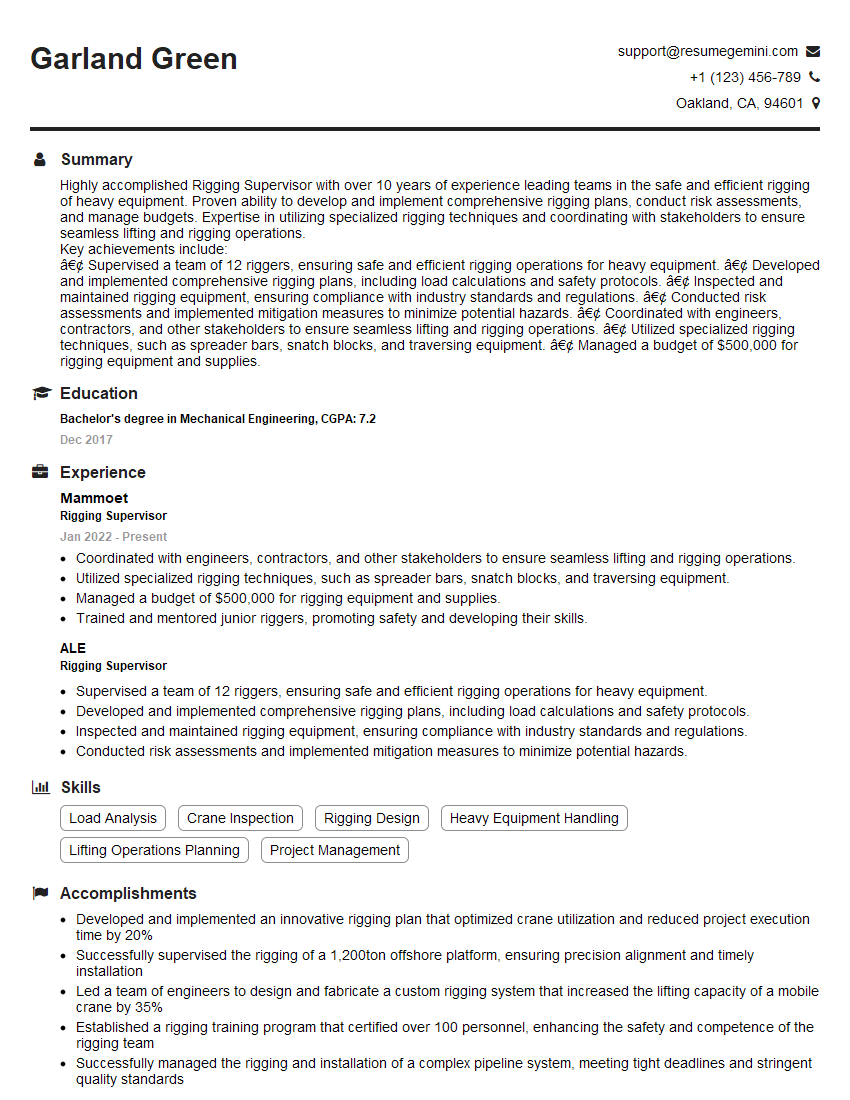
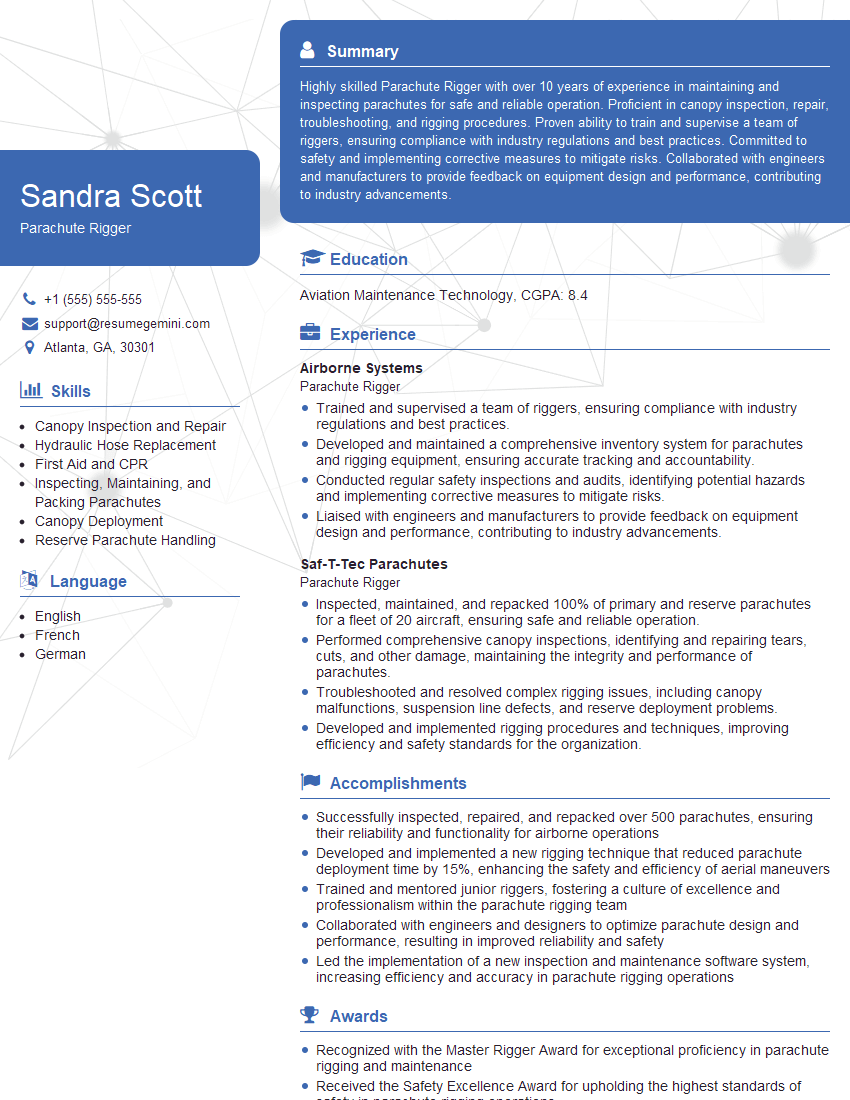
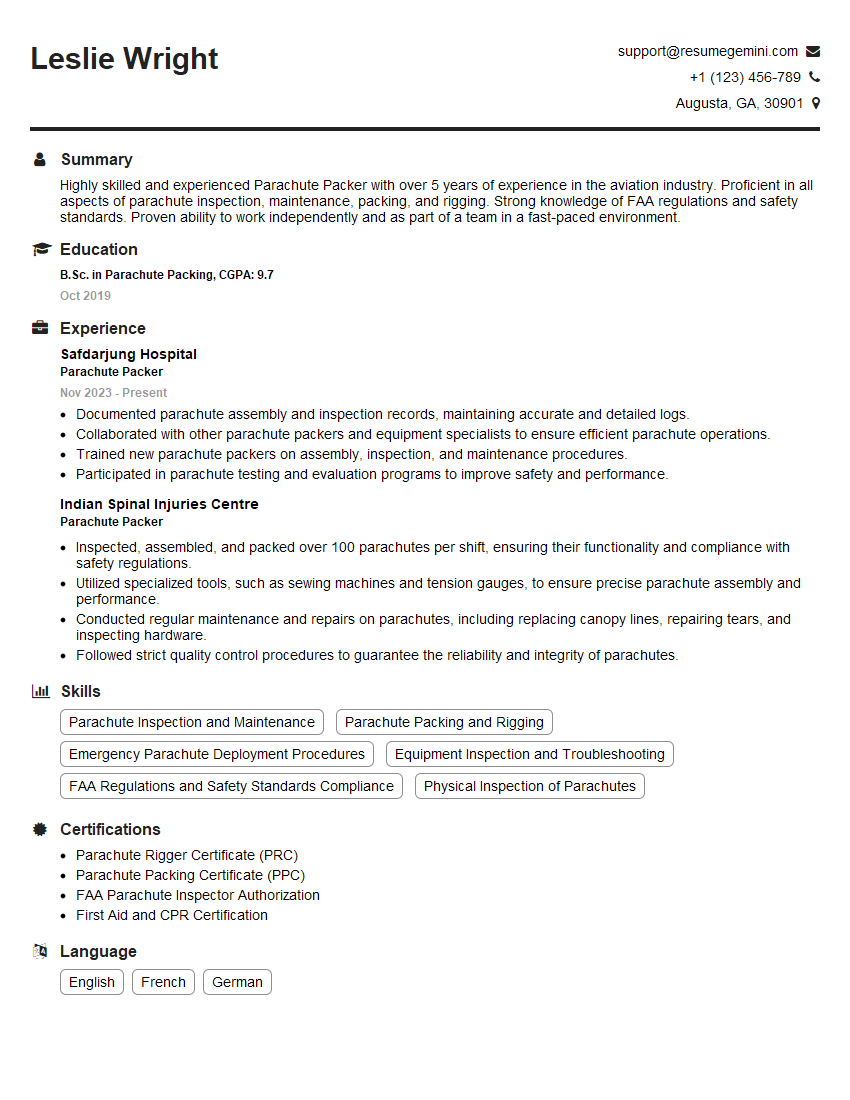
Proficiency in parachute packing is a highly specialized skill that opens doors to exciting career opportunities in the aviation and outdoor adventure industries. Mastering this skill demonstrates precision, attention to detail, and a commitment to safety – highly valued attributes in any professional setting. To maximize your job prospects, creating a compelling and ATS-friendly resume is crucial. ResumeGemini is a trusted resource that can help you craft a professional resume that showcases your expertise effectively. Examples of resumes tailored to highlight proficiency in parachute packing are available to help you get started.
Explore more articles
Users Rating of Our Blogs
Share Your Experience
We value your feedback! Please rate our content and share your thoughts (optional).
What Readers Say About Our Blog
Very informative content, great job.
good