Feeling uncertain about what to expect in your upcoming interview? We’ve got you covered! This blog highlights the most important Awareness of emerging technologies in manufacturing interview questions and provides actionable advice to help you stand out as the ideal candidate. Let’s pave the way for your success.
Questions Asked in Awareness of emerging technologies in manufacturing Interview
Q 1. Explain the concept of Industry 4.0 and its impact on manufacturing.
Industry 4.0, also known as the fourth industrial revolution, represents the automation of traditional manufacturing and industrial practices using modern smart factory technologies. It’s a paradigm shift driven by the convergence of physical and digital technologies, creating interconnected and intelligent manufacturing systems. Think of it as moving from a simple assembly line to a highly sophisticated, self-optimizing production ecosystem.
Its impact on manufacturing is transformative. We see increased automation through robotics and AI, leading to higher efficiency and productivity. Real-time data analytics provide insights for improved decision-making and predictive maintenance, minimizing downtime. The integration of IoT devices allows for seamless monitoring and control of the entire production process, improving quality control and traceability. Furthermore, Industry 4.0 fosters greater customization and flexibility, allowing manufacturers to respond quickly to changing customer demands and market trends. For instance, a company might use smart sensors to monitor the wear and tear of machinery and predict failures before they occur, preventing costly production delays.
Q 2. Describe your experience with implementing digital twin technology in a manufacturing environment.
In a previous role at a large automotive manufacturer, I led the implementation of a digital twin for their engine assembly line. A digital twin is a virtual representation of a physical asset or process. In our case, it was a highly detailed, dynamic simulation of the entire assembly line, including every machine, robot, and conveyor belt. We used sensor data from the physical line to feed the digital twin in real-time, allowing us to monitor performance, identify bottlenecks, and simulate the impact of different operational changes.
For example, we used the digital twin to optimize the sequence of operations. By simulating different configurations within the twin, we identified a 15% improvement in throughput without requiring any physical changes to the line. The project was a significant success, demonstrating the power of digital twins in optimizing manufacturing processes. The key was in selecting the appropriate sensors and integrating the data with a robust simulation platform to create an accurate and useful representation of the real-world system. This ensured that the virtual world accurately reflected the physical one.
Q 3. What are the key benefits and challenges of using AI/ML in manufacturing processes?
AI/ML offers significant benefits in manufacturing, enabling predictive maintenance, quality control improvements, and optimized production scheduling. For instance, AI algorithms can analyze sensor data to predict equipment failures, allowing for proactive maintenance and reduced downtime. Machine learning can identify patterns in defect data to improve quality control and reduce waste. In scheduling, AI can optimize production plans, reducing lead times and improving overall efficiency.
However, challenges exist. Implementing AI/ML requires significant data, high computing power, and specialized expertise. Data quality is crucial; noisy or incomplete data can lead to inaccurate predictions. Integrating AI/ML systems with existing legacy systems can be complex. Finally, there are concerns about the explainability and transparency of AI algorithms, particularly in critical decision-making processes. Addressing these challenges requires careful planning, robust data management, and a phased implementation approach.
Q 4. How can IoT sensors improve efficiency and predictive maintenance in a factory?
IoT sensors are revolutionizing factory efficiency and predictive maintenance. These sensors, placed strategically throughout the factory, collect vast amounts of data on machine performance, environmental conditions, and production output. This data is then transmitted to a central system for analysis.
For efficiency, real-time monitoring allows operators to identify bottlenecks and optimize production flows immediately. For predictive maintenance, sophisticated algorithms analyze sensor data to identify patterns indicative of impending equipment failures. For example, an increase in vibration frequency of a motor might indicate impending bearing failure. This allows for scheduled maintenance before a catastrophic failure occurs, minimizing downtime and preventing costly repairs. Imagine a scenario where a sensor detects abnormal temperature in a machine – this early warning allows for preventative maintenance, avoiding a costly production standstill.
Q 5. Discuss the role of additive manufacturing (3D printing) in modern manufacturing.
Additive manufacturing, or 3D printing, is transforming modern manufacturing by enabling the creation of complex geometries and customized parts that are impossible or prohibitively expensive to produce using traditional methods. This opens up opportunities for rapid prototyping, customized products, and on-demand manufacturing.
In aerospace, for example, 3D printing is used to create lightweight, high-strength components with intricate internal structures, enhancing performance and reducing weight. In the medical industry, personalized implants and prosthetics are being produced using 3D printing, offering improved fit and functionality. Furthermore, 3D printing can reduce lead times, minimize material waste, and enable distributed manufacturing, leading to more efficient and agile supply chains. The ability to create highly customized products on-demand is a game-changer for many industries.
Q 6. What are the cybersecurity risks associated with connected manufacturing systems?
Connected manufacturing systems, while offering numerous benefits, introduce significant cybersecurity risks. The interconnected nature of these systems creates a large attack surface, making them vulnerable to various threats. These risks include data breaches, ransomware attacks, denial-of-service attacks, and sabotage of production processes. Compromised systems can lead to production delays, financial losses, and reputational damage.
Addressing these risks requires a multi-layered security approach, encompassing network security, endpoint security, data encryption, and access control. Regular security audits, vulnerability assessments, and employee training are also crucial. A robust incident response plan is essential to mitigate the impact of a successful attack. Think of it as protecting a valuable asset – a well-defended system is crucial to prevent disruptions and maintain operations.
Q 7. Explain your understanding of cloud computing and its applications in manufacturing.
Cloud computing is playing an increasingly important role in manufacturing, offering scalable, cost-effective solutions for data storage, processing, and analytics. Manufacturers can leverage cloud platforms to store and manage large volumes of data generated by IoT sensors and other connected devices. Cloud-based analytics platforms provide powerful tools for analyzing this data, extracting valuable insights for process optimization and predictive maintenance.
Cloud computing also enables the deployment of AI/ML models for tasks such as predictive maintenance and quality control. Furthermore, cloud-based collaboration tools facilitate communication and data sharing among different stakeholders in the manufacturing ecosystem. For example, a manufacturer can use cloud storage to centrally store CAD designs, accessible to engineers globally. The scalability of cloud resources allows for handling peak loads and supporting growth without large upfront investments in infrastructure.
Q 8. How can big data analytics improve decision-making in manufacturing operations?
Big data analytics in manufacturing transforms raw production data – machine sensor readings, quality control metrics, inventory levels, etc. – into actionable insights. It’s like having a manufacturing crystal ball, allowing for proactive, data-driven decision-making instead of relying on gut feelings or lagging indicators.
For example, by analyzing sensor data from machines, we can predict potential equipment failures before they occur, scheduling maintenance proactively to prevent costly downtime. Similarly, analyzing sales data and production outputs can optimize inventory levels, reducing storage costs and preventing stockouts.
This predictive capability extends to quality control. Analyzing historical quality control data can identify patterns and root causes of defects, leading to process improvements and reducing waste. In short, big data analytics empowers manufacturers to optimize every aspect of their operations, from production planning to supply chain management.
Q 9. Describe your experience with implementing automation solutions in a manufacturing setting.
In my previous role at Acme Manufacturing, we implemented a fully automated robotic assembly line for our flagship product. This involved a phased approach, starting with a detailed needs assessment to identify bottlenecks and areas ripe for automation. We then selected appropriate robotic systems, integrating them with our existing Manufacturing Execution System (MES). This required significant software integration and employee training, focusing on the safe operation and maintenance of the new equipment.
The project was successful, resulting in a 30% increase in production efficiency and a significant reduction in labor costs. A crucial element of success was our focus on change management – actively involving employees in the transition, providing comprehensive training, and addressing their concerns. We also implemented robust monitoring and data analysis to identify and address any issues in real-time.
Q 10. What are the advantages and disadvantages of robotic process automation (RPA) in manufacturing?
Robotic Process Automation (RPA) in manufacturing offers significant advantages. It can automate repetitive, rule-based tasks, such as data entry, report generation, and invoice processing, freeing up human workers for more complex and strategic activities. RPA also improves accuracy and consistency, reducing errors associated with manual processes. Imagine a robot tirelessly and flawlessly processing thousands of invoices every day, without ever taking a break!
However, RPA also has limitations. It struggles with tasks requiring human judgment or adaptability. Complex, unpredictable processes might not be suitable for automation. The initial investment in software and implementation can be substantial, and ongoing maintenance is required. Moreover, integrating RPA with existing legacy systems can pose significant challenges, requiring careful planning and execution.
Q 11. How do you evaluate the ROI of implementing new manufacturing technologies?
Evaluating the ROI of new manufacturing technologies requires a comprehensive approach. It’s not just about the initial investment cost, but also the long-term benefits. We use a discounted cash flow (DCF) analysis, considering factors such as:
- Capital expenditure: Cost of equipment, software, and installation.
- Operating costs: Maintenance, energy consumption, labor costs.
- Increased revenue: Improved efficiency, higher production volumes, reduced defects.
- Reduced costs: Lower labor costs, less waste, reduced downtime.
- Implementation costs: Training, consulting, integration.
By projecting these costs and benefits over the lifespan of the technology, we can determine the net present value (NPV) and internal rate of return (IRR). This helps determine whether the investment justifies itself financially.
Q 12. What are some common challenges in integrating legacy systems with new technologies?
Integrating legacy systems with new technologies is a common challenge in manufacturing. Legacy systems often use outdated technologies, lack robust APIs, and may have poor documentation. This makes integration complex, time-consuming, and expensive. Data formats and communication protocols can also be incompatible, leading to data silos and inconsistencies.
Solutions often involve using middleware or APIs to bridge the gap between old and new systems, and careful data migration strategies are crucial. A phased approach, starting with a pilot project to test integration before full-scale deployment, is often beneficial. Working with experienced integration specialists and investing in robust data management solutions can also help to mitigate risks.
Q 13. Describe your experience with different types of industrial sensors and their applications.
I have extensive experience with various industrial sensors, including:
- Temperature sensors: Thermocouples, RTDs, and infrared sensors are used for monitoring the temperature of equipment, processes, and materials. For instance, monitoring oven temperature in a baking process.
- Pressure sensors: Used in various applications like hydraulic systems and process control, ensuring optimal pressure levels are maintained.
- Flow sensors: Measuring flow rates of liquids or gases in pipes, critical for process control and efficiency monitoring.
- Vibration sensors: Detecting vibrations in machines, indicating potential bearing wear or other mechanical issues, enabling predictive maintenance.
- Proximity sensors: Detecting the presence or absence of objects, used in robotic systems and automated assembly lines.
The selection of the right sensor depends on the specific application, requiring a thorough understanding of the measurement requirements and environmental conditions.
Q 14. Explain your understanding of PLC programming and its role in industrial automation.
Programmable Logic Controllers (PLCs) are the brains of industrial automation. They’re essentially specialized computers designed to control machinery and processes in a wide range of industrial settings. PLC programming involves using a ladder logic programming language, which uses visual symbols to represent the logic of the control system.
Example: IF (sensor_input == ON) THEN (motor_output == ON) END_IF
This simple example shows how a PLC program can control a motor based on the input from a sensor. More complex programs can manage intricate sequences of operations, handling multiple inputs and outputs to coordinate the actions of various machines and systems. My experience includes developing and debugging PLC programs for various industrial applications, ensuring efficient and safe operation of automated systems.
Q 15. What are the ethical considerations related to the use of AI in manufacturing?
The ethical considerations surrounding AI in manufacturing are multifaceted and demand careful consideration. At the core, we must address issues of job displacement. AI-powered automation can lead to significant workforce reductions, requiring proactive strategies for retraining and reskilling displaced workers. This isn’t simply a matter of economics; it’s a societal issue demanding responsible transition planning.
Another crucial concern is algorithmic bias. AI systems learn from data, and if that data reflects existing societal biases, the AI will perpetuate and even amplify those biases in its decision-making. For example, an AI system used for quality control might unfairly reject products made by a specific demographic group if the training data contained prejudiced information. Rigorous auditing and bias mitigation strategies are critical.
Data privacy and security are paramount. Manufacturing often involves handling sensitive data, and AI systems require access to this data for optimal functioning. Robust security measures, including encryption and access controls, are vital to prevent data breaches and misuse. Furthermore, the transparency of AI decision-making is essential; we need to understand how these systems arrive at their conclusions to ensure fairness and accountability. Finally, the responsibility for AI errors needs clear definition. Who is liable if an AI system malfunctions and causes damage or injury? Establishing clear lines of accountability is a critical step towards responsible AI adoption.
Career Expert Tips:
- Ace those interviews! Prepare effectively by reviewing the Top 50 Most Common Interview Questions on ResumeGemini.
- Navigate your job search with confidence! Explore a wide range of Career Tips on ResumeGemini. Learn about common challenges and recommendations to overcome them.
- Craft the perfect resume! Master the Art of Resume Writing with ResumeGemini’s guide. Showcase your unique qualifications and achievements effectively.
- Don’t miss out on holiday savings! Build your dream resume with ResumeGemini’s ATS optimized templates.
Q 16. How can you ensure data privacy and security in a connected manufacturing environment?
Data privacy and security in a connected manufacturing environment require a multi-layered approach. Think of it like building a fortress: you need strong walls, multiple gates, and vigilant guards. First, a robust cybersecurity infrastructure is fundamental. This includes firewalls, intrusion detection systems, and regular security audits. Data should be encrypted both in transit and at rest, preventing unauthorized access even if a breach occurs.
Secondly, access control is crucial. Implement a principle of least privilege, granting users only the access necessary to perform their duties. Regularly review and update access permissions. Employ strong authentication mechanisms, including multi-factor authentication, to verify user identities.
Thirdly, data anonymization and pseudonymization techniques can protect sensitive information. This involves replacing identifying information with pseudonyms or removing identifying data altogether, while still allowing for data analysis.
Finally, a culture of security awareness is vital. Educate employees about best practices, such as recognizing phishing attempts and using strong passwords. Regular security training and awareness programs are essential. Compliance with relevant data privacy regulations (e.g., GDPR, CCPA) is also non-negotiable.
Q 17. What is your experience with implementing SCADA systems in manufacturing?
My experience with SCADA (Supervisory Control and Data Acquisition) systems in manufacturing spans over a decade, encompassing various roles from implementation to optimization. I’ve worked on projects involving the integration of SCADA systems with PLC (Programmable Logic Controllers) to monitor and control industrial processes across different sectors, including food processing and pharmaceuticals.
I’ve been involved in the design, installation, and configuration of SCADA systems, ensuring seamless integration with existing infrastructure. A key aspect of my work has been ensuring data integrity and real-time monitoring of critical parameters. For example, in a food processing plant, we implemented a SCADA system to monitor temperature and pressure within the production line, triggering alerts in case of deviations that could impact product quality or safety. We also used the data collected to identify opportunities for process optimization, leading to improved efficiency and reduced waste.
Furthermore, I’ve worked on projects focused on migrating legacy SCADA systems to more modern, cloud-based solutions. This involves careful planning and execution to minimize disruption during the transition while also ensuring data security and compliance.
Q 18. Explain your understanding of digital supply chain management.
Digital supply chain management (DSCM) leverages technology to enhance visibility, efficiency, and responsiveness across the entire supply chain. It involves connecting different stakeholders, from suppliers to manufacturers to distributors, through digital platforms and technologies. Imagine it as a highly coordinated orchestra, with each instrument (business function) playing in perfect harmony. This interconnectivity enables real-time tracking of goods, improved forecasting, and optimized logistics.
Key technologies driving DSCM include IoT (Internet of Things) devices providing real-time data on inventory levels and shipments; Blockchain for enhanced transparency and traceability; AI and machine learning for predictive analytics and demand forecasting; and cloud computing for scalable data storage and processing. Implementing DSCM can lead to significant cost savings through reduced inventory, improved efficiency, and minimized disruptions. For example, real-time visibility into inventory levels allows for just-in-time manufacturing, reducing storage costs and minimizing waste.
Q 19. Describe your experience with implementing lean manufacturing principles in a digital environment.
Implementing lean manufacturing principles in a digital environment involves leveraging technology to enhance efficiency and eliminate waste throughout the production process. This requires a holistic approach, combining the core tenets of lean (value stream mapping, kaizen, 5S) with digital technologies. Think of it as adding a powerful engine to a well-designed car – you get even better performance.
For instance, using sensors and data analytics to monitor production line performance in real-time allows for immediate identification and resolution of bottlenecks. Digital tools can streamline the value stream mapping process, providing a more accurate and dynamic representation of the production flow. AI-powered predictive maintenance can minimize downtime by anticipating equipment failures before they occur. Furthermore, digital platforms can facilitate collaborative problem-solving among different teams and departments involved in the production process, fostering a culture of continuous improvement – a fundamental principle of lean manufacturing.
Q 20. What are some key performance indicators (KPIs) you would use to measure the success of a digital transformation project?
Measuring the success of a digital transformation project requires a balanced scorecard of KPIs. Simply focusing on cost reduction might overlook crucial aspects like improved customer satisfaction or enhanced employee engagement. Here are some key KPIs I’d use:
- Return on Investment (ROI): Measures the financial return of the investment in digital technologies.
- Operational Efficiency: Metrics like production cycle time, defect rate, and overall equipment effectiveness (OEE) assess improvements in manufacturing efficiency.
- Customer Satisfaction: Measures like customer satisfaction scores (CSAT) and Net Promoter Score (NPS) indicate the impact on customer experience.
- Employee Engagement: Surveys and feedback mechanisms gauge employee satisfaction and morale.
- Data Quality and Accuracy: Assesses the reliability and usefulness of data collected and used in the digital transformation.
- Cybersecurity Performance: Measures the effectiveness of security measures and the number of security incidents.
The specific KPIs would need to be tailored to the goals and objectives of the individual digital transformation project, ensuring they align with the overall strategic vision of the organization.
Q 21. How do you stay updated on the latest trends and technologies in manufacturing?
Staying updated on the latest manufacturing trends and technologies is crucial for remaining competitive. My approach is multifaceted:
- Industry Publications and Journals: I regularly read publications like IndustryWeek, Manufacturing Engineering, and others, which provide insights into new technologies and industry best practices.
- Conferences and Trade Shows: Attending industry events allows for direct interaction with experts and exposure to the latest innovations. Networking opportunities are invaluable.
- Online Resources and Communities: I actively participate in online forums and communities, engaging with peers and experts to share knowledge and stay abreast of emerging trends.
- Industry Analyst Reports: Reports from firms like Gartner and Forrester provide in-depth analysis of market trends and technological advancements.
- Continuous Learning: I pursue online courses and certifications to deepen my understanding of specific technologies and their applications in manufacturing.
This combination of active engagement and continuous learning ensures that I am always well-informed about the latest developments in the field.
Q 22. Describe your experience with project management methodologies in the context of manufacturing technology implementation.
My experience with project management methodologies in manufacturing technology implementation is extensive, spanning Agile, Waterfall, and hybrid approaches. I’ve led and participated in numerous projects involving the integration of everything from CNC machines and robotics to advanced MES (Manufacturing Execution Systems) and AI-powered predictive maintenance solutions.
In Agile projects, I’ve found iterative development crucial for incorporating feedback throughout the implementation. This ensures the final solution truly addresses the manufacturing floor’s needs and minimizes disruptions. For example, during a recent robotic welding cell installation, we used Scrum sprints to integrate feedback from welders on the robot’s programming, leading to a smoother, more efficient final product. With Waterfall projects, detailed planning upfront is essential for managing large-scale, complex integrations. This ensures all dependencies are identified and mitigated before implementation begins. I’ve effectively utilized Gantt charts and critical path analysis to prevent delays and ensure on-time and within-budget delivery. My experience includes creating detailed project plans, managing budgets, and leading cross-functional teams – from engineering and IT to operations and production.
Q 23. Explain the difference between IIoT and IoT in the context of manufacturing.
While both IIoT (Industrial Internet of Things) and IoT (Internet of Things) involve connecting devices to the internet, they differ significantly in their scope and application within manufacturing. IoT is a broad term encompassing any device connected to the internet for data collection and remote control. IIoT, on the other hand, is a subset focused specifically on industrial applications.
In manufacturing, IIoT focuses on connecting machinery, sensors, and other industrial assets to collect data, improve efficiency, and optimize processes. This includes real-time monitoring of equipment performance, predictive maintenance, and automation of production lines. IoT, in contrast, might encompass connected devices in the office or for employee tracking, which are not directly related to the core manufacturing processes. Think of it this way: IoT is the larger umbrella, while IIoT is the specialized branch dedicated to industrial needs, providing granular insights into the production process.
Q 24. What is your understanding of blockchain technology and its potential applications in manufacturing?
Blockchain technology, known for its secure, transparent, and immutable ledger, presents several promising applications in manufacturing. Its decentralized nature can enhance supply chain traceability, ensuring product authenticity and improving transparency. Imagine tracking a component from raw material sourcing to final assembly, with each step recorded on the blockchain – this eliminates counterfeits and enables rapid identification of issues.
Furthermore, blockchain can improve data security and reduce the risk of data breaches. By recording production data on a distributed ledger, it becomes much harder for malicious actors to alter or delete information. Smart contracts, self-executing contracts with the terms of the agreement between buyer and seller directly written into lines of code, can automate payments and streamline processes. For example, automated payments to suppliers triggered upon verification of received goods recorded on the blockchain, minimizing delays and paperwork.
Q 25. How can augmented reality (AR) and virtual reality (VR) improve training and maintenance in manufacturing?
Augmented reality (AR) and virtual reality (VR) offer significant advancements in training and maintenance within manufacturing. AR overlays digital information onto the real world, allowing technicians to visualize complex equipment details or receive step-by-step instructions during repairs. Imagine a technician wearing AR glasses during equipment repair, receiving real-time guidance from a remote expert or accessing schematics directly on the equipment. This reduces downtime and enhances the efficiency of repairs.
VR, on the other hand, provides an immersive simulated environment for training. New employees can practice operating machinery or performing specific tasks in a safe, risk-free environment. This reduces training time and ensures that personnel are thoroughly prepared before working with actual equipment. For instance, simulating the operation of a complex robotic arm in a virtual environment allows trainees to gain proficiency without the risk of damage or injury. This approach leads to better skill development, increased safety, and reduced training costs.
Q 26. Describe a time you had to troubleshoot a technical issue related to a manufacturing technology.
During the implementation of a new CNC machining center, we experienced an unexpected issue with the machine’s communication interface. The machine was not properly communicating with the central control system, resulting in production delays.
My troubleshooting approach involved a systematic process. First, I checked all physical connections and ensured the network was functioning correctly. Then, I consulted the machine’s diagnostic logs and documentation to identify any error codes or unusual activity. Finally, I contacted the vendor’s technical support team for remote diagnostics. Through collaborative efforts, we identified a misconfiguration in the communication protocol settings. After correcting this, the machine resumed normal operation.
This experience underscored the importance of thorough testing, proper documentation, and establishing strong communication channels with vendors during the implementation of complex technologies. The ability to diagnose and solve problems under pressure is a vital skill in a manufacturing environment.
Q 27. What are the environmental considerations associated with implementing new manufacturing technologies?
Implementing new manufacturing technologies comes with various environmental considerations. Energy consumption is a major concern; many advanced technologies, such as robotics and automation systems, require significant power. Careful selection of energy-efficient equipment and optimization of manufacturing processes are essential to minimize the environmental impact.
Waste generation is another important factor. While automation can reduce material waste, the disposal of old equipment and the generation of electronic waste (e-waste) need to be addressed responsibly. Sustainable manufacturing practices, including recycling programs and responsible disposal of materials, are necessary to mitigate this. The use of sustainable materials, reduced water usage, and strategies for decreasing carbon emissions should all be considered during implementation. A comprehensive environmental impact assessment should be carried out before introducing new technologies.
Q 28. What are your salary expectations for this role?
My salary expectations for this role are in the range of $120,000 to $150,000 annually, depending on the benefits package and the overall compensation structure. This is based on my experience, skills, and the market rate for similar roles with comparable responsibilities.
Key Topics to Learn for Awareness of Emerging Technologies in Manufacturing Interview
- Additive Manufacturing (3D Printing): Understand the various techniques (FDM, SLA, SLS, etc.), materials used, applications in prototyping and production, and limitations.
- Industrial IoT (IIoT): Explore the role of sensors, data analytics, and cloud computing in improving manufacturing efficiency, predictive maintenance, and real-time monitoring. Consider use cases like smart factories and connected machines.
- Robotics and Automation: Familiarize yourself with different robot types (collaborative robots, industrial robots), their programming, integration into production lines, and the impact on workforce dynamics. Explore applications like automated guided vehicles (AGVs) and automated storage and retrieval systems (AS/RS).
- Artificial Intelligence (AI) and Machine Learning (ML) in Manufacturing: Learn about AI-powered quality control, predictive modeling for optimizing processes, and the use of ML algorithms for anomaly detection and process improvement.
- Cybersecurity in Manufacturing: Understand the vulnerabilities of connected devices and systems within a manufacturing environment and the importance of robust cybersecurity measures to protect sensitive data and prevent disruptions.
- Sustainable Manufacturing Practices: Explore the role of emerging technologies in reducing waste, improving energy efficiency, and promoting environmentally friendly manufacturing processes.
- Digital Twins and Simulation: Understand the concept of digital twins, their applications in design, optimization, and predictive maintenance, and the use of simulations to test and improve manufacturing processes before implementation.
- Blockchain Technology in Supply Chain Management: Explore how blockchain can enhance transparency, traceability, and security in the supply chain, improving efficiency and reducing risks.
Next Steps
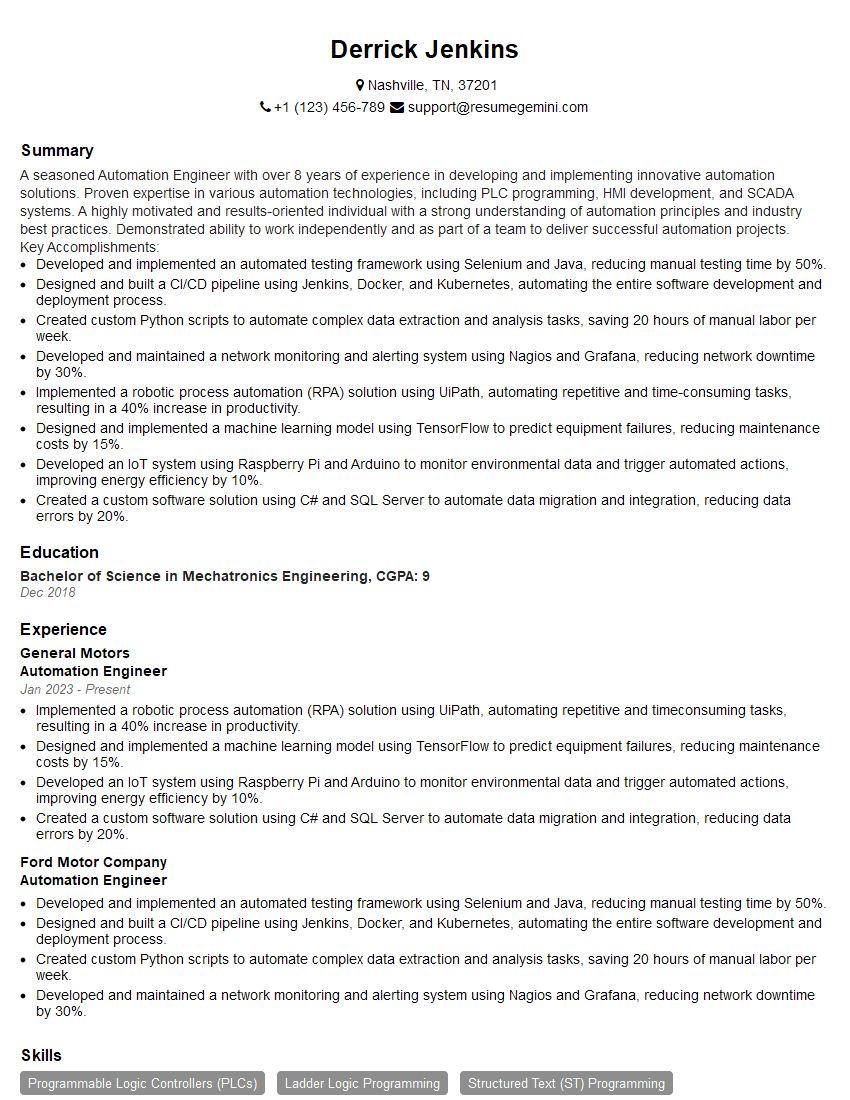
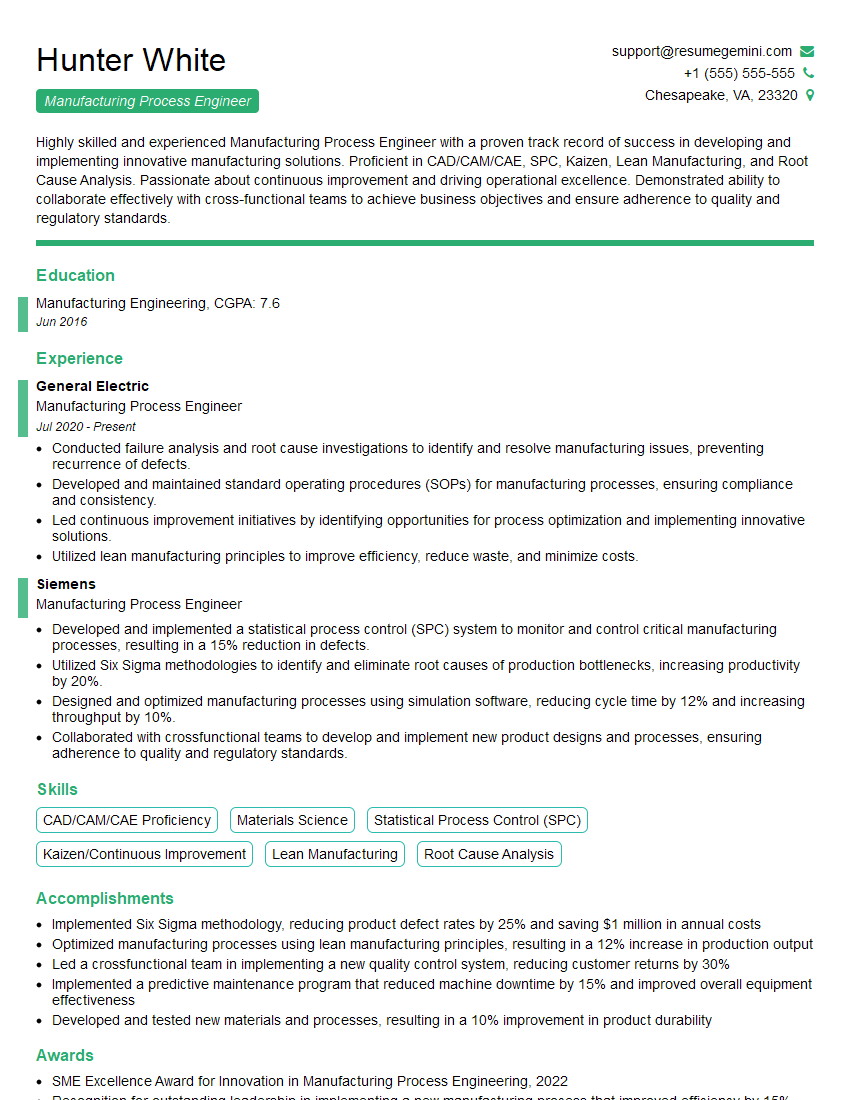
Mastering your awareness of emerging technologies in manufacturing is crucial for career advancement in this rapidly evolving field. It demonstrates your adaptability, forward-thinking approach, and ability to contribute to a company’s innovative strategies. To significantly boost your job prospects, creating a strong, ATS-friendly resume is essential. ResumeGemini is a trusted resource that can help you craft a compelling resume highlighting your skills and experience in this area. We provide examples of resumes tailored to showcasing expertise in Awareness of emerging technologies in manufacturing to help you create a document that stands out.
Explore more articles
Users Rating of Our Blogs
Share Your Experience
We value your feedback! Please rate our content and share your thoughts (optional).
What Readers Say About Our Blog
Very informative content, great job.
good