Interviews are opportunities to demonstrate your expertise, and this guide is here to help you shine. Explore the essential Proficient in Technical Math interview questions that employers frequently ask, paired with strategies for crafting responses that set you apart from the competition.
Questions Asked in Proficient in Technical Math Interview
Q 1. Explain the concept of linear algebra and its applications.
Linear algebra is the branch of mathematics concerning vector spaces and linear mappings between such spaces. Think of it as a powerful toolbox for dealing with systems of linear equations, which pop up everywhere from computer graphics to machine learning. At its core, it involves working with vectors (arrows with magnitude and direction) and matrices (rectangular arrays of numbers). We use these tools to model relationships between multiple variables and solve complex problems.
Applications are incredibly diverse. In computer graphics, linear algebra is used for transformations like rotations, scaling, and translations of 3D objects. In machine learning, it’s fundamental to algorithms like principal component analysis (PCA) for dimensionality reduction and linear regression for predictive modeling. In physics and engineering, it’s crucial for solving systems of equations that describe the behavior of mechanical systems or electrical circuits.
Q 2. Describe different types of matrix operations and their uses.
Matrix operations are the basic building blocks of linear algebra. Some common types include:
- Addition and Subtraction: Matrices of the same dimensions can be added or subtracted element-wise.
[[1, 2], [3, 4]] + [[5, 6], [7, 8]] = [[6, 8], [10, 12]] - Scalar Multiplication: Multiplying a matrix by a scalar (a single number) multiplies each element by that scalar.
2 * [[1, 2], [3, 4]] = [[2, 4], [6, 8]] - Matrix Multiplication: This is more complex and requires specific dimension compatibility. The result is a new matrix where each element is the dot product of a row from the first matrix and a column from the second. It’s used to represent linear transformations and is crucial in many algorithms.
- Transpose: Switching the rows and columns of a matrix.
[[1, 2], [3, 4]]T = [[1, 3], [2, 4]] - Inverse: A matrix’s inverse, when multiplied by the original matrix, results in the identity matrix (a matrix with 1s on the diagonal and 0s elsewhere). Only square matrices have inverses, and not all square matrices are invertible. It’s fundamental in solving systems of equations.
These operations are used extensively in solving systems of equations, performing transformations in computer graphics, and implementing various machine learning algorithms.
Q 3. How would you solve a system of linear equations?
Solving a system of linear equations involves finding the values of the variables that satisfy all the equations simultaneously. There are several methods, each with its advantages and disadvantages:
- Gaussian Elimination (Row Reduction): This method involves using elementary row operations (swapping rows, multiplying a row by a scalar, adding a multiple of one row to another) to transform the augmented matrix (the matrix representing the system of equations) into row echelon form or reduced row echelon form. This simplifies the system to easily solve for the variables.
- Cramer’s Rule: This method uses determinants to solve for the variables. It’s efficient for small systems but becomes computationally expensive for larger systems.
- Matrix Inversion: If the coefficient matrix is invertible, the solution can be found by multiplying the inverse of the coefficient matrix by the constant vector.
The choice of method depends on the size and structure of the system. Gaussian elimination is generally a robust and widely applicable method, while Cramer’s rule is useful for smaller systems. Matrix inversion is efficient when the inverse is readily available.
Q 4. Explain the concept of eigenvalues and eigenvectors.
Eigenvalues and eigenvectors are fundamental concepts in linear algebra. Imagine a linear transformation (like a rotation or scaling) applied to a vector. An eigenvector is a special vector that only changes in scale (is multiplied by a scalar) when this transformation is applied. That scalar is the eigenvalue.
Formally, if A is a square matrix, v is an eigenvector, and λ is an eigenvalue, then Av = λv. Eigenvalues and eigenvectors provide crucial information about the behavior of linear transformations, revealing insights into the underlying structure of the data or system being modeled. They’re used in various applications like stability analysis in dynamical systems, principal component analysis (PCA) in dimensionality reduction, and solving differential equations.
Q 5. What are the different types of probability distributions and when would you use them?
Probability distributions describe the likelihood of different outcomes in a random event. Several common types exist:
- Normal (Gaussian) Distribution: A bell-shaped curve, widely used due to the central limit theorem, which states that the average of many independent random variables tends towards a normal distribution.
- Binomial Distribution: Models the probability of getting a certain number of successes in a fixed number of independent Bernoulli trials (each trial has only two possible outcomes, like heads or tails).
- Poisson Distribution: Models the probability of a given number of events occurring in a fixed interval of time or space, if these events occur with a known average rate and independently of the time since the last event.
- Uniform Distribution: Each outcome has an equal probability of occurring.
- Exponential Distribution: Models the time between events in a Poisson process.
The choice of distribution depends on the nature of the data and the problem. For example, the normal distribution is often used to model continuous data like heights or weights, while the binomial distribution is used for discrete data representing the number of successes in a series of trials.
Q 6. Explain Bayes’ theorem and give an example of its application.
Bayes’ theorem is a fundamental result in probability theory that describes how to update the probability of a hypothesis based on new evidence. It’s expressed as:
P(A|B) = [P(B|A) * P(A)] / P(B)
Where:
P(A|B)is the posterior probability of event A given that event B has occurred.P(B|A)is the likelihood of event B given that event A has occurred.P(A)is the prior probability of event A.P(B)is the prior probability of event B.
Example: Suppose a medical test for a disease has a 90% accuracy rate (true positive rate) and a 5% false positive rate. If 1% of the population has the disease, what’s the probability that someone who tests positive actually has the disease? Applying Bayes’ theorem helps avoid the common mistake of equating the test accuracy with the probability of having the disease given a positive test.
Q 7. Describe different hypothesis testing methods.
Hypothesis testing is a statistical method used to determine if there’s enough evidence to reject a null hypothesis (a statement of no effect or no difference). Several methods exist, chosen based on the type of data and the research question:
- t-test: Compares the means of two groups. There are variations for independent samples (comparing means of two separate groups) and paired samples (comparing means of the same group under different conditions).
- ANOVA (Analysis of Variance): Compares the means of three or more groups.
- Chi-square test: Tests for association between categorical variables.
- Z-test: Compares the mean of a sample to a known population mean when the population standard deviation is known.
Each test involves setting a significance level (alpha), typically 0.05, which is the probability of rejecting the null hypothesis when it’s actually true (Type I error). The test statistic is calculated, and its p-value is compared to alpha. If the p-value is less than alpha, the null hypothesis is rejected. The choice of test depends on the data type, the number of groups being compared, and the research question.
Q 8. Explain the central limit theorem.
The Central Limit Theorem (CLT) is a fundamental concept in statistics. It states that the distribution of the sample means of a large number of independent, identically distributed random variables, regardless of the shape of the original population distribution, will approximate a normal distribution. This is true as long as the sample size is sufficiently large (generally considered to be 30 or more).
Imagine you’re measuring the height of sunflowers in a field. The individual heights might follow a skewed distribution – some sunflowers are much taller than others. However, if you take many random samples of, say, 30 sunflowers each, and calculate the average height for each sample, the distribution of these average heights will be approximately normally distributed. The mean of this distribution of sample means will be very close to the true mean height of all the sunflowers in the field.
This is incredibly useful because it allows us to use the well-understood properties of the normal distribution to make inferences about the population even if we don’t know the underlying population distribution. We can use this to construct confidence intervals and perform hypothesis testing.
Q 9. How do you calculate confidence intervals?
Confidence intervals provide a range of values within which we can be reasonably confident that the true population parameter lies. They are constructed using the sample data, and the level of confidence dictates the width of the interval. A 95% confidence interval, for instance, means we’re 95% confident the true value falls within the calculated range.
The calculation involves the sample statistic (e.g., sample mean), the standard error (a measure of the variability of the sample statistic), and the critical value from the appropriate distribution (usually the normal or t-distribution depending on sample size and whether the population standard deviation is known).
For example, a 95% confidence interval for a population mean (μ) is calculated as:
Sample Mean ± (Critical Value) * (Standard Error)The standard error is usually calculated as the sample standard deviation divided by the square root of the sample size. The critical value is obtained from a Z-table (for normal distribution) or t-table (for t-distribution) based on the desired confidence level and degrees of freedom.
Q 10. Explain regression analysis and its various types.
Regression analysis is a statistical method used to model the relationship between a dependent variable and one or more independent variables. It aims to find the best-fitting line (or surface in multiple regression) that describes this relationship. This line allows us to predict the value of the dependent variable based on the values of the independent variables.
- Linear Regression: Models a linear relationship between the dependent and independent variable(s). This is the most common type.
- Polynomial Regression: Models a non-linear relationship by fitting a polynomial function to the data.
- Logistic Regression: Used when the dependent variable is categorical (e.g., 0 or 1, representing success or failure). It predicts the probability of the dependent variable belonging to a particular category.
- Multiple Regression: Extends linear regression to include multiple independent variables, allowing for a more comprehensive understanding of the relationship.
Imagine a real estate agent trying to predict house prices. They might use linear regression to model the relationship between house price (dependent variable) and features like size, location, and number of bedrooms (independent variables).
Q 11. What are the assumptions of linear regression?
Linear regression makes several key assumptions about the data:
- Linearity: The relationship between the dependent and independent variables is linear.
- Independence of errors: The errors (residuals) are independent of each other. This means that the error in one observation doesn’t influence the error in another.
- Homoscedasticity: The variance of the errors is constant across all levels of the independent variable(s). In other words, the spread of the data points around the regression line is roughly the same everywhere.
- Normality of errors: The errors are normally distributed.
- No multicollinearity: In multiple regression, the independent variables should not be highly correlated with each other. High multicollinearity can make it difficult to estimate the individual effects of the independent variables.
Violations of these assumptions can lead to inaccurate or unreliable results. Diagnostic plots and tests are used to check for these violations, and various techniques exist to address them if found.
Q 12. How do you handle outliers in a dataset?
Outliers are data points that significantly deviate from the rest of the data. They can be caused by errors in data entry, measurement errors, or simply represent unusual observations. Handling outliers requires careful consideration, as inappropriately removing them can bias results.
Strategies for handling outliers include:
- Investigation: First, investigate the cause of the outlier. Was it a data entry error? If so, correct the error if possible.
- Transformation: Applying a transformation (e.g., logarithmic or square root transformation) to the data can sometimes reduce the influence of outliers.
- Robust methods: Use statistical methods that are less sensitive to outliers, such as robust regression or median-based statistics.
- Winsorizing or trimming: Replace extreme values with less extreme values (Winsorizing) or remove a certain percentage of the most extreme values (trimming).
- Removal (with caution): Remove outliers only if you have a justifiable reason and understand the potential impact on your analysis. Always document the removal and its rationale.
Q 13. Explain different methods for handling missing data.
Missing data is a common problem in datasets. Several methods exist to handle it, each with its own advantages and disadvantages:
- Deletion: This involves removing observations with missing data. This is simple but can lead to a significant loss of information, especially if the missing data is not missing completely at random (MCAR).
- Imputation: This involves replacing missing values with estimated values. Common imputation methods include:
- Mean/median/mode imputation: Replacing missing values with the mean, median, or mode of the observed values. Simple but can distort the distribution.
- Regression imputation: Predicting missing values using regression analysis based on the other variables in the dataset. More sophisticated but requires assumptions.
- Multiple imputation: Generating multiple plausible imputed datasets and combining the results. This accounts for the uncertainty associated with imputation.
- Model-based approaches: Some statistical models can handle missing data directly without the need for imputation.
The best method for handling missing data depends on the nature of the missing data, the size of the dataset, and the research question. It’s crucial to understand the mechanism of missing data (MCAR, MAR, MNAR) to choose the most appropriate strategy.
Q 14. What are the differences between correlation and causation?
Correlation refers to a statistical relationship between two or more variables. A correlation coefficient (e.g., Pearson’s r) measures the strength and direction of this relationship. A positive correlation indicates that as one variable increases, the other tends to increase, while a negative correlation indicates that as one variable increases, the other tends to decrease.
Causation, on the other hand, implies a cause-and-effect relationship between variables. If variable A causes variable B, then changes in A will directly lead to changes in B. Correlation does not imply causation. Just because two variables are correlated doesn’t mean one causes the other. There could be a third, unobserved variable (a confounding variable) influencing both.
For example, ice cream sales and crime rates might be positively correlated. However, this doesn’t mean that eating ice cream causes crime or vice-versa. A confounding variable like hot weather likely influences both ice cream sales and crime rates.
Establishing causation requires strong evidence, often involving controlled experiments or longitudinal studies that carefully control for confounding variables.
Q 15. What is the difference between supervised and unsupervised learning?
Supervised and unsupervised learning are two major categories of machine learning that differ fundamentally in how they use data to learn.
Supervised learning uses labeled data – that is, data where each example is paired with the correct answer. Think of it like a teacher supervising a student’s learning. The algorithm learns to map inputs to outputs based on this labeled data. For example, if we want to build a model to predict house prices, we’d feed it data of houses with their features (size, location, etc.) and their corresponding sale prices. The algorithm learns the relationship between features and prices.
Unsupervised learning, on the other hand, uses unlabeled data. There’s no teacher providing correct answers. The algorithm’s job is to discover patterns, structures, or relationships in the data on its own. A classic example is clustering. Imagine having customer data without knowing their segments. An unsupervised learning algorithm can group customers into clusters based on their purchasing behavior, demographics, etc., allowing for targeted marketing campaigns.
In short: Supervised learning learns from labeled examples; unsupervised learning discovers patterns in unlabeled data.
Career Expert Tips:
- Ace those interviews! Prepare effectively by reviewing the Top 50 Most Common Interview Questions on ResumeGemini.
- Navigate your job search with confidence! Explore a wide range of Career Tips on ResumeGemini. Learn about common challenges and recommendations to overcome them.
- Craft the perfect resume! Master the Art of Resume Writing with ResumeGemini’s guide. Showcase your unique qualifications and achievements effectively.
- Don’t miss out on holiday savings! Build your dream resume with ResumeGemini’s ATS optimized templates.
Q 16. Explain different machine learning algorithms and their applications.
Many machine learning algorithms exist, each suited to different tasks. Here are a few examples:
- Linear Regression: Predicts a continuous output based on a linear relationship with the input features. Used for predicting house prices, stock prices, etc.
y = mx + cis a simple representation. - Logistic Regression: Predicts a categorical output (e.g., yes/no, 0/1). Used for spam detection, medical diagnosis, etc.
- Decision Trees: Creates a tree-like model to classify or regress data based on a series of decisions. Easy to interpret and visualize. Used for credit risk assessment, customer churn prediction.
- Support Vector Machines (SVMs): Find the optimal hyperplane to separate data points into different classes. Effective in high-dimensional spaces. Used for image classification, text categorization.
- Naive Bayes: A probabilistic classifier based on Bayes’ theorem, assuming feature independence. Efficient and widely used in text classification and spam filtering.
- k-Nearest Neighbors (k-NN): Classifies data points based on the majority class among its k-nearest neighbors. Simple but computationally expensive for large datasets. Used for recommendation systems.
- Neural Networks (Deep Learning): Complex models with multiple layers, capable of learning highly non-linear relationships. Used in image recognition, natural language processing, and many other advanced applications.
- k-Means Clustering: Groups data points into k clusters based on their similarity. Used for customer segmentation, anomaly detection.
The choice of algorithm depends heavily on the problem, the type of data, and the desired outcome.
Q 17. Describe different optimization techniques.
Optimization techniques are crucial for finding the best parameters in machine learning models. The goal is to minimize a loss function (a measure of how wrong the model’s predictions are). Here are some common methods:
- Gradient Descent: Iteratively adjusts model parameters in the direction of the negative gradient of the loss function. Variations include batch gradient descent, stochastic gradient descent (SGD), and mini-batch gradient descent. Imagine walking downhill; gradient descent takes steps in the steepest downward direction.
- Newton’s Method: Uses the second derivative (Hessian matrix) to find the minimum more efficiently than gradient descent. Computationally expensive for high-dimensional problems.
- Stochastic Gradient Descent (SGD): Updates parameters based on the gradient calculated from a single data point or a small batch. Faster than batch gradient descent, but can be noisy.
- Adam (Adaptive Moment Estimation): A popular adaptive learning rate optimization algorithm that combines the advantages of SGD and other methods. Often used in deep learning.
- L-BFGS (Limited-memory Broyden–Fletcher–Goldfarb–Shanno): A quasi-Newton method that approximates the Hessian matrix, suitable for large datasets.
The choice of optimization technique depends on the complexity of the loss function, the size of the dataset, and computational constraints.
Q 18. How would you evaluate the performance of a machine learning model?
Evaluating a machine learning model’s performance is essential to ensure its accuracy and reliability. The methods used depend on the type of problem (classification, regression, clustering).
- Classification: Metrics include accuracy, precision, recall, F1-score, ROC curve (AUC), and confusion matrix. Accuracy is the ratio of correctly classified instances to the total instances. Precision measures the accuracy of positive predictions, while recall measures the ability to identify all positive instances.
- Regression: Metrics include Mean Squared Error (MSE), Root Mean Squared Error (RMSE), Mean Absolute Error (MAE), R-squared. These metrics quantify the difference between predicted and actual values.
- Clustering: Metrics include silhouette score, Davies-Bouldin index, and Calinski-Harabasz index. These measure the quality of the clusters formed.
Furthermore, techniques like cross-validation (splitting data into training and testing sets multiple times) help provide a more robust evaluation, avoiding overfitting to a specific train-test split. A proper evaluation strategy must consider the specific context of the problem and the implications of potential errors.
Q 19. Explain the concept of calculus and its applications.
Calculus is the mathematical study of continuous change. It’s built upon two fundamental concepts: differentiation and integration. Think of it as the mathematics of slopes and areas.
Differentiation deals with finding the instantaneous rate of change of a function. The derivative of a function at a point represents the slope of the tangent line to the function’s graph at that point. It’s crucial in optimization problems (finding maxima and minima), analyzing the behavior of functions, and modeling rates of change in various physical phenomena (velocity, acceleration).
Integration is the reverse process of differentiation. It’s concerned with finding the area under a curve. Applications include computing areas, volumes, work done by a force, and probability distributions.
Applications of Calculus: Calculus has extensive applications in physics (mechanics, electromagnetism), engineering (design, optimization), economics (marginal cost, revenue), computer science (machine learning algorithms, computer graphics), and many other fields.
Q 20. Describe different integration techniques.
Many techniques exist for evaluating integrals. The choice depends on the form of the integrand.
- Substitution (u-substitution): A change of variables to simplify the integral. It’s analogous to changing the coordinate system to solve a problem more easily.
- Integration by Parts: A technique based on the product rule of differentiation. Useful when integrating products of functions.
- Partial Fraction Decomposition: Expressing a rational function as a sum of simpler fractions. Essential for integrating rational functions.
- Trigonometric Substitution: Substituting trigonometric functions to simplify integrals containing square roots of quadratic expressions.
- Trigonometric Integrals: Techniques for integrating trigonometric functions using identities and substitutions.
- Numerical Integration: Approximating the value of an integral using numerical methods (e.g., trapezoidal rule, Simpson’s rule) when an analytical solution is difficult or impossible to find. This is particularly useful for complex functions or when dealing with experimental data.
Mastering these techniques is fundamental for many engineering and scientific applications.
Q 21. Explain the concept of differential equations and their applications.
Differential equations are equations involving functions and their derivatives. They are powerful tools for modeling dynamic systems where the rate of change of a quantity depends on the quantity itself and other factors.
Types: Differential equations are categorized into ordinary differential equations (ODEs), which involve functions of a single independent variable, and partial differential equations (PDEs), which involve functions of multiple independent variables. ODEs are common in modeling simple systems (e.g., population growth, radioactive decay), whereas PDEs are more complex and are used to model systems with spatial variations (e.g., heat diffusion, fluid flow).
Applications: Differential equations have numerous applications, including:
- Physics: Describing motion (Newton’s laws), heat transfer, fluid dynamics, and electromagnetism.
- Engineering: Modeling mechanical systems, electrical circuits, chemical reactions, and structural analysis.
- Biology: Modeling population dynamics, spread of diseases, and neural networks.
- Economics: Modeling economic growth, market dynamics, and financial models.
- Computer science: Developing algorithms for simulations and solving optimization problems.
Solving differential equations can be challenging and often requires specialized techniques, such as separation of variables, integrating factors, Laplace transforms, and numerical methods.
Q 22. Explain the concept of Fourier transforms and their uses.
The Fourier Transform is a powerful mathematical tool that decomposes a function into its constituent frequencies. Imagine a musical chord: it’s composed of different notes (frequencies) played simultaneously. The Fourier Transform essentially ‘unmixes’ this chord, revealing the individual notes and their intensities. Mathematically, it transforms a function from the time domain (where we see how the function changes over time) to the frequency domain (where we see which frequencies contribute to the function).
Uses: Fourier Transforms are ubiquitous across numerous fields. In signal processing, they’re used for filtering noise, compressing data (like in MP3 encoding), and analyzing signals from various sources like medical imaging (MRI, EEG) and telecommunications. In image processing, they’re fundamental for image compression (JPEG), edge detection, and image reconstruction. In physics, they’re used to solve differential equations and analyze wave phenomena. For instance, understanding the frequency components of a seismic signal can help predict earthquakes.
Example: A simple sine wave has only one frequency. Its Fourier Transform will show a single, sharp peak at that frequency. A complex signal, like speech, will have a broad spectrum of frequencies represented in its Fourier Transform.
Q 23. Describe different numerical methods for solving mathematical problems.
Numerical methods are essential for approximating solutions to mathematical problems that are difficult or impossible to solve analytically. They leverage computational power to find approximate solutions within a specified tolerance.
- Finite Difference Methods: These methods approximate derivatives using difference quotients. They’re commonly used to solve differential equations, often involving discretization of the domain (breaking it into smaller parts).
- Finite Element Methods (FEM): FEM divides a complex domain into smaller, simpler elements, solving the problem on each element and assembling the results. This is particularly useful for problems with irregular geometries, like stress analysis in engineering.
- Monte Carlo Methods: These methods rely on repeated random sampling to obtain numerical results. They are particularly useful for problems with high dimensionality or complex probabilities, such as option pricing in finance or simulating particle behavior in physics.
- Newton-Raphson Method: This iterative method finds successively better approximations to the roots (zeros) of a real-valued function. It’s widely used in optimization problems.
- Runge-Kutta Methods: These are a family of iterative methods for approximating solutions to ordinary differential equations. They are known for their accuracy and stability.
The choice of method depends heavily on the nature of the problem, the desired accuracy, and computational constraints.
Q 24. How would you approach solving a complex mathematical problem?
My approach to solving a complex mathematical problem involves a systematic process:
- Understand the problem: This includes clearly defining the objective, identifying the key variables and parameters, and understanding any underlying assumptions or constraints. Often, I find sketching diagrams or creating visual representations incredibly helpful at this stage.
- Decompose the problem: If the problem is large or multifaceted, I break it down into smaller, more manageable subproblems. This makes the overall task less daunting and allows for a more focused approach to each component.
- Develop a strategy: Based on my understanding of the problem, I choose appropriate mathematical techniques and tools. This might involve selecting a suitable numerical method, applying relevant theorems, or leveraging existing mathematical libraries or software.
- Implement and test: I implement my chosen strategy, typically using software such as MATLAB, Python (with libraries like NumPy and SciPy), or R. Rigorous testing and validation are crucial, ensuring the solution is accurate and reliable. I often use different methods for verification.
- Refine and iterate: Rarely does the first attempt yield a perfect solution. I analyze the results, identify any discrepancies or limitations, and iteratively refine my approach until a satisfactory solution is achieved. This might involve adjusting parameters, choosing a different numerical method, or revisiting the problem’s assumptions.
- Document and communicate: Finally, I thoroughly document my approach, including the rationale for each step, the results obtained, and any limitations or uncertainties. Clear and effective communication of the findings is essential for collaboration and reproducibility.
Q 25. Explain your experience with statistical software packages (e.g., R, Python, MATLAB).
I have extensive experience with several statistical software packages, including R, Python (with its scientific computing libraries like NumPy, SciPy, and Pandas), and MATLAB. My proficiency encompasses data manipulation, statistical modeling, visualization, and numerical computation.
R: I utilize R for statistical analysis, particularly for tasks involving generalized linear models, time series analysis, and creating high-quality visualizations. I’m familiar with various packages such as ggplot2 for graphics and dplyr for data wrangling.
Python: Python, with its rich ecosystem of libraries, is my preferred choice for large-scale data analysis and machine learning applications. I routinely use NumPy for numerical computation, Pandas for data manipulation, and Scikit-learn for machine learning algorithms. The flexibility and extensibility of Python make it highly adaptable to diverse tasks.
MATLAB: I use MATLAB for its powerful numerical computation capabilities, especially when dealing with matrix operations and simulations. Its built-in functions and toolboxes simplify complex calculations and accelerate development time.
My expertise extends beyond basic usage; I’m proficient in writing custom functions and scripts to automate complex workflows and tailor analyses to specific needs.
Q 26. Describe a time you had to solve a challenging mathematical problem. What was your approach?
During my graduate studies, I encountered a challenging problem involving the optimization of a complex system described by a set of coupled partial differential equations. Analytical solutions were impossible, so I had to rely on numerical methods.
My approach involved:
- Simplifying the problem: Initially, I attempted to solve the problem with a simplified version of the equations, assuming certain symmetries or neglecting less significant terms. This helped me understand the underlying dynamics and identify potential numerical instabilities.
- Choosing appropriate numerical methods: After exploring several options, I chose a finite element method due to its ability to handle complex geometries and boundary conditions. I used MATLAB to implement the method, carefully choosing the discretization parameters to ensure sufficient accuracy.
- Validation and verification: I rigorously validated my numerical results by comparing them against simpler cases with known analytical solutions and by employing different numerical methods as cross-checks. Any discrepancies required a careful review of my code and the choice of parameters.
- Iterative refinement: The initial results revealed some numerical instabilities. I iteratively refined my approach by refining the mesh used in the finite element method, adjusting solver tolerances, and experimenting with different preconditioners. This process required meticulous attention to detail and a thorough understanding of the numerical techniques employed.
Ultimately, through careful analysis, iterative refinement, and a blend of theoretical understanding and computational skills, I was able to obtain a robust and accurate solution to this challenging problem.
Q 27. How do you stay current with advancements in mathematics and related fields?
Staying current in mathematics and related fields requires a multi-pronged approach:
- Reading research papers: I regularly read articles from leading journals in areas relevant to my work, focusing on both theoretical advancements and practical applications. I utilize online databases like arXiv and journals specific to my field.
- Attending conferences and workshops: Conferences provide opportunities to network with other professionals, learn about cutting-edge research, and gain insights into emerging trends.
- Online courses and tutorials: Platforms like Coursera, edX, and others offer access to high-quality courses on various mathematical and computational topics. This allows me to delve deeper into specific areas of interest.
- Following key researchers and institutions: I actively follow researchers and institutions making significant contributions to my field, leveraging social media, institutional websites, and email newsletters to stay informed about their work.
- Engaging in online communities: Participation in online forums, communities, and discussion groups provides opportunities to learn from others, ask questions, and contribute to ongoing discussions.
Continuous learning is vital for maintaining expertise in a constantly evolving field. By actively engaging in these various activities, I strive to stay at the forefront of advancements in mathematics and its applications.
Q 28. Explain your understanding of abstract algebra.
Abstract algebra is the study of algebraic structures, such as groups, rings, fields, and modules. It moves beyond the familiar arithmetic of numbers to explore more general systems with operations that satisfy specific axioms.
Groups: A group is a set equipped with a binary operation (like addition or multiplication) that satisfies four axioms: closure, associativity, the existence of an identity element, and the existence of inverse elements for each element. Examples include integers under addition, non-zero real numbers under multiplication, and symmetry groups in geometry.
Rings: Rings are sets with two operations (typically called addition and multiplication) that satisfy certain axioms, including the existence of additive and multiplicative identities, and distributivity of multiplication over addition. The integers are a classic example of a ring.
Fields: Fields are rings where every non-zero element has a multiplicative inverse. The real numbers and complex numbers are examples of fields.
Modules: Modules generalize vector spaces to rings. They are a set equipped with both addition and scalar multiplication (using elements from a ring instead of a field) satisfying certain axioms.
Applications: Abstract algebra is essential in various areas, including cryptography (using group theory to create secure encryption methods), coding theory (using finite fields to design error-correcting codes), and theoretical physics (using group theory to classify elementary particles and understand symmetries in physical systems).
My understanding encompasses not only the basic definitions and properties of these structures but also the relationships between them and the techniques for proving theorems within abstract algebra.
Key Topics to Learn for a Proficient in Technical Math Interview
Succeeding in a technical math interview requires a solid understanding of both theoretical foundations and practical applications. Focus your preparation on these key areas:
- Linear Algebra: Master concepts like vectors, matrices, eigenvalues, and eigenvectors. Understand their applications in areas such as computer graphics, machine learning, and data analysis.
- Calculus (Differential and Integral): Review derivatives, integrals, and their applications in optimization problems, modeling dynamic systems, and understanding rates of change. Practice applying these concepts to real-world scenarios.
- Probability and Statistics: Develop a strong understanding of probability distributions, statistical inference, hypothesis testing, and regression analysis. These are crucial for data science, machine learning, and risk assessment.
- Discrete Mathematics: Familiarize yourself with topics such as logic, set theory, graph theory, and combinatorics. These are essential for algorithm design, computer science, and cryptography.
- Numerical Methods: Understand techniques for approximating solutions to mathematical problems, including numerical integration, root finding, and solving systems of equations. This is vital for simulations and computational tasks.
- Problem-Solving Approaches: Practice breaking down complex problems into smaller, manageable parts. Develop strategies for identifying patterns, formulating mathematical models, and validating solutions.
Next Steps
Proficiency in technical mathematics is a highly sought-after skill, opening doors to exciting and rewarding careers in fields like data science, machine learning, engineering, and finance. To maximize your job prospects, creating a strong, ATS-friendly resume is crucial. This ensures your qualifications are effectively communicated to potential employers.
We highly recommend using ResumeGemini to build a professional and impactful resume. ResumeGemini provides tools and resources to craft a resume that highlights your skills and experience effectively. Examples of resumes tailored to showcasing proficiency in technical mathematics are available within the ResumeGemini platform. Take the next step towards your dream career – build your winning resume today!
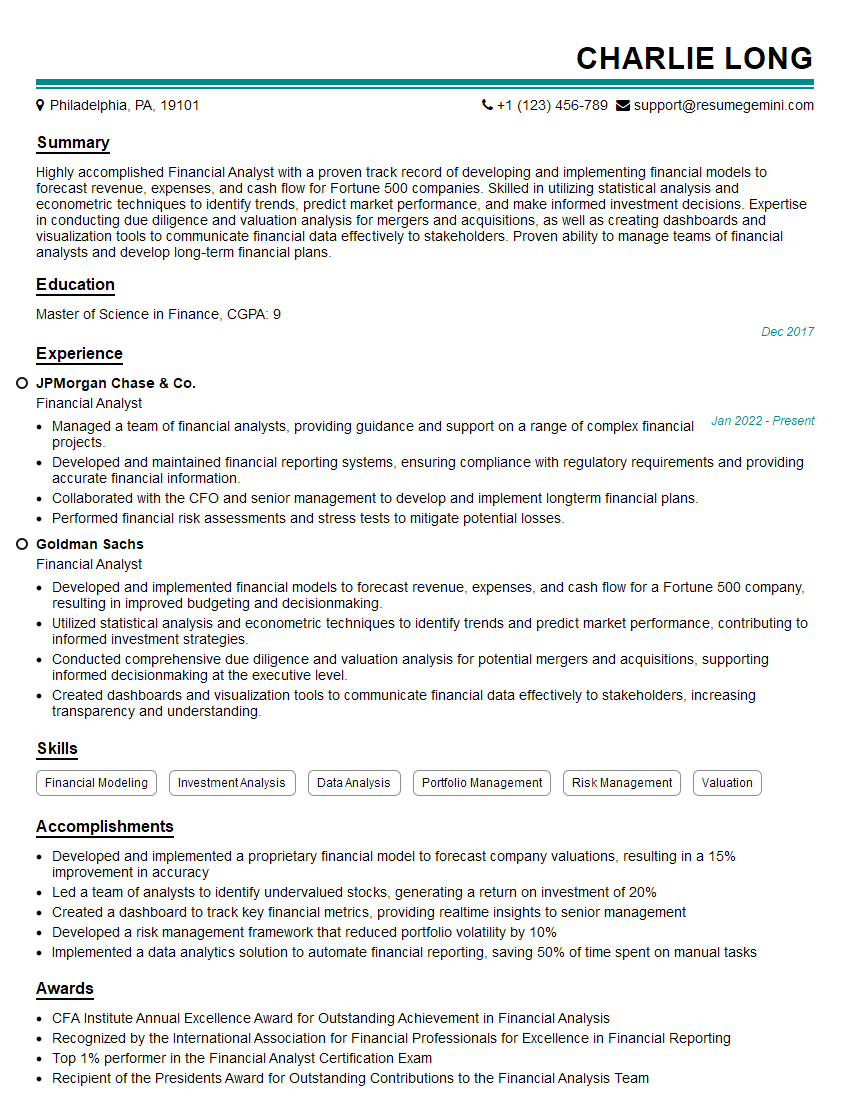
Financial Analyst Resume Sample

Risk Analyst Resume Sample
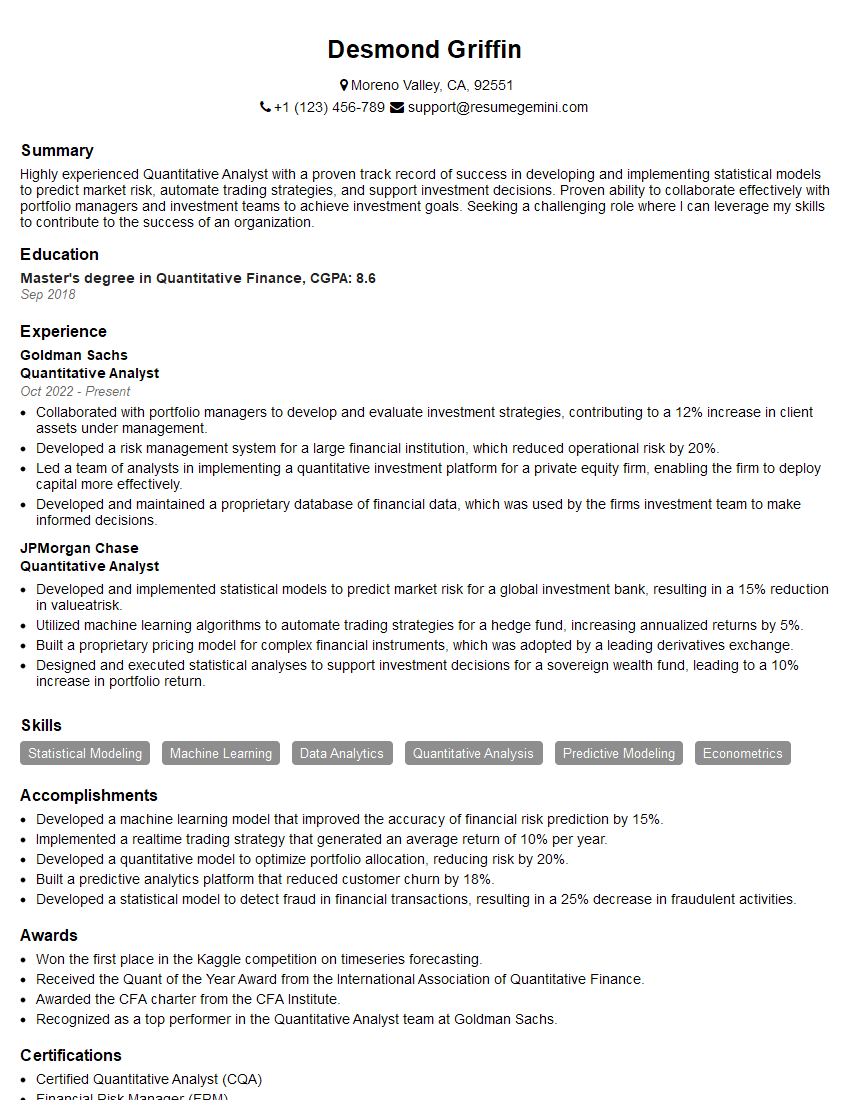
Quantitative Analyst Resume Sample
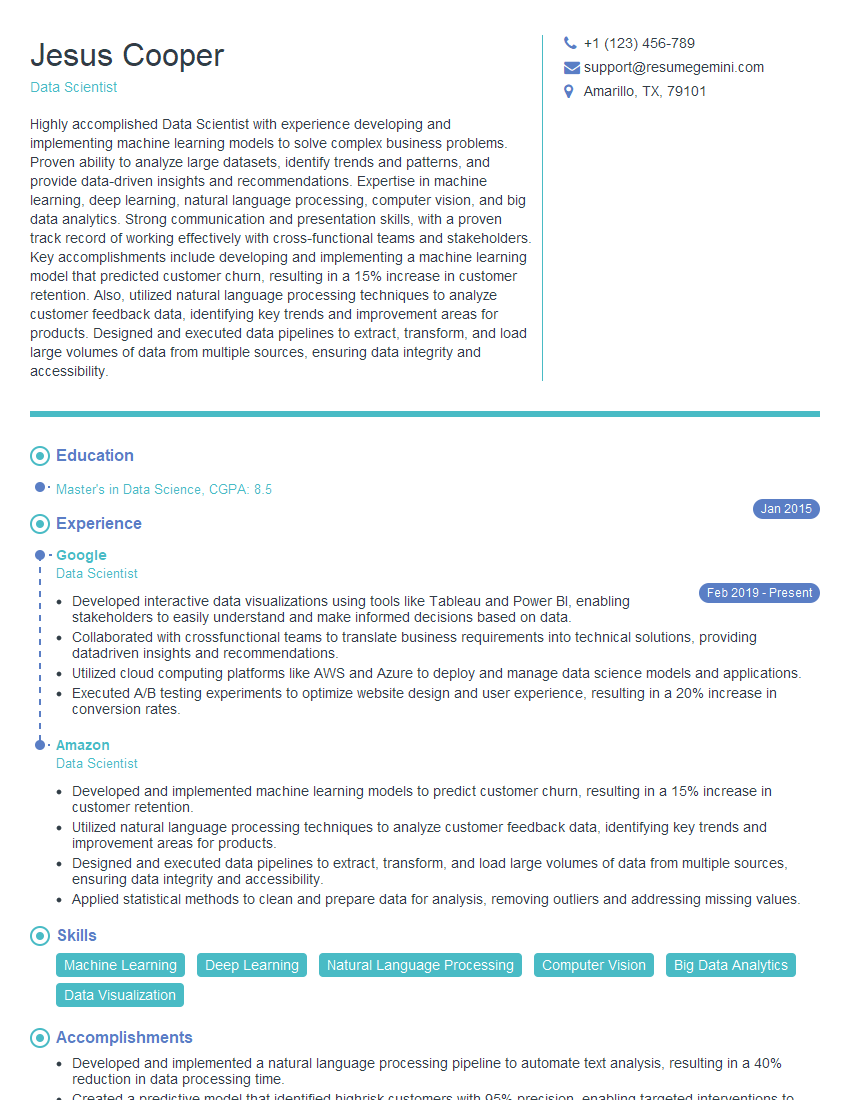
Data Scientist Resume Sample

Research Scientist Resume Sample

Data Architect Resume Sample
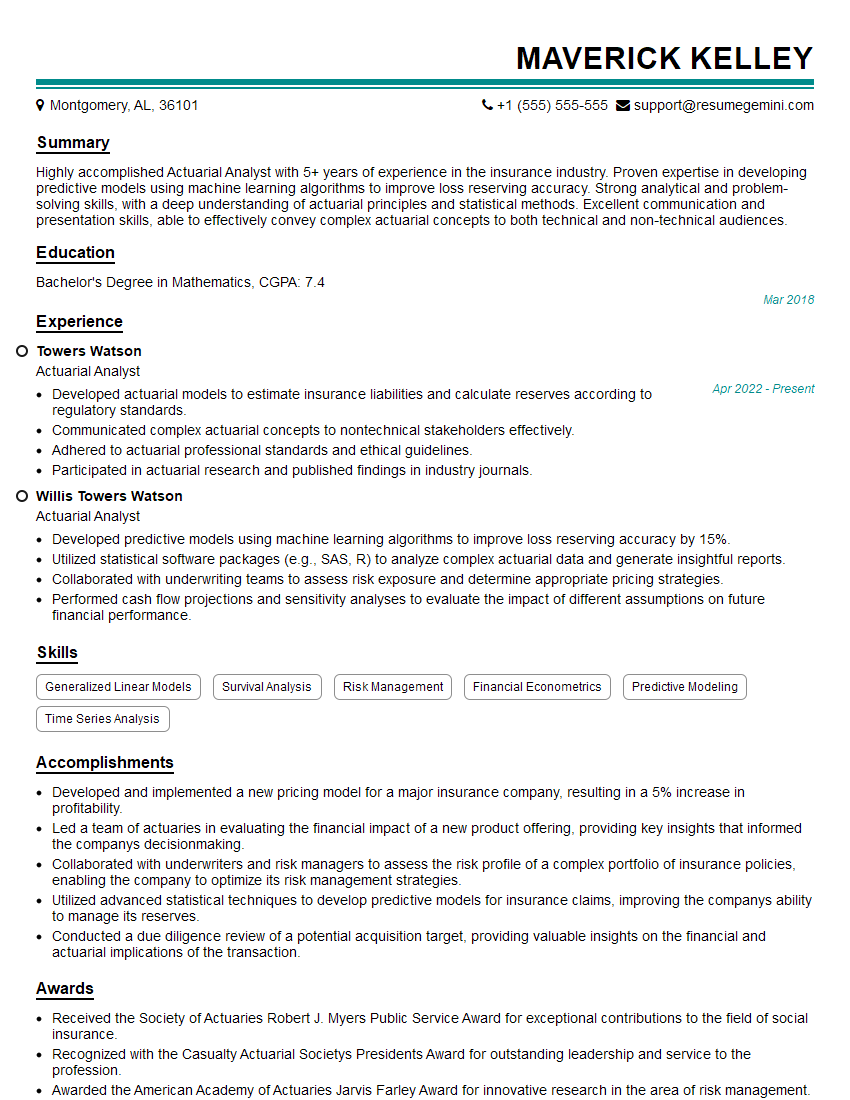
Actuarial Analyst Resume Sample

Actuary Resume Sample
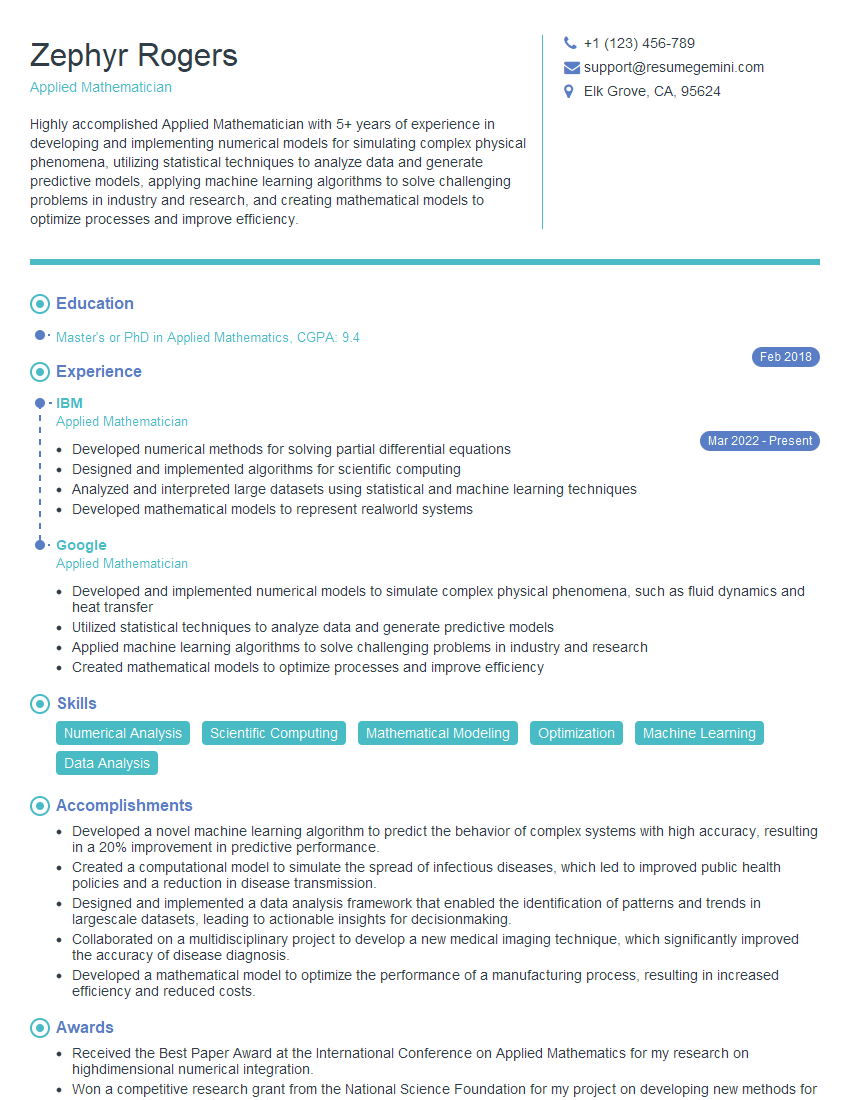
Applied Mathematician Resume Sample
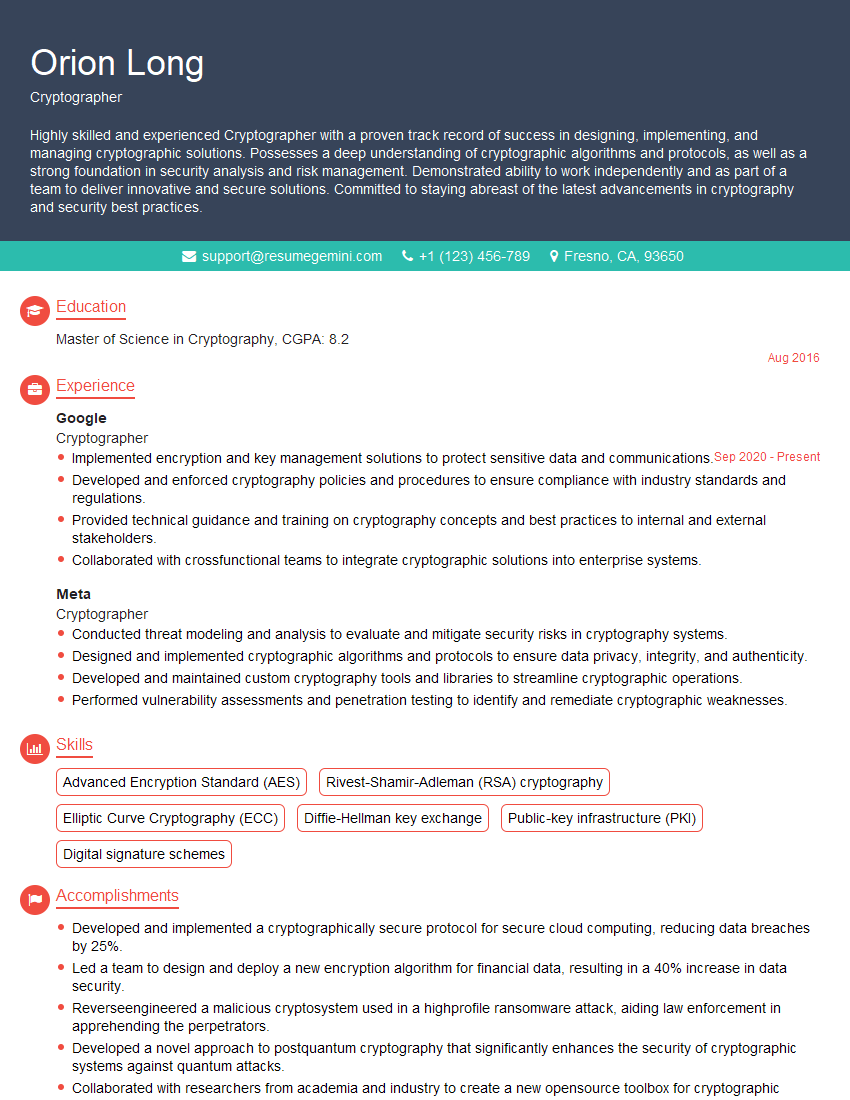
Cryptographer Resume Sample
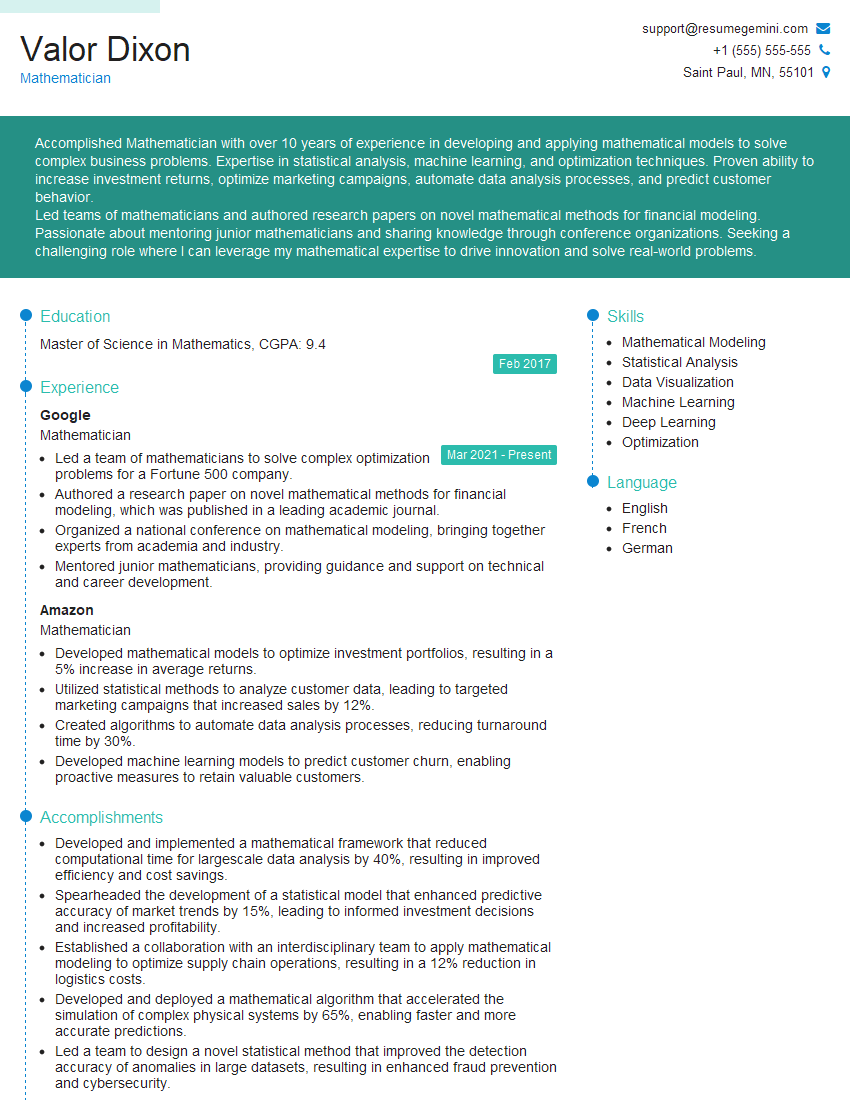
Mathematician Resume Sample

Operations Research Analyst Resume Sample
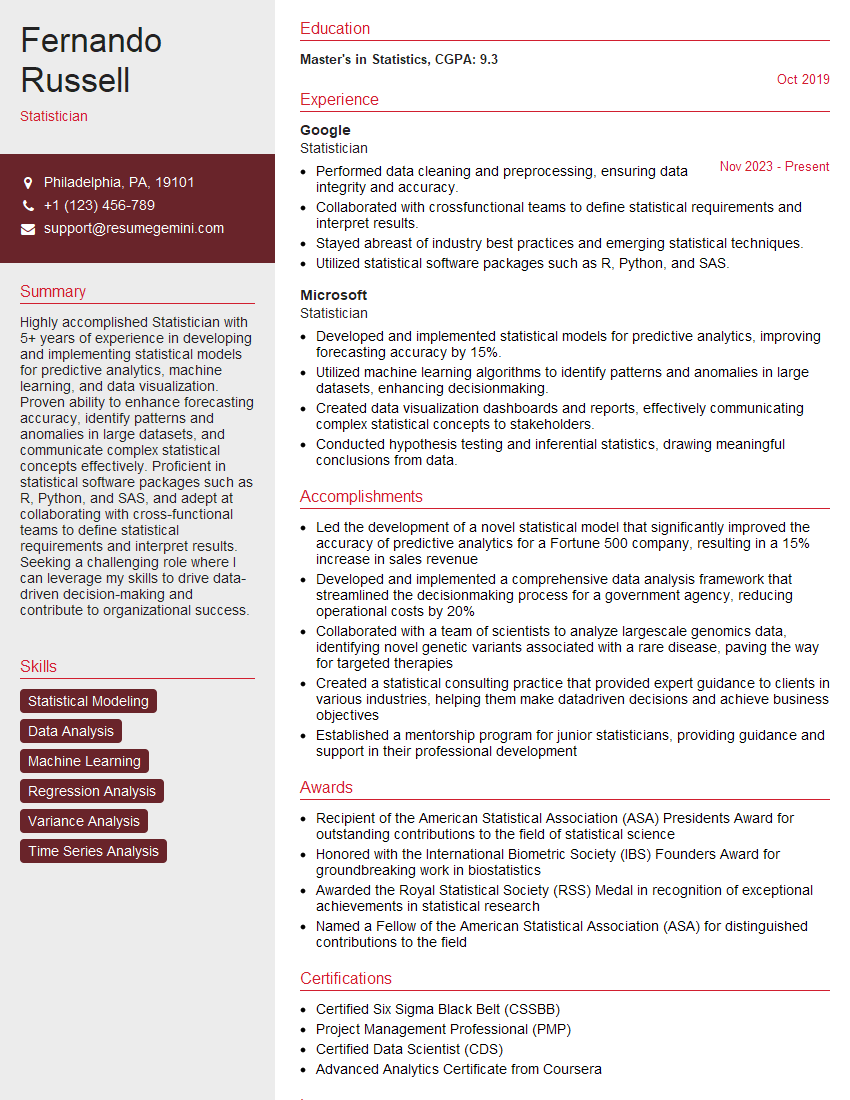
Statistician Resume Sample
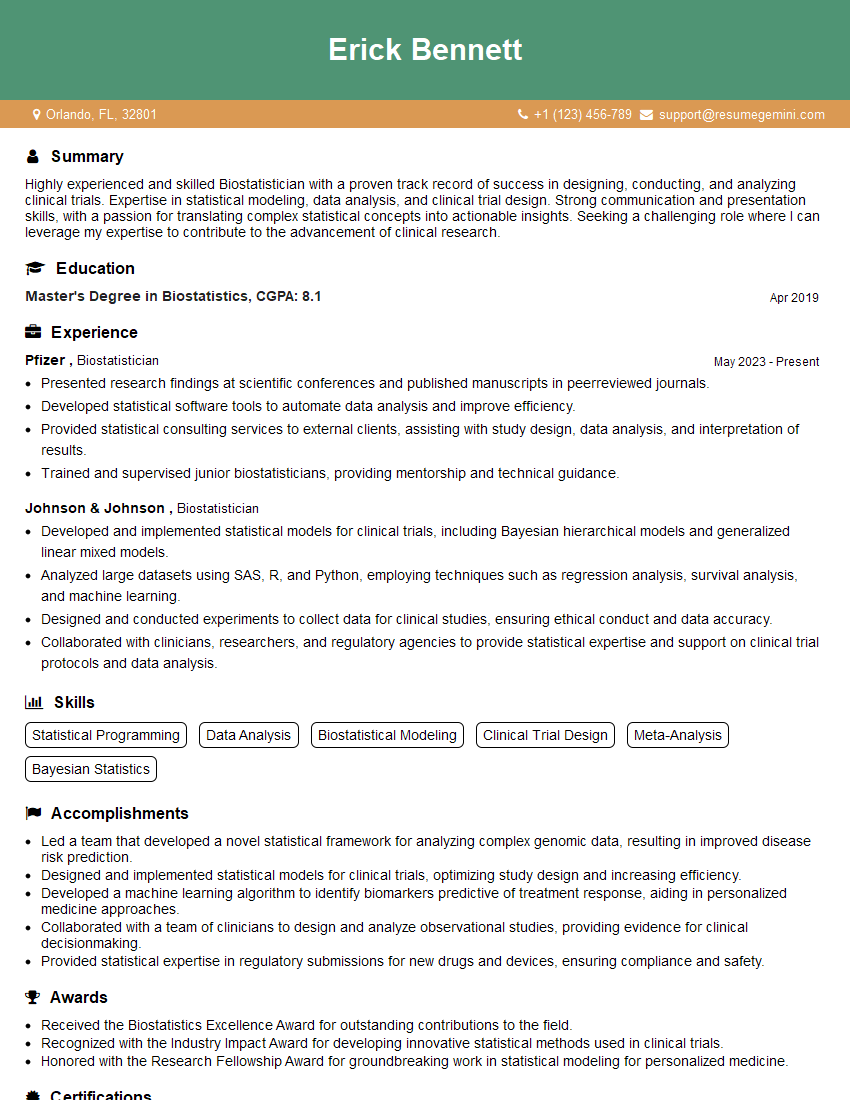
Biostatistician Resume Sample

Computational Biologist Resume Sample
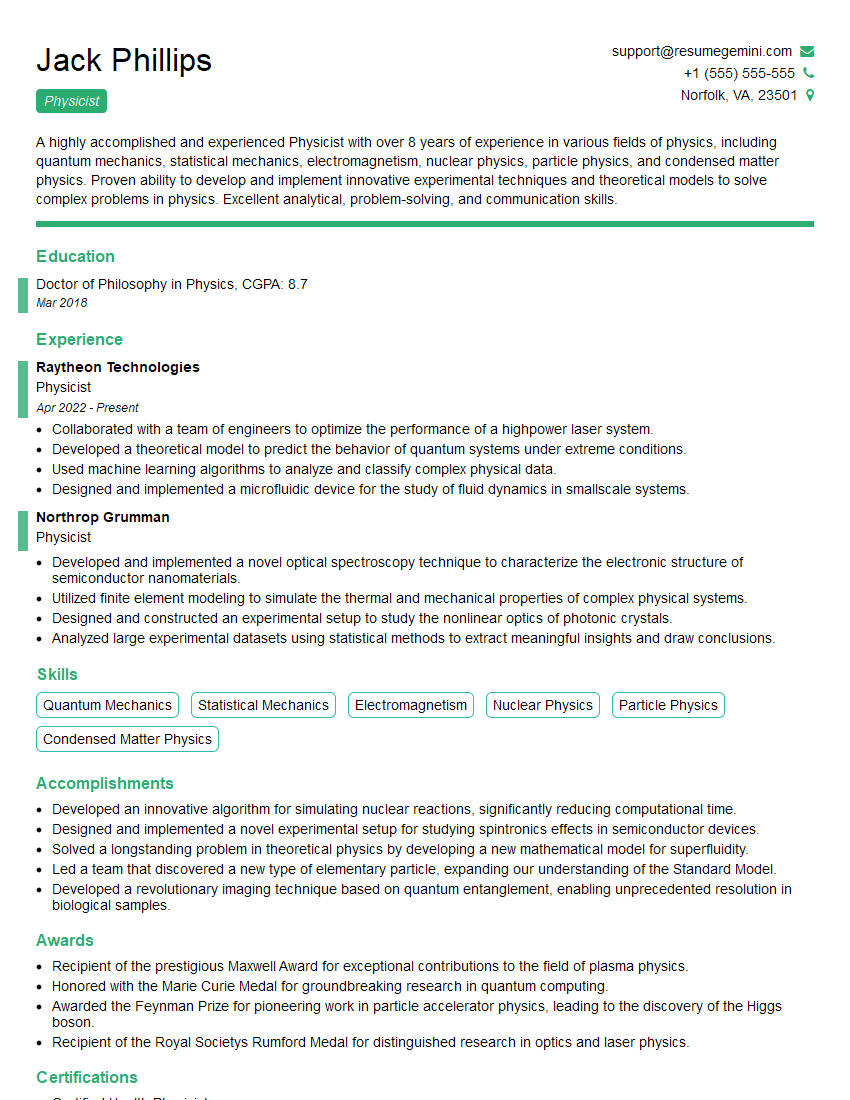
Physicist Resume Sample
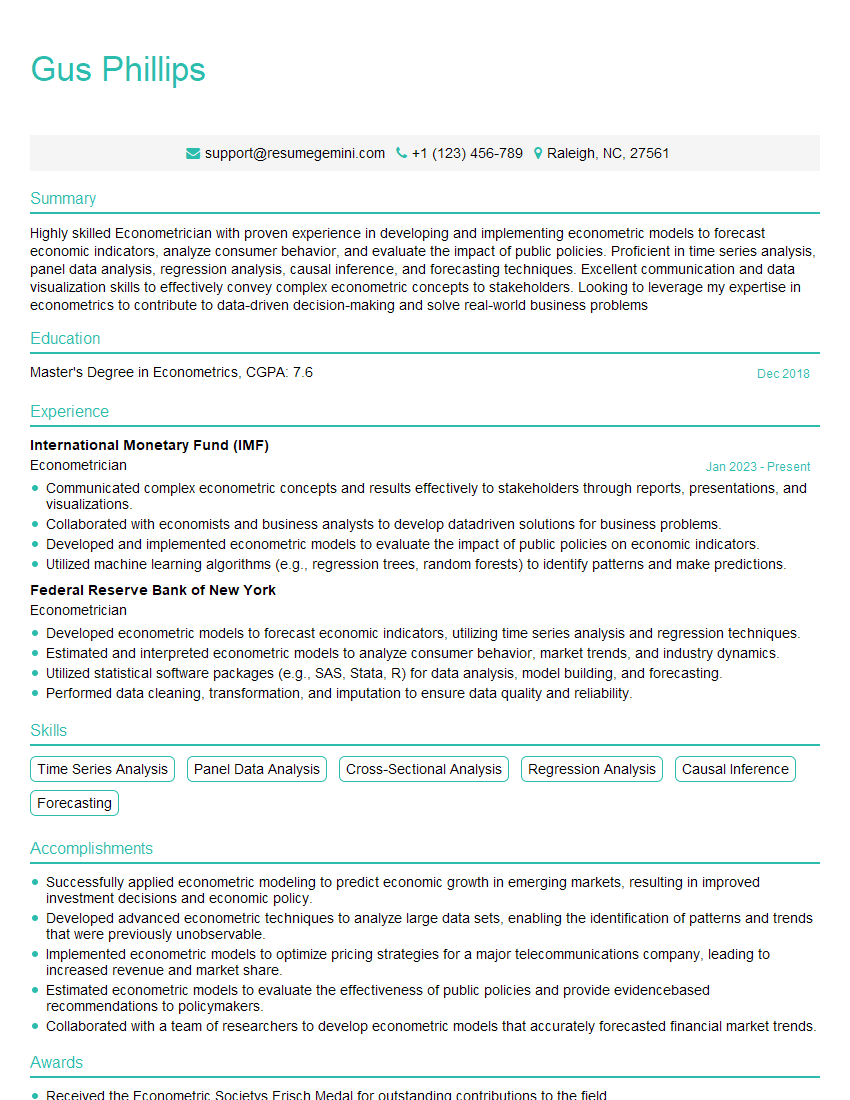
Econometrician Resume Sample

Machine Learning Engineer Resume Sample
- Financial Analyst
- Risk Analyst
- Quantitative Analyst
- Data Scientist
- Research Scientist
- Data Architect
- Actuarial Analyst
- Actuary
- Applied Mathematician
- Cryptographer
- Mathematician
- Operations Research Analyst
- Statistician
- Biostatistician
- Computational Biologist
- Physicist
- Econometrician
- Machine Learning Engineer
Explore more articles
Users Rating of Our Blogs
Share Your Experience
We value your feedback! Please rate our content and share your thoughts (optional).
What Readers Say About Our Blog
Very informative content, great job.
good