Unlock your full potential by mastering the most common Experience in Maintenance and Repair of Complex Systems interview questions. This blog offers a deep dive into the critical topics, ensuring you’re not only prepared to answer but to excel. With these insights, you’ll approach your interview with clarity and confidence.
Questions Asked in Experience in Maintenance and Repair of Complex Systems Interview
Q 1. Describe your experience with preventative maintenance procedures.
Preventative maintenance (PM) is crucial for maximizing equipment lifespan and minimizing downtime. It involves scheduled inspections, lubrication, cleaning, and minor repairs to prevent major failures. My experience encompasses developing and implementing PM schedules based on manufacturers’ recommendations, operating conditions, and historical data. This includes creating detailed checklists for each piece of equipment, ensuring all components are inspected regularly and any potential issues are addressed proactively.
For example, in my previous role maintaining a large-scale industrial processing plant, we implemented a PM schedule for the main conveyor system, involving weekly lubrication of bearings, monthly inspections of belt tension and alignment, and quarterly thorough cleaning of the system. This proactive approach significantly reduced unexpected breakdowns and extended the system’s operational life by several years.
- Risk assessment: Identifying potential failure points based on historical data and equipment specifications.
- Scheduling: Optimizing PM tasks using CMMS software to minimize disruption and maximize efficiency.
- Documentation: Maintaining accurate records of all PM activities, including dates, technicians, and any identified issues.
Q 2. Explain your troubleshooting methodology for complex equipment malfunctions.
My troubleshooting methodology for complex equipment malfunctions follows a systematic approach, often described as a ‘5-Why’ analysis combined with a thorough understanding of the system’s architecture. I start by gathering information: observing the symptoms, reviewing historical data, and checking any error logs. Next, I isolate the potential problem areas by testing individual components and subsystems. After that, I develop and test hypotheses, progressively narrowing down the possible causes. Finally, I implement the solution and verify its effectiveness, documenting the entire process for future reference.
Imagine a scenario where a robotic arm in an assembly line stops working. I’d first check for power supply issues and any obvious physical damage. If those are ruled out, I’d consult the system’s diagnostic logs, looking for error codes or unusual sensor readings. The ‘5-Why’ analysis would guide my investigation, repeatedly asking ‘Why’ until I reach the root cause. For example: ‘Why did the arm stop?’ (Power failure). ‘Why did the power fail?’ (Circuit breaker tripped). ‘Why did the circuit breaker trip?’ (Overcurrent). ‘Why was there an overcurrent?’ (Faulty motor). ‘Why did the motor fail?’ (Excessive wear and tear). This leads me to replace the faulty motor, preventing future issues by addressing the root cause rather than just the immediate symptoms.
Q 3. How do you prioritize maintenance tasks in a high-pressure environment?
Prioritizing maintenance tasks in high-pressure environments requires a blend of critical thinking and efficient resource allocation. I use a combination of methods, including the Criticality-Urgency matrix, which prioritizes tasks based on their potential impact on operations and their immediacy. Tasks are categorized into four quadrants: High Criticality/High Urgency (immediate action needed), High Criticality/Low Urgency (schedule soon), Low Criticality/High Urgency (address quickly), and Low Criticality/Low Urgency (can be deferred).
Another key element is proactive communication with other departments to understand their operational needs and potential risks. This helps to align maintenance priorities with broader business goals and reduce conflicts. For instance, if a crucial production line is at risk of failure, its associated maintenance tasks would jump to the top of the list, even if other tasks were scheduled earlier.
Q 4. What experience do you have with CMMS (Computerized Maintenance Management Systems)?
I have extensive experience with CMMS (Computerized Maintenance Management Systems), utilizing them to manage preventative maintenance schedules, track work orders, manage inventory, and generate reports on maintenance costs and efficiency. My experience includes using systems like IBM Maximo and SAP PM, managing work orders from initiation to completion, and generating customized reports to monitor key performance indicators (KPIs) such as equipment uptime and maintenance costs. I’m proficient in data entry, scheduling optimization, and report generation within CMMS platforms. This allows for data-driven decision-making in maintenance planning, resulting in optimized resource allocation and cost savings.
For instance, using a CMMS to track spare parts inventory allowed for better prediction of future needs and minimized downtime caused by delays in acquiring essential components. By integrating real-time data from sensors on the equipment, we could get early warnings of potential failures, enabling us to schedule proactive maintenance interventions instead of reacting to sudden breakdowns.
Q 5. Describe a time you had to diagnose and repair a complex system failure.
In a previous role, we experienced a complete failure of a critical cooling system in a data center. This led to a significant temperature spike and threatened to cause irreparable damage to sensitive equipment. My team and I immediately activated our emergency response protocol. We quickly identified the problem as a failed compressor in the primary cooling unit. The challenge was that a replacement compressor wasn’t immediately available. We started by stabilizing the situation using temporary cooling solutions: opening emergency vents and deploying portable cooling units. Simultaneously, I led the team in troubleshooting the failed compressor to determine the cause of the failure (a cracked refrigerant line). We then sourced a compatible replacement compressor from a nearby vendor, expediting the delivery through prioritized shipping. After the installation, we systematically checked and re-tested all components, ensuring the system was operating at optimal performance levels before declaring the situation resolved. This incident demonstrated our ability to react quickly under immense pressure, applying methodical troubleshooting and creative problem-solving to minimize the impact on the critical infrastructure.
Q 6. How do you stay current with technological advancements in maintenance and repair?
Staying current with technological advancements in maintenance and repair is vital. I actively participate in industry conferences and webinars, read trade publications, and engage with online communities dedicated to maintenance and repair. I also pursue relevant certifications and training opportunities to expand my skills and knowledge in areas such as predictive maintenance using IoT sensors, automation, and AI-driven diagnostic tools. Following industry leaders and researching new technologies keeps my expertise up to date and allows me to integrate innovative solutions into our maintenance strategies. A recent focus has been on applying predictive maintenance techniques using machine learning algorithms to anticipate equipment failures before they happen, enabling proactive maintenance and preventing costly downtime.
Q 7. What safety protocols do you follow when working on complex systems?
Safety is paramount in my work. I meticulously follow all relevant safety protocols, including lockout/tagout procedures (LOTO), which are essential to prevent accidental energization of equipment during maintenance. I always use appropriate personal protective equipment (PPE), such as safety glasses, gloves, and hearing protection, depending on the specific task. Before starting any work on a complex system, I conduct a thorough risk assessment, identifying potential hazards and implementing control measures to mitigate risks. Moreover, I ensure all team members are trained on safety procedures and understand their responsibilities. Compliance with OSHA (or equivalent) regulations is a core value.
For example, before working on high-voltage equipment, we always implement a strict LOTO procedure, ensuring that the power is completely isolated and verified before any work begins. This ensures the safety of both the technicians and the equipment, preventing accidents and potential injuries.
Q 8. Explain your understanding of Root Cause Analysis (RCA).
Root Cause Analysis (RCA) is a systematic process for identifying the underlying cause of a problem, rather than just addressing its symptoms. Think of it like diagnosing a doctor’s patient – you don’t just treat the fever; you find out *why* they have a fever. In maintenance, this is crucial because simply fixing a broken part without understanding the root cause often leads to recurring problems.
A common method is the ‘5 Whys’ technique. You repeatedly ask ‘why’ to peel back layers of explanation until you reach the fundamental cause. For example: A pump fails (1st why). Why? Because it overheated (2nd why). Why? Because the cooling system was clogged (3rd why). Why? Because preventative maintenance was neglected (4th why). Why? Because there wasn’t a scheduled maintenance plan (5th why). The root cause here is the lack of a maintenance plan, not the clogged cooling system or the failed pump.
Other RCA methodologies include Fishbone diagrams (Ishikawa diagrams), Fault Tree Analysis (FTA), and Failure Mode and Effects Analysis (FMEA). The choice of method depends on the complexity of the system and the nature of the problem.
Q 9. How do you document maintenance procedures and repairs?
Documentation is paramount in maintenance. Poor documentation can lead to repeated mistakes, wasted time, and even safety hazards. I use a combination of methods to ensure thorough and easily accessible records.
- Computerized Maintenance Management Systems (CMMS): These software packages allow for centralized storage and tracking of all maintenance activities, including work orders, repair histories, parts inventories, and preventive maintenance schedules. I’m proficient in using several CMMS platforms, such as [mention specific examples if applicable].
- Detailed written reports: For each maintenance task, I create a comprehensive report including the date, time, equipment affected, problem description, steps taken for repair or maintenance, parts used (with serial numbers), and any relevant observations. Pictures or videos are included when beneficial.
- Schematic diagrams and drawings: I annotate schematics with notes and diagrams highlighting modifications, repairs, or special configurations to aid future technicians. This is particularly important for complex systems.
- Standard Operating Procedures (SOPs): For recurring tasks, we develop SOPs, step-by-step instructions that ensure consistency and reduce errors. I participate actively in developing and updating these procedures.
Q 10. Describe your experience with different types of maintenance (preventive, corrective, predictive).
My experience encompasses all three types of maintenance: Preventive, Corrective, and Predictive.
- Preventive Maintenance (PM): This involves scheduled inspections, cleaning, lubrication, and part replacements to prevent equipment failures. Think of it as regular checkups for your car – changing oil, rotating tires – to prevent major breakdowns. I’ve implemented and managed PM schedules for various systems, resulting in significant reductions in downtime and repair costs. I’m proficient in developing effective PM schedules based on manufacturer recommendations, equipment usage, and historical data.
- Corrective Maintenance (CM): This is reactive maintenance performed after a failure occurs. It’s often more expensive and disruptive than PM. My experience involves troubleshooting, repairing, or replacing faulty components to restore equipment functionality. I prioritize efficient and effective CM, minimizing downtime and ensuring the safety of personnel and equipment.
- Predictive Maintenance (PdM): This uses data analysis and advanced sensors to anticipate potential failures before they happen. I have experience using vibration analysis, oil analysis, and thermal imaging to detect anomalies and predict failures. This proactive approach allows for scheduling repairs during planned downtime, avoiding costly emergency repairs.
Q 11. How familiar are you with various diagnostic tools and equipment?
I am proficient in using a wide range of diagnostic tools and equipment. My experience includes:
- Multimeters: For measuring voltage, current, and resistance in electrical circuits.
- Oscilloscope: For analyzing waveforms and identifying electrical signal problems.
- Thermal imagers: For detecting overheating components, often a precursor to failure.
- Vibration analyzers: For detecting imbalances or bearing wear in rotating machinery.
- Pressure gauges and transducers: For monitoring pressure in hydraulic and pneumatic systems.
- Leak detectors: For identifying leaks in various systems.
- Specialized diagnostic software: Depending on the specific equipment, I’m often skilled in using manufacturer-provided software for diagnostics and troubleshooting.
I also understand the limitations of each tool and know when to use the right one for a given situation.
Q 12. What are your skills in reading and interpreting technical manuals and schematics?
Reading and interpreting technical manuals and schematics is a fundamental skill for me. I’m comfortable navigating complex documentation, including electrical schematics, hydraulic diagrams, pneumatic diagrams, and mechanical drawings. I can extract relevant information quickly and accurately, even in unfamiliar systems. I often use multiple reference materials simultaneously to fully understand a system’s operation and identify potential issues.
For example, during a recent troubleshooting exercise on a complex robotic arm, I had to use both the electrical schematic, the pneumatic diagram, and the mechanical assembly drawings to diagnose a movement issue. By cross-referencing the diagrams, I identified a faulty pneumatic valve that was causing the problem.
Q 13. How do you handle unexpected equipment failures and emergencies?
Unexpected equipment failures require a calm and systematic approach. My first priority is always safety – securing the area, ensuring no one is at risk, and following all safety protocols. After ensuring safety, I will:
- Assess the situation: Determine the extent of the failure and its potential impact.
- Isolate the problem: Identify the failed component or system and take steps to isolate it to prevent further damage or injury.
- Initiate emergency procedures: If necessary, activate emergency shutdown procedures or contact appropriate personnel, such as supervisors or emergency response teams.
- Implement temporary solutions (if possible): Depending on the situation, I may implement temporary fixes to maintain minimal functionality or prevent further deterioration.
- Begin troubleshooting and repairs: Following proper procedures and using appropriate safety precautions, I will diagnose and repair the problem.
- Document everything: I maintain meticulous documentation of the event, including the time, nature of the failure, actions taken, parts replaced, and any other relevant information.
The key is to be prepared for unexpected events. This includes regular training, familiarization with emergency procedures, and having a well-stocked supply of spare parts.
Q 14. Describe your experience with hydraulic, pneumatic, or electrical systems.
I possess significant experience working with hydraulic, pneumatic, and electrical systems. My skills in these areas include:
- Hydraulic Systems: I’m familiar with hydraulic pumps, valves, actuators, and cylinders. I can diagnose and repair leaks, troubleshoot pressure problems, and maintain hydraulic components. I understand the principles of fluid power and can apply this knowledge to solve problems related to hydraulic systems.
- Pneumatic Systems: Similar to hydraulics, I understand the principles of compressed air and can work with pneumatic components such as compressors, valves, actuators, and cylinders. I can identify leaks, diagnose pressure issues, and perform maintenance on pneumatic equipment.
- Electrical Systems: I am adept at troubleshooting electrical circuits, identifying short circuits, and replacing faulty components. I have experience with various types of electrical wiring, motors, and control systems. I understand safety protocols related to working with high-voltage equipment.
In one instance, I successfully diagnosed a failure in a large industrial hydraulic press by systematically checking the pressure readings at each stage of the hydraulic circuit. This led to the identification of a faulty relief valve, preventing a costly and potentially hazardous shutdown.
Q 15. Explain your knowledge of different types of lubrication and their applications.
Lubrication is crucial for reducing friction, wear, and heat in complex machinery. Different types of lubricants are selected based on the specific application and operating conditions.
- Grease: A thick lubricant consisting of oil and a thickening agent. It’s excellent for applications requiring long-term lubrication with minimal replenishment, like bearings in hard-to-reach locations. For example, I used a high-temperature lithium-based grease in the roller bearings of a large industrial oven where regular oiling was impractical.
- Oil: A fluid lubricant that reduces friction between moving parts. Oils are categorized by viscosity (thickness) and can be mineral-based, synthetic, or a blend. In a recent project involving a precision CNC machine, we used a high-viscosity synthetic oil to ensure optimal performance and longevity at high speeds.
- Solid Lubricants: Materials like graphite or molybdenum disulfide that provide lubrication in extreme conditions such as high temperatures or vacuum environments. I’ve applied molybdenum disulfide to the moving parts of a specialized valve in a high-pressure, high-temperature gas pipeline to prevent seizing.
- Specialty Lubricants: These are formulated for specific needs, like food-grade lubricants for processing equipment or extreme-pressure lubricants for gears under heavy loads. For instance, we used a food-grade silicone grease in a food processing plant to prevent contamination.
Choosing the right lubricant involves considering factors like operating temperature, load, speed, and the material compatibility of the lubricated components. Incorrect lubrication can lead to premature wear, equipment failure, and costly downtime.
Career Expert Tips:
- Ace those interviews! Prepare effectively by reviewing the Top 50 Most Common Interview Questions on ResumeGemini.
- Navigate your job search with confidence! Explore a wide range of Career Tips on ResumeGemini. Learn about common challenges and recommendations to overcome them.
- Craft the perfect resume! Master the Art of Resume Writing with ResumeGemini’s guide. Showcase your unique qualifications and achievements effectively.
- Don’t miss out on holiday savings! Build your dream resume with ResumeGemini’s ATS optimized templates.
Q 16. How do you manage inventory and spare parts for complex systems?
Managing inventory for complex systems requires a robust system that balances cost-effectiveness with operational needs. We typically employ a combination of strategies:
- Criticality Analysis: We categorize spare parts based on their criticality to system operation. High-criticality parts are stocked in greater quantities and may have faster lead times. For example, critical components of a power generation system are kept on-site, while less essential ones are ordered as needed.
- Inventory Management Software: We use software to track stock levels, monitor consumption rates, and generate alerts when parts reach minimum stock levels. This software allows for precise forecasting and optimized ordering.
- Vendor Relationships: Strong relationships with reliable vendors are crucial for ensuring timely delivery of spare parts, especially those with long lead times. We often negotiate contracts with favorable terms for critical parts.
- Regular Audits: We perform periodic physical inventory checks to verify stock levels and identify discrepancies. This helps us refine our forecasting models and address storage issues.
- Just-in-Time Inventory: For less critical parts, we use a just-in-time approach, ordering them only when needed to minimize storage costs.
Effective inventory management reduces downtime, lowers costs associated with unexpected repairs, and ensures the system’s continued operation.
Q 17. Describe your experience with working orders and maintenance requests.
Working orders and maintenance requests are the lifeblood of any maintenance program. I’ve extensive experience managing them through various systems.
- Work Order System: We utilize computerized maintenance management systems (CMMS) to log, track, and manage work orders. This system allows for assigning tasks to technicians, scheduling maintenance activities, and monitoring progress.
- Prioritization: Work orders are prioritized based on urgency and impact. Emergency repairs take precedence over routine maintenance tasks. A clear prioritization matrix helps ensure the most critical issues are addressed first.
- Request Logging: Maintenance requests can come from various sources, including operators, supervisors, or automated systems (e.g., sensor alerts). We ensure all requests are documented accurately and efficiently.
- Completion and Reporting: Upon completion, work orders are reviewed, approved, and archived, including details of the repairs, parts used, and time taken. This data is critical for performance reporting and continuous improvement.
A well-managed work order system ensures that maintenance tasks are completed promptly and efficiently, minimizes downtime, and improves overall system reliability. I’ve used both in-house and cloud-based CMMS systems successfully, tailoring our approach to fit the specific needs of each organization.
Q 18. How do you ensure compliance with safety regulations and industry standards?
Safety is paramount in maintenance and repair of complex systems. Compliance with regulations and standards is not just a legal requirement, but a moral imperative.
- Lockout/Tagout Procedures: We strictly adhere to lockout/tagout (LOTO) procedures to prevent accidental energization of equipment during maintenance. Regular training and audits ensure that procedures are followed correctly.
- Personal Protective Equipment (PPE): Appropriate PPE is provided and required for all maintenance tasks. This includes items like safety glasses, gloves, hard hats, and hearing protection. We conduct regular PPE inspections and training.
- Hazard Identification and Risk Assessment: Before commencing any work, we perform thorough hazard identification and risk assessments. This involves identifying potential hazards, evaluating risks, and implementing control measures to mitigate them. This is documented for each task.
- Regular Inspections and Audits: We conduct regular safety inspections of equipment, work areas, and procedures to identify and address potential hazards. External safety audits are also scheduled to ensure our compliance with relevant regulations and best practices.
- Compliance Training: All maintenance personnel undergo regular safety training to update their knowledge and skills. This includes both classroom training and practical exercises.
Our commitment to safety isn’t just about avoiding accidents; it’s about fostering a culture of safety where everyone feels empowered to identify and report hazards and contribute to a safer workplace. I personally oversee safety protocols and ensure that compliance isn’t just checked off a list; it’s integrated into our daily operations.
Q 19. How do you communicate technical information effectively to both technical and non-technical audiences?
Effective communication is crucial in maintenance. I adapt my communication style to suit the audience.
- Technical Audiences: When communicating with engineers or technicians, I use precise technical language and diagrams to explain complex issues clearly. This ensures everyone is on the same page and understands the technical aspects of a problem.
- Non-Technical Audiences: For non-technical personnel, I avoid jargon and use simple language and analogies to convey information. For instance, I might explain a complex issue by comparing it to something familiar, like a car engine.
- Visual Aids: I frequently use diagrams, flowcharts, photographs, and videos to supplement my explanations, making them easier to understand, regardless of the audience’s technical background.
- Active Listening: I make sure to actively listen to the audience’s questions and concerns and respond clearly and concisely. This ensures that everyone feels heard and understood.
- Documentation: All communication is properly documented, including meeting minutes, emails, and reports. This serves as a valuable record and helps to ensure consistency and accountability.
Clear and effective communication prevents misunderstandings, improves teamwork, and ensures that maintenance tasks are completed efficiently and effectively.
Q 20. How do you handle conflict resolution among maintenance teams?
Conflict resolution is an essential skill for a maintenance manager. My approach is based on collaboration and finding mutually beneficial solutions.
- Active Listening and Empathy: I start by actively listening to all parties involved and trying to understand their perspectives and concerns. Empathy helps in defusing tension and building trust.
- Facilitation and Mediation: I facilitate discussions between conflicting parties, helping them to identify the root causes of the conflict and find common ground. I may act as a neutral mediator to guide the discussion.
- Focus on Shared Goals: I remind the team of their shared goals — the efficient and safe operation of the system. This helps to refocus their energy on collaboration rather than conflict.
- Clear Expectations and Communication: Clear expectations and consistent communication help prevent misunderstandings and conflicts in the first place. This includes clear roles, responsibilities, and reporting procedures.
- Fair and Consistent Processes: Fair and consistent application of policies and procedures ensures that everyone is treated equitably, reducing the likelihood of conflict.
Addressing conflict promptly and fairly improves team morale, productivity, and the overall effectiveness of the maintenance operation. I strive to create a collaborative environment where disagreements are seen as opportunities for improvement.
Q 21. Describe your experience with performance monitoring and reporting.
Performance monitoring and reporting are critical for evaluating maintenance effectiveness and identifying areas for improvement.
- Key Performance Indicators (KPIs): We track key metrics such as mean time between failures (MTBF), mean time to repair (MTTR), and equipment uptime. These KPIs provide valuable insights into the efficiency and reliability of the maintenance program.
- Data Collection and Analysis: Data is collected from various sources, including CMMS, sensor data, and maintenance logs. This data is then analyzed to identify trends and patterns, helping us to predict potential issues and optimize maintenance strategies.
- Reporting and Visualization: Regular reports are generated, presenting KPIs and other relevant data in a clear and concise format, often using graphs and charts for easy understanding. This information is shared with stakeholders to demonstrate performance and support decision-making.
- Continuous Improvement: Performance data informs continuous improvement initiatives. We use data-driven insights to refine maintenance schedules, optimize parts inventory, and improve technician training. For example, if we see a consistent failure pattern, we may investigate the root cause and implement preventative maintenance to address it.
By continuously monitoring and reporting on performance, we can improve system reliability, reduce downtime, and minimize maintenance costs. This data-driven approach ensures our maintenance program is constantly evolving and improving.
Q 22. What are your skills in using data analytics to optimize maintenance strategies?
Data analytics is crucial for optimizing maintenance strategies. It allows us to move beyond reactive maintenance (fixing things when they break) to proactive and predictive maintenance. This involves collecting data from various sources – machine sensors, work orders, historical maintenance records – and using analytical techniques to identify patterns, predict potential failures, and optimize maintenance schedules.
For example, I once worked with a manufacturing plant experiencing frequent downtime due to pump failures. By analyzing sensor data (vibration, temperature, pressure) using statistical process control (SPC) and machine learning algorithms, we identified a specific vibration pattern preceding failures. This allowed us to develop a predictive model, enabling us to schedule preventative maintenance before failures occurred, reducing downtime by 40%.
Other techniques I utilize include:
- Root Cause Analysis (RCA): Identifying the underlying causes of equipment failures to prevent recurrence.
- Reliability-centered maintenance (RCM): Prioritizing maintenance tasks based on their criticality and potential impact on system reliability.
- Survival analysis: Predicting the remaining useful life of components.
By leveraging data analytics, we not only reduce maintenance costs but also improve equipment uptime, enhance safety, and extend the lifespan of complex systems.
Q 23. How familiar are you with Lean Manufacturing principles in maintenance?
Lean Manufacturing principles are deeply relevant to optimizing maintenance operations. The core idea is to eliminate waste in all its forms – reducing downtime, improving efficiency, and optimizing resource allocation. In maintenance, this translates to focusing on reducing non-value-added activities and streamlining processes.
My experience includes implementing 5S (Sort, Set in Order, Shine, Standardize, Sustain) methodology in maintenance workshops to improve organization and efficiency. We also employed Kanban systems for managing parts inventory, ensuring that the right parts are available when needed without excessive stock. This significantly reduced lead times for repairs.
Furthermore, I have experience with:
- Value Stream Mapping: Identifying and eliminating bottlenecks in the maintenance process.
- Total Productive Maintenance (TPM): Involving all employees in equipment maintenance to improve overall equipment effectiveness.
- Kaizen events: Implementing continuous improvement initiatives to optimize maintenance processes.
By adopting these principles, we can create a more efficient and effective maintenance operation, resulting in reduced costs and improved overall equipment effectiveness (OEE).
Q 24. How do you handle pressure and tight deadlines while maintaining accuracy?
Handling pressure and tight deadlines while maintaining accuracy is crucial in maintenance. I approach this through a structured and methodical approach. First, I prioritize tasks based on urgency and criticality, using tools such as risk assessment matrices. Then, I create detailed schedules and checklists to ensure that all necessary steps are completed accurately and on time.
Communication is key. I proactively communicate potential delays or challenges to stakeholders, offering alternative solutions to mitigate risks. I also encourage open communication within the team, ensuring everyone is aware of priorities and potential bottlenecks. In high-pressure situations, maintaining a calm and focused demeanor is important, allowing for clear thinking and effective problem-solving.
For example, during a major equipment failure that threatened production deadlines, I quickly assembled a team, prioritized tasks based on criticality, and delegated responsibilities effectively. We successfully restored functionality ahead of schedule, minimizing production disruption by efficiently managing our resources and effectively utilizing our collective expertise.
Q 25. Describe your experience with training junior maintenance technicians.
Training junior maintenance technicians is a significant aspect of my role. My approach focuses on a blend of theoretical knowledge and hands-on practical experience. I create tailored training programs that cover both the fundamentals of maintenance techniques and the specifics of the equipment we maintain.
My training methods include:
- On-the-job training: Mentoring and guiding junior technicians during actual maintenance tasks.
- Classroom instruction: Delivering lectures and presentations on relevant topics such as safety procedures, troubleshooting techniques, and equipment operation.
- Simulations and exercises: Providing hands-on practice in a controlled environment to build confidence and skill.
- Performance evaluations and feedback: Regularly assessing progress and providing constructive criticism to support continuous improvement.
I’ve successfully mentored several junior technicians, many of whom have progressed into senior roles within the organization. My focus on practical application and continuous feedback helps ensure they develop into highly competent and confident maintenance professionals.
Q 26. How do you contribute to a positive and collaborative work environment?
Contributing to a positive and collaborative work environment is essential for effective maintenance operations. I believe in fostering open communication, mutual respect, and teamwork. I actively encourage knowledge sharing among team members, recognizing that everyone brings valuable skills and experience.
I facilitate regular team meetings to discuss challenges, share best practices, and brainstorm solutions. I actively listen to team members’ concerns and suggestions, ensuring everyone feels valued and heard. I also celebrate team successes and acknowledge individual contributions, fostering a sense of accomplishment and motivation.
For example, I initiated a peer-to-peer mentoring program where senior technicians help train and support junior members. This not only improved knowledge transfer but also built stronger relationships and camaraderie within the team.
Q 27. What is your experience with specific software used for maintenance management?
My experience encompasses several maintenance management software packages. I am proficient in using Computerized Maintenance Management Systems (CMMS) such as IBM Maximo and SAP PM. These systems allow for efficient tracking of work orders, managing inventory, scheduling maintenance activities, and generating reports on equipment performance and maintenance costs.
I am also familiar with Enterprise Asset Management (EAM) systems, which integrate maintenance data with broader business operations. This integration facilitates better decision-making regarding asset lifecycle management and overall resource optimization.
Furthermore, I have experience using data analytics software like Tableau and Power BI to visualize maintenance data, identify trends, and generate insightful reports for management. This helps to communicate the effectiveness of maintenance strategies and highlight areas for improvement.
Q 28. Describe a situation where you had to adapt to a rapidly changing situation.
During a major plant-wide power outage, we had to adapt quickly to a rapidly changing situation. The initial response was focused on assessing the damage, ensuring safety, and prioritizing critical systems restoration. We moved from our standard maintenance procedures to emergency protocols. The situation called for flexibility and creative problem-solving.
Initially, communication channels were disrupted, so we utilized alternative communication methods, such as satellite phones. We prioritized tasks based on their impact on safety and production, adapting our maintenance plans on the fly. We had to rely on our collective expertise, improvising solutions to address equipment issues with limited resources. Through effective communication, rapid decision-making, and teamwork, we were able to restore essential systems much faster than initially anticipated.
This experience underscored the importance of adaptability, flexible planning, and strong teamwork in managing unexpected disruptions. It also highlighted the importance of having robust emergency protocols and alternative communication systems in place.
Key Topics to Learn for Experience in Maintenance and Repair of Complex Systems Interview
- Preventive Maintenance Strategies: Understanding and implementing scheduled maintenance procedures to minimize downtime and extend system lifespan. Practical application: Developing and optimizing a preventative maintenance plan for a specific system, including scheduling, resource allocation, and cost analysis.
- Diagnostic Techniques: Mastering troubleshooting methodologies for identifying malfunctions in complex systems. Practical application: Describing your experience isolating the root cause of a system failure using diagnostic tools and procedures.
- Repair and Restoration Procedures: Understanding the safe and efficient repair processes for various system components. Practical application: Explaining your experience in repairing damaged components, including adhering to safety regulations and using specialized tools.
- System Architecture and Functionality: Demonstrating a comprehensive understanding of the system’s design, components, and interactions. Practical application: Explaining how different components within a complex system interact and contribute to overall functionality.
- Safety Regulations and Procedures: Highlighting your commitment to safety standards and protocols while working on complex systems. Practical application: Describing your experience following safety protocols and preventing accidents during maintenance and repair activities.
- Documentation and Reporting: Showcasing your ability to accurately document maintenance procedures, repairs, and findings. Practical application: Detailing your experience in maintaining detailed logs and reports, including preventative maintenance schedules and repair histories.
- Problem-Solving and Critical Thinking: Demonstrating your ability to analyze complex problems, identify solutions, and implement effective strategies under pressure. Practical application: Providing examples of how you systematically troubleshoot complex issues and implement solutions efficiently.
Next Steps
Mastering Experience in Maintenance and Repair of Complex Systems is crucial for career advancement in this highly skilled field. It opens doors to specialized roles with increased responsibility and higher earning potential. To maximize your job prospects, creating an ATS-friendly resume is essential. This ensures your qualifications are effectively communicated to potential employers. ResumeGemini is a trusted resource that can help you build a professional and impactful resume. ResumeGemini provides examples of resumes tailored to Experience in Maintenance and Repair of Complex Systems to guide you through the process, helping you present your skills and experience in the most compelling way possible.
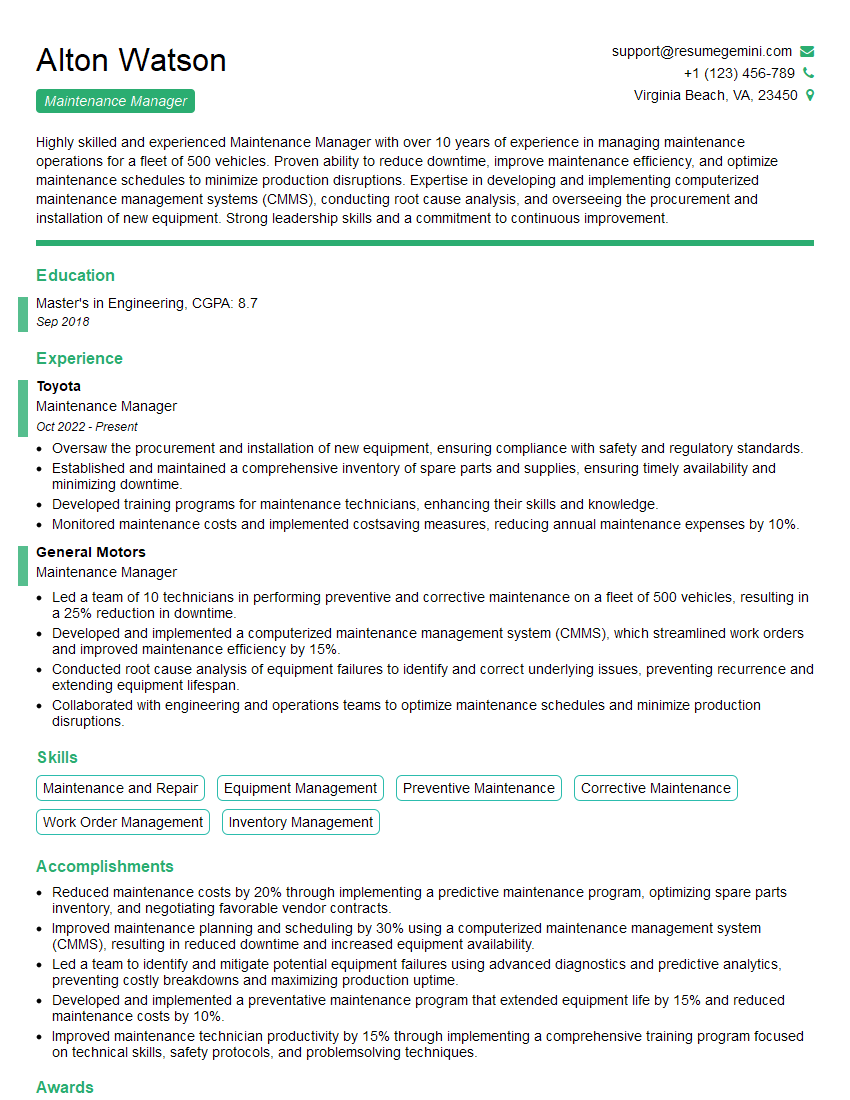
Maintenance Manager Resume Sample
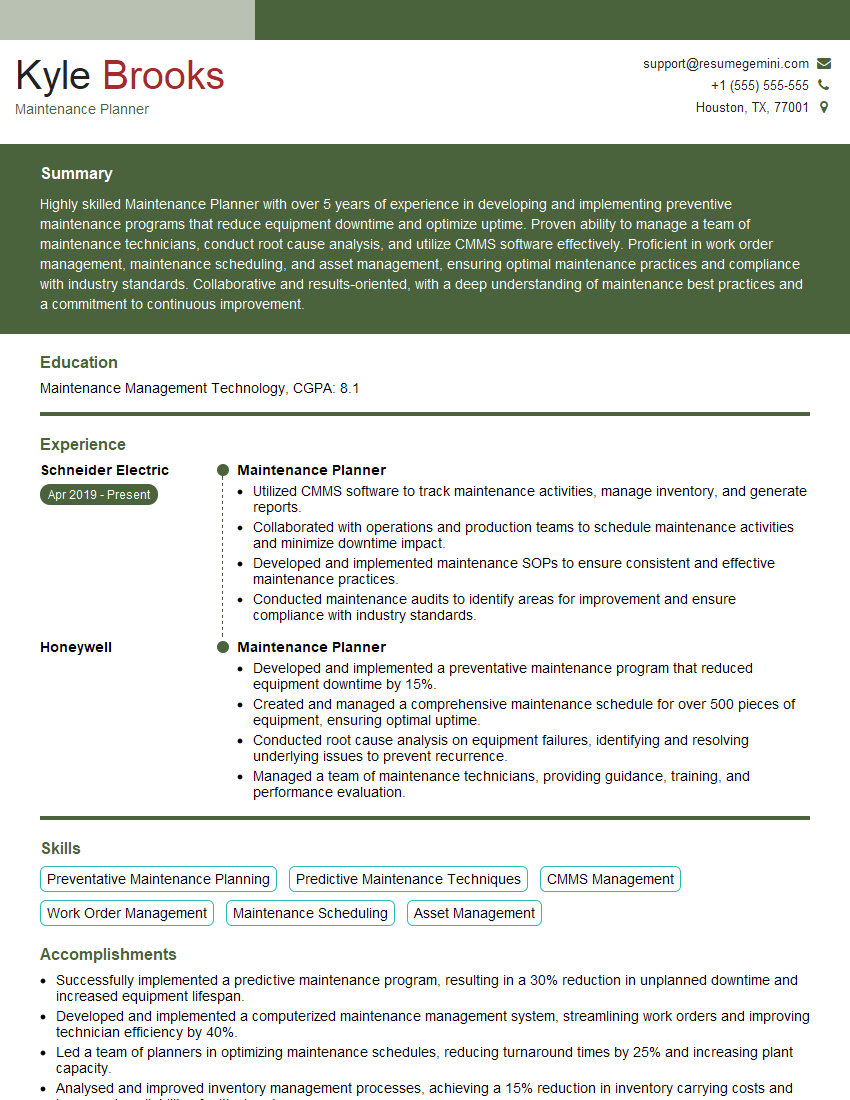
Maintenance Planner Resume Sample
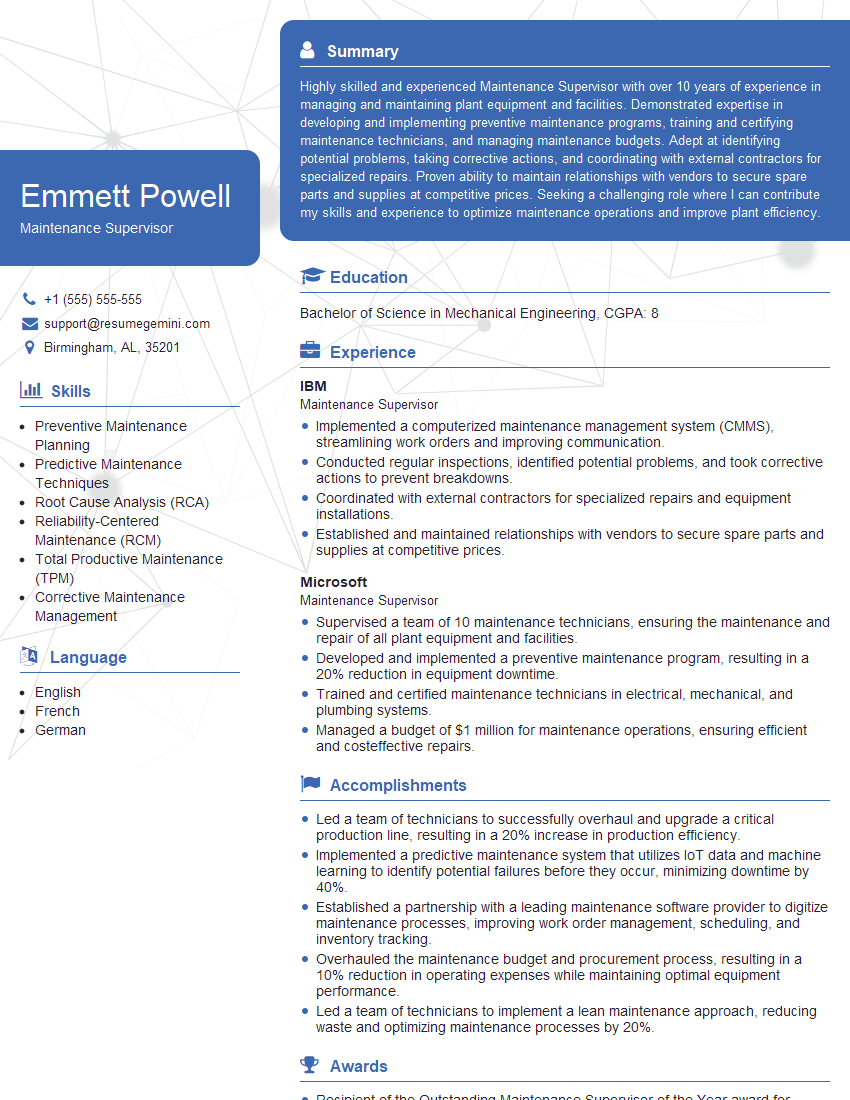
Maintenance Supervisor Resume Sample
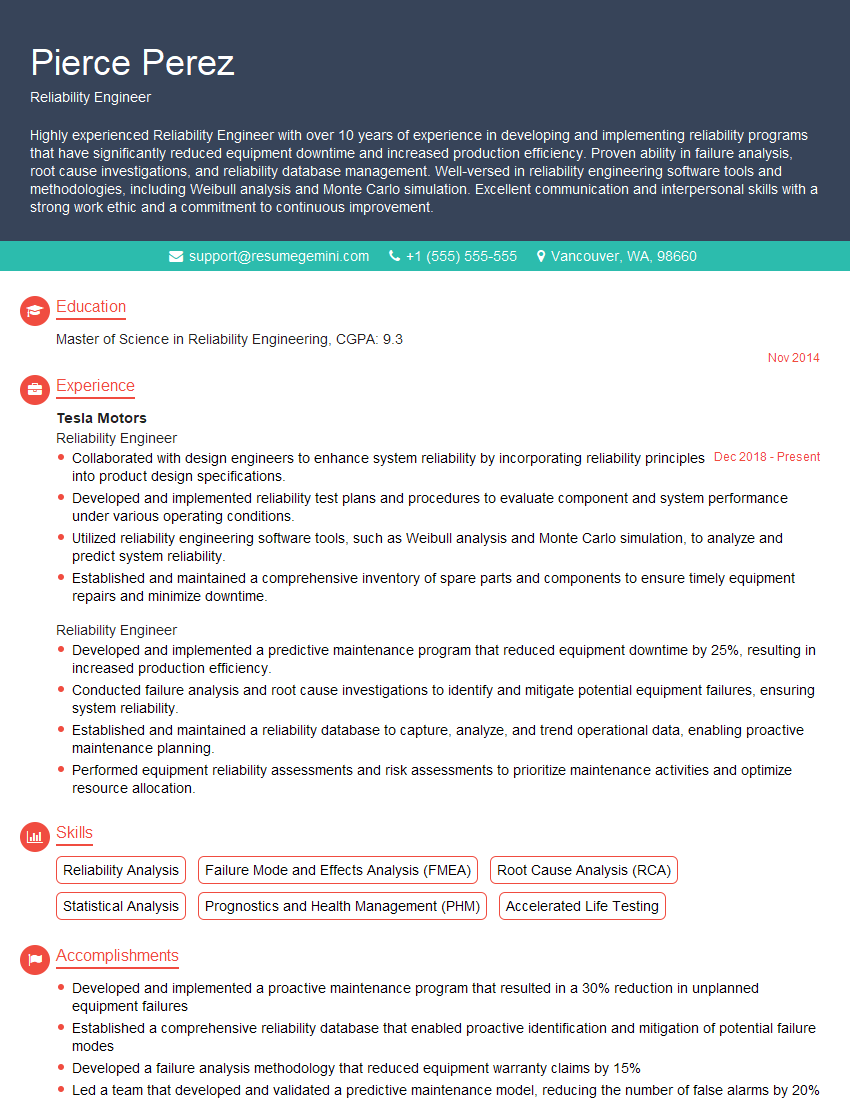
Reliability Engineer Resume Sample
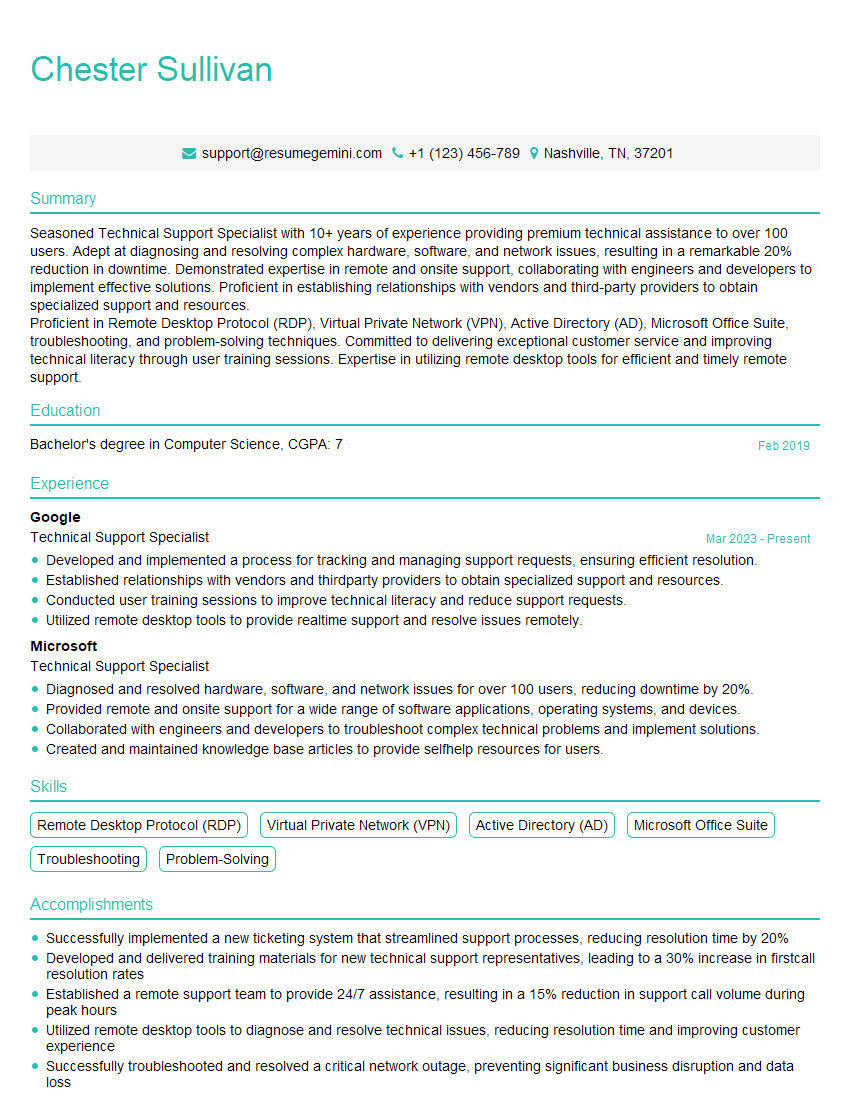
Technical Support Specialist Resume Sample
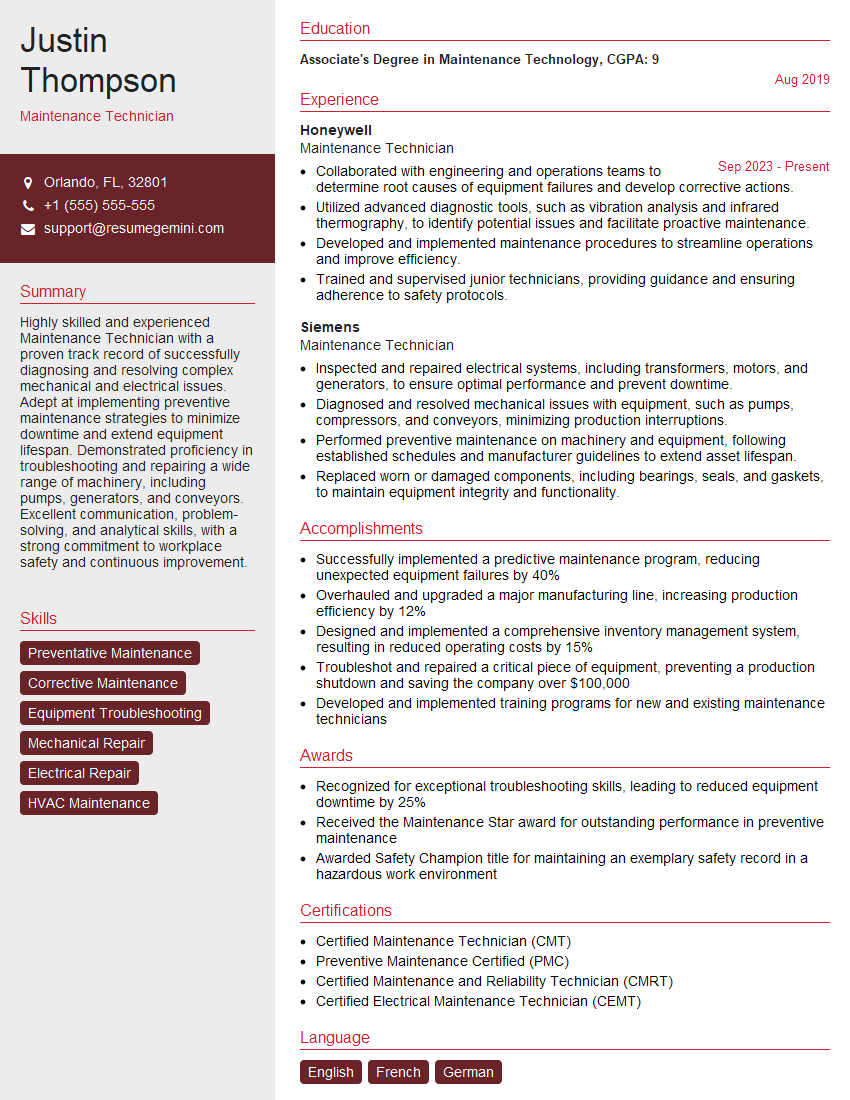
Maintenance Technician Resume Sample
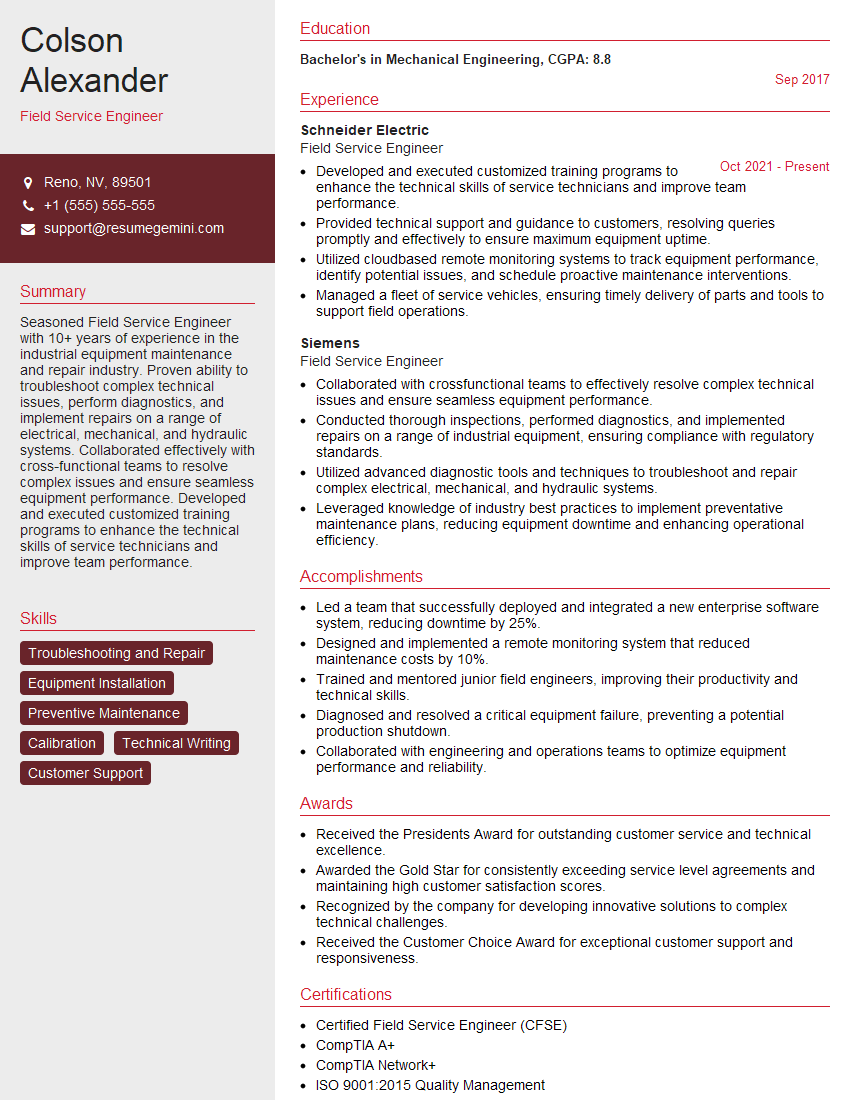
Field Service Engineer Resume Sample
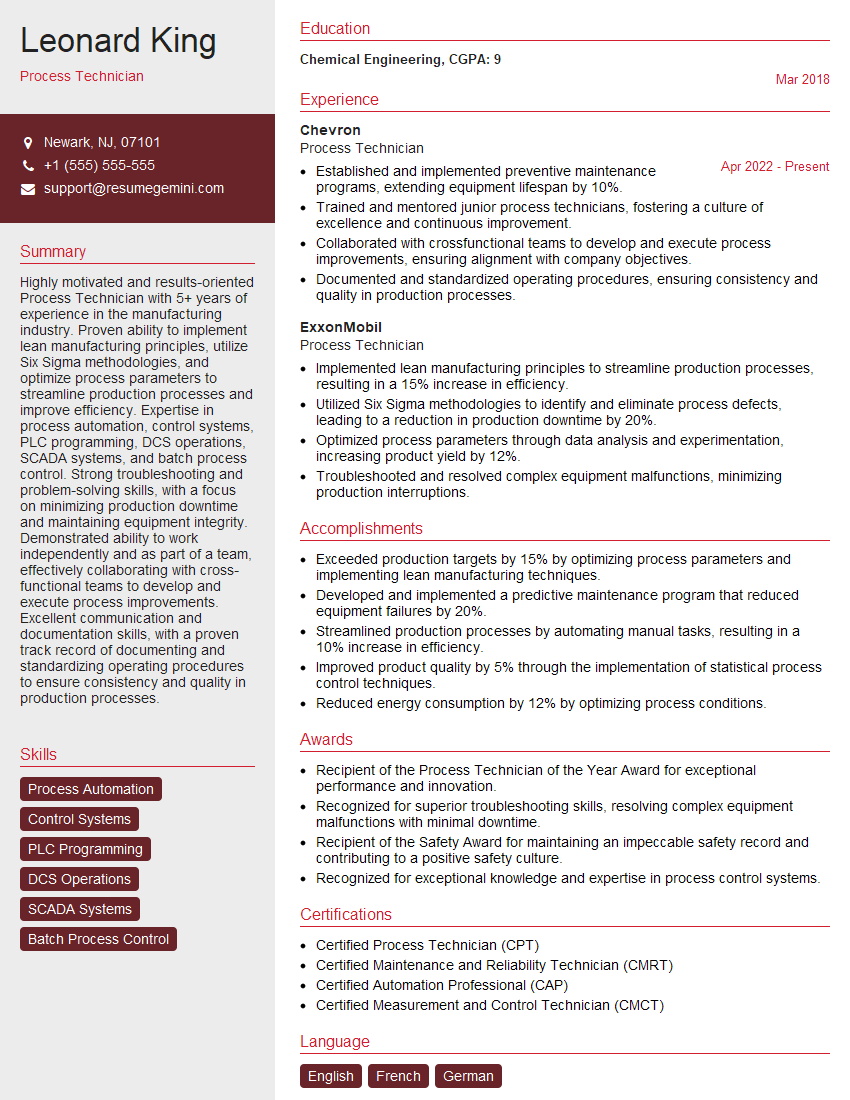
Process Technician Resume Sample
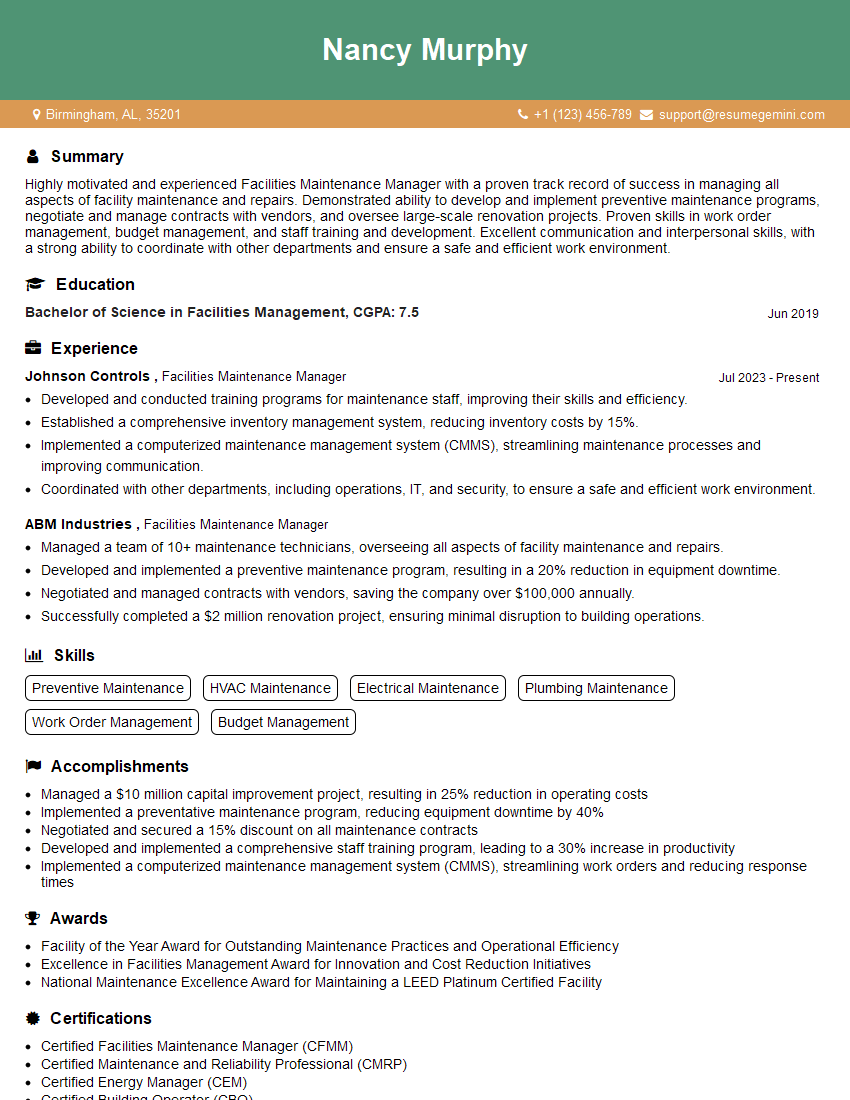
Facilities Maintenance Manager Resume Sample
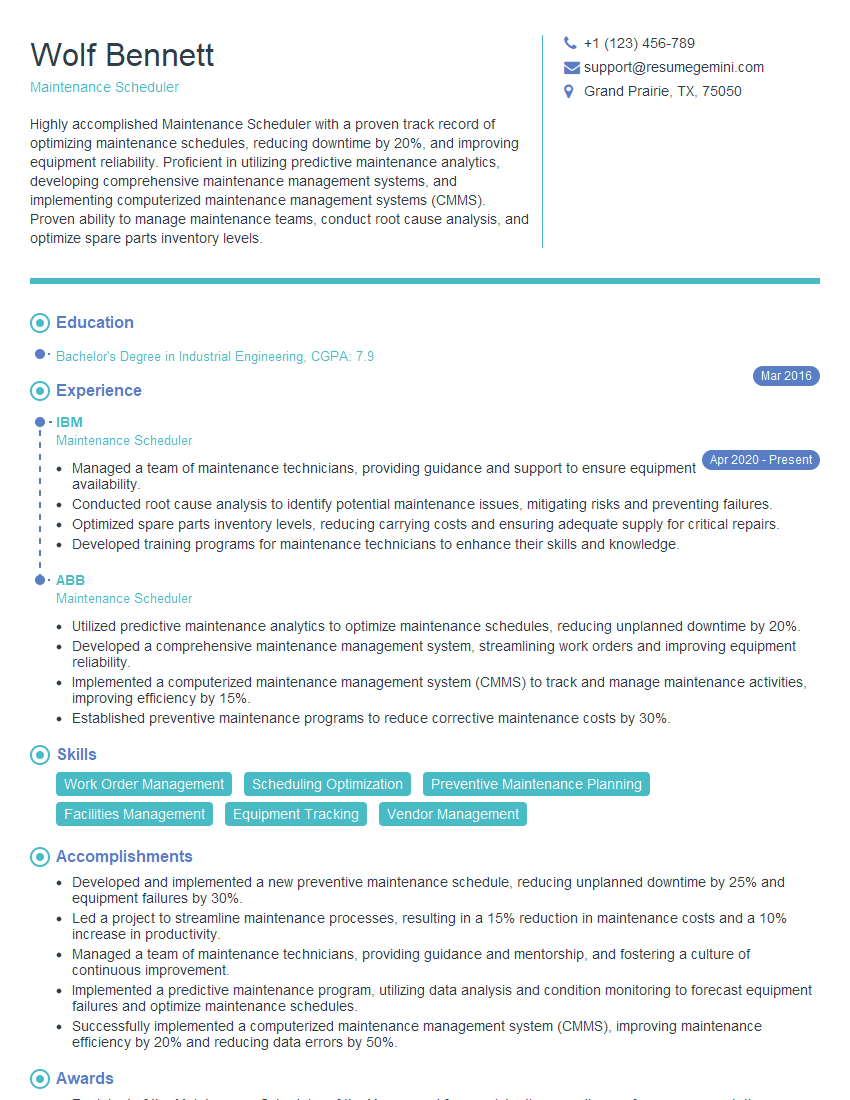
Maintenance Scheduler Resume Sample
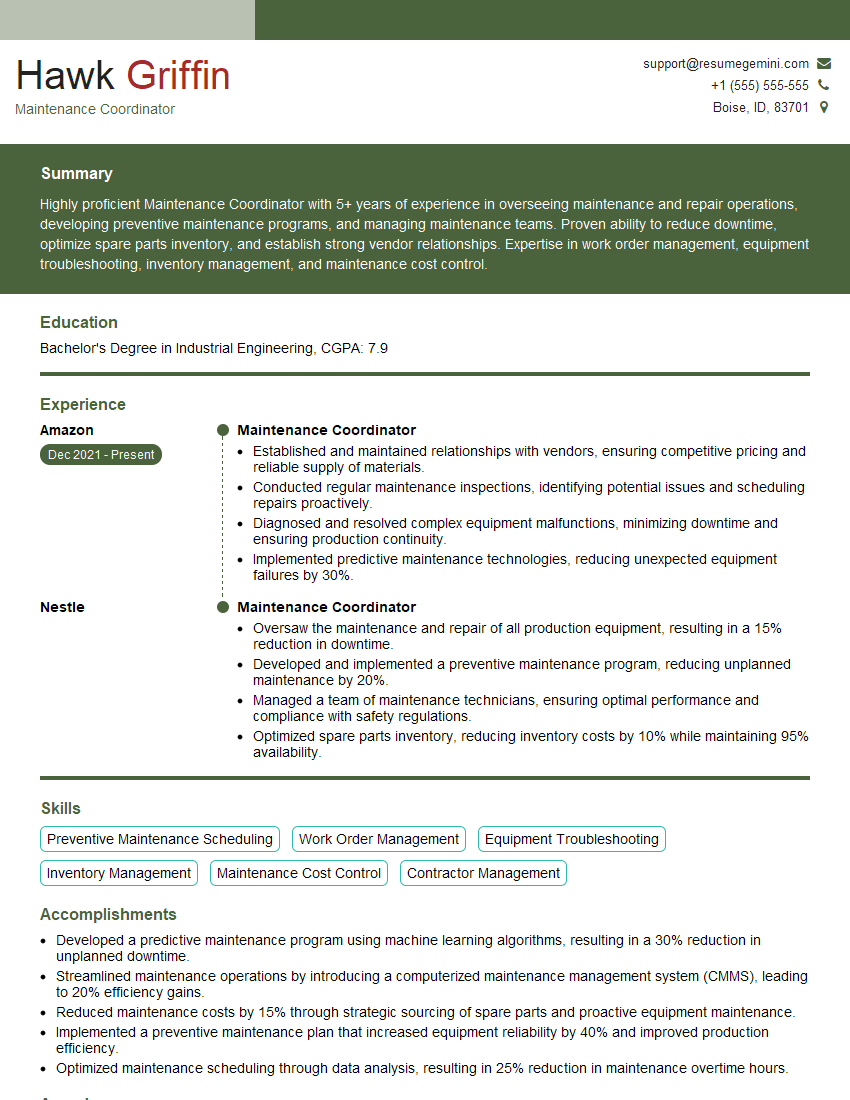
Maintenance Coordinator Resume Sample
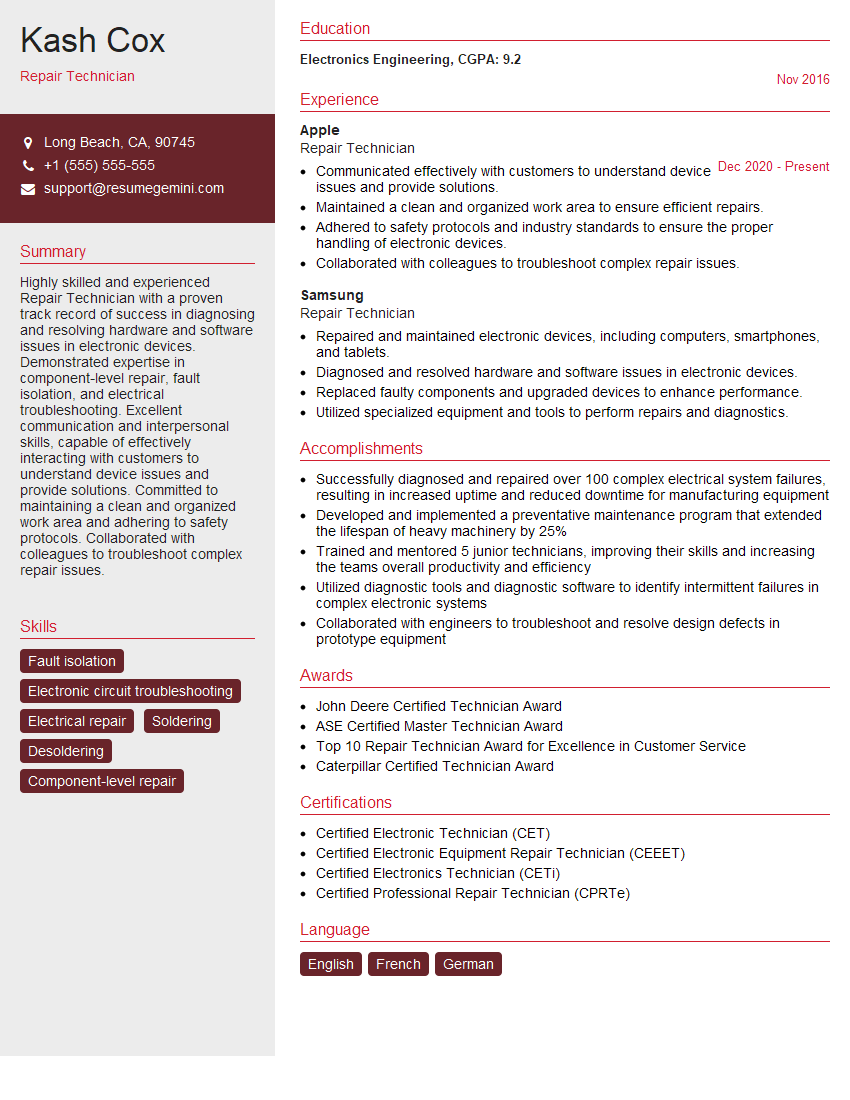
Repair Technician Resume Sample

Electrical Maintenance Technician Resume Sample
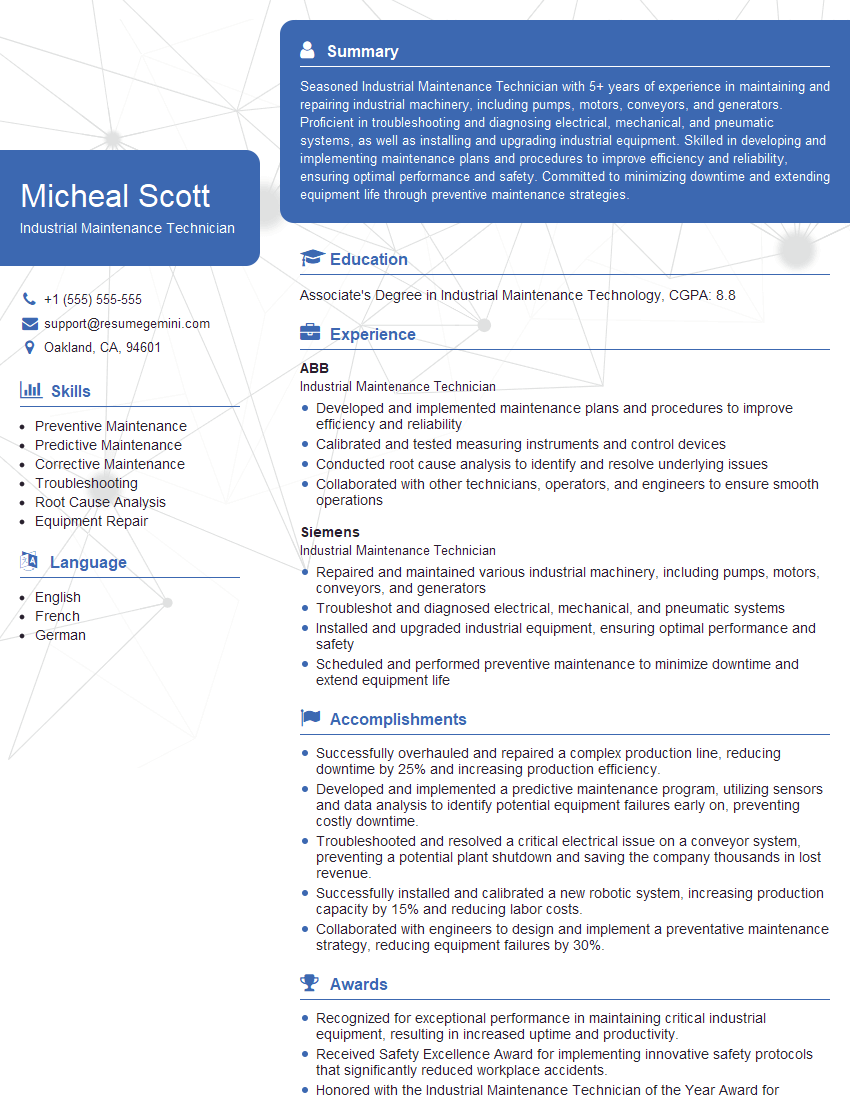
Industrial Maintenance Technician Resume Sample
- Maintenance Manager
- Maintenance Planner
- Maintenance Supervisor
- Reliability Engineer
- Technical Support Specialist
- Maintenance Technician
- Field Service Engineer
- Process Technician
- Facilities Maintenance Manager
- Maintenance Scheduler
- Maintenance Coordinator
- Repair Technician
- Electrical Maintenance Technician
- Industrial Maintenance Technician
Explore more articles
Users Rating of Our Blogs
Share Your Experience
We value your feedback! Please rate our content and share your thoughts (optional).
What Readers Say About Our Blog
Very informative content, great job.
good