Interviews are opportunities to demonstrate your expertise, and this guide is here to help you shine. Explore the essential Proficient in using digital platemakers interview questions that employers frequently ask, paired with strategies for crafting responses that set you apart from the competition.
Questions Asked in Proficient in using digital platemakers Interview
Q 1. What types of digital platemakers have you worked with?
Throughout my career, I’ve gained extensive experience with a variety of digital platemakers. This includes both Computer-to-Plate (CTP) systems using thermal, violet, and UV technologies, as well as different manufacturers’ models. For example, I’ve worked extensively with Heidelberg Suprasetter, Kodak Magnus, and Agfa Avalon systems. Each machine has its own nuances in terms of operation, but the underlying principles remain the same. I’m comfortable operating and maintaining these systems, understanding their strengths and limitations in various printing applications.
- Thermal CTP: These utilize heat to expose the plate, typically using infrared lasers. I’ve found them ideal for applications where high resolution and fine detail are crucial.
- Violet CTP: These employ violet lasers for exposure, often offering faster processing speeds and better plate durability compared to thermal plates. I’ve used these extensively for high-volume commercial printing.
- UV CTP: Using UV lasers, these offer even higher speeds and are often used in larger-format printing. My experience with UV systems has been primarily in packaging and wide-format applications.
Q 2. Explain the process of creating a digital printing plate.
Creating a digital printing plate involves several key steps. Think of it like creating a photographic negative, but instead of film, we’re creating a printing plate. First, the design file (often a PDF) is processed using RIP (Raster Image Processor) software to prepare it for platemaking. The RIP software converts the design into a format the platemaker understands, specifying the areas to be imaged (ink) and the areas to be non-imaged (non-ink). The processed data is then sent to the digital platemaker. The platemaker uses a laser (thermal, violet, or UV) to expose a photosensitive plate, creating the image. After exposure, the plate undergoes a processing stage, typically involving washing and/or baking to develop the image and prepare it for printing. Finally, the plate is inspected for any defects before mounting onto the printing press.
Imagine it like baking a cake: the recipe (design file) is converted into instructions (RIP processing), then the oven (platemaker) bakes it (exposes the plate), and finally, we check if it’s cooked correctly (inspect the plate).
Q 3. How do you ensure the quality of the plates you create?
Quality control is paramount in platemaking. We start with regular calibration of the platemaker to ensure consistent laser power and exposure. I meticulously inspect each plate after processing, looking for pinholes, scratches, or incomplete imaging. I also use densitometers to measure the density of the exposed and non-exposed areas. This verifies that the image is correctly rendered, preventing issues like poor ink transfer or ghosting in the final print. Moreover, I maintain detailed logs of platemaking parameters (like laser power, exposure time, and plate type) for traceability and to identify and rectify any recurring issues. Regular cleaning of the platemaker and using high-quality plate materials are also essential.
Think of it like a chef checking the seasoning and texture of their food. Regular checks at multiple stages ensure consistent, high-quality results.
Q 4. Describe your experience with different plate types (e.g., thermal, violet, UV).
My experience spans across various plate types, each with its own advantages and disadvantages. Thermal plates are known for their fine detail and are suitable for high-resolution work. However, they’re often more sensitive to environmental conditions and can be less durable. Violet plates offer faster processing and greater durability, making them ideal for high-volume jobs, while UV plates excel in high-speed production environments and large-format applications, often utilized in packaging and signage. The choice of plate type depends heavily on the printing application, budget, and required turnaround time. I’ve found myself adapting my techniques based on the specific requirements of the job and the plate type being used. For instance, the processing parameters (wash time, bake time, etc.) will vary depending on the plate chemistry and the type of laser used for exposure.
Q 5. What software are you proficient in for platemaking?
I’m proficient in various RIP software packages commonly used in platemaking, including Creo, Kodak Prinergy, and Agfa Apogee. These software programs allow for precise color management, screening adjustments, and other crucial steps for optimizing the output for the chosen plate and printing press. My expertise extends to utilizing these tools for tasks like pre-flighting files to catch errors before they reach the platemaker, creating custom screening profiles to suit specific substrates and inks, and optimizing for different plate technologies. I am also comfortable working with various file formats including PDF, TIFF, and PostScript.
Q 6. How do you troubleshoot common platemaking issues?
Troubleshooting is a crucial aspect of platemaking. Common issues include inconsistent image density, pinholes, scratches, and plate mottling. My troubleshooting approach is systematic. I first identify the problem (e.g., uneven density across the plate), and then investigate potential causes: Is the laser power correct? Are the processing chemicals fresh and at the correct concentration? Are there any physical obstructions in the platemaker? I use a combination of visual inspection, densitometer readings, and checking the platemaker logs to pinpoint the root cause. If I’m unable to resolve the issue quickly, I’ll consult the manufacturer’s documentation or seek support from their technical team.
For example, if I encounter uneven density, I might check the laser power calibration, the cleanliness of the exposure unit, or the age and type of plate being used. This methodical approach helps resolve issues efficiently and minimizes downtime.
Q 7. Explain the importance of proper plate handling and storage.
Proper handling and storage of printing plates are crucial for maintaining their quality and extending their lifespan. Plates are highly sensitive to scratches, dust, and moisture. I always handle them carefully, avoiding direct contact with the imaging surface. Storage should be in a cool, dry, dark place, ideally in protective sleeves or holders to prevent damage. Plates should also be stored in a way that prevents them from being bent or warped. Failure to handle and store plates properly can lead to print defects, reduced plate life, and costly reprints. The practice of rotating plates and using FIFO (First-In, First-Out) methods helps avoid unnecessary waste.
Think of it like handling fine china: care and attention during every step helps maintain the plates and ensures the best results.
Q 8. How do you ensure color accuracy in platemaking?
Color accuracy in platemaking is paramount for achieving the desired print results. It hinges on a multi-step process, starting with the digital file itself. We need to ensure the source file is in a color space suitable for print, typically CMYK, and properly profiled to match the press’s color profile. This prevents unexpected shifts in color during the platemaking process.
Next, the RIP (Raster Image Processor) software plays a critical role. Proper calibration of the RIP, including its color profiles and settings for the specific plate type and imager, is essential. Regular color tests and adjustments using color charts and spectrophotometers are crucial. We also verify the output using soft proofing tools within the RIP, comparing the digital representation to the expected print outcome. Finally, we perform on-press checks to validate the plate’s color reproduction against the proof and make necessary adjustments if color deviations occur.
For instance, I once encountered a situation where a client’s Pantone colors were not accurately rendering on press. After investigating, we found that the color profiles in the RIP were outdated. Updating the profiles and re-processing the files solved the issue, demonstrating the importance of continuous color management.
Q 9. What is your experience with RIP software?
I have extensive experience with various RIP software packages, including Harlequin, Agfa Apogee, and Kodak Prinergy. My expertise extends beyond simply operating these systems; I understand their underlying principles and can troubleshoot complex issues. This involves managing color profiles, optimizing image processing parameters for different substrates and plate types, and ensuring efficient workflow integration with prepress systems.
For example, I’ve successfully implemented a workflow optimization using Prinergy, which reduced our platemaking time by 15% by fine-tuning the RIP settings and integrating it with our automated plate handling system. This not only saved time but also minimized waste and improved overall efficiency.
My skills include creating custom color profiles, troubleshooting banding and other image artifacts, and adapting the RIP settings to meet specific client requirements. I am also familiar with features like imposition and job nesting, which streamline the plate creation process.
Q 10. Describe your experience with plate exposure units.
My experience with plate exposure units encompasses various technologies, including thermal, violet laser, and UV exposure systems. I am proficient in operating, maintaining, and troubleshooting these units. This involves understanding the intricacies of laser power, exposure times, and the effect of these parameters on plate quality. A keen eye for detail is crucial to identifying problems early, like uneven exposure or inconsistencies in image density.
For example, I resolved an issue with inconsistent exposure on our violet laser imager by systematically checking the laser power, the focusing mechanism, and the plate transport system. This troubleshooting process, involving both software and hardware aspects, ultimately led to pinpointing a malfunctioning laser diode, which was swiftly replaced. I am also familiar with different plate types and their corresponding exposure settings, which ensures optimal results.
Q 11. How do you maintain and clean digital platemaking equipment?
Maintaining and cleaning digital platemaking equipment is critical for ensuring consistent output and prolonging its lifespan. This involves daily, weekly, and monthly maintenance routines. Daily maintenance includes cleaning the plate handling systems, checking laser alignment (if applicable), and inspecting for any signs of wear or damage. Weekly maintenance may involve more thorough cleaning of components and calibration checks.
Monthly maintenance requires more extensive checks, potentially including replacing worn parts or consumables, such as vacuum pumps or rollers. Cleaning solutions vary depending on the equipment and plate type, but generally involve specialized cleaners designed for the specific materials. Following the manufacturer’s instructions meticulously is crucial. Record-keeping is also important to track maintenance activities and anticipate potential issues.
I once identified a developing issue with a vacuum pump in our thermal plate processor, which was detected during a monthly maintenance check. Addressing it proactively prevented a production bottleneck.
Q 12. What safety precautions do you follow when working with platemaking chemicals?
Safety is paramount when working with platemaking chemicals, many of which are hazardous. This begins with proper personal protective equipment (PPE), which includes gloves, eye protection, and respiratory protection, depending on the chemical. A well-ventilated workspace is essential to minimize exposure to fumes and aerosols. Proper handling and disposal of chemicals according to relevant safety data sheets (SDS) and local regulations is non-negotiable.
Spill procedures must be in place and practiced regularly. This involves knowing how to safely clean up spills without causing further risks, utilizing appropriate spill kits and neutralization agents. Regular training on chemical safety and handling procedures is crucial. Understanding the health risks associated with each chemical and their proper handling is a priority. Furthermore, proper labeling and storage of chemicals are essential to prevent accidents.
Q 13. How do you manage plate inventory and ordering?
Plate inventory management is critical for smooth operations. We utilize a combination of software and physical inventory tracking systems to maintain an accurate record of plates in stock, plates in use, and plates awaiting disposal. This involves establishing minimum and maximum stock levels to prevent shortages or excessive inventory. Ordering is based on projected demand, considering factors such as print jobs scheduled, plate size requirements, and lead times from suppliers.
Efficient inventory management minimizes waste, reduces storage costs, and ensures that the right plates are available when needed. We leverage software to integrate inventory tracking with the production schedule, enabling automated ordering when stock levels fall below predefined thresholds. Regular inventory audits ensure accuracy and identify potential discrepancies.
Q 14. What is your experience with different plate sizes and formats?
My experience includes working with a wide range of plate sizes and formats, from standard sheet sizes like 40×60 cm to larger format plates and specialized sizes for specific press configurations. I’m comfortable with various plate thicknesses and types, including thermal, UV, and violet laser plates. Understanding the implications of plate size and format on press efficiency and image quality is key.
For instance, I’ve worked on projects requiring custom-sized plates for large-format printing, which necessitates careful planning and precise plate preparation to avoid waste and ensure accurate image registration. Understanding the relationship between plate size, press capabilities, and the final print product is essential to maintain efficiency and quality.
Q 15. Explain the concept of dot gain and how it relates to platemaking.
Dot gain, in the context of platemaking, refers to the increase in the size of a printed dot compared to its size on the original digital file. Think of it like this: you design a tiny, perfect circle on your computer screen. When that design is transferred to the printing plate and then printed, the resulting dot on the paper is often larger. This enlargement is dot gain.
This happens because of the various physical processes involved—from the exposure of the plate to the ink transfer onto the substrate. Several factors contribute, including the type of printing plate, the screen ruling (the fineness of the dots), the ink used, and the paper’s absorbency. A high dot gain can lead to muddy colors and a loss of detail, while low dot gain can result in a weak, pale print.
In platemaking, we aim for controlled and predictable dot gain. This requires careful calibration of the digital platemaker, using appropriate settings for the specific printing press, inks, and substrates. We might use specialized software to compensate for expected dot gain, ensuring the final print matches the digital proof.
Career Expert Tips:
- Ace those interviews! Prepare effectively by reviewing the Top 50 Most Common Interview Questions on ResumeGemini.
- Navigate your job search with confidence! Explore a wide range of Career Tips on ResumeGemini. Learn about common challenges and recommendations to overcome them.
- Craft the perfect resume! Master the Art of Resume Writing with ResumeGemini’s guide. Showcase your unique qualifications and achievements effectively.
- Don’t miss out on holiday savings! Build your dream resume with ResumeGemini’s ATS optimized templates.
Q 16. How do you handle discrepancies between the digital file and the final plate?
Discrepancies between the digital file and the final plate are unfortunately common and require a systematic approach to resolve. My first step is always to carefully compare the digital proof with a hard proof of the printed plate (often using a contact proof). This visual comparison often reveals the nature of the problem.
Potential causes range from issues with the digital file itself (incorrect color profiles, resolution problems) to problems during the platemaking process (incorrect exposure times, plate defects). I’ll systematically investigate these. If the issue is in the digital file, corrections need to be made there before remaking the plate. If it’s a platemaking issue, I’ll check the settings on the digital platemaker (e.g., exposure energy, laser power), and even the condition of the plate itself. Sometimes, slight adjustments to the RIP settings can also bring the plate closer to the digital expectations. If the problem is persistent, I’ll document the issue, escalate it to a senior technician or the vendor for support, and ensure that the problem is thoroughly investigated to prevent it from happening again. Meticulous record-keeping is crucial in these situations.
Q 17. Describe your experience with proofing and color matching.
Proofing and color matching are critical aspects of my role. I have extensive experience with various proofing methods, including soft proofs (on screen), contact proofs (physical representation of the plate’s image), and contract proofs (more refined and expensive proofs that simulate the final print more closely). I’m proficient in using color management software such as GMG, X-Rite i1, and other relevant tools to create accurate color profiles and maintain color consistency.
Color matching often requires iterative adjustments. For instance, if a client’s Pantone color doesn’t quite match on the proof, I’ll carefully tweak the settings on the platemaker or adjust the RIP settings, generating a new proof until the desired color accuracy is achieved. I use colorimetric measurements, comparing the measured values to the target values (e.g., those provided by the client), to ensure the match is within acceptable tolerances. Collaboration with prepress and print teams is essential for successful color matching.
Q 18. How do you optimize platemaking for different printing substrates?
Optimizing platemaking for different printing substrates is paramount for achieving high-quality prints. Each substrate – from coated paper to uncoated paper, cardboard to synthetics – possesses unique properties that affect ink absorption, drying time, and the final appearance. For example, coated paper generally requires less ink and a different exposure setting than uncoated paper.
My approach involves: 1) Selecting the appropriate plate type: CTP (Computer-to-Plate) plates come in various types, each optimized for specific substrates and printing processes. 2) Adjusting exposure settings: The amount of energy used to expose the plate needs to be adjusted to account for the substrate’s ink absorption properties. Too little energy, and you get faint images; too much, and the images can be too dark and lead to issues during printing. 3) Employing substrate-specific profiles: Using the correct color profile within the RIP software ensures color accuracy across different substrates. 4) Testing and fine-tuning: I’ll always produce test plates on the target substrate, closely checking the results to fine-tune the settings until I get the desired outcome.
Q 19. What is your experience with different plate thicknesses?
Plate thickness significantly impacts print quality and press performance. Thicker plates are generally more durable and resistant to damage during printing, especially on high-speed presses. However, they can also lead to more pronounced problems with plate deformation or slippage if press settings are incorrect. Thinner plates are more delicate but provide better detail and sharpness in high-resolution printing. I have experience working with a range of plate thicknesses, typically from 0.030 inches to 0.060 inches.
The selection of plate thickness depends on several factors, including the type of printing press, the printing length, the substrate, and the desired print quality. I’ll take each of these factors into consideration before selecting a plate thickness, always consulting relevant specifications from the press manufacturer and plate supplier. A balance needs to be struck between durability and print quality.
Q 20. How do you handle emergency situations during platemaking?
Emergency situations during platemaking are rare, but when they occur they demand immediate, calm action. My approach hinges on a methodical, step-by-step problem-solving strategy. A common example is a plate malfunctioning during exposure. I’ll first assess the situation: Is the plate damaged? Is it a software or hardware issue? I’ll quickly check obvious culprits like power supply, computer, and plate-processing unit. I’ll then consult any relevant documentation or contact support immediately if necessary.
If a plate is irreparably damaged and we’re facing a tight deadline, I’ll explore all viable alternatives, such as using a backup plate (if available) or expediting a replacement plate from the supplier. If time allows, I’ll perform the necessary diagnostics to determine the root cause of the malfunction to prevent future occurrences. Effective communication with colleagues and supervisors is key to keeping everyone informed and ensuring the problem is addressed efficiently.
Q 21. What metrics do you use to evaluate the quality of your work?
Evaluating the quality of my work involves several key metrics. These are not merely about the appearance of the final plate, but also the efficiency and consistency of the process:
- Dot gain consistency: I use densitometers to measure dot gain across the plate and ensure it falls within the acceptable range for the specific job, press, and substrate.
- Color accuracy: I use spectrophotometers to measure the color values and compare them against target values (Pantone, etc.), evaluating the Delta E values to ensure the color is accurately reproduced.
- Plate defects: I meticulously inspect each plate for scratches, dust particles, or other blemishes that could affect the print quality.
- Production efficiency: I monitor plate production times and aim for optimal workflow without compromising quality.
- Waste reduction: I carefully track and minimize plate waste, contributing to environmental sustainability and cost-effectiveness.
- Client satisfaction: Ultimately, the client’s feedback on the print quality and color accuracy is the most important metric.
By consistently monitoring and improving these metrics, I ensure high-quality platemaking and contribute to the overall efficiency and success of the print production process.
Q 22. Describe your experience with workflow automation in platemaking.
Workflow automation in platemaking is crucial for efficiency and consistency. It involves integrating different software and hardware components to streamline the entire process, from job submission to plate output. This minimizes manual intervention, reduces errors, and speeds up production significantly.
In my experience, I’ve worked with systems that automate tasks like prepress file preparation (trapping, imposition, color management), exposure parameters based on plate type and job requirements, and even automated plate loading and unloading on the platemaker. For example, a fully automated system might receive a job ticket digitally, automatically process the files according to pre-defined profiles, expose the plates, and then automatically transfer them to the press. This minimizes human error and ensures consistency across all jobs.
One specific example from my experience involved implementing a workflow where the imposition software automatically created different plate layouts (e.g., for sheetfed or web presses) based on the job specifications. This eliminated the manual step of creating these layouts, saving considerable time and reducing the risk of mistakes.
Q 23. How do you stay up-to-date with the latest advancements in platemaking technology?
Staying current in platemaking technology requires a multi-faceted approach. I regularly attend industry trade shows like drupa and local print industry events to see new equipment and software demonstrations firsthand. I also actively participate in online forums and subscribe to industry publications and newsletters, such as those from leading plate manufacturers and printing technology websites.
Furthermore, I actively seek out webinars and online training courses offered by equipment manufacturers and industry associations. This allows me to learn about the latest advancements in plate technology (e.g., new plate materials, higher resolutions, improved imaging techniques) and workflow software. I also maintain strong relationships with vendors and technical support teams, allowing for direct access to information and troubleshooting assistance.
Q 24. What are your strengths and weaknesses regarding digital platemaking?
My strengths lie in my deep understanding of various platemaking technologies, including thermal, violet, and UV platemaking systems. I excel at troubleshooting complex issues, quickly diagnosing problems, and implementing effective solutions. I am proficient in operating various digital platemakers from different manufacturers and am adept at optimizing platemaking parameters to achieve high-quality results consistently. I also possess strong problem-solving skills and the ability to work under pressure, particularly during peak production periods.
One area where I could improve is my knowledge of the very latest AI-driven workflow automation tools. While I have experience with traditional automation, exploring and implementing these newer technologies would enhance my skillset and allow for even greater efficiencies.
Q 25. How do you prioritize tasks during peak production periods?
During peak production periods, effective prioritization is essential. I utilize a combination of techniques to manage tasks efficiently. I start by analyzing the job queue, identifying jobs with the tightest deadlines or those with the highest printing volume. I then prioritize jobs based on these factors, ensuring that the most urgent jobs are processed first. This is often aided by a job management system that incorporates due dates and job priority levels.
I also break down larger jobs into smaller, more manageable tasks, which allows for better tracking and prevents feeling overwhelmed. Finally, I utilize the platemaker’s capabilities to its fullest, using features like automated plate loading and pre-programmed settings for consistent and rapid processing. Communicating clearly with the press operators regarding the job priorities and expected timelines also helps maintain a smooth workflow.
Q 26. Describe a time you had to solve a complex problem in platemaking.
One time, we experienced consistent streaking on plates produced by a specific thermal platemaker. This was affecting a large, time-sensitive job. After initial troubleshooting (checking the chemicals, the plate material, and the machine’s settings), we still couldn’t solve the issue.
My systematic approach involved carefully reviewing all the variables: plate handling, processing times, environmental factors (humidity, temperature), and the digital file itself. After examining the file more closely, we discovered a subtle issue in the RIP settings that was causing a problem with the exposure of the thermal plate. By adjusting the RIP’s tonal range settings, the streaking issue was completely resolved. This experience reinforced the importance of a thorough and methodical approach to troubleshooting and the need to consider all aspects of the workflow, not just the platemaker itself.
Q 27. What is your understanding of different screening techniques used in platemaking?
Screening in platemaking refers to the process of converting continuous-tone images into a pattern of dots suitable for printing. Different screening techniques influence the print’s quality and appearance.
Common techniques include Amplitude Modulation (AM), or frequency modulated (FM) screening. AM screening uses varying dot size to represent tonal changes, while FM screening varies the dot frequency. Hybrid screening methods often combine aspects of both. The choice depends on the desired visual effect and the print technology. AM screening, for instance, is widely known, and may exhibit moiré patterns if not handled correctly, while FM screening is generally preferred for smoother tonal gradations and a reduction in moiré, but may require higher resolution plates.
My experience includes working with various screening angles and frequencies optimized for different printing processes and substrate types. Understanding the advantages and limitations of each technique helps in selecting the most suitable method for a particular printing job and avoiding potential problems like moiré patterns.
Q 28. How do you contribute to a team environment in a printing press setting?
In a team environment, effective communication and collaboration are key. I actively contribute by sharing my knowledge and expertise with colleagues. For example, I often assist less experienced team members in troubleshooting platemaking issues, providing training on proper plate handling techniques and best practices. I actively participate in team discussions regarding workflow optimization, offering suggestions and solutions to improve efficiency.
Furthermore, I am proactive in identifying and reporting potential issues before they escalate. This preventative approach helps minimize downtime and ensures a smooth production process. Respectful and open communication is vital, and I always strive to work collaboratively to achieve team goals. For instance, I’ll proactively offer support to the pressroom if I notice a bottleneck or anticipate a delay in plate production, ensuring a consistent workflow across the entire printing process.
Key Topics to Learn for Proficient in using Digital Platemakers Interview
- Understanding Digital Platemaking Processes: Explore different types of digital platemakers (CTP, thermal, violet), their functionalities, and the overall workflow from design to plate output.
- Plate Preparation and Imaging: Learn about pre-press procedures, including file preparation (resolution, color profiles, trapping), RIP software operation, and image optimization for different plate types.
- Plate Mounting and Quality Control: Understand the techniques for accurately mounting plates onto printing cylinders, and the critical steps involved in inspecting plates for defects (scratches, pinholes, registration issues) and ensuring consistent print quality.
- Troubleshooting Common Issues: Develop your ability to diagnose and solve problems related to plate imaging, exposure, processing, and mounting. Familiarize yourself with error messages and typical causes of plate defects.
- Software Proficiency: Demonstrate a deep understanding of the software used in digital platemaking, including RIP software, workflow automation tools, and plate management systems. Be prepared to discuss your experience with specific software packages.
- Safety Procedures and Maintenance: Be familiar with safety regulations and best practices for handling chemicals, operating equipment, and maintaining the cleanliness of the platemaking environment.
- Understanding Different Printing Processes: Connect your digital platemaking knowledge to various printing methods (offset, flexo, etc.) to demonstrate a comprehensive understanding of the print production process.
Next Steps
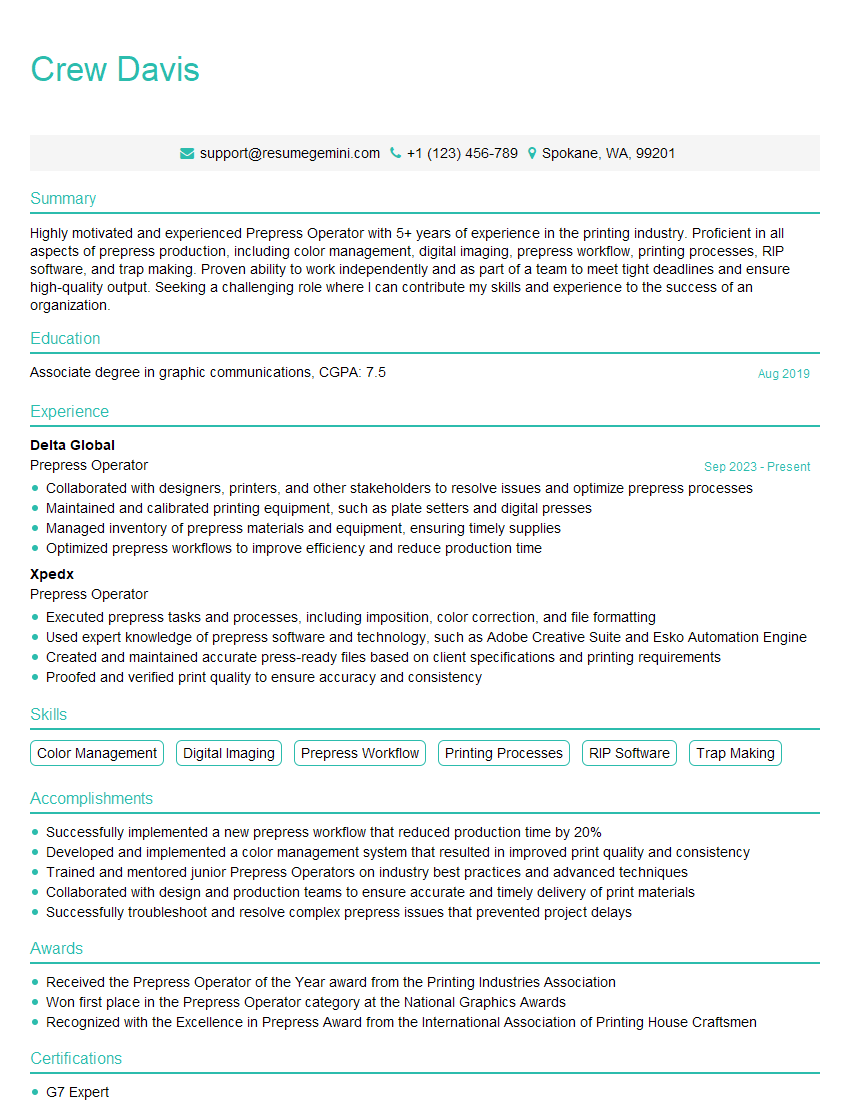
Mastering digital platemaking skills opens doors to exciting career opportunities in the printing and publishing industries, offering potential for growth and specialization. To maximize your job prospects, creating a strong, ATS-friendly resume is crucial. ResumeGemini is a trusted resource that can help you build a professional and impactful resume tailored to highlight your expertise in digital platemaking. Examples of resumes specifically designed for candidates proficient in using digital platemakers are available to guide you through the process.



Explore more articles
Users Rating of Our Blogs
Share Your Experience
We value your feedback! Please rate our content and share your thoughts (optional).
What Readers Say About Our Blog
Very informative content, great job.
good