Cracking a skill-specific interview, like one for Proficient in Using Measuring Tools and Gauges, requires understanding the nuances of the role. In this blog, we present the questions you’re most likely to encounter, along with insights into how to answer them effectively. Let’s ensure you’re ready to make a strong impression.
Questions Asked in Proficient in Using Measuring Tools and Gauges Interview
Q 1. Explain the difference between accuracy and precision in measurement.
Accuracy and precision are two crucial aspects of measurement, often confused but distinctly different. Accuracy refers to how close a measurement is to the true or accepted value. Think of it like aiming for the bullseye on a dartboard – a high accuracy measurement hits close to the center. Precision, on the other hand, refers to how close repeated measurements are to each other. It’s about consistency. Imagine several darts clustered tightly together; this represents high precision, even if the cluster is far from the bullseye (low accuracy). A measurement can be precise but not accurate, or accurate but not precise, or both.
Example: Let’s say the true length of a metal rod is 10cm. Measurement A yields 10.1cm, 10.2cm, and 10.0cm (high precision, good accuracy). Measurement B yields 9.5cm, 10.5cm, and 11cm (low precision, poor accuracy).
Q 2. Describe your experience with different types of calipers (vernier, digital).
I have extensive experience with both vernier and digital calipers. Vernier calipers, while requiring more manual calculation, offer a good understanding of the mechanics of measurement and are robust in challenging environments. I’ve used them extensively in situations where power is unavailable or where a quick visual check is required. They provide accurate readings to 0.01mm or 0.001 inches, depending on the scale. I’m proficient in reading both the main scale and the vernier scale to obtain accurate measurements.
Digital calipers are far more convenient, offering instant digital readouts, and providing a wider range of functions such as depth measurements. My experience with digital calipers extends to various applications, from measuring complex shapes to ensuring tolerances are met in precision engineering. I’m familiar with their zero-setting functions, different measurement units (metric and imperial), and data logging capabilities.
In my previous role, I had to regularly use both types to verify the dimensions of machined parts, ensuring they were within tolerance. I could rapidly switch between the two depending on the task and the level of precision needed.
Q 3. How do you use a micrometer to measure a small diameter?
Measuring small diameters with a micrometer requires careful technique. First, ensure the micrometer anvils are clean and free from debris. Then, gently place the object to be measured between the anvils. Use a slow, even rotation to avoid damaging the object or the micrometer. Once you feel a firm contact, but without excessive pressure, lock the thimble. Carefully read the measurement using the main scale and the thimble scale. The main scale shows millimeter or inch readings and the thimble scale provides finer increments. Add the two readings together to obtain the diameter. Finally, always release the thimble after the measurement.
Example: If the main scale shows 10 mm and the thimble scale shows 0.25 mm, the total diameter is 10.25 mm.
It’s crucial to use the appropriate micrometer for the size of the object. Using a micrometer outside its measurement range can lead to inaccurate readings or damage to the instrument.
Q 4. What are the common sources of error when using measuring tools?
Several sources of error can affect the accuracy of measurements when using measuring tools:
- Parallax Error: This occurs when the reading is taken from an angle, not directly perpendicular to the scale. It leads to inaccurate readings.
- Tool Wear: Worn or damaged measuring tools can produce inaccurate results. Regular calibration and maintenance are crucial.
- Incorrect Zero Setting: Failing to properly zero the instrument before use introduces a systematic error to all measurements.
- Temperature Variation: Changes in temperature can affect the dimensions of the object being measured and the measuring tool itself. This is particularly important with precision work.
- Operator Error: This includes improper handling, misreading scales, and applying excessive force to the measuring instrument.
- Poor Lighting/Viewing Conditions: Difficulty in accurately reading the scale due to inadequate lighting.
Q 5. How do you ensure the accuracy of your measurements?
Ensuring accurate measurements is paramount. I employ several strategies:
- Calibration: Regular calibration against traceable standards is essential to verify the accuracy of my measuring tools. I document calibration dates and results.
- Proper Technique: I strictly adhere to the correct procedures for each measuring instrument, considering parallax errors and ensuring proper contact with the object being measured.
- Multiple Measurements: I take multiple readings of the same dimension and then calculate the average to minimize the impact of random errors. The spread of readings can also indicate the precision of the measurements.
- Environmental Control: When working with high-precision measurements, I control environmental conditions such as temperature and humidity to minimize their effect on the object and instruments.
- Tool Selection: I select the appropriate measuring tool for the required accuracy and the size of the object.
- Data Recording: I meticulously record all measurements, along with dates, times, tool identification numbers, and any relevant environmental conditions. This is vital for traceability and quality control.
Q 6. Explain the concept of tolerance and its importance in manufacturing.
Tolerance is the permissible variation in a dimension or other characteristic of a manufactured part. It defines an acceptable range around a nominal value. In manufacturing, tolerances are essential for ensuring that parts are interchangeable and function correctly within an assembly. Parts that fall outside the specified tolerance range are considered defective. Tolerances are specified using symbols and notations on engineering drawings, indicating the maximum and minimum acceptable limits.
Example: A drawing might specify a shaft diameter as 10mm ± 0.1mm. This means the acceptable diameter range is between 9.9mm and 10.1mm. Any shaft outside this range is not acceptable.
The importance of tolerance lies in the functionality and interchangeability of parts. Tight tolerances improve the precision and performance of a product, but also increase manufacturing costs and time.
Q 7. How do you read and interpret engineering drawings that specify dimensions and tolerances?
Reading and interpreting engineering drawings requires a good understanding of drafting conventions and symbols. I’m proficient in interpreting dimensions (length, width, height, diameter, radius, etc.), tolerances (using symbols like ±, unilateral tolerances, geometric dimensioning and tolerancing (GD&T)), and surface finishes. I understand how to distinguish between different types of lines (e.g., dimension lines, leader lines, hidden lines) and the significance of notes and annotations.
Example: A drawing might show a rectangular block with dimensions 10mm x 20mm x 5mm ±0.2mm. This means all three dimensions have a tolerance of ±0.2mm. I’d know that all acceptable blocks would fall within those specific ranges. I’m also experienced with using GD&T symbols which help to define specific manufacturing requirements that go beyond simple dimensional tolerances.
My ability to accurately read and interpret these drawings enables me to ensure that manufactured parts meet the design specifications and maintain high-quality standards.
Q 8. Describe your experience with different types of gauges (plug, ring, snap).
My experience with plug, ring, and snap gauges spans several years and numerous applications. These gauges are essential for quick, accurate, go/no-go checks of manufactured parts. Let’s break down each type:
- Plug Gauges: These are cylindrical gauges used to check internal diameters (holes). I’ve used them extensively in quality control, verifying the size of drilled holes in automotive components. A plug gauge typically comes in two parts: a ‘go’ gauge (the slightly smaller size representing the minimum acceptable diameter) and a ‘no-go’ gauge (slightly larger, representing the maximum acceptable diameter). If the part fits the ‘go’ gauge but not the ‘no-go’ gauge, it’s within tolerance.
- Ring Gauges: These are used to check external diameters of shafts or cylindrical parts. Similar to plug gauges, they usually have ‘go’ and ‘no-go’ rings. I remember using these when inspecting the diameter of precisely machined shafts for a medical device. The tight tolerances demanded precision and meticulous handling.
- Snap Gauges: These are designed for external diameter measurements, offering a quick and easy way to check if a part falls within a specified range. They’re less precise than micrometers but ideal for high-volume inspection where speed is crucial. For instance, I’ve used snap gauges during the production of small electronic components where rapid quality checks were essential.
My proficiency includes selecting the appropriate gauge based on the part’s size, material, and required tolerance. I’m also adept at recognizing wear and tear on gauges and ensuring they are regularly calibrated for accurate readings.
Q 9. How would you calibrate a micrometer?
Calibrating a micrometer requires precision and attention to detail. The process typically involves using a calibration standard, usually a gauge block of known, highly accurate dimensions. Here’s a step-by-step process:
- Clean the micrometer: Thoroughly clean the anvil and spindle surfaces with a lint-free cloth to remove any dirt or debris that could affect accuracy.
- Set the zero point: Gently close the micrometer jaws. If there’s a zero adjustment mechanism, use it to precisely align the zero mark on the thimble scale with the line on the barrel scale.
- Use a gauge block: Select a gauge block with a dimension close to the micrometer’s measurement range. Gently place the gauge block between the micrometer jaws, ensuring proper contact.
- Adjust for discrepancy: If the micrometer reading doesn’t match the gauge block’s known dimension, use the appropriate adjustment mechanism (if available) to correct the reading. Consult the micrometer’s manual for detailed instructions on adjustment procedures.
- Repeat the process: Repeat steps 3 and 4 with several gauge blocks of different dimensions to verify consistent accuracy across the micrometer’s range.
- Record measurements: Document all calibration readings, including date, gauge block dimensions, and micrometer readings.
Think of it like tuning a musical instrument. The gauge blocks are the reference pitch, and the adjustment mechanism brings the micrometer ‘in tune’ with that reference.
Q 10. How do you select the appropriate measuring tool for a given task?
Selecting the appropriate measuring tool depends on several factors: the part’s size, shape, required accuracy, material, and the number of measurements needed.
- For rough measurements: A ruler or tape measure suffices.
- For precise measurements of length: Calipers are a versatile choice for both inside and outside measurements.
- For highly accurate measurements of length and depth: A micrometer is essential.
- For quick go/no-go checks: Gauges are the most efficient tools.
- For complex shapes and high accuracy: Optical comparators or Coordinate Measuring Machines (CMMs) are indispensable.
For example, I wouldn’t use a micrometer to measure a large steel beam; a tape measure would be more practical. Conversely, I wouldn’t use a ruler to measure the thickness of a thin shim; a micrometer or caliper would be necessary. The choice is always about efficiency and the required level of precision.
Q 11. What safety precautions do you take when using measuring tools?
Safety is paramount when using measuring tools. My safety practices include:
- Proper handling: Always handle measuring instruments carefully to avoid damage. Micrometers, in particular, should be handled gently to prevent damage to the delicate threads.
- Cleanliness: Keep tools clean and free from debris, oils, or grease that might affect the accuracy of measurements.
- Eye protection: When using tools like optical comparators, safety glasses are essential to protect the eyes from potential hazards.
- Work area: Maintaining a clean, organized, and well-lit workspace helps avoid accidents.
- Appropriate clothing: Loose clothing or jewelry should be avoided as they might get caught in moving parts.
- Tool maintenance: Regularly inspect tools for damage and ensure that they are properly calibrated.
A simple slip or a drop could damage a precision instrument or cause an injury. Adhering to these precautions guarantees both personal safety and the longevity of the measuring tools.
Q 12. Explain your experience with using optical comparators or CMMs.
I have extensive experience with both optical comparators and Coordinate Measuring Machines (CMMs).
- Optical Comparators: I’ve used these to inspect parts with complex shapes or intricate features, comparing them to a projected master drawing. This is particularly useful for identifying minute variations in contours or surface details. For example, I used an optical comparator to verify the precise dimensions and shape of small plastic gears for an intricate assembly.
- CMMs: CMMs provide high accuracy and automation in 3D measurement of complex parts. My experience includes operating various CMM types, utilizing different probes to gather data. I’ve been involved in programming CMM routines for complex part inspections and generating detailed reports, which are crucial for quality control and process improvement. For instance, I’ve utilized a CMM to inspect the intricate geometry of an aircraft component, verifying critical dimensions and tolerances to ensure airworthiness.
Both tools offer different advantages; optical comparators excel in rapid visual comparisons, while CMMs provide detailed, automated, and highly accurate 3D measurements for complex geometries. My expertise lies in selecting the appropriate machine for the specific inspection requirements.
Q 13. How do you handle discrepancies between measurements taken with different tools?
Discrepancies between measurements taken with different tools highlight the importance of understanding each tool’s capabilities and limitations. When encountering such discrepancies, I follow these steps:
- Verify Calibration: First and foremost, ensure all tools are properly calibrated and maintained. A faulty tool is a common source of error.
- Check Measurement Technique: Review the measurement procedure to rule out any errors in technique, such as incorrect placement or pressure application.
- Identify Tool Limitations: Recognize that different tools have different resolutions and accuracies. A micrometer is naturally more precise than a caliper. If the discrepancy falls within the combined tolerances of the tools, it may be acceptable.
- Repeat Measurements: Take multiple measurements using each tool to ensure consistency. Statistical analysis can help determine the true value and identify outliers.
- Investigate Root Cause: If discrepancies persist, investigate the potential sources of error: tool wear, environmental factors, part deformation, etc.
It’s crucial to remember that measurement is not an exact science. Understanding the sources of error and how they propagate is vital for drawing reliable conclusions.
Q 14. Describe a situation where you had to troubleshoot a measuring tool malfunction.
During the inspection of a batch of precision-machined shafts, I noticed inconsistent readings from a previously reliable micrometer. Some measurements were consistently off by a small but significant amount. My troubleshooting steps were:
- Visual Inspection: I started by visually inspecting the micrometer for any signs of damage, dirt, or misalignment. I found a small amount of debris lodged between the anvil and spindle.
- Cleaning: I carefully cleaned the micrometer using a lint-free cloth and compressed air.
- Calibration Check: After cleaning, I recalibrated the micrometer using gauge blocks. This confirmed that the issue was resolved.
- Documentation: I documented the problem, my troubleshooting steps, and the calibration results. This information helps track the tool’s performance history and aids in preventative maintenance.
This experience highlighted the importance of regular tool maintenance and routine calibration checks to ensure accuracy. A small amount of dirt can significantly impact the accuracy of a precision instrument.
Q 15. What software or tools do you have experience with for data acquisition and analysis of measurements?
Data acquisition and analysis are crucial for ensuring measurement accuracy and reliability. My experience encompasses a range of software and tools, depending on the specific application and the type of measurement being taken. For example, I’m proficient in using data acquisition systems like LabVIEW, which allows me to interface with various sensors and instruments, collect data in real-time, and perform basic analysis. For more in-depth statistical analysis, I utilize statistical software packages like Minitab and JMP. These allow me to perform advanced statistical analysis such as ANOVA, regression analysis, and capability analysis – crucial for determining process capability and identifying areas for improvement. In addition, I’m comfortable working with spreadsheet software like Excel, utilizing its built-in statistical functions and graphing capabilities for data visualization and interpretation. Finally, for certain specialized applications, I’ve used dedicated software packages that come with specific measuring instruments, like CMM software for coordinate measuring machine data.
For instance, in a recent project involving dimensional analysis of automotive parts, I used LabVIEW to acquire data from a laser scanner, then imported the data into Minitab to perform a thorough statistical analysis, identifying outliers and ensuring the parts met the required specifications.
Career Expert Tips:
- Ace those interviews! Prepare effectively by reviewing the Top 50 Most Common Interview Questions on ResumeGemini.
- Navigate your job search with confidence! Explore a wide range of Career Tips on ResumeGemini. Learn about common challenges and recommendations to overcome them.
- Craft the perfect resume! Master the Art of Resume Writing with ResumeGemini’s guide. Showcase your unique qualifications and achievements effectively.
- Don’t miss out on holiday savings! Build your dream resume with ResumeGemini’s ATS optimized templates.
Q 16. How do you document your measurements and ensure traceability?
Measurement traceability and documentation are paramount for ensuring quality and compliance. My approach centers around a structured system using digital and physical records. For each measurement, I generate a detailed record including the date, time, instrument used (including its calibration certificate number and date), measurement values, and any relevant observations or deviations from the standard procedure. This information is recorded in a dedicated laboratory notebook and entered into a computerized database, usually a spreadsheet or a dedicated quality management system (QMS) database. The database ensures easy retrieval, sorting, and analysis of measurement data.
Crucially, I maintain a strict calibration schedule for all measuring tools, ensuring that they are calibrated regularly against traceable national or international standards. The calibration certificates serve as irrefutable evidence of the instrument’s accuracy and form part of the traceability chain. The entire system is designed to follow ISO 9001 or equivalent quality management standards, providing a complete audit trail for all measurements.
Think of it like a detective’s case file. Every piece of evidence (measurement) is documented meticulously, its origin (instrument, calibration) is clearly identified, and its connection to the case (overall project) is established beyond doubt.
Q 17. Explain the importance of proper tool maintenance and storage.
Proper tool maintenance and storage are fundamental to ensuring the accuracy and longevity of measuring instruments. Neglecting these aspects can lead to inaccurate measurements, costly repairs, or even the need for premature replacement. My approach involves regular cleaning and inspection of the tools after each use, followed by careful storage in a controlled environment.
Cleaning involves removing any debris or contaminants that could affect the accuracy of the instrument. For example, a micrometer should be gently cleaned with a soft cloth, and any lubricant should be applied as per the manufacturer’s instructions. Regular inspections involve checking for any signs of damage, wear, or misalignment. Proper storage is also vital; tools should be stored in designated areas, ideally in a climate-controlled environment to minimize the effects of temperature and humidity on their accuracy. For sensitive instruments, special cases or containers may be required to prevent damage or corrosion.
Imagine a skilled surgeon – they wouldn’t operate with dull or unsterilized instruments. Similarly, accurate measurements require meticulously maintained and stored tools.
Q 18. How would you determine the appropriate sample size for a quality control measurement?
Determining the appropriate sample size for quality control measurements is a critical aspect of ensuring reliable results. The sample size depends on several factors, including the desired level of confidence, the acceptable level of error (margin of error), and the variability of the data. There’s no one-size-fits-all answer; statistical methods are used to determine the optimal sample size.
I typically use statistical software or formulas to calculate the sample size based on these parameters. Factors to consider are the acceptable error range (e.g., ±2%), confidence level (e.g., 95% or 99%), and the estimated standard deviation of the population. Larger sample sizes are needed to reduce uncertainty and increase confidence in the results, but excessively large sample sizes may be inefficient and costly. In practice, I often balance statistical requirements with practical considerations like time, cost, and available resources.
For instance, if you’re checking the diameter of a mass-produced component, you might need a larger sample size compared to checking the dimensions of a single, custom-made part. The inherent variability of the manufacturing process necessitates a larger sample for reliable assessment.
Q 19. Describe your experience with statistical process control (SPC).
Statistical Process Control (SPC) is a powerful methodology I use extensively to monitor and improve manufacturing processes. It involves using statistical techniques to track and analyze process data, identify trends, and detect variations that may indicate problems. My experience includes using control charts (e.g., X-bar and R charts, p-charts, c-charts), process capability analysis (Cp, Cpk), and other SPC tools to assess the stability and capability of manufacturing processes. I have applied SPC in various industries to identify sources of variation, reduce defects, and optimize processes.
In one project, I implemented X-bar and R charts for monitoring the weight of a packaged product. By analyzing the data, I identified a pattern of increasing variation, indicating a potential issue with the packaging machine. Through further investigation, I found a worn part that needed replacement, resulting in improved process stability and reduced waste.
Q 20. How do you interpret control charts?
Control charts provide a visual representation of process data over time, allowing for the identification of trends and out-of-control conditions. I interpret control charts by looking for points that fall outside the control limits, which are typically set at three standard deviations above and below the average. Points outside these limits suggest potential process problems or special causes of variation that need investigation. I also look for patterns within the data, such as trends (consistent upward or downward movements) or cycles (recurring patterns), which can also signal process instability.
For example, if several consecutive points are above the upper control limit on an X-bar chart, it suggests a shift in the process mean, possibly due to machine wear, a change in raw materials, or some other factor. Understanding these patterns allows for proactive intervention to prevent defects and maintain process stability.
Q 21. What are some common types of measurement uncertainty?
Measurement uncertainty is inherent in all measurement processes, reflecting the range of values within which the true value of a measurement is likely to lie. Several types contribute to this uncertainty:
- Random Error: This is due to unpredictable variations in the measurement process, such as slight variations in the measuring instrument or the operator’s technique. Think of it as the ‘noise’ in the measurement.
- Systematic Error: This is a consistent bias in the measurements, often due to a flaw in the measuring instrument, its calibration, or the measurement procedure. This is a consistent shift away from the true value.
- Environmental Factors: Temperature, humidity, vibration, and other environmental conditions can affect measurement accuracy and contribute to uncertainty.
- Observer Variation: Differences in how different operators perform the measurement can introduce uncertainty.
- Instrument Resolution: The smallest increment that the measuring instrument can display limits the precision of the measurement.
Understanding these sources of uncertainty is crucial for correctly evaluating the reliability of measurements and making informed decisions. It’s essential to minimize these uncertainties through proper calibration, instrument selection, controlled environments, and standardized procedures. Accurate uncertainty estimation is important for compliance with quality standards and for reliable decision-making based on measurement results.
Q 22. How do you mitigate measurement uncertainty?
Measurement uncertainty is inherent in any measurement process. It represents the doubt associated with a measured value. To mitigate it, we employ a multi-pronged approach focusing on both the instrument and the measurement process itself.
Calibration and Verification: Regularly calibrating measuring instruments against traceable standards is crucial. This ensures the instrument is functioning within its specified accuracy. For example, a micrometer used for precision machining needs annual calibration to certified standards.
Proper Instrument Selection: Choosing the right tool for the job is paramount. Using a ruler to measure a tiny component will introduce significantly more uncertainty than using a high-resolution digital caliper.
Environmental Control: Temperature, humidity, and vibration can all influence measurement accuracy. Maintaining a stable environment minimizes these sources of uncertainty. For instance, measuring dimensions with a sensitive gauge in a fluctuating temperature room can lead to significant errors.
Multiple Measurements: Taking multiple readings and calculating the average reduces random errors. This is especially effective when dealing with instruments prone to small variations. Let’s say you measure the diameter of a shaft five times with a vernier caliper; the average will be more reliable than a single reading.
Operator Skill and Training: Proper training on the correct use and handling of instruments is vital. An experienced technician will minimize parallax errors and other human-induced uncertainties. This includes understanding the limitations of the instrument itself.
Statistical Analysis: Using statistical methods to assess the uncertainty helps quantify the overall reliability of the measurement data. Understanding standard deviation and confidence intervals assists in interpreting and communicating measurement results appropriately.
Q 23. Explain your understanding of different measurement systems (e.g., SI, US customary).
The International System of Units (SI) and the US Customary system are the two major measurement systems. SI, also known as the metric system, is based on seven fundamental units: meter (length), kilogram (mass), second (time), ampere (electric current), kelvin (thermodynamic temperature), mole (amount of substance), and candela (luminous intensity. All other units are derived from these.
The US Customary system uses units like inches, feet, pounds, and Fahrenheit. It’s still prevalent in some industries, particularly in the US. Converting between these systems requires careful conversion factors to avoid errors. For example, 1 inch equals 25.4 millimeters. Understanding both systems is essential to avoid confusion and ensure accurate communication in diverse international projects.
In my experience, familiarity with both systems is crucial for collaborating effectively with teams and clients from various backgrounds.
Q 24. What are some common problems encountered in using dial indicators?
Dial indicators, while precise instruments, present several challenges:
Parallax Error: Incorrect viewing angle can lead to inaccurate readings. This is minimized by ensuring the operator’s eye is directly above the indicator needle.
Mechanical Issues: Worn bearings, damaged contact points, or loose components can introduce inaccuracies. Regular inspection and maintenance of the dial indicator are critical.
Zeroing Problems: Incorrect zeroing before measurement can affect all subsequent readings. Always check and adjust the zero setting carefully before each measurement session.
Surface Conditions: Measuring on uneven or rough surfaces can lead to inaccurate readings. Use appropriate fixtures or techniques to ensure proper contact between the probe and the surface being measured.
Vibrations: External vibrations can cause the indicator needle to fluctuate, leading to unreliable measurements. Stable setup and minimizing external influences are crucial.
Incorrect Probe Selection: Using an inappropriate probe tip for the surface material can damage the surface or lead to inaccurate readings. The tip must suit the measurement application and material being measured.
Q 25. How do you use a depth gauge?
A depth gauge is used to measure the depth of holes, grooves, or recesses. The basic process involves:
Setting the Gauge: Extend the measuring rod to its full length and carefully zero the gauge. Some gauges have a zeroing mechanism; others require noting the starting position.
Positioning the Gauge: Carefully position the depth gauge’s base firmly against the reference surface (e.g., the top of a part). Ensure stable and square contact to avoid errors.
Lowering the Rod: Slowly lower the measuring rod into the depth being measured until the tip contacts the bottom. Avoid applying excessive force.
Reading the Measurement: Read the measurement from the scale on the gauge. The reading directly indicates the depth.
For example, if I am measuring the depth of a counterbore in a metal block, I would place the base firmly against the top surface, lower the rod into the counterbore, and read the measurement on the gauge’s scale. Different depth gauges (e.g., digital vs. mechanical) have slightly different handling procedures, but the core principle remains the same.
Q 26. Describe your experience with surface roughness measurement.
Surface roughness measurement quantifies the texture of a surface. My experience encompasses various techniques, including the use of profilometers and surface roughness testers. Profilometers use a stylus to trace the surface profile, generating a 3D representation and providing various roughness parameters like Ra (average roughness) and Rz (maximum peak-to-valley height).
Surface roughness is crucial in many applications. For example, in engine parts, a smooth finish might be critical to reduce friction and wear. In contrast, a rougher surface might be preferred for increased grip or adhesion in other applications. Interpreting surface roughness data helps ensure quality control and meets the required specifications for a given component.
I am proficient in using different types of surface roughness testers, and the data obtained helps in process optimization, defect analysis, and material characterization.
Q 27. How do you handle non-conforming parts or measurements?
Handling non-conforming parts or measurements involves a systematic approach:
Verification: First, the measurement is independently verified using a different instrument or by a second operator to eliminate any possibility of human or instrument error.
Root Cause Analysis: If the non-conformity is confirmed, a thorough investigation is conducted to identify the underlying cause. Was there an issue with the manufacturing process, the measuring instrument, or the operator?
Documentation: All findings, including measurements, observations, and corrective actions, are carefully documented. This is crucial for traceability and continuous improvement.
Corrective Actions: Based on the root cause analysis, appropriate corrective actions are implemented to prevent recurrence. This could involve recalibrating instruments, refining the manufacturing process, or providing additional operator training.
Disposition: A decision is made on the disposition of the non-conforming parts. They might be scrapped, reworked, or accepted with concessions, depending on the severity of the non-conformity and its impact on the final product’s functionality.
For instance, if a batch of parts shows consistently higher than acceptable surface roughness, we would trace it back to the machining process and potentially adjust parameters such as feed rate, tool wear, or coolant supply to solve the problem. Proper documentation of the entire process is essential for quality assurance and regulatory compliance.
Key Topics to Learn for Proficient in Using Measuring Tools and Gauges Interview
- Understanding Measurement Units and Systems: Mastering metric (SI) and imperial systems, including conversions and their practical implications in different industries.
- Common Measuring Tools: Detailed knowledge of calipers (vernier, digital), micrometers, dial indicators, rulers, tape measures, levels, and their applications. This includes understanding precision limits and accuracy for each tool.
- Gauge Types and Applications: Familiarity with pressure gauges, vacuum gauges, temperature gauges, and other relevant gauges used in your field. Be prepared to discuss their operation and limitations.
- Practical Application & Problem Solving: Be ready to discuss real-world scenarios where precise measurements were crucial, highlighting your problem-solving skills and ability to troubleshoot issues related to inaccurate measurements.
- Error Analysis and Precision: Understanding sources of measurement error, how to minimize them, and the importance of maintaining the accuracy of measuring tools through calibration and proper handling.
- Specific Industry Applications: Tailor your preparation to the specific industry you are applying to. Research the types of measuring tools and gauges commonly used in that industry.
- Safety Procedures: Demonstrate understanding of safe practices when using measuring tools and gauges, including proper handling, storage, and maintenance.
Next Steps
Proficiency in using measuring tools and gauges is highly valued across numerous industries, significantly enhancing your career prospects and earning potential. Mastering these skills demonstrates attention to detail, precision, and problem-solving abilities – essential attributes for many technical roles. To maximize your job search success, crafting an ATS-friendly resume is crucial. ResumeGemini can help you create a professional and impactful resume that highlights your skills and experience effectively. We offer examples of resumes tailored to showcasing proficiency in using measuring tools and gauges, helping you present your qualifications compellingly to potential employers.

Quality Control Manager Resume Sample

Inspector Resume Sample

Process Engineer Resume Sample

Maintenance Technician Resume Sample

Surveyor Resume Sample

Manufacturing Engineer Resume Sample

Metrologist Resume Sample

Quality Assurance Engineer Resume Sample
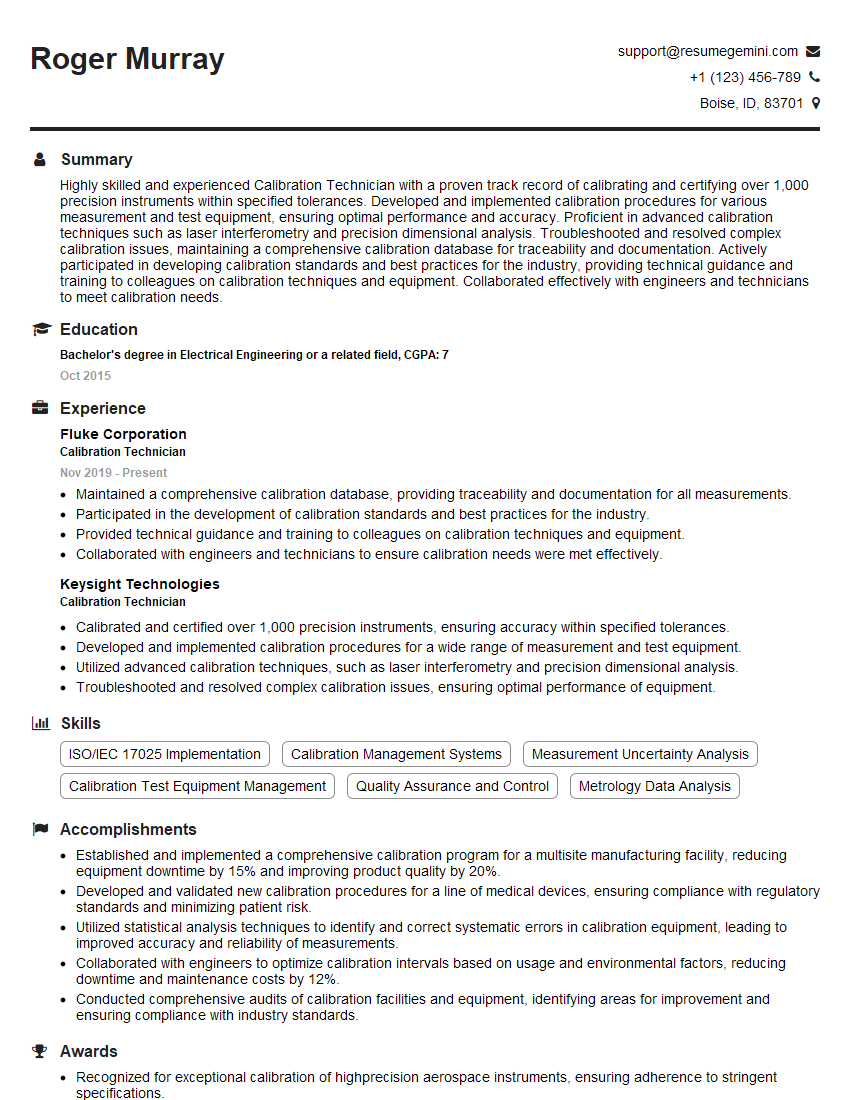
Calibration Technician Resume Sample

Construction Inspector Resume Sample

Robotics Technician Resume Sample

Manufacturing Technician Resume Sample

Production Technician Resume Sample

Assembly Technician Resume Sample

Metrology Technician Resume Sample

Aircraft Mechanic Resume Sample

Automotive Mechanic Resume Sample
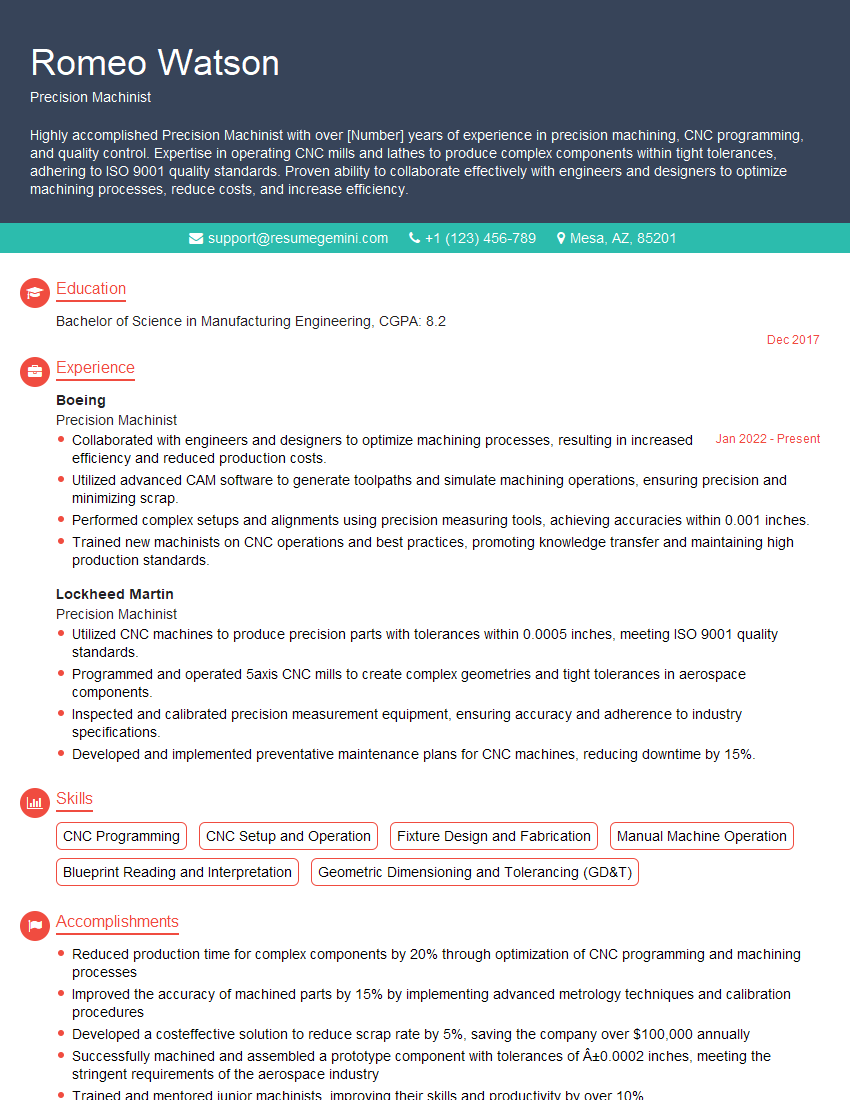
Precision Machinist Resume Sample

Tool and Die Maker Resume Sample

Dimensional Inspector Resume Sample

Mechanical Inspector Resume Sample

Quality Control Inspector Resume Sample
- Quality Control Manager
- Inspector
- Process Engineer
- Maintenance Technician
- Surveyor
- Manufacturing Engineer
- Metrologist
- Quality Assurance Engineer
- Calibration Technician
- Construction Inspector
- Robotics Technician
- Manufacturing Technician
- Production Technician
- Assembly Technician
- Metrology Technician
- Aircraft Mechanic
- Automotive Mechanic
- Precision Machinist
- Tool and Die Maker
- Dimensional Inspector
- Mechanical Inspector
- Quality Control Inspector
Explore more articles
Users Rating of Our Blogs
Share Your Experience
We value your feedback! Please rate our content and share your thoughts (optional).
What Readers Say About Our Blog
Very informative content, great job.
good