The thought of an interview can be nerve-wracking, but the right preparation can make all the difference. Explore this comprehensive guide to Recruitment and Evaluation interview questions and gain the confidence you need to showcase your abilities and secure the role.
Questions Asked in Recruitment and Evaluation Interview
Q 1. Describe your experience with various recruitment methods (e.g., sourcing, networking, job boards).
My recruitment experience spans a wide range of methods, each chosen strategically based on the role and target candidate pool. I’m proficient in sourcing candidates directly through professional networking sites like LinkedIn, utilizing Boolean search strings to refine my searches (e.g., "Project Manager" AND "Agile" AND "Scrum"). I also leverage job boards like Indeed and Glassdoor, tailoring job descriptions to attract the right applicants. Furthermore, I actively participate in industry events and conferences for networking opportunities, building relationships with potential candidates and understanding industry trends. For niche roles, I may utilize recruiter-specific databases or engage with executive search firms. Each method presents unique advantages and requires different skill sets. For instance, Boolean searching on LinkedIn allows for precise targeting, while networking events provide a chance to assess candidates’ soft skills and cultural fit firsthand.
Q 2. Explain your process for evaluating candidates’ resumes and applications.
My resume and application evaluation process is thorough and structured. I begin by quickly scanning for keywords that align with the job description’s requirements. Then, I delve deeper into each candidate’s experience, focusing on quantifiable achievements and the impact they made in their previous roles. I pay close attention to career progression, looking for evidence of consistent growth and development. Inconsistencies or gaps in employment history are investigated further, but aren’t necessarily disqualifiers. I evaluate the overall narrative presented—does it tell a compelling story of professional success and growth? Finally, I look for red flags such as frequent job changes without clear justification or any indication of skills and experience relevant to the position. For example, if a candidate lists only vague responsibilities in their resume without concrete achievements, they are likely to receive less consideration. This process ensures a consistent and fair initial screening before moving to the next stage.
Q 3. How do you assess a candidate’s cultural fit within an organization?
Assessing cultural fit goes beyond simply matching personalities. It’s about understanding how a candidate’s values, work style, and communication preferences align with the organization’s culture. I use a multi-faceted approach: reviewing resumes and cover letters for clues about a candidate’s interests and values; asking behavioral questions during interviews to understand how they’ve handled past situations; and including a cultural fit assessment tool or including scenarios that test decision making and team collaboration. For instance, I might ask, “Tell me about a time you had a conflict with a coworker. How did you resolve it?” This gives insight into their conflict-resolution skills and how they interact with others. Furthermore, I often incorporate informal conversations—‘coffee chats’—to gauge the candidate’s personality and comfort level within a more relaxed setting. The goal is to find candidates who aren’t just technically skilled but who will also thrive and contribute positively to our team dynamic.
Q 4. What are your preferred interview techniques, and why?
My preferred interview techniques are a blend of behavioral, competency-based, and situational questions. Behavioral questions, such as the example above, help assess past behavior as a predictor of future performance ("Tell me about a time you failed. What did you learn?"). Competency-based questions focus on specific skills and experiences related to the role ("Describe your experience with project management software."). Situational questions present hypothetical scenarios to gauge problem-solving skills and decision-making under pressure ("How would you handle a situation where a team member consistently misses deadlines?"). I find this combined approach provides a comprehensive understanding of the candidate’s capabilities and fit within the organization. I also incorporate elements of structured interviews to ensure consistency and fairness across all candidates.
Q 5. How do you handle candidates who are overqualified or underqualified?
Handling overqualified and underqualified candidates requires careful consideration. For overqualified candidates, I explore their motivations for applying. Are they looking for a change of pace, a less demanding role, or a chance to use specific skills? Understanding their aspirations helps determine if their long-term goals align with the company’s opportunities for growth. Sometimes, overqualified candidates may be a great asset if properly managed. For underqualified candidates, I assess their potential and willingness to learn. If their enthusiasm and aptitude compensate for their lack of direct experience, I might suggest a mentorship program or offer opportunities for training and development. The key is to evaluate candidates holistically, considering their potential alongside their current skillset.
Q 6. Describe your experience with behavioral interviewing.
Behavioral interviewing is a cornerstone of my recruitment strategy. I believe that past behavior is the best predictor of future performance. I use the STAR method (Situation, Task, Action, Result) to guide candidates in structuring their responses. This ensures clarity and allows for a deeper understanding of their thought process and decision-making capabilities. For example, if asked about a time they dealt with a difficult customer, a candidate using the STAR method would describe the situation, their task, the actions they took, and the results of those actions. This structured approach allows me to compare responses across candidates and makes the evaluation process more objective and transparent.
Q 7. How do you ensure a fair and unbiased recruitment process?
Ensuring a fair and unbiased recruitment process requires careful attention to detail and proactive measures. I use standardized job descriptions and evaluation criteria to minimize subjective biases. I implement blind resume screening, removing identifying information (name, age, gender, etc.) to reduce unconscious bias in the initial screening stage. Diverse interview panels are another important strategy to provide varied perspectives and challenge potential biases. Regular training for interviewers on unconscious bias awareness is critical. Furthermore, maintaining detailed records of the recruitment process, including interview notes and rationale for decisions, ensures transparency and accountability. By employing these strategies, I strive to create a level playing field for all candidates, regardless of their background or characteristics.
Q 8. How do you manage multiple requisitions simultaneously?
Managing multiple requisitions effectively requires a structured approach. I use a prioritization matrix, ranking requisitions based on urgency, impact, and resource availability. This ensures I allocate my time and efforts strategically. For example, I might prioritize a critical role with a tight deadline over a less urgent, long-term hiring need. Beyond prioritization, I leverage technology. I use project management tools like Asana or Trello to track deadlines, candidate progress, and communication for each requisition, preventing overlaps and ensuring timely completion of tasks. This structured approach, combined with effective time management techniques, helps me stay organized and productive, even when juggling several recruitment processes simultaneously.
Q 9. How do you use applicant tracking systems (ATS)?
Applicant Tracking Systems (ATS) are indispensable tools in modern recruitment. I’m proficient in using various ATS platforms, including [mention specific ATS, e.g., Taleo, Workday, Greenhouse]. My expertise extends beyond basic functionality; I leverage advanced features like automated workflows to streamline candidate screening and communication. For instance, I configure automated email responses for acknowledgments and interview scheduling. I also utilize the reporting functionalities to track key metrics such as time-to-hire and cost-per-hire. Furthermore, I use the ATS’s search capabilities to efficiently filter candidates based on specific keywords in their resumes, ensuring I don’t miss qualified individuals. Regularly cleaning and updating the database within the ATS is crucial for maintaining data accuracy and maximizing the system’s efficiency.
Q 10. What metrics do you use to measure the effectiveness of your recruitment efforts?
Measuring recruitment effectiveness relies on a combination of quantitative and qualitative metrics. Key quantitative metrics include:
- Time-to-fill: The time taken to fill a vacant position. A shorter time-to-fill indicates efficiency.
- Cost-per-hire: The total cost of recruitment divided by the number of hires. This helps track recruitment efficiency and cost-effectiveness.
- Source-of-hire: Identifying the most effective recruitment channels (e.g., LinkedIn, referrals, job boards). This informs future recruitment strategies.
- Offer acceptance rate: The percentage of candidates who accept job offers. A low rate might point to issues with the compensation package or the recruitment process.
Qualitative metrics include:
- Candidate experience: Gathering feedback from candidates to identify areas for improvement in the recruitment process.
- Hiring manager satisfaction: Assessing hiring managers’ satisfaction with the quality of candidates and the overall recruitment process.
- New hire performance: Evaluating the performance of new hires to determine the effectiveness of the selection process.
By regularly monitoring these metrics, I can identify areas for improvement and optimize my recruitment strategies for better outcomes. For instance, if the cost-per-hire is high, I might explore alternative, more cost-effective sourcing channels.
Q 11. Explain your experience with different assessment tools (e.g., skills tests, personality assessments).
I have extensive experience using various assessment tools tailored to different roles and industries. Skills tests provide objective measures of a candidate’s abilities in specific areas, such as coding, data analysis, or writing. For example, I use HackerRank for coding assessments and specific industry-standard tests for specialized skills. Personality assessments, like the Myers-Briggs Type Indicator (MBTI) or DISC assessments, offer insights into a candidate’s personality traits and work style, which helps gauge their potential fit within the team and company culture. However, I always ensure that the assessments are used responsibly and ethically, complying with all relevant regulations and avoiding bias. Results are only used as one data point in the overall candidate evaluation, and are always paired with contextual interviews and real-world examples. I avoid relying solely on any single assessment method, preferring a balanced approach that combines various tools to create a comprehensive understanding of the candidate.
Q 12. How do you handle candidate rejection and feedback?
Candidate rejection is a crucial, yet often overlooked aspect of recruitment. I believe in handling rejections with professionalism and empathy. I provide timely and personalized feedback explaining the reasons for the decision without being overly critical. For instance, instead of simply saying ‘you weren’t selected,’ I might explain that another candidate had slightly more relevant experience for that specific role. This helps candidates understand where they could improve and leaves a positive impression of the company, even if they weren’t hired. It is also vital to preserve the possibility of future opportunities. For highly qualified candidates that weren’t suitable for the current role, I keep their information on file for potential matches in the future, showing respect for their efforts and maintaining a positive relationship with potential candidates.
Q 13. How do you build and maintain relationships with hiring managers?
Building strong relationships with hiring managers is essential for successful recruitment. I achieve this through proactive communication, understanding their needs, and consistently delivering high-quality candidates. Regular check-ins, both formal and informal, help me stay aligned with their evolving needs. I ask clarifying questions about the job description to gain a deep understanding of their requirements, going beyond simply listing requirements to understanding the underlying business needs of the position. Providing regular updates on the progress of the search and proactively addressing any concerns builds trust and confidence. Finally, actively soliciting feedback on candidates and the overall process enables continuous improvement and stronger collaboration. Open communication and transparency ensure a strong partnership.
Q 14. Describe your experience with diversity and inclusion initiatives in recruitment.
Diversity and inclusion are paramount in my recruitment approach. I actively seek opportunities to broaden the pool of candidates and ensure representation from diverse backgrounds. This includes utilizing diverse sourcing channels, attending events focused on underrepresented groups, and partnering with organizations dedicated to diversity and inclusion. Beyond sourcing, I aim for unbiased evaluation processes, using structured interviews and blind resume reviews to minimize unconscious bias. Training hiring managers on unconscious bias and diversity best practices is also a key component of our efforts. Monitoring diversity metrics helps to track progress and identify areas needing further improvement. The goal is to create an inclusive and welcoming environment for all candidates, ensuring that the best talent is selected based solely on merit and qualifications.
Q 15. How do you ensure data privacy and compliance during the recruitment process?
Data privacy and compliance are paramount in recruitment. We must adhere to regulations like GDPR, CCPA, and others, depending on the location and the type of data collected. This starts with a clear privacy policy outlining how candidate data is collected, used, stored, and protected. We use secure applicant tracking systems (ATS) that comply with these regulations, encrypting sensitive information both in transit and at rest.
For example, we only collect necessary data—name, contact information, resume, etc.—and obtain explicit consent before processing special category data (e.g., health information). Data minimization is key; we delete data once its purpose is served, following retention policies compliant with legal requirements. Regular security audits and employee training on data protection best practices are crucial to maintaining compliance and safeguarding candidate privacy. We also ensure all third-party vendors we use for background checks or other services have robust data protection measures in place.
Career Expert Tips:
- Ace those interviews! Prepare effectively by reviewing the Top 50 Most Common Interview Questions on ResumeGemini.
- Navigate your job search with confidence! Explore a wide range of Career Tips on ResumeGemini. Learn about common challenges and recommendations to overcome them.
- Craft the perfect resume! Master the Art of Resume Writing with ResumeGemini’s guide. Showcase your unique qualifications and achievements effectively.
- Don’t miss out on holiday savings! Build your dream resume with ResumeGemini’s ATS optimized templates.
Q 16. Explain your experience with negotiating salary and benefits with candidates.
Negotiating salary and benefits is a delicate balance. I start by researching industry benchmarks and internal equity to understand the appropriate compensation range for the role and experience level. I then gather information about the candidate’s salary expectations and career goals during the interview process. This allows me to have a constructive conversation, rather than a negotiation from opposing positions.
For instance, if a candidate’s expectations are significantly above the range, I explain the reasoning behind our offer, emphasizing the total compensation package including benefits, bonuses, and growth opportunities. I might present a structured offer with different options to find a mutually acceptable solution. Sometimes, I may need to be flexible and adjust the offer based on their skills and experience, particularly for highly sought-after talent. The goal is always to reach a fair and mutually beneficial agreement that attracts and retains top talent.
Q 17. How do you onboard new hires effectively?
Effective onboarding is crucial for a smooth transition for new hires. I structure onboarding around three key phases: pre-boarding, first-day/week, and ongoing integration. Pre-boarding starts before the first day, sending a welcome package, setting up IT access, and scheduling introductory meetings. The first day/week focuses on introductions, a clear overview of the role and responsibilities, and team integration activities. Ongoing integration involves setting clear performance goals, regular check-ins, and ongoing training and development opportunities.
For example, I might design a buddy system, pairing new hires with experienced team members for mentorship and guidance. I also create a comprehensive onboarding checklist, tracking progress and ensuring that all necessary tasks are completed. We regularly solicit feedback to continuously improve the onboarding process, creating a supportive and inclusive environment where new hires feel valued and can quickly become productive members of the team.
Q 18. How do you identify and mitigate potential biases in the recruitment process?
Bias mitigation is essential for fair and equitable recruitment. I utilize structured interviews with pre-defined questions and standardized scoring to reduce subjective judgments. Blind resume screening, removing identifying information like names and gender, helps to avoid unconscious biases related to demographics. Using diverse interview panels, including individuals from different backgrounds and experiences, further mitigates potential bias.
We also train hiring managers on recognizing and addressing their own biases, and regularly review our processes to identify areas for improvement. For example, we use data analytics to track hiring metrics to ensure we are attracting and hiring a diverse pool of candidates. This ongoing evaluation helps to ensure our processes remain effective and fair.
Q 19. What is your experience with different recruitment strategies (e.g., reactive vs. proactive)?
Reactive recruitment responds to immediate needs, often for urgent vacancies. Proactive recruitment is a longer-term strategy focusing on building talent pipelines and cultivating relationships with potential candidates before a specific need arises. My experience encompasses both strategies.
For example, a reactive approach might involve using job boards and immediate networking to fill a sudden opening. A proactive approach might involve attending industry events, building relationships with universities and professional organizations, and developing a strong employer brand to attract passive candidates. The most effective recruitment strategy often combines both proactive and reactive approaches, ensuring both short-term needs are met and long-term talent pipelines are established.
Q 20. Describe your experience with background checks and reference verification.
Background checks and reference verification are critical steps in ensuring candidate suitability and trustworthiness. We use reputable third-party vendors to conduct thorough background checks, which may include criminal history, education verification, and employment history checks. Reference verification involves contacting previous employers to confirm employment dates, roles, and performance.
We ensure all checks are conducted legally and ethically, obtaining necessary consent from candidates and adhering to privacy regulations. We carefully review the results of background checks and reference checks, considering any discrepancies or red flags. Our goal is to gather sufficient information to make informed hiring decisions while protecting the privacy and rights of all candidates.
Q 21. How do you handle difficult or challenging candidates?
Handling challenging candidates requires diplomacy and professionalism. I strive to understand the candidate’s concerns and perspectives. This involves active listening and empathy. If there are disagreements, I address them directly and honestly, offering explanations and finding common ground. If the situation escalates, I involve HR or senior management, ensuring fair and consistent treatment.
For example, if a candidate is overly aggressive or demanding, I maintain a calm and professional demeanor, re-framing the discussion to focus on facts and the job requirements. If a candidate is expressing genuine concerns about the role or company, I try to provide clear and accurate information. The key is to manage the interaction constructively, regardless of the outcome, ensuring that the process remains respectful and professional.
Q 22. How do you stay up-to-date with the latest recruitment trends and best practices?
Staying current in the dynamic field of recruitment requires a multi-pronged approach. It’s not enough to rely on past knowledge; continuous learning is essential.
- Industry Publications and Websites: I regularly read publications like SHRM (Society for Human Resource Management) magazine, Harvard Business Review articles on talent acquisition, and follow leading recruitment blogs and websites. These resources offer insights into emerging trends, best practices, and innovative strategies.
- Conferences and Webinars: Attending industry conferences and webinars allows me to network with peers and learn from experts. These events often feature cutting-edge research and practical case studies, providing invaluable learning opportunities.
- Professional Networks: I actively participate in professional networks like LinkedIn groups focused on recruitment and talent acquisition. Engaging in discussions, sharing knowledge, and learning from others’ experiences keeps me informed about the latest developments.
- Data Analysis: I continuously analyze recruitment data – including time-to-hire, cost-per-hire, and source-of-hire – to identify areas for improvement and adapt to changing market conditions. This data-driven approach ensures my strategies remain effective and relevant.
For example, recently I learned about the increasing importance of employer branding and candidate experience through a webinar, leading me to incorporate new strategies into our recruitment process, such as personalized communication and improved candidate feedback mechanisms.
Q 23. Explain your experience with recruitment analytics and reporting.
Recruitment analytics and reporting are crucial for measuring the effectiveness of recruitment strategies and optimizing the process. My experience encompasses the entire spectrum, from data collection and analysis to generating insightful reports for stakeholders.
- Data Collection: I utilize Applicant Tracking Systems (ATS) and other recruitment tools to collect data on key metrics such as application volume, source of applicants, time-to-hire, cost-per-hire, and candidate quality.
- Data Analysis: I employ various analytical methods, including descriptive statistics, trend analysis, and regression analysis to understand the data and identify patterns. For instance, I might analyze the source of applicants to determine which channels are most effective in attracting qualified candidates.
- Reporting: I prepare detailed reports that clearly communicate the findings of my analyses to stakeholders. These reports often include visualizations (charts and graphs) to make the data easily understandable and actionable. I also track key performance indicators (KPIs) to monitor the success of recruitment campaigns.
In a recent project, my analysis revealed that our social media recruitment strategy was underperforming. Based on my findings, we reallocated budget to more effective channels, resulting in a significant improvement in the quality and quantity of applicants.
Q 24. How do you use technology to improve recruitment efficiency?
Technology plays a vital role in modern recruitment, significantly enhancing efficiency and effectiveness. I leverage several technologies to streamline and improve the recruitment process.
- Applicant Tracking Systems (ATS): ATS are essential for managing the entire recruitment lifecycle, from candidate sourcing and screening to onboarding. They automate many manual tasks, saving time and resources.
- Recruitment CRM: A CRM (Customer Relationship Management) system allows me to track interactions with candidates, nurture relationships, and personalize communication throughout the process.
- Social Media Recruitment: Platforms like LinkedIn, Twitter, and even Instagram are used to reach a wider pool of candidates and build employer brand awareness. Targeted advertising allows for efficient candidate sourcing.
- Video Interviewing: This technology allows for initial screening of candidates remotely, saving time and travel costs. It also enables a more efficient and convenient process for both candidates and recruiters.
- AI-powered tools: AI tools can assist with tasks like resume screening, candidate matching, and even predicting candidate success.
For example, implementing a new ATS reduced our time-to-hire by 25% and improved candidate tracking significantly.
Q 25. Describe a time you had to adapt your recruitment strategy due to unexpected challenges.
During a recent executive search, we faced an unexpected challenge when our top candidate unexpectedly withdrew their application. This was just one week before the planned start date. I had to swiftly adapt our recruitment strategy to avoid a significant delay in filling the crucial role.
- Immediate Action: I immediately reassessed the candidate pool, prioritizing those who had demonstrated similar skills and experience.
- Revised Timeline: We adjusted the interview schedule and expedited the background checks for the remaining top candidates.
- Strategic Communication: I proactively communicated with the hiring manager and stakeholders, keeping them informed of the situation and the revised timeline.
- Expanded Search: I broadened our search, leveraging additional networks and recruitment channels to identify new qualified candidates.
Though challenging, we successfully filled the position within two weeks by adapting our strategy, emphasizing effective communication, and leveraging our existing network. This situation highlighted the importance of flexibility and preparedness in recruitment.
Q 26. How do you ensure the quality of hire?
Ensuring quality of hire is paramount. It’s not just about filling a position; it’s about finding the right person who will contribute positively to the organization’s success. My approach involves a multi-faceted strategy.
- Robust Selection Process: I develop rigorous selection processes involving multiple interviews, assessments (behavioral, skills-based), and reference checks. This allows for a comprehensive evaluation of candidates.
- Clear Job Descriptions: Accurate and detailed job descriptions are crucial for attracting qualified applicants and ensuring alignment between the role and the candidate’s skills and experience.
- Structured Interviews: Using structured interviews with standardized questions helps ensure fairness and consistency across candidates.
- Candidate Feedback: Collecting and analyzing candidate feedback helps identify areas for improvement in our recruitment process and enhance the overall candidate experience.
- Post-Hire Evaluation: I track new hires’ performance over the initial months, gathering feedback from their managers to assess the success of the recruitment process.
By focusing on a systematic and data-driven approach, I strive to consistently deliver high-quality hires who make significant contributions to the organization.
Q 27. What is your experience with different types of employment contracts?
I possess extensive experience with various types of employment contracts, including:
- Full-Time Employment Contracts: These are standard contracts offering permanent employment with benefits and entitlements.
- Part-Time Employment Contracts: These contracts offer less than full-time hours, often with pro-rata benefits.
- Contract-to-Hire Contracts: These temporary contracts may lead to permanent employment after a specified period.
- Temporary or Contract Employment Contracts: These contracts are for a fixed term or project, with limited benefits.
- Independent Contractor Agreements: These contracts outline the relationship between the company and an independent contractor who provides services but is not an employee.
Understanding the nuances of each contract type is critical to ensure compliance and to adequately manage employee expectations. I carefully review each contract to ensure it aligns with both legal requirements and the specific needs of the organization and the candidate.
Q 28. Describe your understanding of employment law and regulations related to recruitment.
A strong understanding of employment law and regulations is crucial for ethical and legal recruitment practices. My knowledge encompasses various aspects, including:
- Equal Employment Opportunity (EEO): I am well-versed in EEO laws and regulations, ensuring that our recruitment processes are fair and non-discriminatory. This includes avoiding biased language in job descriptions and conducting unbiased interviews.
- Anti-discrimination Laws: I am familiar with laws prohibiting discrimination based on race, religion, gender, age, national origin, and disability, ensuring compliance in all recruitment activities.
- Data Protection and Privacy: I understand and adhere to data protection laws, ensuring the confidentiality and security of candidate data throughout the recruitment process.
- Wage and Hour Laws: I am aware of the legal requirements related to wages, overtime, and other compensation aspects of employment.
- Background Checks and Referencing: I am aware of the legal limitations and best practices related to conducting background checks and obtaining references.
Staying up-to-date on employment law is an ongoing process. I regularly consult legal resources and participate in training to ensure our recruitment practices remain compliant with all applicable laws and regulations.
Key Topics to Learn for Recruitment and Evaluation Interview
- Understanding Candidate Needs: Defining ideal candidate profiles based on job descriptions and organizational requirements. Practical application: Analyzing job descriptions to identify essential skills and experience, and translating those into effective interview questions.
- Sourcing and Candidate Attraction: Exploring various recruitment channels (e.g., job boards, networking, social media) and strategies to attract top talent. Practical application: Developing a targeted recruitment strategy for a specific role, considering cost-effectiveness and time constraints.
- Interview Techniques and Assessment: Mastering various interview styles (behavioral, competency-based, situational) and assessment methods to effectively evaluate candidates. Practical application: Designing interview questions that assess both hard and soft skills, and using structured scoring methods to ensure fairness and consistency.
- Legal and Ethical Considerations: Understanding and adhering to employment laws and ethical recruitment practices to avoid legal pitfalls and maintain a positive employer brand. Practical application: Identifying potential biases in recruitment processes and implementing strategies to mitigate them.
- Onboarding and Integration: Understanding the importance of a smooth onboarding process for new hires and how it contributes to employee retention and productivity. Practical application: Developing an effective onboarding plan that addresses both administrative tasks and employee integration.
- Recruitment Metrics and Evaluation: Tracking key performance indicators (KPIs) to measure the effectiveness of recruitment strategies and identify areas for improvement. Practical application: Analyzing recruitment data to identify bottlenecks and optimize the recruitment process for better efficiency and cost-effectiveness.
- Technological Tools in Recruitment: Familiarity with Applicant Tracking Systems (ATS), recruitment software, and other relevant technologies. Practical application: Effectively using an ATS to manage candidates, track progress, and streamline the recruitment process.
Next Steps
Mastering Recruitment and Evaluation is crucial for career advancement in Human Resources and related fields. A strong understanding of these principles will significantly enhance your value to any organization. To increase your chances of landing your dream job, creating an ATS-friendly resume is paramount. ResumeGemini is a trusted resource that can help you build a professional and impactful resume tailored to the specific requirements of Recruitment and Evaluation roles. Examples of resumes tailored to this field are available for your review, helping you craft a compelling narrative that highlights your skills and experience effectively.
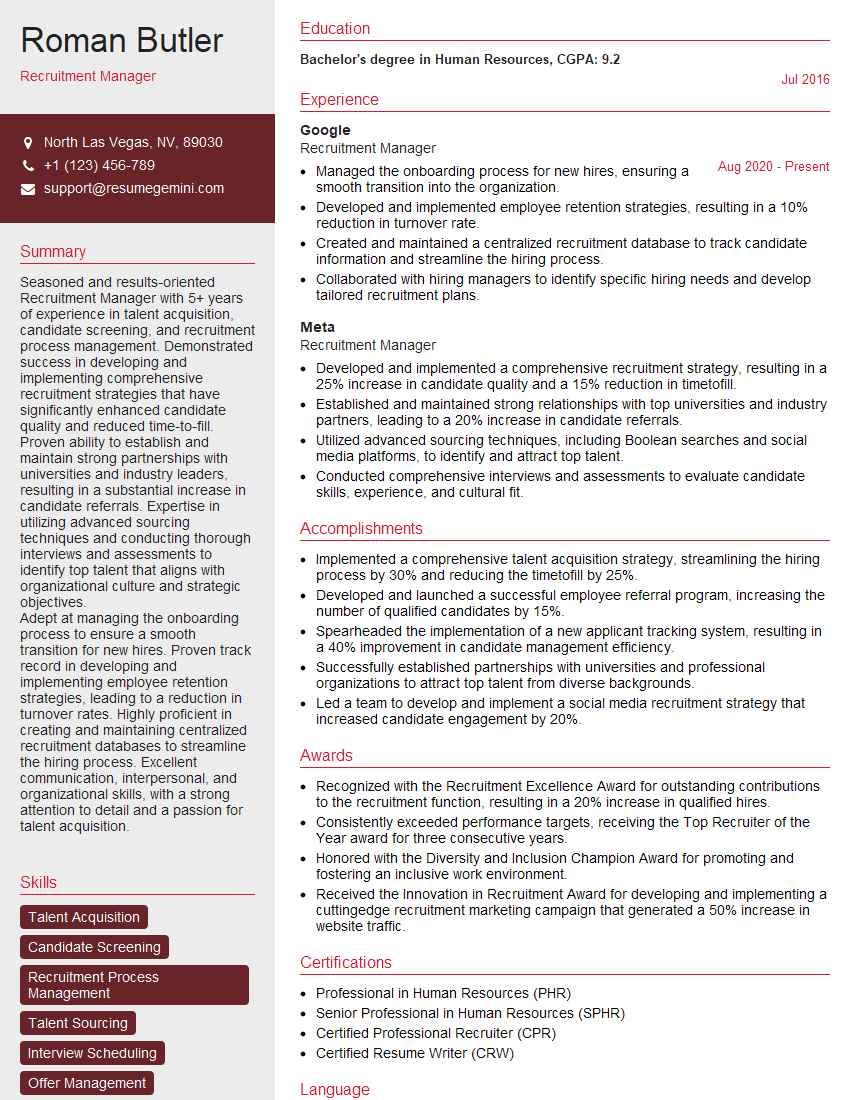
Recruitment Manager Resume Sample
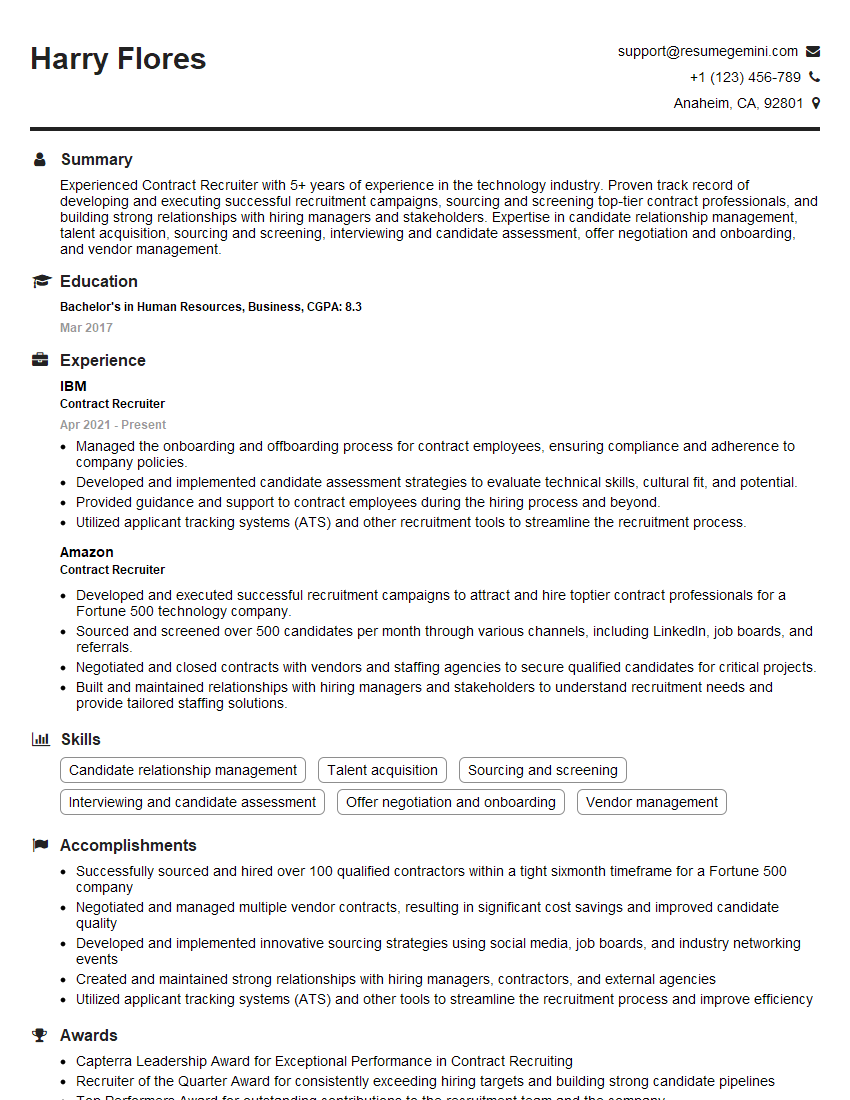
Contract Recruiter Resume Sample
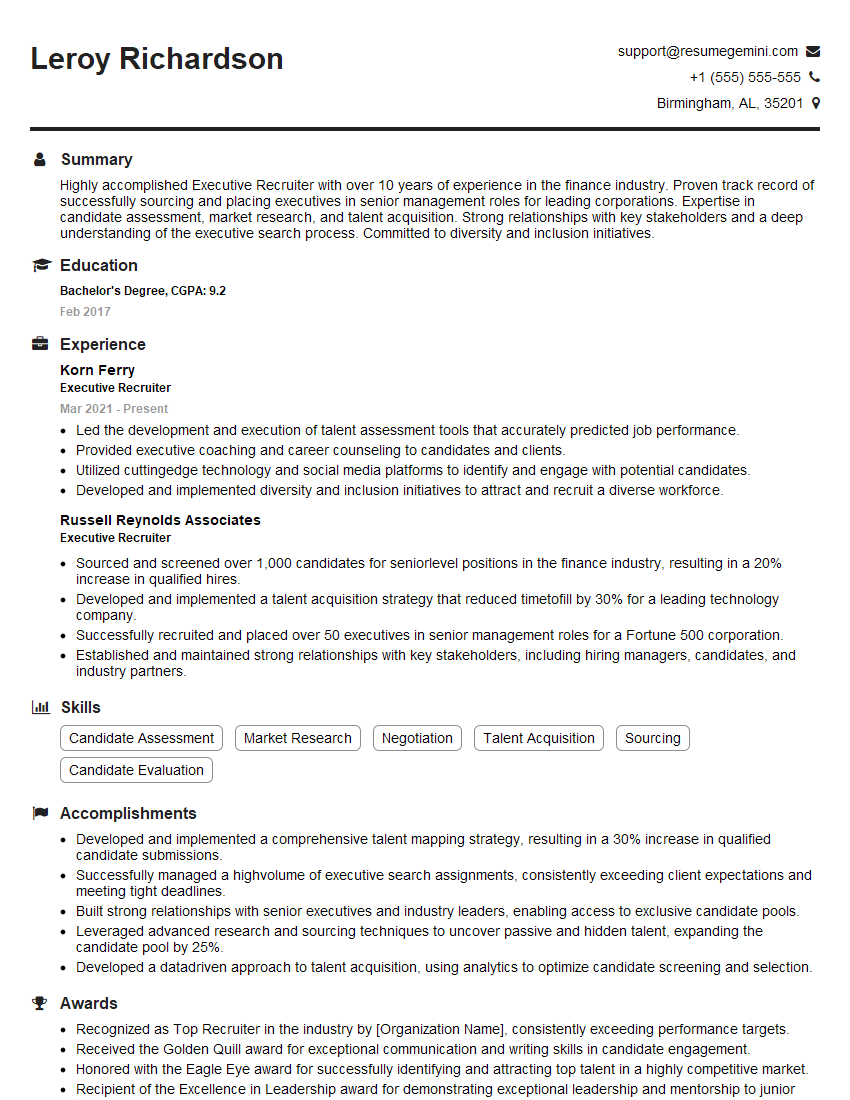
Executive Recruiter Resume Sample
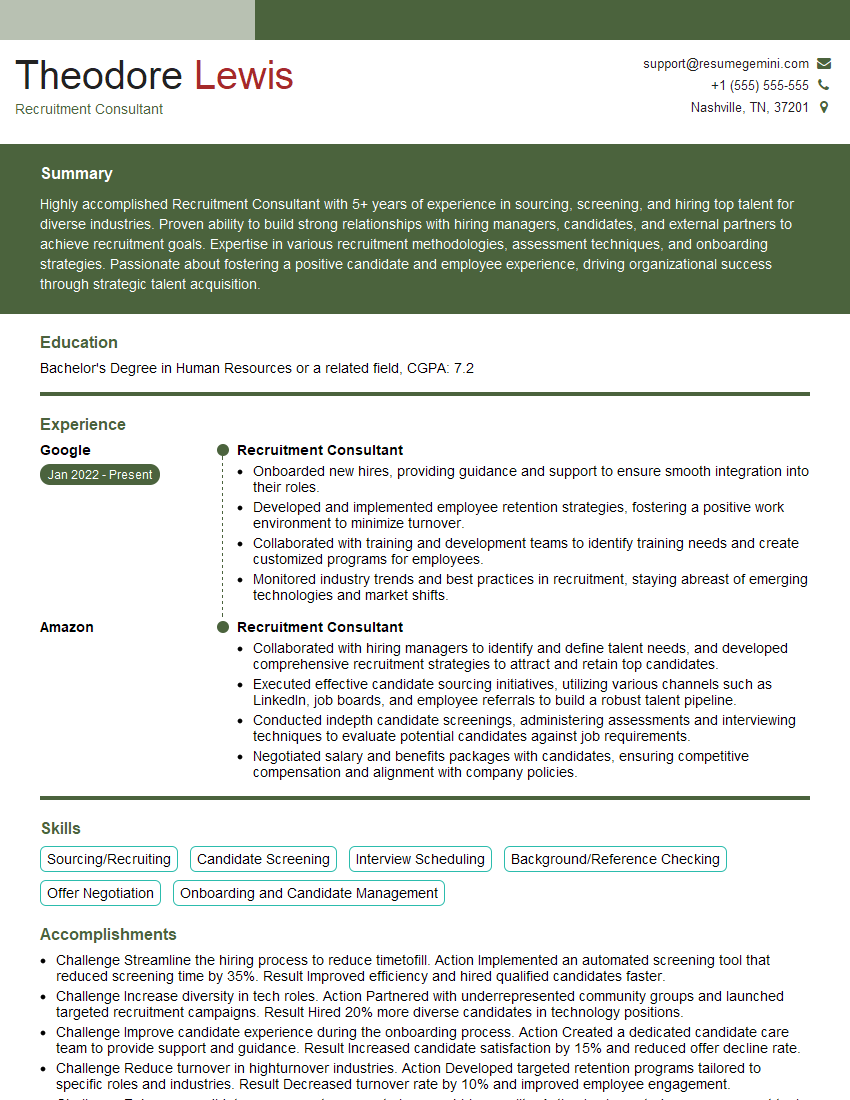
Recruitment Consultant Resume Sample
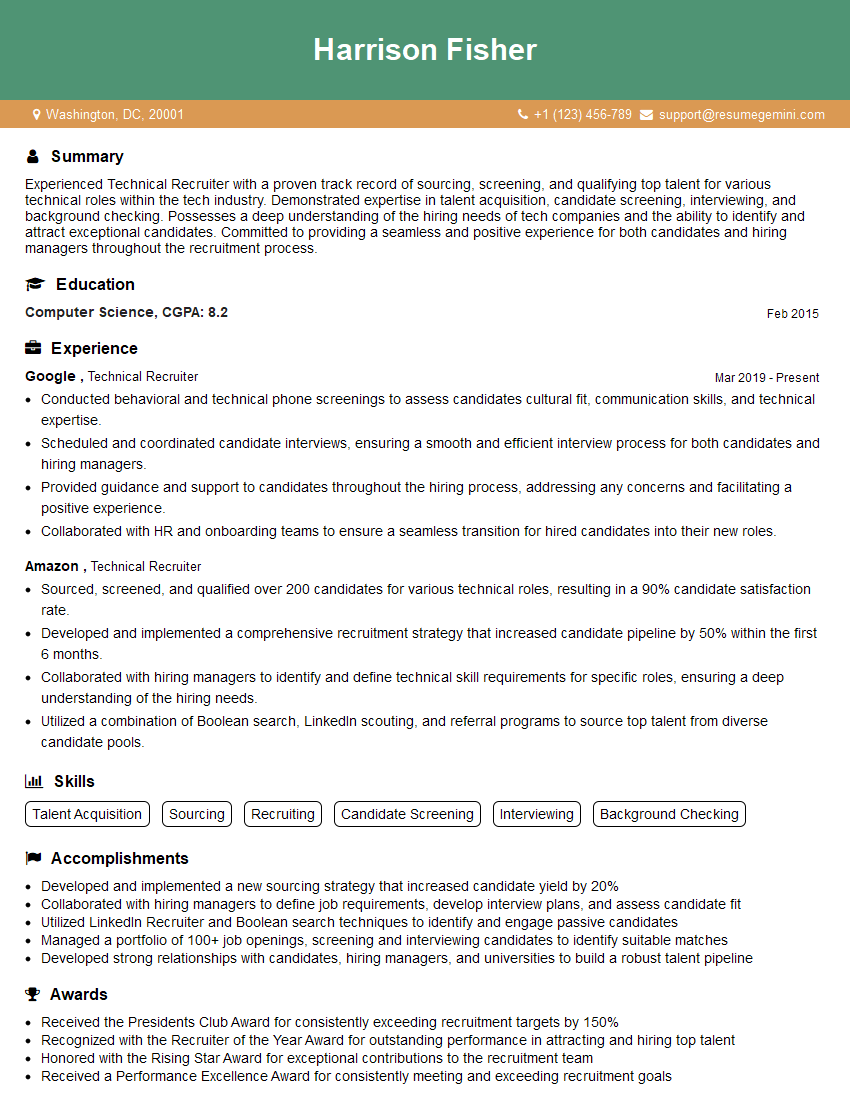
Technical Recruiter Resume Sample
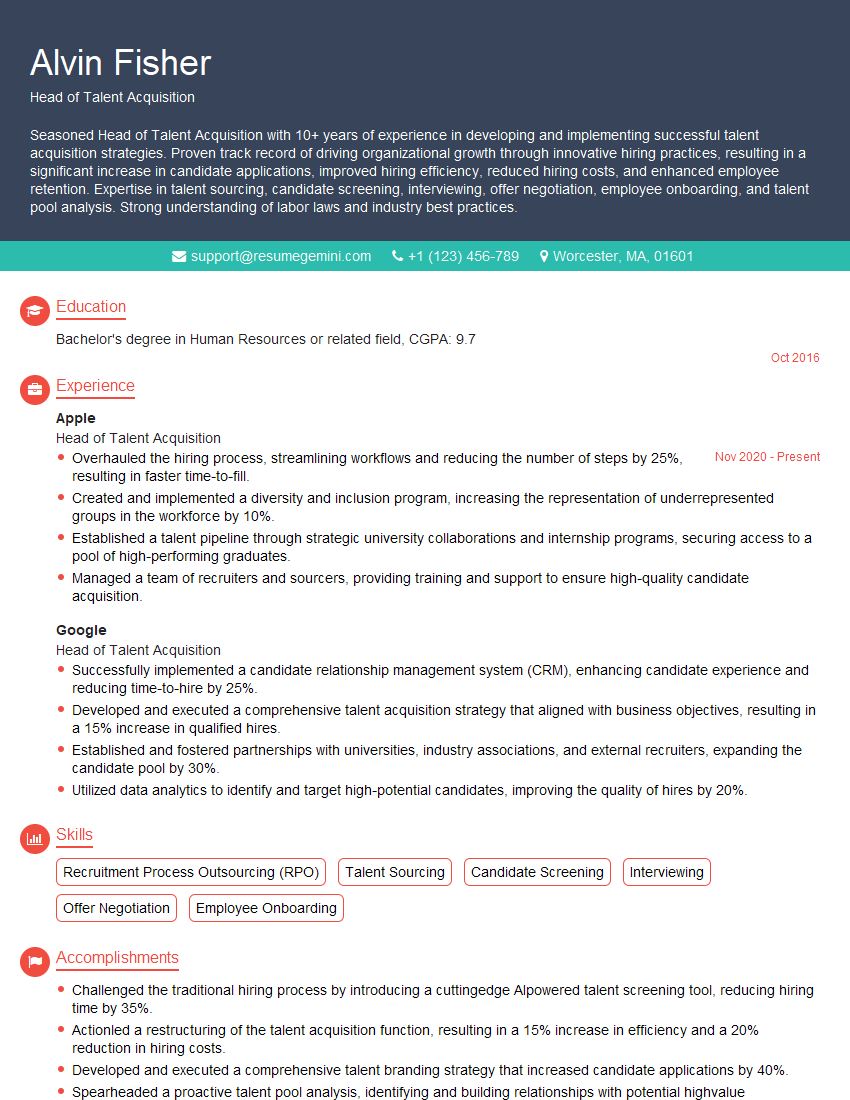
Head of Talent Acquisition Resume Sample
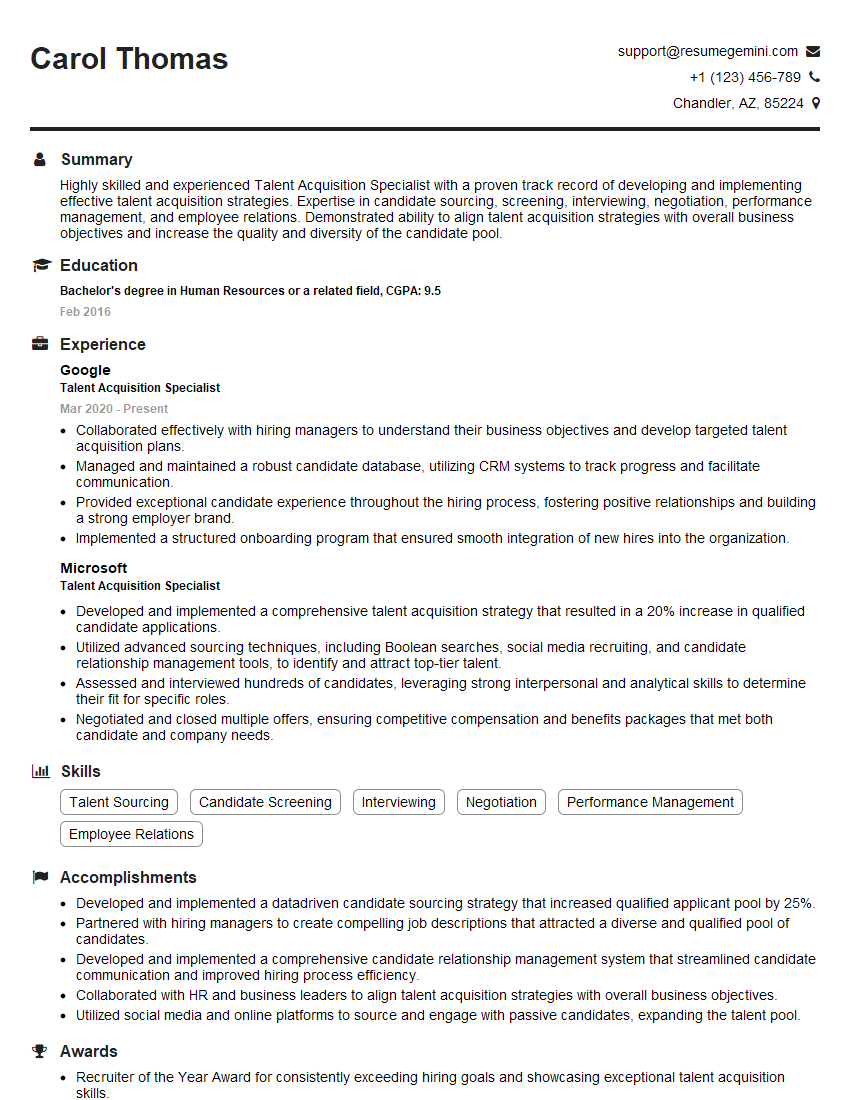
Talent Acquisition Specialist Resume Sample
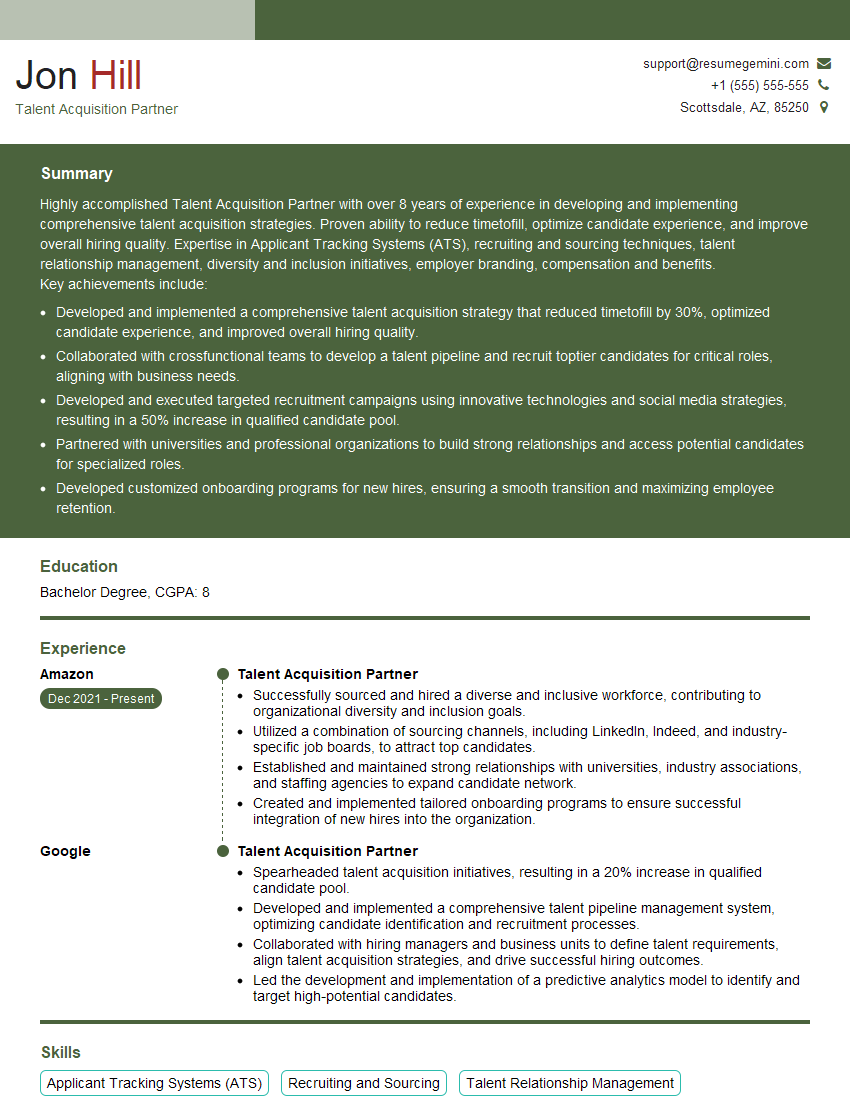
Talent Acquisition Partner Resume Sample
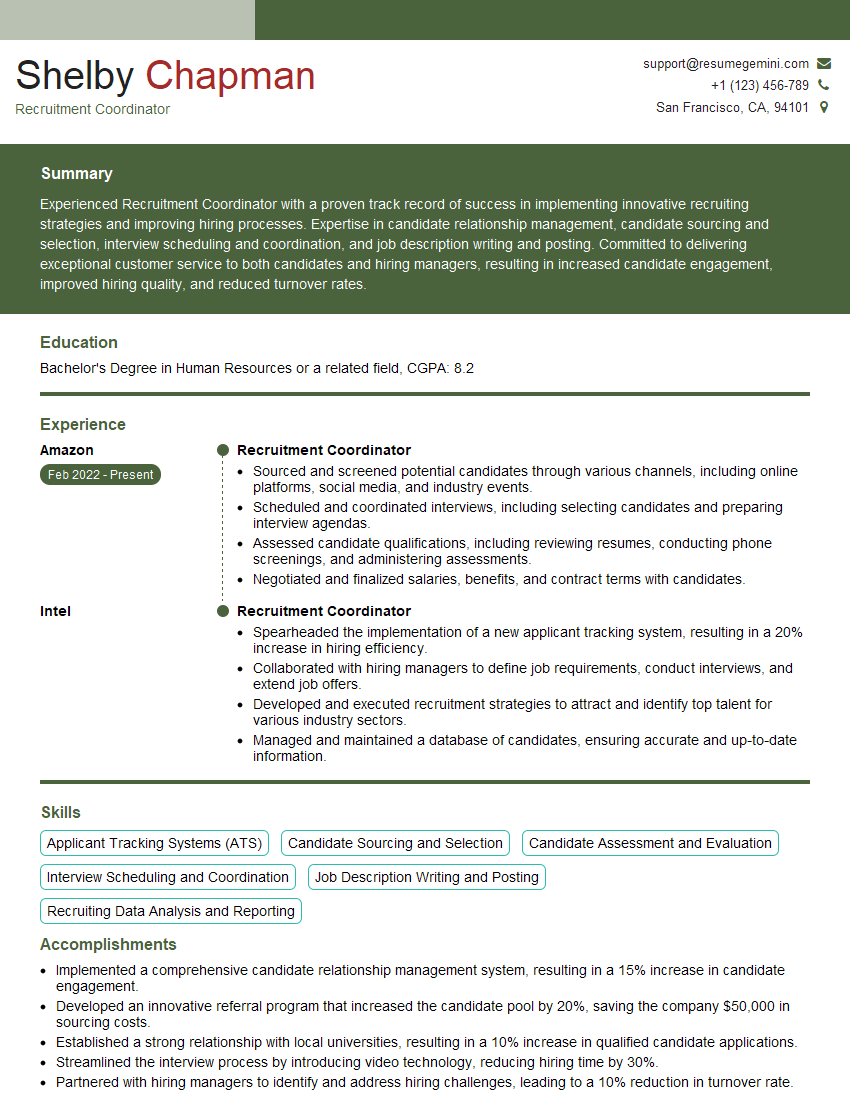
Recruitment Coordinator Resume Sample
Explore more articles
Users Rating of Our Blogs
Share Your Experience
We value your feedback! Please rate our content and share your thoughts (optional).
What Readers Say About Our Blog
Very informative content, great job.
good