Are you ready to stand out in your next interview? Understanding and preparing for Program Building interview questions is a game-changer. In this blog, we’ve compiled key questions and expert advice to help you showcase your skills with confidence and precision. Let’s get started on your journey to acing the interview.
Questions Asked in Program Building Interview
Q 1. Describe your experience in defining program scope and objectives.
Defining program scope and objectives is the foundation of any successful program. It’s like building a house – you need a blueprint before you start laying bricks. This involves clearly outlining what the program aims to achieve, the deliverables, the boundaries of the project (what’s included and, crucially, what’s excluded), and the key performance indicators (KPIs) that will measure success.
My process typically involves:
- Stakeholder Collaboration: Gathering requirements from all key stakeholders through workshops, interviews, and surveys to ensure a shared understanding.
- SMART Objectives: Formulating Specific, Measurable, Achievable, Relevant, and Time-bound (SMART) objectives. For example, instead of ‘improve customer satisfaction,’ a SMART objective would be ‘increase customer satisfaction scores by 15% within six months, as measured by post-purchase surveys.’
- Scope Definition Document: Creating a comprehensive document that clearly outlines the program scope, objectives, deliverables, assumptions, and constraints. This document acts as the guiding document throughout the program lifecycle.
- Scope Management Plan: Developing a plan to manage changes to the scope throughout the program. This includes a process for requesting, evaluating, and approving changes.
For instance, in a recent project involving the implementation of a new CRM system, we collaboratively defined the scope to include specific modules, user training, and data migration, while explicitly excluding integration with legacy systems in the first phase. This clarity prevented scope creep and kept the project focused.
Q 2. How do you develop and manage a program budget?
Program budget development and management requires a blend of forecasting, resource allocation, and meticulous tracking. It’s akin to managing a household budget, but on a much larger scale. I employ a phased approach:
- Budget Estimation: I begin with a thorough estimation of costs based on historical data, resource requirements, and market analysis. This often involves breaking down the program into smaller work packages for easier cost estimation.
- Resource Allocation: I allocate the budget across different work packages and resources, prioritizing those that are critical to achieving the program objectives. This involves considering both direct costs (labor, materials) and indirect costs (overhead, administration).
- Budget Control and Monitoring: I regularly monitor the budget against actual spending, using tools like earned value management (EVM) to track progress and identify potential variances. This allows for proactive adjustments if necessary.
- Contingency Planning: A crucial aspect is building in contingency funds to address unforeseen circumstances. This could range from unexpected technical issues to market fluctuations.
In a previous project involving software development, we used a bottom-up budgeting approach, estimating costs for individual tasks and aggregating them to the program level. This granular approach gave us more control and allowed us to identify and address potential cost overruns early on.
Q 3. Explain your process for risk management within a program.
Risk management is a proactive approach to identifying, assessing, and mitigating potential threats to the program’s success. Think of it as an insurance policy against unexpected problems. My process typically follows these steps:
- Risk Identification: We brainstorm potential risks through workshops, interviews, and checklists. This includes technical, financial, schedule, and stakeholder-related risks.
- Risk Assessment: We assess each identified risk based on its likelihood and potential impact. This helps prioritize risks for mitigation efforts. We often use a risk matrix to visualize this.
- Risk Mitigation: We develop strategies to mitigate high-priority risks. This may involve developing contingency plans, assigning risk owners, or implementing risk avoidance strategies.
- Risk Monitoring and Control: We regularly monitor the risks throughout the program lifecycle, tracking their status and adjusting our mitigation strategies as needed.
For example, in a recent project deploying a new e-commerce platform, we identified a significant risk related to the migration of customer data. We mitigated this by implementing a robust data migration plan with thorough testing and a rollback strategy.
Q 4. How do you handle stakeholder communication and expectations?
Effective stakeholder communication is paramount to successful program management. It’s about building relationships, managing expectations, and ensuring everyone is aligned. I use a multi-pronged approach:
- Communication Plan: Developing a communication plan that clearly outlines communication channels, frequency, and audience. This ensures consistent and relevant information is shared.
- Regular Meetings: Conducting regular meetings with different stakeholder groups to update them on progress, address concerns, and gather feedback. This might involve steering committees for high-level updates and project team meetings for more detailed discussions.
- Progress Reports: Providing regular written reports summarizing progress, key milestones, and risks. These reports need to be tailored to the audience’s needs.
- Issue and Risk Management: Proactively addressing issues and risks, keeping stakeholders informed of any challenges and the steps taken to resolve them.
- Feedback Mechanisms: Establishing feedback mechanisms (surveys, one-on-ones) to ensure stakeholder concerns are heard and addressed.
In a large-scale infrastructure project, I used a combination of weekly status reports for the executive team, bi-weekly meetings with the project team, and monthly newsletters for all stakeholders to keep everyone informed and engaged.
Q 5. Describe a time you had to make a difficult trade-off in resource allocation.
During a large-scale software implementation, we faced a difficult trade-off between functionality and deadline. We had planned a rich set of features but realized that delivering them all within the allocated time would compromise quality and potentially jeopardize the launch date.
After careful analysis, we prioritized features based on their value to users and the overall project goals. We utilized a MoSCoW method (Must have, Should have, Could have, Won’t have) to categorize features and made the difficult decision to defer some ‘Could have’ features to a post-launch release. This allowed us to deliver a stable and valuable product on time, setting the stage for future iterations to incorporate the deferred features. This required transparent communication with stakeholders about the trade-off and the rationale behind the decision.
Q 6. What methodologies (Agile, Waterfall, etc.) have you used in program management?
My experience encompasses both Agile and Waterfall methodologies, and I tailor my approach based on the project’s specific needs and context. Waterfall is suitable for projects with well-defined requirements and minimal anticipated changes, while Agile works best in environments characterized by uncertainty and frequent change.
I’ve successfully managed programs using:
- Waterfall: This is a sequential approach where each phase must be completed before the next begins. I’ve used this for projects with clearly defined requirements and a stable scope, such as the development of a simple internal application.
- Agile (Scrum, Kanban): In many larger and more complex projects, I’ve embraced Agile methodologies like Scrum, using sprints and daily stand-ups to facilitate iterative development and continuous feedback. I’ve also used Kanban for managing workflows where requirements are less fixed.
- Hybrid Approaches: In some cases, a hybrid approach combining elements of both Agile and Waterfall can be the most effective solution. For example, we might use Waterfall for the initial planning phase and Agile for the development and implementation phases.
Choosing the right methodology depends on various factors including project size, complexity, stakeholder involvement, and risk tolerance.
Q 7. How do you measure the success of a program?
Measuring program success requires a multifaceted approach that goes beyond simply meeting deadlines and staying within budget. It’s about achieving the program objectives and delivering value to stakeholders. I typically measure success using a combination of quantitative and qualitative metrics:
- Quantitative Metrics: These include metrics such as on-time and on-budget delivery, cost savings, return on investment (ROI), and key performance indicators (KPIs) defined during the scope definition phase.
- Qualitative Metrics: These involve assessing stakeholder satisfaction, user feedback, and the overall impact of the program on the organization. This often includes surveys, interviews, and focus groups.
- Post-Implementation Review: A thorough post-implementation review is crucial to understand what worked well, what could be improved, and to capture lessons learned for future programs.
For example, when assessing the success of a customer relationship management (CRM) system implementation, we measured not only the on-time and on-budget delivery but also improvements in customer satisfaction scores, sales conversion rates, and efficiency gains in customer service operations.
Q 8. Explain your approach to program monitoring and control.
Program monitoring and control is the ongoing process of tracking progress, identifying deviations from the plan, and taking corrective actions to ensure the program achieves its objectives. It’s like navigating a ship – you need constant checks on your course to stay on track and reach your destination.
My approach involves a multi-faceted strategy: First, I establish clear, measurable goals and milestones early on, ensuring everyone understands what success looks like. Then, I implement a robust monitoring system using tools like project management software (e.g., Jira, Asana) and regular progress reports. This allows for continuous tracking of key performance indicators (KPIs), such as budget, schedule, and resource utilization. Regular status meetings, both with individual project teams and the overall program team, are crucial for open communication and early identification of potential issues. Finally, a well-defined change management process is essential to handle any necessary adjustments to the plan effectively.
For example, in a previous program involving the development of a new software platform, I used a customized dashboard to visualize progress across multiple projects. This dashboard highlighted potential delays in one module, allowing us to proactively allocate additional resources and avoid a significant impact on the overall launch date.
Q 9. How do you identify and mitigate program risks?
Risk management is a proactive process, not a reactive one. It involves identifying potential threats, assessing their likelihood and impact, and developing mitigation strategies. I employ a structured approach, starting with a thorough risk assessment using techniques like SWOT analysis and brainstorming sessions with stakeholders. This helps identify potential risks related to technology, resources, budget, schedule, and regulatory compliance. Each identified risk is then analyzed for its probability and potential impact. Based on this analysis, I prioritize risks and develop a mitigation plan, which may include developing contingency plans, allocating additional resources, or implementing risk transfer mechanisms like insurance.
For instance, during a large-scale infrastructure project, we identified the risk of construction delays due to unexpected weather conditions. To mitigate this, we developed a detailed contingency plan outlining alternative construction methods and timelines, which proved invaluable when severe storms impacted the project schedule.
Q 10. Describe your experience with program reporting and dashboards.
Program reporting and dashboards are critical for communicating progress and performance to stakeholders. My experience includes creating comprehensive reports using various tools, from simple spreadsheets to sophisticated business intelligence platforms. These reports typically cover key metrics such as budget performance, schedule adherence, resource utilization, and risk status. I prefer interactive dashboards that allow stakeholders to drill down into the data and gain insights. The key is to tailor the reports and dashboards to the specific needs and preferences of the audience, ensuring the information is presented clearly and concisely.
In one project, I developed a custom dashboard that provided real-time visibility into the project’s progress, highlighting key milestones and any potential roadblocks. This proved incredibly effective in keeping stakeholders informed and engaged throughout the project lifecycle.
Q 11. How do you manage dependencies between projects within a program?
Managing dependencies between projects within a program requires careful planning and coordination. I utilize a dependency matrix to visually represent the relationships between projects, highlighting which projects are dependent on others and the nature of those dependencies (e.g., sequential, parallel). This matrix helps to identify potential bottlenecks and critical paths. Regular communication and collaboration between project managers are crucial to ensure that dependencies are managed effectively and potential delays are identified and addressed proactively.
For instance, in a product development program, one project might be dependent on another to deliver a specific component before it can proceed. The dependency matrix allows us to clearly see this relationship and proactively manage any potential delays in the upstream project that could impact the downstream project’s timeline.
Q 12. How do you handle changes in program scope or requirements?
Change is inevitable in any program. My approach to handling changes in scope or requirements involves a structured change management process. This process typically includes a formal request for change, an impact assessment to determine the effect on the schedule, budget, and resources, and a decision on whether to approve or reject the change. Approved changes are then incorporated into the program plan, with appropriate updates to the budget, schedule, and documentation. Transparent communication to stakeholders is essential throughout this process to maintain buy-in and manage expectations.
In one project, a significant change request arose mid-way through the implementation. By following our change management process, we were able to assess the impact, negotiate a revised timeline and budget, and ultimately deliver the project successfully, albeit with adjustments to the original plan.
Q 13. How do you build and maintain strong relationships with stakeholders?
Building and maintaining strong relationships with stakeholders is paramount to program success. I prioritize open and transparent communication, ensuring stakeholders are kept informed of progress, challenges, and risks. Regular meetings, both formal and informal, are essential for fostering trust and building rapport. Active listening and understanding stakeholders’ perspectives are key to managing expectations and resolving conflicts effectively. I tailor communication to different stakeholders based on their needs and interests, ensuring that everyone receives the information they need in a format they can easily understand.
For example, I made a point to have regular informal chats with key stakeholders to understand their concerns and address them promptly, leading to a smoother and more collaborative project experience.
Q 14. Describe your experience with program closure activities.
Program closure activities are as important as the initiation phase. It involves a systematic process of ensuring all deliverables have been completed, the budget has been reconciled, lessons learned have been documented, and the program has been formally closed out. This includes conducting a final review of the program’s performance against its objectives, conducting post-implementation reviews to identify lessons learned, and archiving all relevant documents. A final report summarizing the program’s performance is prepared and distributed to stakeholders. Proper closure ensures that the benefits of the program are realized and that valuable knowledge is captured for future projects.
In a recent project, we meticulously documented our lessons learned, resulting in a valuable knowledge base that improved the efficiency and effectiveness of subsequent projects.
Q 15. Explain your understanding of program governance.
Program governance is the framework of policies, processes, and decision-making structures that guide and control a program’s execution. It ensures the program aligns with strategic objectives, manages risks effectively, and delivers intended outcomes. Think of it as the ‘rules of the road’ for your program. It defines who’s responsible for what, how decisions are made, and how progress is tracked and reported.
A robust program governance structure typically includes:
- Steering Committee: High-level decision-makers who provide strategic direction.
- Program Manager: Responsible for day-to-day execution and reporting.
- Defined Roles and Responsibilities: Clear assignment of tasks and authorities.
- Regular Reporting and Monitoring: Tracking progress against the plan and identifying potential issues.
- Risk Management Process: Identifying, assessing, and mitigating potential risks.
For example, in a software development program, governance might define how changes are requested and approved, ensuring stability and preventing scope creep. It also sets standards for quality, security, and compliance.
Career Expert Tips:
- Ace those interviews! Prepare effectively by reviewing the Top 50 Most Common Interview Questions on ResumeGemini.
- Navigate your job search with confidence! Explore a wide range of Career Tips on ResumeGemini. Learn about common challenges and recommendations to overcome them.
- Craft the perfect resume! Master the Art of Resume Writing with ResumeGemini’s guide. Showcase your unique qualifications and achievements effectively.
- Don’t miss out on holiday savings! Build your dream resume with ResumeGemini’s ATS optimized templates.
Q 16. How do you prioritize competing projects within a program?
Prioritizing competing projects within a program requires a structured approach. I typically use a combination of methods, considering factors like strategic alignment, urgency, dependencies, and resource availability.
- Prioritization Matrix: A visual tool (like a MoSCoW method – Must have, Should have, Could have, Won’t have) that ranks projects based on their value and impact on the overall program objectives.
- Cost-Benefit Analysis: Evaluating the potential return on investment (ROI) for each project.
- Dependency Mapping: Identifying dependencies between projects to determine the optimal execution sequence.
- Stakeholder Input: Consulting key stakeholders to gain diverse perspectives and ensure buy-in.
Imagine a scenario where we are developing three software modules: a core engine (essential), a user interface (high value), and a reporting module (nice-to-have). Using a MoSCoW method, we’d prioritize the core engine as a ‘Must have’, the UI as a ‘Should have’, and the reporting module as a ‘Could have’, allocating resources accordingly.
Q 17. How do you ensure program alignment with organizational strategy?
Ensuring program alignment with organizational strategy is crucial for success. It’s not just about building something; it’s about building the *right* thing. This requires a clear understanding of the organization’s strategic goals and translating them into specific, measurable program objectives.
- Strategic Alignment Review: Regularly assess if the program’s goals and activities still support the organization’s strategic priorities.
- Key Performance Indicators (KPIs): Define KPIs that directly measure progress towards the strategic goals and regularly report on them.
- Stakeholder Engagement: Maintain close communication with senior management and other stakeholders to ensure alignment and address any misalignment quickly.
- Regular Reviews and Adjustments: The organization’s strategy and priorities might change; the program needs to adapt accordingly.
For instance, if the organizational strategy focuses on improving customer satisfaction, the program should have clear metrics related to customer satisfaction and feedback incorporated into its success criteria.
Q 18. Describe your experience with program resource planning.
Program resource planning involves identifying, allocating, and managing all resources needed for a successful program. This encompasses not only budget and personnel but also equipment, software, facilities, and time. I employ a structured approach:
- Resource Identification: Determining the specific resources needed for each project within the program.
- Resource Estimation: Estimating the quantity and duration of resource requirements.
- Resource Allocation: Assigning resources to projects based on prioritization and availability.
- Resource Monitoring and Control: Tracking resource utilization, addressing any shortfalls, and managing changes.
- Resource leveling: Techniques to smooth out resource demands over time.
Tools like MS Project or resource management software are invaluable here. For example, I might use a resource histogram to visualize resource allocation across different project phases, helping identify potential over-allocations or bottlenecks.
Q 19. How do you facilitate effective cross-functional collaboration?
Facilitating effective cross-functional collaboration is essential for program success. It requires establishing a culture of open communication, mutual respect, and shared goals. My strategies include:
- Clearly Defined Roles and Responsibilities: Ensure everyone understands their role and how it contributes to the overall program goals.
- Regular Communication: Establish regular communication channels (meetings, email, collaboration tools) to keep everyone informed and engaged.
- Joint Planning and Problem-Solving: Encourage collaborative planning sessions and workshops to address challenges collectively.
- Conflict Resolution Mechanisms: Establish processes for managing and resolving conflicts effectively.
- Shared Goals and Metrics: Align individuals and teams around common goals and shared success metrics.
For instance, in a product development program involving design, engineering, and marketing, I’d set up regular cross-functional meetings to review progress, discuss roadblocks, and ensure alignment on product vision and specifications.
Q 20. What tools and techniques do you use for program management?
My toolkit for program management includes a variety of tools and techniques, both software and methodological:
- Project Management Software: Microsoft Project, Jira, Asana, etc., for scheduling, task management, and resource allocation.
- Collaboration Tools: Microsoft Teams, Slack, etc., for communication and information sharing.
- Agile Methodologies: Scrum, Kanban, etc., for iterative development and flexibility.
- Risk Management Frameworks: Techniques for identifying, assessing, and mitigating potential risks.
- Earned Value Management (EVM): For measuring project performance and progress.
- Gantt Charts: To visualize project schedules and dependencies.
The choice of tools depends on the specific program context and organizational preferences.
Q 21. How do you manage conflicts between team members or stakeholders?
Managing conflicts between team members or stakeholders requires a diplomatic and structured approach. My strategy focuses on understanding the root cause of the conflict and finding mutually acceptable solutions.
- Active Listening: Understand each party’s perspective and concerns.
- Facilitation: Create a safe space for open communication and collaborative problem-solving.
- Mediation: If necessary, act as a neutral mediator to help the parties find common ground.
- Conflict Resolution Techniques: Employ techniques like compromise, negotiation, and collaboration.
- Documentation: Document agreements and decisions to avoid future misunderstandings.
For example, if two teams have conflicting priorities, I might facilitate a workshop where they identify their goals, explore trade-offs, and negotiate a mutually beneficial solution. If the conflict persists, I might involve a senior manager to help resolve the issue.
Q 22. Describe a time you had to recover from a program setback.
One significant setback I faced involved a large-scale software implementation project where a critical third-party API unexpectedly went offline, halting our progress midway. Instead of panicking, I immediately convened a team meeting. We first assessed the impact, identifying the affected modules and dependencies. Then, we brainstormed alternative solutions: Could we use a different API? Could we build a temporary workaround? We prioritized the most critical functionalities and developed a contingency plan, involving both short-term fixes and long-term solutions for future API outages. We implemented the short-term fix, ensuring core functionalities were operational, and simultaneously worked on a more robust, long-term solution using redundant APIs. This involved clear communication with stakeholders, managing their expectations realistically, and closely monitoring progress against adjusted deadlines. Through proactive problem-solving and transparent communication, we successfully recovered from this setback, minimizing disruption and ultimately delivering a functional product albeit with a slight delay. The project taught me the importance of having robust contingency plans, utilizing redundant systems, and fostering a collaborative problem-solving environment.
Q 23. How do you ensure the quality of deliverables within a program?
Ensuring the quality of program deliverables is paramount. My approach is multifaceted and involves a combination of proactive measures and rigorous testing throughout the program lifecycle. I use a combination of methods including:
- Establishing clear quality standards upfront: Before commencing work, I define and document clear quality standards, metrics, and acceptance criteria. This establishes a common understanding and avoids ambiguity.
- Employing rigorous testing methodologies: We incorporate various testing levels such as unit testing, integration testing, system testing, and user acceptance testing (UAT). This approach ensures we catch defects early in the development lifecycle.
- Leveraging automated testing tools: Automating repetitive tests significantly speeds up the testing process and enhances accuracy, reducing human error.
- Conducting regular code reviews: Peer reviews are critical for identifying potential issues and ensuring adherence to coding standards and best practices. This promotes knowledge sharing and collective ownership of the code quality.
- Implementing continuous integration and continuous delivery (CI/CD): This methodology automates the build, test, and deployment processes, enabling faster feedback loops and earlier detection of defects.
- Tracking and reporting quality metrics: Regularly tracking metrics such as defect density, test coverage, and resolution time provides valuable insights into our progress and allows us to identify areas for improvement.
For example, in a recent project, we established a detailed test plan with specific scenarios and acceptance criteria for each feature. Through automated testing and thorough code reviews, we were able to reduce the number of defects by 40% compared to previous projects.
Q 24. How do you address issues related to program scope creep?
Scope creep, the uncontrolled expansion of a program’s scope, is a major threat to project success. My approach focuses on prevention and mitigation:
- Formal Scope Definition: A detailed and well-defined scope statement, created collaboratively with stakeholders, forms the cornerstone of our strategy. This includes detailed specifications, acceptance criteria, and a clear exclusion list.
- Change Management Process: A robust change control process is crucial. All scope changes must be formally requested, evaluated (impact on time, cost, and quality assessed), approved, and documented. This process ensures transparency and accountability.
- Regular Stakeholder Communication: Frequent communication with stakeholders ensures that everyone is aligned with the current scope and any potential changes are identified and addressed proactively. This includes regular status meetings and progress reports.
- Prioritization and Trade-offs: When change requests arise, we use a prioritization matrix to evaluate their importance and value against the existing scope. This often requires difficult decisions about trade-offs and potential compromises.
- Project Management Software: Employing project management tools such as Jira or Asana allows for better tracking of changes, their impact, and overall project status, facilitating informed decision-making.
In a recent project, a stakeholder requested a significant new feature mid-way. Following our change management process, we evaluated the impact, negotiated a revised timeline and budget, and documented the change. This ensured the project stayed on track while still incorporating the valuable addition.
Q 25. Explain your understanding of different program lifecycle models.
Program lifecycle models provide structured frameworks for managing programs. I am familiar with several, including:
- Waterfall: A linear model where each phase (requirements, design, implementation, testing, deployment, maintenance) must be completed before the next begins. Simple to understand but less adaptable to change.
- Agile: An iterative model emphasizing flexibility and collaboration. Work is divided into short cycles (sprints), with frequent feedback and adjustments. Suitable for projects with evolving requirements.
- Spiral: An iterative model emphasizing risk management. Each iteration involves planning, risk analysis, development, and evaluation. Useful for complex and high-risk projects.
- Incremental: The program is divided into smaller increments, each delivered sequentially. Allows for early user feedback and adaptability.
- Iterative: Similar to incremental, but focuses on refining a working prototype through successive iterations.
The choice of model depends on the specific project context, considering factors such as project complexity, risk tolerance, and stakeholder involvement. I often adapt elements from different models to create a hybrid approach that best suits the project’s needs.
Q 26. How do you use data and analytics to inform program decisions?
Data and analytics are invaluable for informing program decisions. I utilize data in several ways:
- Project Performance Monitoring: Tracking key performance indicators (KPIs) such as budget utilization, schedule adherence, and defect rates helps identify potential problems early and enables proactive intervention. Dashboards and reports are key for visualizing this data.
- Risk Management: Analyzing historical data on past projects can help identify potential risks and inform mitigation strategies. This data-driven approach improves the accuracy of risk assessments.
- Resource Allocation: Data analysis can inform optimal resource allocation, ensuring the right people are assigned to the right tasks at the right time. This can also help optimize resource utilization and reduce costs.
- Decision Making: Data provides objective insights, reducing reliance on intuition or guesswork. This ensures decisions are based on evidence and increases the likelihood of achieving desired outcomes.
- Predictive Modeling: In some cases, predictive modeling techniques can forecast future program performance, helping anticipate potential challenges and develop appropriate response strategies.
For instance, in a recent project, we used data analysis to identify a correlation between specific types of defects and specific developers. This enabled us to provide targeted training to those developers, ultimately improving code quality and reducing defect rates.
Q 27. How do you improve and maintain program efficiency?
Improving and maintaining program efficiency is an ongoing process. My strategies include:
- Process Optimization: Regularly reviewing and optimizing program processes identifies bottlenecks and inefficiencies. This may involve streamlining workflows, automating tasks, and eliminating redundant steps.
- Tooling and Technology: Adopting appropriate tools and technologies enhances productivity and streamlines collaboration. This could involve using project management software, collaboration platforms, or automation tools.
- Team Empowerment: Empowering team members by providing them with the autonomy, resources, and training they need fosters ownership and enhances productivity. This often translates into improved quality and efficiency.
- Continuous Improvement: Adopting a culture of continuous improvement, embracing feedback loops and regularly assessing the efficiency of processes, is vital for ongoing optimization.
- Knowledge Sharing: Facilitating knowledge sharing among team members through training, mentoring, and documentation minimizes duplicated effort and fosters best practice adoption.
For example, by implementing a Kanban system and automating certain testing processes, we were able to reduce the overall project delivery time by 20% in a recent project.
Q 28. Describe your experience with leading and motivating program teams.
Leading and motivating program teams requires a combination of strong leadership skills and an understanding of individual team members. My approach focuses on:
- Clear Communication: Establishing clear goals, expectations, and roles is essential. Regular and transparent communication keeps everyone informed and engaged. This includes both formal and informal communication channels.
- Collaboration and Teamwork: Fostering a collaborative environment where team members feel valued and respected promotes teamwork and shared responsibility. This includes creating opportunities for open dialogue and feedback.
- Delegation and Empowerment: Delegating tasks appropriately empowers team members and builds their skills. This increases their confidence and ownership of their work.
- Recognition and Appreciation: Recognizing and appreciating team members’ contributions fosters motivation and loyalty. This can include formal rewards or simply expressing gratitude for their efforts.
- Conflict Resolution: Addressing conflicts promptly and fairly is crucial for maintaining a positive and productive work environment. This often requires active listening and mediation skills.
- Mentorship and Development: Providing opportunities for professional development and mentorship helps team members grow and develop their skills, boosting both their morale and their contribution to the program.
In a past project, I fostered a highly collaborative team environment by introducing regular team-building activities and encouraging open communication. This resulted in improved morale and a significant increase in team productivity.
Key Topics to Learn for Program Building Interview
- Software Design Principles: Understand SOLID principles, design patterns (e.g., MVC, Singleton), and how to apply them to create robust and maintainable programs.
- Data Structures and Algorithms: Master fundamental data structures (arrays, linked lists, trees, graphs, hash tables) and common algorithms (searching, sorting, graph traversal) for efficient program design and optimization. Practice implementing these in your chosen language.
- Testing and Debugging: Develop strong skills in writing unit tests, integration tests, and debugging techniques to ensure the quality and reliability of your programs. Understand different testing methodologies.
- Version Control (Git): Demonstrate proficiency in using Git for collaborative development, branching strategies, and resolving merge conflicts. This is crucial in any team-based programming environment.
- Problem-Solving and Code Optimization: Practice breaking down complex problems into smaller, manageable tasks. Focus on writing clean, efficient, and well-documented code. Be prepared to discuss time and space complexity.
- Specific Programming Language Expertise: Deepen your understanding of your chosen programming language, including its strengths, weaknesses, and best practices. Be ready to discuss language-specific features relevant to program building.
- Databases (SQL or NoSQL): Depending on the role, familiarity with database design, querying, and optimization techniques can be highly beneficial. Understand the differences between relational and non-relational databases.
Next Steps
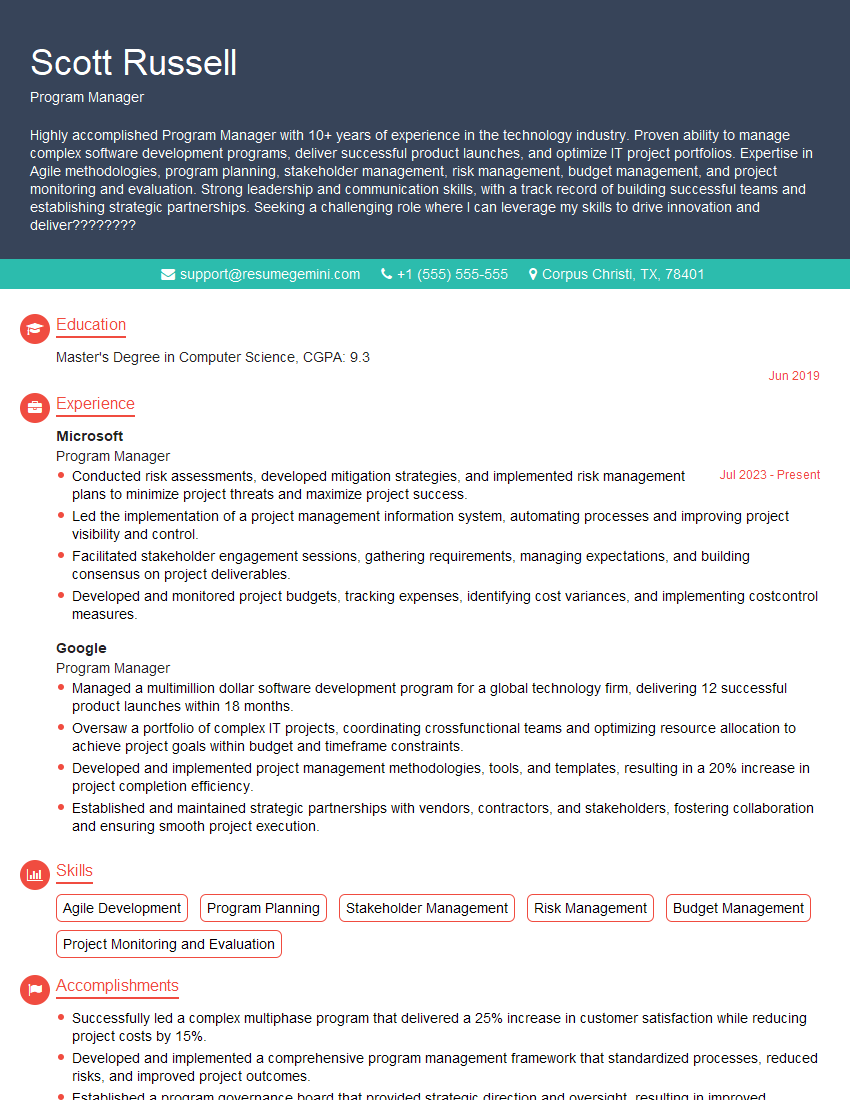
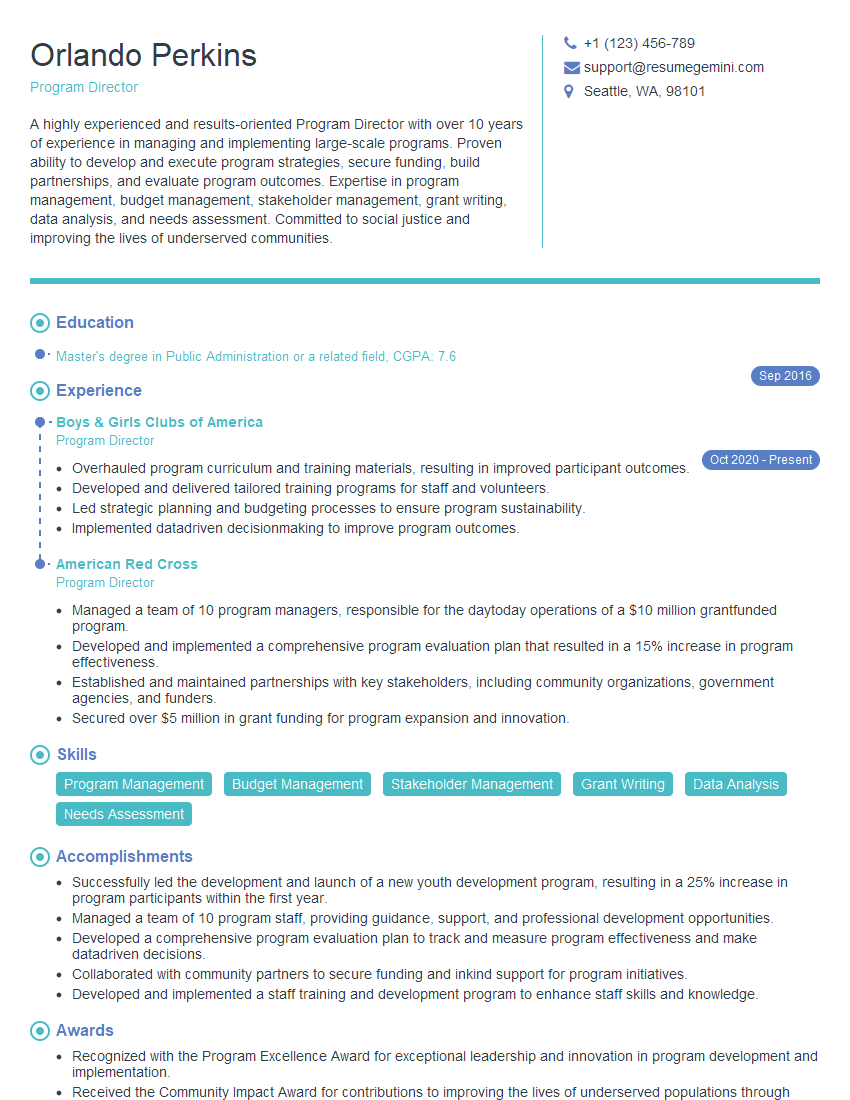
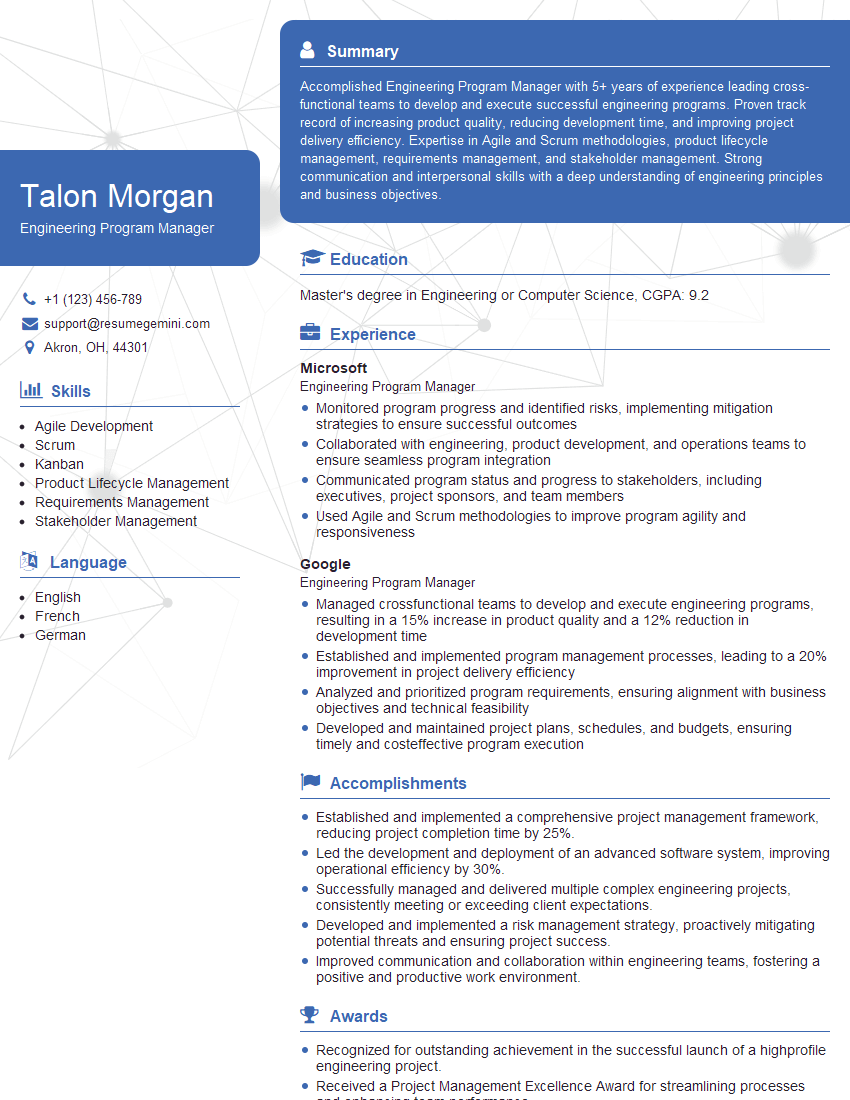
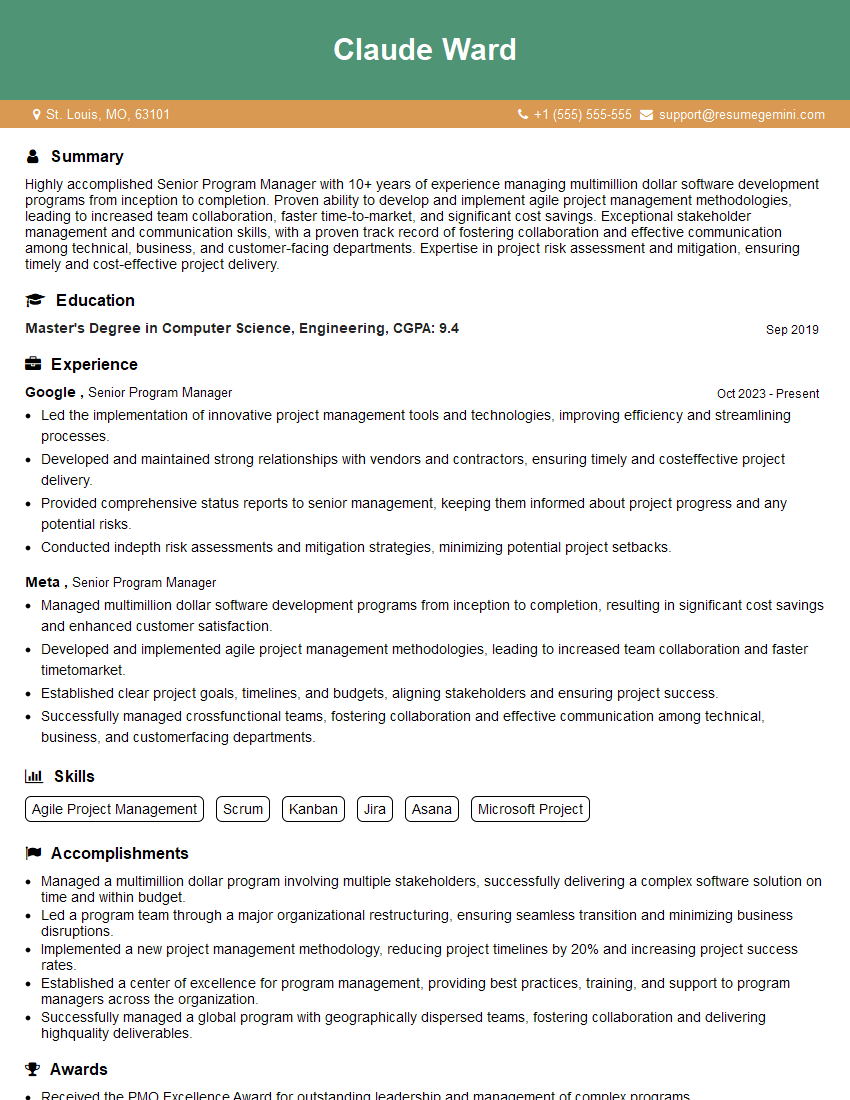
Mastering program building is crucial for a successful and rewarding career in software development. It opens doors to diverse roles with increasing responsibility and higher earning potential. To significantly boost your job prospects, invest time in crafting an ATS-friendly resume that highlights your skills and experience effectively. ResumeGemini is a trusted resource to help you build a professional and impactful resume. We provide examples of resumes tailored specifically to Program Building roles to guide you in showcasing your expertise. Take advantage of these resources to present yourself as the ideal candidate.
Explore more articles
Users Rating of Our Blogs
Share Your Experience
We value your feedback! Please rate our content and share your thoughts (optional).
What Readers Say About Our Blog
Very informative content, great job.
good