Unlock your full potential by mastering the most common Surveillance and Reconnaissance Systems interview questions. This blog offers a deep dive into the critical topics, ensuring you’re not only prepared to answer but to excel. With these insights, you’ll approach your interview with clarity and confidence.
Questions Asked in Surveillance and Reconnaissance Systems Interview
Q 1. Explain the difference between active and passive surveillance.
The core difference between active and passive surveillance lies in how they gather information. Passive surveillance is like being a silent observer; it involves collecting data without interacting with the subject. Think of it like watching a bird from afar with binoculars – you’re gathering information without influencing the bird’s behavior. Active surveillance, on the other hand, is more intrusive. It involves actively engaging with or manipulating the environment to obtain information. Imagine setting up a hidden camera with a motion sensor; the sensor’s trigger actively responds to the subject’s movement.
- Passive Surveillance: Examples include observing traffic patterns from a distance, analyzing social media posts, or using satellite imagery to monitor a location. It’s generally less intrusive but may provide less detailed or immediate information.
- Active Surveillance: Examples include using radar to track an object, employing covert microphones to record conversations, or deploying GPS trackers to monitor vehicle movements. It offers more detailed, real-time data but raises significant ethical and legal concerns due to its intrusive nature.
Q 2. Describe various types of surveillance cameras and their applications.
The world of surveillance cameras is incredibly diverse, each type offering unique capabilities. Choosing the right camera depends entirely on the specific application and environment.
- PTZ (Pan-Tilt-Zoom) Cameras: These offer remote control over the camera’s direction and zoom, allowing for wide area coverage and detailed views of specific targets. Ideal for large spaces like parking lots or stadiums.
- Fixed Dome Cameras: These are discreet, weather-resistant cameras with a fixed viewpoint, commonly used for indoor and outdoor security monitoring in various settings such as retail stores or residential areas.
- Bullet Cameras: Similar to dome cameras in terms of functionality, bullet cameras are cylindrical in shape and better suited for outdoor applications due to their weatherproofing and durability.
- Thermal Cameras: These detect infrared radiation, making them ideal for nighttime surveillance or scenarios with poor visibility. Applications include border security and wildlife monitoring.
- IP Cameras: These connect directly to a network, allowing for remote viewing and management of the footage. They offer better image quality and advanced features compared to analog cameras.
- Analog Cameras: These use coaxial cables to transmit signals to a DVR (Digital Video Recorder), typically providing a lower resolution image compared to IP cameras but often being cost-effective for smaller setups.
Q 3. What are the ethical considerations in deploying surveillance systems?
Ethical considerations in deploying surveillance systems are paramount. The potential for misuse and infringement on privacy rights is significant. A responsible approach requires careful consideration of the following:
- Privacy: Surveillance systems must respect individuals’ right to privacy. Clear signage informing people that they are being monitored is crucial. Data collection should be limited to what’s necessary and proportionate to the legitimate purpose.
- Transparency: The purpose of the surveillance system, the data collected, and how it is used should be transparent and accessible to the public. This builds trust and minimizes potential for abuse.
- Accountability: There should be mechanisms in place to ensure accountability for how surveillance data is handled. This could involve oversight boards, independent audits, or strict data retention policies.
- Bias and Discrimination: Surveillance systems should be designed and implemented to avoid bias and discrimination. This is particularly important in scenarios involving facial recognition technologies.
- Data Security: Robust security measures are essential to prevent data breaches and unauthorized access to sensitive information collected through surveillance.
Ignoring these ethical considerations can lead to public distrust, legal challenges, and reputational damage.
Q 4. How do you ensure the security and integrity of surveillance data?
Ensuring the security and integrity of surveillance data is crucial. It involves a multi-layered approach encompassing both physical and digital security measures.
- Physical Security: Cameras and recording devices must be secured against physical tampering or theft. This may involve using tamper-evident seals, securing equipment in locked cabinets, or using robust mounting systems.
- Network Security: The network infrastructure must be secured against unauthorized access. This requires strong passwords, firewalls, intrusion detection systems, and regular security audits. Encryption of data both in transit and at rest is crucial.
- Data Backup and Redundancy: Regular backups of surveillance data to offsite locations are essential to protect against data loss due to hardware failure, natural disasters, or cyberattacks. Redundancy in the system ensures continuous operation even during failures.
- Access Control: Access to surveillance data must be strictly controlled and restricted to authorized personnel. Role-based access control and audit trails should be implemented to track who accessed what data and when.
- Data Encryption: All surveillance data should be encrypted to protect it from unauthorized access even if a data breach occurs. This includes data stored on hard drives, transmitted over the network, and in the cloud.
Q 5. Explain your experience with different types of surveillance software.
My experience encompasses a wide range of surveillance software, from basic video management systems (VMS) to sophisticated AI-powered platforms. I’ve worked extensively with:
- Milestone XProtect: A robust VMS offering scalable solutions for various applications, from small-scale deployments to large, complex security systems. Its flexibility and extensive feature set made it ideal for various projects I’ve undertaken.
- Genetec Security Center: Another powerful VMS offering comprehensive security management capabilities, integrating access control, video surveillance, and analytics into a single platform. I’ve used it in projects requiring high-level security and centralized management.
- Avigilon Control Center: A user-friendly VMS suitable for both smaller and larger deployments. I appreciate its intuitive interface and robust video analytics capabilities.
- AI-powered analytics platforms: These platforms leverage artificial intelligence to analyze video footage, identifying suspicious activities such as loitering, intrusion, or abandoned objects. This greatly enhances the efficiency of security operations and improves response times.
My experience extends beyond just using these platforms; I have a strong understanding of their underlying architectures and capabilities, enabling me to design and optimize surveillance systems for diverse needs.
Q 6. Describe your experience with network video recorders (NVRs).
Network Video Recorders (NVRs) are the central hub of modern IP-based surveillance systems. My experience with NVRs includes their installation, configuration, maintenance, and troubleshooting. I’m proficient in configuring network settings, managing user access, setting up recording schedules, and optimizing storage capacity. I understand the importance of choosing NVRs with sufficient processing power and storage capacity to handle the video streams from multiple cameras, especially in high-resolution scenarios.
I’ve also worked with NVRs offering advanced features like video analytics, which can greatly enhance security by automatically detecting and alerting on suspicious events. In one project, we integrated an NVR with facial recognition software to improve security at a high-traffic facility. This allowed for rapid identification of individuals of interest and streamlined security response procedures.
Q 7. How do you troubleshoot common surveillance system issues?
Troubleshooting surveillance systems requires a systematic approach. I typically follow these steps:
- Identify the problem: Begin by clearly defining the issue. Is it a camera malfunction, network connectivity problem, storage issue, or software error?
- Gather information: Collect relevant information such as error messages, system logs, and network diagnostics. This provides valuable clues about the root cause.
- Isolate the problem: Use techniques like pinging devices, checking cable connections, and testing individual components to isolate the faulty element within the system.
- Implement a solution: Once the problem is identified, apply the appropriate solution. This could involve replacing a faulty camera, repairing a network connection, upgrading software, or configuring settings.
- Verify the solution: After implementing a solution, thoroughly test the system to ensure the problem is resolved and that the system is functioning correctly.
- Document the process: Keep detailed records of the troubleshooting process, including the problem, the solution implemented, and the outcome. This is crucial for future reference and for improving troubleshooting efficiency.
For example, if a camera shows a poor video feed, I would first check the camera’s power supply, then the cable connections, and then the network connectivity. If it’s a software problem, I would look at the system logs and potentially check for software updates. A systematic approach, combined with a solid understanding of the system’s architecture, is key to effective troubleshooting.
Q 8. What are your experiences with video analytics and AI in surveillance?
My experience with video analytics and AI in surveillance spans several years and diverse projects. I’ve worked extensively with integrating AI-powered algorithms into CCTV systems to improve threat detection and situational awareness. This includes using deep learning models for object detection (identifying people, vehicles, or suspicious items), facial recognition (with careful consideration of ethical and legal implications), and anomaly detection (flagging unusual behavior patterns within a scene).
For example, I was involved in a project where we implemented AI to analyze video feeds from a large shopping mall. The system was trained to identify shoplifting attempts based on specific behavioral indicators, such as prolonged interaction with merchandise and concealed movement. This significantly reduced the workload on security personnel and improved the efficiency of theft prevention. We also utilized predictive policing techniques, analyzing historical data to anticipate potential trouble spots and deploy resources proactively. The core of this involved integrating various machine learning algorithms and platforms, experimenting with different model architectures and hyperparameter tuning to optimize performance.
Furthermore, I’m familiar with various video analytics platforms, understanding their strengths and weaknesses regarding processing speed, accuracy, and integration capabilities. I understand the importance of proper data management, including data labeling, training, validation, and model retraining to maintain system accuracy and adapt to changing conditions.
Q 9. Explain your understanding of data privacy regulations related to surveillance.
Data privacy regulations concerning surveillance are critical and constantly evolving. My understanding encompasses a broad range of legislation, including GDPR (General Data Protection Regulation) in Europe, CCPA (California Consumer Privacy Act) in the US, and other similar laws worldwide. These regulations emphasize the need for transparency, consent, data minimization, and the right to be forgotten. They dictate how personal data acquired through surveillance systems must be handled, stored, and protected.
Specifically, I’m well-versed in the legal requirements regarding data retention periods, appropriate security measures to prevent unauthorized access, and the processes for handling subject access requests. I understand the importance of implementing data anonymization and pseudonymization techniques where possible to protect individual identities while maintaining the usefulness of the data for legitimate security purposes. I have practical experience in designing surveillance systems that comply with these regulations, including designing data governance procedures and implementing robust security protocols.
Ignoring these regulations can lead to severe penalties, including hefty fines and reputational damage. Therefore, understanding and adhering to data privacy laws is not just a legal obligation but also a crucial aspect of responsible surveillance system design and operation.
Q 10. How do you balance the need for security with individual privacy rights?
Balancing security needs with individual privacy rights is a constant challenge in surveillance. It’s a delicate act of finding a reasonable balance between protecting public safety and respecting the privacy of individuals. This involves a multi-faceted approach:
- Data Minimization: Collect only the necessary data to achieve the security objective. Avoid collecting excessive or irrelevant information.
- Purpose Limitation: Clearly define the purpose of surveillance and use the data only for that specified purpose.
- Transparency and Notice: Inform individuals about the surveillance activities and how their data will be used.
- Access Control and Security Measures: Implement robust security protocols to prevent unauthorized access and protect the data against breaches.
- Data Retention Policies: Establish clear and reasonable data retention periods, deleting data when it’s no longer needed.
- Accountability and Oversight: Establish mechanisms for auditing and oversight to ensure compliance with data privacy regulations and ethical guidelines.
For example, instead of using indiscriminate mass surveillance, we might focus on targeted monitoring of specific high-risk areas or deploying anonymized analytics that only identify suspicious behavior patterns without personally identifying individuals. Ethical considerations always guide my work in this space.
Q 11. Describe your experience with various types of reconnaissance sensors.
My experience encompasses a wide range of reconnaissance sensors. This includes:
- Video cameras: From standard CCTV cameras to advanced thermal imaging and low-light cameras, including various resolutions and zoom capabilities.
- Acoustic sensors: These can range from simple microphones to sophisticated directional microphones and infrasound sensors capable of detecting distant sounds or vibrations.
- Radar systems: I’ve worked with ground-penetrating radar for locating underground objects, as well as Doppler radar for tracking moving vehicles and personnel.
- LiDAR sensors: These provide high-resolution 3D mapping capabilities useful for creating detailed models of the environment.
- Infrared sensors: These are particularly useful for night vision applications and detecting heat signatures.
In each case, I understand the operational characteristics of the sensor, including range, resolution, sensitivity, and limitations. Knowing the strengths and weaknesses of different sensor types allows for the selection of the most appropriate technology for a given scenario.
Q 12. What are the limitations of different surveillance technologies?
Every surveillance technology has limitations. For instance:
- Video cameras: Can be affected by weather conditions (rain, fog, snow), lighting limitations (poor night vision in some cases), and obstructions (buildings, trees).
- Acoustic sensors: Susceptible to background noise, interference, and limited range in certain environments.
- Radar systems: Can be affected by atmospheric conditions and may have difficulty distinguishing between similar objects.
- LiDAR sensors: Can be expensive and require careful calibration. Performance can degrade in adverse weather conditions.
- Infrared sensors: Limited range and resolution compared to visible light cameras. Can be affected by atmospheric conditions.
Understanding these limitations is crucial for realistic expectations and choosing the right technology for a particular application. Often, a multi-sensor approach, fusing data from different sources, is needed to overcome the limitations of any single technology.
Q 13. How do you interpret and analyze surveillance data effectively?
Effective interpretation and analysis of surveillance data requires a structured approach. I typically follow these steps:
- Data Collection and Preprocessing: Gathering data from various sources, cleaning it, and preparing it for analysis. This might involve filtering out noise, correcting for distortions, and aligning data from multiple sensors.
- Pattern Recognition and Anomaly Detection: Using visual inspection, statistical methods, or AI-powered algorithms to identify patterns, anomalies, or events of interest.
- Correlation Analysis: Connecting events or patterns observed in different data streams (e.g., relating a suspicious object detected by a camera to a specific sound detected by an acoustic sensor).
- Contextualization: Integrating the surveillance data with other information to gain a comprehensive understanding of the situation (e.g., using geographic information systems to determine the location of an event).
- Reporting and Visualization: Presenting the findings in a clear, concise, and visually engaging way, often using dashboards or reports.
For instance, in a large-scale event, I might use data visualization tools to display the movements of individuals or vehicles over time, highlighting potential risks or areas of concern. The key is to use appropriate tools and techniques to extract meaningful insights and support decision-making.
Q 14. Explain your experience with different types of surveillance deployment scenarios.
I have experience deploying surveillance systems across various scenarios:
- Perimeter Security: Deploying cameras, sensors, and other technologies to monitor and protect the boundaries of a facility (e.g., industrial sites, airports).
- Public Safety: Implementing surveillance systems in public spaces (e.g., city streets, transportation hubs) to enhance safety and security.
- Critical Infrastructure Protection: Securing critical infrastructure (e.g., power plants, water treatment facilities) against potential threats.
- Law Enforcement: Supporting law enforcement activities by providing evidence and situational awareness.
- Commercial Applications: Implementing surveillance in retail stores, offices, and other commercial spaces to deter crime and improve security.
Each scenario requires a tailored approach, taking into consideration the specific environment, threats, and legal requirements. My experience includes the design, installation, configuration, and maintenance of these systems, ensuring optimal performance and compliance with relevant regulations.
Q 15. What is your experience with integrating surveillance systems with other security systems?
Integrating surveillance systems with other security systems, like access control, intrusion detection, and fire alarm systems, creates a unified security infrastructure. This integration allows for coordinated responses to threats and streamlined security management. For example, a breach detected by an intrusion detection system could automatically trigger a recording on nearby surveillance cameras, providing crucial evidence. I’ve extensive experience in this area, having led projects integrating various systems using industry-standard protocols like ONVIF (Open Network Video Interface Forum) and PSIA (Physical Security Interoperability Alliance). This often involves configuring event triggers, data sharing between systems, and developing customized integrations using APIs. A recent project involved integrating a video management system (VMS) with an access control system to automatically identify individuals entering restricted areas, greatly improving situational awareness and response times.
Career Expert Tips:
- Ace those interviews! Prepare effectively by reviewing the Top 50 Most Common Interview Questions on ResumeGemini.
- Navigate your job search with confidence! Explore a wide range of Career Tips on ResumeGemini. Learn about common challenges and recommendations to overcome them.
- Craft the perfect resume! Master the Art of Resume Writing with ResumeGemini’s guide. Showcase your unique qualifications and achievements effectively.
- Don’t miss out on holiday savings! Build your dream resume with ResumeGemini’s ATS optimized templates.
Q 16. Describe your experience with remote access and monitoring of surveillance systems.
Remote access and monitoring of surveillance systems are crucial for efficient management and rapid response to incidents. This typically involves using a VMS (Video Management System) with a web-based interface or dedicated client software that allows authorized personnel to view live feeds, review recordings, and control camera functions from anywhere with an internet connection. Security is paramount; I always implement robust access controls, such as multi-factor authentication and role-based permissions, to prevent unauthorized access. Furthermore, I ensure secure communication channels using encrypted protocols like HTTPS and VPNs. For example, I once designed a system using a VPN connection to a cloud-based VMS, allowing clients to access their surveillance footage globally, while maintaining strict encryption throughout the data transfer.
Q 17. How do you ensure the reliability and uptime of surveillance systems?
Ensuring reliability and uptime of surveillance systems is critical for their effectiveness. My approach involves several key strategies. First, I always select high-quality, robust hardware components from reputable vendors. Second, I design systems with redundancy built-in, such as using dual power supplies and network connections. Third, I implement regular maintenance schedules including firmware updates, system backups, and performance testing. Fourth, I leverage monitoring tools to proactively detect and address potential issues before they impact system uptime. For instance, I use monitoring software to track bandwidth usage, storage capacity, and camera status, allowing for preemptive action to prevent outages. A crucial aspect is planning for disaster recovery; I always ensure data backups are stored offsite and systems can be quickly restored in case of failures.
Q 18. How do you maintain the confidentiality of sensitive surveillance data?
Maintaining the confidentiality of sensitive surveillance data is paramount. This requires a multi-layered approach to security. First, data encryption is essential – both in transit and at rest. I ensure all network traffic is encrypted using protocols like TLS/SSL, and stored data is encrypted using robust encryption algorithms. Second, access control is implemented strictly, restricting access to authorized personnel only, based on roles and responsibilities. Third, regular security audits and penetration testing are conducted to identify and address vulnerabilities. Finally, I adhere to relevant data privacy regulations, such as GDPR and CCPA, ensuring compliance with legal requirements. For instance, in a recent project, I implemented a system where only authorized personnel with specific roles could access footage, with all data encrypted both during transmission and storage, further ensuring compliance with the organization’s internal security policies.
Q 19. What are your experiences with different types of surveillance system architectures?
I have experience with various surveillance system architectures, including centralized, decentralized, and hybrid models. Centralized systems manage all cameras and recordings from a single location, offering simplified management but with a single point of failure. Decentralized systems distribute control and storage across multiple locations, providing greater resilience but more complexity. Hybrid systems combine aspects of both, offering a balanced approach. The choice depends on the specific needs and constraints of the project, such as scale, budget, and security requirements. For example, a large corporate campus might benefit from a hybrid system, centralizing management of critical areas while decentralizing less critical areas for resilience. Selecting the right architecture ensures optimal performance, scalability, and security for the specific application.
Q 20. Describe your experience with designing and implementing secure surveillance networks.
Designing and implementing secure surveillance networks requires a holistic approach, considering all aspects of security. This begins with network segmentation, isolating the surveillance network from other corporate networks to limit the impact of potential breaches. Next, strong authentication and authorization mechanisms are essential, including robust passwords, multi-factor authentication, and role-based access control. Firewalls and intrusion detection/prevention systems are implemented to monitor and control network traffic. Regular security audits and vulnerability scans are essential for proactive risk management. Finally, implementing encryption for all data transmission and storage is crucial to protecting sensitive information. For instance, a recent project involved designing a secure network for a high-security facility, employing multiple layers of security, including network segmentation, robust authentication, and end-to-end data encryption, ensuring a robust and secure surveillance system.
Q 21. Explain your familiarity with different image and video compression techniques.
My familiarity with image and video compression techniques is extensive. I’m proficient in various codecs, including H.264, H.265 (HEVC), and MJPEG. H.264 provides a good balance between compression efficiency and computational complexity, while H.265 offers even higher compression ratios at the cost of increased processing power. MJPEG offers simpler decoding but requires higher bandwidth. The choice of codec depends on factors like storage capacity, bandwidth availability, and desired video quality. Furthermore, I understand the trade-offs between compression level and image quality, and I can optimize the settings to achieve the best balance for each specific application. For example, I recently optimized a surveillance system to use H.265, significantly reducing storage requirements while maintaining acceptable image quality, resulting in cost savings and improved efficiency.
Q 22. What are your experiences with handling large volumes of surveillance data?
Managing large surveillance datasets requires a robust, multi-faceted approach. It’s not just about storage; it’s about efficient retrieval, analysis, and ultimately, actionable intelligence. In my experience, this involves leveraging powerful database systems like Hadoop or cloud-based solutions like AWS S3 for storage. We often implement sophisticated indexing and metadata tagging strategies to ensure quick access to specific events or objects within the massive video and sensor data streams. For example, in one project involving city-wide traffic monitoring, we used a combination of metadata (time, location, vehicle type) and advanced search algorithms to quickly pinpoint incidents based on specific criteria, dramatically reducing search time from days to minutes. Efficient data compression techniques are also crucial to managing storage costs and bandwidth usage, particularly with high-resolution video feeds. Finally, distributed processing frameworks, like Spark, become essential for analyzing this data in a reasonable timeframe. We use these to run sophisticated analytics, identifying trends and patterns that might otherwise be missed.
Q 23. How do you identify and mitigate risks associated with surveillance systems?
Risk mitigation in surveillance systems is paramount. It requires a holistic view, encompassing physical, cyber, and operational risks. On the physical side, we need to consider environmental factors (power outages, extreme weather), theft, and vandalism. Robust physical security measures—secure enclosures, environmental controls, alarm systems, and access control—are crucial. Cybersecurity risks include data breaches, unauthorized access, and system failures. Mitigation strategies here involve network segmentation, robust firewalls, intrusion detection systems (IDS), and regular security audits and penetration testing. Operational risks cover issues like data loss, system downtime, and human error. Redundancy (backup systems, power generators), stringent operational procedures, and regular system maintenance address these risks. A comprehensive risk assessment, regularly updated, is fundamental to proactively identify and mitigate potential threats. For example, in a project involving critical infrastructure protection, we identified a vulnerability in the remote access protocol, enabling us to implement multi-factor authentication and enhance encryption protocols before any compromise could occur.
Q 24. Explain your understanding of different types of cyber threats to surveillance systems.
Surveillance systems are attractive targets for cyberattacks. Threats range from relatively simple denial-of-service (DoS) attacks, which flood the system with traffic, rendering it unusable, to sophisticated intrusions aimed at data theft or system manipulation. Malware infections can compromise cameras, recorders, and network infrastructure, leading to data breaches or system control. Insider threats, from malicious employees with privileged access, pose a significant risk. Advanced Persistent Threats (APTs) are another major concern, where attackers gain stealthy, long-term access to systems to exfiltrate data or maintain persistent control. We need to address these risks through a layered security approach that combines technical controls (firewalls, intrusion detection systems, anti-malware), robust access controls, and security awareness training for personnel. Regular security audits and vulnerability assessments are essential for proactive threat detection and mitigation. I’ve encountered several scenarios where social engineering attacks led to compromised credentials, highlighting the importance of security awareness training.
Q 25. What are your experiences with physical security measures for protecting surveillance equipment?
Protecting surveillance equipment physically is crucial. Measures include secure enclosures to prevent tampering and theft, environmental controls to protect against extreme temperatures and humidity, and robust physical access control using locks, keypads, and potentially biometric authentication. Cameras should be strategically positioned to minimize blind spots and maximize visibility, while also considering environmental factors like weatherproofing and camouflage to prevent damage or detection. Regular maintenance checks ensure that all equipment is functioning correctly and that any physical security vulnerabilities are identified and addressed promptly. In one case, we implemented a system of tamper alarms and motion sensors on the equipment housings, coupled with regular patrols, which successfully prevented unauthorized access and sabotage.
Q 26. How do you stay up-to-date with advancements in surveillance and reconnaissance technologies?
Staying current in this rapidly evolving field requires a multi-pronged approach. I actively participate in industry conferences and workshops to learn about the latest technologies and best practices. Professional certifications, such as those offered by organizations like (ISC)² or SANS Institute, are valuable for maintaining a high level of competence. I regularly review industry publications, journals, and online resources to stay informed on emerging threats and technologies. Networking with peers and professionals in the field allows for the sharing of experiences and insights. Furthermore, hands-on experience with new technologies through pilot projects and research initiatives is essential for staying ahead of the curve. This ensures I remain informed about advancements in areas such as AI-powered video analytics, drone technology, and cybersecurity solutions.
Q 27. Describe a situation where you had to solve a complex problem related to surveillance systems.
One challenging case involved a large-scale network outage impacting a critical national infrastructure surveillance system. The initial diagnosis pointed to a hardware failure, but after an extensive investigation, we discovered a sophisticated denial-of-service attack exploiting a previously unknown vulnerability in our network infrastructure. The solution involved a multi-stage process: first, mitigating the attack by implementing temporary traffic filtering and routing adjustments. Next, we conducted a thorough vulnerability assessment to identify and patch the exploited weakness. Finally, we implemented more robust intrusion detection and prevention systems, including a network-based intrusion detection system (NIDS) and a next-generation firewall (NGFW), along with a comprehensive security awareness training program for our staff. This involved collaboration with cybersecurity experts and network engineers. The successful resolution involved not only technical expertise but also strong teamwork and effective communication, which were essential for coordinating the efforts of different teams and minimizing downtime.
Q 28. Explain your experience with using surveillance data to support investigations.
Surveillance data plays a crucial role in supporting investigations. It provides objective evidence that can corroborate witness testimonies or uncover hidden details. In one case, we used video footage from multiple cameras to reconstruct the sequence of events in a theft. This allowed us to identify the suspects and their escape route, leading to their apprehension. Analyzing surveillance data requires careful planning and execution. This includes understanding the context of the data, selecting relevant data segments, employing appropriate analysis techniques, and preparing clear and concise reports for investigators. The use of video analytics tools can automate certain aspects of the analysis, like identifying objects or tracking movement patterns. However, human review is still essential to ensure the accuracy and reliability of the findings, as AI-powered analysis isn’t perfect and can require expert oversight. Data must also be handled ethically and legally, adhering to strict privacy regulations and guidelines. Proper chain of custody is also vital for admissibility of the evidence in court.
Key Topics to Learn for Surveillance and Reconnaissance Systems Interview
- Sensor Technologies: Understanding various sensor types (e.g., optical, acoustic, radar, infrared) and their applications in different surveillance scenarios. Consider their limitations and how to overcome them.
- Signal Processing and Data Analysis: Explore techniques for filtering, enhancing, and interpreting sensor data. Practice analyzing real-world data sets and identifying key patterns.
- System Integration and Architecture: Familiarize yourself with the architecture of complete surveillance systems, including data acquisition, processing, storage, and dissemination. Consider different system architectures and their trade-offs.
- Cybersecurity and Data Protection: Understand the vulnerabilities of surveillance systems and the importance of data security and privacy. Explore best practices for protecting sensitive information.
- Image and Video Analysis: Master techniques for analyzing imagery and video data, including object detection, tracking, and recognition. Consider the challenges of real-world imagery and how to mitigate them.
- Ethical Considerations: Understand the ethical implications of surveillance technologies and their potential impact on privacy and civil liberties. Be prepared to discuss responsible use and potential biases.
- Deployment and Operation: Learn about the practical aspects of deploying and maintaining surveillance systems, including site selection, calibration, and troubleshooting.
- Emerging Technologies: Stay updated on advancements in areas like AI-powered surveillance, autonomous systems, and drone technology. Demonstrate your curiosity and commitment to continuous learning.
Next Steps
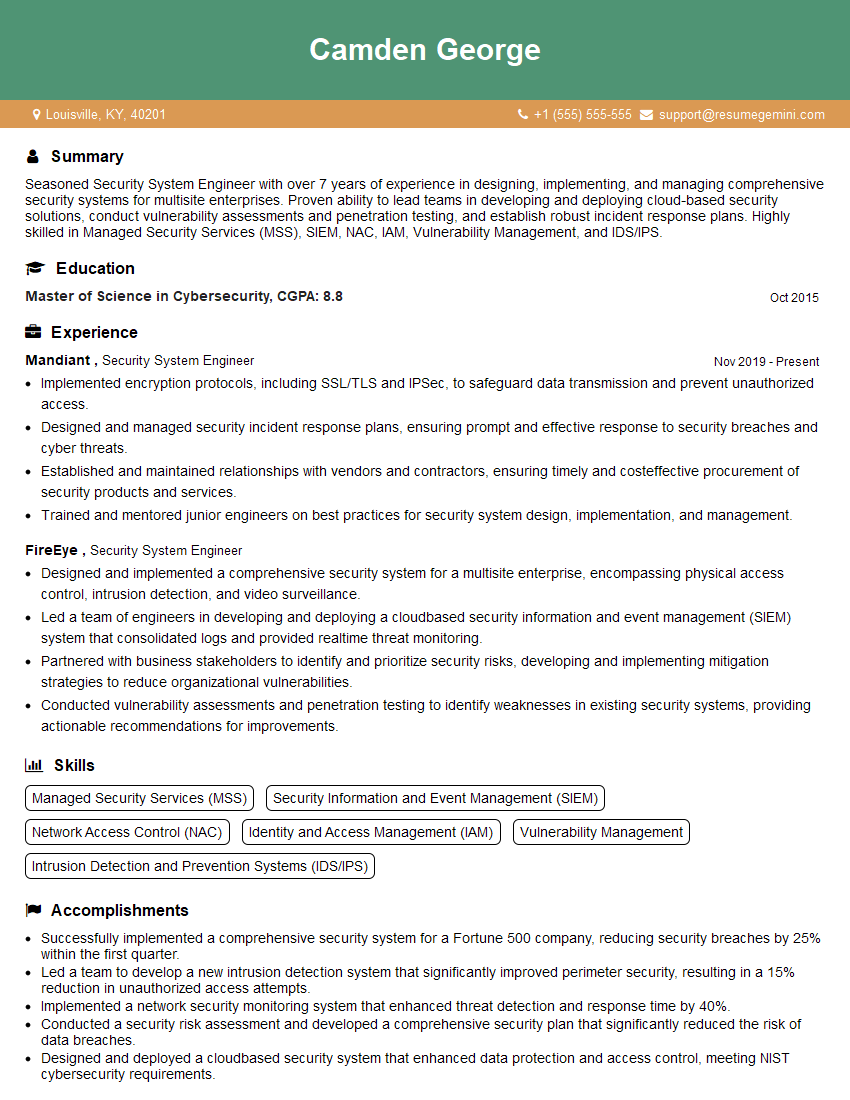
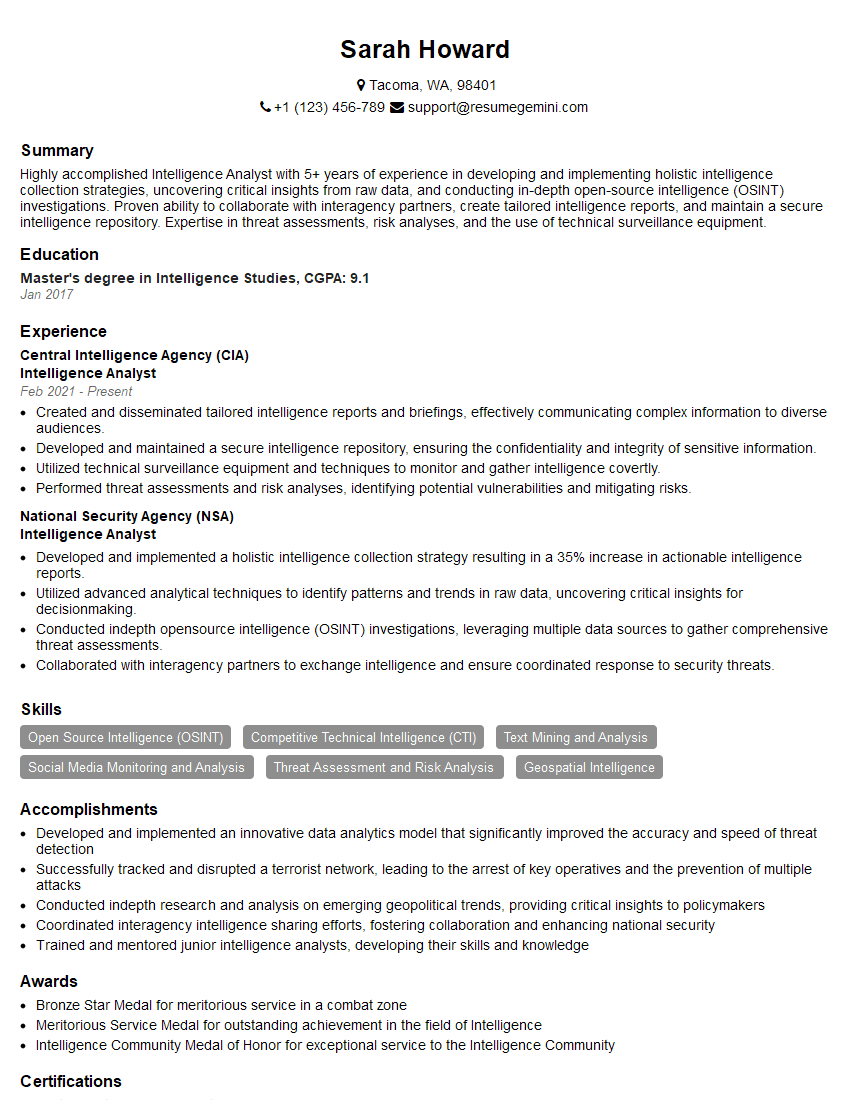
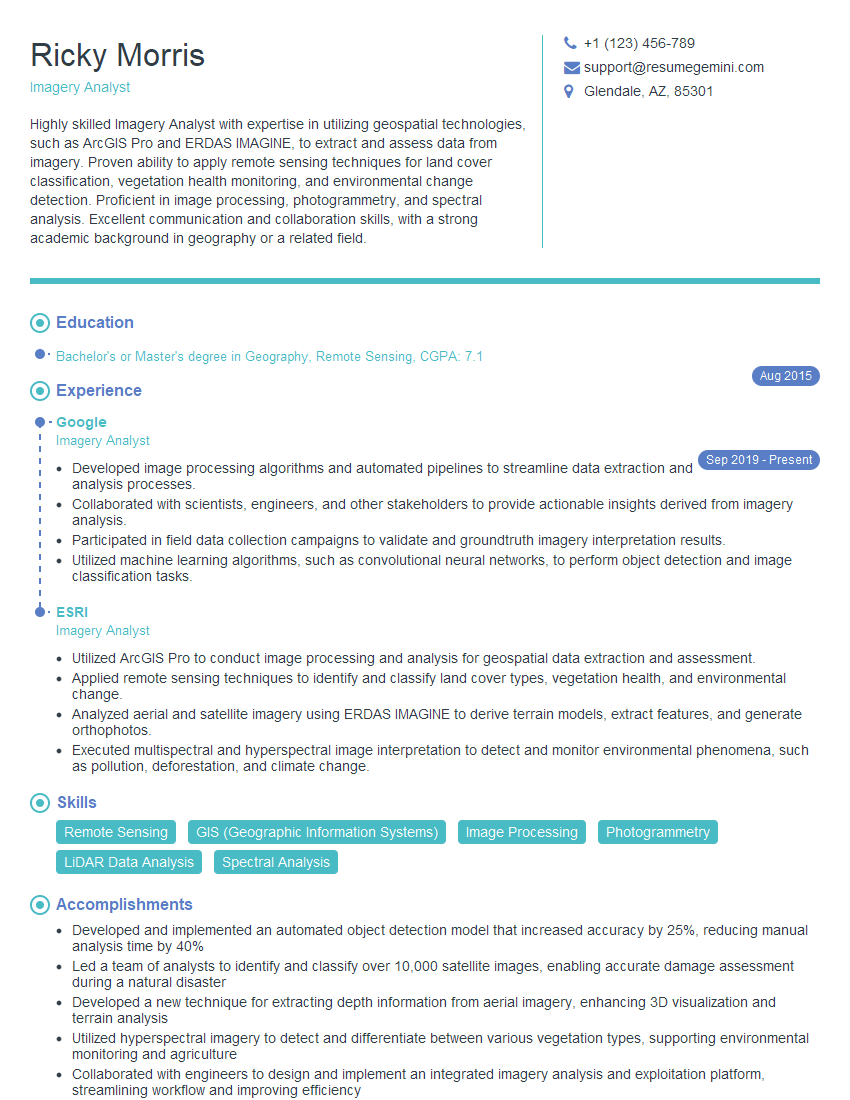
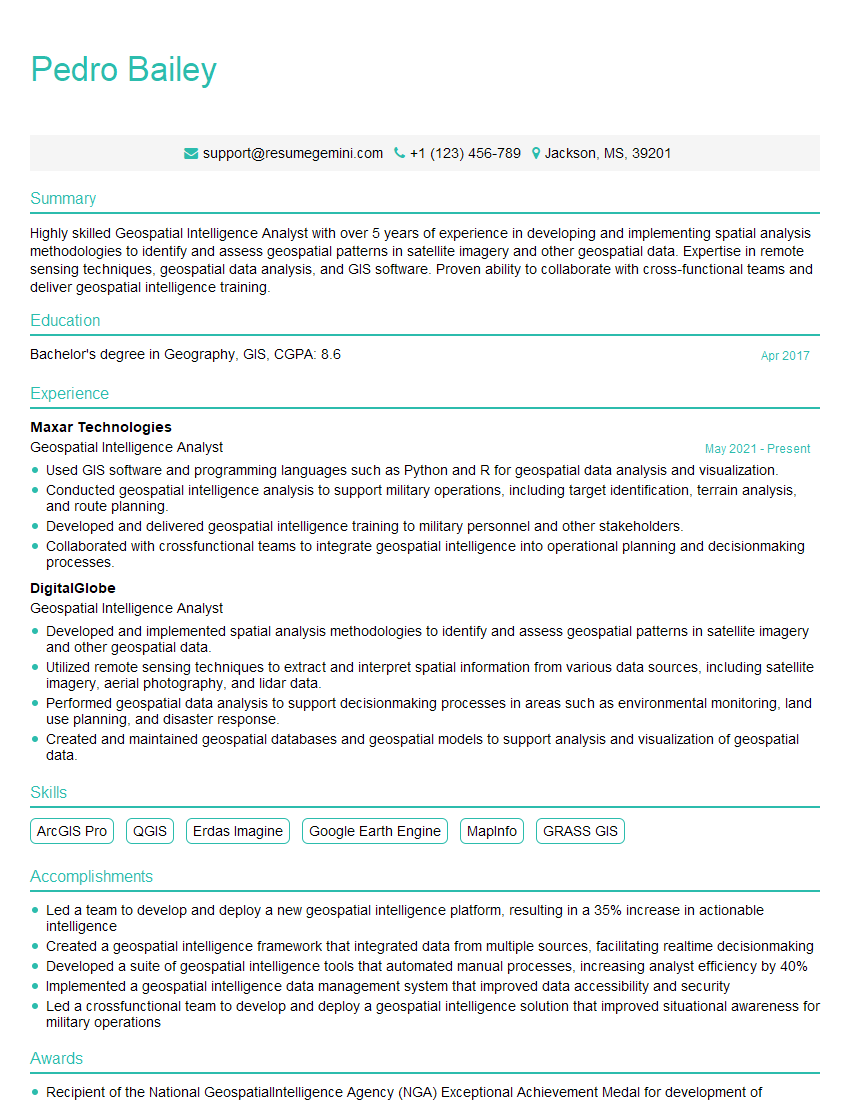
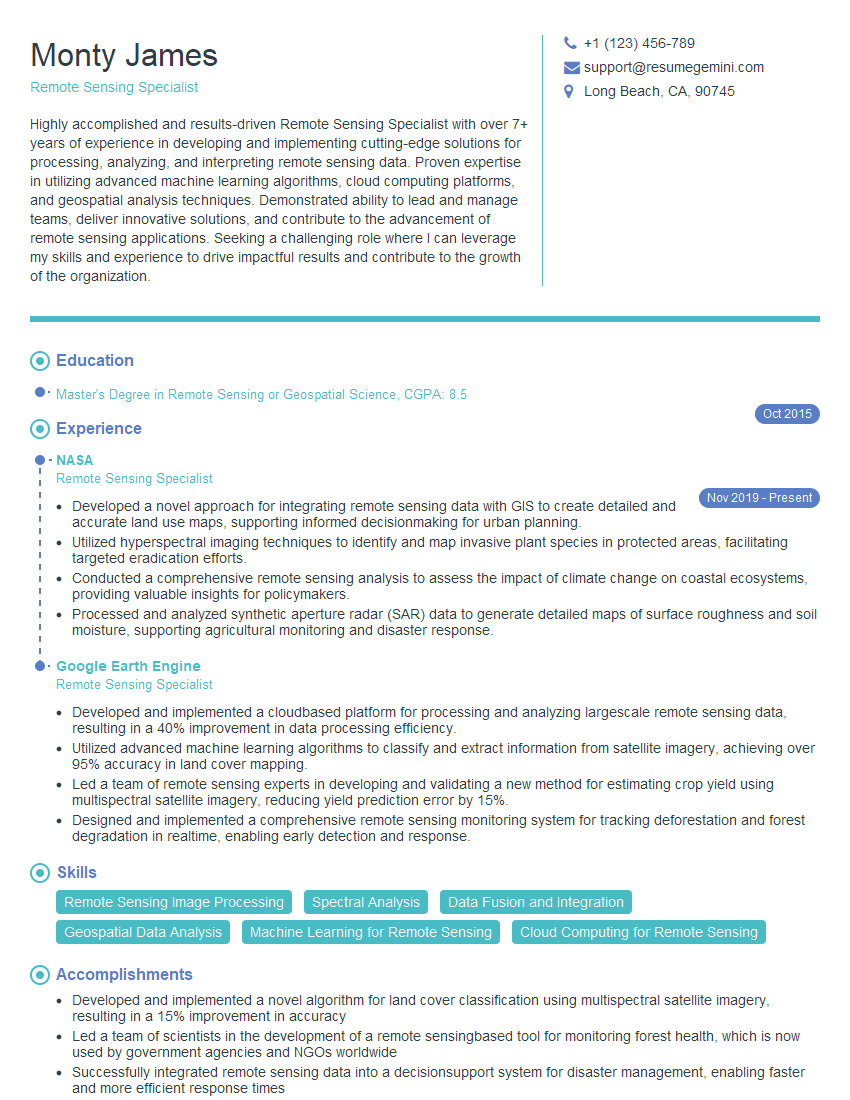
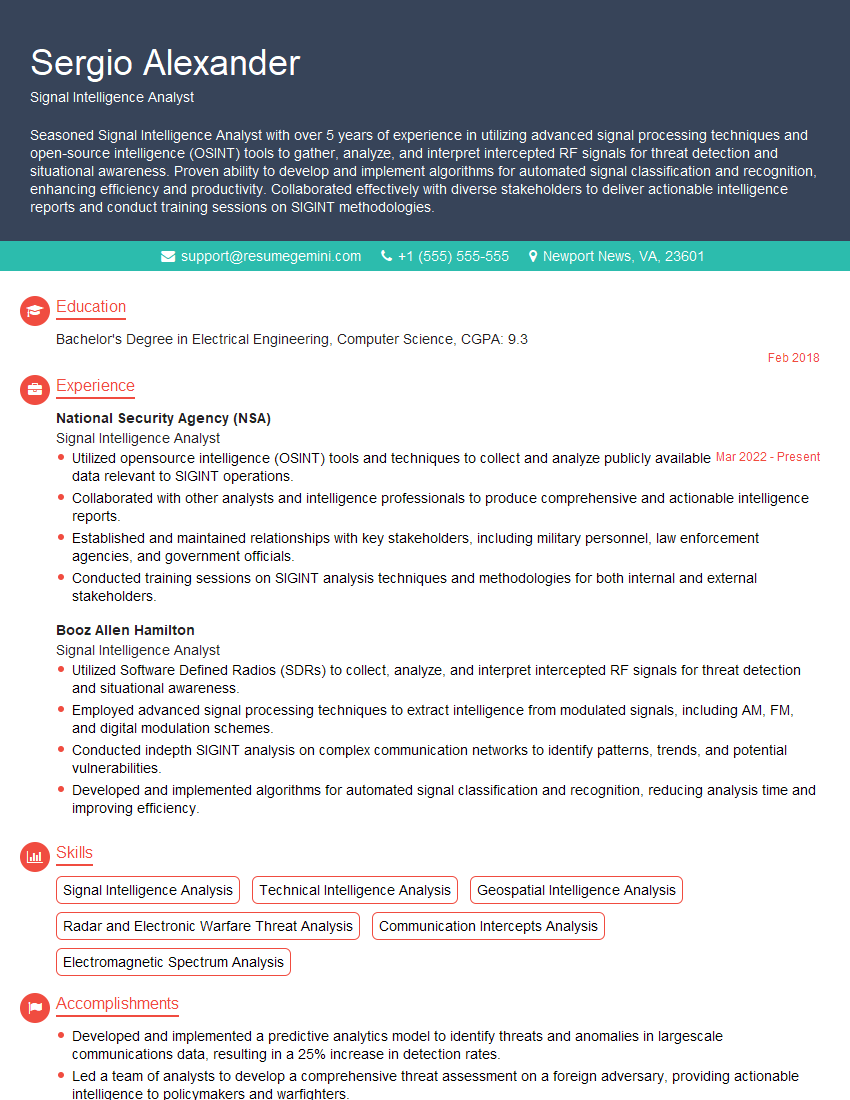
Mastering Surveillance and Reconnaissance Systems opens doors to exciting and impactful careers in a rapidly evolving field. A strong understanding of these systems is highly valued by employers seeking innovative problem-solvers and technically skilled professionals. To increase your chances of securing your dream role, creating a compelling and ATS-friendly resume is crucial. ResumeGemini is a trusted resource that can help you build a professional and effective resume that showcases your skills and experience. We provide examples of resumes tailored specifically to the Surveillance and Reconnaissance Systems field to help you craft a document that stands out from the competition. Take the next step in your career journey and start building your winning resume today!

Explore more articles
Users Rating of Our Blogs
Share Your Experience
We value your feedback! Please rate our content and share your thoughts (optional).
What Readers Say About Our Blog
Very informative content, great job.
good