Interviews are more than just a Q&A session—they’re a chance to prove your worth. This blog dives into essential Progressive Training Methods interview questions and expert tips to help you align your answers with what hiring managers are looking for. Start preparing to shine!
Questions Asked in Progressive Training Methods Interview
Q 1. Explain the core principles of progressive training methods.
Progressive training methods revolve around the gradual increase in training demands over time to stimulate continuous improvement. This isn’t just about adding weight; it’s about strategically increasing the challenge in various aspects of the training process. The core principles include:
- Gradual Progression: Incrementally increasing the training load – be it weight, reps, sets, intensity, or duration – to prevent plateaus and injuries.
- Individualization: Tailoring the program to the individual’s specific needs, goals, and current fitness level. No one-size-fits-all approach works here.
- Specificity: Focusing exercises and training methods relevant to the desired outcome. For instance, a marathon runner will train differently than a weightlifter.
- Periodization: Structuring the training program into distinct phases (macrocycles, mesocycles, microcycles) with varying intensity and volume to optimize adaptation and prevent overtraining.
- Recovery and Rest: Allowing adequate time for the body to recover and rebuild after training. This is as critical as the training itself.
Imagine building a house: you wouldn’t start with the roof; you’d lay a solid foundation first, gradually adding floors and walls. Progressive training is similar; it’s about building a strong base of fitness and gradually adding complexity.
Q 2. Describe the difference between progressive overload and deload.
Progressive overload refers to the systematic and gradual increase in training stress over time. This might involve adding weight, increasing repetitions, extending sets, shortening rest periods, or incorporating more challenging exercises. It forces the body to adapt and become stronger, faster, or more endurance.
Deloading, on the other hand, is a planned reduction in training volume and intensity. It’s a crucial part of progressive training, preventing overtraining, allowing the body to recover and repair damaged tissues, and preparing for the next training cycle. Deloading might involve reducing sets, reps, weight, or the frequency of training.
Think of it like this: progressive overload is like adding more weight to a barbell; deloading is like taking some weight off to rest and recover before adding even more weight later. Both are essential for long-term progress.
Q 3. How do you assess the effectiveness of a progressive training program?
Assessing the effectiveness of a progressive training program requires a multifaceted approach. We don’t solely rely on subjective feedback but use objective measurements. Key assessment strategies include:
- Monitoring Progress: Tracking key metrics (discussed in the next question) to see if the individual is consistently improving.
- Performance Testing: Regularly testing strength, endurance, speed, or power, depending on the training goals. This provides a quantifiable measure of progress.
- Self-Reported Outcomes: Gathering feedback from the individual on how they feel, their perceived exertion, and any limitations they may be experiencing. This helps to understand subjective aspects.
- Injury Monitoring: Closely observing for any signs of overtraining or injury. This is crucial for adjusting the program and preventing setbacks.
For example, if a client is aiming for a personal best in a 5k race, we’d track their race times, training pace, and recovery times to assess their progress and modify the plan as needed.
Q 4. What are the key metrics you track in progressive training?
The specific metrics tracked will depend on the training goals, but generally include:
- Strength: One-rep maximum (1RM), strength scores on various exercises.
- Endurance: Time to complete a certain distance, repetitions performed at a specific intensity, heart rate data during exercise.
- Power: Power output during specific exercises (e.g., jump tests).
- Body Composition: Body weight, body fat percentage, muscle mass.
- Recovery Metrics: Sleep quality, heart rate variability, perceived exertion levels (RPE).
- Training Volume: Total sets, reps, and weight lifted per week.
These metrics are tracked using a combination of direct measurements (like 1RM testing) and wearable technology (like heart rate monitors and sleep trackers).
Q 5. How do you adapt progressive training programs for different learning styles?
Adapting progressive training to different learning styles requires understanding individual preferences and using a variety of teaching methods. For example:
- Visual Learners: Use diagrams, charts, videos, and demonstrations to illustrate exercises and training plans.
- Auditory Learners: Explain concepts verbally, use clear instructions, and provide feedback through discussions.
- Kinesthetic Learners: Encourage hands-on practice, provide opportunities for self-discovery through experimentation, and offer varied movement patterns.
It’s often beneficial to combine multiple approaches. For example, provide a visual guide (diagram) for an exercise, demonstrate the exercise correctly, and then allow the trainee to try it out (kinesthetic). Regular feedback and adjustments ensure everyone feels comfortable and understands the program.
Q 6. Discuss the role of feedback in progressive training.
Feedback is vital in progressive training. It allows for timely adjustments, ensuring the program remains effective and safe. Feedback can be both subjective and objective:
- Subjective Feedback: This comes from the trainee and includes their perceived exertion, feelings of fatigue, and any discomfort experienced during training.
- Objective Feedback: This comes from performance data, such as weight lifted, reps completed, time taken, and heart rate data. Wearable technology helps significantly in gathering this information.
Regular feedback loops – weekly check-ins, for instance – are vital to ensure the training program is on track and adjustments are made based on the individual’s response. This could involve adjusting the training load, changing exercises, or altering rest periods.
Q 7. How do you handle plateaus in a progressive training program?
Plateaus are inevitable in any training program. Handling them requires a systematic approach:
- Analyze the Program: Carefully review the training plan to identify potential areas needing modification. This may involve assessing the intensity, volume, frequency, and exercise selection.
- Change the Stimulus: Introduce new exercises, change rep ranges, adjust rest periods, or incorporate different training methods (e.g., plyometrics, circuit training).
- Assess Recovery: Ensure adequate sleep, nutrition, and hydration. Overtraining is a common cause of plateaus, so addressing recovery factors is crucial.
- Consider External Factors: Evaluate non-training factors, such as stress, illness, or insufficient sleep, which can impact progress.
- Take a Deload Week: Allow the body time to recover before restarting the training program with adjustments.
Sometimes, a plateau might simply signal a need for a different training approach. It’s important not to become disheartened but to view it as an opportunity for improvement and adaptation.
Q 8. What are the potential risks associated with progressive training, and how do you mitigate them?
Progressive training, while highly effective, does carry potential risks. One major risk is overtraining, leading to burnout and decreased performance. This can happen if the training increments are too large or the frequency is too high. Another risk is lack of proper assessment, meaning trainees might progress to more advanced material without fully grasping foundational concepts, creating knowledge gaps. Finally, inconsistent feedback can leave learners confused and demotivated, hindering their progress.
Mitigation involves careful planning and execution. We should always start with a thorough needs assessment to tailor the program to individual learning styles and paces. We then implement regular check-ins and assessments to monitor progress and identify areas needing extra attention or adjustment. Feedback needs to be timely, specific, and actionable, using methods like peer review or self-assessment. Finally, building in adequate rest and recovery periods prevents overtraining.
For example, in a software training program, we would start with basic functionalities, gradually adding complexity. Learners would receive regular quizzes and feedback on their performance, and we’d adjust the training pace based on their progress. If a learner struggles with a specific module, we wouldn’t simply move on; we would provide extra support and resources before advancing to the next level.
Q 9. Describe a time you designed a progressive training program. What were the key elements?
I recently designed a progressive training program for customer service representatives at a large telecommunications company. The goal was to improve their handling of complex technical issues and customer complaints.
The key elements included:
- Needs Analysis: We began by analyzing existing performance data and conducting interviews with representatives to identify skill gaps and areas for improvement.
- Modular Design: The training was broken down into smaller, manageable modules focusing on specific skills, such as troubleshooting common technical problems, conflict resolution, and effective communication techniques.
- Gradual Progression: Each module built upon the previous one, starting with foundational knowledge and gradually increasing the complexity of tasks and scenarios.
- Interactive Exercises and Simulations: We incorporated role-playing exercises, realistic simulations, and interactive quizzes to make the learning experience engaging and practical.
- Performance Monitoring and Feedback: Throughout the program, trainees’ performance was monitored through quizzes, real-world observations, and performance data. Regular feedback was provided to help them identify areas for improvement.
- Personalized Learning Paths: Trainees were allowed to progress at their own pace, with the option to revisit modules or access additional resources if needed. This personalized approach accounted for varying learning speeds and individual strengths and weaknesses.
This program resulted in a significant improvement in customer satisfaction scores and a reduction in call resolution times.
Q 10. How do you incorporate technology into progressive training?
Technology plays a crucial role in modern progressive training. Learning Management Systems (LMS) are essential, providing a centralized platform for delivering content, tracking progress, and managing assessments. For example, using platforms like Moodle or Canvas enables easy distribution of course materials, including videos, interactive exercises, and quizzes. Gamification is another powerful tool— incorporating game mechanics like points, badges, and leaderboards—can significantly boost learner engagement and motivation.
Beyond LMS, we can utilize tools like virtual reality (VR) and augmented reality (AR) to create immersive learning experiences. VR simulations, for instance, could allow trainees to practice handling challenging situations in a safe and controlled environment, like a medical professional practicing a complex procedure.
Furthermore, AI-powered tools can personalize the learning path by providing customized content and feedback based on individual learner progress and performance. These technologies significantly improve the effectiveness and engagement of progressive training programs.
Q 11. Explain your experience with different training modalities (e.g., online, in-person, blended).
I have extensive experience with all three training modalities: online, in-person, and blended. Online training offers scalability and flexibility; it’s cost-effective and allows learners to access materials at their convenience. However, it can lack the social interaction and immediate feedback of in-person training. In-person training provides invaluable opportunities for collaboration, networking, and immediate clarification of doubts, but it’s less scalable and more expensive.
Blended learning, which combines online and in-person elements, often offers the best of both worlds. For instance, learners might complete online modules at their own pace and then participate in in-person workshops for collaborative activities and hands-on practice. The choice of modality depends heavily on the specific training objectives, learner preferences, resources, and budget. I’ve successfully designed and implemented programs using each approach, tailoring them to the unique needs of each situation.
Q 12. How do you ensure learner engagement in a progressive training program?
Learner engagement is paramount in any training program, especially a progressive one. We need to create a stimulating and relevant learning environment. This is accomplished through several strategies. First, focusing on active learning techniques, like group discussions, hands-on activities, and problem-solving exercises, replaces passive learning methods, such as lectures.
Second, incorporating various media formats such as videos, interactive simulations, and case studies keeps the learning experience dynamic and caters to different learning styles. Third, providing regular feedback and recognition – celebrating achievements and acknowledging effort – significantly boosts learner motivation and engagement. Finally, fostering a sense of community through collaborative projects and peer interaction builds a supportive learning environment.
For example, in a leadership training program, we would use simulations that challenged participants to solve real-world problems collaboratively, followed by feedback sessions where they could reflect on their actions and receive guidance. The focus on practical application and peer interaction greatly enhances the learning experience.
Q 13. How do you measure the ROI of a progressive training program?
Measuring the ROI of a progressive training program requires a multi-faceted approach. We can’t simply look at the cost of the program itself; we need to consider the impact on business outcomes. This can be achieved through several key metrics:
- Improved Performance: We can track improvements in key performance indicators (KPIs) directly related to the training objectives. This could include increased productivity, improved quality of work, reduced error rates, or better customer satisfaction scores.
- Reduced Costs: Training can lead to cost savings through reduced employee turnover, fewer accidents, or improved efficiency. We would track these cost reductions.
- Increased Revenue: Training may lead to increased sales, better market share, or new product development. Measuring these impacts is crucial.
- Learner Satisfaction: Collecting feedback through surveys and interviews provides insights into the effectiveness of the program and learner satisfaction. This should be considered, even if not directly impacting bottom-line metrics.
By carefully tracking and analyzing these metrics, we can build a compelling case for the value of the progressive training program and demonstrate its positive return on investment.
Q 14. What are some common challenges in implementing progressive training, and how have you overcome them?
Common challenges in implementing progressive training include securing executive buy-in, managing learner expectations, ensuring consistent program delivery, and evaluating the effectiveness of the program.
To overcome these challenges, we need to build a strong business case demonstrating the value of the program, manage expectations by clearly communicating the program’s goals and timeline, establishing clear roles and responsibilities for program delivery, and using robust evaluation methods to track progress and measure impact. For example, to address resistance to change, I would work closely with stakeholders to demonstrate how progressive training directly supports business goals and aligns with organizational strategy.
To address inconsistent program delivery, I would establish clear quality standards, provide ongoing training and support to instructors, and develop a structured approach to monitor program implementation and identify areas for improvement. By proactively addressing these challenges, we significantly increase the likelihood of successful implementation and achieve the desired outcomes.
Q 15. How do you adapt progressive training for diverse learners?
Adapting progressive training for diverse learners is crucial for maximizing its effectiveness. It’s not a ‘one-size-fits-all’ approach. We need to consider various learning styles, prior knowledge, technological access, and cultural backgrounds.
- Learning Styles: I incorporate varied methods like visual aids (videos, infographics), auditory learning (podcasts, discussions), and kinesthetic learning (hands-on activities, simulations). For example, while some learners benefit from detailed textual explanations, others prefer concise video tutorials.
- Prior Knowledge: Pre-assessments are vital to gauge existing knowledge. This allows me to personalize the learning path, focusing on areas requiring more attention. Learners with strong foundations can progress quickly, while those needing more support receive targeted interventions.
- Technological Access: I ensure materials are accessible across various devices (desktops, tablets, smartphones) and offer offline options where necessary. This caters to learners with limited internet access.
- Cultural Backgrounds: I incorporate culturally sensitive language and examples to avoid alienating learners and foster inclusivity. I might use culturally relevant case studies or examples to connect with the learners.
For instance, in a recent project training customer service representatives, I adapted the modules to accommodate learners with varying levels of English proficiency. I offered translated materials, shorter modules with more frequent breaks, and interactive quizzes to ensure comprehension. The result was a significant increase in engagement and knowledge retention across all groups.
Career Expert Tips:
- Ace those interviews! Prepare effectively by reviewing the Top 50 Most Common Interview Questions on ResumeGemini.
- Navigate your job search with confidence! Explore a wide range of Career Tips on ResumeGemini. Learn about common challenges and recommendations to overcome them.
- Craft the perfect resume! Master the Art of Resume Writing with ResumeGemini’s guide. Showcase your unique qualifications and achievements effectively.
- Don’t miss out on holiday savings! Build your dream resume with ResumeGemini’s ATS optimized templates.
Q 16. Describe your experience with different learning management systems (LMS).
My experience with Learning Management Systems (LMS) spans several platforms, including Moodle, Canvas, and TalentLMS. I’m proficient in utilizing their features for course creation, content delivery, assessment management, and performance tracking.
- Moodle: I’ve used Moodle extensively for creating complex courses with branching scenarios and integrated assessments. Its open-source nature allows for significant customization.
- Canvas: Canvas’s user-friendly interface and robust features, such as collaborative tools and detailed analytics dashboards, have been beneficial in managing large-scale training programs.
- TalentLMS: I found TalentLMS particularly useful for its streamlined onboarding process and user-friendly interface, making it ideal for smaller-scale projects and quick deployments.
Beyond basic functionality, I’m adept at integrating various tools and technologies within these platforms, such as gamification elements, video conferencing software, and interactive simulations, to enhance the learning experience. My focus is always on leveraging the LMS to create a dynamic and engaging learning environment that fosters knowledge retention and skill development.
Q 17. What is your approach to designing assessments for progressive training?
Designing assessments for progressive training necessitates a focus on continuous evaluation and feedback. I use a multi-faceted approach, incorporating formative and summative assessments throughout the program.
- Formative Assessments: These are integrated throughout the learning process to track progress and identify areas needing improvement. Examples include quizzes, short answer questions, and interactive exercises. I use them to provide timely feedback and redirect learning as needed.
- Summative Assessments: These evaluate overall learning at the end of modules or the entire program. This can include exams, case studies, or performance-based assessments. They help gauge the effectiveness of the training.
- Adaptive Assessments: Where possible, I use adaptive assessments that adjust the difficulty level based on the learner’s performance, providing personalized feedback and ensuring that learners are challenged appropriately.
For example, in a recent cybersecurity training program, I implemented a series of short quizzes after each module, providing immediate feedback to learners. A final simulation-based assessment tested their ability to apply the learned knowledge in a realistic scenario. This blend of formative and summative assessments allowed me to accurately assess competency and identify areas for improvement in the training itself.
Q 18. How do you ensure the content of your progressive training programs remains relevant?
Keeping progressive training content relevant requires a proactive and iterative approach. Simply creating content once and leaving it isn’t sufficient. A continuous improvement cycle is essential.
- Regular Content Reviews: I conduct regular reviews of the training materials, analyzing performance data and incorporating feedback from learners and stakeholders. This allows us to identify outdated or irrelevant information and update it accordingly.
- Industry Trends Monitoring: I stay abreast of industry trends and best practices by attending conferences, reading relevant publications, and networking with professionals in the field. This informs content updates and ensures the training reflects current realities.
- Subject Matter Expert Collaboration: I actively collaborate with subject matter experts to ensure accuracy and relevance. Their input is critical in updating content and adding new modules as needed.
- Data-Driven Decisions: I use data analytics to identify areas where the training is lacking and make changes accordingly. This allows for continuous improvement based on real performance data.
For instance, in a sales training program, I regularly update the modules to reflect changes in the market, new sales techniques, and emerging technologies. The content is reviewed quarterly, and feedback from sales representatives is directly incorporated into future updates. This ensures that the training remains a valuable asset and supports sales teams in achieving their goals.
Q 19. What experience do you have with different progressive training methodologies (e.g., spaced repetition, microlearning)?
My experience encompasses a range of progressive training methodologies, including spaced repetition and microlearning. I view these not as mutually exclusive but as complementary strategies.
- Spaced Repetition: I leverage spaced repetition techniques to optimize knowledge retention. This involves revisiting learning materials at increasing intervals, reinforcing memory and reducing the forgetting curve. I often use LMS features and dedicated software to automate this process.
- Microlearning: I break down complex topics into smaller, focused learning units or “microlearning modules”. This is particularly effective for busy learners and allows for flexible learning schedules. Microlearning modules, like short videos or interactive exercises, are delivered frequently, enhancing engagement and knowledge retention.
- Gamification: I often incorporate gamification elements into my progressive training programs, such as points, badges, leaderboards, and challenges, to increase engagement and motivation. This adds an element of fun and competition, increasing the chances of successful learning.
For example, in a technical skills training program, I used spaced repetition to reinforce key concepts through short quizzes delivered over several weeks. I combined this with microlearning modules covering specific technical procedures, enhancing engagement and practical skills development. The result was a significant increase in both knowledge retention and practical application of learned skills.
Q 20. How do you use data analytics to improve progressive training programs?
Data analytics are crucial for optimizing progressive training. I use data to identify areas of strength and weakness, track learner progress, and gauge the overall effectiveness of the program.
- Learner Performance Tracking: I monitor learner performance on quizzes, assessments, and simulations. This data helps identify areas where learners struggle and allows for targeted interventions and content revisions.
- Time-on-Task Analysis: I analyze the time learners spend on various modules, which can indicate areas of difficulty or complexity. This helps adjust content or provide additional support where necessary.
- Completion Rates: Tracking completion rates helps determine the overall success of the program and identify potential roadblocks or motivational issues. Low completion rates can indicate areas needing improvement.
- Engagement Metrics: I monitor engagement metrics like video views, quiz participation, and forum activity to assess learner interaction. This helps gauge effectiveness of training methodologies and refine the overall program design.
For instance, in a recent project, we used data to identify a specific module in a sales training program that was consistently resulting in low scores. This highlighted a gap in training methodology, leading to a redesign of the module. This approach allowed us to improve the program, resulting in a 15% increase in learner performance on that specific module.
Q 21. Describe your experience with creating training materials (e.g., videos, presentations, workbooks).
I have extensive experience creating a variety of training materials tailored to different learning styles and preferences. My goal is always to create engaging and accessible content.
- Videos: I create short, engaging videos using screen recording software and video editing tools. These are ideal for demonstrating processes, explaining complex concepts, or providing real-world examples.
- Presentations: I use presentation software to create visually appealing and informative presentations that effectively communicate key concepts and information. I often incorporate interactive elements to maintain audience engagement.
- Workbooks: I develop interactive workbooks that combine theory with practical application. They provide learners with opportunities to practice new skills, reinforce learning, and receive immediate feedback.
- Interactive Simulations: I often create interactive simulations that allow learners to practice skills in a safe and controlled environment. This is especially useful for training involving hands-on tasks or risk management.
For example, in a leadership training program, I created a series of short videos showcasing effective leadership techniques, complemented by a workbook with exercises and case studies. This blended approach ensured the learners gained both theoretical knowledge and practical experience, resulting in improved leadership capabilities.
Q 22. How do you ensure accessibility in your progressive training programs?
Accessibility in progressive training is paramount. It ensures that all learners, regardless of their abilities or disabilities, can fully participate and benefit from the program. This involves a multi-faceted approach.
- Content Accessibility: We use tools and techniques to make training materials accessible. This includes providing alternative text for images, using descriptive headings, ensuring sufficient color contrast, and offering transcripts for videos. For example, we would use a screen reader-compatible format for documents and ensure all videos have captions.
- Diverse Learning Styles: We cater to various learning preferences. This means incorporating diverse formats like videos, interactive exercises, quizzes, and hands-on activities. This approach ensures that learners with different strengths can engage effectively. For instance, we might offer a visual representation of complex data alongside a textual explanation.
- Assistive Technology Compatibility: We ensure compatibility with common assistive technologies like screen readers, keyboard navigation, and speech-to-text software. This involves rigorous testing across various platforms and devices. For example, we will check that the training platform is compatible with JAWS and NVDA screen readers.
- Learner Support: We provide clear instructions, accessible support materials, and dedicated support personnel to assist learners with any accessibility needs. This might involve offering individualized assistance or providing alternative formats upon request.
Accessibility isn’t just a check-box; it’s an integral part of inclusive design. By proactively incorporating these elements, we foster a learning environment where everyone can thrive.
Q 23. What is your experience with creating a training budget?
Budgeting for progressive training is a critical step. It’s not just about the cost of the program itself; it’s about considering all associated expenses. My approach is structured and data-driven.
- Needs Assessment: I begin with a thorough needs analysis to determine the specific training requirements and the target audience. This helps pinpoint the exact resources needed.
- Cost Breakdown: I break down the costs into several categories: instructional design, content development, technology (platform licenses, software), instructor fees (if applicable), marketing and communication, learner materials, and evaluation/assessment tools. For example, if we’re using a learning management system (LMS), the license cost and potential associated support fees are included.
- Resource Allocation: I prioritize resource allocation based on the program’s objectives and the return on investment (ROI). I always look for cost-effective solutions without compromising quality. Open-source tools or free resources are considered where appropriate.
- Contingency Planning: I always build in a contingency budget for unforeseen expenses or adjustments during the program’s lifecycle. This ensures flexibility and prevents unexpected budget overruns. For example, a contingency might be allocated to accommodate changes based on learner feedback.
- Tracking and Reporting: I establish a transparent tracking system to monitor expenses and regularly report the progress against the budget to stakeholders.
Creating a training budget is more than just numbers; it’s a strategic decision that aligns with the program’s goals and ensures its fiscal sustainability.
Q 24. How do you manage the expectations of stakeholders in a progressive training program?
Managing stakeholder expectations is crucial for the success of any progressive training program. It involves proactive communication, transparency, and a collaborative approach.
- Early Engagement: I involve stakeholders early in the process, setting clear expectations from the outset. This ensures everyone is aligned on the goals, timelines, and deliverables.
- Regular Communication: I provide regular updates on the program’s progress through various channels such as emails, presentations, and progress reports. I use visuals like Gantt charts to showcase timelines and milestones clearly.
- Feedback Mechanisms: I establish mechanisms for gathering feedback from stakeholders throughout the program’s lifecycle. This could involve surveys, focus groups, or one-on-one meetings.
- Transparency and Open Communication: I am open and honest about challenges and potential setbacks, addressing concerns proactively and collaboratively. For instance, if there’s a delay, I explain the reason and offer a revised timeline.
- Joint Problem Solving: When conflicts arise, I encourage collaboration to find mutually acceptable solutions. This involves actively listening to different perspectives and working towards a common goal.
Managing expectations is about building trust and collaboration. It ensures that the program remains aligned with organizational goals and that stakeholders feel valued and informed throughout the process.
Q 25. What is your preferred method for gathering feedback on progressive training programs?
Gathering feedback is essential for iterative improvement in progressive training. I employ a multi-pronged strategy to gather diverse perspectives.
- Kirkpatrick’s Four Levels: I use Kirkpatrick’s Four Levels of Evaluation (Reaction, Learning, Behavior, Results) as a framework. This allows for comprehensive feedback across various aspects of the program.
- Surveys: I use online surveys for quick and efficient feedback on learner satisfaction, content effectiveness, and the overall learning experience.
- Focus Groups: Focus groups offer rich qualitative data by allowing learners to discuss their experiences in a group setting. This helps identify emerging themes and patterns.
- Interviews: Individual interviews provide deeper insights into specific learner experiences and challenges.
- Performance Data: I track post-training performance data to assess the impact of the program on learners’ actual work. This allows us to evaluate the effectiveness of the training in achieving its intended objectives.
- Observations: Where appropriate, direct observation of learners applying their new skills in the workplace provides valuable real-world feedback.
The method chosen depends on the specific goals and the resources available. Combining these approaches provides a holistic view of the program’s effectiveness and areas for improvement.
Q 26. Describe your experience with adult learning principles and how they apply to progressive training.
Adult learning principles are crucial for effective progressive training. Unlike children, adults are self-directed, bring prior experience, and are motivated by relevance and practicality. This informs my approach.
- Andragogy vs. Pedagogy: I utilize andragogy (adult learning theory), which differs from pedagogy (child learning theory). Andragogy emphasizes learner autonomy, experience-based learning, problem-centered approaches, and immediate applicability.
- Experiential Learning: I incorporate various experiential learning methods, such as simulations, case studies, and group projects. This allows learners to apply their knowledge in real-world scenarios.
- Self-Directed Learning: I encourage self-directed learning through resources such as online modules, suggested readings, and self-assessment tools. This fosters autonomy and ownership of the learning process.
- Relevance and Practicality: The content is always presented in a relevant and practical manner, linking it directly to learners’ jobs and responsibilities. For example, real-life case studies from the learners’ workplace are integrated.
- Social Interaction: I incorporate collaborative activities and discussions to leverage the social aspects of learning. This promotes peer-to-peer learning and knowledge sharing.
By understanding and applying these principles, we create engaging and effective training programs that cater to the specific needs and motivations of adult learners.
Q 27. How do you ensure the scalability and sustainability of progressive training programs?
Scalability and sustainability are key considerations in progressive training. A program that’s effective for a small group might not be suitable for a larger organization or over the long term.
- Modular Design: I design training programs with modularity in mind. This allows for easy adaptation and scaling to accommodate different group sizes or learning needs. Modules can be added, removed, or modified as needed.
- Technology Leverage: Using a Learning Management System (LMS) is crucial. An LMS facilitates scalability, tracking learner progress, and providing ongoing support. It also allows for the delivery of training to dispersed learners.
- Content Reusability: I create reusable content that can be adapted and used across multiple training programs or contexts. This reduces development costs and ensures consistency.
- Process Documentation: Thorough documentation of the training process is essential for sustainability. This ensures that the program can be replicated, maintained, and updated by others in the future.
- Continuous Improvement: Ongoing evaluation and feedback mechanisms are vital for continuous improvement. Data analysis informs updates and adaptations to the program, ensuring its long-term effectiveness.
Scalability and sustainability require a thoughtful design and a commitment to ongoing improvement. These strategies ensure that the training program remains relevant, effective, and cost-efficient over time, benefiting the organization and its learners.
Key Topics to Learn for Progressive Training Methods Interview
- Foundations of Progressive Training: Understanding the core principles and philosophies behind progressive training methodologies. This includes exploring the rationale for gradual increases in training intensity and volume.
- Practical Application in Different Contexts: Explore how progressive training is applied across various fields like sports, rehabilitation, and occupational training. Consider examples of program design and adaptation for diverse populations.
- Monitoring Progress and Adapting Programs: Learn how to effectively track progress, identify plateaus, and adjust training programs based on individual needs and responses. This includes understanding the importance of regular assessment and feedback.
- Overload Principles and Periodization: Master the concepts of progressive overload (gradually increasing training demands) and periodization (systematic planning of training phases). Understand how these principles contribute to optimal performance gains.
- Individualization and Program Design: Develop skills in designing personalized progressive training programs that consider individual factors like fitness level, goals, and potential limitations. This includes understanding needs analysis and program customization.
- Addressing Common Challenges: Familiarize yourself with common challenges encountered in implementing progressive training, such as adherence, injury prevention, and motivation management. Develop strategies for overcoming these obstacles.
- The Role of Recovery and Rest: Understand the crucial role of adequate rest and recovery in maximizing training adaptations and minimizing the risk of overtraining. Explore various recovery strategies and their applications.
Next Steps
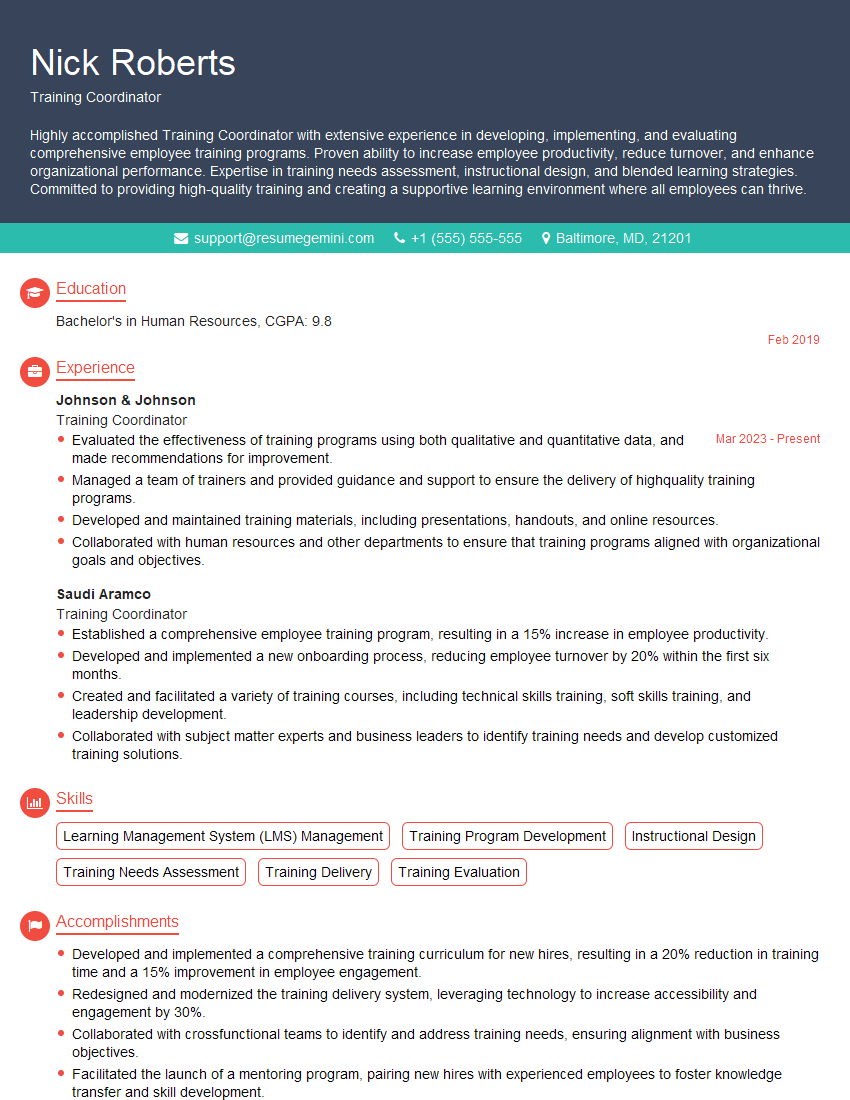
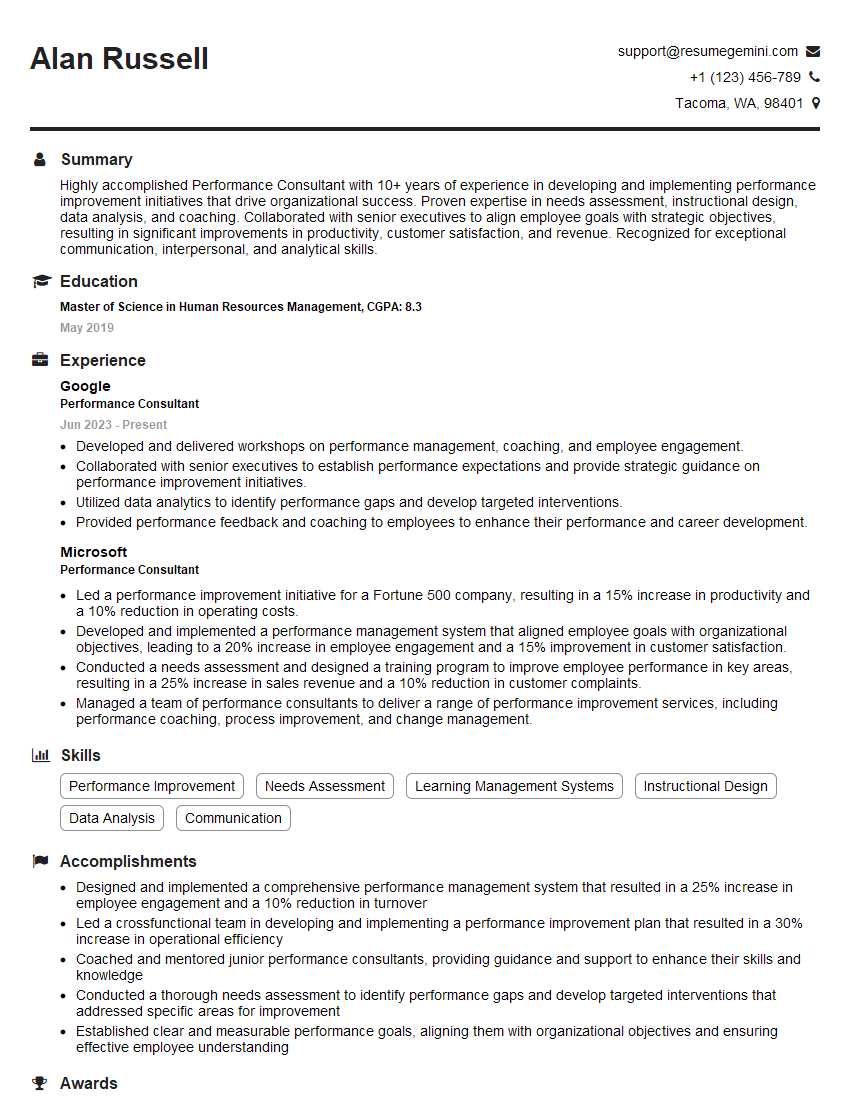
Mastering Progressive Training Methods significantly enhances your career prospects in numerous fields, showcasing your commitment to evidence-based practices and a holistic approach to training and development. To maximize your job search success, it’s crucial to have an ATS-friendly resume that effectively highlights your skills and experience. We strongly encourage you to leverage ResumeGemini, a trusted resource for building professional and impactful resumes. ResumeGemini offers tools and templates to create a standout resume, and we provide examples of resumes tailored to Progressive Training Methods to help you get started. Take the next step toward your dream career – build your best resume with ResumeGemini today!
Explore more articles
Users Rating of Our Blogs
Share Your Experience
We value your feedback! Please rate our content and share your thoughts (optional).
What Readers Say About Our Blog
Very informative content, great job.
good