Interviews are more than just a Q&A session—they’re a chance to prove your worth. This blog dives into essential Project Collaboration interview questions and expert tips to help you align your answers with what hiring managers are looking for. Start preparing to shine!
Questions Asked in Project Collaboration Interview
Q 1. Describe your experience using collaborative project management tools (e.g., Jira, Asana, Trello).
My experience with collaborative project management tools is extensive, encompassing Jira, Asana, and Trello, each offering unique strengths. Jira, with its robust issue tracking and workflow management capabilities, is ideal for complex software development projects requiring detailed task breakdown and bug tracking. I’ve utilized Jira’s Kanban boards to visualize workflow and Scrum boards for agile project management, effectively managing sprints and tracking progress. Asana’s intuitive interface and focus on task assignment and collaboration proved invaluable for marketing campaigns, allowing for seamless task delegation and progress monitoring. Its timeline view offered a clear visual representation of project schedules. Trello’s simplicity and flexibility made it perfect for smaller, less complex projects and brainstorming sessions, particularly where visual organization with Kanban boards was beneficial. In essence, my tool selection depends on the project’s complexity, team size, and specific requirements.
For example, on a recent software development project using Jira, I configured custom workflows to reflect our specific development process, including stages like ‘To Do,’ ‘In Progress,’ ‘Testing,’ and ‘Done.’ This ensured transparency and accountability within the team.
Q 2. Explain your approach to conflict resolution within a project team.
My approach to conflict resolution is proactive and collaborative, focusing on understanding the root cause rather than simply addressing the symptoms. I believe in creating a safe space where team members feel comfortable expressing their concerns. My strategy typically involves:
- Active Listening: I begin by actively listening to all parties involved, ensuring everyone feels heard and understood.
- Identifying the Core Issue: I work to uncover the underlying cause of the conflict, often going beyond surface-level disagreements.
- Finding Common Ground: I facilitate discussions aimed at identifying shared goals and finding areas of agreement.
- Brainstorming Solutions: I encourage collaborative brainstorming to generate multiple solutions, evaluating their feasibility and potential impact.
- Reaching a Consensus: The goal is to reach a mutually acceptable solution, ensuring buy-in from all parties involved.
- Following Up: I follow up to ensure the agreed-upon solution is implemented effectively and to address any lingering concerns.
For instance, in a past project, a disagreement arose between the design and development teams regarding the feasibility of a design element. Instead of taking sides, I facilitated a meeting where both teams explained their perspectives. This led to a compromise where a slightly modified design was implemented, satisfying both teams’ concerns.
Q 3. How do you facilitate effective communication among geographically dispersed team members?
Effective communication with geographically dispersed teams requires a multi-faceted approach centered around consistent, clear, and readily accessible information. Key strategies include:
- Regular Virtual Meetings: Scheduled video conferences, leveraging tools like Zoom or Google Meet, maintain a sense of connection and facilitate real-time communication.
- Asynchronous Communication: Utilizing platforms like Slack or Microsoft Teams for instant messaging and file sharing allows for flexible communication outside of scheduled meetings.
- Project Management Software: Tools like Jira, Asana, or Trello provide a central hub for task assignments, progress tracking, and communication threads, ensuring everyone is on the same page.
- Clear Communication Protocols: Establishing clear guidelines on communication frequency, response times, and preferred communication channels minimizes confusion and improves efficiency.
- Documentation: Maintaining comprehensive project documentation, including meeting minutes and decisions logs, helps ensure that everyone has access to critical information.
For example, in a global project I managed, we established a daily stand-up meeting via video conference, utilizing a shared project management tool to track progress and address roadblocks. This ensured consistent communication despite the geographical distance.
Q 4. What strategies do you use to ensure team members stay motivated and engaged?
Maintaining team motivation and engagement requires a proactive and holistic approach. I focus on:
- Clear Goals and Expectations: Ensuring everyone understands the project’s goals, their individual roles, and expected outcomes.
- Regular Feedback and Recognition: Providing regular, constructive feedback and celebrating milestones and achievements fosters a positive work environment.
- Empowerment and Autonomy: Giving team members ownership and decision-making power boosts their sense of responsibility and motivation.
- Open and Inclusive Communication: Creating a culture where team members feel comfortable expressing ideas and concerns promotes engagement and collaboration.
- Team-Building Activities: Organizing virtual or in-person team-building activities strengthens team bonds and improves morale.
- Work-Life Balance: Promoting a healthy work-life balance and avoiding burnout prevents decreased engagement.
In one project, I noticed a dip in team morale. We introduced weekly ‘fun Friday’ virtual coffee breaks, focusing on non-work related topics, which significantly improved team dynamics and boosted morale.
Q 5. Describe a time you had to negotiate competing priorities within a project.
In a previous project, we faced competing priorities when the client requested significant changes midway through the project, impacting the original timeline and budget. This necessitated skillful negotiation. My approach involved:
- Assessing the Impact: I thoroughly analyzed the impact of the requested changes on the existing project plan, identifying potential delays and cost overruns.
- Prioritization: Through collaborative discussion with the client and the project team, we prioritized the requested changes based on their business value and feasibility.
- Negotiation: I presented the client with various options, outlining the trade-offs between scope, timeline, and budget. This involved clearly explaining the implications of each decision.
- Compromise: Ultimately, we reached a compromise involving a revised timeline and a slightly adjusted budget, ensuring the client’s key needs were met while minimizing disruptions.
- Documentation: All agreed-upon changes were meticulously documented and communicated to all stakeholders.
This experience highlighted the importance of clear communication and collaborative decision-making when dealing with competing priorities. The key was finding a balance that satisfied both the client’s needs and the project’s constraints.
Q 6. How do you manage stakeholder expectations throughout a project lifecycle?
Managing stakeholder expectations throughout a project lifecycle requires proactive and consistent communication. My strategy involves:
- Regular Communication: Establishing a clear communication plan involving regular updates, meetings, and reports to keep stakeholders informed.
- Clear Expectations: Setting clear expectations from the outset regarding project scope, timeline, budget, and deliverables.
- Transparency: Being transparent about challenges and potential risks, ensuring stakeholders are aware of any issues that might affect the project.
- Proactive Issue Management: Addressing issues promptly and proactively, minimizing their impact on the project and stakeholder expectations.
- Feedback Mechanisms: Providing mechanisms for stakeholders to provide feedback and express concerns.
- Realistic Expectations: Ensuring stakeholder expectations are realistic and achievable throughout the project lifecycle.
For instance, in a recent project, I implemented a weekly status report email to all stakeholders, highlighting progress, roadblocks, and potential risks. This ensured everyone was kept informed and allowed for timely intervention if needed.
Q 7. What metrics do you use to measure the success of a collaborative project?
Measuring the success of a collaborative project involves a multi-faceted approach that goes beyond simply meeting deadlines and staying within budget. Key metrics include:
- On-Time and On-Budget Delivery: Meeting project deadlines and remaining within the allocated budget are fundamental measures of success.
- Stakeholder Satisfaction: Gathering feedback from stakeholders to assess their level of satisfaction with the project outcomes.
- Quality of Deliverables: Evaluating the quality of the final deliverables against predefined quality standards.
- Team Performance: Assessing team performance based on factors like collaboration, communication, and problem-solving.
- Return on Investment (ROI): Measuring the financial return generated by the project relative to its investment.
- Client Satisfaction: Direct feedback from the client is a crucial success indicator, evaluating their contentment with the project.
These metrics, considered collectively, provide a comprehensive assessment of the project’s overall success. A successful project isn’t just about delivering on time and within budget; it’s about exceeding stakeholder expectations and delivering high-quality results.
Q 8. Explain your process for identifying and mitigating project risks.
Identifying and mitigating project risks is a crucial aspect of successful project management. My process involves a proactive approach, starting with risk identification through brainstorming sessions, reviewing project documentation, and conducting risk assessments using established frameworks like SWOT analysis or a Probability and Impact matrix.
Once identified, I prioritize risks based on their likelihood and potential impact. For instance, a high-probability, high-impact risk (like a key supplier failing) receives immediate attention. Mitigation strategies are then developed – these could involve developing contingency plans (e.g., having a backup supplier), allocating buffer time in the schedule, or implementing risk transfer mechanisms (e.g., insurance).
Regular monitoring and control are essential. We track identified risks throughout the project lifecycle, assessing their current status and adjusting mitigation strategies as needed. This iterative approach ensures risks are addressed effectively and doesn’t rely solely on initial assessments. For example, during a recent software development project, we identified a risk of outdated libraries impacting performance. Our mitigation plan involved a dedicated testing phase to assess compatibility and a process to upgrade libraries promptly if issues arose.
Q 9. How do you ensure project documentation is accurate, complete, and accessible to all team members?
Maintaining accurate, complete, and accessible project documentation is paramount for successful collaboration. I employ a structured approach using a combination of version-controlled document repositories (like Confluence or Sharepoint), cloud-based storage solutions, and a clearly defined documentation management plan.
This plan outlines document naming conventions, version control procedures, and access permissions, ensuring everyone understands where to find information and how to update it. We use a central repository for all project documents, including meeting minutes, design specifications, and progress reports. Using version control prevents overwriting important documents and allows us to track changes over time. Access control ensures sensitive information remains secure.
Regular documentation reviews and updates are vital. Team members are responsible for updating relevant documents, and I conduct periodic audits to confirm completeness and accuracy. For example, during a large-scale construction project, we utilized a shared cloud-based platform to update drawings and specifications in real-time, preventing miscommunication and ensuring everyone worked from the latest version. Clear communication channels, training on the document management system, and readily available templates also contribute to maintaining an organized documentation system.
Q 10. Describe your experience with agile methodologies and their impact on collaboration.
I have extensive experience with agile methodologies, particularly Scrum and Kanban. These approaches significantly enhance collaboration through iterative development, frequent communication, and a strong emphasis on teamwork.
In Scrum, daily stand-up meetings foster transparency and allow for quick identification and resolution of impediments. Sprints provide focused work periods with clearly defined goals, enhancing team focus. The iterative nature of agile allows for continuous feedback and adaptation, leading to more collaborative problem-solving and better alignment with stakeholder needs. Kanban’s visual workflow management provides transparency and helps the team identify and manage bottlenecks effectively.
For example, in a recent e-commerce project, using Scrum helped us deliver features incrementally, gather user feedback early and often, and make adjustments to our development plans based on real-world usage data. This iterative approach strengthened team collaboration and ensured the final product better met user expectations.
Q 11. How do you adapt your collaboration style to different team personalities and working styles?
Adapting my collaboration style to different team personalities and working styles is essential for effective project management. I believe in fostering a culture of open communication and mutual respect, and I employ different techniques to cater to various preferences.
For example, I understand that some team members prefer detailed written communication, while others thrive in verbal discussions. I tailor my communication accordingly, using both methods where appropriate. For those who prefer visual aids, I use diagrams and charts to clarify complex concepts. I actively solicit feedback on my communication style and adapt to ensure everyone feels heard and understood.
Furthermore, I encourage team members to share their preferred working styles and communication preferences. This creates a more inclusive and respectful environment where everyone feels comfortable contributing their best work. Recognizing individual strengths allows me to assign tasks effectively and leverage diverse skillsets. Understanding individual communication preferences, for example, whether someone responds best to email or instant messaging, ensures clear and timely communication across the team.
Q 12. How do you handle situations where team members are not meeting deadlines or expectations?
Addressing missed deadlines or unmet expectations requires a proactive and empathetic approach. My first step involves a one-on-one conversation with the team member to understand the root cause of the issue.
This conversation focuses on active listening and identifying any roadblocks or challenges they might be facing. Perhaps there’s a lack of clarity on the task, insufficient resources, or unexpected technical difficulties. Once the underlying cause is identified, we collaboratively develop a plan to address the issue and get back on track. This might involve adjusting the timeline, providing additional support, or reallocating resources.
However, if the problem stems from a lack of commitment or competence, more formal steps might be necessary, involving performance management processes and possibly disciplinary actions. The focus is always on support and improvement, while also ensuring accountability. For example, in a previous project, a team member consistently missed deadlines due to poor time management skills. We addressed this by implementing time tracking tools, providing training on time management techniques, and setting more realistic deadlines together. This proactive approach helped the team member improve their performance and meet future deadlines.
Q 13. Explain your understanding of different communication styles and how you leverage them in project collaboration.
Understanding and leveraging different communication styles is fundamental to effective project collaboration. I recognize that individuals communicate in diverse ways, some preferring direct and assertive communication, while others are more indirect and collaborative.
Some individuals are visual learners, while others rely more on written or verbal communication. I adapt my communication to suit the individual’s preferences, ensuring that everyone receives information in a way they can easily understand and process. For example, when working with a team member who prefers visual communication, I use flowcharts and diagrams to explain complex processes. With someone who prefers a more written format, I provide detailed email updates and progress reports.
Active listening and seeking clarification are key to overcoming communication barriers. I make sure to understand each team member’s perspective before responding, and I regularly seek feedback to ensure clear communication. I also encourage open communication and feedback channels, allowing team members to express their concerns or suggestions freely. By being mindful of different communication styles and fostering a culture of open dialogue, I strive to create a more collaborative and productive work environment.
Q 14. Describe your experience with remote collaboration tools and techniques.
I have extensive experience with various remote collaboration tools and techniques, including video conferencing platforms (Zoom, Microsoft Teams), project management software (Asana, Jira), instant messaging applications (Slack), and shared document repositories (Google Drive, SharePoint).
I utilize these tools to facilitate communication, task management, and file sharing among geographically dispersed teams. For example, daily stand-up meetings are conducted via video conferencing, enabling face-to-face interaction even when team members are located in different time zones. Project management software helps track progress, assign tasks, and manage deadlines, while instant messaging facilitates quick communication and problem-solving. Shared document repositories ensure that everyone has access to the latest versions of project documents.
Beyond the tools, successful remote collaboration relies on establishing clear communication protocols, setting expectations, and fostering a strong team culture. Regular virtual team-building activities can enhance camaraderie and trust. Establishing clear communication guidelines, such as response times and preferred methods of contact, are also critical to maintain efficiency and reduce potential miscommunication in a remote setting. Finally, prioritizing empathy and understanding of individual challenges in remote work environments is essential for building a supportive and collaborative team dynamic.
Q 15. How do you build trust and rapport within a project team?
Building trust and rapport is foundational to successful project collaboration. It’s like building a strong bridge – you need solid foundations to support the weight of the project. I approach this through several key strategies:
Open and Honest Communication: I foster a culture of transparency where team members feel comfortable sharing their ideas, concerns, and challenges without fear of judgment. Regular check-ins, both formal and informal, are crucial.
Active Listening and Empathy: Truly listening to team members’ perspectives, understanding their motivations, and acknowledging their contributions builds respect and strengthens relationships. This includes paying attention to both verbal and nonverbal cues.
Showing Appreciation and Recognition: Celebrating successes, both big and small, and acknowledging individual efforts boosts morale and reinforces positive behaviors. Public acknowledgment and private praise are both effective.
Leading by Example: I demonstrate trustworthiness through my actions. This includes being reliable, meeting commitments, and consistently upholding high ethical standards.
Conflict Resolution: Addressing conflicts constructively and fairly is vital. I facilitate open dialogue, encourage compromise, and focus on finding solutions that benefit the project and the team.
For example, in a previous project, I noticed a team member was consistently quiet during meetings. By taking the time to chat with them one-on-one, I discovered they felt their input wasn’t valued. By actively seeking their opinions and incorporating their ideas, I built their confidence and significantly improved their contribution to the project.
Career Expert Tips:
- Ace those interviews! Prepare effectively by reviewing the Top 50 Most Common Interview Questions on ResumeGemini.
- Navigate your job search with confidence! Explore a wide range of Career Tips on ResumeGemini. Learn about common challenges and recommendations to overcome them.
- Craft the perfect resume! Master the Art of Resume Writing with ResumeGemini’s guide. Showcase your unique qualifications and achievements effectively.
- Don’t miss out on holiday savings! Build your dream resume with ResumeGemini’s ATS optimized templates.
Q 16. What is your approach to delegating tasks effectively within a collaborative project?
Effective delegation is about empowering team members, not just assigning tasks. My approach involves:
Assessing Skills and Strengths: I carefully analyze team members’ skills and experience to match tasks with individuals who are best suited to handle them. This ensures efficiency and maximizes individual contributions.
Clear Expectations and Communication: I provide clear instructions, deadlines, and expected outcomes for each task. I also ensure that team members understand the bigger picture and how their task contributes to the overall project goals.
Providing the Necessary Resources and Support: I ensure that team members have the resources, tools, and information they need to complete their tasks successfully. This might involve providing access to relevant data, training, or mentoring.
Monitoring Progress and Offering Support: I regularly monitor progress, provide feedback, and offer assistance when needed. This proactive approach helps identify and address potential issues early on.
Giving Autonomy and Ownership: I empower team members by giving them autonomy to complete tasks in their preferred way, while also ensuring alignment with project goals. This fosters a sense of ownership and responsibility.
For instance, in a recent project, I delegated the design of a crucial component to a junior team member who showed a keen interest in the area. I provided guidance and support, but allowed them to take ownership of the design, resulting in a creative solution and valuable skill development for the team member.
Q 17. How do you facilitate effective brainstorming and decision-making within a team?
Facilitating effective brainstorming and decision-making requires creating a safe and inclusive environment where everyone feels comfortable contributing. My approach includes:
Establishing Clear Objectives: Defining the problem or question clearly upfront helps focus the brainstorming session and ensures everyone is working towards the same goal.
Encouraging Diverse Perspectives: I actively solicit input from all team members, ensuring that everyone has a chance to share their ideas, regardless of seniority or background. Techniques like round-robin brainstorming can be particularly useful.
Using Visual Aids: Whiteboards, mind maps, or digital collaboration tools can help capture and organize ideas visually, making the brainstorming process more engaging and productive.
Structuring the Discussion: Employing structured brainstorming techniques like the ‘6-3-5’ method or nominal group technique can enhance efficiency and ensure thorough exploration of ideas.
Decision-Making Framework: Employing a clear decision-making framework, such as a weighted scoring system or voting, helps ensure fairness and transparency. This helps avoid decision paralysis.
In one project, we used a multi-voting technique to prioritize features for a software update. This allowed everyone’s voice to be heard, and we reached a consensus on the features with the highest impact.
Q 18. Describe a time you had to adapt your project plan due to unexpected challenges or changes.
During a large-scale website redesign project, we encountered a significant challenge when our primary development team member unexpectedly left the company midway through the project. This disrupted our timeline and threatened the project’s success.
My immediate response involved several steps:
Damage Assessment: I first assessed the impact of the departure, identifying the specific tasks affected and the remaining team members’ capabilities.
Replanning and Resourcing: We re-evaluated the project timeline, adjusting deadlines where necessary and re-allocating tasks among the remaining team. This involved bringing in a freelance developer to cover the critical tasks.
Communication: I proactively communicated the situation and the revised plan to all stakeholders, managing their expectations and securing their continued support.
Team Morale: I focused on maintaining team morale, emphasizing the importance of teamwork and collaboration during this challenging period.
Although the unexpected departure caused delays, our proactive adaptation minimized the overall impact, and we ultimately delivered a successful project, albeit with a revised timeline.
Q 19. How do you ensure that project decisions are documented and communicated clearly to stakeholders?
Clear and consistent documentation and communication are paramount for successful project collaboration. My approach involves:
Centralized Repository: Utilizing a centralized repository (e.g., a shared drive, project management software like Jira or Asana) for all project documents, meeting minutes, and decisions is crucial.
Meeting Minutes: Detailed meeting minutes documenting key decisions, action items, and assigned responsibilities are essential. These should be circulated to all stakeholders promptly.
Decision Logs: Maintaining a formal decision log, outlining the rationale behind significant choices, aids transparency and accountability.
Regular Updates: Consistent updates, via email, project management software notifications, or regular status meetings, keep stakeholders informed of progress and any critical changes.
Clear Communication Channels: Establishing clear communication channels—specifying who is responsible for what communication—minimizes confusion and ensures timely information dissemination.
For instance, in a recent project, we used a shared Google Doc to keep a running log of all design decisions. This ensured transparency and prevented conflicts later in the process.
Q 20. What is your experience with using version control systems for collaborative project work?
I have extensive experience using version control systems (VCS), primarily Git, for collaborative project work. Git is essential for managing code changes and ensuring collaboration without conflicts. My understanding encompasses:
Branching and Merging: I’m proficient in using branches to work on features independently and merging changes back into the main branch without disrupting ongoing development.
Pull Requests and Code Reviews: I utilize pull requests to facilitate code reviews, ensuring quality control and collaborative feedback before merging changes.
Conflict Resolution: I can effectively resolve merge conflicts that may arise when multiple developers work on the same code simultaneously.
Remote Repositories: I’m comfortable using remote repositories like GitHub, GitLab, or Bitbucket for collaborative code management and version history tracking.
Git Workflow: I’m adept at using various Git workflows, such as Gitflow, to manage complex projects and maintain a structured development process.
git checkout -b new-feature //Example: Creating a new branch for a feature
In previous projects, using Git significantly improved our team’s ability to collaborate on complex codebases, minimizing conflicts and ensuring a clean and efficient development process.
Q 21. How do you measure the effectiveness of your collaboration strategies?
Measuring the effectiveness of collaboration strategies is crucial for continuous improvement. My approach involves both qualitative and quantitative measures:
Project Metrics: This includes tracking project completion time, budget adherence, and the quality of deliverables. Improvements in these metrics indirectly reflect the effectiveness of collaboration.
Team Surveys and Feedback: Regular anonymous surveys and feedback sessions provide valuable insights into team morale, communication effectiveness, and overall satisfaction with collaborative processes. This captures the qualitative aspects of collaboration.
Individual Performance: Monitoring individual contributions, identifying areas of strength and weakness, and providing appropriate support contribute to overall team effectiveness.
Conflict Resolution Rate: Tracking the number and resolution time of conflicts provides insights into the effectiveness of conflict resolution strategies and the overall team dynamics.
Qualitative Observations: Observing team interactions during meetings, brainstorming sessions, and other collaborative activities provides valuable qualitative data.
By analyzing this data, I can identify areas for improvement in our collaborative processes and refine our strategies to optimize team performance and project outcomes.
Q 22. Describe your approach to creating and maintaining a positive team environment.
Building and maintaining a positive team environment is crucial for project success. It’s not just about avoiding conflict; it’s about fostering collaboration, trust, and mutual respect. My approach is multifaceted and focuses on three key areas: communication, recognition, and inclusivity.
Open Communication: I establish regular communication channels – daily stand-ups, weekly team meetings, and readily available channels for quick questions – to keep everyone informed and engaged. Transparency is key; I share project updates, challenges, and successes openly.
Recognition and Appreciation: Recognizing individual and team accomplishments, both big and small, is vital. I actively celebrate successes and provide constructive feedback, focusing on strengths and areas for improvement. Public acknowledgement of contributions strengthens team morale.
Inclusivity and Respect: I create a safe space where every team member feels valued and respected, regardless of their background or experience. I actively encourage diverse perspectives and ensure everyone has a voice. This includes actively listening to concerns and addressing them fairly.
For example, on a recent project, we used a shared online whiteboard to brainstorm ideas and track progress. This facilitated visual communication and created a sense of shared ownership. Regularly acknowledging team members’ hard work and creative problem-solving boosted morale and ensured a positive and collaborative atmosphere.
Q 23. How do you handle feedback from team members and stakeholders?
Feedback is a gift, and I approach it as such. My process involves active listening, constructive criticism, and a focus on solutions. I separate the message from the messenger, focusing on the specific behavior or outcome, not the individual’s personality.
Active Listening: I ensure I fully understand the feedback given, asking clarifying questions to avoid misunderstandings. I aim to hear both the positive and negative aspects, valuing all perspectives.
Constructive Criticism: When delivering feedback, I use the ‘sandwich method’: starting with positive reinforcement, followed by specific constructive criticism, and ending with another positive statement. I focus on behaviors that can be changed, rather than personal attributes.
Actionable Steps: I collaboratively brainstorm solutions with the individual or team. This makes the feedback actionable and ensures ownership of the improvement process.
For example, if a stakeholder provides negative feedback on a deliverable, I don’t get defensive. Instead, I actively listen, ask clarifying questions, and then collaboratively work with the team to address the concerns. This approach converts criticism into an opportunity for improvement and demonstrates my commitment to project success.
Q 24. How do you ensure all team members are aware of their roles and responsibilities?
Clarity of roles and responsibilities is paramount for efficient project execution. I employ a multi-pronged approach to ensure everyone understands their contribution.
RACI Matrix: I utilize a RACI matrix (Responsible, Accountable, Consulted, Informed) to clearly define each team member’s role in specific tasks. This removes ambiguity and prevents overlap or missed responsibilities.
Project Charter & Work Breakdown Structure (WBS): A detailed project charter clearly outlines project goals, objectives, and scope. The WBS breaks down the project into smaller, manageable tasks, assigning ownership to specific team members.
Regular Communication & Team Meetings: I reinforce roles and responsibilities during regular team meetings. This allows for clarification of any uncertainties and proactive problem-solving.
Documented Processes & Procedures: Creating and sharing well-documented processes and standard operating procedures ensures consistency and understanding across the team.
Imagine building a house – each person has a specific role: the electrician wires, the plumber installs pipes, and the carpenter frames the walls. A RACI matrix provides that same level of clarity for project tasks.
Q 25. How do you identify and address individual team member skill gaps?
Identifying and addressing skill gaps is crucial for project success. My approach is proactive and focuses on both individual development and team support.
Skill Assessment: I conduct regular skill assessments through discussions, observation, and performance reviews. This helps identify areas where training or support might be needed.
Mentorship and Training: I encourage peer-to-peer learning and provide opportunities for mentorship. I also support team members in accessing external training resources or workshops to address specific skill deficiencies.
Task Assignment: I strategically assign tasks that allow team members to develop new skills while providing appropriate support and guidance. This is a form of on-the-job training.
Performance Reviews: Regular performance reviews provide a structured platform for discussing skill development plans and setting goals for improvement.
For example, if a team member struggles with data analysis, I might pair them with a more experienced colleague, provide online training resources, or assign them smaller tasks with increasing complexity. The goal is to foster growth and empower the individual to contribute their best.
Q 26. How do you manage project dependencies and interdependencies?
Managing project dependencies and interdependencies requires careful planning and proactive communication. My approach is built around visualization, proactive identification, and risk mitigation.
Dependency Mapping: I create a visual representation of dependencies using tools like Gantt charts or network diagrams. This clearly illustrates the relationships between different tasks and helps identify potential bottlenecks.
Critical Path Analysis: Identifying the critical path – the sequence of tasks that determines the shortest possible project duration – allows me to focus resources and attention on the most critical aspects.
Proactive Communication: I maintain open communication with all stakeholders to ensure everyone understands their dependencies and potential impacts of delays. Regular status updates and risk assessments are essential.
Contingency Planning: I develop contingency plans to mitigate risks associated with dependencies. This includes identifying alternative solutions and allocating buffer time to account for potential delays.
Think of a car assembly line: each stage depends on the previous one. A delay in one area ripples through the entire process. My approach is to visualize this flow, identify potential bottlenecks, and put mitigation strategies in place.
Q 27. Describe your experience with using project management software to facilitate collaboration.
Project management software is an indispensable tool for facilitating collaboration. My experience spans various platforms, including Asana, Jira, and Trello. I leverage these tools to enhance communication, streamline workflows, and improve overall project efficiency.
Task Management: I use these platforms to assign tasks, set deadlines, and track progress. This provides a centralized location for project information and minimizes reliance on email.
Communication & Collaboration: The integrated communication features allow for seamless collaboration among team members, stakeholders, and clients. This includes file sharing, real-time updates, and instant messaging.
Workflow Automation: Many platforms offer workflow automation capabilities. This allows for the automation of repetitive tasks, improving efficiency and reducing errors.
Reporting & Analytics: I utilize the reporting and analytics features to track key project metrics, identify potential problems, and make data-driven decisions.
For example, using Jira’s Kanban boards allows for a visual representation of the project workflow. Team members can easily update task status, and I can monitor progress in real-time, ensuring we stay on schedule and within budget.
Q 28. How do you ensure that all project deliverables meet the required quality standards?
Ensuring quality deliverables involves a multi-layered approach that begins with clear requirements and extends throughout the project lifecycle.
Clear Requirements Definition: The project starts with a thorough definition of requirements, involving stakeholders to ensure alignment and clarity. This establishes a common understanding of what constitutes a successful outcome.
Quality Assurance (QA) Processes: I integrate QA processes throughout the project, including regular code reviews (for software projects), testing, and quality checks at each milestone. This allows for early identification and resolution of defects.
Version Control: I utilize version control systems (like Git) to track changes, manage code updates, and revert to previous versions if necessary. This ensures a clear audit trail and improves collaboration.
Formal Acceptance Criteria: I work closely with stakeholders to establish formal acceptance criteria for each deliverable. This outlines specific conditions that must be met before a deliverable is deemed complete and accepted.
A quality assurance plan is akin to a recipe for success – it outlines the steps and checks required to ensure the final product meets expectations. It’s not a one-time event but an ongoing process integrated throughout the project lifecycle.
Key Topics to Learn for Project Collaboration Interview
- Project Management Methodologies: Understanding Agile (Scrum, Kanban), Waterfall, and hybrid approaches. Practical application: Discuss experiences adapting methodologies to different project needs and team dynamics.
- Communication & Collaboration Tools: Proficiency in platforms like Slack, Microsoft Teams, Jira, Asana, Confluence. Practical application: Describe how you’ve used these tools to enhance team communication, task management, and document sharing. Highlight problem-solving instances where tool proficiency was key.
- Conflict Resolution & Negotiation: Strategies for identifying and addressing conflicts within project teams. Practical application: Share examples of successfully navigating disagreements, mediating between team members, and finding mutually beneficial solutions.
- Risk Management & Mitigation: Identifying potential project risks and developing strategies to mitigate them. Practical application: Describe your approach to proactive risk identification and your experience implementing contingency plans.
- Stakeholder Management: Effectively communicating project updates and managing expectations with stakeholders at all levels. Practical application: Provide examples of successfully influencing stakeholders, building consensus, and managing their expectations through clear communication and reporting.
- Team Dynamics & Leadership: Understanding team roles, building collaborative environments, and motivating team members. Practical application: Discuss your experience fostering teamwork, mentoring junior colleagues, and leading by example in a collaborative setting.
Next Steps
Mastering project collaboration is crucial for career advancement in today’s interconnected work environment. It demonstrates essential soft skills and showcases your ability to thrive in team-based settings, leading to greater responsibility and higher earning potential. To significantly boost your job prospects, create an ATS-friendly resume that highlights your project collaboration expertise. ResumeGemini is a trusted resource to help you build a professional and impactful resume. We provide examples of resumes tailored to Project Collaboration roles to help you get started. Let ResumeGemini help you showcase your skills and land your dream job!
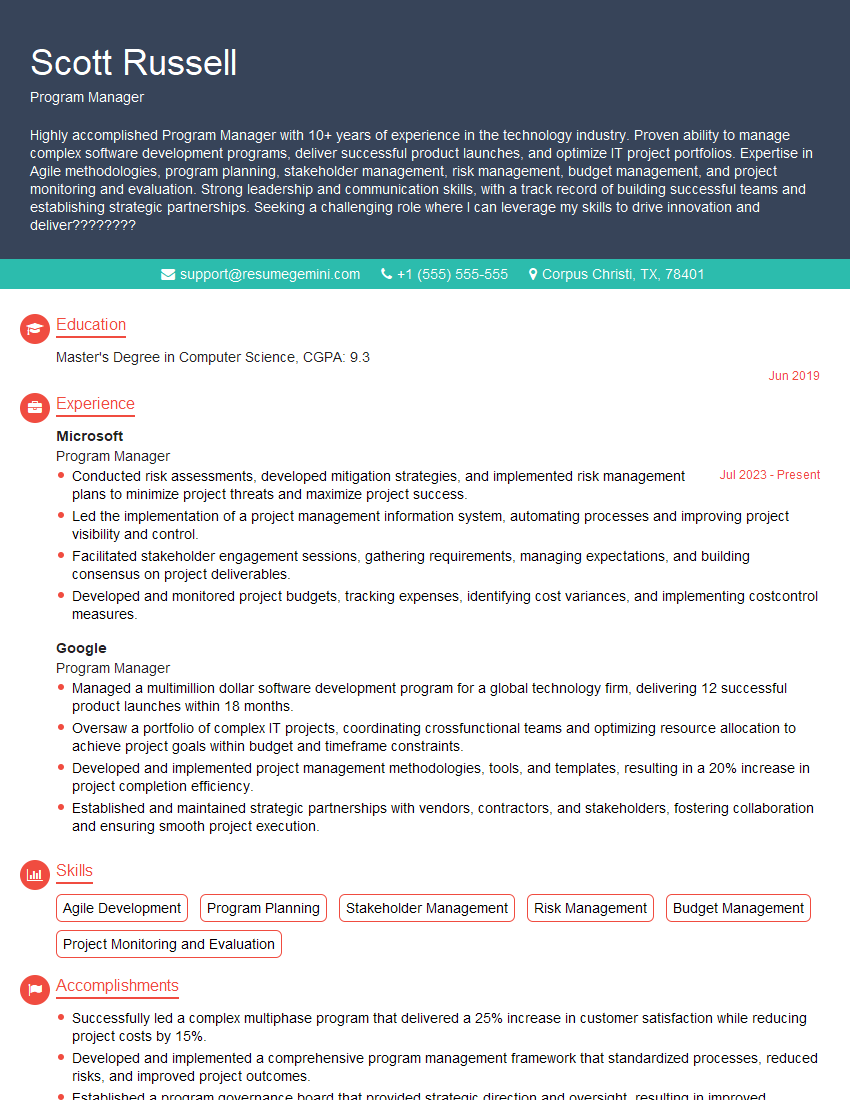
Program Manager Resume Sample
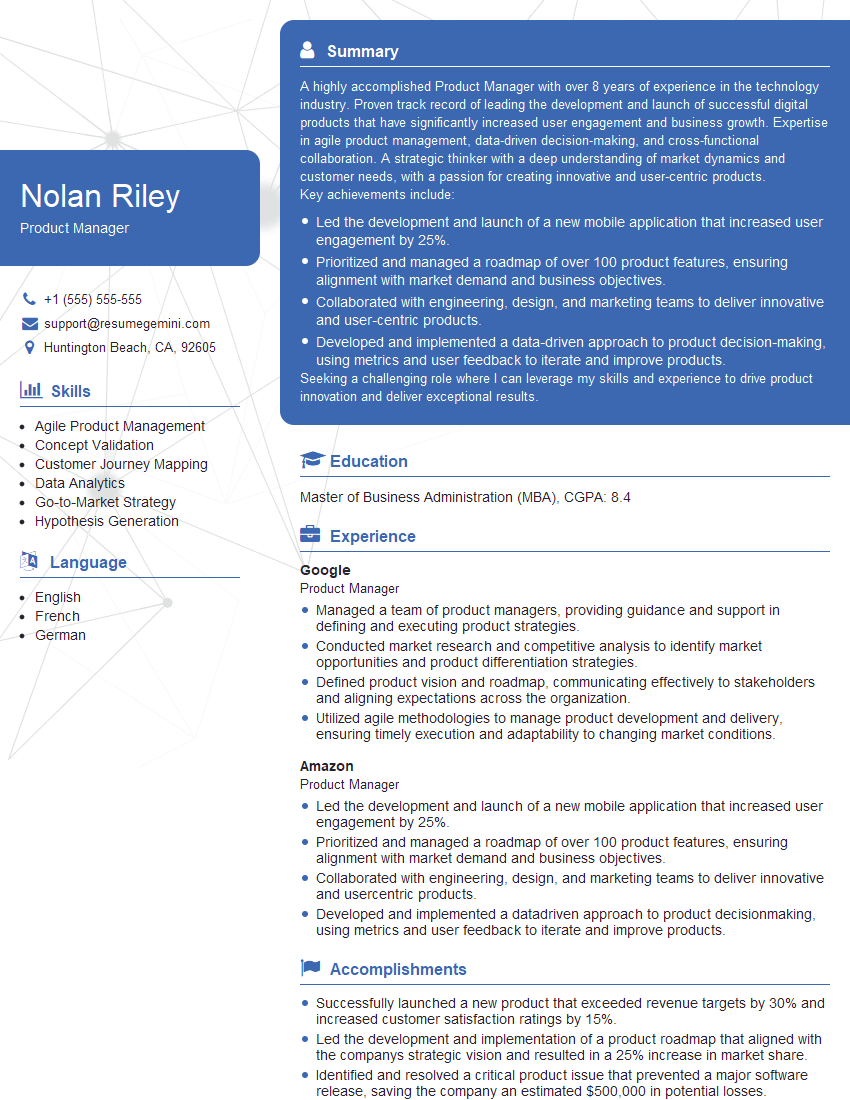
Product Manager Resume Sample
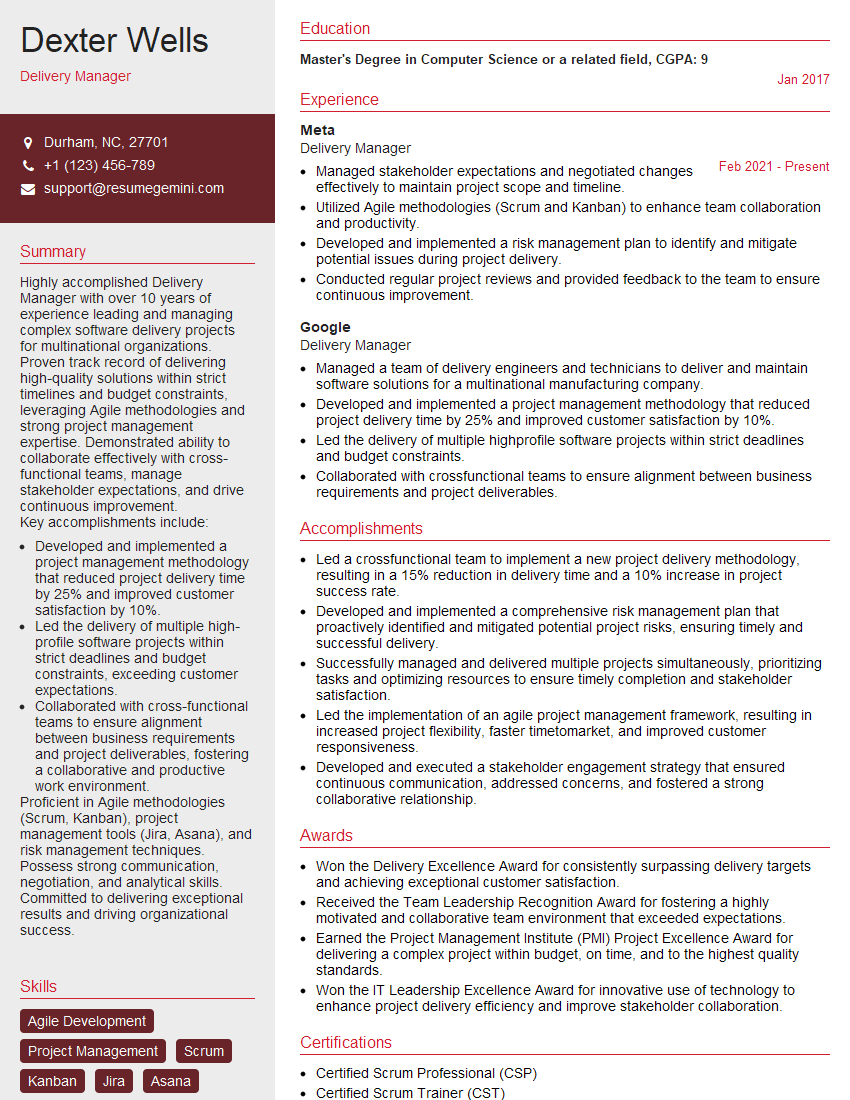
Delivery Manager Resume Sample

Project Manager Resume Sample
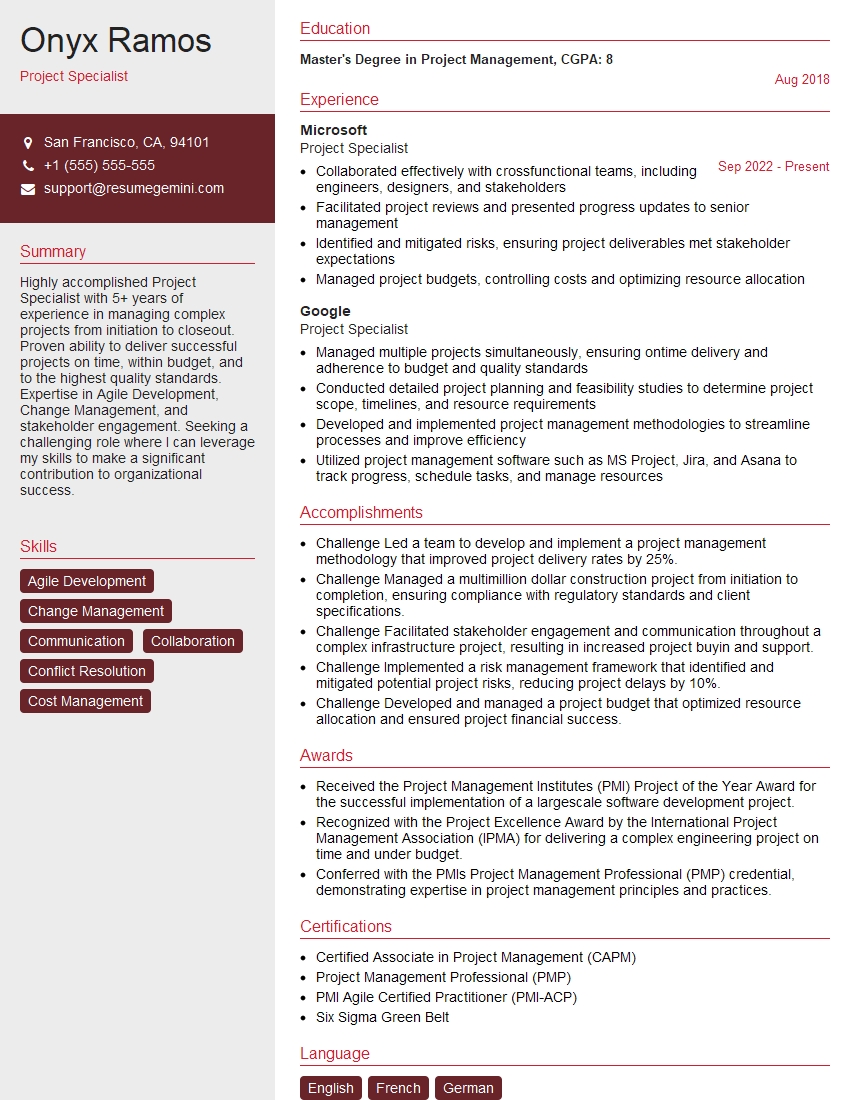
Project Specialist Resume Sample
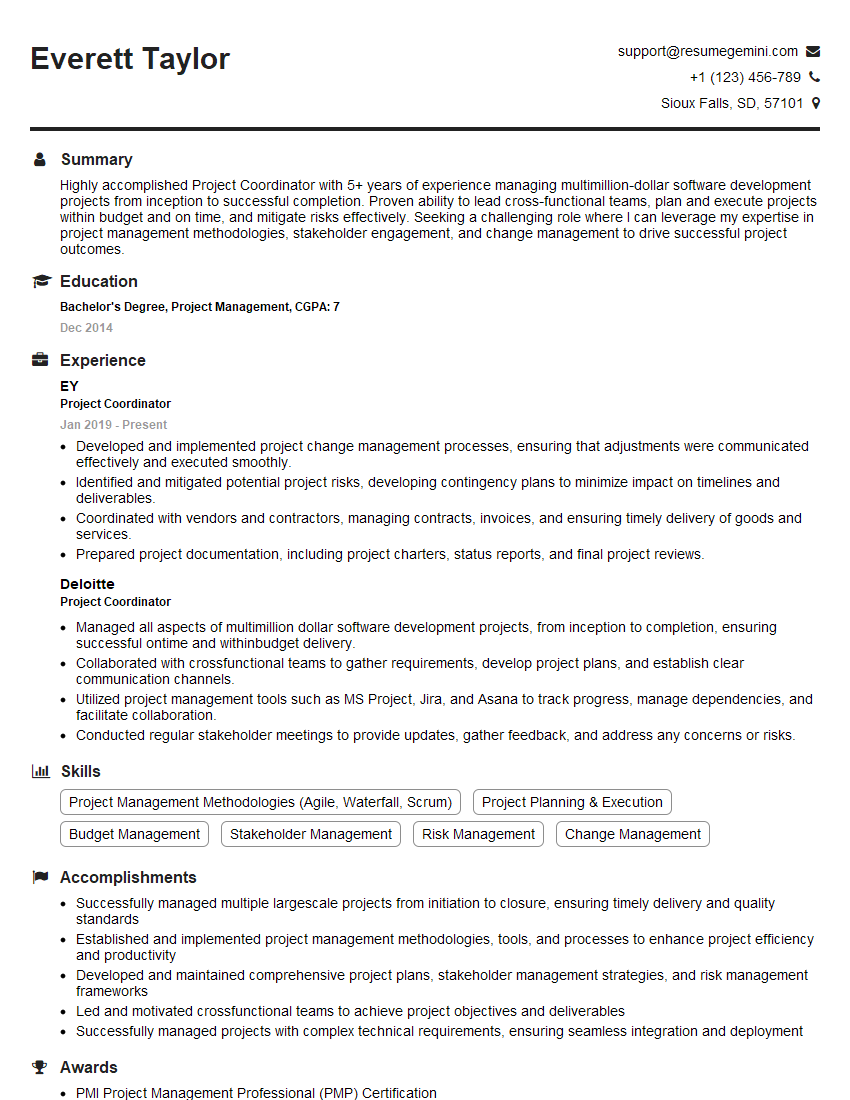
Project Coordinator Resume Sample
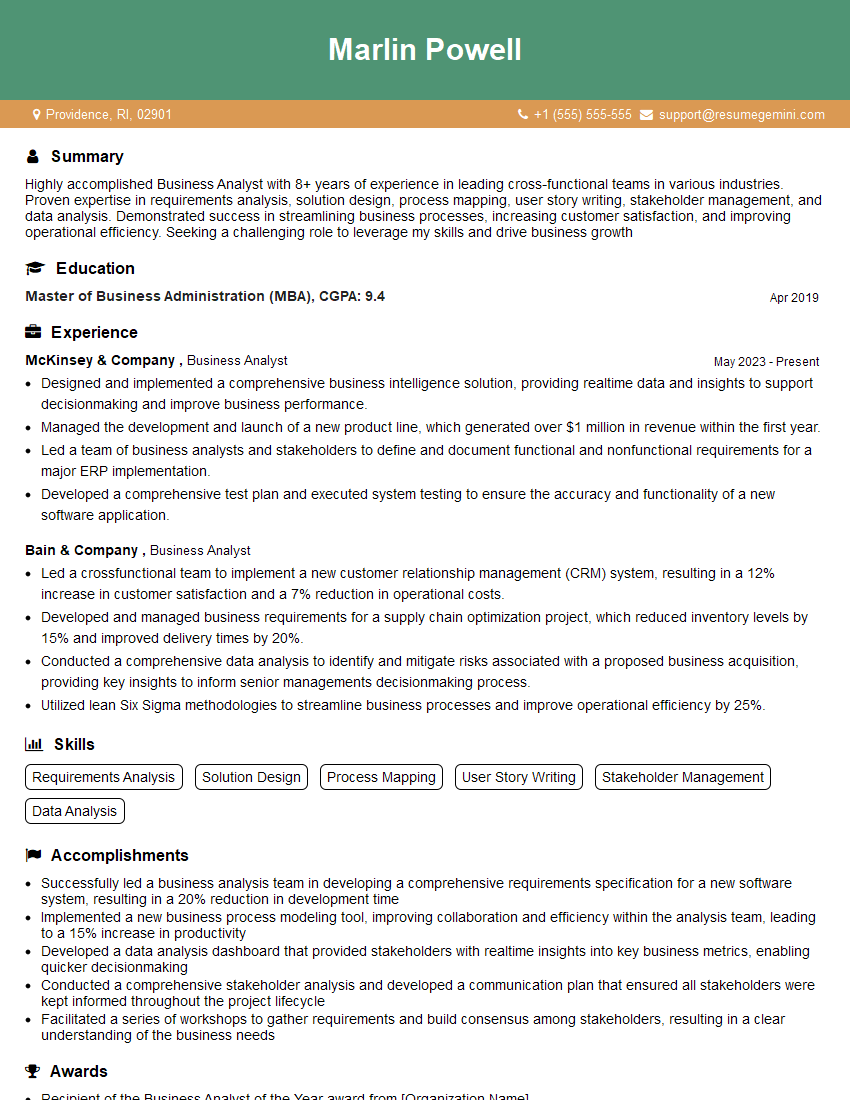
Business Analyst Resume Sample
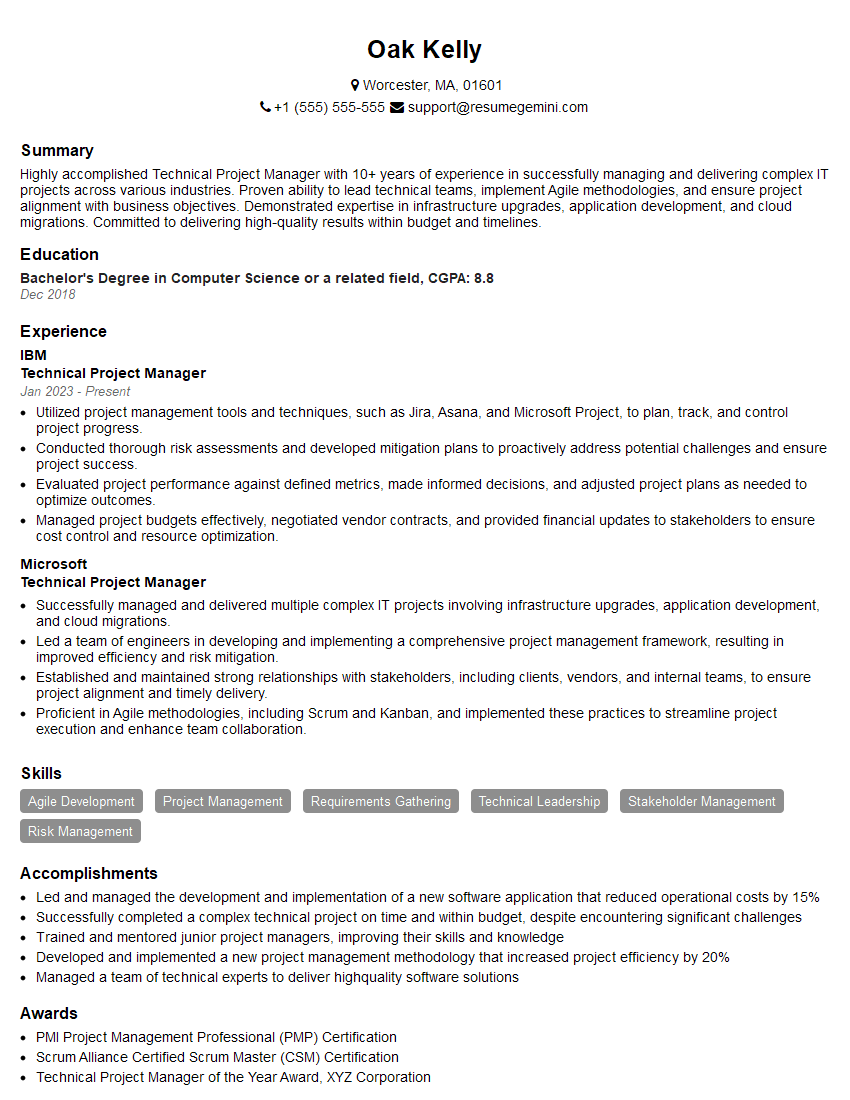
Technical Project Manager Resume Sample
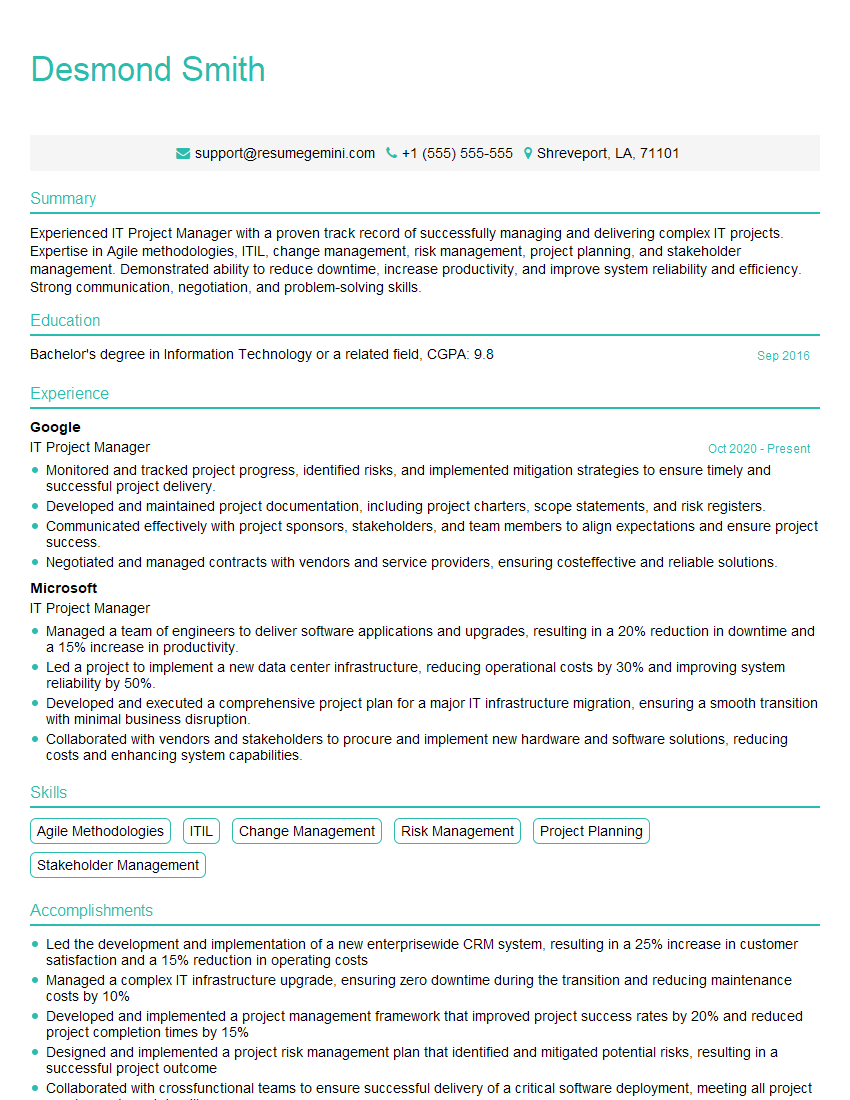
IT Project Manager Resume Sample
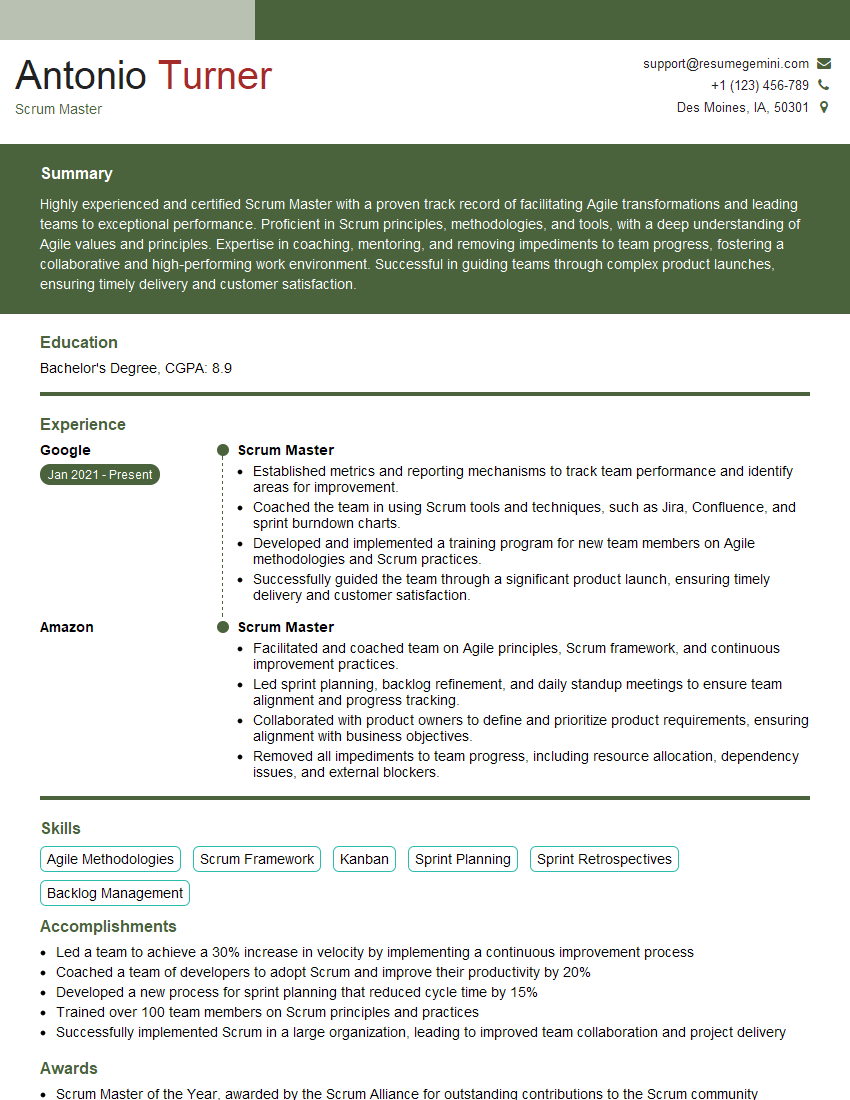
Scrum Master Resume Sample
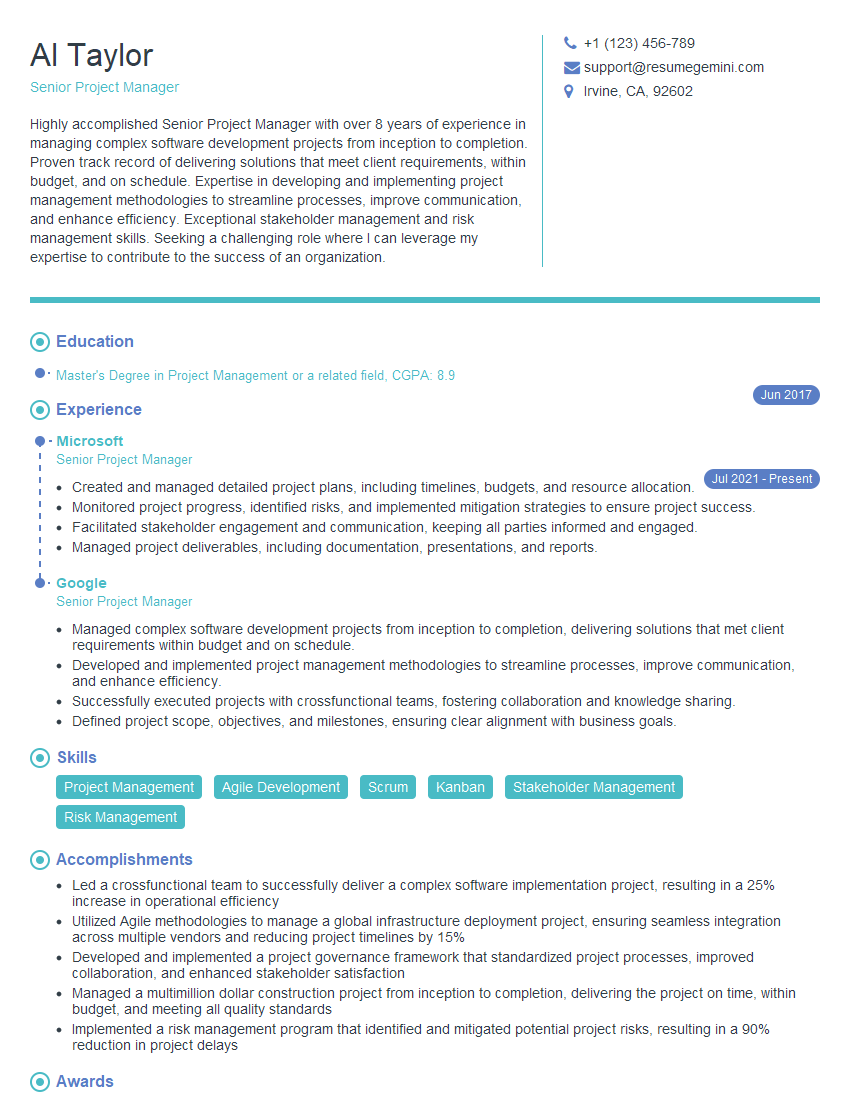
Senior Project Manager Resume Sample
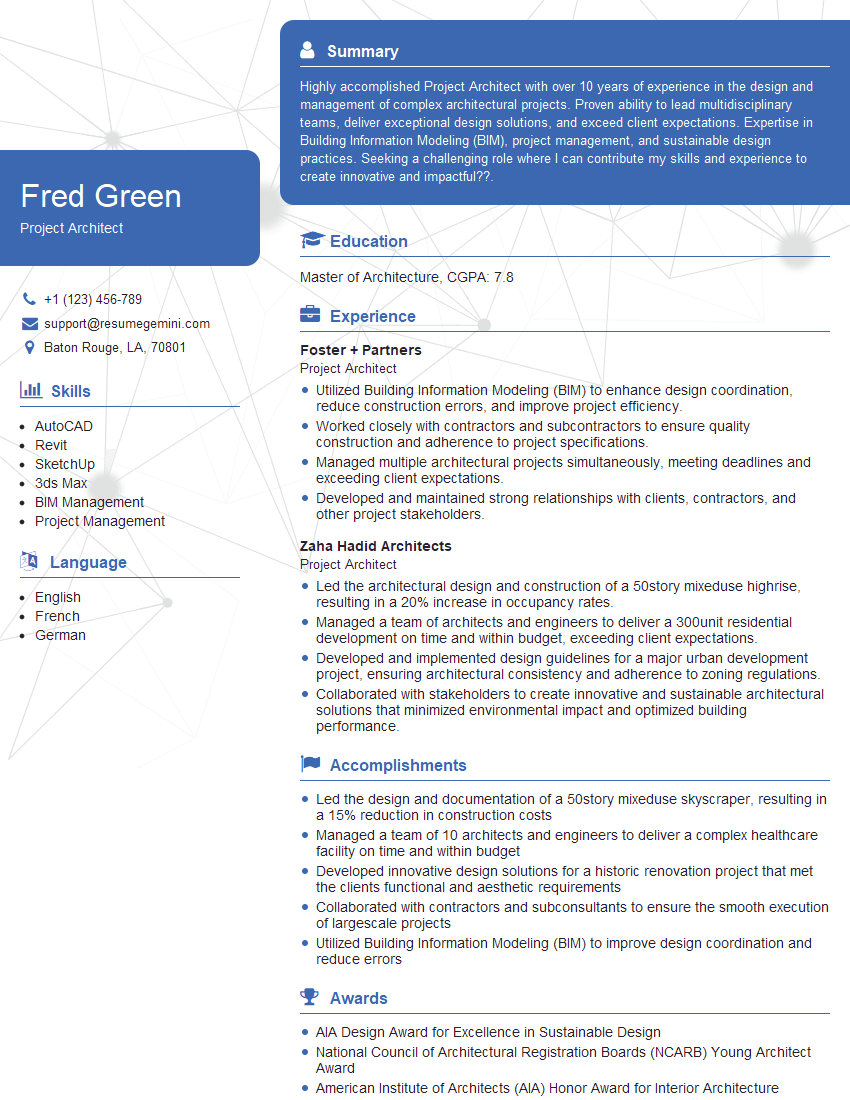
Project Architect Resume Sample
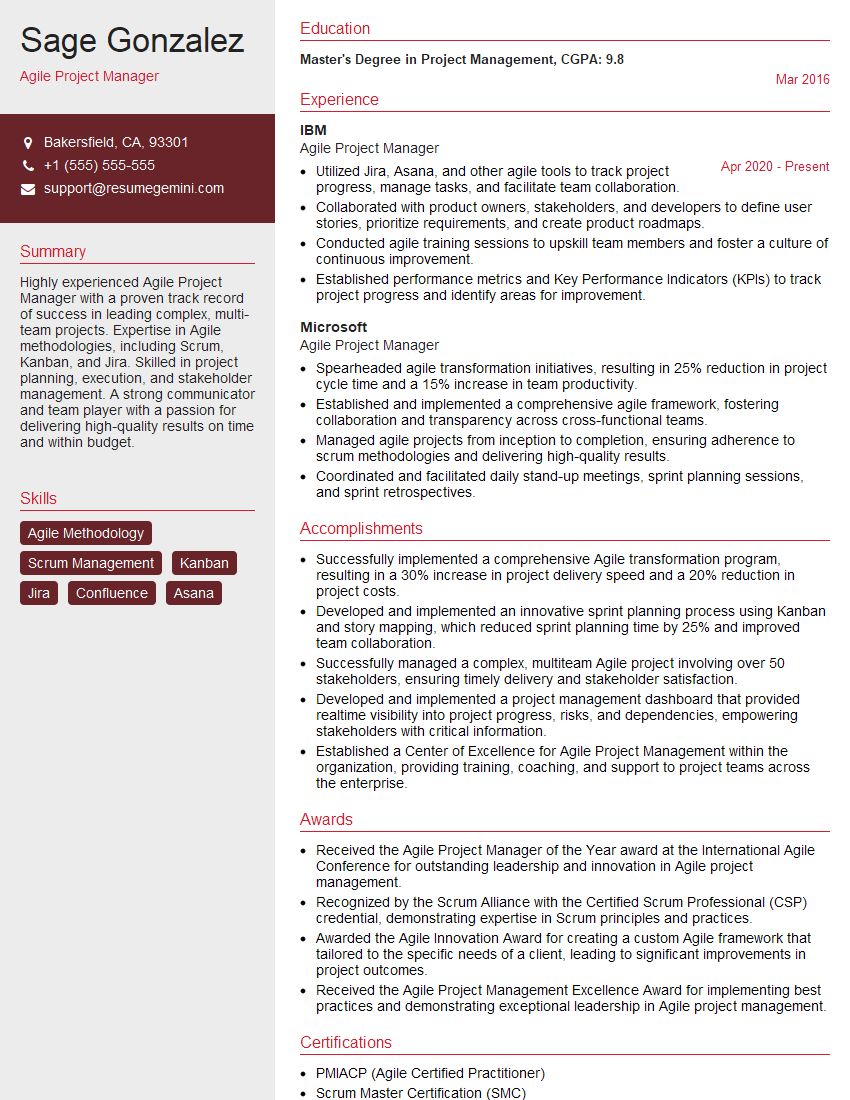
Agile Project Manager Resume Sample
Explore more articles
Users Rating of Our Blogs
Share Your Experience
We value your feedback! Please rate our content and share your thoughts (optional).
What Readers Say About Our Blog
Very informative content, great job.
good