The right preparation can turn an interview into an opportunity to showcase your expertise. This guide to Project Management and Supervision interview questions is your ultimate resource, providing key insights and tips to help you ace your responses and stand out as a top candidate.
Questions Asked in Project Management and Supervision Interview
Q 1. Describe your experience with Agile methodologies (Scrum, Kanban).
Agile methodologies, such as Scrum and Kanban, are iterative approaches to project management that prioritize flexibility and collaboration. My experience encompasses both. In Scrum, I’ve led teams through sprint planning, daily stand-ups, sprint reviews, and retrospectives, using tools like Jira to track progress and manage backlogs. This iterative approach allows for quick adaptation to changing requirements. For example, on a recent website redesign project, we used two-week sprints. Each sprint delivered a functional increment, and client feedback from sprint reviews helped us adjust the direction mid-project. With Kanban, I’ve focused on visualizing workflow, limiting work in progress (WIP), and continuously improving processes. I’ve used Kanban boards, both physical and digital, to manage tasks and identify bottlenecks. In a previous project involving content creation, the Kanban system helped our team prioritize urgent tasks and avoid context switching, significantly improving efficiency.
Q 2. Explain your approach to risk management in project execution.
My approach to risk management is proactive and systematic. It begins with risk identification – brainstorming potential problems during project planning, using techniques like SWOT analysis and brainstorming sessions. Next, I analyze the likelihood and impact of each risk, prioritizing those with higher potential damage. Then, I develop mitigation strategies for each risk, which might include contingency plans, risk transfer (e.g., insurance), risk avoidance (e.g., altering the project plan), or risk acceptance (with careful monitoring). Finally, I regularly monitor identified risks and their mitigation plans, adjusting strategies as needed. For example, in a recent construction project, we identified the risk of material shortages due to supply chain issues. Our mitigation strategy involved securing contracts with multiple suppliers and building a buffer stock of critical materials. This proactive approach ensured we avoided significant delays and cost overruns.
Q 3. How do you handle conflicting priorities among team members?
Conflicting priorities are inevitable in project management. I address these through open communication and collaborative prioritization. First, I facilitate a discussion with all involved team members to understand the root cause of the conflict and the rationale behind each priority. Then, I utilize techniques like the MoSCoW method (Must have, Should have, Could have, Won’t have) to prioritize tasks objectively. This helps the team collectively agree on which tasks are most critical to the project’s success. If necessary, I may escalate the issue to higher management for resolution. For instance, in a software development project, two teams had conflicting priorities regarding feature implementation. By using the MoSCoW method and facilitating a discussion, we prioritized features based on their business value and release deadlines, resolving the conflict and ensuring a smooth workflow.
Q 4. What project management tools and software are you proficient in?
I am proficient in several project management tools and software, including Jira, Asana, Trello, Microsoft Project, and Monday.com. My experience ranges from using these tools for task management, tracking progress, and managing resources to creating custom dashboards and reports. Jira, for instance, has been integral in my Agile projects for managing sprints, tracking bugs, and collaborating with development teams. Microsoft Project has been vital in managing larger, more complex projects with intricate timelines and resource allocation. My proficiency in these tools enables efficient project execution and accurate reporting.
Q 5. Describe your experience with budget management and cost control.
Budget management and cost control are crucial aspects of my project management approach. This begins with a detailed budget creation during the planning phase, which incorporates all anticipated costs, including labor, materials, and other expenses. During project execution, I monitor expenses closely, comparing actual costs against the budget regularly. I utilize Earned Value Management (EVM) techniques to track progress and cost performance. I employ strategies like value engineering to find cost-effective alternatives without compromising quality and contingency planning to address unforeseen expenses. For example, in a recent marketing campaign, I proactively identified potential cost overruns related to advertising. By negotiating with vendors and exploring alternative advertising channels, I managed to stay within the allocated budget while achieving the campaign’s objectives.
Q 6. How do you define and measure project success?
Project success is defined by the achievement of pre-defined goals and objectives within the specified constraints of time, budget, and scope. I measure project success using a combination of quantitative and qualitative metrics. Quantitative metrics include meeting deadlines, staying within budget, and achieving planned deliverables. Qualitative metrics involve assessing customer satisfaction, team morale, and the overall impact of the project on the organization. For example, in a recent software development project, success was measured by the number of users adopting the software, their satisfaction ratings, and the positive impact on the organization’s efficiency. A balanced scorecard approach ensures comprehensive evaluation of project success.
Q 7. How do you handle scope creep in a project?
Scope creep, the uncontrolled expansion of project scope, is a major threat to project success. My approach to managing scope creep is threefold: proactive planning, change control, and communication. First, I ensure the project scope is clearly defined and documented in a project charter or scope statement, including acceptance criteria. Then, I establish a formal change management process, including a mechanism for requesting, evaluating, and approving or rejecting changes. All change requests are assessed for impact on time, budget, and quality before approval. Finally, I maintain transparent and frequent communication with stakeholders to manage expectations and promptly address potential scope deviations. For example, in a website development project, a client requested additional features mid-project. Using the change management process, we evaluated the impact of the changes, negotiated timelines and budget adjustments, and ensured that all stakeholders were aligned before proceeding.
Q 8. Explain your approach to conflict resolution within a project team.
My approach to conflict resolution is proactive and collaborative, focusing on understanding the root cause rather than simply addressing symptoms. I believe in fostering a safe environment where team members feel comfortable expressing their concerns.
My process typically involves these steps:
- Identify and Define the Conflict: I facilitate open discussion to clearly understand each party’s perspective and the nature of the disagreement. This often involves active listening and asking clarifying questions. For example, if there’s a disagreement on a deadline, I’d ask each person to explain their reasoning and the constraints they are facing.
- Understand the Underlying Issues: Once the conflict is defined, I delve deeper to identify the underlying causes. Are there communication breakdowns? Differing priorities? Resource constraints? A recent conflict involved a disagreement over the design of a software feature. The underlying issue was a misunderstanding of the target audience’s needs, not a technical disagreement.
- Brainstorm Solutions: I guide the team in brainstorming potential solutions collaboratively, ensuring everyone feels heard and valued. This often involves exploring creative options and compromising to reach a mutually agreeable solution. We might use a mind map or a SWOT analysis to systematically explore options.
- Implement and Monitor the Solution: Once a solution is agreed upon, we implement it and monitor its effectiveness. Regular check-ins and open communication ensure that the agreed-upon solution works and adjustments can be made as needed. This often involves regular progress meetings and reviewing project dashboards.
- Document Lessons Learned: After resolving the conflict, I take the time to document the lessons learned. This helps prevent similar conflicts in the future and improves team communication and collaboration. For instance, we might document clear communication protocols or create a shared decision-making process.
Ultimately, my goal is not just to resolve the immediate conflict but to strengthen team relationships and improve communication for long-term success.
Q 9. Describe your experience with stakeholder management.
Stakeholder management is crucial for project success. My experience involves actively identifying, engaging, and managing expectations of all stakeholders throughout the project lifecycle. This includes understanding their needs, managing their expectations, and ensuring their active participation.
I use a combination of techniques, including:
- Stakeholder Analysis: I begin by identifying all stakeholders and analyzing their influence, interest, and potential impact on the project. This helps prioritize communication and engagement efforts. I often use a stakeholder register to document this information.
- Communication Planning: A clear communication plan is developed outlining how, when, and what information will be shared with each stakeholder group. This ensures transparency and prevents misunderstandings. For instance, regular progress reports might be sent to executive stakeholders while more detailed updates are shared with the project team.
- Regular Engagement: I maintain consistent communication and engagement through meetings, email updates, and progress reports tailored to the specific needs and interests of each stakeholder. For example, regular town hall meetings might be held to update a broader group of stakeholders on the project’s progress.
- Issue Management: A robust process is established to identify, track, and resolve any issues or concerns raised by stakeholders promptly and efficiently. A transparent system for logging and tracking issues is crucial here.
- Relationship Building: I prioritize building strong, trust-based relationships with key stakeholders to facilitate open communication and collaboration. This involves active listening, empathy, and mutual respect.
In one project, effectively managing the expectations of a highly influential but skeptical stakeholder through proactive communication and addressing their concerns early prevented potential delays and ensured their continued support.
Q 10. How do you create and maintain a project schedule?
Creating and maintaining a project schedule involves a structured approach that ensures the project is completed on time and within budget. This starts with a Work Breakdown Structure (WBS) which breaks down the project into manageable tasks.
My process includes:
- Work Breakdown Structure (WBS): This systematically breaks down the project into smaller, manageable tasks. It’s a hierarchical decomposition of the project scope, creating a clear picture of all the work to be done.
- Task Sequencing and Dependencies: Once the tasks are defined, I determine the sequence in which they must be completed and identify any dependencies between tasks. For example, Task A might need to be completed before Task B can begin.
- Duration Estimation: I estimate the time required to complete each task, considering various factors such as resource availability and complexity. This often involves discussions with the project team to gain consensus.
- Resource Allocation: I assign resources (people, equipment, materials) to each task, considering their availability and skills.
- Schedule Development: I use project management software (like MS Project or Jira) to create a schedule that visually represents the tasks, their durations, dependencies, and resource allocation. This often involves creating a Gantt chart.
- Schedule Monitoring and Control: Throughout the project, I monitor the schedule’s progress, identifying any deviations from the plan and implementing corrective actions. Regular status meetings and progress reports are crucial for this. This might involve updating the Gantt chart, re-allocating resources, or adjusting task durations as needed.
Example Gantt Chart Data (Simplified):Task | Start Date | Duration | DependenciesTask A | 2024-10-27 | 5 days | NoneTask B | 2024-10-27 | 3 days | NoneTask C | 2024-11-01 | 7 days | Task A, Task B
Q 11. What is your experience with different project lifecycle methodologies (Waterfall, Agile)?
I have extensive experience with both Waterfall and Agile project lifecycle methodologies, understanding their strengths and weaknesses and when each is most appropriate.
Waterfall: This is a linear, sequential approach where each phase must be completed before the next begins. It’s well-suited for projects with clearly defined requirements and minimal expected changes. I’ve used Waterfall successfully on projects with stable requirements, such as large-scale infrastructure implementations.
Agile: This is an iterative and incremental approach that emphasizes flexibility and collaboration. It’s ideal for projects with evolving requirements and a need for rapid adaptation. I’ve utilized Agile methodologies, specifically Scrum, on several software development projects, where changing requirements were expected and quick feedback loops were essential. I’m experienced in sprint planning, daily stand-ups, sprint reviews, and retrospectives.
The choice between Waterfall and Agile depends heavily on the project’s nature, complexity, and the level of uncertainty involved. Often, a hybrid approach incorporating elements of both can be the most effective solution.
Q 12. How do you monitor and report project progress to stakeholders?
Monitoring and reporting project progress to stakeholders is an ongoing process that ensures everyone is informed and aligned. I use a variety of techniques to effectively communicate project status.
My methods include:
- Regular Progress Reports: I create and distribute regular progress reports (weekly or bi-weekly, depending on stakeholder needs) which summarize key accomplishments, highlight challenges, and outline next steps. These reports may include charts, graphs, and key performance indicators (KPIs).
- Project Dashboards: I utilize project management software to create dynamic dashboards that provide a real-time view of project progress, risks, and issues. Stakeholders can access these dashboards independently to monitor the project’s status.
- Status Meetings: I conduct regular status meetings with the project team and key stakeholders to discuss progress, address challenges, and make necessary adjustments. This provides a forum for open communication and collaboration.
- Issue Tracking and Resolution: I use a formal system to track and manage project issues, ensuring transparency and timely resolution. This often involves using a dedicated issue tracking system and regularly updating stakeholders on the status of open issues.
- Visualizations: I often use visual aids like Gantt charts, burn-down charts, and other relevant visualizations to effectively communicate project progress and identify potential risks.
The key is tailoring the reporting frequency, content, and format to meet the specific information needs and preferences of each stakeholder group.
Q 13. How do you motivate and lead a project team?
Motivating and leading a project team requires creating a positive and productive work environment. I foster a culture of collaboration, trust, and mutual respect, focusing on empowerment and recognition.
My leadership approach includes:
- Clear Communication and Expectations: I ensure everyone understands their roles, responsibilities, and the project’s objectives. This involves clearly defined roles, responsibilities, and goals.
- Empowerment and Delegation: I empower team members to take ownership of their work and make decisions, fostering a sense of responsibility and accountability. I delegate tasks appropriately, matching them to team members’ skills and experience.
- Recognition and Appreciation: I actively recognize and appreciate the contributions of individual team members, both publicly and privately. This can involve verbal praise, small tokens of appreciation, or formal recognition within the organization.
- Conflict Resolution: As previously discussed, I proactively address conflicts to create a harmonious and productive work environment. This creates a safe space for open communication and prevents issues from escalating.
- Mentorship and Coaching: I provide guidance and support to team members, helping them develop their skills and overcome challenges. This involves regular one-on-one meetings and providing constructive feedback.
- Team Building Activities: I encourage team building activities to foster camaraderie and improve team dynamics. This might involve informal social gatherings, team-building exercises, or participation in company events.
Leading by example, demonstrating commitment and passion for the project, is crucial to inspiring the team. On previous projects, fostering a culture of open communication and mutual support created a highly motivated and productive team that consistently exceeded expectations.
Q 14. Describe your experience with quality control processes.
Quality control is an integral part of project management ensuring the final product or service meets the required standards. My experience involves implementing and overseeing various quality control processes throughout the project lifecycle.
My approach involves:
- Defining Quality Standards: I begin by clearly defining the quality standards and acceptance criteria for the project deliverables. This often involves reviewing requirements documents, specifications, and industry best practices.
- Quality Planning: I develop a quality plan that outlines the specific processes, methods, and tools used to ensure quality throughout the project. This includes defining roles, responsibilities, and metrics for measuring quality.
- Inspections and Audits: I conduct regular inspections and audits of project deliverables to identify any deviations from the quality standards. These might include code reviews, testing, and design reviews.
- Corrective Actions: When quality issues are identified, I implement corrective actions to address them promptly and effectively. This often involves documenting the issue, its root cause, and the corrective actions taken.
- Continuous Improvement: I encourage a culture of continuous improvement, regularly reviewing processes and identifying areas for enhancement. This may involve regular retrospectives or post-project reviews to identify lessons learned and make improvements in future projects.
- Use of Quality Tools and Techniques: I leverage various quality management tools such as Six Sigma, control charts, and Pareto analysis to identify and address quality issues effectively.
In a recent software development project, implementing a rigorous testing and code review process, in accordance with agile principles, resulted in a higher quality product with fewer defects and improved customer satisfaction.
Q 15. How do you handle project delays or setbacks?
Project delays are inevitable, but how we respond defines our success. My approach involves a three-pronged strategy: identification, analysis, and mitigation. First, I meticulously identify the root cause of the delay – is it resource constraints, unforeseen technical challenges, or scope creep? Thorough analysis then follows, using tools like Gantt charts and critical path analysis to pinpoint the impact on the overall schedule. Finally, mitigation involves crafting a revised plan, which may include adjusting timelines, re-allocating resources, or negotiating with stakeholders to adjust expectations. For example, on a recent software development project, a critical library update caused unexpected delays. I immediately convened a meeting with the development team and stakeholders. We analyzed the impact on the critical path and identified alternative solutions, ultimately resulting in a minor schedule adjustment with minimal impact on the project’s overall success.
I also believe in proactive delay management. Regular monitoring of progress against the baseline schedule, coupled with risk assessment and contingency planning, helps identify potential delays early on, allowing for prompt corrective action. Think of it like navigating a ship – regular course corrections prevent major deviations.
Career Expert Tips:
- Ace those interviews! Prepare effectively by reviewing the Top 50 Most Common Interview Questions on ResumeGemini.
- Navigate your job search with confidence! Explore a wide range of Career Tips on ResumeGemini. Learn about common challenges and recommendations to overcome them.
- Craft the perfect resume! Master the Art of Resume Writing with ResumeGemini’s guide. Showcase your unique qualifications and achievements effectively.
- Don’t miss out on holiday savings! Build your dream resume with ResumeGemini’s ATS optimized templates.
Q 16. What is your experience with resource allocation and management?
Resource allocation and management is the cornerstone of successful project delivery. My approach begins with a thorough understanding of the project scope, timelines, and required skills. Then, I meticulously assess the available resources – human, financial, and material – identifying potential bottlenecks or shortages. I use various techniques, including resource leveling, resource smoothing, and critical chain scheduling, to optimize resource allocation. Resource leveling aims to distribute workload evenly, minimizing peaks and troughs. Resource smoothing adjusts tasks without changing project completion time, making efficient use of available resources. Critical chain scheduling focuses on the longest path of dependent tasks (the critical chain), and focuses efforts to mitigate delays.
For example, in a previous project, we utilized a Kanban board to visualize our resource allocation across several teams. This provided transparency and enabled us to quickly identify and address resource imbalances, preventing potential delays.
Further, I employ regular monitoring and reporting to track resource utilization and make necessary adjustments throughout the project lifecycle. This ensures that resources are deployed effectively and efficiently, maximizing value and minimizing waste.
Q 17. Explain your approach to change management within a project.
Change management is an iterative process that demands flexibility and a structured approach. My approach is based on a four-step process: request, impact assessment, approval, and implementation. Any proposed change is formally documented and reviewed for its impact on the project scope, timeline, budget, and quality. A thorough impact assessment helps determine the feasibility and desirability of the change. This assessment involves not only cost and time but also the potential impact on other project elements. Once approved, the change is integrated into the project plan, and communication is updated to reflect the modifications. Stakeholder engagement is crucial throughout this process. Transparent communication ensures everyone understands the reasons for changes and their implications.
Consider a situation where a client requests a significant feature addition mid-project. I would carefully assess the impact of this change on the schedule, budget, and resource allocation, presenting a detailed analysis to the client and project team before obtaining approval. The revised plan would then be communicated to all stakeholders, maintaining transparency and ensuring buy-in.
Q 18. How do you use project management software to track progress and manage tasks?
Project management software is essential for efficient project tracking and task management. I’m proficient in several platforms, including Microsoft Project, Jira, Asana, and Trello. My typical workflow involves creating a detailed project plan, defining tasks, assigning responsibilities, and setting deadlines within the chosen software. I leverage the software’s features to track progress, manage dependencies, monitor risks, and generate reports. For instance, using Gantt charts in Microsoft Project allows for a visual representation of the project schedule and task dependencies. Regularly updating the software with progress updates ensures that the plan reflects reality and enables proactive identification of potential issues.
Furthermore, I utilize the software’s reporting capabilities to generate progress reports, burndown charts, and resource utilization summaries, which are vital for communication with stakeholders and for making informed decisions.
Q 19. Describe your experience with project closure and post-project reviews.
Project closure and post-project reviews are critical for learning and improvement. My process begins with a formal handover of deliverables, ensuring that all project documentation is complete and archived. This includes a final report summarizing the project’s performance against the plan, achievements, challenges, and lessons learned. A post-project review involves a comprehensive assessment of the project’s success, including a qualitative and quantitative evaluation of outcomes, efficiency, and effectiveness. This review includes input from the project team and key stakeholders. This structured approach ensures accurate documentation, facilitates knowledge transfer and promotes continual improvement within the organization.
For instance, after the completion of a large-scale construction project, I conducted a comprehensive post-project review, documenting both our successes and areas for improvement. This included an analysis of our budget and schedule performance, as well as feedback from the team and the client. This feedback then informs future project planning and execution.
Q 20. How do you identify and mitigate project risks?
Risk management is a proactive approach to identifying and mitigating potential threats to project success. My strategy begins with a thorough risk identification process, brainstorming potential problems across all aspects of the project. We then perform a qualitative and quantitative risk analysis, assessing the likelihood and impact of each identified risk. This might involve using a risk matrix to prioritize risks based on their severity. Mitigation strategies are then developed, and assigned owners, for the high-priority risks. This includes creating contingency plans to handle unforeseen circumstances.
For example, on a recent project, we identified the risk of supplier delays. Our mitigation strategy included identifying alternate suppliers and building buffer time into the schedule. This proactive approach ensured that the project remained on track despite the eventual delay from our primary supplier.
Regular monitoring and review of the risk register is crucial to ensure that emerging risks are identified and addressed promptly.
Q 21. How do you manage communication within a project team and with stakeholders?
Effective communication is paramount for project success. My approach involves establishing a clear communication plan at the project outset, defining communication channels, frequency, and stakeholders. This might involve regular team meetings, status reports, email updates, and stakeholder presentations, tailored to the specific needs and preferences of each audience. I use various tools, from project management software to collaborative platforms, to streamline information sharing and ensure transparency.
Furthermore, I proactively address communication breakdowns by encouraging open communication, actively soliciting feedback, and employing active listening techniques. Regular feedback sessions with team members and stakeholders provide a forum for addressing concerns and ensuring everyone is aligned. This is akin to a well-orchestrated orchestra – each section needs clear direction and communication to perform harmoniously and achieve a unified result.
Q 22. What is your experience with document control and version management?
Document control and version management are crucial for maintaining the integrity and traceability of project information. It ensures everyone works with the most up-to-date documents and avoids confusion caused by outdated or conflicting versions. My experience involves implementing and managing document control systems using various methods, from simple shared drives with version numbering to sophisticated document management systems (DMS).
- Version Control Systems (VCS): I’ve extensively used systems like Git for managing code and technical documents, leveraging branching, merging, and commit history for tracking changes and collaboration. This allows for easy rollback to previous versions if needed.
- Document Management Systems (DMS): I’ve implemented and administered DMS platforms, such as SharePoint, to centralize, organize, and control access to project documents. This includes setting up workflows for approvals, revisions, and document lifecycle management. We utilized metadata tagging to facilitate searching and retrieval.
- Version Numbering Conventions: I’ve established and enforced clear version numbering conventions (e.g., YYYYMMDD-vX) to easily identify the latest versions and track changes. This ensures that everyone understands which document is the current, approved version.
For example, on a recent software development project, using Git prevented conflicts and ensured that the final deliverable was based on the most current and approved code. The DMS, on the other hand, streamlined the process of distributing updated project plans, risk assessments and other critical documents across the team.
Q 23. Describe a challenging project you managed and how you overcame obstacles.
One challenging project involved the implementation of a new ERP system for a large manufacturing company. The project faced significant delays due to unforeseen integration complexities with legacy systems and resistance to change from employees.
To overcome these obstacles, I implemented several strategies:
- Proactive Risk Management: I conducted a thorough risk assessment early on, identifying potential issues like integration challenges and user adoption issues. This allowed us to proactively develop mitigation plans.
- Enhanced Communication: I established regular communication channels with all stakeholders – from executive leadership to end-users – providing transparent updates and addressing concerns promptly. We also held training sessions to help users understand and adapt to the new system.
- Agile Methodology: We shifted from a traditional waterfall approach to an agile methodology, allowing us to adapt to changing requirements and address issues quickly. This iterative process helped us deliver value incrementally and keep the project on track.
- Team Building and Motivation: I fostered a collaborative environment by empowering the team, recognizing achievements, and addressing individual concerns. This helped build morale and commitment despite the project challenges.
The project ultimately delivered on time and within budget, exceeding client expectations despite the initial setbacks. The success demonstrated the importance of proactive risk management, clear communication, and a flexible approach to project management.
Q 24. What are your strengths and weaknesses as a project manager?
My strengths lie in my ability to build strong teams, effectively manage risks, and communicate clearly and concisely with diverse stakeholders. I excel at creating collaborative environments that foster innovation and problem-solving. I also possess strong analytical skills, enabling me to identify potential issues early on and develop effective solutions.
One area I’m actively working to improve is delegation. While I’m capable of handling multiple tasks simultaneously, I sometimes struggle to effectively delegate tasks, ensuring optimal utilization of team members’ skills and reducing my own workload. I’m addressing this by consciously assigning tasks based on individual strengths, providing clear expectations, and regularly checking in for progress and providing support.
Q 25. How do you prioritize tasks and manage your workload effectively?
I prioritize tasks using a combination of techniques, including:
- MoSCoW Method: This framework categorizes tasks as Must have, Should have, Could have, and Won’t have, helping to focus on the most critical items first.
- Eisenhower Matrix (Urgent/Important): I categorize tasks based on urgency and importance, prioritizing urgent and important tasks, scheduling important but not urgent tasks, and delegating or eliminating less important tasks.
- Dependency Analysis: Identifying task dependencies helps ensure that tasks are completed in the correct order, preventing bottlenecks.
To manage my workload effectively, I use project management software to track progress, set realistic deadlines, and allocate resources. I also practice time management techniques, such as time blocking and the Pomodoro Technique, to maintain focus and prevent burnout. Regularly reviewing my schedule and adjusting priorities as needed is also key.
Q 26. What is your preferred communication style, and how do you adapt it to different stakeholders?
My preferred communication style is clear, concise, and direct, focusing on delivering information effectively. However, I recognize that different stakeholders have different communication preferences. I adapt my style based on the audience and context.
- Technical Teams: I use technical language and data to communicate with technical teams, focusing on detailed information and specifications.
- Executive Teams: I focus on high-level summaries, key performance indicators (KPIs), and potential risks/opportunities when communicating with executives.
- Clients: I use plain language, avoiding technical jargon, and focus on the value delivered to the client.
Active listening is crucial for understanding stakeholder needs and adapting my communication style accordingly. I also leverage various communication tools, including email, video conferencing, and instant messaging, to ensure efficient and timely information exchange.
Q 27. How do you ensure that project deliverables meet quality standards?
Ensuring project deliverables meet quality standards requires a multi-faceted approach starting from the very beginning of the project.
- Define Clear Quality Standards: I work with stakeholders to establish clear, measurable, achievable, relevant, and time-bound (SMART) quality standards. This ensures everyone understands the expected level of quality.
- Quality Control (QC) Procedures: Implementing regular QC checkpoints during the project lifecycle allows for early detection and correction of defects. This involves peer reviews, testing, and inspections depending on the nature of the deliverables.
- Quality Assurance (QA) Processes: QA focuses on preventing defects by reviewing processes and procedures. This includes establishing guidelines, templates, and best practices.
- Use of Quality Management Tools: Project management software assists in tracking and managing quality metrics, providing insights into potential issues.
- Continuous Improvement: Regular reviews of processes and performance allow for continuous improvement of quality standards and procedures. Post-project reviews are particularly important.
For example, on a recent construction project, we implemented regular site inspections and daily quality control checks, which ensured that the building met all safety and regulatory requirements and that the final product was of the highest quality. This resulted in a very satisfied client.
Q 28. Describe your experience with working in cross-functional teams.
I have extensive experience working in cross-functional teams, recognizing the benefits of diverse perspectives and skills. My approach emphasizes effective communication, clear roles and responsibilities, and a collaborative environment.
- Establish Clear Communication Channels: I establish clear communication channels and protocols to ensure seamless information flow between team members from different departments.
- Define Roles and Responsibilities: I clearly define roles, responsibilities, and reporting lines to avoid confusion and overlap.
- Conflict Resolution: I foster an environment where constructive disagreement is encouraged, and conflicts are resolved effectively and collaboratively.
- Team Building Activities: I believe in fostering strong team relationships through informal team building activities and regular communication.
For instance, in a previous project involving the development of a new product, our team included members from engineering, marketing, sales, and operations. By establishing a clear communication plan, holding regular cross-functional meetings, and actively mediating any conflicts, we were able to successfully launch the new product on time and within budget.
Key Topics to Learn for Project Management and Supervision Interview
- Project Initiation & Planning: Defining project scope, objectives, and deliverables; creating detailed project plans and schedules; identifying and managing risks and constraints. Practical Application: Describe a time you developed a project plan from scratch, including resource allocation and timeline creation.
- Team Management & Leadership: Building and motivating high-performing teams; effective communication and conflict resolution; delegating tasks and providing constructive feedback. Practical Application: Explain your approach to managing team dynamics and resolving conflicts within a project setting.
- Budgeting & Resource Management: Developing and managing project budgets; allocating resources effectively; monitoring expenses and ensuring projects stay within budget. Practical Application: Detail a situation where you had to manage a project under tight budgetary constraints.
- Project Monitoring & Control: Tracking progress against the project plan; identifying and addressing deviations; implementing corrective actions; utilizing project management software. Practical Application: Describe a time you used data to track project progress and make informed decisions.
- Project Closure & Evaluation: Completing project deliverables; conducting post-project reviews; documenting lessons learned; archiving project documentation. Practical Application: Explain your process for formally closing a project and capturing key learnings for future projects.
- Agile Methodologies (Optional): Understanding Scrum, Kanban, or other Agile frameworks; applying Agile principles to project management. Practical Application: Discuss your experience with Agile methodologies and how you adapted them to a specific project.
- Communication & Stakeholder Management: Effectively communicating project status to stakeholders; managing expectations; resolving conflicts and issues. Practical Application: Describe a situation where you had to manage conflicting stakeholder needs.
Next Steps
Mastering Project Management and Supervision is crucial for career advancement, opening doors to leadership roles and increased earning potential. A well-crafted resume is your key to unlocking these opportunities. Creating an ATS-friendly resume increases your chances of getting noticed by recruiters and landing interviews. ResumeGemini is a trusted resource that can help you build a professional and impactful resume tailored to your skills and experience. Examples of resumes specifically tailored for Project Management and Supervision positions are available to guide you through the process. Invest time in crafting a compelling resume – it’s your first impression and a crucial step in your career journey.
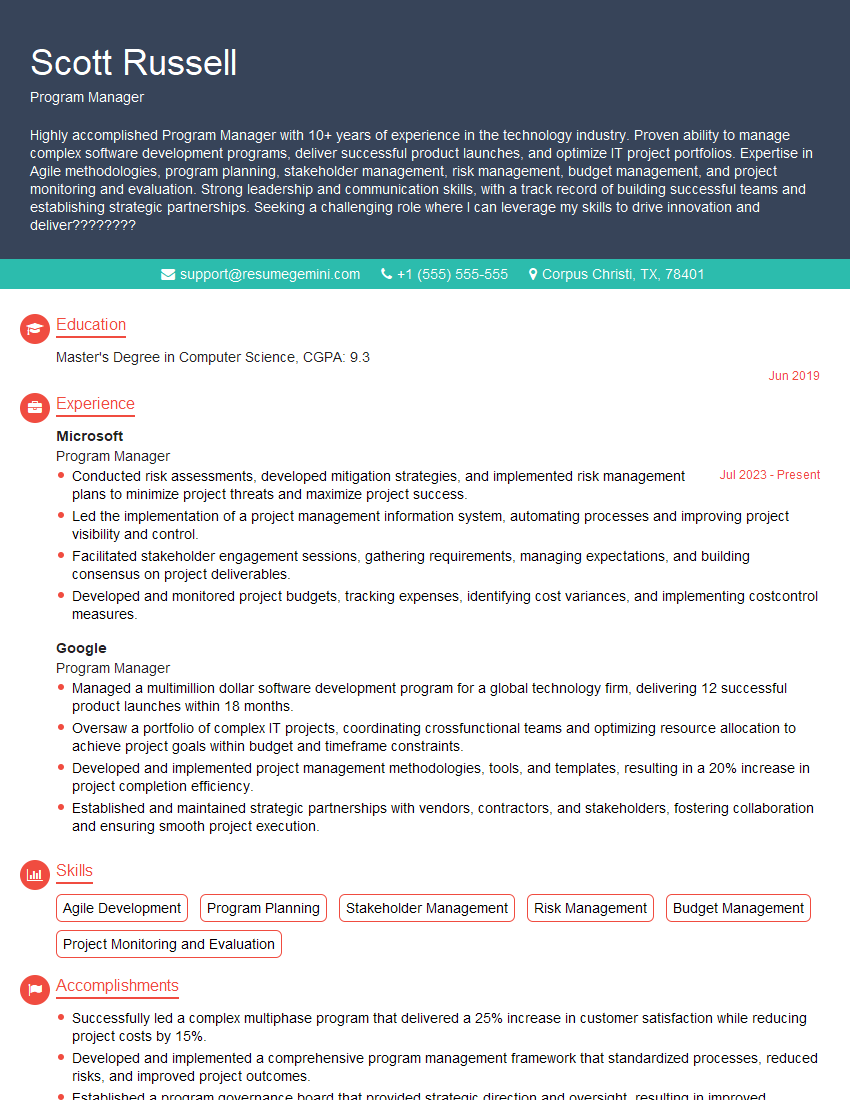
Program Manager Resume Sample

Operations Manager Resume Sample
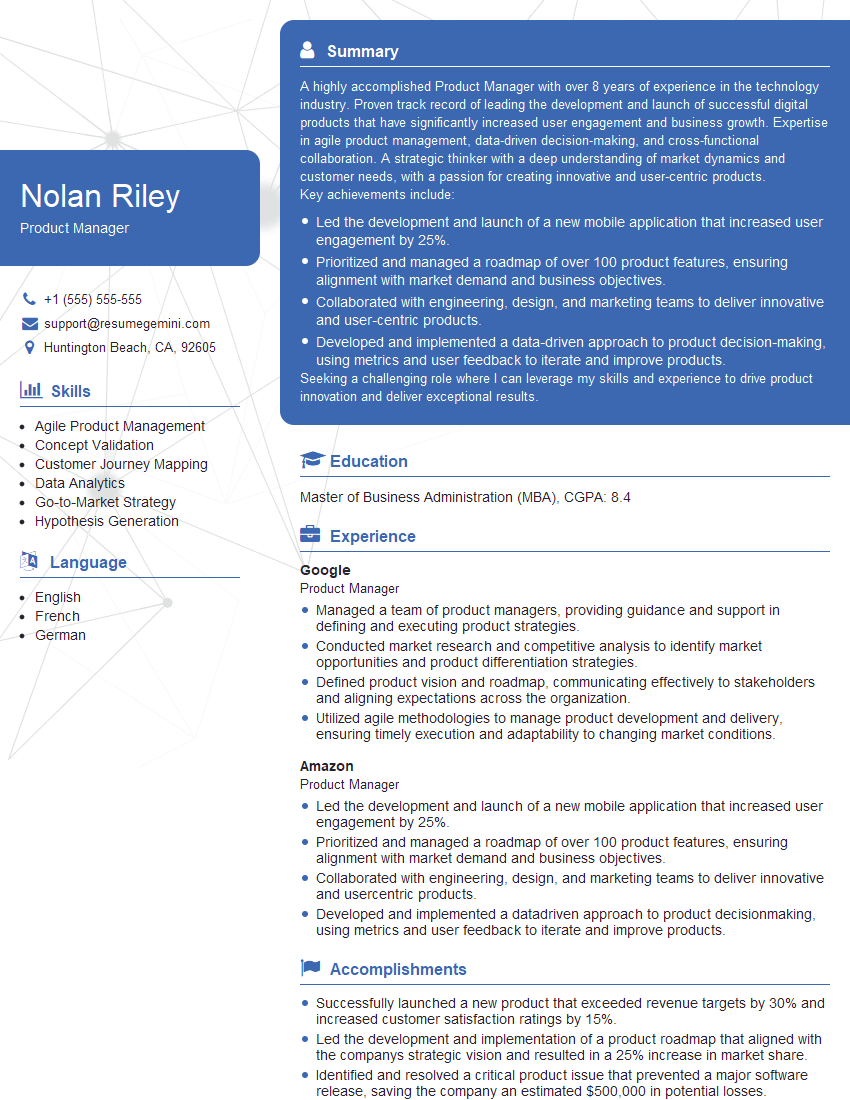
Product Manager Resume Sample
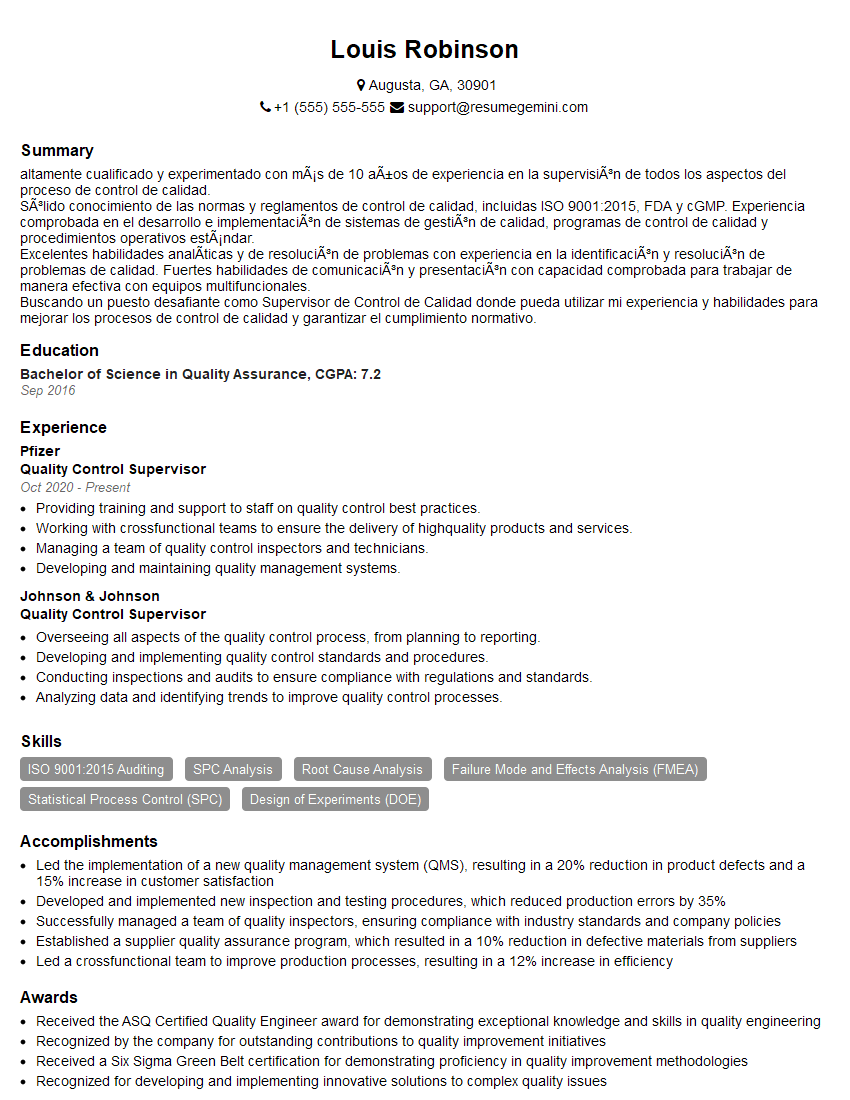
Quality Control Supervisor Resume Sample
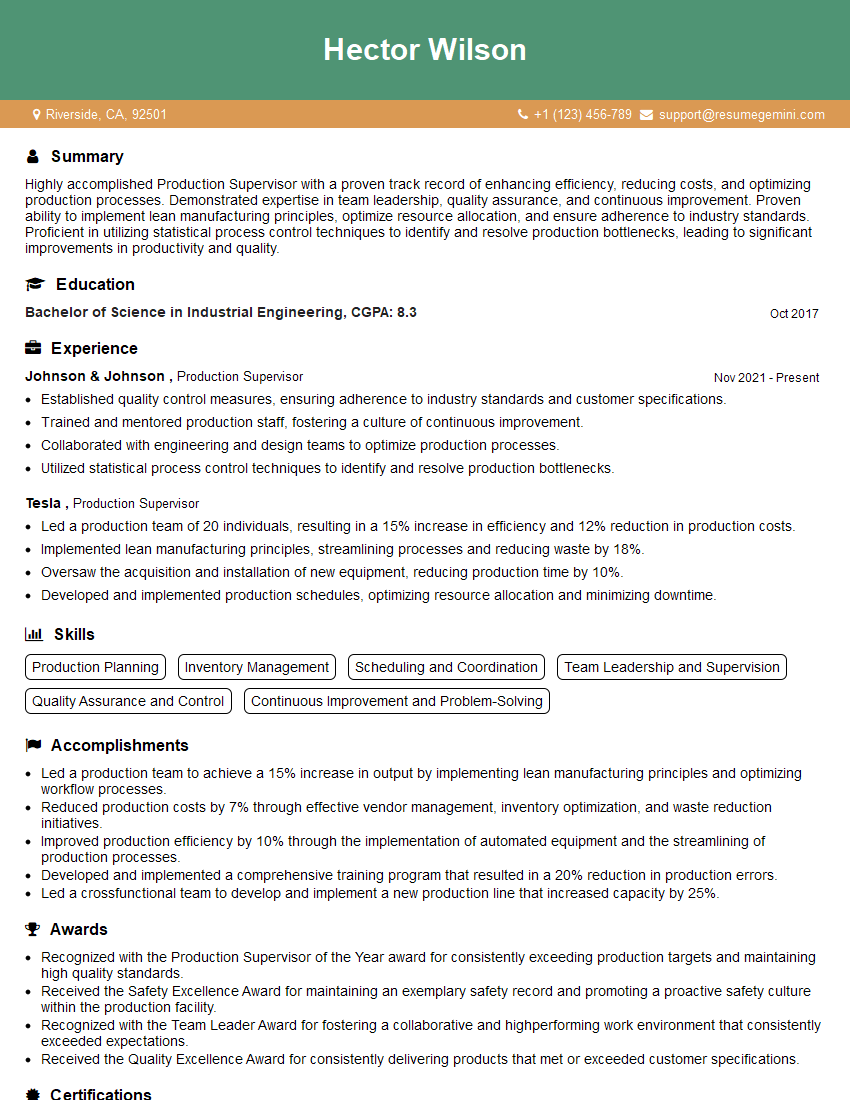
Production Supervisor Resume Sample
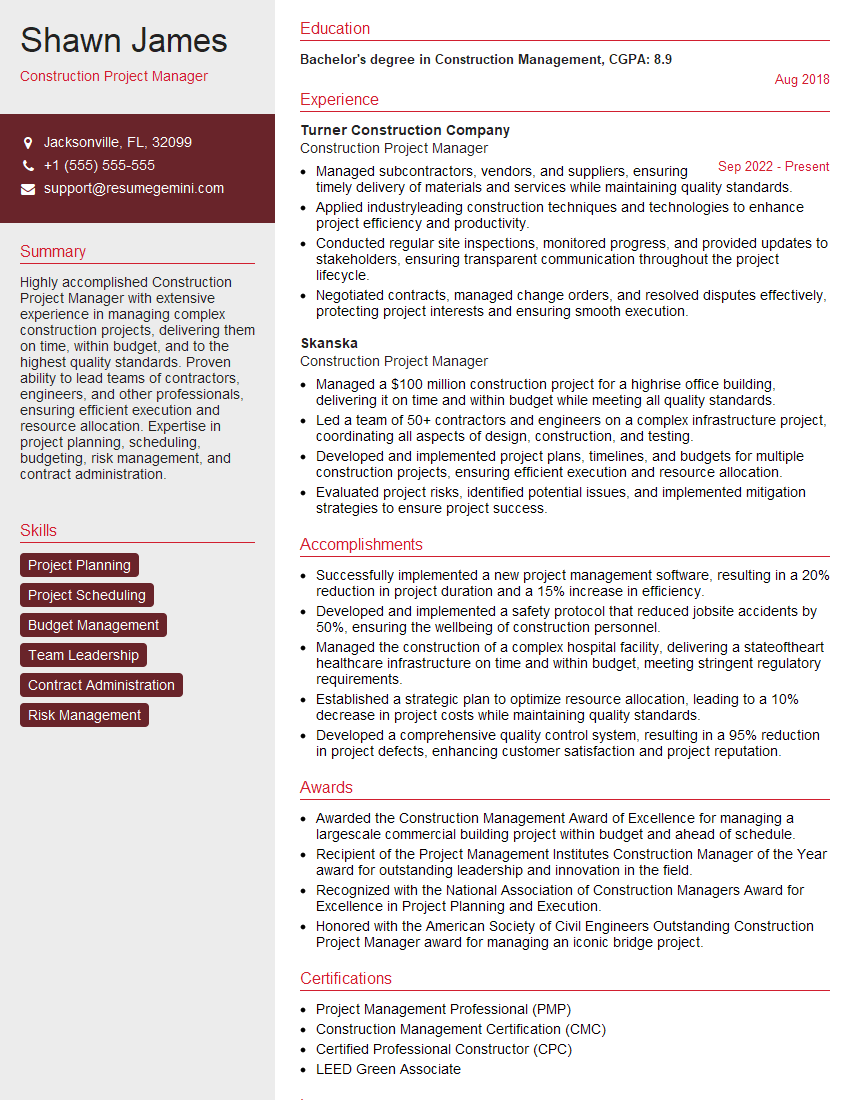
Construction Project Manager Resume Sample
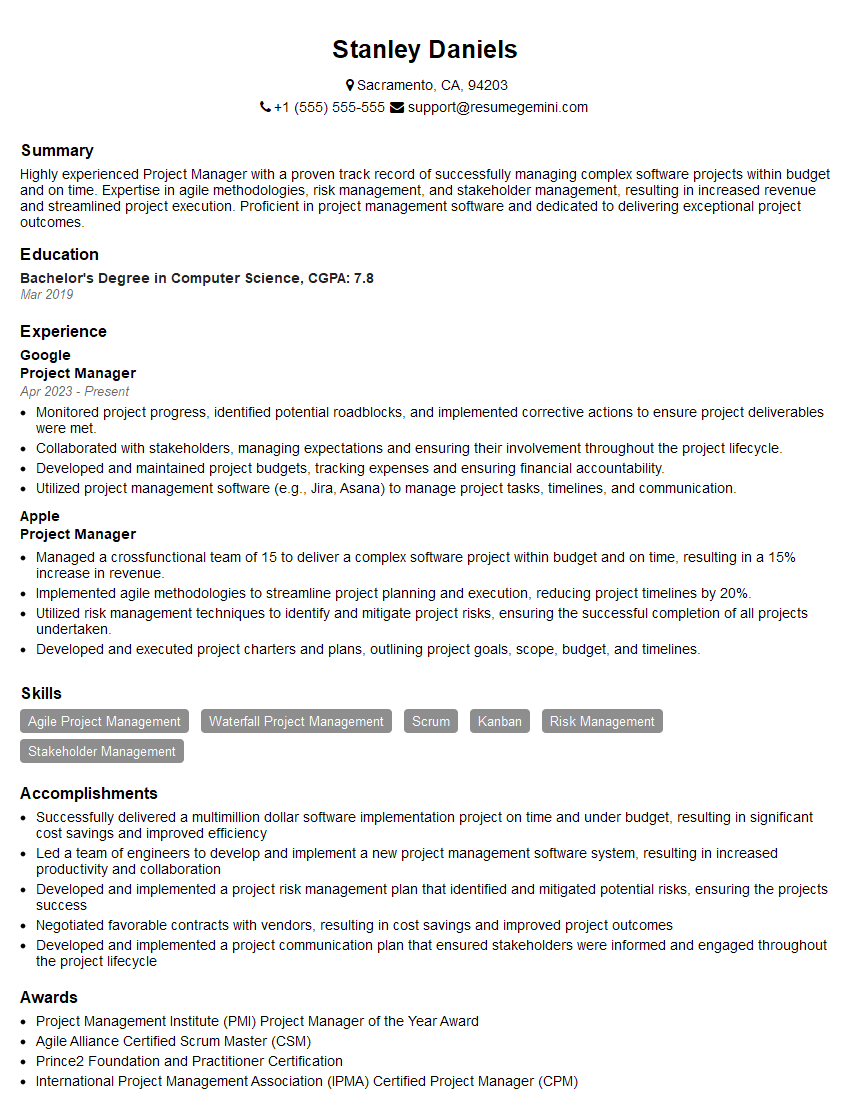
Project Manager Resume Sample
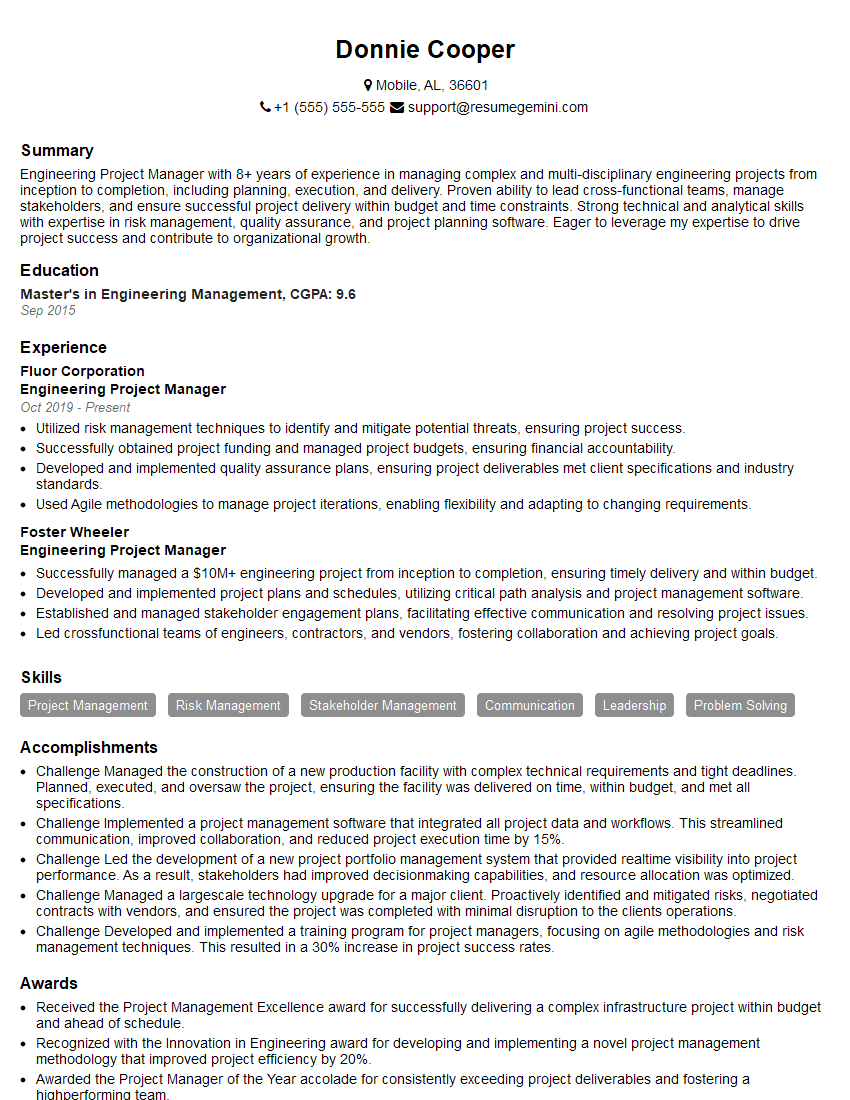
Engineering Project Manager Resume Sample
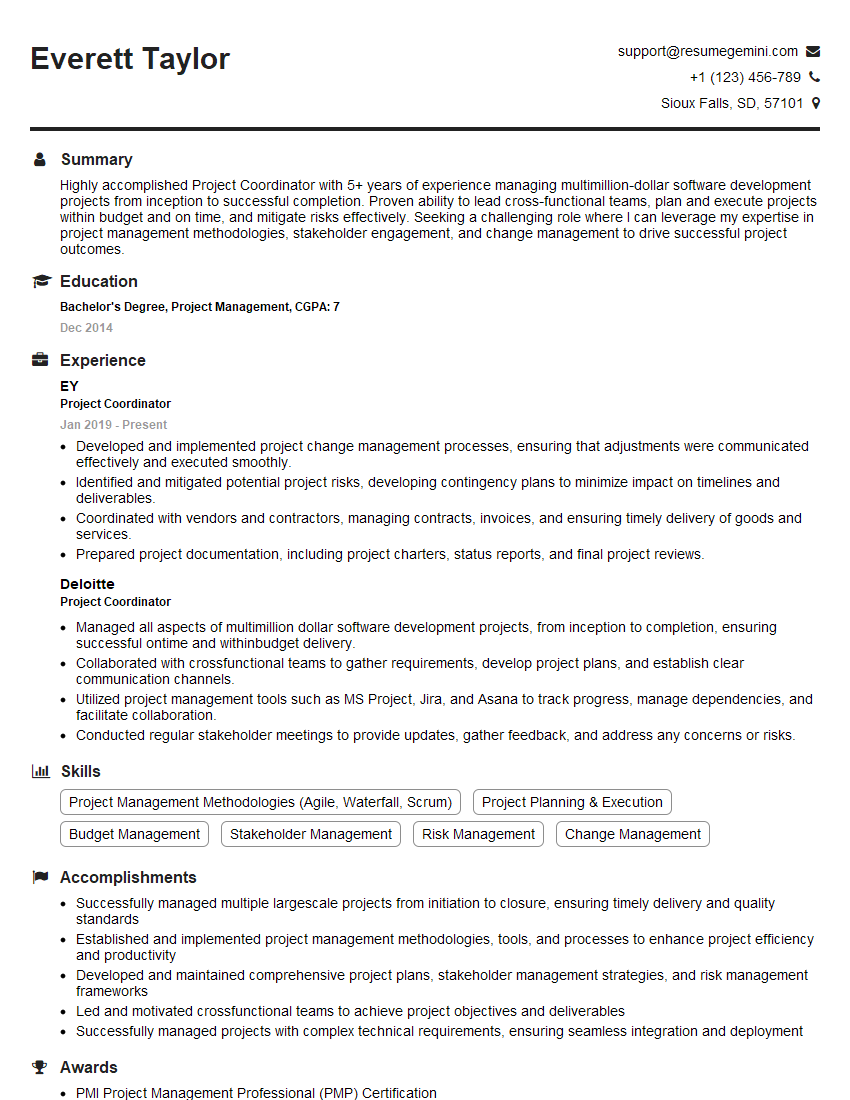
Project Coordinator Resume Sample
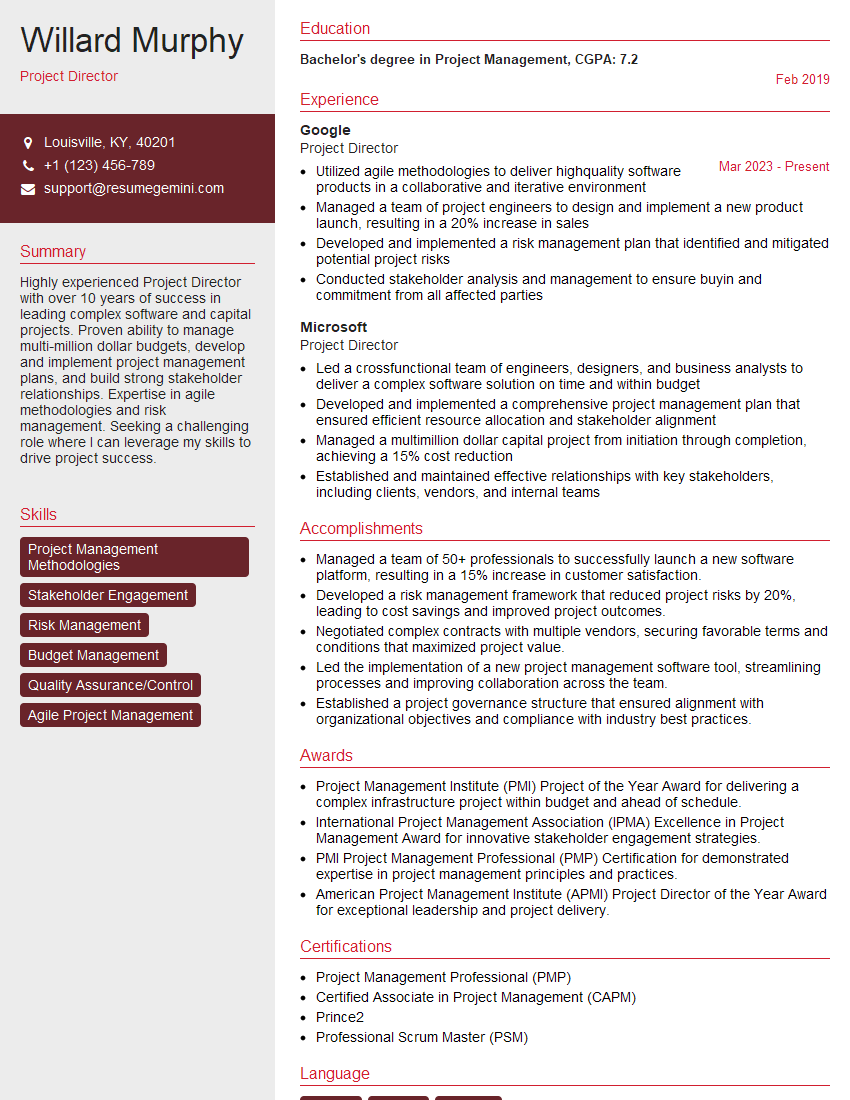
Project Director Resume Sample
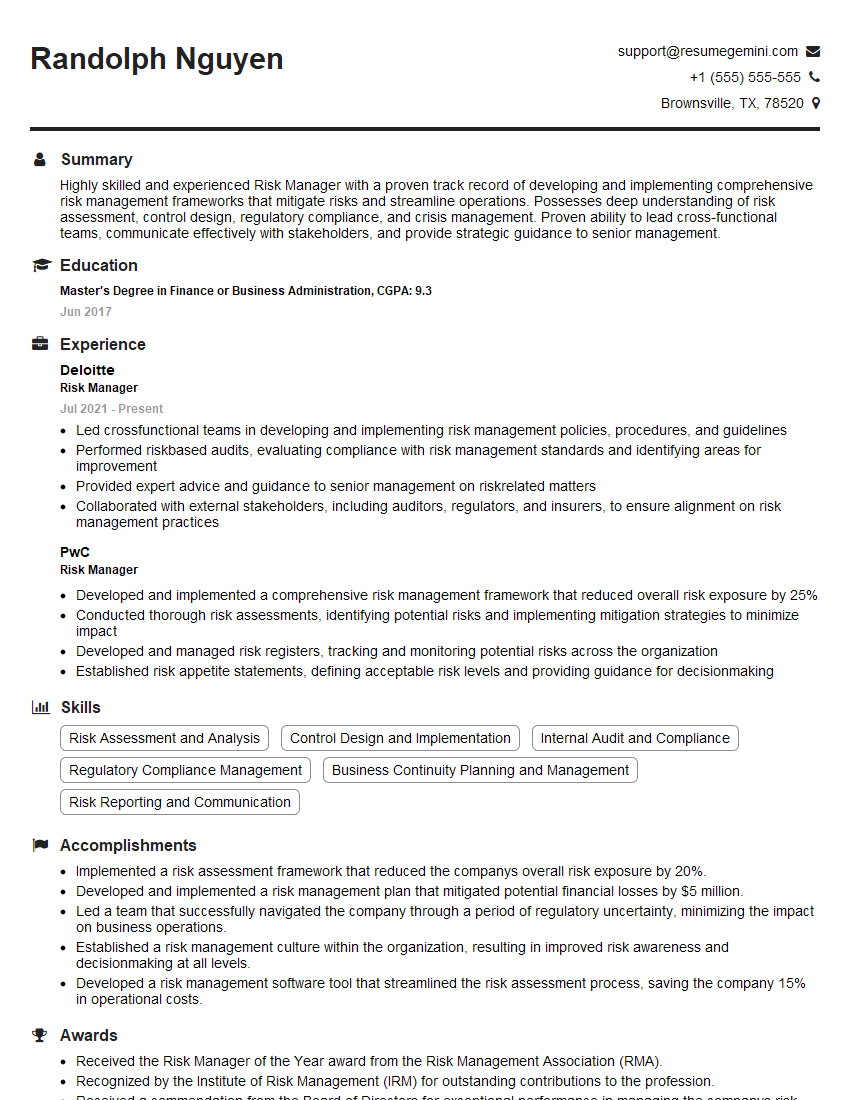
Risk Manager Resume Sample
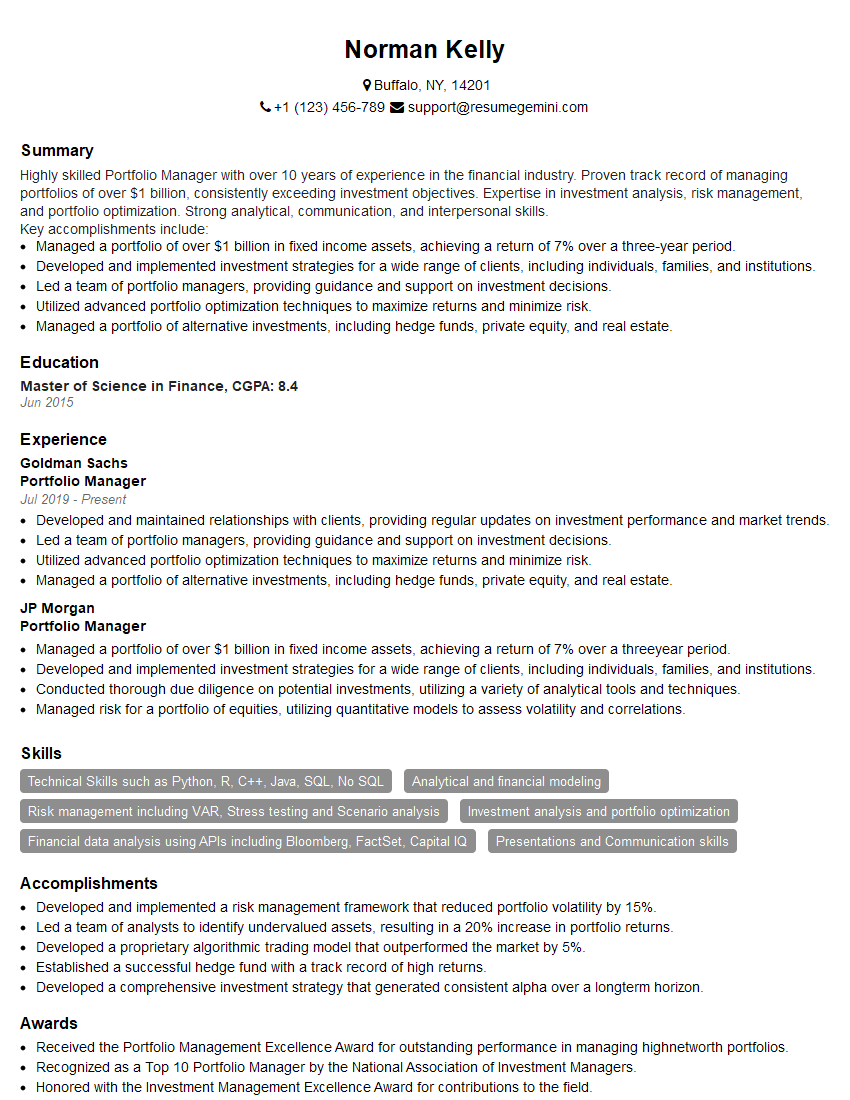
Portfolio Manager Resume Sample
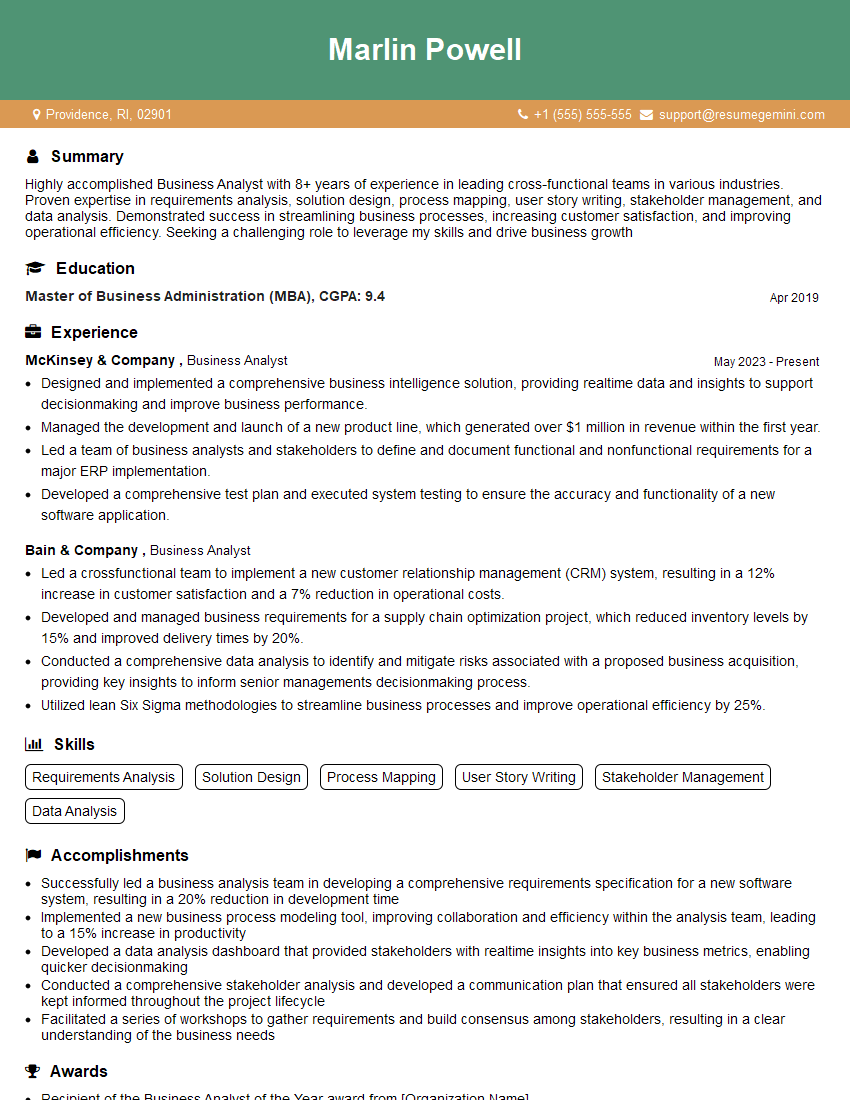
Business Analyst Resume Sample
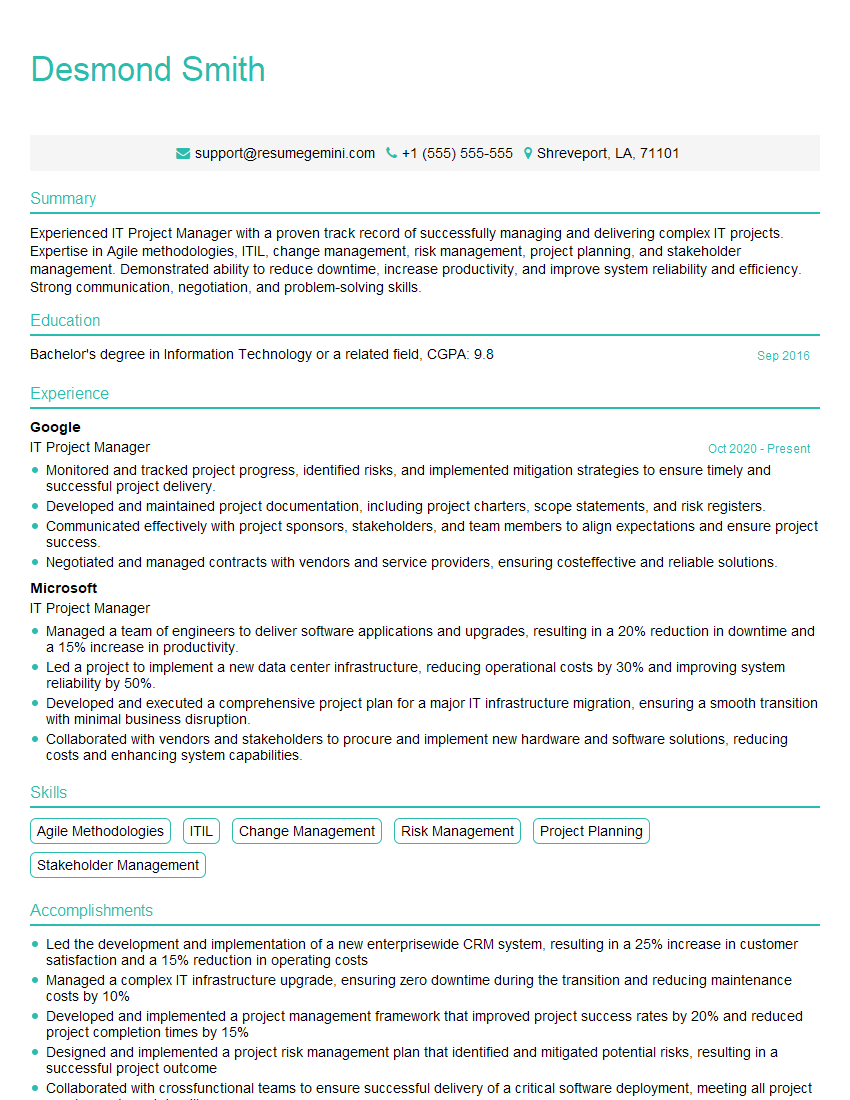
IT Project Manager Resume Sample
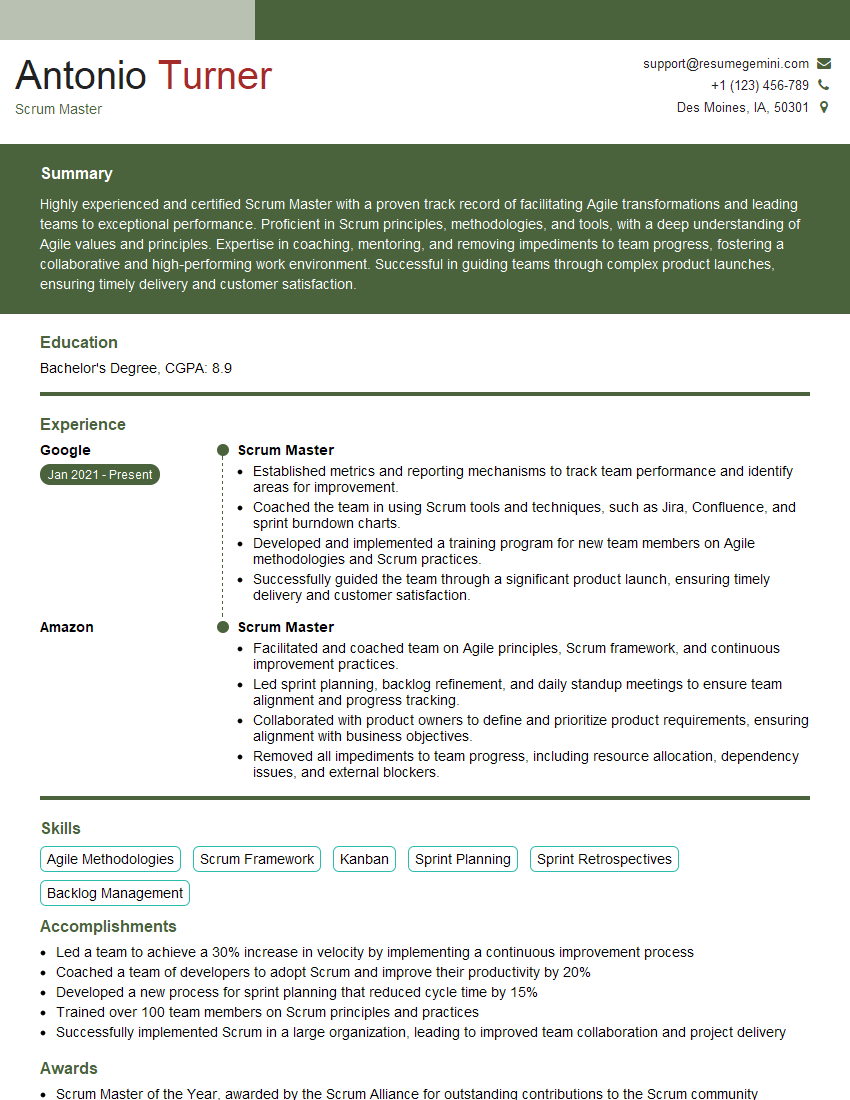
Scrum Master Resume Sample
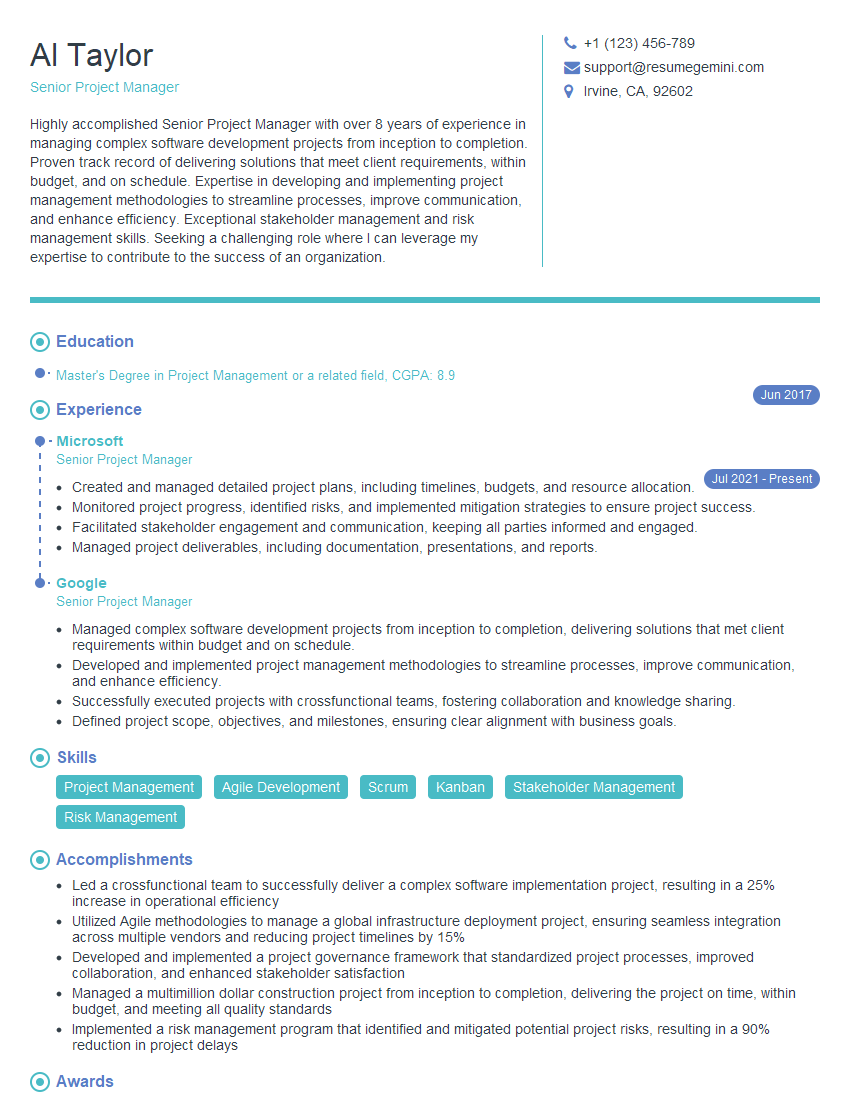
Senior Project Manager Resume Sample
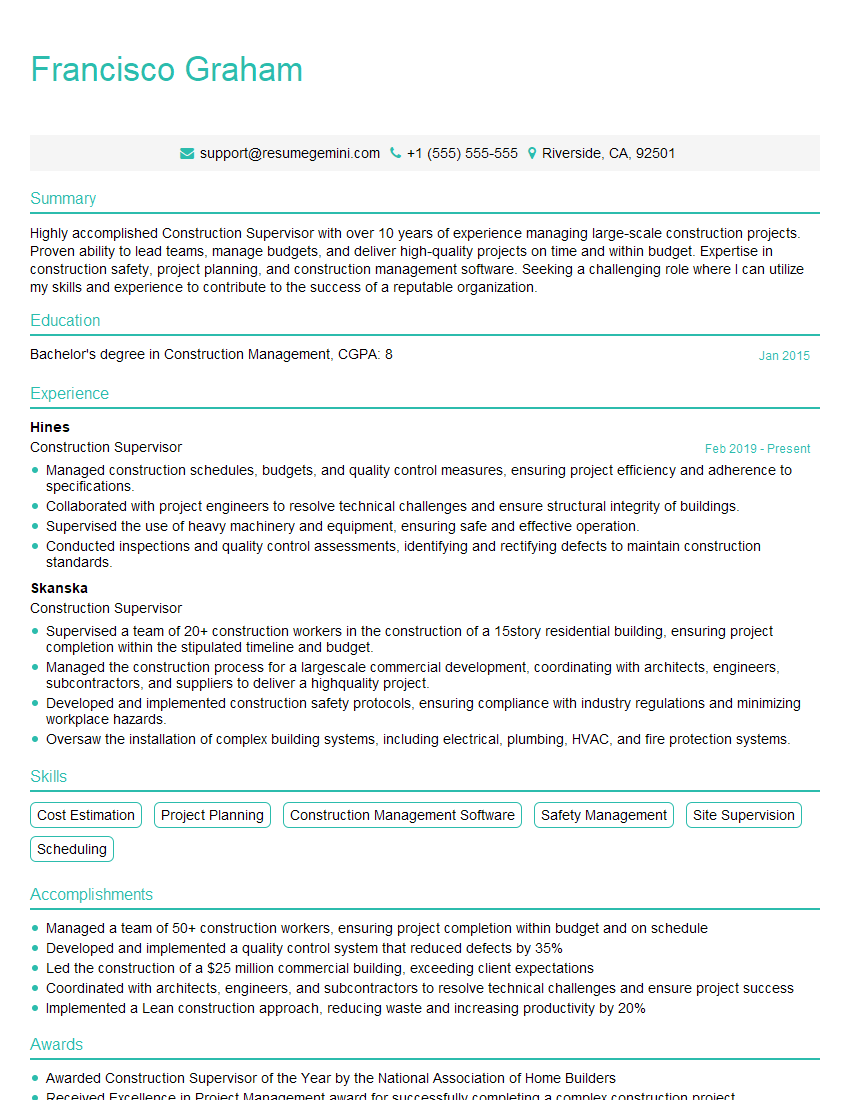
Construction Supervisor Resume Sample
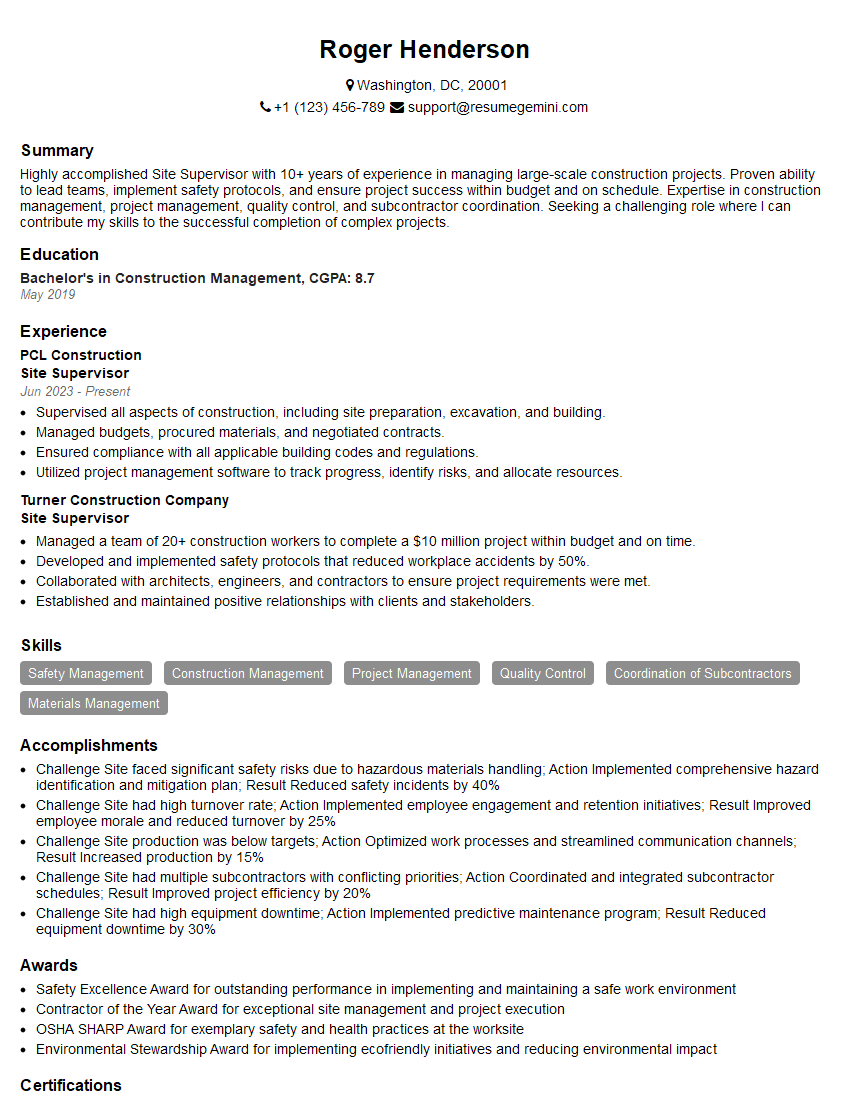
Site Supervisor Resume Sample
- Program Manager
- Operations Manager
- Product Manager
- Quality Control Supervisor
- Production Supervisor
- Construction Project Manager
- Project Manager
- Engineering Project Manager
- Project Coordinator
- Project Director
- Risk Manager
- Portfolio Manager
- Business Analyst
- IT Project Manager
- Scrum Master
- Senior Project Manager
- Construction Supervisor
- Site Supervisor
Explore more articles
Users Rating of Our Blogs
Share Your Experience
We value your feedback! Please rate our content and share your thoughts (optional).
What Readers Say About Our Blog
Very informative content, great job.
good