Are you ready to stand out in your next interview? Understanding and preparing for Landscape Design Skills interview questions is a game-changer. In this blog, we’ve compiled key questions and expert advice to help you showcase your skills with confidence and precision. Let’s get started on your journey to acing the interview.
Questions Asked in Landscape Design Skills Interview
Q 1. Describe your experience with AutoCAD or other landscape design software.
AutoCAD is my primary tool for landscape design, and I’ve been proficient in it for over eight years. My expertise extends beyond basic drafting; I’m adept at creating complex 3D models, generating detailed construction drawings, and utilizing its various functionalities for site analysis, including topographic mapping and volume calculations. For example, in a recent project involving a multi-level garden, I used AutoCAD to meticulously model the retaining walls, terraces, and planting areas, ensuring accurate dimensions and efficient material estimations. I’m also familiar with other software like SketchUp for 3D visualization and presentation, and Lumion for rendering photorealistic images to help clients visualize the final design.
Beyond the technical aspects, I understand the importance of utilizing layers, blocks, and xrefs for efficient project management and collaboration. This ensures that updates are easily implemented and modifications are tracked, leading to a more streamlined workflow.
Q 2. Explain your understanding of sustainable landscaping practices.
Sustainable landscaping is at the core of my design philosophy. It’s about creating beautiful, functional landscapes that minimize environmental impact and promote ecological balance. This involves several key practices:
- Water Conservation: Implementing drought-tolerant plant selections, utilizing rainwater harvesting systems (like rain gardens or cisterns), and employing efficient irrigation techniques (like drip irrigation).
- Soil Health: Improving soil health through composting, mulching, and avoiding the use of harmful chemicals. This encourages healthy plant growth and reduces the need for fertilizers and pesticides.
- Biodiversity: Incorporating a variety of native plants that attract beneficial insects and birds, creating diverse habitats, and reducing reliance on non-native, high-maintenance species. For instance, replacing a monoculture lawn with a meadow of native wildflowers dramatically increases biodiversity.
- Waste Reduction: Using recycled materials in construction wherever possible, minimizing waste during the construction process, and sourcing materials locally to reduce transportation emissions.
I believe in integrating these practices seamlessly into the design, so that sustainability isn’t an afterthought, but an integral part of the overall aesthetic and functionality.
Q 3. How do you incorporate client needs and site constraints into your designs?
Incorporating client needs and site constraints is crucial. My process begins with a thorough client interview to understand their vision, lifestyle, budget, and maintenance preferences. I then conduct a comprehensive site analysis, assessing existing conditions, soil type, sun exposure, drainage patterns, and any potential limitations (e.g., easements, utilities). I use this information to develop multiple design options, presenting them to the client with clear explanations of the trade-offs between aesthetics, functionality, and budget. For example, if a client desires a large swimming pool but has limited space, I might propose a smaller, more efficiently designed pool or an alternative water feature that still fulfills their desire for a relaxing water element.
Throughout the design process, I maintain open communication, seeking feedback and iterating on the design until it perfectly aligns with both their needs and the site’s capabilities. This collaborative approach ensures client satisfaction and a successful project outcome.
Q 4. What are your preferred methods for site analysis and assessment?
My site analysis methodology is thorough and multifaceted. It begins with a detailed on-site visit, carefully observing existing conditions, including topography, vegetation, soil types, sun exposure, and drainage patterns. I use tools such as a clinometer for slope measurement and a soil testing kit for initial assessments. Photography and sketching are also vital for documenting the existing conditions.
I then supplement the field observations with data from various sources such as aerial photography (Google Earth), topographic maps, and local utility maps. I analyze this data to identify potential challenges and opportunities. This comprehensive approach allows me to create a design that is both aesthetically pleasing and functionally sound, minimizing unexpected complications during construction.
Q 5. Describe your experience with plant selection and species knowledge.
My plant selection process is deeply rooted in understanding species-specific needs and their compatibility with the site’s conditions. I consider factors like sunlight requirements, soil type, water needs, mature size, and hardiness zones. My knowledge base extends beyond common plants; I am familiar with a wide variety of native and adapted species, focusing on selecting plants that thrive in the local climate and require minimal maintenance. For example, in a project with a dry, rocky site, I would select drought-tolerant native plants such as succulents and grasses rather than water-intensive species. I strive to create ecologically sound and visually appealing plantings that enhance the overall landscape.
Furthermore, I always consult reliable resources such as horticultural databases and reputable plant nurseries to ensure the accuracy of my plant selection, minimizing the risk of plant failure.
Q 6. How do you manage project budgets and timelines?
Budget and timeline management are critical. From the outset, I work closely with clients to establish a realistic budget, breaking it down into detailed cost estimates for materials, labor, and contingency. I utilize project management software to track expenses, monitor progress, and identify potential cost overruns. For example, I’ll create a detailed spreadsheet outlining each task, its associated cost, and the assigned timeline.
Similarly, I develop a project timeline with clearly defined milestones and deadlines. This timeline is shared with the client and regularly updated to ensure transparency and accountability. By proactively addressing potential issues and maintaining open communication, I strive to complete projects on time and within budget.
Q 7. Explain your process for creating detailed construction documents.
Creating detailed construction documents is a crucial step, ensuring a smooth and efficient construction process. My process involves developing a comprehensive set of drawings and specifications that clearly communicate the design intent to the contractors. This typically includes:
- Site Plans: Showing the overall layout, including features like buildings, walkways, patios, and planting areas.
- Planting Plans: Detailing the location and type of each plant.
- Grading Plans: Illustrating the earthwork required to achieve the desired grades and drainage.
- Construction Details: Providing close-up views of specific elements, such as retaining walls, patios, or irrigation systems, showing dimensions and materials.
- Specifications: A written document outlining the materials, methods, and quality standards for each aspect of the construction.
These documents are meticulously reviewed and checked for accuracy before being released to the contractor. I use AutoCAD to create these drawings, employing clear labeling, consistent scales, and detailed annotations to minimize ambiguity and ensure successful project implementation.
Q 8. How do you handle unexpected site conditions or challenges?
Unexpected site conditions are a common occurrence in landscape design. My approach involves a multi-stage process starting with thorough site analysis. This includes not just the obvious features like existing structures and vegetation, but also less visible aspects like soil composition, drainage patterns, and potential subsurface utilities. I use a combination of on-site investigation, topographical surveys, and soil testing to get a complete picture.
When unexpected challenges arise, I prioritize problem-solving and adaptation. For instance, if I uncover unexpected bedrock during excavation, I might adjust the design to incorporate the rock as a feature, perhaps creating a dry creek bed or a retaining wall that showcases it. If unstable soil is discovered, I’ll specify engineered solutions like reinforced retaining walls or geotextiles in the design to mitigate risks. Open communication with the client is crucial; I explain the situation clearly, present alternative solutions, and work collaboratively to find the best way forward within the project’s budget and timeline.
For example, I once encountered an unexpectedly high water table on a residential project. Instead of abandoning the original plan, I redesigned the planting scheme to favor water-loving plants and incorporated a French drain system to manage the excess moisture. The result was a beautiful, thriving garden perfectly suited to the site’s unique conditions.
Q 9. Describe your experience with irrigation system design and installation.
I have extensive experience designing and overseeing the installation of irrigation systems, from simple drip systems for small gardens to complex, automated systems for large commercial landscapes. My approach begins with a careful assessment of the site’s water source, soil type, and plant needs. This allows me to select the most appropriate irrigation technology and equipment.
I consider factors like water pressure, water conservation, and ease of maintenance when designing the system. I always incorporate features like pressure regulators, flow sensors, and rain sensors to ensure efficient and sustainable water usage. I utilize Computer-Aided Design (CAD) software to create detailed irrigation plans that show the layout of pipes, sprinklers, emitters, and valves. These plans are crucial for accurate installation and future maintenance.
For example, in a recent project, we used a combination of drip irrigation and rotor sprinklers to efficiently water a diverse landscape including a drought-tolerant meadow and a lush vegetable garden. The system was designed with smart controls, allowing for zone-specific watering based on plant requirements and weather conditions, ensuring optimal water use and plant health.
Q 10. What are your preferred hardscape materials and why?
My preferred hardscape materials are chosen based on factors like durability, aesthetic appeal, sustainability, and local availability. I often favor natural materials such as stone and brick for their timeless quality and environmental friendliness. I particularly like using locally sourced materials to reduce the carbon footprint of the project.
For paving, I appreciate the versatility and strength of permeable paving stones; these allow water to seep through, reducing runoff and replenishing groundwater. For retaining walls, I often specify natural stone or concrete blocks, which offer excellent stability and blend well with many landscape styles. I avoid materials that require high maintenance or have a short lifespan. The choice of material is always a collaborative decision with the client, balancing their preferences with practical considerations and budget.
For example, in a recent project, we used reclaimed bricks for pathways, giving the garden a rustic charm while promoting sustainability. The client loved the unique character of the reused material.
Q 11. How do you address drainage issues in your designs?
Addressing drainage issues is vital for creating functional and healthy landscapes. My strategy begins with a thorough understanding of the site’s topography and soil conditions. I use contour lines and grading plans to manage water flow, directing it away from structures and sensitive areas. I incorporate a variety of drainage solutions depending on the specific challenges.
These solutions might include swales (shallow channels that direct water), French drains (perforated pipes buried underground), dry creek beds (decorative channels that convey water), or rain gardens (depressed areas planted with water-tolerant vegetation). I also consider the use of permeable paving materials to allow water to seep into the ground instead of running off. The implementation of these strategies is carefully planned and documented in the construction documents.
In one instance, a client’s property had significant slope and poor drainage. I designed a series of swales and rain gardens that not only managed the water effectively but also created visually appealing features that enhanced the overall landscape design.
Q 12. Describe your understanding of local building codes and regulations.
Understanding and adhering to local building codes and regulations is paramount in landscape design. This includes being aware of setback requirements (the minimum distance between structures and property lines), height restrictions for walls and structures, and regulations concerning water usage and irrigation. I regularly consult local building departments and review relevant codes before finalizing any design.
I maintain a current library of applicable codes and frequently check for updates. It’s not just about compliance; understanding these regulations allows me to proactively integrate them into the design process, avoiding potential delays and costly revisions during construction. This also ensures that the project meets all safety and environmental standards.
For example, before designing a retaining wall, I carefully review the requirements for retaining wall height, design, and structural integrity, ensuring it meets local regulations for stability and safety.
Q 13. How do you collaborate effectively with contractors and other professionals?
Effective collaboration is crucial for successful landscape projects. I foster strong relationships with contractors and other professionals by maintaining clear and consistent communication. This starts with providing them with comprehensive and well-organized design documents, including detailed plans, specifications, and schedules.
I hold regular meetings to discuss progress, address challenges, and ensure everyone is on the same page. I actively listen to their input, valuing their experience and expertise. I prioritize building trust through transparency and mutual respect. I also make myself readily available to answer questions and address any concerns that may arise. My goal is to create a collaborative environment where everyone feels valued and empowered to contribute to the project’s success.
For instance, I work closely with structural engineers when designing complex hardscapes to ensure the stability and safety of structures like retaining walls. I rely on arborists for guidance on tree selection and planting, and I coordinate closely with irrigation specialists to ensure the seamless integration of irrigation systems into the design.
Q 14. Explain your approach to project presentation and client communication.
My approach to project presentation and client communication is centered around clarity, transparency, and engagement. I begin by listening carefully to the client’s needs, preferences, and budget. I then create comprehensive design proposals that visually communicate my ideas, including detailed plans, renderings, and 3D models.
I use these presentations to explain the design rationale, highlight key features, and address any potential challenges. I employ plain language, avoiding technical jargon whenever possible, ensuring that the client fully understands the design and its implications. I encourage active participation and feedback throughout the process, using this feedback to refine the design until it perfectly reflects the client’s vision. After the project’s completion, I follow up with clients to ensure they are satisfied and address any concerns.
For example, I might use interactive 3D models to show a client how a proposed patio will look from different viewpoints or use before-and-after photos to illustrate the potential impact of a proposed planting scheme. I believe the best designs arise from a strong collaborative relationship built on clear communication and mutual understanding.
Q 15. Describe your experience with different landscaping styles (e.g., formal, informal, etc.).
My experience spans a wide range of landscaping styles, each demanding a unique approach. Formal gardens, for example, emphasize symmetry, geometric patterns, and meticulously manicured plants. Think of the iconic gardens of Versailles – structured hedges, perfectly aligned pathways, and a sense of order and grandeur. I’ve designed several formal gardens incorporating elements like clipped topiary, symmetrical planting beds, and ornate fountains. Conversely, informal gardens prioritize a more natural, relaxed aesthetic. These designs often incorporate meandering pathways, mixed borders with a variety of textures and heights, and a sense of spontaneity. One project involved creating a naturalistic woodland garden using native plants, mimicking the look of an established forest. I also have experience with contemporary styles, which focus on clean lines, minimalist planting schemes, and the use of modern materials, as well as traditional styles integrating historical elements and classic plant choices. Each style requires careful consideration of the site, client preferences, and the overall desired atmosphere.
Career Expert Tips:
- Ace those interviews! Prepare effectively by reviewing the Top 50 Most Common Interview Questions on ResumeGemini.
- Navigate your job search with confidence! Explore a wide range of Career Tips on ResumeGemini. Learn about common challenges and recommendations to overcome them.
- Craft the perfect resume! Master the Art of Resume Writing with ResumeGemini’s guide. Showcase your unique qualifications and achievements effectively.
- Don’t miss out on holiday savings! Build your dream resume with ResumeGemini’s ATS optimized templates.
Q 16. What software programs are you proficient in?
I’m proficient in several software programs essential for landscape design. My primary tool is AutoCAD, which I use for creating precise site plans, grading plans, and detailed construction drawings. SketchUp allows me to develop three-dimensional models, enabling clients to visualize the final product more effectively. Lumion is crucial for generating realistic renderings and walkthroughs, showcasing the design’s aesthetic appeal and lighting considerations. Finally, Photoshop helps in refining images, creating mood boards, and enhancing presentations. I also utilize project management software like Asana to keep projects organized and on track.
Q 17. How do you ensure the long-term viability and sustainability of your designs?
Long-term viability and sustainability are paramount in my designs. I achieve this through several strategies. First, I prioritize using native plants that are well-suited to the local climate and soil conditions, requiring less water and maintenance. Second, I incorporate water-wise irrigation systems, often utilizing drip irrigation for targeted watering. Third, I minimize the use of pesticides and fertilizers, opting for organic alternatives whenever possible. Fourth, I carefully consider the site’s microclimate, sun exposure, and wind patterns to select plants that will thrive in those specific conditions. For example, I might use drought-tolerant species in areas with limited water availability and windbreaks to protect more delicate plants. Fifth, I frequently educate clients on proper plant care and maintenance to ensure their longevity. Finally, I always incorporate permeable paving where possible to reduce runoff and promote groundwater recharge.
Q 18. Explain your process for creating a planting plan.
Creating a planting plan is a multi-step process. It begins with a thorough site analysis – considering sun exposure, soil type, drainage, existing vegetation, and microclimates. Then, I collaborate with the client to determine their preferences in terms of plant types, colors, textures, and overall style. Based on this information, I select plants appropriate for the site and client’s vision. I consider factors like mature size, growth rate, bloom times, and seasonal interest. The next step involves creating a detailed planting plan, using software like AutoCAD or SketchUp to precisely locate each plant within the design. This plan includes plant names, quantities, and planting spacing. Finally, I provide a detailed planting schedule, outlining the best time to plant each species, taking into account their specific needs and local climate. I always include a plant key providing additional information about each selection for the client’s reference.
Q 19. How do you handle difficult clients or conflicting demands?
Handling difficult clients or conflicting demands requires strong communication, active listening, and a collaborative approach. I begin by clearly outlining the design process and expectations from the outset. Open and honest communication helps to manage expectations and prevent misunderstandings. If conflicts arise, I encourage active listening to understand the client’s concerns. I then work to find mutually acceptable solutions, perhaps offering alternative design options or compromises to address their needs while still adhering to design principles. Documentation of all discussions and agreements is vital. Sometimes, compromises may require adjusting the scope of the project to fit within the budget or client limitations. While client satisfaction is essential, it’s equally important to maintain the integrity of the design and professional standards. In extreme cases, where a productive working relationship can’t be established, I may have to refer the client elsewhere.
Q 20. Describe your experience with different soil types and their implications for planting.
Understanding soil types is crucial for successful planting. Different soils have varying drainage, nutrient content, and pH levels, all impacting plant health. Clay soils, for example, retain water and nutrients but can become waterlogged, hindering root development. Sandy soils drain quickly, requiring more frequent watering and fertilization. Loamy soils, a mixture of sand, silt, and clay, offer the best balance of drainage and nutrient retention. Before planting, I conduct a thorough soil test to determine its type, pH, and nutrient levels. This informs plant selection, ensuring I choose species that thrive in those conditions. If the soil is unsuitable, I might recommend amendments like compost or other organic matter to improve its structure, drainage, or nutrient content. For example, adding organic matter to a clay soil will improve drainage, while sandy soils might benefit from the addition of compost to improve water retention.
Q 21. What are your methods for managing erosion and soil stabilization?
Erosion and soil stabilization are critical aspects of responsible landscape design, particularly on slopes or in areas prone to runoff. My methods involve a combination of techniques. First, I utilize appropriate grading and terracing techniques to reduce the slope’s steepness, thereby minimizing erosion potential. Second, I incorporate erosion control blankets or mats, which are permeable fabrics that help to stabilize the soil and prevent surface runoff. Third, I use vegetation as a primary tool, planting native grasses, groundcovers, and shrubs that have robust root systems to bind the soil. These plants act as a natural barrier, protecting the soil from the effects of wind and rain. Fourth, I strategically place retaining walls or other structural elements where necessary to support the soil and prevent landslides. Fifth, I may implement swales or bioswales, which are vegetated channels that intercept and filter runoff, minimizing erosion and improving water quality. The choice of method depends on the site’s specific conditions and the level of erosion risk.
Q 22. How do you balance aesthetic considerations with functional requirements?
Balancing aesthetics and functionality in landscape design is crucial for creating spaces that are both beautiful and usable. It’s not about choosing one over the other, but rather finding a harmonious blend. Think of it like baking a cake: you need the right ingredients (functionality) and the right presentation (aesthetics) to create a delicious and appealing final product.
My approach involves a collaborative process with the client, starting with a thorough understanding of their needs and lifestyle. This involves discussions about how they intend to use the space – entertaining, relaxing, gardening, playing with children, etc. This informs the functional aspects, like the placement of patios, walkways, seating areas, and planting beds. Simultaneously, we explore their aesthetic preferences: preferred styles (modern, traditional, etc.), color palettes, and plant choices. I then develop a design that seamlessly integrates both aspects. For example, a strategically placed pergola provides shade (function) while also acting as a beautiful focal point (aesthetic). Similarly, a winding pathway can enhance usability and also create visual interest. Throughout the process, I use sketches, 3D renderings, and material samples to ensure the client can visualize the final result and make informed decisions.
Q 23. What are some of your favorite landscape design projects you’ve worked on?
One of my most rewarding projects was transforming a neglected urban backyard into a vibrant oasis. The clients, a young couple, wanted a space for entertaining and relaxation but had limited space. We maximized the area by installing vertical gardens, using multi-functional furniture, and incorporating water features to add tranquility. The result was a space that felt much larger than its physical dimensions, exceeding the clients’ expectations. Another project I particularly enjoyed involved designing a naturalistic garden for an environmental conservation organization. This project required careful consideration of native plant species, water conservation techniques, and sustainable landscaping practices. It was fulfilling to create a beautiful space that also contributed to environmental protection. Both projects highlighted my ability to adapt my design approach to the client’s needs and the site’s constraints.
Q 24. Describe your experience with public speaking or presentations.
I have extensive experience presenting landscape design proposals and concepts to clients and community groups. I’ve presented at conferences, neighborhood associations, and even participated in local design review boards. My presentations are always tailored to my audience, using clear and concise language, supplemented by high-quality visuals such as photographs, sketches, and 3D renderings. I find that using real-world examples and relatable analogies helps to engage the audience and convey complex information effectively. I actively encourage questions and feedback to ensure everyone understands the project’s scope and intent. I’m comfortable adapting my presentation style based on the specific needs of the audience and the nature of the project.
Q 25. How do you stay up-to-date with the latest trends in landscape design?
Staying current in landscape design requires continuous learning. I achieve this through several avenues. I regularly attend industry conferences and workshops to learn about new technologies, planting techniques, and design trends. I also subscribe to relevant professional journals and online publications, keeping up-to-date on best practices and emerging innovations in sustainable landscaping. Networking with other landscape designers through professional organizations allows me to exchange ideas and learn from colleagues’ experiences. I also actively explore online resources and social media platforms dedicated to landscape architecture and design to track the latest design trends and materials. Finally, I regularly visit various gardens, parks, and landscapes to observe and analyze different design approaches in practice. This helps me synthesize information from various sources and apply it effectively.
Q 26. What is your understanding of universal design principles?
Universal design principles are essential in creating landscapes accessible and usable by everyone, regardless of age, ability, or disability. This means designing spaces that are inclusive and accommodating to diverse needs. Key principles include providing multiple means of access, making the space easy to navigate, ensuring clear sightlines, and designing for flexibility and adaptability. For example, this might involve incorporating ramps instead of stairs, using wider walkways, and selecting plants that are easily accessible for those in wheelchairs. Designing with universal design in mind isn’t just about compliance, but also about creating richer and more enjoyable experiences for everyone. I always strive to incorporate these principles, ensuring the designed space is usable and enjoyable for people of all abilities.
Q 27. How do you approach the integration of lighting into your landscape designs?
Lighting plays a critical role in enhancing the ambiance and functionality of a landscape. I carefully consider the purpose of lighting – whether it’s for safety, security, or aesthetic appeal – and tailor the design accordingly. This includes selecting appropriate fixtures, considering light intensity and color temperature, and strategically placing lights to highlight key features, create visual interest, and ensure proper illumination of pathways. For instance, uplighting can accentuate the architectural details of a building, while path lighting enhances safety and creates a welcoming atmosphere. I avoid excessive lighting that can disrupt nocturnal wildlife or create light pollution. Energy-efficient LED lighting is often my preference due to its low energy consumption and long lifespan. Furthermore, I carefully consider the interplay of natural and artificial light to create a harmonious and balanced effect.
Q 28. Describe your experience with creating detailed cost estimates.
Creating accurate cost estimates is a critical aspect of my work. I use a detailed and systematic approach. It begins with a thorough analysis of the design, breaking it down into individual components such as materials, labor, and equipment. I obtain quotes from reliable suppliers and contractors for each component. I factor in contingency costs to account for unforeseen expenses and potential price fluctuations. Software like landscape design programs helps in generating accurate estimates by automatically calculating quantities of materials needed, and assisting with labour cost estimations based on previous projects. My final estimate includes a detailed breakdown of each cost element, along with a total project cost and a timeline. I regularly review my estimates to ensure accuracy and update them when necessary. Transparency with clients regarding the cost breakdown is key to building trust and managing expectations throughout the project lifecycle.
Key Topics to Learn for Your Landscape Design Skills Interview
- Site Analysis & Assessment: Understanding topography, soil types, sun exposure, microclimates, and existing vegetation – crucial for creating functional and aesthetically pleasing designs.
- Design Principles & Elements: Applying principles like balance, rhythm, proportion, and unity; mastering elements such as line, form, color, and texture to create cohesive and impactful landscapes.
- Plant Selection & Knowledge: Demonstrating comprehensive knowledge of plant species, their growth habits, hardiness zones, and maintenance requirements to select appropriate plants for various conditions and design styles.
- Sustainable Design Practices: Understanding and incorporating water conservation techniques, native plant selection, and environmentally responsible materials to create sustainable and eco-friendly landscapes.
- Construction & Installation Methods: Familiarity with various construction techniques including hardscape installation (patios, walls, walkways), irrigation systems, and planting procedures.
- CAD Software Proficiency: Demonstrating proficiency in using landscape design software (e.g., AutoCAD, SketchUp, etc.) to create detailed plans, sections, and perspectives.
- Client Communication & Collaboration: Highlighting your ability to effectively communicate design concepts, manage client expectations, and address potential challenges throughout the design and construction process.
- Budgeting & Cost Estimation: Demonstrating your ability to develop realistic budgets and cost estimates for landscape projects, considering materials, labor, and contingency factors.
- Problem-Solving & Adaptability: Showcasing your ability to identify and solve design problems creatively and efficiently, adapting to changing site conditions or client preferences.
Next Steps
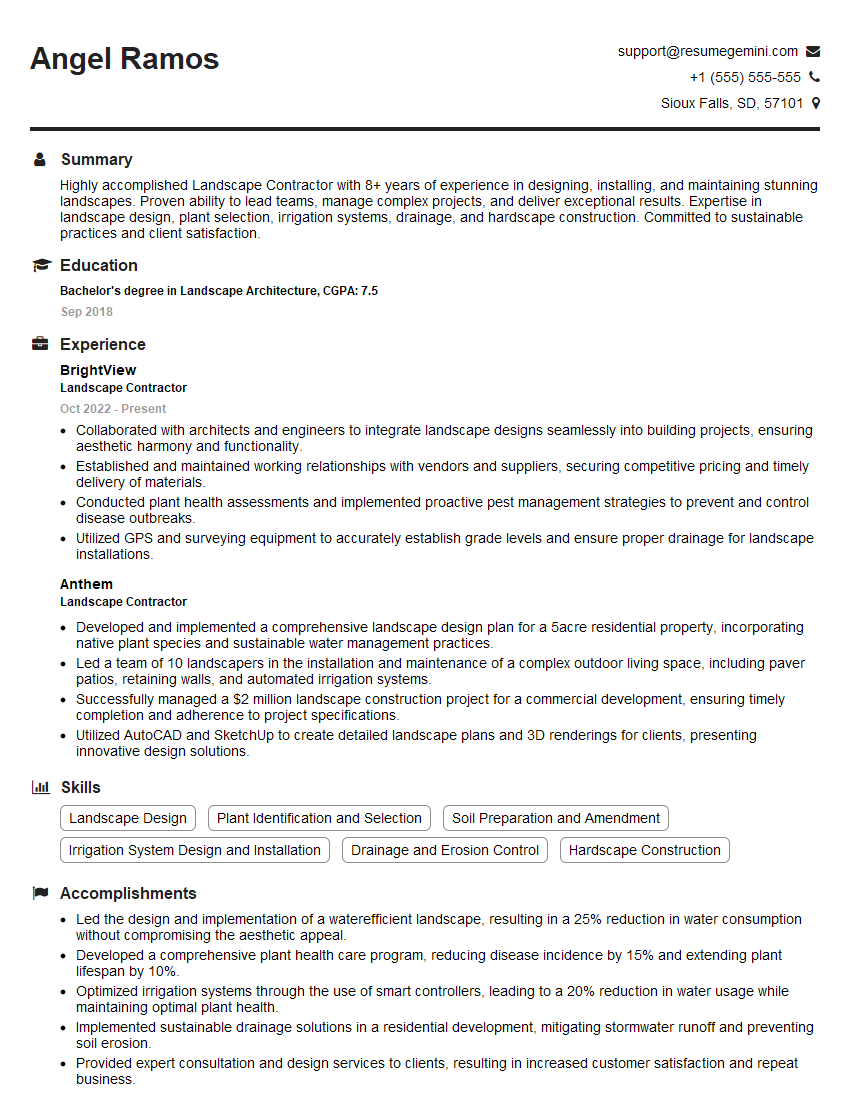
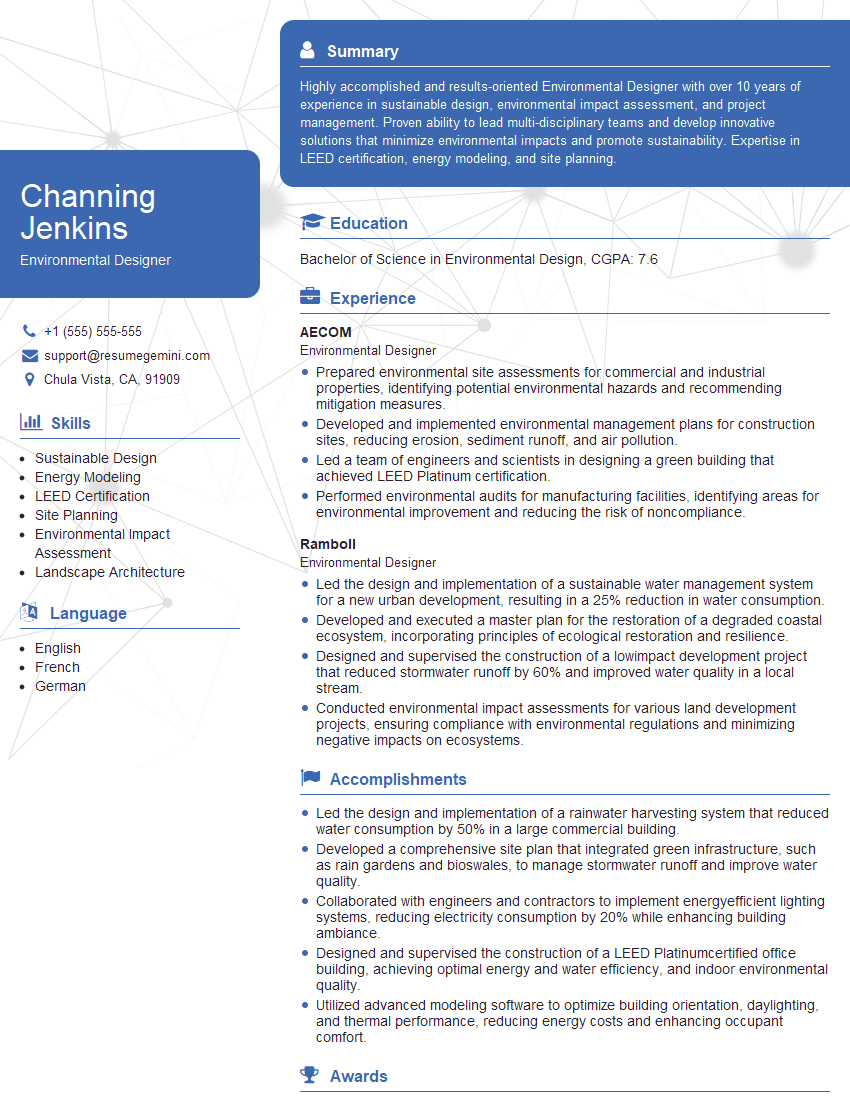
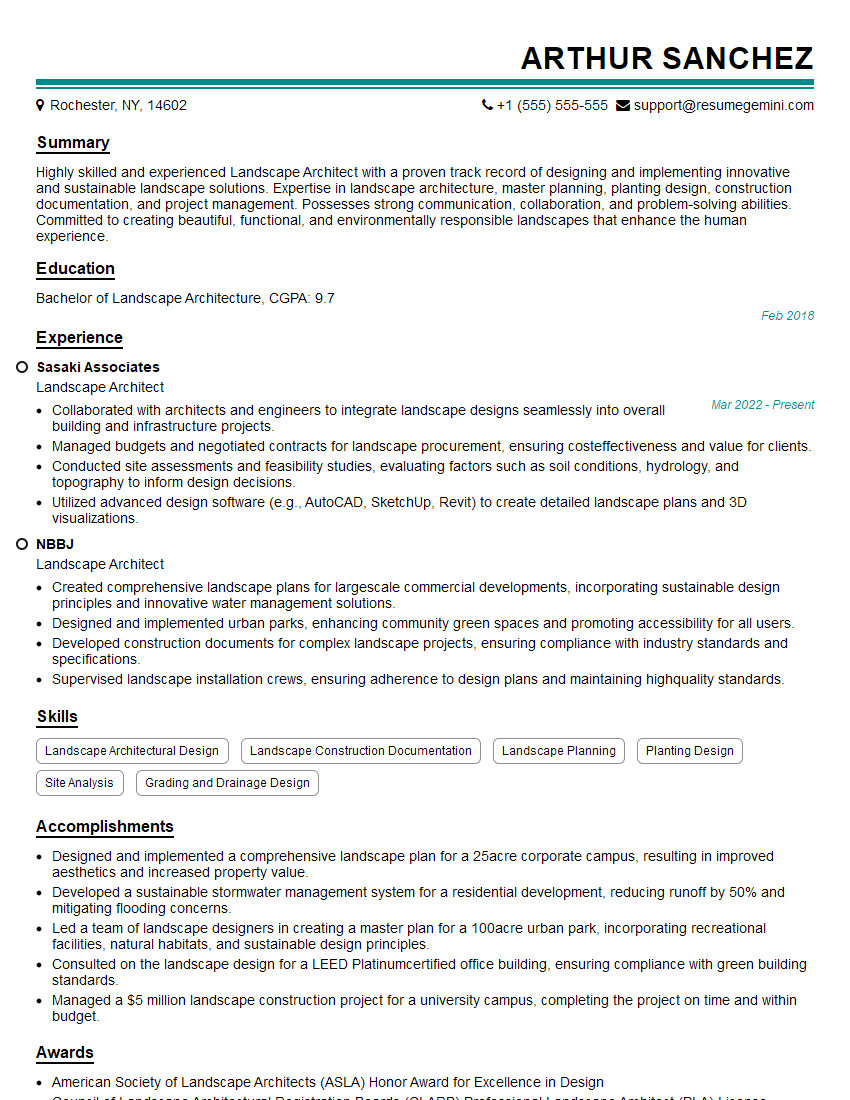
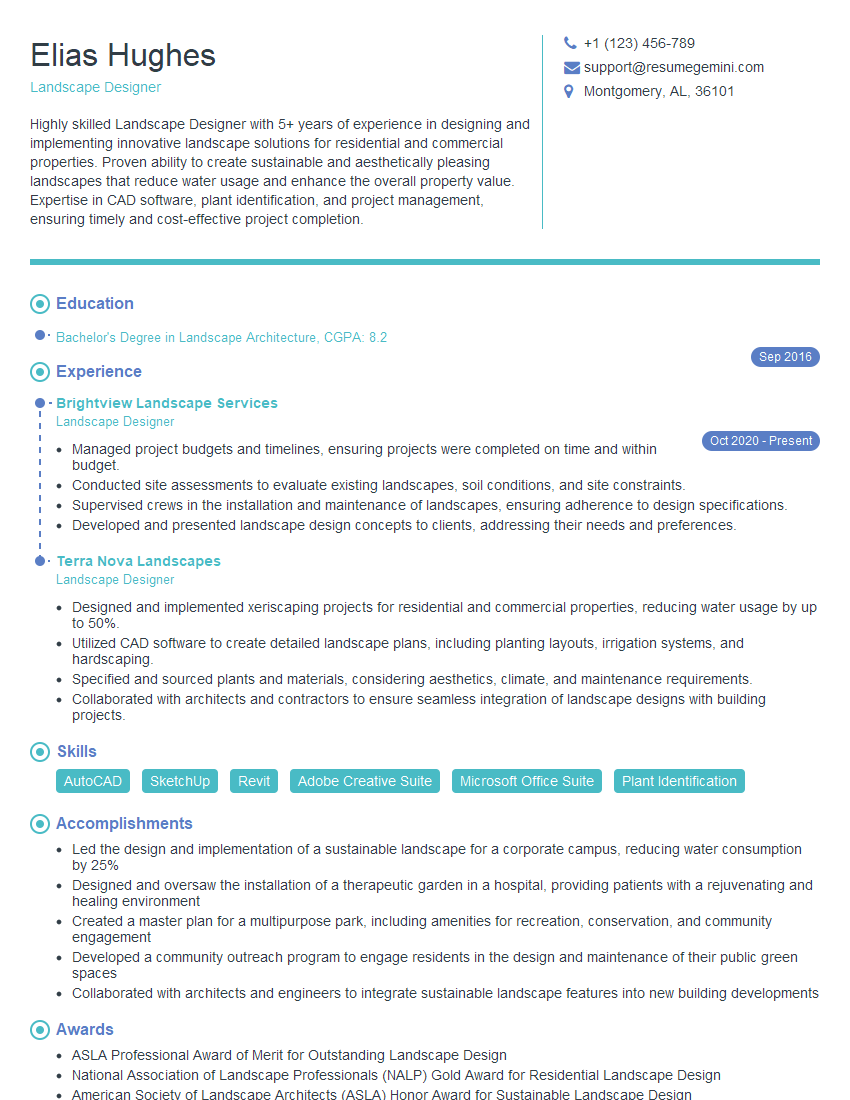
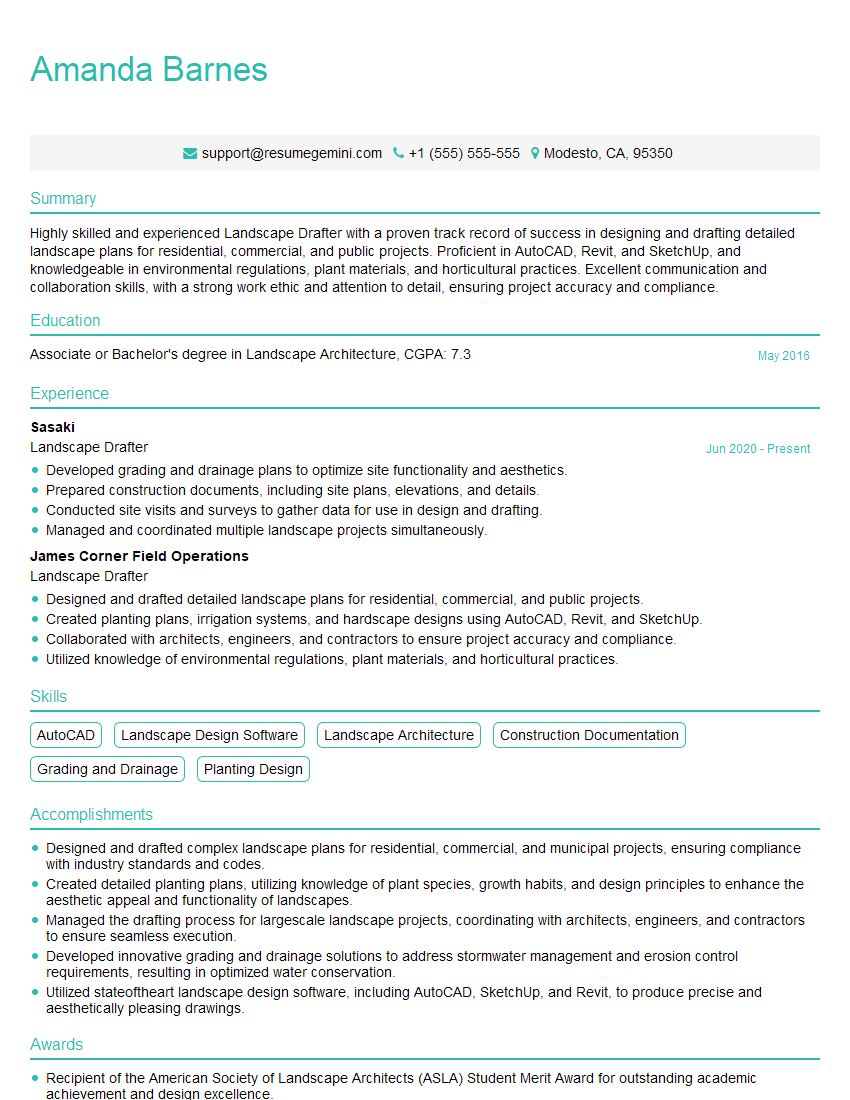
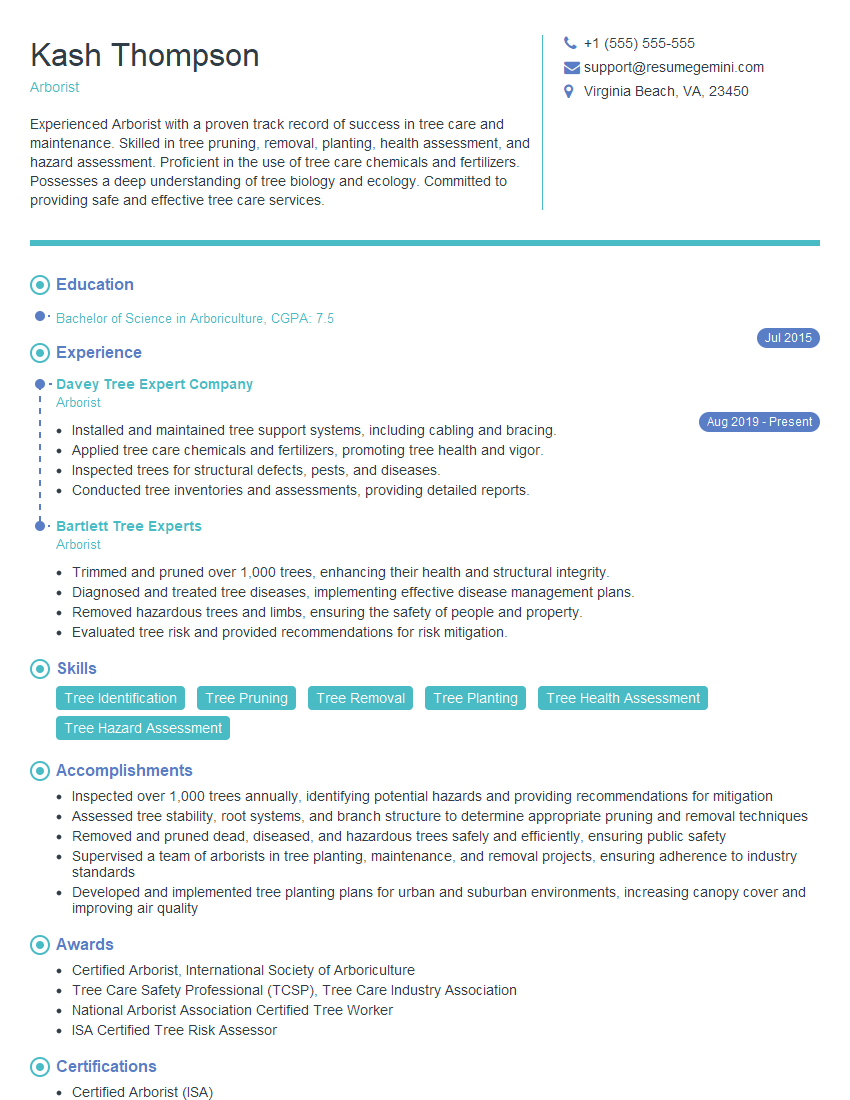
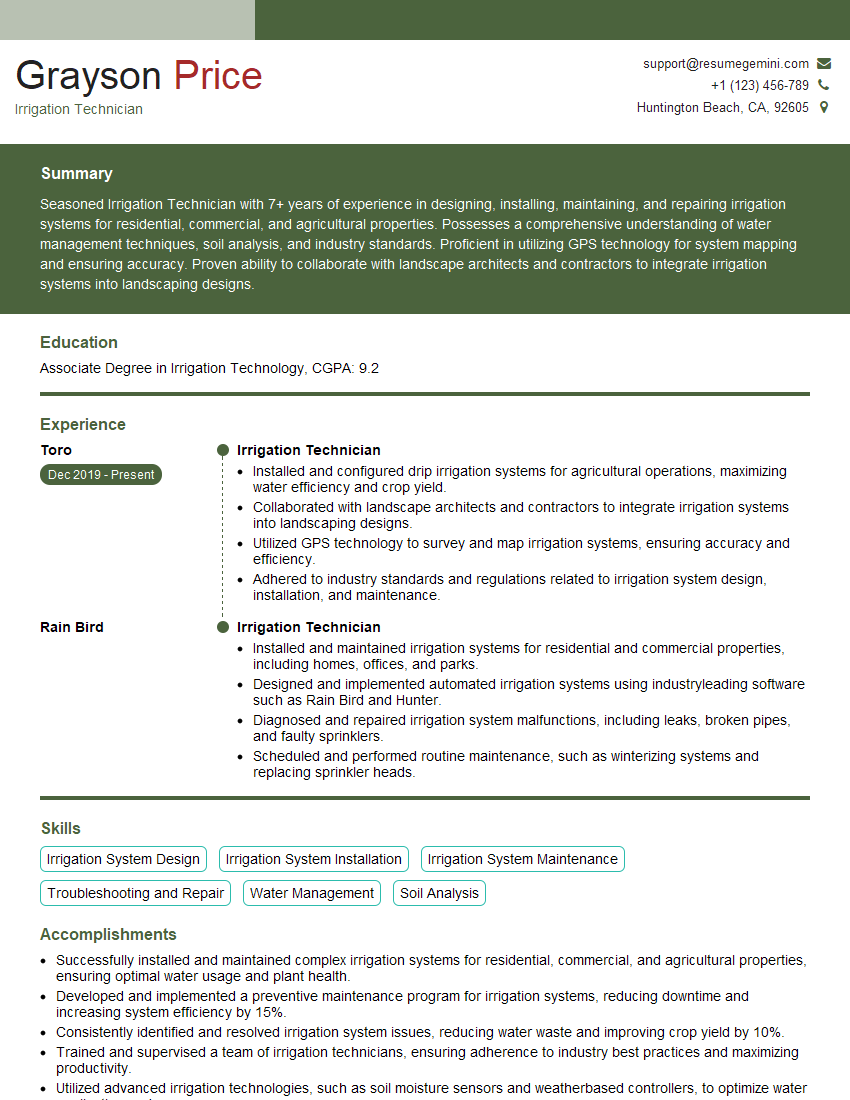
Mastering these Landscape Design skills is vital for career advancement and securing your dream role. A strong, ATS-friendly resume is your key to unlocking opportunities. To create a resume that truly showcases your abilities and gets noticed by recruiters, we strongly encourage you to leverage the power of ResumeGemini. ResumeGemini provides a user-friendly platform to build professional resumes, and we offer examples tailored specifically to highlight Landscape Design Skills, ensuring your qualifications shine through. Take the next step towards your successful career today!
Explore more articles
Users Rating of Our Blogs
Share Your Experience
We value your feedback! Please rate our content and share your thoughts (optional).
What Readers Say About Our Blog
Very informative content, great job.
good