Unlock your full potential by mastering the most common Project Management for Laser Engineering interview questions. This blog offers a deep dive into the critical topics, ensuring you’re not only prepared to answer but to excel. With these insights, you’ll approach your interview with clarity and confidence.
Questions Asked in Project Management for Laser Engineering Interview
Q 1. Describe your experience managing laser safety protocols in a project environment.
Laser safety is paramount in any laser engineering project. My approach involves a multi-layered strategy, starting with a comprehensive risk assessment that identifies all potential hazards associated with the specific laser system and its intended use. This assessment informs the development of a detailed safety plan, which includes specific protocols for laser operation, maintenance, and emergency procedures.
For instance, in a recent project involving a high-power pulsed laser, our risk assessment highlighted the danger of accidental eye exposure. The safety plan addressed this by mandating the use of appropriate laser safety eyewear for all personnel in the laser area, establishing clearly marked laser safety zones, implementing interlocks to prevent accidental activation, and conducting regular safety training for all team members. We also documented all safety procedures, providing easy access to this information for everyone on the project. Furthermore, we conducted regular inspections to ensure adherence to these protocols and incorporated safety checks into our project’s quality control procedures.
Beyond the operational phase, laser safety is integrated into all aspects of the project, from procurement (ensuring equipment meets safety standards) to decommissioning (safe disposal of laser components). This proactive approach minimizes risks and ensures the well-being of the project team and anyone who may come into contact with the laser system.
Q 2. Explain your approach to managing the budget for a complex laser engineering project.
Managing the budget for a complex laser engineering project requires a meticulous and proactive approach. I begin by creating a detailed Work Breakdown Structure (WBS) to break down the project into smaller, manageable tasks. Each task is then assigned a cost estimate, encompassing materials, labor, equipment rental, and potential contingencies. This detailed cost breakdown enables accurate budget forecasting.
Regular budget monitoring is crucial. I use project management software to track expenses against the allocated budget. This allows for early identification of cost overruns or potential issues. Regular budget reviews with stakeholders are also essential to ensure everyone is aware of the project’s financial status and any necessary adjustments. This process is not just reactive; it’s proactive, allowing for early identification and mitigation of budget deviations.
Contingency planning is an integral part of my approach. I allocate a certain percentage of the budget for unforeseen circumstances, such as equipment malfunctions or delays. This ensures that the project stays on track even when unexpected problems arise. For instance, in one project, a critical component unexpectedly failed; our contingency fund allowed us to quickly procure a replacement and avoid a major project delay.
Q 3. How do you prioritize tasks in a fast-paced laser project with competing deadlines?
Prioritizing tasks in a fast-paced laser project with competing deadlines demands a structured approach. I employ a combination of techniques, including MoSCoW (Must have, Should have, Could have, Won’t have) analysis and a prioritization matrix based on urgency and importance.
The MoSCoW method helps categorize tasks based on their criticality. ‘Must-have’ tasks are essential for project completion and are given top priority. ‘Should-have’ tasks are important but can be delayed if absolutely necessary. ‘Could-have’ tasks are desirable but not crucial, and ‘Won’t-have’ tasks are deferred or eliminated altogether. This clarity helps focus on the most critical aspects first.
The prioritization matrix, often visualized as a quadrant diagram, plots tasks based on their urgency (time sensitivity) and importance (impact on project goals). Tasks in the ‘high urgency, high importance’ quadrant receive immediate attention, while those in the ‘low urgency, low importance’ quadrant can be addressed later. This method, when combined with regular progress meetings and agile sprint planning (if using Agile), allows for adaptive prioritization as the project evolves.
Q 4. What methodologies (Agile, Waterfall, etc.) have you used in laser engineering projects and why?
My experience encompasses both Waterfall and Agile methodologies, tailored to the specific needs of each laser engineering project. The choice depends on factors such as project complexity, client requirements, and the level of uncertainty.
Waterfall is suitable for projects with well-defined requirements and minimal anticipated changes. Its structured approach, with clearly defined phases (requirements, design, implementation, testing, deployment), is ideal for projects where stability and predictability are paramount. For instance, a project involving the design and construction of a standard laser cutting machine might benefit from the predictability of the Waterfall method.
However, Agile, particularly Scrum, is preferred when dealing with complex projects, evolving requirements, and a need for iterative development. Its iterative nature allows for flexibility and adaptation to changing conditions, making it suitable for research-intensive projects or projects involving cutting-edge laser technologies. For example, a research project developing a novel laser-based medical device would benefit from Agile’s iterative approach, enabling regular feedback and adjustments based on testing and results.
Q 5. Describe a time you had to troubleshoot a critical laser system failure during a project.
During a project involving the integration of a high-precision laser system into a manufacturing process, the laser experienced unexpected power fluctuations, resulting in inconsistent output and jeopardizing the project timeline. Troubleshooting involved a systematic approach.
First, we isolated the problem by carefully reviewing the system logs and conducting thorough inspections of all components, focusing on the power supply, laser head, and control system. We systematically eliminated potential causes, such as loose connections, faulty components, and software glitches, using a combination of diagnostic tools and our collective expertise. The team worked collaboratively, leveraging each member’s specialized knowledge.
We discovered that a faulty cooling system was causing overheating, leading to the power fluctuations. Replacing the cooling system component quickly resolved the issue. This experience highlighted the importance of thorough testing, robust documentation, and collaborative problem-solving in handling critical system failures.
Q 6. How do you ensure project deliverables meet stringent quality standards in laser technology?
Ensuring project deliverables meet stringent quality standards in laser technology requires a comprehensive quality management system. This starts with clear, well-defined specifications for all aspects of the project, from laser performance parameters to safety compliance. These specifications serve as the baseline against which the deliverables are measured.
Throughout the project lifecycle, rigorous testing is performed at various stages. This includes component-level testing, system-level testing, and finally, acceptance testing. We use a variety of techniques, including functional testing, performance testing, and environmental testing, to ensure that the system meets all specified requirements and operates reliably under diverse conditions. Regular quality control checks and audits are conducted to maintain consistency and identify potential issues early.
Documentation is essential. We maintain detailed records of all tests, inspections, and any deviations from the specifications. This ensures traceability and accountability, which is vital for quality assurance. Furthermore, we incorporate continuous improvement methodologies, using data from testing and feedback to refine our processes and enhance the quality of future projects.
Q 7. What software or tools do you utilize for laser project planning and tracking?
For laser project planning and tracking, I utilize a combination of software and tools tailored to the project’s needs and complexity. This often includes project management software such as Microsoft Project or Jira for task management, scheduling, and resource allocation.
For detailed design and simulation, we often employ specialized software such as COMSOL Multiphysics or Zemax, depending on the specific laser system and its application. These tools are crucial for optimizing laser performance, predicting behavior, and ensuring compliance with design specifications. Furthermore, data management and analysis tools are frequently used to gather, organize, and analyze data from experiments and simulations.
Finally, collaboration tools such as Microsoft Teams or Slack facilitate effective communication and information sharing among the project team members, ensuring transparency and efficient workflow. The specific tools used depend on the particular project and the preferences of the team but the overarching goal is always to maintain efficient and accurate project management and delivery.
Q 8. Explain your understanding of laser beam parameters and their relevance to project success.
Understanding laser beam parameters is fundamental to successful laser engineering projects. These parameters dictate the laser’s interaction with the target material and significantly influence the outcome of the process. Key parameters include:
- Wavelength: Determines the material’s absorption and thus the efficiency of the process. For example, a CO2 laser (10.6 µm) is excellent for cutting wood and plastics, while a Nd:YAG laser (1.06 µm) is better suited for metal processing.
- Power/Energy: The amount of energy delivered per unit time. Higher power enables faster processing but might also damage the material. Careful selection is crucial based on the application and material properties.
- Beam Quality (M2): A measure of how tightly focused the beam can be. A lower M2 value indicates a better beam quality, leading to higher precision in applications like laser marking or micromachining.
- Beam Diameter/Spot Size: The size of the laser spot on the target. This parameter determines the area affected by the laser and influences the processing speed and precision.
- Pulse Duration/Frequency (for pulsed lasers): For pulsed lasers, the duration and frequency of pulses impact the material’s response. Short pulses can minimize heat-affected zones, while high frequency can increase throughput.
In project management, accurate specification and control of these parameters are critical. Miscalculations can lead to project delays, material waste, and even equipment damage. Thorough planning, involving experts in both laser technology and the target application, is essential for success.
Q 9. How do you manage risk and mitigate potential problems in laser-based projects?
Risk management in laser-based projects involves proactive identification, assessment, and mitigation of potential problems. My approach combines qualitative and quantitative methods:
- Risk Identification: I employ brainstorming sessions with the team, reviewing past project experiences, and analyzing technical specifications to identify potential risks, including laser safety hazards, equipment malfunctions, material inconsistencies, and project schedule delays.
- Risk Assessment: I evaluate each risk based on its likelihood and potential impact, using a risk matrix to prioritize them. This allows us to focus on the most critical risks first.
- Risk Mitigation: For each prioritized risk, we develop a mitigation strategy. This could involve implementing safety protocols, selecting redundant equipment, thorough material testing, or developing contingency plans for schedule slippages. For example, if there’s a risk of power outages, we’d incorporate a backup power system.
- Monitoring and Control: Throughout the project, I continuously monitor the identified risks, tracking progress and making adjustments to the mitigation strategies as needed.
Effective communication is key. Regularly updating stakeholders on identified risks and mitigation efforts fosters transparency and trust.
Q 10. Describe your experience with laser system integration projects.
I have extensive experience in laser system integration projects, encompassing various stages from initial design and component selection to final testing and commissioning. A recent example involved integrating a high-power fiber laser into a robotic work cell for automated welding of automotive parts. This project required:
- Careful selection of laser and robotic components: This involved considering factors such as laser power, beam quality, robot reach, and payload capacity to ensure optimal performance and efficiency.
- Developing custom software for path planning and control: This enabled precise control of the laser beam’s trajectory, ensuring accurate and repeatable welds.
- Rigorous testing and calibration: We conducted extensive testing to validate the system’s performance, including weld quality assessments and safety checks.
- Collaboration with multiple engineering disciplines: This included mechanical engineers, electrical engineers, software engineers, and laser specialists to ensure seamless integration.
The successful completion of this project highlighted the importance of meticulous planning, detailed design, and close collaboration among all team members.
Q 11. How do you communicate technical information to non-technical stakeholders in a laser project?
Communicating technical information to non-technical stakeholders requires simplifying complex concepts without sacrificing accuracy. I use several techniques:
- Analogies and metaphors: Relating technical concepts to everyday experiences helps stakeholders grasp the essence of the information. For example, I might explain laser beam quality using the analogy of a water hose—a narrower, more focused stream represents a higher beam quality.
- Visual aids: Charts, diagrams, and photos are highly effective in conveying complex information visually. For a laser safety presentation, I might use a diagram illustrating the class of laser and associated safety precautions.
- Plain language and avoiding jargon: I use clear, concise language, avoiding technical jargon unless absolutely necessary. If jargon is used, I always provide a simple explanation.
- Tailoring the message to the audience: The level of detail and technicality should be adjusted according to the audience’s background and understanding. A presentation to senior management will differ greatly from a presentation to technicians.
Effective communication ensures everyone understands the project’s goals, progress, and potential challenges.
Q 12. How do you handle conflict resolution among team members in a laser engineering project?
Conflict resolution is a crucial aspect of project management. My approach involves:
- Early identification: Proactive monitoring of team dynamics helps identify potential conflicts early on, preventing escalation.
- Open communication: Creating a safe space for open and honest communication enables team members to express their concerns and perspectives without fear of judgment.
- Mediation: If a conflict arises, I facilitate a discussion where each party can express their viewpoint. I act as a neutral mediator, focusing on finding a mutually acceptable solution.
- Collaboration: I encourage team members to work together to find solutions that address everyone’s concerns and contribute to the project’s success.
- Documentation: Any agreements or resolutions reached are documented to ensure clarity and prevent future misunderstandings.
Addressing conflicts promptly and fairly preserves team morale and productivity.
Q 13. What is your experience with laser alignment and calibration procedures?
Laser alignment and calibration are critical for optimal performance and safety. My experience includes using various techniques depending on the laser type and application:
- Autocollimators: Used for precise angular alignment of laser beams and optical components.
- Beam profilers: Measure the beam’s spatial profile, providing information on its shape, size, and quality, crucial for optimizing focusing and minimizing aberrations.
- Calibration standards: Using traceable calibration standards ensures accurate and reliable measurements.
I’m proficient in using specialized software for automated alignment and calibration procedures. Precise alignment ensures consistent processing results, while calibration validates the system’s accuracy and reliability.
Q 14. How do you ensure compliance with relevant laser safety regulations in your projects?
Compliance with laser safety regulations is paramount. My projects adhere strictly to relevant standards (e.g., ANSI Z136.1, IEC 60825) through:
- Risk assessment and control: Identifying and implementing appropriate control measures, such as engineering controls (e.g., beam enclosures), administrative controls (e.g., safety procedures), and personal protective equipment (PPE).
- Laser safety training: Ensuring all personnel involved in laser operations receive adequate training on safe operating procedures and potential hazards.
- Interlocks and safety devices: Incorporating safety interlocks and devices to prevent accidental exposure to laser radiation.
- Regular inspections and maintenance: Regular inspection and maintenance of laser systems and safety equipment to ensure their continued effectiveness.
- Documentation and record-keeping: Maintaining comprehensive documentation of safety procedures, training records, and inspection reports.
Prioritizing laser safety protects personnel, minimizes the risk of accidents, and ensures regulatory compliance.
Q 15. Describe your process for defining project scope and objectives in laser engineering.
Defining project scope and objectives in laser engineering requires a meticulous approach, ensuring clarity and alignment from the outset. I begin by engaging in thorough discussions with stakeholders – clients, engineers, and operations teams – to understand their needs and expectations. This involves detailed elicitation of requirements, focusing on the laser system’s intended functionality, performance metrics (e.g., power output, beam quality, precision), and the overall project goals.
Next, I create a Work Breakdown Structure (WBS) – a hierarchical decomposition of the project into smaller, manageable tasks. This provides a clear visual representation of the project’s scope and allows for better resource allocation and progress tracking. For example, in a project developing a laser cutting system for automotive parts, the WBS might include sub-projects like ‘Laser Source Integration,’ ‘Motion Control System Development,’ and ‘Safety System Implementation.’ Each sub-project would further be broken down into individual tasks.
Finally, I document the scope and objectives in a formal Project Charter, which serves as the guiding document throughout the project lifecycle. This charter clearly defines deliverables, timelines, budget, and key performance indicators (KPIs) against which success will be measured. The KPIs would include not only project completion on time and within budget, but also factors like laser system efficiency, repeatability of results, and adherence to safety standards.
Career Expert Tips:
- Ace those interviews! Prepare effectively by reviewing the Top 50 Most Common Interview Questions on ResumeGemini.
- Navigate your job search with confidence! Explore a wide range of Career Tips on ResumeGemini. Learn about common challenges and recommendations to overcome them.
- Craft the perfect resume! Master the Art of Resume Writing with ResumeGemini’s guide. Showcase your unique qualifications and achievements effectively.
- Don’t miss out on holiday savings! Build your dream resume with ResumeGemini’s ATS optimized templates.
Q 16. Explain your experience with laser maintenance and repair processes within a project.
Laser maintenance and repair are critical aspects of any laser engineering project, impacting both operational efficiency and safety. My experience involves proactive maintenance schedules and reactive repair procedures. Proactive maintenance includes regular cleaning of optical components, checking for laser alignment, and verifying the functionality of cooling systems. This is often documented using a Computerized Maintenance Management System (CMMS) that allows scheduling and tracking of maintenance activities. We utilize checklists and standardized procedures to ensure consistency and prevent errors.
Reactive repair processes follow a structured troubleshooting approach. For instance, if the laser power output drops significantly, we systematically check the power supply, laser resonator, and cooling system, documenting each step and finding the root cause. This often involves the use of specialized diagnostic tools and careful analysis of error logs. Safety protocols are paramount during any maintenance or repair activity. The laser system is secured, and all necessary precautions are taken to protect personnel from potential laser hazards.
In one project involving a high-power fiber laser used for welding, a recurring problem of beam instability was encountered. Through meticulous troubleshooting, we identified a faulty component in the laser’s cooling system that was causing vibrations. Replacing this component immediately resolved the issue, demonstrating the importance of both proactive and reactive maintenance strategies in ensuring optimal system performance and avoiding costly downtime.
Q 17. How do you manage project documentation and reporting in laser technology projects?
Effective project documentation and reporting are crucial for success in laser technology projects, ensuring transparency, accountability, and knowledge transfer. I use a combination of electronic document management systems and version control software like Git to maintain organized records of all project-related documents. This includes design specifications, test results, maintenance logs, safety procedures, and project progress reports. A central repository ensures everyone involved has access to the latest versions and fosters collaborative work.
Reporting is done regularly, typically weekly or bi-weekly, and includes progress updates, risk assessments, and budget tracking. Reports are tailored to the audience, with executive summaries for upper management highlighting key achievements and challenges, and more detailed reports for the project team with specific technical data. Visual aids like charts and graphs are incorporated to enhance understanding and communication. Furthermore, we utilize project management software to track progress against the project schedule and budget, providing alerts for potential issues.
For example, in a recent project involving the development of a novel laser micromachining system, we meticulously documented every stage of the process, from initial design concepts and simulations to final system testing and validation. This thorough documentation not only ensured successful project completion but also provided a valuable knowledge base for future projects and facilitated knowledge sharing within the team.
Q 18. Describe a time you successfully implemented a change request in a laser project.
During a project involving the integration of a high-precision laser scanner into a robotic system for automated 3D printing, a change request was submitted to incorporate a new, more accurate scanning sensor. This change impacted several aspects of the project, including the mechanical design, software algorithms, and testing procedures.
To manage this change effectively, I first followed a formal change request process. This included assessing the impact of the change on the project timeline, budget, and scope. A thorough risk assessment was performed, and mitigation strategies were developed. We then presented the proposal to the stakeholders, gaining their approval before proceeding. The project team was re-organized to accommodate the additional work, and updated schedules and budgets were created. The new sensor was integrated successfully, resulting in a significant improvement in the accuracy of the 3D printed parts.
The key to successful change management was proactive communication and collaboration. Regular updates were provided to stakeholders, and any potential delays or cost overruns were addressed promptly. This transparent approach ensured that everyone remained informed and supported the necessary changes, leading to the successful implementation of the new sensor and an overall improvement in the project outcome.
Q 19. How do you measure project success in laser engineering beyond simply meeting deadlines?
Measuring project success in laser engineering goes beyond meeting deadlines and staying within budget. It encompasses several key aspects:
- Performance Metrics: Achieving specified laser system performance metrics is paramount. This includes factors like beam quality, power stability, precision, and efficiency. These are quantified through rigorous testing and validation.
- Safety Compliance: Adherence to all relevant safety standards and regulations is critical. This ensures the safety of personnel and the protection of equipment.
- Client Satisfaction: Meeting client requirements and expectations, as documented in the project charter, is essential. Post-project feedback is gathered to assess client satisfaction and identify areas for improvement.
- Return on Investment (ROI): Demonstrating a positive return on investment is crucial for future projects. This involves comparing the project’s costs with the benefits gained from the laser system’s deployment.
- Knowledge Transfer: The project should contribute to the growth of knowledge and skills within the team. This is facilitated through documentation, training, and knowledge sharing.
For example, the success of a laser surgery system development project wouldn’t be solely determined by on-time delivery. It would also be evaluated on factors like the precision and safety of the surgical procedure, the reduction in hospital stay for patients, and positive client feedback from medical professionals.
Q 20. What are your preferred methods for monitoring laser system performance during a project?
Monitoring laser system performance during a project requires a multi-faceted approach, leveraging both hardware and software tools. Hardware monitoring involves using sensors and measurement equipment to collect data on critical parameters like laser power, beam profile, wavelength, and temperature. This data is then analyzed to ensure the system operates within its specifications. For example, a power meter is essential for continuous monitoring of the laser output power.
Software-based monitoring involves using dedicated software applications or custom-developed programs to collect, process, and analyze data from the laser system and associated hardware. This can include real-time visualizations of performance parameters and automated alerts for deviations from pre-defined thresholds. Data logging is crucial for trend analysis and identifying potential problems before they escalate. This approach provides a comprehensive overview of the system’s performance over time.
For instance, in a project involving the development of a laser material processing system, we used a combination of power meters, beam profilers, and temperature sensors to monitor laser performance. Data from these sensors was collected and analyzed using custom software, enabling real-time feedback and immediate identification of any anomalies, ensuring the laser system’s consistent performance throughout the project.
Q 21. How do you identify and address potential laser system hazards in a project?
Identifying and addressing potential laser system hazards is a critical aspect of laser engineering projects, requiring adherence to strict safety protocols. This begins with a thorough hazard analysis during the design phase, identifying potential risks associated with laser radiation, electrical hazards, fire hazards, and other potential dangers. This analysis often involves a HAZOP (Hazard and Operability) study to systematically examine all aspects of the system’s operation. The findings from this study are used to develop appropriate safety measures.
Implementation of safety measures includes incorporating safety interlocks, laser safety eyewear, appropriate warning signs, and emergency shut-off mechanisms. Proper training for all personnel involved in the project is crucial. This training must cover safe operating procedures, emergency response protocols, and the use of personal protective equipment (PPE). Regular safety inspections and audits are conducted throughout the project to ensure that all safety measures are in place and functioning correctly.
For example, in a project involving a high-power UV laser system, we identified the risk of eye damage from stray laser radiation. To mitigate this risk, we implemented interlocks to prevent accidental exposure, used laser safety eyewear with appropriate optical density, and clearly marked the laser system with warning signs. Regular safety checks and training sessions for all personnel ensured that the system was operated safely throughout the project.
Q 22. Describe your experience with different types of lasers used in industrial applications.
My experience encompasses a wide range of industrial lasers, categorized primarily by their wavelength and application. I’ve worked extensively with CO2 lasers, known for their high power and effectiveness in cutting and engraving non-metallic materials like wood, acrylic, and fabrics. Their longer wavelength makes them suitable for thicker materials. I’ve also had significant experience with fiber lasers, particularly ytterbium-doped fiber lasers, which excel in precision cutting and welding of metals. Their shorter wavelength allows for finer details and deeper penetration in metallic substrates. Finally, I’m familiar with Nd:YAG lasers, offering versatility across various applications, including marking, welding, and micromachining. In one project, we utilized a high-power CO2 laser to cut intricate patterns in plywood for a large-scale architectural project, while in another, a fiber laser system ensured precision welding of delicate components in a medical device assembly line.
Q 23. How familiar are you with different laser cutting techniques and their applications?
Laser cutting techniques vary based on the laser type and material being processed. Common techniques include cutting by melting and blowing, where the laser melts the material and compressed air removes the molten material; cutting by vaporization, suitable for materials with high melting points where the laser directly vaporizes the material; and reactive cutting, which involves using a reactive gas to assist in the cutting process, often seen with metals. For example, oxygen assist is frequently used in CO2 laser cutting of steel, significantly improving cutting speed and edge quality. The selection of the technique depends on factors like material properties (thickness, thermal conductivity, reflectivity), desired cut quality (accuracy, edge smoothness), and production speed. In one project, we optimized a reactive cutting process using nitrogen to minimize oxidation on stainless steel components, resulting in a significantly improved surface finish.
Q 24. Explain your understanding of the differences between various laser scanning methods.
Laser scanning methods differ mainly in how the laser beam interacts with the workpiece and the resulting data. Raster scanning involves systematically scanning the laser beam across the material in a grid-like pattern, ideal for large-area processing like marking or imaging. Vector scanning traces a pre-defined path, more efficient for cutting or engraving intricate designs, as the laser only activates along the precise path. Galvanometer scanning is a common method that utilizes high-speed galvanometers to direct the laser beam, enabling fast and precise movement. In contrast, oscillating mirror scanning uses a vibrating mirror for scanning, often used in lower-cost systems but with less precision. The choice of method depends on the application – raster scanning for high-throughput marking, vector scanning for precise cutting, and galvanometer scanning for applications requiring high speed and accuracy. I’ve personally compared the performance of galvanometer and oscillating mirror systems in a marking application and determined that the increased precision of the galvanometer system justified the higher cost for the specific project requirements.
Q 25. How do you manage the procurement of laser components and equipment for a project?
Procuring laser components and equipment requires a structured approach. It begins with a detailed specification outlining the project’s needs – power, wavelength, precision, and specific features. This forms the basis for vendor selection, considering factors like reputation, technical support, and lead times. We then solicit quotes, comparing pricing, warranty terms, and delivery schedules. The procurement process involves careful review of technical specifications, conducting due diligence on the vendors, and establishing clear contractual agreements, including acceptance criteria for the delivered equipment. A critical step is ensuring compliance with relevant safety regulations and obtaining necessary certifications. For example, in a recent project, we opted for a vendor offering comprehensive on-site training and extended warranty to minimize potential downtime and maintenance costs. Following a rigorous testing phase, the equipment was accepted, and the project proceeded smoothly.
Q 26. How would you approach the training of a new team member on a laser engineering project?
Training a new team member involves a phased approach. It starts with a comprehensive introduction to laser safety protocols – emphasizing eye protection and proper handling procedures. Next, we delve into the specifics of the project, explaining the laser system’s operation, maintenance, and software controls. Hands-on training follows, starting with simple tasks under supervision and gradually progressing to more complex operations. Regular assessments monitor the team member’s progress, identifying areas needing further attention. Mentorship and access to documentation are crucial aspects of the training. We also provide ongoing support, encouraging them to ask questions and seek clarification when needed. In a past project, I mentored a junior engineer using a tiered training approach. Each level involved progressively more independent tasks, building confidence and skill.
Q 27. Describe your experience with laser-induced damage threshold (LIDT) considerations.
Laser-induced damage threshold (LIDT) is crucial in ensuring the longevity and reliability of optical components. LIDT represents the maximum laser fluence or intensity that an optical component can withstand without suffering damage. Understanding LIDT is vital for selecting appropriate optical components for a given laser system and application. Factors influencing LIDT include wavelength, pulse duration, pulse repetition rate, and the material’s properties. In our projects, we carefully consider the LIDT ratings of all optical components, ensuring that the operating parameters remain well below the specified limits to prevent damage. Failure to consider LIDT can lead to premature component failure, costly replacements, and project delays. We often perform LIDT testing on critical components to validate their suitability and ensure sufficient safety margins.
Q 28. How do you handle unexpected technical challenges or delays in a laser project?
Handling unexpected technical challenges requires a systematic approach. First, we clearly define the problem, collecting data and analyzing the root cause. This often involves collaboration with engineers and technicians. Once the cause is identified, we develop potential solutions, evaluating their feasibility and potential impact on the project timeline and budget. We may need to re-allocate resources or seek external expertise to resolve complex issues quickly. Open communication with all stakeholders is vital to keep everyone informed and manage expectations. Documentation of the entire process, including the problem, solution, and lessons learned, is crucial for future projects. For instance, in one project, a sudden failure of a cooling system necessitated a rapid evaluation and the procurement of a replacement part. Efficient communication and problem-solving mitigated the impact on the project schedule.
Key Topics to Learn for Project Management for Laser Engineering Interview
- Laser Safety and Regulatory Compliance: Understanding laser safety standards (e.g., ANSI Z136), risk assessment procedures, and regulatory compliance requirements for laser projects. Practical application includes developing and implementing safety protocols for a laser cutting project.
- Project Scope Management in Laser Systems: Defining clear project objectives, deliverables, and constraints specific to laser engineering projects. This involves translating client needs into technical specifications and managing scope creep effectively.
- Laser System Design and Integration: Understanding the complexities of laser system design, including optical components, control systems, and safety interlocks. Practical application: planning and executing the integration of a new laser system into an existing manufacturing line.
- Budgeting and Resource Allocation for Laser Projects: Developing realistic project budgets, managing resources (personnel, equipment, materials), and tracking expenditures for laser-related projects. This includes understanding the unique cost factors associated with laser technology and maintenance.
- Risk Management in Laser Engineering Projects: Identifying, assessing, and mitigating potential risks related to laser operation, safety, and project timelines. This involves proactive risk management planning and execution.
- Quality Control and Assurance in Laser Applications: Implementing quality control measures to ensure the precision, accuracy, and reliability of laser processes and output. Practical application involves developing and implementing quality checks for laser marking or welding applications.
- Project Scheduling and Tracking for Laser Projects: Utilizing project management tools (Gantt charts, critical path method) to effectively schedule and monitor the progress of laser engineering projects. This ensures on-time and within-budget completion.
- Communication and Teamwork in Laser Engineering: Effectively communicating project updates, managing stakeholder expectations, and fostering collaboration within a cross-functional team involved in laser technology projects.
Next Steps
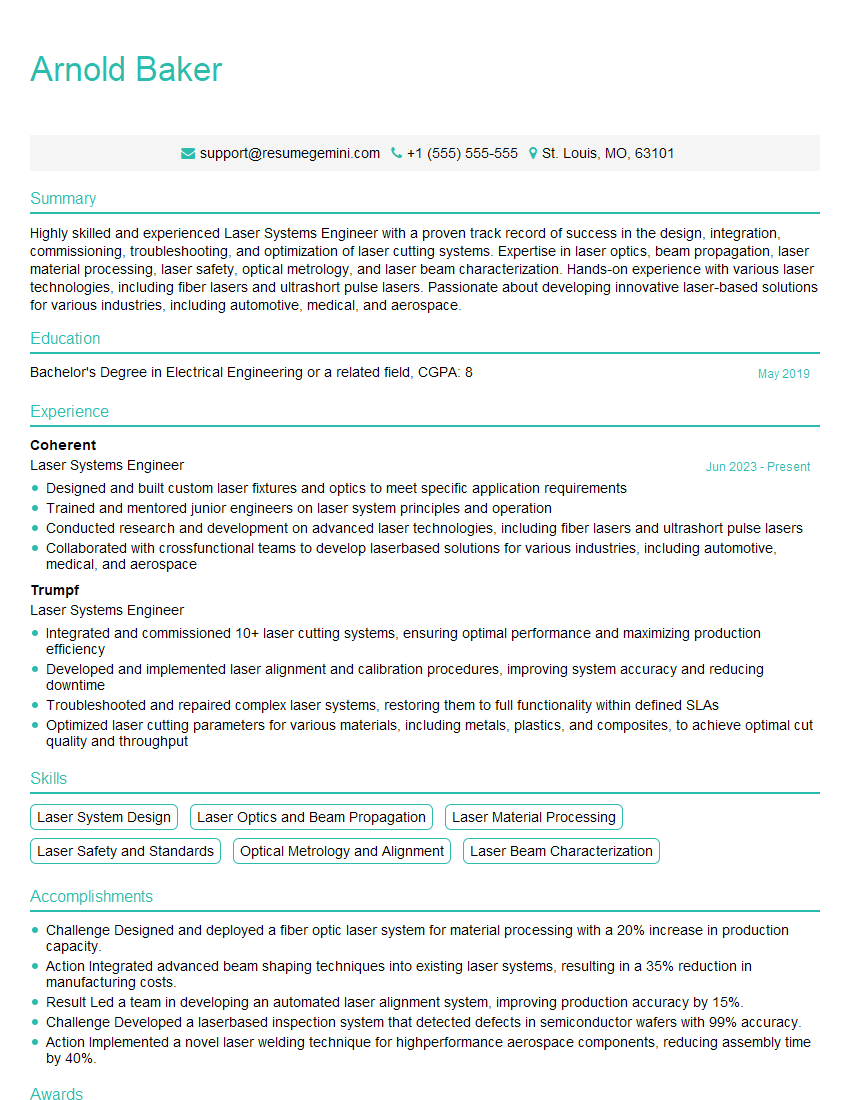
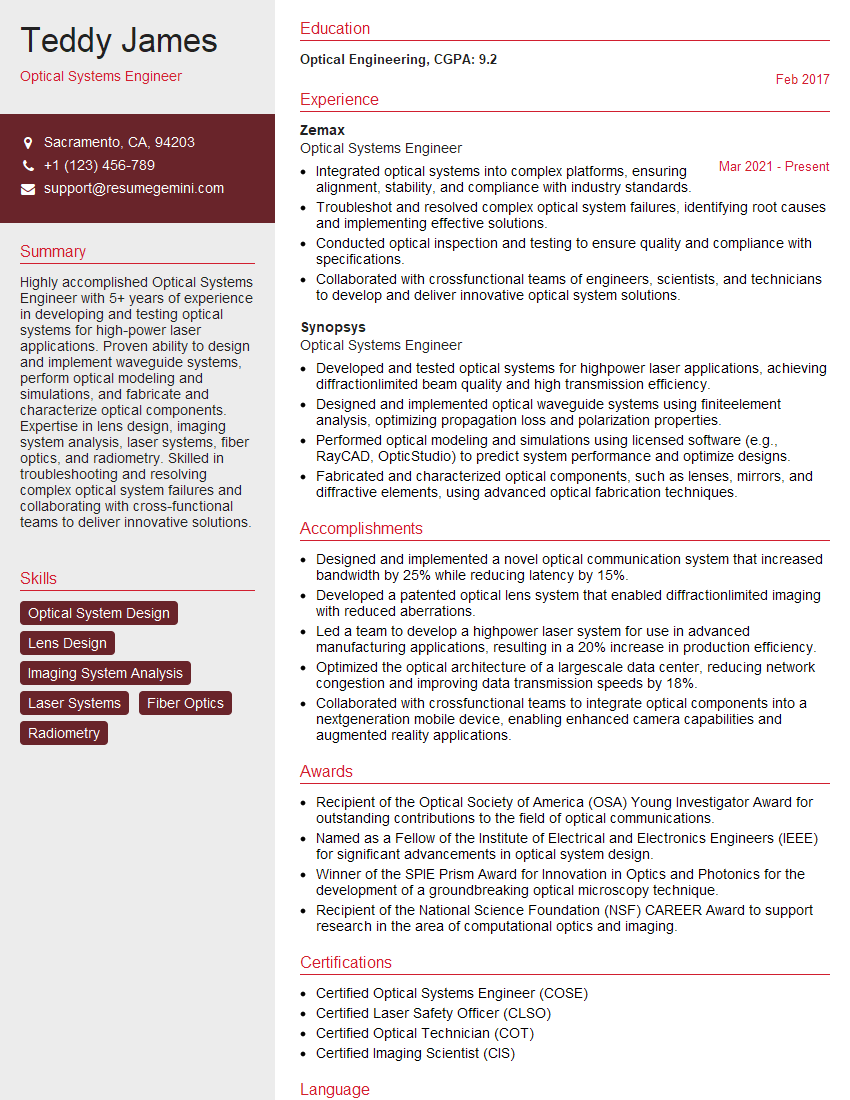
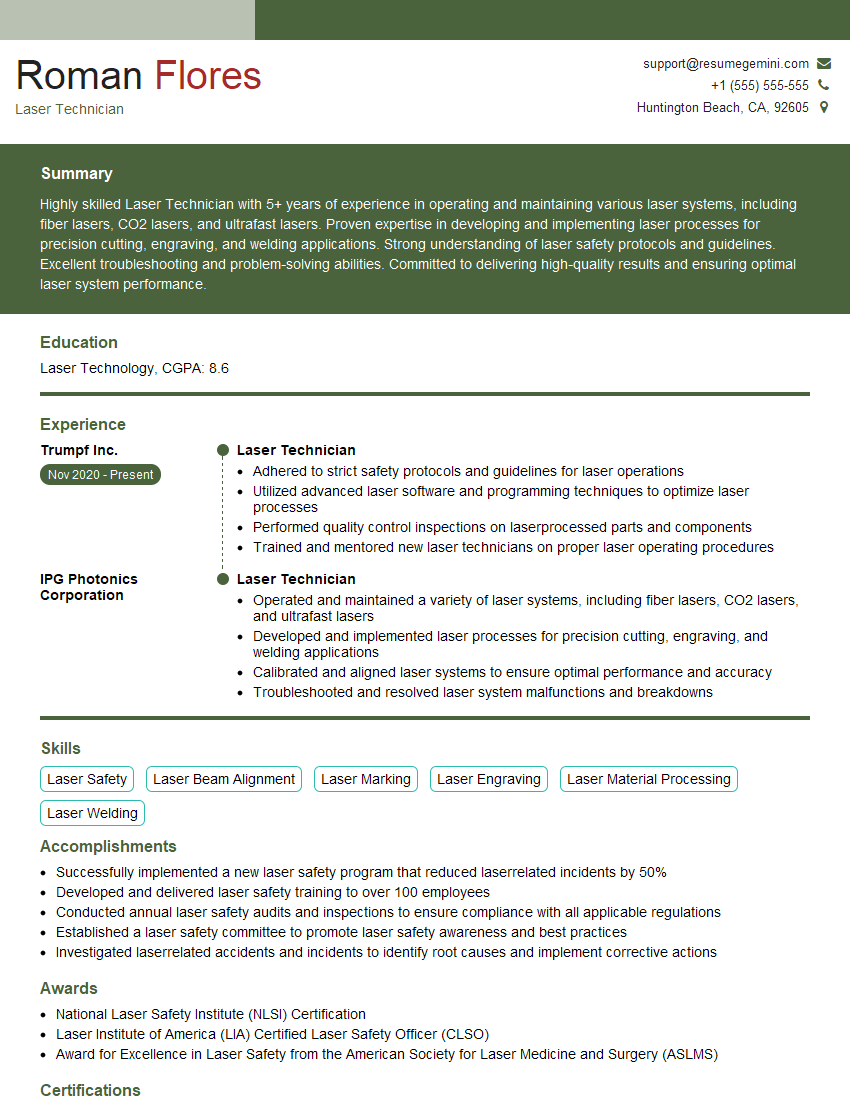
Mastering Project Management for Laser Engineering opens doors to exciting career advancements, offering higher responsibility and greater earning potential. A strong, ATS-friendly resume is crucial for highlighting your skills and experience to potential employers. To significantly improve your job prospects, we strongly encourage you to build a compelling resume using ResumeGemini. ResumeGemini provides a user-friendly platform to create professional resumes optimized for Applicant Tracking Systems (ATS). Examples of resumes tailored to Project Management for Laser Engineering are available to guide you.
Explore more articles
Users Rating of Our Blogs
Share Your Experience
We value your feedback! Please rate our content and share your thoughts (optional).
What Readers Say About Our Blog
Very informative content, great job.
good