Are you ready to stand out in your next interview? Understanding and preparing for Project Management for Solar Energy Projects interview questions is a game-changer. In this blog, we’ve compiled key questions and expert advice to help you showcase your skills with confidence and precision. Let’s get started on your journey to acing the interview.
Questions Asked in Project Management for Solar Energy Projects Interview
Q 1. Describe your experience managing the budget for a large-scale solar project.
Managing the budget for a large-scale solar project requires meticulous planning and proactive monitoring. It’s not just about tracking expenses; it’s about understanding the project’s financial health at every stage. My approach involves a detailed budget breakdown, regularly updated using Earned Value Management (EVM). This system helps compare planned versus actual costs and schedules, identifying potential issues early on.
For example, in a recent 50MW solar farm project, I categorized costs into distinct groups: land acquisition, engineering, procurement (panels, inverters, etc.), construction, permitting, and commissioning. Each category had a detailed budget with contingency reserves for unforeseen expenses. We used project management software to track actual spending against the budget, generating regular reports to highlight variances and potential risks. This allowed us to make informed decisions, such as negotiating better deals with suppliers or adjusting the project timeline to stay within budget.
Beyond the detailed budget, effective communication is crucial. Regular budget review meetings with stakeholders, including investors and contractors, kept everyone informed about the project’s financial status and ensured transparency and collaborative problem-solving.
Q 2. Explain your process for risk assessment and mitigation in solar energy projects.
Risk assessment and mitigation are critical for solar projects, given their complexity and external dependencies. My process begins with a thorough identification of potential risks, categorized into technical, financial, regulatory, environmental, and social categories. I utilize a combination of qualitative and quantitative methods such as SWOT analysis, Probability & Impact matrices, and Failure Mode and Effects Analysis (FMEA).
For instance, potential risks in a solar project could include: delays in obtaining permits, equipment failures, weather-related setbacks, changes in energy market prices, or community opposition. For each identified risk, we define its probability of occurrence and potential impact. Based on this analysis, we prioritize risks and develop mitigation strategies.
Mitigation strategies might include securing alternative suppliers, implementing robust quality control measures, procuring insurance against weather-related damages, engaging in community outreach programs, or developing contingency plans for regulatory delays. Regular risk monitoring is key; we track identified risks throughout the project lifecycle, updating our mitigation strategies as needed. This proactive approach minimizes disruptions and helps ensure project success.
Q 3. How do you manage stakeholder expectations throughout the project lifecycle?
Managing stakeholder expectations is paramount for successful project delivery. It requires clear, consistent, and proactive communication. My approach involves establishing a communication plan early in the project, defining key stakeholders and their information needs. This includes regular updates, both formal (e.g., project reports) and informal (e.g., meetings, email communication).
For example, I used a project dashboard to provide stakeholders with real-time visibility into project progress, key milestones, and potential challenges. This transparency built trust and minimized misunderstandings. For each stakeholder group (investors, community members, government agencies, contractors), I tailored communication strategies to their specific interests and communication preferences. Proactive identification and addressing of potential concerns through regular meetings and feedback sessions also helped manage expectations effectively.
A crucial element is establishing realistic expectations from the outset. This involves clearly defining project scope, timelines, and deliverables, and incorporating stakeholder feedback in the planning process. By fostering open communication and collaboration, I aim to maintain a positive relationship with all stakeholders throughout the project lifecycle.
Q 4. What are the key performance indicators (KPIs) you track in solar projects?
Key Performance Indicators (KPIs) in solar projects are vital for tracking progress, identifying areas for improvement, and ensuring optimal performance. The specific KPIs vary depending on the project phase and objectives, but some common ones include:
- Schedule Adherence: Percentage of tasks completed on time.
- Budget Adherence: Actual cost versus planned cost.
- Energy Yield: Actual energy produced versus projected energy output (measured in kWh).
- Performance Ratio (PR): A measure of the overall efficiency of the solar power plant.
- Capacity Factor: The ratio of actual energy output to the maximum possible output.
- System Availability: Percentage of time the system is operational.
- Defect Rate: Number of defects found during construction and commissioning.
By consistently monitoring these KPIs, we identify trends, anticipate potential problems, and take corrective actions to stay on track. Regular reporting on these KPIs to stakeholders provides a clear picture of project performance.
Q 5. Describe your experience with permitting and regulatory compliance for solar projects.
Permitting and regulatory compliance are crucial and often complex aspects of solar projects. My experience includes navigating diverse regulatory frameworks, working with local, state, and federal agencies to secure all necessary approvals. This process involves a deep understanding of interconnection requirements, environmental regulations, zoning ordinances, and building codes.
In one project, obtaining interconnection approval with the utility company took significantly longer than anticipated. To mitigate this risk, we proactively engaged with the utility early in the project planning phase, developing a detailed interconnection study and addressing their concerns upfront. This resulted in a smoother permitting process. We also maintained thorough documentation of all permit applications, approvals, and communications with regulatory bodies. This meticulous approach helped minimize delays and ensure compliance with all applicable regulations.
Proactive engagement with regulatory agencies, thorough documentation, and a deep understanding of relevant regulations are key to successful navigation of the permitting process.
Q 6. How do you handle schedule delays and cost overruns in solar energy projects?
Schedule delays and cost overruns are potential challenges in any project, and solar projects are no exception. My approach focuses on proactive management to prevent these issues and effective response mechanisms should they arise. Early identification of potential delays through Earned Value Management (EVM) and critical path analysis are crucial. This allows for timely corrective action.
If delays occur, we investigate the root causes, prioritizing thorough analysis over quick fixes. This might involve identifying bottlenecks in the supply chain, addressing unforeseen technical challenges, or resolving permitting delays. Once the root causes are understood, we develop recovery plans, which could involve adjusting the project schedule, reallocating resources, or negotiating with contractors.
For cost overruns, we analyze budget variances, identify areas of excess spending, and explore cost-saving measures without compromising quality or safety. This might involve renegotiating contracts, optimizing material usage, or implementing more efficient construction techniques. Transparent communication with stakeholders is essential throughout this process to ensure everyone is aware of the situation and the steps being taken to address it.
Q 7. What is your experience with different solar technologies (e.g., PV, CSP, etc.)?
My experience encompasses various solar technologies, including Photovoltaic (PV) and Concentrated Solar Power (CSP). PV systems are the most prevalent, converting sunlight directly into electricity using solar panels. I’ve managed numerous PV projects, from small residential installations to large-scale utility-scale solar farms. My expertise includes different PV technologies like monocrystalline, polycrystalline, and thin-film panels, as well as various mounting systems and inverters.
CSP systems, on the other hand, utilize mirrors or lenses to concentrate sunlight onto a receiver, generating heat to produce electricity. I’ve been involved in smaller CSP projects, focusing primarily on the project management aspects rather than the highly specialized engineering components. Understanding the unique challenges and opportunities associated with each technology is crucial for successful project execution. For example, CSP systems require significant land area and are more sensitive to weather conditions compared to PV systems.
In addition to PV and CSP, I am familiar with hybrid systems which combine different renewable energy sources, and I’m always open to learning more about emerging solar technologies to stay at the forefront of the industry.
Q 8. Explain your understanding of the interconnection process with the utility grid.
Interconnecting a solar energy system with the utility grid is a crucial step, ensuring the safe and efficient flow of electricity. It involves a rigorous process of design, permitting, testing, and final connection. This process begins with submitting detailed plans to the utility company, outlining the system’s specifications, such as its capacity, voltage, and location. The utility then reviews these plans to ensure compliance with their interconnection standards and grid codes. These codes are designed to protect the integrity of the grid and the safety of personnel. This often includes requirements for overcurrent protection, grounding, and voltage regulation.
Following plan approval, the physical installation takes place, adhering strictly to approved drawings. Once the installation is complete, a rigorous testing phase begins. This includes verifying the system’s electrical performance and ensuring that it meets all safety requirements. This testing might involve verifying proper grounding, insulation resistance, and operational functionality. Finally, after successful testing, the system is officially connected to the grid, often involving a commissioning process with the utility company to ensure smooth and continuous operation. Any issues found during the testing or commissioning phases need to be addressed before the final interconnection.
For example, in a recent project, we encountered a delay due to an unexpected revision in the utility’s interconnection standards. We proactively communicated this to the client and adjusted the project timeline accordingly, ensuring a smooth and timely interconnection without compromising safety or quality.
Q 9. How do you ensure quality control throughout the construction and commissioning phases?
Quality control is paramount in solar energy projects, starting from the design phase and continuing through construction and commissioning. We implement a multi-layered approach, incorporating regular inspections, rigorous testing, and meticulous documentation at each stage.
- Design Phase: Thorough review of the system design, considering factors such as site conditions, equipment selection, and adherence to industry best practices.
- Procurement: Source high-quality materials and components from reputable suppliers, verifying their certifications and compliance with relevant standards.
- Construction Phase: Regular site inspections are conducted by qualified personnel, ensuring adherence to building codes, safety standards, and the approved design. We utilize checklists and photographic documentation to track progress and identify potential issues early on. We often implement a robust QA/QC program with dedicated quality control inspectors.
- Commissioning Phase: Thorough testing of the entire system, including performance testing, safety checks, and functional testing. This phase also involves documenting the system’s performance data and operational procedures, ensuring everything is in proper working order before final handover.
For instance, during a recent project, a discrepancy was discovered during a routine inspection of the racking system. Our quality control team promptly flagged the issue, preventing potential problems down the line. The corrective actions were quickly implemented, minimizing any project delays or safety risks.
Q 10. Describe your experience with using project management software (e.g., MS Project, Primavera P6).
I possess extensive experience utilizing project management software, including MS Project and Primavera P6. These tools are instrumental in planning, scheduling, tracking, and managing the complexities inherent in solar energy projects. My proficiency includes developing detailed project schedules, assigning resources, tracking progress against milestones, and generating reports for stakeholders. I’m adept at creating Work Breakdown Structures (WBS), critical path analysis (CPA), and resource leveling to optimize project performance and manage resource allocation efficiently.
In MS Project, for example, I utilize features like Gantt charts to visualize project timelines, task dependencies, and resource allocation. With Primavera P6, I’ve leveraged its more advanced functionalities for large-scale, complex projects, such as its robust risk management capabilities and sophisticated cost control features. I am also proficient in using other project management tools such as Asana and Trello for tasks and team communications.
For instance, in a recent project using Primavera P6, I successfully modeled various scenarios, including potential delays and resource constraints, allowing us to proactively mitigate risks and optimize project scheduling for successful completion.
Q 11. How do you manage the procurement of solar equipment and materials?
Procurement of solar equipment and materials demands a strategic approach, balancing cost, quality, and delivery timelines. My strategy encompasses:
- Supplier Selection: Identifying and vetting reliable suppliers with a proven track record of delivering quality products on time. This includes verifying their certifications, financial stability, and insurance coverage.
- Competitive Bidding: Soliciting bids from multiple suppliers to ensure competitive pricing while maintaining quality standards. This process often includes a thorough evaluation of supplier qualifications and references.
- Contract Negotiation: Negotiating favorable terms and conditions in contracts, clarifying deliverables, payment schedules, and warranty provisions. We ensure clear contractual obligations and dispute resolution processes.
- Inventory Management: Implementing strategies for efficient inventory management, minimizing storage costs and ensuring timely availability of materials at the construction site. This involves close coordination with logistics and procurement teams.
- Quality Assurance: Implementing stringent quality control measures throughout the procurement process, including inspection of incoming materials to ensure they meet specifications.
For example, in a large-scale project, we leveraged our established relationships with key suppliers to secure favorable pricing and guaranteed delivery schedules, avoiding potential delays and cost overruns.
Q 12. What is your approach to team building and motivation in a project setting?
Team building and motivation are vital for successful project completion. I foster a collaborative and positive work environment through open communication, clear expectations, and recognition of individual contributions. I believe in empowering team members, providing them with the autonomy and resources they need to succeed.
- Open Communication: Regular team meetings, both formal and informal, ensure everyone is informed and can share their ideas. We utilize different communication tools and strive for transparency.
- Clear Expectations: Clearly defined roles and responsibilities eliminate ambiguity and ensure everyone understands their contribution to the overall project goals.
- Recognition and Reward: Acknowledging and celebrating team achievements boosts morale and reinforces positive behaviors. This includes both formal and informal recognition.
- Conflict Resolution: Addressing conflicts promptly and fairly, creating a safe space where team members can express concerns without fear of retribution.
- Training and Development: Providing opportunities for professional development helps to keep team members engaged and motivated, fostering continued growth within the company.
For instance, I once facilitated a team-building activity that involved a challenging problem-solving exercise, fostering collaboration and building trust among team members. The outcome of the exercise was not only a successful solution but also a significantly improved team dynamic.
Q 13. Describe your experience with health and safety regulations on solar construction sites.
Health and safety are paramount on solar construction sites. My experience includes implementing and enforcing comprehensive safety plans that comply with all relevant regulations, including OSHA (Occupational Safety and Health Administration) guidelines and any local or state-specific regulations. This includes risk assessments, safety training, and the use of appropriate personal protective equipment (PPE).
- Risk Assessment: Conducting thorough risk assessments to identify potential hazards and develop mitigation strategies. This includes falls from heights, electrical hazards, heat stress, and working at heights.
- Safety Training: Providing comprehensive safety training to all workers, covering topics such as lockout/tagout procedures, fall protection, electrical safety, and hazard communication. This ensures all personnel are familiar with safety protocols.
- PPE Provision: Ensuring that all workers have access to and use appropriate PPE, including hard hats, safety glasses, gloves, and fall protection equipment.
- Emergency Preparedness: Developing and practicing emergency response plans to deal with potential incidents such as electrical shocks, fires, or injuries.
- Regular Inspections: Conducting regular site inspections to identify and address potential hazards, ensuring compliance with safety regulations.
In one instance, we implemented a rigorous fall protection program on a project with significant elevation changes, resulting in zero fall-related incidents throughout the construction phase.
Q 14. How do you handle conflicts between different project stakeholders?
Conflict resolution is a crucial skill in project management, especially in collaborative projects with multiple stakeholders. My approach involves proactive communication, open dialogue, and a focus on finding mutually beneficial solutions. This often involves using conflict management techniques and prioritizing collaboration over confrontation.
- Active Listening: Truly understanding the perspectives of all stakeholders involved before attempting to find a resolution.
- Facilitation: Creating a safe space for open and honest communication, ensuring all parties feel heard and respected.
- Mediation: If necessary, acting as a neutral mediator to help the parties involved find common ground and a mutually acceptable solution.
- Compromise: Working towards a solution that satisfies the needs of all stakeholders, even if it requires some compromise from each party.
- Documentation: Documenting the conflict, the resolution process, and the agreed-upon outcome to prevent future conflicts and ensure accountability.
For example, in one project, we faced a conflict between the client and a subcontractor regarding project timelines. Through facilitated dialogue, we identified the root cause of the conflict, which was a miscommunication in the project specifications. By clarifying the expectations and adjusting the schedule accordingly, we resolved the conflict and successfully completed the project.
Q 15. What is your experience with financial modeling for solar projects?
Financial modeling for solar projects is crucial for assessing their economic viability. It involves creating a detailed spreadsheet or using specialized software to project revenue, expenses, and cash flows over the project’s lifespan (typically 20-30 years). This includes factors like capital costs (land acquisition, equipment, installation), operating costs (maintenance, insurance), energy production estimates (based on solar irradiance data and system efficiency), electricity prices (often incorporating future price escalation), and potential incentives (tax credits, rebates).
My experience includes developing models using industry-standard software like SAM (System Advisor Model) and PVsyst. For example, in a recent 5MW utility-scale project, I built a model that incorporated different financing scenarios (debt vs. equity) to determine the optimal capital structure, analyzed the impact of varying electricity price projections on project returns (IRR, NPV), and performed sensitivity analyses to assess the project’s risk profile under different assumptions about solar resource availability, equipment performance, and operational costs. These models were key in securing financing and ensuring the project’s success.
Career Expert Tips:
- Ace those interviews! Prepare effectively by reviewing the Top 50 Most Common Interview Questions on ResumeGemini.
- Navigate your job search with confidence! Explore a wide range of Career Tips on ResumeGemini. Learn about common challenges and recommendations to overcome them.
- Craft the perfect resume! Master the Art of Resume Writing with ResumeGemini’s guide. Showcase your unique qualifications and achievements effectively.
- Don’t miss out on holiday savings! Build your dream resume with ResumeGemini’s ATS optimized templates.
Q 16. Explain your understanding of levelized cost of energy (LCOE).
Levelized Cost of Energy (LCOE) is a critical metric used to compare the cost-effectiveness of different electricity generation technologies, including solar. It represents the average cost per unit of electricity (e.g., $/kWh) over the entire lifetime of a power plant, considering all capital and operating expenses.
Imagine buying a car. The LCOE is like calculating the average cost per mile driven over the car’s lifetime, including the initial purchase price, fuel, maintenance, and insurance. Similarly, for a solar project, LCOE factors in the initial investment, financing costs, operations and maintenance expenses, and the total energy produced throughout its operational life. A lower LCOE indicates a more cost-competitive electricity generation technology.
The calculation involves discounting all future costs and revenues to their present value and then dividing the total present value of costs by the total energy produced over the project’s lifetime. LCOE helps in comparing solar power to other sources like natural gas or coal, and it’s essential for making informed investment decisions.
Q 17. How do you ensure the long-term viability and performance of solar assets?
Ensuring the long-term viability and performance of solar assets requires a multifaceted approach. It begins with meticulous site selection and design, accounting for factors like shading, ground conditions, and proximity to grid infrastructure. High-quality equipment selection is crucial, emphasizing reputable manufacturers with strong warranties. A robust operations and maintenance (O&M) plan is essential, including regular cleaning, inspections, and preventative maintenance to maximize energy output and extend the lifespan of the system.
Furthermore, performance monitoring systems are crucial. These systems continuously track key performance indicators (KPIs) such as energy production, panel temperature, and inverter efficiency. Real-time data analysis allows for prompt identification and resolution of performance issues, preventing degradation and ensuring optimal system performance. Finally, strong asset management practices, including detailed documentation and proactive planning for future upgrades or replacements, play a vital role in maximizing the long-term value and sustainability of solar assets. For example, we might incorporate predictive maintenance strategies based on data analytics to prevent failures and extend equipment life.
Q 18. Describe your experience with using building information modeling (BIM) in solar projects.
Building Information Modeling (BIM) is increasingly utilized in solar projects to improve design coordination, reduce errors, and enhance project efficiency. In my experience, BIM allows for the creation of a 3D digital model of the solar array, integrating information about the panels, mounting structures, wiring, and other components. This 3D model enables clash detection, identifying potential conflicts between the solar system and other building elements before construction begins.
For instance, in a recent rooftop solar project, the BIM model helped identify conflicts between the solar panel array and existing HVAC equipment. This early detection allowed for design adjustments, preventing costly rework during construction. BIM also facilitates better visualization and communication among stakeholders, leading to a smoother and more efficient project execution. The integration of BIM with other project management tools allows for improved cost control and schedule management. Furthermore, BIM enables the creation of as-built documentation, providing a valuable reference throughout the life of the solar installation.
Q 19. What are some common challenges in managing solar energy projects, and how have you overcome them?
Solar energy projects face several common challenges. One major issue is permitting and regulatory hurdles, often involving lengthy processes and complex approvals. Another significant challenge lies in securing financing, requiring meticulous financial modeling and demonstrating project viability to investors. Weather-related delays, supply chain disruptions, and labor shortages can also significantly impact project timelines and budgets.
To overcome these, I employ several strategies: proactive communication with regulatory bodies to streamline permitting, thorough due diligence and risk assessment to secure competitive financing, detailed project scheduling and risk management plans to mitigate delays, and strong partnerships with experienced contractors and suppliers to ensure timely project delivery. For example, in one project facing permit delays, I collaborated closely with the local authorities, providing all the necessary documentation ahead of schedule and proactively addressing any concerns, which significantly reduced the overall permitting time. In another instance, we mitigated supply chain risks by establishing long-term contracts with key suppliers and strategically stockpiling certain materials.
Q 20. Describe your experience with different project delivery methods (e.g., Design-Bid-Build, Design-Build).
I have extensive experience with various project delivery methods, including Design-Bid-Build (DBB) and Design-Build (DB). DBB involves separate contracts for design and construction, while DB combines both under a single contract. DBB offers greater design control but can be less efficient due to potential conflicts between the designer and contractor. DB, on the other hand, facilitates better collaboration and streamlined processes, potentially leading to faster project completion and cost savings. The choice of method depends on project complexity, budget constraints, and risk tolerance.
In past projects, I’ve successfully implemented both approaches. For smaller, less complex projects, DBB offered sufficient control and transparency. For larger, more intricate projects, such as a recent utility-scale solar farm, the Design-Build approach proved far more effective, as it fostered seamless collaboration between the design and construction teams, reducing potential conflicts and improving overall project efficiency.
Q 21. Explain your understanding of the environmental impact assessment process for solar projects.
The environmental impact assessment (EIA) process for solar projects is crucial for evaluating potential environmental consequences and ensuring sustainable development. It involves a systematic assessment of potential impacts on various environmental aspects, including air and water quality, land use, biodiversity, and visual impacts. The process typically involves several stages: scoping (defining the project’s boundaries and potential impacts), baseline studies (gathering data on the existing environmental conditions), impact prediction (modeling and assessing potential changes), mitigation planning (developing measures to minimize negative impacts), and impact monitoring (tracking actual impacts during and after project operation).
My experience includes participation in EIA studies for various solar projects, where I collaborated with environmental consultants to conduct comprehensive assessments, develop mitigation plans, and secure necessary permits. For example, in a project near a sensitive wetland area, we conducted detailed studies to minimize impact on local flora and fauna, developing a mitigation strategy that included habitat restoration and protection measures. This ensured compliance with environmental regulations and minimized the environmental footprint of the project.
Q 22. How do you manage the communication and reporting requirements for solar projects?
Effective communication and reporting are the backbones of successful solar projects. I utilize a multi-pronged approach, starting with a clearly defined communication plan outlining stakeholders, communication channels, frequency, and reporting requirements. This plan is developed early in the project lifecycle and regularly reviewed and updated.
For instance, I utilize project management software like Asana or Monday.com to centralize communication, track tasks, and manage document sharing. Regular project meetings (weekly status updates, bi-weekly steering committee meetings) are held, incorporating visual aids like Gantt charts and progress reports to maintain transparency. Formal reports are generated for key milestones, encompassing technical details, financial performance, and risk mitigation strategies. I always prioritize clear, concise language and avoid technical jargon unless absolutely necessary, ensuring all stakeholders understand the project’s progress regardless of their technical expertise. For example, instead of stating ‘DC/AC ratio optimization,’ I’d explain it as ‘improving the efficiency of converting sunlight into usable energy’.
- Stakeholder Management: Identifying key stakeholders (investors, landowners, utility companies, local communities) and tailoring communication styles to their needs.
- Regular Reporting: Providing consistent progress reports using dashboards, charts, and tables for easy comprehension.
- Proactive Communication: Addressing potential issues or delays promptly and transparently.
Q 23. What is your experience with different types of solar financing (e.g., PPAs, tax equity)?
I have extensive experience with various solar financing mechanisms, including Power Purchase Agreements (PPAs) and tax equity financing. PPAs, where a third party owns and operates the solar system while the customer purchases the electricity generated, shift risk to the owner but reduce upfront capital costs for the customer. I’ve worked on several projects structured as PPAs, focusing on negotiating favorable terms regarding pricing, contract length, and performance guarantees. Tax equity financing involves leveraging tax credits to attract investment. I’ve been involved in projects that used tax equity, requiring meticulous financial modeling, due diligence, and coordination with tax advisors to ensure compliance and maximize benefits.
For example, in one project, we leveraged a PPA to secure financing for a large-scale solar farm. This minimized the customer’s financial commitment while allowing for a quicker project rollout. In another project, we secured tax equity financing for a community solar project, which provided significant upfront funding and attracted a broader range of investors.
- PPA Negotiation: Experience negotiating electricity prices, contract terms, and performance guarantees.
- Tax Equity Structuring: Expertise in structuring deals to maximize tax benefits and attract investors.
- Financial Modeling: Proficiency in using financial models to evaluate different financing options.
Q 24. How do you utilize data analytics to optimize the performance of solar projects?
Data analytics plays a critical role in optimizing solar project performance. I leverage data from various sources – weather data, solar panel performance, energy yield, and grid interaction data – to identify areas for improvement and maximize energy production and efficiency. We use tools like PVsyst and similar software to model energy production and predict performance based on historical weather data and site-specific conditions. Real-time data from the solar plant’s SCADA system (Supervisory Control and Data Acquisition) allows us to monitor performance, detect anomalies (like shading issues or panel failures), and quickly address problems. This proactive approach minimizes downtime and maximizes the return on investment.
For instance, using historical weather data and performance analytics, we identified a shading issue on a portion of a solar array. By adjusting the tilt angles of the affected panels, we were able to increase energy production by 5%.
- Performance Monitoring: Utilizing SCADA systems and other monitoring tools to track real-time energy production.
- Predictive Modeling: Employing sophisticated software to predict energy yield and optimize system design.
- Anomaly Detection: Leveraging data analysis to identify performance issues and address them promptly.
Q 25. Describe your experience with grid integration studies and impact assessments.
Grid integration studies and impact assessments are crucial for ensuring the seamless integration of solar projects into the existing power grid. My experience involves collaborating with utility companies and grid operators to conduct these studies. These studies assess the technical feasibility, reliability, and stability of the grid after the solar project is connected. We analyze the impact on voltage levels, frequency stability, and overall grid capacity. The assessments consider different scenarios, including peak demand periods and potential fault conditions.
For example, on one project, the grid integration study revealed potential voltage fluctuations during peak solar production. We mitigated this by implementing voltage regulation equipment, ensuring a stable grid connection and avoiding any negative impact on other grid users. Detailed reports and technical drawings are produced to support permitting and regulatory approval processes.
- Technical Feasibility Studies: Evaluating the technical aspects of grid connection, including voltage stability and protection schemes.
- Impact Assessment: Determining the effects of the solar project on grid stability and reliability.
- Regulatory Compliance: Ensuring compliance with all relevant grid codes and interconnection standards.
Q 26. What is your familiarity with different solar panel technologies and their suitability for different applications?
I’m familiar with various solar panel technologies, including monocrystalline silicon, polycrystalline silicon, thin-film (amorphous silicon, cadmium telluride, copper indium gallium selenide), and emerging technologies like perovskites. The choice of technology depends on several factors, including project requirements, budget, available land, and environmental conditions. Monocrystalline silicon panels generally offer higher efficiency but are more expensive. Polycrystalline silicon panels are more affordable but slightly less efficient. Thin-film panels are lightweight and flexible, making them suitable for certain applications like building-integrated photovoltaics (BIPV), but generally have lower efficiency than crystalline silicon panels.
For example, in a rooftop installation project with limited space, high-efficiency monocrystalline panels were chosen to maximize energy production within the available area. For a large-scale solar farm project, cost-effectiveness was a primary concern, leading to the selection of polycrystalline panels.
- Efficiency vs. Cost: Balancing the trade-off between panel efficiency and cost.
- Application Suitability: Selecting appropriate panel technologies based on the project requirements.
- Environmental Considerations: Evaluating the environmental impact of different panel technologies.
Q 27. How do you incorporate sustainability considerations into solar project planning and execution?
Sustainability is paramount in all aspects of solar project planning and execution. We incorporate sustainability considerations from the initial feasibility study through to decommissioning. This includes minimizing environmental impact during construction, using sustainable materials, and optimizing the project’s lifecycle environmental performance.
Specific strategies we employ include: minimizing land disturbance, using recycled materials where possible, implementing robust waste management plans, and selecting solar panel technologies with lower embodied carbon footprints. We also consider the project’s long-term impact on biodiversity and the surrounding ecosystem. A life-cycle assessment (LCA) is often conducted to quantify the environmental impacts of the project across its entire lifespan.
- Environmental Impact Assessment: Conducting thorough assessments to identify and mitigate environmental risks.
- Sustainable Materials: Prioritizing the use of recycled and sustainable materials in construction.
- Waste Management: Implementing robust waste management plans to minimize landfill waste.
- Biodiversity Protection: Considering the impact of the project on local biodiversity and implementing mitigation measures.
Q 28. Describe your experience with post-construction commissioning and operational handover processes.
Post-construction commissioning and operational handover are critical phases that ensure the smooth transition from construction to operation. Commissioning involves a thorough testing and verification of all system components to confirm they meet design specifications and perform as expected. This includes testing electrical performance, safety systems, and monitoring equipment. The operational handover involves transferring all necessary documentation, including as-built drawings, operation and maintenance manuals, and warranty information, to the owner or operator. We provide comprehensive training to the operation and maintenance team, ensuring they have the skills and knowledge to manage the system effectively.
A detailed commissioning report is generated, documenting all testing results and any necessary corrective actions. We establish a clear communication protocol for addressing post-handover issues and provide ongoing support during the initial operational period.
- Testing and Verification: Conducting thorough testing of all system components to confirm functionality.
- Documentation Transfer: Providing comprehensive documentation, including as-built drawings and operation manuals.
- Training and Support: Providing training to the operation and maintenance team and ongoing support.
- Defect Tracking: Establishing a system for tracking and resolving defects.
Key Topics to Learn for Project Management for Solar Energy Projects Interview
- Project Scoping and Planning: Defining project objectives, deliverables, timelines, and budgets specific to solar energy project constraints (e.g., weather dependency, permitting processes).
- Risk Management in Solar Projects: Identifying and mitigating risks related to weather, supply chain disruptions, permitting delays, and technological challenges. Practical application: Developing a comprehensive risk register and mitigation plan.
- Solar Energy Technologies and their Project Implications: Understanding different solar technologies (photovoltaic, concentrated solar power), their installation processes, and their impact on project timelines and costs.
- Regulatory Compliance and Permitting: Navigating the complex regulatory landscape for solar energy projects, including interconnection requirements, environmental permits, and building codes. Practical application: Streamlining the permitting process through proactive communication and documentation.
- Stakeholder Management: Effectively communicating with landowners, utility companies, government agencies, and community members throughout the project lifecycle. Practical application: Developing and implementing a stakeholder engagement plan.
- Budgeting and Cost Control: Developing accurate project budgets, tracking expenses, and implementing cost-saving measures. Practical application: Utilizing Earned Value Management (EVM) techniques for cost control.
- Project Scheduling and Monitoring: Utilizing project management software and techniques (e.g., Gantt charts, critical path method) to track progress, manage dependencies, and ensure timely completion. Practical application: Proactively identifying and addressing schedule slippage.
- Quality Control and Assurance: Implementing quality control measures to ensure the successful and efficient delivery of the project, meeting all safety and performance standards.
- Team Leadership and Communication: Effectively leading and motivating a diverse project team, fostering collaboration, and ensuring clear communication channels.
- Sustainability and Environmental Considerations: Integrating sustainable practices throughout the project lifecycle and minimizing environmental impact. Practical application: Incorporating lifecycle assessments and minimizing waste generation.
Next Steps
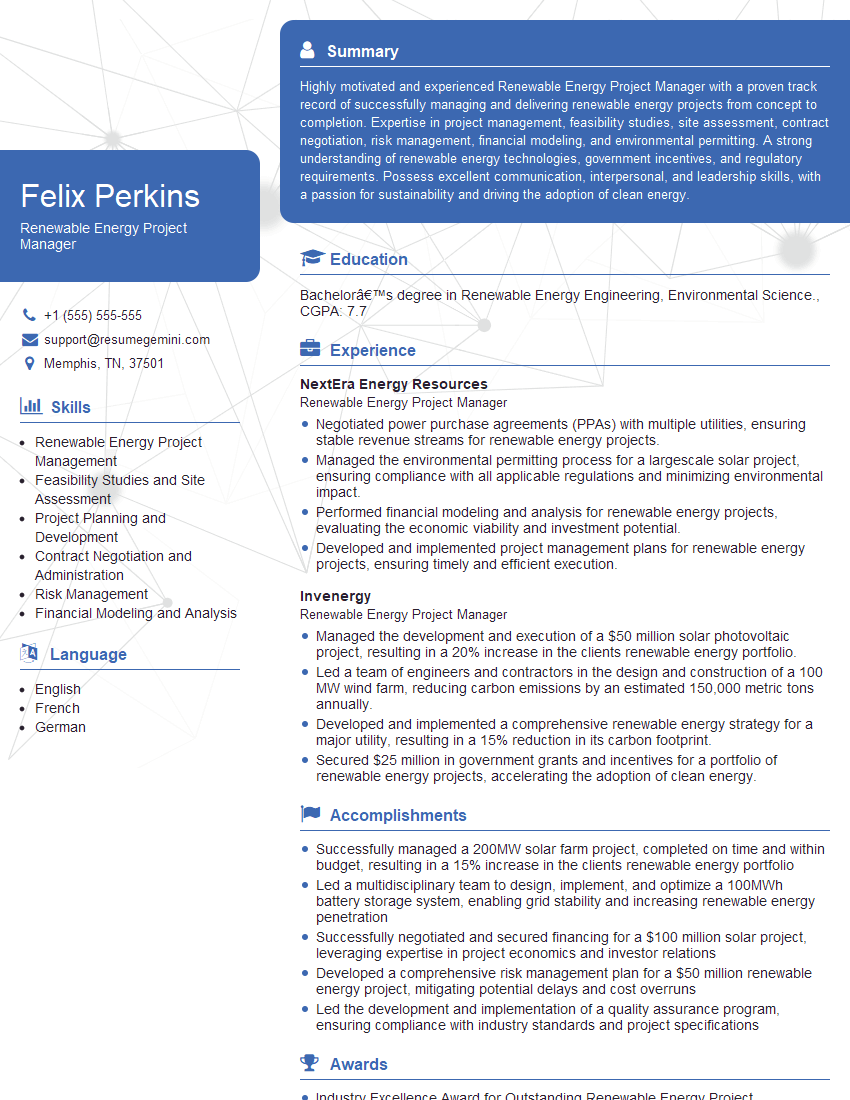
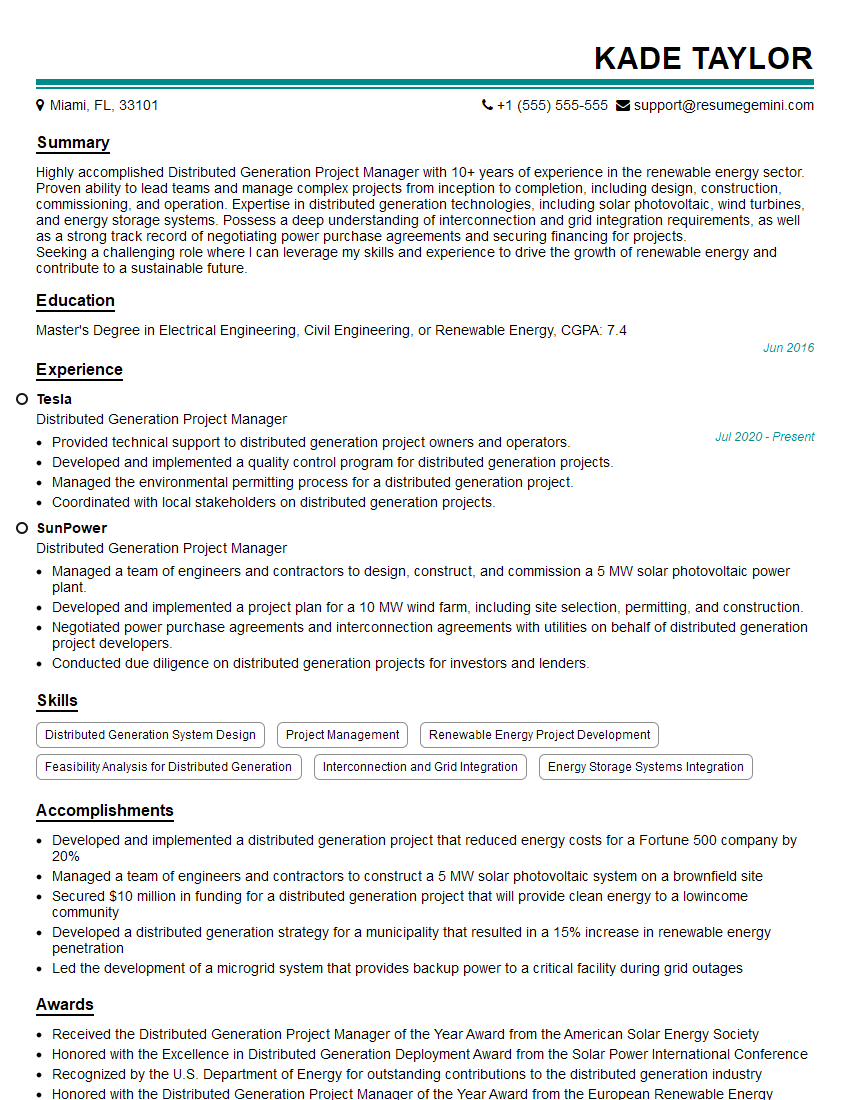
Mastering Project Management for Solar Energy Projects opens doors to a rapidly growing and impactful field. Demonstrating expertise in this area significantly enhances your career prospects and positions you for leadership roles within the renewable energy sector. To maximize your job search success, it’s crucial to have an ATS-friendly resume that highlights your skills and experience effectively. ResumeGemini is a trusted resource for building professional and impactful resumes. They offer examples of resumes tailored to Project Management for Solar Energy Projects, helping you showcase your qualifications in the best possible light. Invest the time in crafting a compelling resume – it’s your first impression with potential employers.
Explore more articles
Users Rating of Our Blogs
Share Your Experience
We value your feedback! Please rate our content and share your thoughts (optional).
What Readers Say About Our Blog
Very informative content, great job.
good