Interviews are opportunities to demonstrate your expertise, and this guide is here to help you shine. Explore the essential Heavy Equipment Loading interview questions that employers frequently ask, paired with strategies for crafting responses that set you apart from the competition.
Questions Asked in Heavy Equipment Loading Interview
Q 1. Describe your experience operating various types of heavy equipment loaders.
My experience encompasses a wide range of heavy equipment loaders, including wheel loaders, skid steer loaders, and telehandlers. I’ve operated various models from leading manufacturers like Caterpillar, John Deere, and Komatsu, gaining proficiency in their unique operational characteristics and functionalities. For instance, I’ve extensively used Caterpillar 950 wheel loaders for large-scale earthmoving projects, requiring precise maneuvering and bucket control for efficient material handling. With skid steers, I’ve tackled smaller-scale projects, utilizing their maneuverability in confined spaces for tasks like landscaping and demolition debris removal. My experience with telehandlers has involved lifting and placing materials at heights, showcasing my ability to operate equipment safely and effectively in challenging environments.
Q 2. Explain the pre-operational checks you perform before operating a heavy equipment loader.
Pre-operational checks are crucial for safe and efficient operation. My routine includes a comprehensive visual inspection focusing on:
- Fluid Levels: Checking engine oil, hydraulic fluid, coolant, and transmission fluid levels to ensure proper lubrication and operation.
- Tire Pressure: Verifying adequate tire inflation for optimal performance and stability.
- Leaks: Inspecting for any fluid leaks, which could indicate mechanical problems.
- Lights and Signals: Ensuring all lights, turn signals, and backup alarms are functioning correctly.
- Brakes and Steering: Testing the responsiveness of brakes and steering mechanisms to ensure safe control.
- Attachments: Inspecting any attached implements (buckets, forks, etc.) for damage or loose components. Securely attaching and locking any attachments.
- Safety Features: Verifying the functionality of seatbelts, emergency shut-off switches, and other safety devices.
This thorough inspection helps prevent breakdowns and accidents, ensuring a productive and safe work environment.
Q 3. How do you ensure the safe loading and unloading of heavy materials?
Safe loading and unloading involve a multifaceted approach:
- Site Assessment: Evaluating the ground conditions, load stability, and potential hazards before commencing operations.
- Load Securing: Employing appropriate techniques like using straps, chains, or nets to secure materials and prevent shifting during transport. For example, palletized loads require careful stacking and securing to prevent toppling.
- Lifting Techniques: Utilizing the correct lifting technique to prevent overloading the equipment or causing damage to materials. Knowing the load capacity of the loader is crucial.
- Communication: Maintaining clear communication with spotters and other personnel on the ground to ensure everyone’s safety and prevent collisions. Hand signals and two-way radios are essential.
- Gradual Movement: Lifting and lowering loads slowly and smoothly to prevent sudden movements which could cause accidents.
- Stable Placement: Placing the loads down slowly and carefully at the designated area, ensuring stability before releasing the load.
In essence, it’s about a proactive and methodical approach, prioritizing safety and efficiency.
Q 4. What are the different types of attachments used with heavy equipment loaders and their applications?
Heavy equipment loaders are highly versatile due to their interchangeable attachments. Some common types include:
- Buckets: Used for general material handling, from dirt and gravel to scrap metal. Different bucket sizes and designs are available depending on the material type.
- Forks: Ideal for handling palletized goods and other materials requiring precise lifting and positioning.
- Grapples: Used for handling bulky or irregularly shaped materials, like logs or demolition debris.
- Snow Plows: For removing snow from roads or large areas.
- Augers: Used for drilling holes for posts, fences, or other applications.
- Material Spreaders: To evenly distribute materials like sand, salt, or seed.
The choice of attachment depends heavily on the specific task. For example, a grapple is perfect for recycling centers handling scrap metal, while forks are ideal for warehouse operations involving pallets.
Q 5. Describe your experience with different types of loads (e.g., palletized, bulk, oversized).
My experience encompasses various load types. I’ve handled:
- Palletized Loads: Requires careful positioning of forks and precise maneuvering to prevent pallet damage or toppling.
- Bulk Loads: This typically involves loose materials like gravel, sand, or soil, which requires understanding load weight distribution and the bucket’s capacity to avoid spillage or overloading.
- Oversized Loads: These require specialized handling and often additional safety measures, such as spotters and traffic control, due to the increased risk of damage and accidents. Understanding the load’s center of gravity and using appropriate lifting techniques are paramount here. I’ve worked with loads exceeding the typical dimensions, requiring careful planning and execution to avoid tipping or structural damage.
Each load type demands a unique approach, based on its physical characteristics and potential hazards.
Q 6. How do you handle unexpected equipment malfunctions during operation?
In the event of an equipment malfunction, my first priority is safety. I will:
- Immediately Stop Operation: Shut down the equipment and disengage any attachments.
- Assess the Situation: Identify the nature of the malfunction to determine the severity and potential hazards.
- Activate Emergency Procedures: If necessary, this might involve notifying supervisors, safety personnel, and other workers in the area.
- Implement Corrective Actions: If the problem is minor and I’m trained to resolve it, I may attempt a repair after following all safety precautions. If the malfunction is beyond my skillset, I’ll report it and await qualified personnel.
- Prevent Further Damage: Take steps to prevent the issue from causing further harm to the equipment or personnel. This could involve securing the load or clearing the area.
My approach focuses on prioritizing safety while systematically addressing the malfunction.
Q 7. What safety procedures do you follow to prevent accidents while operating heavy equipment?
Safety is paramount. My procedures include:
- Pre-Operational Checks: As detailed earlier, this meticulous process ensures the equipment is in optimal condition before operation.
- Personal Protective Equipment (PPE): Always wearing the appropriate PPE, including safety helmets, safety glasses, high-visibility clothing, and work gloves.
- Awareness of Surroundings: Maintaining constant situational awareness, including paying attention to other workers, obstructions, and potential hazards.
- Following Traffic Regulations: Adhering to site traffic rules, using signals, and maintaining a safe distance from other vehicles and pedestrians.
- Load Capacity Limits: Never exceeding the rated load capacity of the equipment to prevent overloading and potential accidents.
- Regular Maintenance: Participating in regular equipment maintenance to ensure the equipment is in safe operating condition. Regular inspection of safety features is very important.
My commitment to safety goes beyond rules – it’s a mindset and an integrated part of my workflow.
Q 8. Explain your understanding of load capacity and weight distribution.
Load capacity refers to the maximum weight a piece of heavy equipment, like a crane or a truck, can safely lift or carry. Weight distribution is how that weight is balanced across the equipment’s structure. Understanding both is crucial for safety and preventing equipment damage. For instance, a crane might have a maximum load capacity of 100 tons, but that capacity can change depending on how the load is distributed – a load concentrated at the end of the crane’s arm will significantly reduce its safe lifting capacity compared to a load centered closer to the base.
Imagine a seesaw: if you place all the weight on one side, it tips over. Similarly, uneven weight distribution on heavy equipment can lead to instability, causing accidents or structural failure. We use load charts and calculations to ensure the weight is properly distributed across the equipment’s support points, such as axles or outriggers, staying well within the manufacturer’s specified limits. This often involves careful planning, considering the weight of the load, its center of gravity, and the terrain.
Q 9. How do you maintain a clean and organized work area around the loading equipment?
Maintaining a clean and organized work area is paramount for safety and efficiency. It reduces the risk of tripping hazards, improves visibility, and makes it easier to access tools and materials. Our standard operating procedure includes regular cleanup during and after each loading operation. This includes clearing debris, properly storing materials, and ensuring walkways are kept free from obstructions. We also frequently inspect the equipment for any potential hazards and make sure all tools and equipment are properly stored and maintained.
Think of it like a surgeon’s operating room – a sterile, organized environment is crucial for success. In our field, it prevents accidents and streamlines our workflow, allowing us to work more efficiently and safely. We use designated areas for storage, marked walkways, and regularly scheduled cleanups to maintain a high standard of workplace organization.
Q 10. Describe your experience working with various types of terrain and weather conditions.
My experience encompasses a wide range of terrains and weather conditions. I’ve worked in everything from flat, paved surfaces to rugged, mountainous areas, and in various weather, from scorching heat to freezing rain and snow. Each condition presents unique challenges and necessitates adjustments to our loading techniques and safety procedures.
- Muddy Terrain: Requires specialized equipment, like tracks or wider tires, and careful consideration of traction and stability.
- Steep Inclines: Demand slower speeds, precise maneuvering, and extra caution to prevent rollovers or slides.
- Adverse Weather: Often necessitates delays or the use of additional safety measures, such as extra lighting or traction aids, to ensure both equipment and personnel safety.
For example, during a project in the mountains during winter, we had to use specialized snow tires and chains on our trucks, as well as adjust our loading schedules to avoid hazardous weather conditions. Adaptability and the ability to assess risk are key to working successfully in diverse environments.
Q 11. How do you communicate effectively with other workers and supervisors during loading operations?
Effective communication is crucial in heavy equipment loading. We utilize a combination of verbal, visual, and written communication methods. This includes pre-job briefings to discuss safety protocols and loading procedures, clear hand signals during the operation, and the use of two-way radios for constant updates and coordination.
Clear and concise communication prevents misunderstandings and ensures everyone is on the same page, particularly when working with multiple pieces of equipment and crew members. For instance, we use standardized hand signals to direct equipment operators, and regular radio communication ensures everyone knows the location and status of the load. We always ensure everyone understands the safety procedures and are comfortable asking questions. Open communication is key to preventing accidents and ensuring efficiency.
Q 12. What are your strategies for efficient loading and unloading procedures?
Efficient loading and unloading involve careful planning and execution. This includes optimizing the sequence of operations, utilizing appropriate equipment, and employing safe loading techniques. We always start by assessing the load, its weight, and its dimensions to choose the right equipment and secure it properly.
- Pre-planning: We study blueprints and site maps to optimize the loading and unloading sequence, minimizing movement and maximizing efficiency.
- Equipment Selection: Choosing the right equipment based on load size, weight, and accessibility is crucial for efficient operations.
- Securement: Proper load securing is critical to prevent shifting or damage during transport. We use appropriate straps, chains, and other securing devices based on the load type and transportation method.
For instance, if we are loading long pipes, we might use specialized pipe cradles and tie-downs to ensure stability and prevent damage. In contrast, loading pallets requires a different approach, employing forklifts and ensuring even weight distribution. Detailed planning ensures safety and minimizes the time and resources required for each operation.
Q 13. How do you manage time effectively to meet deadlines?
Meeting deadlines requires careful planning, efficient execution, and proactive problem-solving. We use project management techniques to break down tasks into smaller, manageable units with clear timelines. This allows us to track progress, identify potential bottlenecks early on, and adjust our schedule as needed.
Regular monitoring of progress, along with effective communication with supervisors and crew members, enables us to stay on track and address any unforeseen issues promptly. For example, we use daily progress reports to track our performance against deadlines, and we hold regular meetings to discuss potential delays and develop solutions to keep the project on schedule. Proactive planning and communication are our best tools for time management in this fast-paced field.
Q 14. How do you handle challenging or difficult loads?
Handling challenging or difficult loads requires careful assessment, planning, and the use of specialized equipment and techniques. We start by identifying the unique challenges posed by the load – is it oversized, oddly shaped, fragile, or exceptionally heavy? This assessment determines the approach we take.
- Oversized Loads: Might require specialized permits, escorts, and route planning to ensure safe transport.
- Fragile Loads: Require extra padding and careful handling to prevent damage during transport.
- Heavy Loads: Often necessitate the use of multiple pieces of equipment or specialized lifting mechanisms to ensure safe lifting and handling.
For example, when moving a large transformer, we utilized a specialized lowboy trailer, crane, and multiple crew members to ensure its safe transportation and placement. A thorough risk assessment and detailed plan are crucial for tackling complex loads safely and effectively.
Q 15. Describe your experience with load securing techniques.
Load securing is paramount in heavy equipment transport, ensuring safety and preventing damage. My experience encompasses a wide range of techniques, tailored to the specific equipment and transport method. This includes using:
- Chains: Properly rated chains, secured with binders and shackles, are crucial for heavy components. I always ensure the chains are evenly distributed and free of kinks.
- Straps: Webbing straps offer flexibility and are excellent for securing oddly shaped loads. I always choose straps with the appropriate working load limit (WLL) and use proper tensioning techniques to avoid slippage.
- Winches: For larger or heavier pieces, winches provide controlled and secure positioning during loading and transport. I’m proficient in using different types of winches and ensuring proper anchoring.
- Blocking and Cribbing: These techniques are vital for preventing shifting during transport, especially on uneven surfaces. I’m experienced in building stable and secure cribbing structures.
- Dunnage: Using wood or other materials to fill gaps and prevent shifting within the load is essential. I carefully select the appropriate dunnage based on the load characteristics.
For example, during one project involving the transport of a large excavator, I used a combination of chains and straps secured to strategically placed tie-down points on the excavator itself and the trailer. Regular checks throughout the journey confirmed the load remained secure and stable.
Career Expert Tips:
- Ace those interviews! Prepare effectively by reviewing the Top 50 Most Common Interview Questions on ResumeGemini.
- Navigate your job search with confidence! Explore a wide range of Career Tips on ResumeGemini. Learn about common challenges and recommendations to overcome them.
- Craft the perfect resume! Master the Art of Resume Writing with ResumeGemini’s guide. Showcase your unique qualifications and achievements effectively.
- Don’t miss out on holiday savings! Build your dream resume with ResumeGemini’s ATS optimized templates.
Q 16. What are the common causes of heavy equipment loader breakdowns and how do you prevent them?
Heavy equipment loader breakdowns are often caused by a combination of factors, including operator error, inadequate maintenance, and environmental conditions. Common causes include:
- Hydraulic System Failures: Leaks, worn seals, and contamination can lead to hydraulic failures. Preventive maintenance, regular fluid checks, and prompt leak repair are crucial.
- Engine Problems: Overheating, lack of lubrication, and insufficient fuel can lead to engine issues. Regular servicing, including oil changes and filter replacements, is essential.
- Electrical Malfunctions: Wiring damage, short circuits, and faulty sensors can disrupt electrical systems. Regular inspections and prompt repairs prevent significant problems.
- Wear and Tear: Components like tires, bearings, and linkages wear down over time. A preventative maintenance schedule with regular inspections and replacements based on usage will minimize this.
- Operator Error: Incorrect operation, exceeding load limits, and neglecting warning indicators can damage the loader. Proper training and adherence to operating procedures are critical.
Preventing breakdowns involves a multi-pronged approach: a strict preventative maintenance schedule, operator training that emphasizes safe operating procedures, and prompt attention to any warning signs or unusual noises the machine might exhibit. Think of it like regular check-ups for your body – it prevents major problems down the line.
Q 17. Explain your understanding of different load-bearing capacities of equipment.
Load-bearing capacity refers to the maximum weight a piece of equipment can safely lift or carry. This is critical for safe and efficient operations. Understanding load-bearing capacities involves several aspects:
- Manufacturer Specifications: Each piece of equipment has a specified load chart, often located on the equipment itself or in the operator’s manual. This chart indicates maximum lifting capacity at different boom angles and radii.
- Weight Distribution: The load’s center of gravity significantly impacts stability. Unevenly distributed loads can exceed the safe limits, even if the total weight is within the capacity.
- Ground Conditions: Soft or uneven ground can reduce the loader’s stability, requiring a lower load capacity. I always assess the ground before beginning any lifting operation.
- Environmental Factors: Wind, rain, or extreme temperatures can affect stability and reduce the safe load capacity. Adverse weather conditions often require adjusting the load to ensure safety.
For example, a loader might have a maximum lift capacity of 10,000 lbs at a specific boom angle. However, if the load’s center of gravity is shifted, this capacity will reduce significantly. Ignoring these factors can lead to equipment damage, injury, or even fatalities.
Q 18. How do you comply with all safety regulations and company policies during operations?
Safety is my top priority. I strictly adhere to all safety regulations and company policies, including:
- Pre-shift Inspections: Before operating any equipment, I perform a thorough inspection to identify any potential hazards or mechanical issues.
- Personal Protective Equipment (PPE): I consistently use appropriate PPE, including hard hats, safety glasses, gloves, and high-visibility clothing.
- Safe Operating Procedures: I am meticulously trained and consistently follow all established safe operating procedures for the specific equipment I am operating.
- Load Limits: I always check the load’s weight and ensure it is within the equipment’s capacity, accounting for the factors described previously.
- Communication: Maintaining clear communication with ground personnel and other operators on the site is crucial to prevent accidents.
- Reporting: I immediately report any accidents, near misses, or equipment malfunctions to the appropriate personnel.
For instance, if I identify a worn tire during a pre-shift inspection, I report it immediately and ensure the tire is replaced before commencing any lifting operation. This proactive approach minimizes risks and ensures the safety of myself and others.
Q 19. What are your troubleshooting skills when dealing with loading equipment issues?
My troubleshooting skills involve a systematic approach, starting with identifying the symptom and systematically checking possible causes. My process involves:
- Visual Inspection: Start by thoroughly examining the equipment for obvious problems such as leaks, damage, or loose connections.
- Check Warning Indicators: Pay close attention to any warning lights or error messages displayed on the machine’s dashboard. These often indicate the problem’s source.
- Diagnostic Tests: Use onboard diagnostic systems or specialized equipment to assess the status of various components.
- Systematic Elimination: If the problem isn’t immediately apparent, systematically test individual components to isolate the fault.
- Consult Manuals and Resources: Refer to maintenance manuals and troubleshooting guides for specific equipment issues.
- Seek Expert Advice: If I’m unable to resolve the problem, I consult with experienced mechanics or engineers.
For example, if a loader experiences sudden loss of hydraulic power, I’d check the hydraulic fluid level, inspect for leaks, and then test the hydraulic pump and related components before contacting a mechanic for further diagnosis if needed.
Q 20. Describe your experience with using load indicators and monitoring systems.
Load indicators and monitoring systems are essential tools for safe and efficient operation. I have experience using:
- Load Cells: These sensors measure the weight of the load, providing real-time data to the operator, ensuring the weight stays within safe limits.
- Load Moment Indicators (LMIs): LMIs measure both the load weight and its distance from the loader, calculating the load moment. This prevents tipping and ensures safe operation.
- In-cab Displays: Many modern loaders have in-cab displays that show crucial data, such as weight, load moment, and warnings. These displays provide crucial information at a glance.
- Telematics Systems: These systems monitor various parameters, including load data, machine usage, and potential maintenance requirements, helping to optimize efficiency and prevent problems.
In my experience, LMIs are particularly important when working with uneven or unstable ground. The real-time load moment data helps avoid exceeding the machine’s stability limits, reducing the risk of tipping accidents.
Q 21. How do you assess potential hazards and implement preventative measures?
Hazard assessment is a proactive process to identify and mitigate potential dangers. My approach involves:
- Site Survey: A thorough site inspection is the first step. I carefully assess the terrain, potential obstacles, and environmental conditions.
- Identifying Hazards: I identify potential hazards, such as uneven ground, overhead power lines, unstable loads, and the presence of other personnel or equipment.
- Risk Assessment: Once hazards are identified, I assess their potential severity and likelihood of occurrence.
- Implementing Controls: Based on the risk assessment, I implement appropriate control measures, such as using spotters, erecting barricades, modifying lifting techniques, or using additional safety equipment.
- Emergency Procedures: I ensure everyone is aware of emergency procedures and escape routes in case of accidents.
For instance, when lifting near overhead power lines, I would use spotters to guide the operation and maintain a safe distance from the lines. This layered approach minimizes the risk of electrical hazards.
Q 22. Explain your understanding of load stability and its importance.
Load stability refers to the ability of a load to remain secure and balanced during transportation and handling. It’s paramount to prevent accidents, damage to equipment, and injuries to personnel. Think of it like stacking blocks: a poorly stacked tower will topple easily, whereas a well-balanced one remains stable. In heavy equipment loading, instability can lead to catastrophic consequences.
Factors influencing load stability include the:
- Center of gravity: The load’s center of gravity should be kept as low as possible and centrally positioned within the carrier’s footprint to prevent tipping. Imagine a tall, narrow box versus a short, wide one – the latter is far more stable.
- Load distribution: Weight needs to be evenly spread across the carrier. Concentrated weight in one area can cause imbalance. Think of carrying a heavy backpack – it’s more comfortable and stable when evenly distributed.
- Securing mechanisms: Proper use of chains, straps, and other securing devices is vital to prevent shifting during transport. This is the equivalent of using strong ropes to tie up your block tower.
- Terrain and environmental conditions: Uneven terrain or inclement weather can affect stability. A load stable on flat ground might become unstable on a slope.
Regular checks of securing mechanisms and load positioning are essential to maintain stability throughout the loading and transport processes.
Q 23. Describe your experience using different types of fuel and lubricants in heavy equipment.
My experience encompasses a wide range of fuels and lubricants used in heavy equipment, including diesel fuel (various sulfur contents), gasoline (for smaller equipment), and biofuels. I’m proficient in understanding fuel specifications and their impact on engine performance and emissions. For lubricants, I’ve worked with various grades and types of engine oils, hydraulic fluids, and greases, tailored to specific equipment needs and operating conditions.
I understand the importance of selecting the right fuel and lubricant for optimal equipment performance and longevity. Using incorrect fluids can lead to reduced efficiency, increased wear and tear, and ultimately, costly repairs. For instance, using a low-grade oil in a high-performance engine can result in accelerated wear and potential engine failure. Similarly, using the wrong type of fuel can lead to engine damage or malfunctions.
In my previous role, I was responsible for overseeing fuel and lubricant storage, inventory management, and ensuring adherence to safety regulations related to handling and disposal of these materials. This included proper labeling, storage in designated areas, and regular inspection for contamination or degradation.
Q 24. What’s your experience working with GPS and other tracking systems for load management?
I have extensive experience working with GPS and other tracking systems for load management. These systems provide real-time location data, allowing for efficient route planning and monitoring of loads during transit. This is crucial for optimizing delivery times, minimizing fuel consumption, and enhancing overall logistics efficiency. For instance, we used a system that provided real-time updates on load location, speed, and even the status of the securing mechanisms.
Beyond basic GPS tracking, I’ve worked with systems that integrate with other aspects of load management, such as:
- Weight monitoring: Systems that measure load weight and ensure it remains within the vehicle’s safe carrying capacity.
- Temperature monitoring: For loads requiring specific temperature control, like refrigerated goods or hazardous materials.
- Security systems: GPS trackers integrated with security features to prevent theft or unauthorized access.
This data integration helps in optimizing the entire transport chain, from loading to delivery, improving efficiency and reducing risks. For example, a GPS system alerted us to a potential traffic jam, allowing us to reroute a heavy-haul transport, preventing potential delays and fuel waste.
Q 25. Describe your understanding of load-bearing capacity calculations.
Load-bearing capacity calculations involve determining the maximum weight a structure or carrier can safely support without failure. This is crucial for ensuring safety and preventing structural damage or collapse. These calculations require a detailed understanding of material strength, structural design, and safety factors.
The process generally involves:
- Determining the load’s weight and distribution: This is done through weighing the load and analyzing its dimensions and weight distribution.
- Identifying the carrier’s structural capacity: This requires consulting engineering specifications, load charts, or conducting structural analysis.
- Applying safety factors: Safety factors are multipliers applied to the calculated load capacity to account for uncertainties and unexpected events. These factors are designed to ensure that the load is always well below the material’s ultimate strength.
- Considering environmental factors: Factors like temperature, humidity, and ground conditions can affect load-bearing capacity and need to be accounted for.
For example, when loading a container onto a flatbed truck, I ensure the weight is evenly distributed and always below the truck’s specified payload capacity, taking into consideration any additional weight from securing straps or other equipment.
Advanced calculations may involve finite element analysis (FEA) software to model complex structures and determine their load-bearing capabilities under various scenarios.
Q 26. How do you maintain accurate records of loading operations?
Maintaining accurate records of loading operations is essential for tracking efficiency, ensuring compliance with regulations, and facilitating investigations in case of incidents. I typically maintain detailed records using both digital and physical methods.
My methods include:
- Digital logs: Using specialized software or spreadsheets to record details such as load weight, dimensions, securing methods, transportation routes, and driver information. This allows for efficient data analysis and reporting.
- Pre- and post-load inspections: Documentation of vehicle and load conditions before and after loading, including any damage or issues found.
- Weight tickets/scales: Maintaining records of load weights obtained from weighbridges or scales to ensure compliance with regulations.
- Photographs and video recordings: Documenting the loading process visually to serve as evidence and for future reference.
- Paper-based documentation: In certain cases, we maintain physical copies of key documents for backup or for audits.
All records are kept organized and securely stored, following company policies and regulatory guidelines. This detailed approach allows for accurate tracking, analysis, and potential improvements in loading procedures.
Q 27. How do you handle conflicts or disagreements with other workers on the job site?
Conflicts or disagreements on a job site are inevitable. My approach emphasizes professional communication and collaboration to resolve issues constructively. I believe in focusing on the problem, not the person.
My steps for handling conflicts include:
- Calm and respectful communication: I start by listening actively to all parties involved to understand their perspectives.
- Identify the root cause: I work to pinpoint the underlying issue causing the conflict, rather than focusing on surface-level disagreements.
- Collaborative problem-solving: I encourage open communication and a brainstorming session to explore potential solutions collaboratively. This may involve compromises or adjustments to the plan.
- Mediation if necessary: If a resolution cannot be reached directly, I involve a supervisor or manager to mediate the situation.
- Documentation: Keeping records of any conflicts, solutions reached, and actions taken to maintain accountability and prevent future recurrences.
One instance I recall involved a disagreement over the best method of securing a heavy piece of machinery. By discussing the pros and cons of each proposed method, and considering safety regulations, we found a mutually acceptable solution that prioritized safety and efficiency.
Q 28. Describe your experience with different types of heavy equipment loading software.
My experience includes working with various types of heavy equipment loading software, ranging from simple inventory management systems to sophisticated load planning and optimization tools. These software packages improve efficiency and reduce the risk of errors.
Examples of software I’ve used include:
- Load planning software: These programs help optimize load placement within a carrier’s constraints, ensuring stability and efficient use of space. These programs can factor in weight distribution, center of gravity, and even consider the characteristics of the load itself (shape, fragility).
- Inventory management systems: Software that tracks the location and status of equipment, materials, and loads. This helps reduce delays and improves overall logistics efficiency.
- Transportation management systems (TMS): These systems integrate various aspects of transportation, including route planning, dispatch, and tracking, creating a streamlined operation.
- 3D modeling software: Some advanced systems use 3D modeling to simulate the loading process, allowing for visualization and optimization before actual loading takes place.
The use of such software significantly improves accuracy, reduces risk, and optimizes resource allocation. For example, load planning software helped us reduce the number of trucks needed for a particular project, leading to significant cost savings.
Key Topics to Learn for Heavy Equipment Loading Interview
- Equipment Operation & Safety: Understanding the mechanics of various loaders (front-end loaders, backhoes, etc.), safe operating procedures, pre-operational checks, and emergency protocols.
- Load Planning & Optimization: Efficiently planning loads to maximize capacity, minimize damage, and ensure stability during transport. This includes understanding weight distribution, center of gravity, and load securing techniques.
- Material Handling & Storage: Safe and efficient handling of diverse materials (e.g., aggregates, lumber, containers), understanding storage requirements and potential hazards associated with different materials.
- Logistics & Coordination: Working effectively within a team, coordinating with other equipment operators and personnel to ensure smooth workflow and project completion. Understanding scheduling and delivery requirements.
- Maintenance & Troubleshooting: Basic understanding of routine maintenance procedures, identifying potential mechanical issues, and performing minor repairs. Knowing when to escalate more significant problems.
- Regulations & Compliance: Adherence to safety regulations, environmental guidelines, and company policies related to heavy equipment operation and material handling.
- Problem-Solving & Decision-Making: Applying critical thinking to address unexpected situations, making informed decisions under pressure, and adapting to changing circumstances on the job site.
Next Steps
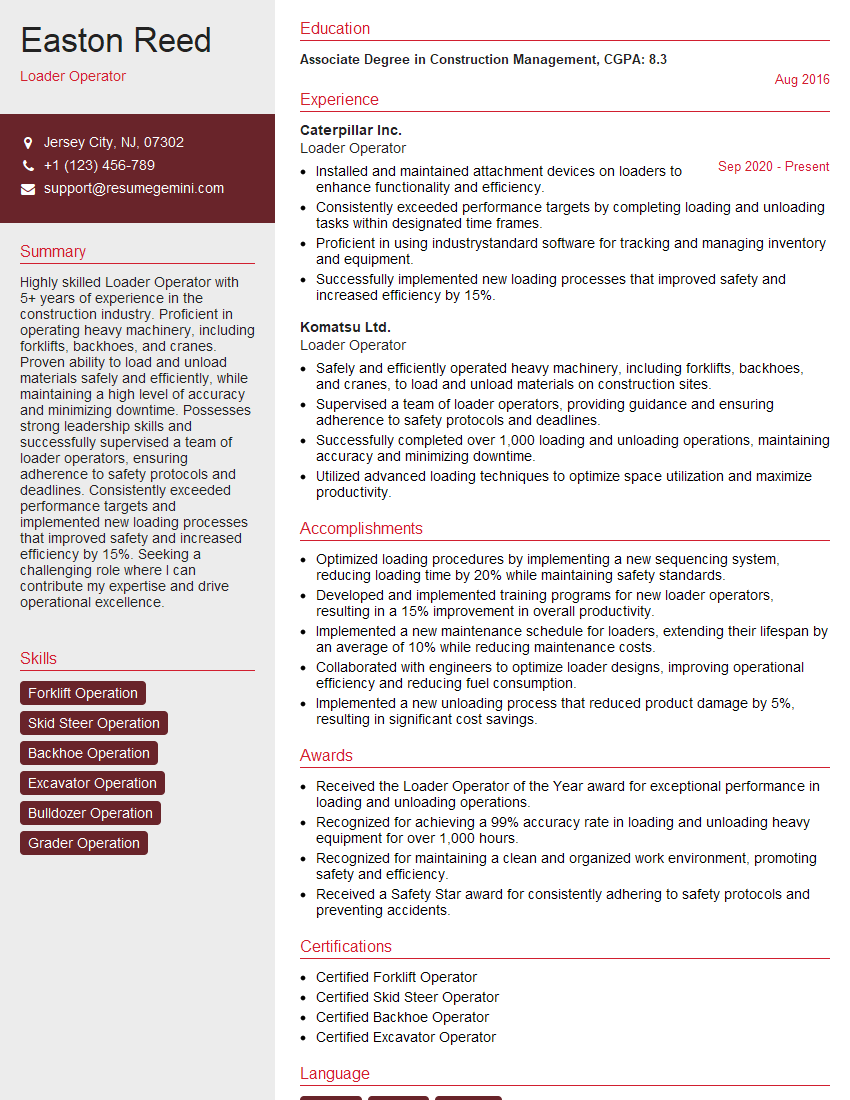
Mastering heavy equipment loading opens doors to rewarding careers with excellent earning potential and opportunities for advancement. A strong resume is crucial for showcasing your skills and experience to potential employers. To maximize your job prospects, build an ATS-friendly resume that highlights your qualifications effectively. ResumeGemini is a trusted resource to help you create a professional and impactful resume that grabs recruiters’ attention. We provide examples of resumes tailored specifically to Heavy Equipment Loading to give you a head start. Invest in your future – invest in your resume.



Explore more articles
Users Rating of Our Blogs
Share Your Experience
We value your feedback! Please rate our content and share your thoughts (optional).
What Readers Say About Our Blog
Very informative content, great job.
good