Feeling uncertain about what to expect in your upcoming interview? We’ve got you covered! This blog highlights the most important Public Art Experience interview questions and provides actionable advice to help you stand out as the ideal candidate. Let’s pave the way for your success.
Questions Asked in Public Art Experience Interview
Q 1. Describe your experience managing budgets for public art projects.
Managing budgets for public art projects requires a meticulous approach, combining artistic vision with fiscal responsibility. It’s not simply about allocating funds; it’s about strategically managing resources to maximize impact. My process begins with a thorough needs assessment, outlining all anticipated costs: artist fees, materials, fabrication, installation, insurance, permitting, community engagement activities, and project management overhead. I develop detailed budget spreadsheets, breaking down each cost category into smaller, manageable components. This allows for transparent tracking and easy identification of potential cost overruns.
For example, in a recent project featuring a large-scale sculpture, we meticulously itemized costs like steel fabrication (including different grades of steel), specialized welding, transportation, and foundation work. Contingency funds are crucial; I typically allocate 10-15% of the total budget to cover unforeseen expenses, such as material price fluctuations or unexpected site challenges. Regular budget reviews with the project team and stakeholders ensure transparency and proactive adjustments. This proactive approach has consistently allowed me to deliver projects within budget, while maintaining high artistic quality.
Q 2. Explain your process for selecting artists for public art commissions.
Selecting artists for public art commissions is a multi-phased process focused on finding the perfect match between artistic vision and community needs. It begins with developing a clear Request for Proposals (RFP), outlining the project’s scope, goals, budget, and community context. The RFP is then widely disseminated through various channels – artist networks, online platforms, professional organizations, and local community centers – to reach a diverse pool of qualified artists.
We establish a selection panel comprising diverse stakeholders, including artists, community members, city officials, and art experts. This panel reviews the submitted proposals, evaluating artistic merit, project feasibility, budget adherence, and community relevance. Shortlisted artists may then be interviewed to further assess their understanding of the project and their ability to engage with the community. The selection criteria are transparently communicated throughout the process, ensuring fairness and inclusivity. Finally, a recommendation is made to the client, considering the artistic excellence, project viability, and community input.
For instance, in a recent project aimed at revitalizing a park, we prioritized artists with experience in community-based participatory art and a demonstrable commitment to sustainability. This selection process led to a beautiful and engaging artwork that truly reflected the community’s spirit and environmental concerns.
Q 3. How do you ensure community engagement throughout a public art project lifecycle?
Community engagement is the cornerstone of successful public art projects. It’s not a one-off event; it’s an ongoing process that starts from the initial concept development and continues through installation and beyond. My approach integrates community engagement throughout the project lifecycle using a variety of methods.
This includes holding public forums, community workshops, online surveys, and informal conversations to gather input on artistic preferences, project themes, and site considerations. We actively seek input from diverse community segments, ensuring that all voices are heard. Throughout the design phase, we regularly share design iterations and solicit feedback. Community involvement extends to the installation phase, often with opportunities for volunteer participation or collaborative art-making activities. Post-installation, we conduct ongoing monitoring and evaluation, soliciting feedback on the artwork’s impact on the community. This ensures the art not only enhances the aesthetics of a space, but also meaningfully connects with and benefits the community.
For example, in one project, we collaborated with local schools to incorporate student artwork into the larger public artwork, fostering a sense of ownership and pride.
Q 4. What strategies do you use to mitigate potential risks and challenges in public art projects?
Mitigating risks in public art projects requires proactive planning and careful consideration of potential challenges. We develop a comprehensive risk assessment matrix at the beginning of the project. This matrix identifies potential risks, such as budget overruns, delays, material availability issues, community opposition, or unforeseen site conditions. For each risk, we outline potential mitigation strategies.
These strategies might include securing alternate suppliers for materials, building contingency time into the project schedule, establishing clear communication protocols with stakeholders, and engaging in conflict resolution techniques to address community concerns. Comprehensive insurance policies are essential to cover potential damages or liabilities during fabrication, transportation, and installation. Furthermore, rigorous quality control measures are implemented throughout the project, from materials selection to final installation, to minimize the risk of defects or errors. By proactively addressing potential problems, we create a robust framework that minimizes disruptions and ensures a successful project outcome.
Q 5. Describe your experience working with diverse stakeholders (artists, community members, city officials).
Working with diverse stakeholders – artists, community members, and city officials – necessitates strong communication and collaboration skills. I foster open dialogue, actively listening to different perspectives and viewpoints. I build trust by ensuring transparency in the decision-making process and providing regular updates.
I employ collaborative tools such as project management software and online communication platforms to maintain clear lines of communication and facilitate efficient information sharing. Conflict resolution is an integral part of the process; I actively mediate any disagreements, ensuring that all perspectives are considered and that decisions are reached through consensus. Regular meetings, both formal and informal, maintain engagement and address emerging issues promptly. Recognizing the unique contributions of each stakeholder is key to creating a positive collaborative environment that leads to a successful project.
Q 6. How do you handle project delays or unexpected issues during the implementation phase?
Project delays or unexpected issues are inevitable in public art projects. My approach emphasizes proactive communication and flexible problem-solving. Upon encountering a delay or unforeseen issue, I immediately convene a meeting with the relevant stakeholders to assess the situation. We thoroughly investigate the cause of the delay or issue, identify its potential impact on the project timeline and budget, and develop alternative solutions.
This might involve adjusting the project scope, negotiating with contractors or suppliers, securing additional funding, or adjusting the project schedule. Open communication with all stakeholders is vital throughout this process, ensuring everyone is informed and understands the implications of the changes. Documentation of all decisions and adjustments is crucial for transparency and accountability. Using project management software to track progress and update schedules allows for efficient monitoring and control.
Q 7. Explain your approach to evaluating the success of a completed public art project.
Evaluating the success of a public art project goes beyond simply admiring the finished artwork. It involves assessing its impact across various dimensions. My evaluation framework encompasses artistic merit, community engagement, project management efficiency, and long-term sustainability.
Artistic merit is assessed through expert reviews and public feedback, considering the artwork’s aesthetic qualities, originality, and technical execution. Community engagement is measured by analyzing participation rates in various events, surveys, and feedback mechanisms. Project management efficiency is evaluated by reviewing adherence to the budget, schedule, and risk management plan. Long-term sustainability includes assessing the artwork’s durability, maintenance requirements, and ongoing community support. This multi-faceted approach provides a comprehensive understanding of the project’s success, informing future projects and refining our strategies. Post-installation monitoring, including site visits and community feedback sessions, plays a significant role in evaluating long-term impact.
Q 8. Describe your experience in securing funding for public art initiatives.
Securing funding for public art is a multifaceted process requiring a strategic approach. It involves building compelling proposals that highlight the artistic merit, community impact, and long-term value of the project. My experience encompasses diverse funding sources, from private foundations and corporate sponsorships to public grants and crowdfunding campaigns.
For instance, in a recent project, we successfully secured funding from a city arts council by demonstrating the project’s alignment with their strategic goals of enhancing public spaces and promoting local artists. We also partnered with a local business, securing a significant sponsorship in exchange for prominent branding opportunities. Our detailed budget justification, including projected maintenance costs, was crucial in gaining their confidence.
My strategy often involves:
- Thorough research of available funding opportunities.
- Crafting compelling narratives that resonate with funders’ values.
- Developing detailed budgets and timelines.
- Building strong relationships with potential funders.
- Following up diligently and providing regular updates.
Q 9. How do you balance artistic vision with community needs and practical considerations?
Balancing artistic vision, community needs, and practical considerations is paramount in successful public art projects. It’s not about compromise, but rather integration. The artistic vision should be informed by community input and practical constraints, creating a symbiotic relationship.
For example, in a project involving a mural in a low-income neighborhood, we conducted extensive community consultations through workshops and surveys. Residents shared their history, cultural heritage, and aspirations, which directly influenced the mural’s design and themes. Simultaneously, we worked closely with the city’s public works department to ensure the project complied with safety regulations and building codes, selecting durable and weather-resistant materials.
This integrated approach ensures that the artwork not only reflects the artist’s vision but also serves the community and is practically feasible.
Q 10. What is your understanding of relevant regulations and permitting processes for public art installations?
Understanding relevant regulations and permitting processes is crucial for avoiding delays and potential legal issues. These regulations vary widely depending on the location, scale, and nature of the art installation. They commonly encompass building codes, zoning ordinances, accessibility requirements, historical preservation regulations, and environmental impact assessments.
My experience includes navigating these complexities for projects ranging from small-scale sculptures to large-scale installations. This involves:
- Identifying all relevant permits and approvals required.
- Preparing detailed applications and supporting documentation.
- Working closely with city officials and regulatory bodies.
- Addressing any concerns or objections raised during the review process.
- Ensuring compliance with all relevant regulations throughout the project lifecycle.
Q 11. What software or tools do you use for project management and communication in public art projects?
Efficient project management and clear communication are vital in public art projects. I utilize a combination of software and tools to manage tasks, track progress, and facilitate communication among stakeholders.
For project management, I rely on tools like Asana or Trello to create task lists, assign responsibilities, and monitor deadlines. For communication, I use Slack or Microsoft Teams for real-time collaboration and updates, and Google Drive or Dropbox for file sharing and version control. For visual communication, I find SketchUp or AutoCAD useful for modeling and visualizing installations before they’re built.
The selection of tools depends on the project’s size and complexity, but a consistent system for project management and communication ensures smooth workflow and avoids potential miscommunication.
Q 12. How do you address concerns or criticisms from the community regarding a public art project?
Addressing community concerns and criticisms requires proactive engagement and transparent communication. It’s important to view these responses as valuable feedback that can improve the project. I have a process that involves:
- Creating opportunities for community engagement from the project’s initial stages.
- Actively listening to and documenting community feedback.
- Responsibly addressing concerns in a timely manner.
- Modifying the project based on constructive criticism (when appropriate and feasible).
- Maintaining open communication channels throughout the process.
For example, if a design element is causing concern, we may revise the design to better meet community expectations while still maintaining the artistic integrity of the project. Open dialogue, empathy, and willingness to adapt are vital.
Q 13. Explain your experience in managing artist contracts and agreements.
Managing artist contracts and agreements is essential for protecting both the artist’s rights and the project’s interests. I’ve developed a thorough process that includes:
- Clearly defining the scope of work, deliverables, and timelines.
- Specifying payment schedules and methods.
- Outlining intellectual property rights and usage permissions.
- Addressing liability and insurance requirements.
- Establishing clear communication channels and dispute resolution mechanisms.
I use standard artist contract templates, adapting them to the specifics of each project. Legal counsel is often involved, especially for complex or high-value projects, to ensure the contract is legally sound and protects all parties.
Q 14. How do you maintain the long-term preservation and maintenance of public art installations?
Long-term preservation and maintenance are critical to the success of public art. Without proper care, installations can deteriorate quickly, losing their aesthetic appeal and artistic value. My approach involves:
- Specifying durable materials and construction techniques during the design phase.
- Developing a comprehensive maintenance plan that addresses routine cleaning, repairs, and restoration.
- Establishing a dedicated budget for ongoing maintenance.
- Creating a system for monitoring the condition of the artwork and promptly addressing any issues.
- Working with conservators for specialized cleaning and restoration work.
For example, we’ve developed partnerships with local organizations or community groups to help with regular cleaning and minor repairs, promoting community ownership and engagement in the artwork’s upkeep. This approach ensures the artwork’s longevity and continued enjoyment by the public.
Q 15. Describe your familiarity with different types of public art media and their installation requirements.
My experience encompasses a wide range of public art media, from traditional sculpture and murals to interactive installations and site-specific land art. Understanding the specific requirements for each medium is crucial. For example, bronze sculptures require specialized casting and installation techniques, involving considerations of weight, stability, and potential environmental impact. Mural installation might necessitate surface preparation, specialized paints, and scaffolding. Interactive installations demand expertise in electronics, software, and potentially accessibility features. Each project begins with a thorough material analysis, encompassing durability, maintenance requirements, and potential environmental impact, ensuring the longevity and safety of the artwork.
- Sculpture: I’ve worked on projects involving everything from small-scale bronze pieces to large-scale welded steel constructions, each with distinct installation challenges regarding foundation, anchoring, and potential vandalism prevention.
- Murals: My experience includes both traditional painted murals and more contemporary approaches using mosaic tiles, digital prints on weather-resistant materials, and even augmented reality overlays. Surface preparation and material choice are paramount here.
- Interactive Installations: I’ve collaborated on interactive pieces that involved sensors, embedded electronics, and custom software, necessitating careful planning for power supply, data transmission, and robust security against damage or unauthorized access.
Career Expert Tips:
- Ace those interviews! Prepare effectively by reviewing the Top 50 Most Common Interview Questions on ResumeGemini.
- Navigate your job search with confidence! Explore a wide range of Career Tips on ResumeGemini. Learn about common challenges and recommendations to overcome them.
- Craft the perfect resume! Master the Art of Resume Writing with ResumeGemini’s guide. Showcase your unique qualifications and achievements effectively.
- Don’t miss out on holiday savings! Build your dream resume with ResumeGemini’s ATS optimized templates.
Q 16. What is your experience with public art site selection and assessment?
Site selection and assessment are critical. It’s not just about finding a visually appealing location; it’s about a holistic understanding of the space’s context, history, and community. My approach is multi-faceted, involving site visits, community engagement, and thorough research. I consider factors like pedestrian traffic, visibility, potential for vandalism, environmental factors (sun exposure, wind, rain), and existing infrastructure. I also look at the historical and cultural significance of the location and how the artwork might interact with or enhance it.
For example, a recent project involved selecting a location for a large-scale kinetic sculpture in a city park. We conducted a thorough analysis of different areas within the park, considering proximity to existing pathways, potential impact on park usage, viewsheds, and the level of natural light. Through community meetings, we determined which locations were considered the most appropriate and beneficial by the local residents.
Q 17. How do you incorporate accessibility considerations into public art projects?
Accessibility is paramount in public art. It’s about ensuring that everyone can experience the artwork, regardless of their physical abilities. This includes considering physical access (ramps, clear pathways), visual access (sufficient lighting, clear signage, alternative text descriptions for visually impaired visitors), auditory access (considerations for those with hearing impairments, potentially through audio descriptions), and cognitive access (clear and concise information, avoiding overly complex designs). We also frequently employ tactile elements and consider the needs of users with intellectual disabilities during the design process.
For instance, in a recent project involving a tactile sculpture, we incorporated braille and raised text elements to allow visually impaired individuals to fully engage with the artwork. We also ensured that pathways around the sculpture were wide enough to accommodate wheelchairs and other mobility devices.
Q 18. Describe your experience collaborating with architects and landscape designers.
Collaboration with architects and landscape designers is essential. Public art is rarely a standalone element; it’s integrated into the built environment. Effective collaboration requires clear communication, shared understanding of project goals, and mutual respect for each other’s expertise. I often participate in early design meetings to ensure that the proposed artwork complements the overall design aesthetic and functional aspects of the project. This collaborative process helps us avoid conflicts and ensure the artwork integrates seamlessly into its surroundings. This ensures a cohesive and aesthetically pleasing environment.
In one project, working with a landscape architect on a park renovation, I incorporated the planned sculpture into the overall planting scheme, ensuring that both the artwork and the landscape enhanced each other. The result was a harmonious and aesthetically satisfying space.
Q 19. How do you ensure the ethical and culturally sensitive implementation of public art projects?
Ethical and culturally sensitive implementation is critical. This involves extensive community engagement, respectful consideration of local history and traditions, and avoidance of appropriation or stereotypes. Before initiating a project, I conduct thorough research to understand the community’s values and sensitivities. This often involves working with community leaders, local artists, and historians to gain a deep understanding of the context. We always prioritize inclusivity and work to ensure the artwork reflects the diversity of the community it serves. We carefully consider the potential impact of the artwork on different segments of the community, striving for inclusivity and avoiding any potential for offense or misrepresentation.
For example, in a project involving a mural in a historically diverse neighborhood, we collaborated with local artists and community members to design imagery that was both reflective of the neighborhood’s history and representative of its diverse population.
Q 20. Explain your understanding of the different roles involved in a public art project team.
A successful public art project relies on a collaborative team. Key roles include the artist (conceptualization and creation), project manager (budget, logistics, timelines), community liaison (engagement and feedback), engineers (structural analysis, technical support), fabricators (artwork construction), installers (on-site installation), and conservators (long-term maintenance). Clear communication and defined responsibilities are essential. Each team member brings unique expertise to the project, and effective leadership is critical to ensuring seamless coordination and successful completion.
For example, on a large-scale project, I oversaw a team that included a sculptor, a structural engineer, a fabrication team, a project manager, and community representatives, ensuring each played their critical role in the process.
Q 21. How do you measure the impact and effectiveness of public art projects?
Measuring the impact and effectiveness of public art is multifaceted and goes beyond simple aesthetics. We use a combination of quantitative and qualitative methods. Quantitative data might involve tracking visitor numbers, social media engagement, and surveys measuring public perception. Qualitative methods include community interviews, focus groups, and observations of how people interact with the artwork. We look at the artwork’s contribution to community pride, its role in fostering social interaction, and its potential for educational or cultural enrichment. The long-term impact is also considered, evaluating the artwork’s durability, maintenance requirements, and continuing relevance to the community.
For instance, post-installation surveys, community focus groups, and analysis of social media engagement can provide valuable insight into how effectively a piece has integrated into its community. Regular maintenance checks also track the longevity and successful preservation of the artwork.
Q 22. Describe your experience working within specific regulatory frameworks (e.g., ADA compliance).
Navigating regulatory frameworks like the Americans with Disabilities Act (ADA) is crucial for ensuring accessibility and inclusivity in public art. My experience involves a multi-step process starting with thorough site analysis to identify potential barriers. This includes assessing pathways, signage, and the artwork itself for compliance with ADA standards. For example, I’ve worked on projects where sculpture placement needed adjustment to maintain sufficient wheelchair-accessible pathways, and tactile elements were incorporated to make artwork accessible to visually impaired individuals. I collaborated with accessibility consultants to ensure designs adhered to all relevant regulations, including those for accessible viewing distances and informational materials. Documentation of compliance is meticulously maintained throughout the project lifecycle, including detailed drawings, specifications, and final inspection reports. This proactive approach minimizes risks and ensures a welcoming experience for everyone.
Q 23. How do you communicate the value of public art to diverse audiences and stakeholders?
Communicating the value of public art requires tailoring the message to resonate with diverse audiences. For community members, I focus on the beautification and enhancement of their immediate environment, highlighting the sense of place and community pride fostered by the artwork. For stakeholders like funders and city councils, I emphasize the positive economic impact, such as increased tourism and property values. For artists, the focus is on the opportunities for creative expression and public engagement. I employ a variety of communication strategies including community forums, interactive workshops, artist talks, and public presentations. Using accessible language and visuals, I make the information engaging and relevant. For instance, I might use before-and-after photos to demonstrate the impact of a public art project on a neighborhood, or share stories from community members about how the art has enriched their lives. Data showcasing economic benefits can be highly persuasive for stakeholders.
Q 24. What is your experience with public art programming and events?
My experience with public art programming and events is extensive, ranging from organizing artist talks and workshops to curating exhibitions and hosting community events centered around public art. I’ve developed and implemented educational programs for all age groups, including interactive art-making workshops for children and guided tours for adults. One project involved creating a series of augmented reality experiences that brought public sculptures to life, engaging the public in a new and exciting way. We used a phased approach, starting with smaller, pilot events to test audience engagement before scaling up. Careful evaluation and feedback from participants is paramount, informing future programming decisions. The goal is always to create opportunities for meaningful engagement with the art and its surrounding context.
Q 25. How do you address issues of vandalism or damage to public art installations?
Addressing vandalism and damage to public art requires a multi-pronged approach. Prevention is key: strategic placement, robust materials, and security measures like surveillance cameras are vital. Quick response to incidents is crucial – prompt cleaning and repair minimizes the impact. I’ve worked with local law enforcement to report vandalism and investigate potential culprits. For significant damage, we often collaborate with conservators for restoration. Community engagement is a vital part of minimizing vandalism. Building a sense of ownership and pride in the artwork through education and community events can help foster responsible behavior. Involving the community in the repair process can also be empowering. Documentation of all incidents, repairs, and preventative measures is essential for insurance claims and future planning.
Q 26. Describe your approach to resolving conflicts between artists and community members.
Conflicts between artists and community members often stem from differing expectations or interpretations of the artwork. My approach involves facilitated dialogue and mediation. Creating a safe and neutral space for open communication is paramount. I work to understand each party’s perspective, identifying the core issues driving the conflict. I then help to facilitate a constructive conversation that focuses on finding common ground and compromises. Active listening and respectful communication are critical throughout the process. Sometimes, compromises might involve minor adjustments to the artwork or the creation of supplementary interpretive materials to address community concerns. The goal is to find a mutually agreeable solution that respects the artistic vision while addressing the community’s needs.
Q 27. How do you incorporate sustainability considerations into public art projects?
Sustainability is integrated into every stage of a public art project, from material selection to maintenance. We prioritize using locally sourced, recycled, or sustainably produced materials whenever possible. Low-maintenance materials that require minimal cleaning or repair are preferred to reduce environmental impact and long-term costs. Consideration is given to the artwork’s lifespan and potential for reuse or recycling at the end of its life. For example, we may choose durable, weather-resistant materials that require less frequent replacement or opt for modular designs that can be easily repaired or reconfigured. We also assess the carbon footprint of transportation and installation processes, striving for environmentally conscious practices at every step. This holistic approach ensures that the artwork’s environmental impact is minimized throughout its entire lifecycle.
Q 28. Explain your understanding of intellectual property rights related to public art.
Understanding intellectual property rights in public art is crucial. The artist retains copyright over their work, even when it’s installed in a public space. This means they have control over reproduction, distribution, and derivative works. However, the commissioning entity usually obtains a license to display and maintain the artwork. Contracts clearly define these rights and responsibilities. I ensure that all contracts include clauses detailing copyright ownership, reproduction rights, and any limitations on usage. For example, the contract might specify whether the artwork can be reproduced in marketing materials or on merchandise. Transparency and clear communication with the artist about their rights are paramount. This proactive approach minimizes potential legal disputes and fosters a positive working relationship between the artist and the commissioning entity. I have worked on projects where the artist’s copyright was carefully documented, along with a clearly defined license granted to the city for the installation and maintenance of the artwork.
Key Topics to Learn for Public Art Experience Interview
- Understanding the Public Art Landscape: Explore the history, theory, and current trends in public art. Consider different artistic movements and their influence on public spaces.
- Community Engagement and Collaboration: Understand the importance of community input in public art projects. Discuss strategies for effective collaboration with artists, residents, and stakeholders.
- Project Management in Public Art: Learn about the practical aspects of managing public art projects, including budgeting, timelines, permitting, and logistics.
- Siting and Installation of Public Art: Explore the considerations involved in selecting appropriate locations for artwork and the processes for safe and effective installation.
- Public Art and Urban Planning: Understand how public art contributes to urban design, revitalization, and community development. Consider the role of art in creating inclusive and vibrant public spaces.
- Conservation and Preservation of Public Art: Discuss the challenges of maintaining and preserving public art over time. Learn about best practices for conservation and restoration.
- Legal and Ethical Considerations: Explore copyright, licensing, and public access issues related to public art. Understand the ethical responsibilities of those involved in public art projects.
- Problem-Solving in Public Art: Consider challenges such as budget constraints, community opposition, and unexpected site conditions. Develop strategies for creative problem-solving in these contexts.
Next Steps
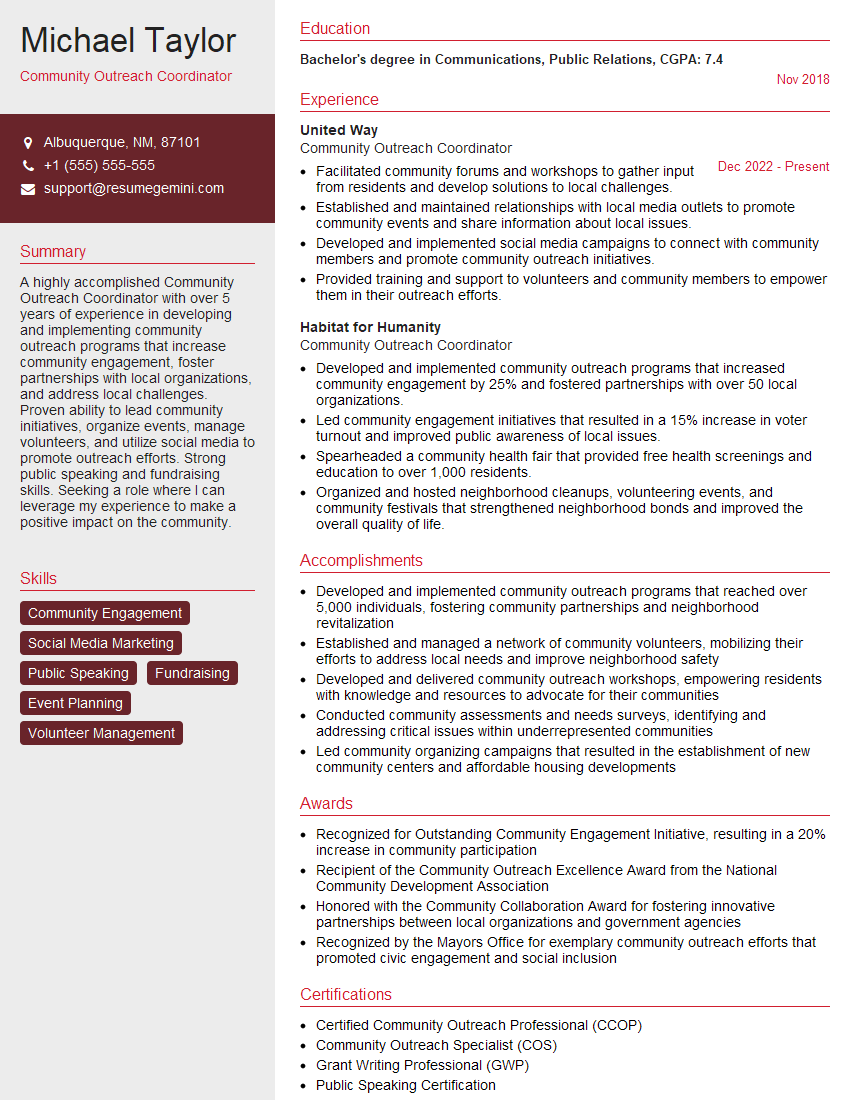
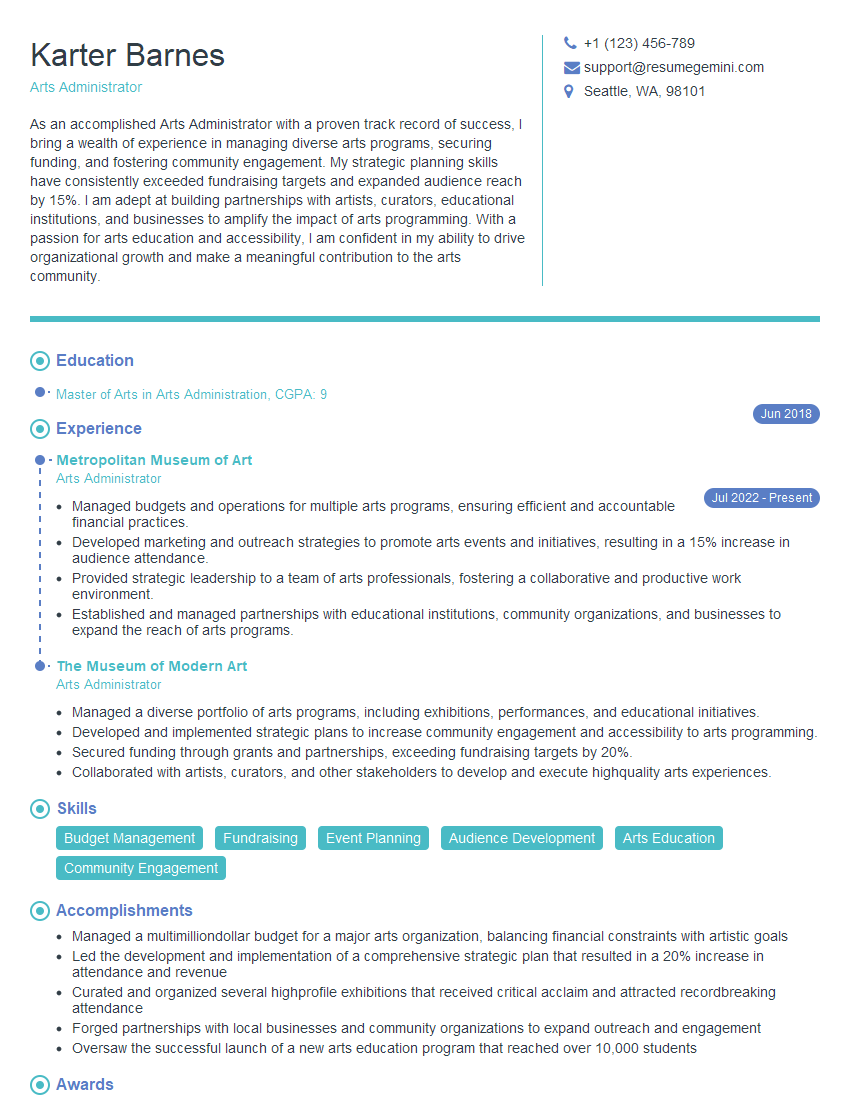
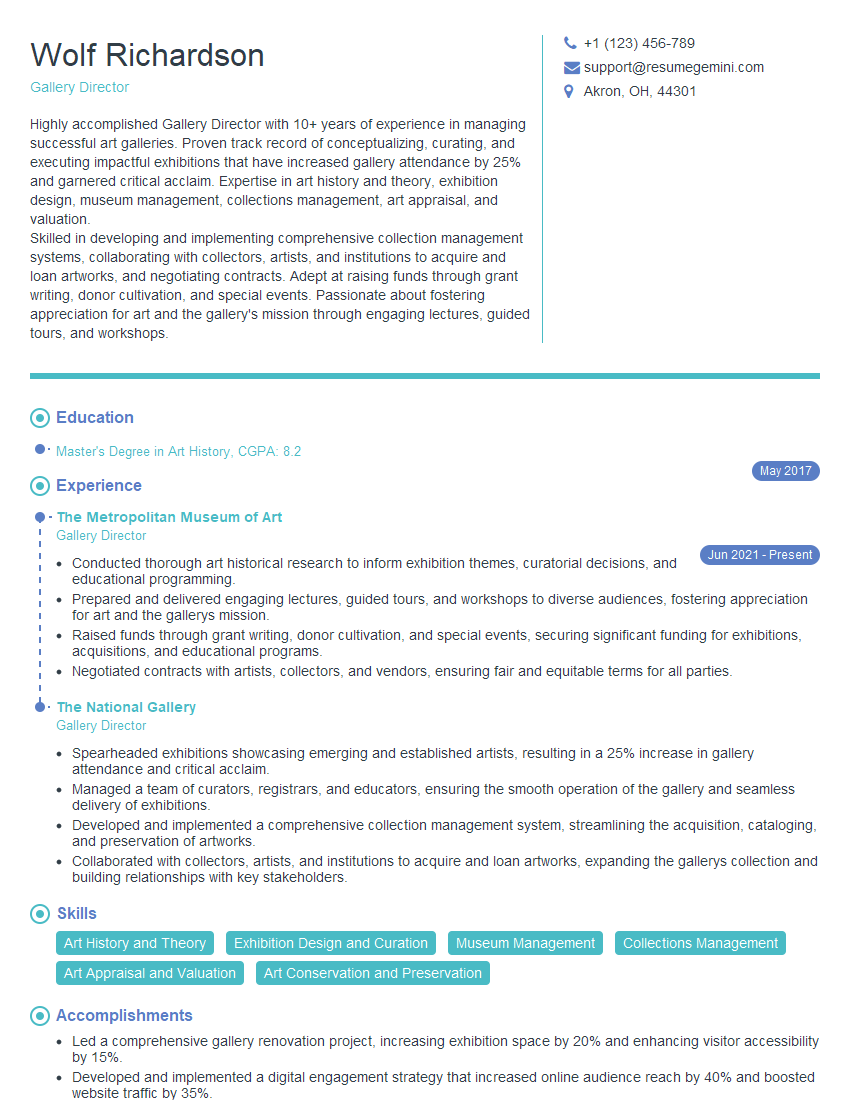
Mastering Public Art Experience opens doors to exciting and impactful careers, allowing you to contribute to vibrant communities and leave a lasting artistic legacy. To maximize your job prospects, crafting an ATS-friendly resume is crucial. This ensures your application gets noticed by recruiters and hiring managers. We highly recommend using ResumeGemini, a trusted resource, to build a professional and effective resume. Examples of resumes tailored to Public Art Experience are available to help guide your process. Invest the time in crafting a strong resume—it’s your first impression!

Explore more articles
Users Rating of Our Blogs
Share Your Experience
We value your feedback! Please rate our content and share your thoughts (optional).
What Readers Say About Our Blog
Very informative content, great job.
good