Interviews are opportunities to demonstrate your expertise, and this guide is here to help you shine. Explore the essential Pyrotechnics interview questions that employers frequently ask, paired with strategies for crafting responses that set you apart from the competition.
Questions Asked in Pyrotechnics Interview
Q 1. Explain the different types of pyrotechnic compositions and their applications.
Pyrotechnic compositions are carefully formulated mixtures of oxidizers, fuels, stabilizers, and sometimes colorants, designed to produce specific effects when ignited. The types and ratios of these ingredients determine the composition’s properties, such as burn rate, color, and brilliance.
- Black Powder: The oldest and simplest pyrotechnic composition, consisting of potassium nitrate (oxidizer), charcoal (fuel), and sulfur (fuel and stabilizer). Used in fuses, fireworks, and historically in firearms. Its relatively slow burn rate makes it suitable for less demanding applications.
- Flash Powder: Extremely fast-burning mixtures, often containing potassium perchlorate (oxidizer), aluminum (fuel), and other additives. These generate intense flashes of light and are used in flashbulbs and some fireworks effects, requiring extremely careful handling due to their sensitivity.
- Colored Fire Compositions: These compositions are based on different metal salts that produce distinct colors when heated. For example, strontium salts create red, barium salts create green, and copper salts create blue. The precise formulation, including the type and proportion of the metal salt, determines the intensity and purity of the color.
- Star Compositions: Used to create the colorful stars seen in many fireworks. These are usually pressed into small pellets which are then incorporated into shells or other devices. Their formulation is often complex, involving multiple metal salts for color variations, binders to hold the composition together, and other additives to adjust the burn rate and effects.
The specific application dictates the composition choice. For instance, a slow-burning black powder fuse is ideal for timing a firework shell’s launch, while a fast-burning flash powder is used for a dramatic instantaneous effect. The selection process always prioritizes safety and performance.
Q 2. Describe the safety procedures you follow when handling pyrotechnics.
Safety is paramount in pyrotechnics. My procedures begin with a thorough risk assessment before any work commences. I always work in a designated, well-ventilated area, free from ignition sources. Personal protective equipment (PPE), including safety glasses, gloves, and hearing protection, is mandatory. I handle pyrotechnic materials carefully, avoiding friction or impact that could cause accidental ignition. Only small quantities of materials are handled at any time. Each step of the process is meticulously documented, and I regularly maintain and calibrate my tools and equipment.
Furthermore, I meticulously inspect all components before use, discarding any damaged or compromised items. Proper storage in a cool, dry, and secure location is crucial, far from any potential ignition sources. And most importantly, I always adhere to the relevant safety regulations and legal requirements of the jurisdiction.
For instance, during the setup of a large fireworks display, we establish exclusion zones and use communication systems to coordinate actions amongst the crew. After each display, a thorough clean-up and inspection ensure no unexploded devices remain.
Q 3. What are the key regulations and licensing requirements for pyrotechnics in your region?
Pyrotechnics are strictly regulated in my region [Note: Replace with specific region and regulations]. This typically involves licensing requirements for both the manufacture and the use of pyrotechnics. Manufacturers need permits, detailed production plans, and regular safety inspections. Users require appropriate licenses based on the type and quantity of fireworks they handle. This often includes background checks and demonstrations of safe handling procedures. The transportation and storage of pyrotechnics are also heavily regulated, adhering to specific safety guidelines and transport permits.
Moreover, specific regulations exist concerning the types of fireworks allowed, their permitted locations of use, and the times of use. Violation of these regulations results in severe penalties, including hefty fines and even imprisonment in some cases. Regular updates on regulations are essential to ensure ongoing compliance.
Q 4. How do you calculate the safe firing distance for a specific pyrotechnic device?
Calculating safe firing distance for a pyrotechnic device involves considering several factors, primarily the device’s classification and its projected burst radius. This information is often provided by the manufacturer. We use established industry standards and safety guidelines to determine the minimum safe distance. These standards often provide formulas or charts correlating the device’s size and classification with a safe viewing distance.
For example, a small consumer firework may have a relatively short safe distance, perhaps only a few feet. In contrast, a large professional firework shell may require a safe distance of hundreds of feet or even more. This distance is carefully calculated to ensure that spectators are not at risk from flying debris, heat, or other potential hazards from the display. Environmental factors, such as wind speed and direction, can also affect this distance. An experienced pyrotechnician will take all these factors into account when creating a safety plan.
Q 5. Explain the process of designing a fireworks display, including safety considerations.
Designing a fireworks display is a meticulous process that begins with a detailed concept, incorporating the client’s vision and any specific event requirements. This includes selecting appropriate fireworks for the desired effects (such as aerial shells, ground effects, cakes, etc.) and determining the firing sequence. A comprehensive firing plan is created, outlining the exact timing and location of each firework, including safety measures.
Crucially, the safety considerations are integrated into every stage. This includes identifying the appropriate firing site, assessing potential hazards (e.g., overhead obstructions, flammable materials), and selecting suitable firing equipment. The selected site must have sufficient space to accommodate spectators, allowing a safe viewing distance from the fireworks and any associated debris. Detailed risk assessments and contingency plans are also critical elements. In case of any misfire or malfunction, clear procedures for dealing with such events must be outlined and practiced by the entire crew. This might include having readily accessible extinguishers, trained personnel, and emergency communication systems in place.
Once the plan is finalized, the team will meticulously prepare the fireworks for firing, adhering to safety protocols at every step. During the event, a designated person monitors the launch, making any necessary adjustments based on the weather conditions and other factors, ensuring that the display proceeds smoothly and safely.
Q 6. What are the different types of fuses used in pyrotechnics and their properties?
Fuses are essential components in pyrotechnics, providing a controlled and timed ignition of the firework composition. Various types of fuses exist, each with specific properties, making them suitable for different applications.
- Black Powder Fuse: The most common type, made of a core of black powder encased in a protective outer layer. It burns at a relatively predictable rate, though the rate can vary depending on environmental conditions. Used in most consumer and professional fireworks.
- Quick Match: A fast-burning fuse, often used for quick ignition of multiple devices simultaneously. Its fast burn rate makes it less suitable for precise timing.
- Electric Match: An electrically initiated fuse that provides precise ignition timing. This is the preferred choice for large, complex fireworks displays, as it allows for synchronized firing of many devices. It offers greater safety, as it eliminates open flames.
- Time-delay Fuses: These fuses incorporate a pre-determined delay before ignition, allowing for sequencing of effects in a display. This allows for the creation of complex patterns and choreographies.
The choice of fuse is crucial for the safety and performance of the firework. A fuse with an incorrect burn rate could result in premature or delayed ignition, leading to safety hazards or an undesirable display.
Q 7. Describe your experience with different ignition systems for pyrotechnics.
My experience encompasses various ignition systems, ranging from simple hand-lit fuses to sophisticated electronic firing systems. Simple hand-ignition is suitable for smaller, less complex displays. However, for large and complex displays, electronic firing systems are essential to ensure precise timing and synchronization. These systems utilize electric matches, which are ignited remotely by a central control unit, allowing the operator to control the sequence of the fireworks from a safe distance.
Electronic firing systems offer improved safety and precision over manual ignition. They reduce the risks associated with handling open flames near pyrotechnics and allow for more intricate choreography. I’ve worked with several brands and models of these systems, each with its advantages and disadvantages. For instance, some systems offer multiple firing channels, enabling the simultaneous ignition of numerous devices, while others provide more advanced features such as safety shut-offs and remote monitoring capabilities. Regular maintenance and testing of these systems are crucial to ensure reliable operation and prevent malfunctions during a display.
Q 8. How do you troubleshoot malfunctions in pyrotechnic devices?
Troubleshooting pyrotechnic malfunctions requires a systematic approach, prioritizing safety above all else. The first step is always to secure the area and ensure no one is in danger. Then, a careful examination of the device is needed. This involves visually inspecting the device for any obvious signs of damage or improper assembly. Common issues include faulty fuses, improperly packed compositions, or damaged casings. For example, a firework that doesn’t ignite might have a damp fuse or a compromised electrical connection. A firework that malfunctions mid-air, such as premature bursting or erratic flight, likely points towards an issue with the internal composition or the timing mechanism. Detailed record-keeping is crucial. I always maintain detailed logs of every device, including the manufacturer, batch number, and any modifications. This allows for tracing problems back to their source, assisting in identifying defects in the manufacturing process or a specific batch of components. Finally, if a persistent issue is encountered, I consult with relevant experts and manufacturers to investigate the root cause and implement corrective measures, often involving testing with similar devices under controlled conditions.
Q 9. Explain the principles of combustion and explosion relevant to pyrotechnics.
Pyrotechnics rely on the principles of rapid oxidation – combustion – and the extremely rapid expansion of gases – explosion. Combustion is a self-sustaining chemical reaction between a fuel and an oxidizer, producing heat and light. In pyrotechnics, this is often a mixture of finely ground metal powders (fuel) and oxidizing agents like nitrates or perchlorates. The reaction’s speed determines the effect. A slow burn creates a glowing effect, while a rapid reaction produces a bright flash. An explosion occurs when the rapid combustion generates a significant volume of gas in a confined space. This rapid expansion exerts tremendous pressure, leading to the characteristic force of an explosion. Think of a firecracker: the gunpowder’s rapid combustion creates a large volume of gas within the small casing, leading to the explosive burst. The specific mixture of chemicals and their particle size control the speed of the reaction, the color of the light produced, and the overall effect. For instance, strontium salts will produce red, barium salts green, and copper salts blue flames. Understanding the interplay between fuel, oxidizer, and confinement is crucial for designing and controlling pyrotechnic effects.
Q 10. How do you ensure the safety of the audience during a pyrotechnics display?
Ensuring audience safety during a pyrotechnics display involves rigorous planning and execution. This begins with a comprehensive risk assessment that identifies potential hazards and outlines mitigation strategies. Factors considered include the size and location of the display, weather conditions (wind speed and direction are critical), the proximity of structures and crowds, and emergency exit routes. Safety zones are established and clearly marked, ensuring sufficient distance between the pyrotechnics and spectators. Trained personnel are deployed to monitor the display, respond to any emergencies, and manage crowd control. Emergency response plans are developed and communicated to relevant stakeholders, including first responders. The use of appropriate safety equipment for the pyrotechnic team is mandatory, including protective clothing, eye protection, and hearing protection. Regular inspections and maintenance of all equipment are performed to ensure functionality and prevent malfunctions. Prior to the show, a thorough briefing is conducted with all personnel involved, covering safety procedures, communication protocols, and contingency plans. Finally, post-display assessments are performed to evaluate the event’s safety and identify areas for improvement in future shows.
Q 11. What are the environmental considerations when using pyrotechnics?
Environmental considerations are paramount in pyrotechnics. The combustion of pyrotechnics produces various emissions, including particulate matter, heavy metals, and gases like carbon monoxide and sulfur dioxide. These emissions can contribute to air pollution, affecting air quality and potentially causing respiratory problems. The use of environmentally friendly pyrotechnics with reduced emissions is crucial. This involves selecting formulations that minimize the use of hazardous substances and using efficient combustion techniques. Proper disposal of pyrotechnic waste is critical. Spent pyrotechnics should be collected and disposed of responsibly according to local regulations, often requiring specialized handling due to the presence of hazardous materials. Careful site selection minimizes environmental impact. Displays should be conducted in areas with good ventilation to minimize the dispersion of pollutants. Furthermore, awareness of local wildlife and habitats is vital to prevent disruption or harm to these ecosystems. Minimizing the use of pyrotechnics whenever possible, and exploring alternative, environmentally friendly show elements, are part of the sustainable approach.
Q 12. Describe your experience with different pyrotechnic effects (e.g., aerial shells, ground effects, etc.).
My experience encompasses a wide range of pyrotechnic effects. I’ve worked extensively with aerial shells, from small, visually stunning comets to large, multi-break shells with complex layered effects. The process of designing these involves precise calculations of the propellant charge, timing devices, and internal composition to achieve specific effects. I have also worked extensively with ground-based effects, creating stunning visual displays through the use of fountains, ground spinners, and roman candles. These effects require different considerations, focusing on safe placement, ground stability, and preventing unwanted interactions with the environment. In addition, I have considerable experience with low-impact pyrotechnics like cold-fire displays that produce visual effects with minimal smoke and emissions. For large-scale productions, my work has involved integrating numerous effects simultaneously, carefully choreographing the timings and placement of each unit to create a coordinated and visually stunning display. This involves using specialized software for simulations and sequencing.
Q 13. How do you manage the transportation and storage of pyrotechnics safely?
The safe transportation and storage of pyrotechnics are governed by stringent regulations. Transportation involves using appropriate vehicles designed to carry hazardous materials, ensuring proper labeling and secure containment to prevent accidents. Specialized containers designed for specific pyrotechnic types are used, and secure locking mechanisms are in place to prevent unauthorized access. The route is carefully planned to avoid congested areas and ensure adherence to all local laws. Storage requires climate-controlled facilities, ideally in isolated and secure locations. Pyrotechnics are segregated according to their hazard class, following stringent safety protocols. Detailed inventory records are maintained, including batch numbers, storage locations, and expiry dates. Regular inspections are carried out to ensure the condition of the storage facility and that all safety measures are in place. Access is restricted to authorized personnel only. Emergency response plans, including fire prevention and suppression strategies, are developed and regularly tested. The ultimate aim is to minimize risks associated with handling and storing potentially dangerous materials, while ensuring the integrity and functionality of the pyrotechnics themselves.
Q 14. What are your skills in using pyrotechnics software for design and simulation?
I’m proficient in several pyrotechnics software packages, including [Mention specific software names, e.g., Fireworks Designer, a custom simulation package]. These tools are essential for designing and simulating complex pyrotechnic displays. I use them to model the trajectory and burst patterns of aerial shells, optimizing the placement and timing of multiple devices to achieve specific visual effects. The software allows for accurate simulations of the effects of wind, considering its impact on the trajectory and positioning of the fireworks. I’ve also used these tools to predict the dispersion of particulate matter and other byproducts of combustion, helping to inform safety planning and minimize environmental impact. The software facilitates the creation of precise firing sequences, ensuring that the various elements of a display are perfectly synchronized. This software greatly enhances efficiency in the design process and reduces the margin for error, ultimately contributing to the creation of safer and more visually stunning displays.
Q 15. Explain the process of obtaining necessary permits for a pyrotechnics event.
Securing permits for pyrotechnic events is a crucial, multi-step process that varies depending on location and the scale of the event. Generally, it involves contacting the relevant authorities, usually the local fire marshal’s office and potentially other agencies like the police department and environmental protection agency. You’ll need to submit a detailed application, typically including:
- Event details: Date, time, location, type of display (e.g., fireworks, theatrical effects), and estimated audience size.
- Pyrotechnic plan: A comprehensive document outlining the specific fireworks to be used, their firing sequence, safety precautions, and emergency procedures. This often includes diagrams and schematics of the firing site.
- Insurance: Proof of adequate liability insurance to cover potential damages or injuries.
- Personnel qualifications: Documentation demonstrating the qualifications and experience of the pyrotechnicians involved, often including certifications and licenses.
- Site assessment: Details of the event location, including considerations like proximity to structures, flammable materials, and potential hazards like overhead power lines.
The application undergoes a thorough review process, and inspections may be conducted at the site before permits are granted. Failure to obtain all necessary permits before the event can result in significant fines and legal repercussions. Imagine trying to launch a rocket without clearance – the consequences are similarly severe. It’s vital to begin the permitting process well in advance, allowing ample time for review and potential revisions.
Career Expert Tips:
- Ace those interviews! Prepare effectively by reviewing the Top 50 Most Common Interview Questions on ResumeGemini.
- Navigate your job search with confidence! Explore a wide range of Career Tips on ResumeGemini. Learn about common challenges and recommendations to overcome them.
- Craft the perfect resume! Master the Art of Resume Writing with ResumeGemini’s guide. Showcase your unique qualifications and achievements effectively.
- Don’t miss out on holiday savings! Build your dream resume with ResumeGemini’s ATS optimized templates.
Q 16. Describe your experience in risk assessment and mitigation for pyrotechnic events.
Risk assessment and mitigation are paramount in pyrotechnics. My experience involves a systematic approach: First, we identify potential hazards, considering factors like weather conditions (wind speed, direction, precipitation), proximity to crowds and structures, the specific fireworks used, and the competency of the crew. Then, we develop mitigation strategies for each identified risk. For example, if high winds are predicted, we might postpone the event, modify the firing sequence to avoid launching fireworks that are highly susceptible to wind drift, or implement stricter safety zones. We’ll also develop detailed contingency plans, including evacuation procedures, communication protocols, and emergency response procedures in the event of malfunctions or accidents. This includes having fire extinguishers readily available, a designated emergency response team, and a communication system that remains operational even in unexpected circumstances. I have firsthand experience mitigating risks during events involving large crowds and complex firework displays, successfully ensuring the safety of both attendees and personnel.
Q 17. How do you handle unexpected situations or emergencies during a pyrotechnics display?
Handling unexpected situations requires quick thinking, decisive action, and a well-rehearsed emergency response plan. My approach centers on the ‘Stop, Assess, Act’ methodology. If a malfunction occurs, such as a premature detonation, the immediate response is to halt the display, assess the situation—identifying injuries, damage, and the cause of the malfunction—and then implement the pre-planned emergency procedure. This might involve activating emergency services, securing the area, evacuating spectators, or initiating fire suppression. Effective communication is crucial; clear and concise instructions given to the team and audience through pre-designated communication channels. For instance, if a firework malfunctions and poses an immediate threat, we utilize pre-determined safe zones and evacuation routes while simultaneously engaging our emergency procedures. Following the incident, a thorough investigation is conducted to determine the cause, learn from the experience, and implement corrective actions to prevent similar incidents in the future.
Q 18. What are your knowledge and experience in pyrotechnic chemical analysis?
My knowledge in pyrotechnic chemical analysis is extensive, focusing on both qualitative and quantitative methods. I’m proficient in identifying the components of different pyrotechnic compositions, understanding their properties, and predicting their behavior. This includes using techniques like chromatography and spectroscopy. For example, understanding the oxidizer-fuel ratio in a firework composition allows for precise prediction of the burn rate and flame temperature, essential for optimal performance and safety. Additionally, I’m capable of analyzing spent fireworks for residues to understand combustion efficiency and identify potential sources of malfunction. This allows for continuous improvement of formulations and procedures. We’re not just mixing chemicals; we’re performing careful chemical engineering.
Q 19. Describe your understanding of different pyrotechnic manufacturing processes.
Pyrotechnic manufacturing encompasses several distinct processes, each requiring specialized knowledge and careful control. These include:
- Mixing: Precisely blending oxidizers, fuels, binders, colorants, and other additives to achieve desired effects. This step demands careful handling due to the sensitivity and potential reactivity of the ingredients.
- Granulation: Processing the mixture into a consistent granular form, optimizing burn rate and stability. Different granulation techniques affect the firework’s performance.
- Loading/Charging: Filling the firework casings with the prepared composition, often requiring specialized equipment and techniques to ensure optimal density and prevent voids. The casing design and how the composition is packed are essential to the stability and function of the firework.
- Assembly: Integrating all components of the firework into a functioning unit, including fuses, igniters, and other functional parts.
- Testing & Quality Control: Rigorous testing is conducted at each stage of the process to ensure consistency, safety, and performance. This can involve chemical analysis, burn rate tests, and performance evaluations.
My experience covers diverse manufacturing techniques, from hand-loading small-scale effects to overseeing the production of large-scale displays. Each method has its own set of challenges and safety protocols. A thorough understanding of each step is crucial to create reliable, safe, and visually stunning pyrotechnic displays.
Q 20. How do you maintain and repair pyrotechnic equipment?
Maintaining and repairing pyrotechnic equipment requires specialized knowledge and adherence to strict safety protocols. Regular inspection is crucial, looking for signs of wear, damage, or corrosion. This includes checking firing systems, electrical components, and casings for any cracks or defects. Any damaged or malfunctioning components should be replaced immediately, using only approved replacement parts. Routine maintenance might involve cleaning electrical contacts, lubricating moving parts, and checking the integrity of wiring. Safety precautions, such as grounding electrical equipment and using appropriate personal protective equipment, are always paramount. Repair procedures are usually detailed in the equipment’s manual and require training.Improper maintenance can create serious safety hazards, so only trained and authorized personnel should perform repairs. This is essential for preventing accidents during events.
Q 21. What are the different types of pyrotechnic hazards and how to mitigate them?
Pyrotechnic hazards are multifaceted and demand a comprehensive approach to mitigation. They include:
- Fire and explosion: The primary hazard, stemming from the rapid combustion of pyrotechnic compositions. Mitigation involves careful handling, storage, and use of materials, as well as having fire suppression systems in place and implementing appropriate safety distances.
- Burns and injuries: Contact with hot materials or fragments from exploding fireworks. Mitigation involves using personal protective equipment, establishing safety zones, and educating spectators on safe viewing practices.
- Toxic fumes and gases: Some pyrotechnic compositions release toxic fumes during combustion. Mitigation includes adequate ventilation and the selection of low-toxicity compositions.
- Noise-induced hearing loss: Loud sounds from fireworks can damage hearing. Mitigation involves providing hearing protection for personnel and advising spectators on safe distances.
- Debris projection: Falling debris from exploding fireworks can cause injuries. Mitigation includes carefully selecting fireworks with appropriate trajectory and using protective barriers when needed.
Effective mitigation strategies are a layered approach, combining engineering controls (safe designs, barriers), administrative controls (safety procedures, training), and personal protective equipment to minimize risks. This holistic method ensures that even if one control fails, others are in place to protect personnel and the public.
Q 22. Explain your experience with different types of pyrotechnic launch systems.
My experience encompasses a wide range of pyrotechnic launch systems, from simple hand-held devices to complex, computer-controlled systems. I’ve worked extensively with mortar systems, varying in caliber from small, 1.3-inch devices used for smaller displays to larger, 3-inch and even 6-inch mortars for grander spectacles. These require different launch charges and safety considerations. I’m also proficient with electronic firing systems, which allow for precise timing and synchronization of multiple effects in a show, eliminating the need for manual ignition and enhancing safety. For aerial displays, I’ve used various types of launch tubes, including those designed for specific effects like Roman candles or aerial shells. Finally, I have experience with ground-based effects like fountains and cakes, where the launch system is integrated into the device itself.
For instance, in one project, we integrated a custom-designed electronic firing system with a GPS module to precisely time firework launches based on the audience’s position, maximizing viewing pleasure and safety.
Q 23. How do you ensure the quality control of pyrotechnic materials and devices?
Quality control is paramount in pyrotechnics, as it directly impacts safety and the show’s success. My approach involves a multi-stage process, starting with rigorous inspection of incoming materials. We verify the composition, purity, and stability of oxidizers, fuels, and binders, ensuring they meet the required specifications and haven’t degraded. This often involves chemical analysis and physical testing. Next, during the manufacturing process, each step – from mixing components to assembling devices – is meticulously monitored. We use standardized procedures and regularly check for defects. Finally, each finished device undergoes individual testing, either through electronic testing of the electrical components or functional testing by firing a small sample batch in a controlled environment to validate performance and safety. Documentation at every stage is crucial, allowing for traceability and identification of potential issues.
Consider the example of a faulty fuse: a simple visual inspection during manufacturing might have missed a minor flaw. But our quality control process, including regular random sampling and functional testing, would reveal this defect before the device reached the event, preventing a potential hazard.
Q 24. Describe your experience in working with different pyrotechnic teams.
Throughout my career, I’ve had the pleasure of collaborating with diverse pyrotechnic teams, ranging from small, independent groups to large, internationally renowned companies. I’ve found that effective teamwork relies on clear communication, shared responsibility, and mutual respect. Whether working with experienced veterans or recent graduates, I focus on creating a collaborative atmosphere where everyone feels comfortable sharing their expertise and contributing their unique skills. I’ve learned valuable lessons from each team, enriching my own knowledge and experience. In large-scale events, coordinating with different specialists – from technicians handling the firing system to engineers designing the show – is essential for successful execution.
A particularly memorable experience involved collaborating with a team of expert firework artisans in Italy, learning their unique techniques in crafting elaborate firework shells. This cross-cultural collaboration resulted in a breathtaking display that combined both traditional and innovative approaches.
Q 25. What is your understanding of the relevant safety standards and codes for pyrotechnics?
My understanding of pyrotechnic safety standards and codes is comprehensive. I’m intimately familiar with both national and international regulations, such as those published by the American Pyrotechnics Association (APA) and the International Institute of Pyrotechnics (IIP). These codes cover aspects like storage, transportation, handling, and usage of pyrotechnic materials and devices, including specific requirements for different types of pyrotechnics. I’m also well-versed in relevant environmental regulations related to the residue produced after fireworks displays. I believe in a proactive approach to safety, emphasizing thorough risk assessments and implementation of stringent safety protocols at every stage of a project, from design to post-event cleanup. Staying updated on the latest regulations and best practices is crucial for maintaining a safe and compliant operation.
For instance, I always insist on using certified pyrotechnic materials and devices, performing regular safety checks, and meticulously following all relevant guidelines, ensuring we are fully compliant and prioritizing the well-being of our team, audience and the environment.
Q 26. How do you communicate effectively with clients and other stakeholders about pyrotechnic projects?
Effective communication with clients and stakeholders is a cornerstone of my work. I start by actively listening to their needs, expectations, and budget constraints. Then, I translate their vision into a detailed proposal that outlines the pyrotechnic design, safety protocols, and logistical details. I use clear, concise language, avoiding technical jargon whenever possible. Visual aids, such as design sketches and simulations, are very helpful in clarifying the concept. Throughout the project, I maintain open communication, providing regular updates and addressing any concerns promptly. After the event, I provide a detailed report summarizing the event’s success, addressing any issues encountered, and suggesting improvements for future projects.
In one instance, I worked with a client who initially had a vague idea for their wedding fireworks display. Through clear communication and collaborative design sessions, we transformed their vision into a spectacular, personalized show that perfectly matched their style and budget.
Q 27. What are your skills in using pyrotechnic tools and equipment (e.g., mortars, igniters, etc.)?
My skills in using pyrotechnic tools and equipment are extensive. I’m proficient in operating and maintaining various types of mortars, igniters (both electric and fuse-based), launch tubes, and other pyrotechnic devices. I can accurately calculate launch charges for different calibers of mortars, ensuring safe and predictable performance. I’m also adept at troubleshooting electrical systems and identifying potential malfunctions in firing systems. I prioritize safe handling practices, following strict procedures to minimize risks. Regular training and updates on new equipment and techniques keep me at the forefront of the industry.
For example, I am certified in the safe handling and operation of specific types of large-caliber mortars and have detailed knowledge of the intricacies of the electrical firing systems used in large-scale shows. Moreover, my experience includes hands-on work with various types of igniters, fuses, and other crucial pyrotechnic equipment.
Q 28. Describe your experience with documenting and reporting on pyrotechnic events and projects.
Documentation and reporting are integral to my work. For every pyrotechnic event or project, I create a detailed record encompassing the initial proposal, design plans, risk assessments, safety protocols, equipment list, team assignments, and post-event analysis. This includes photographic and video documentation of the event. Detailed reports are generated, summarizing the event’s success, highlighting any issues encountered, and suggesting improvements for future projects. This rigorous documentation enables me to learn from past events, optimize future performances, and meet legal and regulatory requirements. The data collected helps in refining our techniques, predicting potential issues, and improving overall safety and efficiency.
These reports, alongside the visual records, are incredibly valuable for analyzing the success or failures of past events, aiding in future event planning, and showcasing the project’s progress to stakeholders. It also provides a record for any necessary regulatory compliance reviews.
Key Topics to Learn for Your Pyrotechnics Interview
- Chemistry of Pyrotechnics: Understand the chemical reactions involved in combustion, including oxidizers, fuels, and binders. Explore the different types of chemical compositions and their effects on color, brightness, and special effects.
- Pyrotechnic Effects and Design: Learn about the design and construction of various pyrotechnic devices, from simple fireworks to complex displays. This includes understanding the principles of projectile motion, timing mechanisms, and safety considerations.
- Safety Regulations and Compliance: Familiarize yourself with relevant safety regulations and best practices in pyrotechnics manufacturing, storage, transportation, and use. Understand the importance of risk assessment and mitigation.
- Manufacturing Processes: Gain knowledge of the various manufacturing techniques used in the pyrotechnics industry, including mixing, pressing, and assembling devices. Explore quality control and testing methodologies.
- Troubleshooting and Problem-Solving: Develop your ability to diagnose and solve problems related to pyrotechnic compositions, manufacturing processes, or malfunctioning devices. This often involves systematic investigation and analysis.
- Environmental Impact: Understand the environmental considerations associated with pyrotechnics, including air and water pollution, waste management, and sustainable practices within the industry.
- Legal and Regulatory Frameworks: Become familiar with the legal aspects of pyrotechnics, including licensing, permits, and compliance with local, national, and international regulations.
Next Steps
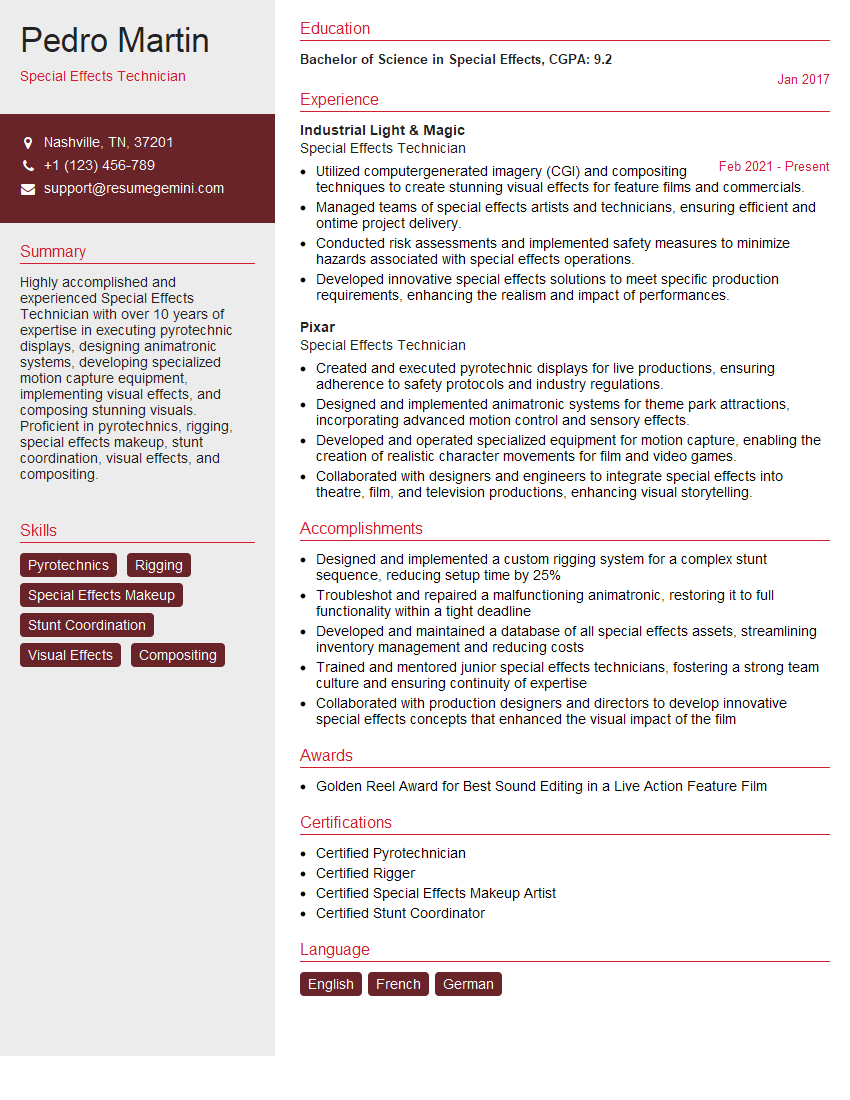
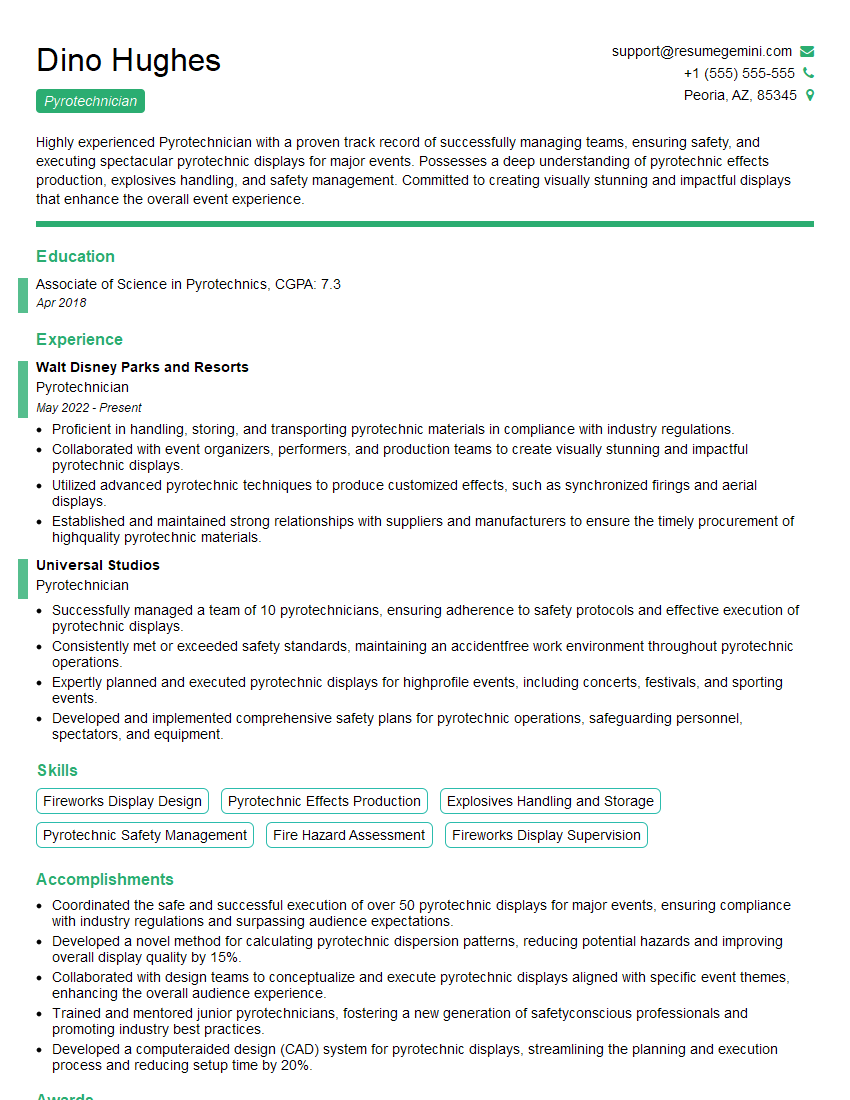
Mastering pyrotechnics opens doors to a dynamic and exciting career with opportunities for innovation and creativity. To maximize your job prospects, it’s crucial to present your skills and experience effectively. A well-crafted, ATS-friendly resume is essential for getting your application noticed. ResumeGemini can help you build a professional and impactful resume tailored to the pyrotechnics industry. Examples of resumes specifically designed for pyrotechnics professionals are available to help you create a strong application. Take the next step towards your dream pyrotechnics career today!
Explore more articles
Users Rating of Our Blogs
Share Your Experience
We value your feedback! Please rate our content and share your thoughts (optional).
What Readers Say About Our Blog
Very informative content, great job.
good