Every successful interview starts with knowing what to expect. In this blog, we’ll take you through the top Quality Control Techniques (Gage R&R, SPC, MSA) interview questions, breaking them down with expert tips to help you deliver impactful answers. Step into your next interview fully prepared and ready to succeed.
Questions Asked in Quality Control Techniques (Gage R&R, SPC, MSA) Interview
Q 1. Explain the purpose of a Gage R&R study.
A Gage R&R study, short for Gage Repeatability and Reproducibility study, is a crucial statistical method used in quality control to assess the variability of a measurement system. It determines how much of the observed variation in measurements is due to the measurement process itself (the gauge) versus the actual variation in the parts being measured. Essentially, it answers the question: “How much can we trust our measurement tools?” A reliable measurement system is essential for making accurate decisions about product quality and process control.
Q 2. What are the components of variation in a Gage R&R study?
The variation in a Gage R&R study is broken down into three key components:
- Repeatability: This represents the variation observed when the same operator measures the same part multiple times using the same gauge. It reflects the inherent variability of the measurement instrument itself.
- Reproducibility: This accounts for the variation observed when different operators measure the same part using the same gauge. It reflects the variation introduced by different operators using the same instrument. This could be due to differences in technique, interpretation, or even slight variations in how they handle the gauge.
- Part-to-Part Variation: This is the true variation in the parts being measured. It’s the variation we actually want to understand and control, and ideally, it should be significantly larger than the Gage R&R variation.
Understanding these components is vital because a large Gage R&R variation compared to the part-to-part variation means the measurement system is unreliable and obscures the true variation in the parts, leading to poor process control and inaccurate conclusions.
Q 3. How do you interpret the Gage R&R study results?
Interpreting Gage R&R results typically involves examining several key metrics, often presented in a table or report. Key metrics include:
- %GRR (% Gage R&R): This percentage shows the proportion of the total variation attributable to the measurement system. A low %GRR indicates a reliable measurement system. The acceptable level depends on the application and industry standards (more on this in a later answer).
- Repeatability (EV): Expressed as standard deviation, this shows how much the measurement varies when repeated by the same operator on the same part.
- Reproducibility (AV): Also expressed as standard deviation, this demonstrates the variation between different operators measuring the same part.
- Number of Distinct Categories (NDC): This metric assesses whether the measurement system can effectively distinguish between different parts with varying characteristics.
A good Gage R&R study will clearly show the contribution of each variation component. If %GRR is high, it indicates the measurement system needs improvement. For instance, if %GRR is above 30%, the measurement system is generally considered unsatisfactory and requires attention.
Q 4. What are the different methods for performing a Gage R&R study?
There are several methods for conducting Gage R&R studies. The most common methods include:
- ANOVA (Analysis of Variance): This method is widely used and statistically rigorous. It uses ANOVA calculations to partition the total variation into its components: repeatability, reproducibility, and part-to-part variation.
- Average and Range Method: A simpler method suitable for smaller datasets, it uses the average and range of measurements to estimate the variation components. It’s less precise than ANOVA but faster.
- Cross-Study Method (or Nested Design): Used for analyzing various sources of variation, it helps understand how different factors (operators, gauges, parts, etc.) impact the overall measurement error.
The choice of method depends on factors like sample size, data characteristics, and available software. Statistical software packages like Minitab or JMP are commonly employed to perform these analyses.
Q 5. Explain the concept of repeatability and reproducibility in Gage R&R.
Repeatability and reproducibility are the two crucial components of a Gage R&R study that together quantify the measurement error. Let’s illustrate with an example:
Imagine you’re measuring the diameter of a piston.
- Repeatability refers to how consistently a single technician can measure the same piston multiple times using the same caliper. If the measurements vary wildly, the caliper (or the technician’s technique) lacks repeatability.
- Reproducibility measures how consistently different technicians can measure the same piston using the same caliper. If different technicians get significantly different measurements, the process lacks reproducibility. This could be due to differences in their measuring techniques, interpretations of measurement points, or even slight differences in how they handle the caliper.
Both repeatability and reproducibility are essential for a reliable measurement system. High levels of either indicate issues that need to be addressed, such as operator training, instrument calibration, or even replacing the gauge.
Q 6. What are the acceptable levels of %GRR in a Gage R&R study?
There’s no universally accepted single value for acceptable %GRR. The acceptable level depends on several factors, including the specific application, the cost of making a mistake, and industry standards. However, general guidelines exist:
- <10%: Excellent; the measurement system is highly reliable and contributes minimally to the overall variation.
- 10% – 30%: Acceptable; the measurement system is adequate, but improvements could enhance precision.
- >30%: Unacceptable; the measurement system is unreliable and contributes significantly to the overall variation, requiring immediate attention and improvement.
In some highly regulated industries, stricter thresholds may apply. It’s crucial to establish acceptance criteria before conducting the study based on the specific context. For example, a medical device manufacturer will likely have much stricter requirements than a manufacturer of low-cost consumer goods.
Q 7. Describe the different types of control charts used in SPC.
Statistical Process Control (SPC) uses various control charts to monitor processes and identify deviations from expected behavior. The choice of chart depends on the type of data being monitored:
- X-bar and R chart: Used for continuous data, this chart monitors the average (X-bar) and range (R) of subgroups of measurements. It’s ideal for tracking the central tendency and variability of a process.
- X-bar and s chart: Another option for continuous data, this chart tracks the average (X-bar) and standard deviation (s) of subgroups. This provides a more precise estimate of variability than the X-bar and R chart, especially for larger subgroups.
- Individuals and Moving Range (I-MR) chart: Used when individual measurements are taken rather than subgroups. It plots the individual values and the moving range (the difference between successive measurements).
- p-chart: Used for attribute data, monitoring the proportion of nonconforming units in a sample. It’s valuable when measuring defects or failures.
- np-chart: Similar to the p-chart, but it monitors the number of nonconforming units rather than the proportion.
- c-chart: Used for attribute data, monitoring the number of defects per unit. Useful for tracking defects within a single unit (e.g., number of scratches on a phone screen).
- u-chart: Also for attribute data, this monitors the average number of defects per unit. Helpful when the sample size varies from one subgroup to the next.
The selection of the appropriate chart depends critically on the type of data and the specific quality characteristic being monitored. Misusing a control chart can lead to wrong conclusions and incorrect actions.
Q 8. What are the common causes and special causes of variation in SPC?
In Statistical Process Control (SPC), variation is categorized into two main types: common cause and special cause variation. Think of it like baking a cake. Common cause variation is the inherent variability in the recipe and your baking process – slight differences in oven temperature, ingredient measurements, etc., that result in cakes that are consistently good, but not identical. These variations are inherent to the system and are predictable within a certain range.
Special cause variation, on the other hand, is like accidentally adding a cup of salt instead of sugar! It’s an unpredictable, unusual event that significantly impacts the outcome and falls outside the expected range of variation. These are unexpected events that need immediate attention and investigation.
- Common Cause Variation: These are sources of variation that are inherent to the process and are always present. Examples include small variations in raw materials, minor fluctuations in equipment, and normal operator differences. They are typically predictable and stable over time.
- Special Cause Variation: These are sources of variation that are not inherent to the process and are usually unexpected. Examples include machine malfunction, a change in raw material supplier, a new operator with inadequate training, or a change in the process itself. These variations are unpredictable and often result in an out-of-control situation.
Q 9. How do you interpret control charts?
Interpreting control charts involves visually assessing the plotted data points against the control limits (typically upper control limit (UCL) and lower control limit (LCL) and center line (CL)). Control charts help you monitor process stability over time. We look for patterns and points that fall outside these limits, indicating potential issues.
- Points within the control limits: This suggests the process is in statistical control. Common cause variation is present, but the process is stable and predictable.
- Points outside the control limits: This signals a potential special cause variation. We should investigate the root cause of the deviation.
- Patterns within the control limits: Even if all points are within limits, specific patterns (e.g., trends, cycles, stratification) might indicate an underlying problem that needs to be addressed.
For example, a control chart showing consistently increasing values over time, even if all points remain within control limits, suggests a potential trend that needs investigation before it leads to points going out of control.
Q 10. Explain the process of investigating out-of-control points on a control chart.
Investigating out-of-control points requires a systematic approach. It’s not enough to simply see a point outside the limits; we need to understand why.
- Identify the out-of-control point(s): Pinpoint the specific data points that exceed the control limits or exhibit unusual patterns.
- Gather data: Collect additional information about the process at the time of the out-of-control point. This might include operator logs, machine records, raw material data, environmental conditions, etc.
- Analyze the data: Look for correlations between the out-of-control point and any changes in the process. What was different during that period?
- Identify the root cause: Based on the data analysis, identify the most likely cause of the variation. This often requires brainstorming and root cause analysis techniques (like the 5 Whys).
- Implement corrective action: Develop and implement solutions to address the root cause. This may involve adjusting machine settings, improving operator training, changing raw materials, or modifying the process itself.
- Verify the effectiveness of corrective action: Monitor the process after implementing the corrective action to ensure the issue is resolved and the process is back in control. Use control charts to track the process stability.
For instance, if a point on a weight control chart is significantly higher than the upper control limit, we might investigate if a new batch of raw materials was used, if the weighing scale was calibrated, or if an operator error occurred.
Q 11. What are the key assumptions of control charts?
Control charts rely on several key assumptions to ensure their validity and effectiveness.
- Data Independence: Each data point should be independent of the others. If there’s autocorrelation (points are related to each other), the chart’s interpretation might be misleading.
- Process Stability (at least initially): The process should be relatively stable in the sense that common cause variation is the only source of variation before any special cause investigation begins. This ensures the control limits accurately reflect the inherent process variability.
- Data are Normally Distributed: While many control charts are robust to deviations from normality, a roughly normal distribution is preferable for accurate interpretation, particularly for smaller sample sizes.
- Constant Variability: The process variation should be relatively constant over time. If the variation itself changes significantly, then the control limits might not be appropriate.
- Random Sampling: The data used to construct and update the control chart should be randomly sampled from the process to ensure representativeness.
Violating these assumptions can lead to inaccurate conclusions and ineffective process control.
Q 12. What is the purpose of a Measurement Systems Analysis (MSA)?
Measurement Systems Analysis (MSA) is a crucial set of techniques used to evaluate the accuracy and precision of a measurement system. It’s essential because if your measurement system is unreliable, any conclusions drawn from the data will be flawed. Imagine trying to measure the quality of a product using a broken ruler – you wouldn’t get accurate results. MSA helps ensure that your measurement tools are fit for purpose.
MSA determines the amount of variation in the measurement system compared to the total variation observed. A good measurement system should contribute minimally to the total observed variation.
Q 13. Describe the different types of MSA studies.
Several types of MSA studies exist, each designed to address specific aspects of measurement system capability. The most common ones include:
- Gage R&R (Gauge Repeatability and Reproducibility): This study assesses the variation due to the measurement device (repeatability) and the variation due to different operators using the same device (reproducibility). It’s a cornerstone of MSA and helps determine if the measurement system is providing consistent results.
- Bias Study (Accuracy): This study assesses the accuracy of the measurement system by comparing the measurement system’s readings to a known standard or reference value. It helps determine if the measurement system is consistently measuring the true value.
- Linearity Study: This study assesses the consistency of the measurement system across the entire range of measurements. It checks for consistent performance across high and low values.
- Stability Study: This study examines the stability of the measurement system over time. It assesses whether the measurement system’s readings remain consistent over extended periods.
The choice of MSA study depends on the specific requirements of the measurement system and the information needed. Often, a Gage R&R study is performed first, followed by other studies as needed.
Q 14. How do you determine the accuracy and precision of a measurement system?
Determining the accuracy and precision of a measurement system involves analyzing the data from the chosen MSA study. Let’s focus on Gage R&R as a prime example.
Precision is assessed by examining the repeatability and reproducibility components of the Gage R&R study. High precision means that the measurement system provides consistent results under repeated measurements by the same operator (repeatability) and different operators (reproducibility). The percentage of total variation attributable to gage R&R is a key metric. A lower percentage indicates better precision.
Accuracy, or bias, is evaluated by comparing the measurements to a known standard (reference value). A low bias indicates that the measurement system is consistently close to the true value. A bias study might reveal a consistent offset, where the measurements are consistently higher or lower than the true value. We may use measures like average bias, to assess accuracy. A smaller average bias means better accuracy.
Tools like ANOVA (Analysis of Variance) are commonly used to analyze the data from Gage R&R studies and quantify the components of variation (repeatability, reproducibility, and part-to-part variation). Software packages provide detailed reports that include key metrics such as %Contribution to Total Variation and Study Variation which help to determine if the measurement system is acceptable.
For example, a Gage R&R study showing a high percentage of variation attributed to the measurement system itself indicates poor precision. A large bias calculated in a bias study highlights poor accuracy.
Q 15. What are the different methods for analyzing MSA data?
Analyzing Measurement System Analysis (MSA) data involves several methods, primarily focusing on determining the sources of variation within the measurement system itself. The most common approach is the Gage Repeatability and Reproducibility (Gage R&R) study. This study quantifies the variation due to repeatability (variation from repeated measurements by the same appraiser on the same part), reproducibility (variation between different appraisers measuring the same part), and part-to-part variation (the inherent variation in the parts being measured). Beyond Gage R&R, other methods include analysis of variance (ANOVA), which is often used in conjunction with Gage R&R to statistically analyze the sources of variation, and bias studies, which assess the systematic error or deviation from the true value.
Different software packages (like Minitab or JMP) offer automated calculations and graphical representations to make the analysis more efficient. For instance, a Gage R&R study might produce a graph showing the contribution of each variation source (repeatability, reproducibility, and part-to-part) to the total variation, allowing for easy visualization of the measurement system’s capability.
Career Expert Tips:
- Ace those interviews! Prepare effectively by reviewing the Top 50 Most Common Interview Questions on ResumeGemini.
- Navigate your job search with confidence! Explore a wide range of Career Tips on ResumeGemini. Learn about common challenges and recommendations to overcome them.
- Craft the perfect resume! Master the Art of Resume Writing with ResumeGemini’s guide. Showcase your unique qualifications and achievements effectively.
- Don’t miss out on holiday savings! Build your dream resume with ResumeGemini’s ATS optimized templates.
Q 16. What are the key metrics used in MSA?
Key metrics in MSA quantify the quality of a measurement system. These metrics are derived from Gage R&R studies and other analyses. Crucial metrics include:
- %Contribution to Total Variation: Shows the percentage of total variation attributable to repeatability, reproducibility, and part-to-part variation. This helps pinpoint the dominant sources of error.
- Repeatability (EV): The average range of measurements taken by a single appraiser on the same part. A smaller EV indicates better repeatability.
- Reproducibility (AV): The variation among different appraisers measuring the same part. A smaller AV indicates better reproducibility.
- Gage R&R (Total Variation): The combined variation from repeatability and reproducibility. This represents the overall measurement system error.
- %Study Variation: The percentage of total variation accounted for by the Gage R&R. A high percentage indicates a significant measurement system error.
- Precision to Tolerance (PT): The ratio of the total Gage R&R variation to the tolerance of the characteristic being measured. It determines the capability of the measurement system relative to the process specifications.
Understanding these metrics is vital to assessing the suitability of a measurement system for its intended purpose. For example, a high %Study Variation suggests the measurement system is contributing significantly to overall variation and needs improvement.
Q 17. Explain the difference between accuracy and precision.
Accuracy and precision are often confused, but they represent different aspects of measurement quality. Think of hitting a target with arrows:
- Accuracy refers to how close the measurements are to the true value. Highly accurate measurements cluster near the bullseye. Inaccuracy is a systematic error (bias).
- Precision refers to how close the measurements are to each other. High precision means measurements are tightly clustered, regardless of whether they are close to the bullseye. Imprecision reflects random error.
A measurement system can be precise but not accurate (arrows clustered but far from the bullseye), accurate but not precise (arrows scattered around the bullseye), or both accurate and precise (arrows clustered tightly around the bullseye). An ideal measurement system exhibits both high accuracy and high precision.
Q 18. How do you identify and address measurement system bias?
Identifying and addressing measurement system bias requires a systematic approach. Bias is a systematic error, meaning the measurements consistently deviate from the true value. We can identify bias through:
- Bias Study: This involves comparing measurements from the measurement system to a reference standard with known accuracy. The difference represents the bias.
- Control Charts: Monitoring the average of measurements over time can reveal a consistent shift indicating bias.
- Comparison to a Standard: Measuring a known standard repeatedly can highlight consistent deviations.
Addressing bias might involve recalibrating the equipment, retraining the appraisers, improving the measurement process, or even replacing the measurement system altogether. For example, if a bias is found in a micrometer due to improper calibration, recalibration will correct the bias.
Q 19. What are the implications of an inadequate measurement system?
An inadequate measurement system has significant implications, leading to incorrect conclusions and potentially costly consequences. These implications include:
- Incorrect Process Decisions: If the measurement system is unreliable, process improvements or adjustments based on its data will be flawed. This could lead to unnecessary changes or a failure to address actual problems.
- Increased Waste and Scrap: Incorrect measurements can lead to the production of non-conforming products that need to be scrapped or reworked.
- Customer Dissatisfaction: Providing inaccurate data to customers about product quality can damage trust and relationships.
- Non-Compliance: In regulated industries, an inaccurate measurement system could lead to non-compliance with regulations.
- Inflated or Deflated Estimates: Process capability estimates are heavily reliant on accurate measurement data. A poor measurement system can lead to incorrect capability indices (Cp, Cpk).
Therefore, ensuring the measurement system’s adequacy is crucial for effective quality control.
Q 20. How do you select the appropriate sample size for a Gage R&R study?
Sample size selection for a Gage R&R study is crucial for achieving statistically significant results. Several factors influence sample size determination:
- Number of Appraisers: Include all appraisers involved in the measurement process.
- Number of Parts: The number of parts should be sufficient to capture the inherent variability within the parts. A rule of thumb suggests at least 10 parts, but more might be needed, especially for highly variable processes.
- Number of Measurements per Part per Appraiser: Typically, 2-3 measurements per part per appraiser are sufficient, allowing for the assessment of repeatability.
- Desired Power: The probability of detecting a significant effect if one truly exists. Higher power requires larger sample sizes.
- Software and Calculations: Statistical software packages often provide sample size calculators or guidance based on the desired precision level and confidence interval.
Insufficient sample sizes lead to low statistical power and unreliable conclusions about the measurement system’s performance. Conversely, overly large samples might be wasteful and unnecessary.
Q 21. How do you determine the appropriate control chart for a given process?
Selecting the appropriate control chart depends on the type of data being collected and the purpose of monitoring. Here’s a breakdown:
- For variables data (continuous data like weight, length, temperature):
- X-bar and R chart: Used to monitor the average and range of subgroups of data. This is suitable for monitoring process mean and variability simultaneously.
- X-bar and s chart: Similar to X-bar and R, but uses standard deviation instead of range. This is preferred when subgroups are larger.
- Individuals and Moving Range (I-MR) chart: Used when only individual measurements are collected, not subgroups.
- For attributes data (discrete data like defects, non-conformities):
- p-chart: Monitors the proportion of non-conforming units in a sample.
- np-chart: Monitors the number of non-conforming units in a sample of fixed size.
- c-chart: Monitors the number of defects per unit.
- u-chart: Monitors the number of defects per unit of continuous measurement, like a length of fabric.
The choice depends on the data type and the specific process characteristic being monitored. For example, if you are monitoring the average diameter of a manufactured part, an X-bar and R chart would be appropriate. If you’re monitoring the defect rate on a production line, a p-chart would be more suitable.
Q 22. Describe a situation where you used SPC to improve a process.
In a previous role, we experienced high variability in the weight of a product during its packaging process. This inconsistency led to customer complaints and potential waste. To address this, we implemented Statistical Process Control (SPC) using control charts. We collected weight data for each batch over several weeks, plotting the data on an X-bar and R chart (to monitor the average and range of weights).
Initially, the data points frequently fell outside the control limits, indicating the process was unstable. We identified several assignable causes through root cause analysis, including inconsistent filling of the packaging machine and variations in raw material density. By addressing these issues – calibrating the machine, improving raw material handling and implementing stricter quality checks on raw material – we were able to bring the process into statistical control. The control charts showed a significant reduction in variation, leading to a more consistent product weight, fewer customer complaints, and reduced waste. This data-driven approach allowed us to systematically improve the process and prevent future problems.
Q 23. How do you handle non-normal data in SPC?
Non-normal data in SPC is a common challenge. Traditional control charts assume data follows a normal distribution. When this assumption is violated, the interpretation of control limits becomes unreliable, leading to potentially misleading conclusions. Several strategies are used to handle this:
- Transformations: Applying mathematical transformations (e.g., logarithmic, square root) to the data can often normalize it. This makes the data better suited for standard control chart analysis.
- Non-parametric methods: These methods don’t rely on distributional assumptions. Examples include using moving range charts or runs rules with various types of data.
- Using different control charts: For example, if the data is heavily skewed, a cumulative sum (CUSUM) chart might be more appropriate than a standard X-bar chart.
- Larger sample sizes: The central limit theorem states that the distribution of sample means approaches normality as the sample size increases, even if the underlying population isn’t normal. Therefore, employing larger samples can mitigate the impact of non-normality.
The choice of method depends on the nature and extent of the non-normality, the available data, and the specific goals of the analysis. A thorough investigation of the data’s distribution is crucial before selecting the appropriate strategy.
Q 24. Explain the relationship between Gage R&R, SPC, and MSA.
Gage R&R, SPC, and MSA (Measurement System Analysis) are interconnected quality control techniques that work together to ensure reliable and accurate measurements. Think of them as a layered approach to process control:
- MSA (Measurement System Analysis): This assesses the variability within the measurement system itself. Gage R&R is a specific type of MSA study. It quantifies the variation in measurements due to the measuring device (gauge), the operator, and the interaction between the two. A good MSA ensures the measuring instrument is capable of accurately and precisely measuring the characteristic of interest. A poor MSA might indicate that the data used for SPC is unreliable.
- Gage R&R (Gauge Repeatability and Reproducibility): This specifically investigates the repeatability (variation in measurements taken by the same person using the same gauge) and reproducibility (variation in measurements taken by different people using the same gauge) of a measurement system. A high Gage R&R study suggests a problem with the measurement tool or process needs to be addressed before proceeding with further analysis.
- SPC (Statistical Process Control): This uses control charts to monitor a process over time and detect shifts in the process mean or variability. SPC relies on accurate data; therefore, the results of MSA and Gage R&R studies are crucial to ensure the data used in SPC is reliable and meaningful. A flawed measurement system could lead to erroneous interpretations and potentially costly decisions based on faulty SPC data.
In essence, MSA and Gage R&R validate the measurement system, ensuring the data used in SPC is trustworthy and leading to more accurate and effective process control.
Q 25. How do you use these techniques to improve the quality of products or services?
These techniques are powerful tools for improving product and service quality. They achieve this by providing a data-driven approach to identifying and eliminating sources of variation and defects:
- Identifying Sources of Variation: Gage R&R highlights measurement system inadequacies, while SPC pinpoints process instabilities. By analyzing the sources of variability, we can focus improvement efforts on the most impactful areas.
- Process Optimization: Using control charts, we can monitor process parameters (like temperature, pressure, or weight) and make adjustments to keep the process within desired limits. This results in greater consistency and reduced defects.
- Predictive Capabilities: SPC enables the prediction of future process behavior, allowing for proactive intervention before problems escalate. For example, early detection of an upward trend in defect rate could lead to preventative maintenance before significant issues arise.
- Data-driven Decision Making: These methods provide objective data for making informed decisions related to process improvements, resource allocation, and quality enhancement strategies. Subjective decisions are replaced with data-based approaches.
By consistently applying these techniques, organizations can achieve significant improvements in product and service quality, leading to enhanced customer satisfaction, increased efficiency, and reduced costs.
Q 26. What software are you familiar with for performing Gage R&R, SPC, and MSA analyses?
I have extensive experience with various software packages for performing Gage R&R, SPC, and MSA analyses. This includes Minitab, JMP, and Statistica. These packages offer comprehensive statistical tools, enabling detailed analysis of measurement systems and process performance. I’m also proficient in using spreadsheets like Excel for basic SPC chart creation and data analysis, when appropriate. The choice of software often depends on the complexity of the analysis and the specific needs of the project. Minitab, for example, provides very user-friendly interfaces for these methods.
Q 27. Describe your experience in interpreting statistical data and communicating findings to non-technical audiences.
Interpreting statistical data and communicating findings to non-technical audiences is a critical skill in quality control. My approach involves:
- Simplifying complex concepts: I avoid technical jargon and use clear, concise language, explaining concepts using relatable analogies and visual aids like charts and graphs.
- Focusing on the key takeaways: I highlight the most important findings and their implications for the business. Rather than presenting extensive statistical details, I summarize the main conclusions and their impact.
- Storytelling approach: I frame the data within a narrative that resonates with the audience, providing context and relevance to the analysis. This approach helps to engage the audience and make the information more memorable.
- Interactive presentations: I use interactive dashboards and presentations to foster discussion and answer questions, making the information more accessible and engaging.
For instance, when presenting Gage R&R results to a production team, I would emphasize the percentage of variation attributable to the measurement system and its impact on decision-making. Rather than discussing ANOVA tables, I would focus on whether the measurement system is acceptable for its intended use.
Q 28. What is your approach to problem-solving in a quality control context?
My approach to problem-solving in a quality control context is systematic and data-driven. I typically follow a structured approach:
- Define the problem: Clearly articulate the issue, including its impact and potential consequences.
- Data collection: Gather relevant data to understand the problem’s scope and potential causes. This may involve collecting data on process parameters, defect rates, and customer feedback.
- Data analysis: Use appropriate statistical methods (including the techniques discussed above) to analyze the data, identify root causes, and understand the nature of the problem.
- Root cause analysis: Employ tools like Fishbone diagrams (Ishikawa diagrams) or 5 Whys to systematically identify the underlying causes of the problem.
- Solution implementation: Develop and implement a solution based on the identified root causes. This may involve process changes, equipment upgrades, or training programs.
- Monitoring and evaluation: Continuously monitor the implemented solution to ensure its effectiveness and make necessary adjustments. Employ SPC charts to track process performance over time.
This systematic approach, combined with my expertise in SPC, MSA, and Gage R&R, ensures that problems are addressed effectively and efficiently, leading to lasting improvements in quality and process performance.
Key Topics to Learn for Quality Control Techniques (Gage R&R, SPC, MSA) Interview
- Gage R&R (Gauge Repeatability and Reproducibility): Understanding the components of variation (repeatability, reproducibility, part-to-part variation), calculating GR&R studies, and interpreting results to determine measurement system capability.
- Practical Application of Gage R&R: Analyzing GR&R data to identify sources of measurement error, improving measurement processes, and making informed decisions about instrument suitability and operator training.
- Statistical Process Control (SPC): Mastering control charts (X-bar and R, X-bar and s, p-chart, c-chart, u-chart), interpreting control chart patterns, identifying assignable causes of variation, and implementing process improvements based on SPC data.
- Practical Application of SPC: Using SPC to monitor process stability, predict potential problems, and reduce process variation leading to improved product quality and reduced waste.
- Measurement System Analysis (MSA): Understanding the different types of MSA studies (GR&R, Bias, Linearity, Stability), performing MSA studies using appropriate software, and interpreting results to ensure accurate and reliable measurements.
- Practical Application of MSA: Using MSA results to justify measurement system improvements, select appropriate measurement tools, and ensure data integrity in quality control processes.
- Process Capability Analysis: Calculating Cp, Cpk, Pp, and Ppk indices, interpreting capability indices, and using them to assess process performance relative to customer requirements.
- Problem-solving methodologies within QC: Applying tools like Pareto charts, Fishbone diagrams (Ishikawa diagrams), and 5 Whys to identify root causes of quality issues and implement effective corrective actions.
- Understanding of key quality standards (e.g., ISO 9000 series): Familiarizing yourself with relevant industry standards and their impact on quality control practices.
Next Steps
Mastering Quality Control Techniques like Gage R&R, SPC, and MSA is crucial for career advancement in manufacturing, engineering, and many other industries. These skills demonstrate your ability to ensure high-quality products and efficient processes, making you a valuable asset to any organization. To enhance your job prospects, create an ATS-friendly resume that highlights these skills effectively. ResumeGemini is a trusted resource to help you build a professional and impactful resume. We provide examples of resumes tailored to Quality Control Techniques (Gage R&R, SPC, MSA) to help you showcase your expertise and land your dream job.

Quality Assurance Manager Resume Sample

Quality Control Manager Resume Sample
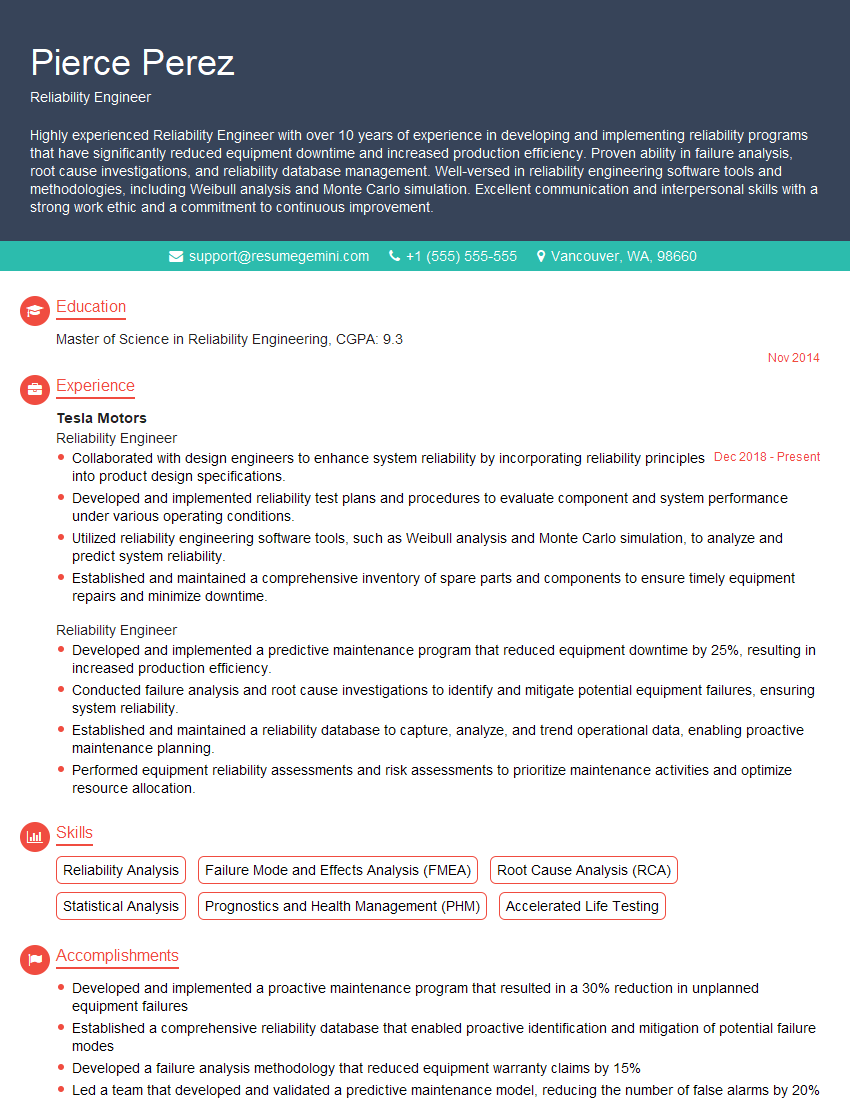
Reliability Engineer Resume Sample

Test Engineer Resume Sample
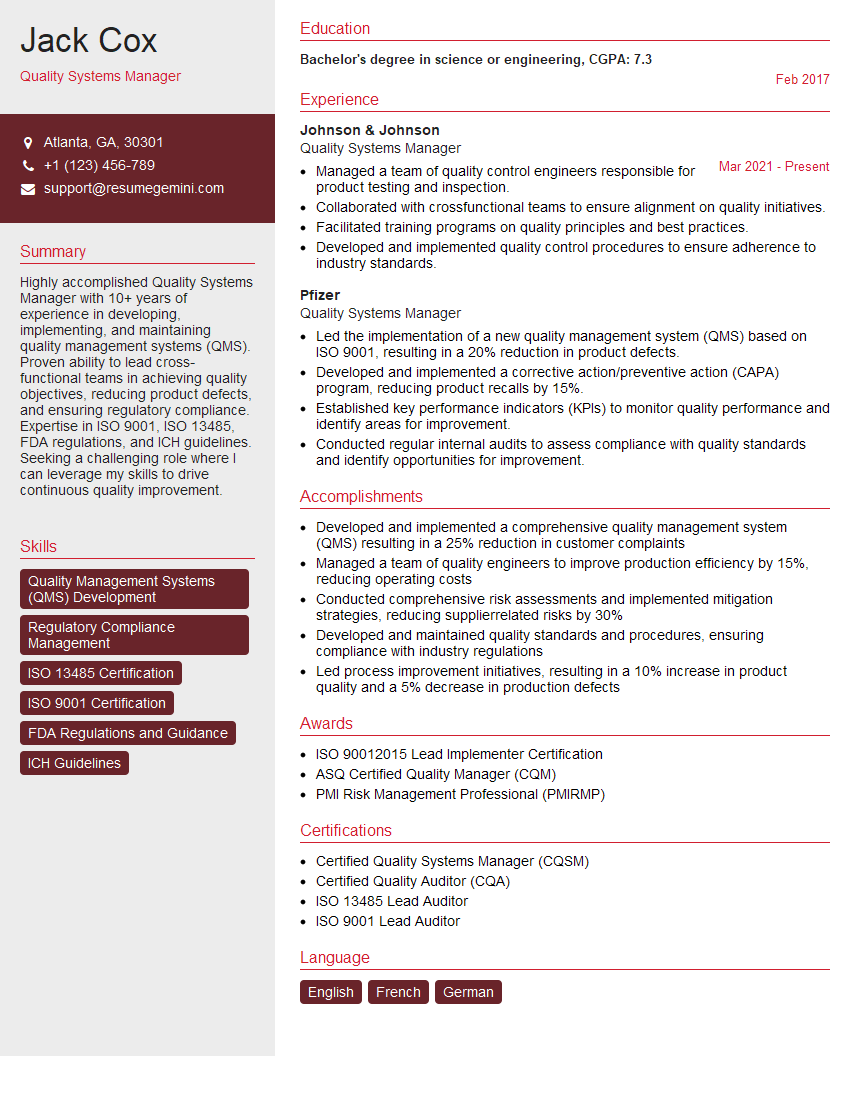
Quality Systems Manager Resume Sample
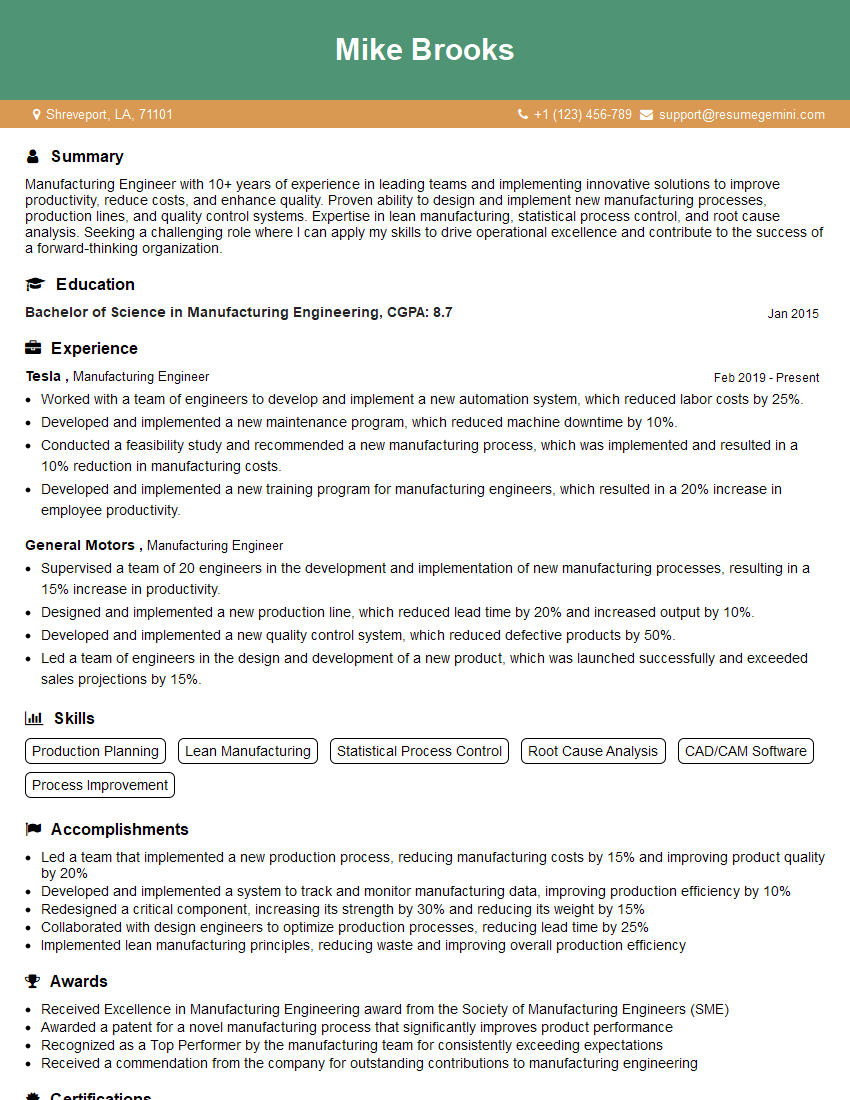
Manufacturing Engineer Resume Sample

Quality Assurance Technician Resume Sample
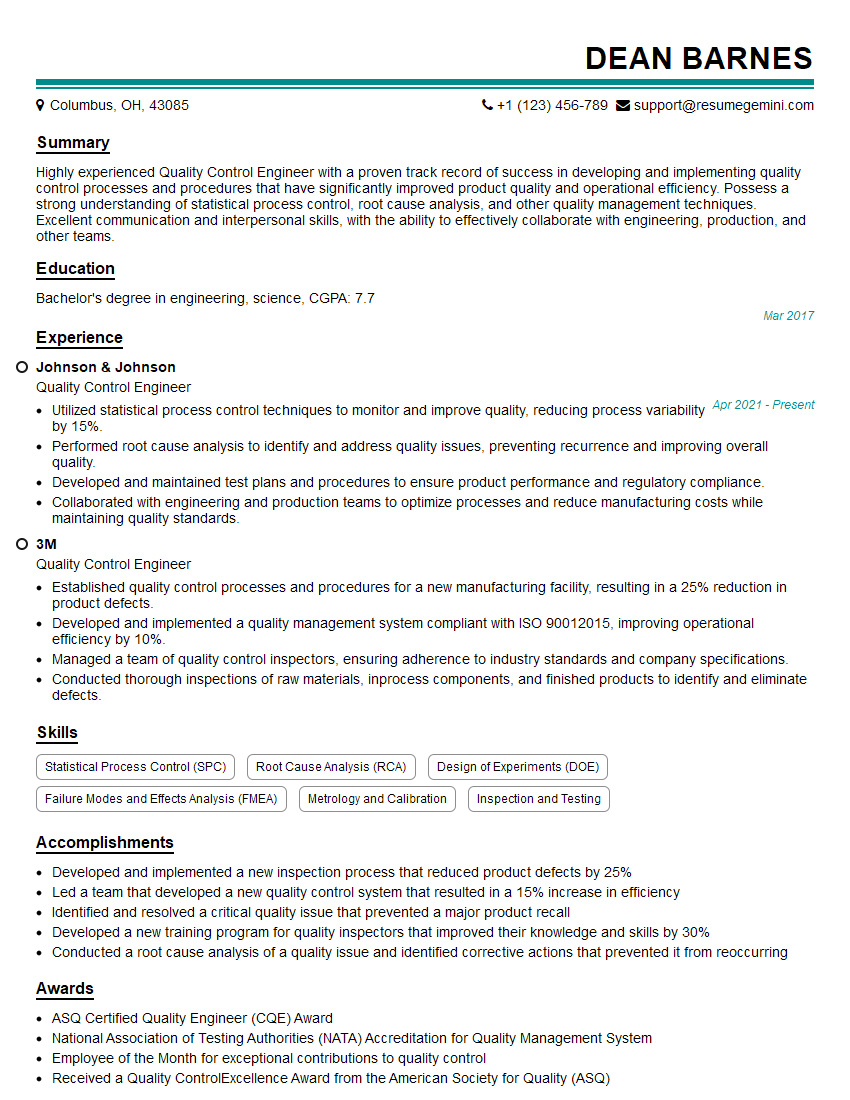
Quality Control Engineer Resume Sample

Quality Assurance Engineer Resume Sample
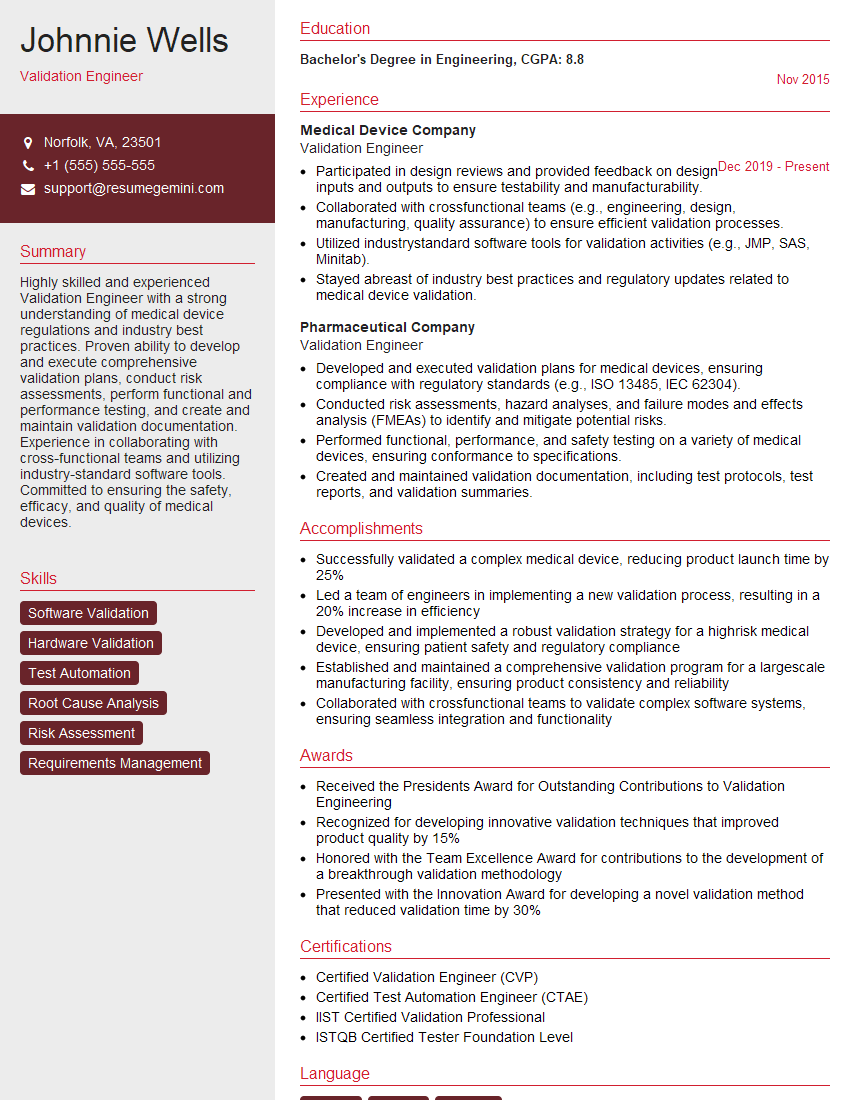
Validation Engineer Resume Sample
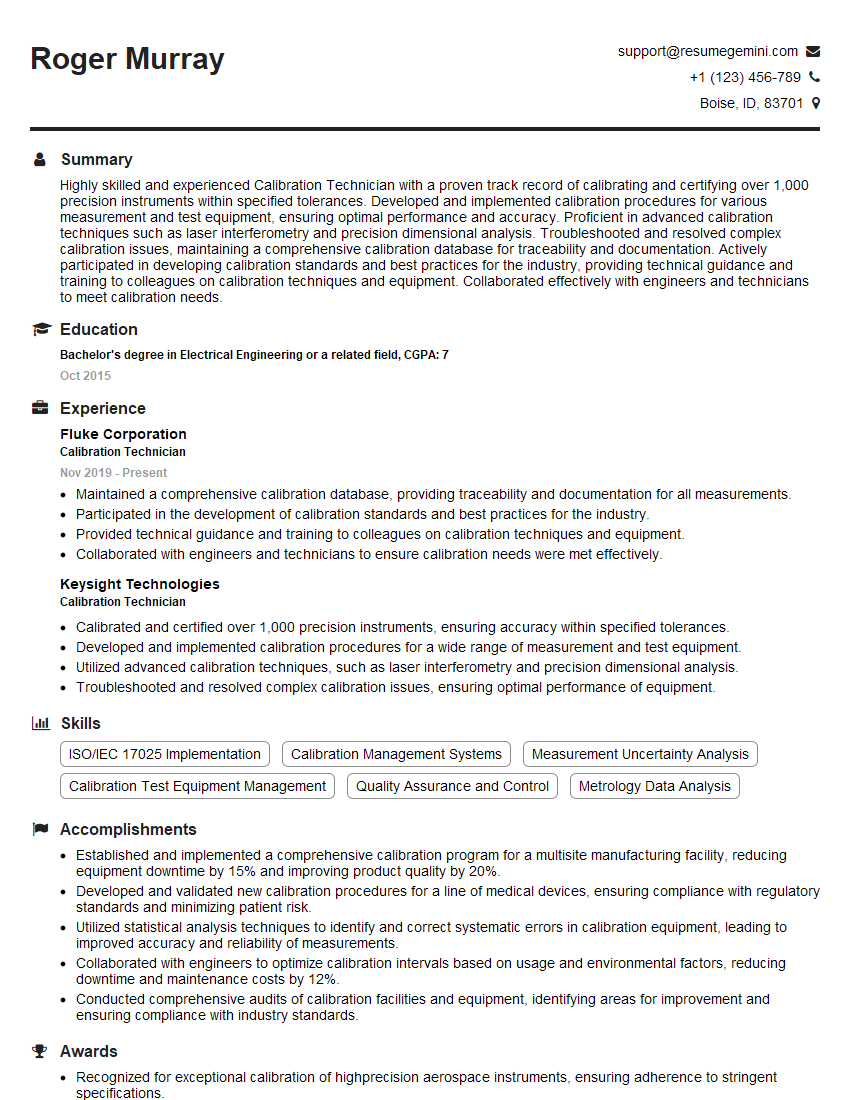
Calibration Technician Resume Sample
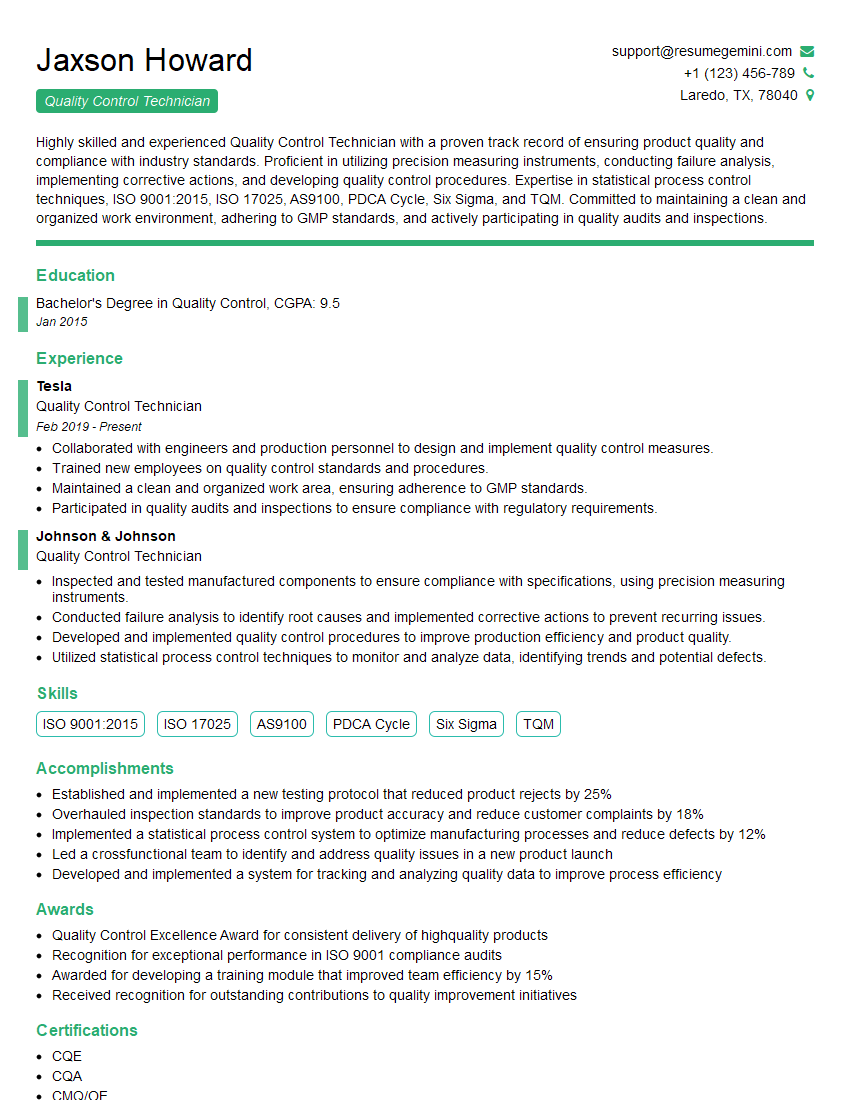
Quality Control Technician Resume Sample
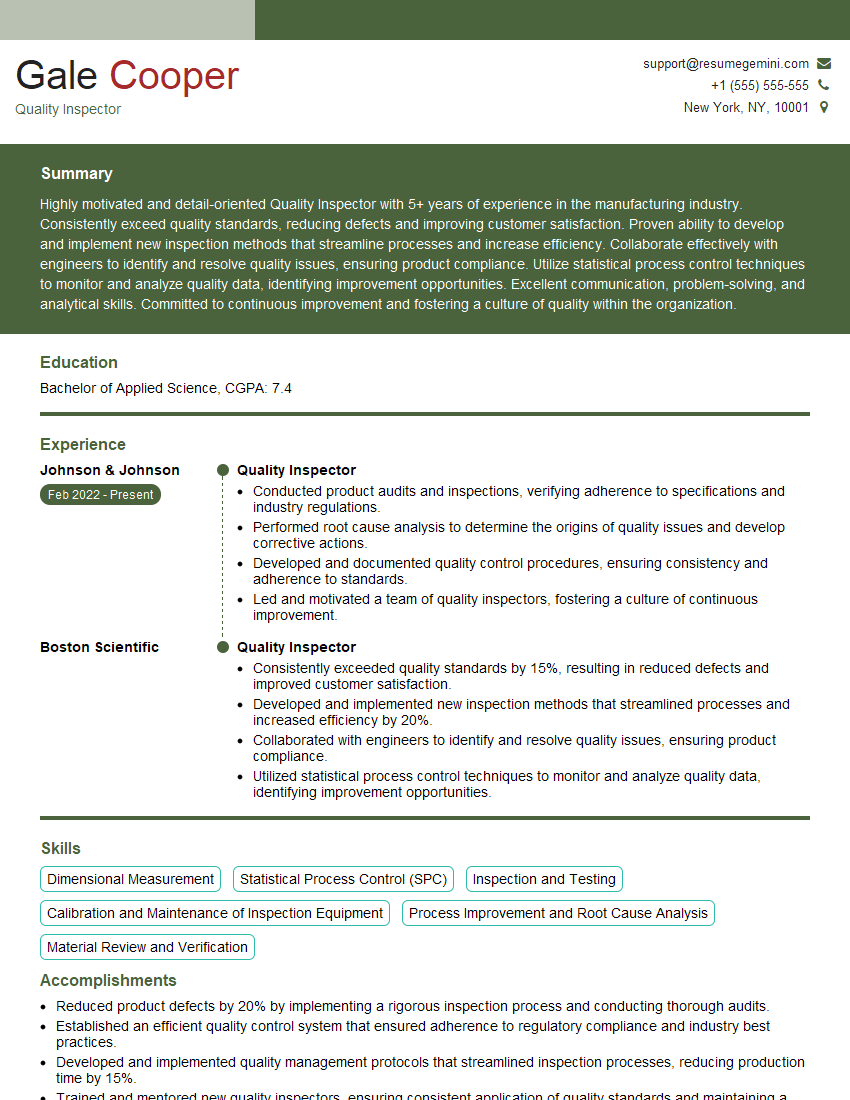
Quality Inspector Resume Sample

Metrology Technician Resume Sample
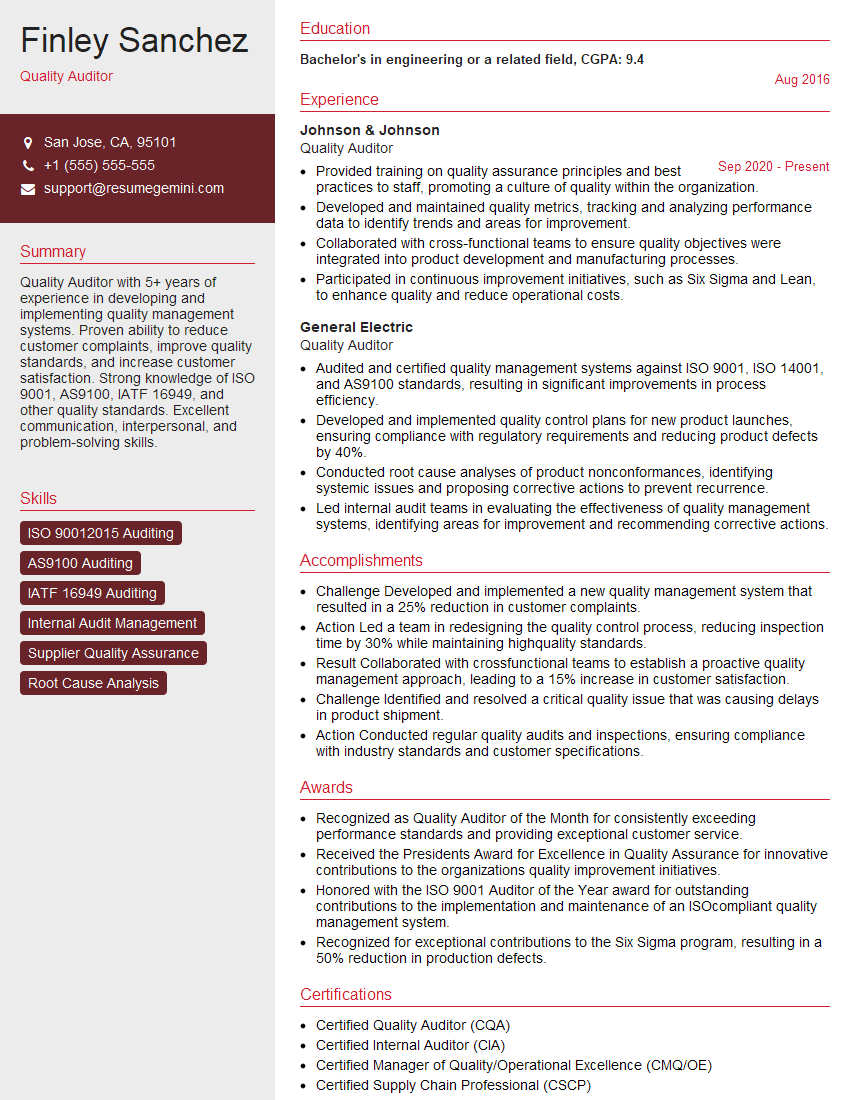
Quality Auditor Resume Sample
- Quality Assurance Manager
- Quality Control Manager
- Reliability Engineer
- Test Engineer
- Quality Systems Manager
- Manufacturing Engineer
- Quality Assurance Technician
- Quality Control Engineer
- Quality Assurance Engineer
- Validation Engineer
- Calibration Technician
- Quality Control Technician
- Quality Inspector
- Metrology Technician
- Quality Auditor
Explore more articles
Users Rating of Our Blogs
Share Your Experience
We value your feedback! Please rate our content and share your thoughts (optional).
What Readers Say About Our Blog
Very informative content, great job.
good