The right preparation can turn an interview into an opportunity to showcase your expertise. This guide to Off-Bottom Oyster Culture interview questions is your ultimate resource, providing key insights and tips to help you ace your responses and stand out as a top candidate.
Questions Asked in Off-Bottom Oyster Culture Interview
Q 1. Describe the different types of off-bottom oyster culture systems.
Off-bottom oyster culture utilizes various systems to suspend oysters above the seabed, preventing sediment burial and improving water flow. The most common methods include:
- Longlines: These consist of horizontal lines anchored to the seabed, with oysters suspended from them in baskets, trays, or directly attached to the line itself. Think of it like hanging clothes on a clothesline, but with oysters instead! This system is widely used due to its relative simplicity and adaptability to various water depths.
- Off-bottom cages: These are three-dimensional structures, often made of mesh or other materials, which hold oysters. They offer good protection from predators and allow for easy harvesting. Imagine a floating, underwater garden that protects the oysters from harm.
- Rack and tray systems: These systems utilize a framework of racks, holding trays containing oysters. This system enables close monitoring and manipulation of growing conditions and provides optimal water flow around the oysters.
- Floating rafts: These are large floating platforms that support multiple longlines or cages. These systems maximize space utilization, especially in areas with limited seabed space. This is like creating an entire floating oyster farm.
The choice of system depends on factors like water depth, current strength, species of oyster, and available resources. A deep-water location might necessitate floating rafts, while shallower areas could be ideal for longlines or cages.
Q 2. Explain the process of oyster seed selection and placement.
Oyster seed selection is crucial for successful off-bottom culture. We prioritize seeds that are disease-free, have uniform size and shape, and exhibit strong growth potential. This is analogous to selecting the best seeds for any crop, ensuring optimal yield.
Selection often involves microscopic examination to identify any diseases or parasites. Healthy seeds, typically spat (young oysters), are then carefully placed into chosen culture systems. For longlines, spat are often attached to collectors (e.g., oyster shells or other substrate) before being carefully hung from the lines. For cages and trays, spat are placed in such a way to ensure even spacing and minimize competition for resources. Precise placement is key to optimizing growth and preventing overcrowding.
Q 3. What are the key environmental factors influencing off-bottom oyster growth?
Oyster growth is highly sensitive to environmental conditions. Key factors include:
- Water temperature: Oysters thrive within specific temperature ranges. Excessively high or low temperatures can cause stress, slow growth, and even mortality.
- Salinity: The ideal salinity level varies depending on the species, but significant fluctuations can negatively impact oyster growth and survival. Think of it like the right amount of salt in a recipe – too much or too little ruins the dish.
- Water quality: Clean water with adequate dissolved oxygen is essential. Pollution, algal blooms, and low oxygen levels can severely harm oysters. It’s the same principle as needing clean water for any aquatic organism.
- Currents: Moderate currents provide essential food delivery and waste removal. However, excessively strong currents can damage the culture systems and stress oysters.
- Food availability: Phytoplankton forms the basis of the oyster diet. Abundant and diverse phytoplankton populations are critical for optimal growth.
Careful site selection considers all these parameters to optimize growth and minimize stress.
Q 4. How do you monitor water quality in an off-bottom oyster farm?
Water quality monitoring is an ongoing process. We employ various techniques, including:
- Regular sampling: Water samples are collected at regular intervals to analyze parameters like temperature, salinity, dissolved oxygen, and nutrient levels.
- In-situ sensors: Sensors deployed in the farm continuously monitor key parameters, providing real-time data. This is like having a live weather station for your oyster farm.
- Phytoplankton monitoring: Regular checks on phytoplankton abundance and diversity help assess food availability. This helps us ensure the oysters have plenty to eat.
- Sediment analysis: Sediment analysis helps us assess pollution levels and benthic community health. This allows us to understand the health of the ocean floor beneath our farm.
Data collected are used to assess the overall health of the farm and make necessary adjustments to maintain optimal conditions. Early detection of problems enables timely interventions.
Q 5. Discuss common diseases and pests affecting off-bottom oysters and their management.
Off-bottom oysters are susceptible to various diseases and pests, including:
- Dermo (Perkinsus marinus): This parasite causes significant mortality. Management involves careful site selection to minimize risk factors and, in some cases, use of disease-resistant strains.
- MSX (Haplosporidium nelsoni): Another significant oyster parasite. Strategies for MSX management are similar to those for Dermo – careful site selection and potential use of resistant oyster strains are vital.
- Oyster drills (Urosalpinx cinerea): These predatory snails bore into oyster shells, causing significant losses. Control methods include manual removal, the use of protective cages, and in some cases, targeted biological control.
- Fouling organisms: These organisms attach to oyster shells, hindering growth and water flow. Regular cleaning of culture systems is necessary to maintain optimum growth.
Effective management necessitates regular monitoring, early detection of outbreaks, and prompt implementation of appropriate control measures.
Q 6. Explain the process of harvesting off-bottom oysters.
Harvesting methods depend on the culture system used. For longlines and cages, oysters are typically harvested using specialized tongs or rakes. For tray systems, trays are removed and oysters are harvested from the trays. It’s like carefully picking the ripe fruits from a tree.
The timing of harvest depends on market demand and oyster size. Oysters are usually harvested when they reach a certain size and meat weight, ensuring optimal marketability. Harvesting is typically done carefully to avoid damaging the remaining oysters or the farm infrastructure.
Q 7. What are the best practices for ensuring oyster meat quality?
Maintaining oyster meat quality involves several best practices:
- Careful handling: Gentle handling throughout the process, from harvesting to processing, minimizes damage and improves meat quality.
- Rapid cooling: Prompt chilling after harvest prevents bacterial growth and spoilage. Think of it like quickly refrigerating any food to ensure freshness.
- Proper storage: Appropriate storage conditions (temperature and humidity) are vital for maintaining meat quality. Maintaining the right environment is crucial.
- Disease prevention: Minimizing disease prevalence contributes significantly to higher meat quality.
- Water quality maintenance: Consistent water quality throughout the growing period ensures that the oysters grow with good meat quality.
These practices ensure that the oysters reach the consumer in optimal condition, boasting both superior taste and texture.
Q 8. Describe different methods for cleaning and processing harvested oysters.
Cleaning and processing harvested oysters is crucial for ensuring food safety and market quality. The process generally involves several steps, starting with depuration.
- Depuration: This is a crucial step where oysters are placed in clean, flowing seawater for a period to purge them of any contaminants they may have accumulated. Think of it like a natural detox for the oysters. The duration and conditions are carefully monitored to ensure effectiveness.
- Brushing and Scrubbing: After depuration, oysters are manually or mechanically brushed to remove any clinging debris, such as barnacles or seaweed. For large-scale operations, automated scrubbing systems might be employed.
- Sorting and Sizing: Oysters are then sorted by size and quality. This is important for market pricing and ensures consistent product presentation.
- Packing: Finally, oysters are carefully packed in containers, usually on ice or chilled, for immediate sale or further processing. Different packaging methods are used depending on the market and the intended shelf life.
For example, a small-scale oyster farmer might manually scrub oysters and pack them in mesh bags, whereas a large commercial operation might utilize automated machinery throughout the entire process, leading to significantly higher throughput and efficiency. The choice of cleaning and processing method depends greatly on the scale of the operation and market demands.
Q 9. How do you maintain optimal water flow in an off-bottom oyster system?
Maintaining optimal water flow is paramount for successful off-bottom oyster culture. Sufficient water flow ensures adequate oxygen supply, removes waste products, and prevents the build-up of harmful substances.
- Strategic Site Selection: The initial location of the oyster farm is key; areas with natural currents or tidal flow are ideal. This reduces the need for extensive artificial water circulation.
- Pumping Systems: In areas with minimal natural flow, submersible pumps or surface pumps can be installed to circulate water within the growing area. The pump capacity needs to be carefully calculated based on the oyster density and water volume.
- Design of Growing Structures: The design of the off-bottom structures, such as longlines or racks, is crucial for maximizing water flow around the oysters. Spacing between oysters and the configuration of the structure itself directly impacts water circulation. Think of it as ensuring each oyster ‘breathes’ easily.
- Monitoring Water Quality: Continuous monitoring of water quality parameters, including dissolved oxygen and temperature, is crucial. This helps identify potential problems related to water flow and allows for timely adjustments.
For instance, a poorly designed longline system with oysters clustered too closely can lead to stagnant water pockets, resulting in reduced oxygen levels and increased mortality. Careful planning and regular monitoring are essential to ensure a thriving oyster population.
Q 10. Explain the role of substrate in off-bottom oyster culture.
In off-bottom oyster culture, the substrate plays a crucial, albeit indirect, role. Unlike traditional bottom culture, oysters aren’t directly attached to the seabed. However, the substrate remains important for the design and stability of the growing systems.
- Anchoring and Support: The substrate, whether it’s the seabed or a specifically designed structure, provides a foundation for anchoring the off-bottom growing structures. This could be the seabed itself for systems with bottom-placed anchors or a reinforced base for elevated structures.
- Stability and Resistance to Currents: The substrate’s composition and stability impact the resilience of the growing system to strong currents or storms. A strong, stable seabed offers better anchorage than soft sediments.
- Water Quality Influence: The substrate’s composition can influence local water quality. This is particularly relevant in cases where the off-bottom structures are close to the seabed. For example, the substrate might impact nutrient levels or sediment movement.
For example, if you’re using a longline system in an area with a soft, unstable seabed, you might need to use heavier anchors or more robust supporting structures to prevent the entire system from being dislodged by currents or waves. Substrate characteristics need careful consideration during the farm’s design and planning phases.
Q 11. What are the challenges associated with off-bottom oyster culture in your region?
Challenges in off-bottom oyster culture vary by region, but some common difficulties include:
- Predation: Predators such as crabs, starfish, and seabirds can significantly impact oyster survival. Strategies like protective netting or cages are often necessary.
- Disease Outbreaks: Oysters are susceptible to various diseases, and outbreaks can decimate populations. Careful monitoring, biosecurity measures, and possibly selective breeding programs are important mitigation strategies.
- Environmental Conditions: Extreme weather events such as storms and hurricanes can damage growing structures and cause oyster mortality. Robust designs and contingency plans are necessary.
- Biofouling: The accumulation of unwanted organisms on growing structures (e.g., barnacles, algae) can hinder water flow and reduce oyster growth. Regular cleaning and appropriate treatments are required.
- Water Quality Degradation: Pollution from land-based sources can significantly impact oyster health and survival. Careful site selection, proper waste management, and regulatory compliance are vital.
For example, in areas prone to strong currents, we might face difficulties keeping oyster cages intact and preventing them from being swept away during storms. Each region presents its own unique set of challenges that require tailored solutions.
Q 12. How do you assess oyster growth and mortality rates?
Assessing oyster growth and mortality rates involves a combination of regular monitoring and data analysis.
- Sampling: Regularly removing samples of oysters from the growing area allows for measurement of shell length, weight, and condition. Sampling techniques need to be non-destructive to minimize impact on the rest of the population.
- Growth Measurement: Shell length and weight are common indicators of growth. Regular measurements allow for the calculation of growth rates and the detection of any anomalies.
- Mortality Assessment: Counting dead oysters in samples provides an estimate of mortality rates. Causes of mortality should be investigated whenever possible to implement corrective measures.
- Data Analysis: Collected data is analyzed to identify trends in growth and mortality, allowing for adjustments in farming practices or environmental management.
For example, we might regularly measure shell length of 100 oysters per month from different sections of a longline. If we observe a sudden decrease in growth or an increase in mortality, we can investigate potential causes, such as changes in water quality or a disease outbreak. The data helps in adapting strategies to optimize yields and minimize losses.
Q 13. Describe the different types of equipment used in off-bottom oyster farming.
Off-bottom oyster farming utilizes a range of specialized equipment:
- Longlines: These are horizontal ropes or cables suspended in the water column, with oysters attached to them using various methods (e.g., cages, trays, individual oyster bags).
- Off-bottom cages: These enclosures provide protection from predators and can improve water circulation around oysters. Various materials, like mesh nets or plastic structures, are used.
- Racks or trestles: Elevated structures that lift oysters off the bottom, often used in shallow waters. They promote better water flow and reduce seabed interaction.
- Oyster bags or trays: These containers hold oysters, promoting clustering and improving ease of handling and harvesting.
- Anchors and buoys: These are used to secure longlines, cages, and racks to the seabed, preventing them from drifting.
- Boats and vessels: These are used for transporting equipment, monitoring, and harvesting.
- Lifting devices: These might include cranes or winches for raising and lowering equipment.
For example, a typical off-bottom system might involve a network of longlines anchored to the seabed and kept afloat using buoys, with oyster cages suspended from the lines. The specific equipment chosen depends on the farming method, water depth, and environmental conditions.
Q 14. How do you maintain and repair off-bottom oyster farming equipment?
Maintaining and repairing off-bottom oyster farming equipment is essential for long-term productivity and safety. Regular maintenance reduces downtime and prolongs the lifespan of equipment.
- Regular Inspections: Regular visual inspections of all equipment are crucial, identifying potential problems early on. This includes checking for corrosion, wear and tear, and damage from marine growth.
- Cleaning and Fouling Removal: Regularly cleaning equipment to remove biofouling (barnacles, algae) is vital for maintaining water flow and preventing damage.
- Repair and Replacement: Damaged or worn-out parts should be repaired or replaced promptly to prevent more extensive damage. This often includes repairs to ropes, nets, cages, and anchors.
- Storage and Protection: Proper storage of equipment during periods of inactivity helps to extend its lifespan. This might involve cleaning, drying, and covering equipment to prevent corrosion and damage.
- Safety Checks: Regular safety checks are important, particularly for lifting devices and boats, to ensure safe operations.
For example, we might regularly inspect our longlines for broken ropes or damaged anchors, and promptly replace these components to prevent loss of oysters. We also clean our cages regularly to prevent biofouling from reducing water flow around the oysters. Preventive maintenance is crucial in ensuring optimal equipment performance and minimizing interruptions to our operations.
Q 15. What are the regulatory requirements for off-bottom oyster farming in your area?
Regulatory requirements for off-bottom oyster farming vary significantly by location, depending on factors like water quality standards, permitted lease areas, and environmental protection regulations. In my area, for example, we must obtain a lease from the state’s Department of Natural Resources, demonstrating our proposed farm’s adherence to environmental standards. This includes submitting a detailed site plan that outlines the farming operation, including the proposed location, gear type, and estimated oyster production. We are then subjected to regular water quality monitoring and inspections to ensure compliance with established limits for pollutants, bacteria, and other contaminants. There are also regulations around the allowable amount of oysters cultivated within a certain area to prevent over-harvesting and maintain ecosystem health. Failure to comply with these regulations can result in fines, suspension of operations, or even lease revocation.
For instance, we are required to conduct regular water quality tests and submit those results to the regulatory body every quarter. Any deviation from permissible limits triggers further investigation and potentially corrective actions. Additionally, we need to follow specific guidelines on the type and placement of our farming gear to minimize environmental impact and ensure safe navigation for other water users.
Career Expert Tips:
- Ace those interviews! Prepare effectively by reviewing the Top 50 Most Common Interview Questions on ResumeGemini.
- Navigate your job search with confidence! Explore a wide range of Career Tips on ResumeGemini. Learn about common challenges and recommendations to overcome them.
- Craft the perfect resume! Master the Art of Resume Writing with ResumeGemini’s guide. Showcase your unique qualifications and achievements effectively.
- Don’t miss out on holiday savings! Build your dream resume with ResumeGemini’s ATS optimized templates.
Q 16. Discuss sustainable practices for off-bottom oyster farming.
Sustainable practices in off-bottom oyster farming are crucial for long-term viability and environmental responsibility. This includes carefully selecting suitable locations to minimize conflicts with other marine life and habitats. We use sustainable aquaculture practices like employing methods to limit nutrient pollution by regularly cleaning the farm site and managing waste products effectively. We prioritize the use of biodegradable materials and environmentally friendly farming techniques. Selecting disease-resistant oyster seed is key; a healthy stock minimizes the need for interventions, such as antibiotics. We also rotate our oyster crops to avoid overgrazing and maintain biodiversity within the ecosystem. Rotating allows the benthic environment (the seafloor) time to recover. Moreover, we carefully monitor the water quality and oyster health to prevent problems before they escalate, employing preventative measures whenever possible.
For example, we regularly monitor water parameters like salinity, temperature, and dissolved oxygen levels to ensure optimal oyster growth and prevent disease outbreaks. We also use selective breeding to enhance the hardiness and resilience of our oyster stock against disease and environmental stressors such as increased water temperature.
Q 17. How do you manage oyster farm waste?
Oyster farm waste management is a critical aspect of sustainable operation. The primary waste products include oyster shells and uneaten food (algae or phytoplankton if we use a feeding system). We recycle oyster shells for reef restoration projects or return them to the seafloor within our leased area, aiding in habitat creation. This helps reduce waste and adds another layer of ecological benefit. Any organic waste from uneaten food decomposes naturally within the marine environment. This process is relatively benign because it happens in a well-oxygenated area. We avoid the use of chemicals and other materials that could potentially harm the ecosystem. Regular cleaning of the farm site also prevents accumulation of detritus and other organic matter, maintaining a healthy environment.
It is essential to work with local environmental agencies to develop effective waste management strategies. We conduct regular assessments of the farm’s impact on the surrounding environment and adjust our methods accordingly. This might include deploying additional biofilters or implementing more robust cleaning schedules if needed.
Q 18. Explain the economics of off-bottom oyster farming.
The economics of off-bottom oyster farming are complex and influenced by several factors including seed cost, lease fees, labor costs, operating expenses (fuel for boats, equipment maintenance), and market prices. Initial setup costs, including gear purchase (longlines, cages etc.), can be substantial, but these are amortized over the life of the operation. Recurring costs include maintenance, labor (for seeding, harvesting, cleaning), and transportation. Profitability is highly dependent on achieving optimal oyster growth rates and securing favorable market conditions. A key element is the price received for the oysters, and this price is influenced by factors like market demand, oyster size and quality.
For example, a sudden increase in fuel costs can significantly impact profitability. Equally important is efficient production management – maximizing yield per unit area while minimizing production costs, such as by using cost-effective labor techniques and minimizing equipment downtime.
Q 19. How do you market and sell off-bottom oysters?
Marketing and selling off-bottom oysters involves building relationships with buyers and establishing a reliable supply chain. This includes direct sales to restaurants, wholesale markets, and sometimes even farmers’ markets, depending on the scale of the operation. We often emphasize the high quality of our oysters, highlighting aspects like their taste, size, and sustainability credentials. We might build a brand identity that focuses on freshness, ethical sourcing, and environmental consciousness. Direct-to-consumer sales, perhaps via an online store and local delivery, are becoming increasingly important in reaching a broader audience.
For example, we might participate in seafood festivals or other events to increase brand awareness and build customer relationships. Offering different sizes and types of oysters, catering to customer preferences, helps boost sales and profitability. Using attractive packaging and labeling that highlights the oyster’s origin and quality also adds value.
Q 20. What are the potential impacts of climate change on off-bottom oyster farming?
Climate change poses significant challenges to off-bottom oyster farming. Rising sea levels can submerge oyster farms and alter water salinity, making conditions unsuitable for oyster growth. Increased water temperatures can lead to higher disease susceptibility and increased mortality rates, while ocean acidification reduces the oysters’ ability to form their shells. Changes in storm patterns and increased intensity of weather events can damage oyster farming infrastructure and lead to significant crop loss. Adapting to these changes requires careful planning and proactive strategies.
For example, we might need to relocate our farming operations to more suitable locations as water temperatures rise. Investing in more robust and resilient farming infrastructure can help mitigate the impact of storm damage. Employing selective breeding techniques to develop oyster strains more tolerant to higher temperatures and ocean acidification is also critical for future success.
Q 21. How do you manage labor and personnel on an oyster farm?
Managing labor and personnel effectively is crucial for the success of an oyster farm. We rely on a skilled workforce, including experienced divers, boat operators, and those involved in the day-to-day operations like cleaning, seeding, and harvesting. Training and safety are paramount, especially in a physically demanding and potentially hazardous environment. We also need to ensure appropriate compensation and benefits to attract and retain skilled workers. Finding ways to balance labor costs with production efficiency is a key challenge in managing an oyster farm effectively. Employing modern technology and automation, where feasible, can improve productivity and reduce labor demands.
For example, utilizing specialized equipment for harvesting can help reduce the physical strain on workers and increase efficiency. Creating a positive and safe work environment helps to retain experienced staff and reduces labor turnover.
Q 22. Describe your experience with oyster farm budgeting and financial management.
Oyster farm budgeting requires a deep understanding of variable and fixed costs. Fixed costs include lease payments, equipment maintenance, and insurance. Variable costs fluctuate with production, including seed oysters, labor for cultivation and harvesting, fuel for boats, and supplies. My experience involves creating detailed budgets using spreadsheet software, projecting revenue based on market prices and anticipated yield, and carefully tracking expenses throughout the growing season. For example, I developed a budget model that incorporated weather forecasting data to predict potential crop losses from storms and factored in the cost of mitigation strategies. This allowed for better financial planning and risk management. I also incorporate contingency funds to account for unforeseen circumstances like disease outbreaks or equipment failures. Regular financial reviews, comparing actuals against the budget, are crucial to identify areas for improvement and make timely adjustments to ensure profitability and sustainability.
Q 23. How do you ensure food safety in off-bottom oyster production?
Food safety in off-bottom oyster production is paramount. It centers around preventing contamination from harmful bacteria, viruses, and toxins. My approach is multi-faceted. Firstly, I carefully select seed oysters from reputable hatcheries with stringent quality control measures. Secondly, I monitor water quality regularly, testing for fecal coliform bacteria and other indicators of pollution. This often involves using sophisticated testing kits and submitting samples to certified labs. Thirdly, I employ proper depuration techniques, which involve holding harvested oysters in clean, controlled environments to purge them of contaminants before sale. Finally, I strictly adhere to best practices for handling and processing oysters, maintaining meticulous cleanliness at every stage, from harvesting to packing, to prevent cross-contamination. For instance, I’ve implemented a strict sanitation protocol that includes regular cleaning of equipment and designated areas for different oyster processing steps.
Q 24. Explain your experience with implementing and maintaining farm safety protocols.
Farm safety is non-negotiable. I’ve implemented a comprehensive safety program encompassing personal protective equipment (PPE), emergency response plans, and regular safety training for all employees. This includes providing and ensuring the correct use of safety gear like waterproof boots, gloves, and life jackets, especially during harvesting. We conduct regular safety drills to practice emergency procedures, like responding to boat accidents or medical emergencies on the farm. Thorough training covers safe operation of machinery and equipment, including boats and lifting gear. Furthermore, I maintain detailed records of safety training, inspections, and any incidents, which helps me continuously improve safety protocols. For example, after a minor accident involving a boat, we invested in additional safety features, like improved lighting and navigation systems. This proactive approach minimises risks and fosters a safe working environment for everyone.
Q 25. How do you address and resolve conflicts with other stakeholders (e.g., fishermen, environmental groups)?
Conflict resolution is vital for successful oyster farming. I believe in proactive communication and collaboration. With fishermen, I focus on establishing clear boundaries and communication channels to avoid conflicts over fishing areas or gear entanglement. This often involves participating in local fishing forums and engaging in open dialogue to reach mutual understanding. With environmental groups, transparency is key. I readily share data on water quality monitoring, farming practices, and environmental impact assessments. This demonstrates our commitment to sustainable aquaculture. I actively engage with them in collaborative initiatives that promote both oyster farming and environmental protection. In instances where conflicts arise, I strive to find common ground through negotiation and mediation, prioritizing open communication and mutual respect. If necessary, I seek guidance from regulatory agencies to find solutions that comply with environmental regulations and respect all stakeholder interests.
Q 26. Describe your experience with data collection and analysis related to oyster farming.
Data collection and analysis are integral to optimizing oyster production. I collect various data points, including water temperature, salinity, dissolved oxygen levels, growth rates of oysters, and mortality rates. This data is collected using a variety of methods: sensors placed in the water, manual measurements, and regular oyster sampling. This data is then analysed using statistical software to identify trends, predict growth, and pinpoint potential problems like disease outbreaks or environmental stress. For example, by analyzing historical growth data alongside water quality parameters, I’ve been able to identify optimal growing conditions and predict harvest yields more accurately, ultimately improving farm management and profitability. This data-driven approach also helps me to adapt to changing environmental conditions and optimize farm practices for sustainability and efficiency.
Q 27. How do you utilize technology to improve efficiency and productivity in off-bottom oyster culture?
Technology plays a vital role in enhancing efficiency and productivity. I utilize GPS technology for precise navigation and mapping of oyster beds, optimizing space utilization and minimizing fuel consumption. Remote sensing technologies like drones and satellite imagery help monitor water quality over larger areas and detect potential issues earlier. Automated systems can streamline tasks like cleaning and sorting oysters, enhancing speed and consistency. Moreover, sensors monitoring water parameters in real-time alert me to potential problems, allowing for prompt corrective action. For instance, implementing a data logger that continuously measures water temperature and salinity allows me to identify harmful temperature fluctuations quickly and make appropriate adjustments to oyster placement or cultivation strategies.
Q 28. What are your future goals and aspirations in the field of off-bottom oyster farming?
My future goals encompass expanding sustainable off-bottom oyster farming practices. I aim to explore innovative cultivation techniques that minimize environmental impact while maximizing yield. This includes researching and implementing more sustainable materials for oyster growing equipment and exploring alternative energy sources to reduce reliance on fossil fuels. Additionally, I’m committed to contributing to the body of knowledge in off-bottom oyster aquaculture through research and collaboration with academic institutions. I see myself mentoring future generations of oyster farmers, sharing my expertise to advance the sustainability and profitability of this vital industry. Ultimately, I envision a future where off-bottom oyster farming is a model of sustainable aquaculture, producing high-quality oysters while protecting our precious marine ecosystems.
Key Topics to Learn for Off-Bottom Oyster Culture Interview
- Oyster Species Selection: Understanding the characteristics of different oyster species suitable for off-bottom culture, including growth rates, disease resistance, and market demand.
- Site Selection and Environmental Factors: Assessing water quality parameters (salinity, temperature, dissolved oxygen), currents, and substrate suitability for optimal oyster growth. Practical application: analyzing environmental data to identify ideal locations for oyster farms.
- Culture Techniques: Mastering various off-bottom culture methods, such as raft, longline, and tray systems. This includes understanding the advantages and disadvantages of each method and their impact on oyster growth and quality.
- Seed Acquisition and Handling: Knowledge of different seed sources (hatcheries, wild sets), proper handling techniques to minimize stress and mortality, and strategies for optimizing seed survival rates.
- Growth Monitoring and Management: Implementing strategies for regular monitoring of oyster growth, identifying and addressing potential problems (e.g., disease outbreaks, predation), and adjusting culture practices as needed.
- Harvesting and Post-Harvest Handling: Understanding best practices for harvesting oysters at optimal size and condition, proper cleaning and sorting techniques, and safe storage methods to maintain quality and extend shelf life.
- Biofouling Control: Developing strategies for managing and minimizing biofouling (undesirable organisms attached to oysters or culture equipment) to ensure oyster health and maximize growth.
- Sustainability and Environmental Impact: Understanding the environmental impacts of off-bottom oyster culture and implementing sustainable practices to minimize negative effects and promote ecosystem health. This includes considerations of water quality, waste management, and energy efficiency.
- Economic Considerations: Analyzing costs associated with different off-bottom culture methods and developing strategies for maximizing profitability while ensuring sustainable practices.
- Disease Prevention and Management: Identifying common oyster diseases, implementing preventive measures, and managing outbreaks effectively to minimize losses.
Next Steps
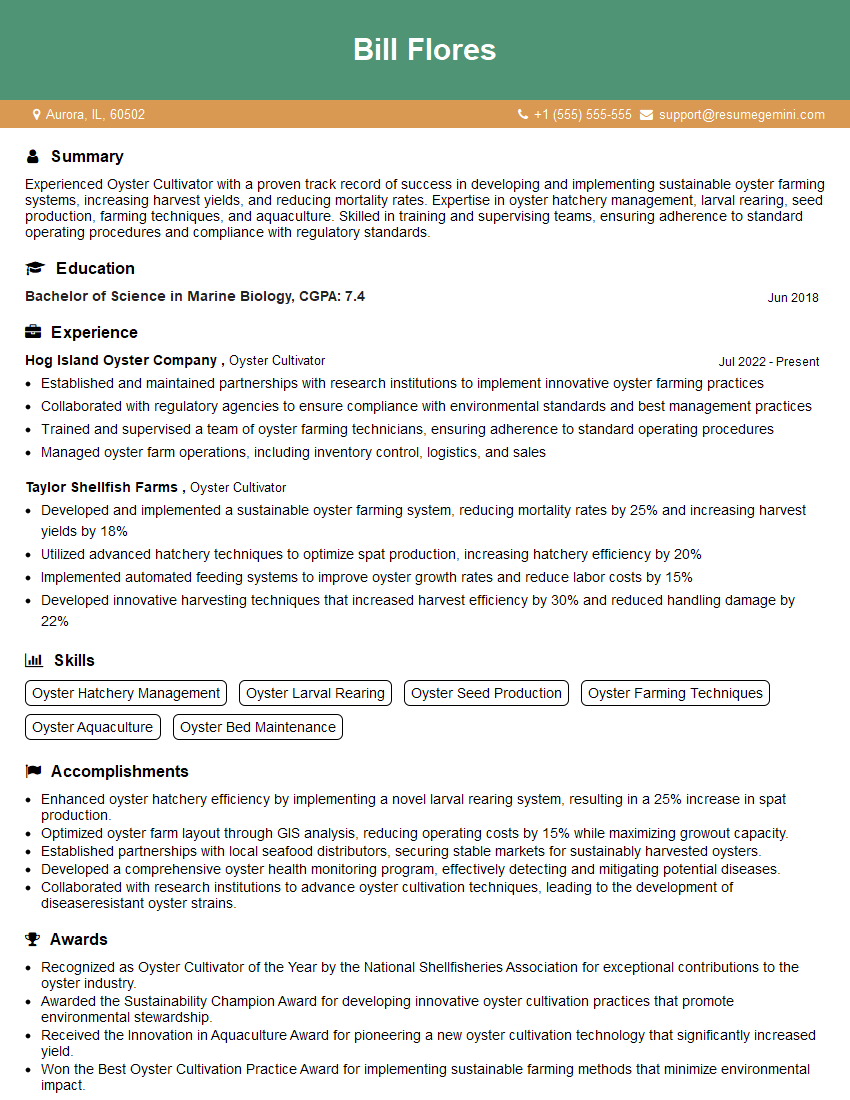
Mastering Off-Bottom Oyster Culture opens doors to exciting and rewarding career opportunities in aquaculture. To increase your chances of landing your dream job, focus on creating a strong, ATS-friendly resume that highlights your relevant skills and experience. ResumeGemini is a trusted resource that can help you build a professional and impactful resume tailored to the specific demands of the aquaculture industry. Examples of resumes tailored to Off-Bottom Oyster Culture are available to guide you. Take advantage of these resources and confidently showcase your expertise!

Explore more articles
Users Rating of Our Blogs
Share Your Experience
We value your feedback! Please rate our content and share your thoughts (optional).
What Readers Say About Our Blog
Very informative content, great job.
good