Cracking a skill-specific interview, like one for Quality Engineering and Six Sigma, requires understanding the nuances of the role. In this blog, we present the questions you’re most likely to encounter, along with insights into how to answer them effectively. Let’s ensure you’re ready to make a strong impression.
Questions Asked in Quality Engineering and Six Sigma Interview
Q 1. Explain the DMAIC methodology.
DMAIC is a data-driven, five-phase improvement cycle used in Six Sigma projects to systematically solve problems. Think of it as a structured roadmap for achieving significant process improvements. Each phase builds upon the previous one, ensuring a focused and efficient approach.
- Define: Clearly define the problem, project goals, and customer requirements. This involves understanding the ‘voice of the customer’ and setting measurable goals. For example, if a manufacturing plant experiences high defect rates, the ‘Define’ phase would involve quantifying the defect rate, specifying the target reduction, and identifying the customer impacted (e.g., end-users, internal departments).
- Measure: Collect data to understand the current process performance. This includes identifying key metrics, gathering data, and analyzing the process’s current capabilities. In our manufacturing example, this would involve collecting data on defect types, defect rates per shift, and identifying any contributing factors.
- Analyze: Identify the root causes of the problem using various statistical tools and techniques, such as Pareto charts, Fishbone diagrams, and hypothesis testing. This helps pinpoint the specific factors driving the high defect rate – perhaps operator error, faulty equipment, or poor material quality.
- Improve: Develop and implement solutions to address the root causes identified in the analysis phase. This could involve retraining operators, replacing faulty equipment, or improving material sourcing processes. The improvement phase focuses on implementing these solutions and tracking their impact.
- Control: Establish monitoring systems and procedures to ensure the improvements are sustained over time. This often involves implementing control charts to track key metrics and identifying early warning signals of potential problems. Regularly checking defect rates and process parameters ensures the implemented solutions are effective and maintained.
Q 2. Describe the different Six Sigma levels (DMAIC, DMADV).
Six Sigma methodologies are categorized into two main approaches: DMAIC (Define, Measure, Analyze, Improve, Control) and DMADV (Define, Measure, Analyze, Design, Verify). They target different types of problems:
- DMAIC focuses on improving existing processes. It’s about systematically reducing variation and defects within an already established process. Imagine tweaking an existing assembly line to increase efficiency and reduce errors.
- DMADV, also known as DFSS (Design for Six Sigma), focuses on designing new processes or products from the ground up with a Six Sigma level of quality in mind. Think of creating a completely new manufacturing process optimized for minimal defects and maximum efficiency from the outset.
Both methodologies utilize Six Sigma principles to achieve high levels of quality and efficiency. The key distinction lies in their application: DMAIC addresses existing problems, while DMADV prevents problems from occurring in new designs.
Q 3. What are control charts and how are they used?
Control charts are graphical tools used to monitor process stability and identify potential process shifts or changes over time. Think of them as a continuous health check for your process. They plot data points representing process characteristics against time, and overlay control limits.
These limits (usually 3 standard deviations above and below the mean) define the expected variation in the process. If a data point falls outside these limits, it signals that the process may be out of control and requires investigation. Different types of control charts exist, such as X-bar and R charts (for continuous data) and p-charts (for proportions).
Example: In a bottling plant, a control chart might monitor the fill level of bottles over time. If a sudden shift in fill levels is detected (points outside the control limits), the cause (e.g., a malfunctioning filling machine) can be investigated and addressed before many defective bottles are produced.
Q 4. Explain the concept of process capability and Cp/Cpk.
Process capability refers to the ability of a process to consistently produce output within predefined specifications. It essentially answers the question: ‘Can our process meet the customer’s requirements?’ Cp and Cpk are metrics used to assess process capability.
- Cp (Process Capability Index): Measures the inherent variability of the process compared to the specification width. A higher Cp indicates better capability; a value of 1.0 indicates that the process’s natural variation is equal to one-third of the specification tolerance, while values above 1.0 are generally considered better.
- Cpk (Process Capability Index – considering centering): Takes into account both process variability and process centering (how close the process average is to the target). It provides a more realistic measure of capability than Cp, because a process can have a good Cp but still be far off from the target value.
Example: Imagine manufacturing bolts with a specified diameter of 10mm ± 0.1mm. If the process produces bolts with an average diameter close to 10mm and low variability, the Cp and Cpk values would be high, indicating a capable process. If the average is off-target or the variability is high, the Cp and Cpk values will be low, indicating the need for improvements.
Q 5. How do you calculate process sigma?
Process sigma measures the process performance in terms of defects per million opportunities (DPMO). It quantifies the process’s capability to meet specifications. There are multiple methods to calculate it. A common approach involves using the number of defects and the number of opportunities for defects.
Simplified Calculation (for illustration): Let’s say you have a process with 10,000 opportunities for defects and 30 defects occurred. The defect rate is 30/10,000 = 0.003. This translates to 300 DPMO (0.003 * 1,000,000). This DPMO value can then be translated into a sigma level using a sigma level conversion table.
Note: More sophisticated calculations exist for determining process sigma levels, which consider factors such as the distribution of the data, the specification limits, and the number of samples analyzed. These calculations are generally performed with statistical software.
Q 6. What is a Pareto chart and how is it used in quality improvement?
A Pareto chart is a bar graph that ranks causes of problems or defects in descending order of frequency. It visually shows which factors contribute most significantly to overall quality issues. Think of it as a prioritized to-do list for process improvement.
The chart combines a bar graph (showing the frequency of each cause) with a line graph (showing the cumulative percentage). This helps focus improvement efforts on the ‘vital few’ causes rather than the ‘trivial many’.
Example: In a customer service department, a Pareto chart might reveal that 80% of complaints stem from just two issues: long wait times and incorrect billing. This highlights where process improvement efforts should be focused for the greatest impact.
Q 7. Describe your experience with root cause analysis techniques.
I have extensive experience using various root cause analysis techniques, including:
- 5 Whys: A simple, yet powerful, iterative questioning technique to drill down to the root cause of a problem by repeatedly asking ‘Why?’
- Fishbone Diagram (Ishikawa Diagram): A visual tool to brainstorm potential causes of a problem, categorized by factors such as manpower, methods, materials, machines, measurements, and environment.
- Failure Mode and Effects Analysis (FMEA): A structured approach to identify potential failure modes in a process and assess their severity, occurrence, and detection, helping prioritize risk mitigation efforts.
- Fault Tree Analysis (FTA): A top-down, deductive approach that diagrams the various events that can lead to a specific system failure.
In a recent project involving manufacturing defects, we employed a combination of the 5 Whys and Fishbone Diagram techniques. The 5 Whys helped pinpoint immediate causes, while the Fishbone Diagram facilitated a more comprehensive exploration of potential underlying factors, revealing a critical flaw in the raw material supply chain as the ultimate root cause.
Q 8. Explain the difference between common cause and special cause variation.
Understanding the difference between common cause and special cause variation is fundamental in Six Sigma. Common cause variation, also known as inherent or background variation, is the natural variability within a process that’s inherent to the system itself. Think of it as the consistent, predictable noise in the background. It’s always present and usually small, stemming from many minor, uncontrollable sources. Special cause variation, on the other hand, is a significant deviation from the norm, indicating the presence of an assignable cause – something outside the usual process that has disrupted the norm. This might be a machine malfunction, a change in materials, or a human error. Identifying and eliminating special cause variation is crucial for process improvement.
Example: Imagine a bottling plant filling bottles with soda. Common cause variation might be slight differences in fill levels due to variations in the bottling machine’s mechanics, temperature fluctuations, or slight inconsistencies in the soda itself. Special cause variation could be a sudden large increase in fill levels due to a malfunction in the filling mechanism, or consistently underfilled bottles due to a faulty sensor.
Q 9. How do you define a problem statement using the Six Sigma approach?
Defining a problem statement in Six Sigma requires a precise and measurable approach using the DMAIC (Define, Measure, Analyze, Improve, Control) methodology. We begin by clearly defining the problem, using a structured format. A strong problem statement typically includes:
- What is the problem?
- Where does the problem occur?
- When does the problem occur?
- How often does the problem occur (frequency)?
- Who is affected by the problem?
- How much does the problem cost (financially and/or qualitatively)?
The problem statement should be concise, specific, measurable, achievable, relevant, and time-bound (SMART). It should also focus on the impact of the problem, not just its symptoms. This ensures that the project addresses the root cause rather than just treating the surface issue.
Example: Instead of saying “Our customer satisfaction is low,” a better problem statement would be: “The average customer satisfaction score (CSAT) for our online order process is 75%, 20% below the industry benchmark of 95%, impacting customer retention by an estimated 10% and resulting in an approximate $500,000 annual revenue loss.”
Q 10. What are some common quality tools and techniques you’ve used?
Throughout my career, I’ve utilized a wide array of quality tools and techniques. Some of the most frequently used include:
- Control Charts (SPC): For monitoring process stability and identifying special cause variation.
- Pareto Charts: For prioritizing problems based on their frequency and impact.
- Fishbone Diagrams (Ishikawa Diagrams): For brainstorming potential causes of a problem.
- Histograms: For visualizing the distribution of data.
- Scatter Diagrams: For identifying correlations between variables.
- Process Capability Analysis (Cp, Cpk): For assessing how well a process meets specifications.
- Failure Mode and Effects Analysis (FMEA): For proactively identifying and mitigating potential failures.
These tools provide a comprehensive toolkit to analyze, understand, and improve processes. The choice of tool depends on the specific situation and the information needed.
Q 11. Describe your experience with FMEA (Failure Mode and Effects Analysis).
I have extensive experience conducting FMEAs. In a previous role, I led a team in performing an FMEA on our new product launch process. We identified potential failure modes throughout the entire process, from design and manufacturing to shipping and customer support. For each failure mode, we assessed its severity, occurrence probability, and detection capability (using a rating scale). The resulting Risk Priority Number (RPN) helped us prioritize corrective actions.
For example, we identified a potential failure mode of “late delivery due to supplier delays.” We assessed its severity as high, its occurrence probability as medium, and its detection capability as low. This resulted in a high RPN, prompting us to implement improved supplier management practices, including contract negotiations with penalty clauses for late deliveries and developing backup supplier relationships.
The FMEA process was instrumental in proactively identifying and mitigating potential risks, leading to a smoother product launch and reduced costs associated with rework, returns, and customer dissatisfaction.
Q 12. How do you measure the effectiveness of a process improvement project?
Measuring the effectiveness of a process improvement project requires a clear definition of success metrics before project initiation. These metrics should align with the problem statement and project goals. Key performance indicators (KPIs) need to be tracked throughout the project and compared to baseline data. Common methods for measuring effectiveness include:
- Comparing pre- and post-improvement data: Analyzing changes in KPIs such as defect rate, cycle time, cost, and customer satisfaction.
- Calculating return on investment (ROI): Quantifying the financial benefits of the improvements.
- Conducting customer surveys or feedback sessions: Assessing the impact on customer experience.
- Monitoring process stability using control charts: Ensuring that the improvements are sustainable.
A crucial aspect is to not only measure the immediate impact but also to monitor the long-term sustainability of the improvements. This includes ongoing process monitoring and control plans to prevent regression.
Q 13. Explain your understanding of Statistical Process Control (SPC).
Statistical Process Control (SPC) is a powerful methodology used to monitor and control processes using statistical methods. It involves collecting data over time and plotting it on control charts, which visually represent process performance and stability. Control charts help us distinguish between common cause and special cause variation. Control limits on these charts—typically set at 3 standard deviations from the mean—help identify when a process is out of control, indicating the presence of special cause variation requiring investigation and correction.
Types of Control Charts: Different types of control charts exist for different data types, including X-bar and R charts for continuous data and p-charts or c-charts for attribute data. The choice of chart depends on the nature of the data being collected.
Example: In a manufacturing process producing widgets, an X-bar and R chart can be used to monitor the average widget length (X-bar) and the range of lengths within a sample (R). If a data point falls outside the control limits, it indicates a possible issue requiring investigation, potentially a faulty machine or a change in raw materials.
Q 14. How do you handle conflicting priorities in a project?
Handling conflicting priorities is a common challenge in project management. My approach involves a structured process:
- Clearly define all priorities: Document all competing priorities with stakeholders, ensuring everyone understands the constraints and implications.
- Assess the impact of each priority: Evaluate the impact of each priority on the project goals, timelines, and resources. This often involves a prioritization matrix considering factors like urgency, importance, and risk.
- Communicate and negotiate: Openly discuss conflicting priorities with stakeholders, seeking collaborative solutions. This might involve trade-offs, re-scoping the project, or adjusting timelines.
- Document decisions and rationale: Maintain transparent records of all decisions made regarding priority conflicts, including justifications and any agreed-upon compromises.
- Regularly monitor and re-evaluate: Continuously monitor project progress, and reassess priorities as needed. Changes in context or new information may necessitate adjustments to the priority ranking.
Effective communication and collaboration are key to successfully navigating conflicting priorities, ensuring that everyone is informed and aligned on the chosen course of action.
Q 15. What is your experience with Design of Experiments (DOE)?
Design of Experiments (DOE) is a powerful statistical methodology used to efficiently explore the relationship between multiple input factors (independent variables) and their impact on output responses (dependent variables). Instead of experimenting one factor at a time, DOE uses carefully planned experiments to simultaneously assess the effects of multiple factors and their interactions. This significantly reduces the time and resources required compared to traditional ‘one-factor-at-a-time’ approaches.
My experience with DOE spans various applications, including optimizing manufacturing processes, improving product designs, and troubleshooting complex quality issues. I’m proficient in using different DOE techniques such as Full Factorial Designs, Fractional Factorial Designs, and Response Surface Methodologies (RSM). For instance, in a recent project involving the optimization of a semiconductor manufacturing process, we employed a fractional factorial design to identify the most significant factors affecting yield. This enabled us to pinpoint the optimal settings for key process parameters, leading to a 15% increase in yield and significant cost savings.
I’m also familiar with analyzing DOE results using statistical software like Minitab and JMP, which allows for the identification of significant factors, interactions, and optimal settings for improved process performance. Understanding and interpreting the analysis of variance (ANOVA) tables and main effects plots are crucial aspects of my expertise.
Career Expert Tips:
- Ace those interviews! Prepare effectively by reviewing the Top 50 Most Common Interview Questions on ResumeGemini.
- Navigate your job search with confidence! Explore a wide range of Career Tips on ResumeGemini. Learn about common challenges and recommendations to overcome them.
- Craft the perfect resume! Master the Art of Resume Writing with ResumeGemini’s guide. Showcase your unique qualifications and achievements effectively.
- Don’t miss out on holiday savings! Build your dream resume with ResumeGemini’s ATS optimized templates.
Q 16. Describe a time you had to deal with a challenging quality issue.
During my time at [Previous Company Name], we faced a critical quality issue with a new product launch. Customer feedback revealed a significant defect rate related to the product’s functionality after a certain period of use. Initially, we suspected a problem with the manufacturing process, and investigations focused on equipment malfunction or raw material inconsistencies. However, these investigations didn’t reveal a clear cause. This was particularly challenging because the product was already in the market and the negative feedback was affecting our brand reputation.
To address this, I spearheaded a cross-functional team comprising engineers, manufacturing personnel, and quality control specialists. We employed a structured problem-solving approach, starting with a thorough failure analysis of returned products. We documented the defects and gathered data on usage patterns and environmental conditions. This revealed a correlation between the defect and exposure to high humidity. Further investigation discovered a design flaw allowing moisture ingress, causing the functional failure. We then implemented a design modification to improve moisture resistance, along with rigorous testing protocols to ensure the fix was effective. This collaborative approach successfully resolved the issue, leading to a significant reduction in defect rates and improved customer satisfaction.
Q 17. How do you identify and prioritize improvement opportunities?
Identifying and prioritizing improvement opportunities involves a systematic approach that combines data analysis with practical judgment. I typically leverage several techniques to accomplish this:
- Data Collection & Analysis: I start by gathering relevant data from various sources such as process capability studies, customer feedback surveys, defect reports, and production metrics. This data helps identify areas with high defect rates, significant variations, or customer dissatisfaction.
- Pareto Analysis: This technique identifies the ‘vital few’ problems responsible for the majority of issues. By focusing on these key areas, we can achieve the most significant impact with our improvement efforts.
- Process Mapping & Value Stream Mapping: These visual tools reveal inefficiencies, bottlenecks, and unnecessary steps in the process, thereby highlighting areas ripe for improvement. For example, identifying non-value-added steps in a manufacturing process can dramatically improve efficiency and reduce waste.
- Failure Mode and Effects Analysis (FMEA): FMEA helps proactively identify potential failure modes in a process or product, assess their severity, and prioritize mitigation efforts. It helps us prevent problems before they occur.
- Prioritization Matrix: Once potential improvement opportunities are identified, a prioritization matrix helps rank them based on factors such as impact, feasibility, and cost. This ensures we focus on the most impactful projects first.
This multi-pronged approach ensures a data-driven and prioritized list of improvement opportunities leading to impactful, sustainable changes.
Q 18. What metrics do you use to track quality performance?
The metrics used to track quality performance vary depending on the context, but some common and critical metrics include:
- Defect Rate/Yield: Measures the percentage of defective units produced or the percentage of good units produced. A lower defect rate indicates higher quality.
- Process Capability (Cp, Cpk): Assesses the ability of a process to meet specified tolerances. Higher Cp and Cpk values indicate better process capability.
- Customer Satisfaction (CSAT): Measures customer satisfaction levels through surveys, feedback forms, and other methods. High CSAT scores reflect superior quality and customer experience.
- Mean Time Between Failures (MTBF): Indicates the average time between failures of a product or system. Higher MTBF indicates greater reliability and better quality.
- First Pass Yield (FPY): Measures the percentage of units that pass inspection or testing on the first attempt, indicating efficient and reliable processes.
- Cycle Time: The time it takes to complete a process. Reduction in cycle time often goes hand-in-hand with improved efficiency and quality.
The selection of appropriate metrics depends on the specific process, product, and organizational goals. A balanced scorecard approach, incorporating both leading and lagging indicators, often provides a holistic view of quality performance.
Q 19. Explain your experience with different types of audits.
My experience encompasses various types of audits, including internal audits, supplier audits, and third-party audits.
- Internal Audits: I’ve conducted numerous internal audits to assess compliance with established quality management systems, identify areas for improvement, and ensure that processes are functioning effectively. These audits involve reviewing documentation, observing processes, and interviewing personnel. A key aspect of these audits is creating a culture of continuous improvement.
- Supplier Audits: I’ve performed supplier audits to evaluate the quality management systems and capabilities of our suppliers. This ensures that our suppliers meet our quality requirements and maintain consistent quality standards. These audits often involve on-site visits, review of supplier documentation, and observation of their processes.
- Third-Party Audits: I’ve also participated in third-party audits conducted by certification bodies for standards such as ISO 9001. These audits are crucial for maintaining certifications and demonstrating compliance with external regulatory requirements. These audits are more rigorous and involve detailed documentation reviews and thorough process assessments.
In all cases, my approach involves meticulous planning, objective evaluation, and clear reporting of findings with actionable recommendations for improvement. My goal is not simply to identify non-conformances, but to help organizations improve their systems and processes.
Q 20. Describe your experience with ISO 9001 or other quality standards.
I possess extensive experience with ISO 9001:2015, having worked in organizations that are ISO 9001 certified. My understanding extends beyond simply meeting the requirements; I understand the principles and philosophies behind the standard and how it can be leveraged to improve organizational performance. I’ve been directly involved in the implementation, maintenance, and improvement of ISO 9001 QMS in various organizational contexts.
My experience includes developing and maintaining quality manuals, implementing internal audit programs, conducting management reviews, and driving continuous improvement through corrective and preventive actions (CAPA). I understand the importance of risk-based thinking, and I’ve applied this concept to identify and mitigate potential quality risks. Furthermore, I’ve assisted organizations in bridging the gap between ISO 9001 requirements and their specific business needs, ensuring that the QMS supports rather than hinders operational efficiency.
Beyond ISO 9001, I’m familiar with other quality standards such as IATF 16949 (automotive) and AS9100 (aerospace), understanding their nuances and the specific requirements they impose. This broad understanding allows me to adapt quickly to different industry contexts and quality management frameworks.
Q 21. How do you communicate technical information to non-technical audiences?
Communicating technical information to non-technical audiences requires a clear and concise approach that avoids jargon and uses relatable analogies. My strategy typically involves:
- Simplifying the language: I replace technical terms with everyday language wherever possible, ensuring everyone understands the message. For example, instead of saying ‘reducing process variation,’ I might say ‘making the process more consistent.’
- Using visuals: Charts, graphs, and diagrams are effective tools for conveying complex information visually. A simple bar chart can often communicate data more effectively than a lengthy paragraph.
- Telling stories: Relating technical information to real-world scenarios and using storytelling techniques helps make the information more engaging and memorable. For example, I might illustrate a statistical concept using a relatable analogy from daily life.
- Focusing on the ‘so what?’: I always explain the implications of the technical information, highlighting its relevance and impact on the audience. Connecting the technical details to their business goals is crucial.
- Active listening and feedback: I encourage questions and feedback to ensure the audience understands the information and address any concerns or confusion.
By using these techniques, I ensure that my technical explanations are accessible and understandable to a wide audience, regardless of their technical background.
Q 22. What are some key performance indicators (KPIs) for quality?
Key Performance Indicators (KPIs) for quality are metrics that track how well a process or product meets quality standards. Choosing the right KPIs depends heavily on the specific context, but some common and crucial ones include:
Defect Rate: The number of defects per unit of output. A lower defect rate indicates higher quality. For example, a manufacturing plant might track the number of faulty widgets produced per 1000.
Customer Satisfaction (CSAT): Measured through surveys or feedback, this reflects how happy customers are with the product or service. A high CSAT score usually translates to higher quality perception.
First Pass Yield (FPY): The percentage of products or services that pass inspection or testing on the first attempt. A high FPY signifies efficient and effective processes.
Process Capability (Cp/Cpk): These statistical measures assess how well a process is capable of meeting specifications. Cp indicates the inherent capability, while Cpk considers both capability and centering.
Mean Time Between Failures (MTBF): For products, this measures the average time between failures. A higher MTBF indicates greater reliability and longevity.
Customer Complaints: The number of customer complaints received, categorized by type and source. Tracking this helps identify recurring quality issues.
Effective KPI selection requires a thorough understanding of your business objectives and processes. You should focus on metrics that are relevant, measurable, achievable, relevant, and time-bound (SMART).
Q 23. Describe your experience with project management methodologies.
My project management experience spans various methodologies, primarily focusing on Agile and Six Sigma DMAIC (Define, Measure, Analyze, Improve, Control).
Agile: I’ve led teams using Scrum and Kanban, emphasizing iterative development, frequent feedback loops, and adaptive planning. In one project, we used Scrum to develop a new software feature, holding daily stand-ups and sprint reviews to ensure transparency and quick adaptation to changing requirements. This iterative approach dramatically reduced the risk of significant rework later on.
Six Sigma DMAIC: I’ve extensively used the DMAIC methodology to tackle complex quality problems. For example, I led a project to reduce the defect rate in a manufacturing process. We used statistical tools like control charts and root cause analysis to identify the underlying causes of defects, implemented corrective actions, and monitored improvements using control charts.
I’m adept at selecting the right methodology based on project specifics. For instance, Agile is ideal for projects with evolving requirements, while Six Sigma is perfect for addressing process variation and minimizing defects.
Q 24. How do you balance the cost of quality with the need for high quality?
Balancing the cost of quality (COQ) with the need for high quality is a critical aspect of quality management. COQ encompasses prevention costs (e.g., training, planning), appraisal costs (e.g., inspections, testing), and failure costs (internal and external failures). The goal is to minimize COQ without compromising quality.
This balance is achieved through:
Prevention Focus: Investing in robust design, thorough training, and proactive quality management systems reduces the need for costly corrective actions later.
Data-Driven Decision Making: Analyzing data on failure costs helps identify areas where investments in prevention will yield the highest return.
Risk Assessment: Identifying and mitigating potential quality risks early can significantly reduce future costs.
Process Optimization: Streamlining processes to remove inefficiencies reduces waste and improves quality, ultimately lowering COQ. For example, implementing automation can reduce human error and improve consistency.
Think of it like investing in preventative car maintenance. Regularly servicing your car is a prevention cost, but it prevents costly breakdowns and repairs down the line. Similarly, investing in proactive quality management reduces long-term costs.
Q 25. Explain your experience with data analysis and interpretation.
Data analysis and interpretation are fundamental to my work. I’m proficient in various statistical techniques and tools for analyzing data.
Descriptive Statistics: I use measures like mean, median, standard deviation to summarize data and identify trends. For instance, calculating the average defect rate across different production lines helped pinpoint the source of a quality problem.
Inferential Statistics: Hypothesis testing, regression analysis, and ANOVA are used to draw conclusions and make predictions about populations based on samples. I used regression analysis to identify the factors affecting customer satisfaction and implemented changes to improve it.
Control Charts: These are essential for monitoring process stability and identifying out-of-control conditions. I regularly used control charts to track defect rates and ensure processes remained in control.
Root Cause Analysis (RCA): Tools like the 5 Whys and Fishbone diagrams are used to systematically identify the root causes of problems. Using 5 Whys helped uncover the underlying cause of a recurring software bug.
I use software like Minitab and JMP to conduct these analyses and create insightful visualizations to aid decision making.
Q 26. What software tools are you proficient in for quality management?
I’m proficient in several software tools for quality management, including:
Minitab: For statistical process control (SPC), data analysis, and Six Sigma tools.
JMP: For advanced statistical analysis and data visualization.
Microsoft Excel: For data manipulation, charting, and basic statistical analysis.
Tableau/Power BI: For creating dashboards and visualizing quality metrics.
Jira/Azure DevOps: For tracking defects and managing projects.
My experience with these tools allows me to effectively collect, analyze, and present quality data, leading to informed decisions and continuous improvement.
Q 27. How do you stay up-to-date on the latest quality management trends?
Staying current in the dynamic field of quality management requires a multi-faceted approach:
Professional Organizations: I actively participate in organizations like ASQ (American Society for Quality) to access resources, attend conferences, and network with other quality professionals.
Publications and Journals: I regularly read industry publications and journals to stay updated on new methodologies and best practices.
Online Courses and Webinars: I utilize online learning platforms to expand my skillset and learn about emerging trends. Recently, I completed a course on AI-driven quality control.
Conferences and Workshops: Attending industry events provides valuable insights and networking opportunities.
Industry Blogs and News: Following reputable blogs and news sources ensures I stay informed about current developments in the field.
Continuous learning ensures my skills and knowledge remain relevant and applicable to the latest challenges in quality management.
Q 28. Describe your experience with implementing continuous improvement initiatives.
I have a proven track record of implementing continuous improvement initiatives, primarily using Lean and Six Sigma methodologies.
Lean Initiatives: I’ve led projects focused on eliminating waste (muda) in processes. In one project, we implemented 5S methodology (Sort, Set in Order, Shine, Standardize, Sustain) to organize a warehouse, significantly improving efficiency and reducing search times.
Six Sigma Projects: As mentioned before, I have used DMAIC to tackle process improvement projects, focusing on defect reduction, cycle time optimization, and cost savings. A key success was a project that reduced the cycle time of a crucial manufacturing process by 30% while simultaneously decreasing the defect rate by 50%.
Kaizen Events: I’ve facilitated Kaizen events (small, focused improvement projects) to encourage employee engagement and drive rapid improvements. These events fostered a culture of continuous improvement within the teams.
My approach emphasizes data-driven decision-making, employee involvement, and sustained improvement through robust monitoring and control systems. It’s all about building a culture of continuous improvement, not just implementing individual projects.
Key Topics to Learn for Quality Engineering and Six Sigma Interview
- Statistical Process Control (SPC): Understand control charts (e.g., X-bar and R charts, p-charts, c-charts), process capability analysis (Cp, Cpk), and their practical applications in monitoring and improving processes. Be prepared to discuss real-world scenarios where SPC has been used effectively.
- Six Sigma methodologies (DMAIC, DMADV): Master the phases of these methodologies and their application in problem-solving and process improvement projects. Practice explaining your experience in each phase, focusing on results and learnings.
- Design of Experiments (DOE): Familiarize yourself with DOE principles and techniques for optimizing processes and identifying significant factors. Be ready to discuss the benefits of DOE and how it improves efficiency compared to traditional methods.
- Quality Management Systems (QMS) – ISO 9001: Understand the principles and requirements of a QMS and how it contributes to overall quality and organizational effectiveness. Be prepared to discuss your experience working within a QMS framework.
- Root Cause Analysis (RCA) Techniques: Master various RCA techniques such as 5 Whys, Fishbone diagrams, and Fault Tree Analysis. Prepare to discuss how you’ve applied these techniques to identify and resolve process issues.
- Measurement Systems Analysis (MSA): Understand the importance of accurate and reliable measurement systems. Be prepared to discuss gauge R&R studies and their implications for data analysis and decision-making.
- Lean Principles and their integration with Six Sigma: Understand the principles of Lean manufacturing (waste reduction, value stream mapping) and how they complement Six Sigma methodologies to achieve overall process optimization.
- Software Proficiency: Highlight your proficiency in relevant statistical software packages (e.g., Minitab, JMP) and data analysis tools. Be ready to discuss how you’ve utilized these tools in your projects.
Next Steps
Mastering Quality Engineering and Six Sigma principles significantly enhances your career prospects, opening doors to leadership roles and higher earning potential. A strong, ATS-friendly resume is crucial for showcasing your skills and experience effectively to potential employers. ResumeGemini is a trusted resource that can help you craft a compelling and impactful resume tailored to the specific requirements of Quality Engineering and Six Sigma roles. We provide examples of resumes tailored to this field to help you get started. Invest the time to create a resume that truly reflects your accomplishments and expertise—it’s your first impression!
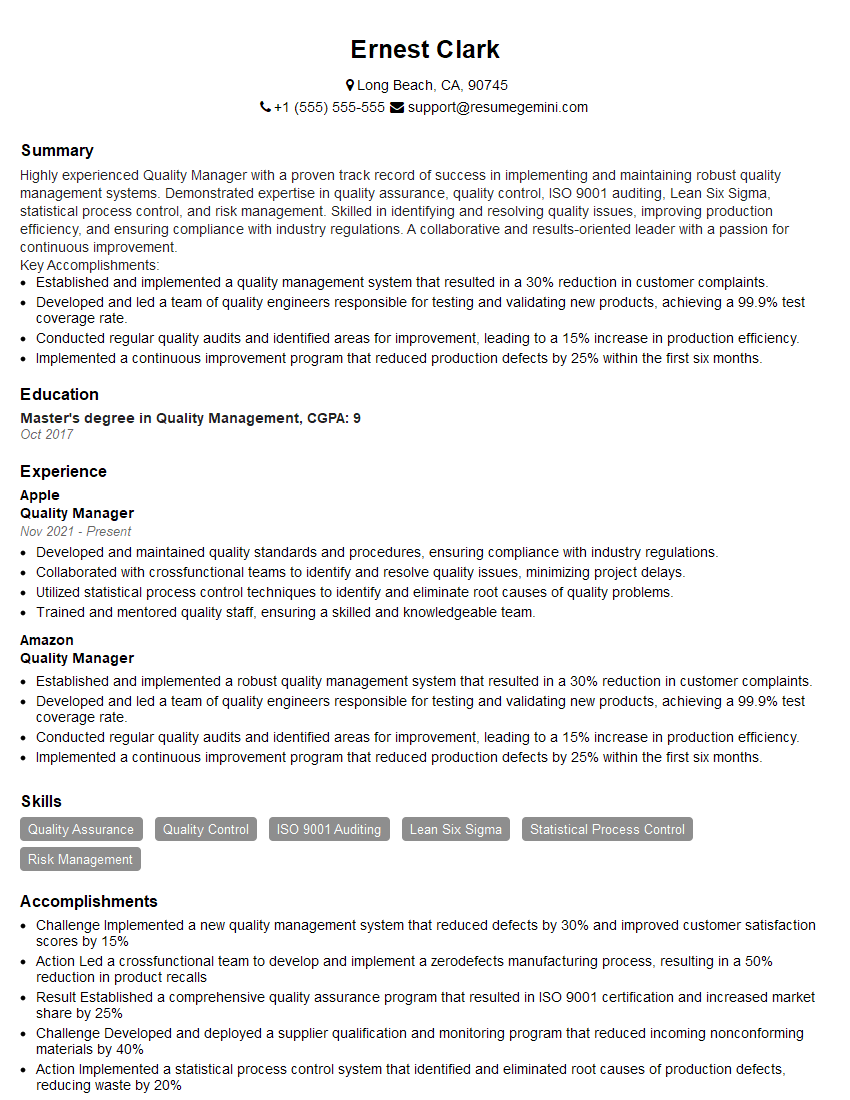
Quality Manager Resume Sample
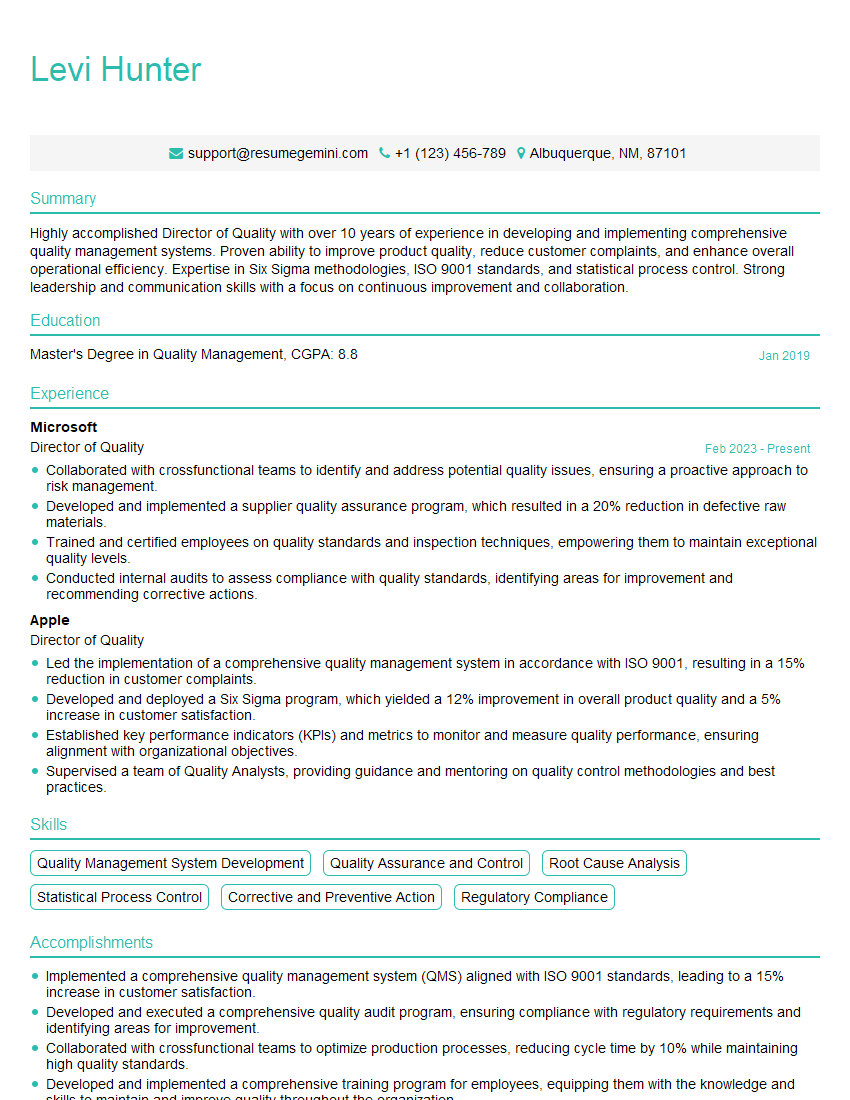
Director of Quality Resume Sample
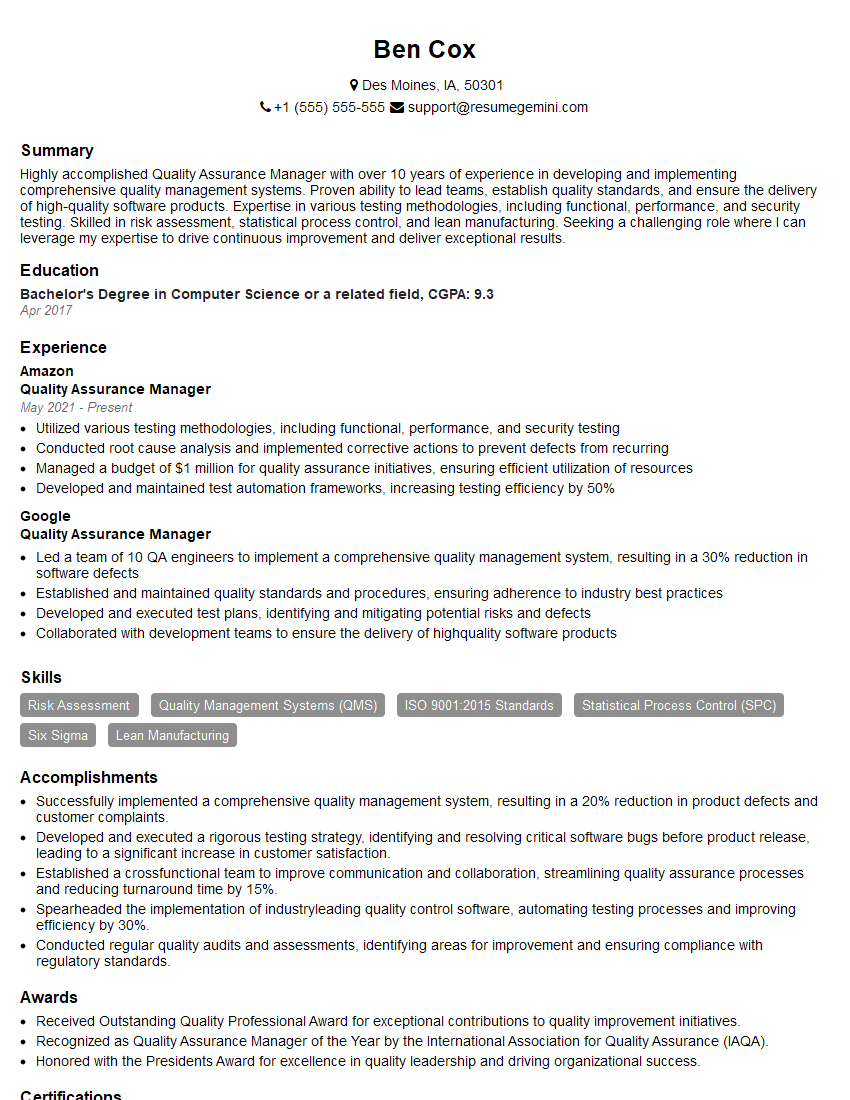
Quality Assurance Manager Resume Sample
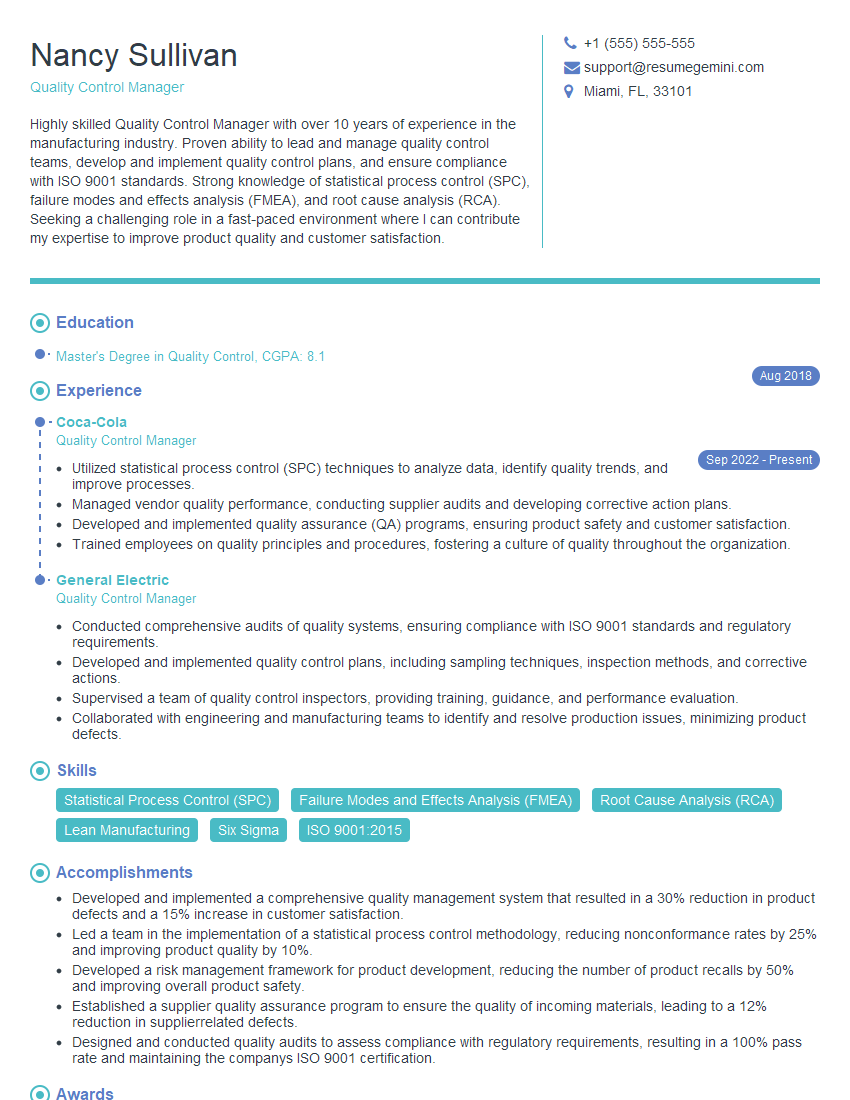
Quality Control Manager Resume Sample
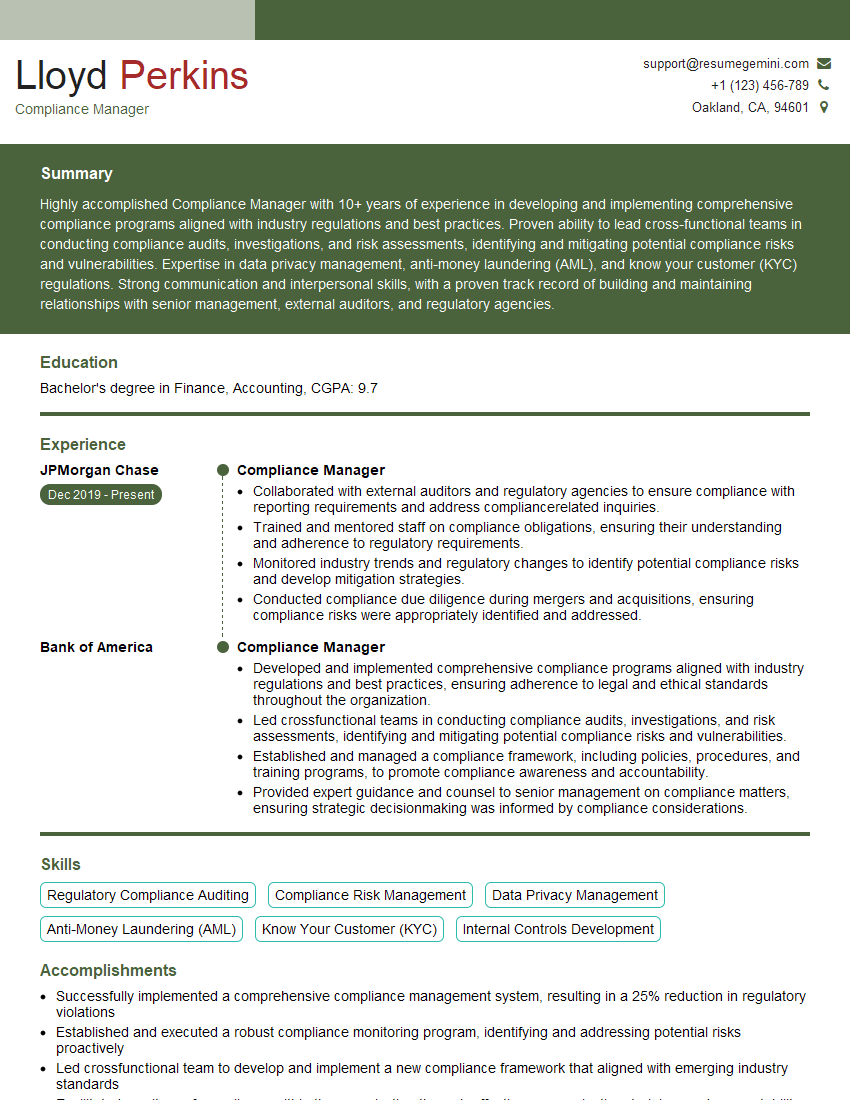
Compliance Manager Resume Sample
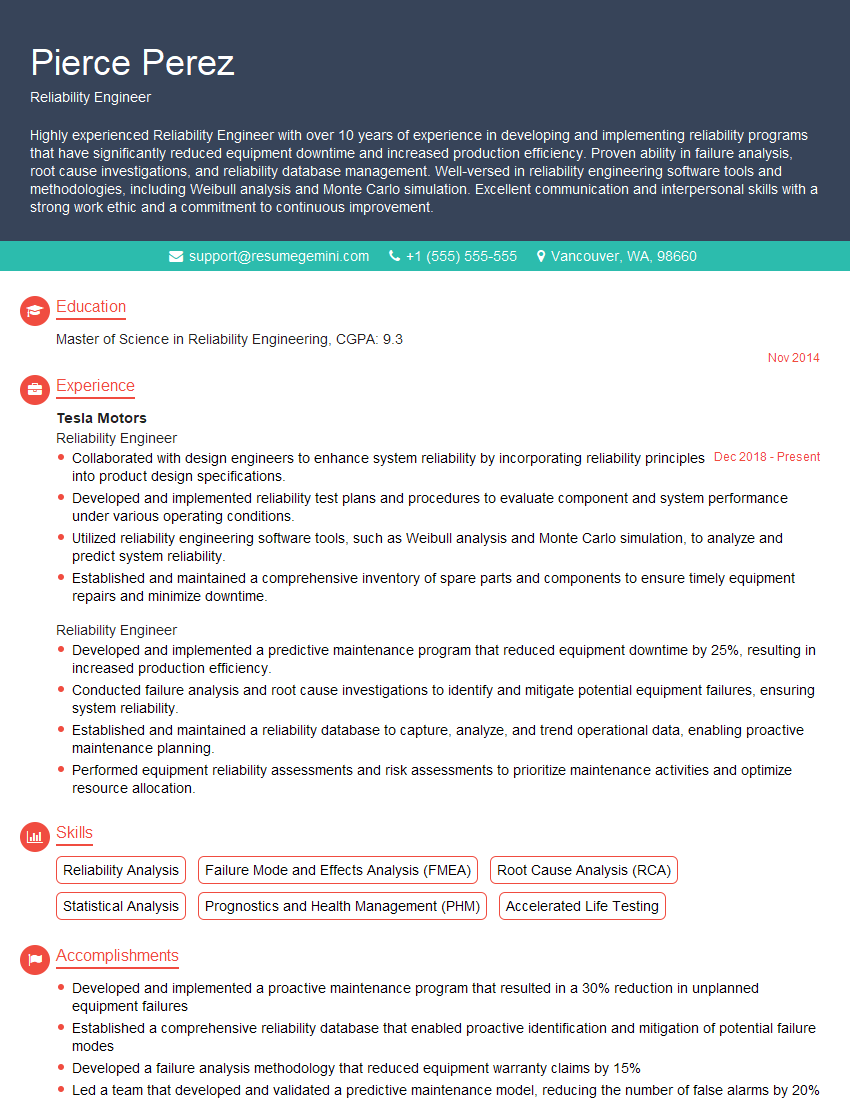
Reliability Engineer Resume Sample
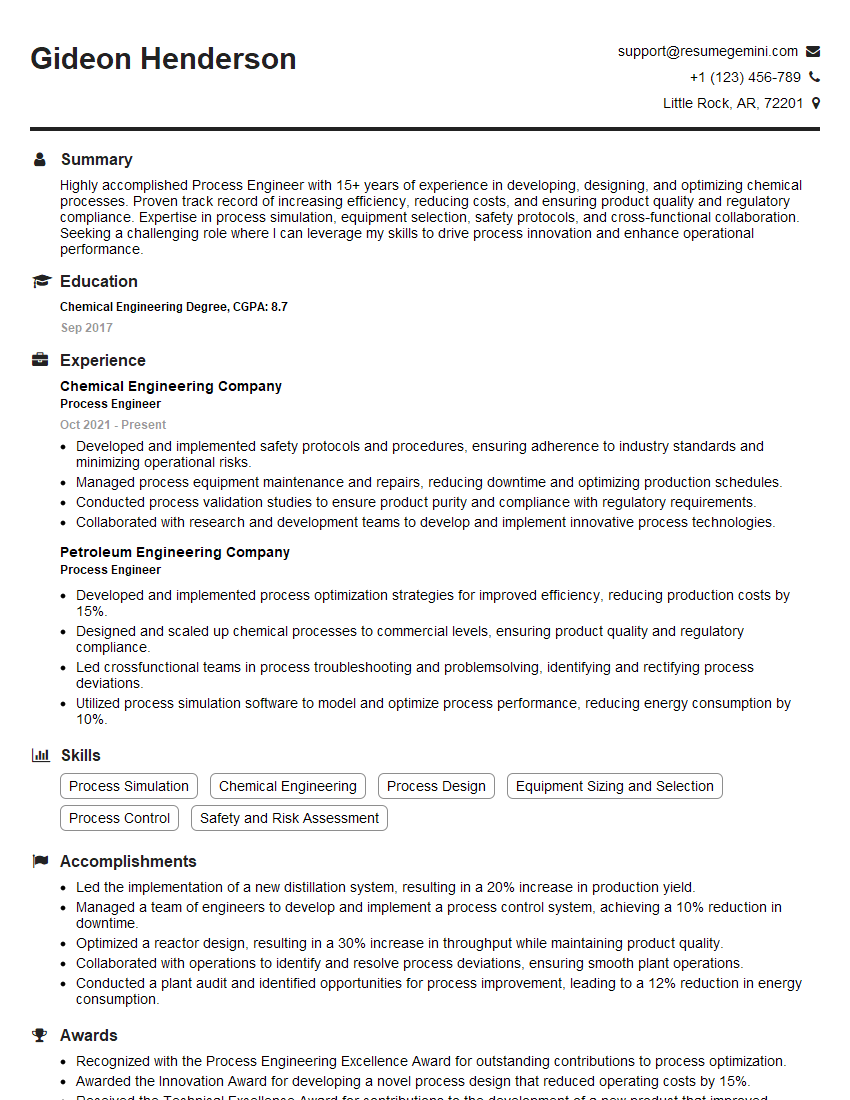
Process Engineer Resume Sample
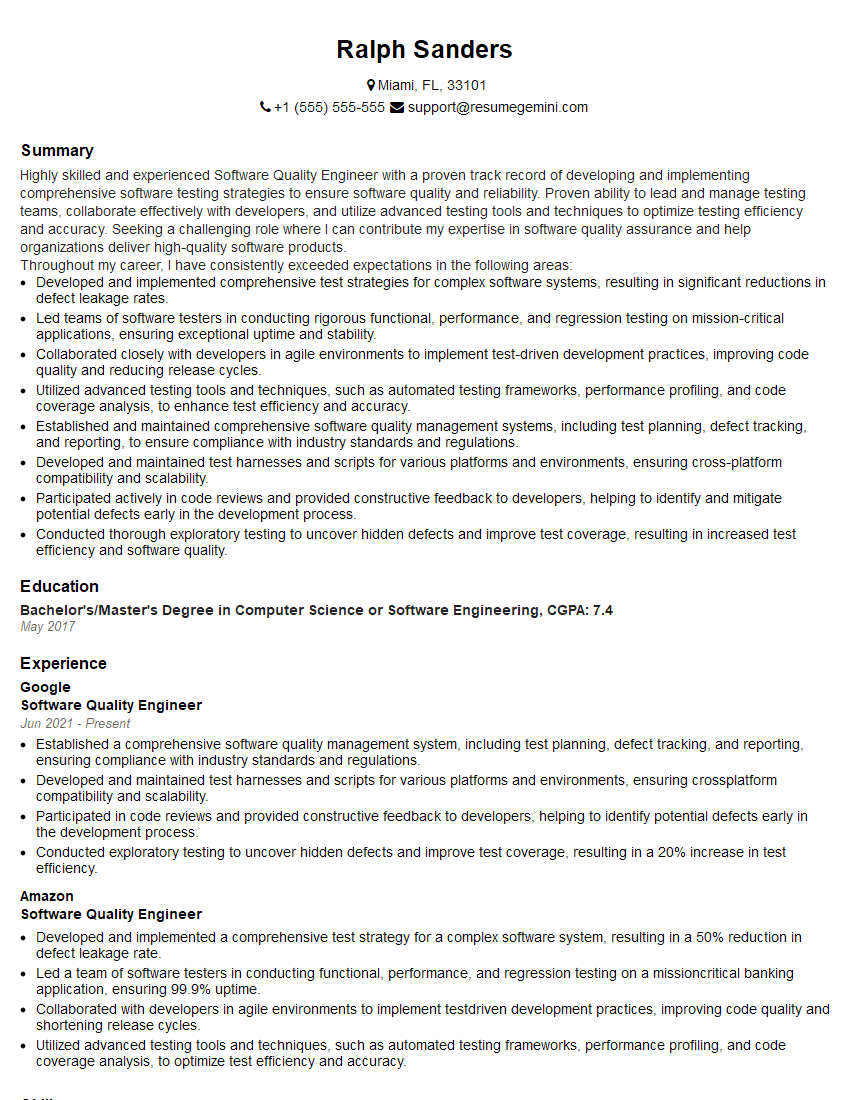
Software Quality Engineer Resume Sample
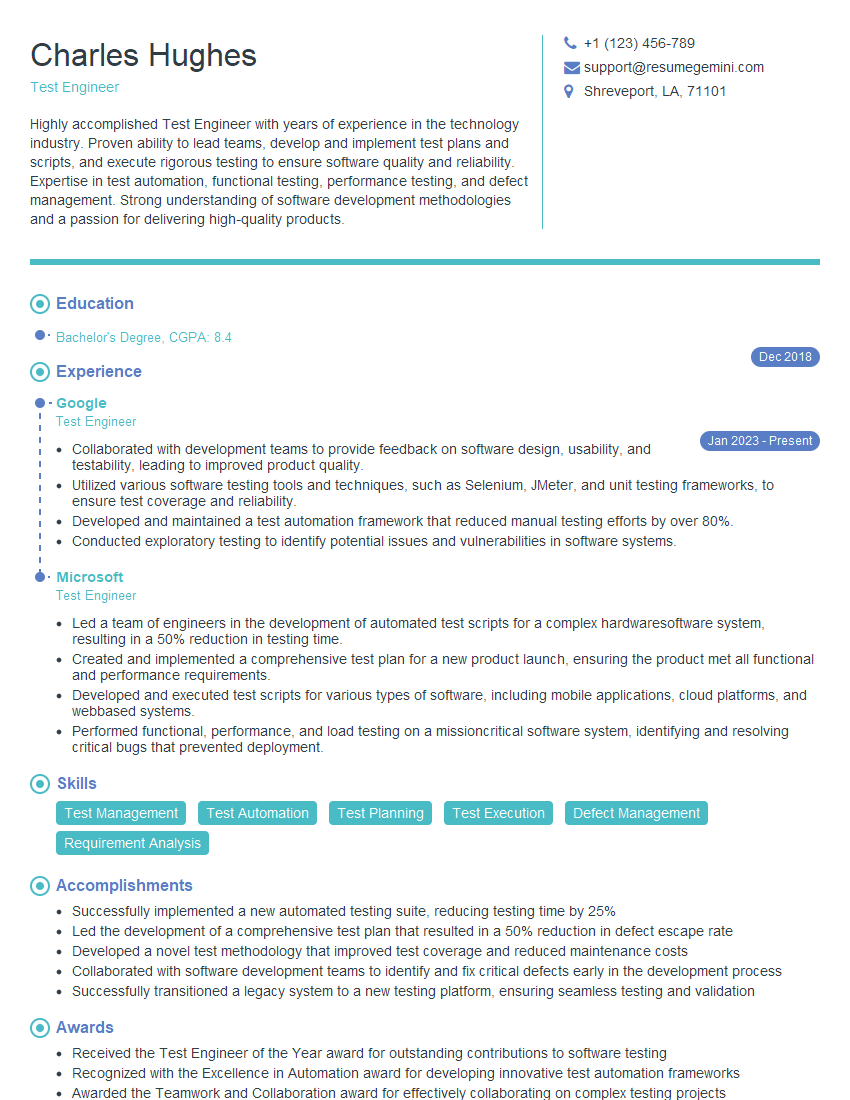
Test Engineer Resume Sample
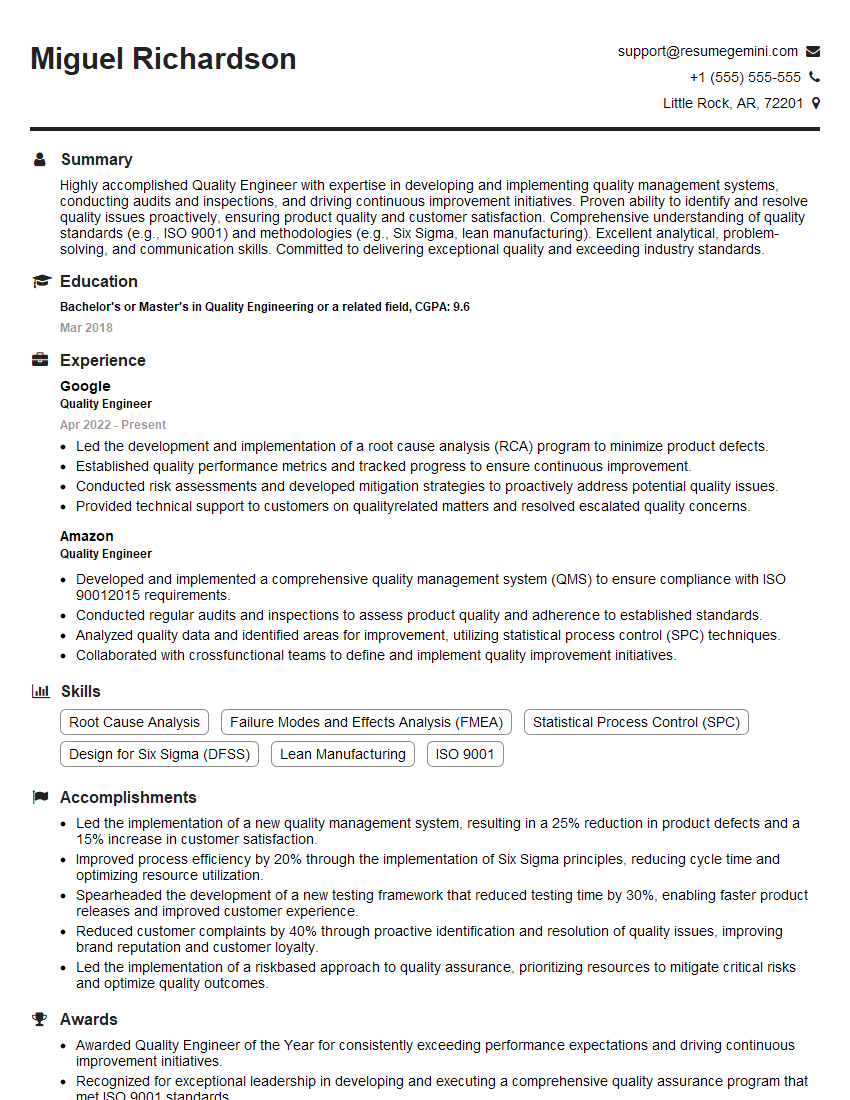
Quality Engineer Resume Sample
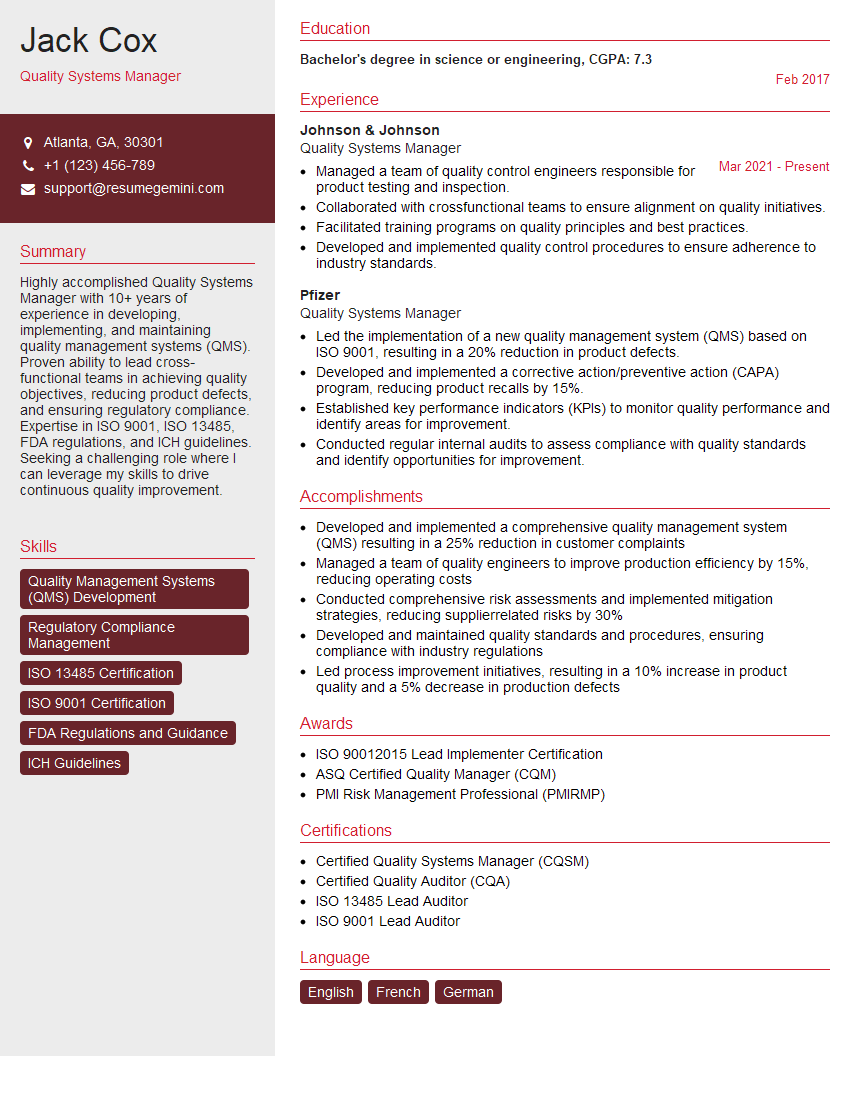
Quality Systems Manager Resume Sample
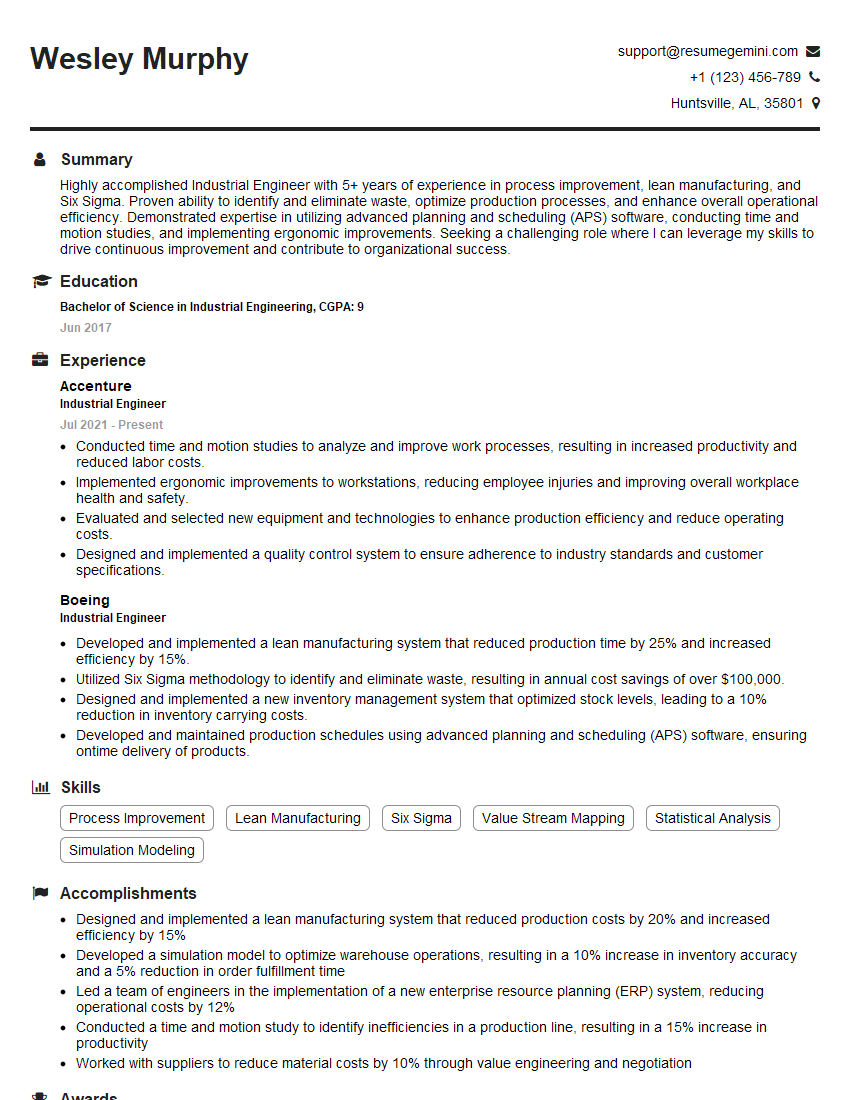
Industrial Engineer Resume Sample
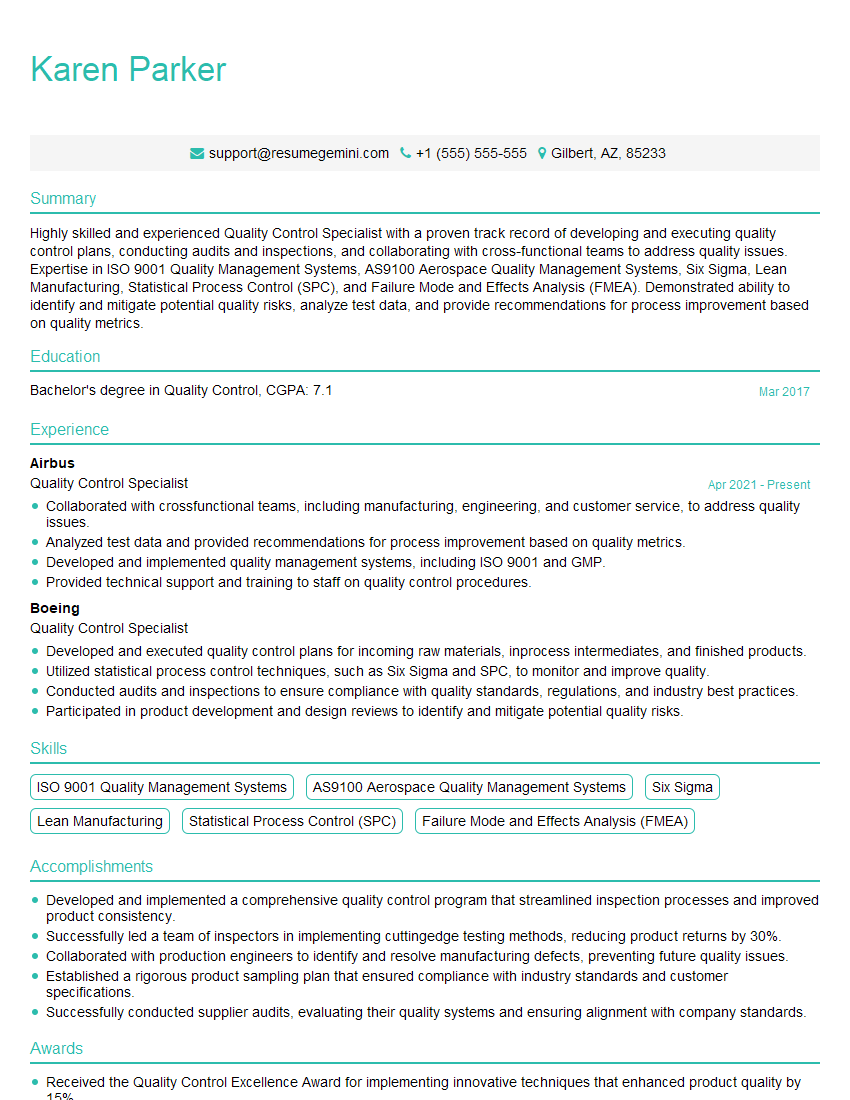
Quality Control Specialist Resume Sample
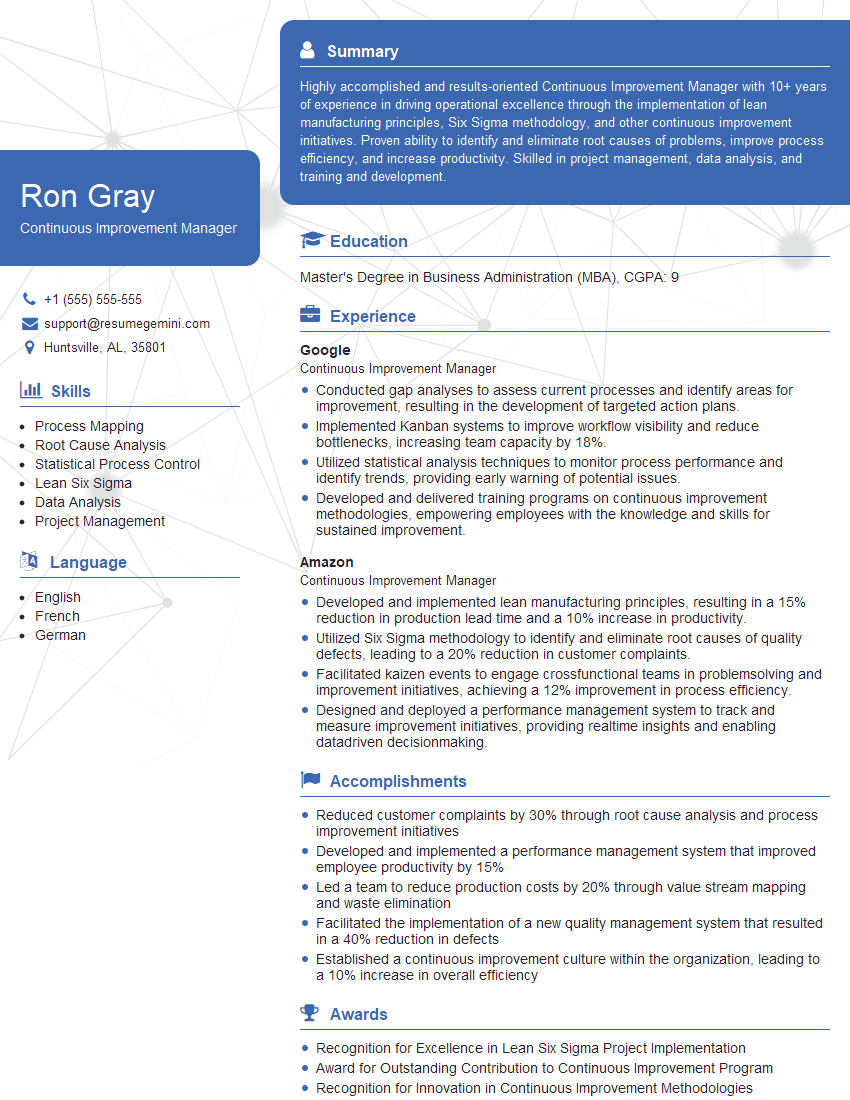
Continuous Improvement Manager Resume Sample
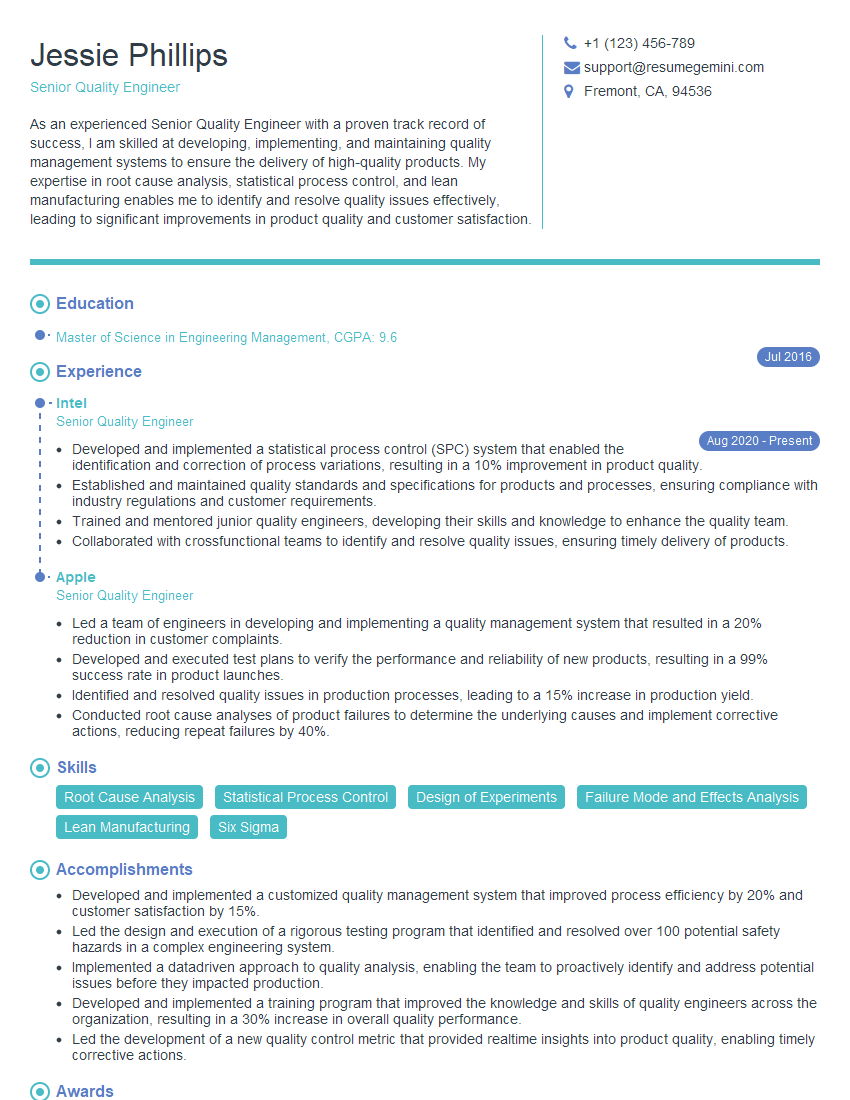
Senior Quality Engineer Resume Sample
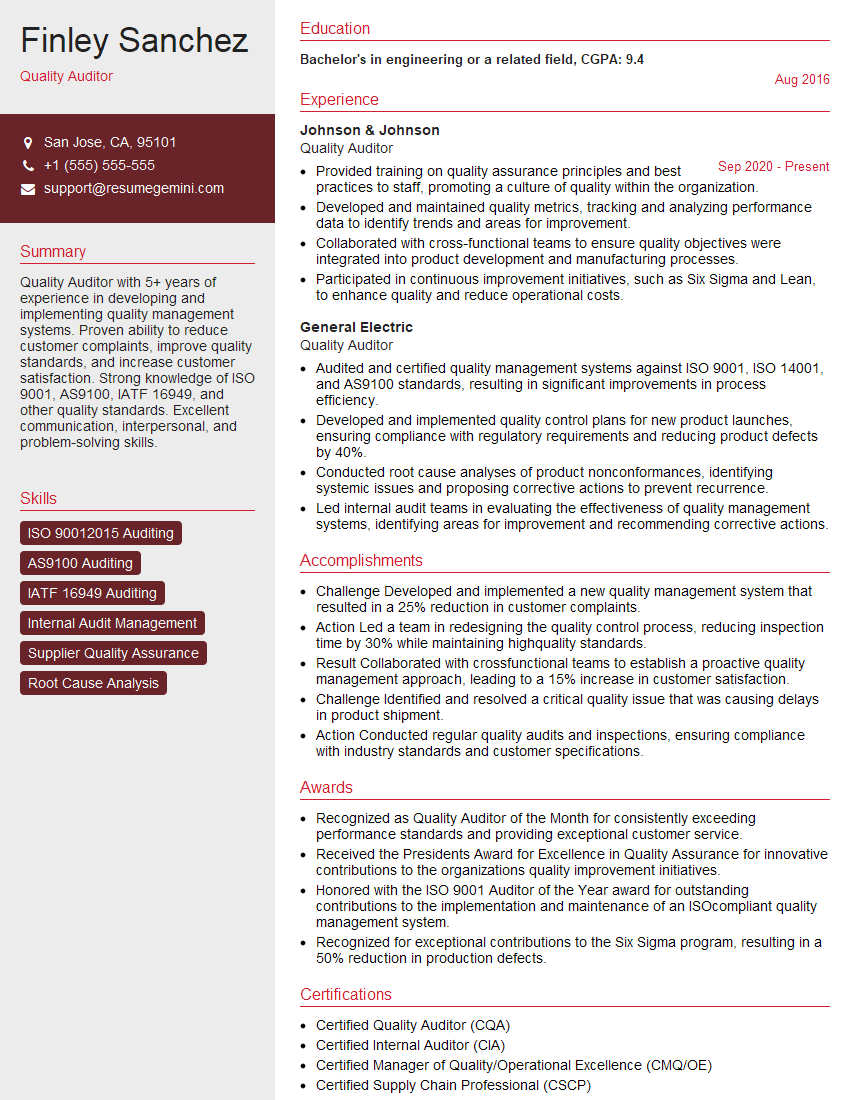
Quality Auditor Resume Sample
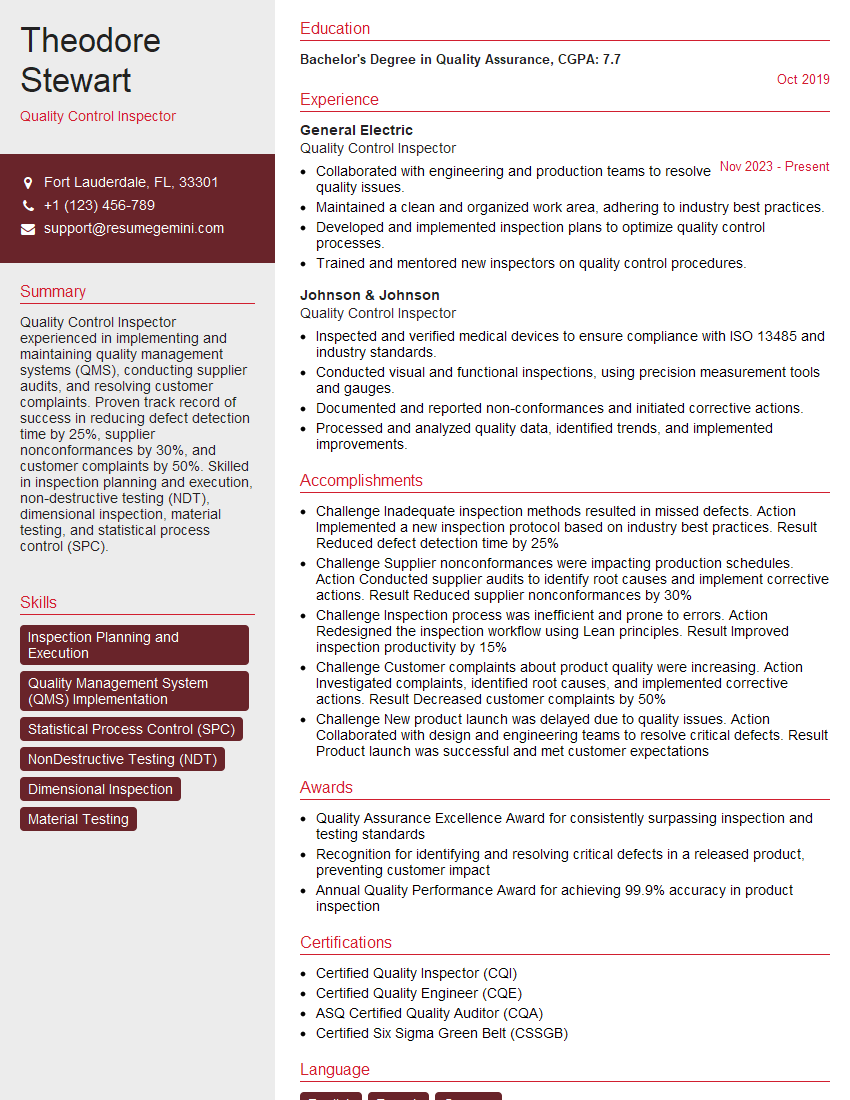
Quality Control Inspector Resume Sample
- Quality Manager
- Director of Quality
- Quality Assurance Manager
- Quality Control Manager
- Compliance Manager
- Reliability Engineer
- Process Engineer
- Software Quality Engineer
- Test Engineer
- Quality Engineer
- Quality Systems Manager
- Industrial Engineer
- Quality Control Specialist
- Continuous Improvement Manager
- Senior Quality Engineer
- Quality Auditor
- Quality Control Inspector
Explore more articles
Users Rating of Our Blogs
Share Your Experience
We value your feedback! Please rate our content and share your thoughts (optional).
What Readers Say About Our Blog
Very informative content, great job.
good