Are you ready to stand out in your next interview? Understanding and preparing for QualityControl interview questions is a game-changer. In this blog, we’ve compiled key questions and expert advice to help you showcase your skills with confidence and precision. Let’s get started on your journey to acing the interview.
Questions Asked in QualityControl Interview
Q 1. Explain your experience with different quality control methodologies (e.g., Six Sigma, ISO 9001).
My experience encompasses a wide range of quality control methodologies, primarily Six Sigma and ISO 9001. Six Sigma, with its focus on minimizing defects and maximizing efficiency through DMAIC (Define, Measure, Analyze, Improve, Control) and DMADV (Define, Measure, Analyze, Design, Verify) methodologies, has been instrumental in streamlining processes and reducing variability in several projects. For example, in a previous role, we used DMAIC to reduce the defect rate in a manufacturing process by 85% within six months. This involved detailed data analysis, identifying root causes through tools like Pareto charts and fishbone diagrams, and implementing process improvements. ISO 9001, on the other hand, provides a framework for establishing and maintaining a quality management system. My experience with ISO 9001 includes leading internal audits, developing and implementing quality manuals, and ensuring compliance with international standards. In one instance, I guided a team through the certification process, resulting in a successful ISO 9001:2015 certification.
Q 2. Describe your experience with statistical process control (SPC) techniques.
Statistical Process Control (SPC) is crucial for monitoring and controlling process variation. I’m proficient in using various SPC tools, including control charts (X-bar and R charts, p-charts, c-charts, etc.), to track process performance over time. Control charts allow for early detection of process shifts and potential problems before they significantly impact product quality. For instance, in a previous project involving the packaging process, we used X-bar and R charts to monitor the weight of the product. The charts helped identify a sudden increase in variation, prompting an investigation that revealed a faulty weighing machine. This allowed for timely correction and prevented a significant number of non-conforming products. Beyond control charts, I also have experience with other statistical techniques such as capability analysis (Cp, Cpk) to assess process performance against specifications and design of experiments (DOE) for optimizing processes.
Q 3. How would you develop and implement a quality control plan for a new product?
Developing a quality control plan for a new product requires a structured approach. Firstly, I’d define the product requirements and specifications, including critical-to-quality (CTQ) characteristics. Next, I’d identify potential failure modes and their effects using Failure Mode and Effects Analysis (FMEA). This helps prioritize areas needing the most attention during the manufacturing and testing phases. Then, I would design inspection and testing procedures to verify that the product meets the defined specifications, choosing appropriate inspection methods (visual, dimensional, functional testing) based on the CTQs. This might involve designing gauges or fixtures for dimensional measurements. A robust sampling plan would also be established, ensuring a representative sample is inspected without excessive testing. The plan would clearly outline acceptance criteria, corrective actions for non-conformances, and a system for tracking and analyzing quality data. Finally, I would incorporate continuous improvement into the plan, using data collected to identify areas for refinement and process optimization. For example, after the initial launch, feedback from the market and data from quality control checks would be used to iterate on the plan and continually improve the product’s quality.
Q 4. What are your preferred methods for identifying and analyzing root causes of quality issues?
My preferred methods for root cause analysis combine several tools for a comprehensive approach. The 5 Whys technique is useful for quickly drilling down to the underlying cause, prompting investigation after each answer. However, it is often best paired with other techniques to avoid premature conclusions. I frequently use fishbone diagrams (Ishikawa diagrams) to visually organize potential root causes categorized by factors like materials, methods, manpower, machinery, measurement, and environment. Pareto charts help prioritize the most significant issues based on their frequency or impact. Finally, I often use data analysis techniques, including scatter plots and regression analysis, to identify correlations and dependencies among variables. A recent example involved a high rate of customer returns. Using a combination of the 5 Whys, a fishbone diagram, and a Pareto chart, we uncovered that the primary cause was a poorly designed packaging that didn’t adequately protect the product during shipping.
Q 5. How do you handle conflicting priorities between cost, quality, and time constraints?
Balancing cost, quality, and time is a constant challenge in any project. My approach involves open communication and collaboration with stakeholders to clearly define priorities and trade-offs. We use a structured approach to prioritize, and in some cases, utilize prioritization matrices to objectively rank potential solutions. Sometimes, incremental improvement strategies are adopted, focusing on addressing the most impactful issues first, which minimizes disruptions and costs while still delivering tangible quality improvements. In other instances, we may explore alternative materials or manufacturing processes to optimize for cost and time while maintaining acceptable quality levels. For example, instead of choosing the most expensive high-quality material, we might use a slightly less expensive alternative that still meets the minimum quality requirements, while potentially improving delivery time by changing suppliers or manufacturing locations. Ultimately, a successful outcome requires a balanced approach that considers all three factors and involves informed decision-making based on data and risk assessment.
Q 6. Describe your experience using quality control software and tools.
I have extensive experience using various quality control software and tools. My proficiency includes Minitab for statistical analysis, including control charts and DOE, and JMP for data visualization and advanced statistical modeling. I’m also familiar with enterprise resource planning (ERP) systems that include quality modules for tracking non-conformances and managing corrective actions. Additionally, I’ve utilized specialized software for dimensional metrology and gauge control. The choice of software depends on the specific needs of the project. For instance, when performing a detailed root cause analysis involving a large dataset, JMP’s advanced statistical capabilities might be preferred, whereas Minitab could be sufficient for simpler control charting needs. Proficiency in using such tools is fundamental for effective data analysis and decision-making in quality control. Example Minitab code: #This is a placeholder, actual code would be significantly more complex.
Q 7. Explain your experience with different inspection methods (visual, dimensional, functional).
My experience spans a range of inspection methods. Visual inspection is often the first step, identifying obvious defects like scratches, dents, or discoloration. This is typically done through checklists and standardized procedures. Dimensional inspection involves precise measurements using tools like calipers, micrometers, and coordinate measuring machines (CMMs) to ensure components meet specified tolerances. Functional testing evaluates the product’s performance by simulating its intended use. This could involve testing the product’s operational characteristics, durability, and reliability. In one instance, we used visual inspection, followed by dimensional inspection using CMMs, and finally, a series of functional tests to ensure the proper operation of a new robotic arm. The different methods were combined to provide a complete assessment of the product’s quality. The combination and choice of inspection methods are crucial in ensuring comprehensive quality assessment, ensuring the best technique is used for the particular product and potential failure modes.
Q 8. How do you ensure effective communication and collaboration within a quality control team?
Effective communication and collaboration are the cornerstones of a successful quality control team. Think of it like a well-oiled machine – each part needs to work smoothly with the others to achieve the desired outcome. We achieve this through a multi-pronged approach.
- Regular Team Meetings: We hold regular meetings, using a structured agenda to discuss ongoing projects, challenges, and process improvements. This ensures everyone is on the same page and can proactively address potential issues.
- Clear Communication Channels: We establish clear communication channels, utilizing both formal (e.g., reports, emails) and informal (e.g., daily stand-ups) methods. This ensures timely information flow, preventing misunderstandings and delays.
- Shared Documentation and Tools: We utilize collaborative platforms and shared document repositories (e.g., Google Drive, SharePoint) to ensure everyone has access to the same information, reducing duplicated effort and confusion.
- Open and Honest Feedback: We foster a culture of open and honest feedback, where team members feel comfortable expressing concerns and suggestions without fear of reprisal. This allows us to identify and resolve problems quickly and efficiently.
- Cross-Training and Skill Development: We invest in cross-training to ensure team members understand different aspects of the quality control process. This builds redundancy and improves collaboration across various tasks.
For example, during a recent project, a potential issue with a new supplier’s materials was identified by one team member during a routine inspection. Through immediate communication and collaboration, we were able to quickly assess the issue, contact the supplier, and implement a corrective action plan, preventing a larger problem downstream.
Q 9. How do you balance the need for thorough quality control with maintaining production efficiency?
Balancing thorough quality control with production efficiency is a delicate act, akin to walking a tightrope. It requires a strategic approach that prioritizes risk assessment and process optimization.
- Risk-Based Approach: We prioritize our efforts on areas with the highest risk of defects or failures. This allows us to focus our resources where they’re most impactful, maximizing efficiency without compromising quality.
- Process Improvement: We continuously look for ways to streamline our processes, identifying and eliminating bottlenecks. This reduces lead times and improves overall efficiency without sacrificing quality standards.
- Automation: We leverage automation wherever possible, for tasks such as data collection and analysis. This frees up team members to focus on more complex tasks requiring human judgment.
- Preventive Measures: A key part is focusing on preventative measures. This means implementing robust quality control checks early in the production process, which helps identify and address issues before they become major problems, saving time and resources in the long run.
- Data-Driven Decisions: We use data analysis to identify trends and patterns in defects, helping to pinpoint areas requiring improvement and optimize our inspection strategies.
For instance, by implementing a statistical process control (SPC) chart, we identified a recurring issue in a specific manufacturing stage. By addressing the root cause, we significantly reduced defect rates while simultaneously increasing production efficiency.
Q 10. What is your experience with quality control documentation and reporting?
Quality control documentation and reporting are crucial for maintaining traceability and demonstrating compliance. Imagine it as a detailed record of our actions, ensuring accountability and allowing for continuous improvement.
- Inspection Reports: We meticulously document all inspection results, including findings, deviations, and corrective actions taken. These reports are detailed and include specific data, such as measurements, photos, and timestamps.
- Non-Conformance Reports (NCRs): We utilize NCRs to formally document any deviations from quality standards. These reports outline the nature of the non-conformance, the root cause, the corrective action taken, and preventive measures implemented to prevent recurrence.
- Auditing Trails: We maintain detailed auditing trails for all quality control activities. This ensures traceability and helps during internal and external audits.
- Data Analysis and Reporting: We use data analysis tools to generate reports summarizing key quality metrics, such as defect rates, process capability indices, and customer satisfaction scores. These reports are used to identify trends, track performance, and inform management decisions.
- Digital Documentation Systems: We employ digital documentation systems for easier access, version control, and improved data management, ensuring information is always up-to-date and readily available to authorized personnel.
In my previous role, I implemented a new system for managing quality control documentation which resulted in a 20% reduction in reporting time and a significant improvement in the accuracy and accessibility of our quality data.
Q 11. Describe a time you had to deal with a significant quality issue. How did you resolve it?
In a previous project involving the manufacturing of precision components, we encountered a significant quality issue: a high rate of dimensional inaccuracies in a critical part. This threatened to delay the entire project and impact customer satisfaction.
To resolve this, I followed a structured problem-solving approach:
- Problem Definition: We clearly defined the problem: excessive dimensional variation in part X, exceeding acceptable tolerances.
- Root Cause Analysis: We conducted a thorough root cause analysis, using tools like fishbone diagrams and Pareto charts. This revealed that the primary cause was worn tooling in one of our CNC machines.
- Corrective Action: We immediately replaced the worn tooling and recalibrated the machine. We also implemented stricter preventative maintenance schedules for all our equipment.
- Verification: After implementing the corrective actions, we conducted further inspections to verify that the problem had been resolved and that the new tolerances were within the acceptable range.
- Preventive Measures: We established a more rigorous preventive maintenance program, including regular inspections and calibration checks of all equipment, to prevent similar issues in the future.
This structured approach ensured that not only was the immediate problem solved, but that we implemented preventive measures to prevent similar problems in the future. The result was a significant reduction in defect rates and a successful project completion.
Q 12. How do you stay current with industry best practices and emerging quality control technologies?
Staying current in quality control requires continuous learning and adaptation. It’s like staying ahead of the curve in a rapidly evolving technological landscape.
- Professional Organizations: I actively participate in professional organizations such as ASQ (American Society for Quality), staying informed about industry best practices and emerging trends through their publications, conferences, and webinars.
- Industry Publications and Journals: I regularly read industry publications and journals, such as Quality Progress and Quality Engineering, to keep abreast of the latest research and advancements in quality control methodologies and technologies.
- Online Courses and Certifications: I pursue online courses and certifications to enhance my skills in specific areas, such as statistical process control (SPC) or lean manufacturing principles.
- Conferences and Workshops: Attending industry conferences and workshops allows me to network with other professionals and learn from experts in the field.
- Mentorship and Peer Learning: I seek mentorship opportunities and engage in peer learning to share knowledge and learn from others’ experiences.
For example, I recently completed a certification in Six Sigma methodologies, which has enhanced my ability to drive process improvements and reduce variation in our manufacturing processes.
Q 13. What is your experience with conducting internal audits?
Conducting internal audits is a crucial aspect of a robust quality management system (QMS). It’s like giving your own work a thorough check-up to identify areas for improvement.
- Planning and Scoping: I begin by carefully planning and scoping the audit, defining the audit objectives, criteria, and the areas to be audited.
- Audit Execution: I conduct the audit systematically, collecting evidence through observation, interviews, and document review. I follow a structured checklist to ensure comprehensive coverage.
- Non-Conformance Identification: I meticulously document any non-conformances or areas of improvement identified during the audit.
- Reporting and Follow-Up: I prepare a detailed audit report summarizing the findings and recommending corrective actions. I then follow up to ensure that corrective actions are implemented effectively.
- Continuous Improvement: I use the audit findings to identify areas for improvement in our QMS, leading to a continuous cycle of improvement.
In my previous role, I led several internal audits, resulting in significant improvements in our processes and a strengthened QMS. For instance, one audit highlighted an inefficiency in our documentation system, leading to the implementation of a new, more efficient system.
Q 14. Explain your understanding of different sampling methods in quality control.
Sampling methods in quality control are crucial for efficiently assessing the quality of a large batch of items without having to inspect every single one. It’s like taking a representative sample to understand the whole population.
- Random Sampling: Each item has an equal chance of being selected. This is useful when there is no prior knowledge of the population’s characteristics.
Example: Using a random number generator to select 100 items from a batch of 10,000. - Stratified Sampling: The population is divided into subgroups (strata), and samples are randomly selected from each stratum. This is useful when the population is heterogeneous and you want to ensure representation from each subgroup.
Example: Dividing a batch of products into different color groups and selecting a random sample from each color group. - Systematic Sampling: Items are selected at fixed intervals. This is efficient but can be problematic if there’s a pattern in the population that aligns with the sampling interval.
Example: Selecting every 10th item from a production line. - Acceptance Sampling: This method focuses on determining whether a batch meets a pre-defined acceptance criteria. It is commonly used in quality control inspections where inspecting every item is not feasible. This often involves comparing sample defect rates to acceptable quality limits (AQL).
The choice of sampling method depends heavily on the specific context, considering factors such as the size of the population, the variability within the population, and the level of accuracy required. Understanding these different methods and their applications allows for efficient and effective quality control procedures.
Q 15. How would you improve the quality control processes within a company?
Improving a company’s quality control processes requires a holistic approach, focusing on proactive measures and continuous improvement. It’s not just about fixing problems; it’s about preventing them in the first place.
Strengthening the foundation: Begin by clearly defining quality standards and expectations. This includes documenting processes, creating detailed work instructions, and establishing clear acceptance criteria. Imagine building a house – you wouldn’t start without blueprints! Similarly, having well-defined standards is crucial.
Employee empowerment: Train employees thoroughly on quality procedures and empower them to stop the line if a defect is identified. This fosters a culture of ownership and responsibility for quality. Think of it as creating a team of quality ‘detectives’ who are constantly looking for problems.
Data-driven decision-making: Implement a robust data collection system to track defects, identify trends, and pinpoint areas for improvement. Using data allows for objective analysis and avoids relying solely on gut feelings. This is like having a dashboard that constantly shows the health of your quality processes.
Process optimization: Analyze processes to identify bottlenecks and inefficiencies. Lean methodologies, such as Six Sigma, can be incredibly effective in streamlining operations and reducing defects. Think of it as fine-tuning a machine to run smoothly and efficiently.
Regular audits and reviews: Conduct regular internal audits to assess compliance with quality standards and identify areas for improvement. Regular reviews prevent issues from escalating. Imagine a regular health check for your quality system – it identifies small problems before they become major crises.
Supplier management: Extend quality control measures to suppliers to ensure they meet your standards. This is crucial to maintaining the quality of your product throughout the supply chain.
Career Expert Tips:
- Ace those interviews! Prepare effectively by reviewing the Top 50 Most Common Interview Questions on ResumeGemini.
- Navigate your job search with confidence! Explore a wide range of Career Tips on ResumeGemini. Learn about common challenges and recommendations to overcome them.
- Craft the perfect resume! Master the Art of Resume Writing with ResumeGemini’s guide. Showcase your unique qualifications and achievements effectively.
- Don’t miss out on holiday savings! Build your dream resume with ResumeGemini’s ATS optimized templates.
Q 16. What are the key performance indicators (KPIs) you would use to measure the effectiveness of a quality control program?
Key Performance Indicators (KPIs) for a quality control program should be chosen strategically to reflect the most critical aspects of quality and efficiency. They should be measurable, achievable, relevant, and time-bound (SMART).
Defect rate: This measures the percentage of defective products or services produced. A lower defect rate indicates improved quality. For example, a target might be less than 1% defective units.
Customer complaints: The number of customer complaints received is a direct reflection of product quality and customer satisfaction. A trend analysis is helpful to identify recurring issues.
Yield rate: This measures the percentage of good units produced relative to total units produced. A higher yield indicates more efficient processes.
Cycle time: The time taken to complete a process. Reducing cycle time while maintaining quality improves overall efficiency.
Cost of quality: This encompasses the cost of prevention, appraisal, internal failure, and external failure. A reduction in cost of quality indicates efficiency and better quality control.
First pass yield: This reflects the percentage of products that pass inspection on the first attempt, indicating process effectiveness.
Customer satisfaction scores (CSAT): These surveys help measure how satisfied customers are with the quality of products or services.
Q 17. Describe your experience with corrective and preventive action (CAPA) processes.
Corrective and Preventive Action (CAPA) is a systematic approach to identifying the root causes of quality problems, implementing corrective actions to address immediate issues, and preventive actions to avoid recurrence. It’s crucial for continuous improvement.
My experience involves developing and implementing CAPA processes across various industries. This includes:
Investigating deviations: Conducting thorough investigations to determine the root cause of quality issues using tools like Fishbone diagrams (Ishikawa diagrams) and 5 Whys.
Developing corrective actions: Implementing immediate actions to resolve the immediate problem. For example, if a batch of products fails testing, this could involve recalling or reworking those specific products.
Developing preventive actions: Implementing changes to prevent the problem from recurring. This might involve process modifications, improved training, or changes to equipment.
Effectiveness verification: Monitoring the effectiveness of implemented CAPA actions to ensure the problem is truly resolved and won’t reappear. This could involve tracking defect rates or conducting repeat testing.
Documentation: Maintaining comprehensive documentation of the entire CAPA process to comply with regulatory requirements and for future reference.
I’ve found that effective CAPA requires a cross-functional team approach, collaborative communication, and a commitment to continuous improvement. It’s not a one-time fix; it’s an ongoing cycle.
Q 18. How do you prioritize quality control tasks and manage workload effectively?
Prioritizing quality control tasks and managing workload effectively involves a combination of planning, organization, and prioritization techniques.
Risk-based prioritization: Focus on tasks that pose the highest risk to product quality or customer safety first. This might involve using a risk assessment matrix to quantify risks and assign priorities.
Urgency and impact: Prioritize tasks based on their urgency (how soon they need to be completed) and their impact (their effect on overall quality). Use a matrix to visualize this.
Workload planning and scheduling: Create a realistic schedule that accounts for available resources and potential delays. This might involve using project management software to track progress and manage timelines.
Delegation and teamwork: Delegate tasks appropriately to utilize team members’ skills and expertise efficiently. Effective teamwork is crucial for handling larger workloads.
Continuous monitoring and adjustment: Regularly review the schedule and make adjustments as needed based on changing priorities or unforeseen events. Flexibility is key.
Effective prioritization also involves clear communication with the team. Everyone needs to understand the priorities and rationale behind them.
Q 19. What is your experience with calibration and validation of testing equipment?
Calibration and validation of testing equipment are critical for ensuring the accuracy and reliability of quality control results. Without properly calibrated equipment, test results are essentially meaningless.
My experience includes:
Calibration: Performing and overseeing regular calibration of testing equipment according to established procedures and schedules, using traceable standards. This ensures the equipment is producing accurate measurements.
Validation: Developing and executing validation protocols to demonstrate that testing equipment and methods produce accurate and reliable results for their intended purpose. This often involves testing with known standards or samples.
Documentation: Maintaining comprehensive records of all calibration and validation activities, including certificates, reports, and procedures. This is crucial for regulatory compliance and audit trails.
Equipment maintenance: Implementing preventive maintenance programs to keep equipment in optimal working condition and extend its lifespan.
Inaccurate calibration or unvalidated equipment can lead to incorrect test results, which can have serious consequences, ranging from product recalls to regulatory non-compliance. Therefore, rigorous attention to calibration and validation is essential.
Q 20. How would you address resistance to quality control initiatives from other departments?
Resistance to quality control initiatives often stems from a lack of understanding, perceived added workload, or concerns about cost. Addressing this requires a strategic approach focused on education, collaboration, and demonstrating value.
Education and communication: Clearly explain the benefits of improved quality control to all stakeholders. Highlight how it can improve efficiency, reduce costs in the long run, and enhance product quality and customer satisfaction.
Collaboration and engagement: Involve other departments in the planning and implementation of quality control initiatives. Seek their input and address their concerns. This builds buy-in and ownership.
Demonstrating value: Use data to show the positive impact of quality control measures. Track improvements in key metrics such as defect rates, customer complaints, and cost of quality. Show concrete evidence that quality control is a valuable investment, not just an added expense.
Incremental implementation: Rather than implementing sweeping changes all at once, start with small, manageable improvements. This reduces disruption and allows for gradual adjustment.
Addressing concerns: Openly address any concerns or resistance from other departments. Acknowledge their challenges and work collaboratively to find solutions.
Change management strategies, such as providing training and support, are critical for successful implementation.
Q 21. Describe your understanding of different types of quality control charts (e.g., control charts, Pareto charts).
Quality control charts are visual tools used to monitor process performance and identify potential problems. Different types of charts serve different purposes.
Control charts: These charts track process data over time to identify trends and variations that might indicate a process is going out of control. Common types include X-bar and R charts (for measuring the average and range of a variable), p-charts (for measuring the proportion of defective items), and c-charts (for measuring the number of defects per unit). They help detect shifts in the process mean or increase in variability.
Pareto charts: These charts are bar graphs that rank causes of problems in descending order of frequency. They help focus on the ‘vital few’ causes that account for the majority of problems, rather than the ‘trivial many’. They are excellent for identifying the most significant contributors to defects.
Histograms: These show the frequency distribution of a variable. They provide a visual representation of the data’s spread and central tendency. Useful for identifying whether data is normally distributed.
Scatter diagrams: These plots show the relationship between two variables. They help determine if there is a correlation between them. For example, you might plot temperature against defect rate to see if there’s a relationship.
By using these charts, quality control professionals can visually monitor processes, identify trends, pinpoint the root causes of problems, and implement appropriate corrective actions. They are essential tools for data-driven decision-making in quality control.
Q 22. Explain your experience with failure mode and effects analysis (FMEA).
Failure Mode and Effects Analysis (FMEA) is a systematic, proactive method used to identify potential failures in a system or process and assess their severity, occurrence, and detectability. It’s essentially a brainstorming session with a structured output, aiming to prevent failures before they happen.
In my experience, I’ve led and participated in numerous FMEAs across various industries, including automotive and medical device manufacturing. For example, in a recent project involving a new medical device, we used FMEA to analyze each component and sub-assembly. We identified potential failure modes like material fatigue, incorrect assembly, and software glitches. For each failure mode, we determined the severity (how bad would the failure be?), the occurrence (how likely is it to happen?), and the detection (how likely are we to detect it before it reaches the customer?). The resulting Risk Priority Number (RPN), calculated by multiplying these three factors, guided our prioritization efforts. We focused on high-RPN items by implementing design changes, adding controls, and improving testing procedures.
Beyond identifying potential issues, FMEA fosters teamwork and encourages a proactive approach to quality. It serves as a living document, updated regularly as the design evolves or new information emerges. The collaborative process itself strengthens a shared understanding of quality expectations across teams.
Q 23. What is your experience with design of experiments (DOE)?
Design of Experiments (DOE) is a powerful statistical methodology used to determine the optimal settings of a process or product’s parameters while minimizing the number of experiments needed. Think of it as a sophisticated recipe-optimization process. Instead of randomly changing ingredients, DOE uses a structured approach to pinpoint the ‘best’ combination to achieve the desired outcome.
My experience includes applying DOE in various settings, from optimizing chemical processes to enhancing the performance of electronic components. For instance, in a project involving the manufacturing of circuit boards, we used a fractional factorial design to investigate the effects of temperature, pressure, and curing time on the yield strength. This approach allowed us to identify the key factors impacting the product’s quality and significantly reduced the number of experiments required compared to a traditional ‘one-factor-at-a-time’ approach. The results provided us with a scientifically sound basis for optimizing the manufacturing process, leading to a significant increase in yield and a reduction in waste.
DOE’s strength lies in its ability to uncover not only the main effects of variables but also their interactions. For example, it could reveal that the optimal temperature is dependent on the curing time, something not easily discernible without a structured DOE approach. The software used varies but the methodology is universally applicable.
Q 24. How do you ensure data integrity and traceability in quality control activities?
Data integrity and traceability are fundamental to effective quality control. They ensure the accuracy and reliability of collected data, which forms the basis of all quality decisions. Traceability means that we can track the history of a product or process, from raw materials to finished goods, while integrity ensures that the data collected is accurate, complete, and consistent.
My approach involves a multi-pronged strategy: Firstly, we implement robust data acquisition systems using validated equipment and software, ensuring all data is digitally recorded and timestamped. Secondly, we establish clear procedures for data handling, including user access control, change management, and regular data backups. Any changes made to data must be documented and auditable. Thirdly, we utilize barcoding or RFID technology to track individual products throughout the manufacturing process, providing a complete audit trail. Regular data audits are conducted to verify accuracy and identify any potential deviations from standards. Furthermore, training is vital to ensure personnel understand and adhere to all data handling procedures. Finally, a comprehensive documentation system ensures that all processes and decisions related to data management are transparently documented. This approach significantly reduces the risk of errors, enhances data reliability, and facilitates timely corrective actions.
Q 25. How would you implement a quality management system (QMS)?
Implementing a Quality Management System (QMS) is a structured process focused on aligning processes, systems, and people with the organization’s quality objectives. I typically follow a Plan-Do-Check-Act (PDCA) cycle during implementation.
- Plan: This phase involves defining the scope of the QMS, identifying relevant standards (e.g., ISO 9001), establishing quality objectives, and documenting processes. A thorough gap analysis is critical to understanding where current practices align with the chosen standard.
- Do: This involves implementing the documented processes, providing training to personnel, and calibrating equipment.
- Check: Internal audits, data analysis, and customer feedback are utilized to monitor the effectiveness of the QMS. This phase allows for identifying areas of non-compliance or improvement opportunities.
- Act: Based on the findings from the ‘Check’ phase, corrective actions are taken, processes are improved, and the QMS is updated accordingly.
Crucially, throughout this process, leadership commitment is essential. It’s not just about implementing a system; it’s about creating a culture of quality where employees are empowered to identify and address quality issues. Successful implementation requires effective communication, regular monitoring, and a commitment to continuous improvement.
Q 26. What are some common challenges faced in quality control, and how have you overcome them?
Quality control invariably faces challenges. Some common ones include insufficient training, inadequate resources, lack of clear communication, and inconsistent data collection.
I’ve overcome these by implementing targeted solutions. For example, to address insufficient training, I’ve developed and delivered customized training programs to equip employees with the necessary skills and knowledge. To address resource constraints, I’ve implemented lean methodologies to optimize processes and improve efficiency. Clear communication channels, regular team meetings, and using visual management tools have improved communication. And to ensure consistent data, I’ve implemented standard operating procedures (SOPs) and utilized automated data collection systems where possible. Proactive problem-solving and a data-driven approach are vital in addressing these challenges. Adopting a ‘fail-fast, learn-fast’ approach enables quick adaptations and prevents minor issues from escalating into major problems.
Q 27. Describe your experience with supplier quality management.
Supplier Quality Management (SQM) focuses on ensuring that the quality of materials and services provided by external suppliers meets the organization’s standards. My experience involves developing and implementing SQM programs that include supplier selection, performance monitoring, and corrective action processes.
Typically, I start by creating a supplier rating system based on factors like quality performance, delivery performance, and responsiveness. Regular audits, both on-site and off-site, are conducted to assess supplier capabilities and ensure compliance with quality requirements. A robust communication system is vital for proactively addressing quality issues and working collaboratively with suppliers to improve performance. This includes the clear definition of quality expectations and prompt feedback mechanisms. Ultimately, effective SQM builds a strong collaborative relationship with suppliers based on trust, mutual understanding, and a shared commitment to quality.
Q 28. Explain your understanding of the role of continuous improvement in quality control.
Continuous improvement is the backbone of effective quality control. It’s an ongoing process of identifying areas for improvement and implementing changes to enhance quality, efficiency, and customer satisfaction. It’s not a one-time event but a continuous cycle of refinement.
My approach incorporates several key methodologies including Lean, Six Sigma, and Kaizen. Lean focuses on eliminating waste and optimizing processes, Six Sigma focuses on reducing variation, and Kaizen emphasizes incremental improvements. I encourage a culture of continuous improvement by actively seeking feedback from employees, customers, and suppliers. Data analysis plays a critical role in identifying areas for improvement and measuring the impact of implemented changes. Regular review meetings and the use of visual management tools, such as dashboards and control charts, ensure continuous monitoring and quick identification of deviations from the targets. This ongoing process not only ensures product quality but also strengthens the organization’s competitiveness and ability to adapt to change.
Key Topics to Learn for Quality Control Interview
- Quality Management Systems (QMS): Understanding ISO 9001, other relevant standards, and their practical implementation within different industries. Consider the roles of documentation, audits, and continuous improvement.
- Statistical Process Control (SPC): Learn about control charts (e.g., Shewhart, CUSUM), process capability analysis (Cp, Cpk), and how these tools are used to monitor and improve processes. Be prepared to discuss real-world examples of applying SPC to solve quality issues.
- Root Cause Analysis (RCA): Master various RCA techniques like the 5 Whys, Fishbone diagrams, and Fault Tree Analysis. Practice applying these methods to identify the underlying causes of defects and implement effective corrective actions.
- Quality Control Tools and Techniques: Familiarize yourself with various tools like Pareto charts, histograms, scatter diagrams, and check sheets. Understand how these tools help visualize data and identify trends.
- Quality Audits and Inspections: Understand the process of conducting internal and external quality audits, including planning, execution, reporting, and follow-up. Be prepared to discuss different audit types and methodologies.
- Problem Solving and Decision Making: Showcase your ability to approach quality-related problems systematically, using data-driven decision-making and critical thinking skills.
- Specific Industry Knowledge (if applicable): Research the specific industry the company operates in and tailor your preparation to their unique quality challenges and standards.
Next Steps
Mastering Quality Control principles and techniques is crucial for career advancement in many fields. A strong understanding of quality methodologies demonstrates valuable skills highly sought after by employers. To maximize your job prospects, it’s essential to create an ATS-friendly resume that effectively highlights your qualifications. We strongly recommend using ResumeGemini to build a professional and impactful resume. ResumeGemini offers a streamlined process and provides examples of resumes tailored to Quality Control roles to help you get started. This will significantly increase your chances of landing your dream job.
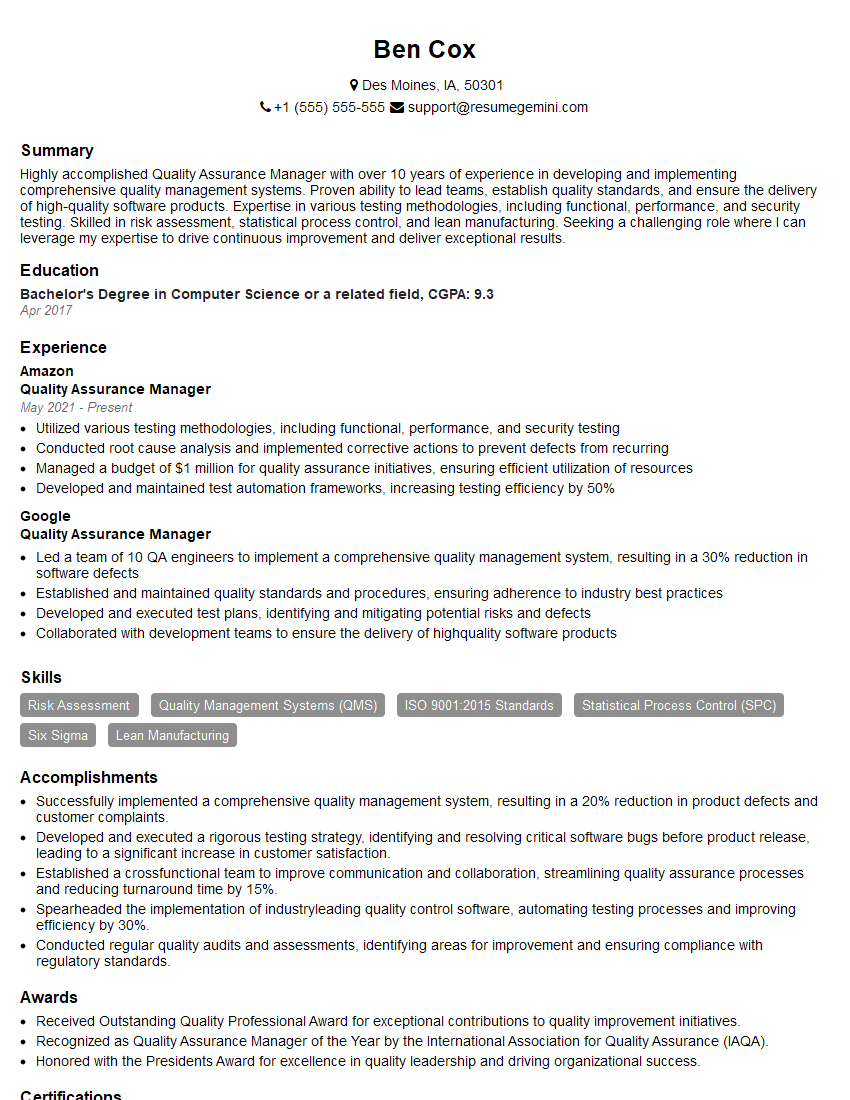
Quality Assurance Manager Resume Sample
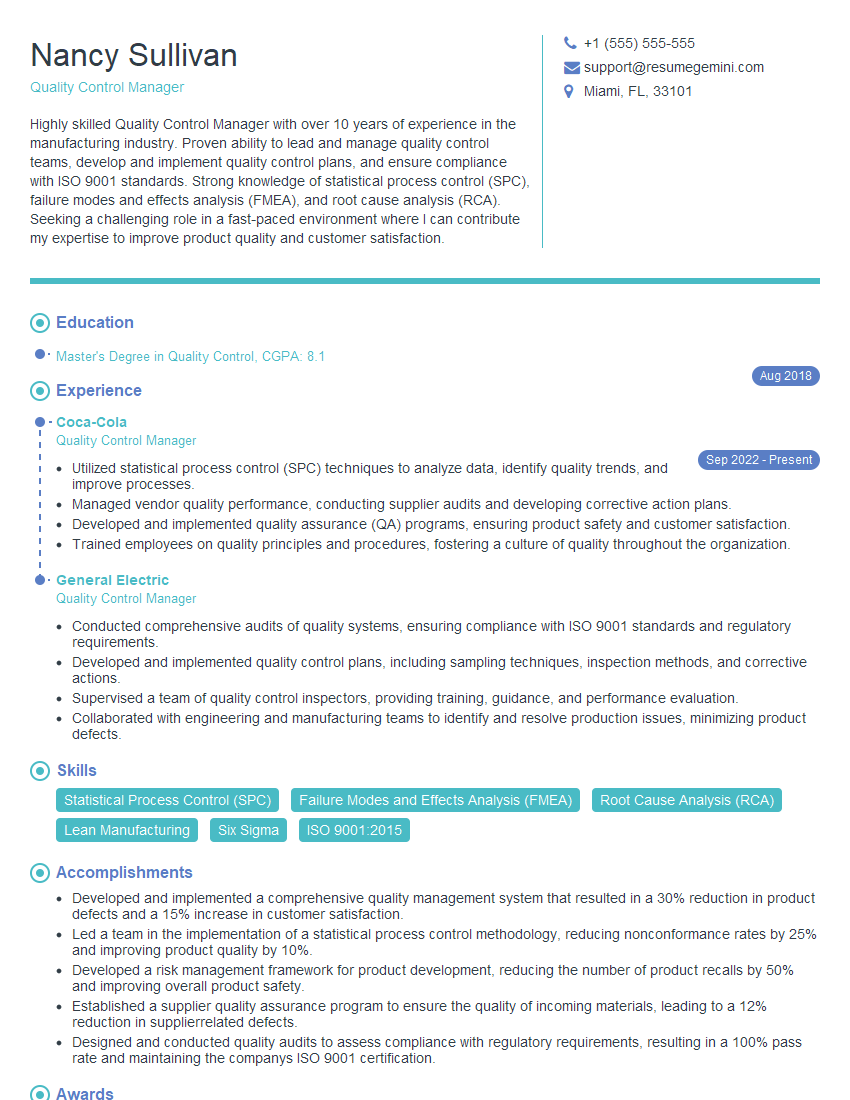
Quality Control Manager Resume Sample
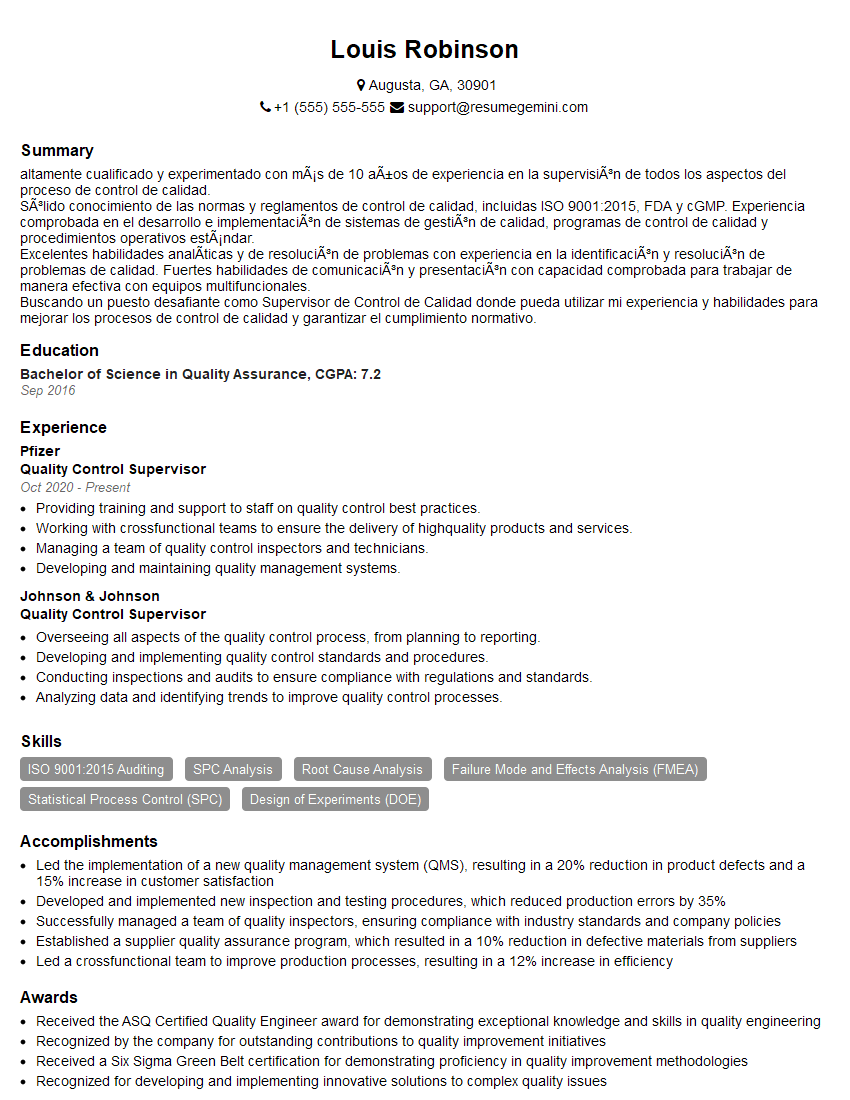
Quality Control Supervisor Resume Sample
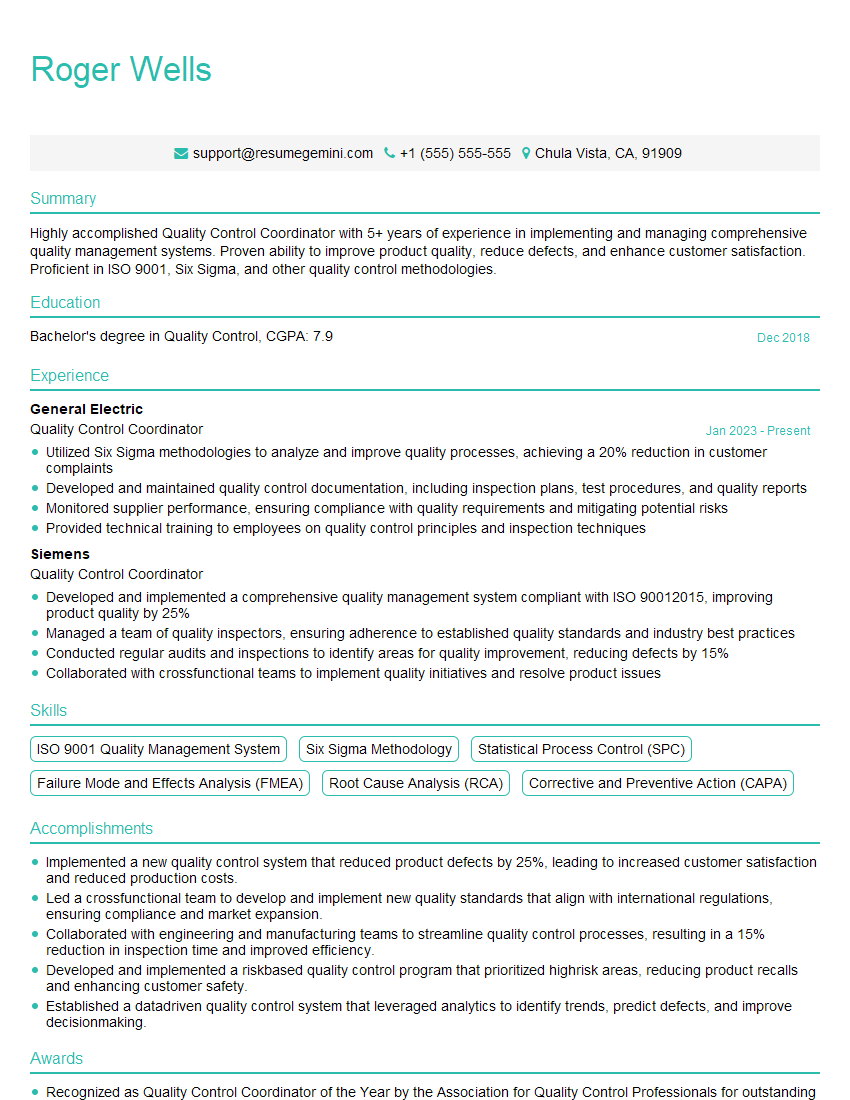
Quality Control Coordinator Resume Sample
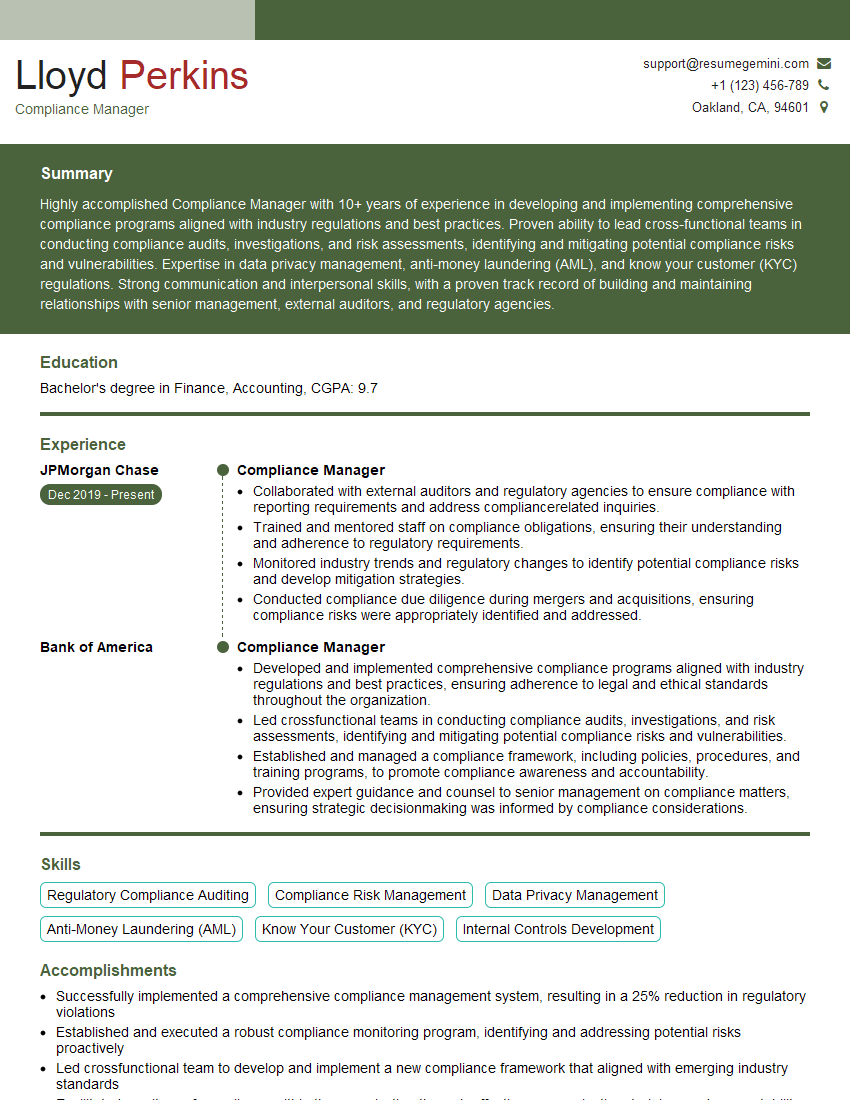
Compliance Manager Resume Sample
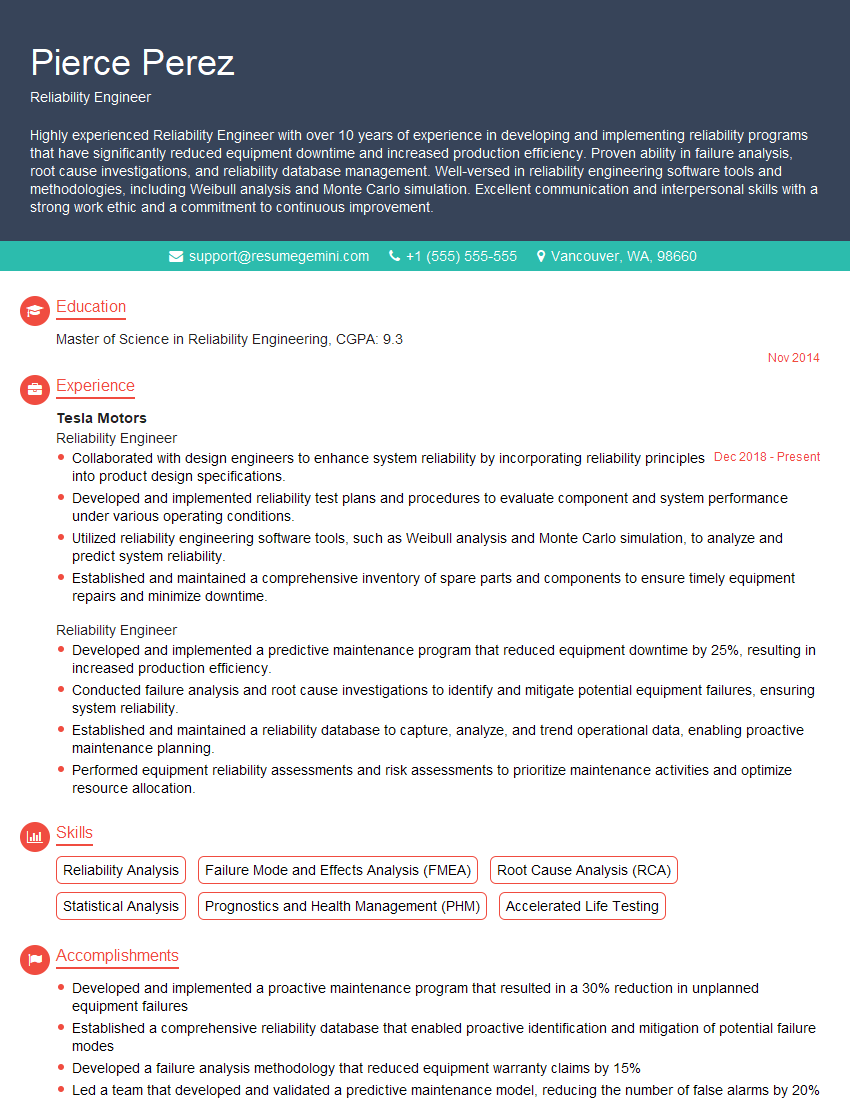
Reliability Engineer Resume Sample
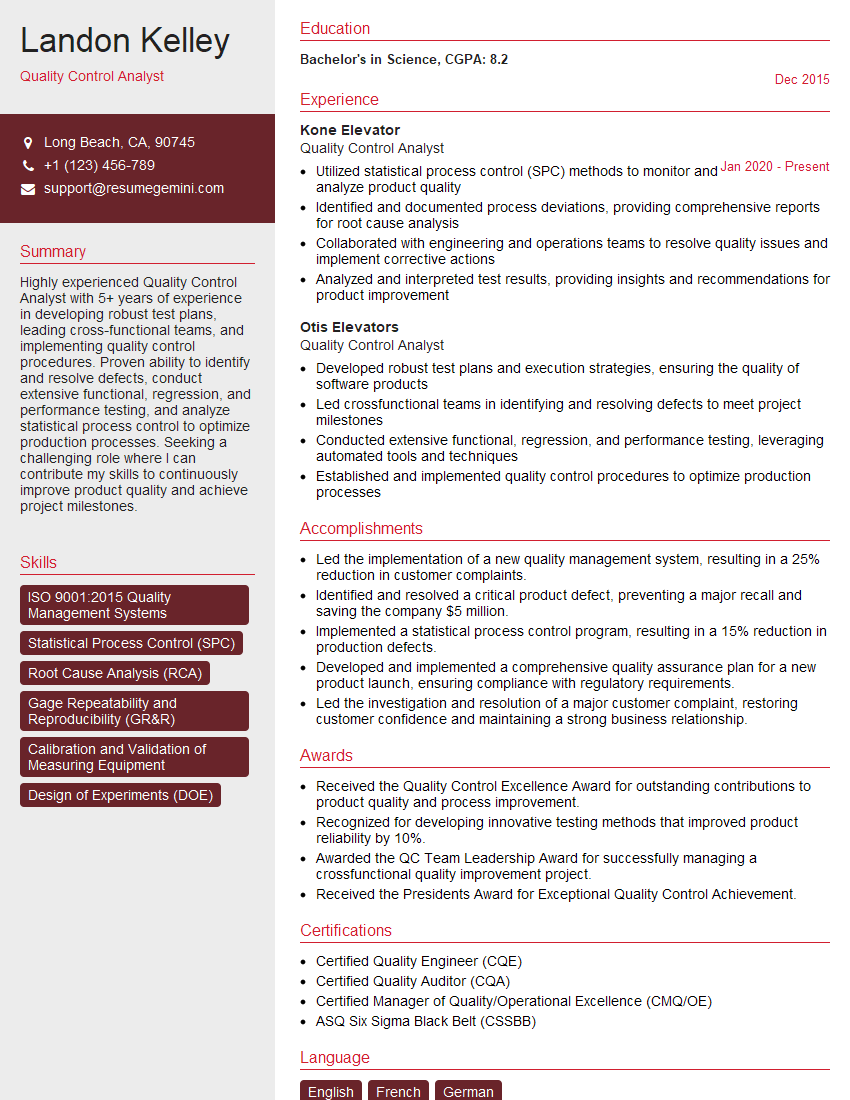
Quality Control Analyst Resume Sample
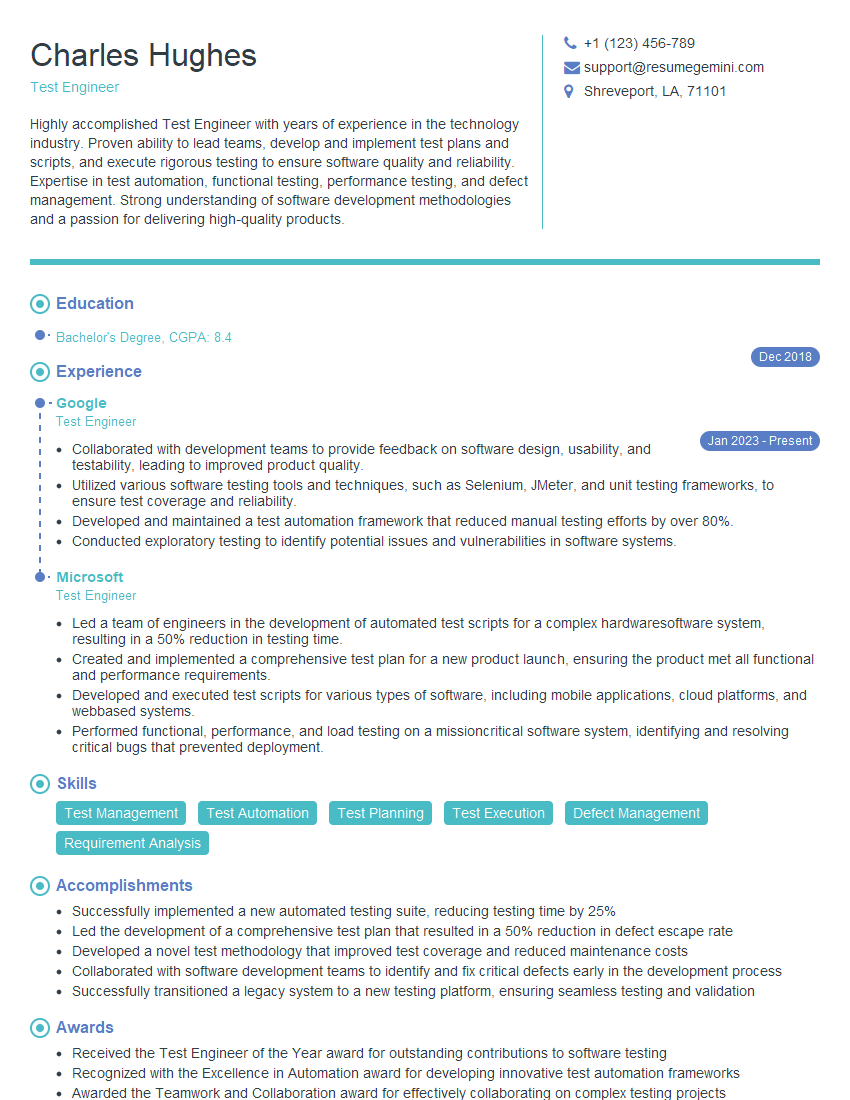
Test Engineer Resume Sample
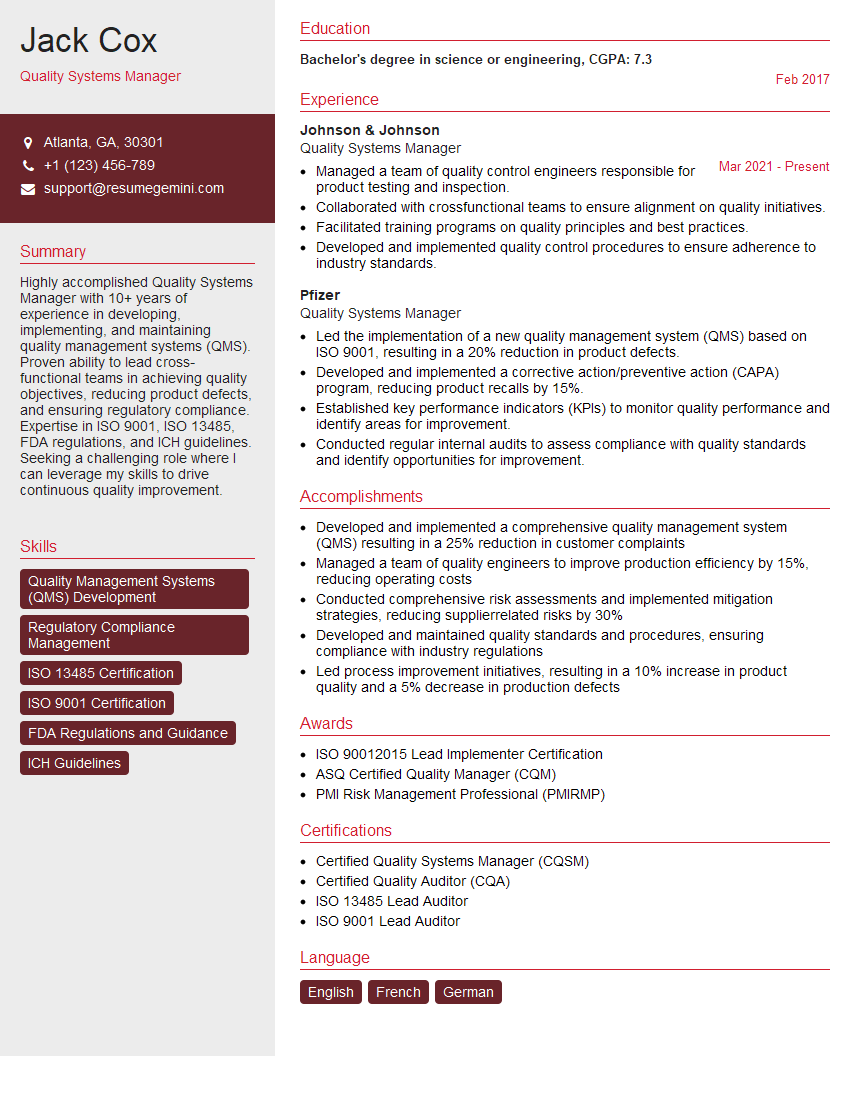
Quality Systems Manager Resume Sample
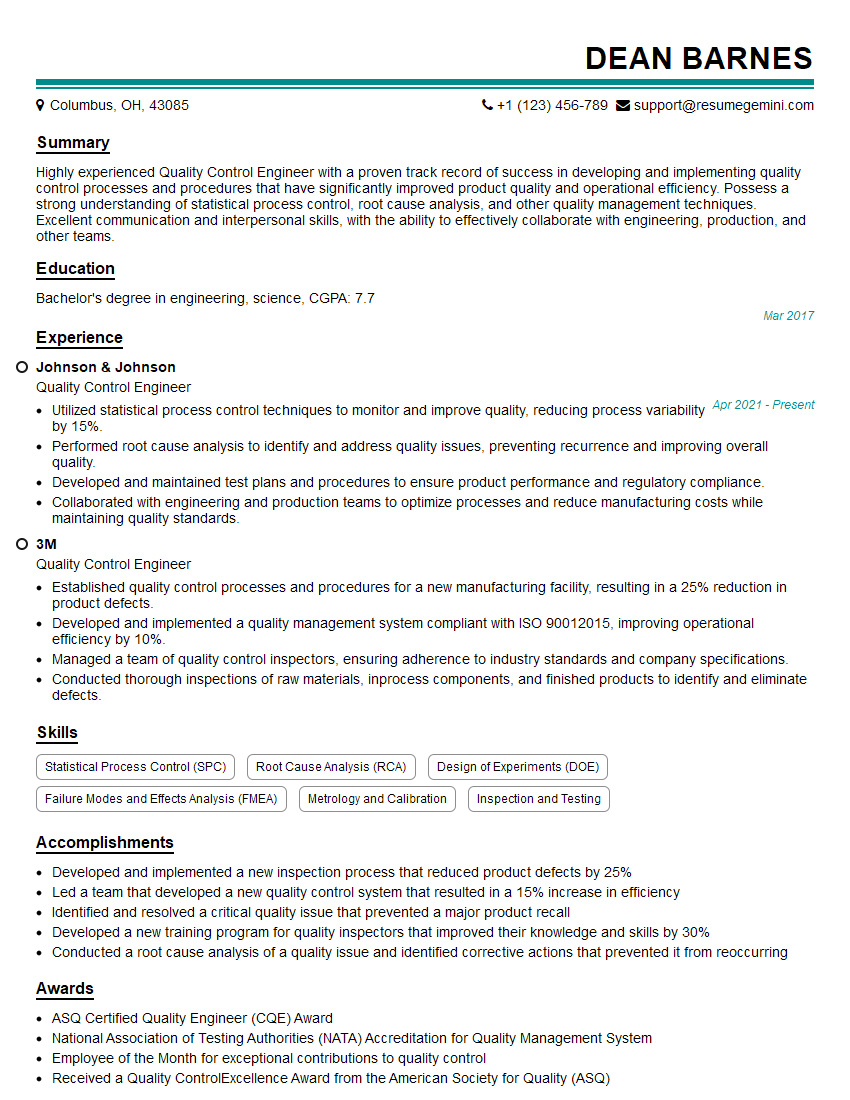
Quality Control Engineer Resume Sample
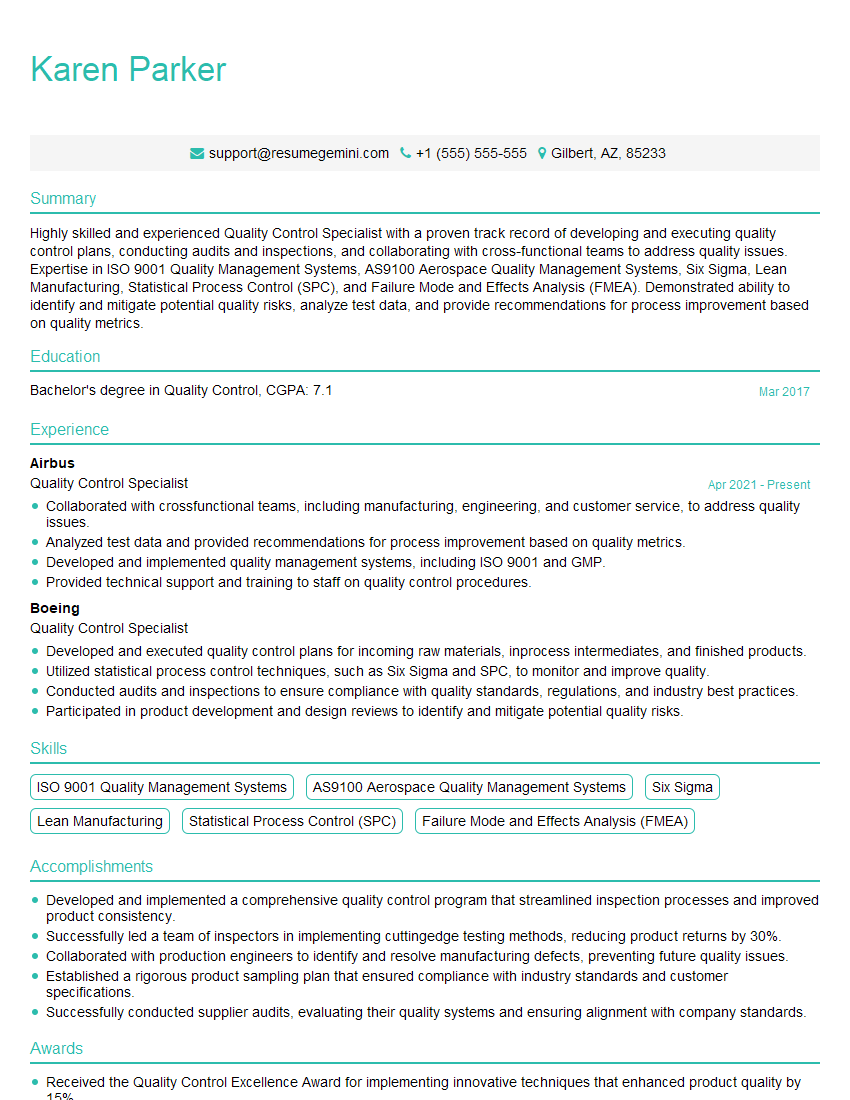
Quality Control Specialist Resume Sample
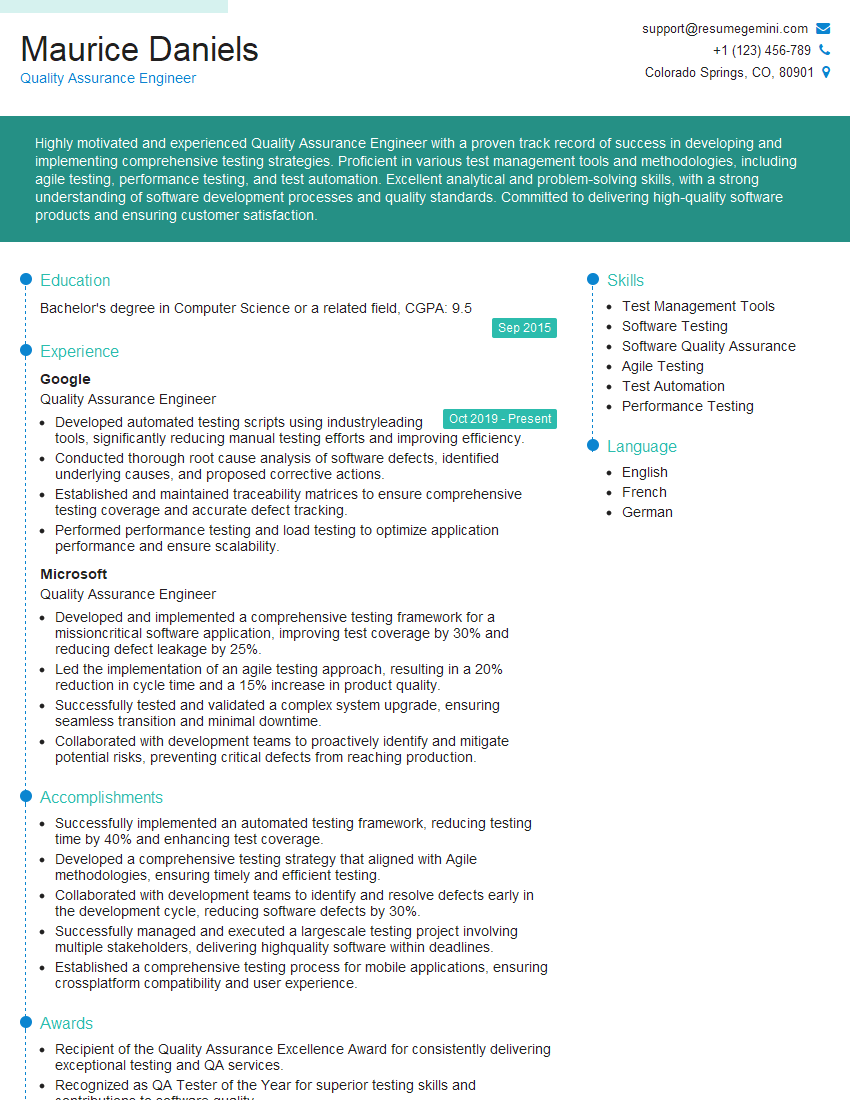
Quality Assurance Engineer Resume Sample
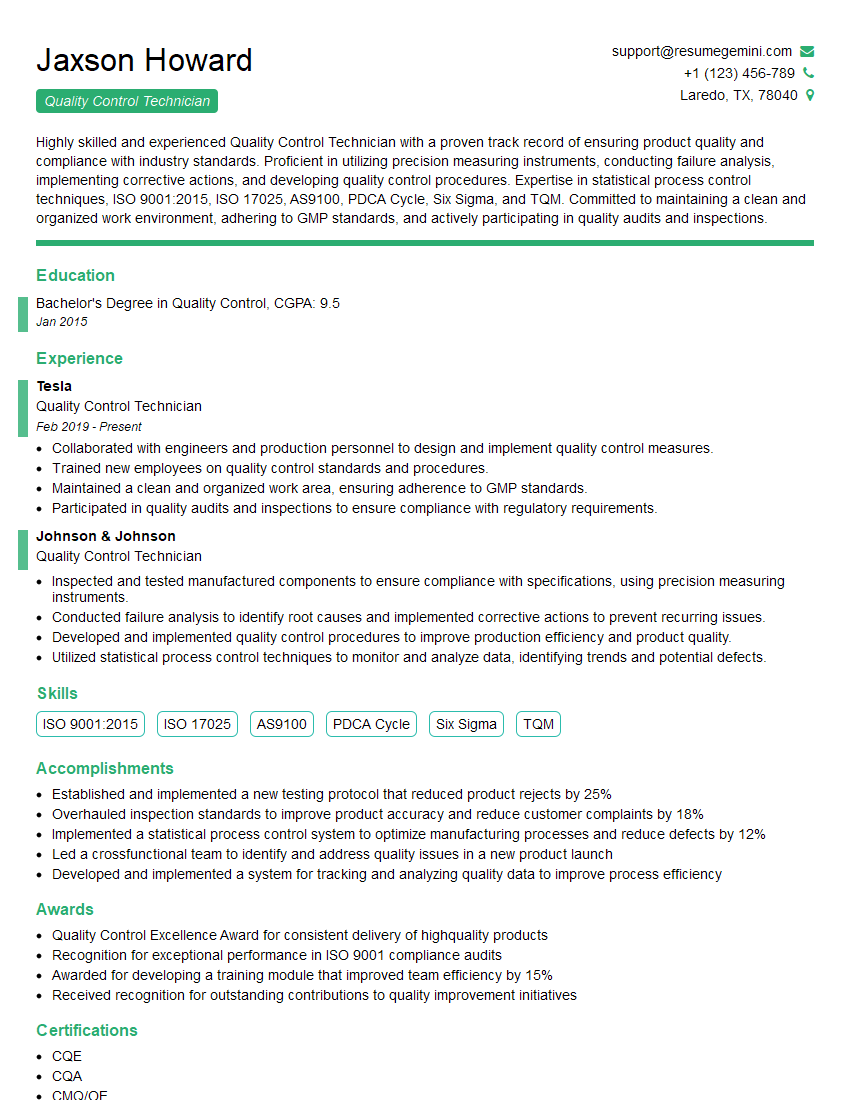
Quality Control Technician Resume Sample
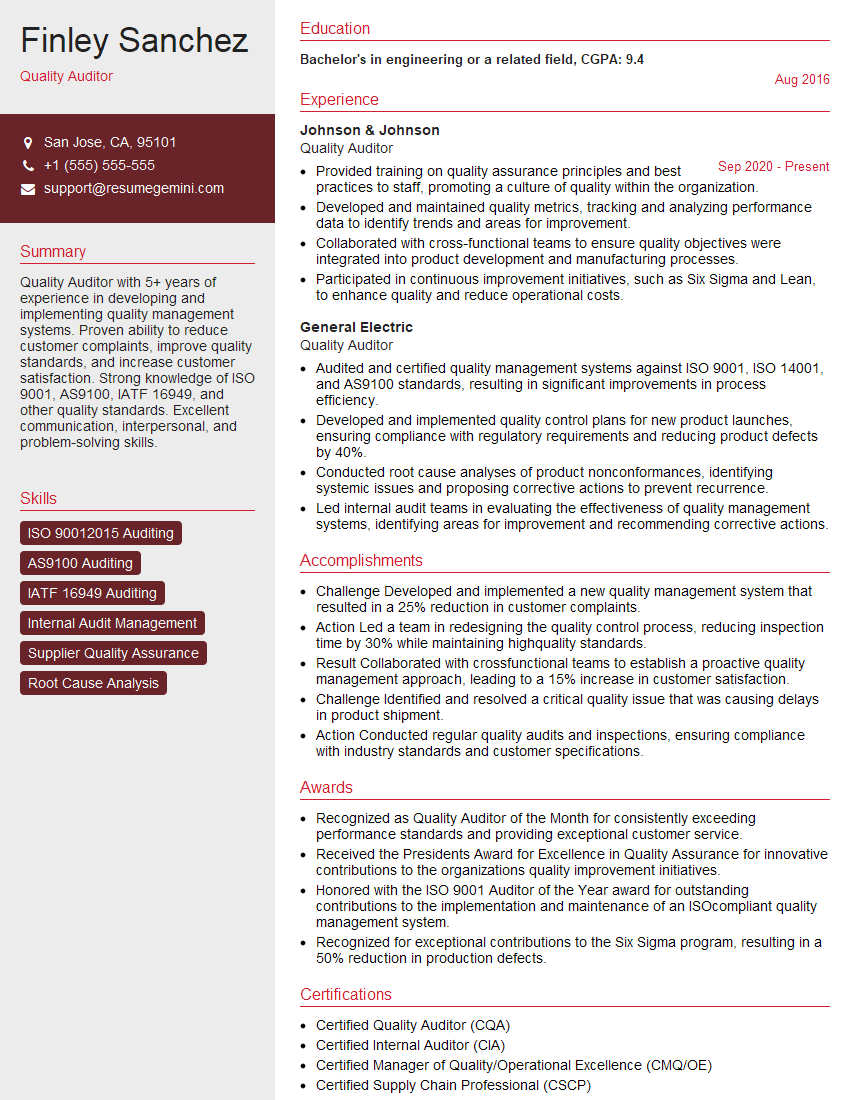
Quality Auditor Resume Sample
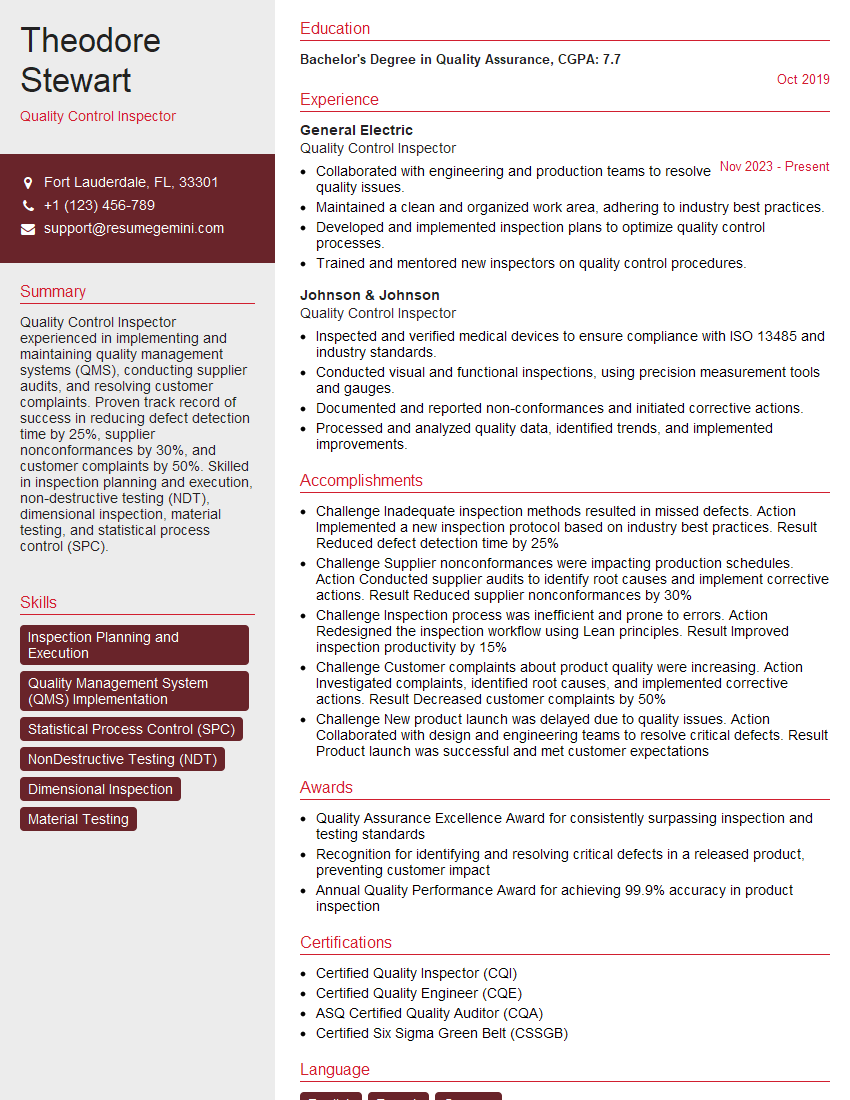
Quality Control Inspector Resume Sample
- Quality Assurance Manager
- Quality Control Manager
- Quality Control Supervisor
- Quality Control Coordinator
- Compliance Manager
- Reliability Engineer
- Quality Control Analyst
- Test Engineer
- Quality Systems Manager
- Quality Control Engineer
- Quality Control Specialist
- Quality Assurance Engineer
- Quality Control Technician
- Quality Auditor
- Quality Control Inspector
Explore more articles
Users Rating of Our Blogs
Share Your Experience
We value your feedback! Please rate our content and share your thoughts (optional).
What Readers Say About Our Blog
Very informative content, great job.
good