Every successful interview starts with knowing what to expect. In this blog, we’ll take you through the top Radiation Dose Calculation interview questions, breaking them down with expert tips to help you deliver impactful answers. Step into your next interview fully prepared and ready to succeed.
Questions Asked in Radiation Dose Calculation Interview
Q 1. Explain the difference between absorbed dose, equivalent dose, and effective dose.
Understanding the differences between absorbed dose, equivalent dose, and effective dose is crucial in radiation protection. Think of it like this: absorbed dose is how much radiation energy a tissue actually receives; equivalent dose considers the type of radiation, acknowledging that some types cause more biological damage than others; and effective dose weights the equivalent dose based on the sensitivity of different organs to radiation.
- Absorbed Dose (Gray, Gy): This measures the energy deposited per unit mass of tissue. Imagine a kilogram of tissue absorbing 1 joule of radiation energy; that’s 1 Gy. It’s a straightforward measure of energy deposition, regardless of the radiation type.
- Equivalent Dose (Sievert, Sv): This accounts for the different biological effects of various radiation types. For instance, alpha particles are more damaging than X-rays, even if they deposit the same amount of energy. A weighting factor (radiation weighting factor, wR) is used to adjust the absorbed dose, reflecting this difference in biological effectiveness. Equivalent dose = Absorbed dose x wR.
- Effective Dose (Sievert, Sv): This is the most comprehensive measure. It considers both the equivalent dose and the sensitivity of different organs and tissues to radiation. Each organ is assigned a tissue weighting factor (wT) which reflects its radiosensitivity. Effective dose = Σ (Equivalent dose to organ i x wT,i).
Example: A patient receives 1 Gy of X-rays to the lungs. The absorbed dose is 1 Gy. The equivalent dose will also be approximately 1 Sv (wR for X-rays is roughly 1). The effective dose will be less than 1 Sv because the tissue weighting factor for the lungs is less than 1, meaning the lungs are not considered as sensitive as some other organs.
Q 2. Describe the different methods used for calculating radiation dose.
Several methods are employed for calculating radiation dose, each with its strengths and weaknesses. The choice depends on the treatment modality and the complexity of the anatomy.
- Analytical Methods: These rely on mathematical formulas to estimate the dose distribution. They are often used for simple geometries and are computationally efficient, but they are less accurate for complex anatomical structures.
- Monte Carlo Simulations: These methods use sophisticated computer algorithms that simulate the interactions of individual photons or particles with matter. They can accurately model complex geometries and heterogeneous tissues. However, they are computationally intensive and require significant computing power.
- Convolution/Superposition Methods: These methods utilize pre-calculated dose kernels (point source dose distributions) that are convolved with the activity distribution to compute the final dose. They offer a balance between accuracy and computational speed.
- Pencil Beam Algorithms: These algorithms model the beam as a collection of narrow beams (pencil beams). Each beam’s dose is calculated and then the total dose is obtained by summing the contributions of individual pencil beams. They are computationally efficient but might be less accurate than Monte Carlo simulations.
In practice, most treatment planning systems use a combination of these methods. For example, convolution/superposition might be used for initial dose calculations, refined later by Monte Carlo simulations in critical areas.
Q 3. What are the limitations of different dose calculation algorithms?
Dose calculation algorithms, while powerful, have inherent limitations. Accuracy is often traded against computational speed.
- Inaccuracies in modeling anatomy: Algorithms rely on image data (CT scans, MRI), which may not perfectly represent the patient’s actual anatomy. Small errors in image segmentation or registration can significantly affect dose calculation.
- Simplified physics models: Many algorithms use simplified models of radiation transport, ignoring some physical interactions. Monte Carlo simulations are superior in addressing this but are slow.
- Heterogeneity effects: Accurate modeling of dose in heterogeneous tissues (different densities) is a challenge. Algorithms struggle to perfectly account for electron transport and scatter in complex tissues.
- Algorithm-specific biases: Each algorithm has inherent biases due to its underlying assumptions. Understanding these biases is crucial for accurate interpretation of dose calculations. Different algorithms can produce different dose distributions for the same plan.
These limitations highlight the importance of quality assurance and verification of dose calculations, often using independent verification methods.
Q 4. How do you account for heterogeneity in tissue density during dose calculation?
Accounting for tissue density heterogeneity is critical for accurate dose calculation, especially in radiation therapy. Different tissues attenuate radiation differently, leading to significant dose variations.
Several techniques are used:
- Density-based correction factors: Many algorithms apply correction factors based on tissue density, modifying the dose distribution according to the density map derived from CT scans.
- Monte Carlo simulations: Monte Carlo simulations inherently account for heterogeneous densities by explicitly modeling the interaction of radiation with individual tissue components. This is generally considered the most accurate method, but computationally expensive.
- Advanced algorithms: Newer algorithms utilize sophisticated models of electron transport and scattering to better handle heterogeneous media, bridging the gap between accuracy and speed.
Example: Bones, with their high density, attenuate radiation more significantly than soft tissues. If not properly accounted for, a dose calculation could underestimate the dose to tissues behind a bone, leading to potential underdosing or overdosing of adjacent tissues.
Q 5. Explain the role of inverse planning in radiation therapy treatment planning.
Inverse planning is a revolutionary approach in radiation therapy treatment planning. Instead of manually shaping the beam to achieve a desired dose distribution (forward planning), inverse planning uses optimization algorithms to find the optimal beam parameters (intensity, angles, etc.) that best match a prescribed dose distribution.
How it works:
- The clinician defines the target volume (tumor) and organs at risk (OARs) along with dose constraints.
- The inverse planning algorithm then searches for the optimal beam parameters that deliver the prescribed dose to the target while minimizing the dose to the OARs.
- The algorithm iteratively adjusts the beam parameters based on a cost function that balances target coverage and OAR sparing.
Advantages:
- Improved target coverage and OAR sparing.
- More efficient use of beam time.
- Ability to handle complex dose distributions.
Example: In treating a lung tumor close to the heart, inverse planning can help deliver a high dose to the tumor while minimizing the dose to the heart, leading to improved treatment efficacy and reduced side effects.
Q 6. Discuss the importance of quality assurance in radiation dose calculations.
Quality assurance (QA) in radiation dose calculations is paramount to ensure patient safety and treatment effectiveness. Errors in dose calculations can have severe consequences, potentially leading to underdosing (treatment failure) or overdosing (increased toxicity).
QA involves multiple steps:
- Regular calibration of treatment machines: Ensuring that the machines deliver the intended dose.
- Verification of treatment plans: Independent verification of dose calculations using different algorithms or independent QA tools.
- Regular testing of treatment planning software: Ensuring the software is functioning correctly and accurately.
- Use of independent dose calculation algorithms: Comparing dose distributions calculated by different algorithms.
- Phantom measurements: Measurements in phantoms simulating patient anatomy to validate dose calculations.
A robust QA program minimizes errors, ensures the safety of patients, and optimizes treatment outcomes. Regular audits and internal reviews are also essential components.
Q 7. What are the common sources of error in radiation dose calculations?
Errors in radiation dose calculations can arise from numerous sources.
- Errors in contouring: Inaccurate delineation of target volumes and organs at risk on imaging data.
- Errors in image registration: Misalignment of imaging datasets used for treatment planning.
- Errors in beam modeling: Inaccurate modeling of radiation beam parameters (energy, shape, etc.).
- Errors in dose calculation algorithms: Limitations of algorithms in handling complex geometries and heterogeneous tissues.
- Human errors: Errors in data entry, plan review, or treatment delivery.
- Software or hardware malfunctions: Malfunctioning equipment or software glitches.
Minimizing errors requires a multi-pronged approach: rigorous quality assurance, careful attention to detail, comprehensive training, and use of robust treatment planning systems.
Q 8. How do you verify the accuracy of a dose calculation?
Verifying the accuracy of a dose calculation is crucial for patient safety and treatment efficacy. We employ a multi-pronged approach, combining independent calculations with quality assurance checks.
- Independent Dose Calculations: We use multiple treatment planning systems (TPS) or different algorithms within the same TPS to perform independent dose calculations for the same plan. Discrepancies are investigated to identify potential errors in input data or algorithm settings.
- Quality Assurance (QA) Procedures: Rigorous QA procedures are followed, involving both physical measurements (e.g., using ionization chambers and film dosimetry) and computational verification. We compare the calculated doses with measured doses to assess the accuracy and precision of the TPS. This includes daily checks of machine output and periodic comprehensive QA tests.
- Phantom Measurements: We use phantoms – anatomical representations – to deliver radiation and measure dose distribution. These measurements are then compared against the TPS calculations. Any significant deviations trigger a thorough investigation into the source of error. For example, if the dose to a specific point in the phantom is consistently higher or lower than calculated, we investigate beam parameters, patient setup parameters or even potential issues with the dosimetry equipment itself.
- Peer Review: Experienced medical physicists review dose calculations, especially for complex cases. This second set of eyes can often catch errors that might have been missed initially.
Think of it like building a house – you wouldn’t rely on just one person’s calculations; you’d have blueprints, inspections, and multiple contractors checking each other’s work. The same principle applies to radiation dose calculations; multiple layers of verification ensure patient safety and optimal treatment.
Q 9. Explain the concept of dose volume histograms (DVHs).
A Dose-Volume Histogram (DVH) is a graphical representation of the radiation dose distribution within a target volume (like a tumor) or an organ at risk (OAR). It shows the percentage of the volume receiving a given dose. The x-axis represents the dose (typically in Gray, Gy), and the y-axis represents the volume (typically in percentage or cubic centimeters).
Imagine you’re painting a wall, and you want to know how much of the wall is covered with each shade of paint. The DVH is like a chart that shows the percentage of the wall covered by each shade. Each point on the DVH graph represents the percentage of a volume that has received at least a certain dose. A steeper curve suggests a more homogenous dose, while a shallower curve suggests a more heterogeneous dose.

Q 10. How are DVHs used in treatment planning and evaluation?
DVHs are essential tools in treatment planning and evaluation. They are used to:
- Treatment Optimization: During treatment planning, DVHs help us assess the balance between delivering a sufficient dose to the tumor while minimizing the dose to surrounding healthy tissues. By looking at DVHs of both the target and organs at risk, we can adjust beam angles, intensities, and other parameters to optimize the plan.
- Plan Comparison: DVHs allow us to compare different treatment plans and select the one that best meets the clinical goals. We can quantitatively compare the dose delivered to the tumor and the dose received by critical organs.
- Treatment Evaluation: Post-treatment, DVHs can be used to assess the actual dose delivered compared to the planned dose. Deviations might indicate issues with treatment delivery or patient positioning.
- Treatment Response Prediction: In some cases, the shape of the DVH, specifically parameters extracted from it (e.g., D95, V20), can be correlated with tumor response and patient outcome. This helps us predict the efficacy of the therapy.
For example, if we’re treating a lung tumor near the heart, the DVH will show the percentage of the heart receiving different dose levels. This allows us to optimize the plan to minimize the risk of cardiac toxicity while ensuring adequate tumor coverage.
Q 11. Describe the process of commissioning a new treatment planning system.
Commissioning a new treatment planning system is a rigorous process ensuring its accuracy and reliability before clinical use. It involves several steps:
- Installation and Acceptance Testing: The system is installed and rigorously tested according to the vendor’s specifications. This includes checking hardware functionality, software versions, and database connectivity.
- Beam Data Acquisition: Precise measurements of the radiation beams produced by the linear accelerator are performed using ionization chambers and other dosimeters. This data is then input into the TPS to model the radiation beams accurately.
- Geometry and Image Quality Assurance: The accuracy of CT image acquisition and processing is verified by analyzing the image quality and comparing the images produced by different modalities. Any discrepancies are investigated and addressed.
- Dose Calculation Algorithm Verification: The accuracy of the dose calculation algorithms is validated using various phantoms and comparing calculated doses with measured doses using different dosimetry techniques. The acceptance criteria are often based on the recommendations from international organizations like the American Association of Physicists in Medicine (AAPM).
- Clinical Case Verification: A series of clinical cases are planned using the new TPS and the plans are compared to those from the previous system. This helps to confirm the clinical applicability of the new system.
- Documentation: The entire commissioning process is meticulously documented, including all measurement data, analysis, and acceptance criteria. This documentation serves as evidence of compliance with regulatory requirements.
Commissioning is not a one-time event; ongoing quality assurance procedures are necessary to maintain the accuracy and reliability of the TPS throughout its lifetime. This is essential to ensure consistently accurate and safe radiation therapy.
Q 12. What are the regulatory requirements for radiation dose calculations?
Regulatory requirements for radiation dose calculations vary depending on the country and regulatory body. However, common themes include:
- Accuracy and Precision: Dose calculations must be accurate and precise, with defined tolerances. This often involves adherence to established protocols and standards, such as those published by the AAPM or IAEA.
- Quality Assurance: Comprehensive QA programs are mandatory, including regular checks of equipment calibration, dose calculation algorithms, and treatment delivery accuracy. Documentation of these QA procedures is crucial.
- Treatment Planning System (TPS) Validation: The TPS must be validated according to established standards. This usually involves commissioning and ongoing quality checks to ensure it conforms to regulatory standards.
- Personnel Qualification: Medical physicists and dosimetrists involved in dose calculations must possess the necessary qualifications and experience to perform their tasks competently.
- Record Keeping: Detailed records of all dose calculations, QA procedures, and treatment plans must be maintained, readily available for audit.
- Licensing: Many jurisdictions require licensing or accreditation for radiation therapy facilities and the medical physicists and dosimetrists working there.
Non-compliance with these regulations can lead to sanctions, including fines or suspension of operations, highlighting the importance of rigorous adherence to all regulatory requirements in radiation dose calculations.
Q 13. Explain the concept of biological effective dose (BED).
Biological Effective Dose (BED) is a concept that takes into account both the physical dose of radiation delivered and the biological effect of that dose on the cells. It’s calculated considering the radiation’s linear energy transfer (LET) and the fractionation schedule (number of fractions and time interval between fractions). A higher BED indicates a greater biological effect.
The formula for BED is often simplified as: BED = n × d × (1 + α/β)
Where:
nis the number of fractionsdis the dose per fractionα/βis a parameter that represents the ratio of the linear and quadratic components of the cell survival curve and is tissue-specific. This ratio reflects the repair capacity of the tissue.
For example, a high α/β ratio (e.g., for early-responding tissues like skin) indicates that the biological effect increases significantly with increased dose per fraction. Conversely, a low α/β ratio (e.g., for late-responding tissues like spinal cord) implies a less pronounced increase in biological effect with increasing dose per fraction.
BED helps to compare different fractionation schedules in terms of their biological effects and aids in treatment planning by allowing for a more accurate prediction of the biological response to radiation therapy.
Q 14. How does fractionation affect the total dose delivered to a tumor?
Fractionation, the delivery of radiation in multiple smaller doses rather than one large dose, significantly affects the total dose delivered to a tumor. While the total dose remains the same, the biological effect differs dramatically.
- Reduced Normal Tissue Damage: Fractionation allows healthy tissues to repair themselves between treatments, reducing overall damage. This is due to the differential repair kinetics between tumor cells and normal tissues.
- Enhanced Tumor Cell Kill: While normal tissues repair, tumor cells may not have the same capacity for repair, leading to a cumulative effect over multiple fractions. This leads to a more effective tumor cell kill.
- Increased Therapeutic Ratio: By combining the reduced damage to healthy tissues and the enhanced tumor cell kill, fractionation improves the therapeutic ratio – the balance between tumor control and normal tissue toxicity. This is why fractionation is a cornerstone of modern radiation therapy.
- Reoxygenation and Redistribution: During fractionation, tumor cells may reoxygenate (become more susceptible to radiation) and redistribute (cells in different phases of the cell cycle become more vulnerable to radiation), potentially enhancing the overall effect of treatment.
Consider a simple analogy: Instead of hitting a tree with one massive blow, you hit it with several smaller blows over time. The tree might be able to withstand a single massive blow, but the repeated smaller blows will eventually weaken and eventually fell it. This is conceptually similar to fractionation in radiation therapy. This allows for better tumor control with less damage to the surrounding healthy tissue.
Q 15. What are the different types of radiation detectors used in dosimetry?
Radiation detectors used in dosimetry are crucial for measuring the amount of ionizing radiation absorbed by a material or a person. Different detectors utilize various physical principles to achieve this. The choice of detector depends on the type of radiation, the energy range, and the required accuracy.
- Ionization Chambers: These are classic devices that measure the ionization produced by radiation in a gas-filled chamber. They are reliable, robust, and offer a wide dynamic range.
- Thermoluminescent Dosimeters (TLDs): TLDs use the property of certain crystals (like lithium fluoride) to store energy from radiation exposure as trapped electrons. When heated, these electrons release their energy as light, the intensity of which is proportional to the radiation dose.
- Film Badges: These rely on photographic film that darkens upon exposure to radiation, allowing for a visual representation of the dose. They offer a permanent record but are less precise than other methods.
- Solid State Detectors: These utilize semiconductor materials (e.g., silicon diodes) that produce an electrical signal upon radiation interaction. They’re known for their fast response times and high sensitivity.
- Optically Stimulated Luminescence (OSL) Dosimeters: These use aluminum oxide crystals that, when stimulated by laser light after radiation exposure, emit light proportional to the absorbed dose. They offer high sensitivity and wide dose range.
Career Expert Tips:
- Ace those interviews! Prepare effectively by reviewing the Top 50 Most Common Interview Questions on ResumeGemini.
- Navigate your job search with confidence! Explore a wide range of Career Tips on ResumeGemini. Learn about common challenges and recommendations to overcome them.
- Craft the perfect resume! Master the Art of Resume Writing with ResumeGemini’s guide. Showcase your unique qualifications and achievements effectively.
- Don’t miss out on holiday savings! Build your dream resume with ResumeGemini’s ATS optimized templates.
Q 16. Describe the principles behind ionization chambers and thermoluminescent dosimeters.
Ionization Chambers: These function on the principle of ionization. Incoming radiation ionizes the gas (usually air) inside the chamber, creating ion pairs (electrons and positive ions). An electric field sweeps these ions to electrodes, generating a measurable current. The magnitude of this current is directly proportional to the radiation intensity and, consequently, the dose rate. Think of it like a tiny lightning storm inside the chamber; the more radiation, the more ‘lightning’ (ions), leading to a stronger electrical signal.
Thermoluminescent Dosimeters (TLDs): TLDs work differently. When radiation interacts with the TLD material, energy is trapped in the crystal lattice structure as electrons in metastable energy states. Heating the TLD releases these trapped electrons, causing them to return to their ground state and emitting light (luminescence) in the process. The intensity of this light is directly proportional to the absorbed radiation dose. Imagine a sponge absorbing water (radiation); the more water (radiation) it absorbs, the more water it releases when squeezed (heated).
Q 17. How are uncertainties associated with dose calculations quantified and reported?
Uncertainties in dose calculations arise from various sources: measurement uncertainties in the detector, uncertainties in the radiation beam parameters (energy, fluence), and uncertainties in the patient anatomy and tissue properties. These uncertainties are quantified using statistical methods. The most common approach involves calculating the standard deviation or standard error of the mean for repeated measurements. This standard deviation is often expressed as a percentage of the measured dose.
Reporting usually follows established guidelines (e.g., those from the International Organization for Standardization). The uncertainties are reported alongside the calculated dose, often presented as a confidence interval (e.g., the dose is 50 Gy ± 2 Gy at the 95% confidence level), clearly indicating the level of precision associated with the dose value. This allows for a better understanding of the reliability of the dose estimation.
Q 18. Discuss the role of Monte Carlo simulations in radiation dose calculations.
Monte Carlo simulations are powerful computational tools that play a vital role in modern radiation dose calculations. They simulate the transport of individual radiation particles through matter using statistical methods. This involves tracking millions or even billions of individual particles, considering their interactions with tissue and other materials.
By simulating the complex interactions of radiation with the human body, Monte Carlo simulations provide more accurate dose calculations than analytical methods, especially in complex geometries. They are essential for treatment planning in radiotherapy, enabling precise dose delivery while minimizing damage to healthy tissues. For example, they allow for accurate calculation of dose distributions in patients with irregular anatomy, where simpler calculation methods can be insufficient. The outputs include detailed 3D dose distributions and can incorporate patient-specific anatomical information from imaging scans.
Q 19. How do you handle outliers in dosimetry data?
Outliers in dosimetry data, values significantly deviating from the rest of the data set, require careful handling. Ignoring them can bias the results, while incorrect handling can introduce further errors. The first step is to investigate the cause of the outlier. Possible reasons include equipment malfunction, human error during measurement, or an unexpected radiation event.
Methods for handling outliers include: visual inspection (identifying outliers from histograms or scatter plots), using statistical tests (e.g., Grubbs’ test or Dixon’s test) to assess the statistical significance of the deviation, and robust statistical methods that are less sensitive to outliers (e.g., median instead of mean). If a plausible cause is found (e.g., a known equipment malfunction), the outlier data point might be removed. If no cause can be determined, the outlier may be included but needs careful documentation, and the results reported with caution. Always maintain a detailed record of all measurements and their associated uncertainties.
Q 20. Explain the concept of treatment planning optimization.
Treatment planning optimization aims to deliver the prescribed radiation dose to the tumor while minimizing the dose to surrounding healthy tissues. This is achieved through iterative processes that refine the treatment plan, considering factors such as beam angles, energy, and intensity modulation. The goal is to maximize the tumor control probability (TCP) while minimizing the normal tissue complication probability (NTCP).
This optimization utilizes sophisticated algorithms and often involves inverse planning techniques. Inverse planning starts with a desired dose distribution and determines the optimal beam parameters to achieve it. Optimization algorithms often incorporate dose constraints and objective functions that quantify the trade-off between tumor coverage and healthy tissue sparing. This involves sophisticated mathematical modelling and advanced software systems capable of handling large amounts of data and complex calculations. The process is iterative, with the planner making adjustments based on the results of simulations and dose calculations.
Q 21. What are the different types of radiation beams used in radiotherapy?
Modern radiotherapy utilizes a variety of radiation beams, each with its own advantages and disadvantages, selected based on the tumor location, size, and surrounding tissues.
- Photon Beams: These are the most commonly used, produced by linear accelerators and cobalt-60 units. They have good penetration but are less conformal (don’t precisely match the tumor shape).
- Electron Beams: These have lower penetration than photons and are used for superficial tumors. They offer better conformity to the target volume, minimizing dose to deeper structures.
- Proton Beams: These have a defined Bragg peak, depositing a high dose at a specific depth and sparing tissues beyond. They’re particularly beneficial for deep-seated tumors near critical organs.
- Heavy Ion Beams (e.g., carbon ions): These have a similar Bragg peak to protons but with increased Relative Biological Effectiveness (RBE), meaning they are more effective at killing tumor cells. They are used for very challenging cases.
The choice of beam type is a crucial aspect of treatment planning and is determined through careful consideration of the specific clinical scenario.
Q 22. How do beam modifiers, such as wedges and compensators, affect dose distribution?
Beam modifiers like wedges and compensators are crucial tools in radiation therapy, altering the dose distribution to better conform to the target while sparing healthy tissues. They essentially shape the radiation beam.
Wedges are angled devices placed in the beam path to modify the intensity across the field. Imagine cutting a pie-slice shape out of the beam; this reduces the dose on one side and increases it on the other. This is particularly helpful when treating tumors near critical structures where a uniform dose would be damaging. For example, treating a lung cancer near the heart might require a wedge to reduce the dose to the heart while maintaining sufficient dose to the tumor.
Compensators are custom-made devices, often made of lead or other high-density materials, designed to compensate for tissue inhomogeneities. If a tumor is located behind denser tissue like bone, the compensator can shape the beam to deliver a more uniform dose to the target depth despite the varying tissue densities. Think of it like adding extra shielding where the radiation beam needs to penetrate more tissue to reach the tumor.
Both wedges and compensators are meticulously planned using treatment planning systems that simulate the dose distribution with and without these modifiers to optimize treatment effectiveness and safety.
Q 23. Describe the importance of patient positioning in radiation therapy.
Accurate patient positioning is paramount in radiation therapy. The goal is to deliver the prescribed dose precisely to the target while minimizing exposure to surrounding healthy tissues. Even small misalignments can significantly affect dose distribution and treatment outcomes.
Consider this analogy: imagine aiming an arrow at a target. A slight shift in the archer’s position can dramatically change where the arrow lands. Similarly, even a millimeter of error in patient positioning can lead to underdosing the tumor or overdosing healthy organs.
Precise positioning involves a multi-step process. It starts with careful immobilization techniques – using devices like vacuum molds or thermoplastic masks to maintain a consistent and reproducible setup. Accurate imaging techniques like CT or MRI are then used to define the target volume and plan the radiation beam. Finally, during treatment, various technologies such as lasers, optical surface imaging systems, and image guidance systems are used to verify the patient’s position and make any necessary corrections.
Q 24. How do you ensure the accuracy of patient setup during treatment?
Ensuring accurate patient setup is a critical aspect of radiation therapy. We employ several sophisticated techniques to achieve this:
- Image Guidance Systems (IGS): These systems use real-time imaging (e.g., kV or MV imaging) during treatment to verify patient position and make corrections if necessary. This is like having a GPS for the radiation beam, constantly checking its trajectory.
- Laser Alignment Systems: Lasers projected onto the patient’s skin help align them with the treatment couch and radiation beam. This provides a visual guide for the therapist and the patient.
- Surface Imaging Systems: These systems use infrared or other technologies to create a 3D map of the patient’s surface, comparing it to the planned setup to detect any discrepancies.
- External Fiducial Markers: Small radiopaque markers are placed on or near the patient’s skin, which appear on imaging and help verify positioning.
- Internal Fiducial Markers: In some cases, small implants are placed within the patient’s body near the target, enhancing accuracy.
The combination of these techniques allows for continuous monitoring and correction of patient setup, minimizing errors and ensuring the accurate delivery of radiation to the target volume.
Q 25. What are the potential effects of radiation on healthy tissues?
Radiation affects healthy tissues by damaging DNA, leading to a variety of potential short-term and long-term effects. The severity depends on several factors including the dose of radiation, the type of radiation, the sensitivity of the tissue, and the overall health of the individual.
Short-term effects can include skin reactions (redness, dryness, peeling), fatigue, nausea, and hair loss. These effects are usually temporary and resolve after treatment is completed.
Long-term effects are more serious and can include secondary cancers, organ damage (e.g., heart, lung, kidney), infertility, and cognitive impairment. The risk of these long-term effects increases with higher doses of radiation and with exposure to certain organs. We aim to minimize these risks by carefully planning treatment to spare as much healthy tissue as possible.
For example, radiation to the lungs can cause pneumonitis (inflammation of the lungs) or fibrosis (scarring of lung tissue), impacting lung function. Radiation to the heart can increase the risk of heart disease.
Q 26. How do you minimize the dose to healthy organs at risk?
Minimizing dose to healthy organs at risk (OARs) is a central focus in radiation therapy planning. We employ several strategies to achieve this:
- Precise Target Volume Delineation: Accurately defining the target volume ensures that only the necessary tissue receives the prescribed dose.
- Beam Shaping: Using techniques like intensity-modulated radiotherapy (IMRT), volumetric modulated arc therapy (VMAT), and proton therapy allows for precise shaping of the radiation beam, maximizing dose to the target while minimizing dose to surrounding OARs.
- Beam Arrangement and Angles: Careful selection of beam angles and arrangement minimizes the dose to OARs while maximizing dose to the target volume.
- Treatment Planning Optimization: Sophisticated treatment planning software is used to optimize dose distribution, balancing the need for sufficient tumor dose with the need to minimize dose to OARs.
- Toxicity Constraints: During treatment planning, dose limits are set for OARs to limit the risk of side effects.
For instance, in prostate cancer treatment, we prioritize minimizing dose to the bladder and rectum, which are sensitive organs located near the prostate.
Q 27. Explain the concept of target volume delineation.
Target volume delineation is the process of precisely defining the area to be treated with radiation. It’s a crucial step that involves careful analysis of medical images (CT, MRI, PET) to identify and outline the tumor and the areas immediately surrounding it.
The target volume is typically comprised of several sub-volumes:
- Gross Tumor Volume (GTV): This is the visible extent of the tumor on imaging.
- Clinical Target Volume (CTV): This includes the GTV plus any microscopic disease that might be present but not visible on imaging. This accounts for the potential spread of cancer cells beyond what can be directly visualized.
- Planning Target Volume (PTV): This is the CTV expanded to account for uncertainties in patient setup, organ motion, and beam delivery. This ensures that the tumor receives the prescribed dose even with minor errors.
The delineation process involves a multidisciplinary team of radiation oncologists, medical physicists, and sometimes other specialists, using their expertise to accurately and consistently define the various target volumes. Accurate delineation is essential for ensuring optimal treatment delivery and minimizing harm to healthy tissues. Think of it as carefully drawing a map of the area needing treatment to guide the radiation beam.
Key Topics to Learn for Radiation Dose Calculation Interview
- Units and Conversions: Mastering the conversion between different units of radiation dose (e.g., Gray, Sievert, Rad, Rem) is fundamental. Understand the differences and their practical implications.
- Radiation Protection Principles: Demonstrate a solid understanding of ALARA (As Low As Reasonably Achievable) principles and their application in dose calculation scenarios.
- Exposure and Absorbed Dose: Clearly differentiate between exposure and absorbed dose, and understand the factors influencing their relationship.
- Effective Dose Calculation: Familiarize yourself with the methods for calculating effective dose, considering tissue weighting factors and radiation type.
- Dosimetry Techniques: Gain a working knowledge of various dosimetry techniques, including thermoluminescent dosimetry (TLD) and film badge dosimetry.
- Medical Imaging Applications: Understand how dose calculations are applied in various medical imaging modalities like X-ray, CT, and nuclear medicine.
- Radiation Protection Regulations and Guidelines: Be familiar with relevant regulations and guidelines related to radiation safety and dose limits.
- Problem-Solving and Calculations: Practice solving various types of dose calculation problems, encompassing different scenarios and complexities. Develop strong problem-solving skills using relevant equations and formulas.
- Software and Tools: Explore commonly used software and tools for radiation dose calculations and simulations.
Next Steps
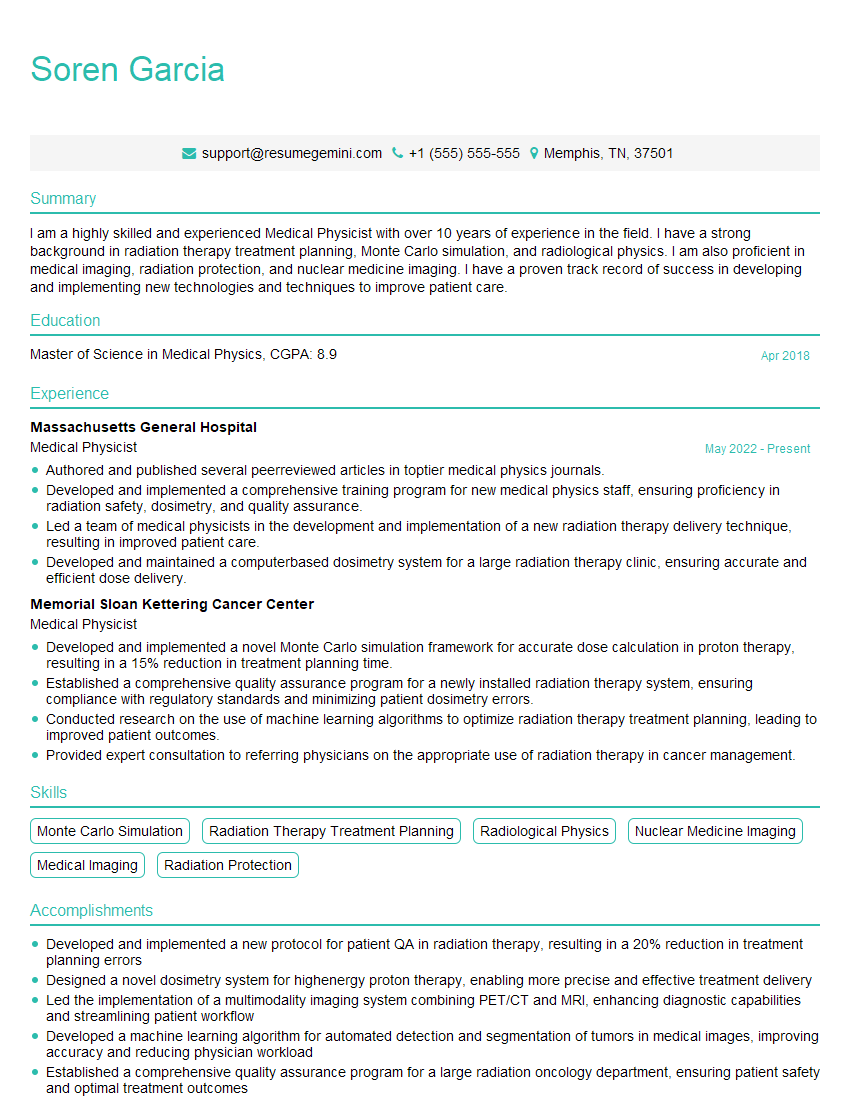
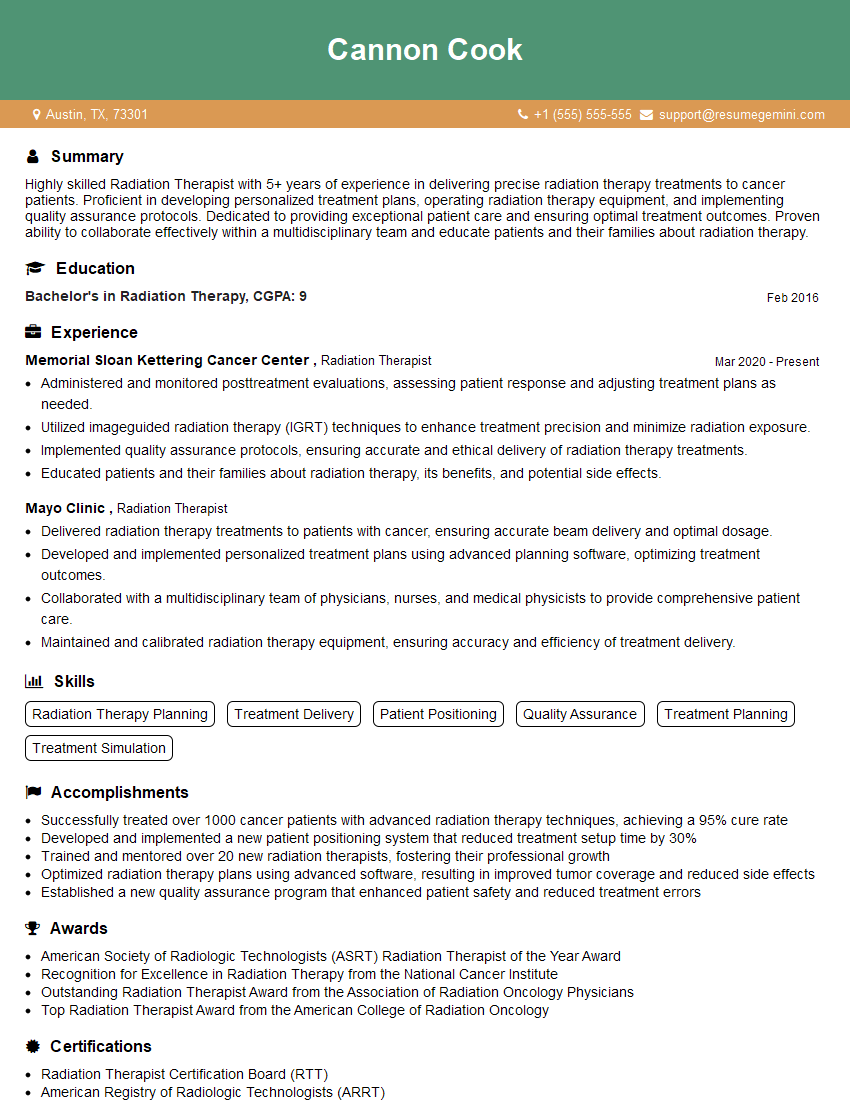
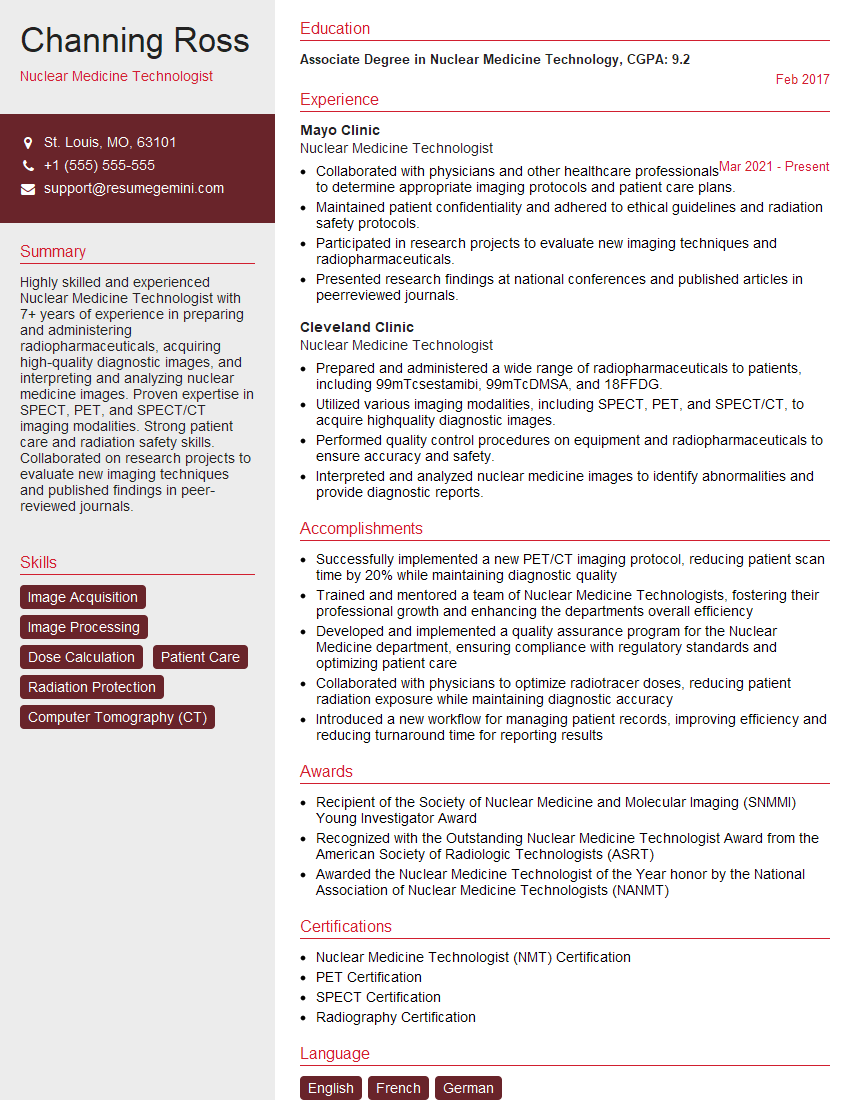
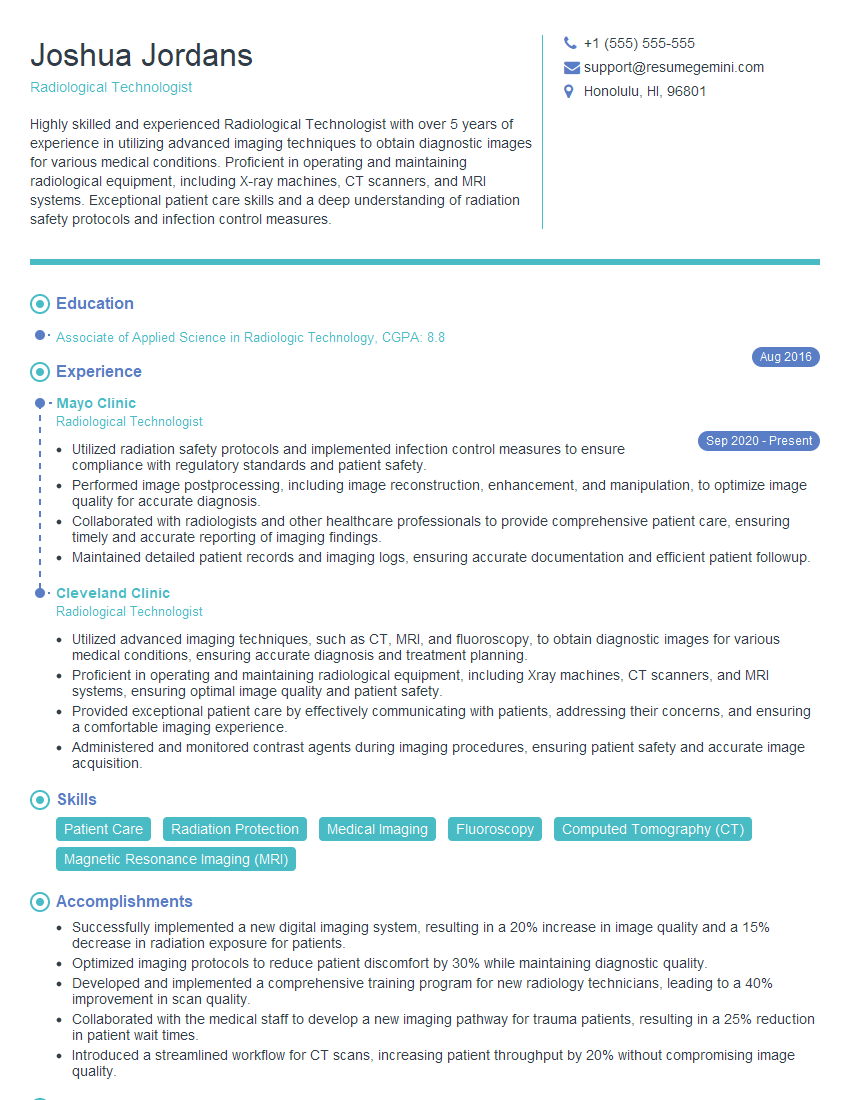
Mastering radiation dose calculation is crucial for career advancement in medical physics, radiation oncology, nuclear medicine, and other related fields. A strong understanding of these principles demonstrates competence and expertise, opening doors to exciting opportunities. To maximize your job prospects, creating an ATS-friendly resume is essential. This ensures your application gets noticed by recruiters and hiring managers. ResumeGemini is a trusted resource for building professional and impactful resumes. They offer examples of resumes tailored to Radiation Dose Calculation to help you create a document that highlights your skills and experience effectively. Take advantage of these resources to present yourself in the best possible light.




Explore more articles
Users Rating of Our Blogs
Share Your Experience
We value your feedback! Please rate our content and share your thoughts (optional).
What Readers Say About Our Blog
Very informative content, great job.
good