The right preparation can turn an interview into an opportunity to showcase your expertise. This guide to Floral Design Trends and Innovations interview questions is your ultimate resource, providing key insights and tips to help you ace your responses and stand out as a top candidate.
Questions Asked in Floral Design Trends and Innovations Interview
Q 1. Describe three current floral design trends influencing the industry.
Three prominent trends currently shaping floral design are the rise of natural, unstructured arrangements, the incorporation of non-floral elements, and a renewed focus on locally sourced and seasonal flowers.
Natural & Unstructured Arrangements: Think less rigid, perfectly symmetrical bouquets, and more loose, flowing designs that mimic the natural growth patterns of flowers. This trend emphasizes texture, movement, and a slightly wild, untamed aesthetic. For instance, instead of tightly bound roses, you might see a cascade of wildflowers interspersed with grasses and seed pods.
Incorporating Non-Floral Elements: This trend involves blending flowers with other natural materials like dried branches, grasses, leaves, fruits, vegetables, and even crystals or stones. This adds depth, texture, and unexpected visual interest. Imagine incorporating dried orange slices and cinnamon sticks into a winter wedding centerpiece for a warm, inviting feel.
Locally Sourced and Seasonal Flowers: Sustainability is key. This trend highlights the beauty of flowers that are in season, reducing environmental impact and supporting local growers. Using seasonal blooms also ensures fresher, more vibrant flowers, resulting in longer-lasting arrangements. For example, a spring wedding might feature tulips and daffodils grown locally, rather than imported roses.
Q 2. Explain the impact of sustainable practices on modern floral design.
Sustainable practices are revolutionizing floral design, impacting everything from sourcing to disposal. The industry is moving away from unsustainable practices toward environmentally responsible choices.
Locally Grown Flowers: Reduces transportation emissions and supports local economies. It also means fresher flowers with longer lifespans.
Seasonally Appropriate Flowers: Minimizes the need for energy-intensive greenhouses and extends the lifespan of flowers. It also adds a unique touch based on the seasonal availability.
Reduced Waste: Innovative techniques like repurposing floral materials (creating wreaths or potpourri from leftover materials), composting, and using biodegradable packaging minimize waste and promote a circular economy within the floral industry.
Eco-Friendly Materials: Substituting traditional floral foam (which is non-biodegradable) with alternatives like chicken wire, floral tape, or even oasis alternatives crafted from recycled materials.
These practices not only benefit the environment but also resonate with environmentally conscious clients, creating a strong brand identity and attracting a wider customer base.
Q 3. How would you incorporate technology (e.g., 3D printing, AR/VR) into a floral design project?
Technology offers exciting opportunities to enhance floral design. 3D printing can create custom vases or unique floral supports with intricate designs, while AR/VR can allow clients to visualize arrangements before they are made.
3D Printed Vases/Supports: Imagine creating a bespoke vase with a design that perfectly complements the chosen flowers, or a unique support structure for a large installation. This adds an element of customization and artistry not easily achieved with traditional methods.
Augmented Reality (AR): An AR app could let clients ‘place’ a virtual floral arrangement in their event space to see how it looks before committing to the design. This helps avoid costly mistakes and ensures client satisfaction.
Virtual Reality (VR): VR experiences can transport clients to a virtual floral garden where they can select flowers and see how different arrangements look and feel, adding an element of immersion and playful interaction in the design process.
Q 4. Discuss the differences between traditional and modern floral arrangements.
Traditional and modern floral arrangements differ significantly in style, form, and philosophy.
Traditional Arrangements: Often characterized by symmetry, structured designs, and a focus on specific flower types. Think perfectly formed roses, tightly packed arrangements, and a formal aesthetic. They often use floral foam as a base.
Modern Arrangements: Embrace asymmetry, natural textures, and a more informal, flowing look. They incorporate a wider variety of materials, including non-floral elements, and often prioritize sustainability and seasonality. The focus is on creating a more organic, natural look.
Essentially, traditional arrangements are like a perfectly tailored suit – precise and elegant, while modern arrangements are more like a flowing, bohemian dress – relaxed and effortlessly chic.
Q 5. What are your preferred floral design software tools and how do you use them?
I primarily use Floral Design software such as FloraFlex and ProFlowers Design. These programs allow me to create digital designs, calculate flower and material needs, and generate cost estimates.
FloraFlexis excellent for visualizing arrangements in 3D, experimenting with different flower types and color palettes, and generating professional-looking proposals for clients.ProFlowers Designhelps me manage inventory, track orders, and streamline the overall design and procurement process for large events. Its inventory management feature is invaluable for large-scale projects.
These tools significantly improve efficiency and accuracy, allowing me to focus on the creative aspects of my work while ensuring smooth project management.
Q 6. Explain your process for selecting appropriate flowers and foliage for a specific event.
Selecting the right flowers and foliage is crucial. My process begins with a deep understanding of the event’s theme, style, and color palette.
Event Consultation: I meet with the client to discuss their vision, preferences, and budget. This includes understanding the event’s style, venue, and desired mood. For example, a rustic wedding requires different flowers than a formal gala.
Mood Board Creation: I create a mood board to visualize the overall aesthetic, using color swatches, images, and fabric samples. This serves as a guide for flower selection.
Flower Selection: I choose flowers and foliage based on their color, texture, shape, and symbolism, considering their seasonality and availability. I also consider the flowers’ durability and lifespan to ensure they will last through the event.
Supplier Relationships: I collaborate with trusted suppliers to source high-quality, fresh flowers and foliage that align with the design. Strong supplier relationships are key to securing the best materials.
This meticulous selection process ensures that the floral arrangements perfectly complement the event and exceed client expectations.
Q 7. How do you manage logistics and timelines for large-scale floral installations?
Managing logistics and timelines for large-scale floral installations requires meticulous planning and strong teamwork.
Detailed Design Plans: I create comprehensive design plans that specify the types, quantities, and placement of flowers for every element of the installation. This ensures everyone is on the same page.
Team Coordination: I assemble a team of experienced florists and assistants who are responsible for specific tasks. Clear communication and delegation are vital.
Scheduling & Timeline: A detailed schedule is developed to outline each step, from flower sourcing and preparation to installation and final touches. This considers potential delays and includes buffer time.
Transportation & Storage: I arrange for reliable transportation and appropriate storage facilities to ensure the flowers arrive fresh and undamaged. This includes coordinating with event venues for staging areas.
On-Site Management: During the installation, I oversee the process, ensuring quality control and addressing any unforeseen issues on site. This involves managing workflow, resources, and personnel.
Effective communication, proactive problem-solving, and meticulous attention to detail are crucial for success in managing large floral installations. It’s like orchestrating a complex symphony – every instrument needs to be perfectly synchronized to achieve a beautiful and harmonious outcome.
Q 8. Describe a time you had to adapt to unexpected challenges during a floral design project.
One memorable challenge involved a large wedding arrangement where a crucial flower variety – David Austin Juliet roses – was unavailable due to a last-minute supplier issue just two days before the event. Instead of panicking, I immediately explored alternative options. I knew the bride desired a romantic, blush-toned aesthetic. I substituted with equally beautiful, similarly hued ‘Garden Rose’ varieties, which had a slightly different texture but maintained the desired romantic feel. I also incorporated more textured foliage, like seeded eucalyptus, to add visual interest and compensate for the texture difference. The final arrangement was even more unique and perhaps even more lush than the original plan. The key was quick thinking, a deep understanding of color palettes and texture combinations, and the ability to pivot without compromising the overall vision.
Q 9. How do you stay updated on the latest floral design trends and innovations?
Staying current in floral design requires a multi-faceted approach. I religiously follow prominent floral design publications like Florist Review and Floral Management. I also actively participate in industry events such as the Society of American Florists (SAF) conferences, attending workshops and networking with other designers. Social media platforms like Instagram and Pinterest are invaluable for spotting emerging trends and innovative techniques; I follow leading floral designers worldwide. Beyond online resources, I regularly visit botanical gardens and flower farms to experience firsthand the latest flower varieties and cultivation practices. This combination of formal education and hands-on exploration ensures I remain at the cutting edge of the field.
Q 10. Discuss the importance of color theory and its application in floral design.
Color theory is fundamental to floral design. It dictates the mood, impact, and overall success of an arrangement. Understanding the color wheel – primary, secondary, and tertiary colors – allows me to create harmonious or contrasting palettes. For example, a wedding requiring a calming effect might use analogous colors (colors adjacent on the wheel, like blues and greens), while a bold, celebratory event might demand complementary colors (colors opposite each other, like orange and blue) to create a striking contrast. I consider not only the hues but also their values (lightness or darkness) and intensities (saturation or dullness) to achieve the desired effect. Using a monochromatic scheme (various shades of a single color) can create elegance, while a triadic scheme (three colors equally spaced on the wheel) introduces vibrant energy. Effective application of color theory results in visually appealing and emotionally resonant designs.
Q 11. How would you design a floral arrangement to reflect a particular theme or mood?
Designing a floral arrangement to reflect a specific theme or mood involves a holistic approach. Let’s say the theme is ‘rustic elegance’ for a wedding. I’d start by visualizing the overall aesthetic: natural textures, earthy tones, and subtle sophistication. This would translate into selecting flowers like garden roses, dahlias, and wildflowers in muted shades of cream, blush pink, and dusty rose. The containers would likely be antique-looking vases or repurposed wooden boxes. The arrangement style might be loose and flowing, rather than tightly structured, reflecting a natural, less formal approach. For a ‘tropical paradise’ themed event, I would use vibrant colors, exotic foliage like monstera leaves and palm fronds, and flowers such as orchids, birds of paradise, and hibiscus. The container might be a woven basket or a modern ceramic piece. Each element—flower selection, container, and arrangement style—works together to achieve the desired thematic representation.
Q 12. Describe your experience with different floral preservation techniques.
I’m proficient in several floral preservation techniques, each offering different benefits. Air drying is a simple method suitable for certain flowers like lavender and grasses, resulting in natural-looking preserved blooms. However, it can cause significant color change and shrinkage. Pressing is ideal for creating flat, two-dimensional specimens, often used for artwork or scrapbooking. Freezing is a method employed to maintain flowers’ freshness for a short period, often used for transporting blooms over long distances. The most sophisticated method I use is silica gel desiccation, which beautifully preserves the shape, color, and texture of many flower types by absorbing moisture. Each technique has its strengths and limitations, and the choice depends on the flower type, desired outcome, and time constraints.
Q 13. How do you handle client feedback and incorporate it into your design process?
Client feedback is crucial. I actively solicit it throughout the design process, starting with an initial consultation to understand their preferences and vision. I present design concepts visually, perhaps using mood boards or sketches, and welcome open discussions. After the event, I seek feedback through surveys or direct conversations, which aids my learning and future designs. Constructive criticism is invaluable, and I strive to address any concerns or suggestions. Even negative feedback, when handled professionally, helps identify areas for improvement and ensures I continue meeting client expectations. Integrating client input enhances the design process and fosters stronger client relationships.
Q 14. What are your strategies for sourcing high-quality flowers and materials?
Sourcing high-quality flowers and materials is paramount. I cultivate relationships with local growers and wholesalers who prioritize sustainability and ethical practices. This direct connection ensures access to fresh, high-quality blooms, allows me to support local businesses, and minimizes environmental impact. I also attend flower auctions and explore specialized growers for unique varieties. For unusual materials or containers, I explore antique shops, craft markets, and online retailers, ensuring each element aligns with the design’s overall aesthetic and quality. Thorough vetting of suppliers, prioritizing freshness, and establishing trusted relationships are key to obtaining the best materials.
Q 15. Explain your understanding of floral arrangement mechanics and techniques.
Floral arrangement mechanics and techniques are the foundational skills that allow a designer to create beautiful and long-lasting arrangements. It involves understanding the properties of different flowers and foliage, and employing various techniques to arrange them effectively.
- Flower Selection and Preparation: This includes choosing flowers with the right stage of bloom, removing excess foliage that would sit below the waterline (to prevent bacterial growth), and cutting stems at an angle to maximize water uptake. Think of it like preparing ingredients for a delicious meal – you wouldn’t use wilted vegetables!
- Wiring and Taping: Delicate flowers often need to be wired and taped to maintain their shape and position. This is akin to using supports for a delicate structure in architecture.
- Arranging Techniques: These encompass various approaches like the spiral method (creating a natural, flowing arrangement), the linear method (creating clean lines and geometric shapes), and the grouping method (creating focal points with bunches of flowers).
- Foliage and Filler Use: Strategic placement of foliage and filler flowers helps to create visual balance, depth, and texture within the arrangement. Think of these as the spices and seasonings that enhance the overall presentation of a dish.
- Water Management: Using the correct floral preservative and regularly changing the water prevents bacterial growth and keeps flowers hydrated for optimal longevity.
Mastering these techniques allows for the creation of arrangements that are not only visually appealing but also structurally sound and long-lasting.
Career Expert Tips:
- Ace those interviews! Prepare effectively by reviewing the Top 50 Most Common Interview Questions on ResumeGemini.
- Navigate your job search with confidence! Explore a wide range of Career Tips on ResumeGemini. Learn about common challenges and recommendations to overcome them.
- Craft the perfect resume! Master the Art of Resume Writing with ResumeGemini’s guide. Showcase your unique qualifications and achievements effectively.
- Don’t miss out on holiday savings! Build your dream resume with ResumeGemini’s ATS optimized templates.
Q 16. How do you manage a budget for a floral design project?
Budget management is crucial for any floral design project, whether it’s a small wedding bouquet or a large-scale event installation. My approach is systematic and involves these key steps:
- Detailed Consultation: I begin by having a thorough discussion with the client to understand their vision, preferences, and budget constraints. This stage is crucial for setting realistic expectations.
- Material Cost Estimation: I create a detailed list of all materials needed, including flowers, foliage, containers, and any other supplies. I research wholesale prices and consider seasonal availability to find cost-effective options.
- Labor Cost Calculation: This includes accounting for my design time, arrangement time, and delivery/setup time. I make sure to factor in potential overtime if the project is particularly complex or time-sensitive.
- Contingency Planning: I always include a contingency buffer of around 10-15% to account for unexpected costs, such as flower shortages or damages.
- Transparent Communication: I provide the client with a clear and detailed breakdown of all costs before commencing the project. I answer any questions and make sure they’re comfortable with the pricing before proceeding.
By employing this structured approach, I ensure that the project remains within budget while still delivering high-quality floral designs that exceed the client’s expectations. For example, if a client’s budget is tight, I might suggest using more seasonal flowers or exploring alternative container options.
Q 17. What is your experience with different floral design styles (e.g., romantic, modern, minimalist)?
My experience spans a wide range of floral design styles, and I adapt my approach to suit each client’s individual preferences and the specific event or occasion.
- Romantic Style: This style often involves soft pastel colors, flowing lines, and a profusion of flowers such as roses, peonies, and hydrangeas. I’ve designed several romantic wedding bouquets and centerpieces featuring these elements, creating an ethereal and dreamy aesthetic.
- Modern Style: Modern floral design frequently features clean lines, bold colors, and unconventional combinations of flowers and materials. A recent modern installation I created used succulents, orchids, and geometric vases for a sophisticated and contemporary look.
- Minimalist Style: This style emphasizes simplicity and elegance, utilizing a limited number of flowers and foliage arranged in a deliberate and uncluttered manner. I once designed a minimalist centerpiece using only a single type of flower – calla lilies – arranged in a simple glass vase, creating a striking visual impact.
Understanding the nuances of each style allows me to create unique and personalized floral designs that perfectly reflect the client’s vision and personality.
Q 18. How do you ensure the longevity and freshness of floral arrangements?
Ensuring the longevity and freshness of floral arrangements requires careful attention to detail throughout the process, from selection to care.
- Proper Handling and Transportation: Flowers should be handled gently to prevent damage. Transportation should be climate-controlled to prevent wilting or damage during transit.
- Hydration is Key: Immediately after receiving flowers, recut stems at an angle and place them in a solution of water and floral preservative. This helps to maximize water uptake and minimize bacterial growth.
- Thorough Cleaning: Remove any leaves or foliage that would sit below the waterline to prevent bacterial contamination and water stagnation.
- Strategic Placement: Avoid placing arrangements in direct sunlight, near heat sources, or drafty areas. These conditions can accelerate wilting.
- Regular Maintenance: Regularly check the water level and replenish as needed. Remove any wilted flowers or leaves to maintain the arrangement’s overall appearance and hygiene.
By following these best practices, you can significantly extend the life of your floral arrangements, ensuring they remain beautiful and vibrant for as long as possible.
Q 19. Describe your experience with various floral types and their characteristics.
My experience encompasses a wide array of floral types, each with unique characteristics that influence their suitability for different design styles and applications.
- Roses: Classic, versatile, and available in a vast array of colors and varieties, roses are a staple in many floral arrangements. Their romantic appeal makes them perfect for weddings and special occasions.
- Lilies: Elegant and striking, lilies add drama and sophistication to arrangements. Their strong fragrance should be considered when designing for those with allergies.
- Tulips: Known for their vibrant colors and graceful shape, tulips are suitable for both modern and classic designs. They are relatively short-lived, so careful selection and handling are essential.
- Hydrangeas: These large, showy blooms add volume and texture to arrangements. Their large flower heads can be used as focal points or to fill out the design.
- Succulents: Durable and long-lasting, succulents add a touch of modern appeal. Their unique textures and colors make them a popular choice in contemporary arrangements.
Understanding the specific characteristics – including bloom time, fragility, water needs, and fragrance – of different flower types is crucial in selecting the right flowers for a specific design and ensuring its longevity.
Q 20. How do you handle difficult or demanding clients?
Handling difficult or demanding clients requires a combination of patience, empathy, and professional skill. My approach focuses on these key elements:
- Active Listening: I make sure to truly listen to the client’s concerns, even if they’re expressed in a demanding manner. Understanding their perspective is the first step toward finding a solution.
- Clear and Honest Communication: I explain the design process transparently and openly communicate potential challenges or limitations. This prevents misunderstandings and sets realistic expectations.
- Offering Alternatives: If a client’s request is impractical or outside the budget, I offer alternative options that still align with their overall vision. This shows that I’m invested in helping them achieve their desired outcome, even if it means a slightly different approach.
- Maintaining Professionalism: Even in challenging situations, I maintain a calm and professional demeanor. This helps to de-escalate tension and fosters a more productive conversation.
- Setting Boundaries: If a client’s demands are unreasonable or unethical, I will politely but firmly set boundaries to protect my time and professional integrity.
By employing these strategies, I’ve been able to successfully navigate challenging client interactions and deliver satisfying results, often turning initially difficult situations into positive and collaborative experiences.
Q 21. What is your approach to creating unique and memorable floral designs?
Creating unique and memorable floral designs involves a combination of artistic vision, technical skill, and a deep understanding of current trends. My approach blends these elements to achieve truly exceptional results:
- Inspiration Gathering: I draw inspiration from a multitude of sources, including nature, art, fashion, and architecture. This helps to broaden my creative horizons and develop unique concepts.
- Personalized Design: Every design begins with a thorough consultation to understand the client’s personality, preferences, and the occasion. This ensures that the floral arrangement reflects their unique style and identity.
- Experimentation with Texture and Color: I experiment with different textures, colors, and shapes to create visually striking arrangements. Mixing different flower types, foliage, and even non-floral elements can result in unexpected and captivating combinations.
- Focus on Storytelling: I consider each arrangement an opportunity to tell a story. This approach allows me to imbue the design with meaning and create a deeper emotional connection for the recipient.
- Continuous Learning: I stay up-to-date with the latest floral design trends and techniques through workshops, publications, and industry events. This allows me to constantly refine my skills and develop innovative designs.
For example, I once created a wedding bouquet that incorporated the bride’s favorite colors and incorporated miniature succulents to represent the couple’s love for nature. The result was a uniquely personalized and visually stunning arrangement that was deeply meaningful to the bride.
Q 22. Explain your knowledge of post-harvest handling of flowers.
Post-harvest handling is crucial for extending the lifespan of cut flowers and maintaining their freshness and beauty. Think of it like caring for a delicate living organism after it’s been ‘harvested’. It involves a series of steps starting from the moment the flowers are cut until they are arranged.
- Proper Cutting Techniques: Using sharp, clean tools and cutting at an angle helps prevent stem blockage, allowing for better water uptake.
- Hydration: Immediately placing flowers in a solution of water and a floral preservative is vital. This preservative combats bacterial growth and provides the flowers with necessary nutrients.
- Storage: Flowers should be stored in a cool, dark place, away from direct sunlight, drafts, and ripening fruits (which release ethylene gas, accelerating flower aging).
- Re-cutting and Cleaning: Regularly re-cutting the stems (about 1-2 inches) at an angle and removing any leaves below the waterline helps prevent bacterial contamination and clogging.
- Temperature Control: Maintaining a cool environment and avoiding temperature fluctuations minimizes stress on the flowers and helps them last longer. Think of it like keeping a delicate piece of artwork under ideal conditions.
For instance, I once worked with a particularly delicate batch of orchids for a high-profile event. By meticulously following these post-harvest procedures – using specialized orchid preservative, storing them in a climate-controlled room, and regularly checking hydration levels – we successfully maintained their pristine beauty throughout the entire event.
Q 23. Describe your experience working with different types of floral containers and vessels.
My experience with floral containers and vessels is extensive, encompassing a wide range of styles, materials, and sizes. The choice of container significantly impacts the overall aesthetic and feel of a floral arrangement.
- Traditional Vessels: I’m proficient in using classic vases – from elegant crystal to rustic ceramic – understanding how their shape, color, and texture complement different floral styles.
- Modern Containers: I also integrate modern designs, such as geometric glass containers, minimalist metal vessels, and even repurposed items. The key is selecting a container that enhances, not overshadows, the floral design.
- Material Considerations: The material of the vessel is paramount. Glass allows light to pass through, enhancing the brilliance of the flowers, while ceramic offers a more grounded, earthy feel. Metal containers can create a sleek, modern aesthetic.
- Scale and Proportion: The size and shape of the container are crucial. A large, sprawling arrangement needs a correspondingly substantial vessel, while a delicate bouquet requires something more refined.
For example, for a recent minimalist wedding, I chose sleek, low glass cylinders, allowing the elegance of the white calla lilies to take center stage. The simplicity of the container created a sophisticated and understated look that perfectly matched the event’s theme.
Q 24. How do you use different textures and materials to create visual interest in your designs?
Texture and material play a vital role in creating visual interest and depth in floral designs. It’s about adding layers and contrasting elements to prevent monotony and create a richer visual experience. Think of it like composing a piece of music – you need a variety of instruments and rhythms to create a compelling whole.
- Textural Contrast: Combining smooth, delicate petals (like roses) with rough, textured foliage (like eucalyptus) adds visual intrigue. This contrast is visually exciting.
- Material Variety: Incorporating different materials like wood, metal, or even natural elements like driftwood, brings unique visual interest and a sense of unexpectedness.
- Color Relationships: Texture works hand-in-hand with color. A velvety red rose next to a matte gray thistle creates a striking visual contrast.
- Layering: Strategic layering of textures and materials guides the eye through the arrangement. You might start with a base of rough branches, layer in smooth flowers, and finish with delicate, airy grasses.
In a recent design, I used the stark texture of dried thistle heads against the soft petals of garden roses. This juxtaposition created a sophisticated contrast, enhancing the overall impact of the piece.
Q 25. Describe a time you successfully incorporated unconventional materials into a floral design.
For a modern art gallery opening, I was tasked with creating floral arrangements that complemented the abstract sculptures on display. I decided to move beyond traditional floral design and integrate unconventional materials.
I used reclaimed metal piping as the skeletal structure for the arrangements. I then wove in vibrant orchids, succulents, and air plants, creating a striking contrast between the hard, industrial metal and the soft, organic textures of the plants. The result was an unexpected and striking design that perfectly reflected the bold aesthetic of the art gallery. This challenged the traditional perception of floral arrangement and created a conversation piece.
Q 26. How would you design a floral arrangement for a specific event type (e.g., wedding, corporate event)?
Designing for different event types requires understanding the overall context and adapting the floral style accordingly.
- Wedding: A wedding requires a design that reflects the couple’s personality and the event’s formality. This could involve anything from classic, romantic arrangements to modern, minimalist designs. Color palettes, flower choices, and container styles all contribute to the overall mood and atmosphere.
- Corporate Event: Corporate events usually call for arrangements that are sophisticated, professional, and aligned with the company’s branding. Clean lines, neutral color palettes, and elegant containers often work well. The goal is to create a refined environment that enhances the event’s professionalism.
For a recent corporate event, I opted for low, sleek arrangements in glass containers, using a palette of white and pale green flowers. The simplicity of the designs created a polished and sophisticated setting that complemented the professionalism of the event.
Q 27. What is your approach to creating a cohesive and visually stunning floral design scheme?
Creating a cohesive and visually stunning floral design scheme involves a systematic approach that considers several key factors.
- Color Palette: A carefully chosen color palette is the foundation of a cohesive design. Consider using color wheels and understanding color harmonies (e.g., analogous, complementary) to create visually appealing combinations.
- Floral Variety: Selecting a range of flowers with varying shapes, sizes, and textures creates visual interest and prevents monotony. But ensure the flowers complement each other.
- Scale and Proportion: Maintaining a balanced relationship between the scale of the flowers and the container is crucial for achieving visual harmony.
- Focal Point: Establishing a clear focal point within the arrangement draws the eye and creates a sense of direction. This could be a larger, more striking flower or a unique element like a beautiful branch.
- Theme and Style: The overall design should align with the theme and style of the event or occasion.
For example, when designing for a rustic wedding, I might choose a color palette of earthy tones, incorporate wildflowers and grasses, and use a natural wooden container to create a cohesive and visually stunning scheme.
Q 28. Discuss the importance of proper sanitation and hygiene practices in floral design.
Sanitation and hygiene are paramount in floral design to prevent the spread of bacteria and diseases. Neglecting these practices can significantly shorten the lifespan of flowers and potentially create health risks.
- Clean Tools and Containers: Always start with clean tools and containers. Thoroughly wash and disinfect cutting tools and vases before use.
- Water Quality: Use clean water for flower arrangements and consider adding a floral preservative to inhibit bacterial growth.
- Proper Handling: Avoid touching flowers unnecessarily and wash your hands frequently to prevent contamination.
- Waste Disposal: Dispose of used flowers and floral waste properly to avoid attracting pests and spreading diseases. Never compost flowers affected by disease.
In my studio, we maintain a strict sanitation protocol. We use dedicated tools for each project, disinfect surfaces regularly, and handle flowers with care to ensure the longevity and health of the arrangements and the safety of the team.
Key Topics to Learn for Floral Design Trends and Innovations Interview
- Sustainable Floral Design: Understanding eco-friendly practices, sourcing locally grown flowers, minimizing waste, and utilizing biodegradable materials. Practical application: Designing arrangements using reclaimed materials and seasonal blooms.
- Modern Floral Design Aesthetics: Exploring contemporary styles like minimalist arrangements, wildflower bouquets, and incorporating non-floral elements (e.g., branches, foliage). Practical application: Creating mood boards showcasing different aesthetics and their application to various events.
- Color Theory and Palette Selection: Mastering the principles of color harmony, contrast, and seasonal color trends. Practical application: Developing a color palette for a specific event based on client preferences and the overall theme.
- Floral Arrangement Techniques: Understanding various techniques like hand-tied bouquets, floral foam arrangements, and the use of different floral mechanics. Practical application: Demonstrating proficiency in several arrangement styles and adapting techniques to different vessel types.
- Event Styling and Floral Design Integration: Understanding how floral design complements overall event aesthetics and contributes to the desired atmosphere. Practical application: Analyzing event briefs and designing floral arrangements that align with the overall event concept.
- Technological Innovations in Floral Design: Exploring the use of technology in floral design, including software for design planning, 3D modeling, and online platforms for sourcing materials. Practical application: Utilizing design software to create detailed proposals and visual representations for clients.
- Business Acumen and Client Management: Demonstrating an understanding of pricing strategies, client communication, and project management within the floral design industry. Practical application: Developing realistic budgets and timelines for different projects.
Next Steps
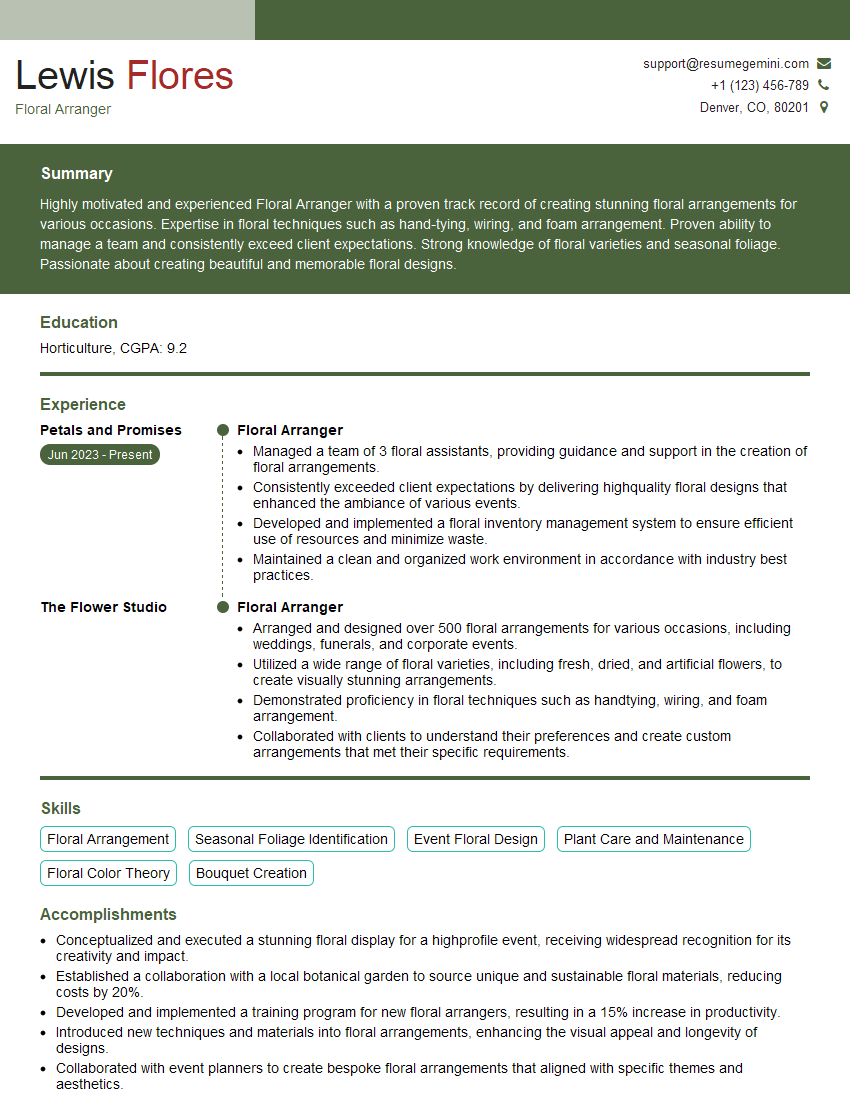
Mastering Floral Design Trends and Innovations is crucial for career advancement in this dynamic industry. A strong understanding of these topics demonstrates your commitment to excellence and your ability to adapt to evolving styles and client needs. To enhance your job prospects, creating an ATS-friendly resume is essential. ResumeGemini is a trusted resource to help you build a professional resume that highlights your skills and experience effectively. Examples of resumes tailored to Floral Design Trends and Innovations are available to help you showcase your unique qualifications. Take the next step and craft a compelling resume that opens doors to exciting career opportunities.
Explore more articles
Users Rating of Our Blogs
Share Your Experience
We value your feedback! Please rate our content and share your thoughts (optional).
What Readers Say About Our Blog
Very informative content, great job.
good