The right preparation can turn an interview into an opportunity to showcase your expertise. This guide to Radiological Agent Detection interview questions is your ultimate resource, providing key insights and tips to help you ace your responses and stand out as a top candidate.
Questions Asked in Radiological Agent Detection Interview
Q 1. Describe the different types of radiation detectors and their applications.
Radiation detectors come in various types, each suited for specific applications. They primarily differ in the method they use to detect ionizing radiation.
- Gas-filled detectors (e.g., Geiger-Müller counters, ionization chambers, proportional counters): These utilize the ionization of gas molecules caused by radiation to produce an electrical signal. Geiger-Müller counters are excellent for detecting the presence of radiation, providing a simple ‘yes/no’ answer. Ionization chambers measure radiation dose rates, while proportional counters offer better energy resolution, allowing differentiation of radiation types.
- Scintillation detectors: These use scintillating materials that emit light when struck by radiation. This light is then detected by a photomultiplier tube (PMT) which converts it into an electrical signal. Scintillation detectors offer good energy resolution and are used in many applications, including medical imaging (PET scans) and nuclear security.
- Semiconductor detectors (e.g., HPGe detectors): These utilize the creation of electron-hole pairs in a semiconductor material upon interaction with radiation. They offer excellent energy resolution, making them ideal for identifying different radioactive isotopes. High-purity germanium (HPGe) detectors are commonly used in environmental monitoring and nuclear safeguards.
- Solid-state detectors: These are becoming increasingly important in portable radiation detection systems. They are smaller, more robust, and consume less power than many traditional detectors.
For instance, a Geiger counter might be used for initial screening in a suspected radiological incident, while an HPGe detector would be used for detailed analysis to identify specific radionuclides.
Q 2. Explain the principles behind radiation detection.
Radiation detection relies on the interaction of ionizing radiation with matter. Ionizing radiation, such as alpha, beta, gamma, and X-rays, carries enough energy to ionize atoms, meaning it can strip electrons from atoms, creating ions and free electrons. Detectors exploit this ionization process in various ways:
- Ionization: Direct ionization of gas molecules in gas-filled detectors generates a measurable current.
- Scintillation: The interaction of radiation with scintillating material produces photons (light) which are then detected.
- Semiconductor interaction: The creation of electron-hole pairs in semiconductors upon radiation interaction generates a measurable charge.
Think of it like this: radiation is like a bowling ball knocking down pins (atoms). The number of pins knocked down (ionization events) is proportional to the energy of the bowling ball (radiation). This information is converted into a measurable signal, which provides insights into the type and amount of radiation present.
Q 3. What are the limitations of different radiation detection technologies?
Each radiation detection technology has limitations:
- Gas-filled detectors: Relatively poor energy resolution, making isotope identification difficult. Sensitive to environmental conditions (temperature, pressure).
- Scintillation detectors: While offering better energy resolution than gas-filled detectors, they still have limitations compared to semiconductor detectors. They are also more susceptible to background noise.
- Semiconductor detectors: Require cryogenic cooling (often liquid nitrogen), which adds complexity and cost. They are also more fragile than other types.
- Solid-state detectors: Can have limited energy range and sensitivity compared to other detector types.
For example, a Geiger counter might miss low-energy radiation, while a HPGe detector requires specialized handling and maintenance. The choice of detector depends heavily on the specific application and the trade-off between resolution, sensitivity, cost, and portability.
Q 4. How do you identify and characterize radiological agents?
Identifying and characterizing radiological agents involves a multi-step process:
- Initial detection: Using a portable radiation detector to identify the presence of radiation and estimate its intensity. This might involve a quick scan of an area or object.
- Gamma-ray spectroscopy: Employing a high-resolution detector (like an HPGe detector) to analyze the energy spectrum of the emitted gamma rays. Each radioactive isotope has a characteristic gamma-ray emission spectrum, acting like a fingerprint for identification.
- Sample analysis: In some cases, a sample will need to be collected and analyzed in a laboratory setting for more precise characterization. This might involve techniques like alpha and beta spectroscopy.
- Data interpretation: The detected energy spectra are compared to known spectral libraries to determine the isotopic composition and activity of the sample. This can involve sophisticated data analysis software.
Imagine finding an unknown substance. A Geiger counter tells you radiation is present. An HPGe detector provides a detailed ‘fingerprint’ of the radiation’s energy, allowing identification of the specific radioactive isotope involved, similar to identifying a person using their fingerprints.
Q 5. What safety precautions must be taken when handling radioactive materials?
Handling radioactive materials necessitates stringent safety precautions:
- Time, distance, shielding: Minimize exposure by limiting the time spent near the source, maximizing distance, and using appropriate shielding materials (e.g., lead, concrete).
- Personal Protective Equipment (PPE): Using appropriate PPE such as lab coats, gloves, and respirators as needed to prevent contamination.
- Containment: Storing and transporting radioactive materials in properly designed containers to prevent leaks and spills.
- Monitoring: Utilizing radiation monitoring equipment to track radiation levels and personal dose.
- Training: Thorough training on safe handling procedures, emergency response protocols, and regulatory requirements.
Failure to follow these precautions can lead to severe health consequences, ranging from radiation burns to cancer. This is not something to be taken lightly. Proper training and adherence to protocols are absolutely critical.
Q 6. Explain the process of responding to a radiological incident.
Responding to a radiological incident involves a coordinated effort:
- Initial assessment: Determining the nature and extent of the incident using radiation detection instruments. This includes identifying the type and quantity of radioactive material, the area affected, and potential pathways of exposure.
- Evacuation and isolation: Evacuating individuals from the affected area and establishing a perimeter to prevent further exposure.
- Decontamination: Removing radioactive contamination from individuals and the environment. This can involve washing, specialized cleaning agents, and disposal of contaminated materials.
- Medical treatment: Providing medical care for individuals who have been exposed to radiation. This may involve treatment for radiation sickness or other related health issues.
- Environmental monitoring: Conducting thorough environmental monitoring to assess the long-term effects of the incident and ensure the safety of the community.
A well-defined emergency response plan, regular training, and clear communication channels are vital to effectively manage a radiological incident. Every step must be taken methodically and safely.
Q 7. What are the legal and regulatory requirements for handling radioactive materials?
Legal and regulatory requirements for handling radioactive materials vary by country but generally involve:
- Licensing and permits: Obtaining necessary licenses and permits before acquiring, using, or possessing radioactive materials. This demonstrates compliance and ensures safe practices.
- Safety regulations: Adhering to strict safety regulations and protocols related to storage, handling, transportation, and disposal of radioactive materials.
- Record keeping: Maintaining detailed records of radioactive material inventory, usage, and disposal. This allows authorities to track the materials and ensure accountability.
- Environmental protection: Implementing measures to prevent contamination of the environment and minimize environmental impact. This includes waste management and disposal procedures.
- Security measures: Implementing security measures to prevent theft, loss, or unauthorized use of radioactive materials. This is essential to prevent malicious intent.
Non-compliance can lead to severe penalties, including fines and imprisonment. It’s crucial to be fully aware of the relevant laws and regulations in your area and to maintain meticulous records.
Q 8. Describe different types of radiation shielding and their effectiveness.
Radiation shielding protects individuals and the environment from harmful ionizing radiation. The effectiveness depends on the type of radiation and the shielding material. Different materials have varying degrees of effectiveness against different types of radiation.
- Lead: Highly effective against gamma and X-rays due to its high atomic number. Commonly used in medical imaging facilities and nuclear power plants.
- Concrete: A cost-effective option for shielding against gamma and neutron radiation. Its density and thickness determine its effectiveness. Used extensively in nuclear facilities and radiation therapy bunkers.
- Water: Effective against neutrons and gamma rays, particularly in large volumes. Used in nuclear reactors as a coolant and shield.
- Steel: Provides good shielding against beta radiation and X-rays but less so against gamma rays. Often used in conjunction with other materials.
- Distance: This is arguably the most effective shielding mechanism. Radiation intensity decreases rapidly with increasing distance from the source, following an inverse square law.
For example, a thick lead apron protects radiologists during procedures, while a concrete wall protects the public from a nuclear reactor’s radiation. The choice of shielding material and its thickness is carefully calculated based on the type and energy of the radiation source and the required level of protection.
Q 9. How do you assess the potential health risks associated with radiation exposure?
Assessing potential health risks from radiation exposure involves understanding the type of radiation, dose received, and the individual’s susceptibility. We use several methods:
- Dose Assessment: Determining the amount of radiation absorbed (measured in Sieverts or Gray). This is crucial, as higher doses lead to greater risk.
- Radiation Type: Alpha particles are less penetrating but highly damaging if ingested or inhaled. Beta particles are moderately penetrating, and gamma rays are highly penetrating. Different types of radiation have different biological effects.
- Individual Sensitivity: Age, overall health, and genetic predispositions influence the impact of radiation exposure. Children and pregnant women are particularly vulnerable.
- Stochastic vs. Deterministic Effects: Stochastic effects (e.g., cancer) have a probability of occurrence that increases with dose. Deterministic effects (e.g., radiation burns) have a severity that increases with dose and occur above a threshold dose.
We use models and risk assessment tools, sometimes incorporating epidemiological data, to quantify the probability of health effects. This allows us to recommend appropriate protective measures and mitigation strategies.
Q 10. Explain the concept of radiation dose and its units.
Radiation dose refers to the amount of radiation energy absorbed by a unit mass of material. Understanding radiation dose is critical for assessing health risks.
- Absorbed Dose (Gray, Gy): Measures the energy deposited per unit mass of material. 1 Gy = 1 joule/kilogram.
- Equivalent Dose (Sievert, Sv): Considers the type and biological effectiveness of the radiation. It weights the absorbed dose to account for the different biological effects of alpha, beta, and gamma radiation. For example, alpha radiation has a higher weighting factor than gamma radiation because it causes more damage at the cellular level.
- Effective Dose (Sievert, Sv): Accounts for the absorbed dose in various tissues and organs, weighting them according to their radiosensitivity. This provides a more comprehensive assessment of overall health risk.
For instance, a chest X-ray delivers a small effective dose (a few millisieverts), while a radiation therapy treatment might involve a much higher dose, delivered fractionally over time to minimize side effects. These units allow us to compare and manage radiation risks across various situations.
Q 11. What are the different types of radioactive decay?
Radioactive decay is the process by which unstable atomic nuclei lose energy by emitting radiation. There are several types:
- Alpha Decay: The emission of an alpha particle (2 protons and 2 neutrons), effectively reducing the atomic number by 2 and the mass number by 4. Alpha particles are relatively massive and have low penetrating power.
- Beta Decay: The emission of a beta particle (an electron or positron). Beta minus decay increases the atomic number by 1, while beta plus decay decreases it by 1. Beta particles are more penetrating than alpha particles.
- Gamma Decay: The emission of a gamma ray (a high-energy photon). Gamma decay doesn’t change the atomic number or mass number; it merely reduces the energy of the nucleus. Gamma rays are highly penetrating.
- Electron Capture: The nucleus captures an inner-shell electron, converting a proton into a neutron. This reduces the atomic number by 1 but does not change the mass number.
- Spontaneous Fission: The spontaneous splitting of a heavy nucleus into two smaller nuclei, releasing a significant amount of energy and neutrons. This is common in some heavy elements like Uranium-238.
Each decay mode has distinct characteristics that affect its detection and shielding requirements.
Q 12. Describe the process of decontamination after a radiological incident.
Decontamination after a radiological incident aims to remove radioactive materials from people, equipment, and the environment. The process is crucial to mitigate health risks and prevent further spread.
- Initial Assessment: Determining the extent and nature of contamination. This may involve radiation surveys and sample analysis.
- Personal Decontamination: Removing radioactive materials from individuals. This could involve washing, showering, and using specialized decontamination solutions. Protective clothing and equipment are crucial for personnel involved in decontamination.
- Equipment Decontamination: Cleaning and decontaminating equipment exposed to radiation. Methods range from simple washing and wiping to more involved techniques like chemical decontamination or disposal.
- Environmental Decontamination: Removing radioactive material from the environment. This may involve soil removal, surface washing, and other remediation techniques. The specific methods used depend on the type of contamination and the environmental conditions.
- Waste Management: Proper disposal of contaminated materials according to regulations.
The process requires careful planning and coordination, adhering to strict safety protocols and using appropriate protective measures. Decontamination effectiveness is continuously monitored using radiation detection instruments.
Q 13. How do you interpret radiation detection data?
Interpreting radiation detection data involves analyzing measurements obtained from radiation detectors to understand the type, intensity, and source of radiation.
- Detector Type: Different detectors are sensitive to different types of radiation (e.g., Geiger counters for beta and gamma, scintillation detectors for various types). Understanding the detector’s limitations is crucial.
- Calibration: Detectors must be regularly calibrated to ensure accuracy. Calibration involves comparing the detector’s readings to known radiation sources.
- Background Radiation: Subtracting background radiation levels from the measured values is essential to determine the actual radiation levels from the source of interest. Background radiation is the naturally occurring radiation from the environment.
- Data Analysis: Analyzing the data to identify trends, patterns, and anomalies. This might involve plotting data over time, creating maps of radiation levels, or using statistical methods.
- Source Identification: Using the data to determine the location, type, and strength of the radiation source. This may involve comparing the measured energy spectrum to known radioactive isotopes.
For example, a high count rate from a Geiger counter in a specific location could indicate a radioactive source nearby. Analyzing the energy spectrum from a scintillation detector can further identify the isotope emitting the radiation. Correct interpretation requires expertise in radiation physics, detector technology, and data analysis techniques.
Q 14. What are the key differences between alpha, beta, and gamma radiation?
Alpha, beta, and gamma radiation are all forms of ionizing radiation, but they differ significantly in their properties and biological effects:
| Property | Alpha | Beta | Gamma |
|---|---|---|---|
| Nature | Helium nucleus (2 protons, 2 neutrons) | Electron or positron | High-energy photon |
| Charge | +2 | -1 or +1 | 0 |
| Mass | High | Low | 0 |
| Penetrating Power | Low (stopped by paper) | Moderate (stopped by aluminum) | High (stopped by lead or concrete) |
| Ionizing Power | High | Moderate | Low |
| Health Risks | High if ingested or inhaled | Moderate external exposure, high internal | Moderate external exposure |
Alpha radiation, despite its low penetrating power, poses a significant internal hazard because of its high ionizing power. Beta radiation is more penetrating and has moderate ionizing power. Gamma radiation, though less ionizing, is the most penetrating and therefore poses a significant external radiation hazard. Understanding these differences is crucial for choosing appropriate shielding and safety protocols.
Q 15. How do you calibrate and maintain radiation detection equipment?
Calibrating and maintaining radiation detection equipment is crucial for ensuring accurate and reliable measurements. This process involves several key steps, starting with regular checks of the instrument’s operational status. This includes verifying battery life, checking for any physical damage, and ensuring that all components are functioning correctly. We then proceed to calibration, which is the process of adjusting the instrument to accurately measure known radiation sources. This typically involves using standardized radiation sources with known activity levels. These sources are placed near the detector, and the instrument’s response is compared to the known value. Any discrepancies are adjusted through internal calibration procedures, often involving software adjustments or physical adjustments to the detector’s sensitivity. Regular maintenance includes cleaning the detector’s window to prevent dust or debris from interfering with measurements and periodic testing with certified calibration sources to ensure continued accuracy. Failure to perform regular calibration and maintenance can lead to inaccurate readings, potentially compromising safety and the reliability of data collected. Think of it like calibrating a kitchen scale; you wouldn’t trust it to weigh ingredients accurately without regular calibration. Similarly, without routine maintenance, radiation detectors can malfunction and produce erroneous results with serious safety implications.
Career Expert Tips:
- Ace those interviews! Prepare effectively by reviewing the Top 50 Most Common Interview Questions on ResumeGemini.
- Navigate your job search with confidence! Explore a wide range of Career Tips on ResumeGemini. Learn about common challenges and recommendations to overcome them.
- Craft the perfect resume! Master the Art of Resume Writing with ResumeGemini’s guide. Showcase your unique qualifications and achievements effectively.
- Don’t miss out on holiday savings! Build your dream resume with ResumeGemini’s ATS optimized templates.
Q 16. Describe different methods for sampling and analyzing radioactive materials.
Sampling and analyzing radioactive materials requires careful planning and execution to ensure both accuracy and safety. Methods vary depending on the type of material and the suspected level of contamination. For air sampling, we can use filter systems to collect airborne particulates, followed by analyzing the filter for radioactive isotopes using techniques like gamma spectrometry. For surface sampling, swipe samples are commonly used, where a special wipe is used to collect material from a surface. This swipe is then analyzed in a lab using various techniques. Liquid samples require different approaches; direct measurement using liquid scintillation counters, or preparation for spectrometry are common methods. In solid sample analysis, the sample might be crushed and homogenized before being measured using gamma or alpha spectrometry. The choice of analytical method depends heavily on the type of radiation emitted (alpha, beta, gamma) and the energy levels involved. For example, alpha emitters require very close proximity detectors and specialized sample preparation due to their short range. Gamma emitters, on the other hand, can often be analyzed directly with a gamma spectrometer, offering data on the specific isotopes present through their characteristic energy peaks. Safety protocols, including personal protective equipment (PPE) and working in controlled environments, are paramount throughout the entire process to protect personnel from radiation exposure.
Q 17. What are the potential consequences of radiological dispersal devices (RDDs)?
Radiological dispersal devices (RDDs), also known as “dirty bombs,” pose a significant threat due to their potential for widespread panic, economic disruption, and long-term health consequences. While the radioactive material in an RDD is typically not sufficient to cause immediate mass casualties through acute radiation sickness, the psychological impact and subsequent economic damage can be immense. The dispersal of radioactive material contaminates a wide area, necessitating extensive and costly cleanup efforts. This contamination can affect infrastructure, agriculture, and residential areas, rendering them uninhabitable for extended periods. The health consequences are a major concern; exposure to even low levels of radiation can increase the risk of long-term health problems, including cancer. The fear and uncertainty caused by such an attack can disrupt daily life, leading to significant societal disruption and long-term psychological effects on affected communities. Emergency responders would face significant challenges in managing the incident, requiring specialized equipment and trained personnel for decontamination and monitoring. The combination of radiological contamination and the psychological impact makes RDDs a particularly dangerous threat.
Q 18. Explain the role of spectrometry in radiological agent identification.
Spectrometry plays a vital role in identifying radiological agents by analyzing the energy and intensity of radiation emitted from a sample. Different radioactive isotopes emit radiation at specific and characteristic energy levels. Gamma spectrometry, for example, uses a detector (such as a high-purity germanium detector) to measure the energy of gamma rays emitted by a sample. The resulting spectrum shows peaks at specific energies, which can be compared to known spectral libraries to identify the radioactive isotopes present. This is analogous to identifying musical instruments based on their unique sound profiles. Each isotope has a unique “spectral fingerprint.” Similarly, alpha and beta spectrometry can be used to detect and identify alpha and beta particles, offering further information about the radioactive materials involved. By analyzing these spectra, we can not only identify the isotopes but also quantify their amounts, providing critical information for emergency responders and investigators dealing with a radiological incident. The accuracy and resolution of the spectrometer are crucial for precise identification, especially in cases with multiple isotopes present or low levels of contamination.
Q 19. What are the ethical considerations in radiological agent detection?
Ethical considerations in radiological agent detection are multifaceted and demand careful consideration. Privacy concerns are paramount; the collection and use of radiation data must be conducted responsibly, respecting individual privacy rights. Data should only be collected for legitimate purposes and with appropriate legal authorization. Transparency in reporting findings is crucial; stakeholders must receive accurate and timely information, enabling informed decision-making. The potential for discrimination must be addressed; findings should be interpreted carefully to avoid stigmatizing individuals or communities based on their exposure to radiation. Moreover, the equitable distribution of resources for detection, response, and remediation must be ensured. Bias in resource allocation could lead to disproportionate impact on vulnerable populations. The responsible use of advanced technologies, like AI in automated detection systems, requires careful ethical oversight to prevent bias and ensure fairness. The potential misuse of radiation detection technology for surveillance or other non-legitimate purposes must also be acknowledged and actively mitigated. The ethical considerations are essential for maintaining public trust and ensuring responsible use of these powerful tools.
Q 20. How do you ensure the accuracy and reliability of radiation measurements?
Ensuring the accuracy and reliability of radiation measurements involves a multi-pronged approach. First, regular calibration and maintenance of equipment, as discussed previously, are fundamental. Second, proper measurement techniques are essential; this includes using appropriate detectors for the type of radiation being measured and understanding potential sources of error, like background radiation or instrument drift. Third, using multiple detectors or different measurement techniques for verification helps to cross-validate the readings and increase confidence in the results. Fourth, careful consideration of statistical uncertainties is vital. Radiation measurements are subject to statistical fluctuations, and understanding these uncertainties is crucial for accurate reporting and interpretation. Finally, employing quality control procedures throughout the entire measurement process is paramount; this includes maintaining detailed records, properly handling samples, and adhering to established protocols. By implementing these measures, we can build a high level of confidence in the accuracy and reliability of the data obtained. This rigorous approach is crucial, especially in high-stakes scenarios like nuclear safety and emergency response, where accurate and reliable data are paramount.
Q 21. Describe the different types of radiation sources.
Radiation sources are broadly categorized into natural and artificial sources. Natural sources include cosmic rays from space and radioactive materials naturally present in the environment, such as uranium and thorium in rocks and soil. These sources contribute to the background radiation level we are all exposed to. Artificial sources are created through human activities. These include medical sources, such as X-ray machines and radioactive isotopes used in diagnostic imaging and radiotherapy; industrial sources, including those used in manufacturing, research, and other industrial processes; and nuclear weapons and other nuclear materials. Within these categories, there’s further classification based on the type of radiation emitted (alpha, beta, gamma, X-rays, neutrons). Alpha particles have a short range but high ionizing power, beta particles have a longer range, and gamma rays and X-rays can travel significant distances. Neutrons are also a significant concern in nuclear settings due to their ability to induce radioactivity in other materials. Understanding the characteristics of the various radiation sources is vital in designing appropriate detection methods and safety protocols for various situations.
Q 22. What are the challenges associated with detecting shielded radioactive materials?
Detecting shielded radioactive materials presents significant challenges because shielding materials, such as lead or depleted uranium, absorb radiation, making it difficult for detectors to register the emitted radiation. The thicker and denser the shielding, the more difficult detection becomes. This is analogous to trying to hear someone whispering from behind a thick wall; the sound is significantly attenuated.
- Reduced Signal Strength: Shielding significantly reduces the intensity of the radiation reaching the detector, leading to weak or undetectable signals.
- Energy Dependence: Different shielding materials attenuate different radiation energies differently. A detector optimized for one energy range might miss radiation shielded by a material that absorbs those energies preferentially.
- Geometric Considerations: The shape and orientation of the shielding material and the radioactive source affect the amount of radiation that escapes. A small gap in shielding can dramatically increase detection probability.
- Background Radiation Interference: Weak signals from shielded sources can be easily masked by naturally occurring background radiation.
To overcome these challenges, advanced detection techniques are employed, such as using high-sensitivity detectors, specialized shielding materials (to reduce false positives), and sophisticated signal processing algorithms to filter out background noise. Neutron detection, which is less affected by shielding than gamma ray detection, is also employed in some scenarios.
Q 23. How do you handle false positives in radiation detection?
False positives in radiation detection are a serious concern, as they can lead to unnecessary evacuations, costly investigations, and public anxiety. Handling them requires a multi-pronged approach:
- Calibration and Maintenance: Regular calibration of detection equipment is crucial to ensure accuracy and minimize false positives due to detector drift or malfunction. This is similar to regularly calibrating a scale to ensure accurate weight measurements.
- Environmental Monitoring: Understanding the background radiation levels in a specific location is vital. Variations in background radiation (e.g., due to weather, geological factors) can be mistaken for a radioactive source. Detailed background radiation mapping is essential.
- Multiple Detection Methods: Utilizing multiple detection methods, such as gamma spectroscopy and neutron detection, provides cross-verification and reduces the likelihood of false positives. If both systems indicate elevated levels, the confidence in the detection increases.
- Signal Processing Algorithms: Sophisticated algorithms can analyze detector data to distinguish between true signals and background noise. These algorithms look for patterns and characteristics unique to radioactive sources.
- Verification Procedures: When a potential positive is identified, thorough investigation and verification procedures are needed. This involves repeating measurements using different detectors and methods, possibly involving visual inspection of the suspected source.
In essence, a systematic, multi-layered approach to data acquisition, processing, and verification is critical to minimize the impact of false positives.
Q 24. Explain the concept of background radiation.
Background radiation refers to the ionizing radiation present in the environment that originates from natural sources. This includes cosmic rays from space, naturally occurring radioactive materials in the Earth’s crust (such as uranium, thorium, and potassium-40), and even small amounts of radiation incorporated into our bodies.
Think of it like the constant hum of a city; it’s always there, providing a baseline against which we detect unusual sounds (like the siren of an emergency vehicle). Similarly, background radiation provides a baseline against which we measure radiation from other sources. Knowing the typical background levels is essential for accurately assessing any potential increase that might indicate the presence of a radiological threat.
The level of background radiation varies geographically. Areas with high concentrations of uranium or thorium in the soil, for instance, will exhibit higher background radiation levels than other regions. Air travel exposes individuals to higher levels of cosmic radiation, contributing to a temporary increase in their radiation exposure.
Q 25. Describe your experience with radiation safety protocols.
My experience with radiation safety protocols is extensive, encompassing both theoretical understanding and hands-on application. I’ve worked extensively with ALARA (As Low As Reasonably Achievable) principles, which guide all my actions related to radiation safety. This includes:
- Time Minimization: Limiting the time spent near radioactive sources to reduce exposure.
- Distance Maximization: Maintaining as much distance as possible from radiation sources, recognizing that radiation intensity decreases rapidly with distance (inverse square law).
- Shielding: Utilizing appropriate shielding materials (lead, concrete, etc.) to reduce radiation exposure.
- Personal Protective Equipment (PPE): Appropriate PPE, such as dosimeters (to monitor radiation dose received), lead aprons, and gloves, are utilized when handling radioactive materials.
- Regulatory Compliance: Strict adherence to national and international regulations regarding radiation safety, including proper handling, storage, and disposal of radioactive materials.
I have a deep understanding of radiation dosimetry and risk assessment, and have been involved in numerous projects that required meticulous planning and execution to ensure the safety of personnel and the environment. A specific example includes a project involving the decommissioning of a research reactor, where careful planning and stringent safety protocols were critical to ensure the safe removal and disposal of radioactive components.
Q 26. How do you communicate radiation risks to the public?
Communicating radiation risks to the public requires careful consideration of various factors, prioritizing clarity, accuracy, and context. Using jargon should be avoided, and simple analogies should be utilized whenever possible to make the information accessible and understandable.
- Plain Language: Avoid technical terms and explain concepts in simple, everyday language. For example, instead of saying “ionizing radiation,” one might say “a type of energy that can damage cells.”
- Contextualization: Present radiation risks in context. Explain that we are exposed to background radiation daily, and that the risks from a specific event or source should be compared to this baseline.
- Transparency: Be open and honest about uncertainties and limitations in our understanding of radiation effects.
- Visual Aids: Charts, graphs, and infographics can be effective tools to communicate complex information in a simple and easily digestible format.
- Targeted Communication: Tailor the communication strategy to the specific audience. The approach for communicating with the general public will differ from that used to inform emergency responders.
It’s also important to emphasize that radiation safety measures are effective and that the risks are manageable with proper precautions. Instilling confidence in the safety protocols and emergency response plans is key to reducing public anxiety.
Q 27. What are the limitations of current radiological detection technologies?
Current radiological detection technologies, while significantly advanced, still have limitations:
- Shielding: As previously discussed, detecting shielded radioactive materials remains a significant challenge.
- Sensitivity: Detecting extremely low levels of radiation in the presence of significant background radiation is difficult. This is especially challenging for detecting small amounts of dispersed radioactive material.
- Specificity: Distinguishing between different types of radioactive isotopes can be complex, requiring sophisticated spectral analysis. Incorrect identification can lead to inappropriate responses.
- Portability and Cost: Some advanced detection systems are large, expensive, and require specialized expertise to operate and maintain, limiting their widespread deployment.
- False Positives/Negatives: As discussed earlier, false positives and negatives remain a concern, affecting the reliability of detection systems.
These limitations underscore the need for ongoing research and development of new and improved technologies.
Q 28. What are the emerging trends in radiological agent detection?
Several emerging trends are shaping the future of radiological agent detection:
- Advanced Sensor Technologies: The development of more sensitive and specific detectors, including miniaturized detectors and those incorporating novel materials, is improving detection capabilities.
- Artificial Intelligence (AI) and Machine Learning (ML): AI and ML algorithms are being increasingly used to analyze detector data, improve signal processing, enhance sensitivity, and reduce false positives. These techniques can identify subtle patterns that might be missed by human analysts.
- Improved Shielding Detection Methods: Research is focusing on developing methods to better detect shielded radioactive materials, including advanced imaging techniques and the use of neutron detectors.
- Networked Sensor Systems: Connecting multiple detectors into a network allows for enhanced situational awareness, enabling more effective monitoring of large areas. This distributed sensor network provides more complete and robust data.
- Miniaturization and Integration: Developing smaller, more portable, and easily integrated detectors for use in various settings, including handheld devices, drones, and robots, expands detection capabilities.
These advancements are poised to significantly enhance our ability to detect and respond to radiological threats effectively.
Key Topics to Learn for Radiological Agent Detection Interview
- Radiation Physics Fundamentals: Understanding ionizing radiation types (alpha, beta, gamma, neutron), their interactions with matter, and associated detection principles.
- Radiation Detection Techniques: Familiarity with various detectors (e.g., Geiger-Müller counters, scintillation detectors, semiconductor detectors), their operating principles, advantages, and limitations.
- Spectroscopy and Signal Processing: Knowledge of energy spectroscopy, pulse processing, and data analysis techniques used to identify and quantify radioactive materials.
- Radiological Agent Identification: Understanding the characteristics of commonly encountered radiological agents (e.g., isotopes used in dirty bombs, nuclear materials) and methods for their identification.
- Data Interpretation and Reporting: Ability to analyze detector outputs, interpret results, and generate clear, concise reports for stakeholders.
- Health Physics and Safety Protocols: Thorough understanding of radiation safety principles, regulatory compliance, and personal protective equipment (PPE) usage.
- Practical Applications: Experience or knowledge of real-world applications of Radiological Agent Detection, such as border security, nuclear power plant monitoring, or emergency response scenarios.
- Troubleshooting and Problem Solving: Ability to diagnose and resolve issues with detection equipment, analyze false positives, and adapt to challenging field conditions.
- Calibration and Maintenance: Understanding the procedures for calibrating and maintaining radiological detection equipment to ensure accuracy and reliability.
Next Steps
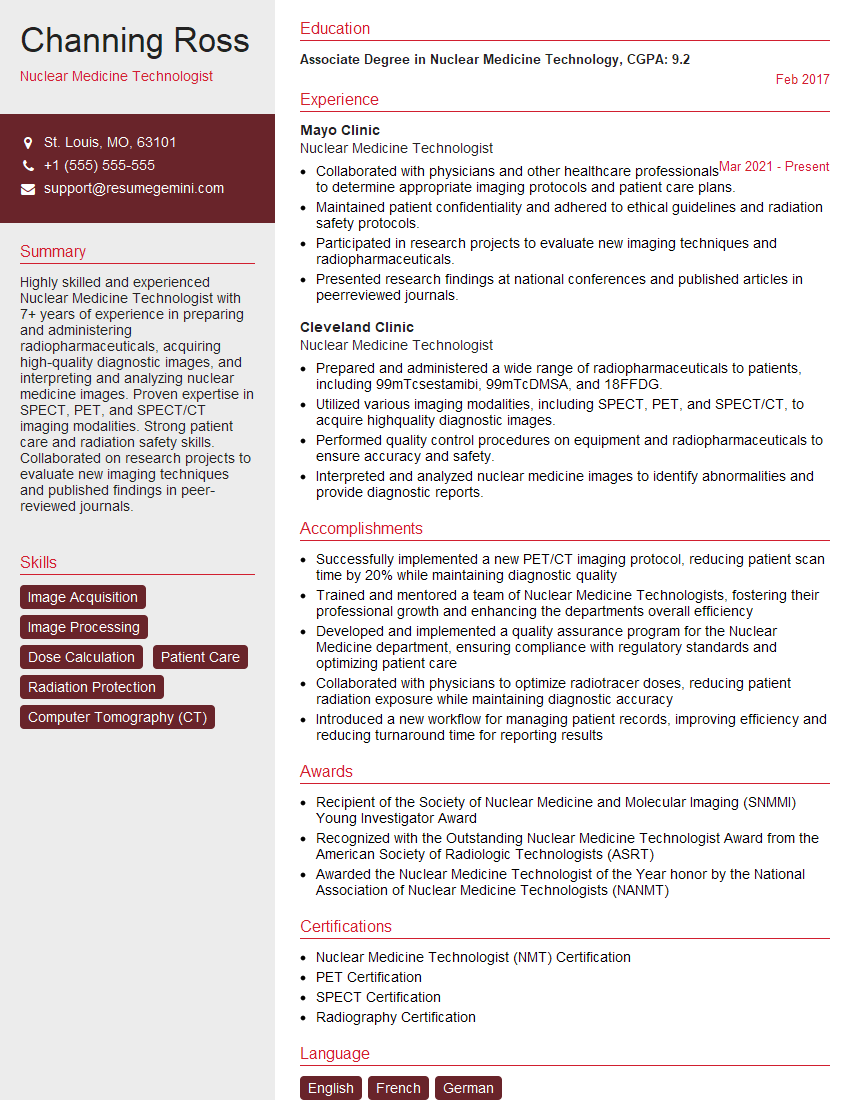
Mastering Radiological Agent Detection opens doors to exciting and impactful careers in national security, emergency response, and environmental protection. To maximize your job prospects, crafting a compelling and ATS-friendly resume is crucial. ResumeGemini is a trusted resource that can help you build a professional and impactful resume tailored to highlight your skills and experience in this specialized field. Examples of resumes tailored to Radiological Agent Detection are available to guide you through the process. Invest time in crafting a strong resume – it’s your first impression with potential employers.


Explore more articles
Users Rating of Our Blogs
Share Your Experience
We value your feedback! Please rate our content and share your thoughts (optional).
What Readers Say About Our Blog
Very informative content, great job.
good