Interviews are opportunities to demonstrate your expertise, and this guide is here to help you shine. Explore the essential Reactor Operations Support interview questions that employers frequently ask, paired with strategies for crafting responses that set you apart from the competition.
Questions Asked in Reactor Operations Support Interview
Q 1. Describe the process of reactor startup and shutdown.
Reactor startup and shutdown are carefully controlled processes ensuring safe and efficient operation. Startup involves a gradual increase in power level, beginning with criticality (achieving a self-sustaining chain reaction) and progressing to the desired operating power. This is done by carefully withdrawing control rods, which absorb neutrons and regulate the fission rate. Various checks and monitoring are done at each stage. Shutdown, conversely, involves inserting control rods to reduce the fission rate and eventually bring the reactor to a subcritical state (where the chain reaction stops). The process includes cooling down the reactor core to prevent overheating and ensuring the decay heat is managed effectively.
Startup: Think of it like slowly turning up the heat on a stove – you don’t want to go from zero to full power instantly. It involves stages, each with its own checks and safety measures. We meticulously monitor parameters such as neutron flux and temperature to ensure everything is within safe limits.
Shutdown: This is similar to turning off the stove. However, even after the reactor is shut down, the radioactive decay of fission products continues to generate heat (decay heat). This requires continued cooling to prevent damage to the reactor core. We have a well-defined procedure to manage this decay heat safely.
Q 2. Explain the role of the Reactor Protection System (RPS).
The Reactor Protection System (RPS) is the last line of defense, an automated safety system designed to quickly shut down the reactor (a ‘reactor trip’) if predetermined safety limits are exceeded. It continuously monitors critical parameters such as neutron flux, temperature, pressure, and coolant flow. If any parameter surpasses a pre-set threshold, the RPS automatically inserts all control rods, initiating a rapid shutdown. Think of the RPS as a sophisticated emergency brake for the reactor.
For instance, if the coolant flow drops below a critical level, indicating potential overheating of the core, the RPS would immediately trip the reactor preventing a meltdown. The RPS is designed with redundancy and diversity, meaning there are multiple independent systems in place to ensure its reliability.
Q 3. What are the key parameters monitored during reactor operation?
During reactor operation, numerous parameters are continuously monitored to ensure safe and efficient operation. Key parameters include:
- Neutron flux: Measures the rate of nuclear fission reactions, indicating reactor power.
- Temperature: Monitors the temperature of the reactor core, coolant, and other components to prevent overheating.
- Pressure: Tracks the pressure within the primary coolant system, crucial for maintaining coolant flow.
- Coolant flow rate: Ensures sufficient cooling to remove the heat generated by fission.
- Control rod position: Indicates the level of reactor reactivity.
- Radiation levels: Monitors radiation levels inside and outside the containment building.
Any deviation from normal operating ranges triggers alerts and potentially automatic safety systems. Real-time data analysis allows operators to make informed decisions, ensuring the reactor operates safely and reliably.
Q 4. How do you handle a reactor trip?
Handling a reactor trip requires a swift and coordinated response. The immediate priority is to understand the cause of the trip and to ensure the reactor remains safely shut down. This involves:
- Confirming the trip: Verifying that the reactor has indeed tripped and the safety systems have functioned correctly.
- Identifying the cause: Investigating the reason for the trip using available data, logs, and sensor readings.
- Maintaining the shutdown state: Ensuring the reactor core remains cooled and subcritical to prevent any further increase in power.
- Damage assessment: Determining if any damage has occurred to the reactor or associated systems.
- Restoration of operation: Once the cause is understood and addressed, a controlled startup procedure will be followed.
A reactor trip is a serious event, necessitating a thorough investigation, adherence to established procedures, and a collaborative effort by the operations team.
Q 5. Describe your experience with reactor control rod manipulation.
My experience with reactor control rod manipulation involves both theoretical understanding and hands-on simulator training. We’re trained extensively on the precise control and sequencing of rod movements which are critical for maintaining reactor power and stability. This involves a deep understanding of reactivity, neutron kinetics, and the effects of different control rod patterns on the neutron flux distribution within the core.
In simulator training, I’ve handled various scenarios, including power adjustments, responding to disturbances, and executing shutdown procedures. This training emphasized the importance of precise control rod manipulation to ensure safe and efficient reactor operation, and to prevent unexpected reactivity insertions. It’s crucial to operate within specified limits and follow stringent operational procedures to maintain reactor stability.
Q 6. Explain the concept of reactor power regulation.
Reactor power regulation involves maintaining the desired power output while ensuring the reactor operates safely and efficiently. It’s achieved primarily through the manipulation of control rods and by adjusting coolant flow. Control rods absorb neutrons, thereby controlling the rate of fission reactions and consequently, reactor power. Increasing coolant flow can also help regulate power by improving heat removal from the core, thus mitigating temperature increases that may otherwise lead to increased reactivity.
Imagine it like controlling the speed of a car. The accelerator (control rod withdrawal) increases the speed (power), while the brake (control rod insertion) decreases it. Coolant flow is like the transmission, ensuring efficient power transfer. These parameters are coordinated through automatic control systems, providing feedback loops and adjustments to maintain stability.
Q 7. What are the different types of reactor coolant systems?
Different reactor designs employ various types of reactor coolant systems, each with its own advantages and disadvantages. Common types include:
- Pressurized Water Reactor (PWR): The coolant (water) is kept under high pressure to prevent boiling, enhancing heat transfer. This is a common design in many nuclear power plants.
- Boiling Water Reactor (BWR): The coolant (water) is allowed to boil, creating steam directly used to drive turbines. This simplifies the system but requires more sophisticated control systems.
- Gas-cooled reactor (GCR): Uses gases such as carbon dioxide or helium as coolant. These reactors often operate at higher temperatures than water-cooled reactors.
- Liquid Metal Cooled Reactor (LMCR): Uses liquid metals like sodium or lead as coolant. They offer advantages in terms of high thermal efficiency but require specialized handling due to the properties of liquid metals.
The choice of coolant system depends on various factors, including safety, efficiency, cost, and the specific application of the reactor.
Q 8. Describe the process of refueling a nuclear reactor.
Refueling a nuclear reactor is a complex and highly regulated process designed to replace spent fuel assemblies with fresh ones, maintaining the reactor’s criticality and power output. The process typically involves several stages:
- Reactor Shutdown and Cool-down: The reactor is carefully shut down, and the core is allowed to cool down to a safe temperature, minimizing radiation levels.
- Spent Fuel Removal: Specialized remotely operated equipment, like fuel handling machines, carefully removes the spent fuel assemblies from the reactor core. These assemblies are highly radioactive and require meticulous handling to prevent contamination.
- Spent Fuel Storage: The spent fuel is temporarily stored in water-filled pools on-site, where the water acts as shielding and coolant to manage the decay heat.
- New Fuel Loading: Fresh fuel assemblies are then inserted into the core using the same fuel handling equipment, following a pre-determined pattern to optimize power distribution and fuel burn-up.
- Reactor Startup and Testing: After refueling, the reactor undergoes a series of tests and gradual power increases to ensure safe and stable operation before returning to full power generation.
The entire process is meticulously planned and executed under strict safety protocols, involving numerous inspections and verifications at each stage. Think of it like a highly precise and delicate engine overhaul, but with the added complexities of intense radiation and safety considerations.
Q 9. What safety measures are in place to prevent a meltdown?
Preventing a meltdown involves multiple layers of safety systems working in concert. These include:
- Reactor Shutdown Systems: Multiple independent systems are designed to quickly shut down the reactor in case of anomalies. These systems use control rods to absorb neutrons, effectively stopping the chain reaction.
- Emergency Core Cooling Systems (ECCS): ECCS are designed to provide cooling to the reactor core in the event of a loss-of-coolant accident (LOCA), preventing core overheating and potential meltdown. These systems may include high-pressure injection systems and low-pressure coolant recirculation systems.
- Containment Structures: Reactor containment buildings are designed to prevent the release of radioactive materials to the environment in the event of an accident. These structures are built to withstand extreme pressures and temperatures.
- Passive Safety Features: Modern reactors increasingly incorporate passive safety features, such as natural circulation cooling systems, that don’t rely on active power sources. This enhances safety in the event of power failure.
These safety systems are constantly monitored and rigorously tested to ensure their reliability. It’s a layered approach, much like a castle with multiple defenses.
Q 10. How do you ensure the integrity of the reactor vessel?
Ensuring the integrity of the reactor vessel is paramount for safe operation. This involves a multi-faceted approach:
- Regular Inspections: The reactor vessel undergoes rigorous inspections using various non-destructive testing methods such as ultrasonic testing and acoustic emission monitoring to detect any potential flaws or degradation.
- Material Selection and Design: The vessel is made from high-quality, radiation-resistant materials chosen for their strength and durability under extreme conditions. Sophisticated design and engineering principles account for stresses, temperatures and potential degradation.
- Operational Limits and Procedures: Strict operational limits and procedures are in place to avoid stressing the vessel beyond its design capabilities. This involves careful monitoring of pressure, temperature, and neutron flux.
- Surveillance Program: A comprehensive surveillance program continuously monitors the vessel’s condition and tracks any changes or anomalies. This allows for proactive maintenance and repairs if necessary.
Think of it as regularly servicing a high-performance engine—consistent monitoring, careful maintenance, and adherence to strict operational parameters are key to preventing failure.
Q 11. Explain your understanding of reactor thermal hydraulics.
Reactor thermal hydraulics is the study of the heat transfer and fluid flow within a nuclear reactor. It’s crucial for understanding and predicting the behavior of the coolant as it circulates through the core, removing the heat generated by nuclear fission. This involves considering:
- Fluid Dynamics: Analyzing the flow patterns, pressures, and velocities of the coolant in the reactor core and related systems.
- Heat Transfer: Determining how heat is transferred from the fuel rods to the coolant and subsequently to the steam generators or other heat exchangers.
- Two-Phase Flow: In many reactor designs, the coolant can exist in both liquid and vapor phases, leading to complex two-phase flow phenomena that need to be modeled accurately.
- Critical Heat Flux (CHF): Understanding CHF, the point at which boiling transitions from nucleate to film boiling, is vital in avoiding fuel rod damage.
Accurate thermal-hydraulic modeling is essential for safe reactor operation, ensuring sufficient cooling capacity and avoiding potential accidents. It’s like understanding the circulatory system of the reactor—how the coolant moves, its temperature, and its capacity to carry heat away are all critical.
Q 12. Describe your experience with reactor instrumentation and control systems.
My experience with reactor instrumentation and control systems is extensive. I’m familiar with a wide array of sensors, actuators, and control systems used in nuclear power plants. This includes:
- Neutron Flux Monitoring: Using neutron detectors to monitor the power level and ensure stable operation of the reactor core.
- Temperature and Pressure Sensors: Monitoring the temperature and pressure of the coolant, steam, and other components to maintain safe operating conditions.
- Control Rod Positioning Systems: Precisely controlling the position of control rods to regulate the nuclear chain reaction.
- Data Acquisition and Analysis Systems: Collecting, processing, and displaying data from numerous sensors to provide real-time monitoring and control capabilities.
- Safety Systems Integration: Understanding how different instrumentation and control systems interact and contribute to overall plant safety.
I have practical experience in troubleshooting system failures, implementing upgrades, and ensuring the reliability and accuracy of these critical systems. Think of it like the nervous system of the plant – this is what keeps everything working smoothly and safely.
Q 13. How do you identify and respond to abnormal reactor conditions?
Identifying and responding to abnormal reactor conditions requires a systematic approach. It starts with:
- Early Detection: Robust instrumentation and alarm systems provide early warning of deviations from normal operating parameters.
- Diagnosis: Using plant data and operator experience, the root cause of the abnormality is determined. This often involves analyzing trends, comparing data to historical values, and consulting technical documentation.
- Response: Based on the diagnosis, appropriate corrective actions are implemented. This may include adjusting control parameters, initiating safety systems, or initiating plant shutdown.
- Documentation: All actions taken during an abnormal condition are meticulously documented to facilitate post-event analysis and improvement of operating procedures.
My experience involves responding to various events, from minor equipment malfunctions to more serious off-normal conditions. Every situation requires a calm, methodical assessment to ensure a safe and effective response. It’s critical thinking under pressure.
Q 14. What is your experience with reactor emergency procedures?
My experience with reactor emergency procedures is extensive. I have participated in numerous emergency drills and training exercises, and I am proficient in using emergency response procedures and equipment. This includes:
- Emergency Response Plans: Familiarity with the plant-specific emergency response plans, which outline actions to be taken in various emergency scenarios.
- Emergency Procedures: Proficiency in executing emergency procedures, including reactor shutdown, emergency core cooling, and containment isolation.
- Emergency Equipment Operation: Experience in operating emergency equipment such as fire suppression systems, emergency power generators, and radiation monitoring equipment.
- Emergency Communication and Coordination: Effective communication and coordination with other operators, emergency responders, and regulatory authorities.
Effective emergency response requires thorough training, teamwork, and a detailed understanding of both the plant’s systems and potential hazards. It’s like a fire drill—the better prepared you are, the more smoothly things will go in a real emergency.
Q 15. Explain the importance of radiation safety protocols in reactor operations.
Radiation safety is paramount in reactor operations, as exposure to ionizing radiation poses significant health risks. Our protocols are built around the ALARA principle – As Low As Reasonably Achievable. This means we strive to minimize radiation exposure to all personnel and the environment.
These protocols include:
- Strict adherence to dosimetry procedures: Every worker wears a personal dosimeter to monitor their cumulative radiation exposure, ensuring it stays within regulatory limits. We meticulously track and report this data.
- Thorough training: All personnel undergo extensive training on radiation safety, covering topics like radiation sources, shielding techniques, emergency procedures, and the use of protective equipment.
- Rigorous work practices: We follow strict procedures during every task, emphasizing time minimization in radiation areas and the use of remote handling tools whenever feasible. This includes detailed pre-job briefings and safety checklists.
- Emergency response plans: We have well-rehearsed emergency plans in place to handle radiation incidents, including evacuation procedures, decontamination strategies, and medical response protocols. Regular drills ensure everyone is prepared.
For instance, during a fuel rod replacement, we might use robotic manipulators to minimize personnel exposure near the core, and radiation levels are continuously monitored.
Career Expert Tips:
- Ace those interviews! Prepare effectively by reviewing the Top 50 Most Common Interview Questions on ResumeGemini.
- Navigate your job search with confidence! Explore a wide range of Career Tips on ResumeGemini. Learn about common challenges and recommendations to overcome them.
- Craft the perfect resume! Master the Art of Resume Writing with ResumeGemini’s guide. Showcase your unique qualifications and achievements effectively.
- Don’t miss out on holiday savings! Build your dream resume with ResumeGemini’s ATS optimized templates.
Q 16. Describe your experience with reactor maintenance and repair procedures.
My experience encompasses a wide range of reactor maintenance and repair procedures, from routine inspections and component replacements to more complex repairs involving specialized tooling and techniques. I’ve worked on both pressurized water reactors (PWRs) and boiling water reactors (BWRs).
My expertise includes:
- Preventive maintenance: I’ve been involved in the development and implementation of comprehensive preventive maintenance schedules, including lubrication, inspection, and testing of critical components.
- Corrective maintenance: I’ve led teams in troubleshooting and repairing equipment malfunctions, often involving intricate systems and demanding safety protocols. One example involved diagnosing and fixing a leak in a primary coolant system, requiring careful planning and execution under stringent radiation safety conditions.
- Refueling outages: I’ve actively participated in numerous refueling outages, coordinating the safe removal and replacement of spent fuel assemblies, a complex process that requires precise procedures and meticulous attention to detail.
- Component replacement: I have experience in replacing various components, such as pumps, valves, and instrumentation, following rigorous procedures to ensure system integrity and safety.
My approach emphasizes thorough documentation, meticulous execution, and continuous improvement. We constantly analyze maintenance data to identify trends and prevent future issues.
Q 17. How do you manage reactor operational data and logs?
Reactor operational data and logs are managed using a robust, integrated system that combines real-time monitoring with historical data storage and analysis. We utilize a combination of specialized software and databases to achieve this.
Our system includes:
- Real-time monitoring software: This software provides continuous monitoring of key reactor parameters, including power levels, temperatures, pressures, and radiation levels. Alerts are triggered automatically if any parameters exceed predefined thresholds.
- Data acquisition systems (DAS): These systems collect vast amounts of data from various sensors and instruments throughout the plant. The data is then stored in a secure, centralized database.
- Historical data archives: We maintain detailed historical archives of all operational data, allowing us to analyze trends, identify patterns, and improve operational efficiency. This data is also crucial for regulatory reporting and safety analysis.
- Data visualization tools: We use sophisticated data visualization tools to analyze operational data and identify potential problems. This allows us to make informed decisions and take proactive steps to prevent issues.
Data integrity is paramount; we have rigorous procedures in place to ensure data accuracy, completeness, and traceability. All data is backed up regularly and stored securely to prevent loss.
Q 18. What are the key performance indicators (KPIs) for reactor operations?
Key Performance Indicators (KPIs) for reactor operations are designed to measure safety, efficiency, and reliability. They are carefully chosen to provide a comprehensive overview of plant performance.
Some crucial KPIs include:
- Capacity factor: This measures the percentage of time the reactor operates at its rated power, reflecting operational efficiency.
- Plant availability: This measures the percentage of time the plant is available to generate power, reflecting reliability and uptime.
- Radiation exposure levels: This tracks the collective radiation exposure of personnel, emphasizing safety.
- Fuel burnup: This measures the extent to which the nuclear fuel has been used, optimizing fuel efficiency.
- Heat rate: This indicates the thermal efficiency of the plant in converting heat to electricity.
- Number of unplanned shutdowns: This signifies reliability and proactive maintenance.
These KPIs are regularly monitored, analyzed, and reported to management. Trends are examined to identify areas for improvement and optimize plant performance.
Q 19. Explain your understanding of reactor physics.
Reactor physics is the science governing the nuclear processes within a reactor core. A strong understanding is crucial for safe and efficient operation. My understanding encompasses:
- Nuclear chain reactions: I understand the mechanisms of fission, neutron moderation, and neutron multiplication, and how these processes are controlled to maintain a sustained chain reaction.
- Neutron flux distribution: I can analyze and predict the spatial distribution of neutrons within the reactor core, which is crucial for power distribution and fuel management.
- Reactivity control: I understand the methods used to control reactor power, including control rods, burnable poisons, and chemical shim systems.
- Nuclear fuel management: I’m familiar with the principles of fuel enrichment, burnup, and reloading strategies, aiming to maximize fuel utilization and minimize waste.
- Reactor kinetics and dynamics: I understand how the reactor responds to changes in control settings and disturbances, ensuring stable operation.
This knowledge allows me to interpret reactor data, assess operational limits, and anticipate potential issues. For example, understanding neutron flux distributions helps us optimize fuel loading patterns for efficient power generation.
Q 20. How do you ensure the effective communication within the reactor operations team?
Effective communication within a reactor operations team is essential for safety and efficiency. We use a multi-faceted approach:
- Clear communication channels: We utilize established communication channels for routine updates, including shift handovers, daily briefings, and regular meetings. These channels are clearly defined and understood by everyone.
- Emergency communication systems: We have robust emergency communication systems in place to ensure rapid and reliable communication during emergencies. Regular drills ensure the system functions correctly.
- Standard operating procedures (SOPs): All procedures are clearly documented and readily accessible. This ensures everyone is aware of the correct steps in various situations.
- Open communication culture: We encourage open communication, where team members feel comfortable voicing concerns or questions. This is crucial for identifying potential problems and preventing errors.
- Regular training: Team members receive regular training on communication skills, including active listening, clear articulation, and reporting techniques.
For example, during a critical event, clear and concise communication is essential to coordinate the team’s response and ensure the safety of the plant and personnel.
Q 21. Describe your experience working with reactor simulation software.
I have extensive experience working with various reactor simulation software packages, including RELAP5, TRAC, and SIMULATE-3. These tools are invaluable for training, analysis, and optimization.
My experience includes:
- Operator training simulators (OTS): I’ve used OTSs to train operators on normal and abnormal operating procedures. This simulated environment allows operators to practice handling various scenarios in a safe and controlled setting.
- Transient analysis: I’ve used simulation software to analyze the reactor’s response to various transients, such as load changes, equipment failures, and anticipated operational occurrences (AOOs).
- Safety analysis: I’ve used simulation software to perform probabilistic risk assessments (PRA) and deterministic safety analyses to evaluate the plant’s safety performance and identify potential hazards.
- Design optimization: I’ve used simulation to assist in the design and optimization of reactor systems, improving efficiency and safety.
For instance, using RELAP5, I recently modeled a potential loss-of-coolant accident (LOCA) scenario to evaluate the effectiveness of the emergency core cooling system (ECCS). The simulation results helped us refine our emergency response plans and improve the system’s design.
Q 22. How do you handle equipment malfunctions in the reactor control room?
Handling equipment malfunctions in the reactor control room is a critical aspect of reactor operations. Our response follows a structured, prioritized approach based on the severity of the malfunction and its potential impact on reactor safety and stability.
First, we immediately identify the malfunction using our comprehensive monitoring systems. This involves reviewing alarms, analyzing instrument readings, and cross-referencing data from multiple sources. For example, a sudden drop in coolant flow would trigger multiple alarms, indicating a potential problem with the primary coolant pumps or associated piping.
Second, we initiate the appropriate emergency procedures outlined in our Emergency Operating Procedures (EOPs) manual. These procedures are meticulously developed and regularly practiced to ensure a swift and effective response. Depending on the nature of the malfunction, this might involve isolating the faulty equipment, initiating backup systems, or adjusting reactor power levels to mitigate the problem.
Third, we communicate clearly and effectively with all relevant personnel, including shift supervisors, engineers, and maintenance crews. This ensures a coordinated response and minimizes confusion during a critical situation.
Fourth, we conduct a thorough root cause analysis once the immediate problem is addressed. This analysis helps us understand the underlying cause of the malfunction, preventing similar incidents in the future. This analysis is documented and used to improve our operating procedures and maintenance schedules.
Finally, we thoroughly document the entire incident, including the actions taken, the resulting effects, and the lessons learned. This documentation aids in continuous improvement of our emergency response capabilities.
Q 23. Explain your understanding of the nuclear fuel cycle.
The nuclear fuel cycle encompasses all the stages involved in the production and utilization of nuclear fuel, from mining the raw material to the final disposal of spent fuel. Think of it as a closed-loop system aiming for maximum efficiency and minimal environmental impact.
- Uranium Mining and Milling: Uranium ore is extracted, processed, and refined to produce uranium oxide (U3O8), also known as yellowcake.
- Conversion and Enrichment: Yellowcake is converted into uranium hexafluoride (UF6), which is then enriched to increase the proportion of fissile uranium-235 (U235) to levels suitable for use in reactors. This is a crucial step because U235 is the primary fuel in most reactors.
- Fuel Fabrication: Enriched uranium is fabricated into fuel assemblies, which are designed to withstand the extreme conditions inside a reactor core.
- Reactor Operation: Nuclear fuel assemblies are used in reactors to generate electricity through nuclear fission. During this process, U235 atoms split, releasing a tremendous amount of energy.
- Spent Fuel Storage and Disposal: After a certain period, the spent fuel assemblies are removed from the reactor core. They contain radioactive isotopes that require careful handling and long-term storage or disposal. Finding safe and sustainable methods for spent fuel management remains a significant challenge.
Understanding the entire cycle is vital for effective reactor operations, ensuring fuel availability and responsible waste management.
Q 24. Describe your experience with regulatory compliance in reactor operations.
Regulatory compliance is paramount in reactor operations. My experience involves meticulous adherence to all relevant national and international regulations, including those from agencies like the Nuclear Regulatory Commission (NRC) in the US (or equivalent organizations in other countries).
This includes maintaining detailed records of all reactor operations, testing, and maintenance activities. We regularly undergo rigorous inspections and audits to verify our compliance. We participate in training programs to ensure our staff understands and adheres to all regulatory requirements. We conduct self-assessments to identify areas for improvement and proactively address potential compliance gaps.
For example, the NRC’s requirements for operational safety, including the systematic use of procedures and adherence to safety limits and operating parameters, are diligently followed. Any deviation or potential issue is immediately reported, and corrective actions are promptly implemented and documented.
Maintaining compliance isn’t just about avoiding penalties; it’s about ensuring the safe and reliable operation of the reactor and protecting public health and safety.
Q 25. What are the common causes of reactor trips?
Reactor trips, or unexpected shutdowns, can be caused by a variety of factors, often stemming from safety systems designed to protect the reactor from potentially damaging conditions. Some common causes include:
- High power or temperature: Exceeding pre-defined safety limits triggers an automatic shutdown to prevent core damage.
- Low coolant flow: Insufficient coolant flow could lead to overheating and necessitates an immediate reactor trip.
- Malfunctions in safety systems: Failures in critical safety systems, such as the emergency core cooling system (ECCS), initiate a trip to ensure safety.
- Instrument failures: Incorrect or unreliable readings from critical instruments can trigger safety systems, resulting in an unplanned shutdown.
- External events: Events like earthquakes or loss of offsite power can trigger reactor trips via designed safety interlocks.
Effective monitoring, maintenance, and regular testing of safety systems are crucial to minimizing the frequency of reactor trips due to these causes. Understanding the root cause of each trip is equally vital to prevent recurrence.
Q 26. Explain your understanding of reactor transient analysis.
Reactor transient analysis involves studying the dynamic behavior of a nuclear reactor under various conditions, especially those that deviate from normal operating states. This is crucial for understanding how the reactor will respond to disturbances and ensuring safe operation.
We use sophisticated computer models and simulations to predict the reactor’s behavior in different scenarios, such as a sudden loss of coolant flow, or a change in reactivity. These simulations use complex mathematical equations that describe the various physical processes occurring within the reactor core, including neutron kinetics, heat transfer, and fluid dynamics. The analysis helps us design effective control systems and safety systems to mitigate potential hazards during such transient events.
For instance, analyzing a transient event such as a rapid power increase would involve determining the reactor’s response to the change, including how the control rods react, how coolant temperature and pressure change, and the overall impact on reactor safety. This analysis might also incorporate the effects of operator actions and the response of safety systems to inform effective emergency procedures.
Q 27. How do you maintain the required level of operational readiness?
Maintaining operational readiness involves a multi-faceted approach encompassing regular testing, rigorous training, and diligent preventative maintenance. It’s like maintaining a finely-tuned machine – constant attention is needed to ensure peak performance and safety.
Our strategy involves:
- Regular testing of safety systems: We perform frequent tests on all critical safety systems to ensure their proper functioning and rapid response in emergency situations.
- Preventative maintenance: Scheduled maintenance programs are followed meticulously to identify and address potential equipment failures before they escalate into major issues.
- Operator training and simulations: Operators undergo rigorous training programs, including simulator exercises, to handle various scenarios and maintain their proficiency.
- Emergency preparedness drills: Regular drills and exercises ensure that our team is well-coordinated and capable of responding effectively to emergency situations.
- Continuous improvement programs: We continuously analyze past incidents and events to identify areas for improvement and enhance our operational readiness.
This holistic approach ensures our reactor is always in optimal condition and our operators are ready to address any challenges.
Q 28. Describe your experience with troubleshooting reactor problems.
Troubleshooting reactor problems requires a systematic and methodical approach, combining deep technical understanding with careful observation and analysis. My experience involves using a combination of diagnostic tools, historical data, and expert judgment to identify and resolve issues.
The process typically begins with a clear understanding of the observed anomaly – for example, an unexpected increase in coolant temperature or a deviation from normal operating parameters. I would then review relevant sensor data and alarm logs to identify the scope and severity of the problem. This involves analyzing trends and patterns to pinpoint potential root causes.
Next, I might employ diagnostic tools, such as specialized software or online monitoring systems, to pinpoint the source of the issue. This could involve cross-referencing various data points, considering operating conditions, and reviewing maintenance records.
If the problem is not immediately apparent, I’d consult with other experts, such as instrumentation specialists or reactor physics engineers, to gain different perspectives. Collaboration is essential for efficient troubleshooting.
Once the root cause is identified, the problem is addressed according to established procedures, and comprehensive documentation is maintained. Post-incident analysis is then performed to prevent similar issues from recurring, continually improving the plant’s operational safety and efficiency.
Key Topics to Learn for Reactor Operations Support Interview
- Reactor Systems Fundamentals: Understanding the basic principles of reactor operation, including control systems, instrumentation, and safety mechanisms. This includes theoretical knowledge of reactor physics and thermal hydraulics.
- Data Analysis and Interpretation: Practical application involves analyzing real-time data from reactor instrumentation to identify trends, anomalies, and potential issues. This requires proficiency in data visualization and problem-solving techniques.
- Emergency Response Procedures: Understanding and applying established procedures for various emergency scenarios, including both theoretical knowledge and practical drills simulating real-world situations.
- Troubleshooting and Diagnostics: Developing problem-solving skills to identify the root cause of operational issues and implementing effective solutions, covering both theoretical understanding of system behavior and practical application of diagnostic tools.
- Regulatory Compliance and Safety: Knowledge of relevant regulations and safety standards within the nuclear industry. Practical understanding of how these regulations impact daily operations.
- Instrumentation and Control Systems: In-depth understanding of the instrumentation used to monitor and control reactor operations. This includes both theoretical knowledge of control system design and practical experience with troubleshooting and maintenance.
- Maintenance and Repair Procedures: Understanding and executing routine maintenance and repair procedures. This involves both theoretical knowledge of equipment operation and practical skills in performing maintenance tasks.
Next Steps
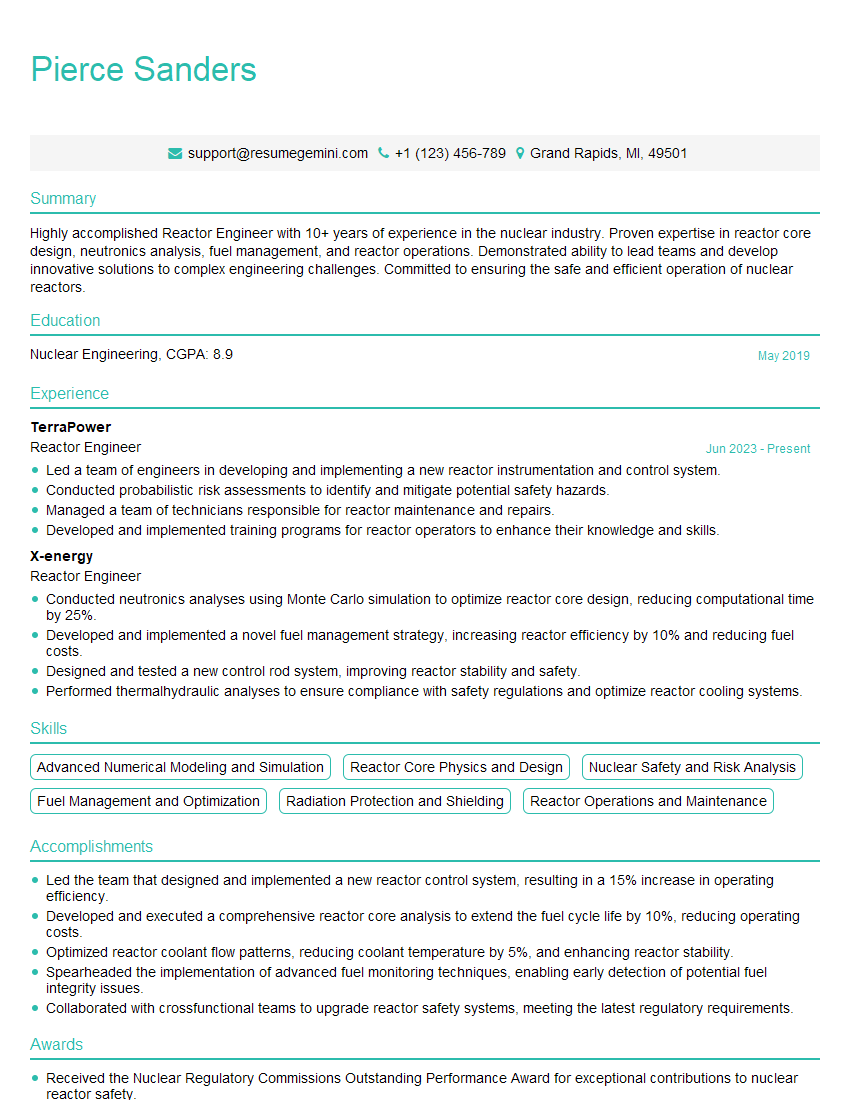
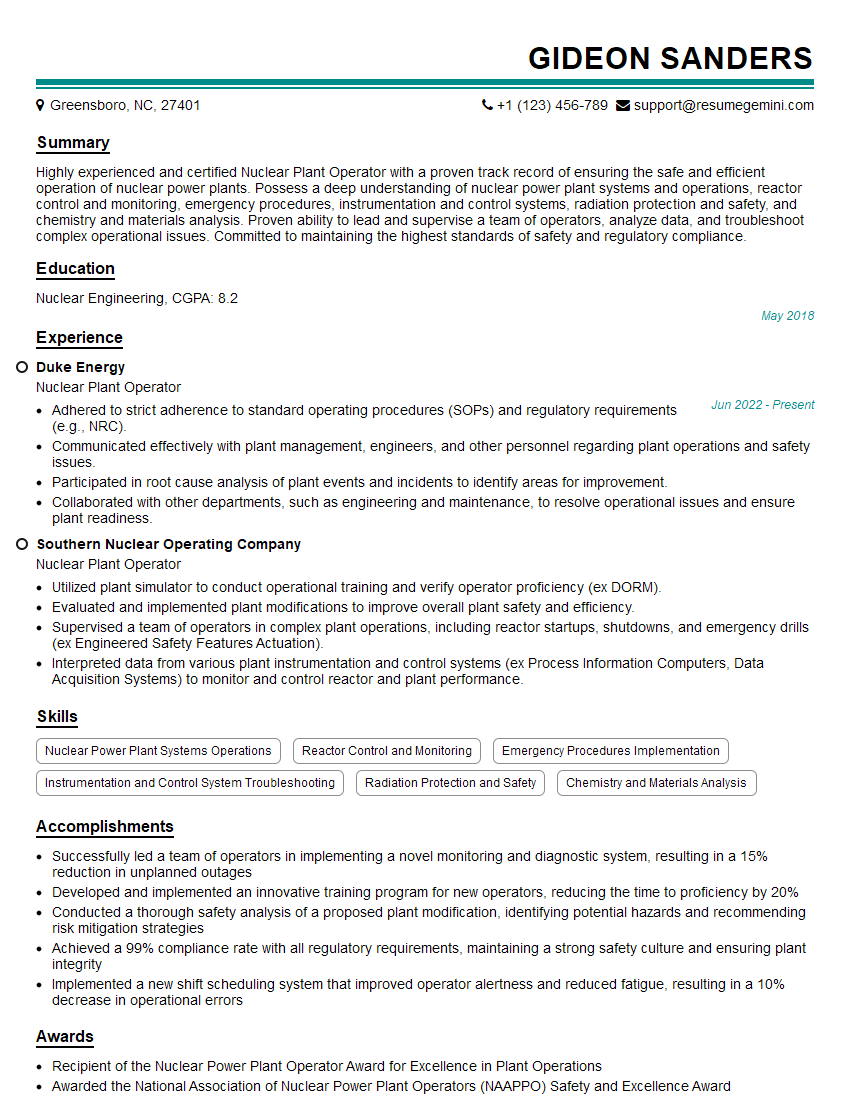
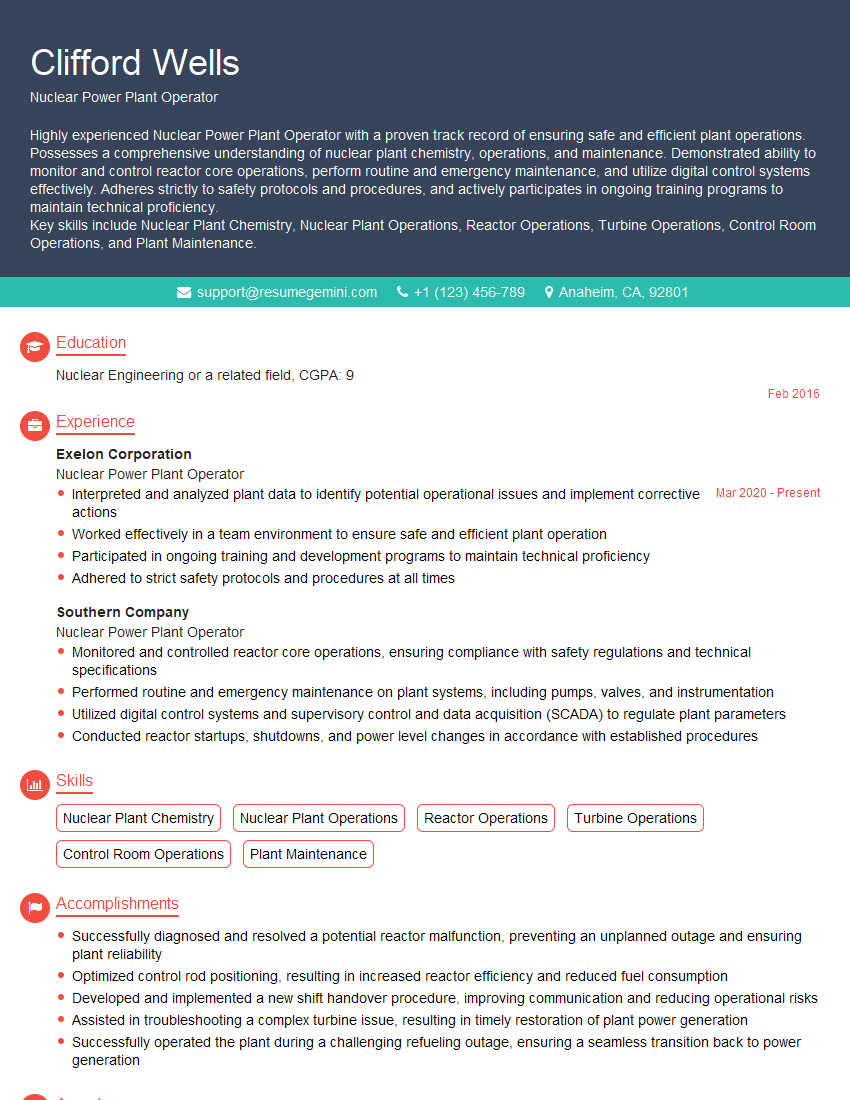
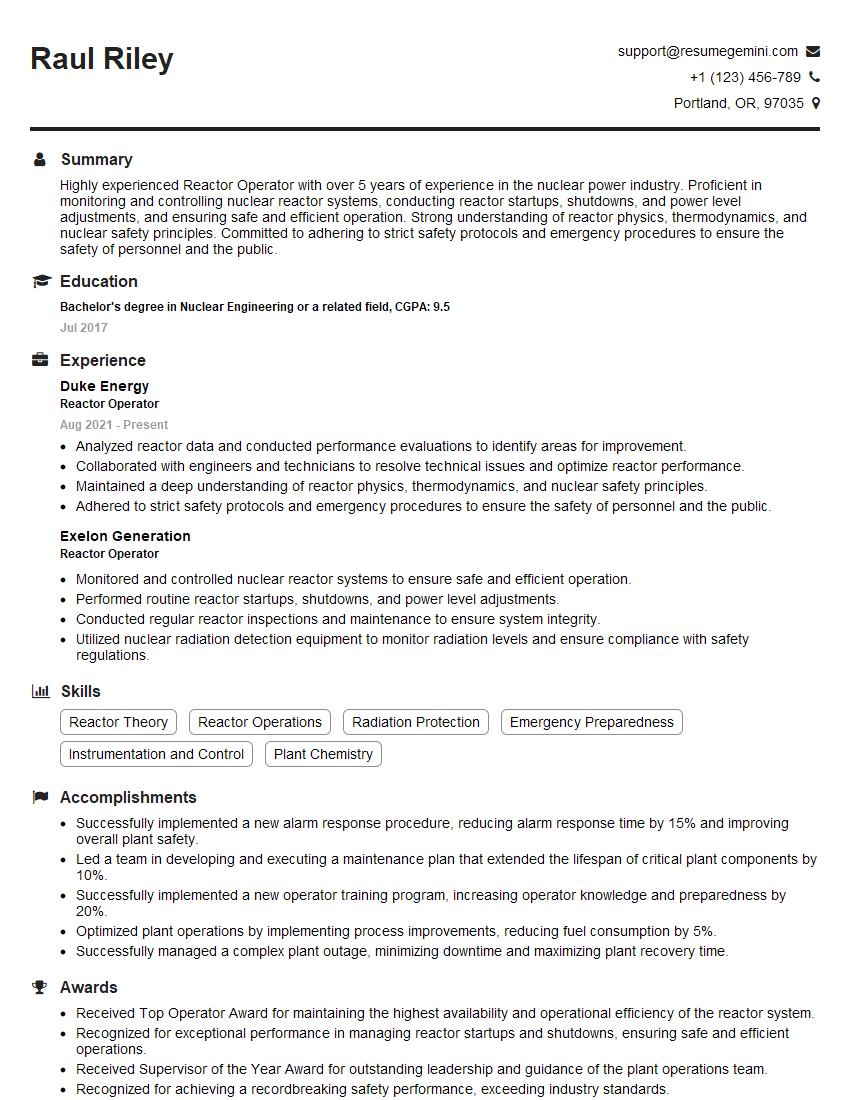
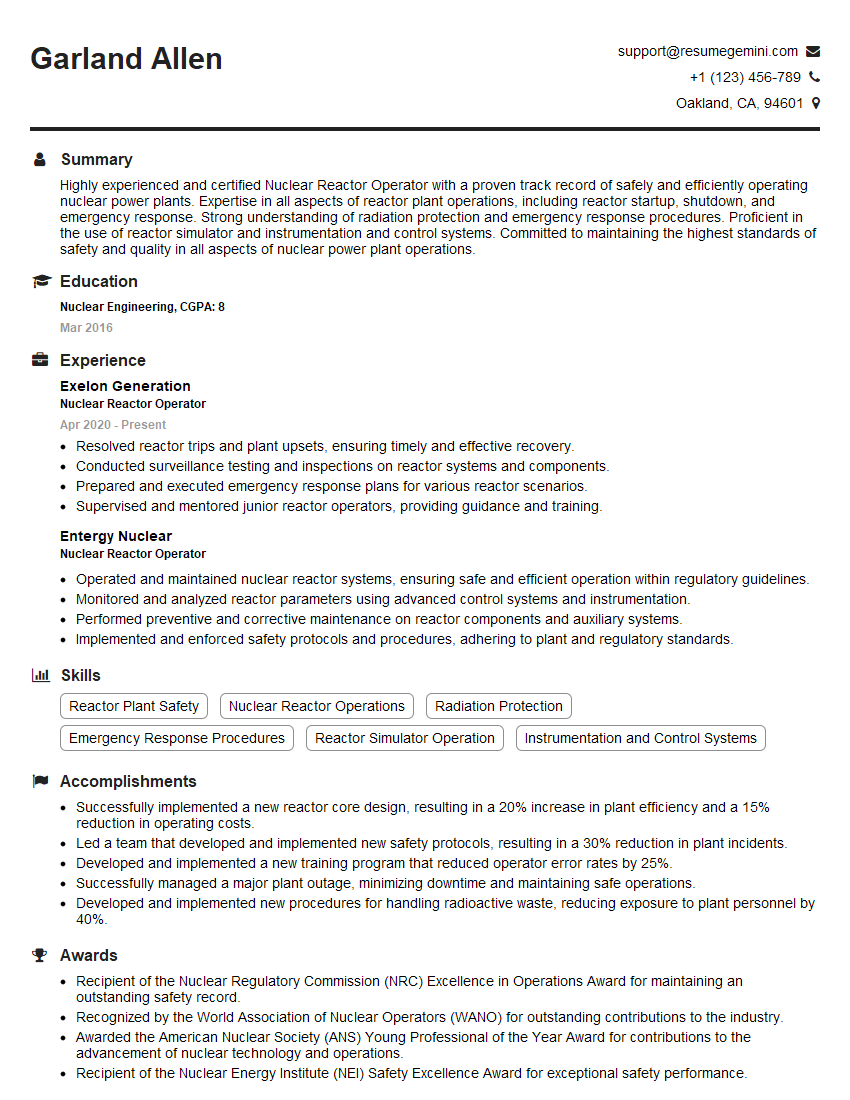
Mastering Reactor Operations Support opens doors to a rewarding and impactful career in the nuclear industry, offering opportunities for growth and specialization. To maximize your job prospects, creating a strong, ATS-friendly resume is crucial. ResumeGemini is a trusted resource that can help you build a professional and effective resume tailored to highlight your skills and experience. We provide examples of resumes tailored to Reactor Operations Support to guide you in creating your own compelling application materials. Invest time in crafting a resume that showcases your capabilities and lands you that interview!

Explore more articles
Users Rating of Our Blogs
Share Your Experience
We value your feedback! Please rate our content and share your thoughts (optional).
What Readers Say About Our Blog
Very informative content, great job.
good