Interviews are more than just a Q&A session—they’re a chance to prove your worth. This blog dives into essential Receiving and Logging Incoming Mail interview questions and expert tips to help you align your answers with what hiring managers are looking for. Start preparing to shine!
Questions Asked in Receiving and Logging Incoming Mail Interview
Q 1. Explain the process of receiving and logging incoming mail.
Receiving and logging incoming mail is a crucial process for maintaining efficient communication and record-keeping within any organization. It involves a systematic approach to handling all mail from the moment it arrives until it’s properly distributed and logged.
The process typically begins with the collection of mail from the mailroom or designated pick-up points. Mail is then sorted – often by department or individual recipient – before being opened (if appropriate) and logged. This logging process might involve using a dedicated mail log, a spreadsheet, or a more sophisticated mail management system. Each piece of mail receives a unique identifier (often a date and sequential number) and details regarding the sender, recipient, and type of mail. After logging, the mail is distributed to the intended recipients. The entire process is designed to ensure accountability, traceability, and security.
For example, in a previous role, we used a simple spreadsheet to log all incoming mail. Each entry included a unique ID, date received, sender, recipient, type of mail (e.g., letter, package), and a brief description of the contents. This allowed us to easily track mail and retrieve it if necessary.
Q 2. Describe your experience with various mail sorting methods.
My experience encompasses a range of mail sorting methods, adapted to different organizational needs and mail volumes. In smaller settings, manual sorting based on recipient name or department is common and efficient. This often involves creating physical sorting trays or bins labeled accordingly.
For larger organizations, more sophisticated methods are employed. I’ve worked with automated mail sorters that use optical character recognition (OCR) technology to read addresses and automatically sort mail. This significantly speeds up the process and reduces human error. We also utilized barcode scanning in one role, assigning barcodes to different departments or individuals for faster and more accurate sorting.
Choosing the right method depends heavily on factors such as volume, budget, and the level of automation available. For example, a small law firm might rely on manual sorting, while a large distribution center would certainly leverage automated systems.
Q 3. How do you prioritize mail for distribution?
Prioritizing mail for distribution is crucial for ensuring timely delivery of critical information. I typically prioritize mail based on several factors:
- Urgency: Express mail, certified mail, or anything marked as urgent receives immediate attention.
- Sender Importance: Mail from key clients, regulatory bodies, or senior management often takes precedence.
- Content Sensitivity: Confidential or time-sensitive documents are prioritized to prevent delays.
- Pre-defined Rules: The organization might have internal policies dictating priority levels based on specific criteria, such as specific senders or subject lines.
For example, a registered letter demanding immediate action would be handled before a routine internal memo. This prioritization ensures that time-sensitive matters are addressed promptly, minimizing potential disruption or delays.
Q 4. What software or systems have you used for mail tracking?
Throughout my career, I’ve used various software and systems for mail tracking. These range from simple spreadsheet programs like Microsoft Excel (as mentioned earlier) to more comprehensive mail management systems. In one role, we used a dedicated mail tracking system that integrated with our internal communication platform. This system allowed us to scan mail items, automatically generating tracking numbers and logging details. Employees could then track the status of their mail online.
Another system I’ve used involved barcode scanning, generating digital records linked to each piece of mail, allowing for robust tracking and reporting. The choice of system depends on the scale of operations and the level of automation needed. In smaller settings, a simple spreadsheet might suffice, while large organizations benefit from integrated mail management platforms.
Q 5. How do you handle unusual or damaged mail?
Handling unusual or damaged mail requires careful attention and adherence to specific procedures. Unusual mail might include items with unclear addresses, suspicious contents, or prohibited materials. Damaged mail can range from slightly torn envelopes to severely damaged packages.
For unusual mail, I would first assess the contents and potential risks. If unsure, I would consult with supervisors or relevant authorities. Suspicious packages would be handled according to established safety protocols – potentially contacting security or law enforcement. For damaged mail, I would document the damage and attempt to determine the contents. Depending on the damage and contents, I might attempt to salvage the item or contact the sender for instructions. We always prioritize safety and security in these scenarios.
Q 6. What is your experience with different types of mail (e.g., registered, certified)?
My experience includes handling various mail types, including registered, certified, and express mail. Registered mail requires a signature upon delivery, providing proof of delivery and enhanced security. Certified mail offers similar proof of delivery but is often less expensive than registered mail. Express mail requires expedited handling and delivery. These mail types require extra care and attention to detail, ensuring accurate logging and proper handling according to their specific requirements.
Each type has specific procedures associated with it. For example, registered mail demands careful tracking of signatures and delivery confirmations. Knowing the specific requirements for each mail type allows me to ensure proper handling and avoid delays or errors.
Q 7. How do you ensure the confidentiality of sensitive mail?
Confidentiality of sensitive mail is paramount. Procedures are implemented to ensure that only the intended recipients access this information. This includes secured mailrooms with limited access, strict logging practices (as discussed before), and adherence to data protection policies.
Sensitive mail should be handled discreetly and stored securely until it reaches its designated recipient. For example, we might use secure lockboxes for particularly sensitive documents until they can be personally handed to the recipient. Shredding policies for discarded sensitive mail are critical for preventing information leaks. Training employees on handling confidential information is crucial in ensuring data security.
Q 8. How do you manage a high volume of incoming mail efficiently?
Managing high-volume incoming mail efficiently requires a systematic approach. Think of it like orchestrating a well-oiled machine – each part plays a crucial role. It starts with clear processes and the right tools.
- Streamlined Sorting: Implement a pre-sorting system based on department, individual, or project. This could involve using color-coded trays, labeled bins, or even a preliminary scan to direct mail to the correct destination.
- Technology Integration: Barcode scanners, mail-opening machines, and mail-tracking software significantly speed up the process. For example, a barcode scanner automatically routes mail based on pre-assigned codes, eliminating manual sorting of thousands of pieces.
- Teamwork and Delegation: Divide tasks among team members based on their skills and strengths. One person might be responsible for opening mail, another for logging it, and a third for distribution. Clear roles and responsibilities prevent bottlenecks.
- Regular Audits: Periodically review your processes for inefficiencies. Are there steps that can be automated? Are there any unnecessary delays? Regular audits are key to continuous improvement.
For example, in my previous role, we handled over 5,000 pieces of mail daily. By implementing a barcode scanning system and refining our sorting process, we reduced processing time by 40%, improving overall efficiency and reducing errors.
Q 9. Describe your experience with mail distribution systems.
My experience encompasses various mail distribution systems, from simple manual processes to sophisticated automated systems. I’ve worked with everything from centralized mailrooms with dedicated staff to decentralized systems where departments handle their own mail.
- Centralized Mailrooms: These typically involve a dedicated team responsible for receiving, sorting, logging, and distributing all incoming mail. This system is best suited for larger organizations where standardization and security are paramount.
- Decentralized Systems: In this setup, each department receives and processes its own mail. This can be more efficient for smaller organizations or those with geographically dispersed offices, but requires careful coordination to ensure consistent procedures.
- Automated Systems: These utilize technology like barcode scanners and conveyor belts to automate mail sorting and routing. They are extremely efficient for high-volume mail, but require significant upfront investment.
In one instance, I implemented a new automated mail distribution system that reduced mail processing time by 60% and improved accuracy significantly. This involved coordinating with IT, training staff, and carefully managing the transition from the old system.
Q 10. How do you handle discrepancies between mail and accompanying documentation?
Discrepancies between mail and accompanying documentation are a common challenge. My approach is to investigate thoroughly and document everything. Imagine it like solving a detective case: you need to gather all the clues to find the solution.
- Verification: First, I carefully check the mail contents against the documentation. Are the item numbers, quantities, or descriptions consistent?
- Contacting the Sender: If discrepancies exist, I contact the sender immediately to clarify the issue. Often, simple clerical errors are the cause.
- Internal Communication: If the discrepancy can’t be resolved with the sender, I inform the relevant department within the organization. This might involve accounting, purchasing, or another department depending on the nature of the mail.
- Documentation: Throughout the process, I meticulously document all steps taken, including communication logs and resolution details. This detailed record provides an audit trail and helps prevent similar issues in the future.
For example, once I discovered a shipment with missing documentation. By contacting the sender and providing them with my detailed log of the discrepancy, we quickly resolved the issue, preventing any delays in processing the shipment.
Q 11. What are your strategies for maintaining accurate mail logs?
Maintaining accurate mail logs is critical for accountability, auditing, and efficient tracking. I use a combination of manual and automated methods for optimal accuracy.
- Logbook/Database: A physical logbook or a dedicated database records essential details, including date received, sender, recipient, contents description (brief summary), tracking number (if applicable), and any relevant notes.
- Barcode Scanners: Integrate scanners to automatically log mail pieces, capturing essential data such as tracking numbers and recipient information directly into the system.
- Digital Tracking System: Use a software solution designed for mail management that offers real-time tracking, notifications, and reporting capabilities.
- Regular Reconciliation: Regularly compare the physical mail count with the digital log to identify any discrepancies and ensure accuracy.
We use a digital mail tracking system in my current role. Each piece of mail gets scanned upon arrival, automatically logging it and alerting the appropriate recipient. This minimizes manual entry and drastically reduces errors.
Q 12. How do you deal with undeliverable mail?
Undeliverable mail requires careful attention to ensure it’s handled according to policy and legal requirements. It’s a matter of following procedures precisely.
- Reason for Non-Delivery: Determine why the mail is undeliverable. Is the address incorrect? Has the recipient moved? Is there a return-to-sender request?
- Return to Sender: If possible and if indicated, return the mail to the sender with a note explaining the reason for non-delivery.
- Dead Letter Office (DLO): If the address is uncorrectable and cannot be returned to the sender, the mail may need to be sent to the DLO, following specific regulations and guidelines.
- Documentation: Log all actions taken regarding undeliverable mail, including the reason for non-delivery, the date, and the disposition of the mail.
It’s crucial to adhere to postal regulations and company policy in handling undeliverable mail to avoid potential legal or compliance issues.
Q 13. How do you handle returned mail?
Returned mail needs prompt attention to understand the reason for return and take appropriate corrective actions.
- Reason for Return: Examine the mail and the reason for return indicated by the postal service. Common reasons include incorrect address, insufficient postage, or recipient refusal.
- Address Correction: If the reason is an incorrect address, attempt to correct it using available information. Check internal records, directories, or contact the sender for clarification.
- Contact Sender: Notify the sender of the returned mail, specifying the reason for return and any actions taken.
- Disposal/Storage: If the mail cannot be redelivered and the sender cannot be contacted or does not wish to retrieve the mail, follow company procedures regarding disposal or storage of returned mail.
Once, we had a significant number of returned marketing brochures due to an outdated mailing list. By analyzing the returns and updating the list, we significantly reduced future returns and saved on postage costs.
Q 14. Describe your experience with using barcode scanners or other mail processing equipment.
My experience with mail processing equipment is extensive, significantly increasing efficiency and accuracy.
- Barcode Scanners: I’m proficient in using various barcode scanners to track mail, automatically logging pieces into the system and routing them to the correct destination.
- Mail Opening Machines: I have experience operating automated mail opening machines, which significantly speeds up the process of handling high volumes of mail while maintaining security and confidentiality.
- Weighing Scales: Utilizing weighing scales ensures proper postage is affixed and prevents mail from being returned due to insufficient postage.
- Other Equipment: I’m familiar with various other equipment like franking machines, label printers, and mail sorters, which contribute to efficient mail processing.
The introduction of barcode scanners in my previous role not only saved time but also dramatically reduced errors in mail sorting and routing. It was a significant improvement over manual processes.
Q 15. How do you ensure the timely delivery of mail?
Timely mail delivery hinges on efficient processes and proactive management. Think of it like a well-oiled machine – each step needs to function smoothly. My approach starts with a clearly defined workflow. This includes establishing clear receiving procedures, prioritizing urgent mail (like registered or express mail), and using a robust tracking system. I would also schedule regular mail pickups and ensure that our outgoing mail is processed in a timely manner. For example, if we receive a large volume of mail at the end of the day, I would immediately separate it into priority categories and assign tasks to my team to ensure nothing is left unattended overnight.
Furthermore, regular monitoring of our mail processing time is crucial. This can be done via reports and tracking systems. If delays occur, I’d immediately investigate the root cause – whether it’s a staffing issue, a backlog in processing, or a problem with the courier service – and take corrective actions.
Career Expert Tips:
- Ace those interviews! Prepare effectively by reviewing the Top 50 Most Common Interview Questions on ResumeGemini.
- Navigate your job search with confidence! Explore a wide range of Career Tips on ResumeGemini. Learn about common challenges and recommendations to overcome them.
- Craft the perfect resume! Master the Art of Resume Writing with ResumeGemini’s guide. Showcase your unique qualifications and achievements effectively.
- Don’t miss out on holiday savings! Build your dream resume with ResumeGemini’s ATS optimized templates.
Q 16. How do you maintain a clean and organized mailroom?
Maintaining a clean and organized mailroom is paramount for efficiency and security. Think of it as the heart of our mail operation. A well-organized mailroom prevents loss and delays, makes it easier to locate mail pieces, and ensures a safer work environment. My strategy incorporates several key elements: a designated area for sorting incoming mail, clearly labeled bins for different departments or individuals, a secure area for confidential mail, and regular cleaning schedules to remove debris and prevent clutter. We’d use color-coded systems for mail types, and clearly marked shelves for easy access to mail supplies.
Furthermore, we’d utilize storage solutions such as filing cabinets for archiving mail and a robust disposal system to handle outdated mail and unnecessary documents securely. I also promote 5S methodology (Sort, Set in Order, Shine, Standardize, Sustain) to instill a culture of cleanliness and organization throughout the mailroom.
Q 17. How do you handle inquiries about incoming mail?
Handling inquiries about incoming mail requires professionalism and accuracy. It’s about providing timely and helpful information, ensuring that we project a positive image of our organization. My approach is to acknowledge the inquiry promptly – be it by phone or email – and then gather the necessary information to accurately respond. This usually includes the tracking number (if applicable), the sender’s address, and the date of receipt. If the mail has already been delivered, we’d use our tracking system to confirm the recipient and delivery date. If it hasn’t, we would work to locate it.
If the question relates to a problem or an error, I will investigate carefully and then document all the steps taken. I’d inform the inquirer of my findings and actions taken and would strive to resolve the issue efficiently and courteously. A well-maintained tracking system is essential in efficiently handling inquiries.
Q 18. How do you manage your workload during peak mail periods?
Managing workload during peak periods requires careful planning and resource allocation. Think of it like managing a surge in demand. My approach starts with forecasting – anticipating peak mail volumes based on past trends or known events. This allows for preemptive adjustments such as arranging temporary staff, organizing overtime for existing staff, and optimizing our mail sorting processes.
During the peak period itself, I’d utilize a flexible task assignment system, ensuring that the workload is distributed evenly among the team. Prioritization is key, focusing on urgent mail first. We might also explore streamlining processes to improve efficiency, potentially implementing automation where appropriate. Post-peak, we’d conduct a thorough review of our handling of the period, identifying areas for improvement in our preparation for future high-volume periods.
Q 19. How familiar are you with postal regulations and procedures?
I’m very familiar with postal regulations and procedures, both domestically and internationally. My understanding extends to areas such as mail classification, addressing standards, customs regulations (for international mail), and prohibited items. I stay updated on changes in regulations by regularly reviewing postal service websites and attending relevant industry workshops. This knowledge allows me to ensure that mail is processed correctly and avoids delays or rejection due to non-compliance.
For instance, understanding mail classification is crucial for determining the correct postage and ensuring that sensitive items are handled appropriately. Familiarity with customs regulations helps with the timely clearance of international mail. Non-compliance can result in significant delays or even the destruction of mail, so staying informed is essential.
Q 20. Describe your experience using different mail tracking methods.
I have extensive experience using various mail tracking methods, from simple tracking numbers provided by postal services to more sophisticated systems integrated with our mail management software. This includes using online tracking portals provided by couriers, barcode scanners for internal tracking within the mailroom, and specialized software for managing large volumes of mail. I’m proficient in using both domestic and international tracking systems.
For example, I’ve used USPS tracking for domestic mail, FedEx and UPS tracking for express mail, and international tracking systems like those offered by DHL or other international couriers. The choice of tracking method depends on the type of mail, the urgency, and the level of security required. The ability to effectively use these systems allows me to provide real-time updates on mail status to our internal and external stakeholders.
Q 21. What steps do you take to prevent mail loss or theft?
Preventing mail loss or theft requires a multi-layered security approach. Think of it as a fortress with several lines of defense. This includes physical security measures such as secure mailroom access (limited entry, key card system, possibly surveillance cameras), secure storage for valuable mail, and proper disposal of sensitive documents to prevent unauthorized access.
We’d also implement procedural safeguards. This involves regular mail counts, reconciliation with tracking data, and stringent accountability processes to track who handles which mail items. Additionally, employee training on security protocols and best practices, including awareness of phishing and mail fraud, is crucial. Regular audits of our security measures further help identify and address potential vulnerabilities. A strong commitment to these measures significantly reduces the risk of mail loss or theft.
Q 22. How do you reconcile mail logs with actual mail received?
Reconciling mail logs with actual mail received is crucial for maintaining accurate records and ensuring accountability. Think of it like balancing your checkbook – every transaction needs to be accounted for. I typically employ a two-pronged approach.
First, I perform a physical count of all incoming mail, categorizing it (e.g., registered mail, certified mail, standard mail). This count is then compared against the entries in the mail log. Discrepancies trigger an immediate investigation. For example, if the log indicates 10 pieces of registered mail but only 9 are physically present, I’d check the log for errors, search for the missing item, and investigate possible misfiling or theft.
Secondly, I meticulously verify the details recorded in the log – sender, recipient, date and time of arrival, tracking numbers (if applicable), and any special handling instructions – against the physical mail itself. This ensures the log’s accuracy and completeness.
Using a robust mail management system with features like barcoding or scanning can automate parts of this process, minimizing human error and improving efficiency.
Q 23. How do you stay organized and efficient in a fast-paced environment?
Staying organized and efficient in a fast-paced mailroom environment requires a structured approach. I rely on a combination of techniques:
- Prioritization: I assess incoming mail upon arrival, immediately identifying and separating urgent items (e.g., time-sensitive documents, certified mail) for immediate processing.
- Workflow Optimization: I utilize established procedures and workflows to process mail efficiently. This includes designating specific areas for sorting, logging, and distribution.
- Technology: Leveraging mail management software significantly boosts efficiency. Features like automatic tracking, digital indexing, and notification systems help to manage volume and deadlines.
- Teamwork (if applicable): In team environments, clear communication and task delegation are vital. Regularly communicating with colleagues about workload and any potential bottlenecks ensures smooth operation.
- Regular Clean-up: I make sure to regularly purge outdated files and maintain a clean workspace to prevent clutter and delays.
Think of it like a well-oiled machine – each part has its designated function, working in sync to maximize output. Regular review and adjustments to the system ensure its continuous optimization.
Q 24. Describe a situation where you had to deal with a large volume of mail quickly and efficiently.
During a major product launch, we received an unexpectedly high volume of mail – nearly triple our usual daily intake. To handle this efficiently, I immediately implemented several strategies:
- Extra Personnel: We temporarily brought in additional staff to assist with sorting and logging. Clear instructions and a designated supervisor ensured everyone worked in a coordinated manner.
- Batch Processing: Instead of individually logging each item, we sorted the mail into batches based on type and recipient. This allowed for faster initial processing, with more detailed logging done later.
- Streamlined Workflow: We temporarily suspended less urgent tasks to focus solely on processing the high volume of mail. We prioritized urgent items like registered and certified mail.
- Communication: We communicated regularly with the receiving department and other stakeholders to keep them updated on the progress and any potential delays.
Despite the surge in volume, we managed to process all the mail within a reasonable timeframe and maintain accuracy. This experience highlighted the importance of flexibility, adaptability, and clear communication in handling unexpected situations.
Q 25. What is your experience with using a mail management system?
I have extensive experience using various mail management systems, both cloud-based and on-premise. My expertise includes systems like [mention specific systems if you have experience, e.g., Mail Manager Pro, PostalSoft, etc.]. I am proficient in data entry, reporting, tracking, and utilizing system features for efficient mail processing and retrieval. I understand the importance of data security within these systems and adhere to all established protocols.
For instance, in my previous role, we used a system that allowed for barcode scanning of incoming mail, automatically populating the log with key information like sender and tracking number. This significantly reduced manual data entry and minimized errors. I’m also comfortable training others on the proper use of these systems.
Q 26. How do you ensure data accuracy when logging incoming mail?
Data accuracy is paramount in mail logging. Errors can lead to significant problems – from delayed deliveries to misplaced documents. My approach to ensuring accuracy is multi-faceted:
- Double-checking: I always double-check all data entered into the system. This includes verifying sender and recipient information, tracking numbers, and any special instructions.
- Standardized Procedures: Adhering to established logging procedures ensures consistency and minimizes the chance of errors. Every entry is made following a predefined format.
- Regular Audits: Periodic audits of the mail log against the physical mail itself identify any potential discrepancies, allowing for timely correction.
- Technology: Using automated systems like barcode scanners and optical character recognition (OCR) reduces human error inherent in manual data entry.
- Training: Proper training for all personnel involved in mail handling and logging is vital to ensure everyone understands the importance of accuracy and the procedures to follow.
Think of it like a surgeon meticulously performing a procedure – every step must be precise to achieve a successful outcome. The same level of precision is needed in mail logging to ensure accuracy.
Q 27. How do you prioritize urgent mail?
Prioritizing urgent mail involves a combination of visual cues and established procedures. I typically use a combination of color-coded labels, flags, or system-based flagging in the mail management software for urgent mail. These visual cues make it easy to identify and immediately handle time-sensitive items.
I adhere to strict prioritization guidelines based on factors like delivery deadlines, sender importance, and the sensitivity of the content. For example, registered mail, certified mail, or correspondence marked with ‘Urgent’ or ‘Express’ are immediately processed. Additionally, I would prioritize mail from critical internal or external stakeholders depending on our business needs and agreements.
Q 28. Describe your experience with handling confidential mail.
Handling confidential mail requires utmost care and adherence to strict security protocols. My experience includes managing sensitive documents marked ‘Confidential’, ‘Private’, or with similar designations. My approach involves:
- Restricted Access: Confidential mail is stored in secure locations accessible only to authorized personnel. This might involve locked cabinets, secure rooms, or password-protected systems.
- Secure Handling: I ensure proper handling and disposal of confidential mail throughout the entire process – from receiving to distribution and eventual destruction.
- Tracking: I maintain detailed logs of all confidential mail received, noting who handled it and when. This ensures accountability and helps track its whereabouts.
- Compliance: I’m fully aware of and compliant with all relevant data privacy regulations and company policies regarding confidential information.
- Secure Disposal: Confidential mail is shredded or disposed of securely using a certified destruction service to prevent unauthorized access.
Maintaining confidentiality is a non-negotiable aspect of my work. It’s about protecting sensitive information and complying with regulations, thereby safeguarding the interests of the organization and its clients.
Key Topics to Learn for Receiving and Logging Incoming Mail Interview
- Mail Sorting and Distribution: Understanding efficient methods for sorting mail by recipient, department, or priority. Practical application: Describe your experience prioritizing urgent mail and ensuring timely delivery.
- Accurate Logging and Tracking: Mastering the use of mail logging systems (manual or digital) to maintain detailed records of incoming mail, including tracking numbers and delivery confirmation. Practical application: Explain how you’d handle a discrepancy between a received package and its tracking information.
- Data Entry and Record Keeping: Proficiency in accurately entering mail details into databases or spreadsheets, maintaining data integrity and adhering to company policies. Practical application: Describe your experience with data entry accuracy and speed, and how you ensure data consistency.
- Security and Confidentiality: Understanding and adhering to protocols for handling sensitive mail, including maintaining confidentiality and preventing unauthorized access. Practical application: Explain how you would handle a situation involving misdirected confidential mail.
- Inventory Management (if applicable): If the role involves managing supplies or tracking inventory related to mail processing, demonstrate knowledge of inventory control techniques and best practices. Practical application: Discuss your experience with managing stock levels and ordering supplies.
- Problem-Solving and Troubleshooting: Ability to identify and resolve issues related to mail delivery, lost mail, or damaged packages. Practical application: Describe your approach to resolving a situation where a package was damaged during delivery.
- Teamwork and Communication: Demonstrate your ability to work effectively as part of a team and communicate clearly with colleagues and supervisors. Practical application: Provide an example of how you collaborated with colleagues to improve mailroom efficiency.
Next Steps
Mastering the art of receiving and logging incoming mail is crucial for smooth office operations and demonstrates essential organizational skills valuable in any professional setting. It showcases your attention to detail, accuracy, and ability to follow procedures – skills highly sought after by employers. To significantly increase your chances of landing your dream role, focus on creating an ATS-friendly resume that effectively highlights your skills and experience. ResumeGemini is a trusted resource that can help you build a professional and impactful resume. We provide examples of resumes tailored to Receiving and Logging Incoming Mail to help you get started. Invest time in crafting a compelling resume and you’ll be well-positioned for interview success.
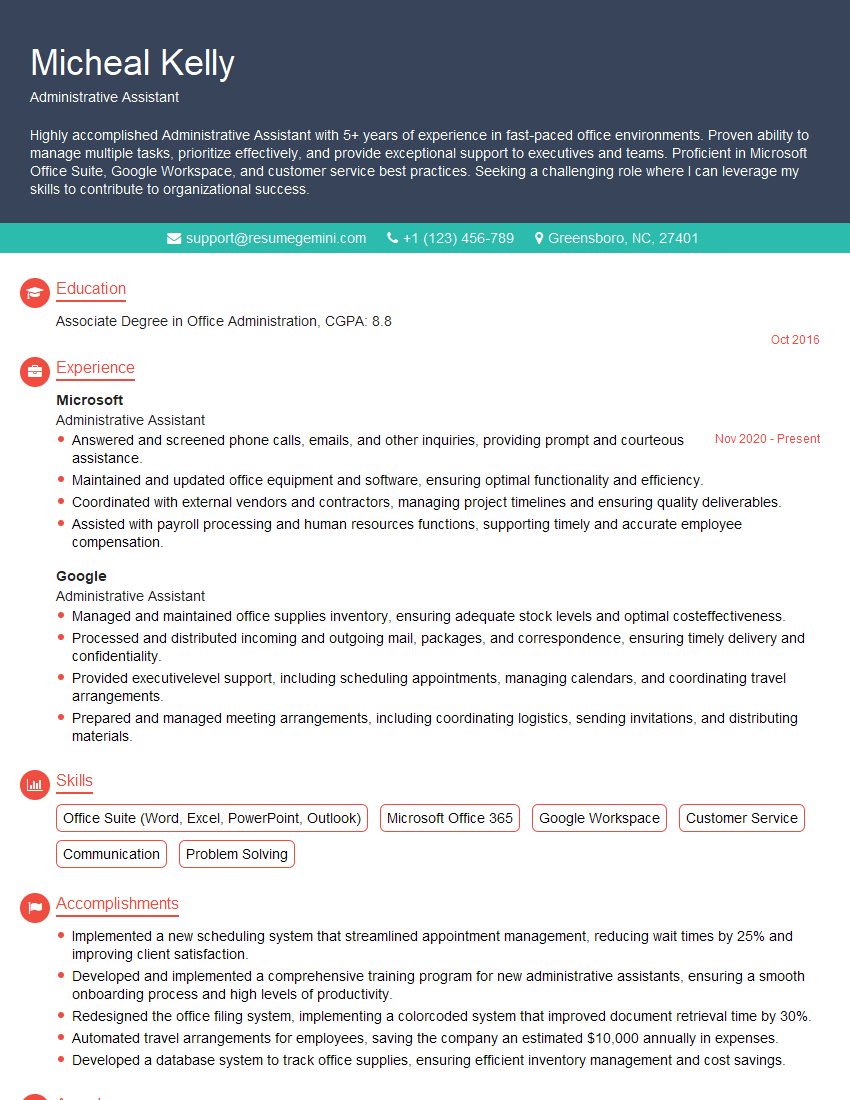
Administrative Assistant Resume Sample
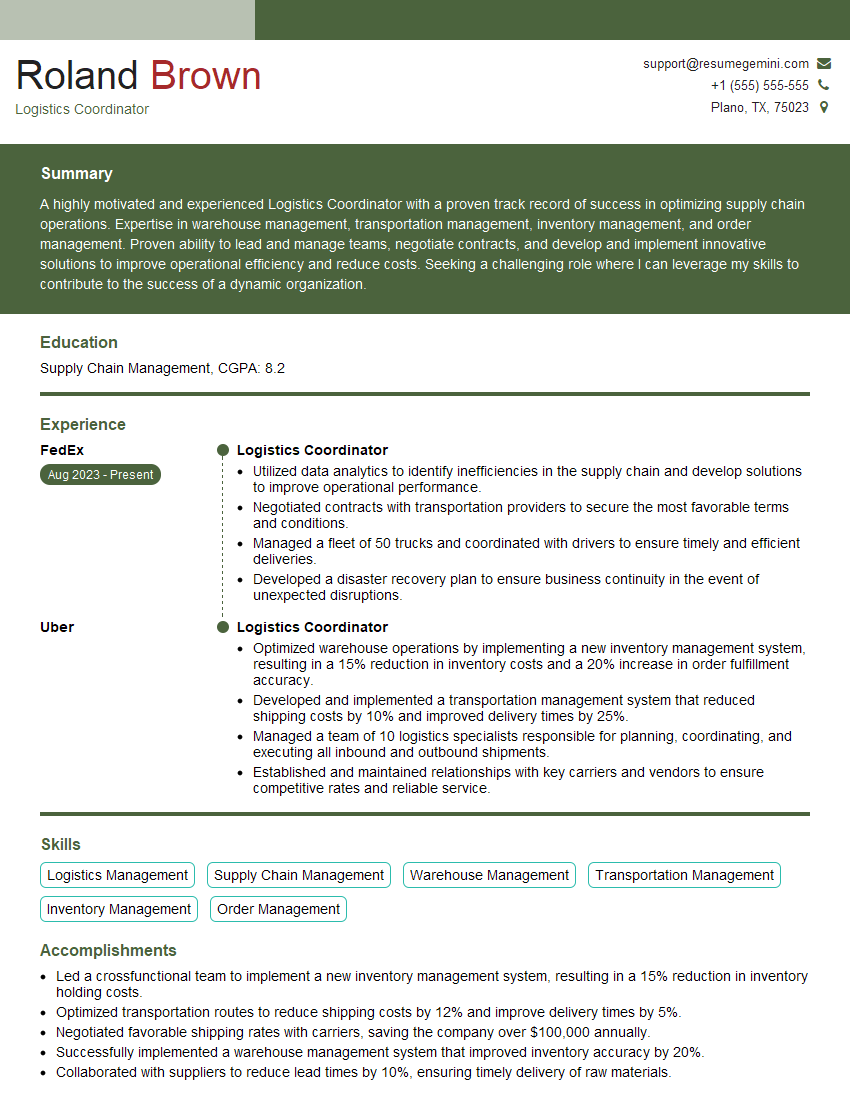
Logistics Coordinator Resume Sample
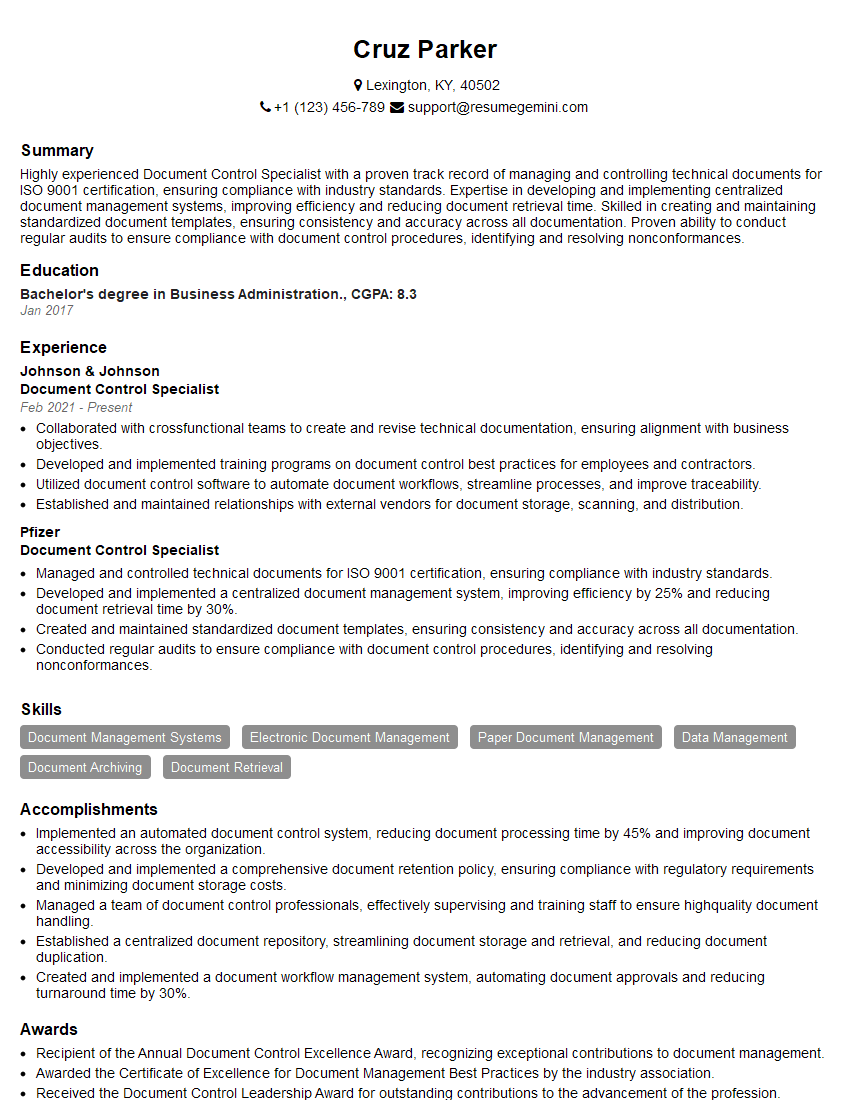
Document Control Specialist Resume Sample
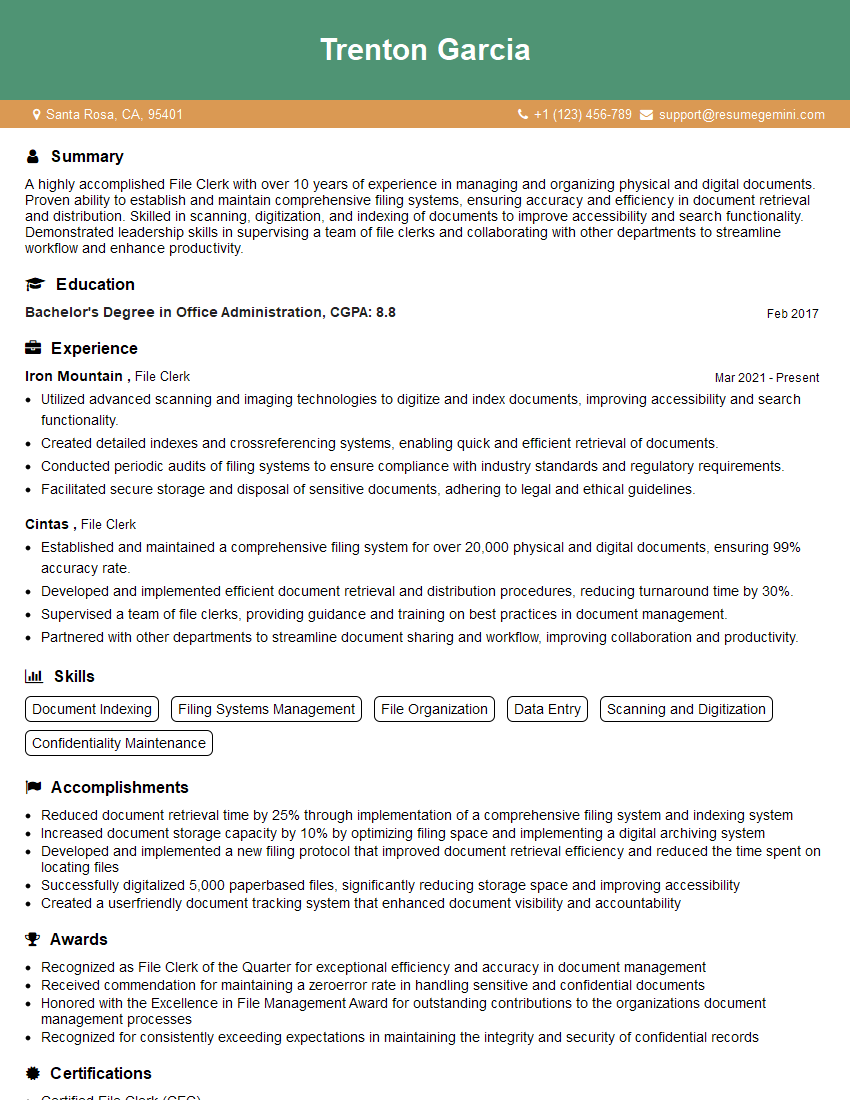
File Clerk Resume Sample
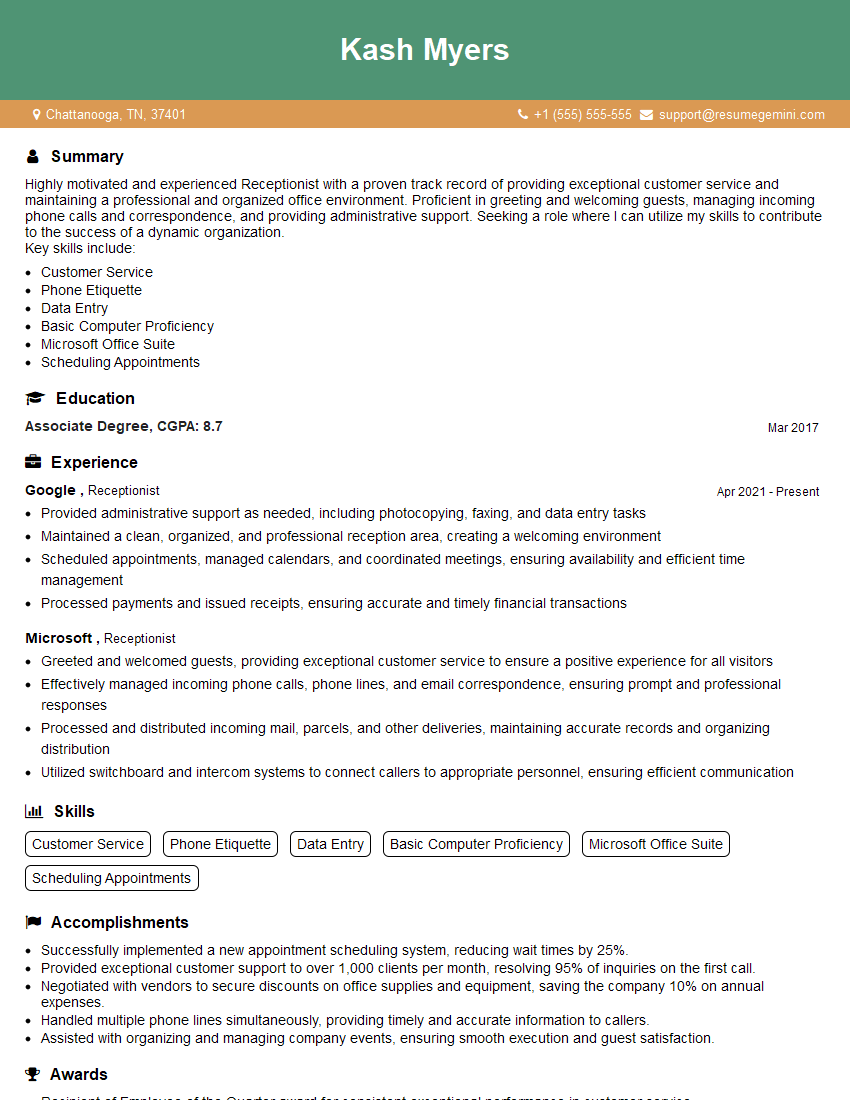
Receptionist Resume Sample
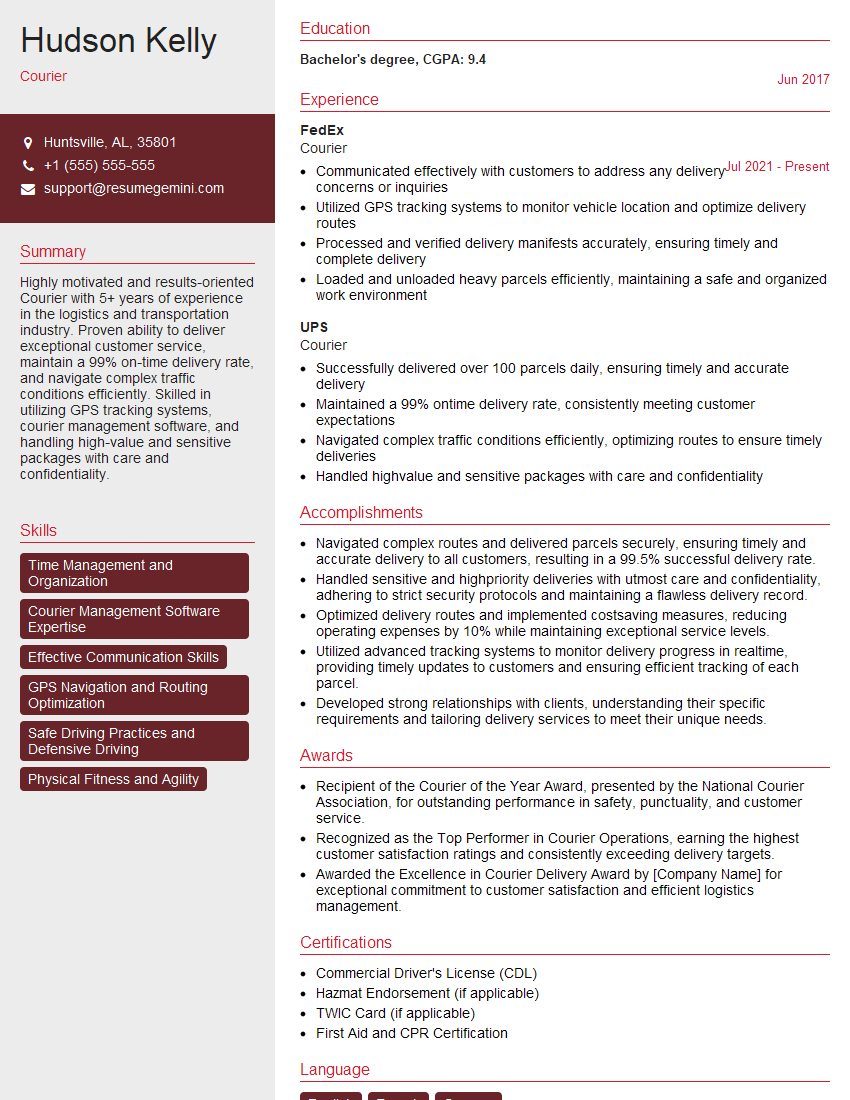
Courier Resume Sample
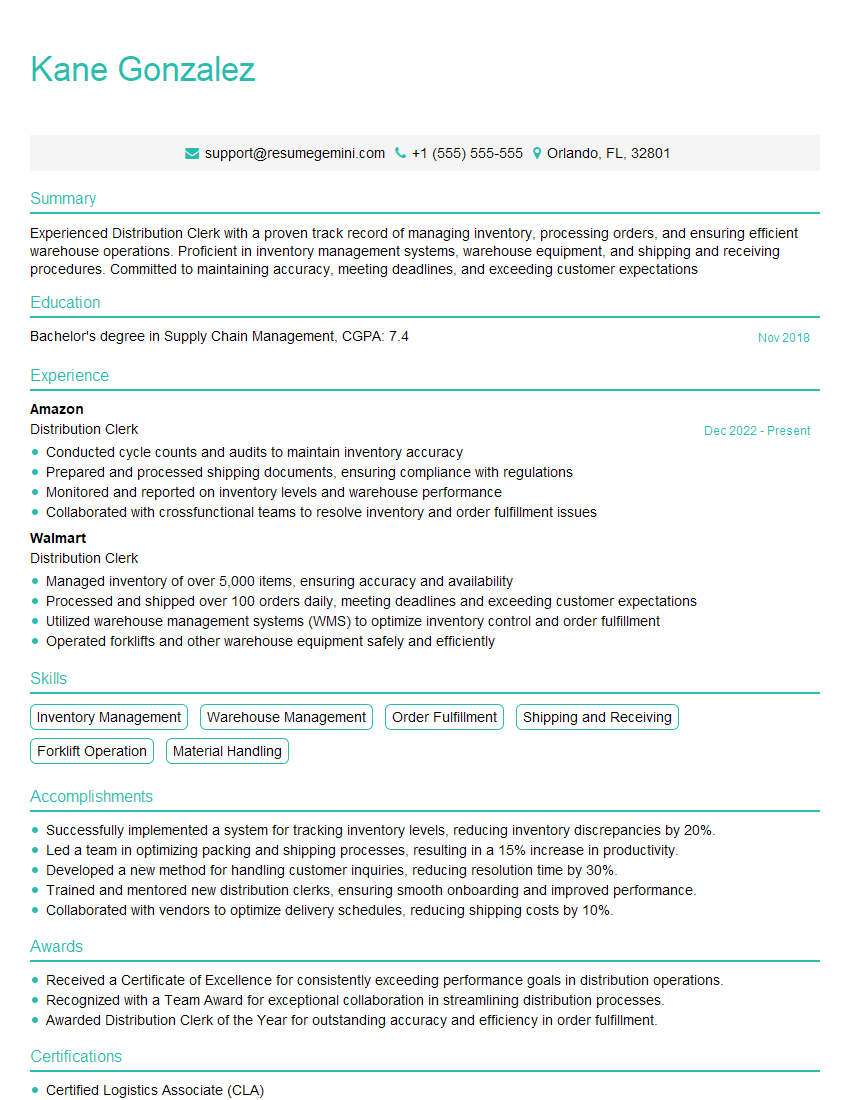
Distribution Clerk Resume Sample
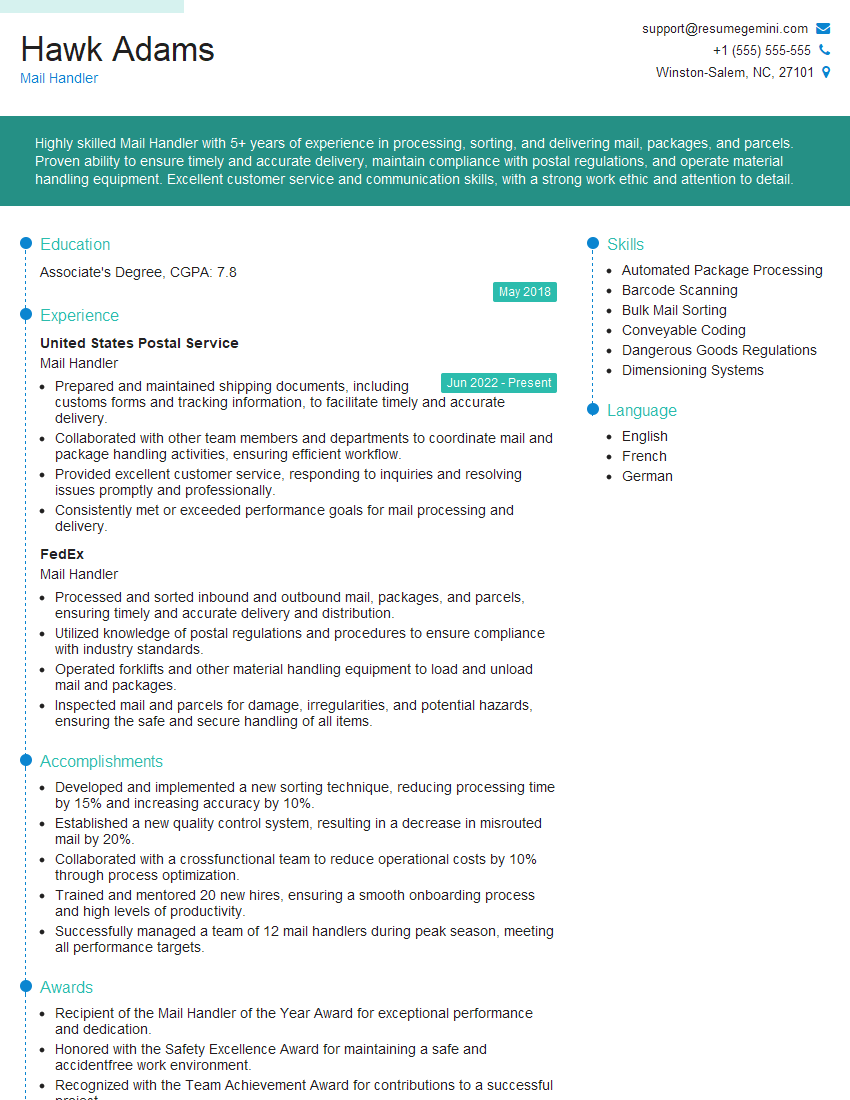
Mail Handler Resume Sample
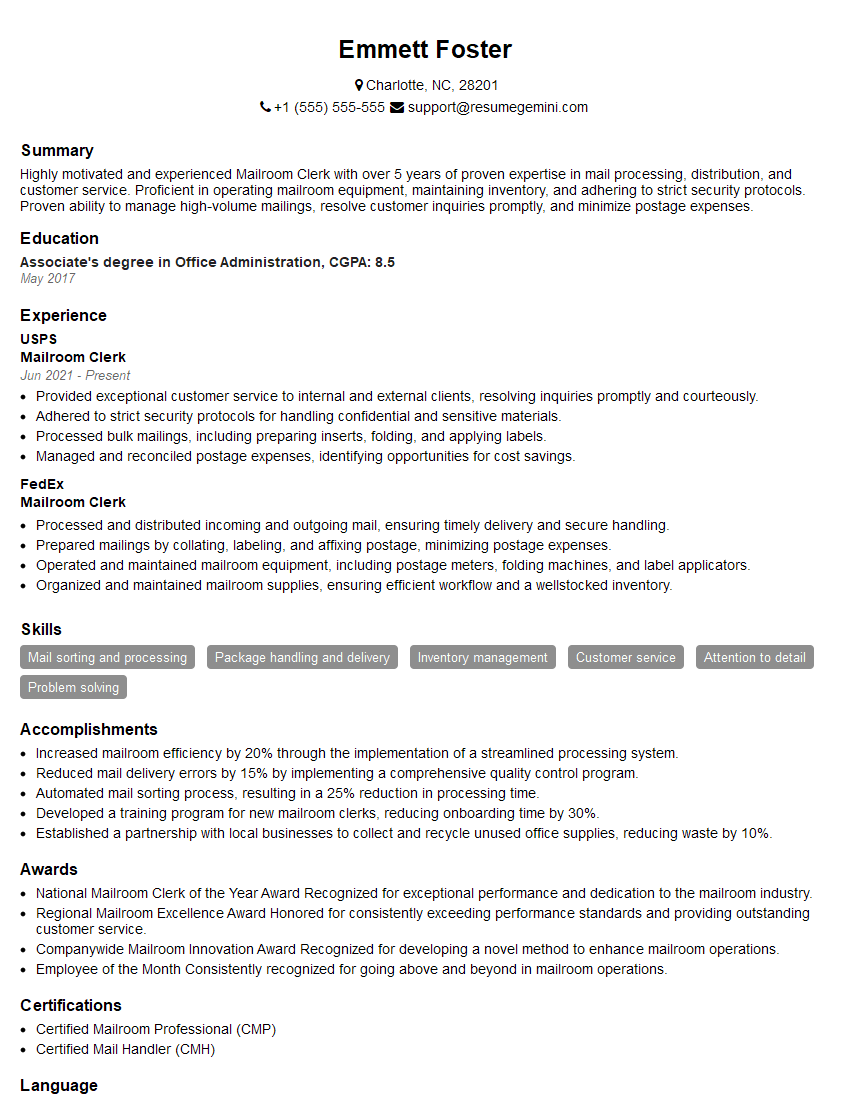
Mailroom Clerk Resume Sample

Postal Clerk Resume Sample
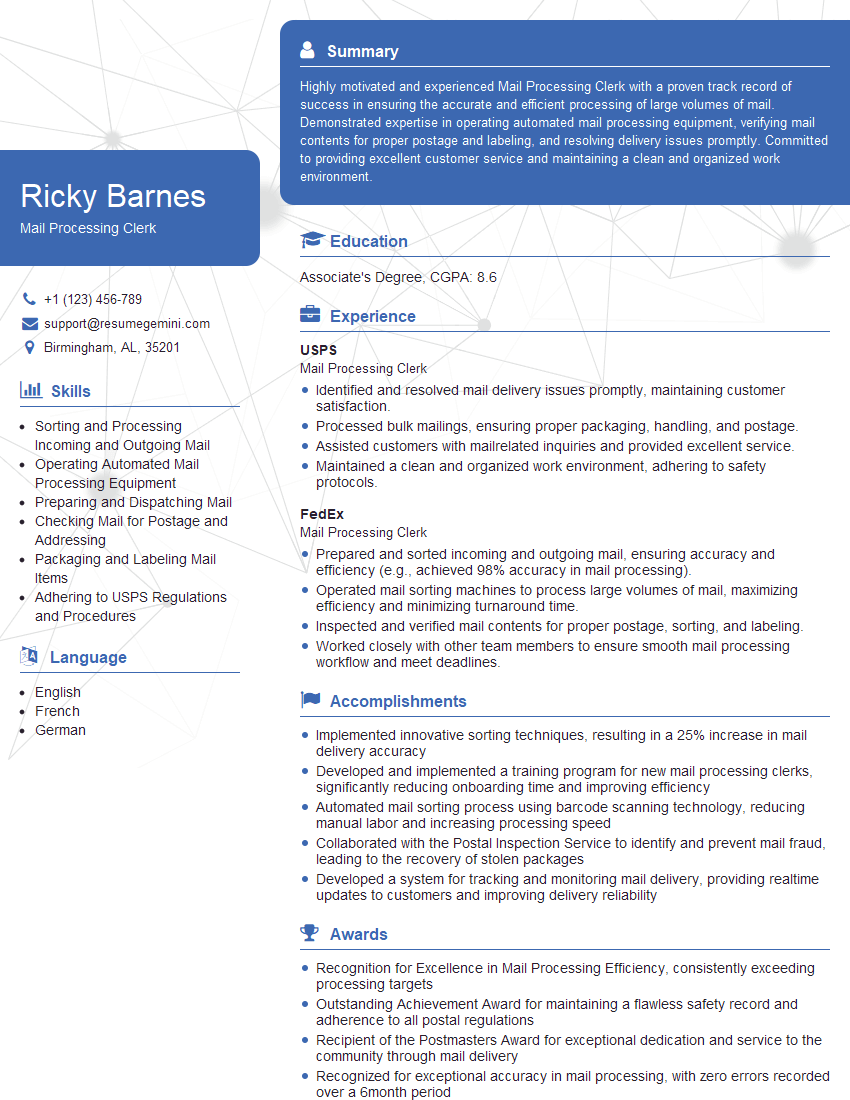
Mail Processing Clerk Resume Sample

Shipping and Receiving Clerk Resume Sample
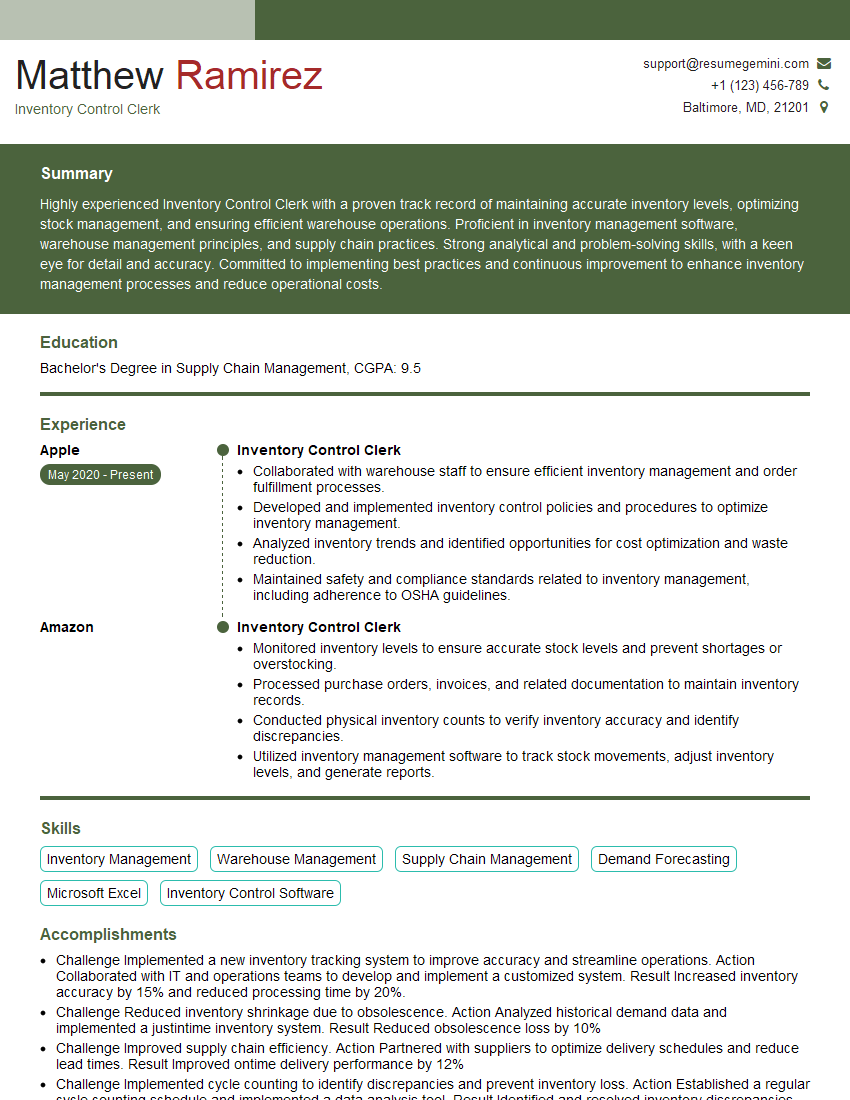
Inventory Control Clerk Resume Sample
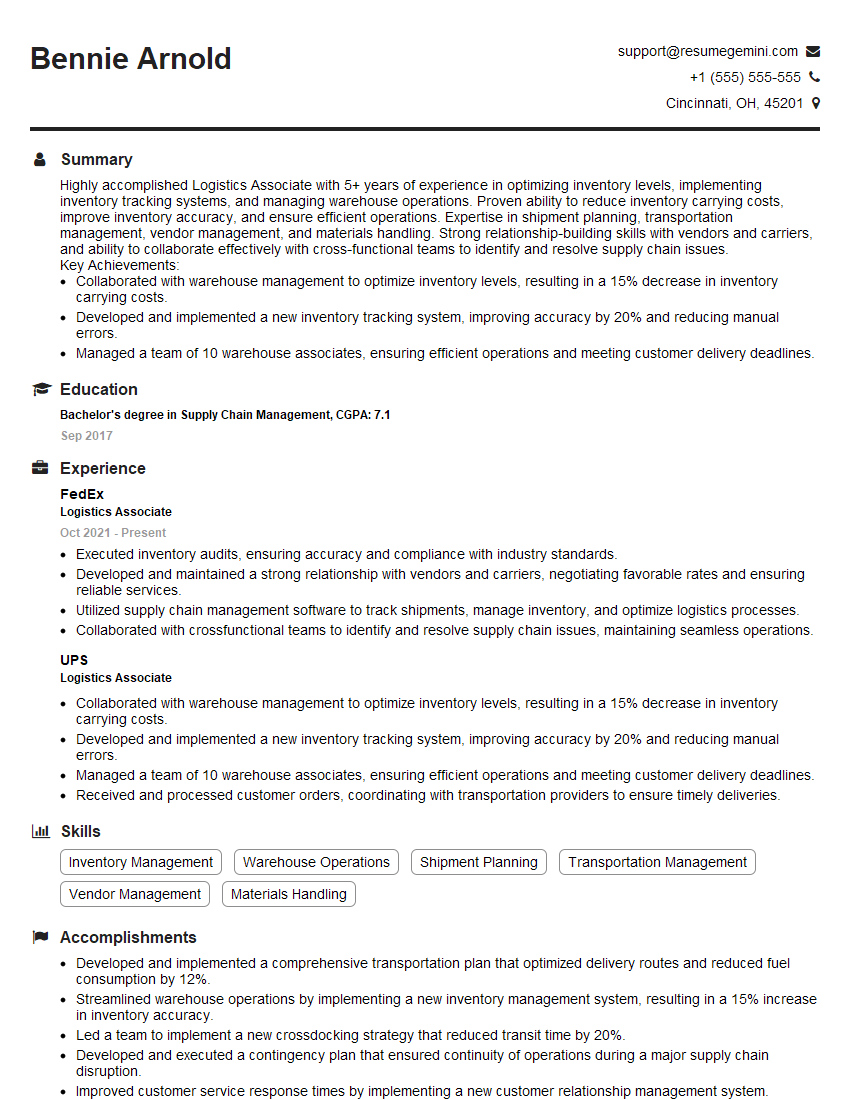
Logistics Associate Resume Sample
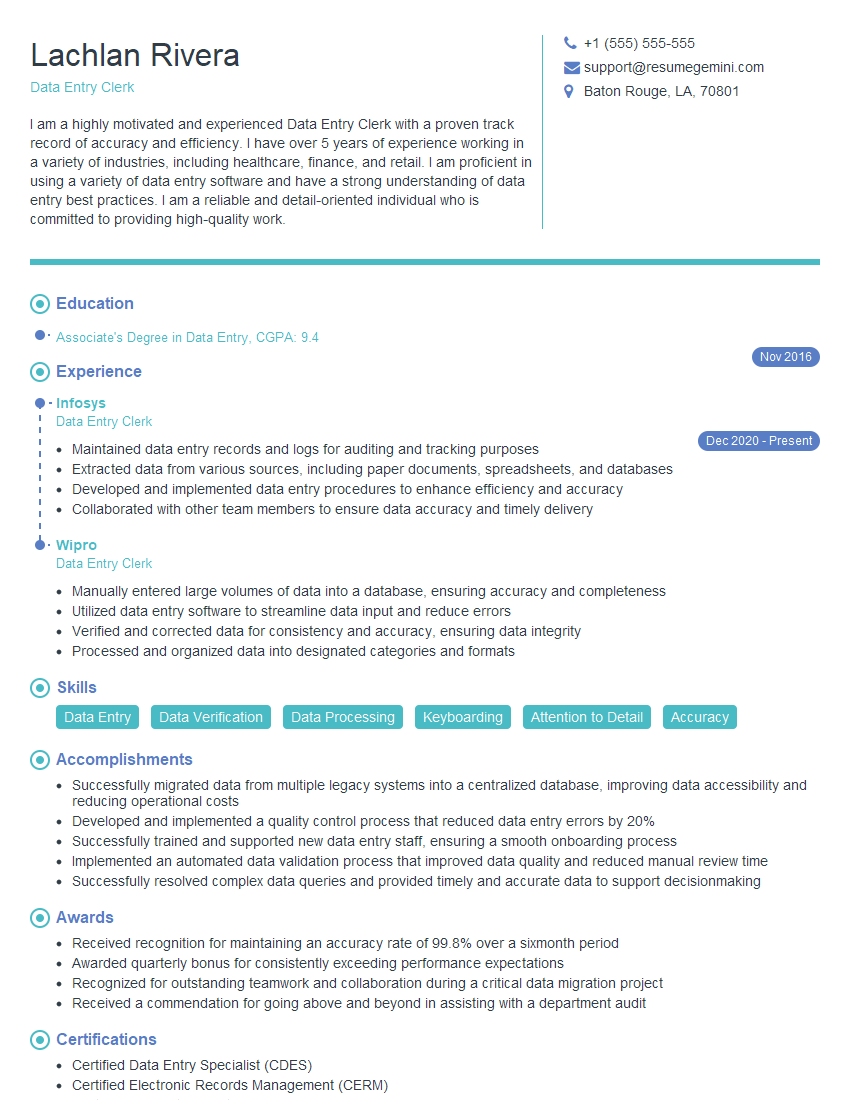
Data Entry Clerk Resume Sample
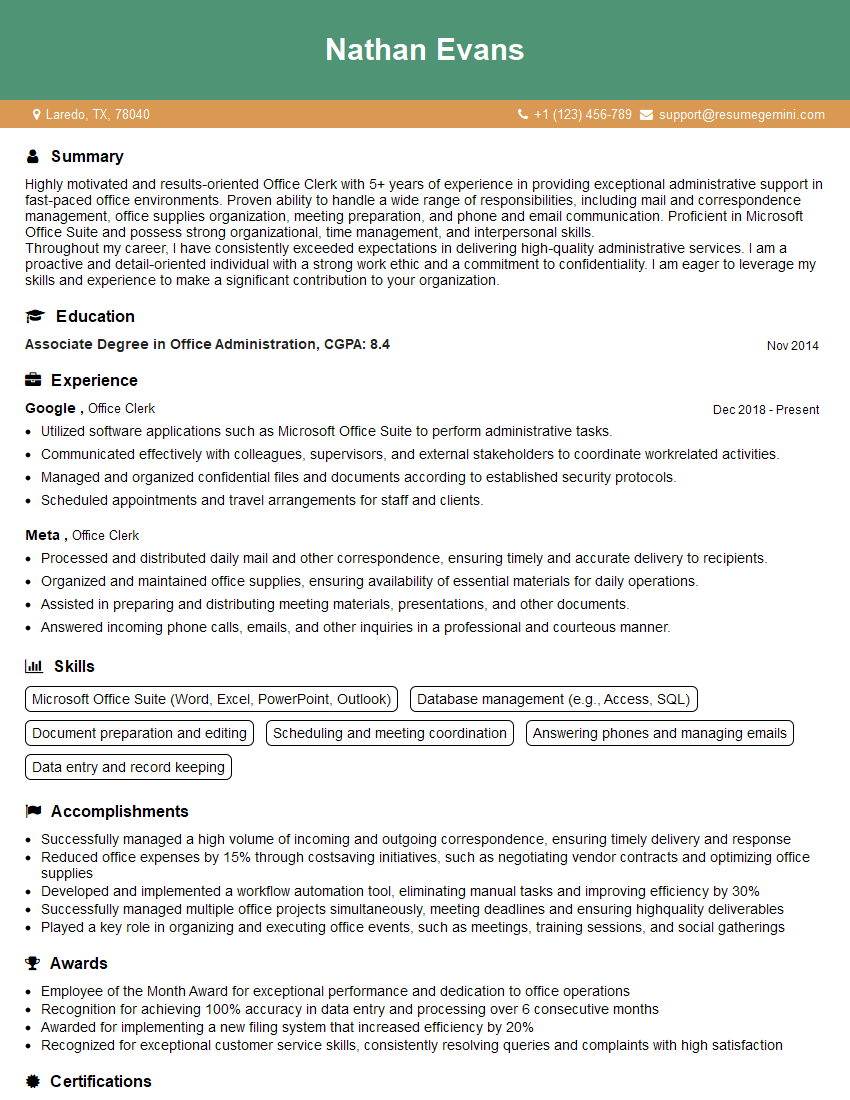
Office Clerk Resume Sample
Explore more articles
Users Rating of Our Blogs
Share Your Experience
We value your feedback! Please rate our content and share your thoughts (optional).
What Readers Say About Our Blog
Very informative content, great job.
good