The right preparation can turn an interview into an opportunity to showcase your expertise. This guide to Recreational Forestry interview questions is your ultimate resource, providing key insights and tips to help you ace your responses and stand out as a top candidate.
Questions Asked in Recreational Forestry Interview
Q 1. Explain the principles of sustainable recreation management in forested areas.
Sustainable recreation management in forested areas hinges on balancing the enjoyment of recreational activities with the long-term health of the ecosystem. It’s about ensuring that today’s recreation doesn’t compromise the ability of future generations to enjoy the same forest resources. This involves a multi-faceted approach encompassing ecological, social, and economic considerations.
- Ecological Sustainability: This focuses on minimizing the environmental impact of recreational activities. Examples include trail design that minimizes soil erosion and protects sensitive habitats, controlling visitor numbers to prevent overuse, and managing waste effectively to prevent pollution.
- Social Sustainability: This ensures equitable access to recreational opportunities and considers the needs and preferences of diverse user groups. It involves community engagement and conflict resolution to ensure everyone can enjoy the forest responsibly.
- Economic Sustainability: This involves generating revenue from recreation while ensuring that revenue supports conservation efforts and the long-term viability of recreational opportunities. This can involve entrance fees, permits, and concessions while also supporting local economies.
Imagine a mountain biking trail system. Sustainable management would mean designing trails to minimize erosion, using eco-friendly materials for trail construction, educating users about responsible riding practices, and monitoring trail conditions regularly to address any damage.
Q 2. Describe your experience in developing and implementing recreational trails.
I’ve been involved in numerous trail development projects, ranging from simple walking paths to complex mountain biking networks. My approach always begins with a thorough assessment of the site, considering factors such as soil type, topography, existing vegetation, and potential impacts on wildlife. This assessment guides the trail’s design and construction.
For example, in one project, we constructed a network of hiking trails in a sensitive wetland area. This required careful planning to minimize impact on the fragile ecosystem. We used sustainable trail building techniques, such as constructing trails on existing compacted surfaces to reduce erosion and minimizing the clearing of vegetation. We also installed boardwalks in particularly wet areas to protect the sensitive vegetation. Post-construction monitoring and maintenance were crucial to ensure the long-term stability and ecological integrity of the trails.
Another project involved working with a local community to develop a multi-use trail system catering to hikers, bikers, and equestrians. This required careful consideration of trail width, surface materials, and signage to ensure the safety and enjoyment of all users, while still protecting the environment.
Q 3. How do you assess and mitigate the environmental impacts of recreational activities?
Assessing and mitigating environmental impacts involves a systematic approach. It starts with identifying potential impacts associated with different recreational activities. Then, we use a variety of methods for assessment, including monitoring vegetation health, water quality, soil erosion, and wildlife disturbance.
- Monitoring: This includes regular inspections and data collection to track changes in the environment. For example, we might monitor water quality near campsites to detect any pollution. We use established methodologies to ensure that the collected data is accurate and comparable over time.
- Mitigation Strategies: These are implemented to reduce or eliminate the identified impacts. This could include building boardwalks to protect wetlands, implementing waste management strategies to prevent pollution, and restricting access to sensitive areas. We use adaptive management, meaning that we modify our strategies based on monitoring data and ongoing evaluation.
- Education and Outreach: Educating the public about responsible recreational behavior is paramount. This often involves creating signage, providing brochures, or offering guided tours to promote environmentally friendly practices. This is crucial for long-term sustainability.
For instance, if we noticed increased erosion on a popular hiking trail, we might implement measures such as installing erosion control structures, rerouting the trail, or promoting the use of designated trails. We also might educate hikers on proper trail etiquette to prevent further damage.
Q 4. What are the key factors to consider when designing a visitor center for a forest setting?
Designing a visitor center in a forest setting requires careful consideration of several key factors to ensure it blends seamlessly with the environment and enhances the visitor experience. The design should be both functional and aesthetically pleasing, complementing the surrounding landscape.
- Architectural Design: The building’s architecture should reflect the natural surroundings, using sustainable building materials and minimizing environmental impact. This might involve using locally sourced wood, energy-efficient systems, and natural lighting.
- Accessibility: The center should be accessible to visitors with disabilities, including features like ramps, elevators, and accessible restrooms.
- Educational Exhibits: Interactive exhibits and displays should engage visitors and educate them about the forest’s ecology, history, and management. These displays should be informative, engaging, and appropriate for a range of ages and interests.
- Sustainability: The visitor center’s operations should be environmentally friendly, using renewable energy, minimizing waste, and conserving water.
- Location: The location of the center should be carefully chosen to minimize its environmental footprint and offer convenient access for visitors, while minimizing disruption to natural habitats.
A well-designed visitor center acts as a gateway to the forest, providing a welcoming space for learning and enhancing the overall recreational experience.
Q 5. Discuss different methods for managing visitor use and carrying capacity in a park or forest.
Managing visitor use and carrying capacity is crucial to protect resources and maintain the quality of the recreational experience. This involves understanding the limits of the environment and implementing strategies to manage visitor numbers.
- Monitoring Visitor Numbers: This involves tracking the number of visitors to different areas of the park or forest, using various methods such as visitor counters, surveys, and reservation systems. This data helps to determine when areas are approaching their carrying capacity.
- Permitting and Reservations: Requiring permits or reservations for certain activities or areas can help regulate visitor numbers and distribute use more evenly.
- Trail Management: Proper trail design and maintenance, along with signage and information about appropriate use, can direct visitors to areas with higher carrying capacity and protect sensitive areas.
- Education and Interpretation: Educating visitors about the importance of carrying capacity and responsible recreation helps to promote voluntary compliance with management strategies.
- Zoning: Dividing the area into zones with different levels of access and permitted activities can help manage visitor use effectively.
For instance, a popular hiking trail might have a daily limit on the number of hikers allowed. This limit could be adjusted based on weather conditions, trail conditions, or other factors.
Q 6. How do you address conflicts between different recreational uses in a forested area?
Conflicts between different recreational uses are common in forested areas. Addressing these conflicts requires a collaborative and multi-faceted approach that considers the needs and preferences of all user groups.
- Communication and Collaboration: Engaging all stakeholders – hikers, bikers, equestrians, hunters, etc. – in discussions and workshops is essential to identify concerns and develop mutually acceptable solutions.
- Trail Designation and Zoning: Clearly designating trails for specific uses (e.g., hiking-only trails, multi-use trails, equestrian trails) can help to minimize conflicts and improve safety.
- Education and Awareness: Educating users about the needs and preferences of other groups can promote mutual understanding and respect.
- Rules and Regulations: Clear rules and regulations regarding appropriate behavior on trails and in different areas of the forest can help to prevent conflicts and ensure safe and enjoyable experiences for everyone.
- Enforcement: Effective enforcement of rules and regulations is essential to ensure that everyone adheres to the agreed-upon guidelines.
For example, we might implement a system of trail etiquette where bikers yield to hikers, or establish designated areas for different activities to reduce overlap and potential conflicts.
Q 7. Describe your experience with fire management and its impact on recreational opportunities.
Fire management is crucial in forested areas, impacting both the ecological health of the forest and recreational opportunities. While wildfires pose a significant threat, prescribed burns, done under controlled conditions, can be a valuable tool for forest health and recreation.
- Wildfire Prevention and Suppression: Preventing wildfires through education and enforcement of fire safety regulations is essential. Effective wildfire suppression minimizes the negative impacts on both the environment and recreational opportunities.
- Prescribed Burns: Prescribed burns, when conducted safely and appropriately, can reduce fuel loads, improve forest health, and enhance wildlife habitat. While temporarily impacting recreational access, they create a more resilient and diverse forest in the long run, leading to enhanced recreational opportunities.
- Post-Fire Recovery: Post-fire recovery involves assessing damage, and developing strategies for restoring the forest and mitigating the impacts on recreational opportunities. This can involve trail rehabilitation, reforestation, and public education.
For example, a prescribed burn might temporarily close a section of a trail, but afterward, the resulting improved forest health and more open vistas can enhance the recreational experience for hikers. It’s a crucial part of active forest management that has long-term implications for the health and resilience of the whole ecosystem.
Q 8. Explain your familiarity with Leave No Trace principles and their application.
Leave No Trace (LNT) principles are a set of seven guidelines for minimizing the impact of recreational activities on the natural environment. They’re crucial for ensuring the long-term sustainability of our forests and trails. My familiarity extends beyond simply knowing the principles; I understand their practical application in various recreational settings.
- Plan Ahead and Prepare: This involves researching the area, obtaining necessary permits, packing out everything you pack in, and informing someone of your plans. For example, before leading a group hiking, I always check weather forecasts, trail conditions, and potential hazards, ensuring everyone has appropriate gear and training.
- Travel and Camp on Durable Surfaces: Staying on established trails and campsites prevents soil erosion and damage to vegetation. I often demonstrate this by guiding groups to established campsites and explaining the rationale behind avoiding shortcuts or creating new trails.
- Dispose of Waste Properly: Pack out all trash, including food scraps and toilet paper. Proper waste disposal is critical; I’ve organized numerous cleanup events and implemented educational programs to encourage responsible waste management in recreational areas.
- Leave What You Find: This means leaving rocks, plants, and cultural artifacts undisturbed. I actively discourage the collection of natural items and explain the importance of respecting the ecological balance and historical significance of the site.
- Minimize Campfire Impacts: Use existing fire rings or stoves, and never leave a fire unattended. I regularly conduct workshops on responsible campfire practices, emphasizing the devastating effects of uncontrolled wildfires.
- Respect Wildlife: Observe animals from a distance, never feed them, and protect their habitat. I teach visitors about the importance of maintaining a safe distance from wildlife and how to react responsibly in wildlife encounters.
- Be Considerate of Other Visitors: Respect other users’ enjoyment of the area by keeping noise levels down and yielding to others on trails. I’ve designed educational materials that promote courtesy and responsible recreation, reminding visitors that shared spaces necessitate mutual respect.
Q 9. How do you communicate effectively with diverse audiences about recreational forestry issues?
Effective communication with diverse audiences about recreational forestry issues requires tailoring the message to the specific audience’s background and interests. I use a multi-faceted approach.
- Targeted Messaging: For experienced hikers, I might discuss advanced trail maintenance techniques or the impact of invasive species. For families, I’d focus on safety, Leave No Trace principles, and the fun aspects of nature exploration. For local communities, I highlight economic benefits of sustainable forestry and recreational opportunities.
- Multiple Communication Channels: I utilize various channels including workshops, presentations, brochures, social media, website content, and interactive displays at visitor centers to reach different demographics. For example, I use visual aids and interactive games for children, while I may opt for technical presentations or scientific reports for academic audiences.
- Active Listening and Feedback: I value two-way communication. I actively solicit feedback and incorporate audience input into my presentations and educational materials to ensure they are relevant and effective.
- Visual Aids and Storytelling: I often use compelling visuals, such as photographs, videos, and maps, along with storytelling techniques to make complex information engaging and memorable.
- Collaboration and Partnerships: Working with local community groups, schools, and other organizations extends outreach and builds trust. I’ve actively participated in collaborative projects to promote recreational forestry initiatives within local communities.
Q 10. What are the common challenges faced in managing recreational access to wilderness areas?
Managing recreational access to wilderness areas presents numerous challenges:
- Balancing Preservation and Access: The core challenge is finding a balance between allowing public access for recreation and preserving the natural environment and ecological integrity of wilderness areas. Overuse can lead to trail damage, habitat destruction, and increased human-wildlife conflict.
- Infrastructure Limitations: Maintaining adequate trails, parking areas, restrooms, and other infrastructure is costly and resource-intensive, especially in remote locations. Insufficient infrastructure can lead to congestion, safety hazards, and environmental degradation.
- Conflict Among Users: Different user groups (hikers, bikers, horseback riders, etc.) may have conflicting needs and preferences, leading to friction and safety concerns. Effective management requires clear guidelines, designated areas, and educational programs to mitigate conflict.
- Environmental Impacts: Uncontrolled recreational activities can contribute to soil erosion, water pollution, and disturbance of wildlife. Implementing and enforcing Leave No Trace principles is essential in minimizing these impacts.
- Safety Concerns: Wilderness areas inherently present risks such as injuries, weather-related hazards, and wildlife encounters. Implementing safety protocols, providing visitor information, and employing search and rescue services are vital for managing these risks.
- Funding and Staffing: Adequate funding and staffing are essential for effective management of recreational areas. Limited resources often restrict the implementation of management strategies and maintenance of infrastructure.
Q 11. Describe your experience in creating and maintaining recreational maps and signage.
My experience in creating and maintaining recreational maps and signage involves a thorough understanding of cartographic principles, design aesthetics, and the needs of various user groups.
- Map Creation: I utilize GIS software (e.g., ArcGIS) to create accurate and user-friendly maps incorporating trail networks, points of interest, elevation contours, and safety information. I ensure maps are legible and include appropriate legends and symbols. I’ve developed maps for various recreational areas, catering to diverse user needs like hikers, bikers, or families with young children.
- Signage Design and Placement: I design durable and informative signage using standardized symbols and clear, concise language. Signage placement is strategically determined to maximize visibility and minimize environmental impact. I’ve designed and installed signage indicating trail directions, points of interest, safety regulations, and Leave No Trace guidelines.
- Maintenance and Updates: Regular maintenance and updates of maps and signage are crucial. I ensure maps and signage are kept up-to-date to reflect any changes in trail conditions, closures, or regulations. This includes periodic inspections and repairs to maintain their effectiveness and durability.
- Accessibility Considerations: I adhere to accessibility standards when creating maps and signage, ensuring they are usable by people with disabilities. This includes using appropriate font sizes, contrasting colors, and tactile elements where necessary.
Q 12. How do you evaluate the success of a recreational program or initiative?
Evaluating the success of a recreational program or initiative requires a multi-faceted approach that combines quantitative and qualitative data.
- Quantitative Data: This includes visitor numbers, trail usage patterns, participation rates in programs, and economic impacts. I analyze visitor counts from trail counters, parking lot usage data, and permit sales to gauge program reach and impact.
- Qualitative Data: This involves collecting feedback through surveys, interviews, focus groups, and observations to assess visitor satisfaction, identify areas for improvement, and gauge the effectiveness of educational outreach. I’ve conducted post-program surveys to gather user opinions and feedback on a variety of recreational activities.
- Environmental Monitoring: Assessing the environmental impacts of a program is essential. I might monitor soil erosion, vegetation damage, and water quality to determine the sustainability of recreational activities.
- Benchmarking and Comparison: Comparing program outcomes to similar initiatives or established benchmarks allows for a more objective evaluation of success. I regularly compare our programs’ performance with regional and national standards and best practices.
- Adaptive Management: Evaluation results should inform adaptive management strategies, allowing for adjustments to program design, implementation, and communication to maximize effectiveness and minimize negative impacts.
Q 13. What are the key legislative and regulatory frameworks governing recreational forestry in your region?
The legislative and regulatory frameworks governing recreational forestry vary by region. (Note: This answer will be generalized as the specific region is not specified in the prompt. Replace this with your specific region’s details.)
Generally, these frameworks address land ownership, access rights, environmental protection, and safety regulations. Key legislation might include:
- National Forest Management Act (NFMA): This act guides the management of national forests, often encompassing provisions for recreational activities. It addresses aspects of sustainability and balances various forest uses including recreation.
- Wilderness Act: This act establishes the National Wilderness Preservation System and guides the management of designated wilderness areas. It aims to maintain the wilderness character of these lands, often placing restrictions on recreational activities to minimize impact.
- State and Local Ordinances: States and local governments have their own regulations related to land use, access, permits, and safety within forests and recreational areas. These may address issues such as fire permits, trail regulations, and camping restrictions.
- Environmental Protection Laws: Various environmental protection laws apply, addressing issues such as water quality, air quality, and endangered species protection. These laws often impact the types of recreational activities permitted and the measures required to minimize environmental harm.
Understanding these frameworks is crucial for responsible planning and implementation of recreational forestry programs.
Q 14. Explain your understanding of risk assessment and management in recreational settings.
Risk assessment and management in recreational settings are crucial for ensuring visitor safety and minimizing potential harm. This involves a systematic process of identifying, analyzing, and mitigating hazards.
- Hazard Identification: This involves identifying potential hazards in the recreational environment such as trail conditions, weather hazards, wildlife encounters, and human-related risks (e.g., slips, falls, encounters with other users).
- Risk Analysis: This involves evaluating the likelihood and severity of each identified hazard. This might involve a qualitative assessment (e.g., low, medium, high risk) or a quantitative one (e.g., using probabilities and impact scores).
- Risk Mitigation: This is the process of developing and implementing strategies to reduce or eliminate risks. Strategies might include trail maintenance, warning signs, educational programs, emergency response planning, and visitor restrictions.
- Emergency Response Planning: This involves establishing protocols for dealing with emergencies, such as injuries, accidents, or weather-related events. This typically includes having a communication plan, trained personnel, and access to emergency services.
- Monitoring and Evaluation: Regularly monitoring the effectiveness of risk management strategies and evaluating incidents to learn from past events and improve future strategies is crucial. Incident reports are invaluable in identifying trends, weaknesses, and areas for improvement in the risk management process.
Employing a proactive and systematic risk assessment and management approach is essential for creating safe and enjoyable recreational experiences while preserving the environment.
Q 15. How do you involve local communities in the planning and management of recreational forestry resources?
Involving local communities is crucial for successful recreational forestry. It ensures the management plan aligns with local needs and values, fostering a sense of ownership and responsibility. We employ several strategies:
- Participatory planning workshops: We host open forums and workshops where community members can share their perspectives on preferred recreational activities, concerns about environmental impact, and desired levels of access. This ensures their voices are heard from the outset.
- Community surveys and questionnaires: We distribute surveys to gather broad input on recreational preferences, usage patterns, and satisfaction levels. This data helps us quantify demand and assess the effectiveness of management strategies.
- Advisory committees: Establishing local advisory committees composed of residents, business owners, and environmental groups facilitates ongoing dialogue and feedback throughout the planning and implementation process. These committees act as vital channels of communication and collaboration.
- Co-management agreements: In some cases, formal co-management agreements are established, granting the community a significant role in the day-to-day management of the forest resources. This collaborative approach builds trust and empowers local stakeholders.
For instance, in one project, we partnered with a local indigenous community to co-manage a sacred forest area, integrating their traditional ecological knowledge into the management plan. This resulted in a far more sustainable and culturally appropriate approach to recreational forestry.
Career Expert Tips:
- Ace those interviews! Prepare effectively by reviewing the Top 50 Most Common Interview Questions on ResumeGemini.
- Navigate your job search with confidence! Explore a wide range of Career Tips on ResumeGemini. Learn about common challenges and recommendations to overcome them.
- Craft the perfect resume! Master the Art of Resume Writing with ResumeGemini’s guide. Showcase your unique qualifications and achievements effectively.
- Don’t miss out on holiday savings! Build your dream resume with ResumeGemini’s ATS optimized templates.
Q 16. What are the best practices for managing campgrounds and other recreational facilities?
Managing campgrounds and recreational facilities effectively requires a multifaceted approach prioritizing visitor safety, environmental protection, and resource sustainability. Key best practices include:
- Regular maintenance and upkeep: This includes trail maintenance, campsite cleaning, facility repairs, and waste management. Proactive maintenance prevents safety hazards and enhances the overall visitor experience.
- Sustainable waste management: Implementing comprehensive recycling programs and composting systems minimizes the environmental impact of recreational use. This could involve installing designated bins, providing educational materials, and possibly partnering with local recycling facilities.
- Resource protection: Measures such as designated campfire rings, restrictions on firewood collection, and educational campaigns on Leave No Trace principles minimize damage to the forest ecosystem. We also encourage the use of eco-friendly products.
- Safety protocols: Clearly marked trails, safety signage, emergency response plans, and potentially first-aid stations ensure visitor safety. Regular inspections of facilities are also essential to identify and address potential risks.
- Capacity management: Implementing reservation systems or visitor quotas helps to prevent overcrowding and manage the environmental impact of high usage areas.
For example, we implemented a reservation system for a popular campground that previously suffered from overcrowding. This allowed us to better manage waste disposal, protect sensitive habitats, and enhance the overall visitor experience by reducing congestion.
Q 17. Describe your experience with budgeting and resource allocation in recreational forestry.
Budgeting and resource allocation in recreational forestry require careful planning and prioritization. We use a multi-step process:
- Needs assessment: Identifying the specific needs of the recreational areas, such as trail maintenance, facility upgrades, or environmental restoration projects, is the first step. This often involves collecting data on visitor use, facility conditions, and environmental factors.
- Prioritization: Based on the needs assessment, we prioritize projects based on their importance, cost-effectiveness, and potential impact on visitor experience and environmental sustainability. A cost-benefit analysis is often used at this stage.
- Budget development: A detailed budget is created, outlining the costs of each project, including materials, labor, and other expenses. This budget is then reviewed and approved by relevant stakeholders.
- Resource allocation: Once the budget is approved, resources – both financial and human – are allocated to each project based on the established priorities. This often requires careful monitoring and adjustments throughout the process.
- Monitoring and evaluation: Regular monitoring of expenditures and project progress ensures that resources are used efficiently and effectively. This allows for mid-course corrections if needed.
In one project, we used a phased approach to allocate funds for a trail improvement project, focusing on high-priority sections in the initial phase and then gradually expanding to other areas as more funding became available.
Q 18. How do you monitor and evaluate the health and condition of forest ecosystems related to recreation?
Monitoring the health and condition of forest ecosystems used for recreation involves a combination of field surveys and remote sensing techniques. We look for indicators of:
- Trail erosion and degradation: Regular trail inspections assess the extent of erosion, compaction, and widening. This informs decisions about trail maintenance and rerouting.
- Vegetation health: We assess the condition of vegetation along trails and in recreational areas, looking for signs of stress such as dieback, disease, or invasive species. This informs management decisions to mitigate these threats.
- Water quality: Water quality monitoring assesses the impact of recreational activities on streams and lakes, looking for indicators of pollution, nutrient enrichment, or sedimentation.
- Wildlife impacts: Monitoring wildlife populations and their habitat use helps evaluate the effects of recreation on wildlife communities. This might involve camera trapping or scat surveys.
- Visitor impact: We monitor visitor numbers, use patterns, and satisfaction levels to assess the overall impact of recreational activities on the ecosystem.
For example, we used trail cameras to monitor wildlife activity near a popular hiking trail, allowing us to identify potential conflicts and implement strategies like trail rerouting to minimize disturbance.
Q 19. Explain the role of GIS and remote sensing in recreational forestry management.
GIS (Geographic Information Systems) and remote sensing play a vital role in recreational forestry management. They provide powerful tools for:
- Mapping recreational resources: GIS allows us to map trails, campgrounds, scenic viewpoints, and other recreational features, creating detailed maps for visitors and managers.
- Assessing habitat suitability: Remote sensing data, such as satellite imagery, can be used to assess the condition of vegetation, identify sensitive habitats, and assess the impact of recreational activities.
- Monitoring visitor use: Remote sensing techniques, combined with ground-based data, can be used to track visitor use patterns, identify areas of high impact, and help optimize trail placement and recreational facility design.
- Planning and managing infrastructure: GIS can be used to plan the location and design of trails, campgrounds, and other recreational facilities, minimizing environmental impact and maximizing accessibility.
- Modeling environmental impacts: GIS and remote sensing data can be used to model the potential impacts of recreation on the environment, such as erosion or habitat fragmentation.
For example, we used satellite imagery to identify areas of high erosion along a popular hiking trail, which helped us prioritize trail maintenance and implement erosion control measures.
Q 20. Describe your experience with data analysis and reporting in relation to recreational use.
Data analysis and reporting are essential for understanding recreational use and evaluating the effectiveness of management strategies. We use various techniques:
- Visitor surveys and questionnaires: Analyzing data from visitor surveys provides insights into satisfaction levels, recreational preferences, and potential issues related to management.
- Usage monitoring: Analyzing data from trail counters, campground reservation systems, and parking lot occupancy sensors helps us understand usage patterns, identify peak seasons, and assess the effectiveness of capacity management measures.
- Environmental monitoring data: Analyzing data from water quality monitoring, vegetation surveys, and wildlife observations assesses the impact of recreation on the environment.
- Statistical analysis: We use statistical techniques to analyze the collected data, identify trends, and assess the effectiveness of various management practices. This often includes the use of software packages like R or SPSS.
- Reporting: We prepare reports summarizing the findings from data analysis, highlighting key trends, and providing recommendations for improved management practices. These reports are shared with stakeholders to inform decision-making.
For example, we analyzed data from visitor surveys and usage monitoring to demonstrate the effectiveness of a new trail rerouting project in reducing erosion and improving visitor satisfaction.
Q 21. What are the different types of recreational opportunities found in forested areas?
Forested areas offer a diverse range of recreational opportunities, broadly categorized as:
- Hiking and backpacking: Exploring trails through forests, ranging from short nature walks to multi-day backpacking expeditions.
- Camping: Setting up tents or using pre-existing campsites for overnight stays.
- Fishing and boating: Utilizing forest lakes and rivers for fishing and non-motorized boating activities.
- Hunting and trapping: (Where permitted and regulated) Hunting and trapping of game animals according to local regulations and licensing.
- Mountain biking and horseback riding: Using trails specifically designed for these activities.
- Wildlife viewing and birdwatching: Observing the diverse flora and fauna of the forest.
- Nature photography: Capturing the scenic beauty of the forest through photography.
- Educational programs and guided tours: Organized events and guided tours that promote learning and appreciation of the forest ecosystem.
- Forest therapy and mindfulness activities: Practicing mindful immersion in nature to promote relaxation and well-being.
The specific recreational opportunities available in a given forest area will depend on factors such as the size and type of forest, terrain, and existing infrastructure.
Q 22. How do you design and maintain recreational facilities that are accessible to people with disabilities?
Designing accessible recreational facilities requires a holistic approach, considering the diverse needs of people with disabilities. It’s not just about adding ramps; it’s about creating a fully inclusive experience. This starts with careful site planning and design, incorporating universal design principles from the outset.
- Pathway Design: We need smooth, wide, and well-maintained pathways suitable for wheelchairs, walkers, and other mobility devices. This often involves choosing appropriate surfacing materials and avoiding steep grades. Clear wayfinding signage is also crucial.
- Rest Areas and Amenities: Rest areas should be appropriately spaced and equipped with accessible seating, picnic tables, and restrooms that meet ADA (Americans with Disabilities Act) standards. This includes sufficient space for wheelchair maneuvers.
- Sensory Considerations: For individuals with visual or auditory impairments, tactile paving, audio cues, and braille signage are vital. Quiet zones can be designated for those sensitive to noise.
- Water Features: Accessibility to lakes, rivers, or other water bodies necessitates ramps or lifts for safe entry and exit. Consideration must also be given to the provision of appropriate changing facilities.
- Programmatic Accessibility: Beyond physical access, we must ensure programs and activities are accessible. This could involve providing adapted equipment, trained staff, or accessible information in multiple formats.
For example, in a project I managed, we used tactile paving to guide visually impaired visitors along a nature trail, and we installed audio descriptions at key points of interest. We also worked with local disability organizations to get feedback and ensure the design truly met users’ needs. Ongoing maintenance is crucial to ensure these facilities remain accessible.
Q 23. What are the impacts of climate change on recreational forestry and how can these be mitigated?
Climate change poses significant threats to recreational forestry. Increased temperatures, altered precipitation patterns, and more frequent extreme weather events all impact forest health and the quality of recreational experiences.
- Increased Fire Risk: Warmer temperatures and drier conditions create a greater risk of wildfires, damaging forests and disrupting recreational activities. This can require increased investment in fire prevention and suppression efforts.
- Pest and Disease Outbreaks: Changes in climate can favor the spread of invasive pests and diseases, harming tree health and potentially leading to forest dieback, impacting the aesthetics and safety of recreational areas.
- Changes in Species Composition: Some tree species may struggle to adapt to changing conditions, leading to shifts in forest composition and impacting wildlife habitat, reducing biodiversity, and altering the landscape that people enjoy.
- Water Resource Impacts: Altered precipitation patterns can affect water availability, impacting recreational activities like fishing and boating. Droughts can lead to restrictions on water use and even forest closures.
Mitigation strategies involve a combination of approaches. This includes sustainable forest management practices that enhance resilience to climate change, such as promoting forest diversity and reducing fuel loads to mitigate fire risk. Additionally, we must adapt recreational infrastructure and programs to cope with these changing conditions, possibly shifting activities away from particularly vulnerable areas, promoting sustainable tourism practices and educating users on climate change impacts.
Q 24. Describe your experience with using technology to enhance recreational experiences in forested areas.
Technology plays an increasingly important role in enhancing recreational experiences in forested areas. I’ve used a range of technologies to improve visitor experiences, information access, and resource management.
- Mobile Apps: Developing user-friendly mobile apps provides real-time information on trail conditions, emergency contacts, and points of interest. These apps can include interactive maps, GPS navigation, and even augmented reality features to overlay information onto the user’s view of the landscape. Imagine an app that identifies various tree species as the user walks along the trail.
- Interactive Kiosks: Placement of interactive kiosks at trailheads provides visitors with information about the forest, trails, and safety guidelines. They can also offer self-guided tour options, highlighting key areas and points of interest.
- Remote Sensing and GIS: I’ve utilized remote sensing data (satellite imagery, aerial photography) and GIS (Geographic Information Systems) to map trails, assess forest health, and monitor environmental changes. This helps in informed decision-making for trail maintenance, resource allocation and identifying areas susceptible to damage or needing conservation attention.
- Smart Sensors: Deploying smart sensors can monitor environmental conditions (temperature, humidity, rainfall), trail usage patterns, and even wildlife activity. This data can be used for predictive maintenance, resource allocation, and improved safety planning.
In a recent project, we used a mobile app to allow visitors to report trail issues and provide feedback directly to park staff, improving response times and increasing user satisfaction.
Q 25. How do you manage conflicts between recreational users and wildlife?
Managing conflicts between recreational users and wildlife requires a multi-faceted approach focusing on education, habitat protection, and responsible recreation practices. The aim is to minimize disruption to wildlife while ensuring safe and enjoyable experiences for visitors.
- Education and Awareness Campaigns: Educating the public about wildlife behavior, habitat needs, and appropriate interaction strategies is crucial. Clear signage, interpretive displays, and educational programs can greatly reduce human-wildlife conflicts.
- Habitat Management: Protecting and restoring wildlife habitat reduces the likelihood of encounters between humans and wildlife. This could involve creating buffer zones between recreation areas and sensitive habitats, providing safe passage for wildlife, or restoring degraded habitats.
- Trail Design and Management: Careful trail design and placement can minimize the impact on wildlife. This could involve using natural materials, keeping trails narrow, and avoiding sensitive areas. Properly spaced garbage bins and enforced waste removal procedures also minimize negative impacts.
- Regulation and Enforcement: Establishing clear regulations for recreational activities, such as leash laws for dogs, restrictions on feeding wildlife, and designated zones for specific activities, coupled with consistent enforcement, is vital. For example, regulations may restrict access during wildlife breeding or migration seasons.
- Monitoring and Response: Regular monitoring of wildlife and human activities is crucial to identify potential conflicts and respond promptly to any incidents. This helps to prevent escalating problems.
For instance, I worked on a project where we developed a wildlife awareness campaign, including educational brochures and signage, to reduce human-bear encounters. This was accompanied by the implementation of bear-resistant garbage containers and public education programs on proper food storage.
Q 26. How do you respond to emergencies or incidents in recreational areas?
Responding effectively to emergencies in recreational areas requires a well-defined plan, trained personnel, and robust communication systems. The approach is proactive, focusing on preventing incidents as much as responding to them.
- Emergency Communication System: A reliable communication system is critical, including cell service (though not always reliable in forested areas), two-way radios, and emergency call boxes strategically placed throughout the recreation area. This ensures that assistance can be summoned promptly.
- Trained Personnel: Adequately trained staff or volunteers, equipped with first aid and emergency response skills, are essential. This includes training on search and rescue techniques, wilderness first aid, and procedures for dealing with various emergencies.
- Emergency Response Plan: A comprehensive emergency response plan outlines procedures for different scenarios, including wildfires, search and rescue, medical emergencies, and natural disasters. Regular drills ensure that the plan is functional and staff are well-prepared.
- Pre-Incident Planning: Mapping of trails, potential hazards, and emergency access points is crucial for efficient response. This would also involve identifying safe assembly points and evacuation routes.
- Post-Incident Review: Following any incident, a thorough review is essential to identify areas for improvement in the emergency response plan and protocols. This iterative approach is vital for continuous improvement.
In a previous role, I participated in developing and implementing an emergency response plan for a large state park. This included conducting regular training exercises for staff, installing emergency call boxes, and establishing clear communication protocols with local emergency services.
Q 27. Explain your understanding of forest ecology and its relevance to recreation management.
Forest ecology is the foundation of responsible recreation management. Understanding the complex interactions within forest ecosystems—the relationships between trees, plants, animals, soil, and climate—is crucial for making informed decisions about recreation.
- Carrying Capacity: Forest ecology helps determine the carrying capacity of a recreational area—the maximum number of visitors it can support without causing significant environmental damage or degrading the visitor experience. This involves considering the impact of trails, parking lots, and visitor activities on soil erosion, water quality, and wildlife habitats.
- Biodiversity Conservation: Understanding the biodiversity of a forest is crucial for planning recreation activities that minimize disturbance to sensitive species and habitats. This may involve designating protected areas, restricting access to certain areas, or implementing habitat restoration projects.
- Ecosystem Services: Forests provide various ecosystem services, such as clean air and water, carbon sequestration, and climate regulation. Recreation management should strive to protect and enhance these services while providing opportunities for enjoyment.
- Sustainable Practices: Forest ecology guides the development of sustainable recreation practices, minimizing the environmental footprint of visitor activities. This could involve using sustainable building materials, promoting low-impact recreation activities, and managing waste effectively.
- Climate Change Adaptation: Understanding how climate change affects forest ecosystems is crucial for adapting recreation management strategies. This may involve altering trail layouts, adjusting access points, or modifying recreational activities to account for predicted climate shifts.
For instance, in a forest management plan I developed, we used ecological data to assess the carrying capacity of a popular hiking trail, leading to the implementation of a reservation system to control visitor numbers and minimize trail damage.
Q 28. Describe your experience with working collaboratively with other professionals in a recreational forestry setting.
Collaboration is vital in recreational forestry. Successful projects necessitate working with a variety of professionals, including foresters, ecologists, engineers, planners, and community stakeholders.
- Stakeholder Engagement: Effective collaboration starts with engaging all stakeholders early in the planning process. This includes holding public forums, conducting surveys, and working with local communities to understand their needs and concerns.
- Interdisciplinary Teams: Forming interdisciplinary teams allows for a more holistic approach to planning and management. By combining expertise from different fields, we can develop more comprehensive and effective solutions.
- Communication and Coordination: Clear and consistent communication is crucial for ensuring that all team members are working towards the same goals. This includes regular meetings, shared project documents, and effective feedback mechanisms.
- Conflict Resolution: Occasionally, conflicts arise between stakeholders or team members. Having clear processes for resolving these conflicts in a fair and transparent manner is vital for the success of the project.
- Knowledge Sharing: Collaboration creates opportunities to share knowledge and best practices between professionals. This continuous learning fosters innovation and improvement.
In a recent project, I led a team that included foresters, landscape architects, and community representatives to design a new recreational park. Through collaborative workshops and open communication, we were able to develop a plan that addressed environmental concerns, community needs, and recreational goals.
Key Topics to Learn for Recreational Forestry Interview
- Forest Recreation Planning & Management: Understanding the principles of visitor management, resource allocation, and sustainable recreation practices. This includes developing and implementing plans for trails, campgrounds, and other recreational facilities.
- Environmental Impact Assessment & Mitigation: Analyzing the environmental consequences of recreational activities and developing strategies to minimize negative impacts. This involves practical application of ecological principles to protect sensitive areas.
- Sustainable Forestry Practices: Balancing recreational use with the long-term health and sustainability of forest ecosystems. This includes understanding silviculture, forest ecology, and the impact of human activities on forest health.
- Risk Management & Safety: Developing and implementing safety protocols for recreational areas, including addressing potential hazards such as wildfires, trail accidents, and wildlife encounters. Practical application includes designing safe trail systems and emergency response plans.
- Interpretation & Education: Communicating the value of forests and promoting responsible recreation through educational programs and interpretive signage. This requires strong communication and engagement skills.
- Legal & Regulatory Frameworks: Understanding relevant legislation and regulations governing recreational forestry, including permits, land use planning, and environmental protection laws. This is crucial for compliance and responsible management.
- Community Engagement & Collaboration: Working with stakeholders, including local communities, government agencies, and environmental groups, to develop and implement recreational forestry plans. This includes strong interpersonal and communication skills.
Next Steps
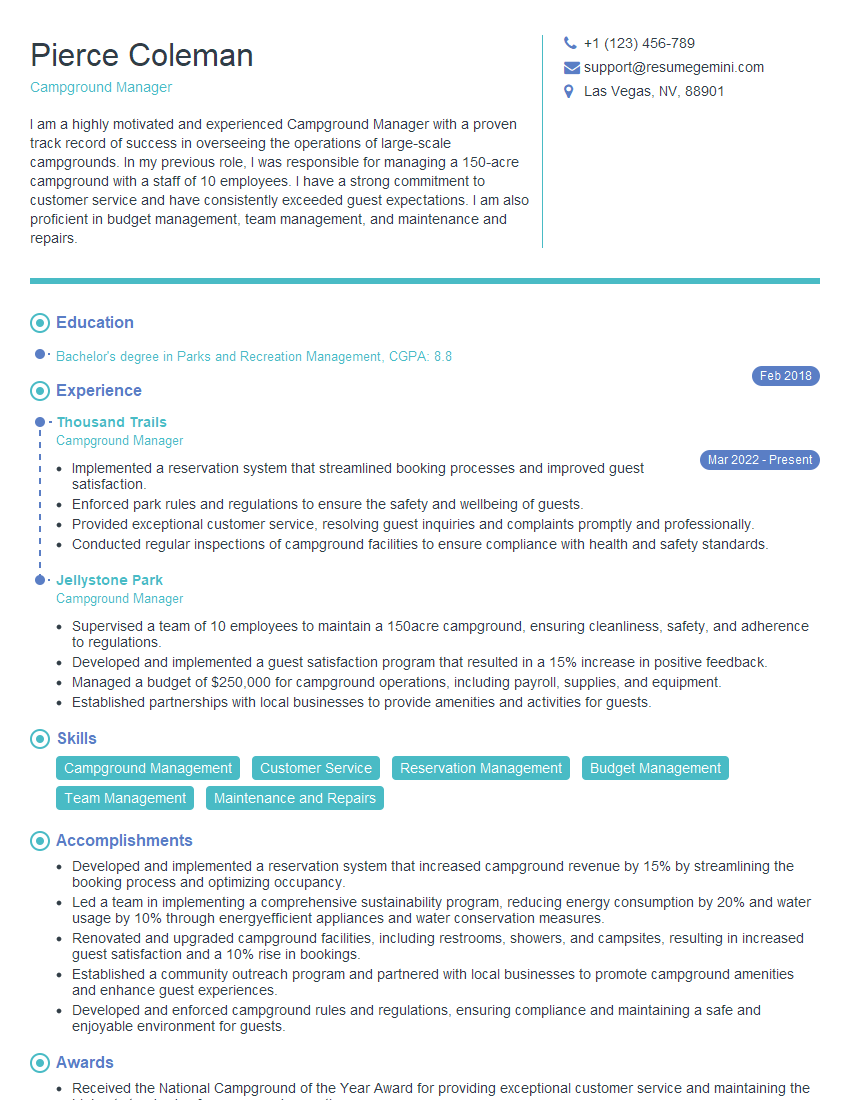
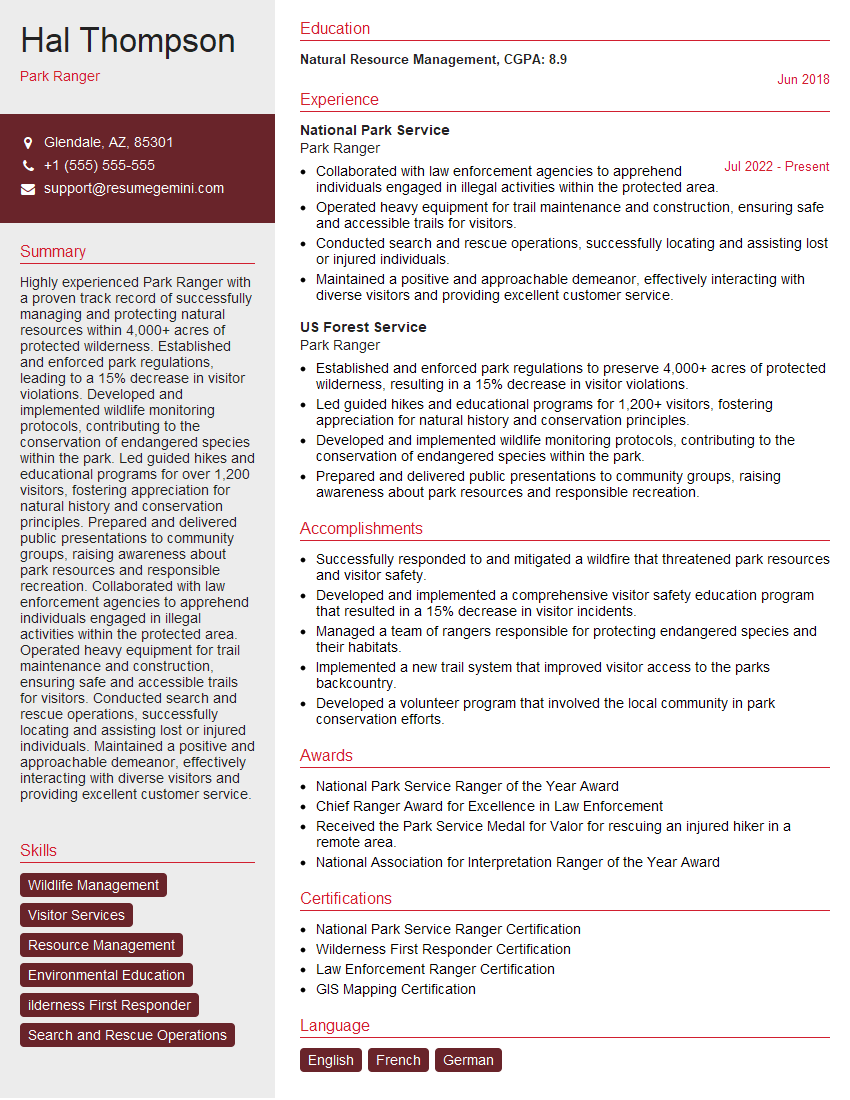
Mastering Recreational Forestry opens doors to a rewarding career with opportunities for growth in conservation, environmental management, and community development. To maximize your job prospects, it’s crucial to have a strong, ATS-friendly resume that highlights your skills and experience effectively. ResumeGemini is a trusted resource to help you create a professional and impactful resume tailored to the specific requirements of Recreational Forestry jobs. Examples of resumes tailored to this field are available to help you craft a compelling application.
Explore more articles
Users Rating of Our Blogs
Share Your Experience
We value your feedback! Please rate our content and share your thoughts (optional).
What Readers Say About Our Blog
Very informative content, great job.
good