Cracking a skill-specific interview, like one for Refrigeration Equipment Operation, requires understanding the nuances of the role. In this blog, we present the questions you’re most likely to encounter, along with insights into how to answer them effectively. Let’s ensure you’re ready to make a strong impression.
Questions Asked in Refrigeration Equipment Operation Interview
Q 1. Explain the basic refrigeration cycle.
The basic refrigeration cycle is a thermodynamic process that moves heat from a cold space to a warmer space, thereby creating cooling. Imagine it like a heat pump, but instead of warming a house, it cools a refrigerator.
It typically consists of four main components and processes:
- Evaporator: The refrigerant absorbs heat from the space being cooled, evaporating from a liquid to a gas. Think of this as the cold part of your fridge.
- Compressor: This compresses the low-pressure, low-temperature refrigerant gas, increasing its pressure and temperature. This is the heart of the system, like the engine of a car.
- Condenser: The high-pressure, high-temperature refrigerant gas releases heat to the surrounding environment (air or water), condensing back into a liquid. This is like the radiator of a car, dissipating heat.
- Expansion Valve (or Capillary Tube): This reduces the pressure of the high-pressure liquid refrigerant, causing it to become very cold. This is the throttle, controlling the flow of the refrigerant.
The refrigerant continuously cycles through these components, absorbing heat in the evaporator and releasing it in the condenser, creating a continuous cooling effect.
Q 2. Describe the different types of refrigerants and their properties.
Refrigerants are substances that undergo phase transitions (evaporation and condensation) to transfer heat. Choosing the right refrigerant is critical for efficiency, safety, and environmental impact.
Historically, chlorofluorocarbons (CFCs) like R-12 were widely used, but they severely damage the ozone layer. Hydrochlorofluorocarbons (HCFCs) like R-22 were introduced as a less damaging alternative, but they also contribute to global warming. Now, the industry is largely shifting towards environmentally friendly options:
- Hydrofluoroolefins (HFOs): These are low global warming potential (GWP) refrigerants like R-1234yf and R-1234ze. They are increasingly common in new systems.
- Hydrofluorocarbons (HFCs): Like R-134a, these have lower ozone depletion potential than CFCs and HCFCs, but still contribute to global warming. They are being phased out in many applications.
- Natural Refrigerants: These include ammonia (R-717), carbon dioxide (R-744), and propane (R-290). They are environmentally friendly but require specialized handling due to flammability or toxicity considerations.
The choice of refrigerant depends on the application, system design, and environmental regulations. Properties to consider include GWP, ozone depletion potential (ODP), flammability, toxicity, and thermodynamic efficiency.
Q 3. How do you troubleshoot a malfunctioning compressor?
Troubleshooting a malfunctioning compressor requires a systematic approach. Safety is paramount; always disconnect power before working on any refrigeration equipment.
Here’s a step-by-step process:
- Check power supply: Ensure the compressor is receiving power. Use a multimeter to verify voltage and amperage draw.
- Listen for unusual sounds: A loud knocking or squealing sound might indicate a bearing failure or internal mechanical problem.
- Inspect for overheating: Excessive heat around the compressor is a strong indicator of a problem. Check for proper airflow and condenser cleanliness.
- Check refrigerant pressure: Using gauges, measure the high and low-side pressures. Readings outside the normal operating range indicate issues with the refrigerant charge, condenser, or expansion valve.
- Inspect starting components: If the compressor doesn’t start, examine the starting capacitor or overload protector.
- Check for leaks: Use leak detection equipment to identify any refrigerant leaks in the system.
If the problem is not readily apparent, you’ll likely need specialized tools and knowledge to diagnose more complex internal issues within the compressor. It is best to contact a qualified technician at this point.
Q 4. What are the common causes of refrigerant leaks?
Refrigerant leaks can be caused by several factors:
- Component failure: Worn seals, cracked lines, or faulty connections are common culprits. Vibration and age contribute to this.
- Corrosion: Moisture in the system can lead to corrosion and subsequent leaks, especially in older systems.
- Accidental damage: During installation, repair, or routine maintenance, accidental punctures can occur.
- Improper brazing: Poorly executed brazing joints can create weak points susceptible to leaks.
- Vibrations: Excessive vibrations can loosen connections or cause fatigue cracking.
Finding the leak often involves using electronic leak detectors, soap solution tests, or specialized dye-based methods. Regular system inspections can help detect small leaks early before they cause significant damage.
Q 5. Explain the purpose of expansion valves and how they work.
The expansion valve (or capillary tube) is a crucial component that controls the flow of refrigerant into the evaporator. Its primary purpose is to reduce the pressure and temperature of the refrigerant before it enters the evaporator, ensuring efficient heat absorption.
Expansion valves use a thermostatic element to sense the evaporator temperature and regulate the refrigerant flow accordingly. If the evaporator gets too cold, the valve restricts flow. If it’s too warm, the valve opens to allow more refrigerant.
Capillary tubes are simpler, passive devices. They are simply a small-diameter tube that restricts refrigerant flow by creating a pressure drop. They’re less precise in controlling flow than expansion valves but are often used in simpler systems.
Think of it like a water faucet: You control the flow of water to adjust the temperature. The expansion valve acts similarly, controlling the refrigerant flow to maintain the desired evaporator temperature.
Q 6. How do you diagnose and repair a faulty condenser?
A faulty condenser can manifest in several ways, such as reduced cooling capacity, increased compressor run time, and high discharge pressure.
Diagnosis involves:
- Inspecting for cleanliness: A dirty condenser restricts airflow and reduces efficiency. Clean it with a brush or blower.
- Checking for leaks: Look for any refrigerant leaks using appropriate detection methods.
- Checking airflow: Ensure adequate airflow around the condenser. Obstructions reduce heat dissipation.
- Measuring pressure: High discharge pressure is often a sign of a problem with the condenser or other components.
- Inspecting fins for damage: Bent or damaged fins reduce surface area for heat transfer.
Repair might involve cleaning, fin straightening, replacing damaged sections, or in severe cases, replacing the entire condenser. Always ensure the system is properly evacuated and recharged after any repair.
Q 7. Describe the function of a receiver tank.
A receiver tank, also known as a liquid receiver, is a pressure vessel used in refrigeration systems to store liquid refrigerant. Its purpose is to provide a reservoir of liquid refrigerant, ensuring a continuous supply to the expansion valve.
This is particularly important in larger systems where the refrigerant flow might fluctuate. The receiver helps to maintain a consistent refrigerant charge and prevent liquid refrigerant from entering the compressor. Think of it as a buffer tank, smoothing out the refrigerant flow.
Receivers are typically equipped with a liquid level indicator and sometimes a pressure relief valve for safety purposes.
Q 8. What are the safety precautions when handling refrigerants?
Handling refrigerants requires meticulous safety precautions due to their potential hazards. Many refrigerants are flammable, toxic, or both, and improper handling can lead to serious injury or environmental damage. Always refer to the specific Safety Data Sheet (SDS) for the refrigerant you’re working with. Key safety measures include:
- Proper Ventilation: Work in well-ventilated areas to prevent the buildup of refrigerant vapor, which can displace oxygen and cause asphyxiation. Think of it like this: you wouldn’t work in a closed garage with a running car; the same principle applies to refrigerants.
- Personal Protective Equipment (PPE): Always wear appropriate PPE, including safety glasses, gloves, and respiratory protection. The type of PPE needed depends on the refrigerant and the task. For example, some refrigerants require specialized respirators with cartridges designed for specific refrigerants.
- Leak Detection and Repair: Regularly inspect systems for leaks using appropriate leak detection equipment. Repair leaks promptly and properly to prevent refrigerant release. Ignoring leaks is not only unsafe but also contributes to environmental damage and system inefficiency.
- Proper Disposal: Refrigerants must be recovered and recycled or disposed of according to local and national regulations. Never vent refrigerant into the atmosphere. Improper disposal is illegal and harms the environment.
- Training and Certification: Always ensure you have the proper training and certification to handle refrigerants safely. This includes understanding the properties of the specific refrigerant you are using and the correct procedures for handling it.
Following these precautions not only protects you but also safeguards the environment and ensures compliance with regulations.
Q 9. How do you maintain proper refrigerant charge levels?
Maintaining the correct refrigerant charge is crucial for optimal system performance and efficiency. An overcharged system can lead to high head pressure, potential component damage, and reduced efficiency. Conversely, an undercharged system will not cool effectively. The best method for determining the correct charge depends on the system and the type of refrigerant. Some common methods include:
- Superheat and Subcooling Measurements: This is a precise method involving measuring the superheat at the evaporator outlet and the subcooling at the condenser outlet. These readings are compared to the manufacturer’s specifications to determine the correct charge. Think of superheat as a safety margin—it ensures the refrigerant is fully vaporized before entering the compressor, preventing liquid slugging.
- Weight Charge: For smaller systems, the refrigerant charge can be accurately determined by weighing the refrigerant into the system. This is a relatively simple method, provided you know the exact amount required.
- Refrigerant Charge Charts: Many manufacturers provide refrigerant charge charts based on system size and model. This data provides a starting point, but the final charge must be verified through superheat and subcooling measurements.
It’s essential to use a properly calibrated scale and accurate measurement tools for the most reliable results. Regular monitoring of refrigerant levels and periodic checks with these methods help maintain optimal performance and prevent costly repairs.
Q 10. Explain the importance of proper insulation in refrigeration systems.
Proper insulation is paramount in refrigeration systems to minimize heat transfer into the refrigerated space. Heat leakage reduces efficiency, increasing energy consumption and potentially affecting the ability of the system to maintain the desired temperature. Think of a thermos – the vacuum insulation minimizes heat transfer between the inside and outside, keeping your drink cold.
Insulation materials like polyurethane foam, fiberglass, or mineral wool are commonly used in refrigeration systems. The thickness and type of insulation chosen depend on factors like the temperature difference between the refrigerated space and the ambient environment, the ambient temperature, and the desired energy efficiency. Poor or insufficient insulation leads to:
- Higher energy bills: The system must work harder to compensate for heat leakage.
- Reduced cooling capacity: The system might struggle to maintain the set temperature.
- Potential for frost or ice buildup: Increased moisture condensation on uninsulated surfaces can lead to unwanted ice buildup.
- Increased system wear: Continuous operation under stress shortens the lifespan of components.
Proper insulation design and installation are crucial for efficient and reliable refrigeration system operation. Choosing the right insulation material and ensuring proper installation are critical to maximizing energy savings and system longevity.
Q 11. What are the different types of refrigeration systems?
Refrigeration systems are categorized in various ways, but common types include:
- Vapor-Compression Refrigeration: This is the most common type, using a refrigerant that cycles between liquid and gaseous phases. It involves a compressor, condenser, expansion valve, and evaporator. The compressor pressurizes and heats the refrigerant vapor, the condenser cools it back into a liquid, the expansion valve reduces the pressure, and the evaporator absorbs heat, causing the refrigerant to evaporate.
- Absorption Refrigeration: This system uses heat energy instead of electricity to drive the refrigeration cycle. It utilizes a refrigerant and an absorbent, often water and lithium bromide. This is commonly used in applications where waste heat is available, like solar-powered systems.
- Air-Cycle Refrigeration: This method utilizes compressed air as the refrigerant, commonly found in aircraft and other specialized applications. Instead of a refrigerant undergoing phase changes, it’s the air’s temperature that changes during the cycle.
- Thermoelectric Refrigeration: This system uses the Peltier effect, where an electric current passed through a junction of two dissimilar conductors produces a temperature difference. This method is typically used for small-scale cooling applications.
The choice of system depends on factors like the application, energy source, environmental considerations, and budget. Each system has unique advantages and disadvantages to consider.
Q 12. Describe the operation of a defrost cycle in a refrigeration system.
The defrost cycle is essential in refrigeration systems, particularly those operating in environments with high humidity. Frost buildup on the evaporator coils reduces their heat transfer efficiency, leading to decreased cooling capacity and increased energy consumption. The defrost cycle removes this frost buildup.
A typical defrost cycle involves the following steps:
- Termination of Refrigeration Cycle: The compressor and fans are switched off, halting the refrigeration cycle.
- Heater Activation: Electric heaters located within or near the evaporator coils are activated, melting the frost.
- Water Removal: Melted frost drains away through a drain pan and line, usually directed outside the system.
- Evaporator Coil Defrosting: The heaters continue to run until the majority of the frost is melted. A temperature sensor or timer controls the duration of this step.
- Restart of Refrigeration Cycle: Once the evaporator coil is sufficiently defrosted, the refrigeration cycle restarts.
Defrost cycles can be timed, based on temperature sensors, or activated by detecting pressure drops indicating a significant frost build-up. The frequency and duration of the defrost cycle depend on several factors, including the ambient temperature and humidity.
Q 13. How do you troubleshoot a refrigeration system with high head pressure?
High head pressure in a refrigeration system indicates a problem hindering the refrigerant’s ability to condense effectively. Possible causes include:
- High Ambient Temperature: A very hot environment makes it harder to reject heat from the condenser, raising the head pressure. This is a common summer problem. Consider improving air circulation around the condenser.
- Restricted Condenser Airflow: Dirty condenser coils or obstructions (like debris or insulation) reduce airflow, making heat rejection less efficient and increasing pressure. Cleaning the condenser coils is often the solution.
- Overcharge of Refrigerant: Too much refrigerant in the system increases the pressure. Consider removing some refrigerant through proper procedures.
- Non-Condensables in the System: Air or other non-condensable gases in the system can interfere with the condensation process and elevate pressure. These are often removed using special evacuation equipment.
- Faulty Condenser Fan Motor: A malfunctioning fan motor reduces airflow across the condenser, increasing pressure. Check the motor and fan for proper operation.
- Condenser Coil Problems: Blockages or damage within the condenser coils can also contribute to high head pressure. Inspect the coils carefully.
Troubleshooting involves systematically checking these aspects and using pressure gauges and temperature measurements to diagnose the specific problem. Always consult the system’s technical documentation and use caution when handling refrigerants.
Q 14. How do you troubleshoot a refrigeration system with low suction pressure?
Low suction pressure signifies a problem in the evaporator or the refrigerant flow, indicating the system isn’t effectively evaporating the refrigerant. Common causes include:
- Low Refrigerant Charge: Insufficient refrigerant limits the amount of heat that can be absorbed in the evaporator, leading to low suction pressure. Adding refrigerant is the solution if this is the cause.
- Air in the System: Air or non-condensables in the system can block refrigerant flow and reduce suction pressure. Proper system evacuation is often needed.
- Restricted Airflow over Evaporator: Poor airflow over the evaporator (due to obstructions or dirty coils) restricts heat transfer. Check for obstructions and clean the evaporator coils.
- Faulty Expansion Valve: A malfunctioning expansion valve could restrict refrigerant flow to the evaporator. Check for proper valve operation, and potential replacement might be necessary.
- Evaporator Coil Problems: Damage or icing on the evaporator coils can impact performance. Inspect and clean or repair as needed. Icing can be an indication of another issue, possibly a restricted refrigerant flow somewhere else in the system.
- High Ambient Temperatures: Very high temperatures might reduce suction pressure, but this isn’t typically considered a primary cause unless combined with other problems.
Troubleshooting involves a combination of visual inspection, pressure measurements, and temperature readings to isolate the source of the low suction pressure. Remember, a low suction pressure often indicates a lack of refrigerant flow and always check for safety issues before proceeding with any repair work.
Q 15. Explain the function of a pressure relief valve.
A pressure relief valve (PRV), also known as a pressure relief device, is a crucial safety component in refrigeration systems. Its primary function is to prevent excessive pressure buildup within the system that could lead to catastrophic failure. Think of it as a safety valve on a pressure cooker – it releases pressure when it reaches a dangerous level.
Here’s how it works: The PRV is set to open at a predetermined pressure. When the system pressure exceeds this setpoint, the valve automatically opens, releasing refrigerant to the atmosphere (or to a recovery system in modern, environmentally conscious systems) until the pressure drops below the setpoint. This prevents damage to components such as the compressor, condenser, or evaporator.
Example: Imagine a refrigeration system experiencing a compressor seizure. The compressor stops, but heat continues to be generated in the system, causing pressure to rise dramatically. The PRV will open, releasing the refrigerant and preventing a potential explosion.
Career Expert Tips:
- Ace those interviews! Prepare effectively by reviewing the Top 50 Most Common Interview Questions on ResumeGemini.
- Navigate your job search with confidence! Explore a wide range of Career Tips on ResumeGemini. Learn about common challenges and recommendations to overcome them.
- Craft the perfect resume! Master the Art of Resume Writing with ResumeGemini’s guide. Showcase your unique qualifications and achievements effectively.
- Don’t miss out on holiday savings! Build your dream resume with ResumeGemini’s ATS optimized templates.
Q 16. What are the common causes of compressor overheating?
Compressor overheating is a serious issue in refrigeration systems, often indicating underlying problems. Several factors can contribute to this:
- Insufficient refrigerant charge: Low refrigerant levels lead to increased compression work, generating excessive heat. Think of it like trying to pump air with a bicycle pump that has little air inside – it gets hot fast.
- High ambient temperature: Operating in hot environments already strains the compressor, exacerbating the risk of overheating. This is why you often see refrigeration systems in hotter climates having additional cooling features.
- Dirty condenser coils: Dust and debris accumulating on the condenser coils impede heat dissipation, increasing compressor temperature. Cleaning these coils regularly is essential for preventing overheating.
- Blocked suction line: Restricting refrigerant flow through the suction line forces the compressor to work harder, increasing heat generation. This problem often leads to frosting of the suction line.
- Faulty compressor motor: Internal problems within the compressor motor itself, such as worn bearings or winding issues, can generate excess heat.
- Incorrect electrical connections: Incorrect wiring can lead to increased motor current and subsequently heat.
Troubleshooting overheating usually involves checking refrigerant charge, cleaning the condenser, checking for obstructions in the suction and discharge lines, and measuring motor current. If these steps don’t resolve the issue, professional help is needed.
Q 17. How do you interpret refrigeration system gauges?
Refrigeration system gauges provide vital information about system pressures and temperatures. Typically, there are two gauges: a high-pressure gauge (discharge side) and a low-pressure gauge (suction side). These gauges display pressures usually in PSI (pounds per square inch) or bar. In conjunction with temperature readings, they indicate the state of the refrigerant and the system’s overall health.
Interpretation:
- High-pressure gauge: Indicates the pressure of the refrigerant leaving the compressor and entering the condenser. High pressure could suggest high ambient temperatures, restricted condenser airflow, overcharging, or a malfunctioning condenser fan.
- Low-pressure gauge: Shows the pressure of the refrigerant entering the compressor from the evaporator. Low pressure often points to low refrigerant charge, air in the system, or restrictions in the suction line.
Example: If the high-pressure gauge reads excessively high and the low-pressure gauge reads too low, it could point to a lack of refrigerant, while consistently high pressures on both sides may point to a condenser problem. You’d need to analyze the situation carefully.
Q 18. What are the environmental concerns related to refrigerants?
Refrigerants have significant environmental implications. Many older refrigerants, like Chlorofluorocarbons (CFCs) and Hydrochlorofluorocarbons (HCFCs), are potent ozone-depleting substances and contribute to global warming. Their use is now heavily regulated or banned under international agreements like the Montreal Protocol.
Environmental Concerns:
- Ozone depletion: CFCs and HCFCs break down ozone molecules in the stratosphere, weakening the Earth’s protective layer against harmful UV radiation.
- Global warming potential (GWP): Many refrigerants, even modern alternatives, have a GWP, contributing to climate change by trapping heat in the atmosphere. The lower the GWP the better from an environmental perspective.
- Toxicity: Some refrigerants are toxic if inhaled or released into the environment. This is why proper handling and disposal are vital.
- Flammability: Certain refrigerants are flammable, posing additional safety and environmental hazards.
The refrigeration industry is moving towards environmentally friendly refrigerants with low GWP and minimal ozone-depleting potential. Examples include Hydrofluoroolefins (HFOs) and natural refrigerants like ammonia and CO2.
Q 19. Explain the role of a control system in refrigeration.
A control system in a refrigeration system is like the brain, ensuring optimal operation and efficient energy consumption. It monitors various parameters and adjusts the system’s components accordingly.
Role of a control system:
- Maintaining temperature setpoint: The control system monitors the temperature inside the refrigerated space and activates/deactivates the compressor and other components to keep the temperature within the desired range.
- Monitoring pressure: It monitors high and low pressures to detect potential problems like refrigerant leaks or blockages.
- Controlling defrost cycles: In frost-prone systems, the control system initiates defrost cycles to remove ice buildup from the evaporator coils.
- Protecting against overheating: It includes safety features such as high-pressure cutouts and temperature sensors to shut down the system in case of overheating or other malfunctions.
- Energy optimization: Modern control systems utilize advanced algorithms to minimize energy consumption while maintaining temperature stability.
Example: A thermostat in a domestic refrigerator acts as a simple control system, turning the compressor on and off based on the internal temperature.
Q 20. How do you troubleshoot electrical faults in refrigeration equipment?
Troubleshooting electrical faults in refrigeration equipment requires a systematic approach. Always prioritize safety—turn off power before working on any electrical components. Never work on live circuits.
Troubleshooting steps:
- Visual inspection: Check for loose wires, damaged insulation, and burned components. Look for any signs of overheating or arcing.
- Voltage checks: Using a multimeter, measure the voltage at various points in the circuit to identify breaks or shorts. Ensure voltage levels match the equipment’s specifications.
- Continuity testing: Test the continuity of wires and components to identify broken circuits.
- Current measurements: Measure the current drawn by the compressor and other components to check for excessive current draw, which may indicate a shorted winding or other problems.
- Resistance checks: Measure the resistance of windings in the compressor motor and other components to detect shorts or opens. This should only be done after disconnecting the power!
- Component testing: If necessary, test individual components such as contactors, relays, and thermal overload protectors using a multimeter or specialized test equipment.
Remember to consult the equipment’s wiring diagram and service manual for specific instructions. If you’re not comfortable working with electricity, call a qualified technician. Improper electrical work can lead to serious injury or fire.
Q 21. Describe different types of refrigeration compressors.
Refrigeration compressors are the heart of the system, responsible for circulating the refrigerant. Several types exist, each with its own characteristics:
- Reciprocating compressors: These use pistons moving back and forth to compress the refrigerant. They’re simple and relatively inexpensive but can be noisy and less efficient than other types.
- Rotary compressors: They use a rotating impeller to compress the refrigerant. They are typically quieter and more compact than reciprocating compressors.
- Scroll compressors: These compressors use two spiral scrolls, one fixed and one orbiting, to compress the refrigerant. They are known for their quiet operation and high efficiency. This is a popular choice for residential refrigeration.
- Centrifugal compressors: Used mainly in large industrial refrigeration systems, these compressors use a high-speed impeller to compress the refrigerant. They are highly efficient at large capacities.
- Screw compressors: These compressors use two intermeshing helical screws to compress the refrigerant, ideal for large commercial applications and offer high efficiency and relatively low vibration.
The choice of compressor depends on factors such as the system’s capacity, required efficiency, noise level requirements, and application type.
Q 22. What is the purpose of a filter-drier in a refrigeration system?
The filter-drier, often called a drier, is a critical component in any refrigeration system. Its primary purpose is to protect the system from moisture and contaminants. Think of it as the system’s immune system. Moisture in the refrigerant can cause serious problems, including freezing in expansion valves, reducing system efficiency, and causing corrosion of the components. The filter-drier removes this moisture through a desiccant (a drying agent), usually silica gel, which absorbs the water molecules. Simultaneously, it acts as a filter, removing any solid contaminants like metal shavings or welding debris that may have entered during installation or repair. These contaminants can clog crucial components like the expansion valve or capillary tube, causing malfunctions. A clogged filter-drier needs replacing, otherwise it can’t filter and dry the refrigerant, leading to a system failure.
For example, in a supermarket refrigeration system, a filter-drier ensures that the evaporator coils, responsible for chilling the food, remain free of ice formation caused by moisture. In a building’s air conditioning system that uses a refrigerant, the filter-drier plays the same critical protective role.
Q 23. How do you perform a proper evacuation of a refrigeration system?
Proper evacuation of a refrigeration system is crucial to remove air and moisture, ensuring optimal performance and longevity. It’s like cleaning out a dusty room before bringing in new furniture. We need to create a vacuum to pull out these unwanted elements. The procedure involves several steps:
- Isolate the system: Close all valves to the system to ensure no refrigerant escapes.
- Connect vacuum pump: Attach a suitable vacuum pump to the system’s service port using appropriate connections.
- Evacuate: Start the vacuum pump and monitor the vacuum gauge. The system should achieve a deep vacuum, typically below 500 microns (or 0.5 mbar) for optimal performance. The time required varies depending on the system size and initial pressure but may take several hours.
- Hold the vacuum: Once the desired vacuum is achieved, maintain it for a significant time, usually an hour or more, to ensure that any remaining moisture is pulled out. This is essential for the long-term health of the system.
- Monitor and record: Monitor the vacuum gauge for any pressure increase indicating a leak. Note the time for vacuum testing to ensure proper evacuation.
- Charge the system: Once a stable, deep vacuum is held, introduce the refrigerant. The process ensures the system is properly filled with refrigerant only and no air or moisture.
Failure to properly evacuate can result in reduced efficiency, compressor damage, and premature system failure. For example, if even a small amount of air is left in the system it can lead to inefficient heat transfer.
Q 24. Explain the differences between commercial and industrial refrigeration systems.
Commercial and industrial refrigeration systems differ significantly in scale, complexity, and application. Think of a supermarket refrigerator versus a large-scale food processing plant’s cooling system. Commercial refrigeration systems, such as those found in supermarkets, restaurants, or convenience stores, typically involve smaller, simpler systems with less stringent control requirements. They focus on maintaining specific temperatures for food storage and display.
Industrial refrigeration systems, on the other hand, are much larger, more complex, and often involve high-capacity units operating at lower temperatures. They are utilized for large-scale applications such as food processing, pharmaceutical manufacturing, or ice rinks. They often use different refrigerants like ammonia due to its efficiency at low temperatures. These systems demand precise control and monitoring to meet strict process requirements and typically have sophisticated monitoring and control systems for optimal efficiency and safety.
Another key difference is the refrigerant used. Commercial systems may use HFC refrigerants, while industrial systems often employ ammonia, CO2, or other refrigerants that are more suitable for large-scale operations.
Q 25. What experience do you have with various refrigeration systems (e.g., ammonia, CO2)?
I have extensive experience working with various refrigeration systems. My experience includes extensive work with ammonia refrigeration systems, which are commonly used in large industrial applications due to their high efficiency and low global warming potential, though they require specialized safety protocols. I’ve worked on systems ranging from small ammonia chillers in food processing plants to larger industrial scale plants.
I’ve also had significant experience with CO2 (R744) refrigeration systems, which are becoming increasingly popular due to their environmental friendliness. I’ve worked with transcritical CO2 systems in commercial applications such as supermarkets and have a solid understanding of the thermodynamics and challenges associated with this refrigerant.
In addition, I am proficient with working on systems utilizing HFC refrigerants (like R-404A, R-134a, and R-448A), commonly seen in commercial and smaller industrial refrigeration applications.
Q 26. Describe your experience with different types of refrigeration controls (e.g., electronic, mechanical).
My experience encompasses both electronic and mechanical refrigeration controls. I’m comfortable working with older mechanical controls, understanding their function and troubleshooting their issues. Mechanical controls, such as pressure switches, thermostats, and expansion valves, rely on mechanical actions to regulate temperature and pressure. These are easier to understand conceptually but can be less precise than electronic controls.
However, the majority of my recent experience lies with modern electronic controls, including programmable logic controllers (PLCs) and microprocessors, which offer superior precision, data logging capabilities, and remote monitoring. PLCs provide advanced control and monitoring functions, enhancing system efficiency and helping to pinpoint issues quickly and accurately. I’m proficient in using various PLC programming platforms and diagnostics.
For instance, I’ve worked on projects where implementing electronic controls significantly improved energy efficiency, and reduced downtime by providing predictive maintenance capabilities. I am able to integrate and troubleshoot various sensor data from such systems.
Q 27. What troubleshooting tools and techniques do you commonly use?
My troubleshooting toolbox is quite extensive. It starts with the basics: I always begin with a thorough visual inspection to check for obvious issues like leaks, frost buildup, or loose connections. I then move to using specialized tools, such as:
- Refrigerant leak detectors: To identify refrigerant leaks, crucial for maintaining system efficiency and safety.
- Pressure gauges and manifolds: To measure system pressures and temperatures, which are vital in determining the cause of problems.
- Thermometers: To precisely measure temperatures at various points within the system.
- Amp meters: To measure the current draw of compressors and other components to detect issues such as motor failures.
- Multimeters: To test electrical components and circuits.
- Vacuum gauge: To ensure a proper vacuum during evacuation and system charging.
Beyond tools, my troubleshooting methodology relies heavily on systematic analysis. I follow established procedures, check compressor operation, verify refrigerant charge, inspect components for failures, and carefully analyze data from electronic controllers and sensors. This approach ensures that issues are identified and addressed efficiently and accurately.
Q 28. Describe your experience with preventative maintenance on refrigeration equipment.
Preventative maintenance is essential for maximizing the lifespan and efficiency of refrigeration equipment, and preventing costly breakdowns. My preventative maintenance procedures involve a comprehensive checklist, which includes:
- Visual inspection: Checking for leaks, corrosion, and any signs of damage.
- Cleaning: Removing dust and debris from condensers and evaporators, essential for efficient heat transfer.
- Pressure checks: Regularly monitoring system pressures and temperatures, and verifying that they are within the specified operating range.
- Refrigerant level check: Ensuring sufficient refrigerant charge. Low refrigerant can significantly reduce efficiency.
- Electrical checks: Inspecting wiring, connections, and motor components for any signs of damage or wear.
- Component lubrication: Lubricating moving parts such as compressor bearings as per manufacturer’s recommendations.
- Filter-drier replacement: Replacing the filter-drier at scheduled intervals to prevent moisture and contaminant buildup.
I maintain detailed records of all preventative maintenance activities, enabling me to track system performance and identify any emerging issues. A proactive approach to maintenance significantly minimizes downtime, prolongs the life of the equipment and reduces operating costs. For example, regular cleaning of condenser coils can significantly improve the efficiency of the system, leading to lower energy consumption.
Key Topics to Learn for Refrigeration Equipment Operation Interview
- Refrigerant Cycles: Understand the principles of vapor-compression refrigeration cycles, including the four key components (compressor, condenser, expansion valve, evaporator) and their functions. Be prepared to discuss different refrigerant types and their properties.
- Troubleshooting and Maintenance: Discuss practical experience in diagnosing common refrigeration system malfunctions, performing preventative maintenance tasks (e.g., oil changes, filter replacements), and implementing repair strategies. Consider examples from past experiences.
- Safety Procedures: Demonstrate a thorough understanding of safety regulations and practices related to handling refrigerants, working with high-pressure systems, and ensuring workplace safety.
- Electrical Systems: Explain your knowledge of the electrical components within refrigeration systems, including motor controls, wiring diagrams, and safety considerations related to electrical work.
- System Controls and Automation: Describe your experience with various control systems, including thermostats, pressure switches, and programmable logic controllers (PLCs). Discuss your ability to interpret control system signals and troubleshoot issues.
- Energy Efficiency and Optimization: Discuss strategies for optimizing refrigeration system performance to minimize energy consumption and maximize efficiency. This could include discussing best practices and potential cost savings.
- Specific Equipment Knowledge: Be prepared to discuss your experience with various types of refrigeration equipment (e.g., walk-in coolers, reach-in refrigerators, industrial chillers). Highlight your familiarity with different manufacturers and models.
Next Steps
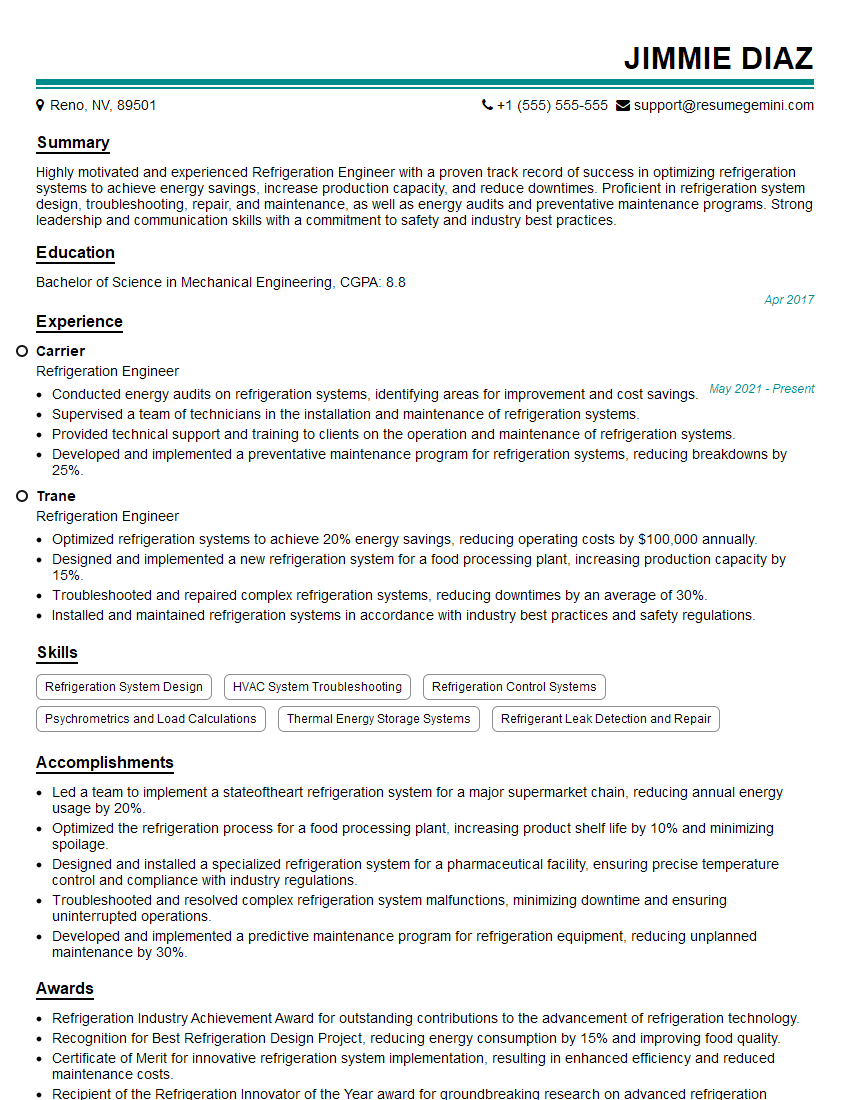
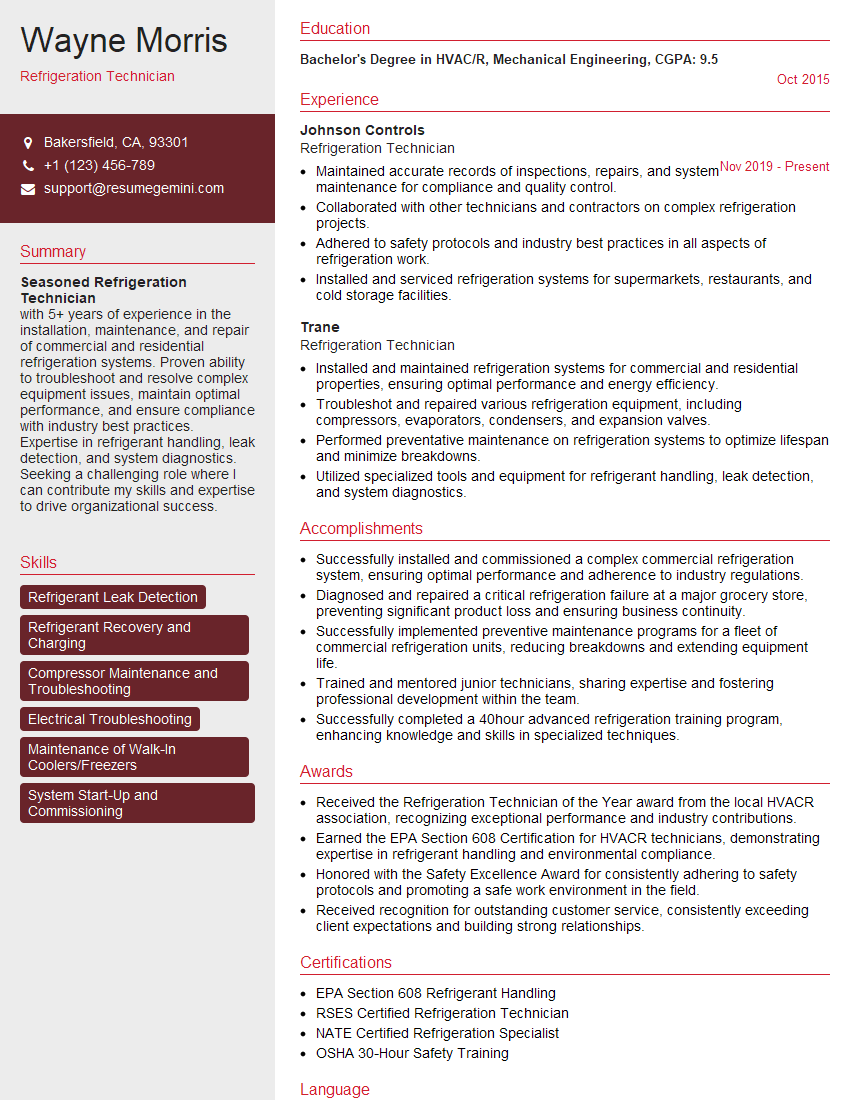
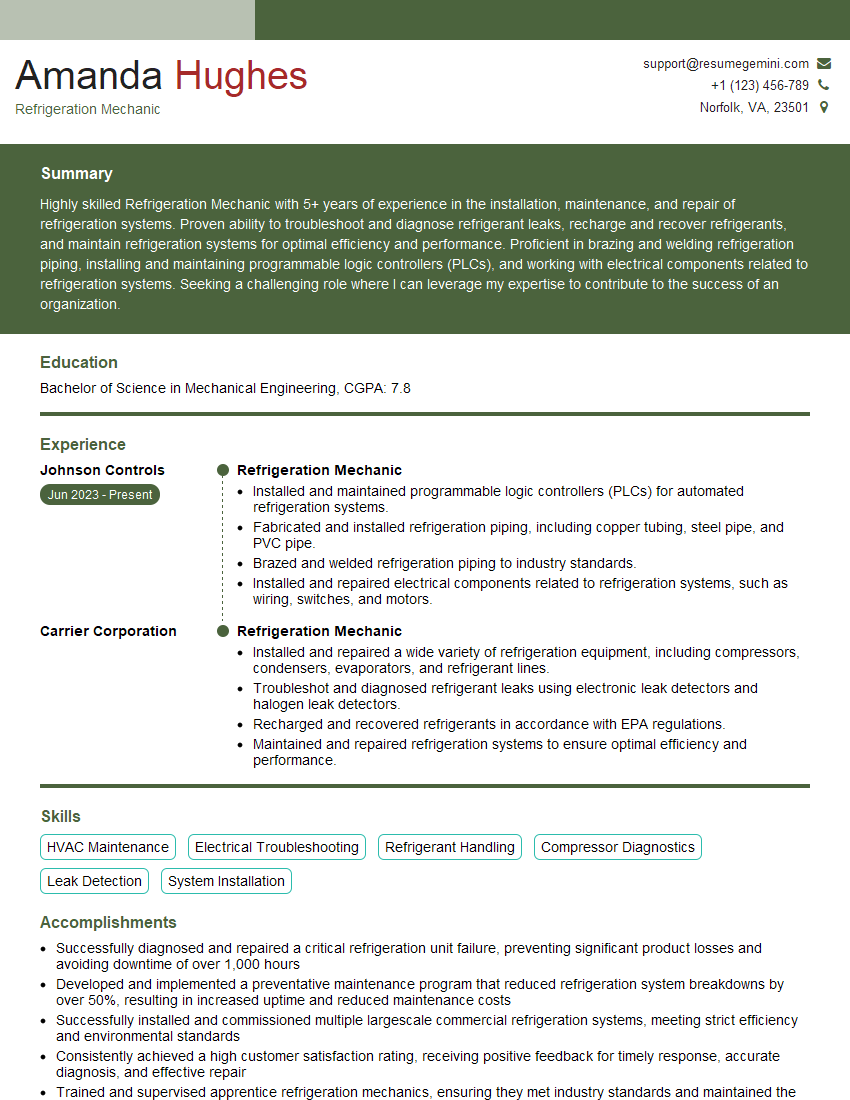
Mastering Refrigeration Equipment Operation opens doors to rewarding and diverse career opportunities within the HVAC/R industry, offering excellent growth potential and competitive salaries. A well-crafted resume is crucial for showcasing your skills and experience to potential employers. Building an ATS-friendly resume significantly increases your chances of getting your application noticed. ResumeGemini is a trusted resource for creating professional, impactful resumes tailored to your specific industry and experience. We provide examples of resumes specifically tailored to Refrigeration Equipment Operation to help you get started.
Explore more articles
Users Rating of Our Blogs
Share Your Experience
We value your feedback! Please rate our content and share your thoughts (optional).
What Readers Say About Our Blog
Very informative content, great job.
good