Are you ready to stand out in your next interview? Understanding and preparing for CMDB Design and Implementation interview questions is a game-changer. In this blog, we’ve compiled key questions and expert advice to help you showcase your skills with confidence and precision. Let’s get started on your journey to acing the interview.
Questions Asked in CMDB Design and Implementation Interview
Q 1. Explain the purpose and benefits of a CMDB.
A Configuration Management Database (CMDB) is a centralized repository containing comprehensive information about an organization’s IT infrastructure. Think of it as a single source of truth for all things IT – hardware, software, networks, applications, and their relationships. Its purpose is to provide a holistic view of the IT environment, enabling better management, faster troubleshooting, and improved decision-making.
The benefits are numerous. Improved incident management: When a server crashes, the CMDB quickly reveals its dependencies, helping engineers swiftly pinpoint and resolve the issue. Reduced downtime: By understanding the interconnections within the IT infrastructure, proactive maintenance and risk mitigation become possible. Better change management: Impact analysis becomes streamlined, reducing the risk of unexpected outages. Cost optimization: CMDBs help identify redundant assets or underutilized resources, leading to cost savings. Enhanced compliance: Tracking software licenses and configurations facilitates compliance audits.
Q 2. Describe the different types of CMDBs.
CMDBs can be broadly categorized into two types:
- Traditional CMDBs: These are typically on-premise solutions, often built using relational databases like Oracle or SQL Server. They require significant upfront investment and ongoing maintenance but offer great control and customization.
- Modern CMDBs: These are often cloud-based and SaaS (Software as a Service) solutions. They leverage modern technologies like APIs and automation, providing quicker implementation and scalability. They often integrate well with other IT tools and platforms, such as ITSM systems.
Within these categories, you’ll also find variations based on the specific needs of the organization and available technology. For example, some CMDBs might focus heavily on specific infrastructure components like networking equipment, while others prioritize applications and their dependencies.
Q 3. What are the key attributes of a well-designed CMDB?
A well-designed CMDB possesses several key attributes:
- Accuracy: The data within the CMDB must be accurate and reflect the real-world IT environment. Inaccurate data renders the CMDB useless.
- Completeness: The CMDB should include relevant information for all critical IT components and their relationships. Missing data compromises its effectiveness.
- Consistency: Data should be consistently formatted and standardized across the CMDB, allowing for easy querying and reporting.
- Accessibility: Authorized personnel should be able to easily access and retrieve the necessary information.
- Scalability: The CMDB must be able to scale to accommodate the growing size and complexity of the IT environment.
- Integration: Integration with other IT management systems (like ITSM, monitoring tools) is crucial for automation and efficient workflows.
- Security: Robust security measures are essential to protect the sensitive information stored in the CMDB.
Q 4. How do you ensure data accuracy and completeness in a CMDB?
Ensuring data accuracy and completeness requires a multi-pronged approach:
- Automated Discovery: Employ automated discovery tools to automatically scan and populate the CMDB with information about IT assets. This reduces manual effort and potential errors.
- Data Validation: Implement data validation rules to ensure that entered data conforms to predefined standards. This can include data type checks, range checks, and consistency checks.
- Regular Reconciliation: Regularly reconcile the CMDB data with the actual IT environment. This might involve comparing CMDB data against inventory scans or other sources of truth.
- Data Governance: Establish clear roles and responsibilities for data management, including data entry, validation, and updates. Define processes and procedures for data maintenance.
- User Training: Train users on proper data entry procedures and the importance of data accuracy.
- Data Quality Monitoring: Implement dashboards and reports to monitor the quality of CMDB data and identify areas for improvement.
Think of it like maintaining an accurate inventory system – regular checks, clear processes, and responsible staff are key to success.
Q 5. Explain the relationship between the CMDB and ITIL processes.
The CMDB is intrinsically linked to ITIL processes. It serves as the central repository of configuration information, feeding crucial data into various ITIL stages.
- Incident Management: Quickly identify affected components and their dependencies to accelerate resolution.
- Problem Management: Analyze recurring incidents to identify root causes and implement preventative measures.
- Change Management: Assess the impact of changes on the IT infrastructure and manage risks proactively.
- Release Management: Track the deployment of software and hardware releases and monitor their performance.
- Service Level Management: Monitor the performance of IT services and ensure they meet agreed-upon service levels.
Essentially, the CMDB becomes the ‘knowledge base’ empowering all these ITIL processes for optimized IT service delivery.
Q 6. What are the common challenges in CMDB implementation?
Implementing a CMDB presents several common challenges:
- Data Silos: Information about IT assets may be scattered across different departments and systems, making consolidation difficult.
- Data Accuracy Issues: Maintaining data accuracy and completeness requires ongoing effort and resources.
- Integration Challenges: Integrating the CMDB with other IT systems can be complex and time-consuming.
- Resistance to Change: Users may resist adopting the CMDB due to perceived inconvenience or lack of understanding.
- Cost: The initial investment and ongoing maintenance costs can be substantial.
- Lack of Skilled Resources: Finding and retaining individuals with the expertise to design, implement, and manage a CMDB can be challenging.
Addressing these challenges often involves careful planning, phased implementation, strong stakeholder engagement, and a commitment to continuous improvement.
Q 7. How do you handle CMDB data migration?
CMDB data migration is a critical and often complex undertaking. A well-defined strategy is essential. The process typically includes:
- Assessment: Analyze the source systems and the target CMDB to identify data discrepancies and challenges.
- Data Mapping: Map the data fields from the source systems to the target CMDB. This step is crucial to ensure data integrity.
- Data Cleansing: Cleanse and transform the data to ensure consistency and accuracy. This may involve handling missing values, resolving data conflicts, and standardizing formats.
- Data Transformation: Transform the data to match the format and structure required by the target CMDB.
- Pilot Migration: Perform a pilot migration to a small subset of data to test the process and identify any issues.
- Full Migration: Once the pilot is successful, migrate the entire dataset to the target CMDB.
- Validation: Validate the migrated data to ensure accuracy and completeness. This may involve comparing the data in the source and target systems.
Consider using specialized migration tools to automate the process and minimize errors. Phased migration, starting with a smaller subset of data, can also reduce risk.
Q 8. Describe your experience with different CMDB tools (e.g., ServiceNow, BMC Remedy).
My experience spans several leading CMDB tools. I’ve extensively used ServiceNow, renowned for its robust capabilities and scalability, particularly in large enterprise environments. I’ve leveraged its workflows for automation, its reporting features for insightful data analysis, and its discovery capabilities for automatic CI population. I’ve also worked with BMC Remedy, appreciating its strength in incident management and its integration with other ITSM tools. This integration allowed for a seamless flow of information, for instance, automatically updating the CMDB when a change was implemented through Remedy. In smaller projects, I’ve even utilized more lightweight solutions, customizing them to meet specific needs. The choice of tool always depends on the organization’s size, existing infrastructure, and specific requirements. Understanding the nuances of each platform enables me to tailor a solution to optimal effect.
Q 9. How do you ensure the CMDB is integrated with other IT systems?
Integrating the CMDB with other IT systems is crucial for accurate and real-time data. I typically employ a multi-pronged approach. Firstly, I utilize APIs (Application Programming Interfaces) for seamless data exchange. For example, integrating with monitoring tools allows automatic updates on CI status. Secondly, I leverage ETL (Extract, Transform, Load) processes to consolidate data from disparate sources – pulling data from network monitoring systems, databases, and even configuration files. Thirdly, I often employ middleware solutions to act as a bridge between systems. This minimizes direct integration complexities and simplifies future changes. Imagine a scenario where the network monitoring system changes vendor; the middleware can adapt to the new system without affecting the CMDB integration directly. Finally, I always prioritize data standardization and mapping to ensure consistency across different systems. This careful integration approach ensures a unified view of IT infrastructure.
Q 10. Explain your approach to CMDB data governance.
CMDB data governance is paramount for accuracy and reliability. My approach centers around establishing clear roles and responsibilities, defining data quality standards, and implementing processes to ensure data integrity. This includes establishing a data dictionary defining all CIs and their attributes, and implementing data validation rules to prevent erroneous entries. Regular data quality checks and audits are critical; for example, comparing CMDB data with inventory scans to identify discrepancies. I would also advocate for a robust change management process for CMDB updates, ensuring all modifications are tracked, approved, and documented. Furthermore, fostering a culture of data ownership and accountability throughout the IT organization is vital for successful data governance. Think of it like a library: clearly defined rules on borrowing, returning, and maintaining books guarantee the overall quality of the collection.
Q 11. How do you manage CMDB access control and security?
CMDB security is paramount. My strategy involves implementing role-based access control (RBAC), restricting access to sensitive information based on job responsibilities. For example, only specific administrators have write access, while others might have read-only access. Data encryption, both in transit and at rest, is another critical layer. Regular security audits and vulnerability assessments are essential to identify and address potential threats proactively. We might use techniques such as penetration testing to simulate real-world attacks to highlight vulnerabilities. Furthermore, adhering to industry best practices and compliance requirements (like SOC 2 or ISO 27001) is non-negotiable. Finally, strong password policies and multi-factor authentication further enhance CMDB security, ensuring only authorized personnel can access the data.
Q 12. How do you ensure the CMDB is scalable and maintainable?
Scalability and maintainability are essential for a CMDB’s long-term success. I advocate for a modular design, allowing the CMDB to adapt to changing requirements. This modularity enables easier upgrades and modifications. A robust database system, like a relational database, is chosen to handle large volumes of data efficiently. Automated processes for data cleansing, backup, and restoration minimize manual intervention and enhance maintainability. Regular performance monitoring helps identify and address potential bottlenecks proactively. Consider a scenario where the organization expands significantly. With a well-designed CMDB, accommodating the growth would be a smooth process rather than a disruptive overhaul. Continuous integration/continuous delivery (CI/CD) principles could be applied to streamline CMDB updates and deployments.
Q 13. How do you measure the effectiveness of the CMDB?
Measuring CMDB effectiveness involves both qualitative and quantitative metrics. Quantitative metrics include data accuracy rates, completeness of CI records, and the number of automated processes. Qualitative metrics include user satisfaction and the CMDB’s contribution to incident resolution times. I’d track key performance indicators (KPIs) such as the time taken to onboard new CIs, the accuracy of CI data as verified through audits, and the reduction in mean time to resolution (MTTR) for incidents, directly attributable to the availability of accurate CMDB data. Regular reporting on these metrics helps gauge performance and identify areas for improvement. The ultimate goal is to demonstrate the CMDB’s value to the organization and justify ongoing investment.
Q 14. Describe your experience with CMDB automation.
My experience with CMDB automation is extensive. I’ve utilized scripting languages like Python and PowerShell to automate tasks such as data import, data validation, and report generation. I’ve integrated the CMDB with other automation tools, like Ansible or Chef, to automate configuration management tasks. Automating discovery processes using tools that scan networks and systems for hardware and software information is crucial for efficient CI population. For example, scripting can automate the population of CI attributes based on discovered data. This reduces manual data entry, minimizes errors, and allows for timely updates. Automation is critical for scalability and to ensure the CMDB stays up-to-date with the dynamic nature of IT infrastructure.
Q 15. What is your approach to troubleshooting CMDB data discrepancies?
Troubleshooting CMDB data discrepancies requires a systematic approach. Think of it like detective work – you need to identify the source of the discrepancy, analyze the evidence, and then implement a fix. My approach starts with identifying the nature of the discrepancy: Is it a simple data entry error, a synchronization problem, or a more fundamental issue with the data sources or integration processes?
Step 1: Data Validation and Verification: I’d first verify the accuracy of the data in question by cross-referencing it with multiple sources (e.g., comparing the CMDB record with the data from the device itself, or a network monitoring tool). This often involves using data quality tools to identify inconsistencies and anomalies.
Step 2: Source Identification: Once a discrepancy is confirmed, I trace its origin. This might involve checking logs, reviewing data import processes, or examining the workflows that update CMDB data. For instance, if a server’s IP address is wrong, I’d check if it was updated correctly by the automation tool or if a manual entry contained an error.
Step 3: Resolution and Prevention: The resolution depends on the root cause. A simple data entry error might be corrected manually. Synchronization issues may require tweaking the integration process, while broader problems might necessitate schema changes or improved data governance practices. To prevent future discrepancies, I’d implement processes like data validation rules, automated reconciliation jobs, and improved training for users responsible for updating the CMDB.
Example: I once encountered a discrepancy in the CMDB where a network device’s location was incorrectly listed. After investigating, we discovered the data was being updated automatically via a script that was using outdated mapping data. We updated the script with the correct mapping data, and the issue was resolved.
Career Expert Tips:
- Ace those interviews! Prepare effectively by reviewing the Top 50 Most Common Interview Questions on ResumeGemini.
- Navigate your job search with confidence! Explore a wide range of Career Tips on ResumeGemini. Learn about common challenges and recommendations to overcome them.
- Craft the perfect resume! Master the Art of Resume Writing with ResumeGemini’s guide. Showcase your unique qualifications and achievements effectively.
- Don’t miss out on holiday savings! Build your dream resume with ResumeGemini’s ATS optimized templates.
Q 16. How do you handle conflicts between different data sources in the CMDB?
Handling conflicts between data sources in a CMDB is crucial for maintaining data integrity. It’s like merging different versions of a document – you need a clear strategy to avoid inconsistencies. My approach involves establishing a clear hierarchy of data sources and defining rules for conflict resolution.
Data Source Prioritization: I prioritize data sources based on their reliability and accuracy. For example, data directly from a device (via SNMP polling, for instance) is usually more reliable than data from a secondary reporting system. I might assign a ‘confidence score’ to each source.
Conflict Resolution Rules: I establish rules to determine how conflicts are handled. This might include:
- Time-based resolution: The most recent data wins.
- Source-based resolution: Data from the higher-priority source always overrides data from lower-priority sources.
- Manual resolution: In complex cases, a human expert reviews the conflicting data and makes a decision.
Data Reconciliation Process: I implement a robust data reconciliation process that runs regularly to identify and resolve conflicts automatically or flag those needing manual intervention. This process might involve automated scripts or a dedicated data quality tool.
Example: If the CMDB gets conflicting data about a server’s operating system from different sources (e.g., configuration management tool versus system logs), the higher-priority source (say, the configuration management tool, known for its accuracy) would take precedence. Regular automated checks ensure such conflicts are quickly resolved.
Q 17. Explain your understanding of CMDB data modeling.
CMDB data modeling is the process of designing the structure of the CMDB database, defining how different IT assets and their relationships are represented. Think of it as creating a blueprint for your CMDB. A well-designed model ensures data consistency, accuracy, and searchability.
Key aspects include:
- Entity-Relationship Diagrams (ERDs): ERDs visually represent the different entities (e.g., servers, network devices, applications) and their relationships (e.g., a server running an application, a network device connected to a server).
- Data Attributes: Defining the specific attributes (e.g., name, IP address, operating system, vendor) for each entity. This ensures consistent data capture and management.
- Relationships: Modeling the relationships between entities is crucial. For example, a ‘contains’ relationship between a server rack and its servers. Or an ‘owns’ relationship between a department and the servers it uses.
- Data Normalization: Applying normalization techniques helps eliminate data redundancy and improve data integrity. This reduces storage space and prevents inconsistencies.
- Data Governance: Defining roles and responsibilities for data maintenance and updates.
Example: An ERD might show ‘Server’ as an entity with attributes like ‘ServerName’, ‘IP Address’, ‘Operating System’. It would also show a ‘relationship’ connecting ‘Server’ to ‘Application’ to indicate which applications are running on each server.
Q 18. What are the key performance indicators (KPIs) for a CMDB?
Key Performance Indicators (KPIs) for a CMDB should reflect its value to the business. They should measure accuracy, completeness, and utilization. Some key KPIs include:
- CMDB Data Accuracy: Percentage of CMDB records verified as accurate against external sources (e.g., device polling). This reflects the reliability of the CMDB data.
- CMDB Data Completeness: Percentage of mandatory fields populated in CMDB records. This reflects how comprehensive the information is.
- CMDB Data Up-to-Dateness: Frequency of data updates, measured as the average time lag between a change in the IT environment and its reflection in the CMDB.
- CMDB User Adoption: The number of users actively using the CMDB and the frequency of their usage. This measures how effectively the CMDB is integrated into daily workflows.
- Time to Resolution (for incident management): The time taken to resolve incidents, reduced by effective use of CMDB data for faster identification of affected assets.
- Change Management Success Rate: The success rate of changes implemented, potentially improved by accurate CMDB data enabling better planning and impact assessment.
Choosing the right KPIs depends on the specific business objectives and how the CMDB is being used. Regular monitoring and analysis of these KPIs enable continuous improvement of the CMDB.
Q 19. How do you ensure the CMDB aligns with business objectives?
Aligning the CMDB with business objectives is paramount. The CMDB isn’t just a technical database; it’s a strategic asset supporting business goals. This alignment is achieved through a close collaboration between IT and business stakeholders.
1. Understanding Business Objectives: Begin by clearly identifying the key business objectives. For example, improving service availability, reducing operational costs, or accelerating IT service delivery.
2. Defining CMDB Scope and Content: Based on these objectives, define the scope and content of the CMDB. Focus on data relevant to achieving the defined objectives. For instance, if a primary objective is reducing downtime, the CMDB should accurately reflect critical system dependencies.
3. Linking CMDB Data to Business Processes: Integrate the CMDB into relevant business processes, such as incident management, change management, and capacity planning. This enables the use of CMDB data to drive decision-making and improve efficiency.
4. Continuous Monitoring and Refinement: Regularly review and refine the CMDB based on feedback from stakeholders and evolving business needs. The CMDB should evolve with the business strategy.
Example: If the business objective is to improve customer satisfaction by reducing application downtime, the CMDB should contain detailed information about application dependencies, including infrastructure components and associated service level agreements (SLAs). This allows for proactive monitoring and faster resolution of issues that affect application availability.
Q 20. How do you communicate the value of the CMDB to stakeholders?
Communicating the value of the CMDB to stakeholders requires showcasing its tangible benefits and addressing their concerns. This involves using clear, concise language and presenting the information in a way that resonates with their needs and interests.
1. Demonstrate ROI: Quantify the value of the CMDB by demonstrating how it contributes to cost savings, improved efficiency, or reduced downtime. For example, showcase a reduction in mean time to resolution (MTTR) for incidents, thanks to improved visibility provided by the CMDB.
2. Use Visualizations: Use dashboards and reports to visualize key metrics and demonstrate the impact of the CMDB. Charts and graphs are much more effective than spreadsheets in conveying data.
3. Tailor Communication: Adapt your communication to the audience. Technical stakeholders might appreciate detailed reports, while business stakeholders might prefer high-level summaries focusing on key business metrics.
4. Storytelling: Share success stories and use case examples to illustrate the practical benefits of the CMDB. Anecdotes about how the CMDB has helped resolve issues or improve efficiency can be incredibly persuasive.
5. Regular Communication: Establish a regular communication cadence, providing updates on CMDB performance and improvements. Transparency builds trust.
Example: I once presented a report to the executive team showing how the CMDB had enabled a 20% reduction in incident resolution time, saving the company thousands of dollars in lost productivity.
Q 21. Describe your experience with CMDB reporting and analytics.
My experience with CMDB reporting and analytics spans various aspects, from building custom reports to integrating with existing business intelligence (BI) platforms. I understand the importance of tailoring reports to specific stakeholder needs and using data visualization techniques to effectively communicate insights.
Custom Report Development: I can develop custom reports using query tools provided by the CMDB solution (e.g., SQL queries) to extract and present specific data relevant to different business functions. This allows me to provide stakeholders with tailored insights.
Data Visualization: I leverage data visualization tools (e.g., Tableau, Power BI) to create interactive dashboards and reports that present CMDB data in a clear and intuitive manner. This helps stakeholders quickly grasp key trends and identify potential problems.
Integration with BI Platforms: I have experience integrating CMDB data with enterprise BI platforms to provide a holistic view of IT performance and link it to other business metrics. This allows for a more comprehensive analysis of the business impact of IT investments.
Predictive Analytics: I’ve explored using CMDB data for predictive analytics, for instance, forecasting capacity needs based on historical growth trends or identifying potential points of failure based on asset age and usage patterns.
Reporting Examples: I’ve created reports on asset utilization, software license compliance, and the impact of recent changes on the overall IT infrastructure. These reports provided critical information for capacity planning, cost optimization, and risk management.
Q 22. How do you prioritize CMDB improvements?
Prioritizing CMDB improvements requires a strategic approach balancing business needs with technical feasibility. I typically use a framework that combines business value, impact, and effort.
- Business Value: Improvements directly supporting critical business processes (e.g., incident management, change management) or delivering significant cost savings are prioritized higher. For example, improving the accuracy of server configuration data that directly impacts incident resolution time would rank highly.
- Impact: This assesses the scope and potential effect of the improvement. A change impacting a large portion of the IT infrastructure carries higher priority than a minor tweak to a seldom-used system.
- Effort: We estimate the resources (time, cost, personnel) required for implementation. High-impact, high-value improvements that are relatively simple to implement are tackled first. This often involves a cost-benefit analysis.
This framework allows me to create a prioritized backlog of improvements, continuously refined based on feedback and changing business demands. I also advocate for a phased approach, starting with quick wins that demonstrate value and build momentum before tackling more complex initiatives.
Q 23. What are the best practices for CMDB change management?
Effective CMDB change management is crucial for maintaining data accuracy and integrity. It requires a robust process integrated with the organization’s ITIL framework. Key best practices include:
- Formal Change Management Process: All CMDB updates must go through a formal change request process, including approval, testing, and documentation. This helps maintain auditability and prevents accidental data corruption.
- Automated Updates: Wherever possible, automate CMDB updates using APIs or integrations with other IT systems (e.g., configuration management tools, network monitoring systems). This minimizes manual effort and reduces errors.
- Data Validation Rules: Implement rules and constraints to ensure data quality. For example, mandatory fields, data type validation, and range checks can prevent invalid data from entering the CMDB.
- Version Control: Track changes made to CMDB data, enabling rollback capabilities if necessary. This ensures accountability and allows for historical analysis.
- Training and Communication: Train IT staff on proper CMDB update procedures and the importance of data accuracy. Clear communication channels are essential to keep everyone informed about changes and updates.
For example, imagine a scenario where a server’s IP address changes. A formal change request would be created, the change implemented, and the CMDB automatically updated via API integration with the network monitoring tool. This eliminates the risk of manual error and ensures consistency.
Q 24. How do you address data quality issues in the CMDB?
Addressing data quality issues in a CMDB is an ongoing process. My approach is multifaceted and involves:
- Data Cleansing: Regularly reviewing and cleaning the CMDB data to identify and correct inaccuracies, inconsistencies, and outdated information. This might involve scripting or using dedicated data cleansing tools.
- Data Validation: Implementing robust validation rules and checks to prevent inaccurate data from entering the CMDB in the first place. This includes data type validation, range checks, and cross-referencing data from different sources.
- Data Reconciliation: Comparing CMDB data with data from other sources (e.g., network scanners, inventory databases) to identify discrepancies and resolve conflicts.
- Data Governance: Establishing clear roles and responsibilities for data management, including data ownership, data stewardship, and data quality control. Clear procedures for handling data exceptions are also vital.
- Data Profiling: Analyzing CMDB data to understand its characteristics, identify patterns, and pinpoint areas needing improvement. This might reveal fields with high error rates or inconsistencies.
For instance, if we discover inconsistencies in server names, we might conduct a data cleansing exercise to standardize naming conventions and rectify any misspellings or duplicate entries. Data profiling helps us identify the root cause of such issues – perhaps a lack of standardized naming policies in the organization.
Q 25. Explain your experience with different CMDB data sources.
My experience encompasses a wide array of CMDB data sources. I’ve worked with:
- Discovery Tools: Automated tools that scan the IT infrastructure to automatically populate the CMDB with configuration data. Examples include SolarWinds, BMC Discovery, and ServiceNow Discovery.
- Configuration Management Databases (CMDBs): Integrating data from other CMDBs, either through direct imports or APIs, can consolidate information and enhance the overall view of the IT environment.
- Inventory Management Systems: These systems track hardware assets and their location, providing valuable information for the CMDB.
- Network Monitoring Tools: Tools such as Nagios and PRTG provide real-time network topology and device information, vital for keeping the CMDB up-to-date.
- Cloud Platforms: Integrating data from cloud providers like AWS, Azure, and GCP is increasingly important, as organizations migrate to cloud-based infrastructure. This often involves using APIs and automated data synchronization.
- Manual Data Entry: While less efficient, this might be necessary for information not readily available from automated sources. This should always be minimized with strict controls.
The key is to understand the strengths and limitations of each source, develop robust integration strategies, and establish clear data quality controls.
Q 26. How do you handle data redundancy in the CMDB?
Data redundancy in a CMDB is a significant concern, leading to inconsistencies and difficulties in maintaining data accuracy. My approach focuses on prevention and resolution:
- Data Modeling: Carefully design the CMDB’s data model to avoid redundant data fields. This often involves normalizing the database, ensuring that each piece of information is stored only once.
- Data Deduplication: Implement procedures to identify and remove duplicate records. This can involve comparing records based on key attributes and merging them into a single entry.
- Data Consolidation: When multiple sources provide overlapping data, consolidate it into a single, authoritative source. This might involve developing data integration processes to combine information from different systems.
- Data Governance: Establish clear data ownership and accountability to prevent accidental duplication. Strict policies for data entry and updates help avoid redundant information.
For example, if we find duplicate entries for the same server, we’ll investigate the cause, consolidate the information, and remove the redundant record. Proper data modeling upfront minimizes this issue.
Q 27. Describe your approach to CMDB lifecycle management.
CMDB lifecycle management involves a structured approach to its creation, operation, and eventual retirement. My approach considers:
- Planning and Design: Thorough planning before implementation is crucial. This includes defining the CMDB’s scope, data model, and integration strategies. Understanding business needs and aligning the CMDB to ITIL best practices are vital.
- Implementation: This involves selecting the appropriate CMDB technology, configuring it, populating it with initial data, and integrating it with other systems. Careful testing and validation are essential at this stage.
- Operation and Maintenance: This is an ongoing process that includes data updates, data quality checks, user training, and ongoing system monitoring and optimization. Regularly scheduled data cleansing and reconciliation are also critical.
- Retirement: When the CMDB is no longer needed, a planned retirement process must be followed. This involves data archiving, transferring ownership, and decommissioning the system securely.
Think of it like managing any other IT asset—it has a lifecycle that requires attention at each stage to ensure efficiency and effectiveness. Each phase needs clear documentation and a well-defined set of processes.
Q 28. What are the ethical considerations related to CMDB data management?
Ethical considerations in CMDB data management are paramount. Key aspects include:
- Data Privacy: The CMDB may contain sensitive information about IT systems and their configurations. Appropriate security measures must be in place to protect this data from unauthorized access, use, or disclosure. Compliance with relevant data privacy regulations (e.g., GDPR) is crucial.
- Data Security: The CMDB must be protected from cyber threats, such as unauthorized access, data breaches, and malware attacks. Robust security controls, such as access control lists, encryption, and regular security audits, are essential.
- Data Accuracy: Maintaining accurate CMDB data is not just a technical requirement, but also an ethical one. Inaccurate data can lead to poor decision-making and operational inefficiencies.
- Data Transparency and Accountability: Clear processes and procedures must be in place to ensure transparency in CMDB data management. Individuals responsible for updating and maintaining the CMDB should be clearly identified and held accountable for data quality.
For example, sensitive configuration details of critical systems should be encrypted and access restricted to authorized personnel only. A robust audit trail tracks all changes and ensures accountability. Data breaches can have serious legal and reputational consequences, making ethical data handling a non-negotiable requirement.
Key Topics to Learn for CMDB Design and Implementation Interview
- CMDB Architecture and Design: Understanding different CMDB architectures (e.g., centralized, federated), data models, and schema design principles. Explore considerations for scalability, maintainability, and integration with other IT systems.
- Data Modeling and Relationships: Mastering the art of defining relationships between Configuration Items (CIs) and understanding the importance of accurate and consistent data. Practice designing effective data models that support reporting and analysis needs.
- Data Discovery and Ingestion: Learn about various methods for populating the CMDB, including automated discovery tools, manual entry, and integration with other systems. Understand data quality and cleansing processes.
- CMDB Processes and Workflow: Familiarize yourself with the lifecycle management of CIs within the CMDB, including creation, updates, retirement, and change management processes. Discuss how these processes integrate with ITIL frameworks.
- CMDB Tool Selection and Implementation: Explore various CMDB tools available in the market, understand their strengths and weaknesses, and learn how to choose the right tool based on specific organizational needs. Prepare for discussing implementation strategies and best practices.
- Reporting and Analytics: Learn to create meaningful reports and dashboards from CMDB data. Discuss how this information supports IT operations, decision-making, and service improvement initiatives.
- Integration with other IT systems: Understand how the CMDB integrates with other IT systems such as ITSM tools, monitoring systems, and automation platforms. This includes understanding API integrations and data exchange formats.
- Security and Access Control: Discuss security considerations for the CMDB, including data access control, authentication, and authorization. Understand how to protect sensitive configuration data.
- Problem-Solving and Troubleshooting: Be prepared to discuss common challenges encountered during CMDB design and implementation and your approach to solving them. This includes data inconsistencies, integration issues, and performance bottlenecks.
Next Steps
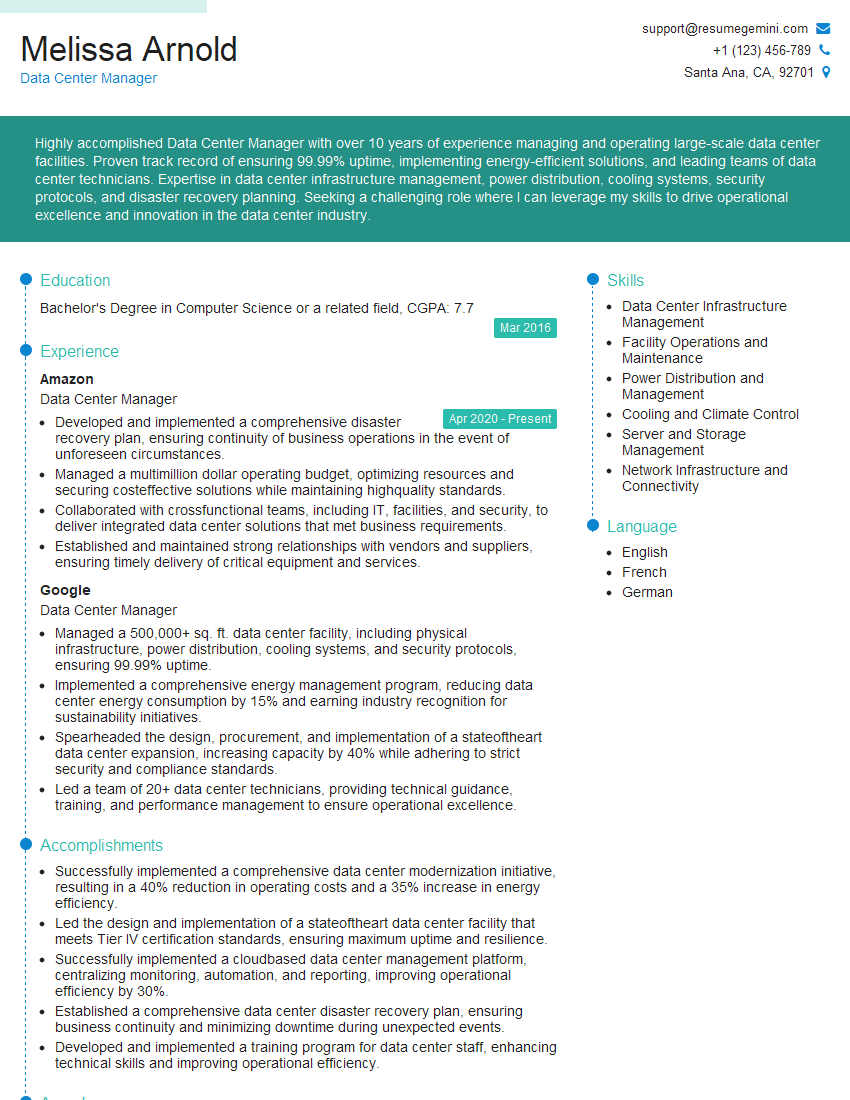
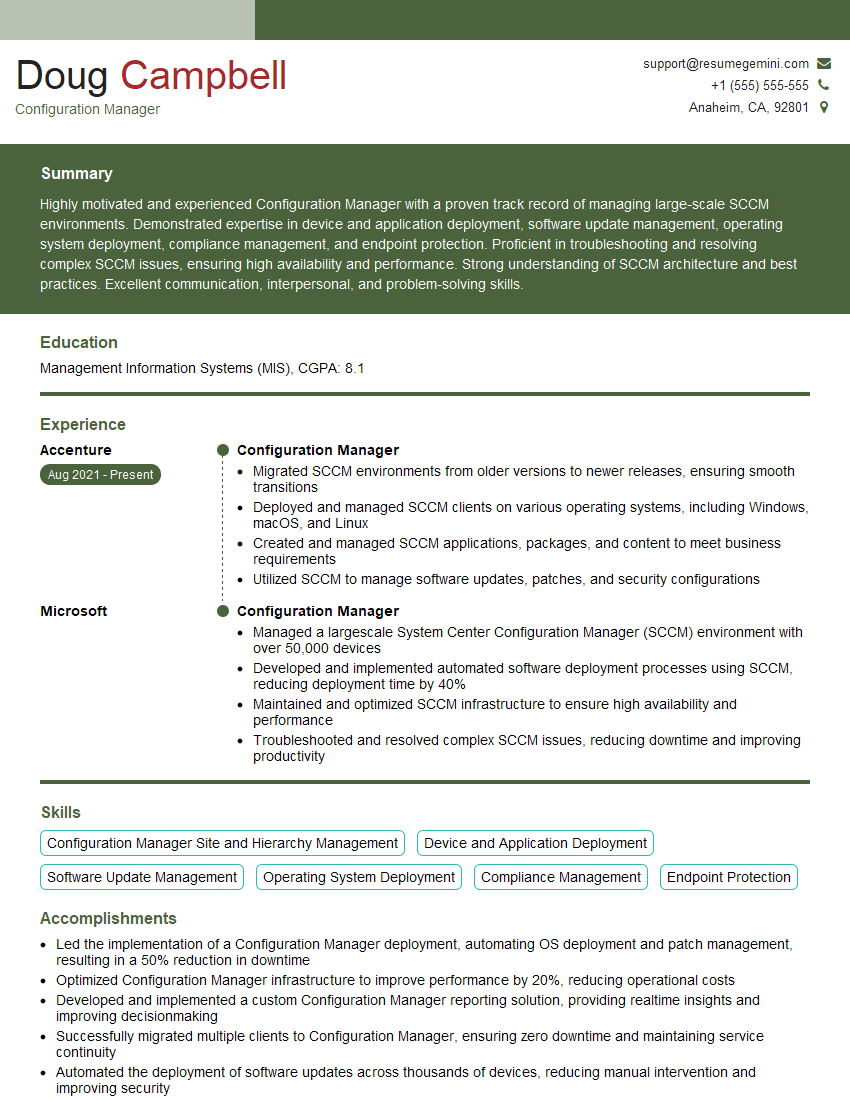
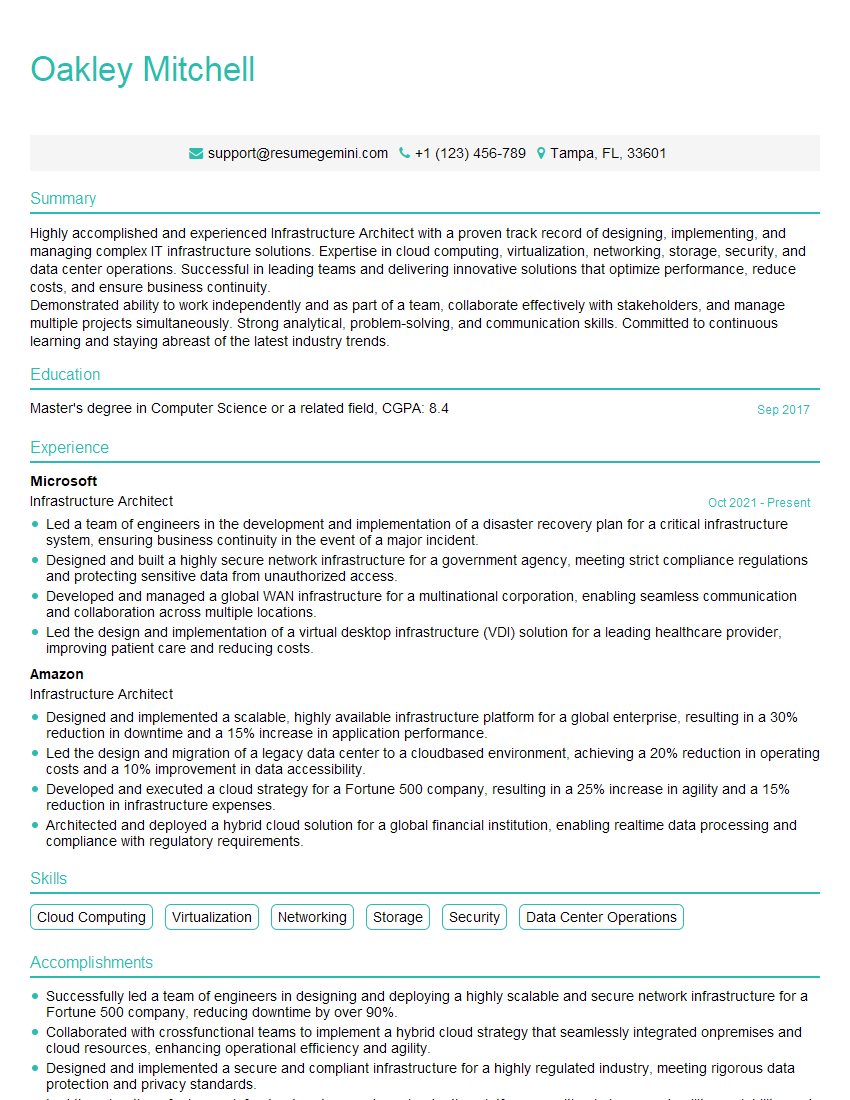
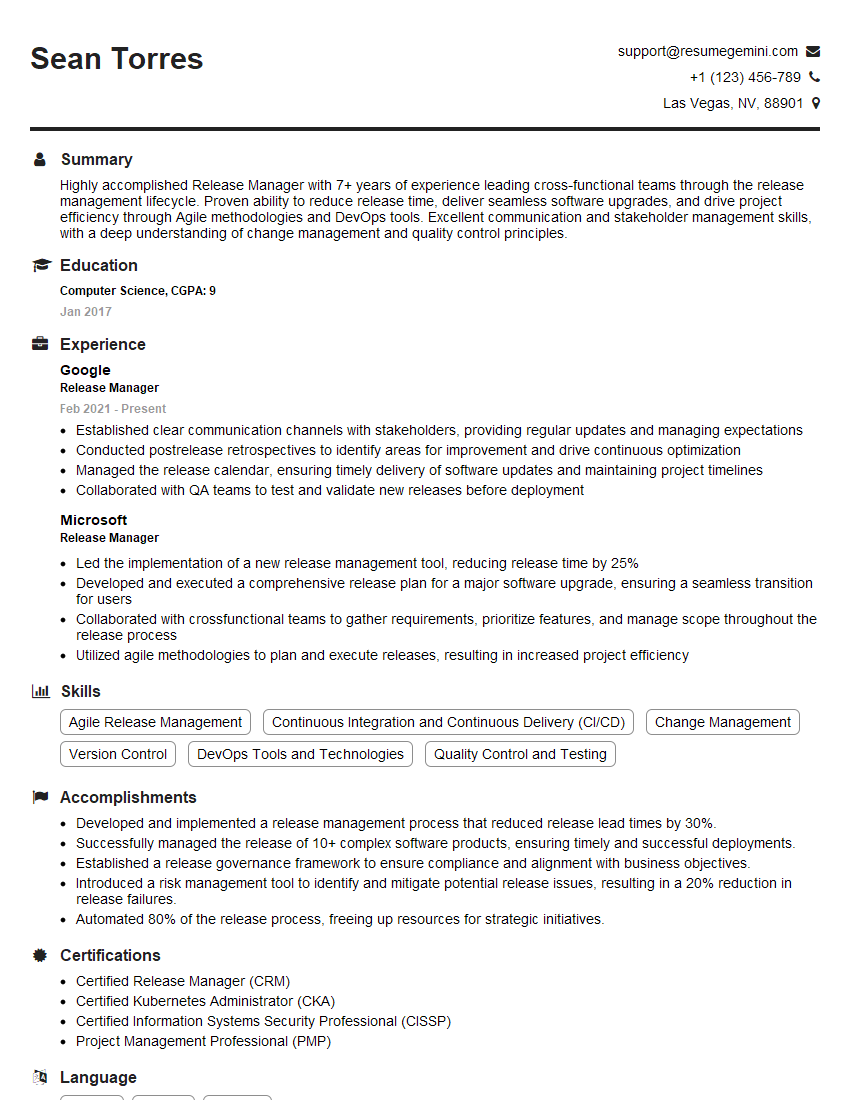
Mastering CMDB Design and Implementation opens doors to exciting career opportunities in IT Service Management and DevOps. A strong understanding of these concepts is highly sought after and will significantly enhance your career prospects. To make the most of these opportunities, creating a compelling, ATS-friendly resume is crucial. ResumeGemini is a trusted resource that can help you build a professional resume that highlights your skills and experience effectively. Examples of resumes tailored to CMDB Design and Implementation are available to guide you. Take the next step and invest in your career success today!
Explore more articles
Users Rating of Our Blogs
Share Your Experience
We value your feedback! Please rate our content and share your thoughts (optional).
What Readers Say About Our Blog
Very informative content, great job.
good