Every successful interview starts with knowing what to expect. In this blog, we’ll take you through the top Regulatory Compliance and Policy interview questions, breaking them down with expert tips to help you deliver impactful answers. Step into your next interview fully prepared and ready to succeed.
Questions Asked in Regulatory Compliance and Policy Interview
Q 1. Explain the Sarbanes-Oxley Act (SOX) and its implications for compliance.
The Sarbanes-Oxley Act of 2002 (SOX) is a landmark piece of US legislation designed to protect investors by improving the accuracy and reliability of corporate disclosures. It was enacted in response to major corporate accounting scandals, like Enron and WorldCom, that shook investor confidence. SOX’s implications for compliance are far-reaching and impact every aspect of financial reporting and internal controls within publicly traded companies.
- Section 302: Corporate Responsibility for Financial Reports: This section mandates that the CEO and CFO certify the accuracy of financial statements, making them personally liable for any misrepresentations.
- Section 404: Management Assessment of Internal Controls: This is arguably the most impactful section. It requires companies to establish and maintain a robust system of internal controls over financial reporting (ICFR) and to have their effectiveness audited annually by an independent auditor. This involves documenting processes, testing controls, and addressing any deficiencies.
- Increased Auditor Independence: SOX imposes stricter rules on auditor independence, aiming to prevent conflicts of interest that could compromise the objectivity of audits. For example, auditors are restricted from providing certain non-audit services to their audit clients.
Think of SOX as a comprehensive set of rules designed to ensure transparency and accountability in financial reporting. Non-compliance can lead to significant fines, legal repercussions, reputational damage, and even criminal charges for executives.
In my previous role, we implemented a SOX-compliant system by developing detailed process maps, establishing a strong control environment, and undergoing rigorous testing and documentation to ensure compliance with Section 404. This involved close collaboration with internal audit and external auditors to address any deficiencies and ensure the accuracy of our financial reporting.
Q 2. Describe your experience with HIPAA compliance and its key requirements.
The Health Insurance Portability and Accountability Act of 1996 (HIPAA) is a US law designed to protect the privacy and security of protected health information (PHI). HIPAA compliance is crucial for organizations handling any type of medical data, including hospitals, doctors’ offices, insurance companies, and even smaller businesses with employee health records.
My experience with HIPAA compliance has encompassed several key requirements:
- Privacy Rule: This dictates how PHI can be used, disclosed, and protected. It outlines patient rights, such as the right to access their own records and request corrections. We developed and implemented policies and procedures to ensure adherence to these rights.
- Security Rule: This establishes standards for the security of electronic PHI (ePHI), including administrative, physical, and technical safeguards. This includes implementing access controls, encryption, and regular security risk assessments.
- Breach Notification Rule: This outlines the procedures for notifying individuals and regulatory bodies in case of a data breach. We created a comprehensive breach response plan, including communication protocols and remediation strategies.
During my time at [Previous Company Name], we implemented robust security measures, including multi-factor authentication, data encryption both in transit and at rest, and regular security awareness training for staff. We also conducted regular audits to ensure ongoing compliance. A crucial aspect was understanding the nuances of PHI and ensuring that all employees were trained on appropriate handling practices.
Q 3. How would you handle a situation where a regulatory change impacts your company’s operations?
When a regulatory change impacts our operations, a proactive and structured approach is essential. My strategy involves the following steps:
- Identify and Assess the Impact: The first step is to thoroughly understand the changes in the new regulation and determine how it specifically affects our company’s processes, systems, and products. This includes a detailed review of the regulations to understand the scope of the changes and how it impacts our operations.
- Develop a Gap Analysis: Once we have a clear understanding of the impact, we conduct a gap analysis to identify the differences between our current practices and the requirements of the new regulation. This analysis would highlight the areas needing immediate action.
- Develop and Implement a Remediation Plan: Based on the gap analysis, we create a detailed remediation plan that outlines the specific steps required to bring our company into compliance. This might include updating policies, procedures, training materials, and IT systems. We would set realistic timelines and assign responsibilities to ensure accountability.
- Monitor and Review: Once the remediation plan is implemented, continuous monitoring is crucial to ensure ongoing compliance. Regular audits and reviews are scheduled to identify potential issues and make necessary adjustments. This also demonstrates a culture of compliance.
For example, when GDPR came into effect, we underwent a comprehensive review of our data processing activities, updated our privacy policy, and implemented measures to enhance data security and individuals’ rights. This involved not only technical changes but also changes in how we communicated with customers regarding their data.
Q 4. What is your experience with conducting risk assessments for regulatory compliance?
Conducting risk assessments for regulatory compliance is a systematic process designed to identify and prioritize potential compliance risks. I typically follow a structured methodology that includes:
- Identifying Regulatory Requirements: The first step is to thoroughly identify all relevant regulations and legal requirements applicable to our operations. This involves a careful review of all pertinent laws and guidelines.
- Identifying Assets and Processes: We then identify the assets and processes that are subject to these regulations. This could include data, systems, personnel, and financial processes.
- Identifying Potential Risks: Next, we identify potential risks that could lead to non-compliance. This involves considering internal and external factors, including technological vulnerabilities, human errors, and changing regulatory landscape.
- Risk Analysis and Prioritization: Each identified risk is analyzed based on its likelihood and potential impact. This allows us to prioritize our efforts on the most critical areas. We might use a risk matrix to visually represent this prioritization.
- Developing Mitigation Strategies: For each identified risk, we develop appropriate mitigation strategies, including preventative measures and controls. This could involve implementing technical safeguards, updating policies, and providing staff training.
For instance, during a recent risk assessment for a client in the financial services sector, we identified the risk of data breaches as a critical area. Our mitigation strategy involved implementing stronger encryption protocols, enhancing access controls, and conducting regular penetration testing and vulnerability assessments. We also developed an incident response plan to minimize the impact of any potential breach.
Q 5. Explain the difference between compliance and ethics.
While both compliance and ethics are crucial for an organization’s success, they represent different but interconnected concepts. Compliance refers to adherence to rules, regulations, and laws. It’s about meeting the minimum legal requirements. Ethics, on the other hand, are principles of right and wrong that guide behavior. It’s about doing what is morally right, even if it’s not legally mandated.
Think of it this way: compliance is the floor, while ethics are the ceiling. You must meet the minimum requirements of the law (compliance), but striving for ethical conduct goes beyond that, fostering a culture of integrity and trust.
A company might be fully compliant with all relevant regulations but still engage in unethical practices, such as prioritizing profits over employee safety or environmental concerns. Conversely, an organization might strive to be ethical but inadvertently fail to comply with a specific regulation due to oversight or lack of awareness. Ideally, a company should aim for both – strong compliance programs and a robust ethical framework.
Q 6. Describe your experience with developing and implementing compliance programs.
Developing and implementing compliance programs involves a multi-step process. My experience includes designing programs that:
- Define Scope and Objectives: Clearly identifying the specific regulations and areas that the program will cover. This sets the boundaries and helps define success.
- Risk Assessment: Conducting a thorough risk assessment to identify potential compliance risks and prioritize them based on likelihood and impact.
- Policy and Procedure Development: Creating clear, concise, and accessible policies and procedures that outline expectations and compliance requirements. This needs to be regularly reviewed and updated.
- Training and Awareness Programs: Developing and delivering comprehensive training programs to educate employees on relevant regulations, policies, and procedures. This ensures every employee understands their responsibility.
- Monitoring and Auditing: Establishing systems for monitoring compliance, conducting regular audits, and proactively identifying and addressing potential issues. This ensures the program is effective.
- Reporting and Communication: Developing clear mechanisms for reporting compliance issues and ensuring effective communication with relevant stakeholders, both internally and externally.
In one instance, I developed a comprehensive compliance program for a healthcare provider focusing on HIPAA and state-specific regulations. This included developing detailed policies, conducting employee training, and establishing a process for incident reporting and response. The program has been instrumental in ensuring the organization’s adherence to regulations and minimizing its risk.
Q 7. How do you stay updated on changes in relevant regulations and legislation?
Staying updated on regulatory changes requires a multi-pronged approach:
- Subscription to Regulatory Updates: Subscribing to newsletters, alerts, and updates from relevant regulatory bodies. This ensures you are notified of any significant changes promptly.
- Professional Networks and Associations: Actively engaging with professional networks and associations related to regulatory compliance. Participating in webinars, conferences, and industry events provides valuable insights and updates.
- Monitoring Regulatory Websites: Regularly reviewing the websites of relevant regulatory bodies to stay informed about new laws, guidelines, and interpretations.
- Legal Counsel: Consulting with legal counsel specializing in regulatory compliance to seek guidance on new developments and their implications for the company.
- Industry Publications and Journals: Reading industry publications and journals that discuss regulatory developments and best practices. This helps stay ahead of the curve.
For example, I regularly monitor the websites of the SEC, FDA, and other relevant agencies for changes affecting my areas of responsibility. I also subscribe to several compliance newsletters and participate in relevant professional associations, ensuring I’m well-informed and prepared for changes in the regulatory landscape.
Q 8. How would you manage a situation where a department is not adhering to compliance protocols?
Addressing non-compliance starts with understanding the root cause. It’s rarely about malicious intent; often, it’s due to a lack of training, unclear procedures, or insufficient resources. My approach is multi-faceted:
- Identify the Gap: I’d begin by conducting a thorough investigation to determine the extent of the non-compliance. This involves reviewing documentation, interviewing relevant personnel, and analyzing data to pinpoint the specific areas where protocols are not being followed.
- Communicate and Collaborate: I’d then schedule a meeting with the department head and team members to discuss the findings openly and collaboratively. The goal isn’t to place blame, but to understand the challenges they face in meeting compliance requirements.
- Develop a Corrective Action Plan: Based on the investigation, I’d develop a tailored corrective action plan that includes specific, measurable, achievable, relevant, and time-bound (SMART) goals. This might involve additional training, updated procedures, improved communication channels, or providing necessary resources.
- Monitor and Evaluate: Finally, I would implement a monitoring system to track progress against the corrective action plan. Regular follow-up meetings and performance reviews would ensure that the necessary improvements are made and sustained. For example, I might set up regular compliance checklists or use data analytics to monitor adherence to protocols.
For instance, in a previous role, a sales team wasn’t consistently updating customer data in our CRM, a violation of data privacy regulations. By working with the team, we identified their concerns about time constraints and implemented a simplified data entry process with automated reminders. This resolved the issue and improved data accuracy.
Q 9. Explain your experience with internal audits and compliance monitoring.
Internal audits and compliance monitoring are critical for ensuring an organization’s adherence to regulations and internal policies. My experience involves both conducting audits and overseeing the ongoing monitoring process.
I’ve led numerous internal audits, using a risk-based approach to prioritize areas with the highest potential for non-compliance. This involves reviewing documentation, conducting interviews, and examining operational processes to identify any gaps or weaknesses. My audit reports always include detailed findings, recommendations for improvement, and a timeline for implementing corrective actions.
For ongoing compliance monitoring, I’ve implemented various systems, including automated reporting tools and regular compliance check-ins with departments. This proactive approach helps identify potential issues early on, minimizing the risk of serious breaches. For example, I implemented a system where key compliance metrics are automatically flagged for review if they deviate from established baselines, enabling proactive intervention before non-compliance escalates.
Q 10. How do you prioritize compliance initiatives?
Prioritizing compliance initiatives is a strategic process that requires a careful assessment of risk and resources. I use a risk-based approach, focusing on the areas with the highest potential for significant legal, financial, or reputational damage.
- Risk Assessment: I start by identifying and assessing the potential risks associated with each compliance area. This may involve considering factors such as the likelihood of a violation occurring, the potential severity of the consequences, and the regulatory environment.
- Resource Allocation: Once risks are identified, I prioritize initiatives based on their severity and the resources available. High-risk areas with significant potential consequences will receive priority, even if they require significant resource investment.
- Stakeholder Engagement: Effective prioritization requires input from relevant stakeholders across the organization. This ensures that the chosen initiatives align with overall business objectives and are supported by the necessary personnel.
- Regular Review: Compliance priorities should be regularly reviewed and adjusted to reflect changes in the regulatory landscape, business operations, and risk assessment.
For instance, if a company is facing a high risk of data breaches, data security compliance initiatives should take precedence over other areas, even if those other areas are also important.
Q 11. What is your experience with regulatory reporting and documentation?
Regulatory reporting and documentation are crucial for demonstrating compliance with applicable laws and regulations. My experience spans various reporting requirements, including financial reporting, environmental compliance reporting, and data privacy reporting. I’m adept at:
- Understanding Reporting Requirements: I have a strong grasp of various regulatory frameworks and the specific reporting requirements under each. I regularly stay updated on any changes or updates to these requirements.
- Data Collection and Analysis: I’m proficient in gathering relevant data from various sources and analyzing it to ensure accuracy and completeness in reports.
- Report Preparation: I’m skilled in preparing clear, concise, and accurate regulatory reports that meet the specified formatting and submission requirements. This includes using specialized software and tools for report generation.
- Record Keeping: I understand the importance of maintaining comprehensive and well-organized records related to regulatory compliance. This ensures that the organization can readily provide evidence of compliance to regulatory bodies when requested.
For example, in a prior role, I streamlined the annual environmental compliance reporting process by implementing a new automated data collection system, resulting in a significant reduction in time and resources required for report generation. This also drastically reduced the chances of reporting errors.
Q 12. Describe your understanding of data privacy regulations (e.g., GDPR, CCPA).
Data privacy regulations, such as the General Data Protection Regulation (GDPR) in Europe and the California Consumer Privacy Act (CCPA) in the US, are paramount in today’s digital landscape. My understanding encompasses the core principles of these regulations, including:
- Data Minimization: Only collecting and processing data that is necessary for specified, explicit, and legitimate purposes.
- Purpose Limitation: Using data only for the purposes it was collected for, unless consent is obtained for further processing.
- Data Security: Implementing appropriate technical and organizational measures to protect personal data against unauthorized access, loss, or alteration.
- Individual Rights: Recognizing and respecting the rights of individuals to access, rectify, erase, and restrict the processing of their personal data.
- Accountability: Demonstrating compliance with data privacy regulations through appropriate documentation and processes.
The GDPR and CCPA differ in their specific requirements, but they share a common goal: protecting the privacy and rights of individuals regarding their personal data. I understand how to implement compliant data handling practices tailored to the specific regulatory landscape of a business’s operations.
Q 13. How would you handle a suspected violation of company policy or regulatory requirements?
Suspected violations of company policy or regulatory requirements must be handled promptly and thoroughly. My approach involves:
- Immediate Investigation: Gather all relevant information to understand the nature and extent of the potential violation. This includes interviewing involved parties, reviewing documentation, and analyzing data.
- Preserve Evidence: Secure all relevant evidence to support a potential investigation. This might involve securing electronic data, physical documents, or witness statements.
- Internal Reporting: Report the suspected violation through the appropriate internal channels, such as a compliance officer or ethics hotline. This ensures that the matter is handled according to company policy.
- Remediation and Corrective Actions: If a violation is confirmed, implement appropriate corrective actions to address the issue and prevent future occurrences. This could involve disciplinary measures, policy revisions, or improved training programs.
- External Reporting (if necessary): In situations where a regulatory breach is suspected, notify the relevant regulatory authority according to legal requirements. This is critical to minimizing potential penalties and demonstrating corporate responsibility.
For example, if I suspected a data breach, I would immediately initiate an investigation to determine the extent of the breach, contain the damage, notify affected individuals, and report the incident to the relevant authorities as required by law, such as the GDPR or CCPA.
Q 14. Describe your experience working with external regulatory bodies.
Working with external regulatory bodies requires a collaborative and professional approach. My experience includes interacting with agencies such as the SEC, EPA, and various state regulatory bodies. This involves:
- Understanding Regulatory Expectations: I’m skilled in interpreting regulations and understanding the specific requirements of each agency.
- Proactive Communication: I maintain open communication with regulatory agencies, proactively addressing any concerns or questions they may have.
- Responding to Audits and Investigations: I’m prepared to fully cooperate with audits and investigations conducted by regulatory bodies, providing necessary documentation and responding to questions in a timely and comprehensive manner.
- Building Relationships: I strive to build positive and professional relationships with regulatory officials to foster mutual understanding and collaboration.
For instance, I worked with the EPA during an environmental audit, successfully demonstrating our company’s compliance with emission standards through detailed documentation and proactive collaboration. This ensured a smooth audit process and avoided any penalties.
Q 15. What are some common challenges faced in regulatory compliance?
Regulatory compliance is a multifaceted challenge, and organizations face numerous hurdles. Common difficulties include:
- Keeping up with evolving regulations: Laws and regulations are constantly changing, requiring ongoing monitoring and adaptation. For example, data privacy regulations like GDPR and CCPA are regularly updated, necessitating continuous review and adjustment of compliance practices.
- Interpreting complex regulations: Legal language can be ambiguous, leading to differing interpretations and potential non-compliance. Consider the complexities surrounding anti-bribery laws – determining what constitutes a bribe varies across jurisdictions and situations.
- Resource constraints: Implementing and maintaining robust compliance programs demands significant financial and human resources, often straining budgets and workloads in smaller organizations.
- Global compliance: Organizations operating in multiple jurisdictions must navigate a patchwork of different regulations, increasing complexity and the risk of inconsistencies.
- Third-party risk management: Ensuring compliance within a supply chain or with third-party vendors adds another layer of difficulty, requiring diligent oversight and contractual agreements.
- Technological advancements: Rapid technological changes, such as the rise of AI and big data, present new challenges in managing data security, privacy, and other regulatory obligations.
Overcoming these challenges requires a proactive and strategic approach, incorporating technology, training, and a strong compliance culture.
Career Expert Tips:
- Ace those interviews! Prepare effectively by reviewing the Top 50 Most Common Interview Questions on ResumeGemini.
- Navigate your job search with confidence! Explore a wide range of Career Tips on ResumeGemini. Learn about common challenges and recommendations to overcome them.
- Craft the perfect resume! Master the Art of Resume Writing with ResumeGemini’s guide. Showcase your unique qualifications and achievements effectively.
- Don’t miss out on holiday savings! Build your dream resume with ResumeGemini’s ATS optimized templates.
Q 16. How do you measure the effectiveness of your compliance programs?
Measuring the effectiveness of a compliance program is crucial. I employ a multi-faceted approach, focusing on both qualitative and quantitative indicators.
- Key Risk Indicators (KRIs): These metrics track the likelihood and potential impact of compliance risks. Examples include the number of reported compliance violations, near misses, or audit findings.
- Compliance audits and assessments: Regular internal and external audits provide an objective evaluation of compliance posture, identifying gaps and areas for improvement. These audits assess adherence to policies, procedures, and regulatory requirements.
- Employee training completion rates and knowledge assessments: Tracking training completion rates and assessing employee understanding of compliance requirements reveals effectiveness of training programs.
- Incident reporting and investigation processes: The efficiency and thoroughness of investigations into compliance incidents, including root cause analysis and corrective actions, are crucial indicators of program efficacy.
- Management oversight and reporting: Regular reviews by senior management, along with clear reporting mechanisms to relevant authorities, demonstrate accountability and commitment to compliance.
- Benchmarking against industry best practices: Comparing the organization’s compliance performance against industry standards provides insights for improvement.
By integrating these metrics and regularly reviewing the data, it becomes possible to identify areas of strength and weakness, leading to targeted improvements in the compliance program. This data-driven approach ensures continuous improvement and effectiveness.
Q 17. Explain your understanding of corporate governance and its relationship to compliance.
Corporate governance refers to the system of rules, practices, and processes by which a company is directed and controlled. It involves balancing the interests of a company’s many stakeholders, including shareholders, management, employees, customers, suppliers, and the community. Compliance is an integral part of good corporate governance.
The relationship between corporate governance and compliance is symbiotic. Strong corporate governance structures provide the framework within which compliance programs can thrive. This includes:
- Establishing clear roles and responsibilities: A well-defined governance structure clarifies who is accountable for compliance, ensuring clear lines of authority and responsibility.
- Implementing effective risk management processes: Robust governance processes help identify, assess, and mitigate compliance risks effectively.
- Promoting ethical conduct and a culture of compliance: A strong ethical foundation, championed by senior management, fosters a culture where compliance is valued and prioritized.
- Establishing transparent decision-making processes: Open and transparent processes enhance accountability and reduce the likelihood of compliance failures.
- Ensuring effective communication and reporting: Clear communication channels and reporting structures are essential for effective compliance monitoring and reporting.
Conversely, a well-functioning compliance program strengthens corporate governance by mitigating risks, enhancing reputation, and building stakeholder trust.
Q 18. What is your experience with developing and delivering compliance training?
I have extensive experience developing and delivering engaging compliance training programs. My approach emphasizes practical application and active learning, rather than passive lectures. I’ve developed training materials for diverse audiences, from executive leadership to front-line employees.
My process typically involves:
- Needs assessment: Identifying specific compliance requirements and tailoring training to address those needs.
- Content development: Creating engaging and interactive modules, using various methods like case studies, scenarios, interactive exercises, and videos. I strive to use simple language and avoid overwhelming participants with technical jargon.
- Delivery methods: Employing a range of methods, including in-person workshops, online modules (eLearning), webinars, and blended learning approaches, optimizing for audience needs and learning styles.
- Assessment and evaluation: Measuring training effectiveness through quizzes, tests, and post-training surveys to ensure knowledge retention and comprehension.
- Tracking and reporting: Maintaining records of training completion and evaluating the program’s overall impact on compliance.
For example, in a recent project focusing on anti-bribery training, I developed interactive modules that presented realistic scenarios requiring employees to make ethical decisions. This helped participants understand the nuances of bribery and corruption in real-world situations.
Q 19. How do you communicate complex regulatory information to non-compliance personnel?
Communicating complex regulatory information to non-compliance personnel requires clear, concise, and relatable language. I avoid technical jargon and utilize several techniques to ensure effective understanding:
- Plain language communication: Simplifying complex concepts into easily digestible information, avoiding legalistic terms.
- Visual aids: Using infographics, charts, and videos to enhance understanding and engagement.
- Real-world examples and case studies: Illustrating abstract concepts with practical examples that resonate with the audience.
- Interactive training: Using quizzes, games, and role-playing exercises to reinforce learning and promote active participation.
- Tailored communication: Adjusting the communication style and level of detail based on the audience’s role and understanding.
- Multi-modal communication: Combining multiple communication channels such as email, intranet postings, and workshops to ensure widespread dissemination.
- Feedback mechanisms: Creating opportunities for employees to ask questions and provide feedback to ensure understanding.
For example, when explaining data privacy regulations, I might use a real-life scenario of a data breach and its consequences to highlight the importance of compliance. I would also utilize visuals to clarify data protection principles.
Q 20. Describe your experience with implementing a compliance management system.
Implementing a Compliance Management System (CMS) involves a structured and phased approach. My experience involves designing, implementing, and maintaining CMSs that integrate various elements, including:
- Risk assessment: Identifying and prioritizing potential compliance risks, considering internal and external factors.
- Policy and procedure development: Creating comprehensive policies and procedures that align with legal and regulatory requirements.
- Training and awareness programs: Designing and delivering training programs to educate employees on compliance obligations.
- Monitoring and auditing: Establishing systems for monitoring compliance activities, conducting regular audits, and investigating any violations.
- Reporting and documentation: Maintaining accurate records of compliance activities, including risk assessments, audit reports, and training records.
- Technology integration: Leveraging technology to automate compliance tasks, manage data, and improve efficiency (e.g., GRC software).
- Continuous improvement: Regularly reviewing and updating the CMS to ensure its effectiveness and adaptability to evolving regulatory changes.
A successful CMS implementation requires strong leadership commitment, employee buy-in, and ongoing monitoring to ensure its long-term effectiveness. I focus on using a phased approach, starting with a pilot program and scaling up gradually as we address initial challenges and gather valuable feedback from stakeholders.
Q 21. How do you assess and manage compliance risks?
Compliance risk assessment and management is an iterative process. My approach involves:
- Identifying potential compliance risks: This includes reviewing relevant laws and regulations, conducting internal assessments, analyzing industry trends, and considering potential vulnerabilities.
- Analyzing the likelihood and impact of risks: Assessing the probability of a specific compliance risk occurring and determining the potential consequences if it does.
- Prioritizing risks: Focusing on the most critical risks based on their likelihood and potential impact. This prioritization is crucial for efficient resource allocation.
- Developing risk mitigation strategies: Implementing measures to reduce the likelihood or impact of identified risks. These strategies might include policy changes, process improvements, enhanced training, technology solutions, or outsourcing certain functions.
- Monitoring and reviewing risk levels: Regularly assessing the effectiveness of mitigation strategies and adjusting the approach as needed. This includes monitoring changes in regulations and internal factors.
- Reporting and communication: Providing regular reports on compliance risk levels to management and relevant stakeholders.
For instance, when assessing data privacy risks, I would consider factors such as the volume and sensitivity of data processed, the security measures in place, and the potential consequences of a data breach. This would inform the development of a risk mitigation strategy, which might include implementing encryption, access controls, and employee training on data privacy best practices.
Q 22. Explain your experience with using compliance software or tools.
My experience with compliance software spans several platforms, from basic document management systems to sophisticated GRC (Governance, Risk, and Compliance) suites. I’ve used tools like Archer, ServiceNow GRC, and smaller, specialized solutions for specific regulatory needs, such as HIPAA compliance for healthcare data. I’m proficient in using these tools to track policy acknowledgements, manage audits, monitor risk assessments, and report on compliance status. For example, in my previous role at a financial institution, we utilized Archer to manage our Know Your Customer (KYC) and Anti-Money Laundering (AML) compliance programs. This involved configuring workflows for onboarding new clients, tracking due diligence activities, and generating reports for regulatory examinations. The software streamlined our processes significantly, allowing for quicker responses to audit requests and improved efficiency overall.
Beyond the technical aspects, I understand the importance of choosing the right tool for the organization’s needs and integrating it effectively with existing systems. A poorly implemented system can create more problems than it solves. Therefore, a key part of my approach involves thorough needs assessment and user training to ensure maximum adoption and benefit.
Q 23. What is your experience with conducting due diligence in relation to regulatory compliance?
Due diligence in regulatory compliance is a critical component of risk management. It involves a thorough investigation to ensure that an organization is adhering to all applicable laws, regulations, and industry best practices. My experience encompasses various types of due diligence, including pre-acquisition due diligence, third-party risk assessments, and ongoing monitoring of vendors and partners. I’ve led and participated in numerous due diligence projects, involving document reviews, interviews with key personnel, and on-site assessments.
For instance, when my team was considering a new vendor for data storage, we performed a comprehensive due diligence assessment. This included reviewing their security policies, certifications (like ISO 27001), and audit reports. We also conducted interviews with their compliance personnel to confirm their processes and assess their risk profile. This meticulous process helped us identify and mitigate potential compliance risks before entering into any agreement.
The key to effective due diligence is a structured approach, incorporating a risk-based methodology. This prioritizes high-risk areas and allocates resources accordingly. It is also crucial to document findings and develop mitigation strategies to address any identified gaps.
Q 24. Describe a time you had to adapt a compliance program due to changing regulations.
Adapting to changing regulations is a constant requirement in the compliance field. One example involved the implementation of the GDPR (General Data Protection Regulation) in the European Union. Prior to GDPR, our data privacy program was based on a patchwork of national laws. When GDPR went into effect, we needed to overhaul our entire program. This involved:
- Updating our data privacy policies and procedures to align with GDPR requirements.
- Implementing new data processing consent mechanisms.
- Creating data breach response plans to comply with GDPR’s stringent notification requirements.
- Conducting comprehensive data mapping exercises to understand where personal data was being processed.
- Training employees on the new regulations and their responsibilities.
This was a significant undertaking that required cross-functional collaboration and careful planning. We used a phased approach, prioritizing the most critical areas first and iteratively improving our program over time. The key to success was open communication, effective project management, and a commitment to continuous improvement. The successful adaptation to GDPR not only avoided penalties but strengthened our organization’s overall data security posture.
Q 25. How do you ensure your compliance programs are cost-effective?
Cost-effectiveness in compliance is crucial. It’s not about cutting corners but about optimizing resource allocation to maximize the return on investment. My approach focuses on:
- Risk-based prioritization: Focusing resources on areas with the highest potential risk and impact. This avoids unnecessary expenditure on low-risk areas.
- Automation: Utilizing technology to automate tasks such as policy acknowledgment, audit scheduling, and reporting. This frees up human resources for more strategic activities.
- Process optimization: Streamlining compliance procedures to eliminate redundancies and improve efficiency.
- Outsourcing strategically: Engaging external experts for specific tasks such as specialized audits or legal advice, when it’s more cost-effective than building in-house expertise.
- Continuous monitoring and improvement: Regularly evaluating the effectiveness of compliance programs and making adjustments as needed to improve efficiency and reduce costs.
For example, instead of manually reviewing thousands of contracts for compliance with a specific regulation, we might use a contract management software with automated compliance checks to identify potential issues quicker and more efficiently. This prevents costly litigation further down the line.
Q 26. How do you balance regulatory compliance with business objectives?
Balancing regulatory compliance with business objectives is a delicate art. It’s not an either/or proposition but a continuous process of finding solutions that meet both needs. A common misconception is that compliance is a cost center that hinders business growth. Instead, a robust compliance program can actually enhance business objectives by:
- Reducing risk: Avoiding fines, penalties, and reputational damage.
- Building trust: Demonstrating to stakeholders that the organization operates ethically and responsibly.
- Improving operational efficiency: Streamlining processes and reducing operational risk.
- Creating a competitive advantage: Positioning the organization as a leader in its industry.
Finding this balance requires effective communication and collaboration between the compliance team and business units. I employ a proactive approach, engaging business leaders early in the process to discuss potential compliance implications of new initiatives. This collaborative approach helps to integrate compliance into the strategic planning process, ensuring that business objectives are achieved without compromising regulatory requirements.
Q 27. Explain your experience with developing and maintaining compliance policies and procedures.
Developing and maintaining compliance policies and procedures is a crucial part of my role. This involves a systematic approach, starting with a thorough understanding of applicable regulations and industry best practices. I then translate these requirements into clear, concise, and actionable policies and procedures. I use a template-based approach to ensure consistency and efficiency. Each policy typically includes:
- Purpose and scope: Clearly defining the policy’s objective and the activities it covers.
- Definitions: Providing clear definitions of key terms.
- Procedures: Outlining the steps involved in complying with the policy.
- Responsibilities: Assigning roles and responsibilities for compliance.
- Consequences of non-compliance: Clearly outlining the potential consequences of failing to comply with the policy.
After drafting, policies undergo a review process, ensuring alignment with applicable laws and internal standards. I incorporate feedback from stakeholders to ensure the policies are practical and easily understood. Regular updates and training are implemented to keep the policies relevant and ensure employees are aware of their obligations. Furthermore, we track policy acknowledgement to ensure everyone has reviewed and understands the policies. This ensures the program is current and reflective of the changing regulatory landscape, ensuring organizational adherence and reducing liability.
Key Topics to Learn for Regulatory Compliance and Policy Interview
- Regulatory Frameworks: Understanding the structure and application of relevant laws and regulations (e.g., HIPAA, GDPR, SOX) – including their historical context and evolution.
- Risk Assessment and Mitigation: Practical application of risk assessment methodologies to identify and mitigate compliance risks within an organization. This includes developing and implementing effective control measures.
- Compliance Program Development and Implementation: Designing, implementing, and maintaining a robust compliance program, encompassing policies, procedures, training, and monitoring activities.
- Internal Controls and Audits: Understanding the design and effectiveness of internal controls and the role of internal and external audits in ensuring compliance.
- Data Privacy and Security: Practical application of data privacy regulations and best practices for securing sensitive information, including incident response planning.
- Ethical Considerations and Corporate Governance: Analyzing the ethical implications of regulatory compliance and its relationship to strong corporate governance practices.
- Regulatory Reporting and Disclosure: Understanding the requirements for accurate and timely reporting to regulatory bodies and the implications of non-compliance.
- Problem-Solving and Decision-Making in Compliance: Analyzing complex compliance scenarios, identifying potential breaches, and proposing effective solutions. This includes navigating ambiguous situations and prioritizing actions.
- Emerging Trends and Technologies: Staying informed about evolving regulatory landscapes and the impact of new technologies (e.g., AI, blockchain) on compliance strategies.
Next Steps
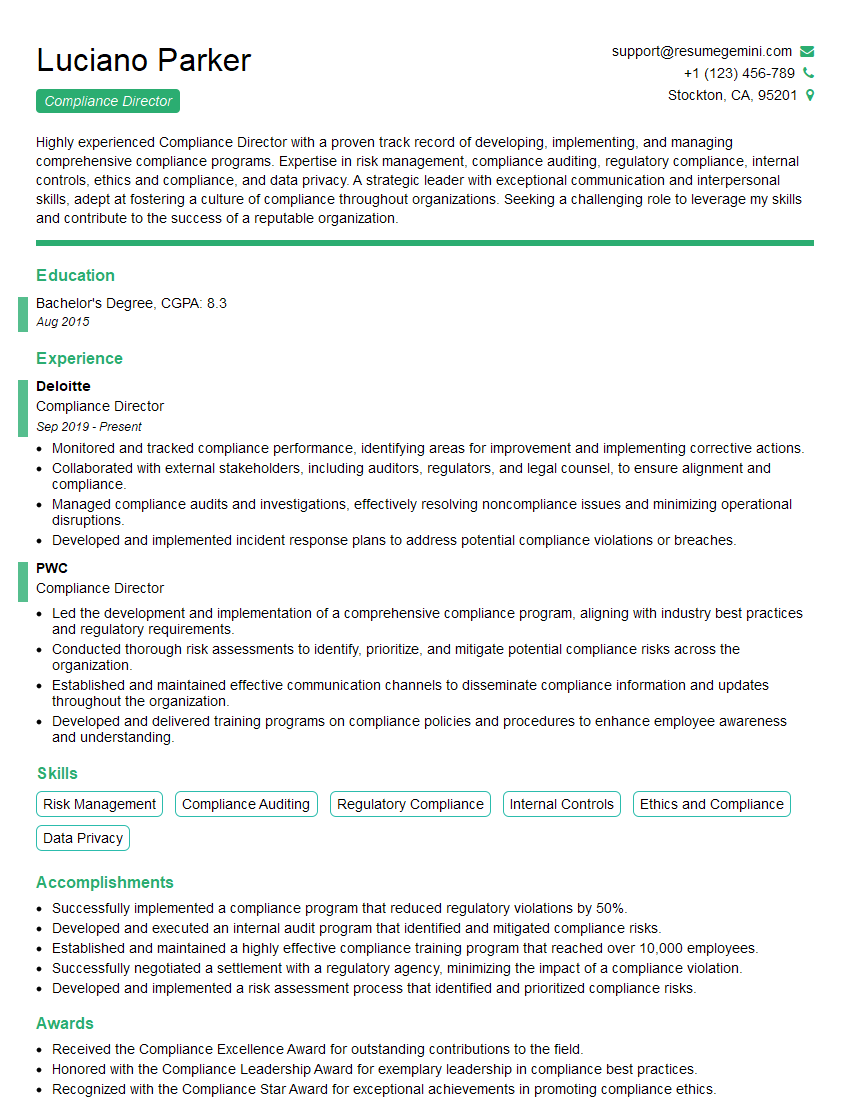
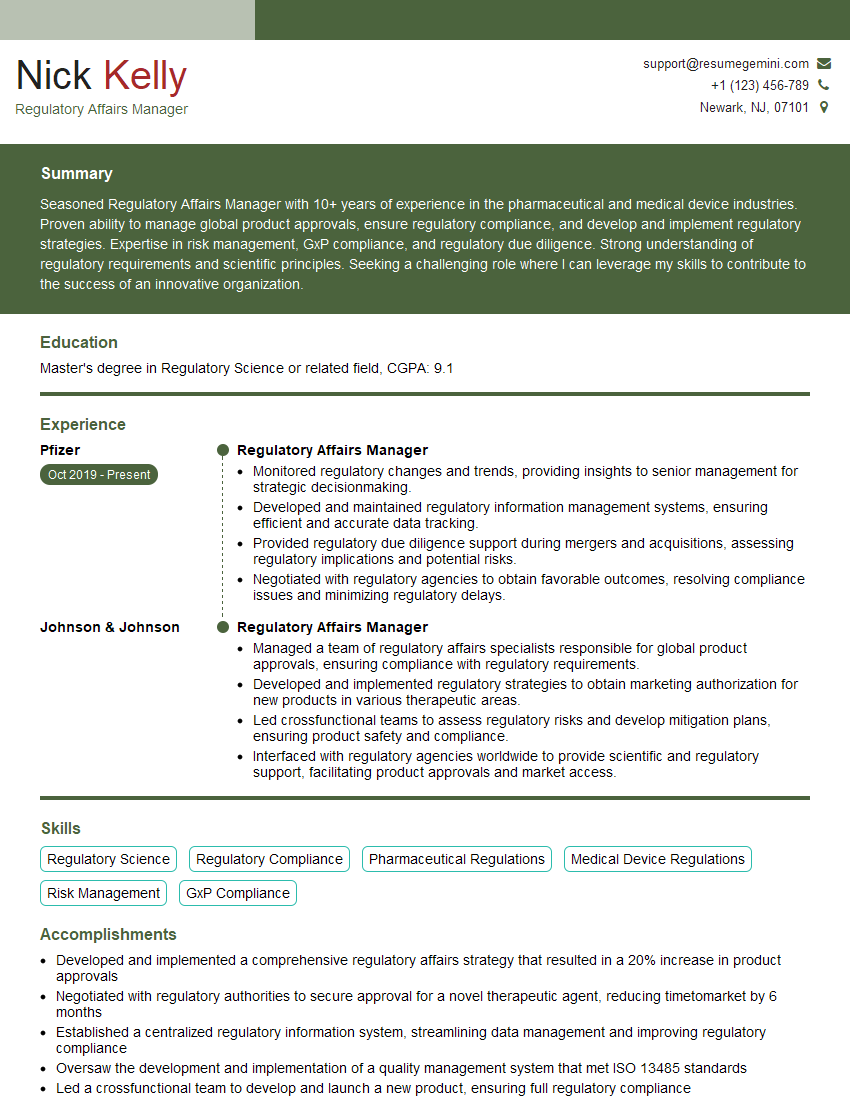
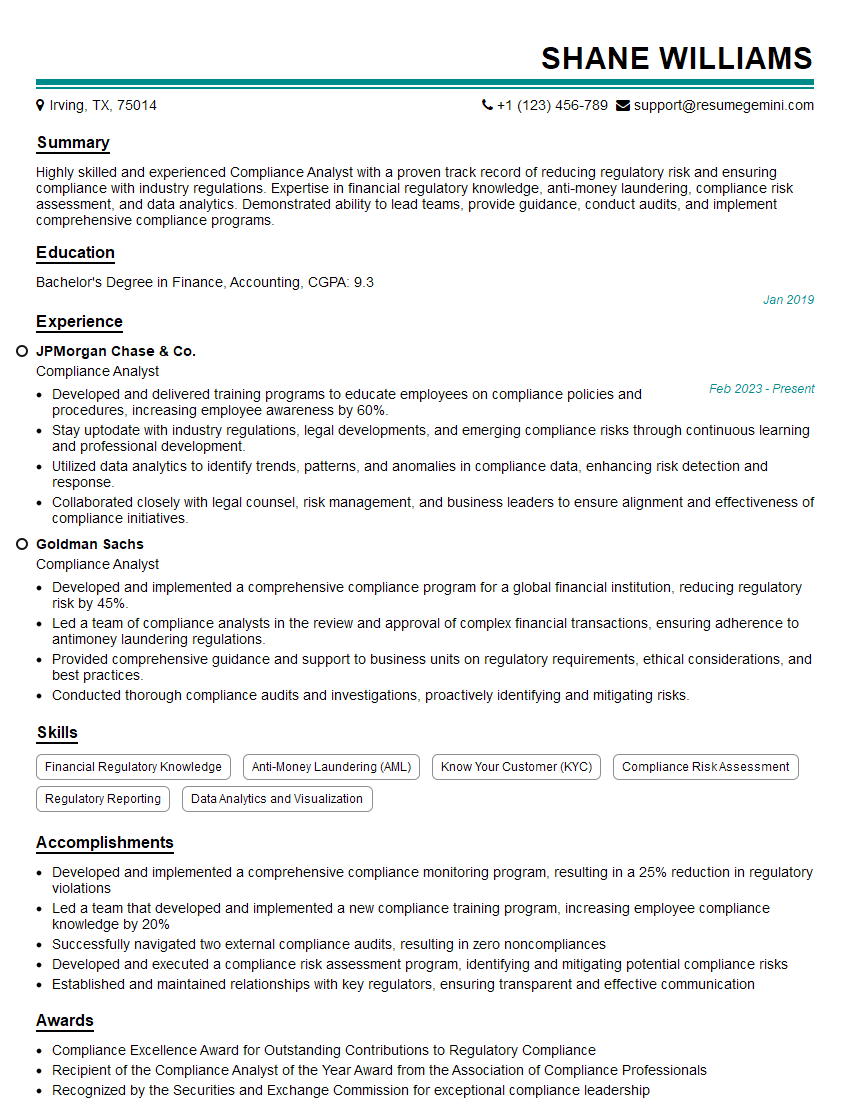
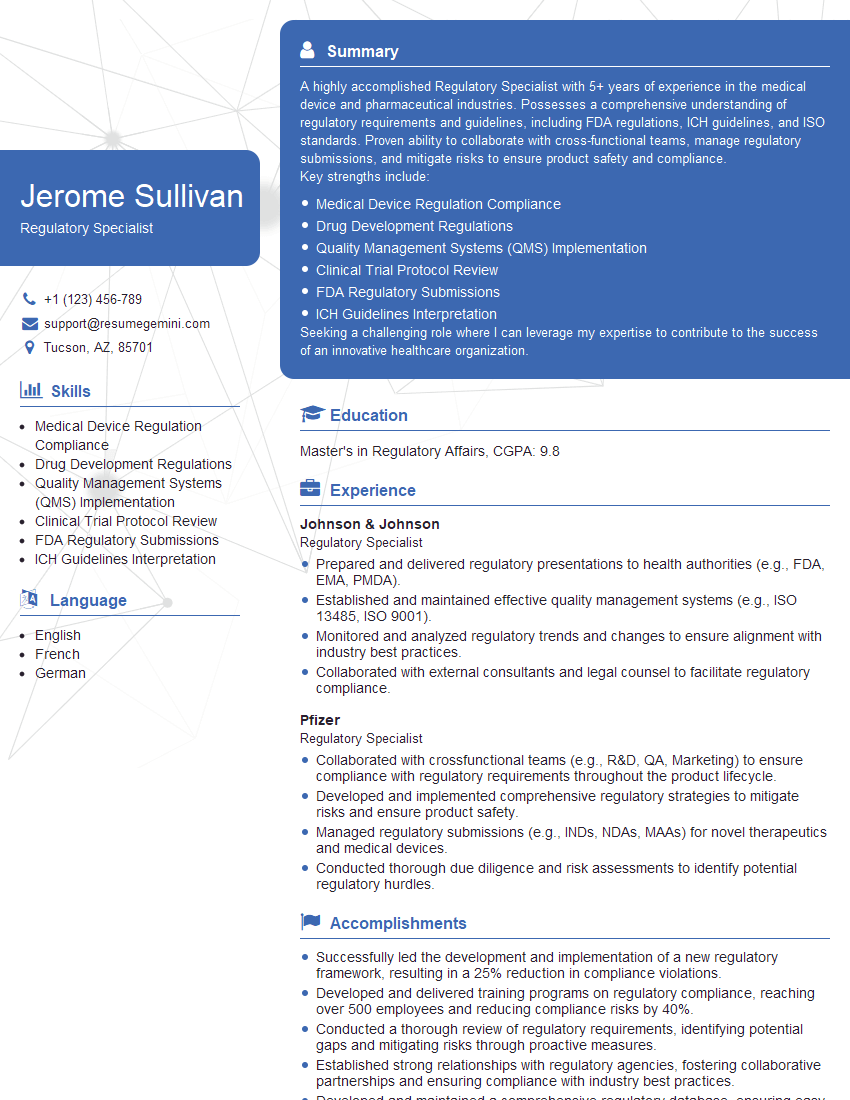
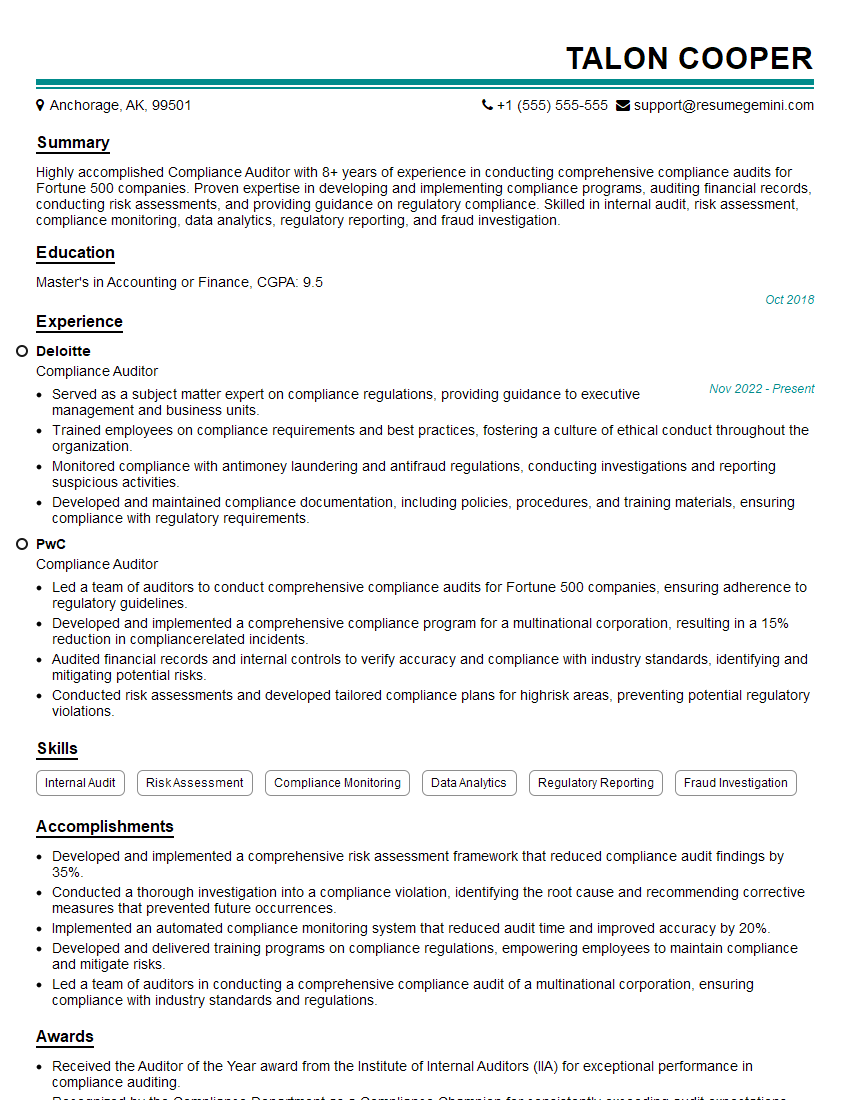
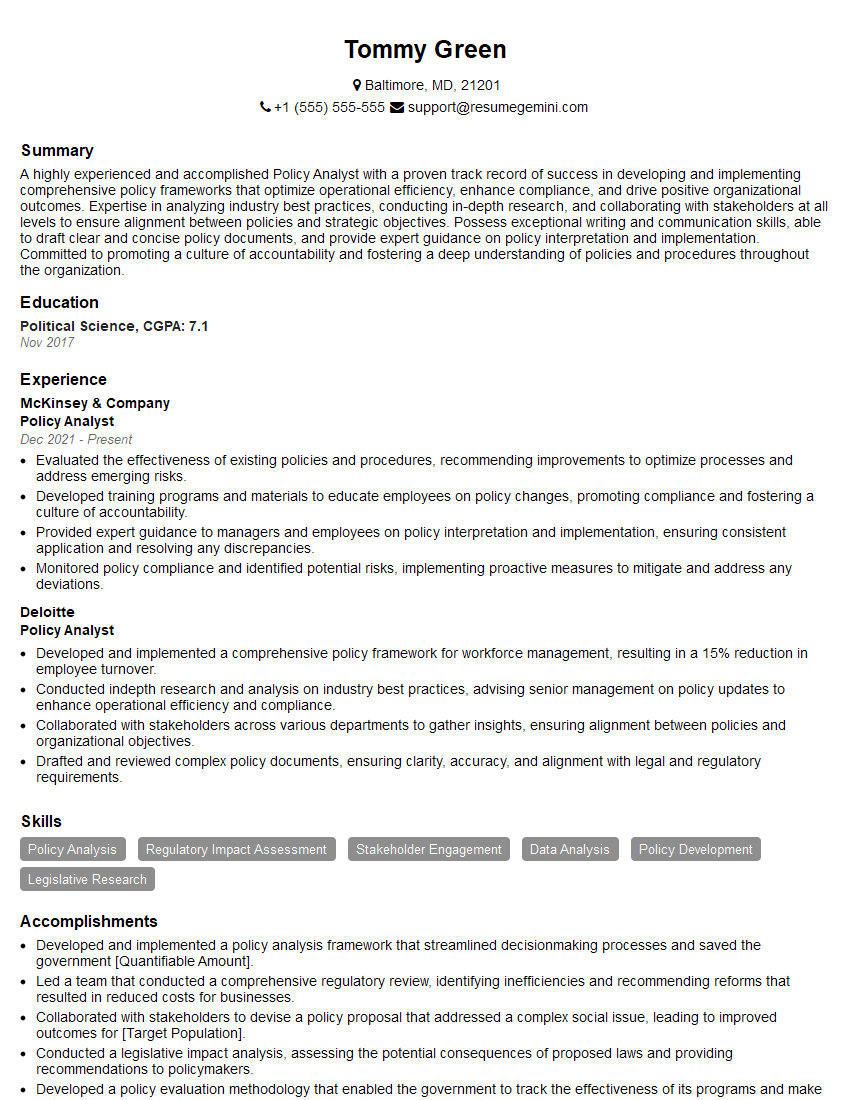
Mastering Regulatory Compliance and Policy is crucial for a successful and rewarding career. It demonstrates your commitment to ethical conduct, risk management, and organizational integrity, opening doors to leadership roles and increased earning potential. To maximize your job prospects, create an ATS-friendly resume that effectively highlights your skills and experience. ResumeGemini is a trusted resource that can help you build a professional and impactful resume, ensuring your qualifications shine. Examples of resumes tailored to Regulatory Compliance and Policy are available to guide you.

Explore more articles
Users Rating of Our Blogs
Share Your Experience
We value your feedback! Please rate our content and share your thoughts (optional).
What Readers Say About Our Blog
Very informative content, great job.
good