Interviews are opportunities to demonstrate your expertise, and this guide is here to help you shine. Explore the essential Regulatory Compliance (e.g., UL, CE) interview questions that employers frequently ask, paired with strategies for crafting responses that set you apart from the competition.
Questions Asked in Regulatory Compliance (e.g., UL, CE) Interview
Q 1. Explain the difference between UL and CE marking.
UL and CE marking are both safety certifications, but they apply to different geographical regions and have distinct requirements. UL (Underwriters Laboratories) is a North American safety certification, primarily focusing on the United States and Canada. CE marking, on the other hand, is a mandatory conformity marking for products sold within the European Economic Area (EEA). Think of it like this: if you want to sell your product in the US, you’ll likely need UL; if you want to sell it in Europe, you’ll need CE.
A key difference lies in the approach. UL certification is often based on specific standards and involves testing by UL laboratories to ensure product safety. CE marking, however, is a self-declaration of conformity, meaning the manufacturer is responsible for ensuring their product meets all applicable EU directives and standards. While manufacturers can use notified bodies for testing and certification, it’s not always mandatory.
In short: UL is a specific certification for North America, emphasizing lab testing; CE marking is a broader declaration of conformity across the EEA, allowing for more flexibility in the testing and certification process.
Q 2. Describe the process for obtaining UL certification.
Obtaining UL certification is a multi-step process. It typically begins with identifying the applicable UL standards for your product. This involves careful review of the relevant standard documents to understand the specific requirements.
- Product Evaluation: Next, you’ll need to have your product thoroughly evaluated. This might involve submitting samples to a UL testing laboratory, where engineers will conduct tests to verify compliance with the chosen standard.
- Testing and Inspections: The testing process is rigorous and may include various safety, performance, and environmental tests. Regular factory inspections may also be required to ensure consistent manufacturing processes.
- Report Generation: Upon successful completion of testing and inspections, UL will issue a test report detailing the results.
- Certification Listing: Once all requirements are met, your product will be listed in the UL directory, allowing you to use the UL mark on your product and its packaging.
The entire process can be time-consuming and costly, depending on the complexity of your product and the required tests. But it provides assurance to your customers that your product has met stringent safety standards.
Q 3. What are the key requirements for CE marking under the Low Voltage Directive (LVD)?
The Low Voltage Directive (LVD) is a crucial part of CE marking, covering electrical equipment designed to operate at voltages between 50 and 1000V AC and 75 and 1500V DC. Key requirements include:
- Essential Safety Requirements (ESRs): Meeting the specific ESRs outlined in the LVD is paramount. These requirements cover aspects like protection against electric shock, fire hazards, and mechanical hazards.
- Technical File: Maintaining a comprehensive technical file documenting the design, manufacturing, and testing processes of the product is essential. This file serves as evidence of conformity and is available for inspection by authorities.
- Conformity Assessment Procedure: Manufacturers must select and follow an appropriate conformity assessment procedure as outlined in the LVD. This might involve internal production control, type examination, or other methods, depending on the product’s risk profile.
- CE Marking: The CE marking must be affixed visibly and indelibly to the product, indicating conformity with the LVD and other relevant directives.
Failure to meet these requirements can result in significant penalties, including product recalls, fines, and legal action. It’s crucial to understand that the LVD sets the general requirements, and additional standards may apply based on the specific product and its intended use.
Q 4. How do you ensure compliance with RoHS directives?
RoHS (Restriction of Hazardous Substances) directives aim to limit the use of certain hazardous materials in electrical and electronic equipment. Compliance is ensured through a multi-pronged approach:
- Material Selection: Careful selection of components and materials is crucial. Manufacturers must choose materials that comply with the RoHS limits for substances like lead, mercury, cadmium, hexavalent chromium, polybrominated biphenyls (PBBs), and polybrominated diphenyl ethers (PBDEs).
- Supplier Management: Working closely with suppliers is vital to ensure that all components meet RoHS requirements. Requesting material declarations of conformity (DoCs) from suppliers is a standard practice.
- Testing and Analysis: Regular testing and analysis of materials and finished products are necessary to verify compliance with RoHS limits. This often involves using laboratory equipment to measure the concentration of restricted substances.
- Documentation: Maintaining comprehensive documentation, including material certificates, test reports, and process descriptions, is essential to demonstrate compliance to regulatory authorities.
A well-managed supply chain and robust quality control system are vital for ensuring consistent RoHS compliance. Regular audits and internal reviews can further strengthen the process.
Q 5. Explain the role of a conformity assessment body (CAB).
A Conformity Assessment Body (CAB), also known as a Notified Body (NB) in the context of EU directives, is an independent organization designated by a national authority to perform conformity assessment activities. They act as a third-party verifier, providing impartial assessment of a product’s compliance with relevant regulations.
Their role varies depending on the specific directive and conformity assessment procedure. This can include type examination (testing a prototype), factory inspections, and certification. By engaging a CAB, manufacturers demonstrate their commitment to compliance and gain increased market access. The CAB’s expertise provides credibility to the claims of conformity, building consumer trust and reducing the risk of non-compliance penalties.
Q 6. What is a technical file, and what information must it contain for CE marking?
A technical file is a comprehensive collection of documents that provide evidence of a product’s conformity with all applicable EU directives, including the LVD. It’s essentially a detailed history of the product’s design, development, and manufacturing process.
The information it must contain varies depending on the specific product and directives but generally includes:
- Product description and intended use.
- Design and manufacturing details (schematics, drawings, BOM).
- Risk assessment report.
- Results of tests and calculations demonstrating compliance with applicable standards.
- Proof of conformity to applicable directives and standards.
- EU Declaration of Conformity.
The technical file is crucial for demonstrating compliance to authorities and is available for inspection upon request. A well-organized technical file is essential for efficient audit preparation and minimizes the risk of non-compliance.
Q 7. Describe your experience with risk assessment in product safety.
Risk assessment is fundamental to product safety. My experience involves systematically identifying potential hazards associated with a product throughout its lifecycle, from design to disposal. I utilize established methodologies, such as HAZOP (Hazard and Operability Study) and FMEA (Failure Mode and Effects Analysis), to perform these assessments.
For example, I worked on a project involving a new line of power tools. Through FMEA, we identified potential hazards like electric shock, mechanical injuries, and fire. This assessment guided the design choices, incorporating safety features like double insulation, emergency stops, and thermal protection. The risk assessment documentation forms a vital part of the technical file, justifying design choices and demonstrating product safety.
My approach focuses on a proactive and iterative process. Risk assessment isn’t a one-time activity; it’s an ongoing process that adapts as the product design evolves and new information emerges. Regular review and updates ensure the product continues to meet the highest safety standards.
Q 8. How do you handle discrepancies or conflicts between different regulatory standards?
Resolving conflicts between regulatory standards, such as UL and CE, requires a thorough understanding of each standard’s requirements and a systematic approach. It’s not about choosing one over the other, but rather determining how to meet all applicable requirements. Often, one standard might be more stringent than another in certain areas. In such cases, meeting the more stringent requirements will automatically ensure compliance with the less stringent one.
For instance, if a product needs both UL and CE markings, and UL has stricter requirements for flammability testing, meeting the UL flammability standards will inherently satisfy the CE requirements. However, the documentation must clearly demonstrate compliance with both. A detailed harmonization analysis comparing each standard’s specific clauses is crucial. Any discrepancies are documented and a decision is made on which standard dictates the design and testing procedure. This is then reviewed and approved by both the engineering and compliance teams. This process is often documented in a Compliance Matrix.
In cases where a true conflict exists – where fulfilling one standard prevents fulfilling another – seeking clarification from the relevant certification bodies is essential. This might involve submitting a detailed explanation of the conflict and requesting guidance on the appropriate path to compliance. Sometimes, this involves engineering solutions to overcome the conflict, and in rare cases, seeking exemptions or waivers may be necessary, but only after exploring all other options.
Q 9. What is your experience with ISO 9001 and its relevance to regulatory compliance?
ISO 9001 is a globally recognized quality management system (QMS) standard. While not a regulatory standard itself, it plays a vital role in achieving and maintaining regulatory compliance. Think of it as the foundation upon which regulatory compliance is built. It provides a framework for establishing, implementing, maintaining, and improving a quality management system.
My experience with ISO 9001 includes leading internal audits, facilitating management reviews, and developing and implementing corrective actions. A robust ISO 9001 system helps streamline processes, improve documentation control, and enhance traceability, all of which are invaluable for meeting regulatory requirements. For example, a well-defined document control system (as per ISO 9001) ensures that all relevant regulatory documents are readily available and updated, simplifying the process of demonstrating compliance during an audit.
Furthermore, the emphasis on continuous improvement inherent in ISO 9001 ensures that processes are constantly reviewed and updated to meet evolving regulatory demands. It minimizes the risk of non-compliance by proactively addressing potential issues. In essence, ISO 9001 offers a proactive approach to risk management, which is directly beneficial for meeting regulatory obligations.
Q 10. Explain the process of conducting a compliance audit.
A compliance audit is a systematic and independent examination to verify that a product, process, or system conforms to applicable regulatory requirements. It’s like a thorough health check for your compliance status.
The process typically involves these steps:
- Planning: Defining the scope of the audit, identifying relevant regulatory standards, and creating an audit plan.
- Document Review: Examining relevant documentation, such as design specifications, test reports, and manufacturing records.
- On-site Inspection: Visiting the facility and observing processes, inspecting equipment, and interviewing personnel.
- Testing and Verification: Conducting tests to verify that products and processes meet specified requirements.
- Reporting: Documenting the findings, identifying any non-compliances, and making recommendations for corrective actions.
- Follow-up: Verifying that corrective actions have been implemented effectively.
During an audit, I’d meticulously review all relevant documentation to validate that all necessary tests were performed and all results meet the required thresholds. If deviations are found, I would thoroughly investigate the root cause to implement effective corrective actions, preventing recurrence. The goal isn’t just to find problems, but to improve the overall compliance posture of the organization.
Q 11. How do you stay updated on changes in regulatory requirements?
Staying updated on regulatory changes is crucial in this field. It’s an ongoing process, not a one-time effort. I employ a multi-pronged approach:
- Subscription to Regulatory Updates: I subscribe to newsletters, alerts, and online resources from relevant regulatory bodies like UL, CE, and other agencies, depending on the industry.
- Industry Associations and Conferences: Actively participating in industry conferences, webinars, and workshops provides valuable insights into emerging trends and regulatory shifts.
- Professional Networks: Engaging with other compliance professionals through networks and forums allows for sharing of knowledge and best practices.
- Regulatory Body Websites: Directly checking the websites of the relevant regulatory bodies for any updates or changes is a key practice.
For example, I actively monitor the UL website for updates to standards relevant to our products. Any significant changes immediately trigger an internal review to assess the impact on our existing products and processes. This proactive approach minimizes the risk of non-compliance.
Q 12. Describe your experience with managing compliance documentation.
Effective compliance documentation management is vital for demonstrating compliance to auditors and ensuring consistent adherence to standards. My experience involves implementing and maintaining robust document control systems that encompass a wide range of documents, from design specifications and test reports to certificates and audit findings.
This involves:
- Centralized Repository: Establishing a centralized, secure, and easily accessible repository for all compliance documentation using a document management system (DMS).
- Version Control: Implementing a strict version control system to ensure that only the most current versions of documents are used.
- Access Control: Implementing access control measures to ensure that only authorized personnel can access and modify documents.
- Document Retention Policies: Establishing and maintaining clear document retention policies in accordance with regulatory requirements and best practices.
- Regular Audits: Conducting regular audits of the document control system to ensure its effectiveness.
In a past role, I implemented a DMS that significantly improved our ability to manage compliance documents, reducing search times and improving overall efficiency. It also allowed for easier retrieval of documents during audits, which was invaluable in demonstrating compliance.
Q 13. How do you identify potential compliance risks within a product development lifecycle?
Identifying potential compliance risks throughout the product development lifecycle (PDLC) is proactive risk management. This is best done through a structured approach.
My process typically includes:
- Early Stage Risk Assessment: At the beginning of the PDLC, a thorough risk assessment is conducted to identify potential compliance issues related to design, materials, manufacturing, and intended use.
- Design Reviews: Incorporating compliance checks into design reviews to ensure that the design meets all applicable regulatory requirements.
- Material Selection: Carefully selecting materials that meet regulatory requirements regarding safety, environmental impact, and other relevant factors.
For example, during a recent project, we identified a potential risk of exceeding allowable electromagnetic interference (EMI) levels. By addressing this risk early in the design phase, we avoided costly redesigns and potential non-compliance issues later in the development cycle.
Q 14. What is your experience with corrective and preventative actions (CAPA)?
Corrective and Preventative Actions (CAPA) are crucial for addressing non-compliances and preventing future occurrences. My experience involves leading and participating in CAPA investigations, implementing corrective actions, and verifying their effectiveness.
The process typically follows these steps:
- Identify the Non-compliance: Clearly define the non-compliance, including its root cause and impact.
- Investigate the Root Cause: Thoroughly investigate to determine the underlying causes of the non-compliance using techniques like 5 Whys or fishbone diagrams.
- Develop Corrective Actions: Develop and implement actions to correct the immediate non-compliance.
- Develop Preventative Actions: Develop and implement actions to prevent the recurrence of the non-compliance.
- Verify Effectiveness: Verify the effectiveness of the corrective and preventative actions through monitoring and follow-up.
- Document Everything: Meticulously document all aspects of the CAPA process, including the investigation, actions taken, and verification results.
In a previous project, we identified a recurring issue with a specific test failing. Through a thorough CAPA process, we identified a flaw in our testing procedure, implemented changes to the procedure, and verified the effectiveness of the correction. This prevented future failures and ensured continued compliance.
Q 15. How would you handle a non-compliance situation?
Handling a non-compliance situation requires a structured approach focusing on immediate corrective action, root cause analysis, and preventative measures. Think of it like a medical emergency: you need to stabilize the patient (product), diagnose the problem, and then prevent it from happening again.
- Immediate Action: First, identify the specific non-compliance. Is it a failing test result? A missing certification? Then, immediately stop the affected product’s distribution and sale. This prevents further risks and potential legal repercussions.
- Root Cause Analysis: This is crucial. We use tools like 5 Whys or Fishbone diagrams to systematically identify the underlying causes of the non-compliance. For example, a failed UL test might be due to a faulty component, inadequate testing procedures, or a design flaw.
- Corrective Action: Implement the necessary changes to address the root cause. This might involve replacing components, revising designs, improving manufacturing processes, or providing additional training to employees.
- Preventative Action: Implement measures to prevent similar issues from recurring. This might include implementing stronger quality control checks, revising design specifications, or updating Standard Operating Procedures (SOPs).
- Documentation: Meticulously document every step of the process, including the non-compliance itself, the investigation, corrective actions, and preventative actions. This documentation is crucial for audits and demonstrating a commitment to compliance.
For example, in a previous role, we discovered a batch of power supplies failed a high-temperature test for UL certification. Through a thorough investigation, we traced the problem to a batch of substandard capacitors from a new supplier. We immediately quarantined the affected units, identified the root cause, switched suppliers, and implemented stricter incoming inspection procedures. The issue was fully resolved, and we submitted a detailed corrective action report to UL.
Career Expert Tips:
- Ace those interviews! Prepare effectively by reviewing the Top 50 Most Common Interview Questions on ResumeGemini.
- Navigate your job search with confidence! Explore a wide range of Career Tips on ResumeGemini. Learn about common challenges and recommendations to overcome them.
- Craft the perfect resume! Master the Art of Resume Writing with ResumeGemini’s guide. Showcase your unique qualifications and achievements effectively.
- Don’t miss out on holiday savings! Build your dream resume with ResumeGemini’s ATS optimized templates.
Q 16. Explain your understanding of the different types of conformity assessment procedures.
Conformity assessment procedures are the methods used to demonstrate that a product meets specific regulatory requirements. They range from simple self-declarations to complex third-party certifications. Think of it as a spectrum of trust, from trusting yourself to trusting an independent expert.
- Self-Declaration: The manufacturer declares compliance based on their own internal assessments. This is common for products with less stringent requirements.
- Internal Production Control (IPC): The manufacturer maintains a quality management system and performs internal audits to ensure compliance. It’s a step up from self-declaration, offering more assurance.
- Type Examination: A Notified Body (NB) tests a representative sample of the product to verify its conformity. This provides significant assurance to the market.
- Product Verification: The NB tests a sample of the product from the manufacturer’s production line. This helps ensure consistency in production quality.
- Quality Assurance (QA): The NB regularly audits the manufacturer’s quality management system and production processes to ensure ongoing compliance. This offers the highest level of assurance.
- Conformity Assessment Based on ISO/IEC 17025: The assessment is conducted based on the international standard of the quality system within the testing laboratory that performs testing to ensure accurate, reliable, and dependable results.
The choice of procedure depends on the product’s risk profile and the applicable regulations. High-risk products, like medical devices, typically require more rigorous procedures like type examination or quality assurance.
Q 17. What is your experience with supplier audits related to compliance?
Supplier audits are critical for ensuring compliance throughout the supply chain. It’s like checking the ingredients before baking a cake – you need to ensure all components meet quality standards. I have extensive experience conducting and participating in supplier audits, focusing on quality management systems, manufacturing processes, and documentation related to compliance.
- Pre-audit planning: Defining the scope, objectives, and criteria for the audit, including relevant standards (e.g., ISO 9001, IATF 16949).
- On-site assessment: Reviewing documentation, interviewing personnel, and observing production processes to verify compliance with regulatory requirements and quality standards. This includes checking calibration of instruments and testing procedures.
- Non-conformity identification and reporting: Documenting any deviations from standards or requirements. These are followed up with the supplier to agree on corrective actions.
- Follow-up audits: Monitoring the supplier’s implementation of corrective actions and evaluating their effectiveness.
In a past project involving the production of a medical device, we audited our component suppliers focusing on their traceability systems and documentation for materials used. This was crucial for proving compliance with FDA regulations. We identified a minor gap in one supplier’s documentation, which was swiftly corrected. The proactive approach prevented potential future problems.
Q 18. How do you ensure that products meet both UL and CE requirements?
Meeting both UL and CE requirements often involves a significant overlap, but there are also distinct differences. Think of them as two sets of instructions for building a house – some steps are the same, others are unique.
The key is a well-designed product and robust quality management system that incorporates both sets of requirements from the beginning. A coordinated approach is necessary to avoid redundancies and conflicts.
- Harmonization: Many safety aspects are addressed by both standards. Ensuring the product meets the relevant IEC standards will typically satisfy a large portion of both UL and CE requirements.
- Specific Differences: Pay close attention to areas where the standards diverge. For instance, UL focuses heavily on North American standards, while CE encompasses the European Union’s directives. Specific testing procedures and documentation requirements may vary.
- Testing and Certification: Engage with appropriately accredited laboratories and notified bodies for testing and certification to each standard. Some labs offer testing to both UL and CE standards.
- Documentation: Maintain comprehensive documentation for both certifications, including test reports, design files, and quality records. This is vital for audits.
For example, I have been involved in the development of many industrial control systems that required both UL and CE markings. We created a robust design that met both standards’ requirements for safety and electromagnetic compatibility (EMC). This involved careful selection of components and meticulous testing across a wide range of parameters according to both standards.
Q 19. What are the potential consequences of non-compliance?
The consequences of non-compliance can be severe and far-reaching, affecting various aspects of your business. Think of it as a house built without proper permits – you’ll face serious problems.
- Product Recalls: This can be extremely costly, involving the retrieval and replacement of faulty products.
- Legal Penalties: Governments impose fines for non-compliance, which can be substantial, depending on the severity of the violation.
- Reputational Damage: Non-compliance can severely damage your company’s reputation, leading to loss of customer trust and market share. A damaged reputation can be very difficult to repair.
- Trade Restrictions: Your products may be blocked from entering certain markets or countries. This could limit your business growth and prevent access to key markets.
- Insurance Issues: Your insurance coverage might be void or insufficient in the event of accidents or injuries caused by non-compliant products.
For instance, a company that fails to meet CE marking requirements for a product sold in Europe could face substantial fines and be forced to remove the product from the market, leading to significant financial losses and reputational damage.
Q 20. Explain your understanding of the essential requirements of the EMC Directive.
The EMC Directive’s essential requirements aim to ensure that electrical and electronic equipment does not interfere with other devices or systems and is not susceptible to interference. Think of it as maintaining harmony on the electromagnetic spectrum, preventing devices from “screaming” over each other.
- Emission Limits: The equipment must not generate electromagnetic emissions above specified limits that could interfere with other devices. This involves careful design and shielding to control unwanted signals.
- Immunity Levels: The equipment must be able to withstand specified levels of electromagnetic interference without malfunctioning. Robust design, filters, and other protective measures are essential.
- Specific Standards: The directive references specific harmonized standards, such as those in the IEC 61000 series. Meeting these standards demonstrates compliance with the essential requirements.
Imagine a radio constantly getting static from nearby devices. That’s exactly what the EMC directive aims to prevent. A failure to meet these requirements can result in equipment malfunctions or interference with critical systems. This is why careful design and EMC testing are critical.
Q 21. Describe your experience with working with Notified Bodies.
Notified Bodies (NBs) are independent organizations designated by national authorities to assess conformity to EU directives. They play a critical role in ensuring that products meet the necessary safety and performance standards. Think of them as independent referees who ensure fair play.
My experience with NBs includes:
- Selection of NBs: Identifying and selecting suitable NBs based on their expertise, accreditation, and experience with the relevant products and standards.
- Submission of documentation: Preparing and submitting all required documentation to the NB, including design files, test reports, and quality management system documentation.
- Factory inspections: Facilitating factory inspections by NBs to verify compliance with production processes and quality management systems.
- Communication and follow-up: Maintaining effective communication with the NB throughout the certification process and addressing any issues or requests promptly.
- Maintaining certification: Ensuring ongoing compliance through regular audits and updates as required.
In my past work, I have collaborated with several NBs for CE marking and other certifications. This experience has taught me the importance of transparent communication, meticulous documentation, and a proactive approach to addressing any NB concerns. A positive relationship with an NB is vital to ensure a smooth and efficient certification process.
Q 22. How would you manage a project with multiple regulatory requirements?
Managing a project with multiple regulatory requirements, like UL, CE, and potentially FDA or FCC, demands a structured approach. Think of it like orchestrating a complex symphony – each instrument (regulation) needs its own part, but they must harmonize to create a beautiful whole (a compliant product).
My strategy involves:
- Comprehensive Requirement Gathering: First, I meticulously identify all applicable regulations and standards for each target market. This includes reviewing documentation, consulting with experts, and using regulatory databases.
- Risk Assessment: Next, I prioritize requirements based on their risk level. A minor deviation from a guideline might be less critical than failing to meet a safety standard. This prioritization helps focus resources where they are most needed.
- Project Planning & Timeline: I integrate compliance activities into the overall project plan from the outset, assigning dedicated tasks and deadlines for each regulatory requirement. This avoids last-minute scrambling.
- Documentation Control: Meticulous documentation is crucial. This includes design specifications, test reports, certificates, and any communication with certification bodies. A well-organized document management system is essential.
- Regular Audits & Reviews: Periodic internal audits ensure continued compliance throughout the product lifecycle. This allows for proactive identification and mitigation of potential issues.
- Collaboration & Communication: Clear communication is vital, both within the development team and with external stakeholders (certification bodies, legal counsel). Regular meetings and updates ensure everyone is informed and on the same page.
For example, in a previous project involving a medical device, we simultaneously pursued FDA 510(k) clearance and CE marking. By meticulously planning and assigning tasks, we successfully achieved both certifications within the projected timeline.
Q 23. What is your experience with different regulatory frameworks (e.g., FDA, FCC)?
My experience spans several key regulatory frameworks. I’ve worked extensively with:
- UL (Underwriters Laboratories): I’m familiar with various UL standards, including those related to electrical safety, fire safety, and other product safety aspects. I understand the testing procedures, reporting requirements, and the overall certification process.
- CE Marking (Conformité Européenne): I have a thorough understanding of the EU’s New Approach Directives and the self-declaration process for many product categories. This includes managing technical files and ensuring conformity with relevant harmonized standards.
- FDA (Food and Drug Administration): My experience includes working on medical device projects, understanding the regulations surrounding premarket notification (510(k)), design controls, quality systems (ISO 13485), and post-market surveillance.
- FCC (Federal Communications Commission): I’ve worked on projects involving radio frequency devices, understanding FCC regulations on electromagnetic compatibility (EMC) and radio frequency emissions. This includes testing and obtaining FCC certifications.
Each framework has its unique requirements and processes. My expertise lies in navigating these complexities and ensuring compliance across multiple jurisdictions.
Q 24. Describe your approach to identifying and mitigating regulatory risks.
My approach to identifying and mitigating regulatory risks is proactive and systematic. It’s like being a detective, anticipating potential problems before they arise.
My process involves:
- Early Risk Identification: Regulatory risks are identified early in the design phase, not as an afterthought. This involves a thorough review of all relevant regulations and standards from the outset.
- Hazard Analysis: Formal hazard analysis (e.g., FMEA – Failure Mode and Effects Analysis) helps identify potential hazards and their associated risks, allowing for proactive design changes.
- Gap Analysis: This systematic comparison identifies any discrepancies between the product design and the regulatory requirements. This gap analysis serves as a roadmap for addressing compliance issues.
- Mitigation Strategies: For identified risks, I develop appropriate mitigation strategies. This might involve design modifications, additional testing, or changes in manufacturing processes.
- Continuous Monitoring: Regulatory landscapes are ever-changing. Continuous monitoring and updates ensure the product remains compliant throughout its lifecycle. This includes subscribing to regulatory updates and participating in relevant industry events.
For instance, in a recent project, early risk assessment revealed a potential EMC issue. By implementing a mitigation strategy during the design phase, we avoided costly and time-consuming redesigns later on.
Q 25. How do you balance regulatory compliance with product development timelines?
Balancing regulatory compliance with product development timelines requires careful planning and prioritization. It’s a delicate act of balancing speed and safety.
My approach involves:
- Integrated Compliance Planning: Compliance activities are not treated as separate tasks but are integrated into the overall project schedule from the beginning. Deadlines for regulatory approvals are factored into the project timeline.
- Parallel Processing: Where possible, I utilize parallel processing. For example, design and testing activities can often be conducted concurrently to reduce overall development time.
- Resource Allocation: Adequate resources (time, personnel, budget) are allocated to compliance activities to avoid delays. This includes recruiting experts or engaging external consultants when needed.
- Risk-Based Prioritization: Prioritizing tasks based on their risk level helps focus resources on the most critical compliance aspects first. This ensures the most important regulatory requirements are addressed promptly.
- Communication and Collaboration: Open communication between the engineering, compliance, and management teams is crucial to ensure everyone understands the constraints and priorities.
Effective communication is key. In a past project, by clearly articulating the compliance requirements and their impact on the schedule, we secured buy-in from all stakeholders and successfully launched the product on time.
Q 26. Explain your understanding of the legal and ethical implications of regulatory compliance.
Regulatory compliance has significant legal and ethical implications. It’s not just about avoiding penalties; it’s about ensuring product safety and consumer protection – a matter of ethical responsibility.
Legal Implications: Non-compliance can result in severe penalties, including fines, product recalls, legal action, and reputational damage. The specific penalties vary by jurisdiction and the severity of the violation. Furthermore, companies have a legal responsibility to meet all applicable regulations in every market they operate.
Ethical Implications: Beyond legal obligations, ethical responsibility demands that companies prioritize the safety and well-being of consumers. Failing to comply with regulations can result in harm to consumers, which is ethically unacceptable. Transparency and accountability are crucial in maintaining ethical standards in regulatory compliance.
The ethical dimension includes being truthful and transparent with consumers about the safety and performance of products. This commitment to ethical practices builds trust and enhances brand reputation.
Q 27. What are your strengths and weaknesses in regulatory compliance?
Strengths: My strengths lie in my methodical approach, deep understanding of various regulatory frameworks (UL, CE, FDA, FCC), and excellent problem-solving skills. I’m proactive in identifying and mitigating risks, and I excel in organizing and managing complex compliance projects. My ability to clearly communicate technical information to both technical and non-technical audiences is also a key asset.
Weaknesses: While I’m proficient in many areas, staying completely up-to-date on the ever-evolving regulatory landscape for every single product and region presents an ongoing challenge. To mitigate this, I actively participate in industry conferences and training programs and maintain a network of regulatory experts.
Q 28. Describe a time you successfully resolved a regulatory compliance issue.
In a previous project involving a new type of medical device, we encountered a late-stage compliance issue regarding biocompatibility testing. The initial testing didn’t fully meet the regulatory requirements. Instead of panicking, I implemented a structured problem-solving approach:
- Problem Definition: Clearly identified the specific gap in biocompatibility testing results and the regulatory requirements.
- Root Cause Analysis: Determined the reason for the discrepancy through careful review of the testing protocols and procedures.
- Solution Development: Explored several solutions, including re-testing, design modifications, and alternative testing methods. We chose the most efficient and cost-effective approach, which involved targeted supplementary testing.
- Implementation & Verification: Successfully implemented the chosen solution and ensured it met the regulatory requirements through rigorous verification and validation.
- Documentation: Documented all actions taken, including the root cause analysis, the implemented solution, and the subsequent verification testing results. This detailed documentation was essential for regulatory submission.
By systematically addressing the issue, we successfully resolved the compliance problem without significant project delays or cost overruns. The product ultimately received its regulatory approvals on time.
Key Topics to Learn for Regulatory Compliance (e.g., UL, CE) Interview
Ace your Regulatory Compliance interview by mastering these key areas. Understanding both the theory and practical application will set you apart.
- Understanding UL and CE Standards: Deeply familiarize yourself with the specific requirements and differences between UL and CE certifications, including applicable directives and standards. Consider exploring the nuances of each certification’s testing procedures and timelines.
- Risk Assessment and Mitigation: Learn how to conduct thorough risk assessments to identify potential hazards related to product safety and compliance. Understand strategies for effectively mitigating these risks throughout the product lifecycle.
- Documentation and Record Keeping: Master the importance of meticulous documentation. Understand the types of documentation required for compliance, including technical files, test reports, and declarations of conformity. Practice summarizing complex information concisely and accurately.
- Product Lifecycle Management (PLM) and Compliance: Explore how PLM systems can be utilized to manage compliance throughout the product lifecycle, from design to disposal. Understand how to integrate regulatory requirements into the design process.
- Audits and Inspections: Prepare for questions on internal and external audits. Understand common audit procedures and how to effectively respond to auditor inquiries. Practice explaining your role and responsibilities in maintaining compliance.
- Global Regulatory Landscape: While focusing on UL and CE, broaden your understanding of international regulations and standards. This demonstrates a proactive approach to compliance and a global perspective.
- Problem-Solving and Analytical Skills: Regulatory compliance often involves identifying and resolving complex issues. Practice your problem-solving skills by focusing on case studies and hypothetical scenarios.
Next Steps
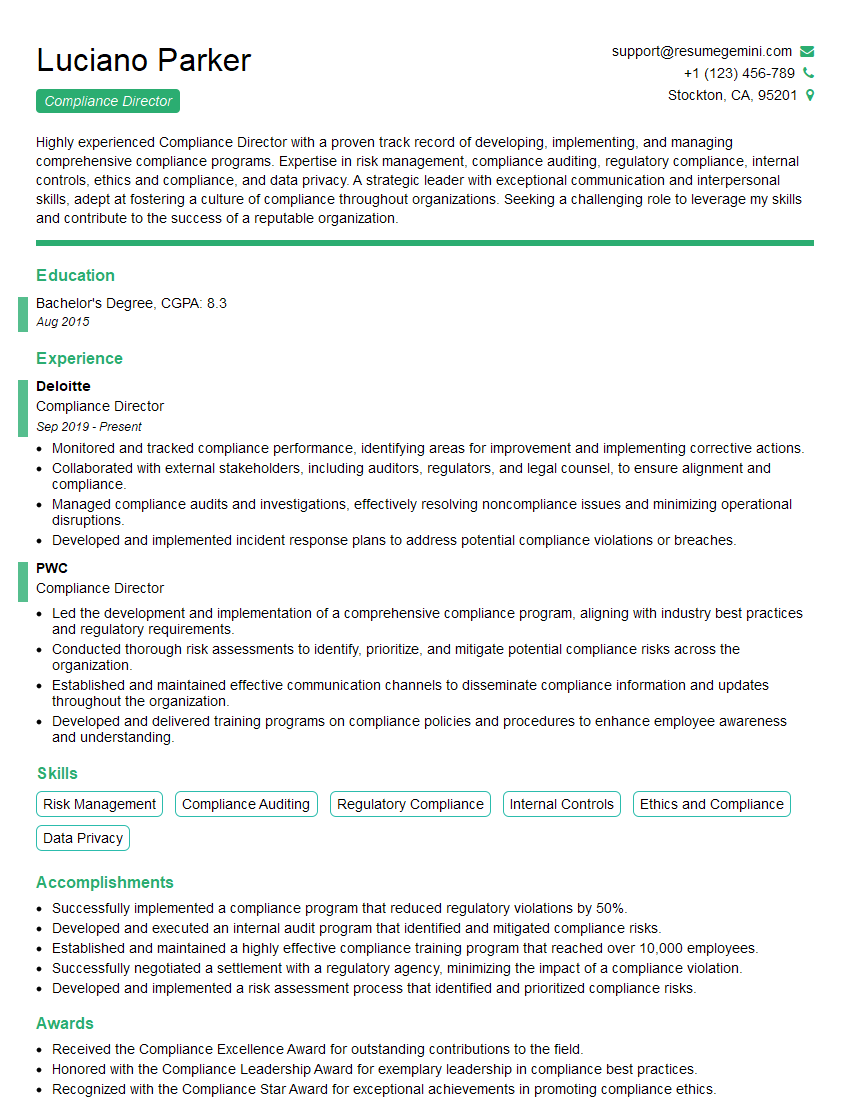
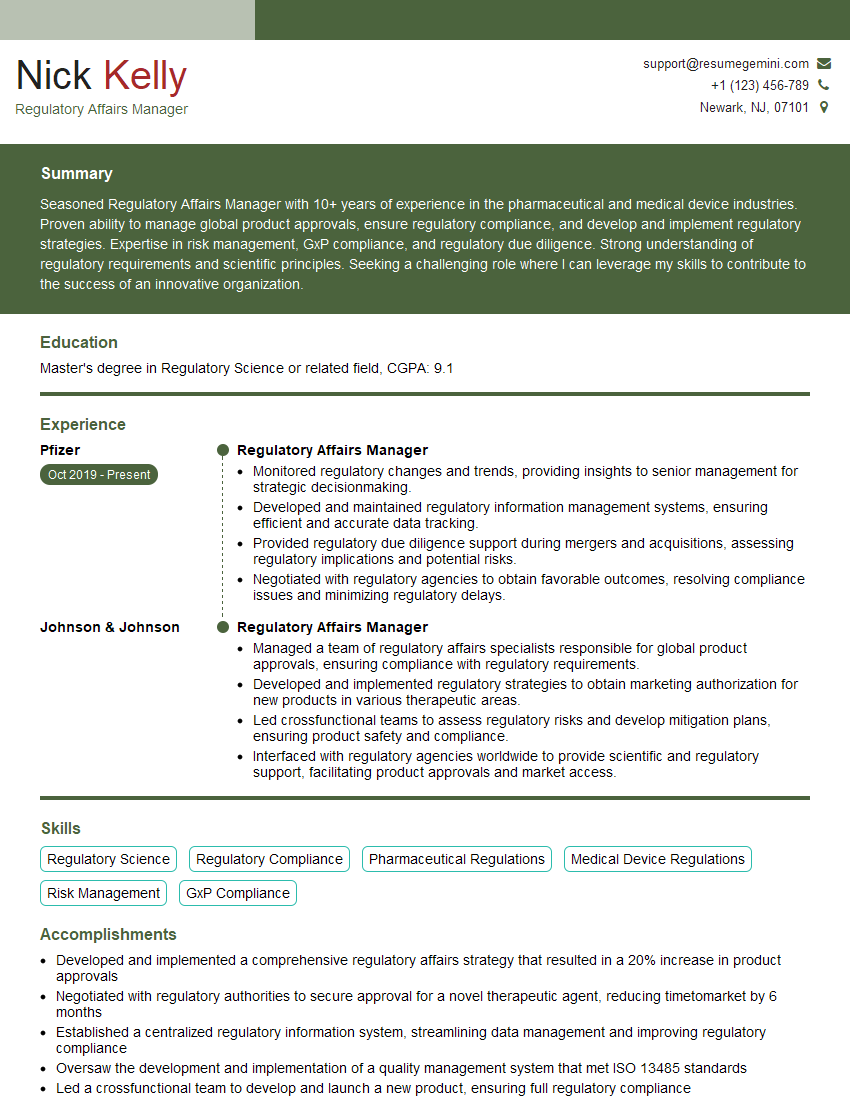
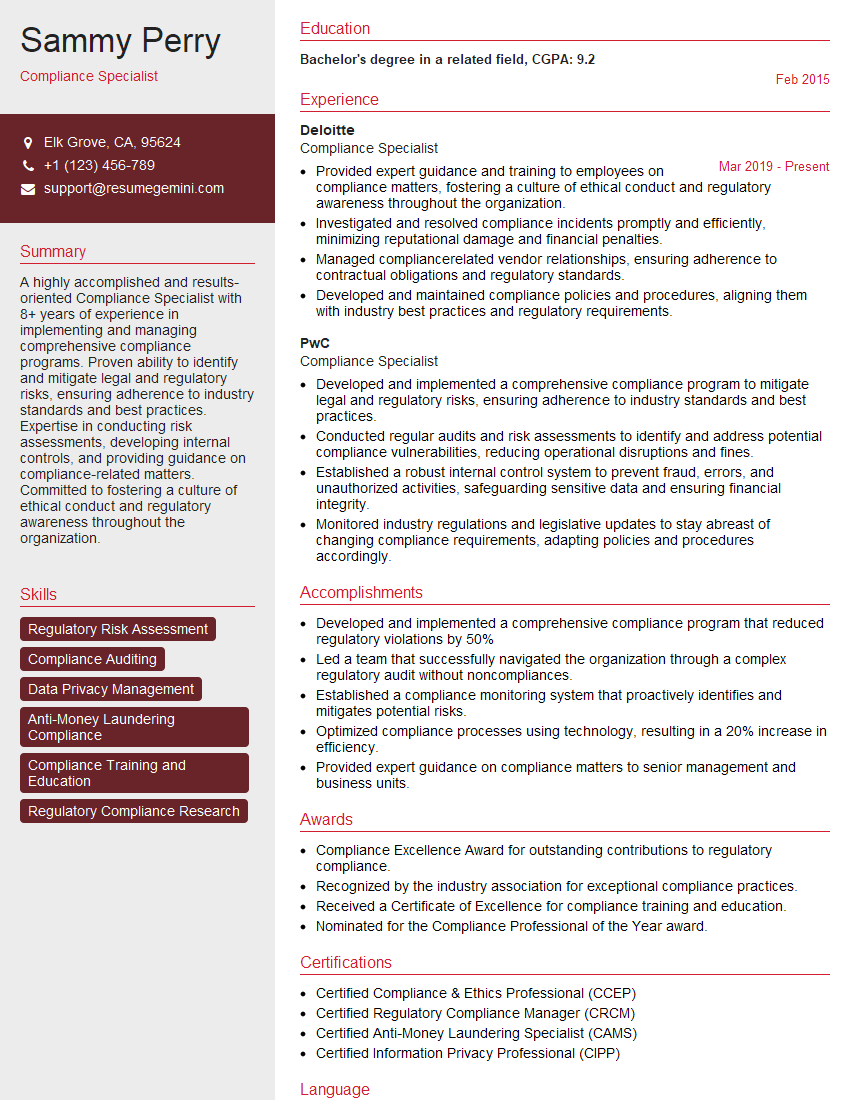
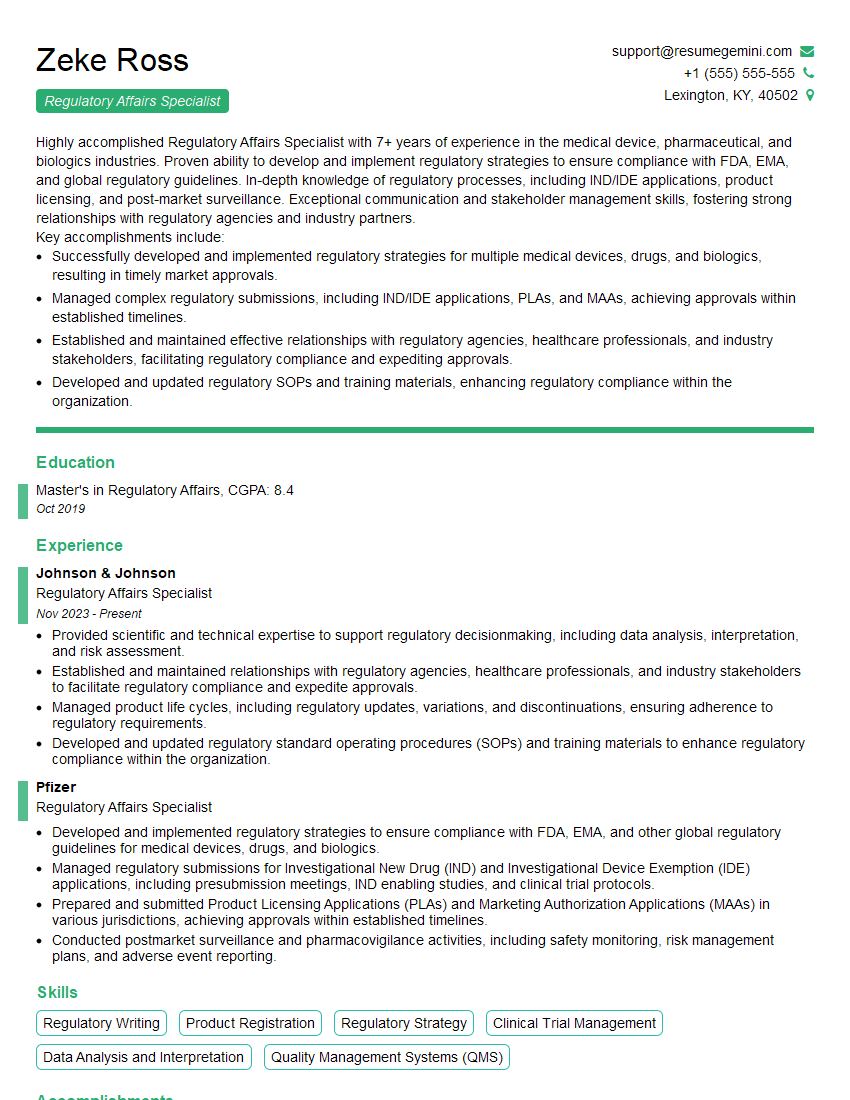
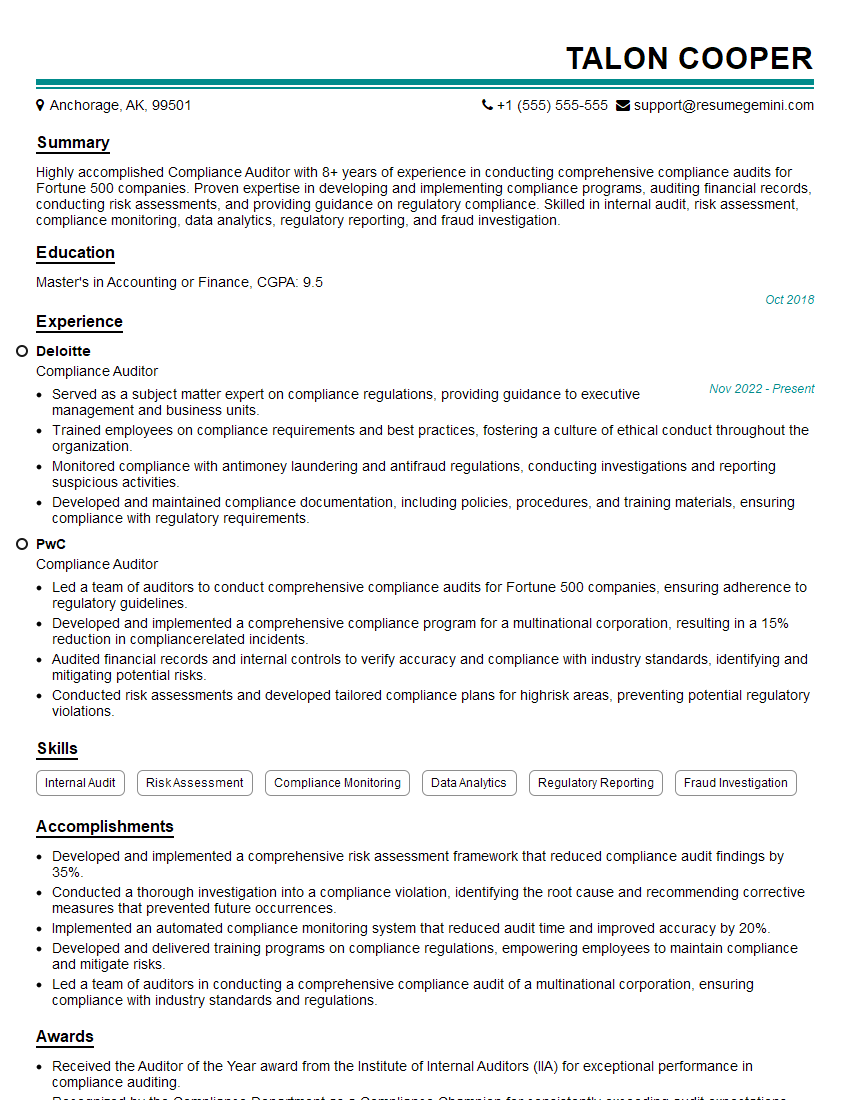
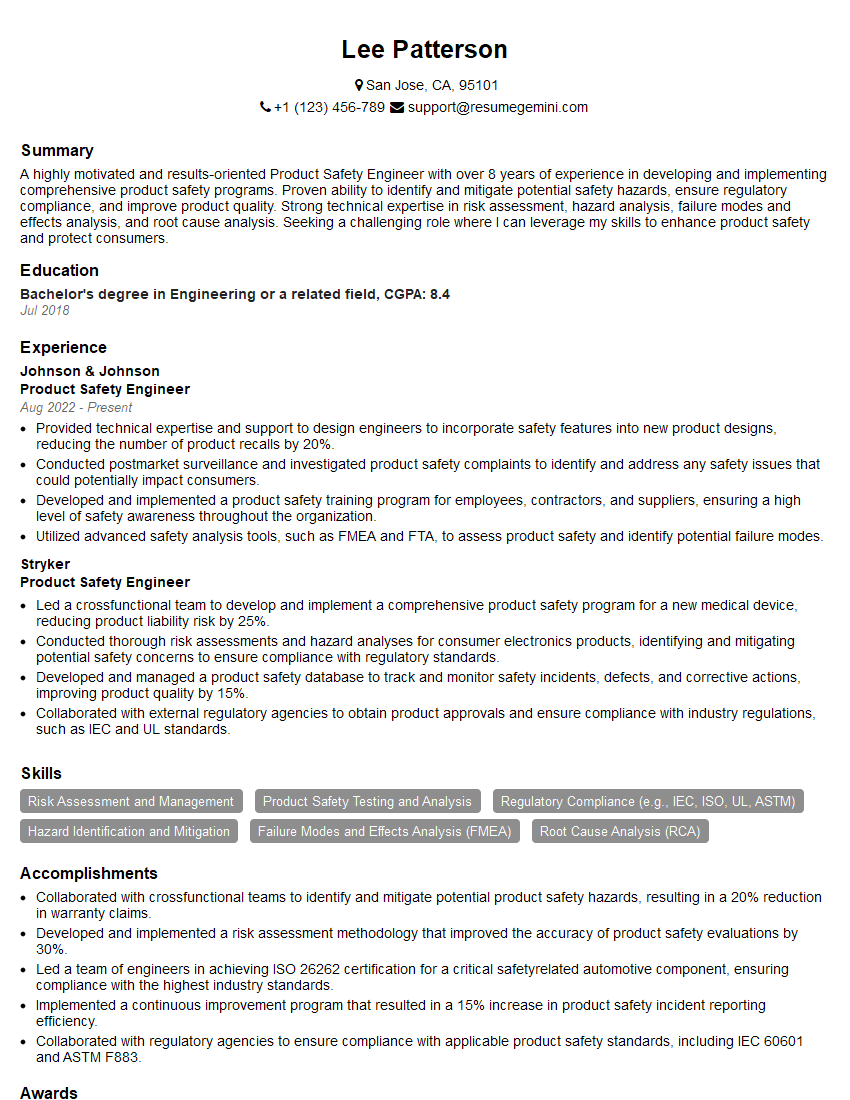
Mastering Regulatory Compliance, particularly UL and CE, significantly boosts your career prospects in various industries. It demonstrates a commitment to quality, safety, and ethical practices – highly valued by employers. To maximize your job search success, creating an ATS-friendly resume is crucial. ResumeGemini can help you build a compelling resume that highlights your skills and experience effectively. We provide examples of resumes tailored to Regulatory Compliance roles, specifically showcasing expertise in UL and CE certifications, to help you get started.

Explore more articles
Users Rating of Our Blogs
Share Your Experience
We value your feedback! Please rate our content and share your thoughts (optional).
What Readers Say About Our Blog
Very informative content, great job.
good