Unlock your full potential by mastering the most common Regulatory Reporting and Submissions interview questions. This blog offers a deep dive into the critical topics, ensuring you’re not only prepared to answer but to excel. With these insights, you’ll approach your interview with clarity and confidence.
Questions Asked in Regulatory Reporting and Submissions Interview
Q 1. Explain the importance of accurate and timely regulatory reporting.
Accurate and timely regulatory reporting is paramount for several reasons. It ensures compliance with relevant laws and regulations, minimizing the risk of penalties and legal repercussions. This builds trust with stakeholders, including investors, regulators, and the public, demonstrating transparency and adherence to best practices. Furthermore, timely reporting enables informed decision-making based on accurate financial and operational data, ultimately contributing to better business strategies and risk management.
For instance, imagine a pharmaceutical company failing to report adverse drug events on time. This could lead to serious consequences, including regulatory actions, lawsuits, and damage to its reputation. Accurate reporting ensures that these events are addressed promptly, protecting public health and the company’s future.
Q 2. Describe your experience with different regulatory reporting frameworks (e.g., XBRL, EDGAR).
Throughout my career, I’ve extensively worked with various regulatory reporting frameworks. My experience with XBRL (Extensible Business Reporting Language) involves transforming financial data into a standardized electronic format for easier analysis and submission to regulatory bodies. This includes mapping financial statements to XBRL taxonomies, ensuring data integrity, and validating submissions for compliance. I’ve also worked extensively with EDGAR (Electronic Data Gathering, Analysis, and Retrieval system), the system used for submitting company information to the SEC in the US. This includes preparing and filing 10-K, 10-Q, and 8-K reports, ensuring adherence to specific formatting and disclosure requirements.
In a recent project, I helped a client migrate their financial reporting system to XBRL, automating the reporting process and significantly reducing the time and effort required for regulatory filings. This resulted in a more efficient and accurate reporting process, minimizing the risk of errors and delays.
Q 3. How do you ensure data accuracy and integrity in regulatory submissions?
Data accuracy and integrity are critical in regulatory submissions. My approach involves a multi-layered strategy. Firstly, robust data validation rules and checks are implemented at every stage of the process, from data extraction to submission. This involves automated checks for consistency, completeness, and accuracy against predefined rules and industry best practices. Secondly, data reconciliation is performed against source systems to ensure that the data used for reporting is accurate and consistent with the underlying records. Thirdly, a comprehensive review process is employed, involving multiple levels of review and approval to catch any potential errors before submission.
For example, we use checksums and hash functions to verify data integrity during transmission, ensuring that data remains unchanged during the transfer process. Furthermore, we employ data quality control software that proactively identifies and flags potential errors during data extraction, preventing these issues from propagating through the reporting process.
Q 4. What are the key challenges in managing regulatory reporting deadlines?
Managing regulatory reporting deadlines presents several challenges. The most significant is the sheer volume and complexity of reporting requirements, varying across jurisdictions and industries. Tight deadlines often necessitate prioritizing tasks efficiently. Changes in regulations can also introduce unexpected complexities, requiring rapid adaptation and adjustments to reporting processes. Finally, resource constraints, such as limited personnel or technological resources, can create bottlenecks and delay submissions.
To mitigate these challenges, we use project management tools and techniques, including Gantt charts and Kanban boards, to visualize tasks, deadlines, and dependencies. We also proactively monitor regulatory updates to anticipate changes and adjust our processes accordingly. Furthermore, we continuously evaluate and improve our technology infrastructure to support more efficient reporting workflows.
Q 5. Explain your experience with various regulatory reporting software and tools.
My experience encompasses a variety of regulatory reporting software and tools. I’m proficient in using specialized XBRL authoring tools to create and validate XBRL filings. I’m also experienced with data management platforms that streamline the data extraction, transformation, and loading (ETL) process, crucial for accurate and efficient reporting. Furthermore, I’m familiar with various reporting automation tools that automate tasks such as data validation, report generation, and submission. I also have hands-on experience with document management systems for archiving and retrieving regulatory documents.
In one project, we implemented a cloud-based data management platform that centralized all regulatory reporting data, greatly improving accessibility and collaboration across teams. This reduced manual effort and improved accuracy significantly.
Q 6. How do you prioritize tasks and manage workload in a fast-paced regulatory environment?
In a fast-paced regulatory environment, effective task prioritization is essential. I utilize a combination of methodologies, including the Eisenhower Matrix (urgent/important) to categorize tasks based on their urgency and importance. This allows me to focus on high-impact, time-sensitive tasks while delegating or scheduling lower priority items. I also leverage project management software to track progress, identify potential bottlenecks, and manage dependencies across various tasks. Finally, effective communication and collaboration with team members are crucial for ensuring tasks are completed efficiently and within deadlines.
For instance, I might prioritize a critical SEC filing over a less urgent internal report, ensuring compliance with regulatory requirements first. Open communication ensures the team understands these priorities and works collaboratively to meet deadlines.
Q 7. Describe your approach to identifying and resolving discrepancies in regulatory data.
My approach to resolving data discrepancies begins with a thorough investigation to identify the root cause. This involves comparing the reported data with source systems, reviewing data validation logs, and analyzing any error messages. Once the source of the discrepancy is identified, a corrective action plan is developed and implemented. This might involve data correction in the source system, adjustments to the reporting process, or updates to data validation rules. Finally, the corrected data is re-validated and reviewed before resubmission.
In a recent situation, we discovered a discrepancy in revenue figures due to a mapping error in our ETL process. By tracing the error back to the source, we corrected the mapping rule, re-processed the data, and ensured the accuracy of the subsequent regulatory filing. Thorough documentation of the discrepancy and corrective actions is crucial for preventing future occurrences.
Q 8. How do you ensure compliance with relevant regulatory requirements and guidelines?
Ensuring regulatory compliance is paramount in my work. It’s not just about ticking boxes; it’s about building a culture of compliance. My approach is multifaceted and involves several key steps:
- Proactive Monitoring: I consistently monitor changes in regulations through official government websites, industry publications, and professional networks. This allows me to anticipate changes before they become critical issues.
- Gap Analysis: Once new regulations emerge, I perform a thorough gap analysis, comparing current practices against the new requirements. This helps pinpoint areas needing improvement.
- Implementation & Documentation: Changes are implemented systematically, documented meticulously, and communicated clearly to all stakeholders. This documentation is crucial for audits.
- Training & Education: I’m actively involved in training teams on new regulations and best practices. A well-trained team is the best defense against non-compliance.
- Regular Audits & Reviews: Internal audits and periodic reviews of our processes are essential to verify ongoing compliance and identify potential weaknesses.
For example, in a recent project involving changes to HIPAA regulations, I led the team in updating our data security protocols, created new training materials, and implemented a more robust audit trail. This proactive approach ensured our continued compliance and minimized any potential risks.
Q 9. What is your experience with validation and quality control processes for regulatory submissions?
Validation and quality control are non-negotiable aspects of regulatory submissions. Think of it like building a house – you wouldn’t skip inspections! My experience involves a multi-layered approach:
- Data Validation: This involves verifying the accuracy, completeness, and consistency of the data used in submissions. This often involves automated checks and manual reviews using various techniques like data profiling and data comparison.
- Document Validation: Ensuring that all necessary documents are included, formatted correctly, and meet the specified requirements. This includes reviewing metadata, cross-referencing data, and checking for any inconsistencies.
- Submission Process Validation: This focuses on verifying the accuracy and completeness of the submission process itself, including the proper use of submission portals and electronic signatures.
- Quality Control Checks: Multiple layers of review are conducted to identify and rectify errors before the final submission. This involves team reviews, peer reviews, and sometimes even independent audits.
For instance, in a pharmaceutical submission, a single incorrect data point could delay approval or even result in rejection. Rigorous quality control procedures, including automated checks and manual verification, help prevent such scenarios. We used a validation checklist and automated scripts to check for inconsistencies in data and format, ensuring a smooth and efficient submission process.
Q 10. Explain your understanding of data governance and its relevance to regulatory reporting.
Data governance is the foundation of effective regulatory reporting. It’s essentially the framework for managing data throughout its lifecycle to ensure accuracy, security, and compliance. Its relevance to regulatory reporting is immense:
- Data Accuracy: Robust data governance ensures that the data used in reports is accurate, reliable, and trustworthy. Poor data governance can lead to inaccurate reports and regulatory penalties.
- Data Security: Proper governance safeguards sensitive data, complying with privacy regulations like GDPR and CCPA. Data breaches can have devastating consequences.
- Data Integrity: Data governance maintains the completeness and consistency of data over time. This is critical for reliable regulatory reporting.
- Auditing & Traceability: A well-defined governance structure provides a clear audit trail, allowing us to track data changes and verify compliance.
Imagine trying to build a house with faulty materials. Similarly, inaccurate or insecure data undermines the entire regulatory reporting process. Data governance provides the ‘strong foundation’ for reliable and compliant regulatory reporting.
Q 11. How do you handle complex regulatory changes and updates?
Handling complex regulatory changes requires a systematic approach. It’s a bit like navigating a constantly shifting landscape. My strategy involves:
- Rapid Assessment: Quickly analyzing the impact of regulatory changes on existing processes and systems.
- Prioritization: Determining which changes require immediate attention and prioritizing them based on urgency and risk.
- Collaboration: Working closely with legal, compliance, and IT teams to develop and implement effective solutions.
- Communication: Keeping all stakeholders informed of the changes and their impact.
- Testing & Validation: Thoroughly testing new processes and systems to ensure accuracy and compliance.
For instance, the recent changes to the EU’s MDR (Medical Device Regulation) necessitated a significant overhaul of our product registration processes. By prioritizing key changes, collaborating with multiple teams, and implementing a phased approach, we successfully updated our systems and maintained compliance.
Q 12. Describe your experience with regulatory reporting processes in [relevant industry, e.g., Pharma, Finance].
In the pharmaceutical industry, my experience encompasses various aspects of regulatory reporting, including:
- IND/NDA Submissions: Preparing and submitting Investigational New Drug (IND) and New Drug Application (NDA) documentation to regulatory agencies like the FDA.
- Periodic Reports: Compiling and submitting regular reports on clinical trials, adverse events, and post-market surveillance.
- Annual Reports: Preparing annual reports summarizing drug safety and efficacy data.
- Responding to Regulatory Inquiries: Addressing requests for information and data from regulatory bodies.
I’ve been involved in several successful NDA submissions, each requiring meticulous attention to detail and adherence to stringent regulatory guidelines. A recent project involved preparing a comprehensive NDA submission for a novel oncology drug, which required coordination with multiple internal teams and external consultants.
Q 13. Explain your experience with various reporting formats and templates.
I’m proficient in various reporting formats and templates, including:
- XBRL (Extensible Business Reporting Language): Used for financial reporting, allowing for structured and automated data exchange.
- CSV (Comma Separated Values): A simple, widely used format for tabular data.
- PDF (Portable Document Format): A common format for submitting reports and documents, ensuring consistency across different systems.
- Specialized Agency Templates: Proficient in using templates specific to regulatory agencies like the FDA, EMA (European Medicines Agency), etc.
Understanding the nuances of each format is vital to ensure accurate and compliant submissions. For instance, using the incorrect XBRL taxonomy could lead to rejection of a financial report. My experience spans across these formats, ensuring efficient and compliant submissions.
Q 14. How do you communicate complex regulatory information to stakeholders?
Communicating complex regulatory information effectively requires tailoring the message to the audience. It’s about translating regulatory jargon into plain English. My approach involves:
- Understanding the Audience: Identifying the knowledge level and needs of each stakeholder group (e.g., executives, compliance officers, technical staff).
- Clear and Concise Language: Avoiding technical jargon and using simple, clear language that everyone can understand.
- Visual Aids: Utilizing charts, graphs, and summaries to make complex information more digestible.
- Interactive Presentations: Using interactive presentations and Q&A sessions to encourage engagement and address questions.
- Written Summaries: Providing concise written summaries to reinforce key messages.
For example, when explaining complex clinical trial data to executives, I would focus on high-level summaries and key performance indicators. Conversely, when communicating the same data to the technical team, I would provide more granular details. Adaptability is key to effective communication.
Q 15. Describe your experience working with internal and external auditors related to regulatory compliance.
Throughout my career, I’ve collaborated extensively with both internal and external auditors to ensure regulatory compliance. Internal audits often involve proactively identifying and mitigating potential weaknesses in our reporting processes. This might include reviewing our data extraction methodologies, validating the accuracy of our calculations, and ensuring we’re adhering to internal controls. I’ve led walkthroughs of our regulatory reporting processes, providing detailed documentation and answering questions about data lineage and control procedures.
External audits are more formal and often involve providing comprehensive documentation to support the accuracy and completeness of our submissions. I’ve successfully managed several external audits with agencies like the SEC (Securities and Exchange Commission) and the FCA (Financial Conduct Authority), providing auditors with access to the necessary data and responding to their queries promptly and thoroughly. One instance involved explaining a complex reconciliation process for a specific regulatory report, requiring me to clearly demonstrate the control procedures in place to prevent errors and ensure data accuracy. Successfully navigating these audits requires meticulous record-keeping, a deep understanding of the regulations, and the ability to communicate complex information clearly and concisely.
Career Expert Tips:
- Ace those interviews! Prepare effectively by reviewing the Top 50 Most Common Interview Questions on ResumeGemini.
- Navigate your job search with confidence! Explore a wide range of Career Tips on ResumeGemini. Learn about common challenges and recommendations to overcome them.
- Craft the perfect resume! Master the Art of Resume Writing with ResumeGemini’s guide. Showcase your unique qualifications and achievements effectively.
- Don’t miss out on holiday savings! Build your dream resume with ResumeGemini’s ATS optimized templates.
Q 16. How do you identify and mitigate risks associated with regulatory reporting?
Identifying and mitigating risks in regulatory reporting is a continuous process. I employ a risk-based approach, starting with a thorough understanding of the applicable regulations and the potential consequences of non-compliance. This includes identifying potential data quality issues, process failures, and changes in regulations.
My strategy involves:
- Risk Assessment: Regularly assessing the likelihood and impact of potential risks, using both quantitative and qualitative methods. This often involves scenario planning – what could go wrong and how likely and impactful is it?
- Control Design and Implementation: Developing and implementing robust controls to mitigate identified risks. Examples include data validation rules, reconciliation procedures, and multiple layers of review and approval. Think of it like building a strong wall to protect against intrusion.
- Monitoring and Reporting: Continuously monitoring the effectiveness of controls and reporting any exceptions or weaknesses to management. Regular dashboards and key risk indicators (KRIs) are crucial here.
- Issue Management: Establishing a clear process for addressing identified issues, including root cause analysis and corrective actions. This ensures learning from mistakes and preventing recurrence.
For example, a risk assessment might reveal a high likelihood of errors in a specific calculation within a report. The mitigation strategy could involve implementing automated checks, enhanced data validation rules and mandatory review by a second party.
Q 17. What are your strategies for maintaining data security and confidentiality in regulatory reporting?
Data security and confidentiality are paramount in regulatory reporting. My approach focuses on a multi-layered security strategy encompassing:
- Access Control: Implementing strict access control measures, using role-based access controls (RBAC) to restrict access to sensitive data only to authorized personnel. This is like having a secure vault with limited access keys.
- Data Encryption: Encrypting data both in transit and at rest to protect against unauthorized access. Think of this as adding a strong lock to that vault.
- Secure Data Storage: Utilizing secure data storage solutions, including cloud-based storage with robust security features. This is choosing the right location for the vault.
- Regular Security Audits: Conducting regular security audits and vulnerability assessments to identify and address potential weaknesses. Think of this as regular maintenance of your security systems.
- Employee Training: Providing regular training to employees on data security best practices and regulatory requirements. This means educating everyone on the importance of vault security.
For example, all regulatory data might be stored in a dedicated, encrypted database accessible only to authorized personnel through secure network connections. All actions are logged and regularly monitored.
Q 18. How do you utilize technology and automation to improve efficiency in regulatory reporting?
Technology and automation are crucial for improving efficiency in regulatory reporting. I leverage various tools and technologies to streamline the process, including:
- ETL (Extract, Transform, Load) Tools: Automating the extraction, transformation, and loading of data from various sources into a centralized reporting system. This eliminates manual data entry, reducing errors and saving time.
- Data Validation and Reconciliation Tools: Automating data validation checks and reconciliation processes to identify and address discrepancies early. This ensures data accuracy and reduces manual effort.
- Reporting Automation Tools: Automating the generation and submission of regulatory reports. This ensures timely and accurate submissions.
- Workflow Management Systems: Implementing workflow management systems to streamline the review and approval process for regulatory submissions. This ensures compliance with internal controls.
For example, we use an ETL tool to automatically extract data from our core banking system, transform it according to regulatory requirements, and load it into our regulatory reporting database. Automated validation rules then flag any data quality issues before the report is generated.
Q 19. Describe your experience with reconciliation and analysis of regulatory data.
Reconciliation and analysis of regulatory data are essential for ensuring accuracy and completeness of reporting. My experience includes:
- Data Reconciliation: Comparing data from different sources to identify and resolve discrepancies. This is a critical step in ensuring accuracy, identifying data anomalies and potential errors.
- Data Analysis: Analyzing regulatory data to identify trends, patterns, and potential risks. This might involve using statistical methods and data visualization tools to provide insights.
- Exception Reporting: Creating exception reports to highlight any significant discrepancies or anomalies identified during the reconciliation and analysis process. This ensures that material errors are not overlooked.
For example, I’ve used SQL queries to reconcile data between our internal systems and external data sources, flagging any discrepancies for investigation. I’ve also developed dashboards to visualize key regulatory metrics, allowing for proactive identification of potential issues.
Q 20. Explain your experience with different regulatory agencies and their requirements.
I have experience working with several regulatory agencies, each with its unique requirements and reporting frameworks. These include:
- SEC (Securities and Exchange Commission): Experience with EDGAR filings, including 10-K, 10-Q, and other forms, understanding the specific requirements and deadlines for public companies.
- FCA (Financial Conduct Authority): Experience with various regulatory returns related to financial conduct, including reporting on anti-money laundering (AML) and know-your-customer (KYC) compliance.
- Other Agencies: Depending on the industry (e.g., banking, insurance) experience might also include reporting to agencies like the Federal Reserve, the Office of the Comptroller of the Currency (OCC), or state-level insurance regulators. Each agency has specific reporting formats, filing methods, and deadlines.
Successfully navigating these diverse requirements demands a thorough understanding of each agency’s specific rules and regulations, the ability to adapt to varying reporting formats, and a strong focus on meeting tight deadlines.
Q 21. How do you manage the review and approval process for regulatory submissions?
The review and approval process for regulatory submissions is crucial for ensuring accuracy and compliance. I manage this through a structured workflow that includes:
- Data Validation: Automated and manual checks to ensure data accuracy and completeness before the report is generated.
- Review by Subject Matter Experts (SMEs): Review by individuals with deep expertise in the specific regulatory requirements and the underlying data. This helps catch any potential errors or omissions before submission.
- Management Review: Review and approval by senior management, providing an additional layer of oversight and accountability.
- Documentation: Meticulous documentation of all review and approval steps, including dates, reviewers, and any comments or changes made. This is essential for audit trail and demonstrating compliance.
- Submission Process: Implementing a secure and efficient submission process, adhering to the agency’s specific guidelines and deadlines.
This structured approach minimizes the risk of errors and ensures that all submissions are accurate, complete, and timely. For example, a detailed checklist is used to ensure all required fields are completed and all necessary approvals obtained before submission.
Q 22. What is your experience with electronic submission portals and systems?
My experience with electronic submission portals and systems is extensive. I’ve worked with a variety of platforms, including FDA’s eCTD, EMA’s eSubmission Gateway, and various other agency-specific systems globally. This experience encompasses the entire submission lifecycle, from initial data preparation and validation through to successful submission and post-submission activities like query response and amendment management. I’m proficient in using various electronic data formats like XML, PDF, and other structured formats required for regulatory compliance. I understand the nuances of each portal, including their specific validation rules, submission timelines, and communication protocols. For instance, I’ve successfully managed complex submissions involving thousands of documents, ensuring adherence to strict validation criteria to prevent rejection. My familiarity extends to managing user accounts, system access rights, and troubleshooting portal-related technical issues.
Q 23. Describe your approach to troubleshooting issues related to regulatory reporting systems.
My approach to troubleshooting regulatory reporting system issues is methodical and systematic. I begin by clearly defining the problem, gathering all relevant information (error messages, logs, timestamps, affected data). I then systematically check the most likely causes: data integrity issues, system configuration problems, or network connectivity problems. I leverage my understanding of the system architecture and data flow to pinpoint the source of the issue. This frequently involves checking data mapping, validating input data against regulatory guidelines, and reviewing system logs. If the issue persists, I escalate it to the appropriate technical support teams providing them with the detailed information collected during my troubleshooting. Think of it like a detective’s work – systematically eliminating possibilities until the root cause is identified. For example, I once resolved a submission failure by identifying a single misplaced character in an XML file, a small error that would have resulted in significant delays.
Q 24. How do you handle deviations from established regulatory reporting procedures?
Deviations from established regulatory reporting procedures are handled with utmost care and thorough documentation. Any deviation, no matter how seemingly minor, must be thoroughly investigated, documented, and justified. I follow a rigorous process that involves: 1) Identifying and documenting the deviation; 2) Investigating the root cause of the deviation; 3) Assessing the impact of the deviation on the reporting accuracy and regulatory compliance; 4) Implementing corrective actions to prevent future occurrences; and 5) obtaining appropriate approvals if necessary. This often requires collaboration with compliance, legal, and other relevant departments within the organization. For example, if a deadline is missed, a thorough investigation into why it was missed, and a formal deviation report explaining the reason and corrective actions, are crucial. Transparency and a proactive approach are paramount to ensure regulatory compliance.
Q 25. Explain your understanding of the legal and ethical implications of regulatory reporting.
Understanding the legal and ethical implications of regulatory reporting is fundamental to my work. Inaccurate or untimely reporting can lead to severe consequences, including regulatory penalties, legal action, product recalls, and reputational damage. My work is guided by principles of accuracy, completeness, timeliness, and confidentiality. I ensure all reporting activities adhere to relevant laws and regulations, maintaining the integrity and confidentiality of sensitive data. I also understand the ethical responsibility of ensuring transparent and truthful reporting. This includes adhering to data governance policies, managing conflicts of interest, and ensuring that data is used responsibly and ethically. For example, I would never intentionally submit incomplete or misleading data, even under pressure to meet deadlines.
Q 26. How do you stay updated on current changes and developments in regulatory requirements?
Staying updated on changes and developments in regulatory requirements is an ongoing process. I regularly monitor official regulatory agency websites, industry publications, and newsletters. I also actively participate in professional organizations and attend industry conferences and webinars to network and learn from experts. Utilizing regulatory intelligence tools and subscribing to relevant alerts ensures that I’m informed about any changes impacting my work. Furthermore, continuous learning through professional development courses and training programs helps maintain my expertise in this ever-evolving field. For example, I actively track changes to the ICH guidelines and FDA guidance documents to ensure our reporting practices remain compliant.
Q 27. Describe a challenging regulatory reporting situation you encountered and how you overcame it.
One challenging situation involved a last-minute change in reporting requirements for a major submission to the FDA just days before the deadline. The new requirement demanded a complete restructuring of a key section of the submission. The initial reaction was panic, but I quickly assembled a team, prioritized tasks, and delegated responsibilities effectively. We utilized collaborative document editing tools and worked extended hours to meet the deadline. Through clear communication, a well-defined workflow, and a focus on efficient problem-solving, we successfully met the new requirements and submitted the document on time without compromising quality or accuracy. The situation highlighted the importance of teamwork, adaptability, and a proactive approach to unexpected challenges in regulatory reporting.
Q 28. How do you contribute to a team environment focused on accurate and timely regulatory reporting?
I contribute to a team environment by fostering collaboration, clear communication, and a shared commitment to accuracy and timeliness. I actively share my knowledge and expertise, mentoring junior colleagues, and ensuring everyone is up-to-date on regulatory changes. I contribute to establishing efficient workflows and processes, focusing on automation and quality control measures. I believe in proactively identifying potential issues and working collaboratively to resolve them before they become major problems. I value a team environment where everyone feels comfortable raising concerns, contributing ideas, and sharing responsibility for the success of our collective efforts in meeting regulatory requirements. I strive to be a reliable and supportive team member.
Key Topics to Learn for Regulatory Reporting and Submissions Interview
- Regulatory Landscape: Understanding the key regulatory bodies (e.g., SEC, FCA, etc.) and their reporting requirements. This includes familiarity with relevant regulations and their implications for reporting.
- Data Management & Integrity: Practical application of data governance principles in ensuring accurate and reliable reporting data. This includes data validation, reconciliation, and error handling procedures.
- Reporting Processes & Software: Understanding the end-to-end reporting process, including data extraction, transformation, and loading (ETL) techniques. Familiarity with common reporting software and tools is crucial.
- Financial Reporting Standards: A strong grasp of relevant accounting standards (e.g., IFRS, GAAP) and their impact on regulatory submissions. This includes understanding the nuances of different reporting formats.
- XBRL and other Reporting Formats: Practical experience with XBRL tagging and submission processes, including understanding of different reporting formats and their technical specifications.
- Compliance & Controls: Implementing and maintaining effective internal controls to ensure compliance with regulatory requirements. This includes understanding of audit trails and data security measures.
- Problem-Solving & Analytical Skills: Demonstrating the ability to identify, analyze, and resolve reporting issues efficiently and effectively. This includes experience with data analysis and troubleshooting techniques.
- Communication & Collaboration: Articulating complex regulatory information clearly and concisely to both technical and non-technical audiences. This encompasses teamwork and stakeholder management.
Next Steps
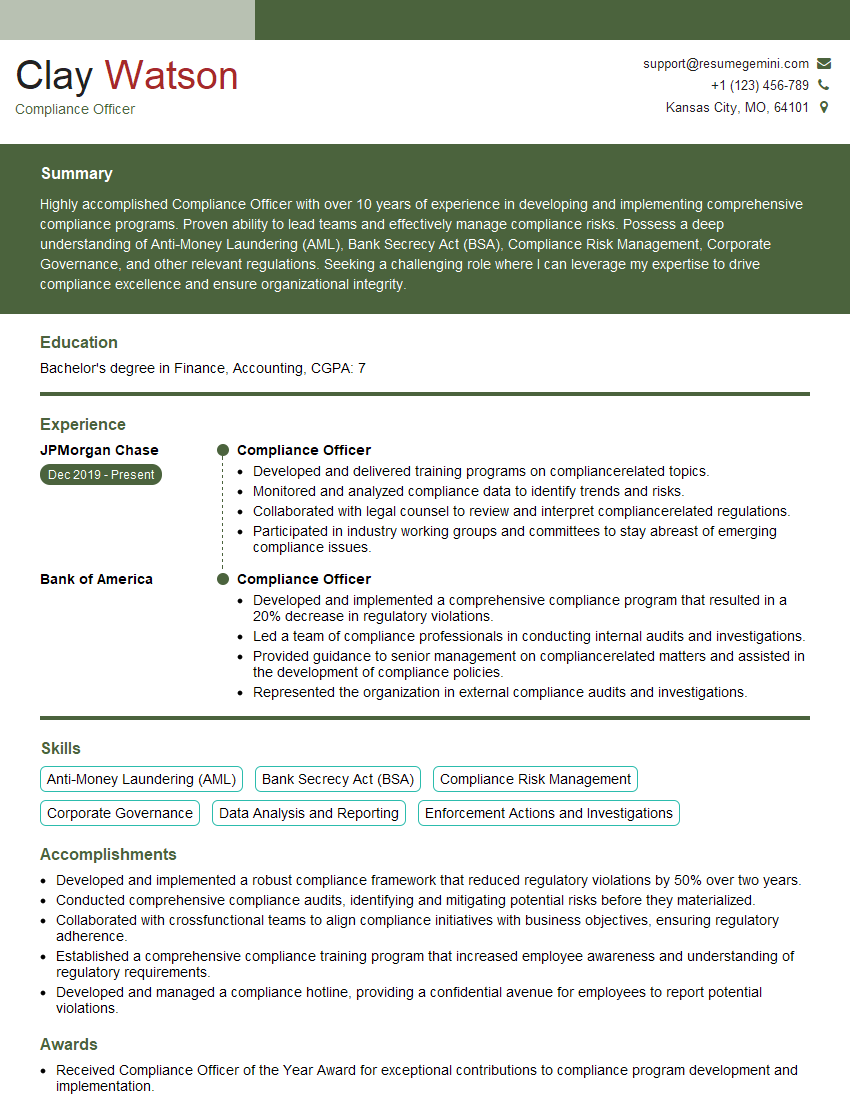
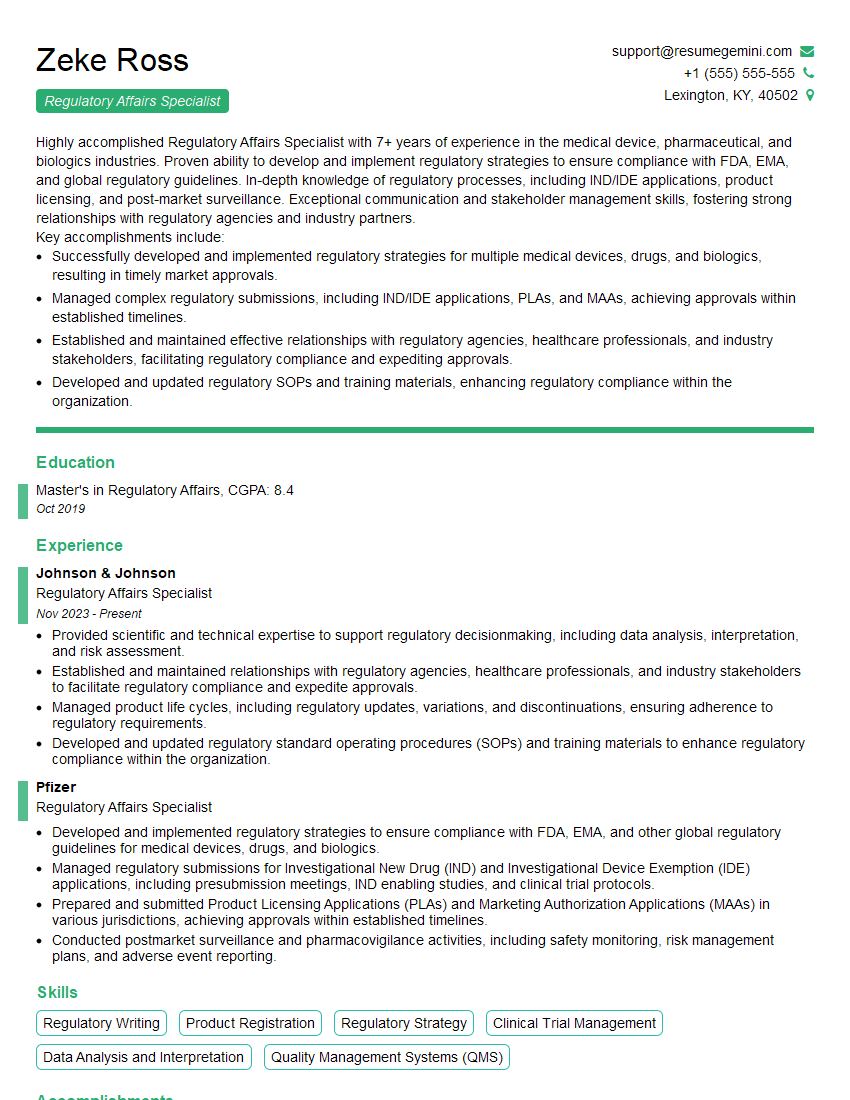
Mastering Regulatory Reporting and Submissions is vital for career advancement in finance and compliance. It opens doors to senior roles with increased responsibility and higher earning potential. To significantly boost your job prospects, focus on creating a strong, ATS-friendly resume that highlights your relevant skills and experience. ResumeGemini is a trusted resource to help you build a professional and impactful resume tailored to the specific requirements of Regulatory Reporting and Submissions roles. Examples of resumes optimized for this field are available for your review, helping you showcase your expertise effectively.
Explore more articles
Users Rating of Our Blogs
Share Your Experience
We value your feedback! Please rate our content and share your thoughts (optional).
What Readers Say About Our Blog
Very informative content, great job.
good