Unlock your full potential by mastering the most common Remediation Technology Selection interview questions. This blog offers a deep dive into the critical topics, ensuring you’re not only prepared to answer but to excel. With these insights, you’ll approach your interview with clarity and confidence.
Questions Asked in Remediation Technology Selection Interview
Q 1. Explain the differences between in-situ and ex-situ remediation techniques.
In-situ and ex-situ remediation techniques are two broad approaches to cleaning up contaminated soil and groundwater. The key difference lies in where the treatment occurs.
In-situ remediation treats the contamination at the site without excavation or removal of the contaminated material. Think of it like treating a patient in their own home – less disruptive, but potentially slower. Examples include bioremediation (using microorganisms to break down contaminants), pump-and-treat (extracting groundwater for treatment and then returning it), and air sparging (injecting air to volatilize contaminants).
Ex-situ remediation involves removing the contaminated material from the site for treatment elsewhere. This is like taking a patient to the hospital for surgery – more intrusive initially, but potentially more efficient and complete. Examples include soil washing (removing contaminants from soil using water), thermal desorption (heating soil to vaporize contaminants), and incineration (burning contaminated material to destroy contaminants).
The choice between these approaches depends heavily on the specific contaminants, site conditions, regulatory requirements, and cost-effectiveness.
Q 2. Describe the factors influencing the selection of a specific remediation technology.
Selecting the right remediation technology is a complex process, influenced by a multitude of factors. It’s like choosing the right tool for a job – a hammer won’t fix a leaky pipe!
- Nature and extent of contamination: The type, concentration, and distribution of contaminants are paramount. Volatile organic compounds (VOCs) might require different approaches than heavy metals.
- Hydrogeological conditions: Soil type, permeability, groundwater flow direction, and depth of contamination all impact technology selection. A highly permeable soil might allow for rapid contaminant spread, requiring faster intervention.
- Regulatory requirements: Local, state, and federal regulations often dictate acceptable cleanup levels and permissible remediation methods. These regulations can significantly influence the feasibility of certain technologies.
- Cost-effectiveness: Remediation projects can be expensive. A cost-benefit analysis is crucial, considering upfront costs, operational costs, and long-term maintenance.
- Site accessibility and logistics: Space limitations, proximity to sensitive receptors (like residences or waterways), and the availability of infrastructure (power, water) influence the practicality of different technologies.
- Public perception and community involvement: Community concerns about potential risks or disruptions during remediation must be addressed. Transparency and communication are essential.
A thorough site investigation, risk assessment, and feasibility study are necessary before making a decision.
Q 3. What are the limitations of bioremediation and when is it unsuitable?
Bioremediation is a powerful in-situ technology that uses naturally occurring microorganisms to break down contaminants. However, it has limitations.
- Slow process: Bioremediation can take months or even years to achieve significant results. It’s not suitable for situations requiring rapid cleanup.
- Specific contaminant requirements: Not all contaminants are readily biodegradable. Some compounds are resistant to microbial degradation, rendering bioremediation ineffective.
- Environmental conditions: Optimal conditions – temperature, pH, nutrient availability – are crucial for microbial activity. Unfavorable conditions can significantly hinder the effectiveness of bioremediation.
- Monitoring challenges: Tracking the progress of bioremediation and ensuring its effectiveness can be challenging, requiring regular monitoring and analysis.
Bioremediation is unsuitable for sites with highly toxic or recalcitrant contaminants, where rapid remediation is needed, or where environmental conditions are severely unfavorable for microbial growth. For example, bioremediation may not be suitable for highly chlorinated solvents in a low-oxygen environment.
Q 4. Compare and contrast pump-and-treat and air sparging technologies.
Both pump-and-treat and air sparging are in-situ remediation technologies used for groundwater contamination, but they target different contaminants and use different mechanisms.
Pump-and-treat involves extracting groundwater from wells, treating it above ground (e.g., using activated carbon adsorption or air stripping), and then returning the cleaned water to the aquifer. It’s effective for dissolved contaminants in groundwater. Think of it as a ‘vacuum cleaner’ for groundwater.
Air sparging involves injecting air into the subsurface to volatilize (turn into a gas) volatile contaminants. These vapors are then removed from the soil through a system of extraction wells. It’s particularly useful for VOCs in the unsaturated zone (above the water table). Imagine it as blowing air through a sponge to remove trapped contaminants.
Comparison: Pump-and-treat is better for dissolved contaminants; air sparging is better for volatile contaminants. Pump-and-treat is generally more expensive due to the need for treatment facilities; air sparging might be less effective if the contaminants are not volatile or are deeply located.
Q 5. How do you assess the effectiveness of a remediation technology?
Assessing remediation effectiveness requires a multi-faceted approach, much like assessing the success of any treatment.
- Monitoring well data: Regular sampling of groundwater and soil from monitoring wells provides data on contaminant concentrations over time. Decreasing concentrations indicate successful remediation.
- Statistical analysis: Statistical methods are used to analyze the monitoring data, determining whether the observed changes are statistically significant and demonstrating a clear downward trend in contaminant levels.
- Risk assessment updates: Periodic risk assessments are conducted to evaluate whether remediation has reduced risks to human health and the environment to acceptable levels. This reassessment incorporates the monitoring data and updates the risk profile.
- Visual inspections: In some cases, visual inspection of the site (e.g., checking for the absence of visible contamination) can supplement data analysis.
- Comparison to cleanup goals: Ultimately, the success of remediation is measured by comparing the final contaminant concentrations to pre-defined cleanup goals established in the project’s regulatory approvals.
A comprehensive monitoring plan is essential, and the criteria for evaluating success should be clearly defined upfront, aligned with the regulatory requirements.
Q 6. Explain the role of risk assessment in remediation technology selection.
Risk assessment plays a crucial role in selecting remediation technologies, helping to ensure that the chosen approach effectively mitigates the risks posed by the contamination. It’s like a doctor performing diagnostic tests to choose the appropriate treatment.
A risk assessment identifies the potential hazards (contaminants) and evaluates the probability and severity of exposure to those hazards. This process helps determine:
- Which contaminants pose the greatest risk: This guides the selection of technologies most effective for those specific contaminants.
- The acceptable cleanup levels: Risk-based cleanup goals ensure that remediation addresses the most significant threats.
- The need for remediation at all: In some cases, the risk assessment might reveal that the level of contamination is insignificant and that remediation is not necessary.
- The optimal remediation strategy: A balanced approach that minimizes risk, considers cost-effectiveness, and achieves regulatory compliance is crucial.
By systematically considering risk, stakeholders can make informed decisions that protect human health and the environment while achieving cost-effective remediation.
Q 7. What are the key regulatory considerations in choosing a remediation technology?
Regulatory considerations are paramount in remediation technology selection. Failure to comply with regulations can result in significant penalties and project delays. Think of it like following a building code—essential for safety and legality.
Key regulatory aspects include:
- Cleanup standards: Each jurisdiction establishes cleanup levels for various contaminants in different media (soil, groundwater). The selected technology must achieve these standards.
- Permitted technologies: Certain remediation technologies might be restricted or require specific permits based on their potential impacts on the environment or human health.
- Reporting and documentation requirements: Regular reporting to the regulatory agencies on project progress, monitoring data, and changes in the remediation strategy is mandatory. Maintaining detailed records is critical for compliance.
- Liability and insurance: Depending on the remediation approach and its potential environmental impacts, specific insurance and liability considerations might apply.
- Community involvement: Regulatory agencies often require consultation and communication with the affected community during the remediation process.
Working closely with regulatory agencies throughout the project is essential to ensure compliance and prevent unnecessary delays or conflicts.
Q 8. Discuss the economic factors influencing remediation technology selection.
Economic factors heavily influence remediation technology selection. The initial cost of the technology, including equipment purchase or rental, installation, and labor, is paramount. We also need to consider operational costs – things like energy consumption, maintenance, and the disposal of waste generated during the process. The timeline for remediation is crucial; faster technologies might be more expensive upfront but could save money in the long run by minimizing site downtime or liability. Finally, the potential for cost overruns due to unforeseen site conditions or technological challenges must be factored in. For example, choosing bioremediation, while potentially cheaper in the long run, requires careful site assessment to ensure suitable conditions exist for microbial activity. A more expensive, but faster, pump-and-treat system might be preferable if time is of the essence and the site’s groundwater conditions are conducive to its use.
We use Life Cycle Cost Analysis (LCCA) to compare different technologies and ensure that we’re making economically sound decisions. This involves estimating all costs associated with each technology over its entire lifespan, from initial investment to decommissioning.
Q 9. How do you evaluate the long-term sustainability of a chosen remediation technology?
Evaluating the long-term sustainability of a remediation technology requires a holistic approach. We examine its environmental impact, focusing on minimizing secondary contamination or the generation of hazardous waste. We assess its energy efficiency, aiming for technologies that consume less energy and reduce the project’s carbon footprint. The technology’s longevity and maintainability are key; we need solutions that won’t require frequent replacements or repairs. The availability of spare parts and the expertise needed for maintenance are also important. For instance, a bioremediation strategy relies on the long-term health and activity of microbial populations – ensuring the right conditions are maintained long after the active remediation phase is crucial. A sustainable approach might also involve integrating the remediated site into the surrounding ecosystem – for example, by promoting native plant growth in a previously contaminated area.
Q 10. What are the potential environmental impacts of different remediation technologies?
Different remediation technologies have varying environmental impacts. Excavation and disposal can lead to soil disturbance and habitat disruption, requiring careful planning and mitigation strategies. Pump-and-treat systems require energy and generate wastewater that needs treatment, potentially adding to the environmental burden if not managed correctly. In-situ chemical oxidation (ISCO) and in-situ chemical reduction (ISCR) involve injecting chemicals into the ground, which could have unintended consequences if not carefully controlled, potentially leading to soil or groundwater contamination with the chemicals themselves. Bioremediation, while generally considered environmentally friendly, can still have some effects, such as changes in soil pH or nutrient levels. A thorough environmental impact assessment is necessary to evaluate the potential ecological consequences of each technology and to choose the option that minimizes negative effects.
Q 11. Describe your experience with soil vapor extraction (SVE).
I have extensive experience with Soil Vapor Extraction (SVE). SVE is effective for removing volatile organic compounds (VOCs) from the subsurface. My experience ranges from site characterization and design to implementation and monitoring. I’ve overseen projects involving various soil types and contaminant concentrations. One challenging project involved a site with highly fractured bedrock, requiring careful well placement and optimization to achieve efficient extraction. We employed advanced modeling techniques to predict vapor flow and optimize well locations. Furthermore, we used real-time monitoring data to adjust the extraction parameters and maximize removal efficiency. In another project, we addressed the issue of co-contaminants by integrating SVE with other technologies like bioventing to enhance remediation effectiveness. Successful implementation depends on detailed site investigation and careful design, including considerations for vacuum levels, air flow rates, and treatment system selection. The final step is verifying cleanup success through post-remediation monitoring.
Q 12. Explain how you would select a remediation technology for a site contaminated with chlorinated solvents.
Selecting a remediation technology for chlorinated solvents requires a detailed site assessment. This starts with a thorough understanding of the extent and nature of the contamination. Factors to consider include the concentration, type of solvents, depth and geology of the contamination, and the presence of other contaminants. Based on this assessment, I would typically consider several technologies: Pump-and-treat is often used for groundwater contamination, although it can be time-consuming and expensive. In-situ chemical oxidation (ISCO) is another option and involves injecting oxidizing agents to break down the contaminants. Bioremediation, specifically using reductive dechlorination, is a viable approach where suitable microorganisms are present or can be introduced. SVE can be effective for volatile chlorinated solvents. The final decision requires a cost-benefit analysis, taking into account the effectiveness, cost, time constraints, and potential environmental impacts of each technology. Often, a combination of technologies (e.g., SVE and bioremediation) offers the most effective and sustainable solution.
Q 13. How would you address unexpected challenges during a remediation project?
Unexpected challenges are common in remediation projects. My approach involves a proactive risk assessment to anticipate potential problems. However, when unexpected challenges arise, I employ a structured problem-solving approach. First, we accurately identify and assess the nature and extent of the problem. This often requires collecting additional data through sampling and testing. Next, we evaluate the potential impact on the project timeline and budget. Then, we develop and assess potential solutions using a collaborative approach involving the project team and stakeholders. Finally, we implement the chosen solution, carefully document the process, and adapt the remediation plan accordingly. For example, during an excavation project, encountering unexpectedly high levels of contamination required adjusting the excavation strategy and implementing additional safety protocols. Transparency and clear communication with all stakeholders are crucial in navigating these challenges effectively.
Q 14. What are the common monitoring parameters used to evaluate remediation progress?
Common monitoring parameters for evaluating remediation progress depend on the specific technology and contaminants. For groundwater remediation, we routinely monitor contaminant concentrations in groundwater samples from monitoring wells. We assess changes in groundwater levels and flow directions. For soil remediation, we analyze soil samples for contaminant concentrations and measure parameters like soil moisture and pH. Air samples may be analyzed for volatile compounds during SVE. We also monitor for indicators of microbial activity in bioremediation projects. The frequency of monitoring depends on the progress of the remediation and the regulatory requirements. Data visualization and statistical analysis are crucial in interpreting the monitoring data and assessing the success of the remediation efforts. We use this information to adapt the remediation approach if needed and to ensure that cleanup goals are met.
Q 15. Discuss your experience with data analysis and interpretation in remediation projects.
Data analysis is the backbone of successful remediation. I’ve extensively used statistical software like R and Python, alongside GIS tools, to analyze contaminant concentration data from soil, groundwater, and air samples. This involves exploring spatial and temporal trends, identifying hotspots of contamination, and assessing the effectiveness of remediation efforts. For example, in a recent project involving chlorinated solvent cleanup, I used geostatistical methods to create interpolation maps visualizing plume extent. This allowed us to target remediation efforts precisely and optimize resource allocation. We also performed regression analysis to correlate contaminant levels with various soil parameters like permeability and organic matter content, which helped to refine our conceptual site model and predict contaminant fate and transport. Interpreting this data then informed the selection of the most appropriate remediation technology and allowed us to track progress effectively and make data-driven adjustments throughout the project.
Career Expert Tips:
- Ace those interviews! Prepare effectively by reviewing the Top 50 Most Common Interview Questions on ResumeGemini.
- Navigate your job search with confidence! Explore a wide range of Career Tips on ResumeGemini. Learn about common challenges and recommendations to overcome them.
- Craft the perfect resume! Master the Art of Resume Writing with ResumeGemini’s guide. Showcase your unique qualifications and achievements effectively.
- Don’t miss out on holiday savings! Build your dream resume with ResumeGemini’s ATS optimized templates.
Q 16. Explain your understanding of mass transfer principles in remediation.
Mass transfer is crucial in remediation because it governs how contaminants move from the source zone to the treatment zone, be it through soil, groundwater, or air. Understanding this principle helps us design efficient remediation systems. Think of it like this: Imagine trying to clean a dirty sponge. You need to get the cleaning solution (remediation technology) in contact with the dirt (contaminants) for an effective clean. This is mass transfer. We consider different processes, including advection (bulk movement with groundwater flow), dispersion (spreading of contaminants due to variations in flow paths), and diffusion (movement from high to low concentrations). Key factors include the contaminant’s properties (solubility, volatility, adsorption), the medium’s properties (permeability, porosity), and the remediation technology itself. For example, in a pump-and-treat system, we adjust pumping rates based on the estimated groundwater velocity and dispersion coefficient to ensure the maximum volume of contaminated water is extracted and treated. The effective design relies on understanding these principles to ensure sufficient contact time for successful contaminant removal.
Q 17. How do you determine the appropriate remediation endpoint?
Determining the appropriate remediation endpoint is a critical step, often involving balancing technical feasibility with regulatory requirements and cost-effectiveness. It’s not simply about achieving zero contamination; it’s about reaching a level of cleanup that is protective of human health and the environment, while also being practical and economically sound. This involves reviewing relevant regulations, risk assessment results, and site-specific factors such as land use and potential receptors. We often use risk-based corrective action (RBCA) approaches, which allow for a more tailored cleanup level based on the risk posed by the remaining contamination. For example, if the contaminants are deeply buried and pose minimal risk to groundwater, a less stringent endpoint may be acceptable. This decision requires close collaboration between engineers, scientists, regulators, and stakeholders to ensure all perspectives are considered and a well-justified endpoint is established. Documentation of this process, including justification for selected endpoints and risk assessment data, is critical.
Q 18. What are the different types of permeable reactive barriers (PRBs)?
Permeable reactive barriers (PRBs) are in-situ treatment technologies that intercept contaminant plumes in groundwater. Different types exist, each suited to specific contaminants and site conditions.
- Zero-valent iron (ZVI) PRBs: These are the most common, using iron filings to reduce various contaminants like chlorinated solvents and heavy metals through redox reactions.
- Activated carbon PRBs: These utilize activated carbon’s high surface area to adsorb organic contaminants. They are effective but require periodic replacement as the carbon becomes saturated.
- Bioreactive PRBs: These use microorganisms to degrade organic contaminants through biodegradation. They are often combined with ZVI or other materials to create a more robust system.
- Hybrid PRBs: These combine different reactive materials to target a broader range of contaminants. For example, a combination of ZVI and activated carbon could remove both chlorinated solvents and other organic compounds.
The choice depends on factors like contaminant type, groundwater chemistry, and site hydrogeology. A thorough site investigation is crucial to select the most suitable PRB type and design.
Q 19. Describe your experience with phytoremediation.
Phytoremediation uses plants to remove or stabilize contaminants in soil and water. I’ve been involved in projects using various phytoremediation techniques, including phytoextraction (plants absorbing contaminants from the soil), phytostabilization (plants preventing contaminant spread), and rhizofiltration (plants removing contaminants from water). In one project, we used poplar trees to extract heavy metals from a contaminated soil site. The success of phytoremediation depends on selecting the right plant species, which can be quite species-specific, optimizing growing conditions, and potentially amending the soil to enhance plant growth and uptake. Monitoring plant growth, contaminant uptake, and soil conditions is vital. It’s important to understand the limitations; phytoremediation is typically a slower process than other technologies and may not be suitable for all contaminants or site conditions. It’s often best suited for sites with low-to-moderate contamination levels where a long-term, sustainable solution is desired.
Q 20. How do you manage risks associated with remediation technologies?
Risk management is integral to remediation. It’s a multi-faceted process encompassing identifying, assessing, and mitigating potential risks throughout the project lifecycle. This includes identifying potential hazards associated with the chosen technology (e.g., worker exposure to hazardous materials, potential for off-site migration of contaminants), developing a comprehensive safety plan, implementing environmental monitoring programs to detect any unexpected impacts, and developing contingency plans to address unforeseen events. We use a combination of qualitative and quantitative risk assessment methods, often incorporating probabilistic modeling techniques to estimate the likelihood and consequences of potential risks. Regular communication with stakeholders, including regulatory agencies and the public, is key to transparent risk management. It’s also crucial to ensure all workers receive appropriate safety training and follow strict safety protocols to minimize risks.
Q 21. Explain your experience with thermal remediation technologies.
Thermal remediation technologies involve using heat to volatilize or destroy contaminants in soil or groundwater. My experience includes working with both in-situ and ex-situ thermal techniques. In-situ methods, such as steam injection or electrical resistance heating, are used to heat the contaminated soil or groundwater in place. Ex-situ methods involve excavating the contaminated material and treating it in a thermal treatment unit. These techniques are particularly effective for removing volatile organic compounds (VOCs) and semi-volatile organic compounds (SVOCs). For example, I was involved in a project using steam injection to remediate a site contaminated with VOCs. Successful implementation requires careful design and control to manage the temperature profile and avoid unintended environmental impacts. Factors such as soil thermal conductivity, moisture content, and contaminant volatility all significantly influence the effectiveness and design of thermal remediation. Detailed modeling is often used to predict the temperature distribution and contaminant removal rates.
Q 22. How do you develop a remediation work plan?
Developing a remediation work plan is a crucial first step in any environmental cleanup project. It’s essentially a roadmap outlining how we’ll address contamination. It’s not just a list of tasks; it’s a strategic document that considers all aspects of the project, from initial site characterization to final site closure.
- Site Investigation and Characterization: This involves defining the extent and nature of the contamination through soil and groundwater sampling, analysis, and interpretation of data. For example, we might use various techniques like drilling, soil gas surveys, and geophysical methods to map contaminant plumes.
- Remediation Goal Setting: We define specific, measurable, achievable, relevant, and time-bound (SMART) goals. These are often driven by regulatory requirements and risk assessment. A common goal might be to reduce contaminant concentrations below regulatory action levels.
- Technology Selection: This involves carefully evaluating different remediation technologies based on factors like site-specific conditions, contaminant type and concentration, cost-effectiveness, and regulatory requirements. For instance, pump and treat might be suitable for groundwater contamination, while bioremediation might be a better option for soil contaminated with biodegradable hydrocarbons.
- Implementation Plan: This details the steps involved in implementing the chosen technology, including equipment selection, personnel requirements, scheduling, and quality control measures. This might include a detailed timeline with milestones.
- Monitoring and Evaluation: This outlines how we’ll monitor the effectiveness of the remediation process, including frequency of sampling and analysis. We establish benchmarks for success and mechanisms for adapting the plan if necessary. We might use statistical analysis to track progress towards remediation goals.
- Health and Safety Plan: This is crucial. It outlines protocols to ensure the safety of workers and the public throughout the remediation process. This could include personal protective equipment (PPE) requirements, emergency response plans, and worker training programs.
- Closure Plan: This describes the procedures for closing out the project, including site restoration and documentation of the remediation effort. We demonstrate that the remediation goals have been met, and the site poses minimal risk to human health and the environment.
For example, in a project involving a leaking underground storage tank (UST), the work plan would detail the excavation of the contaminated soil, its transport to a licensed disposal facility, and the implementation of a groundwater remediation system (e.g., pump and treat).
Q 23. Discuss your experience with remediation cost estimation.
Remediation cost estimation is a complex process requiring a thorough understanding of site conditions, applicable regulations, and available technologies. I have extensive experience in this area, developing detailed cost estimates for a wide range of remediation projects. This often involves breaking down the total cost into several key components:
- Site Investigation Costs: This includes drilling, sampling, laboratory analysis, and data interpretation. The extent of investigation depends on the complexity of the site and the nature of the contamination.
- Remediation Technology Costs: This is usually the largest portion of the budget and depends heavily on the chosen technology. For example, bioremediation is generally less expensive than thermal desorption, but its effectiveness depends on factors like the availability of appropriate microorganisms.
- Engineering and Design Costs: These costs cover the design and engineering of the remediation system, including construction drawings, permits, and regulatory approvals.
- Construction and Installation Costs: This includes the labor and equipment costs associated with installing the chosen remediation system. This might involve excavation, piping, electrical work, etc.
- Operation and Maintenance Costs: This covers the ongoing costs of operating and maintaining the remediation system throughout its lifespan. This is particularly important for long-term remediation strategies like pump and treat.
- Monitoring and Reporting Costs: This includes costs associated with monitoring the effectiveness of the remediation and reporting to regulatory agencies. Regular sampling and analysis are essential for tracking progress and ensuring compliance.
- Contingency Costs: A crucial component. This accounts for unforeseen expenses or challenges that may arise during the project. A well-prepared estimate always includes a contingency buffer, typically 10-20% of the total cost.
To ensure accuracy, I utilize various cost estimation techniques, including detailed unit pricing, parametric estimating, and analogy estimating. I also incorporate historical data from similar projects to refine my estimates. Transparency is key; I always clearly document my assumptions and methodology in the cost estimate report.
Q 24. What are the ethical considerations in remediation technology selection?
Ethical considerations are paramount in remediation technology selection. Our decisions impact human health, environmental quality, and community wellbeing. Key ethical considerations include:
- Protecting Human Health: Selecting technologies that minimize risks to workers and the surrounding community. This includes implementing appropriate safety protocols and ensuring adequate protection from exposure to hazardous materials.
- Environmental Stewardship: Prioritizing technologies that minimize environmental impact beyond the immediate site. This might involve considering the energy consumption, waste generation, and potential for secondary contamination.
- Social Justice: Ensuring that remediation efforts address the needs of all stakeholders equitably. This includes considering the potential impacts on vulnerable populations and engaging with the community throughout the process. For example, prioritizing remediation of sites located near schools or hospitals.
- Transparency and Open Communication: Clearly communicating the risks and benefits of different technologies to stakeholders, fostering trust and informed decision-making. This includes making relevant data and information readily available to the public.
- Conflict of Interest: Avoiding conflicts of interest when selecting remediation technologies. This means ensuring that our decisions are based solely on scientific merit and not on financial incentives or personal biases.
For example, selecting a cheaper but less effective remediation technology might seem cost-efficient in the short term, but it could lead to long-term environmental damage and health risks, creating an ethical dilemma. Ethical decision-making requires prioritizing long-term sustainability and the well-being of all stakeholders.
Q 25. How do you ensure compliance with environmental regulations during remediation?
Ensuring compliance with environmental regulations is a cornerstone of responsible remediation. This involves a multi-faceted approach:
- Thorough Regulatory Research: Understanding all applicable federal, state, and local environmental regulations is crucial before even beginning the project. This includes researching specific requirements for the contaminant type, site location, and remediation technology.
- Permitting and Approvals: Obtaining necessary permits and approvals from regulatory agencies is vital. This often involves submitting detailed plans, including site characterization data, remediation strategy, and monitoring plans. It often requires interactions with various regulatory bodies.
- Detailed Record Keeping: Meticulous documentation of all project activities, including sampling data, analytical results, remedial actions taken, and any deviations from the approved plan. This ensures traceability and provides evidence of compliance.
- Regular Monitoring and Reporting: Regularly monitoring the effectiveness of the remediation efforts according to the approved plan and submitting progress reports to the regulatory agencies. This ensures that remediation goals are being met and that any unforeseen issues are addressed promptly.
- Data Quality Assurance/Quality Control (QA/QC): Implementing robust QA/QC procedures throughout the project to ensure data reliability and accuracy. This includes using certified laboratories, implementing chain-of-custody protocols, and employing quality assurance personnel to oversee the process.
- Compliance Audits: Undergoing regular compliance audits by regulatory agencies to verify that the remediation activities are conducted according to the established regulations and that all documentation is complete and accurate.
Non-compliance can lead to significant penalties, including fines, project shutdowns, and even legal action. Proactive compliance ensures project success and protects the reputation of all involved.
Q 26. Describe your experience with the selection and use of various sampling and analytical techniques for remediation projects.
I have extensive experience with various sampling and analytical techniques used in remediation projects. The choice of technique depends heavily on the site conditions, the type of contaminant, and the project objectives. Some common techniques include:
- Soil Sampling: Techniques include hand augering, drilling (e.g., hollow stem auger, direct push), and excavation. The choice depends on depth, access, and soil type. I am proficient in ensuring proper sample handling and chain of custody procedures to maintain data integrity.
- Groundwater Sampling: Techniques include installing monitoring wells and using various sampling devices (e.g., bailers, peristaltic pumps). I am experienced in purging wells and obtaining representative samples to avoid contamination.
- Air Sampling: Techniques include using passive samplers or active air pumps. This is particularly important when volatile organic compounds (VOCs) are present. I am familiar with various air sampling techniques and data analysis.
- Analytical Techniques: Laboratory analysis is critical. Common methods include gas chromatography (GC), high-performance liquid chromatography (HPLC), and inductively coupled plasma mass spectrometry (ICP-MS). The method depends on the type of contaminant. For example, GC-MS is commonly used for VOC analysis.
- Quality Assurance/Quality Control (QA/QC): I have a strong focus on ensuring data quality through proper sampling and analytical techniques, including blank samples, duplicate samples, and split samples. This is crucial for data reliability and decision-making.
For instance, in a site investigation involving suspected chlorinated solvents, I might utilize direct-push technology for soil sampling, install monitoring wells for groundwater sampling, and utilize GC-MS analysis to quantify the concentration of specific solvents in both soil and water samples.
Q 27. Explain your familiarity with different types of remediation models and simulations.
My familiarity with remediation models and simulations extends across various types, each with its strengths and limitations. These models are invaluable tools for predicting contaminant fate and transport, evaluating remediation effectiveness, and optimizing remediation strategies.
- Empirical Models: These are based on observed data and statistical relationships. They are often simpler to use but may not accurately capture complex processes.
- Conceptual Models: These provide a qualitative understanding of the subsurface processes influencing contaminant transport. They are often the first step in any modeling effort, guiding the development of more detailed numerical models.
- Numerical Models: These use mathematical equations to simulate the movement of contaminants in the subsurface. Popular models include MODFLOW (groundwater flow), MT3DMS (solute transport), and BIOCHLOR (bioremediation). These require detailed site characterization data and careful calibration.
- Reactive Transport Models: These are more sophisticated numerical models that account for geochemical reactions between contaminants and the surrounding soil and water. These are particularly useful for sites with complex geochemistry.
I’ve used these models in various projects, from simple mass balance calculations to complex simulations of multi-phase flow and reactive transport. For example, in a project involving a plume of chlorinated solvents, I used MT3DMS to simulate plume migration under various remediation scenarios to optimize pump and treat well placement and pumping rates.
The choice of model depends on factors such as data availability, computational resources, and the complexity of the site conditions. It’s often an iterative process that involves model calibration and validation against field data.
Q 28. How do you communicate complex technical information to non-technical audiences?
Communicating complex technical information to non-technical audiences is a critical skill for any remediation professional. I employ several strategies to make complex topics understandable and engaging:
- Visual Aids: Using clear and concise visuals such as charts, graphs, maps, and diagrams significantly improves comprehension. A picture is truly worth a thousand words in this context. I avoid overwhelming the audience with dense technical jargon.
- Analogies and Metaphors: Relating complex concepts to everyday experiences can make them more relatable and easier to grasp. For example, explaining groundwater flow as similar to water flowing through a sponge.
- Simple Language: Avoiding technical jargon and using plain language. Defining any necessary technical terms in simple language ensures everyone understands.
- Storytelling: Framing information within a narrative structure can make it more engaging and memorable. This could involve relating the project’s history, challenges, and achievements.
- Interactive Sessions: Encouraging questions and discussion throughout the presentation helps to clarify misunderstandings and gauge the audience’s understanding. This ensures a two-way exchange of information.
- Tailoring the Message: Adjusting the level of detail based on the audience’s background knowledge and interest. A presentation to a community group will differ significantly from one given to a group of engineers.
For example, when explaining groundwater remediation to a community group, I might use an analogy comparing the pump and treat system to a giant vacuum cleaner removing contaminated water, emphasizing the process’s simplicity and the resulting improvement in water quality.
Key Topics to Learn for Remediation Technology Selection Interview
- Site Characterization and Assessment: Understanding the importance of thorough site investigation to inform technology selection. This includes analyzing soil composition, contaminant types and concentrations, hydrogeology, and regulatory requirements.
- Remediation Technology Principles: Gaining a solid grasp of the underlying principles of various technologies such as pump and treat, bioremediation, phytoremediation, soil vapor extraction, and in-situ chemical oxidation. This includes understanding their strengths, weaknesses, and applicability to different scenarios.
- Technology Suitability and Cost-Effectiveness: Learning to evaluate different remediation technologies based on factors like site-specific conditions, cost-effectiveness, time constraints, regulatory compliance, and potential risks.
- Risk Assessment and Management: Understanding how to assess the risks associated with each technology and develop effective risk mitigation strategies. This includes considering potential environmental impacts, human health risks, and regulatory compliance.
- Regulatory Compliance and Permitting: Familiarizing yourself with relevant environmental regulations and permitting processes. This includes understanding the role of regulatory agencies and the requirements for obtaining necessary permits.
- Project Management and Implementation: Gaining insights into the practical aspects of implementing a remediation project, including project planning, scheduling, budgeting, and monitoring and evaluation.
- Data Analysis and Interpretation: Developing skills in analyzing and interpreting data from site investigations and remediation monitoring to make informed decisions about technology selection and project progress.
- Emerging Technologies: Staying updated on advancements in remediation technologies and their potential applications.
Next Steps
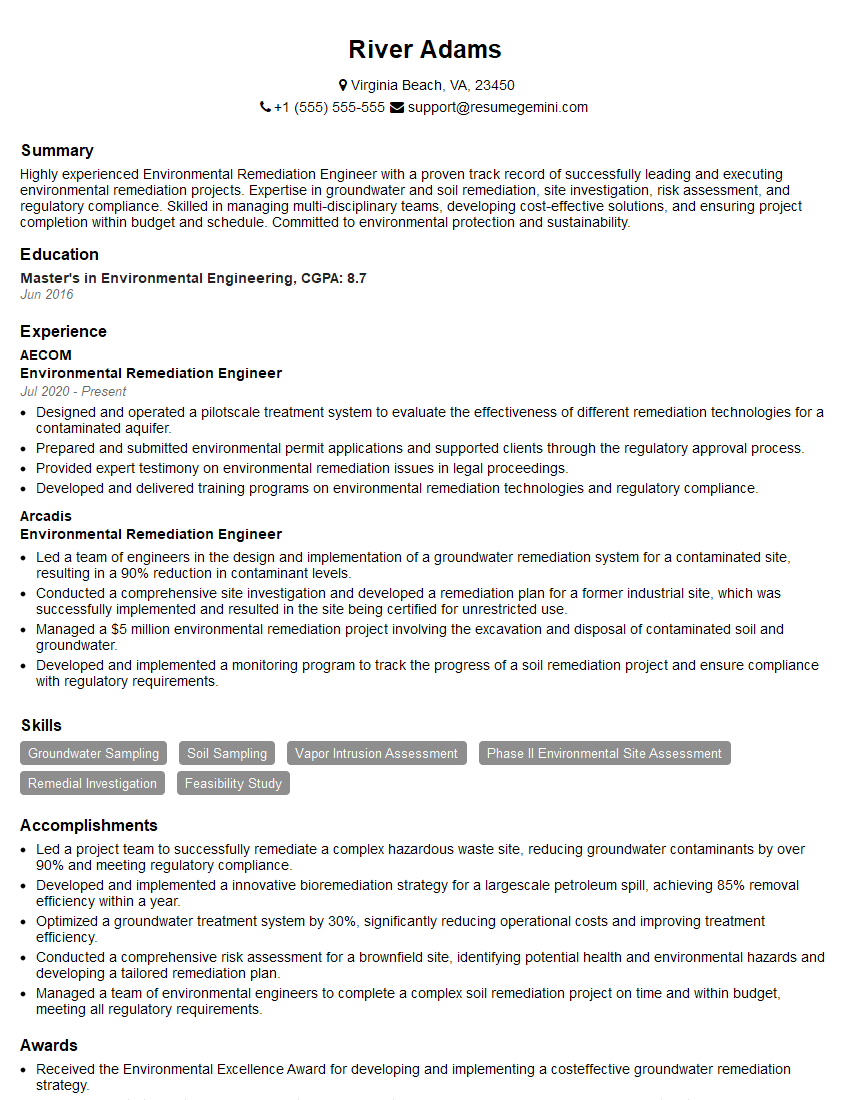
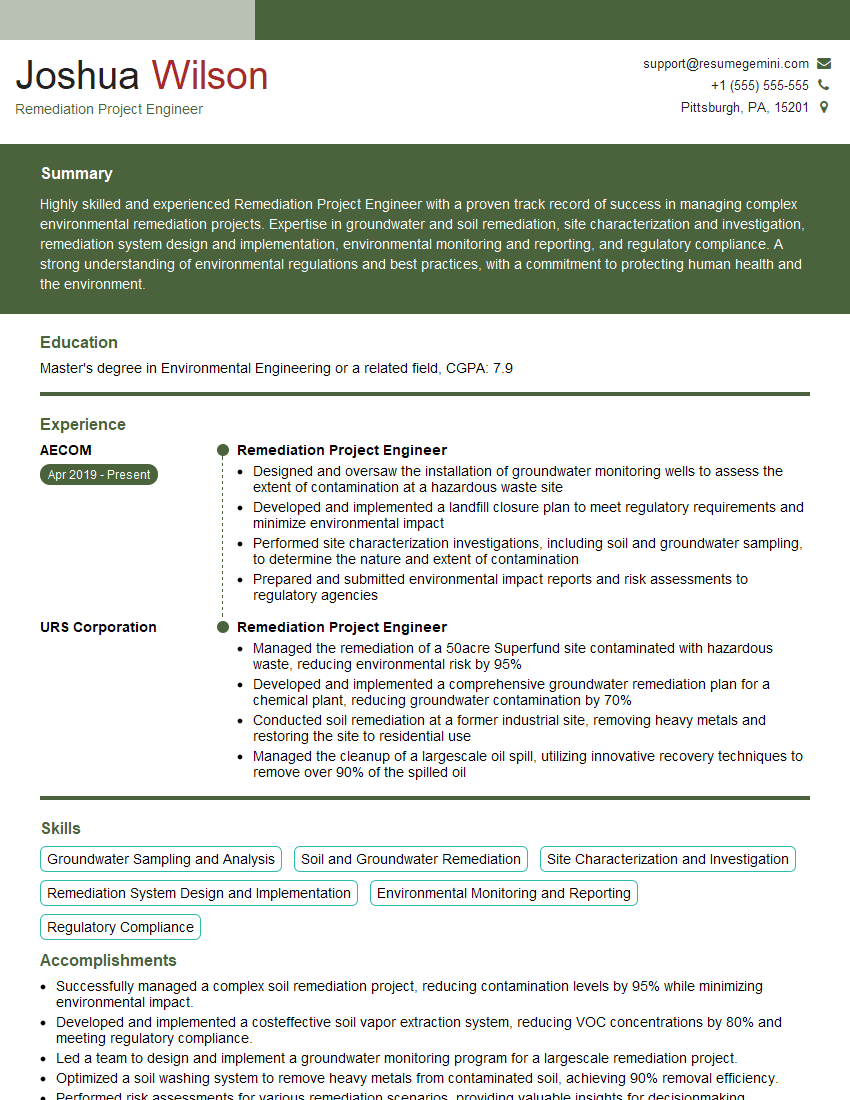
Mastering Remediation Technology Selection is crucial for career advancement in environmental science and engineering. A strong understanding of these principles will significantly enhance your job prospects and open doors to challenging and rewarding opportunities. To increase your chances of landing your dream role, focus on creating an ATS-friendly resume that highlights your relevant skills and experience. We highly recommend using ResumeGemini to build a professional and effective resume. ResumeGemini provides tools and resources to create a compelling resume, and we even offer examples tailored to Remediation Technology Selection to help you get started. Take the next step in your career journey today!
Explore more articles
Users Rating of Our Blogs
Share Your Experience
We value your feedback! Please rate our content and share your thoughts (optional).
What Readers Say About Our Blog
Very informative content, great job.
good