Are you ready to stand out in your next interview? Understanding and preparing for Renewable Energy Software Tools (e.g., Aurora, HOMER, RETScreen) interview questions is a game-changer. In this blog, we’ve compiled key questions and expert advice to help you showcase your skills with confidence and precision. Let’s get started on your journey to acing the interview.
Questions Asked in Renewable Energy Software Tools (e.g., Aurora, HOMER, RETScreen) Interview
Q 1. Explain the key differences between HOMER, Aurora, and RETScreen.
HOMER, Aurora, and RETScreen are all powerful renewable energy software tools, but they cater to different needs and scales. Think of them as specialized tools in a toolbox – each best suited for a particular job.
- HOMER (Hybrid Optimization Model for Electric Renewables): This is a powerful microgrid optimization tool. It excels at analyzing the economic and technical feasibility of various renewable energy systems, including the optimal sizing and operation of components like solar PV, wind turbines, batteries, and generators. HOMER helps determine the most cost-effective and reliable system configuration to meet a specific energy demand. Its strength lies in its comprehensive modeling capabilities and optimization algorithms.
- Aurora: Primarily focused on solar PV system design, Aurora offers detailed design, simulation, and analysis capabilities. It’s user-friendly, providing a streamlined workflow for designing residential, commercial, and utility-scale solar projects. It emphasizes precise shading analysis, energy production estimations, and system component selection.
- RETScreen Expert: This software is geared towards comprehensive energy assessments and project planning, encompassing a wider range of renewable and conventional energy sources. It’s widely used for larger-scale projects and policy analysis, focusing on economic and environmental impacts. RETScreen provides a more generalized approach than HOMER or Aurora, lacking their specialized optimization or design features.
In short: HOMER optimizes microgrids, Aurora designs solar PV systems, and RETScreen performs broader energy assessments.
Q 2. Describe your experience using HOMER for microgrid optimization. What parameters did you prioritize?
My experience with HOMER centers around optimizing microgrids for remote communities and island nations. I’ve used it extensively to design systems incorporating solar, wind, diesel generators, and battery storage. When prioritizing parameters, my focus was always on a balanced approach. I didn’t just aim for the cheapest option; I considered the following factors:
- Levelized Cost of Energy (LCOE): This is a crucial metric reflecting the total cost of electricity over the system’s lifetime, ensuring long-term economic viability.
- Reliability: A system’s ability to consistently meet the load demand, minimizing power outages, was a top priority, especially in remote areas.
- Environmental Impact: Minimizing reliance on fossil fuels (like diesel generators) by maximizing renewable energy penetration was always a key consideration.
- System Capacity: Sizing the system to accommodate future load growth is crucial for long-term sustainability.
For example, in one project, HOMER showed that while a system heavily reliant on solar was initially cheaper, its low reliability due to nighttime and cloudy periods made a hybrid system with a smaller diesel generator more economically and socially sound in the long run.
Q 3. How would you use Aurora to design a residential solar PV system? What factors would you consider?
Using Aurora to design a residential solar PV system is relatively straightforward. The process typically involves these steps:
- Site Assessment: Inputting the building’s location, roof geometry, and shading factors (trees, buildings).
- System Design: Selecting the appropriate PV modules, inverters, and racking systems based on the desired system size and budget.
- Shading Analysis: Aurora’s powerful shading analysis tools accurately determine the impact of shading on energy production throughout the year.
- Energy Production Estimation: The software simulates energy production based on local solar irradiance data, system design, and shading conditions.
- Financial Analysis: Aurora calculates system costs, energy savings, and return on investment, crucial for assessing project feasibility.
Crucial factors to consider are:
- Roof Orientation and Tilt: Optimizing the angle and direction of the panels to maximize solar irradiance.
- Shading: Accurately assessing shading from trees, neighboring buildings, or even the house itself – this significantly impacts energy production.
- Energy Consumption: Understanding the homeowner’s energy usage to size the system appropriately.
- Budget and Incentives: Balancing cost considerations with available incentives and financing options.
Essentially, Aurora allows for a detailed, visual design process, ensuring the optimal system for a specific home and budget.
Q 4. What are the limitations of using RETScreen for large-scale wind farm assessments?
While RETScreen is a valuable tool for assessing renewable energy projects, its application to large-scale wind farm assessments has limitations. Its strength lies in its comprehensive approach to project evaluation, including financial and environmental aspects, but it might lack the sophisticated modeling capabilities of specialized wind farm design software.
- Simplified Wind Resource Modeling: RETScreen’s wind resource modeling might be less detailed compared to specialized software packages that use advanced meteorological data and complex algorithms for wind speed and direction estimations.
- Limited Turbine Modeling: It may offer only simplified turbine performance models, potentially not accounting for all the complexities of modern wind turbine technology and their specific performance characteristics.
- Wake Effects: Accurate assessment of wake effects (the reduction in wind speed downstream of a turbine) is crucial for large-scale wind farms, and RETScreen might not provide the same level of detail in this area as more specialized software.
- Complex Terrain and Grid Integration: Simulating wind farm interaction with complex terrain and power grid integration might be limited compared to dedicated wind farm simulation packages.
In essence, RETScreen can give a good overview, but for detailed wind farm design and performance assessment, more specialized software is often necessary.
Q 5. How do you validate the results obtained from renewable energy software?
Validating the results from renewable energy software is crucial to ensure accuracy and reliability. This typically involves a multi-pronged approach:
- Sensitivity Analysis: Testing the model’s sensitivity to variations in input parameters (e.g., solar irradiance, wind speed, load profiles) to assess the robustness of the results.
- Comparison with Measured Data: If possible, comparing the software’s output (e.g., energy production) with actual measurements from existing systems. This ground-truthing is the most reliable validation method.
- Peer Review: Having independent experts review the methodology, input data, and results to identify potential errors or biases.
- Verification with Other Software: Running the same project in multiple software packages to compare the results and ensure consistency.
- Data Quality Assessment: Ensuring the accuracy and reliability of the input data (weather data, load profiles, component specifications).
Remember, these software tools are models, and their accuracy relies heavily on the quality of the input data and the appropriateness of the chosen model for the specific application.
Q 6. Compare and contrast the capabilities of different PV system simulation software.
Several PV system simulation software packages exist, each with its strengths and weaknesses. Some key differences include:
- Detailed Modeling Capabilities: Some software, like PVsyst or SAM, offer highly detailed modeling of PV modules, inverters, and other components, including complex thermal and electrical behavior. Others, like Aurora, provide a more user-friendly interface with slightly simplified models.
- Shading and Soiling Analysis: Many programs offer advanced shading analysis, but the level of detail and sophistication varies. Similar differences exist in the treatment of soiling losses.
- Cost Estimation: Software differs in how detailed their cost estimation capabilities are. Some offer more comprehensive tools for estimating balance-of-system (BOS) costs.
- Integration with GIS Data: Some packages can integrate with geographic information systems (GIS) data, enabling more accurate site assessments and system designs.
- User-Friendliness: The ease of use significantly varies across packages. Aurora is often praised for its intuitive interface, while others might require more technical expertise.
The choice of software depends on the specific project needs. For large, complex projects, software like PVsyst or SAM may be preferable, while for smaller projects, Aurora’s user-friendly interface might be more suitable.
Q 7. Explain the importance of considering shading and soiling losses in solar PV system design.
Shading and soiling losses are significant factors impacting the performance of solar PV systems, and neglecting them can lead to significant underestimation of energy production and inaccurate financial projections.
- Shading Losses: Shading from trees, buildings, or even clouds can significantly reduce energy production. A single shaded cell in a PV string can dramatically impact the entire string’s output. Accurate shading analysis is crucial, especially for complex roof geometries or locations with significant shading factors.
- Soiling Losses: Dust, dirt, pollen, and bird droppings accumulate on PV panels, reducing their efficiency. This loss can be substantial, especially in dusty or polluted environments. Regular cleaning helps mitigate soiling losses.
Consider a scenario where a system is designed without considering significant shading from a nearby building. The actual energy production might be far less than predicted, resulting in a poor return on investment. Similarly, ignoring soiling losses in a desert environment can severely underestimate the performance of the system. Therefore, accounting for shading and soiling is crucial for accurate energy yield predictions and effective system design.
Q 8. How do you model energy storage systems in HOMER or other software?
Modeling energy storage systems in HOMER and similar software involves defining key parameters that dictate its performance and integration within the microgrid or power system. Think of it like adding a rechargeable battery to your home energy setup.
Firstly, you specify the storage technology (e.g., lithium-ion, lead-acid). Each technology has different characteristics impacting its lifespan, efficiency, and cost, all of which are inputted into the model. Next, you define the capacity (kWh), the power rating (kW – representing how quickly it can charge/discharge), and the round-trip efficiency (the percentage of energy that can be retrieved after charging). For instance, a 100 kWh battery with a 10 kW power rating and 90% round-trip efficiency means it can store 100 kWh, discharge at a maximum rate of 10 kW, and lose 10% of energy during each charge-discharge cycle.
HOMER will then simulate the battery’s operation throughout the year, considering charging from renewable sources when energy is abundant and discharging during periods of high demand or low renewable generation. Factors like depth of discharge (how much of the battery’s capacity is used) and state of charge are all intrinsically modeled to reflect real-world operation and ultimately impact the overall system’s performance and cost-effectiveness. The software optimizes the battery’s use to minimize the overall cost of energy, given the constraints you’ve set.
Q 9. What are the key inputs required for accurate modeling in RETScreen?
Accurate modeling in RETScreen requires comprehensive data inputs categorized into several key areas. Think of it as providing a detailed recipe for your renewable energy project.
- Resource Data: This includes precise measurements of solar irradiance (for PV systems) or wind speed (for wind turbines), often obtained from meteorological data sources. The accuracy here directly affects the predicted energy output. Using poorly measured or estimated resource data can lead to inaccurate output predictions.
- Technology Specifications: You need detailed specifications of the renewable energy technologies you are considering – this includes manufacturer data sheets providing information on efficiency, power output, and system losses. For example, the exact specifications of solar panels or wind turbines including their nameplate power and efficiency curves.
- Financial Parameters: This is crucial and encompasses aspects like the capital cost, installation costs, operation and maintenance (O&M) costs, financing options (loans, equity), discount rates, and electricity tariffs. These influence the project’s financial viability and the LCOE calculations.
- Environmental Parameters: Data related to greenhouse gas emissions, air pollution, water usage, land use, and other relevant environmental impacts should be incorporated to complete the lifecycle assessment. This often includes data on materials used in the construction of the renewable energy system and its environmental impact over its lifespan.
- System Design and Configuration: Specifications of the system’s design are required such as the size of the renewable energy system, system components, and the interconnection configuration.
The quality of these inputs directly influences the reliability and accuracy of the results. Missing or inaccurate data can lead to significant errors in the analysis, potentially leading to flawed investment decisions.
Q 10. Describe your experience with sensitivity analysis in renewable energy software.
Sensitivity analysis is vital in renewable energy project planning as it helps determine how changes in input parameters affect the project’s overall performance and cost. Imagine testing the resilience of a building’s design against different stresses – that’s sensitivity analysis in a nutshell.
My experience involves systematically varying key input parameters, such as solar irradiance, wind speed, equipment costs, and discount rates, to observe their impact on outputs like LCOE, energy production, and greenhouse gas emissions. This process typically involves running multiple simulations with altered inputs. I use both ‘what-if’ scenarios (exploring individual parameter changes) and Monte Carlo simulations (which involve random variation of multiple parameters to model uncertainty).
For instance, I might run a series of simulations in HOMER, systematically changing the capacity of an energy storage system to determine the optimal size that minimizes the LCOE. The results are usually visualized using graphs and tables, highlighting which parameters are most influential and the range of potential outcomes. This information is crucial for risk assessment, decision-making, and optimizing project design.
Q 11. How do you handle uncertainty in renewable energy resource assessments?
Uncertainty in renewable energy resource assessments is a major challenge. Wind and solar resources are inherently variable, and accurate long-term predictions are difficult. I address this by incorporating probabilistic methods into my analyses.
One common approach is using statistical distributions to represent the uncertainty in resource data. Instead of using single-point estimates (e.g., average wind speed), I use probability distributions (like Weibull for wind speed or Beta for solar irradiance) that capture the variability and uncertainty. This allows the software to perform simulations across a range of possible resource scenarios.
Additionally, I use Monte Carlo simulations which randomly sample from these probability distributions to generate many different input scenarios. Each scenario is then run through the simulation model (e.g., HOMER or RETScreen), producing a distribution of possible outcomes. The results provide not just a single predicted value, but a range of possible outcomes with associated probabilities, giving a more comprehensive understanding of the project’s risks and uncertainties.
For example, when assessing a solar PV project, we wouldn’t just use the average solar irradiance but rather a statistical distribution derived from long-term measurements, reflecting the day-to-day and seasonal variability. This allows for a more robust evaluation of the project’s viability.
Q 12. Explain the concept of levelized cost of energy (LCOE) and how it is calculated in these tools.
Levelized Cost of Energy (LCOE) is a crucial metric representing the average cost of electricity generation over the lifetime of a power plant. It’s essentially the ‘average price’ of electricity produced over its entire operational life. Think of it like calculating the average cost per cup of coffee over the life of your coffee maker.
The LCOE is calculated by summing the discounted costs (capital, O&M, fuel, etc.) over the project’s lifetime and dividing by the total discounted energy produced over that same period. The formula is complex, but most renewable energy software packages handle these calculations automatically. In simplified terms:
LCOE = (Total Discounted Costs) / (Total Discounted Energy Produced)
These tools use various financial parameters (like discount rate and inflation) to ensure costs and energy are correctly discounted to their present value. The LCOE facilitates comparisons between different renewable energy technologies and conventional power generation sources, aiding in informed decision-making regarding project viability and investment.
Q 13. What are the environmental impacts considered in these software packages?
Environmental impacts considered vary across software, but most incorporate a significant range of factors in their assessment, essentially creating an environmental footprint of the project. This includes Greenhouse Gas (GHG) emissions throughout the entire life cycle of the project, covering manufacturing of components, transportation, construction, operation, and decommissioning.
Further considerations often include:
- Air and water pollution: Some software models quantify emissions of pollutants during operation and manufacturing.
- Land use: The amount of land required for a project is taken into account, and its impact on ecosystems and biodiversity can be assessed.
- Water usage: For certain technologies, the amount of water consumed during operation or manufacturing (e.g., cooling towers for thermal plants) is considered.
- Waste generation: The amount and type of waste generated during the life cycle of the project are often quantified.
These environmental impact assessments help determine the overall sustainability of a project, allowing for comparisons against different renewable energy technologies or conventional power sources. The integration of these factors allows for a comprehensive environmental analysis beyond just the energy produced.
Q 14. How do you incorporate economic factors into your renewable energy projects using these tools?
Incorporating economic factors is central to renewable energy project feasibility studies. These tools allow you to model the financial aspects in detail, offering a comprehensive financial picture of the project.
I typically input various economic parameters into the software, such as:
- Capital costs: The initial investment required for equipment, land acquisition, and construction.
- Operation and maintenance (O&M) costs: Ongoing costs for maintaining and operating the system.
- Fuel costs: If applicable (e.g., biomass), the cost of fuel for the energy system.
- Financing costs: Interest rates and loan terms if external financing is involved.
- Electricity tariffs: Prices at which electricity is sold to the grid or consumed on-site.
- Tax incentives and subsidies: Government support schemes that can reduce the overall cost of the project.
- Inflation rates: To account for the increase in prices over time.
- Discount rate: To convert future costs and revenues to their present value.
Using these inputs, the software calculates key financial metrics such as Net Present Value (NPV), Internal Rate of Return (IRR), and the aforementioned LCOE. This data provides vital insights into the financial feasibility and profitability of the project, assisting in securing funding and making informed investment decisions.
Q 15. Describe your experience with different optimization algorithms used in these software packages.
Renewable energy software packages like HOMER and Aurora employ various optimization algorithms to find the most cost-effective and technically feasible renewable energy system designs. These algorithms often aim to minimize the levelized cost of energy (LCOE), which represents the average cost of electricity over the system’s lifetime. My experience encompasses several key approaches:
Linear Programming (LP): Used for simpler systems where relationships between variables are linear. This is computationally efficient but can be limiting in capturing real-world complexities.
Mixed Integer Linear Programming (MILP): Handles both continuous and discrete variables, allowing for the modeling of on/off decisions for components (e.g., generators). This is significantly more powerful than LP but can be computationally intensive for larger systems.
Dynamic Programming: Useful for problems with sequential decisions, such as optimizing energy storage dispatch over time. It’s effective but can struggle with high dimensionality.
Genetic Algorithms (GA): Evolutionary algorithms that explore a wide range of solutions, making them suitable for highly complex and non-linear problems. They are less likely to get stuck in local optima, but require careful parameter tuning.
Simulated Annealing: Another probabilistic technique that mimics the annealing process in metallurgy, allowing for exploration of solutions with gradually decreasing randomness. This is useful for escaping local optima, but can also be computationally expensive.
In my work, I’ve selected algorithms based on project complexity and computational resources available. For instance, a small off-grid system might be adequately modeled using LP, while a large grid-connected system with multiple renewable sources and storage might require the robust capabilities of MILP or a GA.
Career Expert Tips:
- Ace those interviews! Prepare effectively by reviewing the Top 50 Most Common Interview Questions on ResumeGemini.
- Navigate your job search with confidence! Explore a wide range of Career Tips on ResumeGemini. Learn about common challenges and recommendations to overcome them.
- Craft the perfect resume! Master the Art of Resume Writing with ResumeGemini’s guide. Showcase your unique qualifications and achievements effectively.
- Don’t miss out on holiday savings! Build your dream resume with ResumeGemini’s ATS optimized templates.
Q 16. How would you troubleshoot an error encountered during a simulation in Aurora or HOMER?
Troubleshooting errors in Aurora or HOMER often involves a systematic approach. The first step is always to carefully examine the error message itself. This often provides crucial clues about the source of the problem. Let’s break down common troubleshooting steps:
Check Input Data: The most frequent source of errors is incorrect or inconsistent data. Verify that all input parameters, such as load profiles, resource data (solar irradiance, wind speed), and component specifications, are accurate and correctly formatted.
Review Model Assumptions: Ensure that the model accurately represents the system you’re simulating. Are you using appropriate component models and efficiency values? Double-check any assumptions made about the grid connection, energy storage, or control strategies.
Examine Component Parameters: Incorrectly specified component parameters (e.g., inverter efficiency, battery depth of discharge) can lead to significant errors. Review the data sheets of your components to ensure you’re using the correct values.
Simplify the Model (if applicable): If you encounter a complex error, try simplifying the model by temporarily removing some components or simplifying the load profile to identify if a particular part of the model is the cause of the issue.
Consult Documentation and Support: If the problem persists, consult the software’s documentation for troubleshooting guides or contact technical support. Many software providers have detailed FAQs and tutorials that can address common problems.
For example, a common error in HOMER is a mismatch between the units of different input parameters. Always carefully double-check that power is expressed in kW, energy in kWh, and so on. Careful attention to detail is paramount.
Q 17. How do you ensure the accuracy and reliability of your data inputs in these modeling tools?
Data accuracy is paramount in renewable energy simulations. Inaccurate inputs lead to unreliable results, potentially resulting in costly design errors. To ensure data reliability, I follow a multi-step process:
Source Verification: I prioritize using data from reputable sources. For weather data, this means utilizing meteorological stations with established track records and validated data. For component specifications, I always refer to the manufacturer’s data sheets and ensure that values are appropriate for the specific operational conditions.
Data Validation and QA/QC: Before using any dataset, I perform rigorous quality checks. This includes checking for missing values, outliers, and inconsistencies. I use appropriate statistical methods to identify and address data quality issues.
Data Cleaning and Preprocessing: This often involves filling in missing values through interpolation or extrapolation (carefully considering the limitations of each technique), removing outliers, and converting data to the appropriate units and formats for the software.
Sensitivity Analysis: After running the simulation, I conduct sensitivity analysis to assess the influence of input data uncertainty on the results. This helps determine which inputs have the most significant impact on the final outcomes and prioritize data collection efforts.
Data Uncertainty Quantification: Wherever possible, I incorporate uncertainty quantification into the modeling process. This means representing input variables not as single point estimates but as probability distributions, which allows for a more realistic representation of the system’s performance.
For instance, I might use a Monte Carlo simulation to assess the impact of uncertainty in solar irradiance data on the sizing of a photovoltaic system.
Q 18. Explain the importance of using weather data in renewable energy simulations.
Weather data is crucial in renewable energy simulations because the output of solar, wind, and hydropower systems is directly dependent on weather conditions. Accurate weather data is essential for reliable predictions of energy production and system performance. Without it, the results would be highly unrealistic and potentially misleading.
Energy Production Estimation: Weather data, including solar irradiance, ambient temperature, wind speed, and precipitation, are fundamental for estimating the power output of solar PV, wind turbines, and hydropower plants. Different geographical locations and even different times of day will have distinct levels of solar radiation and wind speeds.
System Sizing and Optimization: Accurate weather data allows for the proper sizing of renewable energy systems. For instance, using historical weather data helps determine the required capacity of a PV array to meet a specific energy demand.
Financial Analysis: Weather data plays a vital role in economic assessments. The predicted energy production from weather data is critical in determining the financial viability of the project, helping calculate the lifetime energy production and return on investment.
Resource Assessment: In pre-feasibility studies, weather data is used to assess the energy potential of a particular location. This helps to determine if a site is suitable for a renewable energy project.
Using inaccurate weather data could result in underestimating or overestimating energy production, leading to system designs that are either insufficient to meet demand or overly expensive and unnecessary.
Q 19. What are the limitations of using simplified models versus detailed models?
The choice between simplified and detailed models involves a trade-off between accuracy and computational complexity. Simplified models, while faster to run and easier to understand, sacrifice some accuracy by making certain assumptions. Detailed models, on the other hand, strive for greater accuracy but require more data, more processing power, and longer simulation times. Here’s a breakdown:
Simplified Models: These models often use simplified representations of components and processes. For example, a simplified model might assume constant efficiency for a solar panel regardless of temperature and irradiance, while a detailed model would incorporate temperature and irradiance dependent efficiency curves.
Detailed Models: These models incorporate greater detail and complexity. They can account for factors like partial shading, component degradation over time, and the effects of different control strategies. They tend to give more accurate but potentially more uncertain results given the greater number of input variables required.
Example: A simplified model for a wind turbine might assume a constant wind speed throughout the simulation period, while a detailed model would incorporate hourly or even sub-hourly wind speed data. The simplified model would produce a less accurate representation of the energy production, but requires far less input data. The choice depends on the project’s requirements. A preliminary feasibility study might use a simplified model, while a detailed design would require a more sophisticated approach.
Q 20. How do you present your findings from renewable energy software simulations to stakeholders?
Presenting findings from renewable energy simulations to stakeholders requires clear and concise communication, tailored to the audience’s technical understanding. My approach typically involves several key elements:
Executive Summary: Begin with a brief summary highlighting the key findings, focusing on the most important aspects for decision-making.
Visualizations: Use charts, graphs, and maps to present the results visually. For instance, graphs comparing the levelized cost of energy for different system configurations are effective. Maps can show the geographical distribution of resources or energy production.
Technical Details: Provide sufficient technical detail to support the conclusions, but avoid overwhelming the audience with unnecessary information. I tailor the level of detail to the audience; technical stakeholders will require more detail than non-technical ones.
Sensitivity Analysis Results: Present the results of sensitivity analyses to illustrate the uncertainty associated with the predictions. This demonstrates the robustness of the findings and accounts for potential variability.
Recommendations: Clearly state the recommendations based on the simulation results, including system design parameters, financial implications, and next steps.
Interactive Presentations: Utilize interactive tools or software to allow stakeholders to explore the results in more detail, making the presentation more engaging and insightful.
For example, when presenting to a board of directors, I’d focus on the overall cost-effectiveness and risks, whereas a presentation to engineers might include more detailed technical information about component sizing and performance.
Q 21. Explain your experience with post-processing and visualizing the results obtained from these tools.
Post-processing and visualization are crucial for extracting meaningful insights from renewable energy simulations. After running a simulation in Aurora or HOMER, I typically perform the following tasks:
Data Export: Export the simulation results in a suitable format (e.g., CSV, Excel) for further analysis and visualization using other software.
Data Cleaning and Transformation: Often, the raw output data needs cleaning and transformation before visualization. This might involve calculating summary statistics, aggregating data over time, or creating new variables.
Data Visualization: I use various software packages (e.g., MATLAB, Python with Matplotlib or Seaborn, Excel) to create charts and graphs to illustrate the results. This includes time series plots of energy production, cost breakdowns, and sensitivity analysis results.
Interactive Dashboards: For complex projects, I develop interactive dashboards that allow users to explore the data dynamically. These dashboards can provide interactive visualizations and allow users to filter data based on different parameters.
Report Generation: I use the visualizations and analysis results to generate comprehensive reports that document the findings and support the project decisions. The reports provide a clear and concise summary of the study’s objectives, methods, results, and conclusions.
For example, I might create an interactive dashboard showing the impact of different PV panel technologies on the levelized cost of energy, allowing stakeholders to easily compare different scenarios. This facilitates informed decision making based on data visualization and simulation results.
Q 22. How would you integrate renewable energy generation with existing grids using these software packages?
Integrating renewable energy generation with existing grids involves careful planning and simulation. Software like Aurora, HOMER, and RETScreen allow us to model the interaction between the renewable energy source (solar, wind, etc.) and the grid. We begin by defining the grid’s characteristics, including voltage levels, frequency, and existing generation capacity. Then, we model the renewable energy system, specifying its size, location, and technology. The software simulates the power flow, considering factors like intermittent generation from renewables and the grid’s ability to absorb fluctuations. For instance, in Aurora, we might model a solar PV system connected to a grid, defining the inverter’s capabilities and the grid’s voltage profile. The software then simulates the system’s performance, showing how much power is injected into the grid at different times, identifying potential voltage issues or other grid stability challenges. HOMER, on the other hand, allows for more complex microgrid simulations, optimizing the mix of renewable energy sources and storage to ensure reliable grid connection, even with intermittent generation.
For example, if we are integrating a large wind farm, we would model the wind farm’s power output using wind resource data and then simulate its impact on the grid’s frequency using software like HOMER. If the simulation shows frequency fluctuations outside acceptable limits, we would need to adjust the system’s design or implement grid support measures, such as energy storage or reactive power compensation.
Q 23. What are the key performance indicators (KPIs) you would monitor in a renewable energy project?
Key Performance Indicators (KPIs) for a renewable energy project are crucial for monitoring its success and efficiency. These KPIs fall into several categories:
- Financial KPIs: Levelized Cost of Energy (LCOE), Net Present Value (NPV), Internal Rate of Return (IRR), Payback Period. These help us assess the project’s profitability and investment attractiveness.
- Technical KPIs: Capacity Factor (the percentage of time the system is operating at its maximum capacity), System Availability, Performance Ratio (ratio of actual energy produced to the maximum possible energy), Energy Yield (total energy produced over a period). These show the technical performance of the renewable energy system.
- Environmental KPIs: Greenhouse gas emissions avoided (tonnes of CO2 equivalent), avoided water consumption, avoided land use impact. These quantify the environmental benefits of the project.
For instance, a low capacity factor for a solar PV system might indicate shading issues or equipment malfunction, while a high LCOE might signal a need for cost optimization in the project design.
Q 24. How do you address the impact of grid stability on renewable energy integration?
Grid stability is paramount when integrating renewable energy. The intermittent nature of solar and wind power presents challenges, as their output fluctuates based on weather conditions. These fluctuations can affect grid frequency and voltage. We address this using these software tools by incorporating grid stability models within the simulations.
This includes modelling grid response to changes in power output. For example, in HOMER we define the grid’s characteristics, including its inertia and frequency response capabilities. The software then simulates how the grid responds to changes in renewable energy generation, allowing us to identify potential stability issues. We can incorporate energy storage systems (batteries, pumped hydro) to mitigate these fluctuations, providing a buffer to absorb power surpluses and supply power during periods of low renewable energy generation. Moreover, we can simulate the use of advanced grid management techniques such as demand-side management or grid-forming inverters to enhance grid stability.
For example, if the simulation reveals unacceptable voltage dips due to sudden changes in wind power, we would investigate solutions like reactive power compensation or installing more distributed generation closer to load centers.
Q 25. Describe your experience with different renewable energy technologies (solar, wind, hydro, etc.) and their modeling within these software packages.
My experience encompasses various renewable energy technologies. I’ve extensively used these software packages to model:
- Solar PV: Modeling PV systems in Aurora involves defining panel specifications, array layout, and shading analysis. The software calculates the energy output based on solar irradiance data. In HOMER, I integrate solar PV into microgrid simulations, optimizing its size to meet demand alongside other generation sources.
- Wind Energy: Wind resource assessment is crucial. I use wind speed data within HOMER and RETScreen to model wind turbine performance, considering factors like wind speed distribution, turbine efficiency, and wake effects. The software simulates power output fluctuations and helps in optimizing turbine placement and size.
- Hydropower: Modeling hydropower in RETScreen involves defining the hydraulic characteristics of the site, including flow rates, head, and turbine efficiency. The software then simulates energy production based on historical flow data.
- Bioenergy: While less frequently modeled directly in Aurora, HOMER enables us to simulate biomass-based power generation, inputting data on biomass availability, conversion efficiency, and fuel characteristics.
Each technology requires specific data inputs and modeling techniques. Understanding these nuances is crucial for accurate and reliable simulations.
Q 26. How would you use these tools to compare different renewable energy scenarios?
Comparing different renewable energy scenarios is a core function of these software packages. Let’s say we’re evaluating the feasibility of a hybrid renewable energy system for a remote community. We would define several scenarios:
- Scenario 1: Solar PV only.
- Scenario 2: Wind energy only.
- Scenario 3: Hybrid system combining solar PV and wind, with battery storage.
Using HOMER, for instance, we define the technical and economic parameters for each scenario, including the costs of equipment, operation and maintenance, and fuel (where applicable). The software then simulates each scenario’s performance, considering the variability in renewable energy resource availability. The results will show the LCOE, energy production, reliability, and environmental impact for each option, enabling a direct comparison to choose the most cost-effective and sustainable solution.
ReScreen also excels at comparing different scenarios and performing sensitivity analyses to evaluate uncertainty in input parameters.
Q 27. Explain your experience using these tools for financial analysis of renewable energy projects.
Financial analysis is a critical aspect of renewable energy project development. These tools provide powerful capabilities for detailed financial modeling. For example, in RETScreen, we input project costs (capital, operation & maintenance), energy prices, financing terms (loan interest rates, repayment schedules), and the system’s energy production data. The software then calculates key financial metrics such as NPV, IRR, payback period, and LCOE. This allows us to assess the project’s profitability and make informed investment decisions.
HOMER also includes robust financial modeling capabilities, especially useful for microgrid projects where we assess the cost-effectiveness of different combinations of renewable energy sources and storage solutions. We can use the results to perform sensitivity analysis, testing the impact of variations in key parameters such as energy prices, equipment costs, and interest rates.
A real-world example would be analyzing the financial viability of a community-scale solar project by varying financing options and energy prices in RETScreen, to determine the most financially sustainable option.
Q 28. What are your strategies for improving the efficiency and accuracy of renewable energy software simulations?
Improving the efficiency and accuracy of renewable energy software simulations requires a multi-pronged approach:
- High-Quality Input Data: Accurate meteorological data (solar irradiance, wind speed, rainfall) is paramount. Using high-resolution data from reputable sources significantly improves simulation accuracy.
- Appropriate Modeling Techniques: Selecting the right modeling techniques for the specific renewable energy technology and grid conditions is crucial. Understanding the limitations of each model is equally important.
- Calibration and Validation: Whenever possible, we should calibrate and validate the models against real-world data. This helps in refining the simulation’s accuracy and identifying potential biases.
- Sensitivity Analysis: Performing sensitivity analysis helps identify parameters with the largest impact on the results, enabling focused data collection and refinement efforts.
- Software Updates: Staying up-to-date with the latest software versions and using the most advanced modeling features enhances accuracy and efficiency.
For example, using hourly instead of daily solar irradiance data in Aurora significantly enhances the accuracy of the solar PV system performance prediction. Similarly, incorporating advanced control strategies in HOMER improves the accuracy of microgrid simulation by realistically representing actual system operations.
Key Topics to Learn for Renewable Energy Software Tools (e.g., Aurora, HOMER, RETScreen) Interview
- Solar Resource Assessment: Understanding irradiance data, different measurement methods, and how software tools process this data for system design.
- System Design & Modeling: Practical application of software to design PV systems (Aurora), microgrids (HOMER), or larger renewable energy projects (RETScreen), including component sizing and placement.
- Financial Modeling & Analysis: Using software to perform Levelized Cost of Energy (LCOE) calculations, Net Present Value (NPV) analysis, and Return on Investment (ROI) estimations for different renewable energy projects.
- Performance Simulation & Optimization: Understanding the simulation capabilities of each software, interpreting results, and identifying areas for optimization in system design and performance.
- Data Analysis & Interpretation: Extracting meaningful insights from software output, visualizing data effectively, and presenting findings clearly and concisely.
- Software-Specific Features: Becoming proficient in the unique features and capabilities of Aurora, HOMER, and RETScreen, including their limitations and best-practice usage.
- Sensitivity Analysis & Uncertainty Quantification: Exploring the impact of varying input parameters on project outcomes and quantifying uncertainties in predictions.
- Regulatory Compliance & Standards: Familiarity with relevant standards and regulations related to renewable energy project design and operation, and how software tools support compliance.
- Case Studies & Real-world Applications: Analyzing case studies to understand how these software tools have been successfully applied in various renewable energy projects.
- Troubleshooting & Problem Solving: Developing the ability to identify and troubleshoot issues encountered during the design and analysis process.
Next Steps
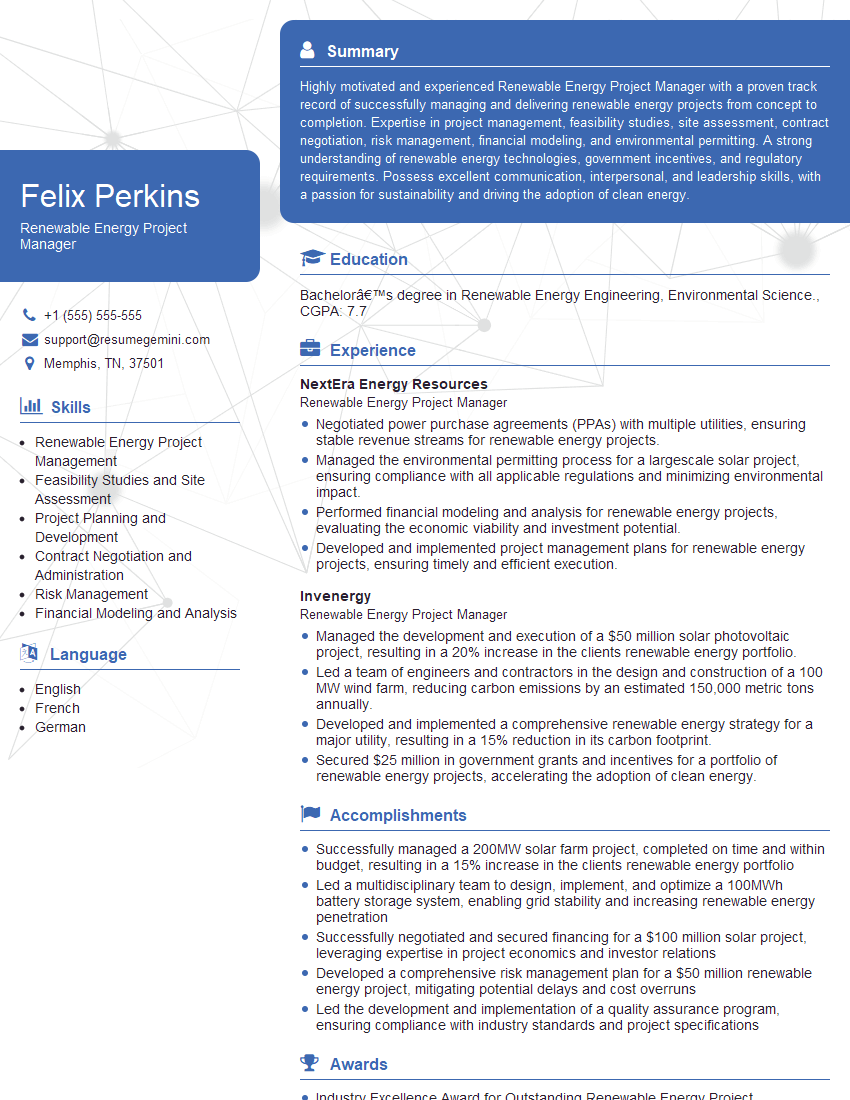
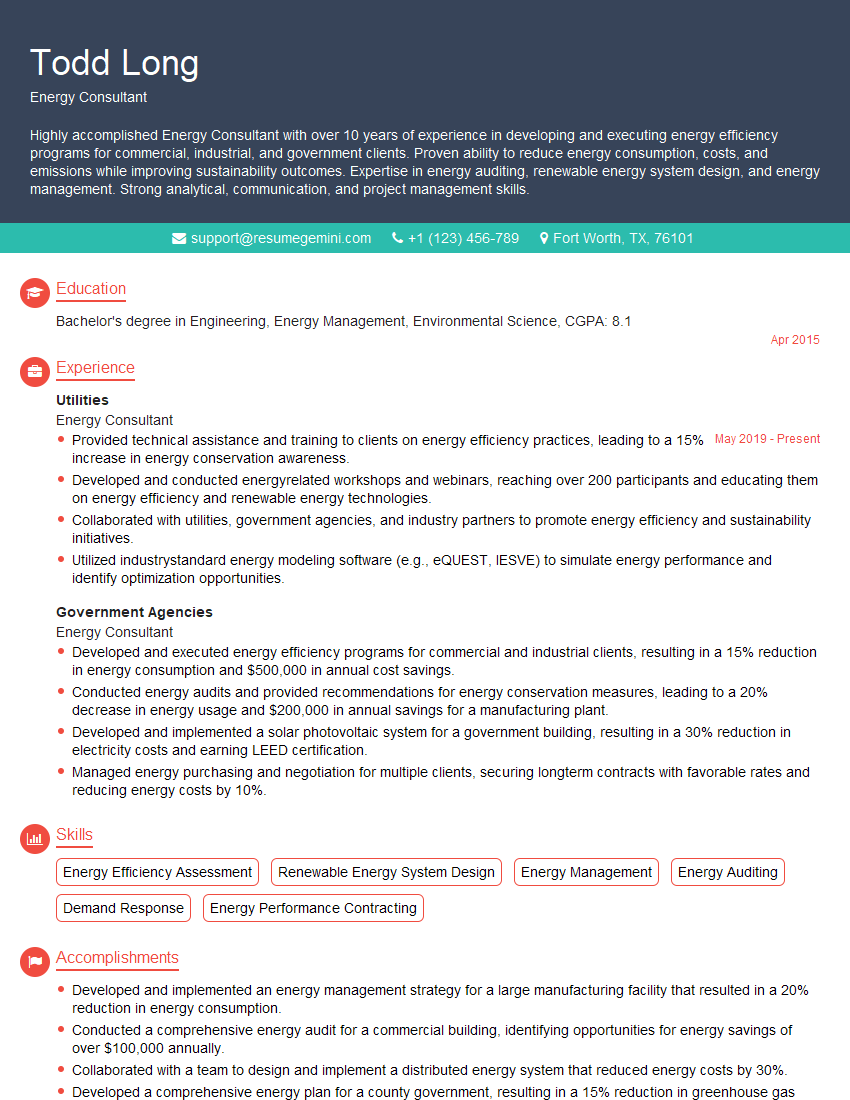
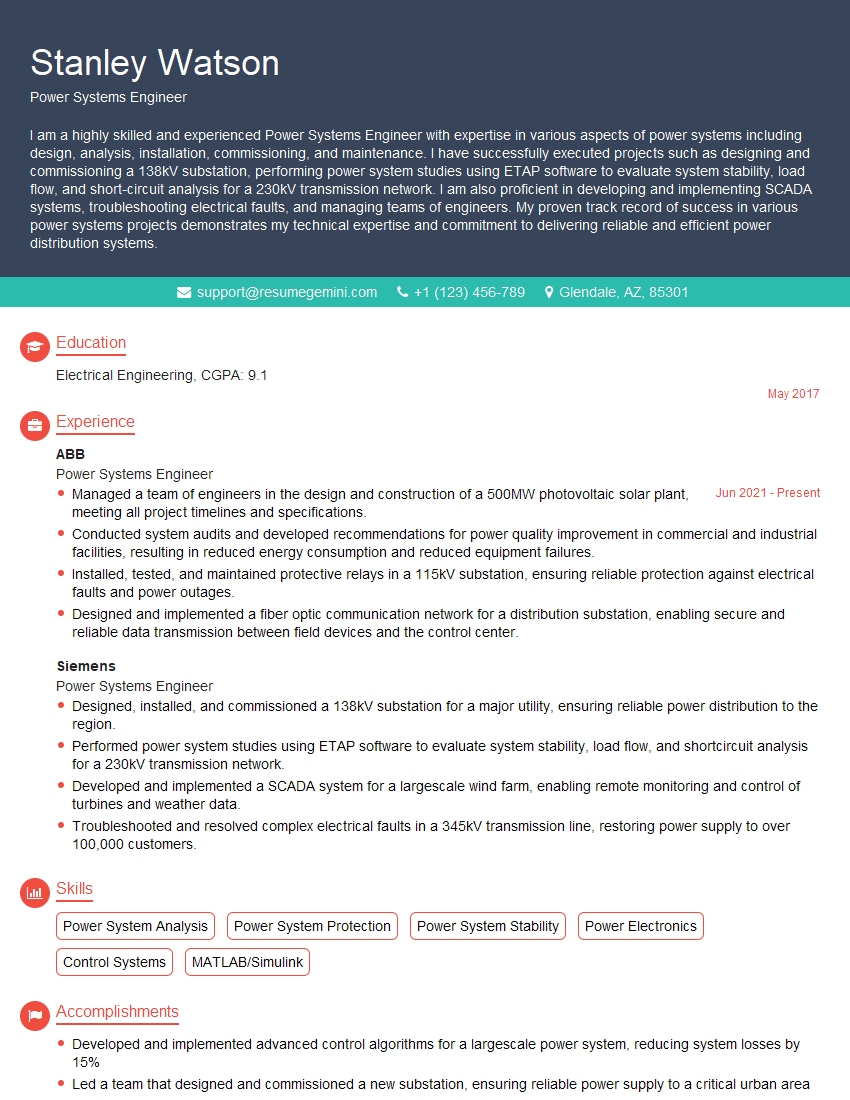
Mastering Renewable Energy Software Tools like Aurora, HOMER, and RETScreen is crucial for career advancement in the rapidly growing renewable energy sector. These skills are highly sought after by employers and demonstrate your technical proficiency and ability to contribute to real-world projects. To significantly improve your job prospects, focus on building an ATS-friendly resume that effectively highlights your expertise. We highly recommend using ResumeGemini to create a compelling and professional resume that showcases your abilities. Examples of resumes tailored to highlight proficiency in Aurora, HOMER, and RETScreen are available to guide your resume creation process.

Explore more articles
Users Rating of Our Blogs
Share Your Experience
We value your feedback! Please rate our content and share your thoughts (optional).
What Readers Say About Our Blog
Very informative content, great job.
good