Feeling uncertain about what to expect in your upcoming interview? We’ve got you covered! This blog highlights the most important Renewable Energy Systems Design interview questions and provides actionable advice to help you stand out as the ideal candidate. Let’s pave the way for your success.
Questions Asked in Renewable Energy Systems Design Interview
Q 1. Explain the difference between on-grid and off-grid renewable energy systems.
The core difference between on-grid and off-grid renewable energy systems lies in their connection to the main electricity grid. An on-grid system is connected to the utility grid, allowing you to both draw power from the grid when your renewable energy source (like solar panels) isn’t generating enough and feed excess power back to the grid (through net metering, which we’ll discuss later). Think of it like having a backup power source. This is generally the more cost-effective option in areas with reliable grid infrastructure. An off-grid system, on the other hand, operates independently of the grid. It relies entirely on renewable energy sources and energy storage (like batteries) to meet its energy needs. This is ideal for remote locations or situations where grid access is unreliable or unavailable. Imagine a remote cabin in the woods—it’s completely self-sufficient.
In essence:
- On-grid: Connected to the grid; draws power from and feeds power to the grid.
- Off-grid: Independent of the grid; relies solely on renewable sources and storage.
Q 2. Describe the various types of solar panels and their applications.
Solar panels come in various types, each with its own strengths and weaknesses. The most common are:
- Monocrystalline Silicon: These panels are made from a single silicon crystal, resulting in high efficiency (typically 18-22%) and a sleek, black appearance. They’re premium in price but offer the best performance per square foot. Ideal for high-performance systems where space is limited.
- Polycrystalline Silicon: These panels are made from multiple silicon crystals, resulting in slightly lower efficiency (typically 15-17%) and a characteristic blueish appearance. They’re more affordable than monocrystalline panels, making them a popular choice for large-scale projects where cost is a major factor.
- Thin-Film Solar Panels (Amorphous Silicon, Cadmium Telluride, Copper Indium Gallium Selenide): These panels are lightweight and flexible, making them suitable for integration into building materials or curved surfaces. However, their efficiency is generally lower (8-14%) than crystalline silicon panels.
Applications vary depending on the panel type and the project’s requirements:
- Residential: Monocrystalline and polycrystalline panels are common choices, balancing efficiency and cost.
- Commercial: Polycrystalline and thin-film panels are frequently used for larger installations, emphasizing cost-effectiveness.
- Utility-scale solar farms: Polycrystalline and thin-film panels often dominate due to their cost advantage.
Q 3. What are the key factors to consider when designing a wind energy system?
Designing a wind energy system involves careful consideration of numerous factors. It’s not just about sticking a turbine up and hoping for the best!
- Wind Resource Assessment: This is paramount. You need detailed wind speed and direction data for the location, often obtained through on-site measurements or from meteorological databases. Insufficient wind resource will render the system ineffective.
- Turbine Selection: Turbine selection depends on the wind resource, the desired power output, and the available space. Different turbine types (horizontal-axis, vertical-axis) have varying characteristics in terms of efficiency, maintenance, and cost.
- Tower Design: The tower height is crucial for maximizing wind capture. Taller towers access higher wind speeds, but this also impacts cost and structural integrity.
- Grid Connection (if applicable): For grid-connected systems, you need to ensure compliance with grid codes and standards, including voltage levels, frequency, and protection mechanisms.
- Environmental Impact: Consider the potential impact on wildlife (birds, bats) and visual aesthetics. Proper siting and mitigation strategies are necessary to minimize these impacts.
- Economic Analysis: A thorough economic analysis, including capital costs, operating costs, and energy production, is essential to ensure the project’s financial viability.
For example, a wind farm design would involve extensive meteorological studies, detailed simulations, and careful consideration of environmental regulations, while a smaller residential wind turbine would have a simpler design process but would still need a proper wind resource assessment to be successful.
Q 4. Explain the concept of net metering and its impact on renewable energy adoption.
Net metering is a billing mechanism that allows renewable energy system owners (like those with solar panels) to send excess electricity they generate back to the grid, receiving credits on their electricity bill. Imagine it as a two-way meter—it tracks both the energy you use from the grid and the energy you send back.
Impact on Renewable Energy Adoption: Net metering significantly boosts renewable energy adoption by reducing the upfront costs and risks associated with installing renewable energy systems. When you generate more energy than you use, you reduce your electricity bill, thus accelerating the return on your investment. This incentivizes homeowners and businesses to invest in solar or other renewables, leading to wider adoption and increased renewable energy penetration in the power grid. Without net metering, the financial incentive to install renewable systems is substantially lower.
Q 5. Discuss different energy storage technologies suitable for renewable energy systems.
Several energy storage technologies are suitable for renewable energy systems, each with its own pros and cons:
- Battery Storage (Lithium-ion, Lead-acid, Flow batteries): Batteries are the most common storage solution, offering relatively high energy density and quick response times. Lithium-ion batteries are currently the dominant technology, offering higher energy density and longer lifespan but at a higher cost. Lead-acid batteries are cheaper but less efficient and have a shorter lifespan. Flow batteries offer longer lifespans and are suitable for large-scale applications.
- Pumped Hydro Storage: This technology utilizes excess renewable energy to pump water uphill to a reservoir. The stored water is then released to generate electricity when needed. This is a mature and reliable technology, but it requires specific geographical conditions.
- Compressed Air Energy Storage (CAES): This involves compressing air during periods of surplus energy and using it to drive turbines when electricity is needed. It is a less common but potentially scalable solution.
- Thermal Storage: This involves storing energy as heat (e.g., molten salt) or cold and later converting it back to electricity using heat engines. This is mainly used in concentrated solar power (CSP) plants.
The choice of storage technology depends on factors such as cost, energy capacity, power output, lifespan, and application requirements. For example, a residential solar system might use lithium-ion batteries, while a utility-scale solar farm could employ pumped hydro storage.
Q 6. How do you assess the environmental impact of renewable energy projects?
Assessing the environmental impact of renewable energy projects requires a holistic approach, considering the entire life cycle, from manufacturing to decommissioning. This often involves:
- Life Cycle Assessment (LCA): This method quantifies the environmental impacts associated with each stage of the project’s life cycle, including resource extraction, manufacturing, transportation, operation, and decommissioning. It considers factors like greenhouse gas emissions, water consumption, land use, and waste generation.
- Environmental Impact Statement (EIS): This document provides a comprehensive overview of the potential environmental impacts of a proposed project, including both positive and negative effects. It often includes mitigation strategies to reduce negative impacts.
- Biodiversity Assessment: This assesses the potential impact on local flora and fauna, identifying and mitigating risks to endangered species or sensitive ecosystems.
- Visual Impact Assessment: This considers the visual impact of the project on the surrounding landscape. For example, the placement of wind turbines or solar farms may be carefully chosen to minimize visual intrusion.
For instance, the manufacturing of solar panels involves the use of materials and processes that can have environmental implications, so these factors should be carefully considered in the overall assessment. Similarly, the construction of a hydroelectric dam can alter river ecosystems, thus needing thorough analysis.
Q 7. What are the challenges in integrating renewable energy sources into the existing power grid?
Integrating renewable energy sources into the existing power grid presents several challenges:
- Intermittency: Solar and wind energy are inherently intermittent, meaning their output fluctuates depending on weather conditions. This poses challenges for maintaining grid stability and reliability.
- Predictability: Accurately predicting renewable energy generation is crucial for grid management, but it remains a complex challenge, especially with short-term forecasting. Improved forecasting techniques are essential to effective grid integration.
- Grid Infrastructure: The existing grid infrastructure may not be adequately designed to handle the fluctuating nature of renewable energy sources. Upgrades and modernization of the grid are often required to accommodate increased renewable energy penetration.
- Transmission and Distribution: Efficiently transporting renewable energy from remote locations (e.g., large-scale wind farms or solar farms) to population centers requires investments in transmission and distribution infrastructure.
- Grid Stability and Control: Maintaining grid stability requires sophisticated control systems that can manage the variability of renewable energy sources and ensure frequency and voltage stability. Advanced grid management systems, including smart grids, are essential for integrating high levels of renewable energy.
For example, a sudden drop in solar power generation due to cloud cover can cause grid instability if not managed properly. Therefore, integration strategies often include a combination of forecasting, energy storage, and smart grid technologies to address these challenges.
Q 8. Explain the role of power electronic converters in renewable energy systems.
Power electronic converters are the unsung heroes of renewable energy systems. They act as crucial interfaces, bridging the gap between the inherently variable DC output of renewable energy sources like solar panels and wind turbines and the stable AC power required by the grid. Think of them as sophisticated transformers and voltage regulators, but far more advanced.
Specifically, they perform several vital functions:
- DC-DC Conversion: Boosting or reducing the DC voltage from a source to match the requirements of the next stage in the system. This is essential for optimizing energy transfer and protecting equipment.
- DC-AC Inversion: Converting the DC power from renewable sources into AC power, which is the standard for the electrical grid. This process needs to be precisely controlled to match the grid’s frequency and voltage, ensuring seamless integration.
- AC-AC Conversion: Adjusting the voltage and frequency of AC power for specific applications, such as matching the voltage level of different parts of the grid or feeding power into microgrids.
- Maximum Power Point Tracking (MPPT): This crucial function in solar systems dynamically adjusts the operating point of the solar array to extract the maximum possible power under varying sunlight conditions.
For example, a typical photovoltaic (PV) system uses a DC-DC converter for MPPT and then a DC-AC inverter to feed power into the grid. Without these converters, the renewable energy would be unusable and inefficient.
Q 9. Describe your experience with renewable energy system modeling and simulation software.
I have extensive experience using various renewable energy system modeling and simulation software packages. My proficiency includes software like HOMER Pro, PVsyst, SAM (System Advisor Model), and MATLAB/Simulink. I’ve used these tools for a wide range of applications, including:
- System design and optimization: Sizing components like solar panels, wind turbines, batteries, and inverters to achieve optimal performance and cost-effectiveness for specific sites and load profiles.
- Performance analysis: Simulating the behavior of renewable energy systems under different operating conditions and assessing their reliability and efficiency.
- Grid integration studies: Evaluating the impact of renewable energy systems on the stability and performance of the electrical grid, including aspects like harmonic distortion and power quality.
- Economic analysis: Performing cost-benefit analyses, including calculations of Levelized Cost of Energy (LCOE), to assess the financial viability of projects.
For instance, in a recent project, I utilized HOMER Pro to optimize the design of a hybrid microgrid for a remote community. The software helped me determine the optimal mix of solar PV, wind turbines, diesel generators, and battery storage to meet the community’s electricity demand while minimizing costs and environmental impact.
Q 10. How do you ensure the safety and reliability of a renewable energy system design?
Ensuring safety and reliability in renewable energy system design is paramount. It involves a multi-faceted approach that begins in the design phase and continues through construction, commissioning, and operation.
Key aspects include:
- Safety Standards Compliance: Adhering strictly to international and national safety standards, such as IEC, UL, and IEEE standards, relevant to the specific components and applications. This covers aspects from electrical safety to structural integrity.
- Overcurrent and Overvoltage Protection: Implementing robust protection mechanisms to prevent damage to components due to overcurrent, overvoltage, or other faults. This includes the use of fuses, circuit breakers, surge arresters, and other protective devices.
- Grounding and Bonding: Proper grounding and bonding practices are crucial for ensuring the safety of personnel and preventing electrical shocks.
- Arc Flash Hazard Mitigation: Addressing arc flash hazards, particularly during maintenance and repair activities. This might involve using specialized protective equipment or implementing design measures to minimize arc flash energy.
- System Monitoring and SCADA: Integrating Supervisory Control and Data Acquisition (SCADA) systems for real-time monitoring of system performance and early detection of faults. This enables timely intervention and prevents larger scale failures.
- Redundancy and Fail-safe mechanisms: Incorporating redundant components and fail-safe mechanisms to ensure continued operation even in the event of component failures.
Regular maintenance and inspection are also crucial for long-term reliability. A well-defined maintenance plan, including preventive and corrective maintenance procedures, is essential.
Q 11. What are the common failure modes of solar panels and wind turbines?
Solar panels and wind turbines, while robust, are susceptible to various failure modes. Understanding these is critical for designing systems with built-in resilience and effective maintenance strategies.
Common Solar Panel Failure Modes:
- Cell Degradation: Over time, solar cells degrade, leading to a reduction in power output. This is a natural process, but accelerated degradation can be caused by factors such as extreme temperatures, shading, or micro-cracks.
- Hot Spots: Shading or cell defects can lead to hot spots, where excessive current flows through a small area, causing localized overheating and potential damage.
- Bypass Diodes Failure: Bypass diodes are designed to protect panels from shading effects. If they fail, the entire panel may be affected.
- Physical Damage: Hail, wind, or accidental damage can physically break panels.
Common Wind Turbine Failure Modes:
- Gearbox Failure: Gearboxes are complex mechanisms subject to wear and tear, and their failure is a common cause of wind turbine downtime.
- Blade Damage: Blades can be damaged by lightning strikes, bird strikes, or extreme weather conditions.
- Generator Failure: The generator itself can experience failures due to overheating, bearing wear, or electrical faults.
- Control System Failures: Malfunctions in the control system can lead to unexpected shutdowns or operational issues.
Regular inspections, preventative maintenance, and sophisticated monitoring systems are vital for mitigating these failure modes and ensuring the long-term performance of renewable energy systems.
Q 12. How do you perform a site assessment for a renewable energy project?
A thorough site assessment is foundational to a successful renewable energy project. It involves a comprehensive evaluation of various factors to determine the feasibility, optimal design, and potential challenges of the project.
The process typically includes:
- Resource Assessment: Measuring the available renewable energy resource, such as solar irradiance, wind speed, or water flow, using appropriate instrumentation and meteorological data. This often involves on-site measurements and analysis of historical data.
- Environmental Impact Assessment (EIA): Evaluating the potential environmental impacts of the project, considering factors such as land use, wildlife habitat, noise pollution, and visual impact. This often involves regulatory compliance and potentially obtaining necessary permits.
- Grid Connection Analysis: Determining the feasibility of connecting the renewable energy system to the existing electrical grid, considering factors such as grid capacity, transmission infrastructure, and interconnection requirements.
- Geotechnical and Soil Investigation: Conducting geotechnical surveys to assess the suitability of the site for the foundations of wind turbines, solar panel arrays, or hydropower infrastructure.
- Accessibility and Infrastructure: Evaluating the accessibility of the site for construction and maintenance, including road access, power lines, and availability of skilled labor.
- Regulatory Compliance: Ensuring the project complies with all relevant environmental, safety, and building regulations.
The data gathered in this process is then used to inform the design and engineering of the renewable energy system, ensuring optimal performance and minimal risk.
Q 13. Explain the economic aspects of renewable energy projects (e.g., levelized cost of energy).
Economic aspects are critical for the viability of renewable energy projects. Key considerations include:
- Capital Costs: The initial investment required for purchasing and installing the renewable energy system, including land acquisition, equipment procurement, construction, and interconnection costs.
- Operating and Maintenance Costs (O&M): The ongoing costs associated with operating and maintaining the system, including insurance, repairs, and routine maintenance.
- Levelized Cost of Energy (LCOE): This is a key metric that represents the average cost of producing one unit of energy over the lifetime of the project. It takes into account all costs – capital, O&M, financing – and is expressed in $/kWh. A lower LCOE indicates greater economic competitiveness.
- Incentives and Subsidies: Government policies, such as tax credits, feed-in tariffs, and renewable portfolio standards, can significantly influence the economic feasibility of projects. These reduce the overall cost and make renewable energy more attractive.
- Financing Options: Securing project financing through loans, equity investments, or other means is often crucial for getting the project off the ground.
- Energy Production and Revenue Streams: Forecasting the amount of energy the system will produce over its lifetime and determining how this energy will be utilized (e.g., sold to the grid or used on-site) is critical.
For example, comparing the LCOE of a solar PV project to that of a conventional fossil fuel-based power plant can help assess its economic competitiveness. A thorough economic analysis is essential in making informed investment decisions and demonstrating the financial viability of renewable energy projects.
Q 14. Discuss different types of hydropower systems and their suitability for different sites.
Hydropower systems utilize the energy of flowing water to generate electricity. Different types are suited to different sites based on factors such as water flow, head (height difference between water source and turbine), and environmental considerations.
- Run-of-river Hydropower: This type diverts a portion of the river flow through a canal to a turbine, causing minimal changes to the natural river flow. It’s suitable for sites with relatively small head and consistent water flow, but has lower energy production potential compared to other types.
- Impoundment Hydropower: This involves the construction of a dam to create a reservoir, storing water and releasing it to generate electricity. It’s suitable for sites with significant head and high water flow variability, offering greater energy storage and control but significant environmental impacts.
- Pumped Storage Hydropower: This uses two reservoirs at different elevations. During off-peak hours, water is pumped from the lower to the upper reservoir, storing energy. During peak hours, water is released to generate electricity. This is well-suited for grid stabilization by providing peak power demand balancing.
- Tidal Hydropower: This harnesses the energy of ocean tides using turbines placed in estuaries or bays. It’s suitable for coastal areas with significant tidal ranges, but requires specialized infrastructure and can have environmental consequences.
The selection of a hydropower system depends heavily on site-specific factors. A comprehensive engineering study, including hydrological analysis, environmental assessment, and economic feasibility analysis, is needed to determine the optimal type of hydropower system for a given location.
Q 15. What are the advantages and disadvantages of using biomass for energy generation?
Biomass energy, derived from organic matter like wood, crops, and waste, offers a renewable energy source. Let’s explore its pros and cons.
- Advantages:
- Abundant Resource: Biomass is widely available, particularly in agricultural regions, reducing reliance on fossil fuels.
- Reduced Greenhouse Gas Emissions (Potentially): When sustainably sourced and managed, biomass can have lower carbon emissions compared to fossil fuels. This is because the carbon released during combustion is often offset by the carbon absorbed during plant growth (carbon neutrality).
- Waste Management Solution: Utilizing agricultural and municipal waste reduces landfill burden and creates a valuable energy source.
- Energy Security: Domestic biomass production enhances energy independence, minimizing dependence on foreign energy supplies.
- Disadvantages:
- Air Pollution: Incompletely combusted biomass can release harmful pollutants like particulate matter and nitrogen oxides.
- Land Use Competition: Growing energy crops can compete with food production, potentially impacting food security and land prices.
- Low Energy Density: Biomass has a lower energy density compared to fossil fuels, requiring larger storage and transportation infrastructure.
- Sustainability Concerns: Unsustainable harvesting practices can lead to deforestation and soil degradation.
- High Initial Costs: Establishing biomass energy plants can require significant upfront investment.
For example, a community might utilize agricultural waste from nearby farms to power a local bioenergy plant, providing both renewable energy and waste management. However, careful planning is essential to avoid negative impacts on local ecosystems and ensure sustainable practices.
Career Expert Tips:
- Ace those interviews! Prepare effectively by reviewing the Top 50 Most Common Interview Questions on ResumeGemini.
- Navigate your job search with confidence! Explore a wide range of Career Tips on ResumeGemini. Learn about common challenges and recommendations to overcome them.
- Craft the perfect resume! Master the Art of Resume Writing with ResumeGemini’s guide. Showcase your unique qualifications and achievements effectively.
- Don’t miss out on holiday savings! Build your dream resume with ResumeGemini’s ATS optimized templates.
Q 16. Explain the concept of capacity factor and its significance for renewable energy plants.
The capacity factor represents the actual power output of a renewable energy plant over a period compared to its maximum possible output. It essentially tells us how efficiently a plant is generating power throughout the year. Think of it like this: a car with a top speed of 100 mph might only average 30 mph over a long journey due to traffic and stops; the capacity factor is that average speed relative to the top speed.
Significance: A high capacity factor indicates consistent and reliable energy production. This is crucial for renewable energy plants, which are often affected by intermittent resource availability (sunlight, wind). A low capacity factor means the plant is often underperforming, impacting its economic viability and overall contribution to the energy grid. For example, a solar PV plant with a 20% capacity factor will only produce 20% of its nameplate capacity over a year. Investors look closely at capacity factor projections to assess the financial risks and returns of a project.
Factors affecting capacity factor include weather patterns, geographic location, plant technology, and maintenance schedules.
Q 17. How do you account for intermittency in renewable energy resource availability?
Intermittency in renewable energy sources, like solar and wind, is addressed through several strategies:
- Energy Storage: Batteries, pumped hydro storage, and compressed air energy storage can store excess energy generated during peak production for later use when generation is low. This ‘smoothing’ of the energy supply significantly improves grid stability.
- Demand-Side Management: Encouraging energy consumption during periods of high renewable generation through smart grids and time-of-use pricing. This balances supply and demand, reducing the need for costly storage solutions.
- Forecasting and Prediction: Advanced weather forecasting and machine learning models predict renewable energy production, enabling better grid management and dispatch of conventional power plants to compensate for shortfalls.
- Diversification of Renewable Resources: Combining different renewable energy sources (e.g., solar and wind) in a geographical area can mitigate the impact of intermittency, as one source may be producing while the other is not. This is because wind and solar resources often exhibit inverse correlation – when one is low, the other may be high.
- Grid Modernization: Upgrading transmission and distribution infrastructure to efficiently integrate and manage fluctuating renewable energy inputs into the grid.
For instance, a utility company might invest in a large-scale battery storage facility to compensate for nighttime dips in solar power generation, ensuring a continuous supply of electricity to consumers.
Q 18. Describe your experience with renewable energy system performance monitoring and optimization.
My experience in renewable energy system performance monitoring and optimization includes using SCADA (Supervisory Control and Data Acquisition) systems to collect real-time data from various renewable energy plants. This data includes power output, environmental conditions (solar irradiance, wind speed, temperature), equipment operational parameters, and more. I’ve used this data in several ways:
- Identifying and Addressing Performance Issues: By analyzing trends and anomalies in the data, I’ve identified issues like faulty inverters, shading losses in PV systems, or reduced efficiency in wind turbine blades. This enabled timely maintenance and repairs, enhancing system performance.
- Optimizing System Parameters: I’ve adjusted operational parameters (e.g., tilt angles of solar panels) based on data analysis to maximize energy output. For example, I implemented algorithms that automatically adjust solar tracker positions based on real-time solar radiation and maximize energy harvest throughout the day.
- Predictive Maintenance: By monitoring key parameters, I’ve developed predictive maintenance strategies, anticipating potential failures and scheduling maintenance proactively to minimize downtime and maximize lifespan of components.
- Performance Reporting and Analysis: I regularly generate reports to track system performance against projections, identify areas for improvement, and showcase the overall efficiency of the renewable energy systems under my supervision.
In one project, by identifying a subtle pattern in the performance data of a wind farm, I pinpointed a small aerodynamic issue in the turbine blades which, after correction, improved the overall energy production by approximately 3%.
Q 19. What are the different types of inverters used in photovoltaic systems?
Several types of inverters are used in photovoltaic (PV) systems, each with specific characteristics:
- String Inverters: These are the most common and cost-effective type. They connect multiple PV modules in series (a string) and convert the DC electricity into AC. They are simple to install but have lower efficiency if one module in a string is shaded or faulty.
- Microinverters: These are small inverters located at each individual PV module. They convert DC to AC at the module level, improving overall system efficiency and allowing for partial shading tolerance. They are more expensive than string inverters but offer greater flexibility and enhanced monitoring capabilities.
- Power Optimizers: These devices are placed between PV modules and string inverters. They maximize power output from each module, similar to microinverters, but rely on a central string inverter for AC conversion. They offer a balance between cost and performance.
The choice of inverter depends on factors such as system size, budget, desired efficiency, and tolerance for shading.
Q 20. Explain the role of MPPT (Maximum Power Point Tracking) in solar energy systems.
MPPT (Maximum Power Point Tracking) is a crucial component in solar energy systems. Solar panels don’t produce power at a constant rate; their power output depends on factors such as solar irradiance and temperature. The maximum power point (MPP) represents the optimal voltage and current combination at which the panel produces the most power.
The MPPT algorithm continuously monitors the panel’s voltage and current and adjusts the inverter’s input impedance to operate the panel at its MPP. This ensures that the system always extracts the maximum possible power from the solar panels, even under changing conditions. Think of it like a skilled driver who adjusts their driving style (speed and gear) to navigate varied terrain (different weather conditions) and always reach their destination efficiently.
Without MPPT, the solar panels would not operate at their maximum efficiency, resulting in significant energy losses.
Q 21. What are the various permitting and regulatory requirements for renewable energy projects?
Permitting and regulatory requirements for renewable energy projects vary significantly based on location, project size, and technology. Generally, the process involves several steps:
- Site Assessment and Feasibility Studies: Determining the suitability of the site, conducting environmental impact assessments, and assessing grid connection feasibility.
- Environmental Permits: Obtaining permits related to environmental protection, such as water usage permits, endangered species permits, and air quality permits.
- Land Use Permits: Securing necessary land use approvals, zoning permits, and building permits.
- Grid Connection Permits: Obtaining approval from the utility company to connect the renewable energy plant to the electricity grid.
- Construction Permits: Obtaining permits for the construction of the plant, ensuring adherence to safety and building codes.
- Operations Permits: Once the plant is built, securing permits for ongoing operation, including monitoring and maintenance.
Navigating this complex regulatory landscape often requires expertise in environmental law, land use regulations, and utility interconnection procedures. Consulting with legal and regulatory specialists is essential to ensure compliance and timely project completion. The specific requirements can vary drastically, for example, a small rooftop solar system might only need a building permit, whereas a large-scale wind farm will require extensive environmental impact studies and interconnection agreements with the grid operator.
Q 22. Describe the process of commissioning a renewable energy system.
Commissioning a renewable energy system is a crucial final step, ensuring everything operates as designed and meets safety standards. Think of it like a thorough pre-flight check for an airplane before takeoff. It’s a systematic process, not just a flick of a switch.
- Pre-commissioning: This phase involves verifying that all components have arrived, are correctly installed according to the design plans, and are properly wired. We check for any obvious defects or damage.
- System Testing: This is where we conduct a series of tests, both individually on components (like testing the inverter’s efficiency) and as an integrated system. This includes checking voltage, current, frequency, and power output, often using specialized equipment. We simulate different load conditions to observe system behavior.
- Performance Verification: This stage involves comparing the actual performance of the system against the projected performance. We analyze data to ensure the system is generating power as expected and meeting the client’s energy needs.
- Documentation: Throughout the process, comprehensive documentation is vital. This includes test results, calibration certificates, and operational manuals. This ensures traceability and facilitates future maintenance and troubleshooting.
- Handover: The final step involves formally handing over the fully operational system to the client, providing them with all necessary documentation and training on its operation and maintenance.
For example, in a recent solar PV project, pre-commissioning revealed a faulty connection in one string of panels, which we rectified before proceeding. During system testing, we discovered a minor software glitch in the monitoring system, which was quickly resolved by a software update.
Q 23. Discuss your experience with different types of wind turbine designs.
My experience encompasses various wind turbine designs, from the classic horizontal-axis wind turbines (HAWTs) to the increasingly popular vertical-axis wind turbines (VAWTs).
- HAWTs: These are the most common, with blades rotating around a horizontal axis. They’re efficient at higher wind speeds but require sophisticated yaw mechanisms to orient themselves towards the wind. I’ve worked on projects utilizing both upwind and downwind HAWTs, each with their own advantages and disadvantages concerning blade design and tower shadow.
- VAWTs: These have blades rotating around a vertical axis. They’re generally less efficient at higher wind speeds than HAWTs, but they don’t require yaw mechanisms and can capture wind from any direction. I’ve worked with Darrieus and Savonius types, considering their applications in urban environments or locations with fluctuating wind directions.
- Offshore vs. Onshore: The design considerations differ significantly between offshore and onshore installations. Offshore turbines must withstand extreme weather conditions and require robust foundations, often using floating platforms for deeper waters. Onshore turbines, while less demanding, still need to withstand varying wind conditions and extreme weather events.
A recent project involved optimizing the placement of HAWTs within a wind farm to maximize energy capture, minimizing wake effects between turbines using advanced computational fluid dynamics (CFD) modeling. This required an in-depth understanding of HAWT aerodynamics and turbine interactions.
Q 24. How do you select appropriate components for a renewable energy system (e.g., inverters, batteries)?
Component selection for a renewable energy system is critical for optimal performance, reliability, and cost-effectiveness. It’s like choosing the right ingredients for a recipe – using the wrong ones will result in a poor outcome.
- Load Profile Analysis: We begin by carefully analyzing the energy needs of the system. This includes understanding the load profile (energy consumption patterns over time) to determine the required system capacity.
- Component Specifications: Based on the load profile, we select components that meet or exceed the required capacity. For example, inverters must be rated to handle the peak power output of the solar panels or wind turbines. Batteries are chosen based on desired storage capacity and discharge rate.
- Compatibility and Standards: We ensure that all components are compatible with each other and meet relevant safety and performance standards. This includes checking voltage ratings, communication protocols, and safety certifications.
- Efficiency and Lifetime: We prioritize components with high efficiency and a long lifespan. This helps to minimize energy losses and reduce long-term maintenance costs. For example, we would opt for high-efficiency inverters with a long warranty period.
- Cost-Benefit Analysis: Finally, we conduct a cost-benefit analysis to select the optimal combination of components that balance performance, reliability, and cost.
For instance, in a recent microgrid design, we chose lithium-ion batteries over lead-acid batteries due to their higher energy density and longer lifespan, even though the initial cost was higher. The long-term cost savings and improved performance justified the higher upfront investment.
Q 25. What are the key considerations for the design of a microgrid system?
Designing a microgrid involves several key considerations, aiming for a resilient, reliable, and efficient local power system. Think of it as creating a self-sufficient energy island.
- Resource Assessment: The first step is assessing the available renewable energy resources, such as solar, wind, or hydro. We need to determine their potential output and variability.
- Load Forecasting: Accurate load forecasting is crucial for sizing the generation and storage components. This involves predicting the energy consumption patterns of the microgrid.
- Energy Storage: Appropriate energy storage is essential to address the intermittent nature of renewable energy sources. Battery storage, pumped hydro, or other solutions are chosen based on the specific needs and resources.
- Power Management System: A sophisticated power management system (PMS) is needed to control the flow of energy within the microgrid, optimizing energy use and ensuring stability. This often involves smart grid technologies.
- Grid Integration: The design should consider how the microgrid will interact with the main grid, allowing for both grid-connected and islanded operation.
- Reliability and Resilience: The system must be designed for high reliability and resilience, capable of withstanding disruptions and maintaining power supply during outages.
A recent project involved designing a microgrid for a remote island community. We incorporated solar PV, battery storage, and a diesel generator as a backup, with a PMS to manage the power flow and prioritize renewable energy sources. The system is designed to seamlessly switch to islanded mode during grid failures, maintaining essential services.
Q 26. Explain the role of smart grid technologies in the integration of renewable energy.
Smart grid technologies play a vital role in integrating renewable energy sources, enabling efficient and reliable operation of the power system. It’s like adding a sophisticated control system to manage a complex network.
- Advanced Metering Infrastructure (AMI): Smart meters provide real-time data on energy consumption and generation, allowing for better demand-side management and improved grid stability.
- Distributed Generation Management: Smart grid technologies allow for better control and integration of distributed renewable energy resources, such as rooftop solar panels and small wind turbines.
- Energy Storage Optimization: Smart algorithms optimize the charging and discharging of energy storage systems, maximizing their effectiveness in supporting grid stability and providing backup power.
- Predictive Maintenance: Smart sensors and data analytics enable predictive maintenance of renewable energy systems, reducing downtime and improving reliability.
- Demand Response Programs: Smart grids facilitate demand response programs, allowing consumers to adjust their energy consumption in response to grid conditions, reducing strain on the system.
For example, in a large-scale solar farm project, we implemented a smart grid system that monitors the performance of each individual solar inverter, allowing for early detection of faults and reducing maintenance costs. The system also allows us to optimize energy distribution, reducing grid losses.
Q 27. How do you address issues related to land use and visual impact in renewable energy projects?
Addressing land use and visual impacts is crucial for the social acceptability of renewable energy projects. We need to balance the environmental benefits of renewable energy with the concerns of local communities.
- Siting Studies: We conduct thorough siting studies to identify locations that minimize land use impacts and environmental disruption. This involves analyzing factors like topography, ecosystem sensitivity, and proximity to existing infrastructure.
- Landscape Integration: We aim to design projects that integrate seamlessly with the surrounding landscape. This may involve using techniques like camouflage, careful placement of structures, and minimizing visual clutter.
- Community Engagement: Engaging with local communities is essential. We involve them in the planning process, address their concerns, and seek their input. This helps to ensure that the project is accepted and supported.
- Environmental Impact Assessment: A comprehensive environmental impact assessment is essential to identify and mitigate potential negative environmental effects. This includes assessing impacts on biodiversity, water resources, and air quality.
- Mitigation Measures: Appropriate mitigation measures are implemented to reduce negative impacts. This may involve minimizing habitat fragmentation, protecting sensitive ecosystems, and restoring land after construction.
In a recent wind farm project, we carefully selected turbine locations to avoid sensitive bird habitats and minimized visual impacts by using turbines with a visually appealing design. Extensive community consultation helped address concerns and build support for the project.
Q 28. Discuss the future trends in renewable energy systems design.
The future of renewable energy systems design is marked by several exciting trends, driven by technological advancements and the need for greater sustainability.
- Artificial Intelligence (AI) and Machine Learning (ML): AI and ML are transforming renewable energy systems by enabling more efficient operation, predictive maintenance, and grid management.
- Energy Storage Advancements: Advancements in battery technologies and other energy storage solutions are making renewable energy more reliable and dispatchable.
- Hybrid and Multi-Generation Systems: We’re seeing increasing integration of multiple renewable energy sources in hybrid systems, such as combining solar and wind power, for greater diversity and resilience.
- Smart Grid Integration: Further development of smart grid technologies will enable more sophisticated control and management of renewable energy resources.
- Increased focus on Circular Economy Principles: Designing systems for easier recycling and reuse of components will be a critical consideration.
For example, the use of AI-powered forecasting tools will enable more accurate prediction of renewable energy production, allowing for better grid management and reduction in the need for fossil fuel backup. The development of more efficient and affordable energy storage technologies will be key to wider adoption of renewables.
Key Topics to Learn for Renewable Energy Systems Design Interview
- Solar PV System Design: Understanding system sizing, component selection (panels, inverters, racking), energy yield estimations, and grid connection requirements. Practical application: Designing a rooftop solar system for a residential building, considering shading and orientation.
- Wind Turbine Technology: Familiarization with different wind turbine types (horizontal-axis, vertical-axis), power curve analysis, site assessment (wind resource, topography), and grid integration challenges. Practical application: Evaluating the suitability of a location for a wind farm, considering wind speed and turbulence.
- Energy Storage Systems: Knowledge of various battery technologies (lithium-ion, flow batteries), energy storage system design considerations (capacity, power, lifespan), and their integration with renewable energy sources. Practical application: Designing a battery storage system to improve the reliability of a solar-powered microgrid.
- Grid Integration and Microgrids: Understanding the technical challenges and solutions related to integrating renewable energy sources into the electricity grid, including power quality issues and stability analysis. Practical application: Designing a microgrid for a remote community, ensuring resilience and reliability.
- System Simulation and Modeling: Proficiency in using software tools (e.g., PVsyst, HOMER) to simulate and model renewable energy systems, analyze performance, and optimize designs. Practical application: Using simulation software to compare the performance of different renewable energy system configurations.
- Economic Analysis and Life Cycle Assessment: Ability to perform cost-benefit analysis, including Levelized Cost of Energy (LCOE) calculations, and understanding the environmental impact of renewable energy systems throughout their lifecycle. Practical application: Evaluating the financial viability of a renewable energy project, considering initial investment, operational costs, and environmental benefits.
- Renewable Energy Policy and Regulations: Familiarity with relevant policies, standards, and regulations related to renewable energy deployment and grid connection. Practical application: Ensuring a renewable energy project complies with all applicable local and national regulations.
Next Steps
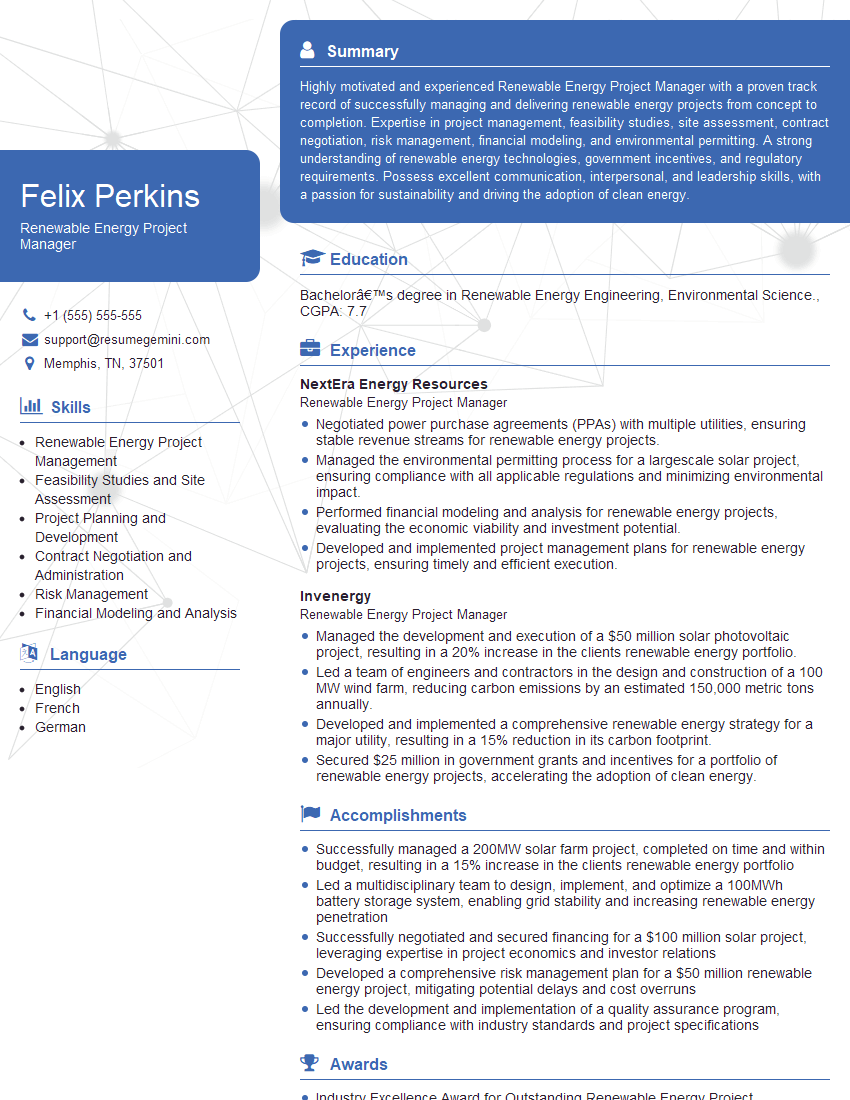
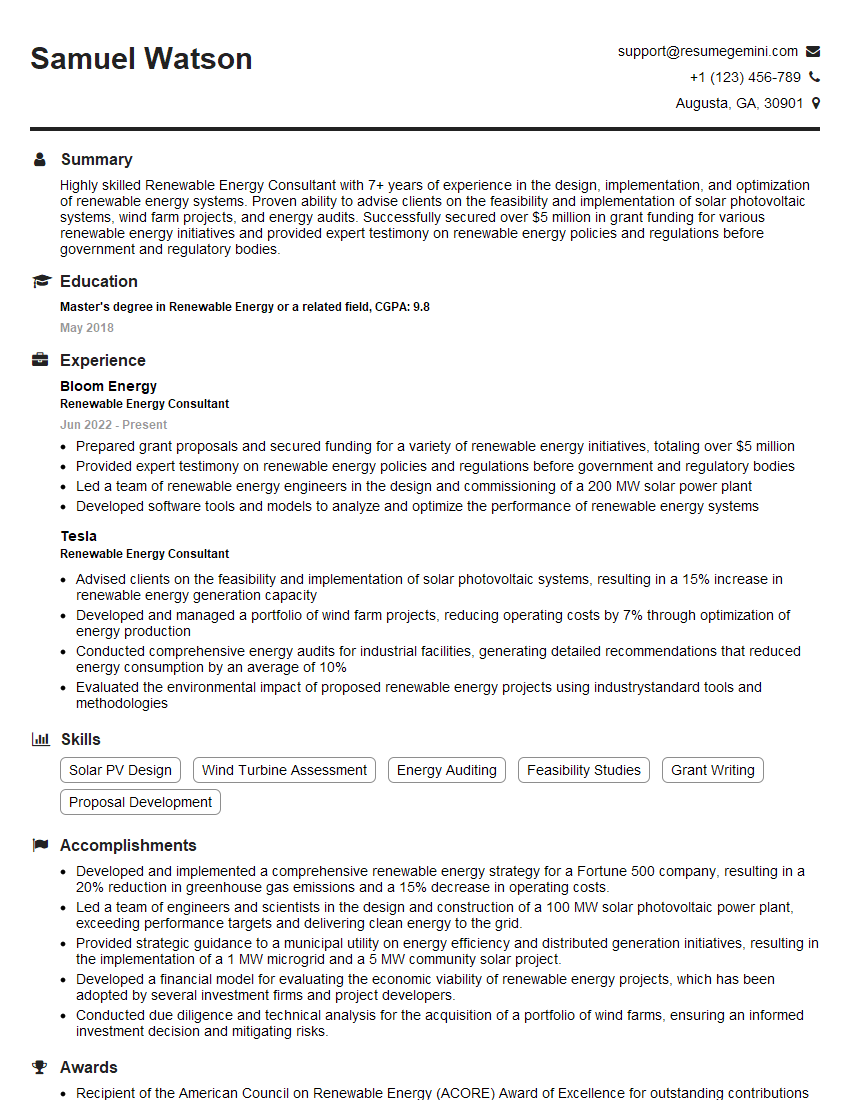
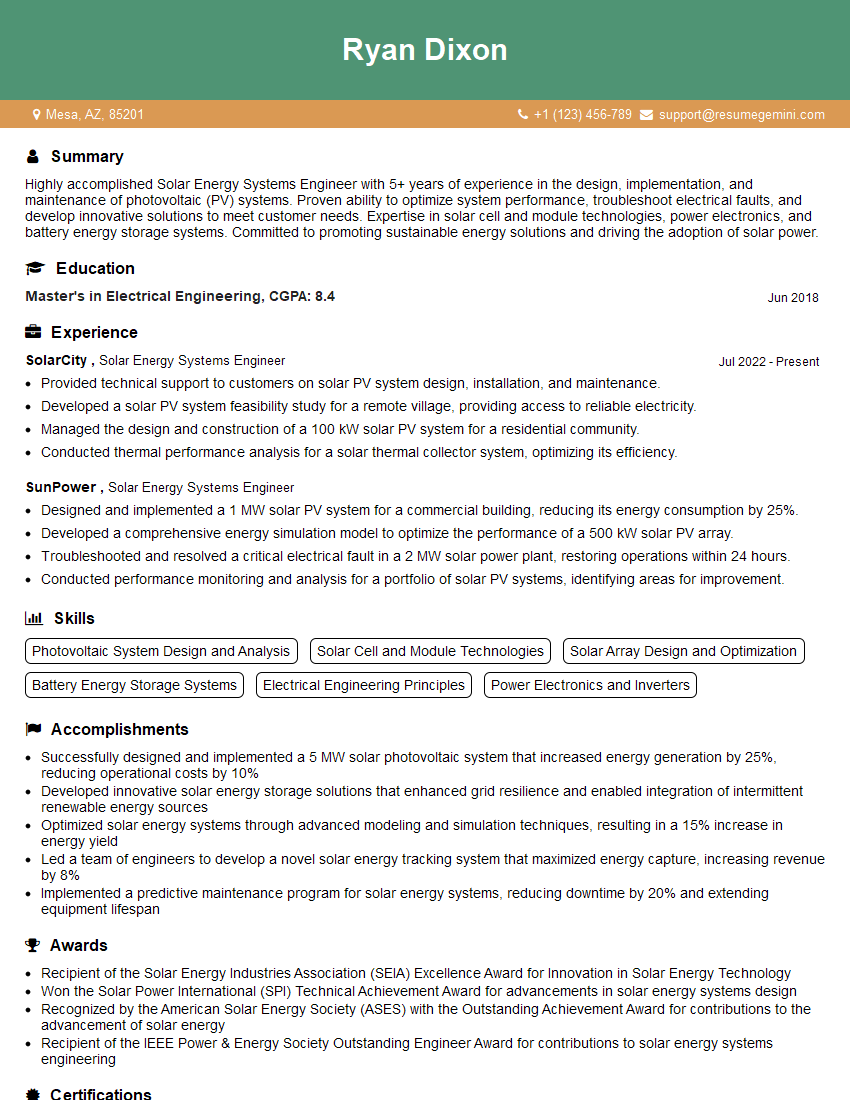
Mastering Renewable Energy Systems Design opens doors to exciting and impactful careers, contributing to a sustainable future. To significantly boost your job prospects, it’s crucial to present your skills effectively through an ATS-friendly resume. ResumeGemini is a trusted resource that can help you craft a professional and compelling resume tailored to the renewable energy sector. They provide examples of resumes specifically designed for Renewable Energy Systems Design roles, helping you stand out from the competition and land your dream job. Take the next step in your career journey – build a winning resume with ResumeGemini today.
Explore more articles
Users Rating of Our Blogs
Share Your Experience
We value your feedback! Please rate our content and share your thoughts (optional).
What Readers Say About Our Blog
Very informative content, great job.
good