Interviews are more than just a Q&A session—they’re a chance to prove your worth. This blog dives into essential Repair and Conservation interview questions and expert tips to help you align your answers with what hiring managers are looking for. Start preparing to shine!
Questions Asked in Repair and Conservation Interview
Q 1. Describe your experience with different types of adhesives used in conservation.
Selecting the right adhesive is paramount in conservation, as it must be reversible, stable over time, and compatible with the artifact’s material. My experience encompasses a wide range of adhesives, each suited to specific materials and situations.
Animal glues (hide glue): A traditional, reversible adhesive ideal for wood and paper, offering excellent adhesion and flexibility. I’ve used hide glue extensively on antique furniture repairs, meticulously controlling its viscosity for optimal results. For instance, I once repaired a cracked Victorian-era writing desk using hide glue, ensuring a strong, yet reversible bond.
Polyvinyl acetate (PVAc) emulsions: These water-based adhesives are widely used for their versatility and ease of use. They’re suitable for various materials, including paper, textiles, and some woods. However, their reversibility is limited, and their long-term stability needs careful consideration. I use PVAc for less critical repairs on paper documents, always testing it on an inconspicuous area first.
Acrylic adhesives: Offering good strength and flexibility, these are suitable for a range of materials, but reversibility can be a concern depending on the formulation. I prefer using them for consolidative repairs where stronger adhesion is needed, but always prioritize carefully considering the potential impact on future treatments.
Synthetic resins: These are used sparingly, often for specific applications, and require very careful selection due to potential risks for irreversible changes in the artifact. I only utilize these in exceptional circumstances, after thorough analysis and consideration of potential long-term implications.
The choice of adhesive is never arbitrary. It’s always determined by a careful assessment of the object’s material, the nature of the damage, and the desired level of reversibility.
Q 2. Explain the process of cleaning a delicate artifact.
Cleaning a delicate artifact requires meticulous planning and execution. The process prioritizes the preservation of the object above all else, meaning sometimes ‘cleaning’ means minimal intervention.
Assessment: A thorough examination is crucial to understand the artifact’s material, condition, and the nature of the dirt or grime. This might involve using magnification and various analytical techniques.
Testing: Before applying any cleaning method, I always test it on an inconspicuous area to determine its effectiveness and any potential negative impact. This step is critical to prevent irreversible damage.
Method Selection: Cleaning methods range from dry cleaning (using soft brushes or compressed air) to wet cleaning (using deionized water and appropriate solvents). The choice depends on the artifact’s material and the type of soiling. For example, I’ve successfully cleaned delicate textiles using specialized vacuuming techniques, while fragile paintings often require the use of micro-sponges and carefully chosen solvents.
Execution: Cleaning is performed methodically, slowly, and with minimal pressure. Frequent monitoring ensures that the cleaning is effective without causing damage. In some cases, using specialized tools, such as micro-brushes or even laser cleaning may be necessary.
Documentation: The entire process is meticulously documented, including photographs, notes on the cleaning methods used, and observations on the artifact’s response. This allows future conservators to understand the history of treatment.
Cleaning a delicate artifact is not merely about removing dirt; it’s a delicate balance between preserving the object’s integrity and improving its visual appeal.
Q 3. What are the ethical considerations in conservation work?
Ethical considerations are paramount in conservation work. Our primary responsibility is to preserve cultural heritage for future generations while respecting the object’s integrity and history.
Reversibility: Treatments should ideally be reversible, allowing future conservators to undo any interventions if necessary. This avoids locking in potentially incorrect or damaging choices. I always prioritize reversible techniques wherever possible.
Minimum Intervention: We should only intervene when absolutely necessary, aiming to do the least amount of work to achieve the desired result. Many times, stabilization is sufficient without extensive cleaning or repair.
Transparency and Documentation: All treatments must be meticulously documented, allowing future researchers and conservators to understand the history of the object and the rationale behind each intervention. Hiding unsuccessful attempts is unethical and inhibits future study.
Authenticity: We must strive to preserve the object’s authenticity, respecting its original materials and construction methods. Any alterations must be clearly documented and differentiated from the original object. For instance, when filling a crack in a wooden object, I ensure that the infill material is clearly distinguishable from the original wood.
Professional Standards: Adhering to professional codes of ethics and best practices is essential to ensuring the highest standards of care and preventing any harm to the artifact or its associated documentation.
Ethical practice ensures the long-term preservation of cultural heritage for the benefit of society.
Q 4. How do you assess the structural integrity of a damaged object?
Assessing structural integrity involves a multi-faceted approach, combining visual inspection with scientific analysis where needed.
Visual Inspection: This is the first step, involving careful observation of the object to identify any cracks, splits, weaknesses, or areas of instability. I utilize magnification tools to detect subtle damage.
Non-destructive Testing: Depending on the object, I might use various non-destructive methods such as X-radiography (to reveal internal damage), infrared reflectography (to identify underlying paint layers), or ultrasonic testing (to assess the condition of internal structures).
Material Analysis: Understanding the object’s material properties is key to determining its structural integrity. This might involve testing the wood’s moisture content, analyzing the composition of adhesives or other materials.
Mechanical Testing: In some cases, very small-scale mechanical tests might be employed to evaluate the strength of particular materials or joins. This needs to be performed minimally and carefully.
Documentation: All findings are meticulously documented, including photographs, drawings, and detailed reports on the assessment’s results. The goal is to create a thorough record that can inform future treatment decisions.
Assessing structural integrity is an iterative process that informs every aspect of a conservation project, ensuring the stability and longevity of the artifact.
Q 5. Describe your experience with various wood repair techniques.
My experience with wood repair techniques encompasses a variety of methods, all chosen based on the specific characteristics of the damage and the wood itself.
Crack Filling: For small cracks, I often use consolidants or carefully matched wood fillers. I carefully consider the compatibility of these materials with the original wood, ensuring minimal disruption to the object’s original appearance.
Wedge Repair: For larger cracks or splits, I might employ wood wedges, carefully chosen to match the wood’s species and color. The process involves precisely inserting wedges, and often then carefully consolidating the joins.
Splint Repair: This involves adding small strips of wood (splints) to the outside of a damaged area to provide structural support. This is often used for reinforcing weakened areas.
Replacement: In some cases, particularly with significant damage, replacing sections of wood might be necessary. This requires extremely careful crafting of the replacement piece to ensure a seamless visual integration.
Consolidation: Strengthening weakened wood through the use of consolidants is often a crucial step before other repairs are undertaken. I often use specialized consolidants suited to the type of wood being treated.
Wood repair is a delicate process that demands precision, skill, and a deep understanding of wood properties. Each technique is chosen carefully to balance structural integrity with aesthetic considerations.
Q 6. How do you choose appropriate materials for conservation?
Choosing appropriate materials is a critical aspect of conservation. The selection process involves considering several factors and prioritizing those that are minimally invasive.
Compatibility: The material must be chemically and physically compatible with the artifact’s original materials, avoiding any potential adverse reactions. This requires knowledge of material science and testing where needed.
Reversibility: Whenever possible, materials should be chosen for their reversibility, allowing future conservators to remove them if necessary. This reduces the risk of locking in potentially incorrect treatments.
Stability: Materials must be chemically and physically stable over time, ensuring that they do not degrade or react with the artifact over years.
Aesthetics: Materials should be chosen so they do not detract from the artifact’s visual appeal and should be as closely matched as possible to the original materials wherever possible.
Availability and Cost: Practical considerations regarding the availability and cost of materials are important as well, though never at the expense of compatibility, stability, and reversibility.
Material selection is a complex decision-making process that reflects an understanding of materials science and a commitment to the long-term preservation of the object.
Q 7. Explain the concept of ‘minimum intervention’ in conservation.
‘Minimum intervention’ is a core principle in conservation, emphasizing the importance of doing the least possible amount of work to achieve the desired outcome. It prioritizes preserving the object’s original integrity and history above all else.
This approach encourages us to ask ourselves: Is intervention truly necessary? What is the least invasive way to achieve the goal? It’s not about avoiding action; it’s about strategically assessing whether and how to intervene while minimizing negative impacts. A key aspect of minimum intervention is often the prioritization of stabilization above restoration. The focus is on ensuring the object’s long-term survival, not necessarily returning it to its original pristine state. For instance, I recently worked on a 19th century painting where the flaking paint presented a risk of loss. Instead of extensive repainting, I focused on the stabilization of the flaking areas. This is a perfect example of minimum intervention focusing on prevention of further deterioration rather than full restoration.
Minimum intervention acknowledges the historical value of an object’s deterioration, understanding that these changes form part of its story. It champions a respectful, thoughtful, and scientifically rigorous approach to conservation.
Q 8. Describe your experience with textile conservation techniques.
Textile conservation is a delicate art and science involving the preservation of fabric artifacts. My experience encompasses a wide range of techniques, from the basic – like surface cleaning with soft brushes and vacuuming – to more complex procedures. I’m proficient in methods for stabilizing weakened fibers, such as using Japanese tissue and wheat starch paste for mending tears and holes. I also have extensive experience in the careful removal of stains, using various techniques based on the type of stain and the textile’s composition. For example, I’ve successfully treated water stains on a 19th-century silk dress using a carefully controlled humidification process followed by gentle blotting. For more significant damage, I’ve employed techniques such as infilling losses with compatible materials and the consolidation of fragile areas using appropriate adhesives. Furthermore, my expertise extends to the appropriate storage and handling of textiles, crucial for long-term preservation, including the use of acid-free materials and controlled environmental conditions.
For instance, I worked on a project involving a heavily damaged antique tapestry. The tapestry had significant losses, fading, and areas where the warp and weft threads were severely weakened. My approach involved a multi-step process: careful documentation, gentle cleaning, fiber consolidation using a carefully chosen adhesive, and finally, the infilling of significant losses using a similar weave structure and compatible yarn. The end result was a significantly improved state of preservation while maintaining the tapestry’s integrity and historical context.
Q 9. What are some common challenges in repairing historical documents?
Repairing historical documents presents unique challenges due to the fragility of the materials involved – often paper, parchment, or vellum – and the presence of various forms of degradation. Common issues include: acid degradation, causing embrittlement and discoloration; foxing, the appearance of brown spots due to fungal activity; insect infestation, causing holes and damage to fibers; and water damage, resulting in warping, tearing, and mold growth. The inks themselves can also fade or become unstable over time. Another critical challenge lies in the need to balance preservation with accessibility. Any intervention must be reversible and should not compromise the document’s historical value or authenticity.
- Material degradation: The inherent instability of many historical paper formulations often leads to deterioration.
- Ink instability: Certain inks are particularly susceptible to fading or chemical reactions that can damage the surrounding paper.
- Previous repairs: Past attempts at repair, often using inappropriate materials and techniques, can complicate conservation efforts.
Think of it like trying to repair a very old and delicate photograph – every action needs to be considered carefully. The wrong touch, the wrong chemical, or the wrong adhesive can cause irreparable harm.
Q 10. How do you document your conservation work?
Meticulous documentation is fundamental to ethical and effective conservation work. My documentation process begins with a thorough initial assessment of the object, including detailed photographic records (high-resolution images from multiple angles and close-ups of areas of damage). I use condition reports that record the object’s physical condition and any observed deterioration. These reports form a baseline for tracking changes over time. I also keep detailed treatment records, documenting every step of the conservation process, including materials used (with specific product codes and suppliers) and any challenges or unexpected findings. This includes descriptions of the chosen methods, rationale behind these choices, and any adjustments made. Photographs are taken at each stage of the process, and sometimes video documentation is used to visually record the treatments. All documentation is stored securely and digitally, ensuring its long-term availability. In essence, my documentation aims to create a transparent and accessible record of the object’s history and treatment, allowing future conservators to understand my decisions and, if necessary, reverse or adapt the intervention.
Q 11. Explain your experience with different types of paint analysis.
My experience encompasses various paint analysis techniques, crucial for understanding the composition of a painting and informing appropriate conservation strategies. I’m familiar with non-invasive methods such as visual examination under different lighting conditions (including UV and raking light), which allow for the identification of certain pigments and paint layers without altering the artwork. I also utilize more advanced techniques, including microscopy (both optical and electron microscopy) for close examination of the paint layers and identifying microscopic changes. Spectroscopy, particularly X-ray fluorescence (XRF) and infrared reflectography (IRR), plays a significant role in identifying pigments, identifying underdrawings, and detecting areas of retouching without any physical contact with the artwork. Understanding the chemical composition of the paints allows us to choose compatible cleaning materials and understand the risks involved in each treatment.
For instance, using XRF on a seemingly simple oil painting recently revealed the presence of unexpected lead-based pigments, alerting us to the need for extra caution during cleaning and treatment to avoid harmful lead dust.
Q 12. How do you handle unexpected problems during a restoration project?
Unexpected problems are almost inevitable in restoration projects. My approach involves a combination of preparedness, adaptability, and a commitment to ethical decision-making. I always conduct thorough preliminary investigations, which helps to anticipate potential problems. When the unexpected arises, my first step is to carefully document the issue, taking photographs and detailed notes. I then consult relevant literature and experts, seeking advice and exploring possible solutions. It often requires careful analysis and experimentation with small, inconspicuous areas of the object before proceeding with more widespread treatments. The focus is always on minimizing harm and ensuring that the intervention is reversible. Transparency with clients is crucial; it’s vital to explain the challenge, the proposed solution, and potential risks. For example, I once encountered an unexpected chemical reaction during a cleaning process on a watercolor painting. The immediate action was to stop the process, document the issue thoroughly, and consult with a paint chemist before proceeding with alternative cleaning methods.
Q 13. What are the key differences between conservation and restoration?
While both conservation and restoration aim to preserve cultural heritage, there are fundamental differences in their approaches. Conservation emphasizes the least invasive approach, focusing on stabilizing the object’s condition and preventing further deterioration. It prioritizes maintaining the object’s original materials and structure as much as possible. Restoration, on the other hand, often involves a more active intervention, aiming to visually reconstruct or repair damaged areas of the object. It might entail replacing lost elements or filling gaps. Conservation is generally preferred as it is more ethically sound, preserving the object’s history and authenticity. However, in some cases, a measured level of restoration may be deemed appropriate to enhance the object’s presentation or stability. The choice between the two depends on the object’s condition, its significance, and ethical considerations.
Think of it as treating a wound. Conservation would be like cleaning and bandaging the wound to prevent infection, while restoration might involve reconstructive surgery to mend the damaged tissue. Conservation is often the preferred approach, as it focuses on keeping the original as much as possible.
Q 14. Explain your knowledge of preventative conservation strategies.
Preventative conservation is the most effective way to minimize the need for later interventions. It encompasses a multifaceted approach, focusing on controlling environmental factors and proper handling and storage. This includes maintaining stable temperature and relative humidity levels to prevent fluctuations that can accelerate deterioration. Protection from light, particularly UV radiation, is crucial, as it can cause fading and embrittlement. The use of acid-free materials for storage and display is also essential to avoid chemical damage. Proper handling, such as using appropriate gloves and avoiding direct contact, is key to preventing physical damage. Regular monitoring and inspection for pests are vital to protect the collections from insect infestations and mold growth. The development and implementation of comprehensive collection management plans are also important aspects of preventive conservation, ensuring appropriate storage, handling, and environmental control.
For example, we use climate-controlled storage facilities with UV-filtering glazing and regular pest monitoring to protect delicate textile artifacts. This preventative care ensures long-term preservation, minimizing the need for extensive, and potentially risky, later interventions.
Q 15. How do you assess the environmental conditions affecting an artifact?
Assessing the environmental conditions affecting an artifact is crucial for its long-term preservation. It’s like giving the artifact a thorough health check-up, looking for factors that might cause damage. This involves carefully evaluating several key elements:
- Temperature and Humidity: Fluctuations in temperature and humidity are major culprits in causing deterioration. Extreme dryness can lead to cracking in wooden objects, while excessive moisture promotes mold growth and warping. I use calibrated instruments like thermohygrometers to monitor these parameters and ensure they remain within the artifact’s optimal range.
- Light Exposure: Ultraviolet (UV) and visible light can fade pigments, embrittle materials, and cause photochemical changes. I’d assess the light levels using a lux meter and recommend measures such as UV-filtering glazing or controlled lighting to minimize light exposure.
- Air Quality: Pollutants such as sulfur dioxide and nitrogen oxides can react with artifact materials, causing corrosion or discoloration. I’d assess air quality by checking for particulate matter, pollutants and potentially employing air quality monitoring devices. Proper ventilation systems might be recommended to reduce the presence of these pollutants.
- Pests: Insects, rodents, and other pests can cause significant damage by feeding on or nesting within artifacts. Regular inspections and pest control measures are crucial.
- Physical factors: Vibration, seismic activity, and even physical handling can all damage artifacts. I evaluate the structural integrity of the display environment and recommend stabilization techniques where appropriate.
For example, I once worked on a collection of antique textiles that were exhibiting significant fading. After careful assessment, I discovered high levels of UV light exposure were the primary cause. By installing UV-filtering glass and implementing a controlled lighting system, we significantly slowed down the deterioration process.
Career Expert Tips:
- Ace those interviews! Prepare effectively by reviewing the Top 50 Most Common Interview Questions on ResumeGemini.
- Navigate your job search with confidence! Explore a wide range of Career Tips on ResumeGemini. Learn about common challenges and recommendations to overcome them.
- Craft the perfect resume! Master the Art of Resume Writing with ResumeGemini’s guide. Showcase your unique qualifications and achievements effectively.
- Don’t miss out on holiday savings! Build your dream resume with ResumeGemini’s ATS optimized templates.
Q 16. Describe your experience with digital imaging techniques in conservation.
Digital imaging plays a vital role in conservation, providing a non-invasive way to document the condition of an artifact before, during, and after treatment. Think of it as creating a detailed medical record for the artifact.
- High-resolution photography: I use high-resolution cameras with macro lenses to capture detailed images of surface features, revealing cracks, insect damage, or other subtle signs of deterioration. This allows for precise documentation of the artifact’s condition over time.
- Multispectral imaging: This technique uses various wavelengths of light, including infrared and ultraviolet, to reveal information hidden to the naked eye. For instance, it can reveal underlying paint layers or reveal areas of deterioration invisible in visible light.
- 3D scanning: This technique creates a three-dimensional model of the artifact, providing valuable information about its shape, size, and any distortions. This is especially useful for fragile objects where handling is limited.
- Image analysis software: Specialized software allows for the quantitative analysis of images, providing measurements of cracks, discoloration, or other features. This allows for objective monitoring of the artifact’s condition.
In one project, we used multispectral imaging to identify areas of foxing (brown spots) on an ancient manuscript that were invisible to the naked eye. This allowed us to target treatment precisely and avoid unnecessary intervention in undamaged areas.
Q 17. Explain your understanding of material science as it relates to conservation.
Material science is fundamental to conservation. Understanding the chemical and physical properties of materials allows us to predict how an artifact will react to different environmental conditions and treatments. It’s like knowing the recipe of a dish to ensure you can safely and effectively prepare and preserve it.
- Material identification: Techniques like X-ray diffraction (XRD), gas chromatography-mass spectrometry (GC-MS), and Fourier-transform infrared spectroscopy (FTIR) are used to identify the composition of artifact materials. Knowing if something is made of linen, cotton or silk dictates how we treat and preserve it.
- Understanding degradation processes: Material science helps us understand the chemical and physical processes that cause materials to deteriorate, such as oxidation, hydrolysis, and biodegradation. This understanding allows us to develop effective preservation strategies. For instance, understanding that iron oxidizes helps us develop strategies to prevent further rusting.
- Selecting appropriate treatments: Knowledge of material properties allows us to select suitable cleaning methods, adhesives, and consolidation materials that will not damage or further degrade the artifact. For example, we wouldn’t use a water-based cleaning method on a water-sensitive material like parchment.
For example, in the conservation of a bronze sculpture, understanding the properties of bronze alloys allows us to select appropriate cleaning and protective treatments that will prevent further corrosion without damaging the patina.
Q 18. What are some common pests and their effects on artifacts?
Pests pose a significant threat to artifacts, causing damage ranging from minor surface blemishes to complete destruction. It’s like having uninvited guests wreaking havoc on a precious possession.
- Insects: Carpet beetles, silverfish, booklice, and woodworms are common culprits. They feed on organic materials like textiles, paper, and wood, causing holes, weakening structures, and leaving behind frass (insect excrement).
- Rodents: Mice and rats can gnaw on artifacts, causing physical damage and contaminating them with their droppings and urine.
- Fungi: Molds and mildews thrive in humid environments, causing discoloration, staining, and weakening of materials. They can also release harmful spores.
Effective pest control involves a multi-pronged approach, including regular inspections, implementing preventative measures like environmental controls (humidity and temperature management), and using appropriate insecticides or other pest control methods when necessary. Always ensure these methods are safe for the artifact and the environment.
Q 19. How do you manage a conservation project budget?
Budget management is crucial for a successful conservation project. It’s like carefully planning a renovation project – every step must be accounted for.
- Detailed budgeting: A comprehensive budget outlines all anticipated costs, including materials, labor, equipment rental, analysis, testing and any unforeseen expenses. I use spreadsheets or dedicated project management software to track expenses.
- Prioritization: If budget constraints exist, I prioritize treatments based on their urgency and impact on the artifact’s preservation. This might involve focusing on the most critical areas of deterioration first.
- Cost-effective solutions: I seek out cost-effective materials and techniques without compromising the quality of the conservation work. This might involve exploring alternative suppliers or utilizing readily-available materials.
- Regular monitoring: I track expenses throughout the project, comparing actual costs to the budget and adjusting as necessary. This allows for early detection of cost overruns.
For example, in one project, we were able to significantly reduce costs by using commercially available conservation-grade materials instead of more expensive specialty products, without sacrificing the quality of the conservation work.
Q 20. What safety precautions do you take during conservation work?
Safety is paramount in conservation work. We’re working with fragile artifacts and often using chemicals and equipment that pose potential risks. It’s essential to have a safety-first mindset.
- Personal Protective Equipment (PPE): I always wear appropriate PPE, including gloves, eye protection, respirators, and protective clothing, depending on the task. This varies depending on the materials and chemicals being used.
- Proper ventilation: When working with volatile chemicals or materials that produce dust, proper ventilation is essential. This may involve working in a fume hood or using respirators with appropriate filters.
- Safe handling of artifacts: I use appropriate handling techniques to prevent damage to artifacts, including using supports, cushioning materials, and appropriate lifting techniques.
- Chemical safety: I am well-versed in the safe handling and disposal of chemicals, following all relevant safety data sheets and regulations. All chemicals are properly labelled and stored.
- Emergency procedures: A clear emergency plan is in place, including the location of emergency exits, eyewash stations, and first aid kits.
For instance, when working with solvents, I always ensure adequate ventilation and wear appropriate respiratory protection to prevent inhalation of harmful fumes.
Q 21. Describe your experience with working in a team setting.
Collaboration is integral to conservation. Complex projects often require a multidisciplinary team with specialized skills. It’s like assembling a skilled orchestra to achieve a harmonious outcome.
- Communication: I maintain clear and open communication with all team members, regularly exchanging information and updates. This is done through regular meetings, emails and project management tools.
- Shared goals: A shared understanding of the project goals and objectives ensures everyone is working towards the same outcome.
- Respectful collaboration: I value the expertise and contributions of each team member and foster a collaborative environment where ideas are openly shared and discussed. Different perspectives lead to innovative solutions.
- Delegation: I effectively delegate tasks to team members based on their skills and experience, ensuring efficient workflow. This could include assigning specific tasks such as photography, analysis or treatment.
In a recent project involving the conservation of a large mural, we collaborated with conservators specializing in wall painting, art historians, engineers and scientists, each contributing their expertise to achieve successful preservation.
Q 22. Explain your problem-solving approach in a conservation context.
My problem-solving approach in conservation is systematic and deeply rooted in scientific principles. It begins with a thorough assessment of the artifact, meticulously documenting its condition, identifying damage types, and understanding the materials involved. This diagnostic phase is crucial. Think of it like a doctor examining a patient – you need a complete picture before prescribing treatment.
Next, I research historical context, material properties, and appropriate conservation techniques. For example, if dealing with a corroded bronze sculpture, I wouldn’t just consider aesthetics; I’d research its metallurgical composition, the environmental factors leading to corrosion, and the long-term effects of different cleaning methods. This research guides the selection of the least invasive and most effective intervention.
Then comes the treatment planning. This includes testing different methods on inconspicuous areas to assess their effectiveness and potential side effects. The treatment itself is carefully executed, meticulously documented at each stage with photography and detailed notes. Finally, post-treatment monitoring is essential to ensure the stability and longevity of the conservation work.
For instance, working on a water-damaged manuscript, I’d first assess the extent of the damage, identify the type of paper and ink, and then carefully test different cleaning methods on small, inconspicuous areas before proceeding with a full treatment, perhaps using techniques like surface cleaning, deacidification, or repair of tears.
Q 23. How do you prioritize tasks in a conservation project?
Prioritizing tasks in a conservation project requires a balanced approach considering urgency, significance, and feasibility. I typically employ a risk assessment matrix, weighing the potential for further deterioration against the resources required for intervention. Items at high risk of irreversible damage take precedence, even if they require more resources.
For instance, if I’m working on a collection with both a severely water-damaged painting and a slightly faded textile, the painting would take priority due to the higher risk of mold growth and further degradation. This prioritization process might also involve consulting with other experts, curators, or stakeholders to ensure we are all aligned on the importance and urgency of tasks.
We often use a system of color-coded labels and a shared digital project management tool to keep track of these priorities, ensuring transparency and accountability throughout the team. This approach also helps manage expectations of various stakeholders and ensures resources are distributed effectively.
Q 24. What are your skills in using specialized conservation tools?
My skills in using specialized conservation tools are extensive, covering a range of equipment from basic hand tools to sophisticated analytical instruments. I’m proficient with micro-spatulas for delicate cleaning, various types of scalpels and needles for repair, humidification chambers for relaxing brittle materials, and specialized adhesives for consolidation.
Beyond manual tools, I have experience with imaging techniques like microscopy (both optical and electron microscopy), X-ray fluorescence (XRF) for material identification, and gas chromatography-mass spectrometry (GC-MS) for analyzing organic materials. For example, XRF allows me to determine the metal composition of an artifact before selecting the appropriate cleaning method, avoiding potentially damaging reactions.
I also understand the limitations of each tool and how to interpret the results accurately. My understanding extends beyond mere technical proficiency to include careful calibration, maintenance, and safe handling of these specialized instruments, ensuring accurate and reliable data for decision-making in conservation.
Q 25. Explain your experience with different types of metal conservation techniques.
My experience with metal conservation spans various techniques, adapted to the specific metal and its condition. I’m adept at electrochemical methods like electrolytic reduction for cleaning corroded silver and bronze, carefully controlling parameters like current density and electrolyte composition to prevent damage. For iron artifacts, I utilize techniques like chemical reduction and mechanical cleaning, always mindful of minimizing the removal of original material.
I have also worked extensively with consolidants to stabilize weakened or fragile metal objects, and I’m skilled in techniques like lacquering and waxing for protection. The choice of technique depends on factors such as the type of corrosion, the object’s overall condition, and the desired aesthetic outcome. For example, I’d use a different approach for a highly decorative gilded bronze than for a heavily corroded iron tool.
Furthermore, I understand the importance of proper storage and environmental control to prevent future corrosion. This includes maintaining stable temperature and humidity levels and minimizing exposure to pollutants. The ongoing maintenance of the treated metal object is equally vital for its longevity and preservation.
Q 26. How do you handle disagreements with colleagues regarding conservation methods?
Disagreements regarding conservation methods are inevitable, given the complexity and subjectivity inherent in the field. My approach emphasizes open communication and collaborative problem-solving. I start by actively listening to my colleagues’ perspectives, understanding the reasoning behind their suggestions, and ensuring we’re all working from the same baseline data.
If a disagreement persists, I advocate for a peer review, bringing in a third expert to offer an independent assessment. We may also conduct additional research or testing to clarify uncertain aspects. The goal is not to ‘win’ the argument but to arrive at the best possible treatment strategy for the artifact, based on the available evidence and established best practices. This process strengthens the team’s collective understanding and ultimately leads to a more informed decision.
I believe in fostering a respectful environment where everyone feels comfortable voicing their concerns and contributing to the decision-making process. This collaborative approach ensures the conservation treatment is the best it can be and minimizes the risks involved. Documenting all discussions and decisions carefully is also crucial for transparency and accountability.
Q 27. Describe your experience with creating and following a conservation plan.
Creating and following a conservation plan is fundamental to any successful project. I begin by conducting a thorough condition assessment of the artifact, documenting damage, materials, and context. This forms the basis of the plan, which details the proposed treatment, including specific methods, materials, and a timeline.
The plan also incorporates risk assessment, outlining potential problems and mitigation strategies. It’s crucial to be realistic about timeframes and resource allocation, including personnel, equipment, and materials. Ethical considerations are also integral, focusing on the least invasive approach that maintains the integrity and authenticity of the artifact.
For example, a recent project involved conserving a collection of 18th-century textiles. My conservation plan outlined detailed procedures for cleaning, repairing tears, and stabilizing weak fibers, along with a comprehensive risk assessment considering factors such as light exposure and the inherent fragility of the materials. Regular progress reports and adjustments to the plan based on observations during treatment are standard practice to ensure the project stays on track and achieves its objectives. A well-written plan is an invaluable tool, ensuring that everyone involved is on the same page and that the conservation work is carried out efficiently and effectively.
Q 28. What are your professional development goals in the field of conservation?
My professional development goals center around expanding my expertise in advanced analytical techniques and innovative conservation methodologies. I’m particularly interested in furthering my knowledge of non-invasive imaging techniques like X-ray computed tomography (CT scanning) and hyperspectral imaging for detailed analysis of artifacts without causing damage.
I also aim to improve my skills in project management and team leadership, enhancing my ability to manage complex conservation projects effectively and mentor junior conservators. Furthermore, I plan to engage more in research and publication, sharing my knowledge and contributing to the broader field of conservation science. Staying up-to-date with the latest advancements and best practices is a continuous process, crucial for professional growth and the preservation of cultural heritage.
Finally, I am keen to explore opportunities for international collaboration, learning from and sharing knowledge with conservators working in different regions and cultural contexts. This will broaden my understanding and help me approach conservation challenges with a more global perspective.
Key Topics to Learn for Your Repair and Conservation Interview
- Materials Science & Degradation: Understanding the properties of various materials (wood, metal, textiles, etc.) and how they degrade over time due to environmental factors and use. Consider the chemical and physical processes involved.
- Conservation Ethics & Principles: Familiarize yourself with ethical considerations in conservation, such as minimally invasive techniques and the importance of documentation. Understand the difference between repair and restoration.
- Diagnostic Techniques: Learn about methods used to assess the condition of artifacts and objects, such as visual inspection, microscopy, and scientific analysis. Be prepared to discuss how these techniques inform treatment decisions.
- Repair Techniques: Master the practical application of various repair methods, including joining techniques, filling materials, and surface treatments. Be ready to discuss the advantages and disadvantages of different approaches.
- Preventive Conservation: Understand strategies for preventing damage and deterioration, such as proper storage, environmental control, and handling techniques. This is crucial for long-term preservation.
- Risk Assessment & Management: Discuss your approach to identifying and mitigating potential risks during the repair and conservation process. This demonstrates a proactive and responsible approach to your work.
- Documentation & Reporting: Thorough documentation is critical. Be prepared to discuss methods for recording treatments, including photography, written reports, and digital archiving.
- Health & Safety: Understand and adhere to relevant health and safety regulations and procedures when handling materials and using tools and equipment.
Next Steps
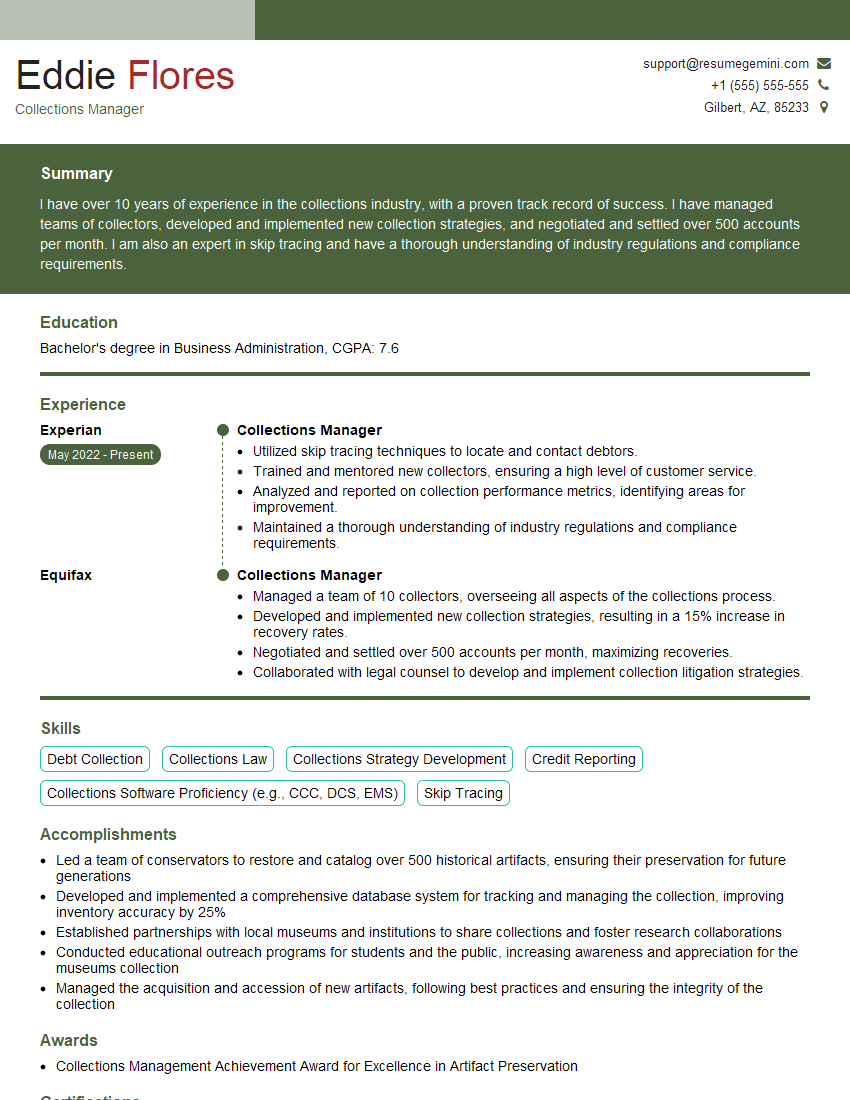
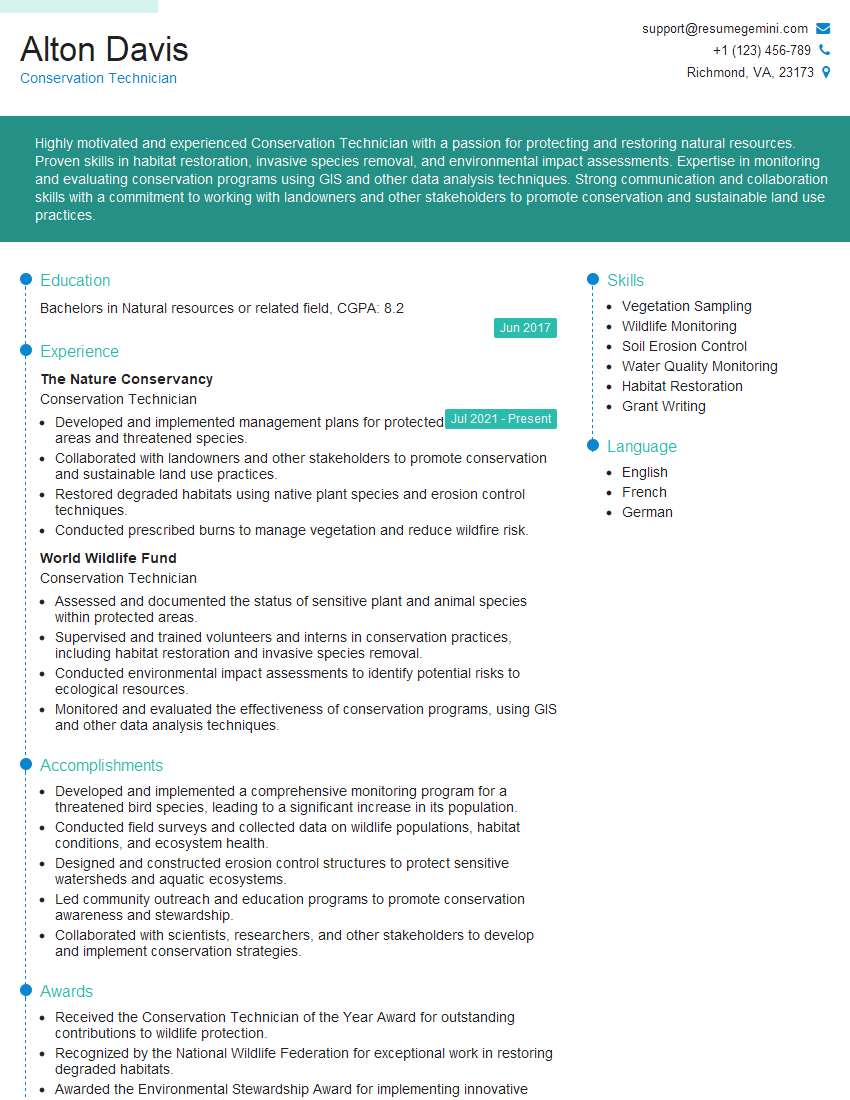
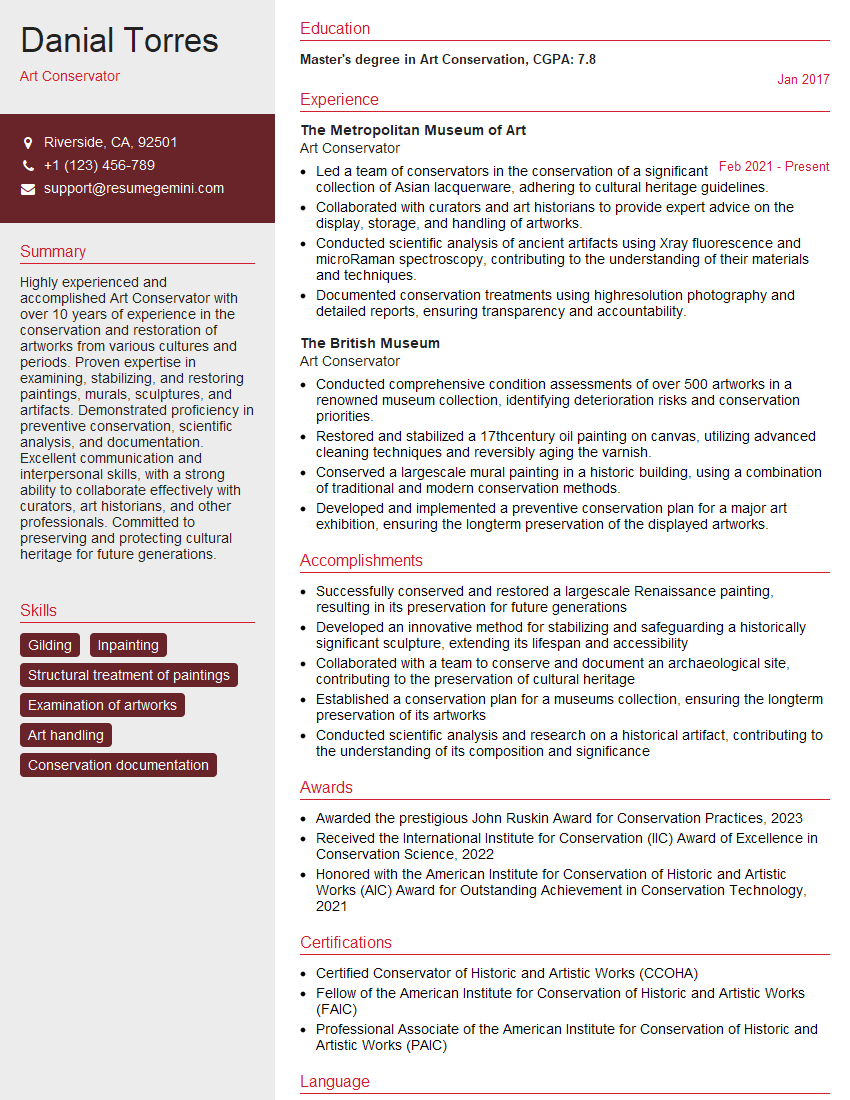
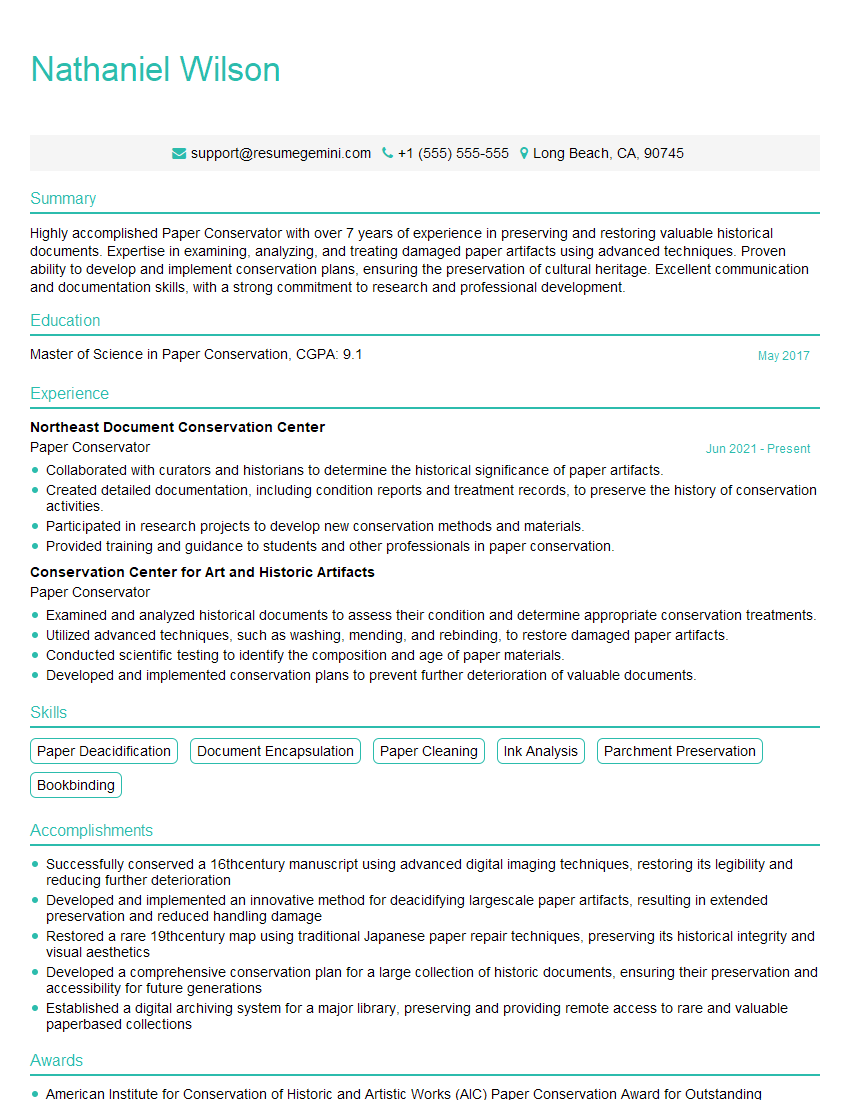
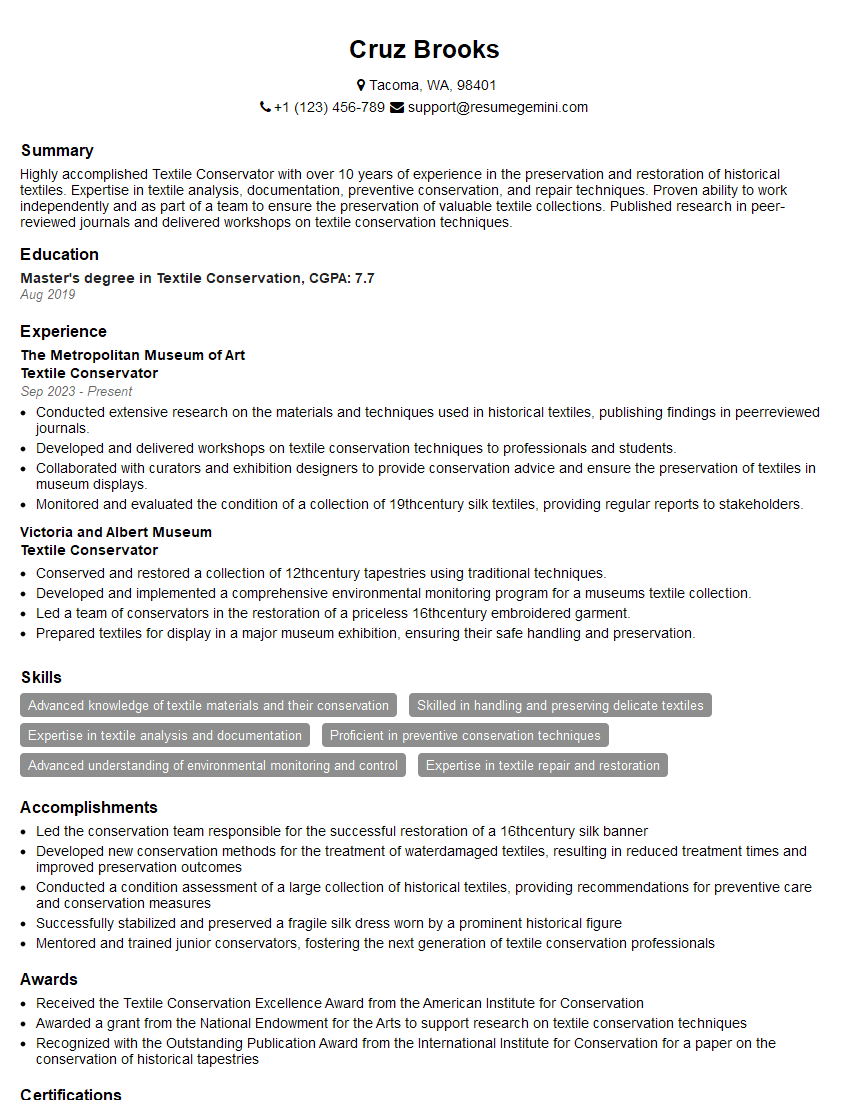
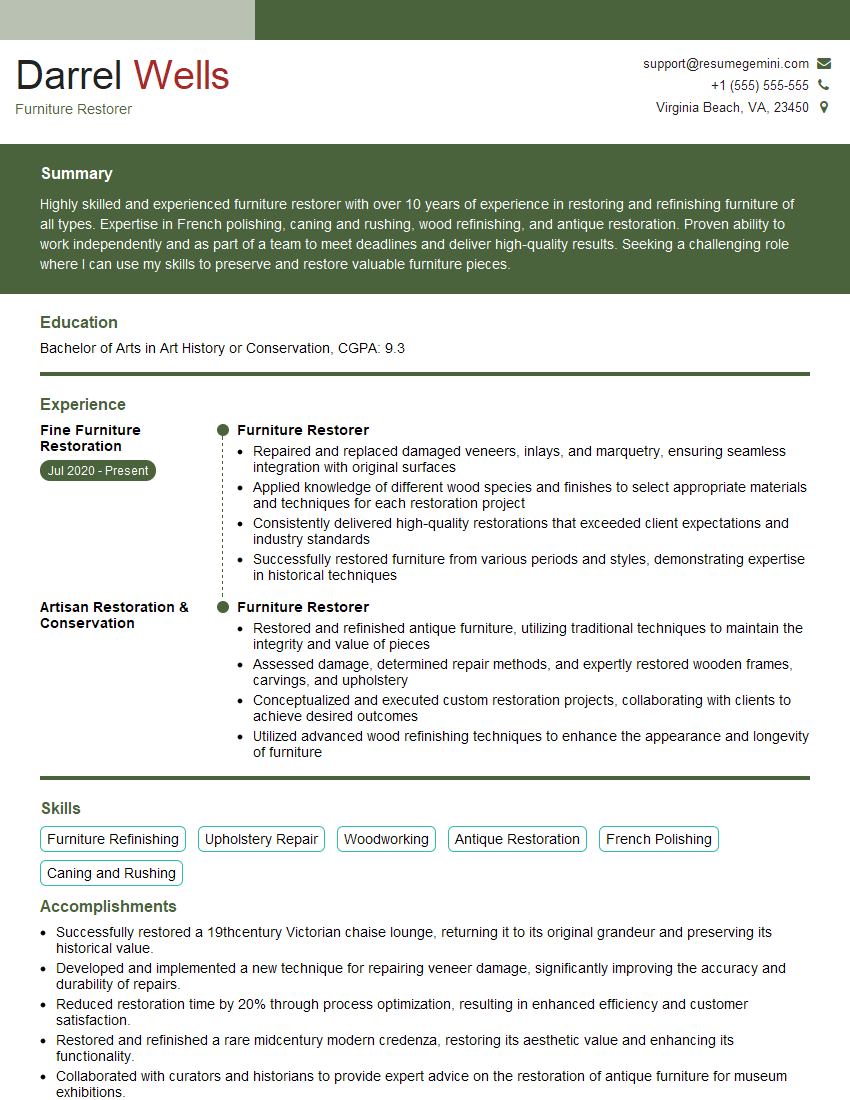
Mastering the art of Repair and Conservation opens doors to a rewarding career filled with challenges and creative problem-solving. To significantly boost your job prospects, invest time in crafting a strong, ATS-friendly resume that showcases your skills and experience effectively. ResumeGemini is a trusted resource that can help you build a professional and impactful resume tailored to the specific requirements of Repair and Conservation roles. We provide examples of resumes specifically designed for this field to guide you in creating yours. Take advantage of this valuable tool and increase your chances of landing your dream job!
Explore more articles
Users Rating of Our Blogs
Share Your Experience
We value your feedback! Please rate our content and share your thoughts (optional).
What Readers Say About Our Blog
Very informative content, great job.
good