Feeling uncertain about what to expect in your upcoming interview? We’ve got you covered! This blog highlights the most important Repair and Replacement interview questions and provides actionable advice to help you stand out as the ideal candidate. Let’s pave the way for your success.
Questions Asked in Repair and Replacement Interview
Q 1. Describe your experience in diagnosing and repairing faulty equipment.
Diagnosing and repairing faulty equipment is a systematic process that combines technical knowledge with analytical skills. It begins with a thorough understanding of the equipment’s functionality and a careful examination of the reported malfunction. I approach this by first listening carefully to the user’s description of the problem, noting any error messages or unusual behavior. Then, I visually inspect the equipment for any obvious damage, loose connections, or signs of overheating. For example, if a computer is failing to boot, I might check the power supply, RAM, and hard drive for visible defects before moving on to more advanced diagnostics.
Next, I use a combination of diagnostic tools (discussed in a later answer) to pinpoint the exact source of the problem. This often involves testing individual components to isolate the faulty part. For instance, if the computer’s hard drive is suspected, I’d run diagnostic software to check for bad sectors or other errors. This methodical approach ensures accuracy and reduces the time spent on unnecessary repairs.
Q 2. What troubleshooting techniques do you employ to identify the root cause of a malfunction?
My troubleshooting techniques are guided by a structured approach. I start with the simplest and most likely causes before progressing to more complex issues. This is often summarized by the acronym ‘FIRST’: Find the problem, Isolate the problem, Repair the problem, Start the system, Test the system.
- Visual Inspection: A quick look for obvious issues like loose wires, burnt components, or physical damage can often solve the problem immediately.
- Functional Testing: I test individual components to confirm functionality. For instance, swapping out a suspected faulty RAM stick with a known good one.
- Diagnostic Tools: Utilizing multimeters, oscilloscopes, specialized software, and other diagnostic equipment provides precise readings and data to guide the diagnosis.
- Process of Elimination: Systematically eliminating possible causes through testing and observation is crucial. This is like a detective solving a crime; I collect clues (data from tests), identify suspects (components), and eliminate them one by one.
- Reference Materials: Schematics, manuals, and online resources are invaluable in understanding the equipment’s inner workings and identifying potential failure points.
For example, in troubleshooting a malfunctioning washing machine, I might start by checking the power supply, then the water inlet valves, and finally, the motor, using a multimeter to test voltage and current at each stage.
Q 3. Explain your process for replacing defective components.
Replacing defective components is a precise and careful process. Safety is paramount, and I always follow manufacturer’s instructions and safety protocols. First, I power down the equipment and disconnect it from any power source. Next, I carefully remove the faulty component, taking note of its orientation and any special connections. This is like performing surgery; precision and attention to detail are vital.
Before installing the replacement, I carefully inspect it to ensure it matches the specifications of the original component. I then install the new component, ensuring that all connections are secure and correctly aligned. Once installed, I power up the equipment and perform thorough testing to verify that the replacement has solved the problem and that no new issues have been introduced. Documentation of the part number and serial number is critical for traceability and warranty claims.
For example, replacing a capacitor in a power supply involves carefully desoldering the old one, checking for polarity on the new component before soldering it in place, and then testing the output voltage of the power supply to confirm proper function.
Q 4. How do you ensure the safety of yourself and others while performing repairs?
Safety is my top priority. Before undertaking any repair, I assess the potential hazards associated with the equipment and the task. This involves identifying potential sources of electrical shock, sharp objects, moving parts, or hazardous materials.
I always use appropriate safety equipment such as insulated tools, safety glasses, gloves, and hearing protection, as needed. For electrical equipment, I ensure that the power is completely disconnected before working on it. I also adhere to lockout/tagout procedures to prevent accidental energization. Furthermore, I maintain a clean and organized workspace to avoid accidents. For complex repairs, I might consult with colleagues or seek guidance from manufacturers to ensure I’m using the safest methods.
My approach is proactive, rather than reactive. Prevention is key; identifying risks beforehand significantly reduces the chances of an accident.
Q 5. What are your preferred methods for documenting repair procedures?
Accurate and detailed documentation is essential for traceability, troubleshooting future issues, and maintaining a history of repairs. My preferred methods include:
- Digital Reporting Systems: I utilize software specifically designed for repair documentation, which often allows for the creation of customized reports and the integration of images and diagrams. This provides a structured, easily searchable record.
- Detailed Written Logs: For situations where software isn’t available, I maintain a detailed written log. I record the equipment details (serial number, model number), the problem description, steps taken during the diagnostic process, replaced parts (including part numbers), and the final outcome. Clear and concise writing is crucial.
- Photography and Videography: When appropriate, I use photos and videos to document the repair process, especially for complex tasks or when visual evidence is helpful. These aids serve as helpful visual references for future troubleshooting.
The goal is to make documentation comprehensive and easily understood by others, even if they weren’t present during the repair. A well-documented repair history can save significant time and effort down the road.
Q 6. How do you handle unexpected complications during a repair?
Unexpected complications are a common occurrence in repair work. My response depends on the nature and severity of the complication. The first step is always to carefully assess the situation, remaining calm and methodical. Panicking only hinders effective problem-solving.
If I encounter a problem that’s beyond my expertise or requires specialized tools, I will consult with more experienced colleagues or seek external assistance. I may also refer to technical documentation, online forums, or manufacturers’ support for guidance. Sometimes, it’s necessary to order parts that were not initially anticipated.
It’s also important to thoroughly document any unexpected issues and the steps taken to resolve them. This adds valuable information to the overall repair record and may help prevent similar complications in the future. Open communication with the client about unforeseen delays or increased costs is vital for maintaining trust and transparency.
Q 7. Describe your experience working with different types of diagnostic tools.
My experience spans a range of diagnostic tools, both general and specialized. I’m proficient in using:
- Multimeters: For measuring voltage, current, resistance, and continuity. Essential for electrical troubleshooting.
- Oscilloscopes: For analyzing waveforms and signals, especially valuable in diagnosing problems with electronic circuits.
- Logic Analyzers: Used for analyzing digital signals and identifying timing-related issues.
- Specialized Software: Diagnostic software specific to different types of equipment, such as hard drive diagnostic tools, network analyzers, and automotive diagnostic scanners.
- Thermal Imaging Cameras: To detect overheating components, a common cause of equipment failure.
The selection of the appropriate tools depends entirely on the equipment being repaired and the nature of the suspected problem. My proficiency in using these tools allows for a more efficient and accurate diagnosis, leading to faster and more effective repairs.
Q 8. How do you prioritize multiple repair requests?
Prioritizing repair requests involves a systematic approach balancing urgency, impact, and resource availability. I typically use a combination of methods.
- Urgency/Impact Matrix: I categorize requests based on their urgency (critical, high, medium, low) and their impact on operations (critical system failure, minor inconvenience). Critical/high combinations get immediate attention.
- First-In, First-Out (FIFO) with Exceptions: While FIFO is a good baseline, critical issues always supersede the queue.
- Resource Allocation: The number of technicians available, specialized skills needed, and parts availability influence prioritization. A request requiring a specialized skill might be delayed until that technician is free, even if it’s deemed urgent.
- Client Communication: I keep clients informed about the estimated repair time based on the prioritization. Transparency builds trust and manages expectations.
For example, a server failure in a production environment would naturally override a minor repair request even if the latter was submitted earlier. The matrix helps visually organize this.
Q 9. What is your experience with preventative maintenance?
Preventative maintenance is crucial for extending equipment lifespan and minimizing downtime. My experience encompasses developing and implementing PM schedules, conducting routine inspections, and performing necessary tasks like cleaning, lubrication, and part replacements before failures occur.
I’ve worked on various preventative maintenance programs, from simple checklists for basic machinery to sophisticated CMMS (Computerized Maintenance Management System) implementations for complex industrial equipment. For example, I developed a PM schedule for a bottling plant, reducing equipment failures by 30% in the first year through a comprehensive lubrication and cleaning routine tailored to specific machines.
The key is to tailor the PM schedule to the specific equipment and its operating environment. Factors like usage frequency, environmental conditions (temperature, humidity), and past failure rates influence the frequency and scope of maintenance tasks.
Q 10. How do you stay updated on the latest repair techniques and technologies?
Staying current in this field requires continuous learning. I utilize several methods to keep my knowledge up-to-date:
- Professional Organizations: Membership in relevant professional organizations provides access to journals, conferences, and networking opportunities.
- Manufacturer Training: Attending training courses offered by equipment manufacturers ensures I’m familiar with the latest technologies and repair techniques for specific brands and models.
- Online Resources: I regularly consult reputable online resources, including technical websites and forums, for the latest information on repair techniques and troubleshooting guides.
- Industry Publications: Reading industry publications keeps me informed about advancements and best practices.
For instance, recently I completed a specialized course on repairing the latest generation of robotic assembly lines, expanding my skillset and improving my efficiency in this area.
Q 11. Explain your understanding of relevant safety regulations and standards.
Safety is paramount in repair and replacement work. I adhere to all relevant OSHA (Occupational Safety and Health Administration) regulations and industry-specific safety standards. This includes:
- Lockout/Tagout Procedures (LOTO): Strict adherence to LOTO procedures to prevent accidental energy release during repairs.
- Personal Protective Equipment (PPE): Consistent use of PPE, such as safety glasses, gloves, and hearing protection, depending on the task.
- Proper Handling of Hazardous Materials: Following all safety protocols for handling chemicals, lubricants, and other hazardous substances.
- Working at Heights Safety: Employing appropriate safety measures when working at heights, such as using harnesses and fall protection systems.
- Electrical Safety: Understanding and following electrical safety codes to prevent electrical shocks and fires.
Ignoring safety regulations can lead to serious accidents. A thorough understanding and strict adherence to these regulations are non-negotiable aspects of my work.
Q 12. How do you manage your inventory of spare parts?
Effective inventory management is vital to minimize downtime. I use a combination of strategies:
- ABC Analysis: Categorizing parts based on their usage frequency and cost. High-usage, high-cost parts (A-items) require close monitoring and just-in-time replenishment.
- Just-in-Time (JIT) Inventory: Ordering parts only when needed to reduce storage costs and prevent obsolescence.
- Computerized Inventory System: Using a computerized inventory management system to track stock levels, order parts, and generate reports.
- Regular Audits: Performing regular physical audits to verify inventory accuracy and identify discrepancies.
For example, I implemented a JIT system for frequently used parts, significantly reducing storage costs and waste, while still ensuring sufficient availability to meet demand.
Q 13. Describe a situation where you had to repair a complex piece of equipment.
I once had to repair a complex CNC milling machine that had suffered a critical failure in its control system. The machine was essential for production, and the failure caused significant downtime.
Troubleshooting involved systematic diagnosis. I started by reviewing the error logs, then visually inspected the control panel and wiring. The issue turned out to be a faulty circuit board. Unfortunately, it was an obsolete component, requiring a custom solution. I worked with an electronics specialist to design and build a replacement board, replicating the functionality of the old one using modern components. After rigorous testing, the repaired machine was back online, minimizing production disruption. This case highlighted the need for strong problem-solving, collaboration, and resourcefulness.
Q 14. How do you ensure the quality of your repairs?
Quality assurance is an integral part of my repair process. I use several methods:
- Thorough Testing: After a repair, I conduct comprehensive tests to ensure the equipment functions correctly and meets all specifications. This includes functional testing, load testing, and safety checks.
- Documentation: Detailed documentation of the repair process, including the problem identified, the steps taken, and the parts replaced. This is essential for traceability and future reference.
- Quality Control Checks: Regular quality control checks ensure the overall effectiveness of my repair procedures.
- Client Feedback: Seeking client feedback after a repair helps identify areas for improvement and ensures customer satisfaction.
For example, after repairing a piece of medical equipment, I conduct rigorous functional testing and safety checks to ensure its safe and reliable operation before it’s returned to service, preventing potential harm to patients.
Q 15. What are your strengths and weaknesses in performing repairs?
My greatest strength in repair is my methodical approach. I meticulously diagnose the problem before attempting any repair, ensuring I understand the root cause rather than just treating the symptoms. This saves time and prevents recurring issues. For example, when troubleshooting a faulty computer, I wouldn’t just replace a component at random; I’d systematically check power supply, RAM, hard drive, and motherboard before pinpointing the failure. A weakness I’m actively working on is my impatience with overly complex systems. While I can repair them, I sometimes need to consciously slow down to avoid making mistakes. I’m addressing this through advanced training and by taking extra time for self-review on challenging repairs.
Career Expert Tips:
- Ace those interviews! Prepare effectively by reviewing the Top 50 Most Common Interview Questions on ResumeGemini.
- Navigate your job search with confidence! Explore a wide range of Career Tips on ResumeGemini. Learn about common challenges and recommendations to overcome them.
- Craft the perfect resume! Master the Art of Resume Writing with ResumeGemini’s guide. Showcase your unique qualifications and achievements effectively.
- Don’t miss out on holiday savings! Build your dream resume with ResumeGemini’s ATS optimized templates.
Q 16. What software or tools do you use for diagnostics and repair?
My diagnostic and repair toolkit is extensive. For software, I’m proficient in specialized diagnostic tools such as Autodesk Inventor for CAD models (helpful for understanding mechanical assemblies), and various manufacturer-specific diagnostic software for electronics. For example, I frequently use Fluke multimeters to measure voltage, current, and resistance, essential for diagnosing electrical faults. Beyond software, my hardware arsenal includes oscilloscopes for analyzing waveforms, soldering stations for circuit board repair (including both surface mount and through-hole components), and a comprehensive collection of hand tools, ranging from precision screwdrivers to specialized wrenches.
Q 17. How do you handle customer complaints regarding repairs?
Handling customer complaints is about active listening and empathy. I always start by calmly letting the customer explain the issue completely without interruption. Then, I ask clarifying questions to ensure I fully understand their concern. I never make assumptions. For instance, if a customer reports a ‘broken’ machine, I wouldn’t immediately jump to conclusions. I’d meticulously investigate, explaining each step to maintain transparency. If the repair is straightforward and quick, I’ll address it immediately. If it requires more time, I provide a realistic timeline and keep the customer updated throughout the process. A written summary of the issue, repair, and any warranty information is always provided upon completion.
Q 18. How familiar are you with different types of machinery or equipment?
My experience spans various types of machinery and equipment, including industrial automation systems, HVAC units, and various power tools. I’ve worked extensively with both mechanical and electromechanical systems. For example, I’ve repaired robotic arms in automated production lines, requiring knowledge of hydraulics, pneumatics, and electronics. I’m also familiar with the internal workings of various internal combustion engines and have experience working with agricultural equipment. My broad experience lets me approach unfamiliar equipment methodically, relying on established diagnostic principles to isolate problems.
Q 19. Describe your experience with soldering and circuit board repair.
Soldering and circuit board repair are core skills for me. I’m proficient in both through-hole and surface mount technology (SMT) soldering, using different techniques depending on the component and board type. I’ve successfully repaired complex circuit boards with microcontrollers and integrated circuits, requiring precision and a steady hand. I understand the importance of using the correct solder, flux, and heat settings to avoid damage. For example, I once successfully repaired a faulty motherboard in a server, identifying and replacing a damaged surface-mount capacitor after careful analysis using a microscope and multimeter, preventing a significant data loss for the client.
Q 20. Explain your experience with hydraulic or pneumatic systems repair.
My experience with hydraulic and pneumatic systems includes troubleshooting leaks, replacing components like seals and actuators, and understanding pressure regulation. I’ve worked on systems ranging from small pneumatic control systems in manufacturing to larger hydraulic systems in heavy machinery. For example, I once diagnosed a leak in a hydraulic press using pressure gauges and dye penetrant, pinpointing the faulty seal and facilitating its efficient replacement. Understanding the principles of fluid dynamics and pressure is crucial for effective repair, and I have a strong working knowledge of both.
Q 21. What is your understanding of electrical safety procedures?
Electrical safety is paramount in my work. I always follow established safety procedures, including lockout/tagout procedures to de-energize equipment before working on it. I use appropriate personal protective equipment (PPE), such as insulated gloves and safety glasses. I’m also familiar with different grounding techniques and understand the risks associated with high voltage. I never take shortcuts and always prioritize safety. For example, before working on any electrical system, I always double-check that power is disconnected and use a non-contact voltage tester to verify the absence of voltage. Understanding and adhering to safety regulations ensures both my safety and the safety of those around me.
Q 22. How do you handle emergency repairs?
Handling emergency repairs requires a calm, systematic approach prioritizing safety and swift resolution. My process begins with a rapid assessment of the situation to determine the extent of the damage and any immediate safety hazards. This might involve isolating power sources, securing unstable components, or evacuating personnel if necessary. Next, I prioritize the critical systems needing immediate attention, focusing on restoring essential functionality. For instance, if a critical server fails, restoring its operation might take precedence over repairing a minor lighting issue. I then proceed with the repair, utilizing readily available parts and tools to implement a temporary fix if needed, followed by a more permanent solution once the emergency has been mitigated. Documentation is crucial, recording all actions taken, the parts used, and the time spent on the repair. Finally, I conduct a thorough follow-up inspection to ensure the fix is stable and effective and prevent future issues. For example, during an emergency power outage, I might initially utilize a generator to restore power to critical systems before investigating the root cause and initiating permanent repairs to the main power supply.
Q 23. What is your experience working independently versus in a team?
I thrive in both independent and team environments. Working independently fosters self-reliance and problem-solving skills, crucial for tackling complex repairs with minimal supervision. For example, I’ve successfully diagnosed and repaired intricate machinery malfunctions on my own, relying on my technical expertise and troubleshooting abilities. However, collaborative efforts within a team are equally valuable, bringing diverse skills and perspectives to solve challenging problems. In a team, I readily share my knowledge, learn from others, and contribute efficiently to achieve shared goals. A recent project involved repairing a complex assembly line. Working independently, I was responsible for calibrating individual machines. The team approach, however, was critical for troubleshooting the overall line integration after the individual repairs were completed.
Q 24. How do you manage your time effectively when handling multiple repairs?
Effective time management when handling multiple repairs involves meticulous planning and prioritization. I typically start by assessing the urgency and complexity of each repair, assigning priorities based on factors such as impact on operations, deadlines, and resource availability. I use tools like task management software to track progress, schedule tasks, and allocate time effectively. Furthermore, I break down complex repairs into smaller, manageable tasks to facilitate tracking and improve overall efficiency. For example, I might schedule a series of repairs based on their proximity in the facility to minimize travel time, or group repairs that utilize the same tools and materials to avoid interruptions. Regular progress reviews and adjustments to the schedule are essential to adapt to unexpected events or evolving priorities. Thinking of it like a chef preparing multiple dishes simultaneously: I prioritize the dishes with the longest preparation time and coordinate tasks to ensure everything is ready at the same time.
Q 25. How do you determine the cost-effectiveness of repairing versus replacing a component?
Determining whether to repair or replace a component involves a cost-benefit analysis considering various factors. The cost of repair includes labor, parts, and downtime. The cost of replacement involves the purchase price of a new component, installation, and potential downtime. I evaluate the remaining lifespan of the component, the severity of the damage, and the availability of replacement parts. If the repair cost is significantly lower than the replacement cost, and the repaired component has a reasonable remaining lifespan, repair is often the more cost-effective option. Conversely, if the repair cost is comparable to or higher than the replacement cost, or if the repair is likely to be temporary or unreliable, replacement is often the better choice. For example, repairing a minor scratch on a relatively new component would be cost-effective, while replacing a severely damaged, obsolete component might be more economical and reliable in the long run. A spreadsheet comparing the total cost of each option often helps make the decision.
Q 26. Explain your understanding of warranty procedures.
Warranty procedures are crucial for ensuring compliance and protecting both the customer and the provider. My understanding encompasses the terms and conditions outlined in the warranty agreement, including the duration of coverage, covered components, and limitations. I meticulously document all warranty repairs, including the date, description of the issue, parts used, and the outcome of the repair. This documentation ensures proper claims processing and helps to identify recurring issues or potential defects. I also follow manufacturer guidelines for warranty repairs to maintain compliance and avoid voiding the warranty. Furthermore, I am familiar with handling warranty claims, which involves compiling all necessary documentation and submitting it to the appropriate channels. Experience has taught me that clear and complete documentation is essential for a smooth and successful warranty claim process. A well-maintained record system is key to ensure accuracy and efficiency.
Q 27. Describe your experience with calibration and testing equipment.
I have extensive experience with various calibration and testing equipment. My expertise includes using multimeters, oscilloscopes, signal generators, and specialized testing equipment specific to the systems I maintain. I am proficient in performing calibrations according to established procedures and using calibration certificates to verify the accuracy of the equipment. Regular calibration and testing of equipment are critical for ensuring accurate measurements and preventing potential errors during repair and maintenance procedures. For example, when repairing electronic circuits, I would use an oscilloscope to verify signal integrity and a multimeter to check voltage and current levels. Maintaining up-to-date records of calibration and testing procedures is crucial for maintaining quality control and compliance standards. For instance, using a calibration certificate shows that all measurements are accurate, which is vital for documentation and verification.
Q 28. How do you maintain a clean and organized work environment?
Maintaining a clean and organized work environment is paramount for safety, efficiency, and quality. I follow a 5S methodology (Sort, Set in Order, Shine, Standardize, Sustain), ensuring all tools and parts are in their designated places, preventing clutter and facilitating quick access to necessary items. Regular cleaning is performed to remove debris and maintain a safe workspace, preventing accidents and promoting a healthy work environment. Proper storage of tools and materials is crucial to prevent damage and ensure longevity. I also organize my workspace logically, grouping similar items together for easy retrieval and minimizing wasted time searching for items. A clean workspace is not only efficient but also promotes a professional image and minimizes potential hazards.
Key Topics to Learn for Repair and Replacement Interview
- Diagnostic Techniques: Understanding the process of identifying faults and malfunctions in equipment, using various diagnostic tools and methodologies. This includes interpreting error codes and understanding troubleshooting procedures.
- Component Replacement: Mastering the safe and efficient replacement of faulty components, including proper handling, installation, and testing procedures. Practical experience with various tools and techniques is crucial.
- Repair Procedures: Knowing how to effectively repair damaged components or systems, including soldering, welding, or other relevant repair techniques. This includes understanding the importance of adhering to safety regulations.
- Preventive Maintenance: Understanding the importance of preventative maintenance in minimizing repairs and extending the lifespan of equipment. This involves understanding routine checks, cleaning procedures, and lubrication techniques.
- Safety Regulations and Procedures: Demonstrating a thorough understanding of relevant safety regulations and procedures for working with potentially hazardous equipment and materials. This is a critical aspect for any repair and replacement role.
- Documentation and Reporting: Understanding the importance of accurate record-keeping, including documenting repair procedures, parts used, and any other relevant information. This includes the ability to create clear and concise reports.
- Troubleshooting and Problem-Solving: Developing strong problem-solving skills to effectively diagnose and resolve complex issues. This involves a systematic approach to troubleshooting and the ability to think critically under pressure.
- Specific Equipment Knowledge: Demonstrate familiarity with the specific types of equipment relevant to the job description. This might involve understanding the inner workings of particular machines or systems.
Next Steps
Mastering Repair and Replacement skills is crucial for career advancement in many technical fields, offering opportunities for increased responsibility and higher earning potential. A strong resume is your key to unlocking these opportunities. Make sure your resume is ATS-friendly to maximize its visibility to potential employers. Use ResumeGemini to create a professional and impactful resume that showcases your skills and experience effectively. ResumeGemini provides examples of resumes tailored specifically to the Repair and Replacement industry to guide you through the process. Invest the time to craft a compelling document – it’s your first impression with a potential employer.
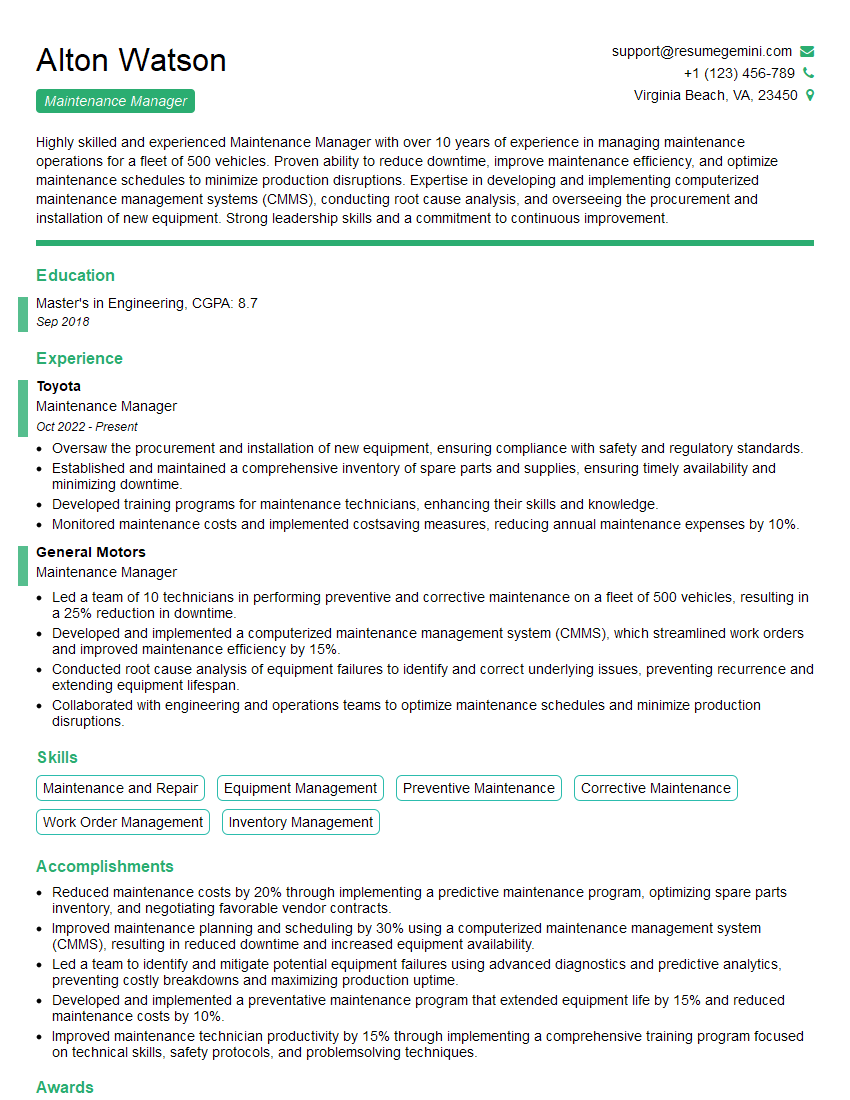
Maintenance Manager Resume Sample
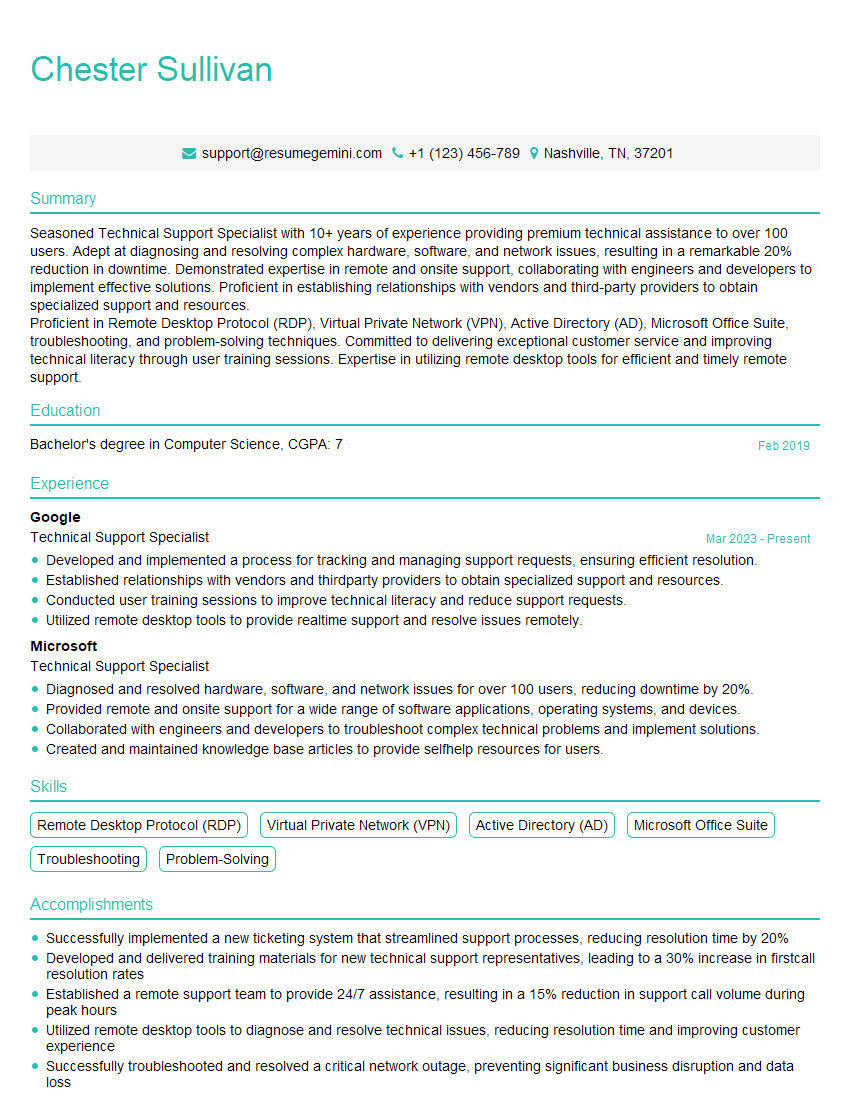
Technical Support Specialist Resume Sample
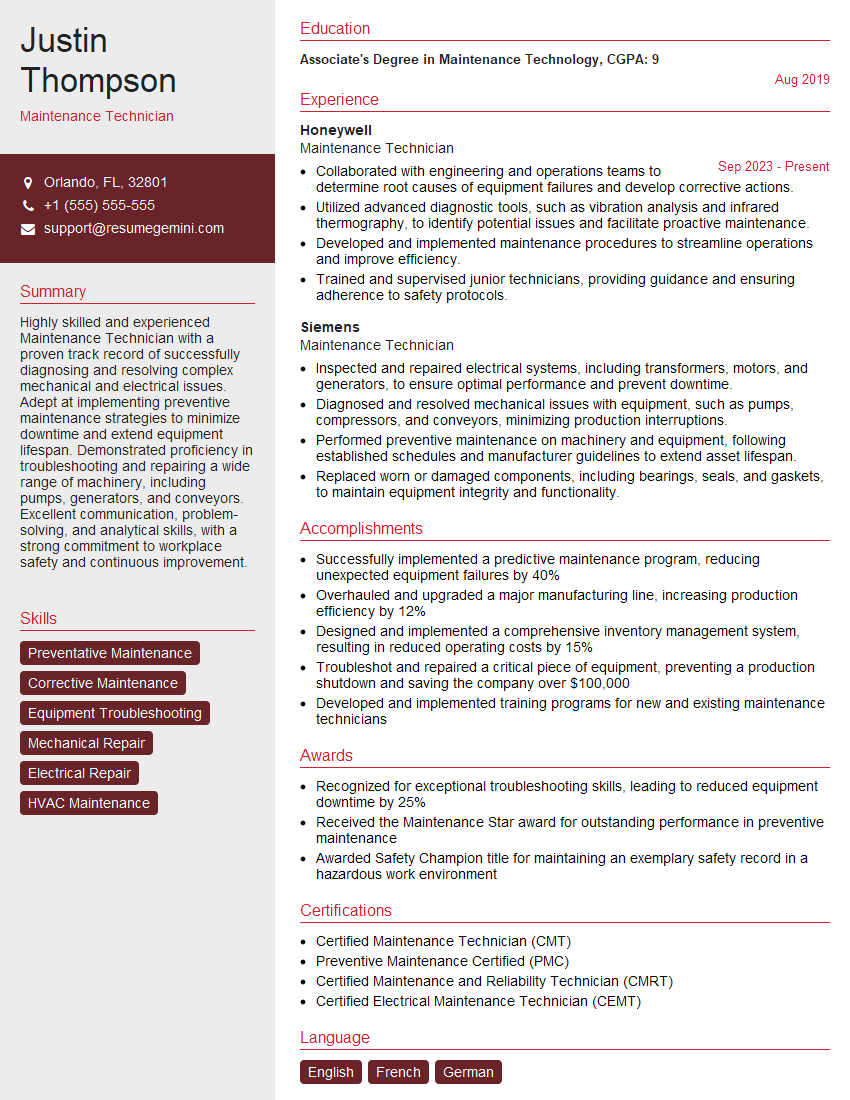
Maintenance Technician Resume Sample
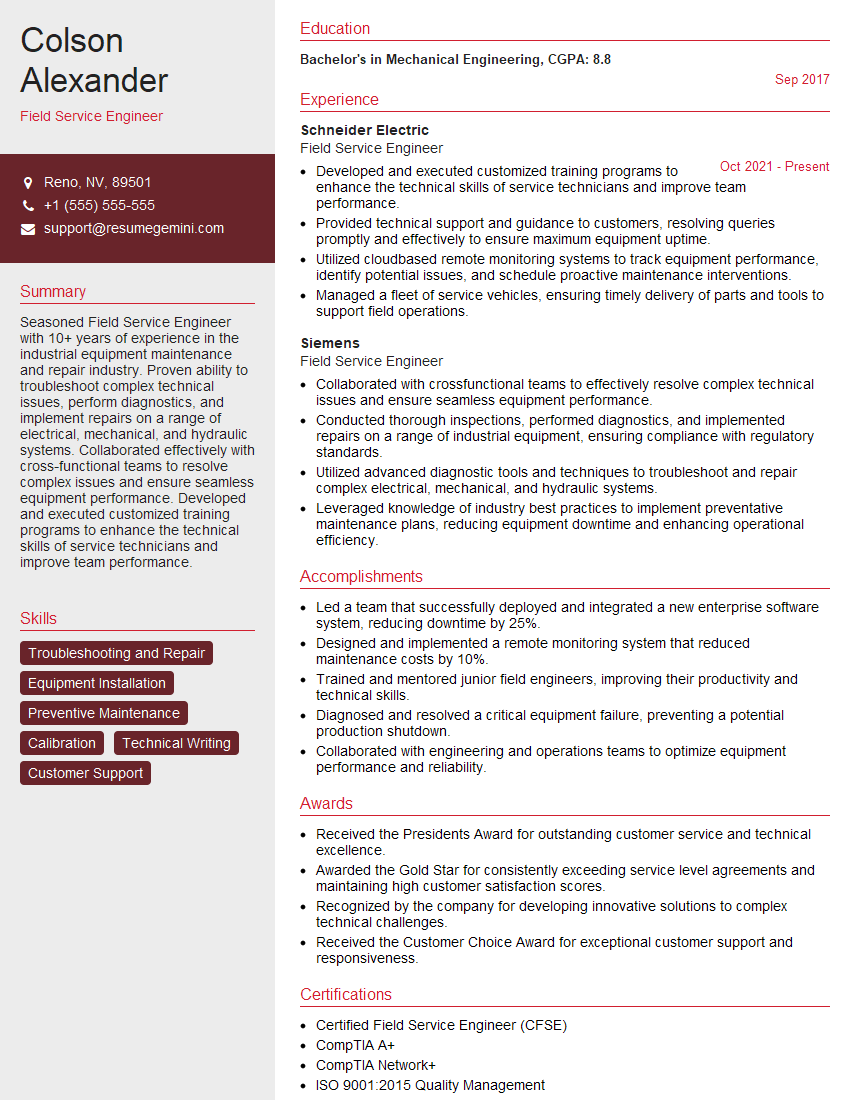
Field Service Engineer Resume Sample

Service Engineer Resume Sample
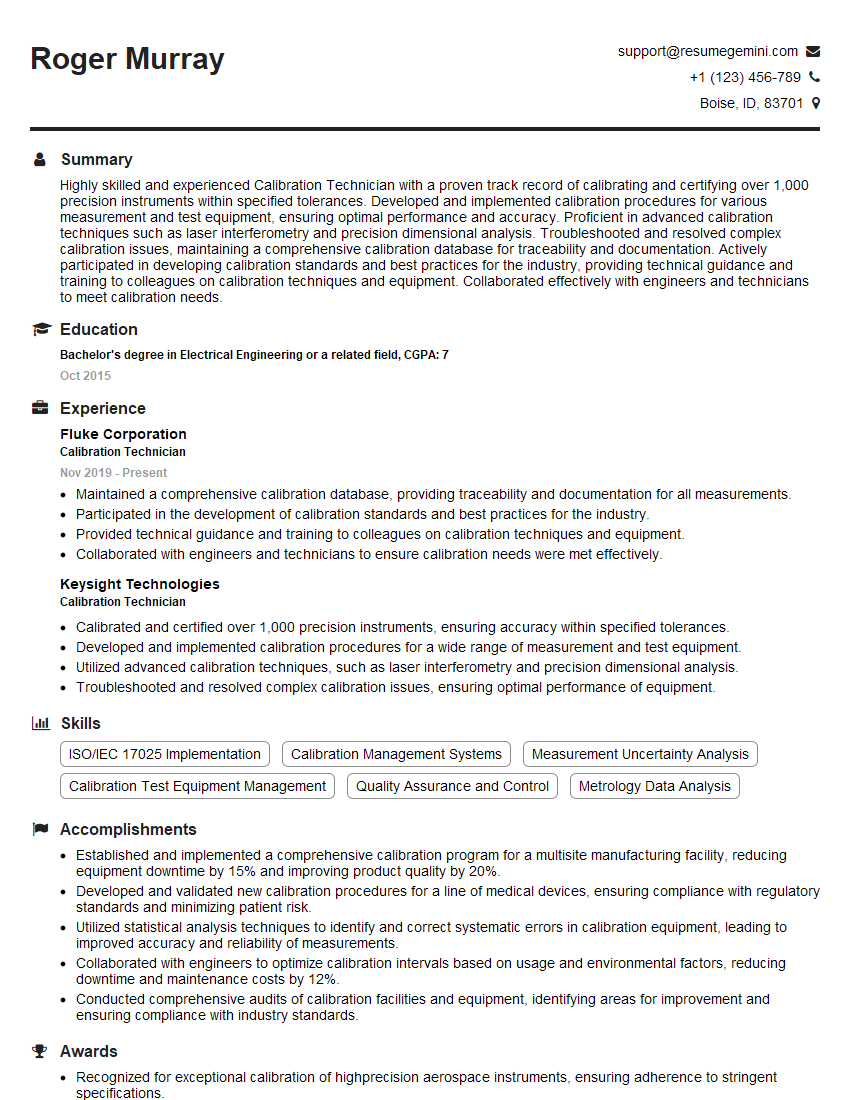
Calibration Technician Resume Sample
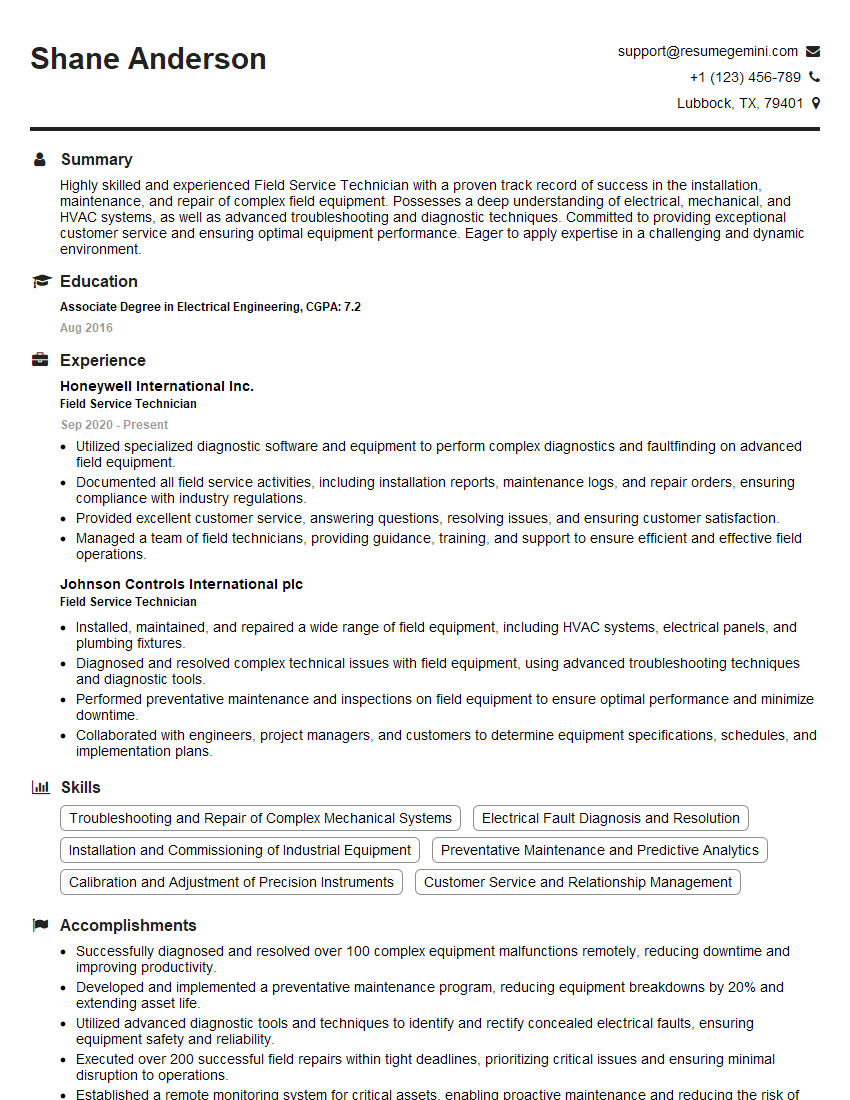
Field Service Technician Resume Sample
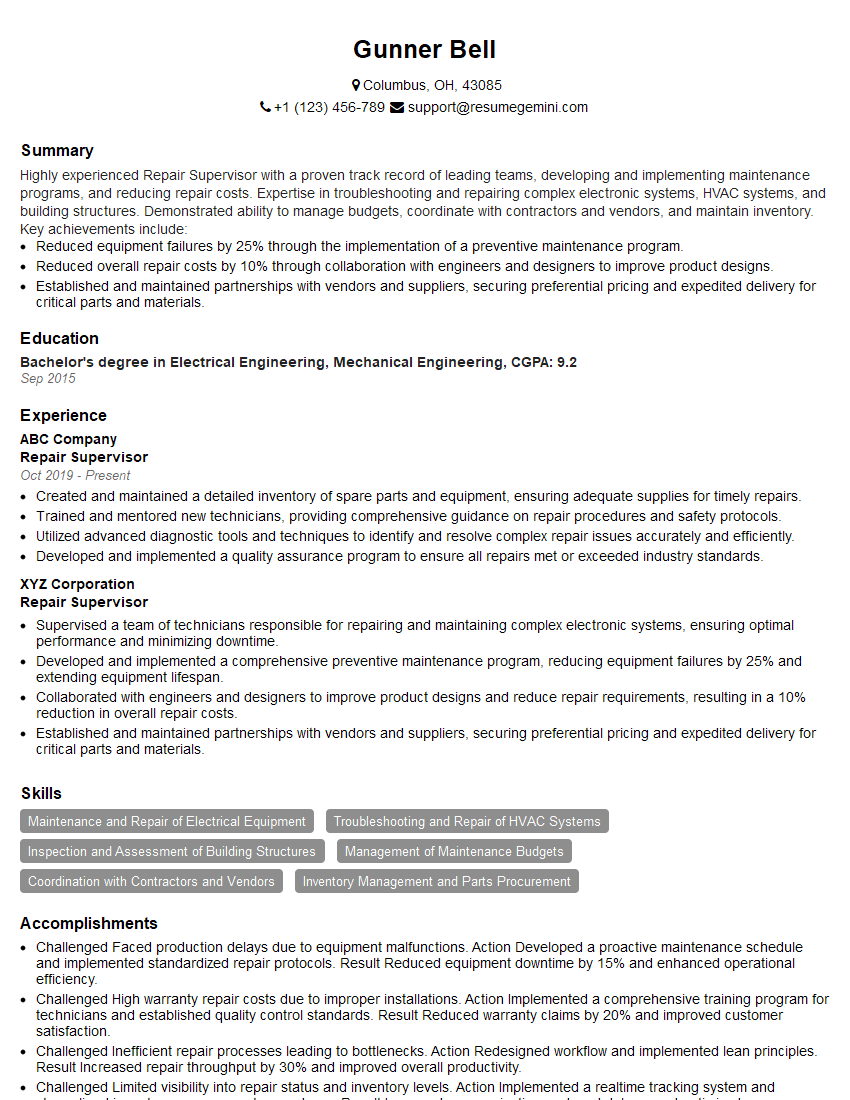
Repair Supervisor Resume Sample
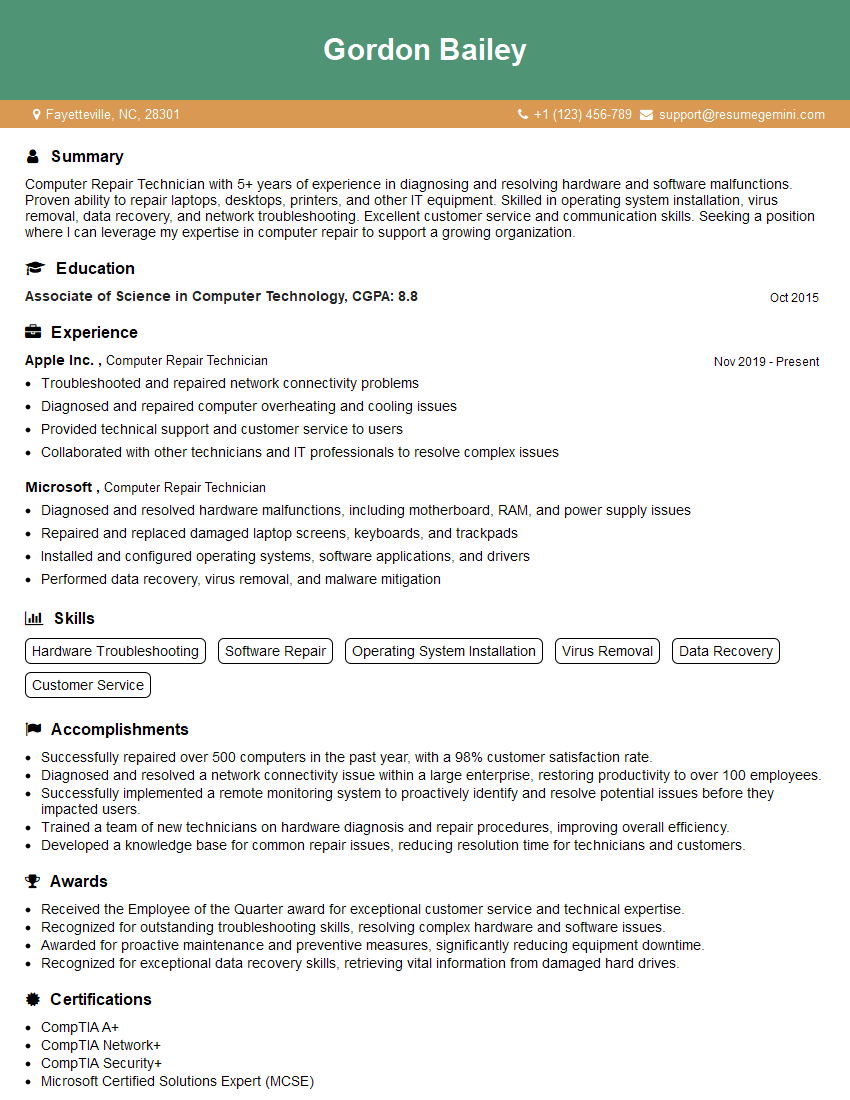
Computer Repair Technician Resume Sample
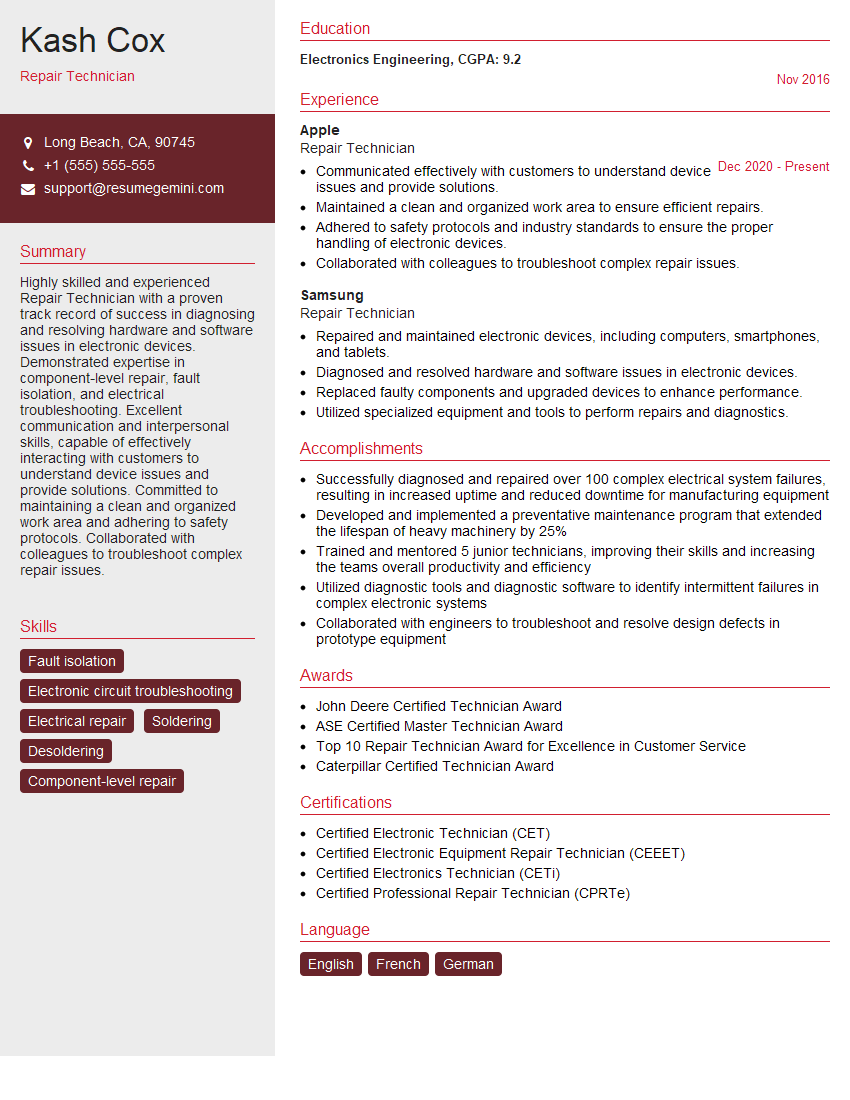
Repair Technician Resume Sample
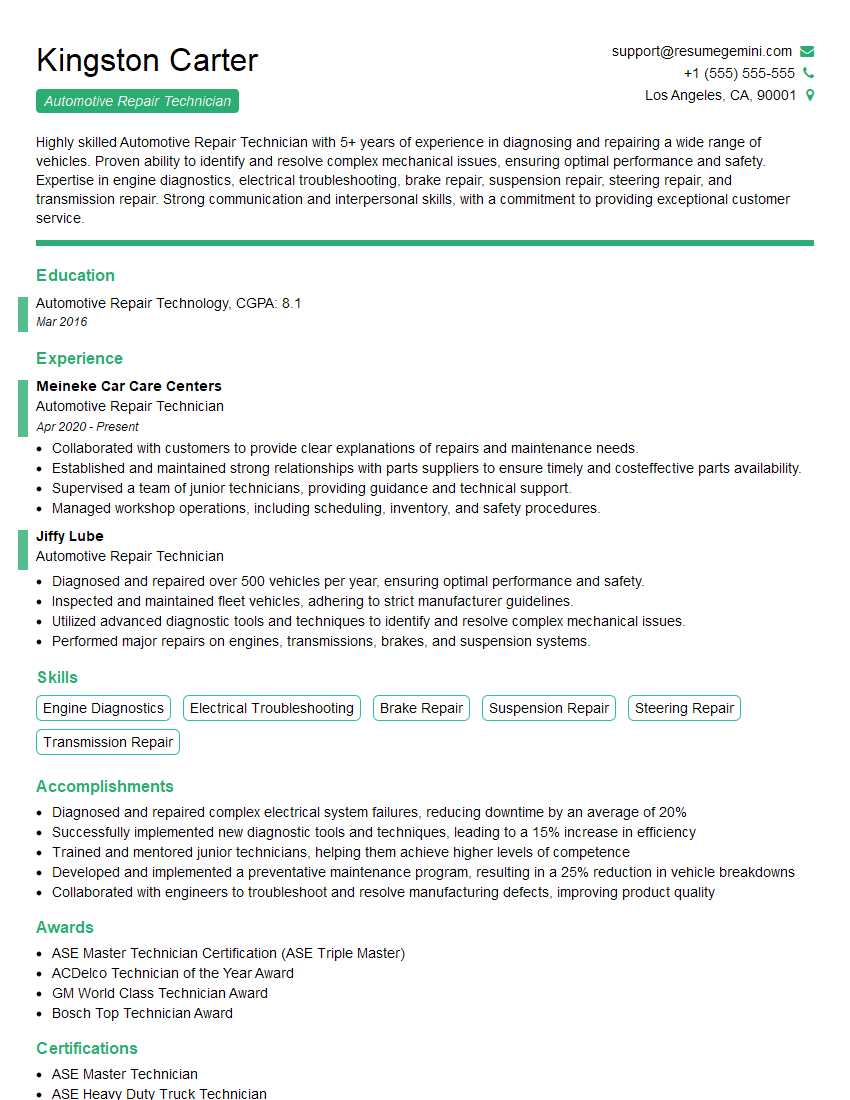
Automotive Repair Technician Resume Sample
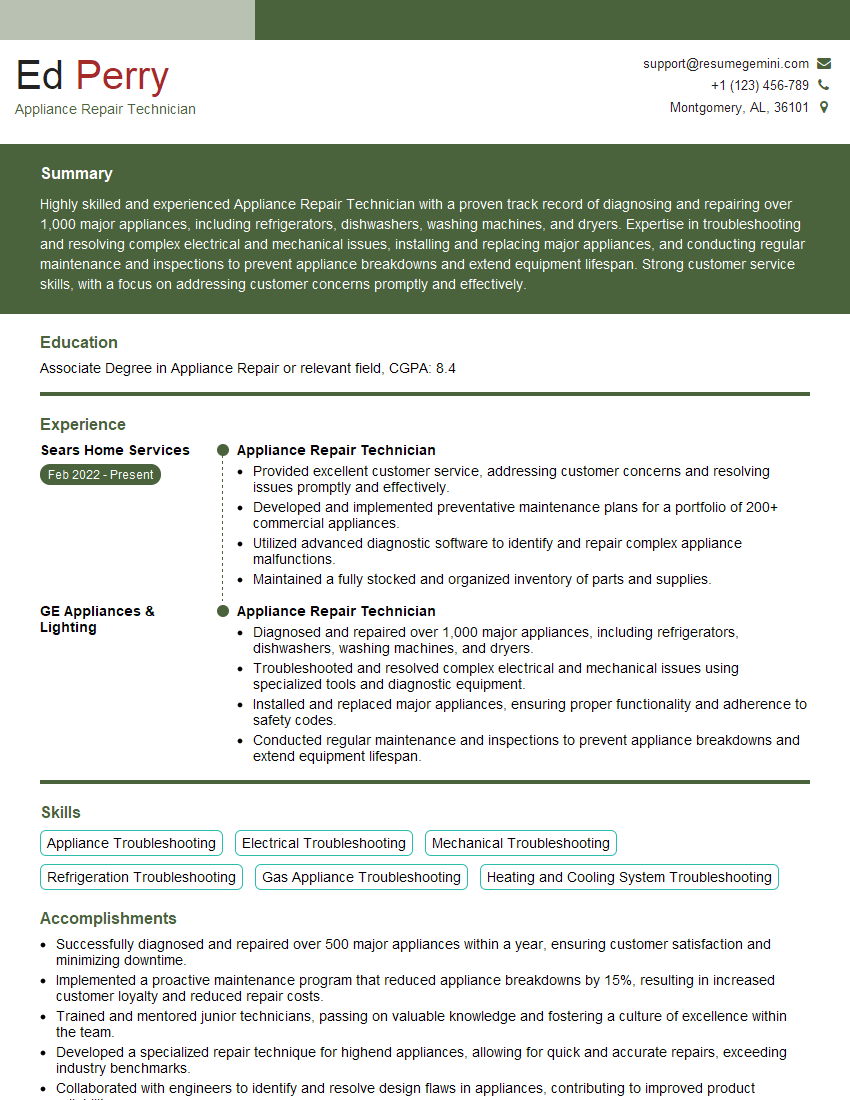
Appliance Repair Technician Resume Sample
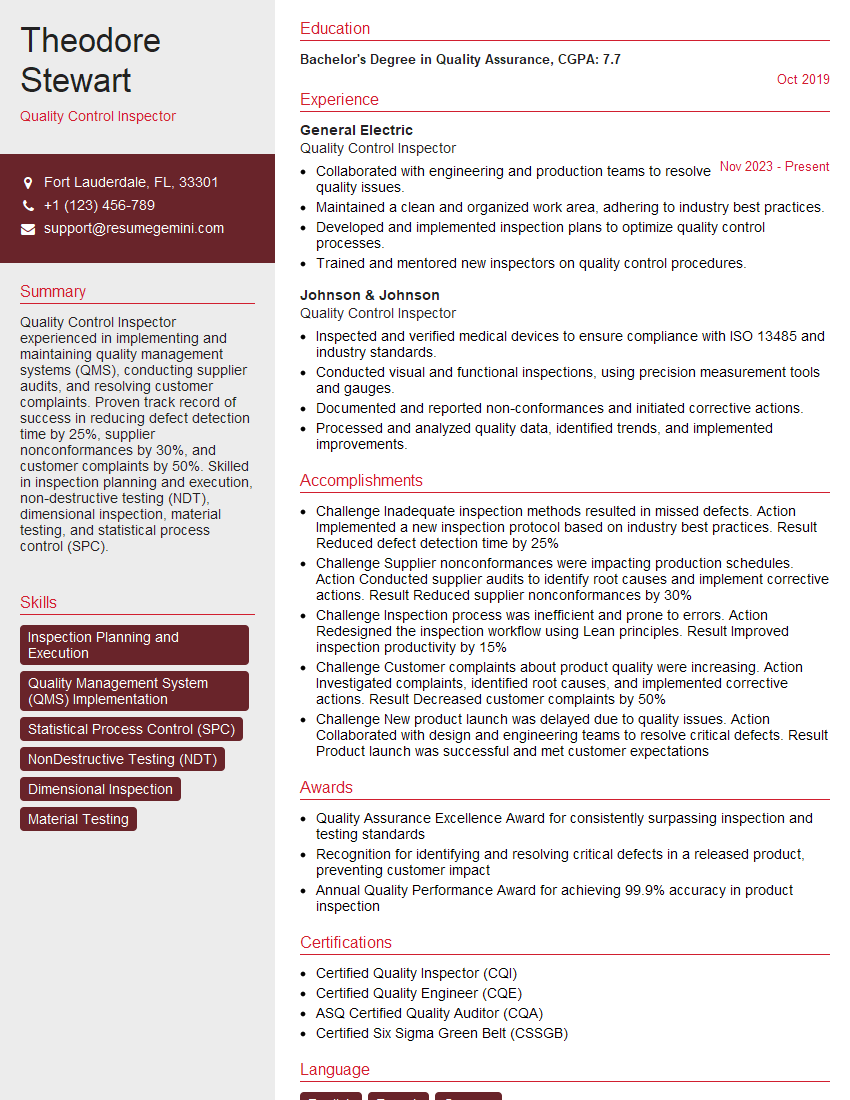
Quality Control Inspector Resume Sample
- Maintenance Manager
- Technical Support Specialist
- Maintenance Technician
- Field Service Engineer
- Service Engineer
- Calibration Technician
- Field Service Technician
- Repair Supervisor
- Computer Repair Technician
- Repair Technician
- Automotive Repair Technician
- Appliance Repair Technician
- Quality Control Inspector
Explore more articles
Users Rating of Our Blogs
Share Your Experience
We value your feedback! Please rate our content and share your thoughts (optional).
What Readers Say About Our Blog
Very informative content, great job.
good