Preparation is the key to success in any interview. In this post, we’ll explore crucial Requirement Gathering and Definition interview questions and equip you with strategies to craft impactful answers. Whether you’re a beginner or a pro, these tips will elevate your preparation.
Questions Asked in Requirement Gathering and Definition Interview
Q 1. Explain the difference between functional and non-functional requirements.
Functional requirements define what a system should do, specifying the features and functionalities it must possess. They describe the system’s behavior from a user’s perspective. Non-functional requirements, on the other hand, define how the system should perform, focusing on aspects like performance, security, and usability. They are often quality attributes that govern the system’s overall characteristics.
Example: Imagine an e-commerce website. A functional requirement might be: “The system shall allow users to add items to a shopping cart.” This describes a specific function the system must provide. A non-functional requirement might be: “The system shall respond to user requests within 2 seconds.” This dictates a performance characteristic, not a specific function.
- Functional: Specific tasks the system must perform.
- Non-Functional: Overall qualities and constraints impacting system performance and user experience.
Q 2. Describe your experience with various requirements elicitation techniques (e.g., interviews, surveys, workshops).
Throughout my career, I’ve employed a range of requirements elicitation techniques, adapting my approach based on project needs and stakeholder characteristics. I’ve found that a mixed-methods approach usually yields the best results.
- Interviews: I conduct one-on-one or group interviews to gather detailed information directly from stakeholders. I prepare structured interview guides to ensure consistency but remain flexible to allow for spontaneous exploration of important issues. For example, during a recent project for a healthcare application, individual interviews with doctors, nurses, and patients were critical in understanding their workflows and pain points.
- Surveys: Surveys are efficient for gathering data from a large number of stakeholders, particularly when geographical dispersion is a factor. I design surveys carefully, avoiding ambiguous questions and ensuring responses are easy to analyze. A recent project involving a customer-facing mobile app benefited greatly from a survey that helped us understand user preferences and demographics.
- Workshops: Workshops provide a collaborative environment for brainstorming and prioritizing requirements. Techniques like facilitated sessions, use case modeling, and prototyping are valuable tools. In a recent project involving a new inventory management system, a multi-day workshop with key stakeholders ensured alignment on requirements and facilitated effective problem-solving.
The selection of techniques depends heavily on the context; sometimes a combination is most effective. For example, interviews provide rich qualitative data, while surveys offer broad quantitative insights. Workshops are ideal for collaborative consensus-building.
Q 3. How do you handle conflicting requirements from different stakeholders?
Conflicting requirements are inevitable, especially in complex projects involving numerous stakeholders with diverse interests. My approach focuses on collaborative negotiation and prioritization.
- Identify and Document: I meticulously document all conflicting requirements, noting their source and rationale.
- Facilitate Discussion: I organize a facilitated meeting involving all relevant stakeholders to discuss the conflicts openly and constructively. The goal isn’t to find a ‘winner,’ but to understand the underlying needs and priorities of each party.
- Analyze Trade-offs: We collaboratively analyze the trade-offs associated with each possible resolution. This often involves considering the impact on cost, schedule, risk, and overall project goals.
- Prioritize and Negotiate: We prioritize the requirements based on factors like business value, risk, and feasibility. This may involve compromise and negotiation, seeking solutions that satisfy the majority of stakeholder needs.
- Document Resolutions: All agreed-upon resolutions are documented and communicated clearly to all stakeholders.
Effective communication and a commitment to collaboration are vital in resolving conflicts successfully. Transparency is key; stakeholders need to understand the rationale behind the chosen resolutions.
Q 4. What techniques do you use to prioritize requirements?
Prioritizing requirements is crucial for managing project scope and resources effectively. I use a combination of techniques adapted to the project’s context:
- MoSCoW Method: This simple yet powerful method categorizes requirements as Must have, Should have, Could have, and Won’t have. This provides a clear hierarchy for prioritization.
- Value vs. Effort Matrix: This matrix plots requirements based on their business value and the effort required to implement them. High-value, low-effort items are prioritized first.
- Prioritization Matrix: This matrix considers factors such as business value, risk, dependencies, and cost. Each factor receives a score, and requirements are ranked based on their total score.
- Stakeholder Input: Direct input from stakeholders is incorporated. Weighted scoring systems can reflect the relative importance assigned by different stakeholders.
The choice of technique depends on the project’s complexity and the availability of data. Often a combination of methods, informed by stakeholder feedback, is the most robust approach.
Q 5. How do you ensure requirements are clear, concise, and unambiguous?
Clarity, conciseness, and unambiguity are essential for effective requirements. My approach involves:
- Use Clear Language: Avoid jargon and technical terms unless all stakeholders understand them. Use simple, direct language.
- Define Terms: Create a glossary of terms to ensure consistent understanding throughout the project.
- Use Specific Examples: Illustrate requirements with concrete examples to clarify their meaning.
- Employ Standard Templates: Use standardized templates for documenting requirements, ensuring consistency and completeness.
- Review and Feedback: Regularly review requirements with stakeholders to identify and address any ambiguities.
A well-written requirement should leave no room for misinterpretation. Imagine a requirement that says, “The system should be fast.” This is ambiguous. A better requirement might say, “The system shall respond to user requests within two seconds, 99.9% of the time.”
Q 6. Explain your process for documenting requirements.
My process for documenting requirements involves a structured approach:
- Requirements Traceability Matrix (RTM): I establish an RTM to link requirements to their origin, design elements, test cases, and other project artifacts. This ensures traceability and manages changes effectively.
- Use Case Diagrams: I use use case diagrams to model user interactions with the system, visually representing the system’s functionality from the user’s perspective.
- User Stories: I use user stories (e.g., “As a user, I want to be able to search for products by keyword so that I can easily find what I’m looking for”) to capture functional requirements in a user-centric way. This promotes clear communication and collaboration.
- SRS Document: I create a Software Requirements Specification (SRS) document, the central repository for all documented requirements. This comprehensive document serves as a contract between stakeholders and the development team.
- Version Control: All requirements documents are managed using a version control system (e.g., Git) to track changes and ensure everyone works with the most up-to-date version.
The format and level of detail in the documentation depend on the project’s complexity and the needs of the stakeholders. The key is consistency and thoroughness.
Q 7. How do you verify and validate requirements?
Verification and validation are critical for ensuring that requirements are accurate, complete, and meet stakeholder needs. Verification focuses on ensuring the requirements are correctly documented, while validation focuses on ensuring the documented requirements meet the actual needs.
- Verification: This involves reviewing the requirements documents for completeness, consistency, accuracy, and feasibility. Techniques include walkthroughs, inspections, and reviews. We ensure that the requirements are clearly written, well-structured, and free of contradictions.
- Validation: This involves confirming that the requirements reflect the true needs of stakeholders. Techniques include prototyping, user testing, and stakeholder reviews. We might create a prototype to test the usability of a proposed design or conduct user interviews to assess satisfaction with a particular feature.
A combination of verification and validation techniques is necessary to guarantee high-quality requirements. These processes are iterative, often involving multiple rounds of reviews and feedback.
Q 8. What tools and techniques do you use for requirements management?
Effective requirements management relies on a blend of tools and techniques, tailored to the project’s size and complexity. My approach is adaptable, but commonly includes:
- Requirement Management Tools: I’m proficient with tools like Jira, Confluence, DOORS, and Polarion. These platforms allow for centralized storage, version control, traceability, and collaboration on requirements. For example, Jira’s issue tracking helps manage requirements as individual tasks, while Confluence provides a collaborative space for documenting and discussing them.
- Documentation Techniques: I leverage techniques like requirement elicitation workshops, interviews, surveys, and prototyping to gather information from stakeholders. These methods ensure diverse perspectives are considered. I then meticulously document these requirements using templates that ensure consistency and clarity, following a structured format (e.g., ID, description, priority, source, etc.).
- Modeling Techniques: Visual modeling is crucial. I use UML diagrams (use case, class, sequence) to visually represent system behavior and interactions. This improves understanding and aids in communication with developers and stakeholders. For instance, a use case diagram clearly illustrates how users interact with the system.
- Traceability Matrices: These matrices are essential for mapping requirements to design, code, and test cases, ensuring all requirements are addressed and tracked throughout the development lifecycle. This traceability is crucial for managing changes and demonstrating compliance.
The choice of specific tools and techniques depends on the project’s context. For a smaller project, a simpler tool like a spreadsheet might suffice, while a large, complex project demands a more robust, integrated solution.
Q 9. Describe your experience with creating use cases or user stories.
I have extensive experience in crafting both use cases and user stories. My approach prioritizes clarity, conciseness, and collaboration with stakeholders.
- Use Cases: I’ve utilized use cases to model system behavior from the perspective of an actor (user or external system) interacting with the system. Each use case details a specific goal the actor is trying to achieve and the steps involved. I structure them using a template that includes a use case ID, name, brief description, actors, pre-conditions, post-conditions, main success scenario, and alternative flows (error handling). For example, a use case for an e-commerce website might describe the ‘Place Order’ process, outlining steps like selecting items, adding to cart, providing shipping and payment information, and order confirmation.
- User Stories: User stories, following the format ‘As a [user role], I want [goal] so that [benefit]’, are my preferred method for agile projects. They are more concise and user-centric than use cases. For example, ‘As a customer, I want to be able to filter search results by price so that I can easily find products within my budget’. I typically follow this with acceptance criteria to define what constitutes a completed story.
I often combine these techniques. Use cases can provide detailed scenarios, while user stories offer a higher-level, agile-friendly approach. The choice depends on the project methodology and stakeholder preferences.
Q 10. How do you handle changing requirements throughout a project?
Change is inherent in software development. My approach to handling changing requirements is based on a structured process:
- Change Control Process: All change requests are formally documented and evaluated. This involves assessing the impact on scope, schedule, and budget. A change request form, outlining the proposed change, rationale, impact analysis, and approval process, is essential.
- Prioritization and Negotiation: Not all changes are equally important. I work with stakeholders to prioritize changes based on business value and risk. This often involves negotiation and compromise.
- Impact Analysis: Thoroughly analyzing the impact of a change on existing requirements and design is critical. This prevents ripple effects and ensures the integrity of the system.
- Version Control: Employing version control in the requirements documentation (using tools like the ones mentioned earlier) allows for tracking changes, reverting if needed, and maintaining a clear history of the requirements evolution.
- Communication: Keeping all stakeholders informed about changes, their impact, and the timelines for implementation is essential for maintaining transparency and buy-in.
A well-defined change management process is key to mitigating the risks associated with changing requirements and ensuring project success.
Q 11. What are some common challenges you face during requirement gathering?
Requirement gathering presents several challenges:
- Incomplete or Vague Requirements: Stakeholders may not fully understand their needs or may struggle to articulate them clearly. Techniques like prototyping and iterative feedback help address this.
- Conflicting Requirements: Different stakeholders may have competing priorities or conflicting needs. Facilitation skills and collaborative techniques are crucial for resolving conflicts and finding compromise.
- Unrealistic Expectations: Time and budget constraints can lead to unrealistic expectations. Clear communication and realistic planning are crucial.
- Scope Creep: Uncontrolled changes to requirements throughout the project can lead to scope creep, delaying the project and exceeding the budget. A robust change management process is crucial.
- Communication Barriers: Misunderstandings and communication gaps between stakeholders and the requirements team can lead to inaccurate requirements. Active listening, clarification, and documentation are key.
Overcoming these challenges requires strong communication, stakeholder management, and a structured approach to requirements gathering and documentation.
Q 12. How do you ensure traceability of requirements throughout the software development lifecycle?
Requirement traceability is vital for ensuring that all requirements are implemented, tested, and ultimately meet the stakeholder’s needs. I use several techniques:
- Unique Identifiers: Assigning unique identifiers to each requirement allows for tracking it throughout the development lifecycle. This is fundamental for traceability.
- Traceability Matrices: These matrices link requirements to design documents, code modules, test cases, and other artifacts. They visually represent the relationships between different project elements.
- Requirement Management Tools: Tools like Jira and Polarion offer built-in features for establishing and managing traceability links.
- Version Control: Maintaining a detailed history of changes to requirements and their associated artifacts is crucial for tracking the evolution of requirements and their impact.
- Reviews and Audits: Regular reviews and audits are essential to verify the completeness and accuracy of traceability links.
The goal is to create a comprehensive audit trail, showing how each requirement is addressed throughout the SDLC. This aids in risk management, change management, and overall project success.
Q 13. Explain your understanding of different requirement specification techniques (e.g., use case diagrams, user stories, UML).
I’m familiar with several requirement specification techniques:
- Use Case Diagrams: These UML diagrams visually represent the interactions between users (actors) and the system. They are excellent for capturing functional requirements and showing the flow of events in a system. They help stakeholders understand the system’s behavior at a high level.
- User Stories: Agile-friendly, these concise statements describe a feature from the user’s perspective. They are valuable for iterative development, facilitating collaboration, and focusing on user value.
- UML Diagrams (beyond use cases): I also use other UML diagrams like class diagrams (to model the system’s structure), sequence diagrams (to show the interaction between objects), and state diagrams (to model object behavior). The choice depends on the needs of the project.
- Data Flow Diagrams (DFDs): These diagrams show how data flows through a system, helpful in understanding data processing and transformation requirements.
- Prototyping: Creating prototypes, even low-fidelity ones, is a powerful technique for clarifying requirements and gathering feedback from users early on.
Selecting the appropriate technique depends on the project’s nature, complexity, and the stakeholders’ preferences. Often, a combination of techniques provides the most effective approach.
Q 14. How do you assess the completeness and consistency of requirements?
Assessing the completeness and consistency of requirements is crucial. I employ several strategies:
- Requirements Reviews: Formal reviews involving stakeholders, developers, and testers are critical. These reviews help identify ambiguities, inconsistencies, and missing requirements.
- Requirement Traceability Matrix: As mentioned earlier, a traceability matrix helps identify gaps in requirements coverage and potential inconsistencies between requirements and design/implementation.
- Consistency Checks: Manually or using tools, I check for conflicts or contradictions between different requirements. For example, two requirements might specify conflicting behavior for the same scenario.
- Completeness Checks: Using checklists and templates ensures that all necessary aspects of a requirement are addressed (e.g., functional, non-functional, performance requirements).
- User Stories Refinement: In agile, continuously refining user stories with the development team helps identify gaps and inconsistencies early in the process. Acceptance criteria play a key role here.
A rigorous review process, combined with effective documentation and traceability, is vital for ensuring the quality and completeness of requirements.
Q 15. Describe your experience with requirements decomposition.
Requirements decomposition is the process of breaking down high-level, often abstract, requirements into smaller, more manageable, and concrete sub-requirements. Think of it like building with LEGOs: you start with a big, vague idea (the spaceship), then break it down into smaller, definable parts (cockpit, wings, engines) before finally getting to the individual bricks. This makes the development process more efficient and less prone to errors.
In my experience, I typically use a top-down approach, starting with the user stories or use cases that describe the overall functionality. I then progressively refine these into functional requirements, non-functional requirements (performance, security, etc.), and finally, detailed technical specifications. For example, a high-level requirement like ‘the system should allow users to search for products’ might decompose into sub-requirements such as: ‘the search functionality should support keyword searches’, ‘the search results should be displayed within 2 seconds’, and ‘the search should be resistant to SQL injection attacks’. I utilize various diagramming techniques like Work Breakdown Structures (WBS) and hierarchical decomposition diagrams to visualize and manage this process, ensuring clarity and traceability throughout the development lifecycle.
Career Expert Tips:
- Ace those interviews! Prepare effectively by reviewing the Top 50 Most Common Interview Questions on ResumeGemini.
- Navigate your job search with confidence! Explore a wide range of Career Tips on ResumeGemini. Learn about common challenges and recommendations to overcome them.
- Craft the perfect resume! Master the Art of Resume Writing with ResumeGemini’s guide. Showcase your unique qualifications and achievements effectively.
- Don’t miss out on holiday savings! Build your dream resume with ResumeGemini’s ATS optimized templates.
Q 16. How do you deal with incomplete or ambiguous requirements?
Incomplete or ambiguous requirements are a common challenge. My approach involves a multi-pronged strategy. Firstly, I employ active listening and probing questions during stakeholder interviews to uncover the missing information or clarify the ambiguity. Instead of accepting vague statements like ‘the system should be user-friendly’, I’d ask specific questions like ‘What specific user actions should be easy to perform? What constitutes ‘user-friendly’ in this context?’
Secondly, I utilize prototyping and user story mapping. Prototypes – even low-fidelity ones – allow stakeholders to visualize and interact with potential solutions, revealing hidden assumptions and gaps in the requirements. User story mapping helps visualize the user journey and identify potential areas of incompleteness or ambiguity.
Finally, I document all assumptions made and areas of uncertainty as ‘open issues’ in the requirements document. This ensures transparency and allows for revisiting and resolving these issues collaboratively with stakeholders before development begins. This approach mitigates risks associated with incomplete or ambiguous requirements and prevents costly rework later in the development cycle.
Q 17. What metrics do you use to measure the success of requirements gathering?
Measuring the success of requirements gathering isn’t solely about quantity; it’s about quality and impact. I use a combination of qualitative and quantitative metrics.
- Stakeholder Satisfaction: Feedback surveys and interviews help gauge whether stakeholders feel their needs and concerns were adequately addressed. A high satisfaction rate indicates effective communication and collaboration.
- Requirement Completeness and Clarity: This is often assessed through reviews and walkthroughs of the requirements document. A low number of open issues and high clarity scores (e.g., using a clarity rating scale) suggest comprehensive and unambiguous requirements.
- Traceability: Measuring the degree to which requirements are linked to design, test cases, and ultimately, implemented features. High traceability reduces ambiguity and ensures all requirements are addressed.
- Requirement Stability: Tracking the number of requirement changes post-baseline. Fewer changes suggest more robust upfront requirements gathering.
- Defect Density: A lower defect density in the early stages of development correlates with clearer and more complete requirements.
By monitoring these metrics, I can identify areas for improvement in my requirements gathering process and ensure that the requirements are fit for purpose.
Q 18. How do you handle stakeholder expectations regarding requirements?
Managing stakeholder expectations is crucial. I start by actively listening to and documenting all stakeholder requirements and concerns. This requires patience and skillful facilitation to identify competing priorities and reconcile conflicting viewpoints. I make sure to clarify expectations early on by providing realistic timelines and outlining potential constraints – technical, budgetary, or otherwise.
I regularly communicate progress and any potential changes in scope or timeline to stakeholders. Transparency builds trust and allows stakeholders to adjust their expectations as needed. Using tools like Kanban boards or project management software helps with visualization and proactive communication. Finally, I involve stakeholders in prioritization exercises (like MoSCoW – Must have, Should have, Could have, Won’t have) to ensure alignment on the most critical requirements and manage expectations effectively. This collaborative approach fosters buy-in and manages expectations in a fair and transparent manner.
Q 19. Explain your experience with different requirements prioritization methods (e.g., MoSCoW, Kano model).
I have extensive experience with various requirement prioritization techniques. The MoSCoW method, as mentioned, is a simple yet effective way to categorize requirements based on their importance. It’s particularly useful for quickly categorizing a large number of requirements during workshops.
The Kano model is a more sophisticated technique that categorizes requirements based on their impact on customer satisfaction. This is valuable for understanding which features will truly delight users and which are just basic expectations. For example, a ‘must-have’ feature according to MoSCoW might be a ‘one-dimensional’ feature in the Kano model, meaning it doesn’t generate significant excitement but its absence causes dissatisfaction.
I also use other techniques such as prioritization matrices (scoring requirements based on factors like value and effort), value vs. cost analysis, and simple voting systems depending on project context and stakeholder preferences. The choice of method depends heavily on the context: for quick prioritization sessions, MoSCoW is ideal; for deeper analysis of customer satisfaction, the Kano model is more appropriate.
Q 20. How do you involve stakeholders in the requirements gathering process?
Stakeholder involvement is paramount. I employ various techniques to ensure their active participation.
- Workshops and Brainstorming Sessions: These collaborative sessions allow stakeholders to openly share their perspectives and contribute to the requirements definition. I use facilitation techniques to ensure all voices are heard and to manage the discussion effectively.
- Interviews: One-on-one interviews help to gather in-depth information from key stakeholders, especially those with specific domain expertise.
- Surveys and Questionnaires: These are efficient ways to gather feedback from a larger group of stakeholders and obtain quantitative data.
- Prototyping and Demonstrations: Allowing stakeholders to interact with prototypes or demos helps to clarify requirements and identify any misunderstandings early on.
- Regular Feedback Mechanisms: Establishing channels for ongoing feedback ensures that requirements remain relevant and aligned with evolving needs.
My goal is to create a collaborative environment where stakeholders feel comfortable sharing their input and actively participate in shaping the final requirements.
Q 21. Describe your experience with requirements analysis and modeling.
Requirements analysis and modeling involve systematically examining the gathered requirements to understand their relationships, dependencies, and potential conflicts. This involves documenting, structuring, and visualizing these requirements to make them clearer and easier to understand for all stakeholders, particularly developers.
I utilize several modeling techniques, including use case diagrams to illustrate system interactions from a user’s perspective, data flow diagrams to show data movement within the system, and entity-relationship diagrams (ERDs) for database design. Depending on the complexity of the project and the needs of the stakeholders, I might also use state diagrams, activity diagrams, and class diagrams. These diagrams are not merely visual aids; they serve as crucial communication tools and a foundation for the design and development phases. They facilitate a common understanding of the system and help detect inconsistencies and ambiguities early in the process. For example, using an ERD clarifies database relationships preventing data inconsistencies during development. The choice of modeling technique depends on the project’s needs, but the overall aim is to create a complete and unambiguous model representing the requirements.
Q 22. How do you identify and mitigate risks related to requirements?
Identifying and mitigating risks associated with requirements is crucial for project success. It involves proactively identifying potential issues early in the process and developing strategies to minimize their impact. This is often done through a risk assessment process that considers various factors.
- Risk Identification: This starts with brainstorming sessions involving stakeholders, using techniques like SWOT analysis (Strengths, Weaknesses, Opportunities, Threats) and checklists of common requirements risks (e.g., unclear requirements, conflicting priorities, scope creep, unrealistic deadlines). We analyze the likelihood and impact of each risk.
- Risk Analysis: Once identified, risks are analyzed based on their probability of occurrence and potential consequences. A risk matrix, often visually represented, can help prioritize which risks require immediate attention.
- Risk Mitigation: Strategies are developed to reduce the likelihood or impact of each risk. This could involve clarifying ambiguous requirements, establishing robust change management processes, allocating sufficient resources, or building in contingency plans.
Example: In a project developing a mobile app, a potential risk is the incompatibility with different operating systems. Mitigation could involve rigorous testing on multiple OS versions or building compatibility into the design specifications from the beginning.
Q 23. What are the key characteristics of a good requirement?
A good requirement is characterized by several key attributes, ensuring clarity, testability, and feasibility. Think of it like a well-written recipe – if the instructions are unclear or missing ingredients, the outcome will be unpredictable.
- Clear and Unambiguous: The requirement should be easily understood by all stakeholders, avoiding jargon and subjective terms. For example, instead of “fast processing,” specify “processing time under 2 seconds.”
- Specific and Measurable: It should be quantifiable, enabling objective verification of successful implementation. Instead of “improved user experience,” define “90% of users rate the app’s usability as 4 out of 5 stars.”
- Feasible and Achievable: The requirement must be realistic given available resources, technology, and time constraints.
- Testable: There should be clear criteria to assess whether the requirement has been met. This often involves defining acceptance criteria.
- Traceable: The requirement should be linked to other project artifacts, such as design documents, test cases, and user stories, ensuring traceability throughout the project lifecycle.
- Independent: Requirements should be as independent as possible to avoid dependencies that could complicate development and testing.
Q 24. How do you ensure that the requirements are testable?
Ensuring requirements are testable is crucial for validating successful implementation. This involves defining clear and measurable acceptance criteria. Instead of simply stating a requirement, specify how you’ll know it’s been met.
- Define Acceptance Criteria: For each requirement, clearly define the conditions that must be satisfied for it to be considered complete. These criteria should be objective and verifiable, using measurable units where appropriate (e.g., response time, error rate, number of users).
- Use Specific, Measurable, Achievable, Relevant, and Time-bound (SMART) criteria: This framework helps ensure the acceptance criteria are clear, testable, and focused.
- Involve Testers Early: Include testers in the requirements gathering process to identify potential issues and ensure requirements are testable from the start.
- Consider Different Testing Types: Think about how different testing methodologies (unit testing, integration testing, system testing, user acceptance testing) can be used to validate requirements.
Example: Instead of “The system should be user-friendly,” a testable requirement would be: “95% of users completing a usability test should successfully navigate to the checkout page within 3 minutes, with an error rate below 2%.”.
Q 25. Explain the concept of a ‘requirements traceability matrix’.
A Requirements Traceability Matrix (RTM) is a document that maps requirements to other project artifacts, facilitating tracking and management. Think of it as a comprehensive roadmap showing the relationships between different parts of the project.
It typically includes columns representing requirements (e.g., user stories, use cases), and rows representing other artifacts like test cases, design documents, and code modules. Each cell indicates the connection between a requirement and a specific artifact, allowing you to trace the flow of a requirement through the project’s lifecycle.
Benefits of using an RTM:
- Impact Analysis: Easily identify the impact of a change to a requirement on other project elements.
- Requirement Verification: Ensure that all requirements are addressed and tested.
- Risk Management: Identify potential risks and bottlenecks early on.
- Improved Communication: Enhance communication and collaboration among stakeholders.
Q 26. Describe a situation where you had to deal with conflicting priorities in requirements.
In a project for an e-commerce platform, we faced conflicting priorities regarding features for the upcoming release. The marketing team prioritized a new promotional banner system, while the engineering team favored fixing existing performance bottlenecks. Both were important, but we only had a limited development window.
Resolution: We used a prioritization matrix, weighing the business value and risk associated with each requirement. The performance issue was given higher priority due to its potential impact on sales and user experience, although the marketing team was given some time to create a smaller-scale version of the banner system for the following release.
This involved facilitated discussions and a clear communication plan to ensure all stakeholders understood the reasoning behind the decisions.
Q 27. How do you handle situations where stakeholders have different understandings of the requirements?
Handling differing stakeholder interpretations of requirements is critical. Open communication and collaborative efforts are key to achieving a shared understanding.
- Use Clear and Concise Language: Ensure the requirements are written using unambiguous terms. Avoid jargon and technical language that may not be understood by all stakeholders.
- Facilitate Workshops and Meetings: Conduct collaborative sessions involving all stakeholders to discuss requirements and ensure a common understanding. Prototyping and demonstrations can be invaluable in clarifying expectations.
- Document Decisions: Maintain a record of decisions made during the requirements gathering process. This helps resolve any future disputes and prevents misunderstandings.
- Use Visual Aids: Diagrams, mockups, and prototypes can help visualize requirements and facilitate better understanding.
- Iterative Approach: Gathering requirements is not a one-time event; regularly review and refine requirements based on feedback and evolving needs.
Example: If one stakeholder interprets “search functionality” to mean a simple keyword search, while another envisions advanced filtering and sorting options, a workshop involving both clarifies the expectations and allows for a documented decision on the desired level of functionality.
Q 28. What is your experience with agile methodologies and their impact on requirement gathering?
Agile methodologies significantly impact requirement gathering, promoting iterative development and continuous feedback. Instead of a rigid, upfront requirements document, agile focuses on creating a flexible, evolving backlog of user stories.
- User Stories: Agile utilizes user stories – short, simple descriptions of a feature from the user’s perspective (e.g., “As a customer, I want to be able to add items to my shopping cart so that I can purchase them later.”).
- Iterative Refinement: Requirements are refined incrementally throughout the project lifecycle, adapting to evolving needs and feedback.
- Continuous Feedback: Frequent feedback loops with stakeholders ensure alignment between the developing product and user expectations.
- Reduced Documentation: Agile generally reduces the emphasis on extensive upfront documentation, prioritizing collaboration and working software.
- Adaptability: The agile approach allows for changes in requirements as the project progresses, responding to unexpected challenges or new opportunities.
My experience has shown that the agile approach leads to faster delivery of value, increased stakeholder satisfaction, and better adaptability to changing market conditions. However, it requires strong communication and collaboration among stakeholders.
Key Topics to Learn for Requirement Gathering and Definition Interview
- Elicitation Techniques: Understanding various methods like interviews, workshops, surveys, and document analysis to effectively gather requirements from diverse stakeholders.
- Requirement Analysis & Prioritization: Analyzing gathered information to identify, clarify, and prioritize requirements based on business value, feasibility, and risk. Practical application: Using MoSCoW method (Must have, Should have, Could have, Won’t have) to prioritize features.
- Use Case Modeling: Creating use cases to visually represent system functionality and user interactions. Practical application: Developing detailed use case diagrams for complex scenarios.
- User Stories & Acceptance Criteria: Writing clear and concise user stories following the INVEST principle (Independent, Negotiable, Valuable, Estimable, Small, Testable) and defining acceptance criteria for successful implementation.
- Requirement Documentation: Creating comprehensive and well-structured requirement documents (SRS – Software Requirement Specification) that are easily understood by all stakeholders. Practical application: Utilizing a standardized template and employing clear language to avoid ambiguity.
- Requirement Management Tools: Familiarity with tools like Jira, Confluence, or similar platforms for managing and tracking requirements throughout the project lifecycle.
- Stakeholder Management: Effectively communicating with and managing expectations of various stakeholders (developers, testers, clients, etc.) throughout the requirements process. Practical application: Conflict resolution and negotiation skills.
- Gap Analysis & Risk Management: Identifying gaps between stated requirements and actual needs, and developing mitigation strategies for potential risks and issues.
Next Steps
Mastering Requirement Gathering and Definition is crucial for career advancement in the software development and project management fields. It demonstrates your ability to understand client needs, translate them into actionable specifications, and drive successful project outcomes. To significantly boost your job prospects, focus on creating an ATS-friendly resume that highlights your skills and experience in this area. ResumeGemini is a trusted resource that can help you build a professional and impactful resume. We provide examples of resumes tailored specifically to Requirement Gathering and Definition roles to help you get started.
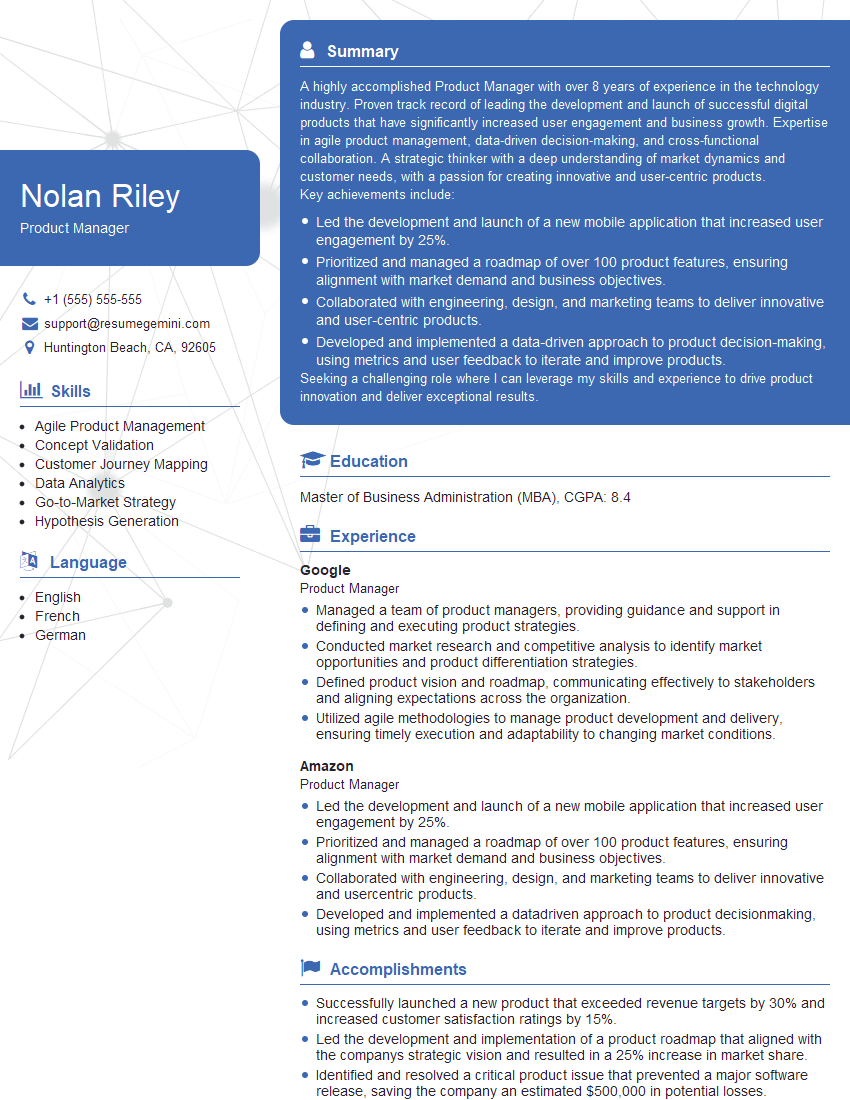
Product Manager Resume Sample
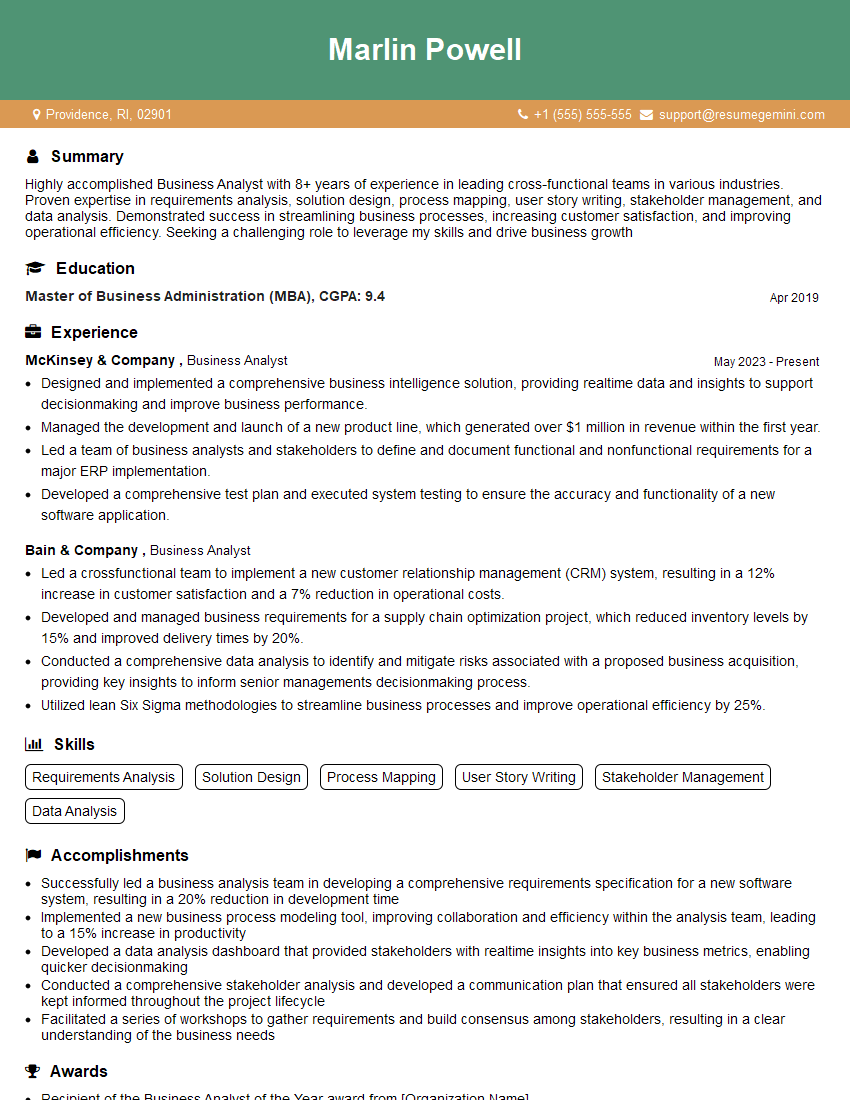
Business Analyst Resume Sample
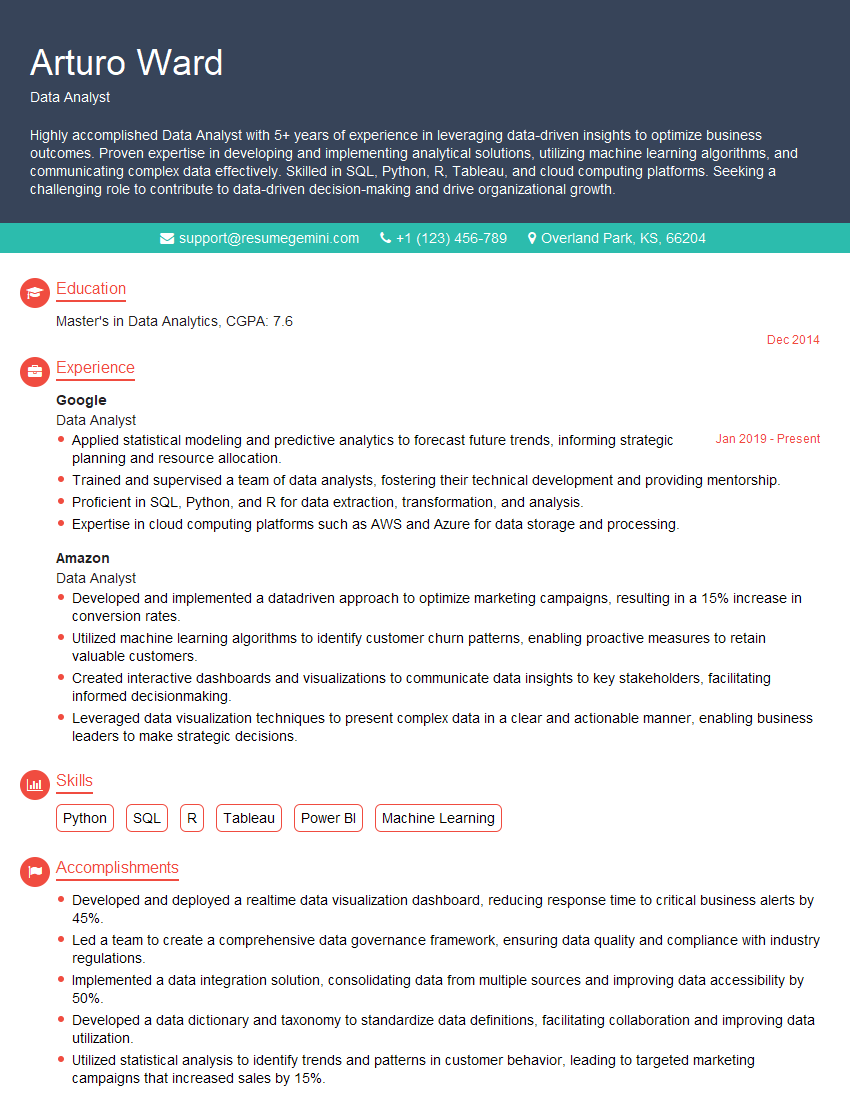
Data Analyst Resume Sample
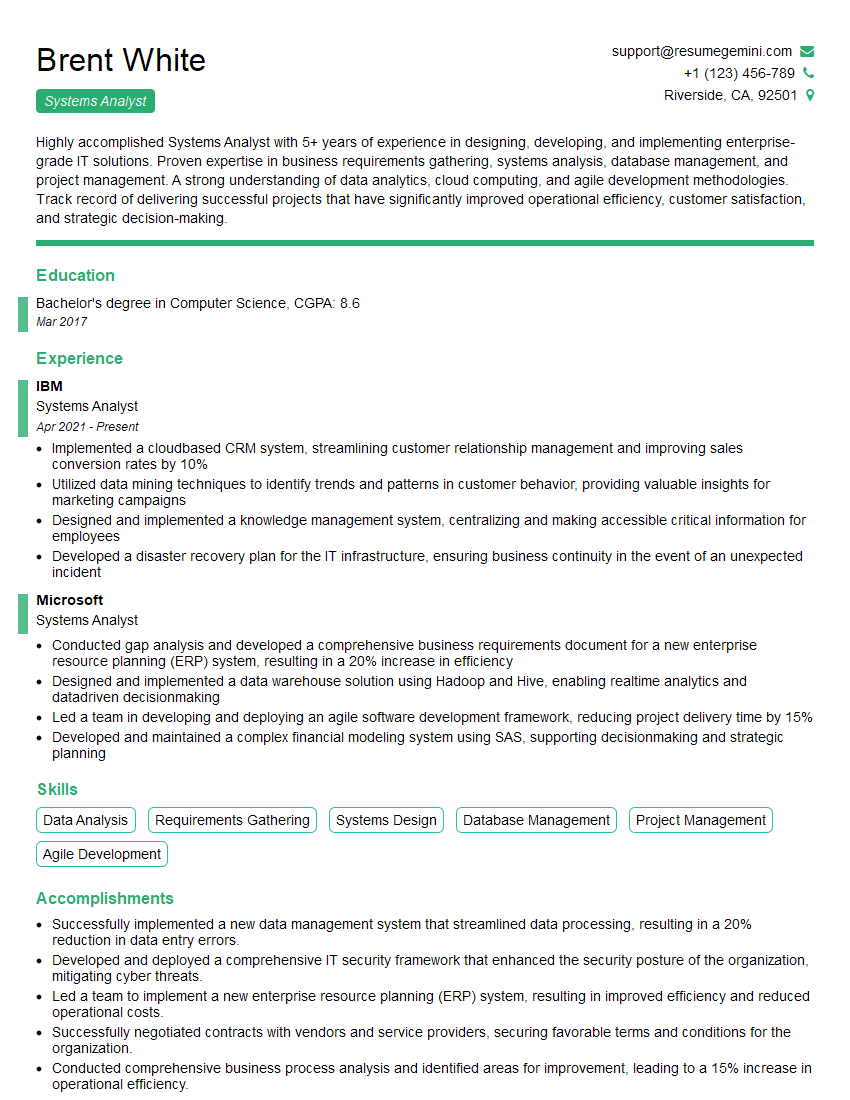
Systems Analyst Resume Sample
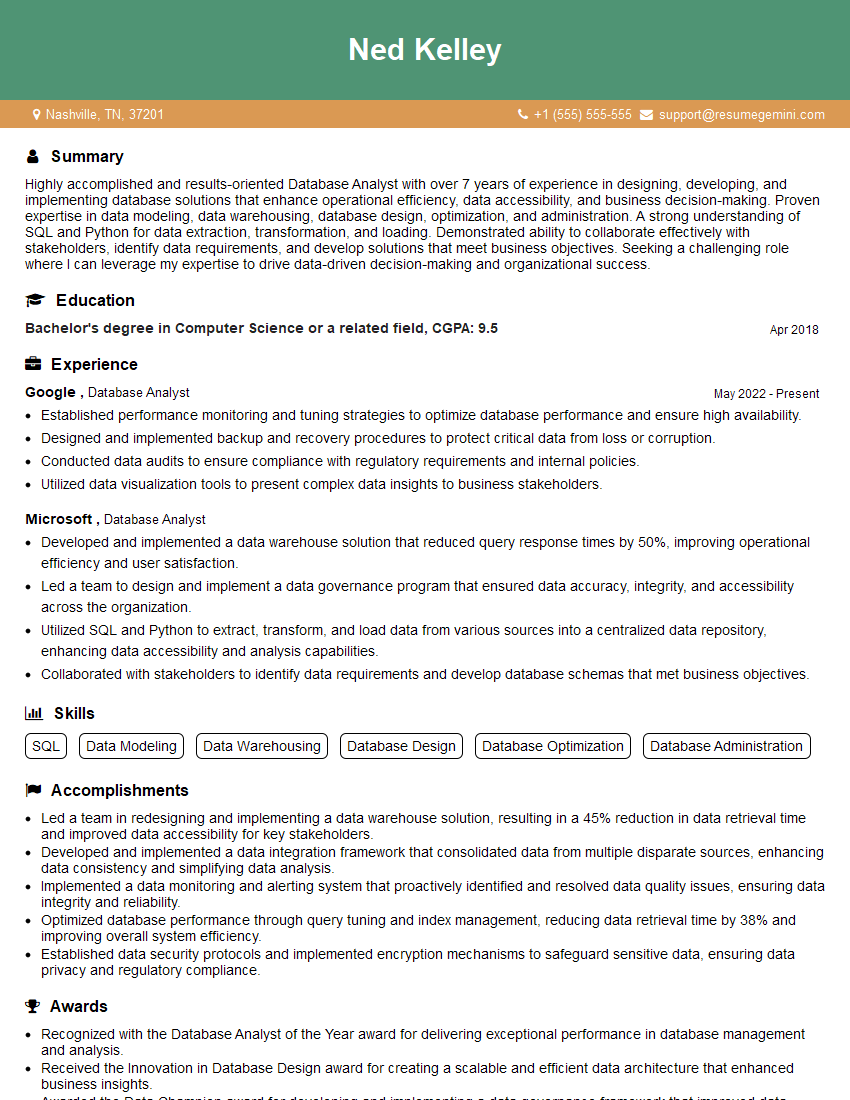
Database Analyst Resume Sample
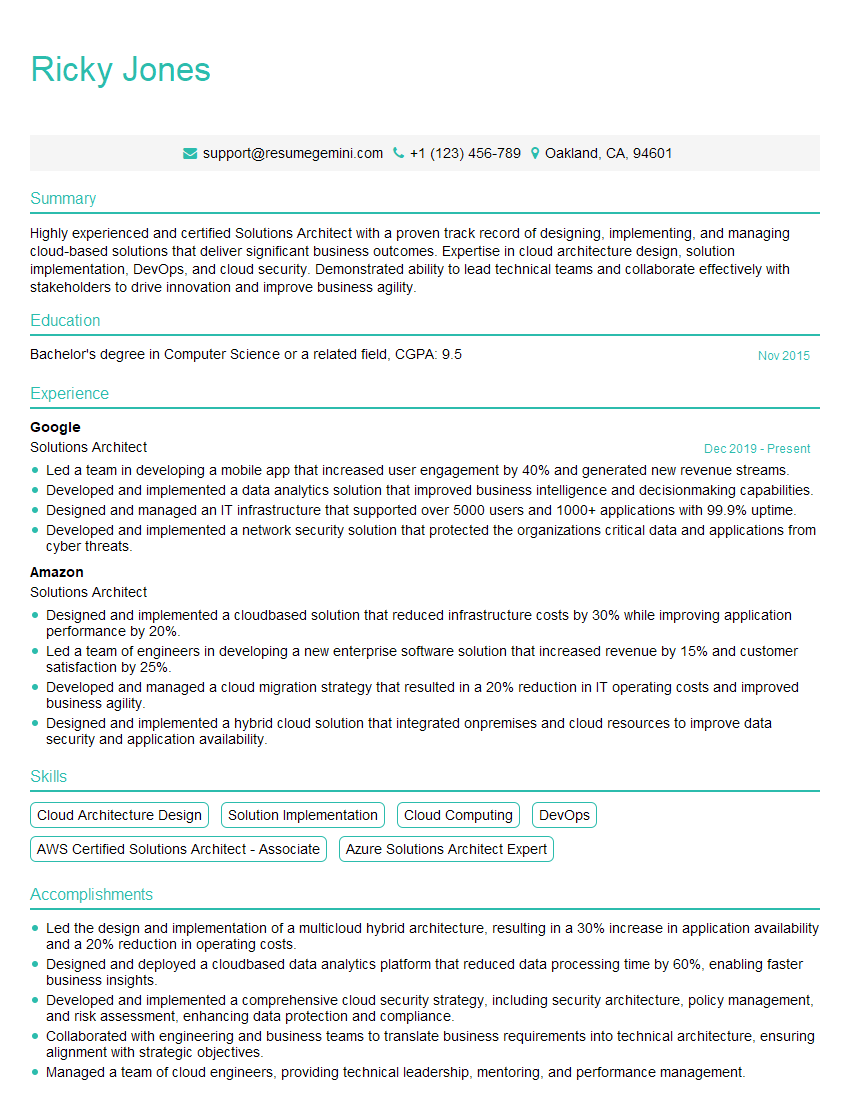
Solutions Architect Resume Sample
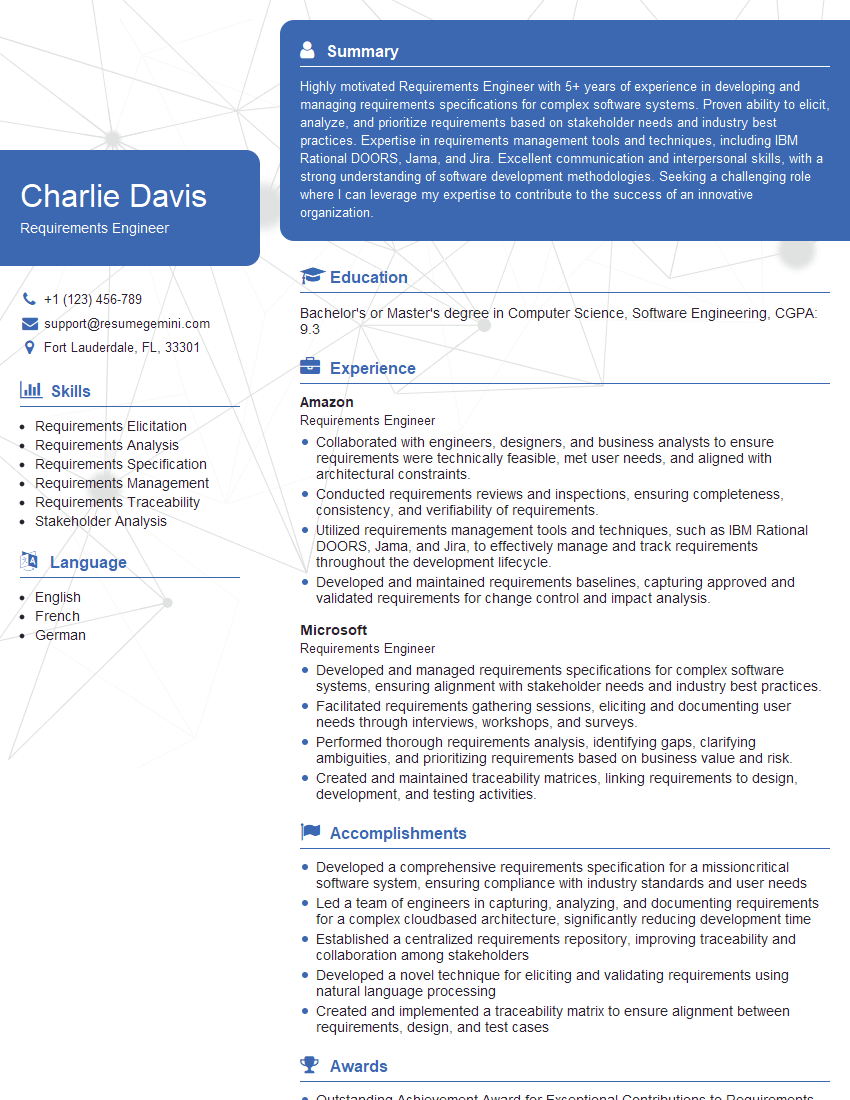
Requirements Engineer Resume Sample
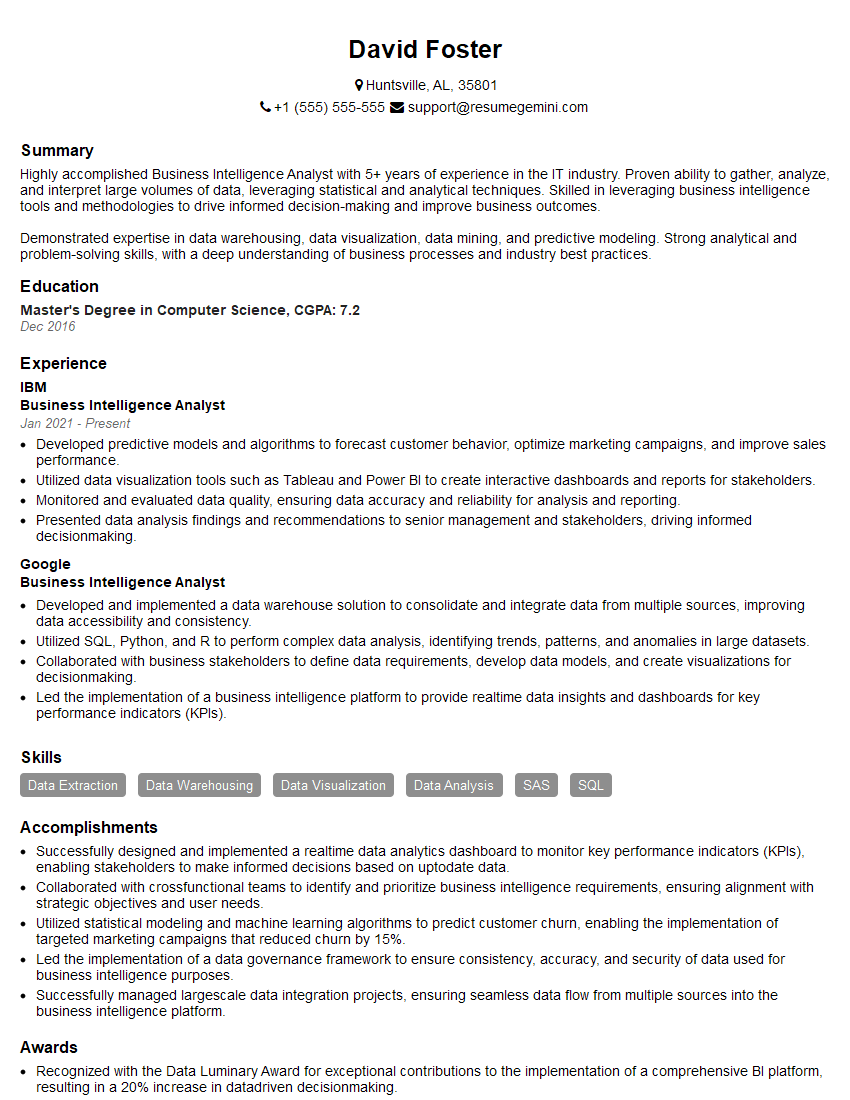
Business Intelligence Analyst Resume Sample
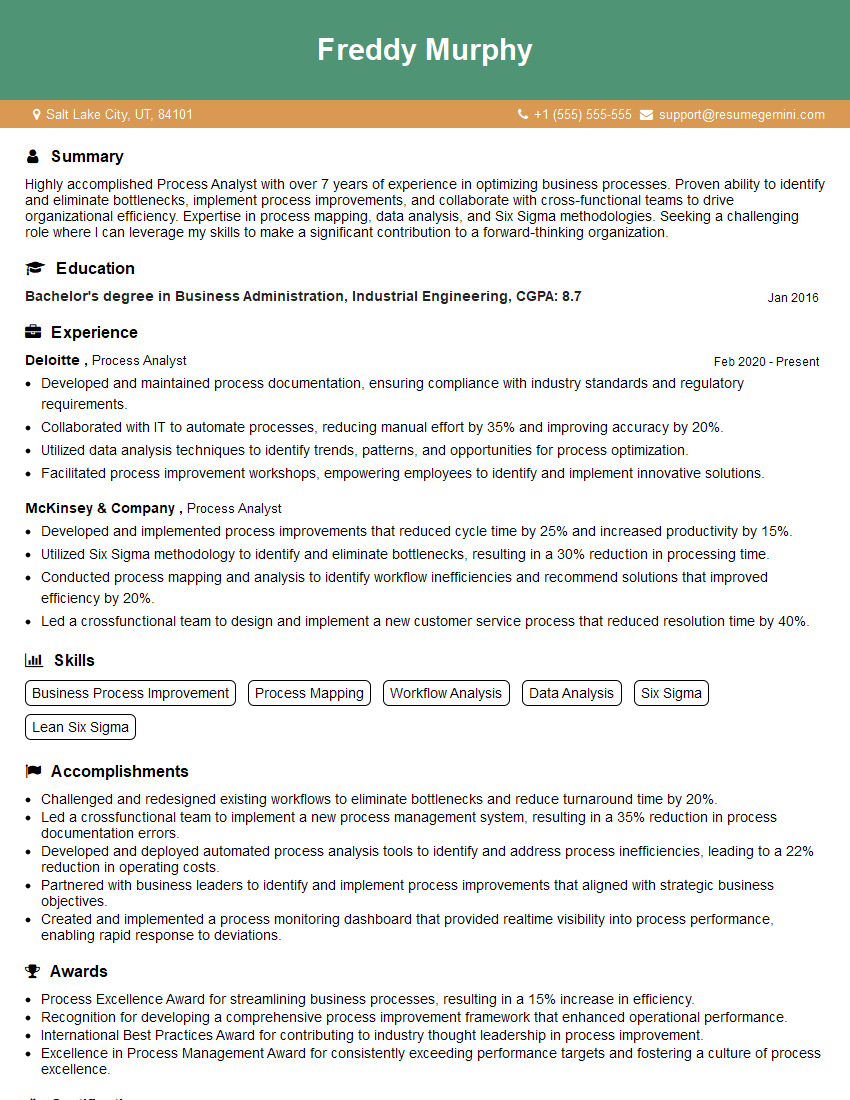
Process Analyst Resume Sample
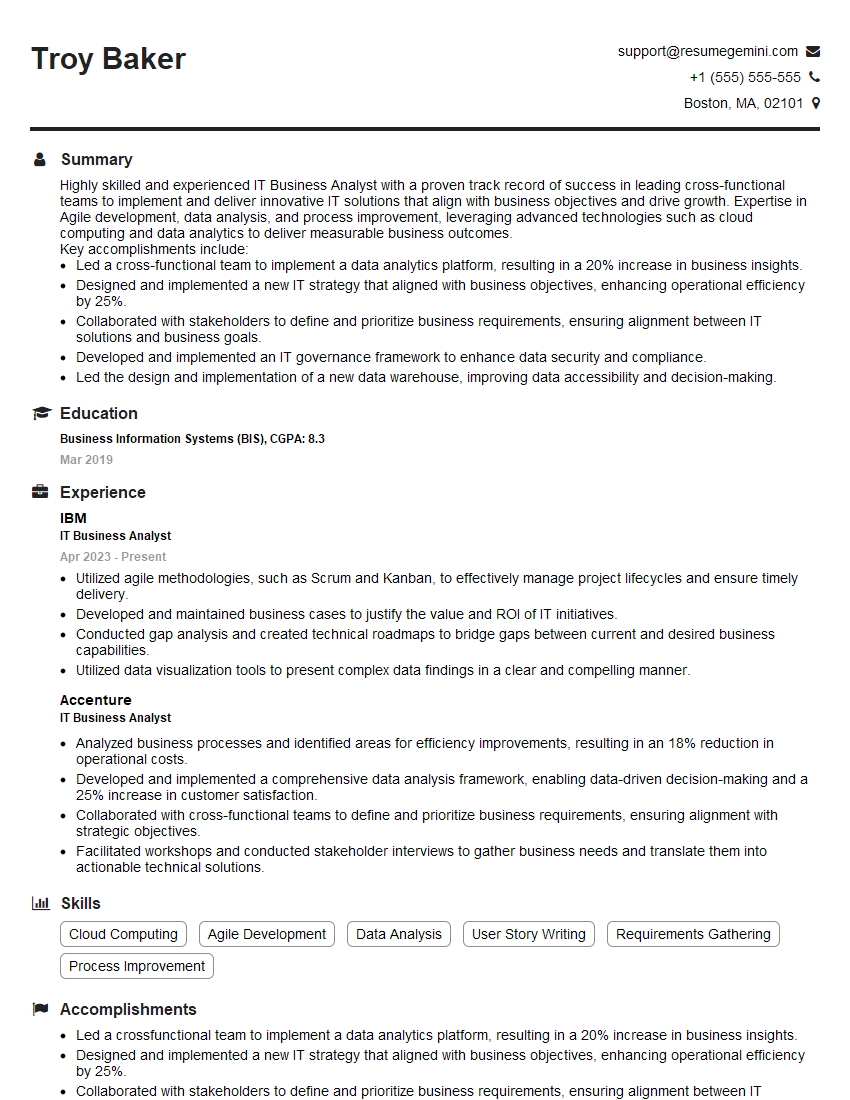
IT Business Analyst Resume Sample
Explore more articles
Users Rating of Our Blogs
Share Your Experience
We value your feedback! Please rate our content and share your thoughts (optional).
What Readers Say About Our Blog
Very informative content, great job.
good