The thought of an interview can be nerve-wracking, but the right preparation can make all the difference. Explore this comprehensive guide to Fabric Handling Expertise interview questions and gain the confidence you need to showcase your abilities and secure the role.
Questions Asked in Fabric Handling Expertise Interview
Q 1. Explain the different types of fabric damage and their causes.
Fabric damage can significantly impact the quality and value of textile products. Understanding the different types and their causes is crucial for effective prevention and mitigation. Damage can be broadly categorized into:
- Mechanical Damage: This includes abrasions, tears, cuts, snags, and punctures resulting from friction, sharp objects, improper handling, or excessive stress during processing. Imagine a delicate silk fabric snagged by a rough zipper – that’s mechanical damage. Another example is the abrasion a fabric undergoes during transportation if not properly protected.
- Chemical Damage: This stems from exposure to acids, alkalis, bleaches, or other chemicals. For instance, accidental spillage of bleach on a cotton garment can cause irreversible discoloration and weakening of the fibers. Improper cleaning solutions can also lead to this type of damage.
- Biological Damage: This involves damage caused by microorganisms like mildew, bacteria, or insects. Storing fabrics in damp conditions can lead to mildew growth, weakening the fabric and causing unpleasant odors. Moths are notorious for damaging wool and other natural fibers.
- Physical Damage: This encompasses shrinkage, stretching, wrinkling, and pilling caused by factors like incorrect washing or drying, improper ironing, or excessive wear and tear. For example, using too high a heat setting on the iron can cause scorching and irreparable damage to certain fabrics.
- Light Damage: Prolonged exposure to sunlight, especially ultraviolet (UV) rays, can cause fading and weakening of fabrics, particularly those with dyes that are not UV-resistant. This is commonly seen in curtains or upholstery fabrics that are constantly exposed to sunlight.
Understanding the cause of the damage is key to preventing it. A thorough analysis of the damage type helps identify the source of the problem, whether it’s a faulty machine, improper storage, or inadequate handling practices.
Q 2. Describe your experience with various fabric handling equipment.
My experience encompasses a wide range of fabric handling equipment, including:
- Conveyor systems: I’ve worked extensively with various conveyor belt types, from simple roller conveyors for moving bolts of fabric to more sophisticated automated systems that integrate with cutting and sewing machines. I’m adept at troubleshooting malfunctions and optimizing efficiency. For example, I once resolved a recurring jamming issue on a conveyor belt by adjusting the belt tension and optimizing the fabric feed mechanism.
- Material handling carts and dollies: I’m familiar with various types designed to accommodate different fabric weights and sizes, ensuring safe and efficient movement of materials within the production facility. Proper use of these carts minimizes the risk of fabric damage during transport.
- Automated guided vehicles (AGVs): In a previous role, I worked with AGVs to transport large quantities of fabrics between different production areas. This improved efficiency and reduced manual handling risks.
- Folding and stacking machines: I have experience with automated equipment for folding and stacking finished garments or fabric pieces, minimizing human error and enhancing production speed. This also ensures consistent quality in the final product presentation.
- Inspection tables and lighting systems: These are essential for thorough fabric inspection to detect any defects early in the process. Optimizing lighting is crucial for identifying subtle flaws.
My experience isn’t just limited to operation; I also possess expertise in maintenance, troubleshooting, and selecting the right equipment for specific fabric types and production needs. Understanding the capabilities and limitations of each piece of equipment is crucial for maximizing efficiency and minimizing fabric damage.
Q 3. How do you ensure the safety of fabrics during storage and transportation?
Ensuring fabric safety during storage and transportation involves implementing comprehensive strategies to protect against damage, contamination, and theft. Here are some key measures:
- Proper Storage Conditions: Fabrics should be stored in a clean, dry, and well-ventilated environment, away from direct sunlight, heat sources, and moisture. This prevents mold, mildew, and discoloration. Using proper shelving and racking systems is also important to prevent crushing or stacking damage. For delicate fabrics, specialized storage containers might be necessary. For example, I once implemented a system using acid-free tissue paper to wrap and store archive-quality fabrics, preventing deterioration.
- Protective Packaging: Using appropriate packaging materials, like protective covers, rolls, and containers, is crucial. This prevents abrasion, snags, and contamination. Different fabrics require different levels of protection; for instance, delicate silks need much more careful wrapping than robust cotton canvases.
- Controlled Transportation: During transportation, fabrics should be secured properly to prevent shifting or damage. Climate-controlled vehicles may be necessary for sensitive materials. Using proper loading and unloading techniques is vital to prevent tearing or crushing. For example, I developed a specific protocol for transporting large rolls of fabric using protective wraps and secure straps on specialized trailers.
- Inventory Management: Effective inventory management helps track fabric movements, ensuring accountability and reducing the risk of loss or damage. A well-organized storage system with clear labeling makes locating and retrieving fabrics more efficient and safer.
- Security Measures: Depending on the value and type of fabrics, implementing security measures like access control, surveillance, and alarm systems can prevent theft or unauthorized access.
A holistic approach that combines all these aspects is necessary to ensure the safety and integrity of fabrics throughout the supply chain.
Q 4. What are the best practices for preventing fabric shrinkage or stretching?
Preventing fabric shrinkage and stretching is paramount to maintaining quality. This requires a multi-faceted approach starting with:
- Pre-treatment: Understanding the fabric’s composition is crucial. Pre-washing fabrics, especially natural fibers like cotton and wool, before cutting and sewing can significantly reduce shrinkage during subsequent washing. The correct washing temperature and detergent choice are key to this process.
- Correct Cutting and Sewing Techniques: Careful handling during cutting and sewing minimizes stretching. Using appropriate seam allowances accounts for potential shrinkage or stretching during future wash cycles. Employing proper tension settings on sewing machines is also essential.
- Proper Washing and Drying Instructions: Following care instructions diligently is critical. Washing fabrics in cold or lukewarm water, avoiding harsh detergents, and air-drying whenever possible are recommended. Using a low heat setting for machine drying, or better yet, air drying, is usually optimal.
- Fabric Selection: Choosing fabrics with inherent stability can significantly reduce these issues. Some synthetics, for example, are designed to be less prone to shrinking or stretching than natural fibers. Understanding fabric properties is critical for choosing the right one for the final product.
- Finishing Techniques: Specific finishing techniques, such as heat-setting, can reduce shrinkage. These processes are often applied by manufacturers to stabilize the fabric.
These practices ensure the garment retains its shape and size over time, increasing the customer satisfaction and product longevity.
Q 5. How do you identify fabric defects during inspection?
Identifying fabric defects during inspection requires a keen eye and systematic approach. I typically employ the following methods:
- Visual Inspection: This is the primary method. Using good lighting, I examine the fabric for irregularities like holes, stains, discoloration, misprints, weaving defects (e.g., slubs, broken ends), and inconsistencies in texture. This often involves spreading out the fabric and systematically inspecting it, paying close attention to the edges and seams.
- Touch and Feel: By running my hands across the fabric, I can detect variations in texture, thickness, and softness, identifying potential defects not readily visible to the eye. This is particularly important for detecting inconsistencies that might suggest issues with the dyeing or finishing process.
- Measuring and Testing: Depending on the fabric type and the intended application, I might use measuring tools to check for inconsistencies in width or length. Stress tests or tear tests might be necessary to assess the fabric’s strength and resilience.
- Use of Magnifying Glasses and Specialized Tools: To detect subtle defects, such as very small holes or imperfections in the weave, magnifying glasses and other specialized inspection tools might be necessary.
- Digital Imaging Techniques: Advanced techniques involving digital cameras and image analysis software can enhance the detection of defects, especially subtle ones.
Thorough and meticulous inspection is crucial to identify defects before they become major quality issues in the final product. The goal is to remove or repair the defective portions before further processing, enhancing both product quality and cost-effectiveness.
Q 6. Describe your experience with different fabric finishing techniques.
My experience with fabric finishing techniques is extensive, encompassing a broad range of processes that enhance the appearance, performance, and durability of fabrics. Some key techniques include:
- Bleaching: This process removes natural colors and impurities from fabrics, preparing them for dyeing or providing a bright white finish.
- Dyeing: This adds color to fabrics using various methods like reactive dyeing, vat dyeing, and direct dyeing, each suitable for different fiber types. I’m experienced in selecting the optimal dye and process for different fabric compositions and color requirements.
- Printing: This involves applying designs or patterns to fabrics using screen printing, rotary printing, or digital printing technologies. My experience extends to optimizing printing techniques for different fabric types and print quality.
- Calendering: This process uses rollers to press and smooth fabrics, improving their hand feel and luster. This is particularly useful for achieving a smooth and polished finish for fabrics intended for apparel applications.
- Finishing Agents: Applying finishing agents like softeners, water repellents, wrinkle-resistant treatments, and flame retardants enhances the fabric’s properties and performance, tailoring the fabric for its intended use. For example, I’ve worked with projects requiring durable water repellent (DWR) finishes for outerwear fabrics.
My understanding extends beyond simply applying these processes; I possess a deep understanding of the chemical and physical interactions involved, enabling me to optimize finishing processes for specific fabric types and achieve desired aesthetic and functional properties.
Q 7. How do you maintain the quality of fabrics throughout the production process?
Maintaining fabric quality throughout the production process demands meticulous attention to detail and comprehensive quality control measures. Key strategies include:
- Raw Material Selection: The process begins with selecting high-quality raw materials. Rigorous testing and inspection ensure that fibers meet the required specifications for strength, color, and other properties.
- Process Control: Each stage of production, from fiber preparation to finishing, requires close monitoring to ensure that parameters like temperature, pressure, and chemical concentrations are within acceptable ranges. This ensures consistency in the final product.
- In-Process Inspection: Regular inspections are performed at various stages to detect defects early. This prevents the propagation of flaws and reduces waste. I often use statistical process control (SPC) methods to monitor key parameters and identify potential issues before they become major problems.
- Equipment Maintenance: Regularly scheduled maintenance of machinery and equipment is essential for consistent performance and to prevent fabric damage. This includes preventative maintenance to reduce the risk of mechanical defects.
- Training and Expertise: Well-trained personnel are crucial for maintaining quality. Consistent training programs ensure that employees follow standard operating procedures and are equipped to identify and address potential quality issues. For example, in a previous role, I implemented a training program focused on proper fabric handling techniques, significantly reducing damage rates.
- Quality Documentation: Meticulous record-keeping is vital for traceability and continuous improvement. Detailed documentation of all process parameters, inspections, and quality control results is crucial for identifying areas for improvement.
By implementing a proactive quality management system that incorporates these elements, consistent high-quality fabric is guaranteed throughout the production process, leading to enhanced customer satisfaction and a strong brand reputation.
Q 8. Explain your understanding of fabric flammability standards.
Fabric flammability standards are crucial for safety and are regulated by various organizations globally. These standards define how fabrics react to ignition sources and specify performance requirements. For instance, the US uses standards like those set by the Consumer Product Safety Commission (CPSC), focusing on things like the rate of burn and the spread of flames. In the UK, similar regulations exist. Understanding these standards involves knowing the different test methods used, such as the vertical burn test or the horizontal flammability test, which assess a fabric’s resistance to ignition and flame spread. Knowing these standards is critical for selecting appropriate fabrics for different applications – a child’s sleepwear, for example, will require a much higher level of flame resistance than an upholstery fabric.
Different standards exist for different fabric types and end uses. These standards aren’t just about safety; they also often influence product labeling requirements, meaning manufacturers must clearly indicate the flammability properties of their fabrics. In my experience, staying abreast of these evolving standards is vital for maintaining compliance and ensuring product safety.
Q 9. How do you handle different fabric weights and textures?
Handling different fabric weights and textures requires a nuanced approach. Think of it like cooking – you wouldn’t handle a delicate pastry the same way you would a sturdy loaf of bread. Lightweight fabrics, such as silks or chiffons, require gentle handling to avoid tearing or stretching. This often involves using specialized tools like soft brushes or padded surfaces during storage and processing. Heavier fabrics, such as denim or canvas, can tolerate more robust handling but still require careful consideration to prevent wrinkles or damage during transport or storage. Their weight necessitates different storage solutions to avoid compression and potential damage.
The texture also plays a crucial role. A fabric with a pile, such as velvet, requires more delicate handling to avoid crushing the pile. Conversely, a smooth fabric like linen might require less care but could still be prone to creasing. My experience demonstrates that adapting handling techniques to individual fabric properties is paramount for preserving the quality and integrity of the material.
Q 10. What are the common causes of fabric contamination, and how do you prevent them?
Fabric contamination can stem from various sources, impacting both the aesthetic and functional qualities of the fabric. Common culprits include dust, dirt, oil, chemicals, and even biological contaminants like mold or mildew. These contaminants can be introduced at any stage, from raw material sourcing to final product packaging. Preventing contamination involves a multi-pronged approach.
- Proper Storage: Clean, dry, and well-ventilated storage facilities are essential. This minimizes exposure to dust and moisture.
- Handling Procedures: Implementing strict hygiene protocols for personnel involved in handling fabrics, such as wearing gloves and clean clothing, significantly reduces contamination risk.
- Transportation: Protecting fabrics during transportation, using appropriate coverings and avoiding exposure to harsh elements, is vital.
- Quality Control: Regular inspections and quality control checks at various stages of the process help to identify and address contamination early on.
For example, I once dealt with a case of oil contamination in a batch of cotton fabric. By meticulously tracing back the process, we identified the source as a faulty machine component. Prompt action, including cleaning and replacing the faulty part, prevented wider contamination and saved significant costs.
Q 11. Describe your experience with inventory management of fabrics.
My experience in fabric inventory management involves implementing robust systems to track and manage fabric stock efficiently. This includes utilizing inventory management software to maintain accurate records of fabric types, quantities, colors, and relevant details like dye lots. It’s not just about numbers; it’s about understanding the lifecycle of each fabric – from its arrival to its eventual use in production. Effective inventory management hinges on accurate forecasting to meet production demands and minimize waste. Data analysis helps to identify trends and patterns in fabric usage, allowing for strategic purchasing and reducing storage costs.
One key strategy I’ve found beneficial is implementing a FIFO (First-In, First-Out) system, ensuring that older fabrics are used first, minimizing the risk of fabric degradation and obsolescence. Regular stocktaking and audits are crucial for verifying inventory accuracy and identifying discrepancies early.
Q 12. How do you organize and maintain a fabric warehouse efficiently?
Efficient fabric warehouse organization hinges on several key factors: spatial planning, stock rotation, and environmental control. A well-organized warehouse ensures easy access to fabrics, minimizes handling time, and reduces the risk of damage or loss. The layout should consider fabric types and weights, with heavier fabrics stored at lower levels for easier access and safety. Clear labeling and identification systems for each fabric roll or bundle are essential. This could involve color-coding, barcodes, or RFID tags.
Maintaining the warehouse’s environment is critical. Adequate ventilation and temperature control prevent moisture buildup, mildew, and other forms of damage. Regular cleaning to prevent dust accumulation is also necessary. I’ve found that implementing a zone-based system, with different sections designated for various fabric types, further enhances efficiency and organization. This reduces search time and makes stocktaking much simpler.
Q 13. Explain your understanding of fabric dyeing processes.
Fabric dyeing processes involve immersing the fabric in a dye bath containing various chemicals and agents to achieve the desired color. The process can be broadly categorized into various methods, including vat dyeing, reactive dyeing, and direct dyeing, each suited to different types of fibers and desired color fastness. The choice of dyeing method depends on factors such as the fiber type, color requirements, and budget constraints. Each method employs different chemical dyes and processes to achieve color penetration and fixation onto the fabric.
The process typically involves preparing the fabric, immersing it in the dye bath under controlled temperature and time, followed by rinsing and drying. Understanding the chemistry behind each method is crucial for ensuring consistent color results, optimizing dye usage, and minimizing environmental impact. For instance, reactive dyes create strong bonds with the fiber molecules, leading to highly colorfast fabrics.
Q 14. How do you handle fabric complaints or returns?
Handling fabric complaints or returns requires a systematic approach. Firstly, a thorough investigation of the complaint is crucial. This involves assessing the nature of the defect, examining the fabric sample, and verifying the original order details. Communication with the customer is essential throughout the process, keeping them updated on the investigation’s progress.
The next step is determining the cause of the issue. This may involve analyzing the dyeing process, fabric handling, or even sourcing of raw materials. Once the root cause is identified, corrective actions are implemented to prevent recurrence. Depending on the nature of the complaint and the terms of sale, solutions might involve replacement, repair, refund, or a combination of these options. Maintaining clear records of complaints, investigations, and resolutions is crucial for continuous improvement and customer satisfaction. My experience shows that a timely and empathetic response significantly impacts customer loyalty, even in difficult situations.
Q 15. What are your experience with different types of fabric measuring tools?
Accurate fabric measurement is crucial for efficient production. My experience encompasses a range of tools, each suited to different tasks and fabric types. I’m proficient with:
Tape Measures: Standard retractable tape measures are essential for quick, general measurements. I utilize both metric and imperial versions, ensuring accuracy depending on project requirements. For example, when working with delicate lace, a softer tape measure avoids stretching or damaging the material.
Steel Rules: These are indispensable for precise cutting and checking measurements, especially when working with stiffer fabrics like denim or canvas. The rigidity prevents bending or inaccuracy.
Fabric Measuring Wheels: These are invaluable for measuring long lengths of fabric quickly and efficiently, particularly during inventory or large-scale projects. They save significant time compared to manual tape measure usage.
Digital Calipers: For extremely precise measurements, especially when working with small components or pattern pieces, digital calipers offer superior accuracy to traditional rulers.
Selecting the right tool depends on the specific task and fabric type. My experience allows me to choose the most appropriate tool for optimal accuracy and efficiency.
Career Expert Tips:
- Ace those interviews! Prepare effectively by reviewing the Top 50 Most Common Interview Questions on ResumeGemini.
- Navigate your job search with confidence! Explore a wide range of Career Tips on ResumeGemini. Learn about common challenges and recommendations to overcome them.
- Craft the perfect resume! Master the Art of Resume Writing with ResumeGemini’s guide. Showcase your unique qualifications and achievements effectively.
- Don’t miss out on holiday savings! Build your dream resume with ResumeGemini’s ATS optimized templates.
Q 16. How familiar are you with various fabric composition labels and their meaning?
Fabric composition labels are vital for understanding a fabric’s properties and care instructions. I’m highly familiar with interpreting these labels, which typically include percentages of different fibers (e.g., 60% cotton, 40% polyester), care symbols (washing, drying, ironing instructions), and sometimes the fabric’s origin or manufacturing details. Understanding these labels is crucial for:
Selecting appropriate manufacturing processes: Different fiber blends require different cutting, sewing, and finishing techniques. For example, a silk blend requires gentler handling than a durable cotton canvas.
Predicting fabric behavior: Knowing the composition helps predict shrinkage, drape, and overall performance. This is critical for accurate pattern making and avoiding costly mistakes.
For example, a label indicating ‘100% Linen’ tells me to expect wrinkles, potential shrinkage, and a need for special care during washing. Conversely, a ‘Polyester Blend’ label suggests a more durable and wrinkle-resistant fabric.
Q 17. Describe your experience with using a cutting plotter or other automated cutting systems.
I have extensive experience operating both manual and automated cutting systems, including cutting plotters. My proficiency extends to various software programs used for designing and exporting cutting files. With manual cutting, I’m skilled in using both rotary cutters and shears, employing techniques that minimize fabric waste and maximize accuracy. Automated systems provide greater efficiency for large-scale projects. I’m adept at:
Preparing cutting files: Ensuring accurate scaling, nesting, and material utilization.
Operating cutting plotters: Using software interface to manage cutting parameters like speed, pressure, and blade type.
Troubleshooting issues: Addressing blade jams, material feed problems, and calibration issues.
The choice between manual and automated cutting depends on project size and complexity. For smaller, intricate projects, manual cutting offers greater control and precision. For large-volume production, automated systems deliver significant time and cost savings.
Q 18. How do you deal with unexpected fabric shortages or delays?
Unexpected fabric shortages or delays are a common challenge in the textile industry. My approach involves proactive measures and contingency planning:
Early communication: Immediately notifying relevant stakeholders (designers, clients, production team) about the issue.
Exploring alternative solutions: Searching for alternative fabric suppliers, investigating substitute materials with similar properties, or adjusting designs to minimize fabric usage.
Prioritizing production: Focusing on fulfilling the most urgent orders first, while finding ways to expedite the delivery of the missing fabric.
Negotiating with suppliers: Working with suppliers to resolve delays and prioritize deliveries.
In a recent project, a sudden delay in silk delivery threatened to disrupt a high-profile event. By quickly contacting a backup supplier and adjusting the design slightly to utilize a readily available alternative, we managed to complete the project on time with minimal impact.
Q 19. Explain your understanding of different fabric pre-treatment methods.
Fabric pre-treatment is crucial for achieving optimal results in garment making and textile production. My understanding encompasses several methods, each tailored to specific fabric types and project requirements:
Washing: Pre-washing helps remove sizing agents, dyes, and other impurities that may affect the final product. This is especially critical for natural fibers like linen and cotton.
Steam pressing: Relaxing the fabric fibers and removing creases is crucial for accurate pattern cutting and a smoother final product.
Drying: Proper drying techniques prevent shrinkage and damage. Air drying is preferred for delicate fabrics, while machine drying is often suitable for more robust materials.
Stabilizing: Certain fabrics, like silks or knits, may require stabilizing treatments to prevent stretching or distortion during cutting and sewing.
The choice of pre-treatment method greatly impacts the final quality of the finished product. For instance, pre-washing linen prevents significant shrinkage later in the process, saving both time and material.
Q 20. How do you ensure the accurate cutting and nesting of fabric patterns?
Accurate cutting and nesting are fundamental for efficient fabric utilization and minimizing waste. My approach combines meticulous planning and practical techniques:
Precise pattern making: Creating accurate patterns that account for seam allowances, ease, and fabric grain. Using computer-aided design (CAD) software where appropriate.
Efficient nesting: Arranging pattern pieces on the fabric in a way that maximizes fabric utilization and minimizes waste. This often involves software or manual techniques to optimize placement.
Careful marking: Clearly and accurately marking pattern pieces on the fabric to ensure precise cutting.
Appropriate cutting tools: Utilizing the correct cutting tools for the fabric type (rotary cutter, shears, etc.) to maintain precision and prevent damage.
For example, using nesting software can significantly reduce fabric waste by automatically optimizing the arrangement of pattern pieces on the fabric layout, potentially saving several yards of material on a large production run.
Q 21. Describe your experience with different fabric folding and bundling techniques.
Proper folding and bundling techniques are essential for maintaining fabric quality, organization, and efficient storage and handling. My experience includes various methods depending on the fabric type and the intended purpose:
Standard folding: Folding fabrics neatly into consistent sizes, either lengthwise or crosswise, for easy storage and retrieval.
Bundling: Grouping folded fabrics into bundles for easier handling and transportation. This often involves using banding or ties to secure the bundles.
Specialized folding: Employing specific folding techniques for delicate fabrics or those requiring protection from creasing. For example, silk is often folded loosely to avoid creases.
Inventory labeling: Clearly labeling bundles with relevant information (fabric type, quantity, color, etc.) for easy identification and tracking.
Consistent folding and bundling practices ensure that fabrics are handled carefully, reducing the risk of damage and facilitating efficient inventory management and order fulfillment.
Q 22. How do you maintain accurate records of fabric usage and inventory?
Maintaining accurate fabric usage and inventory records is crucial for efficient production and cost control. I utilize a combination of methods, beginning with a robust computerized inventory management system (IMS). This system tracks fabric purchases, receipts, and the allocation of fabrics to different production runs. Each roll of fabric receives a unique identification number, recorded upon entry into our warehouse. This number is then scanned at each stage of the process – from initial receiving to cutting and finally, post-production.
Beyond the IMS, we employ regular physical inventory checks to reconcile digital records with actual stock. Discrepancies are investigated immediately to identify and rectify any errors. We use barcode or RFID tagging for efficient tracking and minimize human error. For example, if a discrepancy is found, we’d trace the fabric roll back through our system, checking against production orders and possibly reviewing security footage to pinpoint the issue. Finally, detailed reports are generated, providing real-time data on fabric consumption, waste, and overall stock levels.
These reports aid in forecasting future fabric needs, optimizing purchasing decisions and minimizing stockouts or excess inventory. A well-maintained system ensures transparency and accountability across the entire supply chain.
Q 23. What are your experience with different fabric testing methods?
My experience encompasses a wide range of fabric testing methods, crucial for quality control and ensuring the final product meets the required specifications. These tests cover various aspects of fabric performance, including:
- Tensile Strength: Measures the fabric’s resistance to breaking under tension, using a tensile testing machine. This is critical for determining fabric durability.
- Abrasion Resistance: Evaluates the fabric’s ability to withstand rubbing and wear, utilizing abrasion testers like the Martindale abrasion tester. This is especially important for garments intended for frequent use.
- Colorfastness: Assesses the fabric’s resistance to fading or color bleeding due to washing, sunlight, or rubbing, using standardized colorfastness tests.
- Shrinkage: Determines the fabric’s tendency to shrink after washing or other treatments. Accurate shrinkage testing prevents significant dimensional changes in the finished product.
- Bursting Strength: Measures the pressure required to rupture the fabric, which is relevant for certain applications such as airbags or protective clothing.
I’m proficient in interpreting the results of these tests and using them to make informed decisions about fabric suitability for specific applications. For instance, if a fabric shows low abrasion resistance, we might not use it for workwear or upholstery.
Q 24. How do you communicate effectively with other departments regarding fabric handling issues?
Effective communication is paramount in fabric handling. I rely on a multi-pronged approach to ensure clear and timely information exchange with other departments.
- Regular Meetings: Scheduled meetings with production, design, and purchasing teams foster collaboration and address potential issues proactively. These meetings allow us to share information, raise concerns, and collaboratively find solutions.
- Email and Instant Messaging: For urgent updates or quick queries, I use email and instant messaging tools. These are vital for keeping stakeholders updated on fabric availability, quality concerns, or any changes in handling procedures.
- Formal Reporting: Detailed reports on fabric usage, quality issues, and inventory levels are circulated to relevant departments. This provides a clear and documented record of fabric-related activities.
- Visual Aids: Charts, graphs, and images can be used to effectively convey data on fabric consumption, wastage, and stock levels. Visual representations help clarify complex data points more easily.
For example, if a design team wants to use a new fabric, I’ll work with purchasing to assess its availability, cost, and test its properties before giving them the green light. Open communication ensures everyone is informed and aligned.
Q 25. Describe your problem-solving skills in addressing fabric related production issues.
Problem-solving in fabric-related production issues requires a systematic approach. My strategy involves:
- Identify the Problem: Carefully analyze the issue, gathering all relevant information. For example, is it a quality defect, a shortage of a specific fabric, or a production bottleneck due to fabric handling?
- Analyze the Root Cause: Investigate the underlying causes. This might involve inspecting the fabric itself, reviewing production records, or talking to production staff to understand the situation fully.
- Develop Solutions: Brainstorm possible solutions and evaluate their feasibility, considering factors such as cost, time, and impact on other processes. If the problem is a fabric defect, perhaps we need to find a replacement fabric or request a credit from the supplier.
- Implement and Monitor: Choose the best solution and implement it carefully. Monitor the results and make adjustments as needed. Consistent monitoring helps to prevent similar problems from recurring.
- Document Findings: Keep a detailed record of the problem, the solution, and the outcome. This allows for continuous improvement and helps prevent similar issues in the future.
For example, if we experience consistent fabric snags during the cutting process, I might investigate the cutting machine settings, the fabric’s quality, or the handling procedures to identify the cause and implement the necessary changes.
Q 26. How familiar are you with relevant health and safety regulations concerning fabric handling?
I am very familiar with relevant health and safety regulations concerning fabric handling. This includes understanding and complying with OSHA (Occupational Safety and Health Administration) guidelines, as well as any industry-specific regulations. Key areas of focus include:
- Proper Lifting Techniques: Training staff on safe lifting techniques to prevent musculoskeletal injuries. Heavy fabric rolls require specific handling procedures.
- Personal Protective Equipment (PPE): Ensuring appropriate PPE, such as gloves and safety glasses, is used when handling certain fabrics (e.g., those containing hazardous chemicals).
- Machine Safety: Safe operation and regular maintenance of fabric handling machinery, such as cutting machines and conveyor belts, are crucial to prevent accidents.
- Fire Safety: Understanding the fire hazards associated with certain fabrics (e.g., highly flammable materials) and having appropriate fire prevention and suppression measures in place.
- Housekeeping: Maintaining a clean and organized work environment to minimize trip hazards and prevent accidents. Proper waste disposal of fabric scraps is also essential.
Regular safety audits and training programs are implemented to ensure compliance and maintain a safe working environment. Our commitment to safety is non-negotiable.
Q 27. Describe your experience with different fabric storage methods and their suitability for specific fabrics.
Different fabrics require specific storage methods to maintain their quality and prevent damage. My experience includes using a variety of methods:
- Roll Storage: Suitable for most woven fabrics, rolls are stored on racks or shelves, ensuring proper ventilation and preventing crushing. Heavier fabrics might require stronger racking systems.
- Fold Storage: Ideal for delicate or easily creased fabrics, these are neatly folded and stored in drawers or on shelves. It’s essential to use acid-free tissue paper to protect sensitive fabrics.
- Hanging Storage: Appropriate for certain fabrics that are prone to creasing or require a specific drape. This is often used for apparel fabrics.
- Controlled Environment Storage: For fabrics sensitive to temperature and humidity, climate-controlled storage is necessary to prevent degradation and mold growth. This is especially important for natural fibers.
The choice of storage method depends on the fabric type, its susceptibility to damage, and the storage space available. For instance, delicate silk requires careful handling and storage in a controlled environment, while sturdy canvas can be stored more simply on sturdy racks.
Q 28. How do you stay updated on the latest advancements in fabric handling technology?
Staying updated on advancements in fabric handling technology is crucial to maintain efficiency and competitiveness. I employ several strategies to achieve this:
- Industry Publications and Journals: I regularly read industry publications and journals to stay abreast of the latest technologies and best practices in fabric handling. These publications often feature articles on new machinery, software, and techniques.
- Trade Shows and Conferences: Attending industry trade shows and conferences allows me to see the latest equipment and technologies in person and network with other professionals in the field. This provides hands-on experience and valuable insights.
- Online Resources and Webinars: I utilize online resources such as industry websites and webinars to learn about new developments in fabric handling technology. Many companies offer online tutorials and training materials.
- Professional Networks: Engaging with professional networks and online communities provides access to a wealth of information and allows for the exchange of ideas and experiences with other experts in the field.
Continuous learning ensures that our facility remains at the forefront of fabric handling efficiency and quality control.
Key Topics to Learn for Fabric Handling Expertise Interview
- Fabric Properties & Classification: Understanding fiber types (natural vs. synthetic), yarn structures, fabric weaves, and their impact on handling techniques.
- Fabric Defects & Quality Control: Identifying common fabric defects (e.g., holes, stains, wrinkles), implementing quality control measures during handling, and understanding the implications of defects on downstream processes.
- Safe Handling & Storage Procedures: Implementing appropriate methods for storing fabrics to prevent damage, maintaining cleanliness and hygiene, and adhering to safety regulations.
- Machinery & Equipment Operation: Demonstrating knowledge of relevant machinery used in fabric handling (e.g., conveyors, folding machines, automated systems) and understanding their safe and efficient operation.
- Process Optimization & Efficiency: Identifying bottlenecks in fabric handling processes, proposing solutions to improve efficiency, and reducing waste and material damage.
- Logistics & Supply Chain Management: Understanding the flow of fabrics from production to end-use, optimizing transportation and storage, and managing inventory effectively.
- Problem-Solving & Troubleshooting: Demonstrating ability to diagnose and resolve issues related to fabric damage, handling inefficiencies, and equipment malfunctions.
Next Steps
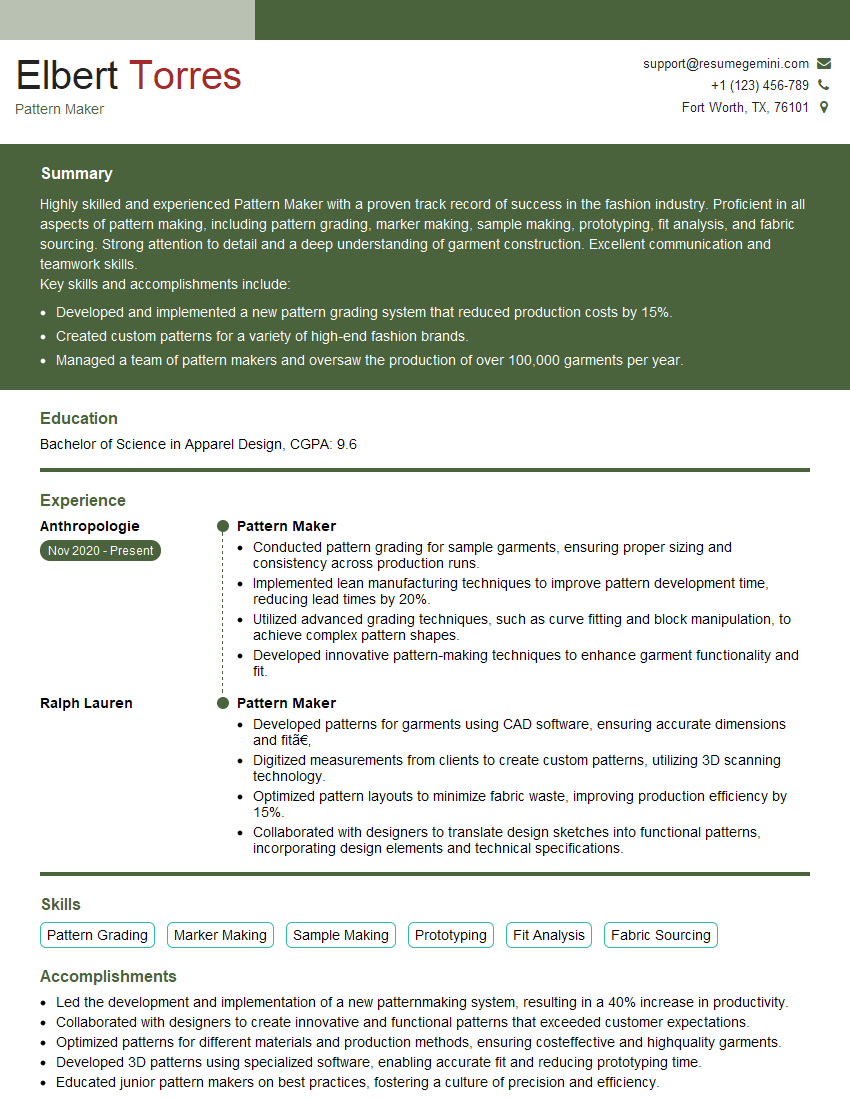
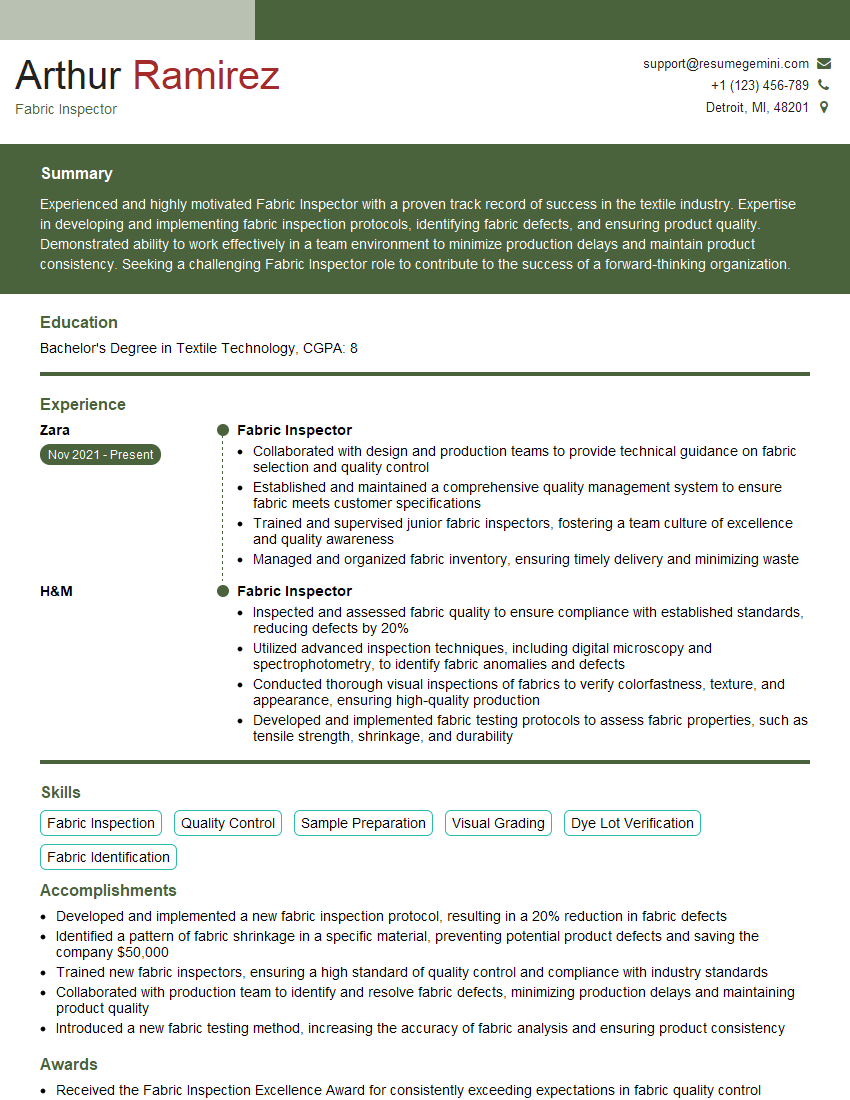
Mastering Fabric Handling Expertise is crucial for career advancement in the textile and apparel industries. It demonstrates a practical understanding of quality control, efficient operations, and a commitment to safety. To significantly boost your job prospects, crafting an ATS-friendly resume is essential. This ensures your application gets noticed by recruiters and hiring managers. We strongly encourage you to leverage ResumeGemini, a trusted resource for building professional and effective resumes. Examples of resumes tailored specifically to Fabric Handling Expertise are available to help you create a compelling application that highlights your skills and experience.



Explore more articles
Users Rating of Our Blogs
Share Your Experience
We value your feedback! Please rate our content and share your thoughts (optional).
What Readers Say About Our Blog
Very informative content, great job.
good