Preparation is the key to success in any interview. In this post, we’ll explore crucial Residential and Commercial Framing Experience interview questions and equip you with strategies to craft impactful answers. Whether you’re a beginner or a pro, these tips will elevate your preparation.
Questions Asked in Residential and Commercial Framing Experience Interview
Q 1. Explain the difference between residential and commercial framing techniques.
Residential and commercial framing share fundamental principles but differ significantly in scale, complexity, and code requirements. Residential framing typically involves smaller structures with simpler designs, often using standardized lumber sizes and construction methods. Think of a single-family home or a small apartment building. Commercial framing, on the other hand, deals with larger, more intricate structures demanding specialized engineering, heavier materials, and more stringent safety regulations. This could include high-rise buildings, large shopping malls, or industrial facilities.
For example, a residential project might use standard 2×4 studs spaced 16 inches on center, while a commercial high-rise might require larger steel beams or engineered wood products with fire-resistant properties and much closer stud spacing for structural integrity.
The speed of construction also differs significantly. Residential projects are often completed faster due to simpler designs, while commercial projects require more meticulous planning and execution due to their scale and complexity. Lastly, commercial projects necessitate a higher level of documentation and compliance with building codes.
Q 2. Describe your experience with various framing materials (e.g., lumber types, engineered wood).
My experience encompasses a wide range of framing materials. I’m proficient with various lumber types, including Douglas Fir, Spruce-Pine-Fir (SPF), and Hem-Fir, understanding their respective strengths, weaknesses, and suitability for different applications. For instance, Douglas Fir is known for its strength and durability, making it ideal for heavy-duty applications like beams and headers, while SPF is more commonly used for studs and joists due to its cost-effectiveness.
Furthermore, I’ve extensive experience working with engineered wood products like laminated veneer lumber (LVL), parallel strand lumber (PSL), and oriented strand board (OSB). These materials offer superior strength and consistency compared to solid lumber, enabling the construction of longer spans and larger structures with greater efficiency. For example, LVL beams are frequently used in longer span floor systems where solid lumber would be impractical or too expensive. OSB is a common sheathing material, providing a stable and strong surface for exterior walls and roofs.
Q 3. How do you ensure accurate measurements and cuts in framing?
Accuracy in measurements and cuts is paramount in framing. I rely on a combination of precise measuring tools like laser measures, tape measures, and speed squares. For larger projects, I use a layout plan and accurately transfer those measurements onto the lumber. Before making any cuts, I double-check my measurements, ensuring there’s no room for error.
To ensure consistency, I use a variety of cutting tools including circular saws, miter saws, and chop saws, always ensuring they’re properly calibrated and maintained. I often make test cuts on scrap lumber before cutting the actual framing members, especially when dealing with complex angles or cuts. This eliminates potential errors and saves material. In some situations, a digital framing square assists in accurate layout and cutting of complex angles and reduces reliance on manual calculations.
Q 4. What safety procedures do you follow when working at heights or with power tools?
Safety is my top priority. When working at heights, I always utilize fall protection equipment, such as harnesses, lanyards, and safety nets, in accordance with OSHA regulations. I regularly inspect this equipment to ensure it’s in good working condition. Scaffolding, when used, is properly erected and secured. Before starting work at heights, I always assess the work area for potential hazards.
When using power tools, I wear appropriate personal protective equipment (PPE), including safety glasses, hearing protection, and work gloves. I ensure that all power tools are properly maintained, with blades and bits sharp and guards in place. I never operate power tools when fatigued or under the influence of any substances. I am always mindful of my co-workers and maintain a safe distance from them during operation. Regular tool maintenance is key to accident prevention.
Q 5. Explain your experience with different types of wall framing (e.g., stud spacing, headers).
My experience with wall framing encompasses various techniques, including different stud spacings (16 inches on center is common in residential, but commercial might use 12 or 24 inches depending on loads and code), and the proper installation of headers above windows and doors. Headers are crucial for supporting the weight above openings, and their size and design depend on the span and load. I am familiar with different header types, such as single, double, and triple headers, and know how to calculate the required size based on the load calculations and applicable building codes.
I understand the importance of proper bracing and sheathing to ensure wall stability. I’m experienced with various sheathing materials like OSB and plywood, and I know how to install them correctly to resist racking and provide a solid surface for exterior finishes. I’ve also worked with various wall framing techniques like balloon framing (where studs run continuously from the foundation to the roof) and platform framing (where each floor forms a separate platform).
Q 6. Describe your experience with roof framing (e.g., rafter layout, truss installation).
Roof framing is a critical aspect of construction, requiring careful planning and execution. I have experience with both rafter and truss systems. With rafter systems, I’m proficient in calculating rafter lengths, angles, and proper spacing, ensuring proper support and load distribution. This often involves using speed squares, calculators, and tables to determine the precise cuts needed. I also know how to construct different types of rafters, like common rafters, hip rafters, and valley rafters, depending on the roof design.
Truss installation involves a different approach. I’m familiar with various truss types and understand how to properly position and connect them, ensuring that they are aligned and properly supported. This work necessitates accurate placement and securing to the load-bearing walls. Safety is paramount when working with trusses due to their size and weight.
Q 7. How do you handle unexpected issues or changes on a framing project?
Unexpected issues on a framing project are inevitable. My approach is to first identify the problem thoroughly. This might involve consulting the blueprints, discussing the issue with the project manager or architect, and assessing the impact on the overall structure.
Once the problem is understood, I develop a solution, always prioritizing safety and code compliance. This could involve making adjustments to the framing plan, substituting materials, or consulting with engineers to determine the best course of action. Effective communication with the project team is essential during this process. Documentation of the change, along with any necessary revisions to the plans, is crucial to maintaining project integrity. Many times, a simple fix can avoid major delays and cost overruns. My experience helps me assess and address issues efficiently while maintaining quality and adhering to safety protocols.
Q 8. What is your experience with reading and interpreting blueprints and framing plans?
Reading and interpreting blueprints and framing plans is fundamental to my work. It’s like reading a detailed recipe for a house – each line and symbol dictates the precise placement, size, and type of lumber needed. My experience spans residential and commercial projects, ranging from small additions to large multi-story buildings. I’m proficient in understanding various notations, including those for wall framing, roof trusses, floor joists, and foundation details. I can quickly identify key information such as dimensions, materials specifications, and construction details. For instance, I can effortlessly decipher foundation plans to understand the type of footing, the placement of piers or beams, and the overall foundation layout, which is crucial for accurate framing.
I’m also adept at spotting potential conflicts or inconsistencies in the plans. For example, if a window opening is not properly aligned with a stud bay, I can identify that before construction begins, preventing costly rework later. I use this skill to create accurate cut lists and ensure that all materials are ordered correctly and in a timely manner, minimizing delays and waste.
Q 9. How do you ensure the structural integrity of framed structures?
Ensuring structural integrity is paramount. It’s not just about building a house; it’s about building a safe and stable structure. This begins with a thorough understanding of the blueprints and local building codes. I meticulously follow all specifications, ensuring proper spacing of studs, joists, and rafters, according to the engineering design and local building codes. I use appropriate size and grade of lumber based on the load requirements of the structure. For example, I know that heavier loads, like a second-story floor, require larger joists with a higher grade of lumber. Using engineered wood products like I-joists when appropriate can help us span longer distances while maintaining strength and reducing weight. Regular inspections throughout the framing process are crucial. I personally check for plumb, level, and square at each stage of construction, often employing laser levels and measuring tools to ensure accuracy. Proper bracing and fastening techniques, utilizing appropriate nails, screws, and connectors, are essential for withstanding wind and seismic loads.
Q 10. What are common problems encountered in framing and how do you resolve them?
Framing challenges are common, but experience allows for effective solutions. One frequent issue is warped or bowed lumber. This can lead to inaccurate measurements and structural instability. To mitigate this, I carefully select lumber at the lumberyard, rejecting any visibly damaged pieces. On-site, I also plan the placement of lumber to minimize the impact of imperfections. Sometimes, minor warping can be corrected through careful manipulation during construction. If significant issues persist, I would promptly discuss the problem with the project manager and replace the affected lumber immediately.
Another problem is incorrect measurements leading to misaligned walls or improperly sized openings for doors and windows. Double and triple-checking measurements at every stage, using laser levels and other precision tools, minimizes these errors. If a mistake is discovered, it’s often quicker and cheaper to correct it early in the process, before sheathing or other finishes are applied.
Finally, issues with improper fastening can compromise structural integrity. We adhere strictly to building codes regarding nail and screw placement and type, using appropriate fasteners for specific applications. Regular inspection and quality control during and after framing ensure that all connections are secure and sound.
Q 11. Explain your experience with different foundation types and their framing requirements.
My experience encompasses various foundation types, each with its unique framing requirements. Slab-on-grade foundations are common in residential construction. Framing directly on a slab requires a sill plate to anchor the wall framing to the foundation. This plate needs to be properly treated for moisture resistance. For crawl space foundations, proper ventilation and moisture control are important. The sill plate needs to be elevated and protected from ground moisture to prevent rot and pest infestation. With basements, the framing is often anchored to foundation walls using anchor bolts and sill plates. We ensure that the sill plate is properly secured and level to provide a stable base for the walls.
For each foundation type, I use specific techniques to ensure proper anchoring and connection to the foundation. I carefully examine the foundation before starting the framing to identify any potential issues like uneven surfaces or damaged sections that require addressing before framing begins.
Q 12. Describe your experience with sheathing and wrapping exterior walls.
Sheathing and wrapping exterior walls are crucial for weather protection and structural stability. I have extensive experience with various sheathing materials, including plywood, OSB (oriented strand board), and various types of rigid foam insulation. The choice of material depends on the project requirements and local building codes. Proper installation involves aligning sheets, ensuring proper overlap, and securing them adequately with nails or screws. I carefully check for gaps or openings that could compromise the weather barrier.
Exterior wall wrapping, typically using housewrap, serves as a secondary moisture barrier, preventing water intrusion while allowing moisture vapor to escape from the interior. Proper installation ensures that the housewrap is tightly sealed around windows and doors, using appropriate flashing materials to prevent water leakage. Overlapping the housewrap correctly and taping seams properly are essential steps in creating a continuous and effective moisture barrier.
Q 13. How do you manage a framing crew and ensure productivity?
Managing a framing crew requires clear communication, organization, and leadership. I emphasize safety first, ensuring that all crew members understand and follow safety protocols. I use a combination of verbal and written instructions, ensuring that everyone is clear about their tasks, deadlines, and expectations. Daily briefings help coordinate work, addressing any potential issues proactively. I assign tasks based on individual skills and experience. I monitor progress closely, providing guidance and support as needed and addressing any problems as they arise. Positive reinforcement and a collaborative approach contribute to morale and productivity. I foster a team environment, encouraging teamwork and collaboration.
Regularly checking the quality of work, maintaining a safe work environment, and keeping an eye on material inventory helps keep the project on track and ensures excellent results. In the end, effective communication, careful planning, and positive team dynamics are keys to efficient and successful project completion.
Q 14. What software or technology are you familiar with in framing (e.g., estimating software)?
Technology plays an increasingly important role in framing. I’m proficient in using estimating software, such as On-Screen Takeoff, to accurately calculate material quantities, labor costs, and overall project budgets. This software allows for precise quantity take-offs directly from the blueprints. I use these estimates to create detailed bids for projects. I am also comfortable using various project management software platforms for scheduling and tracking progress. Digital laser measuring tools and other precision instruments aid in accurate measurements and ensuring consistent quality of work. My familiarity with these tools allows for greater accuracy, efficiency, and better quality control, improving both productivity and the overall quality of the framed structures.
Q 15. What is your experience with various types of connectors and fasteners?
My experience with connectors and fasteners is extensive, encompassing a wide range of materials and applications in both residential and commercial framing. I’m proficient with various types, including:
- Nails: From common wire nails to specialized framing nails, including hardened, coated, and ring-shank options for enhanced holding power and corrosion resistance. I understand the importance of nail placement and spacing to ensure structural integrity, considering factors like wood species and load requirements. For example, in heavier timber framing, I might opt for larger diameter, longer nails or even use structural screws.
- Screws: I utilize various structural screws, including self-tapping and lag screws, offering superior holding power, especially in engineered lumber or when working with denser wood species. Screws are particularly useful in situations requiring precise placement and adjustments.
- Metal Connectors: My experience includes the use of various metal connectors like hurricane straps, joist hangers, rafter ties, and gang nails. These are crucial for ensuring proper load transfer and stability in complex framing systems, especially for resisting lateral forces such as wind and seismic activity. Selecting the appropriate connector for specific applications requires understanding the loads involved and relevant building codes.
- Plates and Bolts: For heavier-duty applications, I’m familiar with the use of steel plates and high-strength bolts, offering superior strength and resistance to shear and tension forces, commonly seen in commercial projects with larger spans.
The selection of the right connector always depends on a thorough understanding of the engineering demands of the project and adherence to local building codes.
Career Expert Tips:
- Ace those interviews! Prepare effectively by reviewing the Top 50 Most Common Interview Questions on ResumeGemini.
- Navigate your job search with confidence! Explore a wide range of Career Tips on ResumeGemini. Learn about common challenges and recommendations to overcome them.
- Craft the perfect resume! Master the Art of Resume Writing with ResumeGemini’s guide. Showcase your unique qualifications and achievements effectively.
- Don’t miss out on holiday savings! Build your dream resume with ResumeGemini’s ATS optimized templates.
Q 16. How do you ensure compliance with building codes and regulations?
Compliance with building codes and regulations is paramount in my work. I ensure this through several key steps:
- Thorough Plan Review: Before any framing commences, I meticulously review the architectural and structural engineering plans to identify all code requirements. This includes understanding the specifics related to load calculations, wind and seismic design, fire safety, and accessibility standards.
- Local Code Familiarity: I maintain up-to-date knowledge of local, state, and national building codes (such as the International Building Code – IBC). I understand how these regulations impact framing design, material selection, and construction practices. I attend regular training sessions and workshops to stay abreast of any code changes or updates.
- Material Certification: I only use materials that have been appropriately certified and meet code requirements. I check lumber stamps for grading and quality assurance. For example, ensuring that dimensional lumber meets the required strength grades for specified load-bearing applications.
- Regular Inspections: I actively welcome and participate in inspections by building officials throughout the construction process. Early identification of potential code violations avoids costly rework and project delays.
- Documentation: I maintain detailed records of all materials used, inspections conducted, and any deviations from the approved plans. This documentation is crucial for ensuring accountability and for future reference.
By diligently following these steps, I ensure all framing work adheres strictly to the relevant building codes, maintaining safety and structural integrity.
Q 17. Describe your experience with working within a tight schedule and budget.
Working within tight schedules and budgets is a common aspect of framing projects. I’ve successfully managed numerous projects under these constraints through effective planning and execution.
- Detailed Scheduling: I develop comprehensive project schedules that factor in potential delays and account for every stage of the framing process. This includes considering material delivery times, labor availability, and potential weather disruptions.
- Resource Management: Efficient use of materials and labor is crucial. Accurate material takeoffs minimize waste and costs. I optimize crew assignments to ensure efficiency and productivity. On one recent project, by pre-fabricating wall sections off-site, we reduced on-site construction time by 20%, allowing us to meet a very tight deadline.
- Value Engineering: I actively look for opportunities to improve the efficiency of design and construction without sacrificing quality. This might involve exploring alternative framing techniques or material substitutions that maintain structural integrity while reducing costs.
- Problem Solving: Any unexpected issues (such as material shortages or unforeseen site conditions) are addressed proactively and with creative solutions. For example, on a project with a delayed material delivery, I temporarily adapted the sequence of tasks to utilize other available materials, avoiding costly downtime.
- Communication: Clear and consistent communication with the project management team, subcontractors, and building inspectors helps to keep the project on track. Addressing any potential issues early can prevent them from escalating.
Through meticulous planning, resourcefulness, and clear communication, I consistently deliver high-quality framing work on time and within budget.
Q 18. How do you prioritize tasks and manage your time effectively on a framing project?
Prioritizing tasks and managing time effectively on a framing project requires a systematic approach. I employ a combination of techniques:
- Critical Path Method (CPM): I identify the critical path of tasks that directly impact the overall project schedule. These tasks require careful monitoring and prioritization. Delaying a critical task directly impacts the project completion date.
- Task Sequencing: I carefully sequence tasks to ensure optimal workflow. For example, foundation inspections are prioritized before framing can begin. Foundation work must be complete before wall framing, and the placement of roof trusses comes after the wall framing.
- Daily/Weekly Planning: I establish daily and weekly task lists, breaking down large projects into smaller, manageable units. This provides a clear roadmap for the crew and allows for regular progress checks.
- Team Communication: I maintain open communication with the framing crew, discussing progress and addressing any potential roadblocks. Team meetings help maintain focus and ensure everyone is working towards the same goals.
- Regular Progress Monitoring: I continuously monitor progress against the schedule, identifying any potential delays early. This allows me to adapt the plan as needed and keep the project on track.
By applying these methods, I maintain control over the project schedule, ensuring timely completion.
Q 19. Explain your experience with different framing styles (e.g., platform framing, balloon framing).
I have significant experience with various framing styles, most notably platform and balloon framing:
- Platform Framing: This is the most common method in modern residential construction. Each floor is built as a separate platform, providing a stable base for the next level. This approach offers several advantages: ease of construction, better access for inspections, and more straightforward installation of utilities. It’s efficient, especially for multi-story buildings.
- Balloon Framing: In this method, exterior walls extend continuously from the foundation to the roof, with interior walls framed within. Balloon framing uses less lumber overall but presents challenges in fire protection and installing utilities within the walls. It was more common historically but is less prevalent today due to the previously mentioned drawbacks.
In addition to these two, I’m also familiar with post and beam framing, which uses heavy timbers for a more rustic aesthetic and is often seen in larger, custom homes or commercial structures. The choice of framing style depends heavily on project requirements, budget, and the desired aesthetic.
Q 20. Describe your understanding of load-bearing walls and non-load-bearing walls.
Understanding load-bearing and non-load-bearing walls is fundamental to safe and structurally sound framing.
- Load-Bearing Walls: These walls carry the weight of the structure above them, transferring the load down to the foundation. They are crucial for the overall stability of the building. They are typically thicker and made of stronger materials, and their removal or alteration requires careful engineering analysis. Examples include exterior walls and interior walls supporting upper floors.
- Non-Load-Bearing Walls: These walls don’t carry significant structural weight. They serve primarily as partitions, dividing interior spaces. They can be thinner and constructed with lighter materials, although they still must be properly braced and secured to the structure. Interior walls that are not supporting any weight from above are examples.
Incorrectly identifying the type of wall can lead to serious structural issues. Therefore, thorough review of the structural plans and understanding of the overall building design is crucial for correct identification and proper framing practices.
Q 21. How do you ensure proper ventilation and insulation within a framed structure?
Proper ventilation and insulation are essential for energy efficiency, comfort, and preventing moisture-related problems in a framed structure.
- Ventilation: I ensure adequate ventilation through the use of various methods, including:
- Soffit Vents: Allow air to enter the attic space.
- Ridge Vents or Gable Vents: Provide an exit path for hot air, promoting natural airflow and preventing moisture buildup.
- Continuous Baffles: Maintain a continuous air path between insulation and the roof sheathing, preventing insulation from blocking ventilation paths.
- Insulation: I utilize appropriate insulation materials and techniques to maintain thermal performance. Factors I consider include:
- R-value: I select insulation with sufficient R-value to meet local energy codes and climate requirements.
- Type of Insulation: I use various insulation types such as fiberglass batts, blown-in cellulose, or spray foam, choosing the appropriate option based on the application and building design.
- Air Sealing: I pay close attention to air sealing, minimizing air leaks around windows, doors, and other penetrations. This significantly improves energy efficiency and reduces drafts.
By carefully designing and implementing proper ventilation and insulation strategies, I ensure a healthy, energy-efficient, and comfortable building for its occupants.
Q 22. What is your experience with working with different subcontractors?
Throughout my career, I’ve collaborated extensively with various subcontractors, including electricians, plumbers, drywallers, and HVAC installers. Effective collaboration is crucial for timely project completion. My approach centers on clear communication, proactive scheduling, and mutual respect. For instance, on a recent residential project, I coordinated with the electrician to ensure that all framing was completed before they began running wiring, preventing costly rework and delays. Similarly, I worked closely with the plumber to identify the best placement for plumbing lines within the framing to minimize conflicts and maximize efficiency. I always prioritize open communication, utilizing daily briefings and regular meetings to anticipate and address potential issues before they escalate.
I believe in building strong working relationships based on trust and mutual understanding. This is achieved by respecting each subcontractor’s expertise, offering support when needed, and addressing any concerns promptly and professionally. This proactive approach consistently results in smoother project execution and better overall outcomes.
Q 23. Describe your experience with moisture control measures in framing.
Moisture control is paramount in framing to prevent rot, mold, and structural damage. My experience encompasses various techniques, including proper ventilation, the use of moisture-resistant materials, and the implementation of effective drainage systems. For example, I always ensure proper flashing around windows and doors to prevent water penetration. In commercial projects, I utilize pressure-treated lumber in areas prone to moisture, such as foundation walls and ground contact. Additionally, I ensure sufficient ventilation in wall cavities and attics using proper sheathing and baffles to allow for airflow. I’m also familiar with the use of vapor barriers and their strategic placement within the wall assembly. Neglecting proper moisture control can lead to significant problems down the line, resulting in costly repairs and potential structural compromise; therefore, this is a priority for me on every job.
Q 24. How do you handle material waste and maintain efficiency on a framing project?
Minimizing material waste and maintaining efficiency are key aspects of successful framing. My strategy involves careful planning, precise cutting, and strategic material utilization. Before starting, I thoroughly review blueprints and create detailed cutting lists to minimize errors and reduce waste. On-site, I utilize efficient cutting techniques and prioritize material reuse whenever possible. Leftover lumber, for example, is often repurposed for smaller components or bracing. I also diligently track material usage, which allows for better future planning and more accurate estimations for future projects. Furthermore, regularly reviewing the framing plans, identifying potential areas of waste, and making appropriate adjustments is key to reducing material waste.
Beyond material handling, maintaining a clean and organized jobsite significantly contributes to efficiency. This makes it easier to move around the work space and reduces the likelihood of accidents or delays. This includes proper storage of materials, disposal of waste, and keeping the workspace tidy and clear of obstructions.
Q 25. Explain your familiarity with different types of roof systems and their framing requirements.
I’m experienced with various roof systems, including gable, hip, gambrel, and shed roofs. Each system necessitates a unique framing approach. Gable roofs, for example, require the construction of rafters supported by the ridge beam and wall plates. Hip roofs involve hip rafters, which connect at the ridge and require careful calculation of angles and lengths. For complex roofs like gambrels, I utilize advanced framing techniques, including the use of computer-aided design (CAD) software to accurately create detailed plans and ensure proper structural support. My approach always considers snow load, wind load, and local building codes to ensure safety and compliance.
Understanding the specific framing requirements for each roof type is crucial for the stability and longevity of the structure. I always thoroughly review the plans and conduct site assessments to ensure that the framing plan aligns with the structural requirements and building codes.
Q 26. How do you manage potential conflicts or disputes with other trades on a construction site?
Conflicts on construction sites are sometimes inevitable. My approach emphasizes proactive communication and collaboration. When disagreements arise, I prioritize a calm, professional demeanor and engage in open dialogue to understand each party’s concerns. I focus on finding solutions that accommodate everyone’s needs while adhering to project timelines and safety regulations. Documentation is critical; I maintain detailed records of all discussions and agreements. If a solution cannot be found through direct negotiation, I utilize the designated project manager or supervisor to mediate and provide guidance. Early detection of potential conflicts, clear communication, and mutual respect are crucial to maintaining a collaborative and successful project.
Q 27. Describe your experience with working on large-scale commercial framing projects.
I have extensive experience working on large-scale commercial framing projects, including multi-story buildings, shopping malls, and industrial warehouses. These projects require meticulous planning, precise execution, and the management of large teams. My experience includes coordinating with multiple subcontractors, managing material delivery schedules, ensuring adherence to strict deadlines, and maintaining a high standard of quality and safety. For example, on a recent high-rise project, I employed advanced framing techniques, including prefabrication, to accelerate construction and enhance precision. This included pre-assembling sections of the framing off-site for faster assembly on site. Effective communication and clear delegation are vital to managing such large projects and their inherent complexities, ensuring efficiency and smooth execution.
Q 28. What are your strengths and weaknesses as a framer?
My strengths lie in my meticulous attention to detail, my problem-solving abilities, and my ability to lead and motivate teams. I consistently deliver high-quality work on time and within budget. I am proficient in reading and interpreting blueprints, utilizing a variety of framing techniques, and maintaining a safe work environment. I am also adept at adapting to changing circumstances and finding creative solutions to unexpected challenges.
One area for improvement is my delegation skills on exceptionally large and complex projects. While I am capable of managing substantial teams, proactively seeking training on project management techniques would allow me to optimize the work allocation and team collaboration even further, leading to increased efficiency and improved workflow.
Key Topics to Learn for Residential and Commercial Framing Experience Interview
- Blueprint Reading and Interpretation: Understanding architectural drawings, specifications, and details for both residential and commercial projects. Practical application includes identifying framing members, dimensions, and construction methods.
- Framing Techniques: Mastering various framing methods like platform framing, balloon framing, and post-and-beam construction. Understanding the differences in application between residential and commercial settings is crucial.
- Material Selection and Estimation: Knowledge of different lumber grades, sizes, and treatments. Ability to accurately estimate material quantities for a project, considering waste factors.
- Code Compliance and Safety Regulations: Familiarity with relevant building codes (e.g., IBC) and safety protocols for framing practices. This includes understanding proper bracing, anchoring, and fall protection measures.
- Tools and Equipment: Demonstrating proficiency with hand tools and power tools commonly used in framing. Understanding maintenance and safety procedures for each.
- Problem-Solving and On-Site Challenges: Ability to identify and troubleshoot framing issues on-site, including adapting to unexpected circumstances and finding efficient solutions.
- Teamwork and Communication: Highlighting experience working effectively within a team environment, communicating effectively with supervisors, and collaborating with other tradespeople.
- Commercial Framing Specifics: Understanding the scale and complexity of commercial projects, including large-scale layouts, specialized framing techniques for high-rise buildings, and the use of engineered wood products.
- Residential Framing Specifics: Understanding the nuances of residential framing, including common design elements, energy-efficient techniques, and working within smaller spaces and budgets.
Next Steps
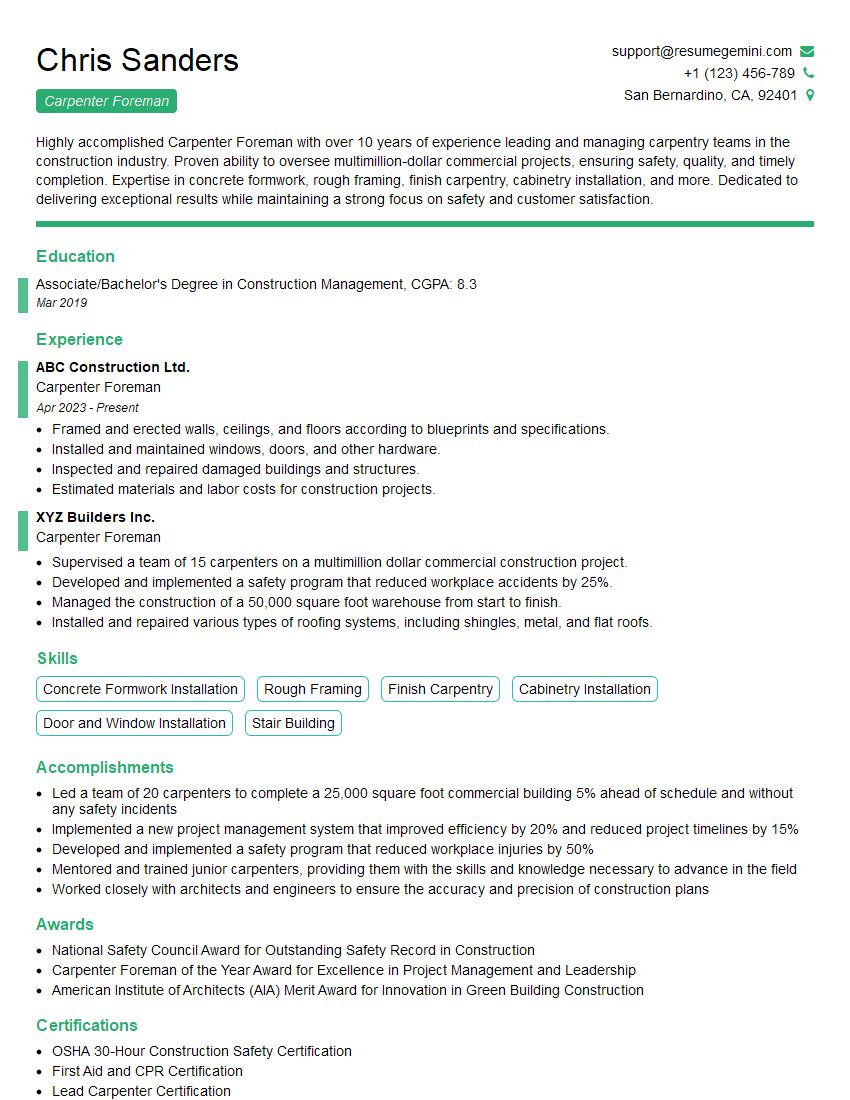
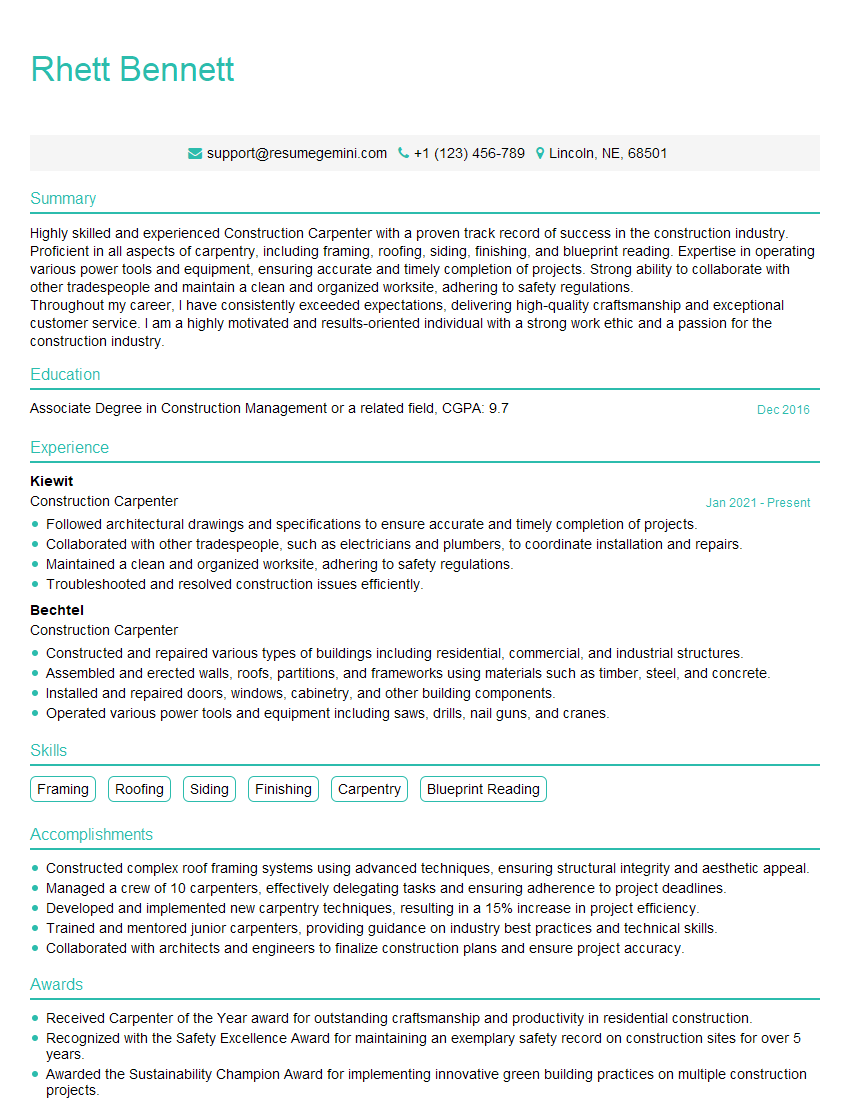
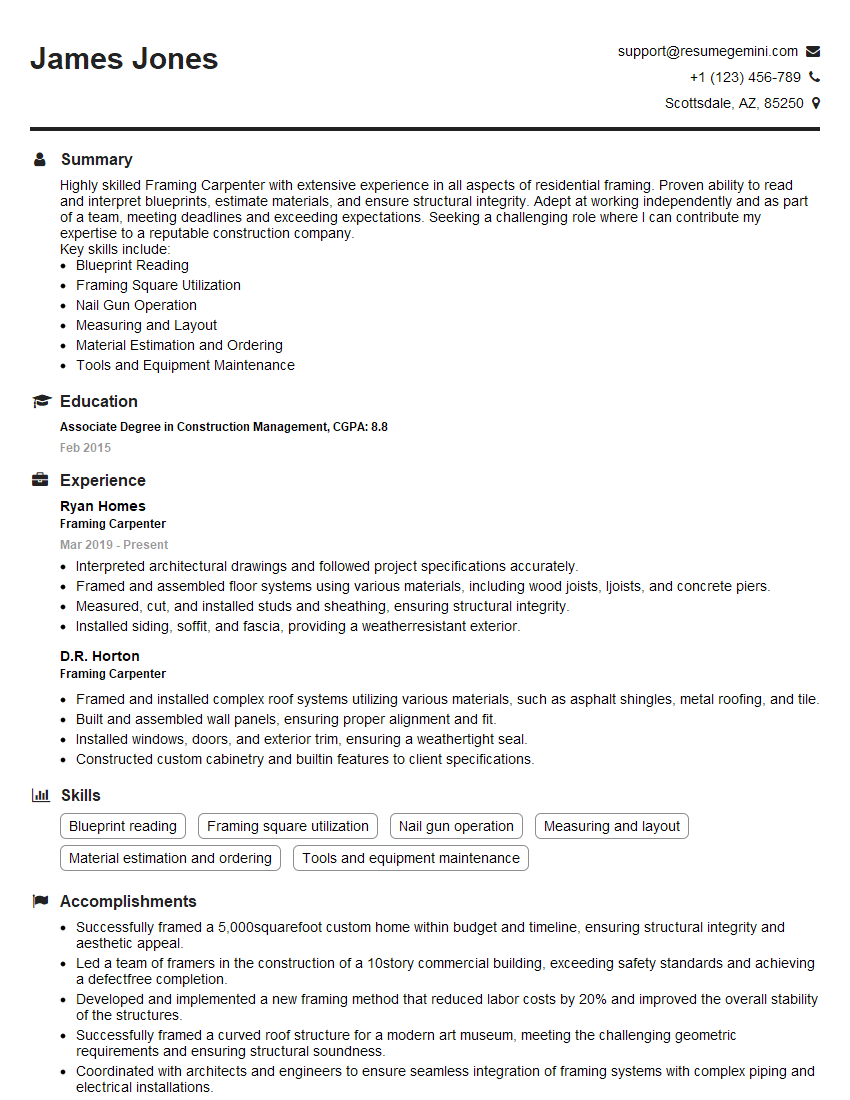
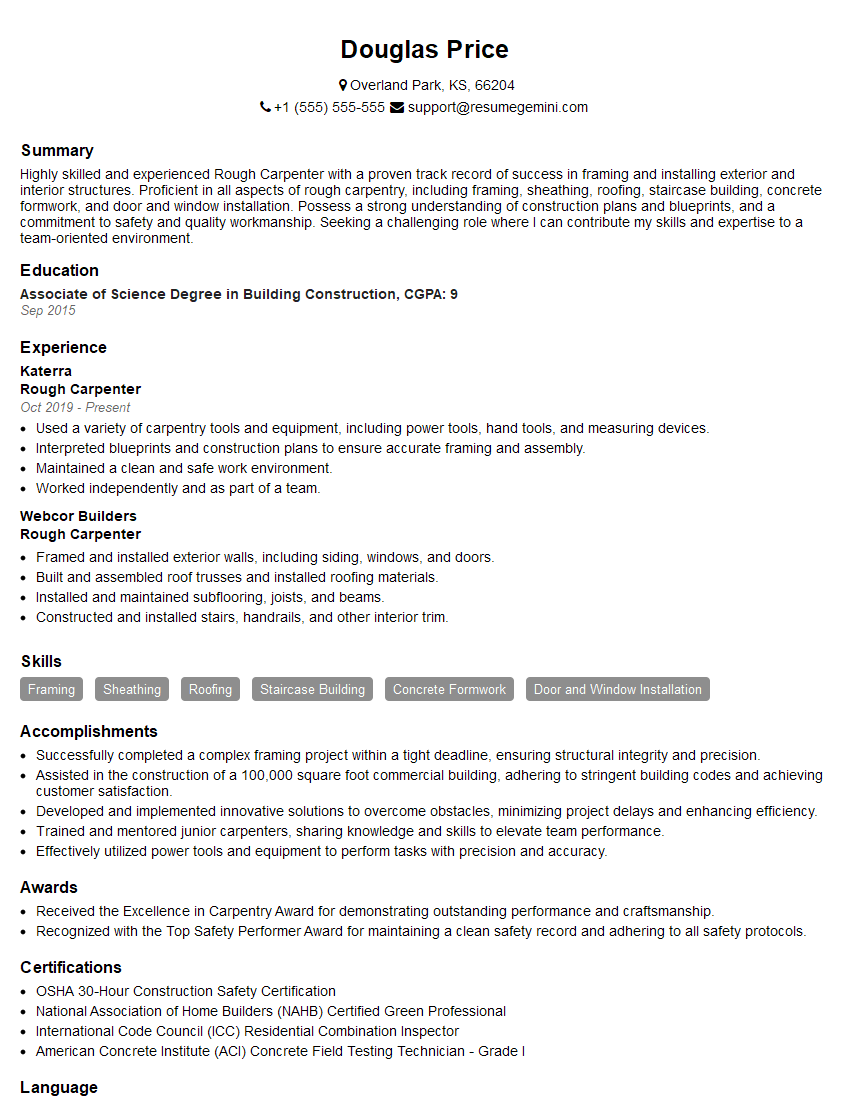
Mastering residential and commercial framing experience is vital for career advancement in the construction industry. It demonstrates a strong foundation in building practices and opens doors to more challenging and rewarding opportunities. To enhance your job prospects, creating an ATS-friendly resume is crucial. ResumeGemini is a trusted resource to help you build a professional and effective resume that highlights your skills and experience. Examples of resumes tailored to residential and commercial framing experience are available to guide you in crafting your own.
Explore more articles
Users Rating of Our Blogs
Share Your Experience
We value your feedback! Please rate our content and share your thoughts (optional).
What Readers Say About Our Blog
Very informative content, great job.
good