Cracking a skill-specific interview, like one for Risk and Energy Security, requires understanding the nuances of the role. In this blog, we present the questions you’re most likely to encounter, along with insights into how to answer them effectively. Let’s ensure you’re ready to make a strong impression.
Questions Asked in Risk and Energy Security Interview
Q 1. Explain the difference between energy security and energy independence.
While often used interchangeably, energy security and energy independence have distinct meanings. Energy independence refers to a nation’s ability to meet all its energy needs from domestically produced sources. Think of it like self-sufficiency in energy. A country completely independent doesn’t rely on imports. Energy security, on the other hand, is a broader concept encompassing the reliable and affordable access to energy resources to meet a nation’s needs, regardless of the source. This means ensuring consistent supply, price stability, and resilience against disruptions, even if those resources are partly imported. A country can be energy secure even if it imports a significant portion of its energy, as long as it has diverse supply sources, robust infrastructure, and strategies to manage risks.
For example, a nation might be energy independent in terms of electricity generation from hydropower but highly reliant on imported oil for transportation. This doesn’t necessarily mean it lacks energy security if it has diversified its oil suppliers and implemented measures to address price fluctuations. Energy independence is a subset of energy security; achieving the latter is more complex and requires a multi-faceted approach.
Q 2. Describe the key geopolitical risks impacting global energy markets.
Geopolitical risks significantly impact global energy markets. These risks can manifest in several ways:
- Geopolitical instability and conflict: Wars, civil unrest, and political tensions in major energy-producing regions can disrupt supply chains, leading to price spikes and shortages. The war in Ukraine, for instance, dramatically highlighted the vulnerability of Europe’s reliance on Russian gas.
- Sanctions and trade disputes: International sanctions or trade disputes can limit access to specific energy sources or technologies, impacting energy supply and pricing. The sanctions imposed on Iran and Venezuela are prime examples.
- Terrorism and sabotage: Attacks on energy infrastructure, such as pipelines or refineries, can significantly reduce supply and increase prices. The attacks on Saudi Arabian oil facilities in 2019 serve as a stark reminder of this threat.
- Nationalization and expropriation: The nationalization of foreign-owned energy assets can lead to investment uncertainty and disruptions in supply. This risk is particularly pertinent in countries with unstable political environments.
- Shifting alliances and power dynamics: Changes in global political alliances and power dynamics can reshape energy markets, impacting trade agreements and investment decisions. The increasing influence of certain countries in energy production and distribution is changing the geopolitical landscape.
Mitigating these risks requires proactive diplomatic engagement, diversification of energy sources and suppliers, and robust cybersecurity measures to protect critical infrastructure.
Q 3. What are the primary methods for assessing and mitigating energy supply chain risks?
Assessing and mitigating energy supply chain risks involves a multi-pronged approach:
- Risk identification and analysis: This involves systematically identifying potential disruptions across the entire energy supply chain, from exploration and production to transportation, storage, and distribution. Tools like SWOT analysis, scenario planning, and supply chain mapping are employed.
- Vulnerability assessments: This process evaluates the susceptibility of individual components of the energy supply chain to various disruptions, such as natural disasters, cyberattacks, or geopolitical events. This often involves stress testing the system under various hypothetical scenarios.
- Diversification of supply sources and transportation routes: Reducing reliance on single suppliers or transportation corridors mitigates the impact of disruptions. This might involve sourcing energy from multiple countries or using diverse transportation modes (pipelines, ships, rail).
- Inventory management and strategic reserves: Maintaining sufficient stocks of energy resources (e.g., oil reserves) can buffer against supply shortages in case of unforeseen events.
- Investment in resilient infrastructure: This includes hardening critical infrastructure against physical attacks and natural disasters, as well as upgrading technology to improve efficiency and reliability.
- International cooperation and information sharing: Collaboration among countries to improve energy security, share best practices, and coordinate responses to crises is crucial.
For example, a nation heavily reliant on a single pipeline for natural gas might diversify by constructing additional pipelines or investing in LNG import terminals to mitigate supply chain disruptions due to pipeline damage or political instability.
Q 4. How do you evaluate the financial risks associated with energy investments?
Evaluating the financial risks of energy investments requires a comprehensive approach that considers several factors:
- Commodity price volatility: Energy prices are inherently volatile and subject to fluctuations influenced by geopolitical events, supply and demand dynamics, and economic cycles. Sophisticated forecasting models are crucial to estimate potential price swings and their impact on profitability.
- Regulatory and policy changes: Governments often introduce policies that can affect the profitability of energy projects. Carbon taxes, subsidies for renewable energy, and changes in environmental regulations can impact investment decisions.
- Technological risks: Technological advancements can render existing technologies obsolete, impacting the lifespan and profitability of an investment. The shift towards renewable energy, for example, impacts the long-term viability of fossil fuel-based power plants.
- Operational risks: Unexpected operational challenges such as equipment failures, production delays, and labor disputes can impact project timelines and costs.
- Political and geopolitical risks: As previously discussed, geopolitical events and political instability can significantly affect the profitability of energy projects. Political risk insurance might be necessary.
- Financial risks: Interest rate changes, currency fluctuations, and access to capital can also influence the financial viability of energy investments.
A thorough due diligence process, involving detailed financial modeling, sensitivity analysis, and stress testing, is essential for effective risk management.
Q 5. Explain the concept of energy price volatility and its impact on businesses.
Energy price volatility refers to the unpredictable fluctuations in the prices of energy commodities such as oil, natural gas, and electricity. These fluctuations are driven by various factors including supply disruptions, economic growth, geopolitical events, and weather patterns.
The impact on businesses can be significant:
- Increased operational costs: Price volatility makes it challenging for businesses to accurately forecast their energy costs, leading to uncertainty in budgeting and financial planning.
- Reduced profitability: High and unpredictable energy prices can squeeze profit margins, especially for energy-intensive industries.
- Investment uncertainty: Volatility makes long-term investment decisions more difficult, as businesses struggle to assess the future cost of energy.
- Competitive disadvantage: Businesses with higher exposure to volatile energy prices might face a competitive disadvantage compared to those with more stable energy costs.
- Supply chain disruptions: Energy price spikes can disrupt supply chains as businesses struggle to access affordable energy to support production.
Businesses can mitigate these risks by using hedging strategies (e.g., purchasing energy futures contracts), diversifying energy sources, and improving energy efficiency.
Q 6. Discuss the role of renewable energy in enhancing energy security.
Renewable energy sources like solar, wind, hydro, and geothermal play a crucial role in enhancing energy security. Their contribution is multi-faceted:
- Reduced reliance on volatile fossil fuels: Diversifying the energy mix with renewables reduces dependence on imported fossil fuels, mitigating the risks associated with price fluctuations and geopolitical instability.
- Improved energy independence: Renewable energy sources can be deployed domestically, increasing a nation’s energy independence and reducing vulnerability to external shocks.
- Enhanced energy resilience: Decentralized renewable energy systems (e.g., rooftop solar panels) are less vulnerable to large-scale disruptions compared to centralized fossil fuel-based systems.
- Reduced environmental impact: Renewable energy sources produce little to no greenhouse gas emissions, contributing to environmental sustainability and mitigating climate change risks.
- Economic benefits: Investment in renewable energy can create jobs and stimulate economic growth.
However, the intermittent nature of some renewables (solar and wind) requires careful planning, grid integration, and potentially energy storage solutions to ensure reliable supply. The transition to a renewable-dominated energy system presents its own challenges, but the long-term benefits for energy security are substantial.
Q 7. What are the key cybersecurity threats to energy infrastructure?
Energy infrastructure faces significant cybersecurity threats that can have devastating consequences:
- Data breaches: Cyberattacks can compromise sensitive data, including operational data, intellectual property, and customer information, leading to financial losses and reputational damage.
- Disruptions to operations: Hackers can disrupt energy generation, transmission, and distribution through various means, causing power outages and affecting critical services.
- Sabotage and physical damage: Cyberattacks can be used to remotely manipulate physical equipment, leading to damage or even destruction of infrastructure.
- Supply chain attacks: Hackers might target vendors or suppliers of energy infrastructure components, introducing vulnerabilities into the system.
- Advanced Persistent Threats (APTs): State-sponsored or sophisticated cybercriminals might gain persistent access to energy systems, allowing them to monitor operations and launch attacks at a later time.
Mitigating these risks requires a multi-layered approach, including robust network security, intrusion detection systems, regular security audits, employee training on cybersecurity best practices, and incident response plans. International cooperation and information sharing are also critical to address the evolving cybersecurity threats facing the energy sector.
Q 8. Describe different strategies for managing climate change risks in the energy sector.
Managing climate change risks in the energy sector requires a multifaceted approach focusing on mitigation and adaptation. Mitigation strategies aim to reduce greenhouse gas emissions, while adaptation strategies focus on adjusting to the unavoidable impacts of climate change.
- Transitioning to renewable energy sources: This involves a significant shift from fossil fuels (coal, oil, and natural gas) to renewable energy sources like solar, wind, hydro, and geothermal. This reduces emissions directly at the source. For example, replacing coal-fired power plants with wind farms significantly lowers carbon emissions.
- Improving energy efficiency: Reducing energy consumption through technological advancements and behavioral changes is crucial. This could include implementing smart grids, improving building insulation, and promoting energy-efficient appliances. Think of upgrading a building’s HVAC system to a more energy-efficient model.
- Carbon capture, utilization, and storage (CCUS): This technology captures CO2 emissions from power plants or industrial processes and either stores them underground or utilizes them in other applications. While still under development, it offers a potential solution for reducing emissions from existing fossil fuel infrastructure.
- Investing in grid modernization: Modernizing the electricity grid to accommodate the intermittent nature of renewable energy sources is essential. This involves upgrading transmission lines, integrating smart grids, and incorporating energy storage solutions like batteries.
- Adaptation measures: Preparing for the impacts of climate change, such as extreme weather events, is equally vital. This includes designing infrastructure to withstand more frequent and severe storms and developing early warning systems for extreme weather.
A successful strategy requires a combination of these approaches, tailored to specific regional contexts and energy systems. For example, a country with abundant solar resources might prioritize solar energy development, while another might focus on improving energy efficiency in buildings.
Q 9. How do you assess the environmental impact of energy projects?
Assessing the environmental impact of energy projects involves a systematic process that considers various factors throughout the project lifecycle, from planning and construction to operation and decommissioning. This often involves a combination of qualitative and quantitative assessments.
- Life Cycle Assessment (LCA): This methodology evaluates the environmental impacts of a product or process across its entire life cycle, from raw material extraction to disposal. It considers impacts like greenhouse gas emissions, water use, air and water pollution, and land use change.
- Environmental Impact Statements (EIS): These legally required documents assess the potential environmental impacts of major projects and propose mitigation measures. They typically include detailed analysis of air and water quality, noise pollution, habitat disruption, and potential effects on endangered species.
- Environmental monitoring: Continuous monitoring during project operation is critical to track actual environmental impacts and ensure compliance with regulations. This may involve measuring air and water quality, noise levels, and biodiversity.
- Stakeholder engagement: Consulting with local communities, indigenous groups, and other stakeholders is essential for identifying potential environmental and social impacts and building consensus around mitigation measures. For instance, a hydroelectric dam project needs to consider its impacts on downstream communities and aquatic ecosystems.
The specific methods used depend on the type of energy project and its scale. For example, the environmental assessment of a large-scale wind farm will differ significantly from that of a small-scale solar project. Effective assessment requires expertise in environmental science, engineering, and social sciences.
Q 10. What are the regulatory challenges facing the energy industry?
The energy industry faces numerous regulatory challenges, driven by evolving environmental concerns, energy security needs, and technological advancements. These challenges can significantly impact investment decisions, operational costs, and the overall transition to a more sustainable energy system.
- Climate change regulations: Governments worldwide are implementing increasingly stringent regulations to reduce greenhouse gas emissions, such as carbon pricing mechanisms (carbon taxes or cap-and-trade systems) and renewable portfolio standards (RPS) that mandate a certain percentage of electricity generation from renewable sources. These regulations often create both opportunities and challenges for energy companies.
- Energy efficiency standards: Regulations mandating minimum energy efficiency levels for appliances, buildings, and vehicles drive innovation and energy savings but can increase initial costs for manufacturers and consumers.
- Permitting and licensing: The process of obtaining permits and licenses for energy projects can be complex, time-consuming, and costly, often involving multiple layers of government approvals. This can lead to delays and increased uncertainty for investors.
- Grid interconnection challenges: Integrating renewable energy sources into existing electricity grids requires significant investments in grid infrastructure and regulatory frameworks to ensure grid stability and reliability. This often involves navigating complex interconnection procedures and standards.
- International agreements: International agreements on climate change, such as the Paris Agreement, create both opportunities and challenges for the energy industry. Compliance with these agreements requires significant changes in energy production and consumption patterns.
Navigating these regulatory complexities requires strong regulatory expertise, proactive engagement with policymakers, and a commitment to sustainable practices. Companies that effectively adapt to these regulations gain a competitive advantage.
Q 11. Explain your understanding of energy market deregulation.
Energy market deregulation refers to the process of transitioning from a centrally planned and controlled energy market to a more competitive market where prices are determined by supply and demand. This usually involves reducing government intervention in areas such as pricing, generation, and transmission.
Historically, many countries had vertically integrated energy systems, where a single entity controlled all aspects of the energy value chain, from generation to distribution. Deregulation aims to foster competition among different players by separating these functions. This usually leads to:
- Increased competition: Multiple generators and retailers compete, potentially leading to lower prices for consumers.
- Greater efficiency: Competition encourages companies to improve efficiency to reduce costs and attract customers.
- More investment: Competition can attract greater investment in new generation capacity, including renewable energy sources.
- Consumer choice: Consumers may have more choice in electricity suppliers.
However, deregulation also presents challenges. It can lead to market manipulation, increased price volatility, and concerns about equity and access for vulnerable populations. Effective regulatory frameworks are needed to address these challenges and ensure a fair and efficient market.
Examples of deregulation include the restructuring of the electricity markets in the United States and the United Kingdom. However, the level of deregulation varies significantly across countries, and many countries have adopted a hybrid approach, combining elements of both regulated and deregulated markets.
Q 12. How do you evaluate the effectiveness of different energy security policies?
Evaluating the effectiveness of energy security policies requires a comprehensive approach that considers multiple factors and indicators. A holistic framework should be used, considering both the stated goals of the policies and their actual outcomes.
- Energy independence/self-sufficiency: Does the policy reduce reliance on foreign energy sources, increasing the country’s control over its energy supply?
- Energy affordability: Does the policy ensure that energy remains affordable for consumers and businesses, especially vulnerable populations?
- Energy diversity: Does the policy promote a diversified energy mix, reducing reliance on any single energy source and improving resilience to disruptions?
- Environmental sustainability: Does the policy reduce the environmental impact of energy production and consumption?
- Economic impacts: Does the policy stimulate economic growth, create jobs, and improve competitiveness?
- Energy efficiency: Does the policy lead to significant energy savings and improved energy efficiency across the economy?
- Infrastructure resilience: Does the policy improve the resilience of the energy infrastructure to disruptions, such as natural disasters or cyberattacks?
Data analysis, economic modeling, and scenario planning are essential tools for evaluating policy effectiveness. For instance, comparing energy prices and consumption patterns before and after policy implementation can provide valuable insights. Qualitative assessments, including stakeholder consultations, can also help understand the social and environmental impacts of policies.
It is crucial to consider both short-term and long-term impacts, as well as unintended consequences. A robust evaluation framework should encompass all these aspects to provide a comprehensive assessment of a policy’s effectiveness.
Q 13. What are the key indicators of energy poverty?
Energy poverty is a complex issue characterized by the lack of access to modern energy services or the inability to afford them. It’s more than just a lack of electricity; it impacts various aspects of life and has significant consequences for health, education, and economic development.
- Lack of access to electricity: This is the most common indicator, representing households without access to the national grid or any other form of reliable electricity supply. This can be due to geographical remoteness, lack of infrastructure, or affordability issues.
- Limited access to clean cooking fuels: Reliance on traditional biomass fuels like wood, charcoal, or dung for cooking and heating leads to indoor air pollution, causing respiratory illnesses and other health problems, particularly among women and children.
- Low energy consumption per capita: This indicator measures the overall energy consumption in a region or country. Low per capita consumption often reflects low access to modern energy services and limitations in energy infrastructure.
- Lack of energy-efficient appliances and technologies: The absence of energy-efficient appliances and technologies increases energy consumption and costs, exacerbating energy poverty.
These indicators are often used in combination to provide a comprehensive picture of energy poverty in a specific region or country. Combating energy poverty requires a multi-pronged approach involving infrastructure development, targeted subsidies, and programs promoting energy efficiency and access to clean cooking fuels.
Q 14. Describe your experience with energy modeling and forecasting techniques.
My experience with energy modeling and forecasting techniques encompasses a range of approaches, from simple statistical models to complex system dynamics simulations. The choice of technique depends heavily on the specific question being asked and the availability of data.
- Time series analysis: I’ve extensively used time series analysis to forecast energy demand and prices, utilizing techniques like ARIMA (Autoregressive Integrated Moving Average) and exponential smoothing.
For example, an ARIMA(p,d,q) model can capture trends and seasonality in energy consumption data. - Econometric modeling: I’ve employed econometric models to analyze the relationship between energy consumption and macroeconomic variables, helping to understand the drivers of energy demand and predict future trends. This often involves regression analysis with variables such as GDP, population, and energy prices.
- Agent-based modeling (ABM): For more complex systems, I’ve used ABM to simulate the interactions between various actors in the energy market, such as consumers, producers, and policymakers, to explore the potential impacts of policy changes or technological innovations.
ABM can capture emergent behavior that is difficult to predict using simpler models. - System dynamics modeling: This approach is useful for understanding the long-term dynamics of energy systems, considering feedback loops and interactions between different components. This helps in analyzing the transition to low-carbon energy systems.
- Energy system optimization models: These models can assess the optimal mix of energy technologies to meet future energy demands while minimizing costs or emissions. Linear programming and mixed-integer programming are frequently employed.
My experience also includes using various software packages such as R, Python (with libraries like Pandas and Statsmodels), and specialized energy modeling software. The selection of appropriate models and software is crucial for ensuring the accuracy and reliability of the forecasts and analysis.
Q 15. What are the ethical considerations in energy security decision-making?
Ethical considerations in energy security are paramount. Decisions impact not only national interests but also global equity, environmental sustainability, and human rights. For example, prioritizing fossil fuel extraction over renewable energy sources might boost short-term energy independence but exacerbates climate change, disproportionately harming vulnerable populations. Similarly, securing energy supplies through exploitative agreements with resource-rich countries raises serious ethical concerns. A responsible approach requires a careful balancing act between national security needs, economic viability, and environmental and social justice.
- Environmental Justice: Ensuring that energy production and consumption don’t disproportionately harm marginalized communities.
- Intergenerational Equity: Considering the long-term consequences of our energy choices for future generations. This means actively mitigating climate change and leaving behind a sustainable energy infrastructure.
- Global Equity: Recognizing that access to affordable and reliable energy is a fundamental human right and promoting equitable distribution of resources.
- Transparency and Accountability: Ensuring that energy security decisions are made in an open and accountable manner, with public participation and oversight.
In practice, this means conducting thorough environmental impact assessments, engaging with affected communities, and prioritizing transparency in energy policymaking. Ultimately, ethical decision-making requires a holistic approach that considers the broader societal implications of energy choices.
Career Expert Tips:
- Ace those interviews! Prepare effectively by reviewing the Top 50 Most Common Interview Questions on ResumeGemini.
- Navigate your job search with confidence! Explore a wide range of Career Tips on ResumeGemini. Learn about common challenges and recommendations to overcome them.
- Craft the perfect resume! Master the Art of Resume Writing with ResumeGemini’s guide. Showcase your unique qualifications and achievements effectively.
- Don’t miss out on holiday savings! Build your dream resume with ResumeGemini’s ATS optimized templates.
Q 16. Explain the role of international cooperation in addressing energy security challenges.
International cooperation is crucial for addressing energy security challenges because energy markets are inherently global. No single nation can fully control its energy destiny in isolation. Cooperation enables countries to share resources, technology, and expertise, mitigating risks associated with supply disruptions, price volatility, and geopolitical instability.
- Information Sharing: Collaboration on data collection and analysis enhances early warning systems for potential disruptions, allowing for proactive mitigation strategies.
- Joint Infrastructure Development: Cooperative projects on pipelines, power grids, and renewable energy installations can diversify energy sources and improve resilience.
- Technology Transfer: Sharing of best practices and technological advancements in energy efficiency, renewable energy, and smart grids fosters innovation and wider adoption of sustainable technologies.
- Diplomatic Efforts: International dialogue and agreements can help prevent conflicts over energy resources and promote stable energy markets. Organizations like the International Energy Agency (IEA) play a crucial role in facilitating this cooperation.
A prime example is the IEA’s role in coordinating the release of strategic petroleum reserves during times of global supply shocks. This collective action helps to stabilize oil markets and alleviate price spikes. However, effective international cooperation requires trust, mutual benefit, and a commitment to shared goals. Challenges include differing national interests, geopolitical tensions, and the need for robust institutional frameworks to govern collaborative efforts.
Q 17. How do you quantify and prioritize energy risks?
Quantifying and prioritizing energy risks involves a multi-step process that integrates both qualitative and quantitative analysis. It’s not simply about assigning numerical values but understanding the interconnectedness of various risks.
- Risk Identification: Identify potential threats to energy supply, such as geopolitical instability, natural disasters, infrastructure failures, cyberattacks, and climate change impacts.
- Risk Assessment: For each identified risk, determine its likelihood (probability of occurrence) and impact (severity of consequences). Methods such as Failure Modes and Effects Analysis (FMEA) or HAZOP (Hazard and Operability Study) can be used. This often involves assigning numerical scores or ratings (e.g., using a scale of 1 to 5 for likelihood and impact).
- Risk Quantification: Combine likelihood and impact to calculate a risk score for each threat. This could be a simple multiplication (Likelihood x Impact) or a more sophisticated calculation that considers uncertainties and dependencies.
- Risk Prioritization: Rank the risks based on their scores, focusing on those with the highest potential impact and likelihood. This forms the basis for resource allocation and mitigation strategies.
- Risk Mitigation: Develop and implement strategies to reduce the likelihood and/or impact of the prioritized risks. This could include diversification of energy sources, investment in resilient infrastructure, cybersecurity measures, and improved disaster preparedness.
For example, a scenario might involve assigning a high likelihood and high impact to a potential cyberattack on a critical energy infrastructure, leading to its prioritization for mitigation through robust cybersecurity investments. The process is iterative, requiring continuous monitoring and updating as new information becomes available and circumstances change.
Q 18. Describe your experience with risk assessment methodologies (e.g., FMEA, HAZOP).
I have extensive experience with several risk assessment methodologies, including FMEA and HAZOP. FMEA (Failure Modes and Effects Analysis) is a systematic approach for identifying potential failure modes in a system and assessing their effects. I’ve used FMEA in evaluating the reliability of energy transmission grids, identifying potential points of failure and implementing preventative measures.
Example FMEA Table excerpt: | Failure Mode | Potential Effects | Severity | Likelihood | Detection | Risk Priority Number (RPN) | Mitigation Strategy | |---|---|---|---|---|---|---| | Transformer failure | Power outage | 5 (High) | 2 (Medium) | 3 (Medium) | 30 | Regular maintenance, redundant transformers |
HAZOP (Hazard and Operability Study) is a more qualitative technique focusing on deviations from intended operation. I’ve applied HAZOP to the design and operation of new energy facilities, identifying potential hazards and implementing safety controls. For instance, in a liquefied natural gas (LNG) terminal project, we used HAZOP to analyze potential deviations in temperature and pressure parameters, ultimately improving the safety design of the facility.
In both methodologies, the focus is on proactive identification and mitigation of risks, enhancing the overall safety and reliability of energy systems. Beyond FMEA and HAZOP, I’m also proficient in bow-tie analysis, event tree analysis, and fault tree analysis, selecting the appropriate methodology based on the specific context and desired level of detail.
Q 19. How do you communicate complex energy security issues to non-technical audiences?
Communicating complex energy security issues to non-technical audiences requires clear, concise language, avoiding jargon and technical terms. I employ several strategies:
- Analogies and Metaphors: Relate abstract concepts to familiar everyday experiences. For example, I might compare a nation’s energy infrastructure to a circulatory system, explaining how disruptions can have cascading effects.
- Visual Aids: Use charts, graphs, and infographics to present data and information in an easily digestible format.
- Storytelling: Engage the audience through real-world examples and case studies that illustrate the impacts of energy security challenges. This makes the information more relatable and memorable.
- Plain Language: Break down complex information into simple, understandable terms. Avoid acronyms and technical jargon unless absolutely necessary, and define them clearly when used.
- Active Listening and Engagement: Encourage questions and feedback to ensure the audience understands the information and can connect it to their own concerns.
For example, when explaining the concept of energy diversification, I might use the analogy of a diversified investment portfolio, emphasizing the importance of spreading risk across multiple energy sources to minimize vulnerability to price volatility or supply disruptions.
Q 20. What is your approach to building consensus among stakeholders on energy security matters?
Building consensus among stakeholders on energy security matters requires a collaborative and inclusive approach. It’s crucial to recognize that different stakeholders have varying interests and perspectives. My approach involves:
- Identifying Key Stakeholders: This involves a thorough mapping exercise to identify all relevant parties, including government agencies, energy companies, environmental groups, community representatives, and international organizations.
- Facilitated Dialogue and Workshops: Creating platforms for open communication and discussion, fostering understanding and mutual respect among diverse viewpoints.
- Data-Driven Approach: Presenting objective data and analysis to inform the discussion and avoid emotionally charged arguments.
- Transparency and Openness: Ensuring that all information is accessible and shared transparently with all stakeholders.
- Negotiation and Compromise: Facilitating constructive negotiation to find common ground and build consensus on key policy decisions. This often involves compromise and finding mutually beneficial solutions.
- Iterative Process: Recognizing that consensus building is an iterative process, requiring continuous engagement and adjustments to address evolving concerns.
A successful example would be facilitating a multi-stakeholder workshop involving government representatives, energy producers, and environmental advocates to develop a national energy strategy that balances economic development, environmental protection, and energy security needs. This requires skillful negotiation, active listening, and a commitment to finding common ground.
Q 21. Describe a situation where you had to make a critical decision under pressure related to energy risk.
During a period of extreme cold weather, a major power grid experienced unexpected high demand, leading to imminent risk of widespread blackouts. We had a very limited time window to prevent a catastrophic failure. The pressure was immense, as millions of people relied on the grid for heating, essential services, and economic activity.
My role involved coordinating a rapid response effort, analyzing real-time data, and making critical decisions on load shedding, diverting power from non-essential services, and issuing public warnings. We engaged with other utilities, the emergency services, and local authorities to coordinate actions. The situation required swift, decisive action, prioritizing safety and minimizing disruption. Through collaborative effort and data-driven decision-making, we successfully avoided a complete system collapse, though some temporary load shedding was unavoidable.
This experience highlighted the critical importance of robust contingency planning, real-time data monitoring, and effective communication during emergencies. The success of our response emphasized the need for flexible and resilient energy systems capable of handling unexpected surges in demand.
Q 22. How do you stay up-to-date on the latest developments in the energy security landscape?
Staying current in the dynamic energy security landscape requires a multi-faceted approach. I leverage a combination of resources to ensure I’m well-informed. This includes regularly reviewing reports from reputable organizations like the International Energy Agency (IEA), the US Energy Information Administration (EIA), and various think tanks specializing in energy and geopolitics. I also actively follow industry news through specialized publications such as Energy Intelligence and Platts, and participate in relevant conferences and webinars to network and learn from experts. Crucially, I maintain a network of contacts within the industry—government officials, academics, and private sector professionals—to gain diverse perspectives and insights. Finally, I use advanced search techniques and keyword monitoring to track emerging trends and potential risks on social media and news aggregators.
For example, recently, I utilized the IEA’s World Energy Outlook to assess the impact of the Ukraine conflict on global energy markets, specifically focusing on the implications for natural gas supply and pricing. This allowed me to proactively identify potential vulnerabilities and contribute to risk mitigation strategies for my clients.
Q 23. Explain your experience with energy data analysis and visualization.
My experience in energy data analysis and visualization spans several years and encompasses diverse data sources, from macroeconomic indicators and production statistics to weather data and geopolitical event records. I’m proficient in various statistical software packages, including R and Python, utilizing libraries like pandas and matplotlib for data manipulation and visualization. My expertise extends to creating interactive dashboards and reports using tools like Tableau and Power BI, which effectively communicate complex data to diverse audiences.
For instance, in a recent project, I analyzed historical oil price volatility data alongside geo-political events using time-series analysis techniques in R. I then visualized the correlations using interactive charts within a Tableau dashboard, allowing stakeholders to quickly understand the relationship between political instability and oil price fluctuations. This helped identify potential risks and inform strategic decision-making.
Q 24. What are the key characteristics of a robust energy security strategy?
A robust energy security strategy is characterized by several key components. First, it needs diversity of energy sources and supply routes, minimizing dependence on any single supplier or technology. Second, it requires resilience, meaning the ability to withstand and recover from disruptions, whether natural disasters, geopolitical events, or cyberattacks. Third, it demands efficiency in energy use, reducing vulnerability to price shocks and minimizing environmental impact. Fourth, affordability is crucial; the strategy must ensure access to reliable and reasonably priced energy for consumers and businesses. Fifth, it necessitates sustainability, incorporating climate change considerations and transitioning towards cleaner energy sources. Finally, a strong strategy includes robust emergency preparedness plans and effective regulatory frameworks.
Think of it like building a house: you wouldn’t rely on only one support beam (single energy source). You need multiple strong beams (diverse energy sources), a solid foundation (efficient infrastructure), and a plan for dealing with storms (emergency preparedness).
Q 25. How do you handle conflicting objectives in energy security planning?
Conflicting objectives in energy security planning are common. For example, the need for affordable energy may conflict with the goal of transitioning to sustainable sources which can initially be more expensive. To navigate these conflicts, I employ a structured, multi-criteria decision-making approach. This involves clearly defining all objectives, assigning weights reflecting their relative importance based on stakeholder input and risk assessment, and evaluating alternative strategies against each criterion. Techniques like cost-benefit analysis, multi-objective optimization, and scenario planning are invaluable in this process. Transparency and communication with all stakeholders are crucial to build consensus and ensure buy-in.
For example, when planning a national energy strategy, one might use a weighted scoring system to compare different energy mixes based on factors such as cost, emissions, security of supply, and public acceptance. This allows for a transparent and data-driven decision-making process that balances often competing goals.
Q 26. Describe your understanding of the energy transition and its implications for energy security.
The energy transition, the shift towards a low-carbon energy system, presents both opportunities and challenges for energy security. On one hand, it diversifies energy sources, reducing reliance on fossil fuels and potentially mitigating geopolitical risks associated with their supply. The increased use of renewables like solar and wind power, while subject to intermittency, can enhance energy independence at a national level. On the other hand, the transition involves significant infrastructure investment and technological change, creating potential vulnerabilities during this period. Ensuring grid stability with intermittent renewable sources also presents a considerable challenge. Furthermore, the reliance on critical minerals for renewable technologies introduces new supply chain risks. Careful planning and proactive risk management are crucial to ensure a smooth and secure energy transition.
Consider the European Union’s efforts to reduce reliance on Russian gas. While this is a positive step for energy security diversification, it also requires substantial investments in new infrastructure and the development of alternative supply chains, creating potential short-term security risks that require careful management.
Q 27. What are the potential impacts of disruptive technologies on energy security?
Disruptive technologies, such as advanced energy storage solutions, smart grids, and artificial intelligence (AI) for grid management, have the potential to significantly impact energy security, both positively and negatively. On the positive side, improved storage can address the intermittency of renewable energy sources, enhancing grid reliability and resilience. AI can optimize energy distribution and improve grid efficiency, reducing waste and vulnerabilities. However, these technologies also introduce new risks. For instance, cyberattacks targeting smart grids could cripple energy systems, highlighting the need for robust cybersecurity measures. The dependence on new materials and manufacturing processes introduces supply chain vulnerabilities that need to be addressed proactively. A comprehensive risk assessment that considers both the opportunities and challenges presented by these technologies is crucial for informed decision-making.
The increased reliance on sophisticated software in controlling energy infrastructure highlights the risk of cyberattacks. A well-designed energy security strategy must therefore factor in robust cybersecurity measures to mitigate these risks.
Q 28. Explain your experience with developing and implementing energy risk management plans.
My experience encompasses the entire lifecycle of energy risk management—from identification and assessment to mitigation and response. I’ve led numerous projects involving the development and implementation of comprehensive risk management plans for various stakeholders, including energy companies, governments, and international organizations. This typically involves:
- Risk Identification: Employing a combination of qualitative and quantitative methods to identify potential risks across the entire energy value chain (exploration, production, transportation, distribution, and consumption).
- Risk Assessment: Analyzing the likelihood and impact of identified risks using various tools like scenario planning and probabilistic risk assessment. This involves assigning probabilities and consequences to each risk event.
- Risk Mitigation: Developing and implementing strategies to reduce the likelihood or impact of identified risks. This might include diversification of supply sources, investment in infrastructure upgrades, the development of emergency response plans and insurance mechanisms.
- Monitoring and Review: Continuously monitoring the effectiveness of implemented mitigation strategies and updating the risk management plan as circumstances change.
For example, in a project with a large energy utility, I led a team in developing a comprehensive risk management plan for a new offshore wind farm project. This involved identifying risks associated with weather events, supply chain disruptions, regulatory changes, and cybersecurity threats. We developed mitigation strategies for each risk, including the use of robust weather forecasting systems, contingency plans for supply chain disruptions, and a detailed cybersecurity risk assessment and mitigation strategy.
Key Topics to Learn for Risk and Energy Security Interview
- Geopolitical Risks & Energy Markets: Understanding the interplay between global politics, international relations, and energy price volatility. Analyze case studies of past energy crises and their geopolitical implications.
- Energy Transition & Security: Discuss the challenges and opportunities presented by the shift towards renewable energy sources. Explore the security implications of reliance on specific energy resources and infrastructure vulnerabilities.
- Cybersecurity in the Energy Sector: Examine the critical infrastructure protection challenges facing the energy industry. Understand risk mitigation strategies and incident response protocols within the context of smart grids and digitalization.
- Energy Infrastructure Resilience: Analyze the vulnerabilities of energy infrastructure (pipelines, power grids, refineries) to natural disasters, terrorism, and cyberattacks. Develop and evaluate strategies for enhancing resilience and reducing risk.
- Risk Assessment & Management in Energy: Apply quantitative and qualitative risk assessment methodologies to energy projects and operations. Discuss risk mitigation strategies including diversification, insurance, and hedging.
- Climate Change & Energy Security: Explore the impact of climate change on energy supply chains and infrastructure. Discuss the role of energy policy in mitigating climate risks and fostering energy security.
- Energy Policy & Regulation: Analyze the impact of government policies and regulations on energy markets and investment decisions. Understand the legal and regulatory frameworks governing energy production, transmission, and consumption.
- Supply Chain Security in Energy: Examine vulnerabilities within the energy supply chain, from extraction to distribution. Develop and evaluate strategies to enhance supply chain resilience and security.
Next Steps
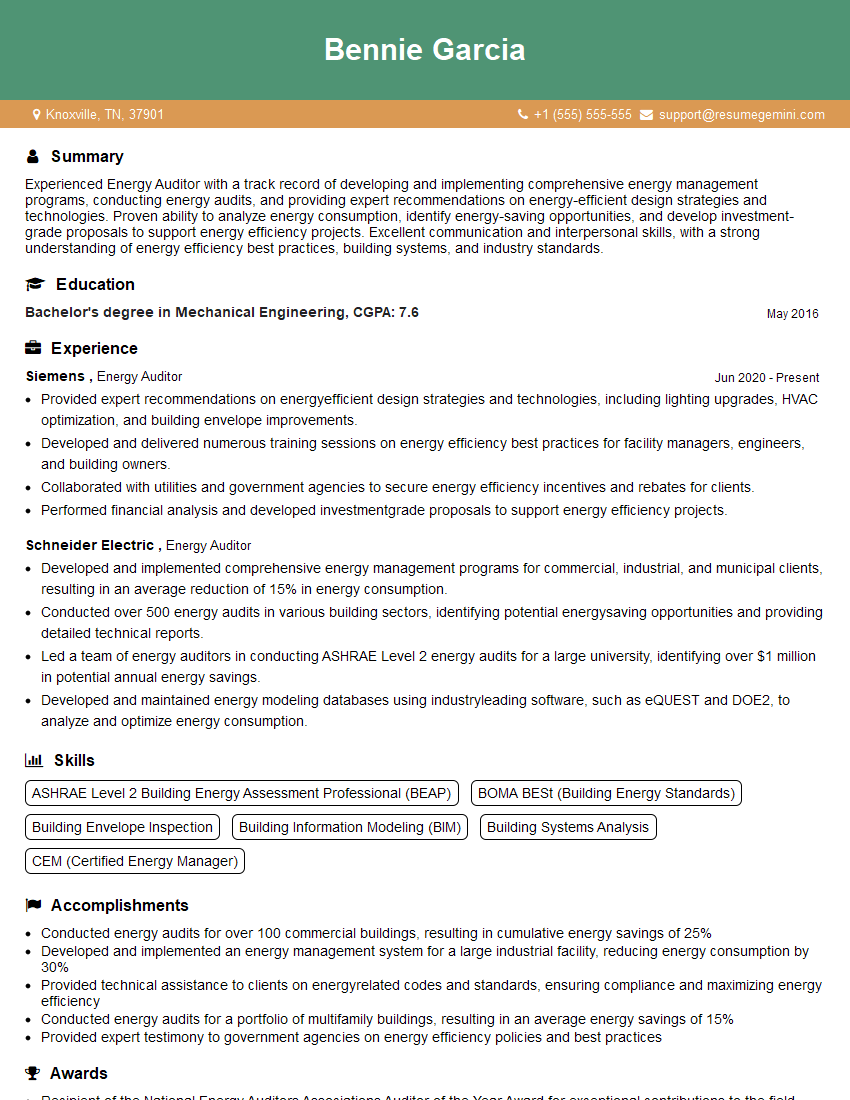
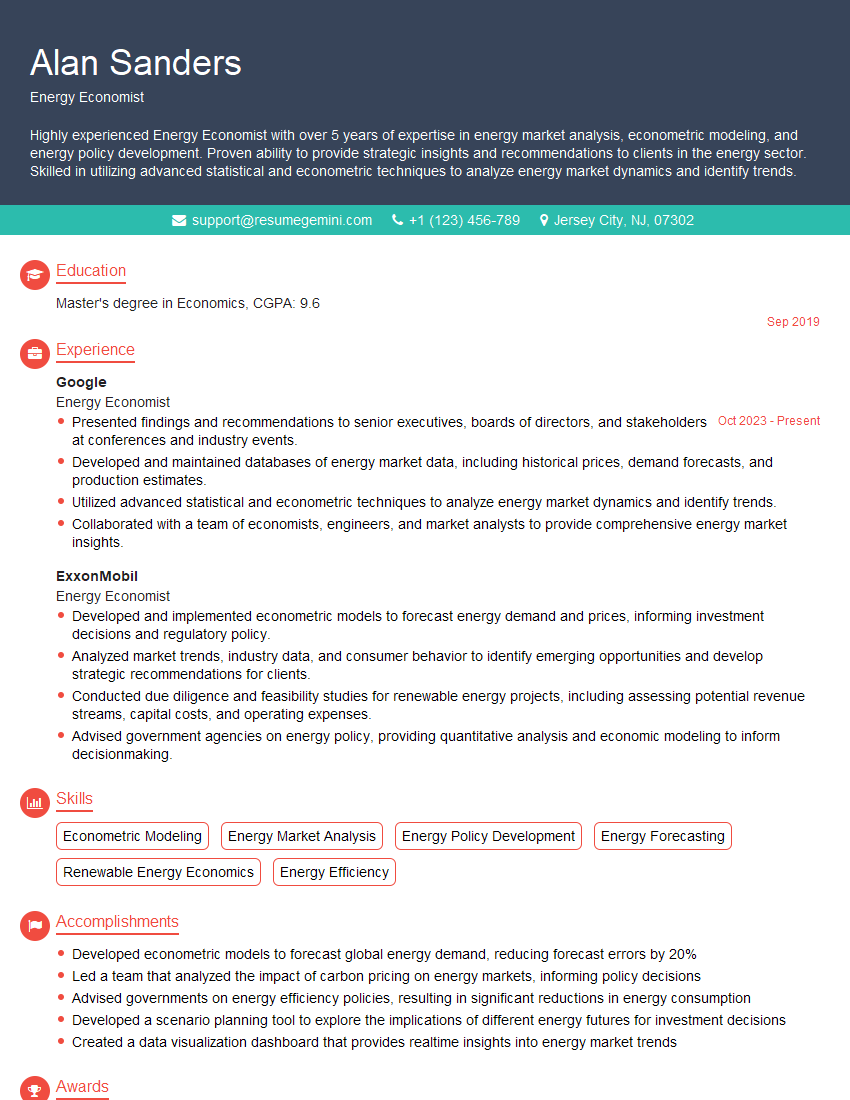
Mastering Risk and Energy Security is crucial for a thriving career in a rapidly evolving industry. This field offers intellectually stimulating challenges and significant opportunities for growth, particularly in light of global energy transitions and geopolitical shifts. To maximize your job prospects, it’s vital to present your skills and experience effectively. Creating an ATS-friendly resume is paramount. We recommend using ResumeGemini, a trusted resource for building professional resumes that stand out. Examples of resumes tailored to Risk and Energy Security are available to guide you through the process.
Explore more articles
Users Rating of Our Blogs
Share Your Experience
We value your feedback! Please rate our content and share your thoughts (optional).
What Readers Say About Our Blog
Very informative content, great job.
good