Cracking a skill-specific interview, like one for Scuba Diving or Snorkeling, requires understanding the nuances of the role. In this blog, we present the questions you’re most likely to encounter, along with insights into how to answer them effectively. Let’s ensure you’re ready to make a strong impression.
Questions Asked in Scuba Diving or Snorkeling Interview
Q 1. Describe the different types of buoyancy compensators (BCDs) and their functionalities.
Buoyancy Compensators (BCDs), also known as buoyancy control devices, are essential pieces of scuba diving equipment. They allow divers to control their buoyancy underwater, achieving neutral buoyancy (neither sinking nor floating) and adjusting their position in the water column. There are several types, each with its own functionality:
- Jacket-style BCD: This is the most common type. It’s shaped like a jacket and inflates around the diver’s torso. Air is added and released via an inflator mechanism usually located on the right shoulder or chest. They are generally easy to use and provide good buoyancy. Think of it as a comfy life vest that you can precisely control.
- Back Inflation BCD (Wing BCD): This design features a bladder that inflates behind the diver’s back, providing a more streamlined profile. This allows for more efficient movement underwater and better trim (body position). These are favoured by many technical divers for their stability.
- Horse-collar BCD: This style inflates around the diver’s neck and shoulders, offering excellent stability but can feel restrictive to some. They are often seen in colder water diving situations as it minimizes exposure.
- Hybrid BCD: These BCDs combine features from different styles, offering a blend of comfort, buoyancy, and streamlined design. For instance, a hybrid might incorporate aspects of both jacket and wing designs.
The functionality of all BCDs boils down to controlled inflation and deflation of an air bladder. This allows the diver to fine-tune their buoyancy, compensating for changes in depth, gear, or the diver’s own lung volume.
Q 2. Explain the process of conducting a pre-dive safety check.
A pre-dive safety check, often abbreviated as a ‘buddy check,’ is crucial for preventing accidents. It’s a systematic process where divers verify their own and their buddy’s equipment is functioning correctly before entering the water. Think of it like a pre-flight checklist for an airplane – essential for safety.
The process usually involves these steps:
- BCDs: Check inflation and deflation mechanisms, straps, and buckles.
- Regulators: Ensure both primary and secondary regulators are properly connected and functioning; check for free airflow and that the pressure gauges read accurately.
- Dive Computer/Depth Gauge: Confirm that the computer/gauge is working, switched on, and the battery is charged.
- Weight Belt/Integrated Weights: Verify the weight is secure, sufficient, and adjusted properly to achieve neutral buoyancy.
- Mask and Snorkel: Check for proper fit, no cracks, and clear lenses. Verify that the snorkel is secure.
- Fins: Ensure they are securely attached.
- Tank Valve: Verify that the valve is properly opened and that the tank is fully charged.
- Other Gear: Check the functionality of any additional equipment like lights, underwater cameras, or knives.
After this individual check, divers conduct a mutual buddy check, ensuring everything is correct on each other’s gear. This collaborative approach reinforces safety and builds trust.
Q 3. What are the signs and symptoms of decompression sickness (DCS)?
Decompression sickness (DCS), also known as ‘the bends,’ is a serious condition that can occur when dissolved gases, primarily nitrogen, come out of solution in the body tissues too quickly during ascent from a dive. Symptoms can vary greatly in severity and presentation, depending on the severity and location of gas bubble formation.
Signs and symptoms can include:
- Joint pain: Often described as a deep, aching pain in the joints, particularly the shoulders, elbows, knees, and ankles.
- Skin problems: Itching, rash, or skin discoloration (cutis marmorata).
- Neurological symptoms: Numbness, tingling, weakness, paralysis, dizziness, visual disturbances, confusion, or difficulty speaking.
- Respiratory problems: Shortness of breath, coughing.
- Circulatory problems: Chest pain, fainting, swelling of limbs.
The onset of symptoms may range from immediate to several hours or even days after the dive. It’s crucial to seek immediate medical attention if any of these symptoms appear after a dive; early treatment significantly improves the outcome.
Q 4. How do you handle an out-of-air emergency during a dive?
An out-of-air emergency is a critical situation that requires immediate, calm, and decisive action. The key is to follow established procedures and practice emergency ascent techniques.
Here’s how to handle it:
- Signal your buddy: Use hand signals to indicate an emergency and the need for assistance.
- Activate your alternate air source: Immediately switch to your alternate regulator (octopus). This is your backup and is vital in such situations.
- Ascend slowly and calmly: Do not panic and rapidly ascend. This can increase the risk of DCS and other injuries. Maintain a controlled, slow ascent rate.
- Share air with your buddy (if necessary): If your buddy is also out of air or needs assistance, share air from your alternate air source.
- Emergency Ascent: If assistance isn’t available, perform a controlled emergency ascent using the buddy’s alternate regulator or your own.
- Surface and seek help: Once on the surface, immediately signal for help and alert the dive boat or other divers.
Proper training and practice of these emergency procedures are essential. Regular participation in drills helps improve reaction times and effectiveness during actual emergencies.
Q 5. What are the limitations of a snorkel compared to scuba gear?
Snorkeling and scuba diving offer vastly different underwater experiences. While both allow you to observe marine life, their capabilities and limitations differ significantly.
Here’s a comparison:
- Depth Limitation: Snorkeling is limited to the surface and shallow depths, usually only a few feet below the surface; scuba diving allows exploration at far greater depths, depending on certification level and dive plan.
- Duration Underwater: Snorkeling is limited by breath-holding capacity; scuba diving allows for extended underwater time thanks to the self-contained underwater breathing apparatus (SCUBA).
- Ease of Use: Snorkeling is significantly easier to learn and use, requiring minimal training; scuba diving necessitates extensive training, certifications, and adherence to safety protocols.
- Cost: Snorkeling is a much less expensive activity compared to scuba diving, which necessitates substantial gear investments and training costs.
- Physical Demand: Snorkeling is less physically demanding than scuba diving, requiring less exertion while underwater; scuba diving can be physically demanding, requiring strength and stamina.
In essence, snorkeling is a simple, accessible method for enjoying shallow water experiences. Scuba diving, though more complex and demanding, unlocks the opportunity to explore deeper, richer underwater environments.
Q 6. Explain the principles of buoyancy control.
Buoyancy control is the art of maintaining a comfortable and safe position in the water column using a combination of techniques and equipment. It’s about being neutrally buoyant, neither rising nor sinking, without excessive exertion.
The core principles involve:
- Weighting: Proper weighting is crucial. You should be neutrally buoyant at the surface with a full tank, wearing all your gear. You shouldn’t need to use your BCD to stay afloat at the surface. Too much weight will make you sink, too little will have you constantly inflating your BCD.
- BCD Inflation/Deflation: Your BCD allows you to fine-tune your buoyancy underwater. You’ll need to adjust your BCD inflation throughout the dive to compensate for changing depth, lung volume, and gear.
- Lung Control: As you descend, your lungs compress, making you more negatively buoyant. As you ascend, your lungs expand, making you more positively buoyant. Consciously managing your breath helps to manage your buoyancy.
- Trim: Good trim refers to your body position in the water. You should maintain a horizontal, streamlined position to reduce drag and conserve energy. This often involves adjusting weight placement and BCD inflation.
Mastering buoyancy control enhances your diving experience by allowing for graceful movement, effortless hovering, and improved safety.
Q 7. Describe the different types of dive masks and their features.
Dive masks are essential for clear vision underwater. They create an air pocket between the lenses and your eyes, allowing you to see clearly.
Different types include:
- Frameless Masks: These masks have a minimal frame around the lenses, offering a wider field of vision and lighter weight. They tend to be slightly more expensive.
- Framed Masks: These masks have a frame surrounding the lenses, providing more protection for the lenses and often offering a slightly more robust construction. They are typically more affordable.
- Single-Lens Masks: These have one large lens, providing an unimpeded view, often preferred for freediving or spearfishing.
- Two-Lens Masks: These have two separate lenses, allowing for a better fit and correction for vision problems using prescription lenses.
- Low-Volume Masks: These masks have a smaller air space, requiring less air to equalize pressure during descent, easing the ear-clearing process. Good for those prone to sinus problems.
When choosing a mask, consider factors like fit, comfort, field of vision, and any prescription lens needs. It’s essential that the mask seals well to your face to prevent leaks.
Q 8. What are the different types of dive fins and their advantages?
Dive fins are crucial for efficient underwater propulsion. The type you choose significantly impacts your comfort, speed, and energy expenditure. There are three main categories:
- Full-foot Fins: These are the most basic type, requiring you to wear boots. They offer good protection and durability but can be less efficient than other types. They are a good choice for beginners and colder water diving where boots are necessary for warmth.
- Open-heel Fins: These fins have an open heel pocket, allowing you to adjust the fit with a separate boot. This offers more precise control and usually better propulsion, making them popular amongst experienced divers. The ability to change boots allows for better temperature control and adaptability.
- Split Fins: These fins have a split or channel between the blades. This design reduces the resistance in the water, allowing for easier propulsion, particularly useful for divers who emphasize streamlining and efficiency. They’re excellent for maneuvering in tight spaces and kicking with less strain. However, they can be less powerful for kicking in strong currents.
The best fin for you depends on your dive style, experience level, and the conditions you’ll be diving in. For instance, a beginner might prefer full-foot fins for simplicity, while a technical diver in strong currents might opt for powerful open-heel fins.
Q 9. What are the steps involved in an emergency ascent?
An emergency ascent should only be performed in life-threatening situations, such as running out of air or experiencing equipment failure. It’s crucial to control your buoyancy and ascent rate to avoid decompression sickness (DCS).
- Breathe steadily and calmly: Panic is your biggest enemy. Deep, controlled breaths help regulate your body.
- Control your buoyancy: Add air to your buoyancy compensator (BCD) to ascend slowly, maintaining a controlled rate of ascent – ideally, no faster than 30 feet per minute. If your ascent is too fast you risk developing DCS.
- Ascend slowly and continuously: Avoid stop-and-go ascents, as this can increase your risk of DCS. Imagine the gentle upward drift of a dandelion seed in the breeze, you want to be just as controlled.
- Perform emergency decompression stops if necessary: If your depth and dive time necessitate them, stop briefly at intervals to allow nitrogen to exit your body. A diving computer will usually guide you on this. Even if you are not using a computer, the general rule is to stop at 15 feet for at least 3 minutes after the rapid ascent.
- Signal for help immediately after surfacing: Your buddy, dive boat, or other divers should be notified.
Remember, an emergency ascent is a last resort. Proper dive planning, equipment checks, and adherence to the buddy system drastically reduce the need for it.
Q 10. What are the common causes of ear and sinus problems during diving?
Ear and sinus problems during diving stem from the pressure changes experienced during descent and ascent. Air spaces in the body, like the ears and sinuses, need to equalize with the surrounding water pressure.
- Eustachian tube blockage: This prevents pressure equalization in the middle ear, causing pain and discomfort. This can be due to congestion, infection, or even just a poor attempt at equalizing.
- Sinus blockage: Similar to the ears, blockages in the sinuses prevent pressure equalization, leading to pain and discomfort, potentially a severe headache.
- Dehydration: Dehydration can thicken mucus, exacerbating equalization issues.
- Altitude before diving: Traveling to altitude right before diving reduces the air pressure in your body making equalization even more difficult.
Preventing these issues involves equalizing pressure frequently during descent and ascent, remaining well-hydrated, and addressing any existing upper respiratory infections before diving. If you experience pain, ascend immediately and seek medical attention if necessary.
Q 11. How do you manage your air consumption during a dive?
Managing air consumption is vital for safe diving. It’s a skill honed through experience and good habits.
- Proper buoyancy control: Avoid unnecessary fin kicks and movements; controlled buoyancy minimizes exertion, thus saving air.
- Controlled breathing: Deep, slow, and rhythmic breathing conserves more air compared to shallow, rapid breaths. Aim for a slow exhale and breathe smoothly, try to be like a meditating monk.
- Dive planning: Plan your dives meticulously, knowing how much air you’ll likely need for the planned duration and depth.
- Dive profile: Avoid repetitive deep dives that deplete air faster. The deeper you go, the more you consume.
- Regular air checks: Monitor your air gauge frequently; this lets you adjust your dive profile as needed. Don’t let it become a surprise when you’re down to your reserve.
- Buddy breathing: Understanding how to safely share air with your buddy is a life-saving skill.
Maintaining good control over your air consumption also reduces the likelihood of running out of air, a serious dive emergency. Consistent practice is key to mastering this essential skill.
Q 12. Explain the buddy system and its importance.
The buddy system is the cornerstone of safe diving. It mandates that divers team up and look out for each other’s safety throughout the dive.
- Pre-dive planning: Buddies should discuss dive plans, including the dive profile, potential hazards, and emergency procedures. Having a shared understanding is key.
- In-water checks: Before entering the water, buddies confirm each other’s equipment is functioning correctly.
- Constant awareness: Buddies maintain visual and auditory contact throughout the dive. This means keeping an eye on each other’s positioning and communicating through hand signals.
- Mutual support: Buddies assist each other in case of equipment malfunctions or any other difficulties. It’s about mutual support and cooperation.
- Emergency response: Buddies are trained to respond to emergencies, such as out-of-air situations or medical problems.
The buddy system significantly minimizes the risks associated with diving by providing immediate help and backup in case of any incident. It’s not just a guideline, it’s a fundamental safety protocol.
Q 13. Describe the different types of dive computers and their capabilities.
Dive computers are sophisticated instruments that provide divers with critical information during a dive.
- Basic Dive Computers: These display essential information such as depth, dive time, ascent rate, and remaining air pressure. They also calculate no-decompression limits.
- Advanced Dive Computers: These add features such as multiple gas mixing capabilities, decompression planning for technical dives, and integration with other dive equipment. They can even include algorithms for different dive types.
- Wrist-mounted Computers: The most common type, offering a compact and user-friendly interface.
- Console Computers: These are larger units often mounted on the diver’s instrument panel. They offer improved visibility and enhanced data.
The capabilities of dive computers vary, but the core function remains the same: to help divers manage their dives safely and avoid decompression sickness. Choosing a computer depends on your experience level and the types of diving you undertake.
Q 14. What are the signs of nitrogen narcosis?
Nitrogen narcosis, also known as ‘rapture of the deep,’ is a reversible condition caused by the intoxicating effects of nitrogen at depth. As you descend, the partial pressure of nitrogen in your body increases. At certain depths, this can lead to impaired judgment and cognitive function.
- Euphoria and altered mood: Divers might experience feelings of euphoria, overconfidence, or recklessness.
- Impaired judgment: Decision-making abilities may become compromised, leading to unsafe actions.
- Poor coordination and motor skills: Fine motor skills can be affected, making tasks like handling equipment difficult.
- Disorientation and confusion: Divers may feel disoriented or confused, especially in low-visibility environments.
The signs of nitrogen narcosis often manifest subtly, starting with slight changes in mood or judgment. It’s essential to be aware of these signs and ascend to shallower depths if you suspect it’s occurring. It’s always better to err on the side of caution; avoid deep dives until you’ve developed experience, proper training and you know how to recognize the symptoms.
Q 15. How do you identify and respond to different types of marine life encounters?
Identifying and responding to marine life encounters is crucial for diver safety and environmental protection. Different species exhibit varying levels of threat, and our response should be tailored accordingly.
- Harmless Encounters: Many marine animals are curious but pose no danger. For example, encountering a school of brightly colored fish requires only careful observation and maintaining a respectful distance. Avoid touching or chasing them.
- Potentially Dangerous Encounters: Animals like moray eels, lionfish, or certain species of sharks might exhibit aggressive behavior if provoked or feel threatened. The key is to remain calm, slowly back away, and avoid any sudden movements that could trigger a defensive response. Never attempt to feed or interact with them.
- Dangerous Encounters: Encounters with highly venomous animals like jellyfish, sea snakes, or certain types of rays require immediate action. If stung, get out of the water quickly, and follow appropriate first aid procedures learned during your dive training. For serious injuries, seek immediate medical attention.
Remember, maintaining buoyancy control and staying aware of your surroundings is vital to prevent accidental encounters. Proper dive briefing and understanding the local marine life are key elements of safe diving.
Career Expert Tips:
- Ace those interviews! Prepare effectively by reviewing the Top 50 Most Common Interview Questions on ResumeGemini.
- Navigate your job search with confidence! Explore a wide range of Career Tips on ResumeGemini. Learn about common challenges and recommendations to overcome them.
- Craft the perfect resume! Master the Art of Resume Writing with ResumeGemini’s guide. Showcase your unique qualifications and achievements effectively.
- Don’t miss out on holiday savings! Build your dream resume with ResumeGemini’s ATS optimized templates.
Q 16. Explain the importance of proper weight distribution for scuba diving.
Proper weight distribution in scuba diving is paramount for comfortable and safe diving. It impacts your buoyancy control, air consumption, and overall ease of movement underwater. If you are over-weighted, you’ll sink quickly and struggle to ascend, risking a rapid ascent and decompression sickness. Under-weighted, you’ll struggle to stay submerged, using more air to compensate.
Achieving neutral buoyancy—the ability to hover effortlessly at any depth—is the goal. This is achieved by adjusting weight until you can comfortably hover mid-water with only minor fin kicks. The weight should be distributed evenly around your weight belt to prevent tilting or awkward positioning. Consider the type of dive suit you are using; thicker suits provide more buoyancy, requiring more weight.
Proper weighting should be checked in a controlled environment before each dive. It’s always a good idea to have a dive buddy check your weight distribution as well.
Q 17. Describe the different types of dive flags and their significance.
Dive flags are essential for surface safety and alerting boat traffic of divers below. They signal the presence of underwater activity, preventing accidents.
- International Dive Flag (Red and White Diagonal Stripes): This is the most widely recognized flag. It indicates divers are operating in the area and boaters must proceed with caution, maintaining a safe distance.
- Alpha Flag (Blue Square with a White Diagonal): This flag is used for many different reasons, including indicating that a dive boat is conducting diving operations. It indicates that the boat may not maneuver as readily or quickly and calls for other vessels to exercise extreme caution and to give the dive boat a wide berth.
Failure to use a dive flag, especially in areas with significant boat traffic, is incredibly dangerous and can lead to serious accidents. Remember, it’s about visibility and safety.
Q 18. How would you handle a diver experiencing a panic attack underwater?
Handling a diver experiencing a panic attack underwater requires calm, decisive action. The key is to remain calm yourself. Panic is contagious.
Steps to take:
- Approach calmly and reassuringly: Make eye contact and speak in a slow, even tone.
- Establish control: Gently guide the diver to a safe, shallow area, maintaining their buoyancy if needed.
- Control breathing: Encourage them to slow their breathing; demonstrate controlled breathing techniques, and if possible, use the diver’s alternate air source to maintain a slow breathing rate.
- Address the trigger: If possible, identify the source of panic and address it if it’s something easily resolved (e.g., entanglement).
- Ascend slowly: Once they are calmer, slowly ascend to the surface. Rapid ascents should be avoided.
- Post-dive care: Upon surfacing, ensure the diver is comfortable and offer support. If needed, additional assistance, even emergency services, may be required.
Dive training emphasizes stress management and recognizing the signs of panic in oneself and others. Proper buddy diving is essential for mitigating such risks.
Q 19. Describe the steps involved in planning a scuba dive.
Scuba dive planning is crucial for a safe and enjoyable dive. Overlooking even minor details can lead to accidents. Thorough planning reduces risks and allows for greater enjoyment of the dive.
- Check weather and sea conditions: Understand the forecast, including wind speed, wave height, and visibility.
- Choose an appropriate dive site: Select a location suitable for your skill level and the group’s experience. Consider depth, current, marine life, and bottom topography.
- Plan dive profile: Determine the maximum depth, bottom time, and ascent rate, keeping in mind decompression stops, if needed.
- Assemble equipment: Ensure all your gear is in good working condition, including checking tanks, regulators, BCD, and other crucial components.
- Brief your dive buddy: Discuss the dive plan, contingency plans, and emergency procedures. Ensure you are on the same page.
- Follow safety guidelines: Adhere to all dive safety protocols and regulations.
A well-planned dive minimizes risks and maximizes the enjoyment of the underwater world.
Q 20. What are the environmental concerns related to scuba diving?
Scuba diving, while a rewarding activity, carries environmental concerns. Our actions underwater can have lasting impacts.
- Coral damage: Divers must avoid touching or disturbing coral reefs, as even slight contact can cause damage. Proper buoyancy control is essential to prevent accidental contact.
- Marine life disturbance: Excessive interaction with marine animals can stress them and disrupt their natural behavior. Avoid chasing, feeding, or touching wildlife.
- Pollution: Divers must take care not to drop litter or contribute to water pollution in any way. Always follow Leave No Trace principles.
- Anchor damage: Carefully choose anchoring locations to avoid damaging sensitive habitats, reefs, and seagrass beds.
Responsible diving practices are crucial for preserving the health of our oceans. Education and awareness are key to minimizing the environmental footprint of scuba diving.
Q 21. What is the role of a divemaster in maintaining diver safety?
A divemaster plays a critical role in maintaining diver safety and providing a positive dive experience. Their responsibilities span several key areas.
- Pre-dive briefing: The divemaster thoroughly briefs divers on the dive plan, potential hazards, and emergency procedures.
- Dive supervision: They actively supervise the dive, monitoring divers’ behavior, air consumption, and overall safety.
- Problem solving: They are adept at handling minor issues or emergencies that may arise during the dive.
- Emergency response: Divemasters are trained to respond effectively to various emergency situations, including equipment malfunctions or medical incidents.
- Environmental awareness: They promote responsible diving practices and protect the marine environment.
Choosing a reputable dive operator with experienced and certified divemasters significantly improves the safety and enjoyment of your dive.
Q 22. Explain the different types of diving environments (e.g., reefs, wrecks).
Diving environments are incredibly diverse, each offering unique challenges and rewards. They can be broadly categorized, but often overlap.
- Reefs: These underwater ecosystems are teeming with life. Coral reefs, particularly, are incredibly biodiverse, featuring vibrant fish, invertebrates, and coral formations. Diving here demands attention to buoyancy control to avoid damaging fragile coral. Visibility can be excellent in some areas, while others might be murky due to plankton blooms or sediment.
- Wrecks: Sunken vessels, from small fishing boats to massive cargo ships, create artificial reefs attracting diverse marine life. Wreck diving offers a unique historical perspective and often presents opportunities to explore enclosed spaces, requiring specialized training and techniques. Visibility can vary greatly depending on the wreck’s condition and location.
- Open Ocean: This is the vast expanse of water beyond the coastlines and reefs. It can be incredibly exhilarating but also challenging, with strong currents and limited visibility at times. It often features pelagic (open ocean) creatures, requiring greater awareness and planning.
- Caves and Caverns: These environments require specialized training and equipment, including redundant lighting systems and navigation skills. Visibility can be severely limited, especially in enclosed spaces. Accidents in caves can be incredibly dangerous due to restricted access and the potential for disorientation.
- Lake and River Diving: Freshwater diving offers a different experience than saltwater. Visibility can be affected by sediment and the environment may feature different aquatic life and varying water temperatures.
Each environment necessitates specific skills, equipment, and safety considerations.
Q 23. What are the considerations for diving in different water conditions (e.g., currents, visibility)?
Water conditions dramatically impact diving safety and enjoyment. Careful planning and awareness are essential.
- Currents: Strong currents can quickly exhaust divers, making it difficult to control buoyancy and navigate. Knowing the predicted current patterns, and having a plan for how to manage them (e.g., surface marker buoy, appropriate dive plan) is crucial. A strong current might necessitate a dive plan that accounts for drifting and a shorter, potentially shallower dive.
- Visibility: Poor visibility reduces situational awareness. This requires divers to stay closer together, use extra caution, and rely more on touch and sound. Dive lights can improve visibility in low-light conditions, but might stir up sediment in murky waters. Proper signaling methods are paramount in low visibility conditions.
- Temperature: Cold water diving requires appropriate thermal protection (wetsuits, drysuits) to prevent hypothermia. Divers should consider water temperature, air temperature, and wind chill when choosing their gear.
- Waves and Surface Conditions: Rough seas can make entry and exit challenging. It’s important to monitor weather forecasts and choose appropriate dive sites considering the surface conditions. Poor surface conditions might make it impossible to enter or exit the water safely.
- Tides: Tidal changes can affect currents, visibility, and access to certain dive sites. Understanding tidal patterns is crucial for planning dives in coastal areas.
Understanding the interaction of these factors—for example, a strong current combined with poor visibility—is critical for safety and effective diving.
Q 24. How do you perform a proper equipment rinse after a dive?
Proper rinsing prevents damage and extends the life of your equipment. It also helps preserve the environment by preventing the introduction of foreign substances into the water.
- Immediately after the dive: Rinse all equipment thoroughly with fresh water, paying close attention to any crevices or moving parts.
- Remove sand and debris: Brush away any sand, silt, or marine debris using a soft brush.
- Focus on critical areas: Pay special attention to the regulator, BCD inflator, and other mechanisms where saltwater can easily corrode metal parts.
- Disassemble if necessary: For some equipment, such as regulators, partial disassembly may be required for thorough cleaning. (Consult the manufacturer’s instructions).
- Air dry: Allow all equipment to air dry completely in a well-ventilated area away from direct sunlight or heat. This helps prevent mold and mildew growth.
- Proper storage: Once completely dry, store the equipment in a cool, dry place to prevent damage.
A well-maintained kit is crucial for safety and a positive diving experience.
Q 25. Describe the different types of underwater communication methods.
Underwater communication is critical for safety and effective teamwork. While speaking underwater is difficult, divers use several methods:
- Hand signals: A standardized set of hand gestures is universally recognized, covering everything from “OK” to “out of air.” Proper training is essential to ensure clarity and correct interpretation.
- Slate and Pencil: A small waterproof writing surface and pencil allows for writing messages to another diver. This is especially useful when visibility is poor or hand signals aren’t clear enough.
- Dive Computers: Some dive computers allow for limited text messaging between divers.
- Surface Signals: Divers can use surface marker buoys (SMB) or other visual signals to communicate with the surface support team or boat.
- Underwater communication devices: In some cases, specialized underwater communication devices, like acoustic signaling devices can facilitate communication.
Divers need to be proficient in multiple methods because reliance on a single method can be inadequate in certain situations.
Q 26. What are the legal responsibilities of a dive professional?
Legal responsibilities of dive professionals vary by location but generally include:
- Adherence to local, national and international diving regulations: This includes obtaining the necessary licenses, certifications, and adhering to all safety protocols.
- Duty of care: Dive professionals have a legal and ethical responsibility to ensure the safety and well-being of their clients. This includes properly assessing client skills, providing adequate supervision, and responding appropriately to emergencies.
- Equipment maintenance: Ensuring all equipment is properly maintained, inspected and in good working order.
- Risk management: Properly assessing and mitigating risks before, during and after a dive.
- Environmental responsibility: Educating divers about environmental protection and adhering to all marine environment regulations.
- Accurate record keeping: Maintaining accurate records of dives and client information.
- Insurance: Holding adequate liability insurance to cover potential incidents.
Failure to meet these responsibilities can result in legal action and sanctions.
Q 27. What are the symptoms of hypothermia in cold water diving?
Hypothermia, or dangerously low body temperature, is a serious risk in cold-water diving. Symptoms can develop gradually and might be initially subtle.
- Shivering: Initially, uncontrollable shivering is a common sign, but as hypothermia progresses, shivering may cease. This is a dangerous sign.
- Muscle weakness and stiffness: Difficulty controlling body movements and increasing stiffness in extremities are indications of worsening hypothermia.
- Loss of coordination and dexterity: Trouble manipulating equipment, like adjusting regulators or managing buoyancy, suggests a serious decline in body temperature.
- Slurred speech and confusion: Cognitive impairment, including disorientation and confusion, is a clear sign of hypothermia.
- Slowed heart rate and breathing: As hypothermia advances, the heart rate and breathing rate slow down significantly.
- Loss of consciousness: In severe cases, hypothermia can lead to unconsciousness and death.
If any symptoms of hypothermia appear, the diver must immediately exit the water, seek shelter, and begin warming up. Emergency medical attention may be necessary.
Q 28. Explain the use of a dive knife/tool in an emergency situation.
A dive knife or tool is a vital piece of safety equipment, though its use should be a last resort. It’s not primarily a weapon but a tool for emergency situations.
- Entanglement: If a diver becomes entangled in fishing nets, lines, or other debris, a knife can be used to carefully cut the entanglement free. Control and precision are critical to avoid injury.
- Emergency equipment release: In rare instances, a knife might be used to quickly sever a tangled or malfunctioning piece of equipment, like a snagged BCD hose.
- Self-defense (as a last resort): While not its primary purpose, a dive knife could be used for self-defense in an extreme emergency, such as an encounter with a dangerous marine animal.
- Cutting or prying: A dive knife can be helpful for certain tasks, such as removing stubborn debris blocking a regulator or prying open something obstructing a passage.
Proper training is essential to learn the safe and effective use of a dive knife. It’s crucial to avoid unnecessary use to prevent damage to the environment or injury to the diver or others.
Key Topics to Learn for Scuba Diving or Snorkeling Interviews
- Safety Procedures: Understanding and applying emergency ascent procedures, buddy system protocols, and recognizing and responding to diving emergencies. Practical application includes demonstrating knowledge of proper equipment checks and emergency response techniques.
- Equipment Knowledge: Familiarity with scuba gear (regulators, BCD, tanks, etc.) or snorkeling equipment (masks, snorkels, fins). Practical application includes explaining the function of each piece of equipment and troubleshooting common issues.
- Marine Environment Awareness: Knowledge of marine ecosystems, responsible diving practices (e.g., avoiding contact with marine life, reef protection), and the impact of divers on the environment. Practical application includes describing sustainable diving practices and identifying potential environmental hazards.
- Dive Planning & Navigation: Understanding dive profiles, using dive computers/compasses, and planning safe and effective dives based on environmental conditions. Practical application includes explaining how to calculate dive time and safely navigate underwater.
- Physiology & Physics of Diving: Understanding the effects of pressure on the human body (e.g., decompression sickness), buoyancy control, and gas laws related to diving. Practical application includes explaining how to manage buoyancy and avoid decompression sickness.
- Communication & Teamwork: Effective communication with dive buddies and instructors using hand signals or other methods. Practical application includes describing different communication techniques in underwater environments.
Next Steps
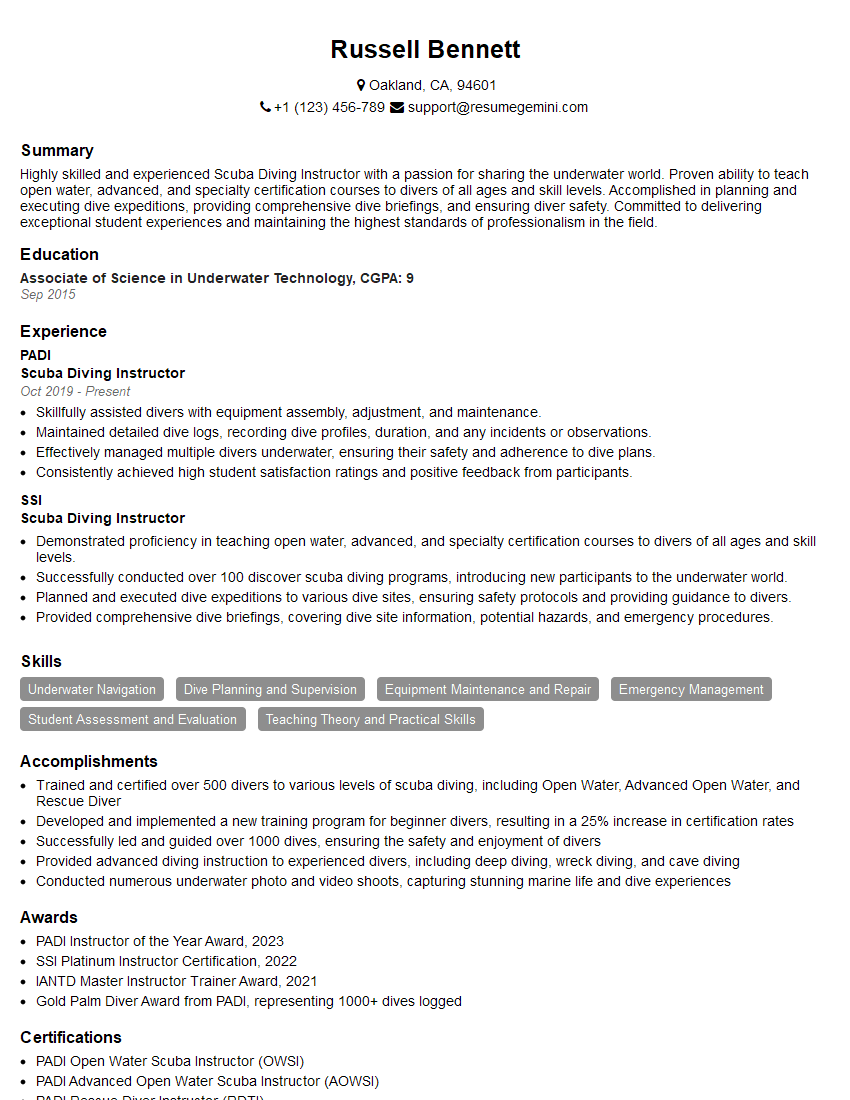
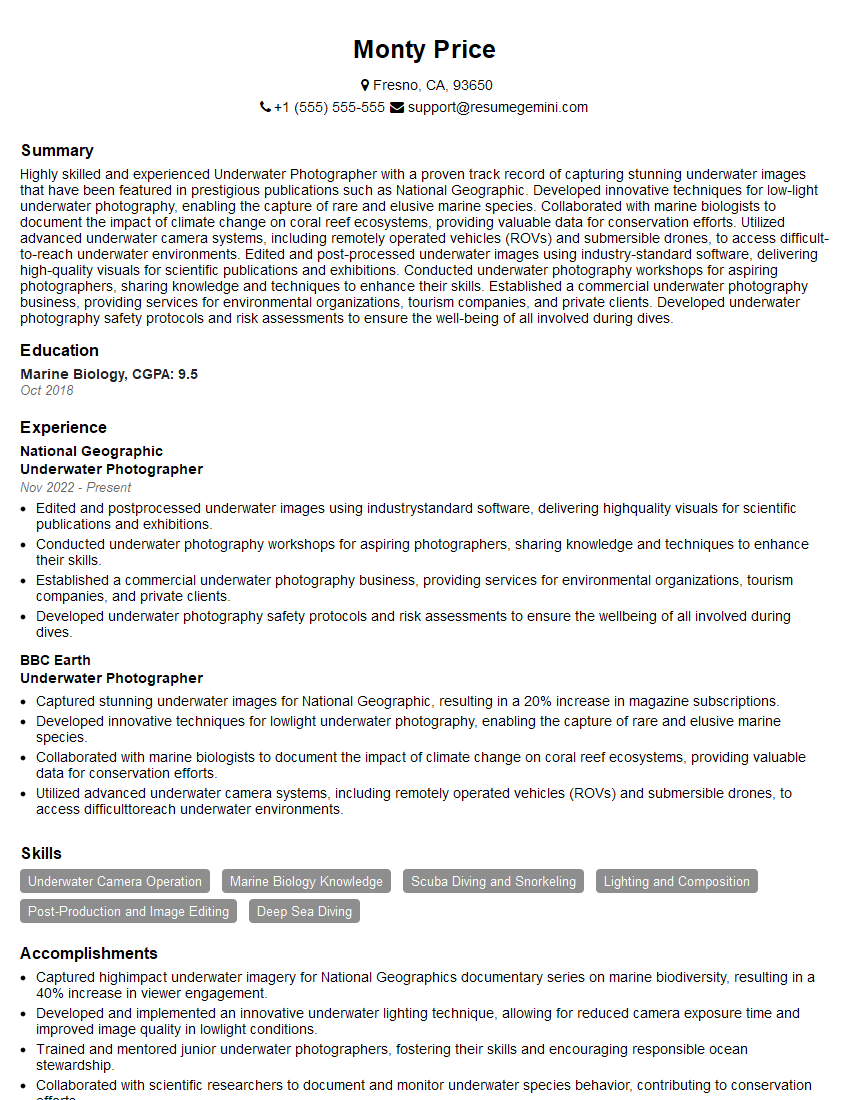
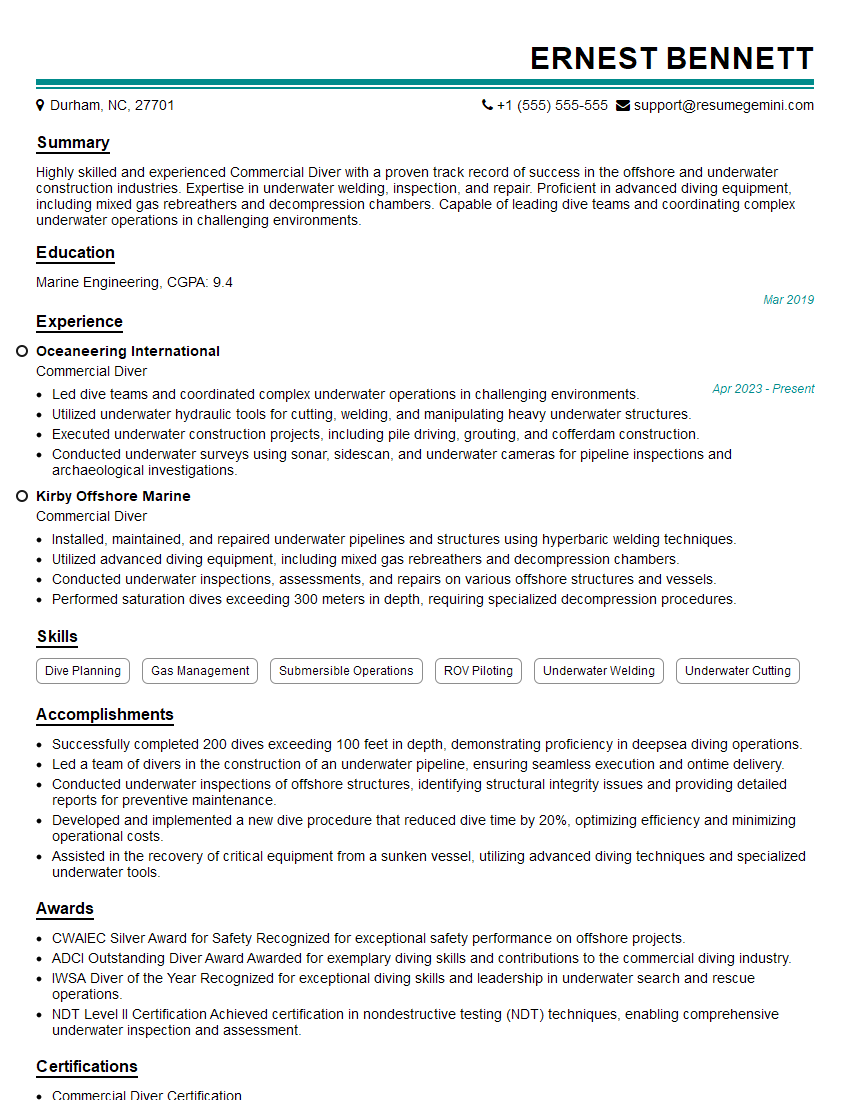
Mastering scuba diving or snorkeling skills opens doors to exciting career opportunities in marine tourism, research, conservation, and instruction. To stand out to potential employers, a strong resume is crucial. Creating an ATS-friendly resume is essential for maximizing your job prospects. ResumeGemini is a trusted resource for building professional, effective resumes that get noticed. We provide examples of resumes specifically tailored to the Scuba Diving and Snorkeling industries to help you showcase your skills and experience effectively.
Explore more articles
Users Rating of Our Blogs
Share Your Experience
We value your feedback! Please rate our content and share your thoughts (optional).
What Readers Say About Our Blog
Very informative content, great job.
good