The thought of an interview can be nerve-wracking, but the right preparation can make all the difference. Explore this comprehensive guide to Road Building and Maintenance interview questions and gain the confidence you need to showcase your abilities and secure the role.
Questions Asked in Road Building and Maintenance Interview
Q 1. Describe your experience with different types of pavement materials (asphalt, concrete).
My experience encompasses both asphalt and concrete pavements, understanding their strengths and limitations is crucial for successful road building. Asphalt, a flexible pavement, is known for its ease of construction, cost-effectiveness, and ability to be recycled. I’ve worked extensively with various asphalt mixes, including hot-mix asphalt (HMA) using different aggregates and binders to achieve desired performance characteristics like durability and skid resistance. Concrete pavements, on the other hand, offer greater strength and longevity, ideal for high-volume traffic roads. However, they are more expensive and require more precise construction techniques. I have hands-on experience with different concrete mixes, including Portland cement concrete and specialized high-performance concrete designs for heavy-duty applications. I’ve also worked on projects involving joint design and construction for concrete pavements, a critical element in managing cracking and ensuring pavement longevity. My experience includes evaluating the performance of both types of pavements under different climatic conditions and traffic loads, leading to informed material selection decisions.
Q 2. Explain the process of asphalt pavement design and construction.
Asphalt pavement design and construction is a multi-stage process demanding careful planning. It begins with a thorough pavement needs assessment involving traffic volume studies, subgrade evaluation (soil analysis to determine bearing capacity), and environmental considerations. Next, a structural design is developed, determining the pavement layers (base, subbase, and asphalt surface course) and their thicknesses. This calculation often involves software tools and empirical methods like the AASHTO design guide. Material selection follows, selecting the appropriate aggregates and asphalt binder based on climate, traffic loads, and desired performance characteristics. This includes specifying gradation curves for aggregates to guarantee the correct mix density and stability. The construction phase involves precise grading, base and subbase layer compaction, and asphalt placement using specialized equipment like pavers and rollers. Regular quality control checks are performed throughout, ensuring compaction densities and material specifications are met. Finally, after curing, the pavement is ready for opening to traffic, and regular monitoring is carried out to gauge performance and guide maintenance strategies.
Q 3. What are the key factors to consider when designing road drainage systems?
Designing effective road drainage is critical to prevent pavement damage and ensure road safety. Key factors include:
- Topography and Hydrology: Understanding the site’s natural drainage patterns is paramount. This includes analyzing rainfall intensity, runoff coefficients, and existing water bodies. Poor drainage design can lead to ponding, erosion, and pavement failure.
- Surface Water Management: This includes designing features like ditches, culverts, and inlets to effectively channel surface runoff away from the pavement. The capacity of these elements should be accurately calculated to handle peak rainfall events.
- Subsurface Drainage: In areas with high water tables or poor soil drainage, subsurface drainage systems, such as French drains or perforated pipes, might be necessary to prevent water accumulation under the pavement.
- Material Selection: Using appropriate materials for drainage structures (e.g., durable pipes, erosion-resistant channels) is essential for long-term performance.
- Environmental Considerations: Drainage designs should minimize environmental impacts, such as erosion and pollution. This might include implementing measures to filter runoff before it enters natural water bodies.
For example, in a hilly region, careful design of ditches and culverts is necessary to prevent erosion and ensure safe water flow. In low-lying areas, subsurface drainage systems might be essential.
Q 4. How do you ensure the quality control of road construction materials?
Quality control is paramount in road construction. It starts with material sourcing, where suppliers must provide test certificates verifying that materials meet the specified standards (e.g., aggregate gradation, asphalt binder properties). During construction, regular testing is carried out. This includes in-situ density tests for compacted layers (using methods like nuclear density gauges) to ensure adequate compaction. Asphalt mix samples are tested for factors like density, air voids, and stability. Concrete samples are tested for compressive strength and slump. Regular visual inspections are also carried out to identify any defects during construction. All test results are meticulously documented and compared against project specifications. Non-conforming materials or workmanship are addressed immediately through corrective actions. Regular independent audits further strengthen the quality control process, providing an unbiased assessment of the project’s adherence to quality standards. This helps minimize rework, delays, and ultimately ensures a durable and safe road infrastructure.
Q 5. What are the common causes of pavement deterioration and how can they be prevented?
Pavement deterioration is a complex issue influenced by numerous factors. Common causes include:
- Traffic Loads: Repeated heavy vehicle traffic is a major cause of pavement cracking and rutting. Heavier loads and higher traffic volumes accelerate deterioration.
- Environmental Factors: Freezing and thawing cycles, rainfall, and temperature fluctuations can damage pavements, causing cracking, potholes, and surface distress.
- Poor Construction Practices: Inadequate compaction, improper material handling, or flawed design can significantly reduce pavement life.
- Lack of Maintenance: Failing to address minor pavement issues timely allows them to worsen, necessitating more extensive and costly repairs.
Prevention strategies include using durable materials suitable for the anticipated traffic and climate, proper construction techniques, and a proactive maintenance program. This involves regularly inspecting pavements, promptly addressing cracks and potholes, and employing preventative maintenance treatments like crack sealing and surface treatments. In areas prone to frost heave, specialized pavement designs incorporating frost-susceptible materials or improved drainage are required.
Q 6. Describe your experience with road maintenance activities (pothole repair, crack sealing).
My road maintenance experience includes a wide range of activities. Pothole repair involves removing the damaged material, cleaning the area, and filling it with suitable material like asphalt or concrete. The process includes ensuring proper compaction to create a smooth and stable surface. Crack sealing involves filling cracks in the pavement surface to prevent water infiltration, which is a major cause of pavement deterioration. This process requires choosing a sealant compatible with the pavement material and using specialized equipment to ensure proper crack filling. I’ve also worked on preventative maintenance tasks such as preventative crack sealing, pavement patching and resurfacing to extend the pavement’s life. Strategic maintenance, such as pavement overlays, is often more cost-effective than allowing major deterioration to occur. Efficient scheduling of maintenance activities is crucial to minimize disruption to traffic and maximize resource allocation. The use of innovative technologies like pavement management systems (PMS) allows for more efficient planning of maintenance activities based on pavement condition assessments.
Q 7. What are the different types of road markings and their significance?
Road markings play a vital role in guiding traffic, enhancing safety, and organizing traffic flow. Common types include:
- Centerline Markings: These delineate the center of a roadway, separating opposing traffic streams.
- Lane Markings: These separate traffic lanes within the same direction.
- Edge Lines: These mark the edge of the roadway, separating traffic from the shoulder or other areas.
- Crosswalks: These mark pedestrian crossings.
- Stop Lines: These indicate where vehicles should stop at intersections.
- Arrows and Symbols: These provide additional guidance to drivers, indicating lane changes, turns, and other maneuvers.
The significance lies in their ability to improve traffic flow, reduce accidents by enhancing visibility and communication between road users, and aiding drivers to navigate safely. The use of retroreflective materials ensures that markings remain visible at night, enhancing safety. Proper application and maintenance of road markings are critical for their effectiveness and longevity.
Q 8. Explain the importance of traffic control during road construction.
Traffic control during road construction is paramount for worker safety and minimizing disruption to the public. It’s not just about placing cones; it’s a comprehensive strategy involving planning, signage, flaggers, and potentially temporary traffic signals. Effective traffic control minimizes accidents, keeps traffic flowing smoothly (where possible), and ensures the project progresses efficiently without undue risk.
For example, consider a highway widening project. A poorly planned traffic control system could lead to long backups, frustrated drivers, and increased accident risk. A well-planned system would involve phased construction, clear signage miles in advance, dedicated detour routes, and strategically placed flaggers and pilot vehicles to guide traffic through construction zones. This proactive approach prioritizes safety and minimizes disruption.
- Planning: Detailed plans specifying lane closures, detour routes, and signage are essential.
- Signage: Clear, consistent, and highly visible signage is crucial to warn drivers of changes in road conditions and direct them safely.
- Flaggers and Pilot Vehicles: Human control is critical, especially during complex maneuvers and unexpected situations. Pilot vehicles help to escort traffic through the work zone.
- Temporary Traffic Signals: These are crucial for managing complex intersections and high-traffic areas.
Q 9. How do you manage risks and safety concerns in road construction projects?
Risk management in road construction is a multifaceted process encompassing hazard identification, risk assessment, and mitigation. We utilize a structured approach like HAZOP (Hazard and Operability Study) or a similar risk assessment methodology. This involves identifying potential hazards, assessing their likelihood and severity, and implementing control measures to reduce the risk.
For instance, excavating near underground utilities requires detailed utility locates and careful excavation practices to prevent damage and worker injury. We use Permit-to-Work systems, ensuring that all necessary precautions are in place before starting high-risk activities. Regular safety meetings and toolbox talks reinforce safe work practices. We also use Personal Protective Equipment (PPE), like hard hats, high-visibility clothing, and safety boots, mandatorily. Beyond the physical aspects, regular training on risk awareness and safe work procedures are vital.
- Hazard Identification: Regular site inspections, pre-task planning, and use of checklists.
- Risk Assessment: Formal assessment using methodologies such as HAZOP to quantify risk levels.
- Mitigation: Implementing control measures like engineering controls (e.g., safety barriers), administrative controls (e.g., safety procedures), and personal protective equipment (PPE).
- Monitoring and Review: Regular safety audits and incident investigations to improve safety performance.
Q 10. Describe your experience using surveying equipment and software.
My experience with surveying equipment and software is extensive. I’m proficient in using total stations, GPS receivers (RTK and static), and laser levels for accurate data acquisition. I’m familiar with different surveying techniques, including traversing, leveling, and GPS surveying. Software proficiency includes AutoCAD Civil 3D, MicroStation, and other industry-standard software packages for data processing, analysis, and generating design drawings. For example, on a recent highway project, I used a total station to conduct a detailed topographic survey of the site, ensuring the accuracy of the road alignment and design.
Specifically, I have experience with:
- Total Stations: For precise measurement of distances, angles, and elevations.
- GPS Receivers (RTK and Static): For high-accuracy positioning, particularly in large-scale projects.
- Laser Levels: For establishing accurate horizontal and vertical planes.
- Software: AutoCAD Civil 3D, MicroStation, and other relevant software for data processing, analysis, and design.
Q 11. What software or tools are you proficient in for road design and analysis?
For road design and analysis, I’m proficient in several software packages, most notably AutoCAD Civil 3D and Bentley MicroStation. These allow me to create detailed road designs, including alignments, cross-sections, and earthworks calculations. I also use specialized pavement design software like AASHTOWare Pavement ME Design to analyze pavement structures and predict their performance under traffic loads. Furthermore, I’m familiar with hydraulic modeling software for drainage design and analysis.
Specific software skills include:
- AutoCAD Civil 3D: For 3D modeling, design, and analysis of roadways.
- Bentley MicroStation: Another powerful CAD platform for design and drafting.
- AASHTOWare Pavement ME Design: For pavement design and performance prediction.
- Hydraulic Modeling Software (e.g., HEC-RAS): For drainage design and flood analysis.
Q 12. How do you determine the appropriate pavement thickness for a given traffic load?
Determining the appropriate pavement thickness involves considering several factors, primarily the expected traffic load and the subgrade strength. We use empirical methods and design software like AASHTOWare Pavement ME Design to analyze the pavement structure under anticipated traffic volumes and axle loads. The design process usually involves selecting appropriate materials (asphalt concrete, aggregates, base and sub-base layers) and thicknesses for each layer, ensuring the pavement can withstand the stresses imposed by traffic over its design life.
The process typically includes:
- Traffic Load Estimation: Determining the anticipated traffic volume, axle loads, and traffic mix.
- Subgrade Characterization: Assessing the strength and stability of the soil supporting the pavement.
- Pavement Design Software: Using software like AASHTOWare Pavement ME Design to determine the optimal pavement layer thicknesses based on design criteria and material properties.
- Material Selection: Choosing appropriate materials for each layer of the pavement structure, considering cost-effectiveness and performance characteristics.
For example, a highway carrying heavy trucks will require a much thicker pavement structure than a residential street with light traffic. The software helps to optimize the pavement design for cost-effectiveness and durability.
Q 13. Explain your understanding of geotechnical investigations for road projects.
Geotechnical investigations are crucial for successful road projects. They involve assessing the subsurface conditions to ensure the stability and safety of the road structure. This includes soil testing, borehole drilling, and laboratory analysis to determine soil properties such as strength, compressibility, and permeability. The results inform the design of foundations, embankments, and other earthworks, ensuring the road is stable and resistant to settlement, erosion, and other geotechnical hazards.
A typical geotechnical investigation might involve:
- Site Reconnaissance: Visual inspection of the site to identify potential geotechnical issues.
- Borehole Drilling and Sampling: Obtaining soil samples for laboratory testing.
- In-situ Testing: Conducting tests like Standard Penetration Tests (SPT) or Cone Penetration Tests (CPT) to determine soil properties.
- Laboratory Testing: Analyzing soil samples to determine their properties, including strength, compressibility, and permeability.
- Foundation Design Recommendations: Providing recommendations for the design of foundations, embankments, and other earthworks based on the results of the investigation.
For example, if the investigation reveals weak or expansive soils, the design might incorporate measures like deep foundations or soil stabilization to ensure the stability of the road structure.
Q 14. What are the environmental considerations for road construction?
Environmental considerations are paramount in road construction. We must adhere to strict environmental regulations and minimize the impact of the project on the surrounding ecosystem. This includes managing air and noise pollution, protecting water resources, minimizing habitat disruption, and mitigating greenhouse gas emissions. Detailed environmental impact assessments (EIAs) are crucial, identifying potential impacts and proposing mitigation measures.
Key environmental considerations include:
- Air Quality: Controlling dust emissions during construction through measures like water spraying and using low-emission equipment.
- Noise Pollution: Minimizing noise levels through the use of noise barriers and restricting noisy operations to specific times.
- Water Quality: Implementing erosion and sediment control measures to prevent water contamination.
- Habitat Protection: Minimizing disturbance to sensitive habitats and implementing measures to protect endangered species.
- Waste Management: Proper disposal of construction waste and recycling of materials.
- Greenhouse Gas Emissions: Reducing emissions through the use of low-carbon materials and equipment and efficient construction practices.
For example, on a project near a river, we’d implement strict erosion control measures to prevent sediment from entering the waterway. The EIA would identify any protected species and dictate measures to protect their habitats.
Q 15. Describe your experience with project scheduling and budgeting.
Project scheduling and budgeting are critical for successful road construction. I utilize a combination of methodologies, including critical path method (CPM) and program evaluation and review technique (PERT), to create detailed schedules. This involves breaking down the project into smaller, manageable tasks, estimating their durations, and identifying dependencies between them. For budgeting, I leverage cost estimating software and historical data to create a comprehensive budget, accounting for materials, labor, equipment, and contingency. For example, on a recent highway widening project, I used Primavera P6 to develop the project schedule, integrating it with a detailed cost breakdown in Excel, incorporating risk assessments to factor in potential delays and cost overruns. This allowed for proactive adjustments and kept the project on track.
I always include buffer time in the schedule to account for unexpected delays. The budget is meticulously reviewed and updated regularly, comparing actual expenditures to planned costs, identifying variances and their causes. This allows for timely corrective actions to prevent cost overruns. We also use Earned Value Management (EVM) to track progress and manage the project’s budget effectively.
Career Expert Tips:
- Ace those interviews! Prepare effectively by reviewing the Top 50 Most Common Interview Questions on ResumeGemini.
- Navigate your job search with confidence! Explore a wide range of Career Tips on ResumeGemini. Learn about common challenges and recommendations to overcome them.
- Craft the perfect resume! Master the Art of Resume Writing with ResumeGemini’s guide. Showcase your unique qualifications and achievements effectively.
- Don’t miss out on holiday savings! Build your dream resume with ResumeGemini’s ATS optimized templates.
Q 16. How do you handle conflicts or delays during a road construction project?
Conflicts and delays are inevitable in construction. My approach is proactive and collaborative. First, I identify the root cause of the conflict or delay – whether it’s material shortages, equipment malfunctions, unforeseen ground conditions, or labor disputes. Then, I assemble a team comprising relevant stakeholders including subcontractors, engineers, and project managers to brainstorm solutions. This usually involves open communication, active listening, and finding mutually agreeable solutions. For instance, if a material delivery is delayed, I explore alternatives like sourcing materials from a different supplier or adjusting the schedule to accommodate the delay. If there’s a labor dispute, I facilitate mediation between the involved parties to find common ground.
Documentation is crucial. Every decision, including changes to the schedule and budget, is meticulously documented. Regular project meetings are held to monitor progress, address emerging issues, and ensure everyone is aligned on the revised plan. Transparency and communication are vital in minimizing the impact of delays and maintaining positive relationships with all stakeholders.
Q 17. Explain your understanding of different types of bridge structures.
My understanding of bridge structures encompasses various types, categorized by material and design. Common materials include concrete (prestressed and reinforced), steel, and timber. Design types vary considerably. Beam bridges are the simplest, employing beams to span the gap. Arch bridges transfer loads to abutments via compression in the arch structure, often aesthetically pleasing. Suspension bridges use cables to support the deck, allowing for very long spans. Cantilever bridges extend from each side, meeting in the middle. Truss bridges use a network of interconnected triangles for strength and efficiency. Cable-stayed bridges use cables directly attached to towers to support the deck. The selection of a bridge type depends on factors such as span length, traffic load, geological conditions, and budget. Each type has its strengths and weaknesses regarding cost, construction time, and maintenance.
Q 18. How do you manage a team of construction workers effectively?
Effective team management in construction relies on clear communication, delegation, and fostering a positive work environment. I believe in leading by example, setting clear expectations, and providing regular feedback. I delegate tasks based on individual skills and experience, ensuring everyone feels valued and empowered. Regular team meetings are essential for keeping everyone informed, addressing concerns, and celebrating successes. Conflict resolution is a critical aspect; I strive to address disagreements promptly and fairly, encouraging open dialogue and finding win-win solutions. On a recent project, I noticed one crew consistently falling behind. Through one-on-one meetings, I discovered they lacked understanding of a new technique. I provided additional training, resulting in a significant improvement in productivity and morale.
Safety is paramount. I enforce strict safety protocols and provide regular safety training to ensure everyone works safely and responsibly. Recognition and appreciation are key to maintaining team morale and fostering a sense of shared purpose. I celebrate milestones, and acknowledge individual contributions, creating a motivating and productive atmosphere.
Q 19. What is your experience with different types of construction equipment?
My experience encompasses a wide range of construction equipment, including excavators, bulldozers, graders, loaders, rollers, cranes, and specialized paving equipment. I am familiar with their operation, maintenance, and safety protocols. For instance, I’m proficient in operating and maintaining excavators for earthmoving and trenching, as well as using graders for fine grading and finishing operations. I understand the specifications and capabilities of various equipment models, enabling me to select the most suitable machinery for different tasks. I also have experience with GPS-guided equipment, improving accuracy and efficiency. Furthermore, I am knowledgeable about equipment maintenance schedules and preventive measures to minimize downtime and maximize operational efficiency.
Q 20. How do you ensure compliance with relevant safety regulations and standards?
Safety is my top priority. I ensure compliance with all relevant OSHA (Occupational Safety and Health Administration) regulations and industry best practices. This includes implementing robust safety programs, providing regular safety training to workers, conducting site inspections, and enforcing safety rules strictly. I utilize personal protective equipment (PPE) such as hard hats, safety glasses, and high-visibility clothing. I implement site-specific safety plans that address potential hazards, including fall protection, trench safety, and traffic control. Regular safety meetings are held to discuss safety incidents, near misses, and potential improvements. Documentation of safety procedures, inspections, and training is meticulously maintained to demonstrate ongoing compliance. A proactive approach to safety is essential, preventing accidents and creating a safe working environment for everyone.
Q 21. Describe your experience in working with subcontractors.
Working with subcontractors is an integral part of road construction. My experience involves selecting qualified and reliable subcontractors through a rigorous bidding process, evaluating their experience, qualifications, and safety records. Clear contracts are essential, outlining the scope of work, payment schedules, and responsibilities. Regular communication and coordination are critical to ensure subcontractors are aware of project requirements and timelines. I provide regular on-site supervision to monitor their work, ensuring it meets quality standards and safety regulations. Any issues or discrepancies are addressed promptly through open communication. Effective collaboration with subcontractors, based on mutual respect and trust, is essential for timely project completion and overall success. For instance, on a recent project, we experienced a conflict with a paving subcontractor due to scheduling misalignment. Through open communication and a willingness to compromise on both sides, we managed to renegotiate the schedule without significant project delays.
Q 22. How do you interpret and implement construction drawings and specifications?
Interpreting and implementing construction drawings and specifications is the cornerstone of successful road building. It’s like reading a detailed recipe for a complex dish – each instruction is crucial. I start by thoroughly reviewing all drawings, ensuring I understand the project’s scope, including alignment, grades, cross-sections, and details. This includes examining things like pavement thicknesses, drainage systems, and earthwork quantities. The specifications document then provides the recipe’s ingredients and methods – the precise materials, construction techniques, and quality control standards to be followed. For example, a specification might detail the exact mix design for asphalt concrete, including the type and gradation of aggregates, asphalt cement content, and compaction requirements. I use my expertise to identify potential conflicts or ambiguities early on, clarifying them with the design engineers before construction begins. My experience with AutoCAD, Civil 3D, and other relevant software aids in visualizing and analyzing the plans, allowing for a smooth workflow. I then translate these drawings and specifications into workable field instructions for the construction crews, ensuring everyone is on the same page and understands their role in delivering a high-quality product. I always maintain a detailed log of all interpretations and clarifications made, fostering transparency and reducing potential disputes.
Q 23. What is your experience with quality assurance and quality control procedures?
Quality assurance (QA) and quality control (QC) are non-negotiable for road construction projects. QA is the overarching process of ensuring the project meets specified requirements, while QC focuses on the specific methods and tests used to verify that those requirements are met. My experience encompasses implementing rigorous QA/QC programs throughout all phases, from material selection and testing to construction practices and final acceptance. For instance, in a recent project, we implemented a comprehensive system for testing aggregate samples according to ASTM standards before use, and maintained meticulous records of compaction tests for asphalt layers using nuclear density gauges. We also employed independent third-party testing for crucial aspects, providing an added layer of assurance. Regular site inspections, documented using photographs and reports, were used to monitor compliance with the specifications. Non-compliance instances were documented and corrective actions implemented, ensuring that defects were identified and rectified before they became major issues. A robust QA/QC system not only leads to a high-quality road but also helps in risk management and reduces potential rework or cost overruns.
Q 24. How do you handle unexpected problems during a road construction project?
Unexpected problems are inevitable in road construction. My approach involves a structured problem-solving methodology. First, I assess the situation carefully, documenting the nature of the problem, its potential impact, and any immediate safety concerns. For example, if unexpected bedrock is encountered during excavation, it’s critical to stop work, assess the situation, and contact the design engineer. Then, I brainstorm potential solutions with my team, considering factors like cost, time, and safety. This often involves reviewing the original plans, consulting with subcontractors, and exploring alternative construction methods. In the bedrock example, we might explore options like blasting (with appropriate permits and safety measures), modifying the design to avoid the problematic area, or using alternative construction techniques. After selecting the most suitable solution, a revised plan is documented, approved, and implemented. Thorough documentation of the problem, chosen solution, and its effectiveness is vital for future project planning and risk management. This systematic approach minimizes disruptions and keeps the project on track.
Q 25. Explain your experience in preparing construction proposals and bids.
Preparing competitive and well-structured construction proposals and bids is a skill honed over many years. I begin by thoroughly reviewing the project documents, including plans, specifications, and contract terms. Then, I conduct a detailed cost analysis, breaking down the work into manageable tasks, estimating labor, material, equipment, and overhead costs. Detailed quantity takeoffs from the drawings are crucial here. I leverage my experience and software tools to accurately estimate quantities and account for potential risks and contingencies. My proposals highlight our company’s qualifications and experience, referencing similar projects successfully completed. I also emphasize our commitment to quality, safety, and timely completion. I ensure the proposal clearly outlines the scope of work, methodology, proposed schedule, and payment terms. The bid submission process requires adhering to the specified format and deadlines. I personally oversee this process to guarantee accuracy and compliance. A successful bid is not just about the price; it’s about showcasing a comprehensive understanding of the project and a clear plan for execution.
Q 26. What are the key performance indicators (KPIs) for road construction projects?
Key Performance Indicators (KPIs) for road construction projects are critical for monitoring progress, identifying areas for improvement, and ensuring project success. These KPIs typically include:
- Schedule adherence: Percentage of work completed on time versus the planned schedule.
- Budget adherence: Actual costs compared to the budgeted costs.
- Safety performance: Number of accidents or safety incidents.
- Quality of work: Compliance with specifications and standards, as measured by QC testing and inspections.
- Productivity: Units of work completed per unit of time (e.g., meters of pavement laid per day).
- Material usage efficiency: Actual material consumption compared to estimated quantities.
- Client satisfaction: Feedback from the client on the project’s progress and overall quality.
Regular monitoring of these KPIs allows for proactive adjustments to maintain project performance. For example, if productivity is lagging, we might explore ways to optimize the workflow or add resources. Similarly, if safety incidents increase, immediate action is taken to address the root cause and prevent further incidents. These KPIs, when analyzed regularly, serve as a roadmap for success and continuous improvement.
Q 27. Explain your understanding of pavement management systems.
Pavement Management Systems (PMS) are crucial for optimizing the lifecycle of road networks. A PMS is a data-driven approach that involves collecting, analyzing, and utilizing information on pavement conditions to prioritize maintenance and rehabilitation activities. It involves several key steps: (1) Data Collection: Assessing pavement conditions through visual inspections, pavement condition surveys (e.g., using laser profilometers or automated crack detection systems), and load testing. (2) Data Analysis: Using this data to develop pavement condition indices, predicting future deterioration, and prioritizing maintenance needs. (3) Decision-Making: Applying this analysis to plan maintenance and rehabilitation activities effectively, allocating budgets, and optimizing resource allocation. (4) Implementation: Executing the maintenance and rehabilitation plans, employing strategies such as preventative maintenance (e.g., crack sealing), routine maintenance (e.g., pothole patching), and major rehabilitation (e.g., overlaying or reconstruction). (5) Evaluation: Monitoring the effectiveness of interventions to assess their long-term impact on the pavement and refine future plans. A well-implemented PMS ensures that maintenance efforts are focused on the roads that need them most, maximizing cost-effectiveness and extending the life of the pavement network. Software tools, often incorporating Geographic Information Systems (GIS), play a significant role in managing this vast amount of data efficiently.
Q 28. How do you ensure the sustainability of road construction projects?
Sustainability is no longer an option but a necessity in road construction. We incorporate sustainable practices throughout the project lifecycle. This includes using recycled materials such as recycled asphalt pavement (RAP) in asphalt mixtures, reducing the environmental footprint by lowering the carbon emission from our equipment and reducing fuel consumption, using environmentally friendly construction methods (e.g., minimizing soil erosion and protecting water resources), and selecting locally sourced materials to reduce transportation costs and emissions. We also consider the long-term impacts of our projects, designing durable pavements that require less frequent maintenance and rehabilitation, thus conserving resources over the life of the road. Incorporating permeable pavements in appropriate areas to manage stormwater runoff and minimize the impact of impervious surfaces on the environment is another crucial aspect. We work with engineers to explore innovative construction methods, materials, and technologies that minimize the project’s environmental impact, leading to a greener and more sustainable road network. Ultimately, our goal is to build roads that meet the needs of today’s traffic demands without compromising the environment’s health for future generations.
Key Topics to Learn for Road Building and Maintenance Interview
- Road Design and Planning: Understanding geometric design principles, pavement design, drainage systems, and environmental considerations. Practical application includes analyzing site surveys and preparing construction drawings.
- Construction Materials and Techniques: Knowledge of various materials like asphalt, concrete, aggregates, and their properties. Practical application involves selecting appropriate materials based on project needs and overseeing their proper installation.
- Earthwork and Excavation: Understanding soil mechanics, grading, compaction, and excavation techniques. Practical application includes managing earthmoving equipment and ensuring proper site preparation.
- Pavement Management and Maintenance: Knowledge of pavement distress mechanisms, repair techniques (pothole patching, crack sealing, resurfacing), and preventative maintenance strategies. Practical application involves assessing pavement conditions and planning maintenance schedules.
- Safety Regulations and Procedures: Familiarity with OSHA regulations and industry best practices for safety on road construction and maintenance sites. Practical application includes implementing and enforcing safety protocols on the job site.
- Project Management and Cost Control: Understanding project scheduling, budgeting, resource allocation, and risk management. Practical application includes overseeing projects within budget and timeline constraints.
- Sustainable Road Construction Practices: Knowledge of environmentally friendly construction materials and techniques, minimizing environmental impact. Practical application involves implementing sustainable practices to reduce the carbon footprint of road projects.
- Equipment Operation and Maintenance: Understanding the operation and maintenance of heavy equipment used in road building and maintenance. Practical application involves troubleshooting equipment issues and ensuring proper functionality.
Next Steps
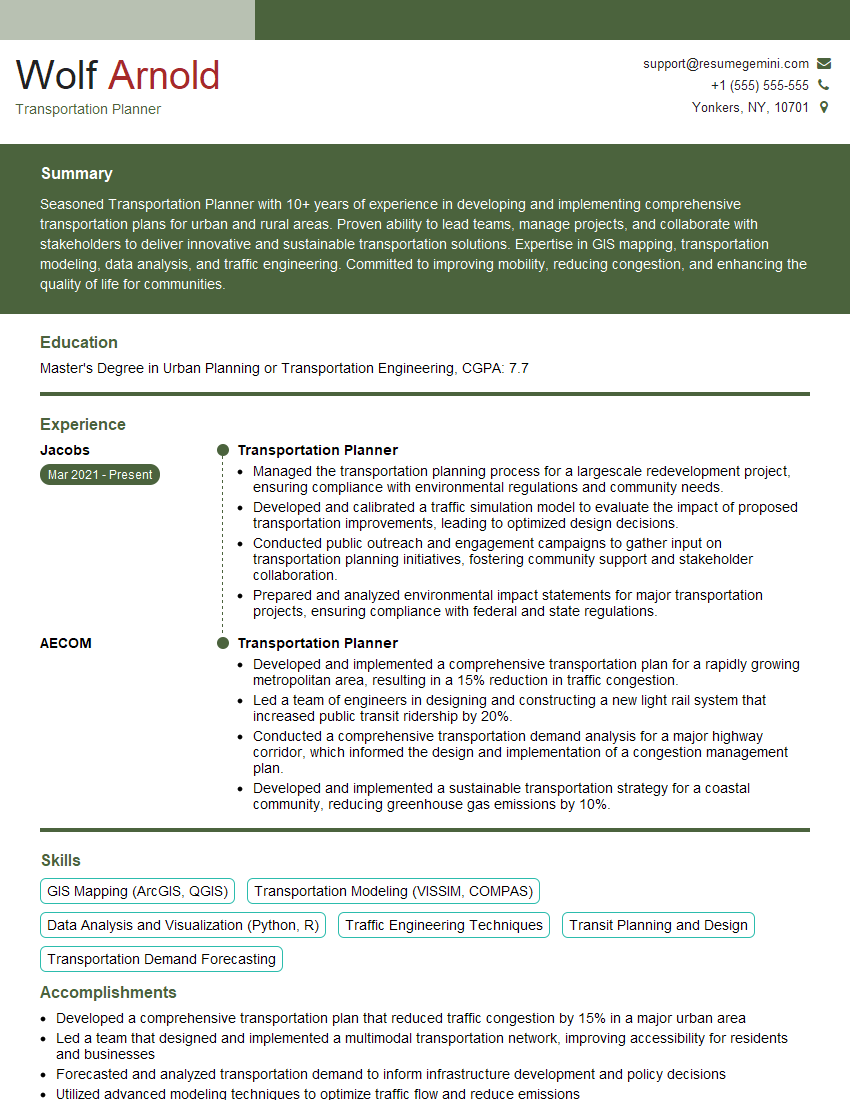
Mastering Road Building and Maintenance opens doors to a rewarding career with excellent growth potential, offering opportunities for specialization and advancement. A strong resume is crucial for showcasing your skills and experience effectively to potential employers. Creating an ATS-friendly resume is key to getting your application noticed. ResumeGemini is a trusted resource to help you build a professional and impactful resume that highlights your qualifications. Examples of resumes tailored to the Road Building and Maintenance field are available to guide you.

Explore more articles
Users Rating of Our Blogs
Share Your Experience
We value your feedback! Please rate our content and share your thoughts (optional).
What Readers Say About Our Blog
Very informative content, great job.
good